Colourless zircon: the natural stone that sparkles brighter than a diamond
Zircon splits white light into rainbow flashes almost as strongly as a diamond does (its dispersion is 0.039 against the diamond's 0.044). And the refractive index of some specimens climbs to 1.98, higher than any quartz, topaz or sapphire. On a jeweller's bench a faceted colourless zircon is easy to mistake for a brilliant, and in the nineteenth century people did exactly that: it sat in tiaras and necklaces alongside genuine diamonds.
Zircon is no fake and no lab product. It is a mineral in its own right, a zirconium silicate that crystallises in the Earth's crust over billions of years. The oldest terrestrial zircons are more than four billion years old, almost as old as the planet itself. The colourless variety is the rarest and most valuable of all: a stone can only come out colourless if the parent magma was unusually pure.
The confusion starts with the names. Zircon (the mineral ZrSiO4), zirconium (the metallic element Zr) and cubic zirconia, also called CZ (synthetic ZrO2, a diamond imitation), are three different things with similar-sounding names. This piece is about the first of them: natural colourless zircon, its chemistry, geology, history and how to tell it apart from look-alike stones.
What zircon is: the chemistry and physics of the stone
Composition and crystal structure
The chemical formula of zircon is ZrSiO4, a zirconium silicate. Each unit cell holds one zirconium atom, one silicon and four of oxygen. Zircon crystallises in the tetragonal system: its natural crystals look like short four-sided prisms capped with pyramid points, a little like a miniature tower.
Pure zircon is colourless. Colour comes from impurities: iron, uranium, thorium and rare-earth elements that slip into the lattice as the crystal grows. A colourless stone forms only when the magma was clean enough that almost none of those impurities were present. That is why transparent specimens turn up noticeably less often than coloured ones.
Hardness and wearability
On the Mohs scale zircon rates 6.5 to 7.5. For comparison: diamond is 10, sapphire and ruby are 9, topaz is 8, quartz is 7. So zircon is harder than glass and most household surfaces, but softer than the classic first-tier gemstones.
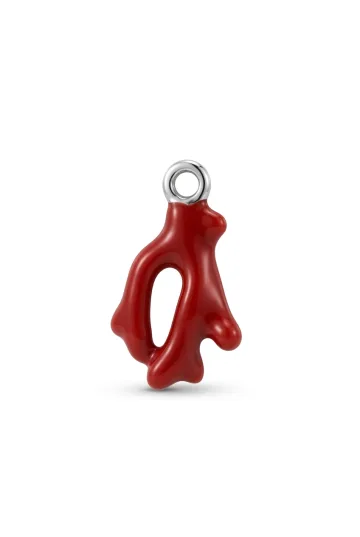
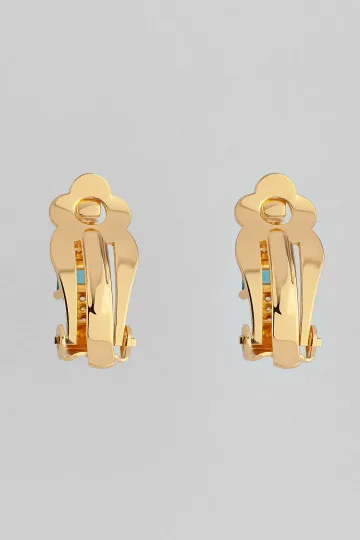
Wear the symbol, don't just read about it. These are in stock:





In practice this means zircon is excellent for earrings, pendants and drops, where it takes almost no knocks. In a ring it is better worn in a bezel or protective setting that shields the edges of the stone. An open setting on a ring that never comes off for years will, over time, pick up tiny chips and scratches along the facet edges. That is no reason to avoid zircon, only a reason to choose the right piece for it.
Optics: refraction, dispersion, double refraction
The main reason zircon resembles a diamond is its optics.
- Refractive index: 1.92 to 1.98. Very high, above topaz, quartz and beryl. The higher the index, the more light the stone returns to the eye and the brighter its lustre seems.
- Dispersion: 0.039. This is the ability to split light into coloured flashes (jewellers call it "fire"). A diamond sits at 0.044, so the difference is tiny. In good light a zircon plays with rainbow almost as vividly as a brilliant, and sometimes more so.
- Double refraction: zircon is strongly birefringent. A ray of light splits in two inside the stone, and if you look through a faceted zircon at the far facet edges, they appear doubled and blurred. You can see it with a loupe and it is a reliable sign: glass and CZ do not show it.
Density
Zircon has a density of 4.6 to 4.7 g/cm³, about a third higher than diamond (3.52). Because of that a zircon of the same weight as a diamond looks visually smaller. A one-carat zircon is closer in size to roughly a 0.8-carat brilliant. High density is another way to spot the genuine stone: a faceted zircon feels distinctly heavier than glass of the same size.
How zircon forms in nature
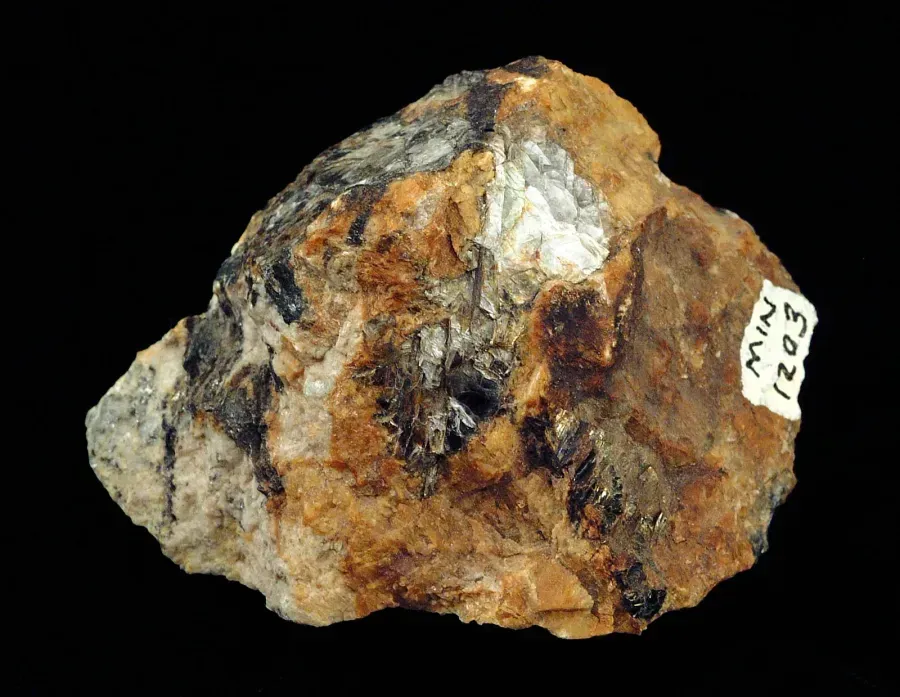
Zircon crystallises from magma cooling slowly deep in the crust, at temperatures above a thousand degrees. It is one of the first minerals to drop out of the melt, so it shows up as tiny inclusions in many igneous rocks, above all in granites.
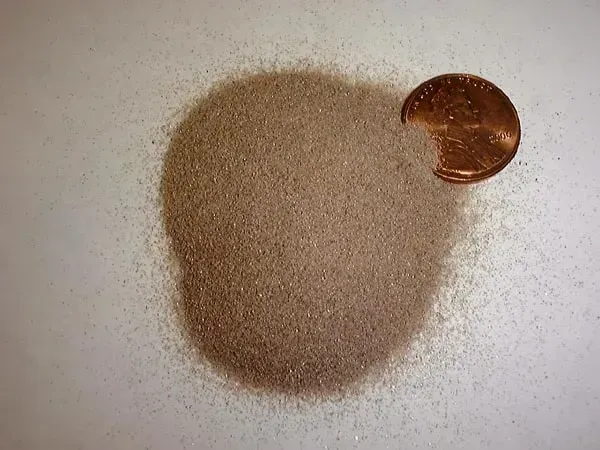
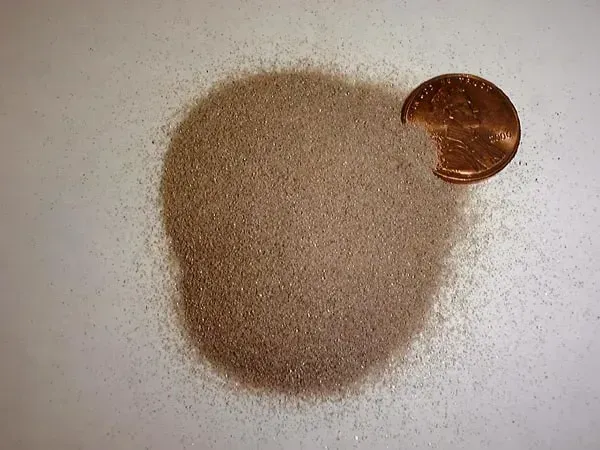
The crystal itself is chemically and mechanically tough. When the surrounding rock weathers and breaks down, the heavy, durable zircon survives that destruction, washes into rivers and accumulates in gravel and sand deposits. It is from such placers that it is mined: the heavy grains are washed out of river gravel.
Metamictisation: why one zircon outshines another
Zircon has a quirk that matters to the buyer. Traces of uranium and thorium settle into its lattice. These elements decay slowly, and their radiation gradually breaks down the crystal structure from within. The greater the damage, the cloudier and softer the stone becomes. The phenomenon is called metamictisation.
Mineralogists sort zircons into three types. High zircon has kept almost all of its structure: it is dense, transparent and brightly lustrous. Low zircon has been heavily damaged by radiation: it is cloudier, softer, often with a greenish or brownish cast. An intermediate type sits between the two. Colourless gem zircons belong to the high type. Low stones are usually coloured and brittle, and rarely cut.
That same property made zircon a key scientific tool. The uranium inside it decays into lead at a known rate, and from the ratio of those elements geologists date rocks to within millions of years. The oldest terrestrial zircons were found in the Jack Hills of Western Australia, dated at about 4.4 billion years.
Geography: where zircon is mined
Colourless and pale zircon is mined in several regions, and each has its own character of rough.
Sri Lanka (Ceylon). The historic benchmark. Stones are washed out of river gravel in the south-west of the island, around Ratnapura, a name that translates as "city of gems". The mining method has barely changed in two hundred years: narrow shafts down to the gravel layer, rock hauled up in baskets, washing in running water. Ceylon colourless zircon is prized for its clarity and calm lustre with no green tinge. This is where the stones that found their way into nineteenth-century European jewellery came from.
Cambodia. Ratanakiri province in the north-east gave the world the finest blue zircon of the twentieth century: the local brownish material takes on a deep sky-blue tone after heating. Mining here is semi-artisanal, with volumes swinging from one season to the next.
Myanmar. The Mogok valley, famed for rubies, also yields a reddish zircon with a warm honey tone and good transparency.
Thailand. A major supplier and the world's leading cutting centre. Thai material often carries a slight yellowish or brownish cast, though the best specimens are nearly clear. Rough from other countries is shipped here for cutting too.
Australia. A source of brown zircon that turns blue or pale yellow after heating. Most of the blue zircon on the market is Australian or Cambodian material that has been heat-treated.
Vietnam, Madagascar, Tanzania, Nigeria. Vietnam yields small but clean stones. Madagascar produces large volumes of medium quality. Over recent decades East and West Africa have supplied green and olive zircons, usually heavily metamict and brittle, of more interest to collectors than for everyday wear.
Zircon was born for candlelight and chandeliers. Under an office strip light it goes dead, so light a candle or leave it in the box.
What to wear colourless zircon with
I reach for zircon when a look needs diamond sparkle without the diamond budget and without the fuss. Here is what actually works on set, sorted by occasion.
How do I wear zircon every day? For daily wear I recommend a small stone: stud earrings or a fine pendant on a chain. They get on with pale knitwear, a white shirt, jeans and cashmere. The cool sparkle lifts a calm palette and never reads loud at work. Under a V-neck I suggest a shorter pendant so the stone lands in the open area.
Can I wear it in a ring all the time? You can, with one caveat. Zircon has middling hardness, so for a ring you never take off I choose a bezel or a protective setting that shields the stone's edges. Studs and a pendant take daily wear in their stride, while a ring should be kept away from knocks and abrasive dust.
How do I build an evening look? For the evening I choose a larger stone: a cocktail ring, drop earrings or a riviere necklace. The high dispersion burns with rainbow under chandeliers and candlelight, so a dark dress, velvet, silk or satin gives the best contrasting backdrop. Against bare skin at the collarbone the stone reads brightest of all.
Which metal shows zircon off best? It depends on your skin undertone and mood. I recommend white gold and platinum for crisp minimalism, yellow gold for a warm contrast in the spirit of antique pieces, rose gold for a romantic note. Among neighbouring stones I suggest white pearl, moonstone and blue sapphire: they do not fight the sparkle.
Who does colourless zircon suit anyway? Anyone who wants clean, cool sparkle and values a stone with a history rather than a bit of glass. Two rules that never fail. First: a lighter, smaller stone for day, a larger one for evening. Second: one bright zircon is stronger than three medium ones, so do not overload the set.

Turn on your camera, pick earrings, a pendant or a ring, and see the piece on yourself in real time.
Switch items in one tap.
Everything runs in your browser: no photo or video is ever uploaded.
History: the forgotten rival of the diamond
Discovery and the origin of the name
The name goes back to the Persian "zargun" (golden), arriving through Arabic. For centuries the old reddish-golden zircons were called hyacinths and jacinths. In 1789 the German chemist Martin Heinrich Klaproth, studying zircon, isolated a new oxide from it and named the element it contained zirconium. So the mineral gave its name to the chemical element, although the two have been muddled ever since in everyday speech.
The stone of nineteenth-century European jewellery
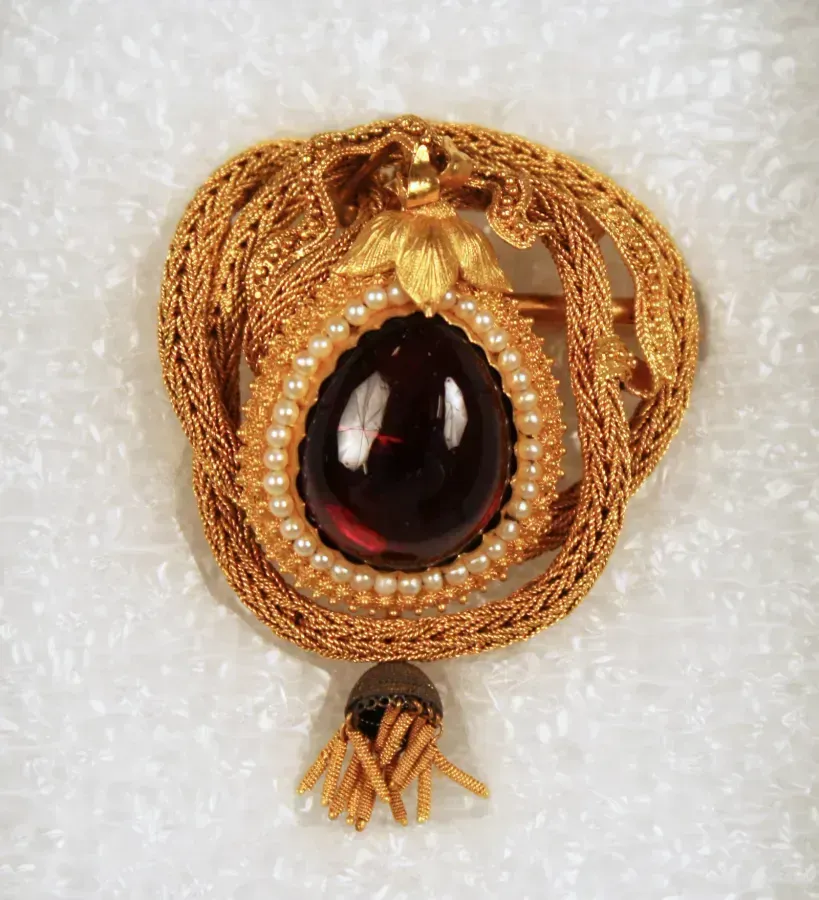
In the nineteenth century colourless and blue zircon from Sri Lanka made its way to the jewellery workshops of London, Paris and Amsterdam. Its high dispersion made it the ideal stone for an age of candle and gas light: under dim warm light it flashed rainbow more brightly than many other transparent stones. Zircon went into rings, earrings, brooches and necklaces, often as the centre stone, set in yellow and white gold.
In museum collections nineteenth-century colourless and reddish zircons often appear under historic names such as "hyacinth", or simply as bright transparent stones of their time, and telling them apart without gemmological analysis is no easy task. Red zircon, meanwhile, was forever confused with garnet: both warm stones went into the same kind of setting.
Why zircon fell out of fashion
By the middle of the twentieth century zircon had all but vanished from jewellery windows. The reason was not the quality of the stone but a shift in taste: advertising fixed the diamond in the public mind as the one "real" transparent stone, and more affordable clear gems came to be seen as a compromise. Zircon slipped out of buyers' memory, even though its optics had not gone anywhere.
In recent decades interest in it has been returning. Part of that is a growing attention to authenticity and to the history of materials, and part is a taste for sensible value. Zircon is a natural stone with a long pedigree and no complicated reputation, and that wave-like fate adds to its character.
Matura diamond: the Ceylon name for colourless zircon
Colourless zircon has a historical name of its own, and it explains a good deal about the stone's reputation. In Sri Lanka, transparent stones without colour were known for centuries as Matura diamonds, after the town of Matara on the south coast of the island, near which they were recovered from river gravels. The name was honest in its own terms: dealers were not passing zircon off as diamond, they were naming the place it came from, and the word diamond was working there as a measure of brilliance rather than as a deception.
English and Dutch merchants carrying Ceylon stones back to Europe picked the term up. In eighteenth and nineteenth-century price lists the Matura diamond appears as its own line, cheaper than a brilliant but dearer than glass or rock crystal. A buyer understood perfectly well that they were acquiring a bright transparent gem with a character of its own rather than a counterfeit. That transparency of dealing is exactly what separates the old zircon trade from the later muddle with synthetics, and the term still turns up in the catalogues of British auction houses when Georgian and Victorian pieces come up for sale.
Zircon as a historic diamond substitute
By candlelight and gaslight, telling a colourless zircon from a diamond on someone else's hand was very nearly impossible. The high dispersion produced the same rainbow play, and the warm flickering light hid the doubled facet edges that are the one reliable giveaway. Zircon therefore became a favourite travelling and at-home stone in Britain: the real diamonds stayed in the strongbox or with the bank, and Matura diamonds went visiting and travelling in their place, without the fear of loss. Georgian and early Victorian paste and substitute jewellery was worn openly and without embarrassment for exactly this reason.
That gave the stone a double fate. On one hand it was valued in its own right, for its optics and for the rarity of genuinely colourless material. On the other, the very success of the impersonation later told against it: when cheap artificial substitutes arrived on the market carrying a confusingly similar name, natural zircon was lumped in with them in the public mind and lost its face entirely. Restoring the distinction between a natural mineral and a laboratory imitation is, in practice, the main job of an honest seller today.
Customer reviews
Zevira is a real jewellery shop. Genuine payments, deliveries and customer thank-yous.
🥰🥰🥰 gracias

Ok, ¡gracias! 🙂

How colourless zircon is made from brown
Most of the colourless zircon on the market was not born transparent. It is the result of controlled heating, and the raw material is the common brown and reddish-brown stone from Cambodia, Australia and Thailand. Under the right conditions the brownish tone goes and the stone becomes either colourless or blue. In essence this is an ancient technology, one used on gemstones for thousands of years, simply refined to precise temperatures and controlled atmospheres.
What happens to the stone under heat
The brown and reddish colour in zircon comes from colour centres associated with lattice defects and with the traces of radioactive elements the crystal has carried since it grew. Heating rearranges those centres. In an oxidising atmosphere, in air, at somewhere around nine hundred degrees, the stone usually loses colour and becomes colourless or pale yellow. In a reducing atmosphere, with oxygen excluded, at roughly a thousand degrees, the same material yields a deep blue. One piece of rough is capable of producing either result, and the furnace conditions decide which.
Alongside the colour change, heating partly heals metamictisation: a lattice damaged by its own radioactivity recovers some of its order, and the stone becomes denser, clearer and brighter as a result. This is why many annealed zircons are optically better than low-type natural colourless material, and why a heated stone is not in any sense a lesser one.
Is the colour stable after heating?
The colour of a properly annealed zircon is stable and does not fade in ordinary wear. There is one weak point: sharp re-heating and strong ultraviolet can shift the tone slightly in some stones. Blue examples occasionally recover a faint brownish cast after long exposure to sun, at which point they are simply re-annealed. Colourless stones are calmer in this respect, having nothing much left to lose.
The main rule here is ethical rather than technical. Heating is a normal and universally accepted treatment with no need for concealment. An honest seller states heated, or heat treated, in the description and in the laboratory report. What should worry you is not the presence of annealing but silence about it, and in Britain that description forms part of what you are contractually buying.
Natural colourless against annealed
Wholly natural colourless zircon that has never seen a furnace is a genuine rarity and costs accordingly. Telling it apart without a laboratory is difficult, and for most buyers the difference is purely a collector's concern, since an annealed colourless stone looks and behaves identically in wear. If untreated origin matters to you, it is stated separately in a report with the wording no indication of heating. In every other case it is sensible to assume that a transparent zircon in a piece of jewellery has been heated, and to treat that as ordinary rather than as a defect.
Upload a photo of your pet, someone you love, or an object. We'll build a 3D model and hand-cast it in pewter.




Types of zircon
Colourless zircon is the top of the rarity scale, but only one of its colours. A full survey of every shade lives in a separate guide to zircon in all colours, and here is a short tour of the main varieties.
Colourless (white zircon)
The rarest and most valuable kind. A transparent stone with almost zero colour, in good light it throws off a cool, clean lustre with bright rainbow flashes. It is mined in small quantities, above all in Sri Lanka and Australia (the latter after heating). It is valued precisely for its lack of colour: visually it is the closest of all to a brilliant.
Blue
One of the most popular kinds. Shades run from a pale sky-blue to a saturated blue-green. The colour comes from iron impurities in the lattice. The overwhelming majority of blue zircons are produced by heating brown rough from Cambodia and Australia: this is a stable, widely accepted treatment that an honest seller discloses. A separate piece is devoted to blue zircon.
Reddish and golden (hyacinth)
The historic "hyacinth". Colours from red and orange-red to rusty yellow come from iron impurities and traces of radioactive elements. The best stones come from Myanmar and Thailand. More in the article on red zircon.
Brown
The most common and least costly kind. Most often it serves as the rough for heating, after which it turns blue, pale yellow or nearly colourless. Unheated brown zircon is sometimes mistaken for smoky quartz, but zircon shines distinctly brighter.
Colour-change
In Sri Lanka, every so often, a zircon turns up that shifts shade between daylight and artificial light. It is a rarity and is valued highly.




How to tell zircon from look-alike stones and fakes
Zircon gets confused with two things: with diamond (which it visually resembles) and with CZ, cubic zirconia, a synthetic diamond imitation with a name so similar it is hard to keep straight. Here are the working signs.
Double refraction. The main sign. Look through the faceted stone with a loupe at the far facet edges: in a zircon they appear doubled and blurred. In diamond, glass and CZ the edges are single and sharp.
The character of the "fire". The dispersion of CZ (0.06) is much higher than the diamond's, and its rainbow flashes look exaggerated, "candy-like". Zircon's dispersion is almost that of a diamond, so its play of light is more natural.
Weight and density. Zircon is dense (4.6 to 4.7 g/cm³), noticeably heavier than glass (about 2.5) of the same size. CZ is heavier still (about 5.7), so by feel and weight the three materials differ.
Facet wear. On old CZ stones the facet edges round off and cloud quickly, because the material is relatively soft for constant wear. Natural zircon holds its edges better.
Certificate. The most reliable route is a stone with a report from a gemmological laboratory. It states the stone type (zircon), the colour, clarity, weight and the fact of heat treatment (heat treated), if there was any. Heating is a normal and honest procedure; what should make you wary is, on the contrary, silence about it or a seller's reluctance to show the report.
Do not muddle the three words: zirconium is a metallic element, zircon is the natural mineral ZrSiO4, and CZ (cubic zirconia) is the artificial diamond substitute ZrO2.
How to choose a quality colourless zircon
There is no grading system for zircon as strict as the 4Cs for a diamond, but those same four parameters apply.
Colour. The closer to fully colourless, the higher the value. The ideal is a stone with no visible tint. A slight yellowness lowers the price.
Clarity. Zircon can be very clean. For an everyday piece it is enough that inclusions are not visible to the naked eye. Stones that are clean under a loupe cost more, but the difference is often invisible to the eye.
Cut. Correct proportions return light to the viewer and bring out the lustre; a cutter's mistakes kill it. A round brilliant cut gives the most "fire"; a step cut (emerald) gives a calmer look with less rainbow play, useful if an excess of dispersion strikes you as too busy.
Weight. Zircon is more often found in small sizes. Stones above 5 carats are rare, and their price climbs disproportionately.
Two stones of the same weight and colour can differ markedly in liveliness. The cause is either the quality of the cut or the state of the crystal: a high zircon is brighter than a metamict one. So view the stone in different lighting and compare the play itself.
The zircon cut: why it exists
For zircon, cutters devised a form of its own, called the zircon cut. It is a round brilliant cut with an extra row of facets on the lower part of the stone, beneath the pavilion. The point is to hide the main visual drawback of strong double refraction: without those facets the facet edges seen through the table would look doubled and would blur the lustre. The extra belt of facets breaks up and overlaps the doubled reflections, and the stone reads cleaner.
In practice this gives the buyer a marker. If you see not one but two lines of facets beneath the girdle of a round zircon, you are looking at a cut done properly and made specifically for this stone, rather than reworked onto a diamond blank. Cheap material is often cut to the standard scheme without that belt, and then the doubling of the edges is obvious even at arm's length.
Leave your email, we'll send your discount code. No spam, unsubscribe anytime.
The code arrives by email, valid on your first order.
Zircon, cubic zirconia and diamond: three stones that get confused
Similar names and a similar sparkle keep these three materials bundled together in conversation. They are three completely different things: a natural mineral, a synthetic imitation and the reference gemstone. Taking them in pairs clears the confusion for good.
Zircon is not cubic zirconia
The commonest error is treating zircon and cubic zirconia as the same thing. They are not related. Zircon is a natural zirconium silicate, ZrSiO4, a stone that grows in the earth's crust over millions of years and is recovered from alluvial gravels. Cubic zirconia is zirconium oxide, ZrO2, grown in a laboratory from a melt in a matter of hours. The only overlap is the metal zirconium in both, and beyond that the crystal structure, the chemistry and the origin are entirely different.
Language made the muddle worse. The trade name cubic zirconia sits one careless syllable away from zircon, and shop assistants shorten it to zirconia, then to zircon, until nobody in the conversation is sure what is on the counter. The rule to hold on to is short: zircon is dug up, cubic zirconia is grown. Anything sold as CZ is the synthetic.
Zircon against cubic zirconia: how to tell them apart
Several of the signs are available without a laboratory. Birefringence is the first: look into a natural zircon with a loupe and the far facet edges appear doubled, while in cubic zirconia they are single and crisp, because the synthetic is optically isotropic. The character of the fire is the second: the dispersion of cubic zirconia is noticeably higher than a diamond's, so its rainbow flashes look exaggerated, almost sugary, whereas the play in zircon is more natural and closer to a brilliant. Weight is the third: cubic zirconia is denser still than zircon, so a stone of the same size feels appreciably heavier. And wear is the fourth: old cubic zirconia clouds over and rounds off at the edges with time, while natural zircon holds its facet junctions longer, even though it chips more readily.
Zircon against diamond: where the line runs
Zircon shares its optics with diamond, but there are more differences than similarities. Hardness: diamond is ten on the Mohs scale, the absolute maximum, while zircon sits at 6.5 to 7.5, so a diamond in a ring is practically invulnerable and a zircon needs a protective setting. Birefringence: diamond has none and its facet edges are single, while zircon has it and its edges double. Density: zircon is heavier, so at equal weight it looks smaller than a diamond. Thermal conductivity: diamond carries heat away like a metal, which is the basis of the pocket testers that separate it instantly from any imitator, zircon and cubic zirconia included. Dispersion is the one place zircon holds its own, at 0.039 against 0.044 for diamond, which is why the two look so alike in a warm light and so different under a loupe.
A short crib on three words
To keep it straight, hold three short definitions in mind. Zirconium is a metal, the element Zr, and it does not appear in jewellery on its own. Zircon is a natural gem mineral, ZrSiO4, the old Matura diamond. Cubic zirconia is the artificial diamond substitute, ZrO2, grown in a furnace. The words look alike and the substances are not, and an honest label always uses one of those three exact names rather than a vague blend of them.
CAPAORA mini knife pendant
The 18th-century Spanish navaja in miniature: 40 mm of stainless steel, a real folding mechanism and a Palanquilla lock that clicks. An affordable gift to remember.
Authentic · Ships from Spain · 14-day returns
Care and storage
Caring for zircon is simple, but there are a few points to watch because of its medium hardness and the heat-sensitivity of treated stones.
Cleaning. Warm water with a drop of soap and a soft brush (a toothbrush will do). Ultrasonic cleaning is broadly acceptable, but with heated stones it is safer to stick to cleaning by hand. Steam cleaning and sharp heat are best avoided.
What to avoid. Do not subject zircon to sudden temperature swings; a heated stone can develop a micro-crack from thermal shock. Take the piece off before a shower, a swimming pool or a hot bath. Do not use aggressive chemicals: bleach, ammonia, acids.
Storage. Keep zircon apart from other stones, in a soft pouch or a separate compartment of the box. Harder neighbours (topaz, sapphire, ruby, diamond) will easily leave scratches on it.
Wearability by hardness. With a hardness of 6.5 to 7.5, earrings and a pendant with zircon can be worn every day, while a ring is better protected from knocks and abrasive dust, or set in a bezel. Once a year it is worth showing the piece to a jeweller: to tighten the setting, check the metal and, if needed, repolish the facets.
What to check when buying antique zircon
Since zircon was set so widely in jewellery of the nineteenth and early twentieth centuries, it turns up on the antiques market more often than many other gems. But the old stone has a weak point worth checking before you pay.
The main thing is the state of the facet edges. Zircon is relatively brittle: it has perfect cleavage and a tendency to chip along the facet edges. On a stone worn for decades in an open ring, the edges are often crumbled and the sharp facets smoothed and clouded. Gemmologists even have a nickname for it: the "paper-worn edges" effect. Look at the girdle and the line of the edges under a loupe: a mass of small chips lowers both the lustre and the price, and repolishing is not always possible, since it eats into the weight and changes the proportions.
The second point is substitution. In old pieces a garnet often stands in for a "hyacinth", and in cheaper items a zircon or glass may pose as a transparent "diamond". Telling them apart by eye is difficult, so for any sizeable sum ask for a laboratory report. Double refraction gives the zircon away, while garnet and glass lack it.
The third detail concerns the setting. Antique zircon usually sits in a closed bezel with a foil backing beneath the stone, used to boost the lustre in candlelight. That backing must not get wet: water under the foil darkens and kills the play of the stone. If you are buying an antique piece, ask about the type of setting and do not clean it by immersion in water.
Send a friend a discount code, they save on their first order.
Symbolism: what tradition ascribes
Here it is worth speaking with care. Stones have been credited with properties across many cultures, but this is the realm of tradition and folklore, not proven fact. There is no confirmed effect of zircon on health, mood or the course of one's affairs, and it is sensible to treat these notions as part of the stone's cultural history.
In the Indian tradition zircon was linked to the planet Jupiter and counted a stone of learning and clear thought. In medieval Arabic treatises it is mentioned as a traveller's companion, guarding the wearer on the road. The European tradition attached to the reddish-golden hyacinth the idea of warmth and energy. No proven effect lies behind any of these notions; they are images, not properties of the material.
Facts that catch people out
Zircon has a reputation as a modest understudy, and it does not deserve it. Few gemstones drag a longer or stranger history behind them. Here are a few things that change how you look at the stone.
Zircon is older than life on earth
Zircon crystals from the Jack Hills of Western Australia have been dated at around 4.4 billion years. That is the oldest terrestrial material a human being has ever held. When those grains formed there were no oceans in any recognisable sense on this planet, let alone life. A colourless stone in an earring is, in that light, a fragment of a world half a billion years older than the first cells.
The age of planets is measured with zircon
Uranium in the zircon lattice decays to lead at a known rate, and the crystal is so tough that it keeps those atoms locked inside for billions of years. Geologists therefore date rocks by their zircons, a method known as uranium-lead dating. The same approach has been applied to lunar samples and to meteorites, so it is thanks to zircon that science knows the age of the Moon and of the solar system. There is a fine irony in a gemstone dismissed as a substitute being the instrument by which the age of everything else is measured.
The element was named after the stone, not the other way round
It is natural to assume that minerals are named after elements. With zircon it was precisely the reverse. The gemstone came first, carrying an ancient Persian name, and only in 1789 did a chemist isolate a new oxide from it and name the element zirconium in the stone's honour. The metal now used for nuclear fuel cladding and hard-wearing ceramics carries the name of a jeweller's gem.
One stone yields both blue and colourless
The colour of zircon is switched by the furnace. The same brownish crystal from Cambodia will turn transparent when heated in air, and the identical stone will give a deep sky blue when heated with oxygen excluded. The cutter effectively chooses the final colour the way a photographer chooses an exposure, which is a degree of control almost no other gemstone offers.
Zircon spent centuries under other names
Reddish and golden zircons were called hyacinth and jacinth for thousands of years, confused with garnet and even with topaz, while colourless stones went out as Matura diamonds. Zircon was recognised as a distinct mineral with a scientific name of its own comparatively late, once gemmology had learned to measure birefringence and specific gravity. Before that the stone lived behind a dozen borrowed masks, which is why old British jewellery inventories describing a hyacinth are so often describing a zircon.
A cut was invented specifically for it
The strong birefringence of zircon interfered with its brilliance so badly that cutters developed a form specifically for it, the zircon cut, with an extra row of facets below the girdle in the pavilion. Very few gemstones have earned a cutting scheme of their own. That one exists is a measure both of how much its fire was valued and of how seriously its single optical drawback was taken.
Its brilliance suited the age of candlelight
Zircon's heyday came before electricity. In the warm, unsteady light of candles and gas mantles its high dispersion threw rainbows more vividly than many rivals, and electric light later levelled the field and stripped the stone of part of that advantage. Zircon is, in other words, a gem born to shine in the half-light of an old ballroom, which is worth remembering when you look at one under a shop's cold ceiling lights and wonder what the fuss was about.
Frequently asked questions
Is zircon a fake diamond?
No. Zircon is the natural mineral ZrSiO4, mined from the ground like sapphire or garnet. All it shares with a diamond is similar optics. The artificial diamond imitation goes by a different name: it is CZ, cubic zirconia (ZrO2), a synthetic material. The three similar words (zircon, zirconium, CZ) mean a mineral, a metal and a laboratory substitute respectively.
Why is zircon cheaper than a diamond if it "plays" just as well?
Because of the difference in hardness, the rarity of large clean stones and the way market tastes have settled. A diamond is harder and more durable, and its image as the foremost transparent stone took hold in the mass mind of the twentieth century. Optics are not directly tied to price.
Is zircon radioactive?
Some zircons, especially the reddish and brown ones, contain traces of uranium and thorium and are very faintly radioactive. The level is negligible and not dangerous in wear. Colourless heated stones are the calmest of all in this respect.
Can zircon be worn in a ring every day?
Yes, with caveats. A hardness of 6.5 to 7.5 is lower than sapphire or ruby, so for a ring that never comes off, choose a bezel or protective setting that shields the edges of the stone. Earrings and a pendant with zircon are worn daily without trouble.
What is heating, and should it be feared?
Heating is a controlled warming used to treat gemstones for thousands of years. It stabilises colour, brings out the blue tone and partly restores the lattice of a metamict stone. The treatment is stable; the colour does not fade. The only thing that matters is that the seller honestly states the fact of heating. Most blue zircons on the market are heated.
Does zircon dull over time?
The mineral itself is geologically stable and does not lose colour. The surface can dull from cosmetics and skin oils, but that comes off with cleaning. Small scratches on the facets are possible over time with careless wear in a ring; they are removed by repolishing at a workshop.
Can you tell zircon from a diamond by eye?
An experienced person often can. In a zircon the double refraction shows: looking through the stone, the far facet edges double, which they do not in a diamond. Zircon's rainbow flashes are warmer and more noticeable. Without experience these signs are easy to miss, so it is safer to rely on a laboratory report.
Colourless or blue zircon for a pendant?
A matter of taste. White is neutral, suits any clothing and reads as restrained classics, close to diamond sparkle. Blue adds colour and looks good with pale and sea shades. For a pendant, protected from knocks, both are practical.
How does Sri Lankan zircon differ from Thai?
Ceylon is considered the benchmark for its clarity and calm lustre with no green. Thai can carry a slight yellow or brownish cast, but Thailand is the main cutting centre. This is a difference of taste and origin, not unambiguously of quality.
How does zircon differ from moissanite?
Moissanite (silicon carbide, SiC) is a synthetic material, while zircon is natural. Moissanite is harder (about 9.25 on Mohs) and stands up to knocks better in a ring, but its dispersion is so high that the play of light looks excessive. Zircon gives a more natural appearance.
Buying it as a gift? Each one arrives ready to give.
 A branded Zevira box and a little card come with every order.














About Zevira
Our collection of zircon jewellery is made for those who value beauty, honesty and history. Zircon is no fake and no substitute. It is a natural mineral with optics of its own and a pedigree of its own, one that reaches back billions of years.
Every piece of zircon jewellery in our catalogue passes a quality check. You receive a natural stone with documentation you can verify.