Zircon: Every Colour of the Oldest Mineral on Earth
The oldest scrap of solid crust ever found is a tiny zircon crystal from Australia, roughly 4.4 billion years old. It is barely younger than the planet itself. The very same mineral that keeps that record of deep time sits in rings and earrings: clear, heavy, with a fire that rivals far pricier stones. For centuries zircon was confused with other gems, and at one point it was unfairly written off as a cheap imitation. In truth it is a gemstone in its own right, with its own chemistry, geology and temperament.
What Zircon Is: Chemistry and Physics
Zircon is zirconium silicate, formula ZrSiO4. It crystallises in the tetragonal system, so the typical crystals look like short four-sided prisms capped with little pyramids. Uranium, thorium and hafnium often slip into the lattice, and it is those elements that make the stone slightly radioactive. In jewellery-grade material the concentration is vanishingly small and poses no risk.
On the Mohs scale zircon comes in around 7.5. That is harder than quartz (7) but noticeably softer than sapphire (9) and diamond (10). It also has a weak spot: it is brittle and prone to chipping along the facet edges, especially the sharp ones. So the stone wears well day to day, but it dreads sharp knocks.
Wear the symbol, don't just read about it. These are in stock:




Density is high, 4.6 to 4.7 g/cm³, sometimes more. A zircon feels distinctly heavier than a quartz or topaz of the same size, and to a gemmologist that weight is already a clue.
Optics are where the stone shines. The refractive index is high (about 1.93 to 1.99), which gives that bright, near-diamond lustre. Dispersion, the splitting of light into rainbow sparks that we call fire, is also strong, roughly 0.039, higher than in many popular gems. The most recognisable trait, though, is very high double refraction: the entering ray splits in two, and the back facets seen through the stone visibly double up. In a faceted zircon you can spot this with the naked eye, and it works as a reliable identifier.
Metamict Zircon
Because of the radioactive trace elements, some crystals gradually lose their ordered structure over time: uranium and thorium slowly break the lattice apart from inside. Such a stone is called metamict, or low zircon. It is softer, less dense and muted in its optics, often greenish and a bit cloudy. Crystals that keep their structure intact are called high zircon, and in them both the lustre and the double refraction are at their strongest. Between these extremes sit intermediate, medium zircons.
How Zircon Forms: Geology and Deposits
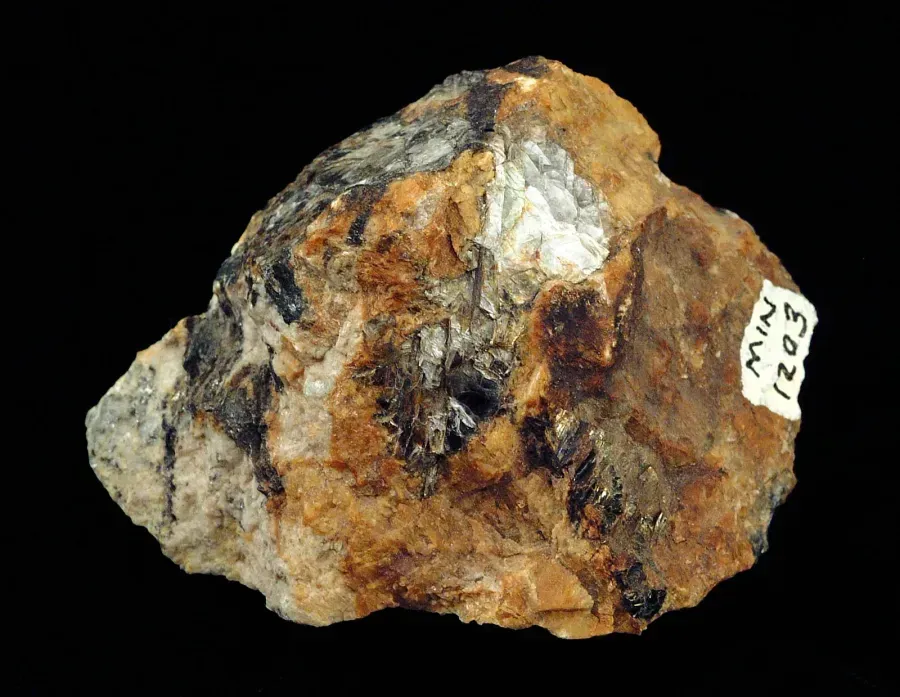
Zircon crystallises in igneous rocks, above all in granites, and also in syenites and pegmatites. It is one of the earliest minerals to drop out of a cooling melt, which is why tiny grains of it are scattered through most of the planet's granite. Zircon also turns up in metamorphic rocks, gneisses and schists.
The mineral itself is extraordinarily tough: it survives the breakdown of its parent rock, gets carried off by rivers and redeposited, all without dissolving and barely wearing down. That is why gem zircon is mostly mined from placers, the river and coastal gravels where heavy grains gather alongside other gems.
The historic capital of gem zircon is Sri Lanka, the Ratnapura district, where the stone has been worked from alluvial gravels for centuries. Other major placer sources are Cambodia (the famous blue and reddish stones from the Ratanakiri region), Thailand, Vietnam, Myanmar, Tanzania, Madagascar, Nigeria, Australia and Brazil. Many brown and reddish zircons from Southeast Asia turn blue or colourless after heating, more on that below.
Physical and Chemical Properties of Zircon
In short, here is what you need to know about the stone:
- Composition: zirconium silicate, ZrSiO4, with traces of hafnium, uranium, thorium, iron and rare-earth elements.
- Crystal system: tetragonal; crystals are short prisms with pyramidal tips.
- Mohs hardness: about 7.5, but the stone is brittle and prone to chipping.
- Density: 4.6 to 4.7 g/cm³ and above, noticeably heavy.
- Refraction: about 1.93 to 1.99, hence the strong lustre.
- Double refraction: very high; the back facets double up.
- Dispersion: marked (about 0.039), pronounced fire.
Famous Deposits and Notable Stones
Every source has its own recognisable handwriting. Ratnapura in Sri Lanka is the historic capital of gem zircon, and for centuries the river gravels there have yielded reddish, yellow and rare pastel stones alongside sapphire and spinel. The Ratanakiri district of Cambodia made its name with rough that gives the cleanest electric blue after heating, and it was those stones that set the fashion for blue zircon in the first place. Thailand and Vietnam supply brown and reddish rough, while Tanzania and Madagascar add warm orange tones. Australia is known not for jewellery zircon but for scientific zircon: the grains from Jack Hills in the west of the country turned out to be the oldest dated material on the planet. Understanding provenance helps you read a stone. If the description of a blue zircon names Cambodia, you are almost certainly looking at well-heated rough with a stable colour.
Britain's own connection to the mineral runs through the collections rather than the mines. Ceylon was the source that supplied London's gem trade through the eighteenth and nineteenth centuries, which is why so many Georgian and Victorian pieces in British museum cabinets hold stones catalogued as jacinth or jargoon that a modern gemmologist would simply call zircon. The Natural History Museum in London holds reference specimens from the same alluvial deposits that still feed the market today, which makes zircon one of the few gems where you can trace an unbroken line from a Georgian ring to a stone on sale this year.
Blue zircon is a stone for electric light, not candlelight. Leave the candles to honey, and no arguments.
What to Wear Zircon With
Over years of working with coloured stones, zircon has passed through dozens of my looks, from everyday to evening. Here is what actually works, by occasion.
How do I wear zircon every day? For every day I recommend a blue zircon in silver: it lives happily next to a white shirt, a linen top or a plain knit in calm tones. A boat or V-neck opens up space for the pendant, and the stone reads even as you dash between errands. I suggest a medium-length pendant, around the collarbones, which suits most necklines and never gets lost.
Is zircon right for the office? It is, if you keep it quiet. For work I choose the same blue or a cool green zircon in stud earrings: they act as a quiet point and do not argue with a smart blouse or jacket. One neat accent beats a scatter of stones here, so I advise against overloading the look.
How do I build an evening look? For evening I recommend a dark, smooth backdrop, a graphite or navy dress. A blue zircon on it throws an almost electric glint, while a red one next to burgundy or black reads bold and warm. For a special occasion I suggest building the accent around one large stone in a pendant on a fine chain and keeping the hands free.
How do I match the colour of zircon to metal? I hold one metal line: silver and white gold I choose for the cool blues and greens, yellow gold for the warm yellows and oranges. Warm yellow and orange zircon lifts an autumn palette beautifully: a mustard jumper, a beige coat, sand-coloured silk. I only layer two or three thin chains when the stone stands alone and the rest of the links are plain.
Who does each colour of zircon suit? Zircon suits almost everyone, but especially those who love playing with light and are not afraid of colour. Cool skin undertones I steer towards blue and green, warm ones towards yellow and orange. Colourless and grey I recommend to anyone who loves diamond-like play without colour: they pull a look together and never fight the metal.

Turn on your camera, pick earrings, a pendant or a ring, and see the piece on yourself in real time.
Switch items in one tap.
Everything runs in your browser: no photo or video is ever uploaded.
Colours and Varieties of Zircon
The colour of a zircon is set by trace elements and by the state of its lattice. In nature the most common stones are brown, reddish-brown and yellowish; the blues are mostly the result of heating. Here are the main shades.
Blue Zircon
The most sought-after colour today. Pure blue zircon is rare in nature: the vast majority of blue stones are made by heating brown zircons (mainly from Cambodia and Thailand) at around 800 to 1000 degrees in a reducing atmosphere. The colour can range from a soft sky tone to a deep, almost turquoise-steel. The double refraction in blue zircon is clear: look through the stone at a facet or at printed text and the lines will double. If you want to dig deeper into the character of this shade, read our separate piece on blue zircon.
Yellow and Golden Zircon
A warm range running from pale lemon to honey gold. Some of these stones are natural, some are produced by heating. Yellow zircon is usually clear and bright, with a lively play of light.
Red and Orange Zircon
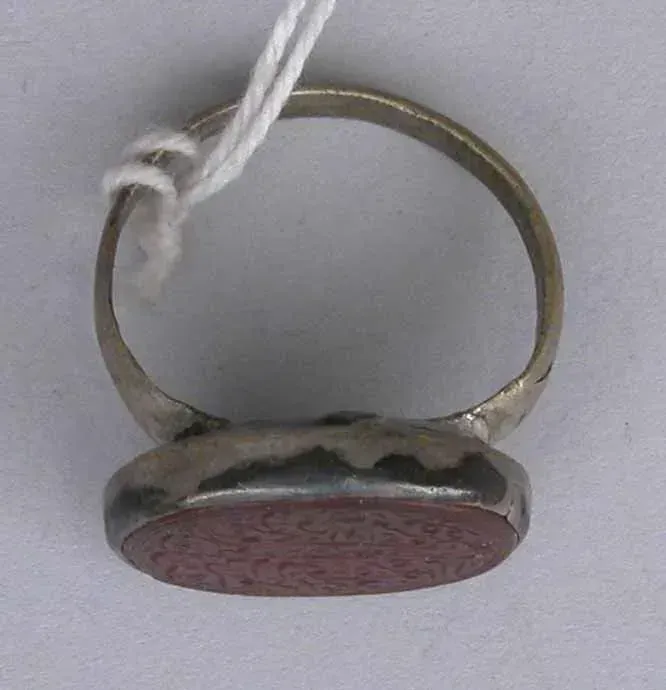
Reddish-brown and orange-brown zircons were historically called hyacinths. A pure, saturated red is rare and prized above the other shades. Orange is often produced by a gentle heating of brown rough. The sources of the reddish stones are above all Southeast Asia. We covered the origin of this colour in more detail in our article on red zircon.
Green Zircon
One of the rarest shades. The green colour is usually tied to the metamict state, that is, to the accumulated internal radiation damage of the lattice. Such stones tend to be muted, olive, less transparent, and among collectors they are prized precisely for being unusual.
Colourless Zircon
After heating, many brown zircons turn completely colourless. Thanks to its strong lustre, fire and high refraction such a stone really does resemble a diamond, and it was colourless zircon in particular that once gave the mineral its reputation as an imitation, though it is a gemstone in its own right. There is a separate article on colourless zircon.
Brown and Honey Zircon
Brown is the commonest natural colour of zircon, and nearly every other shade on the counter is born from it. Natural brown stones run from pale honey and tobacco through to deep chocolate, often with a warm reddish undertone. For a long time the jewellery trade saw brown zircon as nothing but raw material for the kiln, but over the last few decades the attitude has shifted: a warm honey tone with a strong lustre looks handsome in gold and has become a choice in its own right for anyone who likes an earthy palette. Brown stones are mostly transparent and come in generous sizes, so they make striking pendants and large rings without a punishing outlay. If you like the browns of tortoiseshell, cognac and autumn beech, this is the corner of the zircon range to explore.
Starlite and Steel Zircon
Starlite is the trade name for bright blue heated zircon with a cool steel cast that recalls electric light. It sits at the top of the blue range: clean, transparent, with visible fire. Beside it stand the calmer blue-grey and steel-blue tones, produced by a slightly different temperature or by different rough. Starlite is valued because it holds its colour and brilliance under artificial light as well as daylight, which is exactly why it ends up in evening jewellery more often than any other shade. Under the warm bulbs of a restaurant or a theatre bar, where many blue stones go flat and grey, a good starlite keeps its edge.
White and Grey Zircon
Not every colourless stone is perfectly transparent. Some zircons carry a faint milky or smoky grey cast. These white and grey stones are less showy than a truly colourless one, but their character is quieter and softer. The grey tone is sometimes tied to the early stages of metamict breakdown in the lattice, sometimes simply to natural impurities. In jewellery a grey zircon works as a restrained neutral: it never argues with the metal and it pulls a look together rather than dominating it. For anyone who finds a bright white stone too insistent, grey zircon in silver is the sensible middle path.
Violet and Pinkish Zircon
The rarest shades of zircon are the pinkish, lilac and violet stones. They turn up occasionally in the placers of Sri Lanka and Southeast Asia and barely reach mainstream retail at all. The colour here is usually pale and pastel, with a warm undertone, and it is not always stable. Collectors hunt these stones precisely because they are scarce: assembling a full zircon palette from blue through to violet is no easy task, and a pastel violet is often the last gap left in a set.
Customer reviews
Zevira is a real jewellery shop. Genuine payments, deliveries and customer thank-yous.
🥰🥰🥰 gracias

Ok, ¡gracias! 🙂

Cutting Zircon: Why It Is Done Differently
The strong double refraction that gives zircon away to a gemmologist creates a problem for the cutter. If the table of the stone is placed at an awkward angle to the optic axis, the doubling of the back facets becomes too obvious and the table looks hazy and unsharp. This is known as the sleepy effect: the stone seems veiled in mist. So a good cutter orients the rough to keep the doubling to a minimum in the line of sight from above, and factors this in before the rough is even sawn.
For round zircons cutters historically devised a special variant with an extra row of facets on the lower part of the stone, the pavilion. It is actually called the zircon cut: the extra belt of facets throws light back to the eye and masks the doubling, while also boosting the lustre. If a round stone's description mentions this cut, it is a sign that the maker worked specifically for zircon's quirks rather than cutting it like ordinary quartz.
A practical takeaway: at the counter, compare zircons by looking straight down from above. A stone whose table reads cleanly and brightly has been cut well. If through the top you see noticeable haze and the facets double to the naked eye not from the side but head-on, the cut was chosen without regard for the optics, and the brilliance will suffer.
How to Choose a Zircon: What to Look For
Zircon is judged on the same four points as any clear stone: colour, clarity, cut and size. But it has quirks the others lack.
Check colour under different lights. A blue zircon should be clean, without a grey or greenish cast; the most prized shade is saturated yet not sliding into a dull steel. Yellows and oranges are valued for warmth and transparency, reds for the depth of tone. Greyness and cloudiness always pull a stone down.
Check clarity against the light. A quality zircon is usually transparent, and visible inclusions and cracks are rarer than in many coloured stones, so a cloudy or visibly cracked specimen is a reason to drop the price or walk away. Look separately at the facet edges under a loupe, or at least in bright light: because the stone is brittle, zircon chips slightly along the sharp edges over time, producing micro-chips that gemmologists call paper wear, since the edge ends up looking like frayed paper. There should be none on a new stone; on a used one it is a normal sign of wear, but it tells you the stone needs gentle handling.
Judge the cut by the cleanliness of the table from above (see the sleepy effect above) and by symmetry. Size is a sly one with zircon: thanks to its high density, a stone of the same diameter as an aquamarine or topaz weighs noticeably more. So go by visible size, the millimetres across the top, not by carats. The same weight in zircon will give you a smaller table than in a lighter gem.
Upload a photo of your pet, someone you love, or an object. We'll build a 3D model and hand-cast it in pewter.




Treatment and Its Honest Limits
The vast majority of blue and colourless zircons on the market have been heated. This is a long-standing, accepted and stable treatment: brown rough, mostly from Cambodia and Thailand, is calcined, and depending on the atmosphere and temperature it turns blue, golden or colourless. There is no deception in this enhancement as long as the seller mentions it, and asking about the treatment of a blue zircon is entirely normal.
Heating comes with two honest caveats. First, the colour of some stones is not fully stable. Poorly or only partly heated zircons, sometimes called underbaked, may partly revert to their original brownish tone over time or under bright light. A properly treated stone holds its colour for years, but that is an argument for buying from someone who stands behind the quality of the heating. Second, after heating the stone sometimes becomes a touch more brittle along the edges, which adds one more reason for a protective setting.
Green zircon stands apart: its dull olive colour is usually linked not to heating but to the metamict state, the accumulated internal damage of the lattice from its own radioactivity. Such a stone is softer and less transparent, chosen not for brilliance but for its oddity, and that is worth knowing in advance.





The History of Zircon
The name goes back, by the common account, to a Persian word linked to a golden colour. Reddish and yellowish zircons were known in India and Ceylon long before mineralogy existed in the modern sense, and they were set into jewellery.
In antiquity and the Middle Ages, red-brown zircons were worn under the name hyacinth (jacinth), while the yellowish ones were sometimes called jargoon. They were eagerly used in signet rings and church plate; the stone is mentioned more than once in medieval lapidaries, the treatises on the properties of gems. For a long while, though, zircon was not clearly separated from similar red and yellow stones, above all garnets.
Zircon was recognised as a mineral with its own composition at the end of the 18th century: in 1789 the German chemist Martin Heinrich Klaproth, studying a Ceylon stone, isolated a new element, zirconium. From that moment the mineral had a scientific name and a place in the system.
In the 20th century zircon also had a reverse story. Heated colourless stones were set en masse into inexpensive jewellery as a diamond substitute, and the mineral picked up a reputation as an imitation. An unfair one: zircon is a natural gem with its own optics and history. Today it is valued again as a stone in its own right, especially the blue and red varieties.
Zircon as a Clock for the Planet
A separate, thoroughly scientific chapter is zircon's role in geology. Because uranium fits into the lattice while lead does not, geologists use the ratio of uranium to its decay products (uranium-lead dating) to determine the age of rocks with great precision. The oldest known mineral grains on Earth are precisely the zircons from the Jack Hills area of Western Australia, around 4.4 billion years old. From such crystals researchers reconstruct conditions on the early Earth. For jewellery zircon this is just a lovely fact, but a real one.
Zircon in the Cultures of Different Peoples
Zircon has had a long life in culture, though it often travelled under other names. In Ceylon and India the reddish stones were prized long before European mineralogy existed, and they were set into temple ornaments and the signet rings of the nobility. Because nobody could separate zircon from garnet or spinel by eye, its cultural biography is tangled up with theirs, and much of what old sources say about hyacinth applies to several red stones at once.
Jacinth in Europe
In medieval Europe red-brown zircon was known as jacinth or hyacinth and counted among the noble stones. It appears in the lapidaries, the treatises on the properties of gems that circulated in monastery libraries across England and the Continent, and it was regularly set into church plate and the rings of the clergy. The stone was credited with driving off bad dreams and keeping a traveller safe on the road, which made jacinth a popular travelling amulet among pilgrims heading for Canterbury, Santiago or Rome. English inventories of the later Middle Ages list jacinths among the stones on reliquaries and mitres, and the name lingered in British usage well into the nineteenth century, long after chemistry had moved on.
Zircon in Eastern Tradition
In the Indian astrological tradition zircon is associated with one of the shadow planets and worn as a stand-in for costlier stones of the same group. In Southeast Asia yellowish and honey zircon was valued for its warm lustre and treated as a stone of prosperity. These meanings belong to local folklore rather than to mineralogy, but they are exactly what sustained demand for the stone over centuries in the very regions where it was being dug out of the gravel. It is worth taking them on their own terms: they are living traditions with their own internal logic, not a checklist of properties a gemstone can be tested for.
Zircon in the Jewellery of Different Eras
Because colourless zircon sparkles so vigorously, in an age when good diamond imitations barely existed it was set into evening jewellery as an affordable alternative. Georgian and Victorian paste and gem pieces alike used it, sometimes with a foil backing to lift the brightness in candlelight. Blue zircon then enjoyed a wave of fashion in the first half of the twentieth century, when the heating of Cambodian rough was put on an industrial footing and the electric blue stone became a recognisable accent on evening dress. Look through the geometric jewellery of the interwar decades and you will find zircon everywhere: it suited the taste for hard-edged brilliance and cool colour, and it did so at a price that let a stone be large.
Leave your email, we'll send your discount code. No spam, unsubscribe anytime.
The code arrives by email, valid on your first order.
How to Tell Zircon from Similar Stones and Fakes
The main muddle is between natural zircon and cubic zirconia. The names sound alike, but they are completely different materials: cubic zirconia is synthetic zirconium oxide (ZrO2) grown in a lab, while zircon is a natural silicate (ZrSiO4). A few signs help you tell them apart and distinguish zircon from other gems.
Double Refraction
The most reliable everyday test. Look through the stone (better through the table at an angle) at the far facets or at a thin line. In a zircon they double up distinctly, and that is its signature trait. Diamond, cubic zirconia, sapphire and topaz show no such pronounced doubling.
Weight and Lustre
Zircon is heavy because of its high density. It has a strong lustre and noticeable fire, but the facets blunt slightly along the sharp edges over time, since the stone is brittle. Cubic zirconia usually keeps its facets sharper, and there is no facet doubling.
Comparison with Common Stones
- Sapphire (Al2O3): harder (9), tougher, no strong facet doubling, a cooler lustre.
- Aquamarine (beryl): softer and lighter than zircon, calmer in lustre and fire.
- Blue topaz (aluminium fluorosilicate): harder (8) but less brilliant, no pronounced facet doubling; blue topaz colour is almost always induced by irradiation.
- Diamond (carbon): hardest of all (10), facets do not double; in zircon the doubling is easy to see.
- Cubic zirconia (synthetic ZrO2): no facet doubling, a different density, facets stay sharper.
Crude fakes are dyed glass or assembled doublets. Glass gives itself away by the absence of double refraction, gas bubbles inside and a warm feel to the touch. If you have doubts about an expensive stone, it is worth going to a gemmological lab.
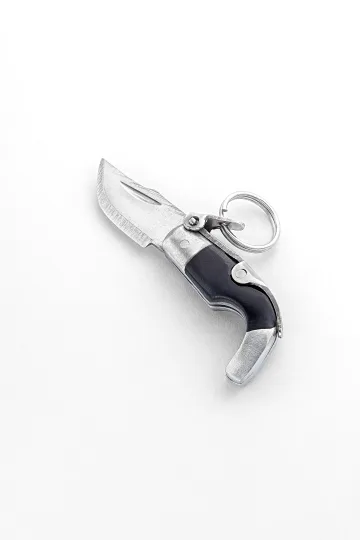
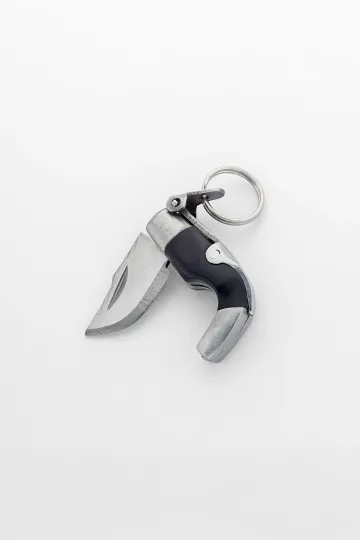
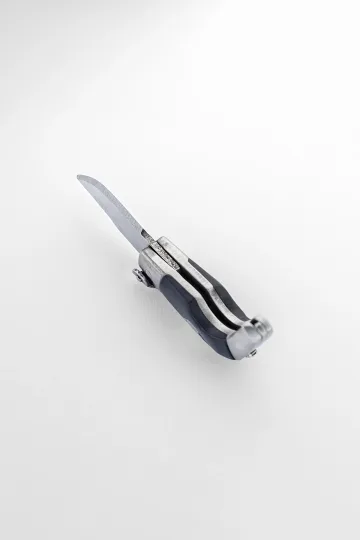
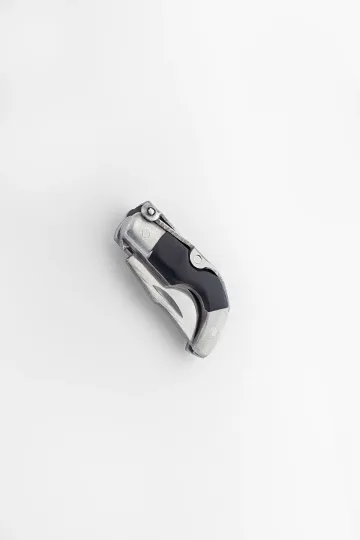
CAPAORA mini knife pendant
The 18th-century Spanish navaja in miniature: 40 mm of stainless steel, a real folding mechanism and a Palanquilla lock that clicks. An affordable gift to remember.
Authentic · Ships from Spain · 14-day returns
Zircon and Cubic Zirconia: Why They Are Constantly Confused
This muddle deserves a section of its own, because even experienced buyers trip over it. The names sound almost identical, sellers sometimes mix them up themselves, and online the two completely different materials are frequently described on the same page. Let us take it apart properly.
Different Chemistry, Different Origin
Zircon is a natural mineral, zirconium silicate ZrSiO4, which crystallises in the Earth's crust over millions of years. Cubic zirconia is synthetic zirconium oxide ZrO2, grown in a laboratory in a matter of hours. The only thing they share is the root of the word, which points to the element zirconium. Comparing them is a little like comparing oak and laminate under the single heading of flooring: related by name, but from different worlds. To make matters worse, the trade shorthand CZ and the older term zirconia float around interchangeably, so the safest move is always to ask whether a stone is natural zircon or a lab-grown cubic zirconia, in those exact words.
The History of Cubic Zirconia
Cubic zirconia was first grown reliably at a Soviet physics institute at the start of the 1970s, which is why in Russian-speaking markets it still carries a name derived from that institute's initials. The material was developed for laser optics, but its transparency, hardness and low cost quickly made it the leading diamond substitute in inexpensive jewellery worldwide. Natural zircon, by contrast, has been known for thousands of years, and its reputation suffered precisely because its name chimed with that of a young synthetic. A gem that had been worn since antiquity found itself mistaken for a laboratory product invented within living memory.
How to Tell Them Apart in Practice
The difference is visible without instruments. Natural zircon shows clear double refraction: the back facets and any line seen through the stone visibly double. Cubic zirconia is singly refractive, so the facets stay crisp. Zircon is heavier than cubic zirconia at the same size, but softer, and over the years it chips slightly along the sharp edges, whereas cubic zirconia holds its facet edges sharp for longer. The fire of cubic zirconia is actually stronger than that of zircon, so an excessively rainbow, almost gaudy sparkle combined with perfectly crisp edges tends to give the synthetic away. One more clue is the price of larger sizes: a big cubic zirconia costs almost nothing, while a big natural zircon with a clean colour never does.
Which Is Better, and When
This is not a question of worse or better but of what the piece is for. Cubic zirconia is a good answer when you want cheap, bright sparkle and would not lose sleep if it went missing on holiday. Natural zircon is chosen because it is a genuine stone out of the ground, with its own history, optics and temperament, rather than an industrial crystal. Natural zircon costs more, and that is an honest premium for being natural and for the scarcity of certain colours. A useful rule: if the stone is the point of the piece, choose zircon; if the stone is decoration around something else, cubic zirconia does the job without complaint.
Caring for Zircon
Zircon is hard enough to wear all the time, but brittle, so its main enemy is knocks and rubbing against harder stones.
Cleaning
Warm water, a drop of mild soap and a soft brush, that is enough. After rinsing, wipe the stone with a soft cloth. Avoid abrasive pastes and powders: they leave scratches. Sharp swings in temperature are best avoided too.
Ultrasonic and steam cleaners are risky for zircon: the vibration and heat can trigger a chip or set off an unseen micro-crack. Hand cleaning is safer.
Storage
Keep zircon away from harder stones (sapphires, rubies, topazes, diamonds): they will scratch it easily. A soft pouch or a separate compartment in a box will do. Protect it from prolonged direct sun, since some heated blue zircons can lose a little saturation under years of intense light.
Wearability
A hardness of 7.5 makes zircon comfortable for earrings and pendants, where the strain is lower. It works in a ring too, but because of its brittleness it is wiser to protect it with a bezel or side elements and to take it off for rough work and sport.
The Symbolism of Zircon
Various traditions credited zircon with clarity of thought, peaceful sleep and protection on the road, but that is part of the folklore around gems, no more. The stone has no proven physical or healing effect, and such meanings are best treated as a lovely cultural story rather than a property of the mineral. If the shade pleases you and lifts your mood, that is reason enough to wear it.
Send a friend a discount code, they save on their first order.
The Psychology of Choosing a Zircon
People come to zircon for two quite different reasons, and knowing which one is yours helps you avoid picking the wrong colour. The first reason is a love of light and play. The high lustre and visible fire make the stone feel alive: it answers every movement, throws sparks when you turn your head, and catches the light even on a grey day. For anyone who wants a piece of jewellery to work and live on the skin rather than sit there quietly, zircon gives the most response for a modest outlay.
The second reason is a pull towards the real thing. Plenty of buyers deliberately turn away from synthetics and want a natural stone that grew in the ground, with its own history and character. What matters to them is that zircon is not a crystal grown in a few hours but a mineral with a biography measured in billions of years. This motive often outweighs pure beauty: the person is choosing zircon precisely for its authenticity, and would rather have a slightly less perfect natural stone than a flawless manufactured one.
Colour says something about temperament too. Blue and steely starlite go to people who like cool clarity and a visible accent. Warm honey and orange sit closer to calm, earthy natures who value comfort. Red and the rare violet are taken by collectors and by anyone who cares about owning something unusual, something nobody else in the room will be wearing. Working out your own motive is useful for a practical reason as well: it points you towards a setting. If you are after play of light, open, airy settings with plenty of space under the stone will do the most for it; if authenticity is the point, a restrained mount that keeps the attention on the mineral itself makes more sense.
Surprising Facts About Zircon
Zircon is that rare case where a jewellery stone also happens to be a scientific sensation. Here is what is worth knowing about it.
The Oldest Mineral on Earth
Tiny zircon grains from the Jack Hills area of Western Australia are around 4.4 billion years old. That is the oldest dated solid material on the planet, younger than the Earth itself by only a hundred million years or so. The very crystals that keep this record are chemically no different from the stone in a ring.
The Stone We Use to Date Planets
Because uranium slots into the zircon lattice as the crystal grows while lead does not, every atom of lead inside the crystal is a product of uranium decay. From that ratio geologists work out the age of rocks to within millions of years. Uranium-lead dating on zircon is one of the most dependable methods in the whole of Earth science, and it underpins the geological timescale printed in every textbook.
Zircon Can Be Faintly Radioactive
Thanks to its uranium and thorium, natural zircon can be very slightly radioactive, and it is that internal radiation which gradually wrecks the lattice from the inside and turns a crystal metamict. In jewellery-grade material the concentration is negligible and harmless, but the fact itself makes the stone quietly remarkable: it is slowly changing inside, all by itself, while it sits in a drawer.
Cutters Invented a Cut Specially for It
Because of the strong double refraction, a special cut with an extra belt of facets on the lower part of the stone was devised for round zircon. It is called, straightforwardly, the zircon cut. This is a rare case of a facet geometry being worked out for one mineral's optical quirks rather than borrowed from the general repertoire.
The Blue Colour Is Almost Always Made by People
Pure natural blue zircon is genuinely rare. The overwhelming majority of blue stones on the market are produced by heating brown rough at somewhere around 800 to 1000 degrees. In other words, the most fashionable colour the mineral has is the result of an old but entirely human intervention, and there is nothing dishonest about that as long as it is stated.
The Colour Can Roll Back
A poorly heated blue zircon can partly revert to its original brownish tone over time or under strong light. Among gemstones this is unusual: a colour that is not locked in permanently but stays alive and can slowly give ground. It is the main practical argument for buying heated stones from someone who stands behind the quality of the treatment.
The Stone Gave Its Name to a Chemical Element
Studying a Ceylon zircon in 1789, the German chemist Martin Heinrich Klaproth isolated a new element and named it zirconium after the stone. So the mineral gave its name to an entry in the periodic table rather than the other way round, which is the reverse of the usual pattern.
Heavier Than It Looks
With its high density, zircon feels noticeably heavier than an aquamarine or a topaz of the same size. A stone of equal weight will look smaller across the table than a lighter gem. An experienced gemmologist will sometimes recognise zircon from nothing more than the way it sits solidly in the palm.
Frequently Asked Questions
Are zircon and cubic zirconia the same thing?
No, they are different materials with similar-sounding names. Zircon is a natural zirconium silicate; cubic zirconia is an artificially grown zirconium oxide. Telling them apart is simple: through a natural zircon you can clearly see the back facets doubling, while in cubic zirconia there is none.
How do you care for zircon, and can you wash it with water?
Warm water, a drop of mild soap and a soft brush, then wipe with a cloth. Zircon is not afraid of water, but abrasive pastes, ultrasound and steam are off-limits: the vibration and heat can trigger a chip. Keep the stone separate from harder gems so it does not get scratched.
Can you wear zircon in the shower, the pool or at the gym?
Nothing bad will happen in the shower or in contact with water, but a ring is best taken off for sport and rough work. Zircon is brittle and dreads sharp knocks, and in a pool or sauna it is exposed to chlorine and sharp temperature swings. Earrings and a pendant are safer in this respect than a ring.
Is blue zircon a natural colour or is it produced by heating?
Most often the blue is produced by calcining brown natural rough. This is a long-standing and accepted treatment, the colour holds for years, and asking the seller about the heating is entirely normal. Naturally pure blue zircon is rare.
How do you tell a real zircon from glass and fakes?
The main sign is double refraction: look through the table at the far facets or a thin line, and in a zircon they double noticeably. The stone is also distinctly heavy because of its high density. Glass gives itself away by the absence of doubling, bubbles inside and a warm feel to the touch.
Which zircon should a beginner choose, and who does it suit?
The easiest place to start is blue: it is expressive, popular and affordable. Look for transparency, a clean colour with no grey cast and good cut quality. The stone suits almost everyone: cool skin undertones are flattered by blue and green, warm ones by yellow and orange.
Is it true that zircon is radioactive and dangerous?
Natural zircon really does contain traces of uranium and thorium, and some stones are very weakly radioactive. In jewellery-grade material the concentration is negligible and there is no risk to the wearer. It is that internal radiation which, over geological time, breaks down the lattice and turns some stones metamict, leaving them cloudier and softer than intact crystals.
Why does blue zircon sometimes change colour over time?
That is the behaviour of rough that was heated badly or not quite far enough. A properly treated blue zircon holds its colour for years, while an underbaked stone can drift partway back to a brownish tone in strong light. It is a good reason to buy from someone who stands behind the quality of the heating, and to keep the stone out of prolonged direct sun.
Which colour of zircon is the rarest and most expensive?
In nature the scarcest stones are pure saturated red, vivid green and the pastel violet-pink shades. They can hardly be produced by heating at all, which is why they command more than the mass-market blues and colourless stones. Among the blues, bright starlite with its cool steel cast is picked out as a category of its own.
Is zircon suitable for an engagement ring?
Zircon is expressive and beautiful, but it is brittle and gradually chips a little along the sharp edges, so it is chosen less often for a ring that will be worn every day for years. If you have your heart set on zircon, take a setting with a protective rim and slip the ring off for rough work. For earrings and a pendant there are barely any restrictions at all.
Buying it as a gift? Each one arrives ready to give.
 A branded Zevira box and a little card come with every order.









About Zevira and Our Zircon Collection
Zevira treats zircon as a stone in its own right, not as a substitute for something pricier. We pick transparent specimens with a clean colour and set them in 925 silver and gold.
In working with zircon, a few things matter to us:
- A clean, even colour with no grey or cloudy traces.
- A quality cut that brings out the stone's lustre and fire.
- A setting that protects the brittle edges in everyday wear.
- A clear description of the stone: you know you are buying real zircon.
The collection has rings, earrings and pendants with blue, yellow, red and colourless zircon, from calm everyday pieces to expressive evening ones. Open the catalogue and choose your colour.