Eternity Ring: A Row of Diamonds as a Symbol of Time That Never Ends
An eternity ring is given not at a wedding, but after it. After the first anniversary, after the birth of a child, after twenty-five years together. This is jewellery for a marriage that has withstood enough time to deserve a row of diamonds with no beginning and no end. The engagement ring promises the future. The wedding band confirms the present. The eternity ring takes stock of the past and says it was worth it.
Among ritual jewellery, the eternity ring holds a special place. Engagement and wedding rings appear once each. After that, the ring finger has no more free space in Western tradition, and any additional jewellery becomes a layer above what already exists. The eternity ring is that layer, and it's the only one with an established tradition and stable cultural meaning behind it. Not every anniversary gift needs to be one, but when you're choosing between several strong options and need a gesture with clear cultural code, a row of stones reads instantly in any country.
In this guide, we break down the eternity ring as a category: where it came from, how full eternity differs from half eternity and what an anniversary band is, what occasions call for it, which stones withstand daily wear, how settings work, and why finger size matters more here than in any other piece. Five detailed case studies, analysis of antipatterns, and an FAQ section. By the end, you'll understand in which scenarios an eternity ring works stronger than any other jewellery, and when another form would be better.
History: Victorian Keeper Rings and the 1960s Canon
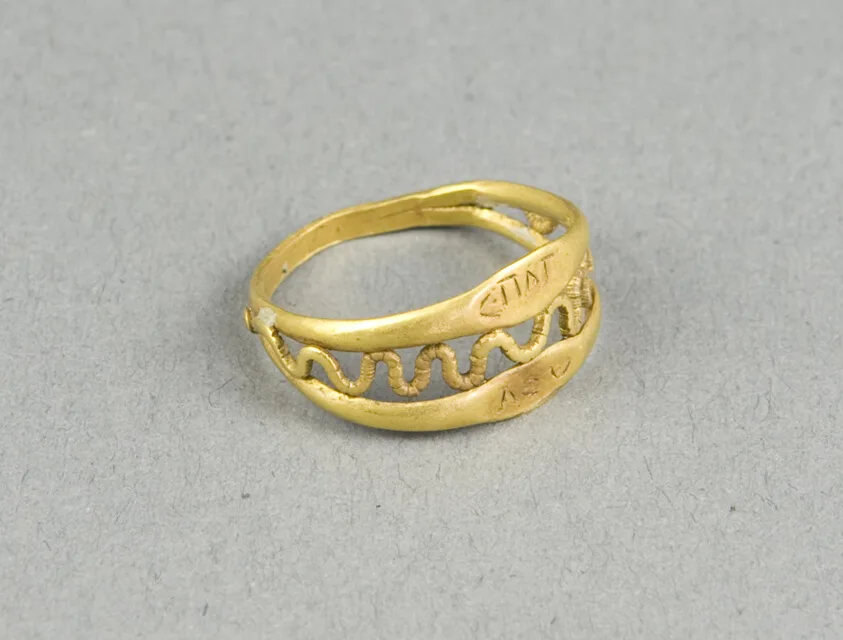
The idea of a continuous row of stones around a ring is older than it seems. Archaeological finds document similar constructions in ancient Egypt: gold and copper bands with incised patterns or coloured paste around the perimeter, symbolising the serpent Ouroboros, biting its own tail. Ouroboros is one of the oldest symbols of time's cyclicity, and a ring echoing its form was read as a marker of infinity long before jewellers learned to cut diamonds.
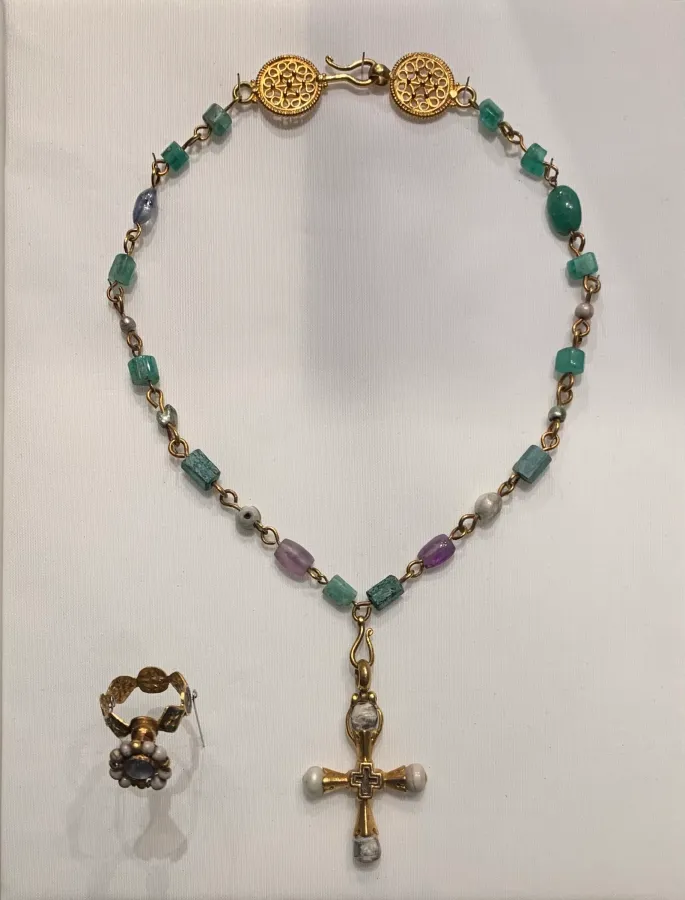
The Roman era added another image to this lineage: a wreath of laurel leaves chased in gold, given to soldiers after long service and to spouses after many years of marriage. The wreath has no beginning; its leaves connect seamlessly. When Roman artisans translated this motif into jewellery, the band became rhythmic: ten, twelve, fourteen identical elements strung without interruption. The concept had already formed; all that remained was waiting for inexpensive quality stones to become widely available so they could replace leaves with diamonds.
Wear the symbol, don't just read about it. These are in stock:
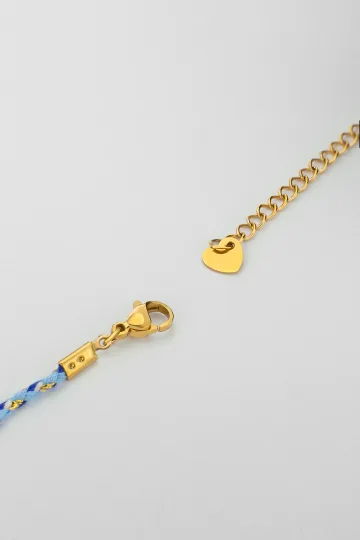

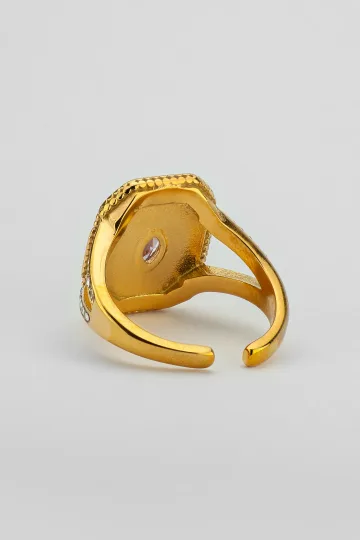
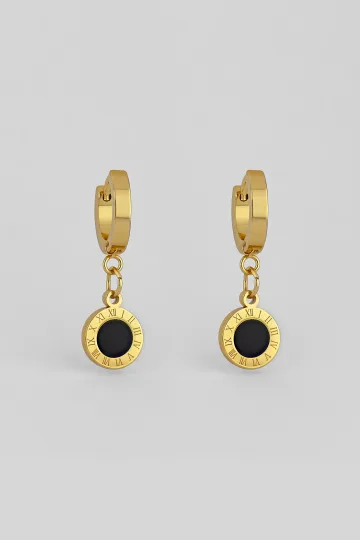


Victorian England and Keeper Rings
The true ancestor of the modern eternity ring appeared in the Victorian era, in the first half of the nineteenth century. In England, a custom spread of wearing so-called keeper rings: thin gold rings with smooth or faceted bands, worn over the wedding band to hold it in place. The purpose was practical: wedding rings of that era were often made from soft, thin gold that deformed or slipped during household work. The keeper ring was its insurance.
Over time, the form evolved. First, engravings and notches appeared on keeper rings, then small gold roses, then the first stones. By the mid-nineteenth century, recognisable rows of identical small diamond roses covered the entire perimeter of keeper rings, and Victorian catalogues documented them as a separate category. This was utilitarian jewellery with already notable symbolic value: continuity as a promise of marriage's durability.
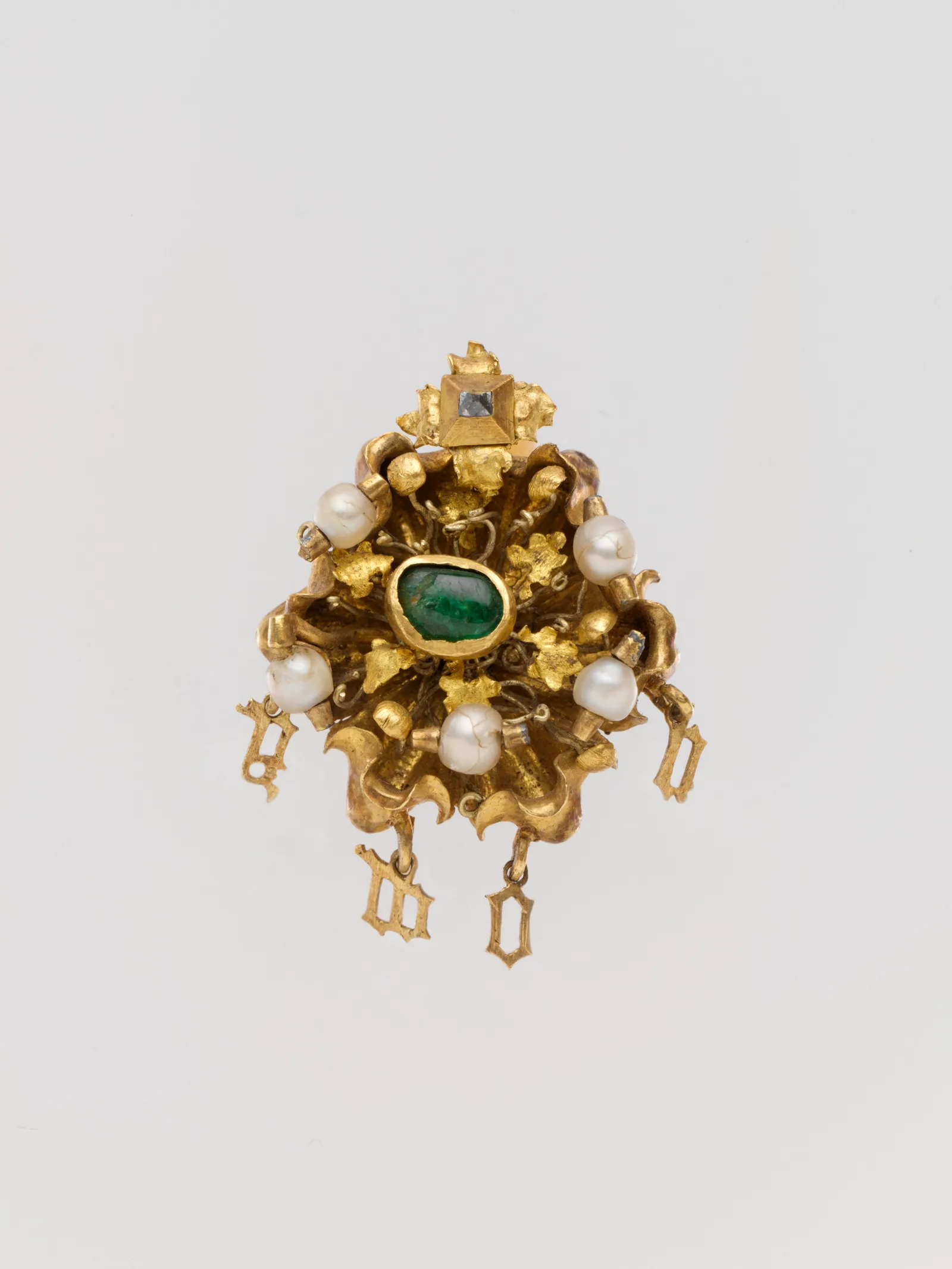
Victorian fashion generally loved symbolism and codes. Earrings, brooches, and rings of that time often carried hidden meanings: flowers meant specific virtues, stones in a certain sequence spelled out coded words. Surviving acrostic rings from that period show letters of stone names spelling DEAREST or REGARD. Against this backdrop, a ring with an unbroken row of identical stones sounded starkly simple: everything the same, nothing extra, time equals itself.
The Victorian keeper ring was accessible to the middle class, unlike the precious pasts of aristocracy. This made the form widespread: by the early twentieth century in London and Manchester, individual jewellery houses specialised in this category. The form ripened for nearly a century before the diamond revolution of mid-century.
Edwardian Delicacy and Platinum
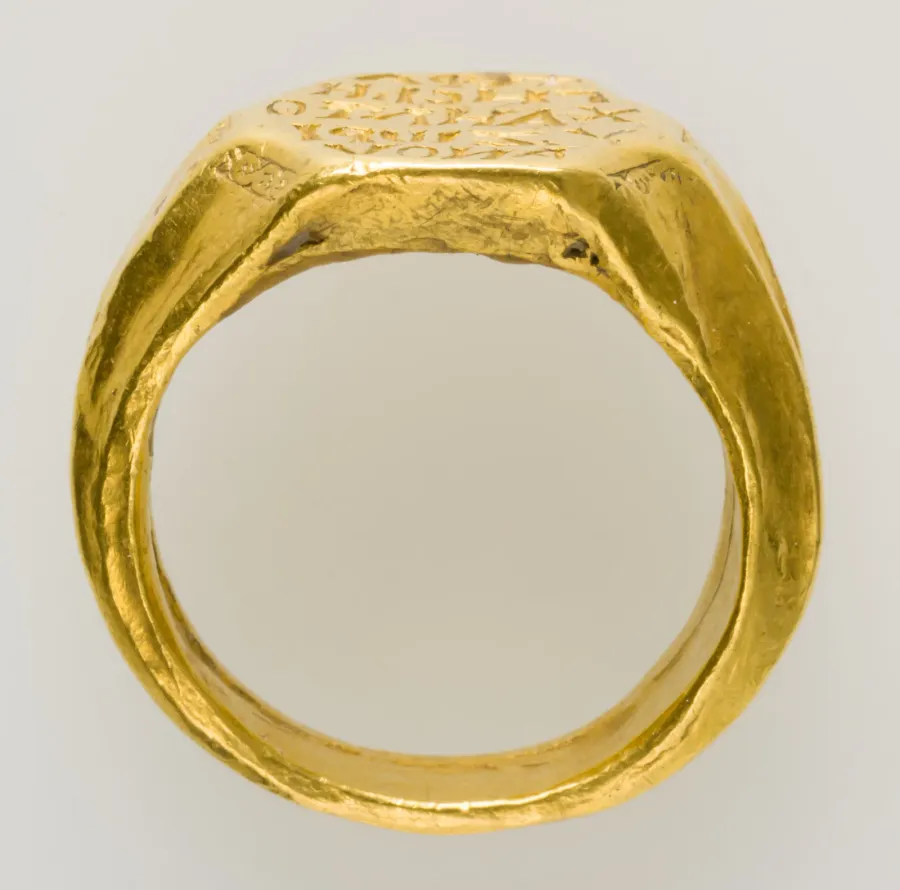
By the late nineteenth and early twentieth centuries, platinum entered the work. This metal proved ideal for thin bands with many stones: platinum is stronger than gold at the same thickness, holds fine prongs without deforming or darkening. Edwardian masters of the early 1900s brought stone rows to lacy technique where metal became almost invisible, leaving a glowing band of light on the finger.
Two things solidified during the Edwardian period. First: the idea that a ring with an unbroken row of stones around the entire band is jewellery for a grown woman, not for a bride. The bride gets one large stone; the woman after several years of marriage gets many small ones. Second: the lacy setting technique where a stone is held by millimetre-thin prongs, visible only under magnification. These two shifts prepared the ground for the canon that would form in the 1960s.
Art Deco and Geometry of the 1920s
In the twenties, fashion switched to crisp geometric lines. Rings with continuous stone rows received new interpretation: instead of round diamond roses, they set baguettes or princes that created on the finger the effect of a glowing line without interruption. Baguette eternity in art deco style became its own micro-category, recognisable to this day. Rectangular stones were laid edge-to-edge, metal between them nearly disappeared, and the effect was of a continuous crystal ribbon.
This decade also brought the idea of pairing: the wife wore an eternity ring with round stones, the husband got one of identical form but without stones, with a smooth metal band. A subtle gesture: the same geometry, different material, shared memory. Paired eternity bands in art deco style remain one of the stable ordering scenarios to this day.
Postwar Years and Market Contraction
War and the postwar years severely shrank the jewellery market. In Europe, an entire generation of masters was killed or changed professions; many archives and catalogues of old houses were lost. The eternity ring category nearly vanished from popular consciousness for ten to fifteen years. By the early 1950s, it was still remembered by aristocratic families and old jewellery houses, but ordinary buyers associated a row of stones around the band with grandmother's Victorian jewellery box, not their own.
The return came thanks to an advertising campaign that reshaped the Western jewellery market for decades to come.
The 1960s Canon
In the early sixties, a major diamond syndicate launched a campaign based on market research. Analysis showed that after a couple's first wedding anniversary, husbands' motivation to give jewellery gifts dropped sharply: the engagement ring was already bought, the wedding band was already bought, there were no more occasions, and anniversaries were associated with flowers and restaurant dinners. The syndicate proposed formalizing a new ritual: the husband gives his wife on their first anniversary a ring with a continuous row of small diamonds as a symbol of marriage's unbroken continuity.
The campaign ran on radio, television, and in women's magazines. The key phrase was short: a continuous circle of stones like a continuous circle of years. Within a few years the ritual became well-known, and the form got a stable name: eternity ring. By the mid-seventies, it no longer needed explanation to the buyer. Every mid and high-end jewellery house included eternity rings in their permanent collections, and by the eighties even its half variant appeared, half eternity, designed for women who found a full circle of stones excessive or uncomfortable.
The canon fixed one more thing: a row of diamonds was now considered a gift from the husband, not a self-purchase. This created special emotional charge in the category: the ring came with history, with words, with occasion. Self-purchase of an eternity ring remained a violation of unwritten rules for a long time and only became normal in the 2000s, when jewellery categories stopped being sharply divided into gifts and personal items.
From Canon to Freedom in the 2000s
In the two thousands the form broke free from strict constraints. The eternity ring stopped being exclusively a gift from husband. It was ordered as a push present after childbirth (often from the husband, sometimes by the woman herself), as a marker of major personal milestone (promotion, dissertation defence, relocation), as a hereditary gesture from parents to a couple. Coloured stones returned to the category: sapphire eternity, ruby, emerald. Alongside classical diamond versions appeared editions with coloured diamonds, tourmalines, garnets for those wanting to move away from transparent sparkle.
The modern eternity ring is jewellery in which every decade of history still reads today. Victorian keeper-function became the idea of holding the marriage together. Edwardian lacework became the technical foundation. Art deco geometry gave an alternative to round stones. The 1960s canon fixed the occasion and the name. The two thousands made the form neutral by giver's gender and expanded the list of occasions.
Full Eternity, Half Eternity and Anniversary Band
Visually, three variants differ by the number of stones and what part of the band they occupy. Functionally, they're three different pieces, each with its own usage profile. Confusing them at order is a common mistake that leads to disappointment after six months of wear.
Full Eternity: The Unbroken Circle
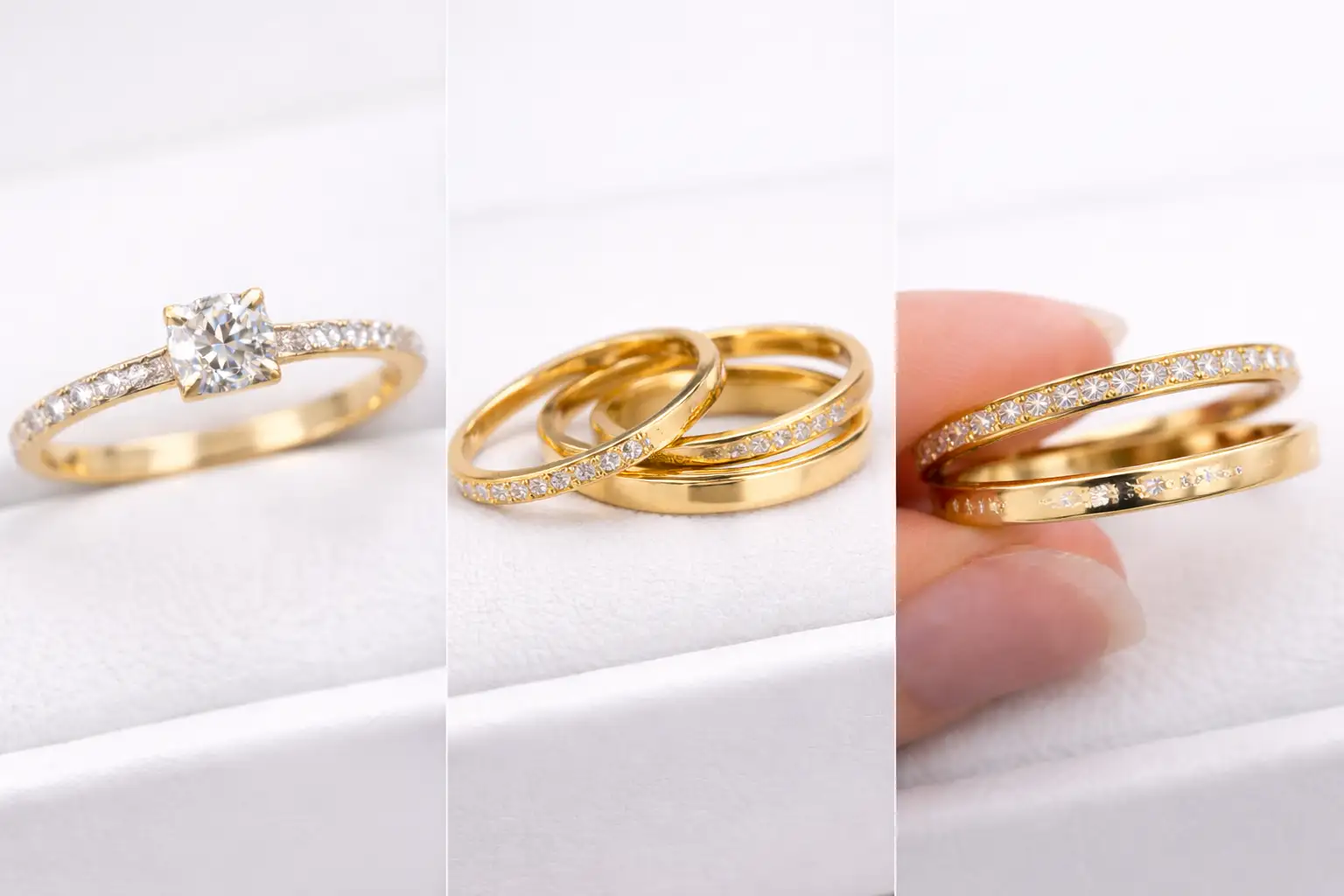
Full eternity is a ring where stones run around the entire perimeter without break. Outside you see a solid row of sparkle; inside, the finger touches stones from any direction. Visually, this is the strongest form of the category: from any angle the hand gives the same effect, and the sparkle doesn't depend on how the ring rotated on the finger.
The strengths are obvious. This is the full symbol of continuity without compromise: the row of stones literally closes on itself. The ring is equally beautiful from any side, it never looks crooked or incorrectly rotated. In photos, the hand at any angle gives sparkle, explaining its popularity in the social media age: full eternity is photogenic always.
The weaknesses aren't obvious until purchase. First and main, size is forever. Since metal and stones cover the entire perimeter, cutting the band for size adjustment is impossible without destroying the row. Any size change turns into resetting all stones, and that's expensive and essentially means making a new ring. If the wearer's finger changes between seasons, if pregnancy lies ahead, if significant weight change is planned, full eternity becomes a source of frustration rather than joy.
The second weakness is tactile discomfort. Stones on the lower curve of the ring dig into the adjacent finger when making a fist. On thin fingers this is tolerable; on larger hands with shorter fingers it becomes noticeable. The stones scratch soft skin between the fingers, and after several hours of wear, redness appears.
Third, wear. The lower curve of any ring contacts surfaces (table, steering wheel, keyboard, dishes) more than the upper curve. Stones on the lower curve of full eternity get all this load. Because of diamonds' hardness it's not catastrophic, but prongs or setting walls wear faster, and the risk of loss in the first years of wear is higher than with half eternity.
Who should choose full eternity: thin, stable finger, quiet lifestyle (not a chef, not a doctor, not active sports), willingness to remove the ring for physical labour. The ideal scenario is a milestone anniversary in middle age when body parameters and life have already settled. For the first anniversary in young couples, full eternity is rarely ordered precisely because of size unpredictability over the next ten to fifteen years.
Half Eternity: Smooth Lower Curve
Half eternity is a ring where stones occupy only the upper half of the band, while the lower remains a smooth metal arc. Outside it looks almost like full eternity (viewed from above, stones cover all the visible part), but when you turn your hand, the smooth lower section shows.
The half form solves all three weaknesses of the full. First: resizing is possible. The smooth lower curve responds to standard adjustment in any workshop, without losing stones or serious intervention in the upper part. This makes half eternity safe when finger size is unstable.
Second: tactile comfort. Smooth metal against the adjacent finger doesn't scratch skin and doesn't create pressure points. The ring is comfortable to wear all day; it doesn't chafe when making a fist, doesn't catch clothing when pulling on a sweater.
Third: wear. Stones don't contact hard surfaces. The lower curve takes all the load on smooth metal, and settings on the upper curve are preserved for years without needing adjustment.
Half eternity's weaknesses are milder. If the ring rotates on the finger, the smooth part ends up on top, and the effect of the stone row disappears until the wearer adjusts it. On thin, light rings this rotation happens often (especially if fingers are warm and flexible), and the ring needs adjusting several times a day. On heavier half eternities, the centre of gravity shifts toward the stones, and the ring self-corrects, but you pay for this with more metal.
Half eternity works strongest for everyday wear next to a wedding band. Many women wear a bridal stack of engagement, wedding, and half eternity precisely because the half form doesn't interfere with neighbouring rings and sits well between them.
Anniversary Band: Thin Stripe of Light
Anniversary band is the informal name for a half eternity subtype with specific parameters: thin profile (often 1.5-2 mm wide), small stones (0.03-0.08 carat each), many stones (11 to 17), dense pavé or micropavé setting. On the finger, an anniversary band looks like a thin glowing stripe, almost a ribbon of sparkle.
This form creates a special effect on the hand. The anniversary band sits close to skin, doesn't protrude over the finger, doesn't catch on things, combines easily with stacks of other thin rings. Many women wear two or three anniversary bands simultaneously: one with diamonds, one with sapphires, a third with smooth gold. The result is a glowing set where each ring carries its own story (for example, each child's birth marked by a different coloured stone).
Anniversary band's main strength is versatility across occasions. This is a form where you're comfortable giving yourself something on a personal milestone, adding to an existing stack, or giving as the first serious piece to a young woman who doesn't yet wear anything chunky. Its weakness is less visual weight. If the recipient is expecting an obvious "substantial" form, a thin anniversary band might read as an insufficiently meaningful gesture. So it's usually given either in a stack (several rings at once) or with conscious calculation toward the recipient's minimalist aesthetic.
How to Choose Between Them
The main criterion is occasion. If it's a milestone anniversary after 10 years together and the recipient's lifestyle permits (stable size, not active hands), full eternity gives maximum dramatic gesture. If the occasion is a first anniversary or birth, and the body might still change, half eternity is safer. If it's a self-gift, for stacking, or for a woman who doesn't love large pieces, an anniversary band gives the most comfortable result.
The second criterion is what's already worn on that finger. If the left ring finger already has an engagement ring with a centre stone, you can't add full eternity there: the row of stones will dig into the bottom of the pashley, and both rings start wearing faster. For such a combination, only half eternity or anniversary band. If the finger is empty (say, middle or index), full eternity works as a standalone accent.
The third criterion is willingness for maintenance. Any eternity ring needs annual preventive checkup: settings are tightened, stones checked for play. Full form demands this more insistently than half because of higher wear. If the recipient isn't the type to regularly bring a ring to a workshop, half eternity or anniversary band is safer.
Customer reviews
Zevira is a real jewellery shop. Genuine payments, deliveries and customer thank-yous.
🥰🥰🥰 gracias

Ok, ¡gracias! 🙂

How to Wear an Eternity Ring
An eternity ring rarely sits on a finger alone, and that is its quiet strength: it can be a soft background and the final note in a stack. Here is what actually holds up, gathered from years on set and with real couples, sorted by occasion.
How do I wear an eternity ring every day? For daily wear I recommend a narrow half eternity or a thin anniversary band next to the wedding ring. It sits right with a white shirt, knitwear, jeans, light summer linen: the stones catch light from the movement of the hand and give a soft shimmer that argues neither with a strict dress code nor with a home sweater. I suggest a narrow profile and small stones so the ring does not snag on sleeves.
Does it work at the office? Almost foolproof. A row of identical stones reads as order, not as display. With a restrained suit and a plain straight-cut dress I recommend white gold or platinum: the cool metal is calmer than warm and competes less with work clothing. Keep the watch and the ring in the same metal tone, and the hand looks composed.
How do I build an evening look? In the evening the logic flips and the ring can move to the front. A bare shoulder, a deep neckline, smooth silk or dark velvet give the stones room to shine. For evening I suggest larger stones, the full form, or a stack of two or three bands in different colours: diamonds, sapphires, plain gold mixed together. A dark plain backdrop lifts the sparkle more than a busy pattern.
How do I wear it stacked with the wedding ring? First rule that never fails: in a stack I keep the metal single, all white or all yellow, and play with the colour of the stones, or the hand starts to look random. Second: keep the width difference between bands next to the wedding ring within a couple of tenths of a millimetre, so the rings sit as one piece and not as reluctant neighbours.
Which form suits whom? By hand type an eternity ring suits almost everyone: the form is neutral, it circles the finger with even light and does not split the hand into a before and after like a large solitaire. On a narrow hand I recommend thin bands and a round cut, on a large hand with long fingers wide bands and the baguette look confident. I pick the form for the hand and the occasion, not the other way around.

Turn on your camera, pick earrings, a pendant or a ring, and see the piece on yourself in real time.
Switch items in one tap.
Everything runs in your browser: no photo or video is ever uploaded.
When to Give an Eternity Ring
In the 1960s canon, there was one occasion: the first wedding anniversary. In modern practice, there are more occasions, and each has its own emotional charge. Understanding this landscape helps choose form and material for the specific gesture.
First Anniversary
One year together is the first date when marriage is no longer fresh. Wedding emotions have cooled, routine has come, first serious conversations and first serious reconciliations have already happened. Giving an eternity ring on the first anniversary means saying the year has passed and confirmed your choice. It's not a grand gesture; it's a calm confirmation.
The form for a first anniversary is usually soft. An anniversary band or thin half eternity so the ring doesn't overwhelm other jewellery and doesn't look prematurely "heavy" as a statement. Stones are small, 0.03-0.05 carat each; metal is yellow or white gold depending on the tone of the wedding band. Often the first anniversary eternity is given on the right hand, separate from the wedding band, to leave room for future anniversaries.
Fifth Anniversary
Five years is the first middle milestone. Marriage has passed its first crisis; the couple often has a child or decided to stay just the two of them. Half of gift-givers at this point choose jewellery unrelated to the "eternity" theme: wooden anniversary associates with wooden gifts or jewellery symbolising roots and growth. But an eternity ring as a fifth anniversary gift works too: it's the statement that five years are enough to declare intent for the next fifty.
If choosing eternity for the fifth anniversary, the form is usually half eternity with 0.05-0.10 carat stones, or an anniversary band with small stones in the style of the wedding band.
Tenth Anniversary
Ten years is the boundary after which marriage is considered established in most traditions. This is the first "substantial" date, and the gift should by default be more significant than for the fifth. An eternity ring on the tenth is one of the most frequent gestures in the category. Here you usually choose between half eternity with larger stones (0.10-0.15 carat) and full eternity if finger parameters are stable.
Often, tenth anniversary eternities get engravings of the date on the inside or one differently-coloured stone marking this specific anniversary.
Silver Wedding (25 Years)
Twenty-five years is the date after which couples stop doubting the marriage succeeded. Silver anniversary is traditionally marked with silver jewellery, but an eternity ring in white gold or platinum matches that colour palette while remaining more durable than silver. Many gift-givers at the 25-year mark choose full eternity: the body no longer changes, the date is round, the gesture should be complete.
Golden Wedding (50 Years)
Fifty years together is a rarity even in an age when people live long. The gift for this date is a separate question in each family, and an eternity ring often becomes a family heirloom, commissioned by children or grandchildren for this milestone. Unlike the first anniversary, full eternity is often chosen without concern for comfort: this is formal jewellery, worn on special days, not every day.
Birth of a Child (Push Present)
A push present is a gift from husband to wife after childbirth. This is a relatively recent tradition, formalizing in Western culture in the 1990s-2000s, but it took hold quickly in other countries too. An eternity ring as a push present has special logic: a row of stones symbolises the family line, now continuing through the child.
Often, push present eternities feature a coloured stone marker for the child's birth month. For example, the main row is diamonds, and one stone is sapphire (if the child was born in September) or emerald (May) or garnet (January). With the birth of a second child, a second coloured stone is added, replacing one of the diamonds in the row. This turns the ring into a living object that changes with the family.
The form for a push present is almost always half eternity or anniversary band. After birth, a woman's finger size might change for a long time (especially if more pregnancies are possible), and full eternity at this stage is a risky order.
Surviving a Crisis
A separate category of occasions, not calendar dates, but events. A couple that survived serious crisis (serious illness, long separation, professional catastrophe) and kept the marriage often mark this with jewellery of special weight. An eternity ring in such cases symbolises not just years in general, but the specific stretch that was hardest.
These orders often choose full eternity (to emphasise complete passage), with a date of crisis resolution engraved inside. This isn't an anniversary in the traditional sense; it's a personal milestone. On such orders, non-classical combinations are common: diamonds and sapphire in the centre, or emerald row (emerald as a symbol of renewal).
To Herself on a Milestone
A woman at 40, 50, 60 marking a personal milestone increasingly buys herself an eternity ring. This breaks the old 1960s canon (where jewellery came only from the husband) but matches broader cultural shift: jewellery as a marker of personal achievement, not of someone else's attention.
For self-gifts, people often choose anniversary band or half eternity with an unconventional stone (green garnet, aquamarine, moonstone), because this is self-congratulation, not a classic spousal gesture. This is jewellery you can give yourself after defending your dissertation, after selling your company, after moving to another country. The logic is the same as a milestone anniversary: a row of stones like a row of years lived by that person.
Paired Eternities
A separate category is paired rings, where eternity is made for both wife and husband in identical design with different interpretations. The wife's ring has diamond rows, the husband's has the same band but with smooth metal or stones set invisibly in metal (men's eternity with invisible set). Often this is an order for the tenth or silver anniversary, when both spouses want to wear the shared gesture.
Paired eternities work stronger than single ones when you want to emphasise the equality of effort in marriage. This isn't jewellery from one person to another; it's from both people to themselves.
Upload a photo of your pet, someone you love, or an object. We'll build a 3D model and hand-cast it in pewter.




Stones and Cuts: Diamond, Sapphire, Emerald, Ruby
The eternity ring canon is built on diamonds. But the category has long been broader than one stone type, and understanding each variant's properties helps choose consciously, not by default.
Diamond: The Classic and Why
Diamond remains the primary stone for an eternity ring for several reasons. First, hardness of 10 on the Mohs scale, maximum among natural stones. This means a diamond won't scratch against anything but another diamond, and with daily wear its surface doesn't cloud. For jewellery worn 30-50 years, this is critical.
Second, optics. A transparent diamond gives the brightest sparkle with minimal stone area. In a row of 20 small stones, the effect of an unbroken glowing ribbon comes only with diamonds: coloured stones absorb part of the light and sparkle weakly. For full eternity where the visual task is to create a solid circle of sparkle, diamond is irreplaceable.
Third, universality across cuts. Diamond can be cut into more forms than any other stone, and each form works separately for eternity.
Round Brilliant
The most common cut in eternity rings. Stones are round, set in rows through prong or pavé setting. The advantage is maximum sparkle from any viewing angle. Each stone gives fire-like glow regardless of how the hand rotated. The disadvantage, between round stones there are always microscopic triangles of metal, and the continuity effect is weaker than with baguettes.
Round is chosen when sparkle matters more than line. For anniversary bands with small stones, this is almost always round brilliant, because fiery glow is the main goal.
Princess Cut
Square stones with cut corners. In a row they're set tightly against each other, and barely any metal shows between them. The effect on the finger is a geometric glowing ribbon with sharp borders. Princess gives more sparkle than baguette but less than round brilliant because its facets are optimized for volumetric glow, not point fire.
Princess is chosen when you want sharp lines and also high sparkle. This variant looks good on half eternity on a wide band.
Baguette
Long rectangular stones set end-to-end. This is the most "linear" form: between baguettes you can't see a millimetre of metal, and the ring becomes one continuous crystal ribbon. The fire sparkle in baguette is less than in round cut because facets are parallel (step-cut), but the effect of purity and geometry is unmatched.
Baguette eternity is the choice for art deco aesthetics and for those who value restrained sparkle without flashes. It's a less dynamic cut but more architectural.
Emerald Cut
Rectangular stones with cut corners and wide stepped facets. In sparkle power, they're like baguettes (also step-cut), but with additional play from the facets. Emerald cut eternity is rarer than baguette because facets make the row less linear.
Emerald cut is chosen when you need a compromise between baguette's pure line and round's sparkle.
Sapphire: Loyalty and Durability
Sapphire is chemically a corundum, with Mohs hardness of 9. It's the second-hardest after diamond, and for daily wear it suits almost as well. Sapphire eternity is a classic form for those wanting to move away from diamond's transparent sparkle while keeping durability.
Blue sapphire traditionally associates with loyalty. It's a stone for marriage that passed serious test (illness, separation, infidelity and reconciliation). Sapphire eternity at a couple's forty-fifth anniversary (sapphire wedding in some traditions) is rare but meaningful.
Besides blue, sapphires come pink, yellow, green, colourless. Pink sapphire eternity is a common push present choice, especially if the child was born in a "pink" month. Yellow sapphires create an alternative to yellow diamonds at a much more democratic price level. Colourless sapphire (called white sapphire) looks visually close to diamond but sparkles softer and costs significantly less.
Sapphire's minuses are less sparkle and greater dependence on cut quality. Cheaply cut sapphire looks "cloudy" compared to cheap diamond in the same price category. So in sapphire eternity it's especially important to choose well-cut stones and not skimp on the setting.
Emerald: Vitality and Caution
Emerald is a beryl variety, with Mohs hardness of 7.5-8. This means it suits daily wear worse than sapphire or diamond: at 7.5 hardness the stone already scratches from quartz particles (which are in regular dust). In eternity rings, emeralds are set, but usually with protective setting (bezel or protected pavé), not on open prongs.
Emerald traditionally associates with vitality, renewal, and fertility. An eternity ring with emeralds is a common order for a woman recovering from serious illness, or for a mother after her third child (emerald as a symbol of line continuation). This is jewellery with a different emotional charge than diamond.
Most emeralds have internal inclusions (so-called "gardens"), and in an eternity ring this works specifically: each inclusion is clearly visible on close look, and the row of stones isn't perfectly uniform. For one design direction this is a plus (stones look alive); for another, a minus. Before ordering, decide which camp your recipient is in.
Ruby: Passion and Bloodline
Ruby is also corundum, like sapphire, with the same hardness (9). For daily wear ruby is suitable. But in eternity rings, rubies appear less than sapphires because the saturated red colour as a continuous row looks dramatically excessive and doesn't suit most daily looks.
Jeweled ruby eternity is ordered more as formal jewellery than as everyday. It's a symbol of passion, bloodline, women's maturity. On a fortieth anniversary (ruby wedding in some traditions), a full ruby eternity is one of the canonical gifts. Also, ruby with diamonds is a frequent combination for double eternity: one row of stones on the upper curve, a second (contrasting) on the lower.
Coloured Diamonds
A separate micro-category, eternity rings with coloured diamonds. Black diamonds create the effect of a black line on metal, contrasting and graphic. Champagne diamonds (beige-brown tones) give warmer sparkle than white, and work on yellow gold. Grey diamonds look like semi-transparent pearls and suit modern minimalism.
Coloured diamonds are rarely chosen for ritual gifts (first anniversary, push present): they look like self-positioning rather than canon compliance. But for self-purchase on a personal date, they're a strong move.
Stone Size: What's Considered Optimal
In an eternity ring, the main stone parameter is not one stone but the row. So optimum depends on the finger, circumference, and band length. General guidelines:
For a thin finger (circumference about 50 mm) and full eternity, optimal is 0.05-0.08 carat stones each, 20-25 total in the row. This gives a dense sparkle without visual "heaviness."
For a medium finger (55-58 mm circumference) and full eternity, 0.08-0.12 carat, 22-28 stones. This is already a more formal form.
For a wide finger (60+ mm) or for formal eternity on a milestone, 0.15-0.25 carat stones, 18-22 total. This is already substantial jewellery that announces itself at first glance.
If budget goes toward premium, sometimes eternity is ordered with 0.30-0.50 carat stones, 12-15 total. This is already a separate jewellery category, worn more as formal jewellery for special occasions than every day.



Setting Technology: Pavé, Channel, Bezel, Prong
The setting is how a stone is held in metal. Setting affects both the ring's sparkle and its durability and wearing comfort. Eternity rings use four main techniques, each with its own profile.
Pavé
The most common setting for eternity rings. Stones are set tightly against each other and held by tiny metal granules looking like small balls between stones. The effect on the finger is a continuous stone-paved surface, hence the name (pavé means "paved street" in French).
Pavé gives the densest sparkle picture: barely any metal shows between stones, the row looks whole. This is ideal for full eternity and for anniversary bands with small stones.
The downside of pavé is sensitivity to impacts. The metal granules holding stones are small, and with hard impact the ring risks losing a stone. Pavé requires regular inspection (at least yearly) and careful wear: don't remove the ring with a blow against the countertop, don't wear it to the gym.
Micropavé is a pavé subtype with especially small stones (0.01-0.03 carat each) and microscopic granules. This is the most delicate and most fragile technique. Good for formal jewellery, bad for daily wear.
Channel
Stones are set in a metal groove (channel) running around the entire band. Stones are held by the channel's walls rather than individual prongs or granules. The effect on the finger is a neat row of stones sunk in metal on both sides.
Channel setting is the most reliable for daily wear. Stones are protected by metal on both sides, and the loss risk is minimal. This is ideal for active hands: chef, doctor, athlete, parent of small children. Also, channel suits baguette well: rectangular stones fit edge-to-edge in the groove and create a continuous crystal ribbon effect.
Channel setting's downside is less sparkle. The channel walls cover part of the stone's side facets, and less light enters the stone than in pavé. Channeled eternity's sparkle effect is more modest, especially in daylight. For formal jewellery this is a minus; for everyday wear, a plus (the ring doesn't look flashy).
Bezel
The most protective setting: each stone is surrounded by a metal rim all the way around. On the finger it looks like a row of stones each in its own "frame." The effect is less sparkly than pavé but geometrically clean and architectural.
Bezel is used in two cases. First, very active hands: bezel protects stones better than any other setting, and loss risk is minimal. Second, aesthetic choice: for modern minimalist designs, bezel gives the needed geometric language.
Bezel's downside is enclosed sparkle. The metal rim absorbs light, and stones shine less than in open settings. For full eternity, bezel is rarely used precisely for this reason: the row looks matte compared to pavé.
Prong
Stones are held by small metal claws (prongs) bent over the stone. In eternity rings, usually four or six prongs per stone are used. The effect on the finger is stones seeming to float above the metal, with light hitting them from almost all sides.
Prong gives maximum sparkle: open from above and sides, the stone gives fiery glow in all directions. This is ideal for larger stones (0.15+ carat) where each stone's sparkle matters more than row density.
Prong's downsides are increased wear and risk of catching. The claws protrude above the ring surface, and touching clothing might catch them. Over time they wear, and the prong weakens: every 5-7 years the claws are tightened or restored. Also, prongs protect the stone less from side impacts.
Hybrid Techniques
Many modern eternity rings use combined setting. For example, the upper curve in prongs for maximum sparkle, the lower in channel for strength. Or pavé on the sides and bezel in the centre. Such solutions balance sparkle and durability.
When ordering eternity, it's useful to discuss with the artisan both the setting type and its execution. A quality setter differs from an average one in details: angle of prongs, evenness of granules, precision of channel. These details aren't visible in a catalogue photo, but after 10 years of wear the difference between good and average execution becomes catastrophic.
Leave your email, we'll send your discount code. No spam, unsubscribe anytime.
The code arrives by email, valid on your first order.
Size and Impossibility of Resizing
Of all pieces made to order, an eternity ring is most sensitive to size. A half-size error here costs more than in any other jewellery category. Understanding why means understanding this form's main risk.
Why Full Eternity Doesn't Resize
Standard ring resizing is simple. The artisan cuts the band at the lower part (where metal is smooth), shrinks or stretches it, solders, polishes the joint. On a normal ring, the operation takes an hour and costs little.
With full eternity, this doesn't work. Stones run all the way around, including the lower part. Cutting the band without destroying two or three stones is impossible. If you try, you'd need to remove stones, do the operation, put stones back. In practice, this means essentially a new ring: labour comparable to making from scratch.
Moreover, restoring the perfect row after such intervention is nearly impossible. Stones in a row are matched strictly by size and colour, and calibration takes the artisan time. Putting in new stones for old would disturb the row balance. Returning the same stones, after two or three resizing operations they're worn and hold weaker.
For this reason, full eternity is always ordered exactly to size and in advance. If there's the slightest doubt about finger stability, the form changes to half eternity.
How to Measure Finger Size Accurately
Accurate measurement is its own science. Several rules that work:
First, measure the finger in a warm state, not right after cold water or from the cold. A warm finger is 0.25-0.5 size larger than a cold one. If measured in the cold, summer the ring will slip.
Second, don't measure in the morning. After sleep, hands are often swollen, and the finger is a half-size larger than normal. Measure in the afternoon, in a calm state, not after physical exertion.
Third, measure three times on different days and take the average. One measurement is a random number. Three measurements on different days and at different times give a reliable range.
Fourth, use a certified measuring set. Homemade measures from string or paper tape have errors up to a full size. If ordering eternity, ask the jeweller to measure your finger with a professional set before calculating.
Fifth, account for the fact that finger circumference at the base and under the knuckle differ. The finger widens toward the knuckle and narrows toward the base. The ring should pass through the knuckle with light effort and sit tightly at the base without play. If the knuckle is large (with age or if the person worked with hands), size is chosen by the knuckle with allowance for play at the base, and then the band is made figured inside for holding.
When NOT to Order Full Eternity
Several situations exist where full eternity shouldn't be ordered; half eternity or another form is better.
Pregnancy or planning pregnancy in the next two years. Pregnant women's and first-year postpartum women's finger sizes change substantially, sometimes by 1.5-2 sizes. A ring ordered during pregnancy or right after might become small or large in a year.
Serious weight change ahead. If the recipient is on a diet, starting treatment, in a stress phase, the body might change a lot. Finger size follows the body.
Age 60+. With years, finger joints grow, and the back of the hand thins. Women in their 70s-80s often find full eternity ordered at 50 either too tight in the joint or too loose at the base. Half eternity or a protective form with a clasp is better here.
Winter-summer fluctuations over a half-size. Some people's fingers differ between winter and summer by a half-size or a full size. For full eternity, this is already a risk zone.
Half Eternity and Its Resizing Freedom
Half eternity resizes almost like a normal ring: the smooth lower curve is cut, metal is shrunk or stretched, the joint is polished. Stones on the upper curve aren't touched. The operation is standard, not expensive.
This gives half eternity a key advantage over the long term: it can be adjusted for body changes over decades. A ring bought at 30 stays on the finger at 70. For full eternity such adaptation is impossible, and in 30 years you either redo it or give it to someone else (if finger size matched).
Engraving as Anchoring
To anchor an eternity ring to a specific event and make it an heirloom object, many order engravings on the inside of the band. Wedding date, anniversary date, initials. Engraving doesn't affect resizing possibility (on half eternity) but makes the ring definitively "named."
A special case is coordinate engraving. Coordinates of the place of first meeting, wedding city, home. This motif came from the modern wave of jewellery with personal geography, and for eternity rings it works especially strong: a circle of diamonds and one point on a map that these years are tied to.
CAPAORA mini knife pendant
The 18th-century Spanish navaja in miniature: 40 mm of stainless steel, a real folding mechanism and a Palanquilla lock that clicks. An affordable gift to remember.
Authentic · Ships from Spain · 14-day returns
Five Cases: Real Giving Scenarios
To lift the category from abstraction and show how it works in real situations, let's look at five different cases. Each comes from actual practice, and each requires its own form and material.
Case 1: Husband to Wife at 25th Anniversary After Child Loss
A couple married 25 years lost their first child in the perinatal period 23 years ago. Later came two more, both adult now. The silver anniversary comes as both spouses have already passed through much. The husband wants a gift that isn't just "we survived" but doesn't ignore what was.
Solution: Full eternity in platinum with 0.10-0.12 carat diamonds each, 25 total (one year per stone). One stone at the top is a pink or light blue sapphire, marking memory of the first child. Engraving inside: just the number 25.
Why this form works. The full circle states that 25 years passed completely, without gaps, with all difficulties included. One differently-coloured stone is silent acknowledgment of loss, not on the surface but present in form. Platinum is the tone metal for silver anniversary while being the strongest available. The minimal engraving because explanation isn't needed in the family.
Alternative if the finger isn't stable: half eternity with the same configuration and sapphire in the centre of the upper curve.
Case 2: Wife to Husband on 10th Anniversary
Ten years of marriage. The husband works with his hands: architect-practitioner, often on-site, at home with sketches and tools. The wife wants jewellery he can wear every day without removing for work.
Solution: Men's-style half eternity: wide band (5-6 mm), diamonds in invisible set or bezel, 7-9 stones total on the upper curve, rest smooth metal. Metal: white gold 750 proof or platinum. No outside engraving; inside the wedding date.
Why it works. Men's eternity rings are almost always half because full on a man's finger looks excessive. Protective setting (bezel or invisible) is essential for physical work. The wide band adds visual weight and balance (men's hands are larger; a thin ring gets lost on the finger). White gold or platinum balances the restrained masculine style.
Alternative: Anniversary band with black diamonds for a more contemporary look.
Case 3: Parents to Couple on Silver Wedding
Older parents (the bride's mother and groom's mother coordinated) want to give the married couple something shared for their 25th. The budget allows premium segment. The recipients already wear essentials (engagement and wedding bands); something third is needed.
Solution: Paired half eternities in yellow gold with 0.10 carat diamonds each. The woman's ring has 11 stones (classic odd number), the man's has 9. Inside engraving: donor names and the 25-year date. Ordered from one artisan so both rings match to the millimetre.
Why it works. Paired eternity from parents is a strong gesture of support and approval. Yellow gold is more traditional than white, and for silver anniversary it makes interesting contrast: warm metal, cold stones. Half eternity is safer by size (parents often don't know the couple's current finger sizes exactly). Engraving with donor names makes the ring a family heirloom that might pass further.
Case 4: To Herself on 50th Birthday
A woman at 50, professionally established, unmarried. Wants to mark fifty with her own gift, not tied to someone else's words.
Solution: Full eternity in yellow gold with green garnets (demantoids) and one sapphire of her birth colour. Each stone 0.12 carat, 22 total. Prong setting with open bottom (so light passes through). No engraving.
Why it works. Green demantoids are rare, far from the wedding canon, so the ring clearly reads as self-purchase, not someone else's gift. Yellow gold emphasises maturity (not a "girl's" metal). Open setting for formal jewellery, not daily wear, the recipient plans to wear it on special days, not every day. One different-colour stone is a personal accent.
Alternative: Anniversary band in rose gold with morganites for a softer look.
Case 5: Paired Couple After Divorce and Second Marriage
A man and woman, both divorced, both in first marriages have children. Seven years ago they married a second time. Children from first marriages are already adolescents or adults; everyone's relationships are built. They mark seven years of second marriage with something symbolic.
Solution: Paired anniversary bands in white gold with a thin diamond row. Both have 12 stones (one year together plus five years of friendship before marriage). Inside engraving: coordinates of where they met. Thin, light, not formal.
Why it works. Second marriage has no canonical gifts. Anniversary band is precisely that, it doesn't carry the weight of the first wedding. Its neutral form lets you put any meaning in it. Both rings being thin says the couple isn't imitating the first marriage but building their own language. Coordinates instead of date emphasises place over calendar.
Antipatterns: What to Avoid
The eternity ring category looks simple (a row of stones around the band), but that simplicity creates many opportunities to make it ugly or non-functional. Let's list the main mistakes found in finished pieces and custom orders.
Cheap Gold with Too Many Stones
The most common mistake: eternity ring from 9 or 14 carat gold (low proof) with many small stones. Low-proof gold is softer than high-proof, and prongs or setting granules hold worse in it. After a year or two stones start falling out one by one, and the ring becomes a source of constant headache: every month a workshop visit.
If you want a budget eternity, choose a form with fewer stones (anniversary band with 9-11) and normal-proof metal (750 or 950 platinum) rather than full eternity on 30 stones in cheap alloy. Fewer stones but they stay in place.
Stones Too Small
Stones 0.01-0.02 carat in an eternity ring look like dust. In a catalogue photo everything seems sparkly, but on the finger the row is blurred: each stone's sparkle is so weak the eye doesn't read the row rhythm. The ring looks like a thin sparkly stripe without structure.
Optimum for full eternity is 0.05 carat and up per stone. For anniversary band acceptable is 0.03-0.04 if there are many stones and the setting is dense. Below this the row gets lost visually, and eternity's purpose (visual continuity of sparkle) disappears.
Mismatch Between Size and Circumference
A ring with the same stone count looks different on a thin finger and a wide one. Moving a standard 20-stone eternity to a thin finger makes spacing shrink and stones visually "stick together." Moving it to a wide finger spreads them out, and visible metal gaps appear between stones.
A good artisan recalculates the stone count for finger circumference individually. Standard "20 stones" on a 50 mm finger and a 60 mm finger needs different row density. Ordering eternity without discussing this is risk of getting a ring where the row looks wrong.
Full Eternity with Unstable Finger
Already discussed above, but repeating as antipattern. Ordering full eternity during pregnancy, with weight fluctuations, at age 70+, a mistake that after a year becomes either a tight or loose ring, and nothing can be redone. If there's any doubt, change the form to half.
Mixing Cuts Without Architecture
Eternity with alternating round and princess cuts looks restless. The eye catches the shape change, the row rhythm breaks, the ring loses its main effect (visual continuity). If you want to mix cuts, do it architecturally: for example, one centre stone in a different cut and the entire rest of the row identical.
The best eternity is a uniform row. If you want variety, add it at the setting level (combined), not at the stone form level.
Stones Without Certificate
In an eternity ring with many small stones, the temptation to save on individual stone quality is strong: seems like one stone with an inclusion among 25 nobody notices. On catalogue photo, true. In hand after six months, noticeable immediately: a row of stones with different clarity and different colour looks "dirty" even from a distance.
Good eternity is built on calibrated stones in one certification range (for example, all G colour, VS2-VS1 clarity). This position can't be economized because bad stones in a row read worse than a bad stone in a solitaire.
Heavy Eternity on Daily Wear
Full eternity with large stones (0.20+ carat each) is formal jewellery. Wearing it daily, after a year the lower curve gets scratched, prongs loosen, stones get play. Formal eternities live in jewellery boxes and come out for special days; everyday ones are thinner and lighter.
If the recipient plans daily eternity wear, order with that in mind: thin half eternity or anniversary band with protected setting and small stones. Formal form is a separate gesture, a separate ring.
Ignoring Other Rings on the Finger
Eternity ring rarely stands on an empty finger. Usually there's already an engagement or wedding ring there, and the new ring has to live alongside. A common mistake is ordering eternity by your own taste without checking existing rings. The result is two rings of different heights, different widths, different geometry that rub each other and quickly wear.
When ordering a new eternity, photograph existing rings with a ruler and bring it to the jeweller. The new ring's profile should match existing rings' by height above finger and by band width. Otherwise the bridal stack will be unbalanced.
Send a friend a discount code, they save on their first order.
FAQ
Can You Wear an Eternity Ring Every Day?
Depends on the form. Anniversary band and thin half eternity are designed for daily wear. Full eternity with large stones is formal jewellery; daily wear speeds its deterioration several times. If you plan to wear eternity constantly, choose half eternity with protected setting (pavé on platinum or channel) and small stones (0.07-0.12 carat). For physical activity (sports, heavy manual work) remove the ring anyway.
What if a Stone Falls Out?
Stop wearing the ring until repair. The empty setting opens, and after a day or two it deforms or collects debris, making restoration harder. Put the ring in a soft pouch; within a week bring it to the workshop. Good setters have calibration sets and replace the stone in an hour. If the ring is premium and stones are certified by a specific batch, replacement goes to the original jeweller.
Can an Eternity Ring Be Repaired After Years of Wear?
Yes. Half eternity repair is standard: cleaning, tightening prongs, replacing fallen stones, polishing the lower curve. Full eternity repair is more complex because any intervention needs partial disassembly. But even full eternity worn daily for 20 years fully restores if the jeweller is qualified. Annual preventive care is mandatory: checking all settings under 10x magnification, tightening weakened prongs or granules.
How Do You Choose a Size Forever?
For full eternity this is critical. Measure your finger three times on different days, in the afternoon, in a calm state, at room temperature. Use a certified measuring set. If there's doubt, switch to half eternity, which resizes. Don't order full eternity during pregnancy, while dieting, after moving to a different climate (the body adapts 6-12 months). Age over 55 is also risky for full eternity because joints grow and the back of the hand thins.
Can You Give an Eternity Ring to an Unmarried Woman?
Yes. The old 1960s canon tied eternity to the wedding ritual, but modern practice is free of this. An unmarried woman gets eternity either from parents on a milestone (50, 60), or from a close friend on significant personal event, or buys herself. In these cases, the form is usually anniversary band or half eternity with an unconventional stone so the ring doesn't read as an attempt to copy a spousal gift.
Right or Left Hand?
By Western tradition, an eternity given by a husband after marriage is worn on the left ring finger next to the wedding band. In countries where the wedding band is worn on the right (Russia, Ukraine, Poland, Germany partly), eternity goes on the right too. If eternity is self-purchase or a gift from someone other than a spouse, it's worn on any hand, usually where there are fewer pieces. Thin anniversary bands are often worn on the middle or index finger as standalone accents, separate from the wedding band.
How Many Stones Should There Be?
Technically 9 to 40, depending on form, finger size, and stone size. Classic odd numbers (11, 13, 15, 17) are considered aesthetically more correct in half form because the centre stone gives a symmetry point. In full form, stone count depends on finger circumference and each stone's size, calculated individually by the artisan. There's no universal "right" number: the main thing is the row looks uniform and dense, without visible gaps.
Can You Order an Eternity Ring with Coloured Stones Instead of Diamonds?
Yes, and this is increasingly common. Sapphire eternity is classic for the 45th (sapphire wedding), ruby for the 40th. Emerald needs protective setting (emerald is softer and more fragile than diamond), but it works aesthetically. Coloured eternity is often ordered for yourself or as a push present with the child's birth month stone. The main requirement for a stone is hardness of at least 7-8 on the Mohs scale; anything softer won't survive daily wear.
Eternity Ring with Lab-Grown Diamonds?
Lab-grown diamonds are physically identical to natural: the same chemical composition (carbon), same crystal lattice, same hardness. You can only distinguish them with special lab equipment.
A lab diamond in an eternity ring is a workable budget choice. Lab diamond costs about 3-4 times less than natural of the same quality. Aesthetically, no difference on the finger.
Lab diamond's minus is in the investment side: the secondary market for lab diamonds is weak and resale price drops harder. If you see the ring as an asset with potential value retention, natural stone is preferable. If you see it as jewellery to wear, lab is fully equivalent.
What to Do If a Stone Falls Out?
Don't wear the ring until repair. The empty setting is exposed, and after a day or two it deforms or collects debris, making restoration harder. Put the ring in a soft pouch and bring it to the workshop within a week. Good setters use calibration sets and replace the stone in about an hour. If the ring is premium and stones are certified by batch, replacement goes through the original jeweller.
How Long Does an Eternity Ring Last?
With regular maintenance, a well-made eternity lasts 30-50 years without major work. After 50 years, the band usually needs replacement due to metal fatigue. The stone doesn't change; it's reset in a new band. Antique solitaires from the 19th century often serve 120-150 years, but their bands have been completely redone several times. The stone is the same as from the time of the original cut in the 1880s.
Can You Invest in an Eternity Ring?
Possible but not the best investment tool. A jewellery store's markup on a diamond is 100-300%, and this markup doesn't return on resale. A ring bought for amount X in a store sells secondhand for X divided by three.
A loose diamond without a setting as an asset retains value better than a diamond in a ring. So if the goal is pure investment, you buy a stone in a safe, not a ring on your finger.
A ring is an emotional thing, and its financial value for the owner almost always comes from daily wearing pleasure, not from potential resale.
What to Do with an Eternity Ring After Divorce?
Legally and emotionally this is complicated. In most jurisdictions, an engagement ring is a "conditional gift" and returns to the giver if the engagement breaks. After a marriage happens, the ring usually becomes personal property of whoever wore it.
Emotionally there are options. Some ex-wives sell the ring and use the money for the next life stage. Some remelt the stone into a different form (for example, a pendant or earrings) to keep the material but change the meaning. Some keep it as a monument to the past. Some pass it to daughters with the next generation.
There's no universal answer. Any option is legitimate.
Conclusion
Silver, gold, engagement rings, symbolic jewellery, paired sets.
An eternity ring is jewellery for a marriage or life stretch that has already proven itself. This is not a promise (like an engagement ring) and not a confirmation of vows (like a wedding band), but a summation: a row of diamonds like a row of years lived together.
Of all the ritual jewellery in Western tradition, the eternity ring has the clearest logic. An engagement ring relies on one large stone; a wedding band on form. An eternity ring relies on rhythm. And this rhythm works not through each individual stone but through the fact that they stand in one row, one after another, without breaks or hierarchy. Exactly like years in a marriage: none more important than another, none wasted.
When choosing, remember three things. First, the occasion. Not every anniversary needs an eternity ring. If the occasion is small or the marriage young, an anniversary band is safer than full eternity. Second, the recipient. Body, lifestyle, finger size, hand activity determine form more than aesthetic choice. Third, the long-term view. An eternity ring is worn 30-50 years, and today's decision should work twenty years from now. Half eternity is almost always safer than full in this logic.
If you make an eternity ring consciously, it becomes one of the main pieces in the recipient's life. Often, the piece they take to the grave or pass by inheritance. Not every ring reaches this level. An eternity ring has a better chance than most.
Buying it as a gift? Each one arrives ready to give.
 A branded Zevira box and a little card come with every order.













About Zevira
Zevira makes jewellery in the artisan tradition of Albacete, Spain. An eternity ring, with its unbroken row of stones, calls for precise calibration and careful setting work, which is exactly why each one is built to order, with the stones matched to the circumference of a specific finger.
What you can find with us for anniversaries and eternity rings:
- Full and half eternity rings with diamonds for milestone anniversaries and silver weddings
- Thin anniversary bands for stacking and for treating yourself
- Versions with coloured stones: sapphire, emerald, ruby, chosen for the occasion or the birth month
- Paired rings for wife and husband in one shared design
- Pavé, channel, bezel, and prong settings to suit the recipient's lifestyle
- Sizing and stone count worked out for your exact finger before we start making the ring
Every piece is made by a craftsman by hand, with the option of personal engraving. Sterling silver 925 and 14-18K gold.