Couple Rings: Not a Wedding Band, Not an Engagement Ring, and That Is Exactly the Point
A couple ring is neither a wedding band nor an engagement ring. It is a third format: a visible sign of a bond with no registry office, no proposal, no wedding on the calendar. It belongs to two people who are together but not married, and who have chosen things that way on purpose. The format carries two thousand years of history behind it.
Three Rings People Confuse: Wedding, Engagement, Couple
In everyday jewellery talk three ideas blur together constantly, even though they stand for three different objects with three different jobs.
A wedding band marks a marriage that has actually happened. It is a legal object, tied to a record at the registry office or to a church ceremony. In Germany and parts of Central Europe it sits on the ring finger of the right hand; in the UK, the US, France, Italy and Spain on the left. The custom traces back to the ancient idea of the vena amoris, the "vein of love" supposedly running from the ring finger of the left hand straight to the heart (anatomically that vein does not exist).
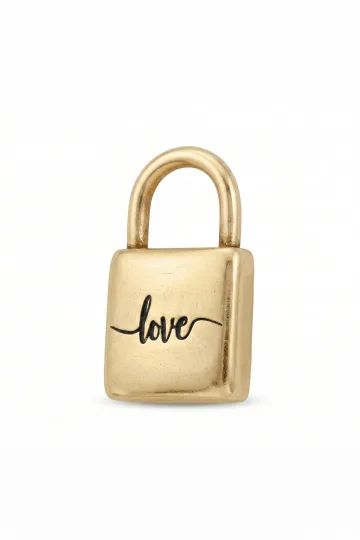
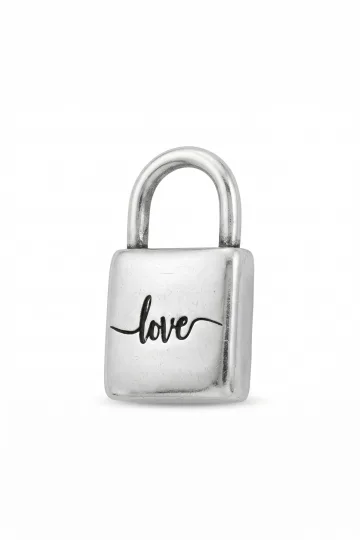
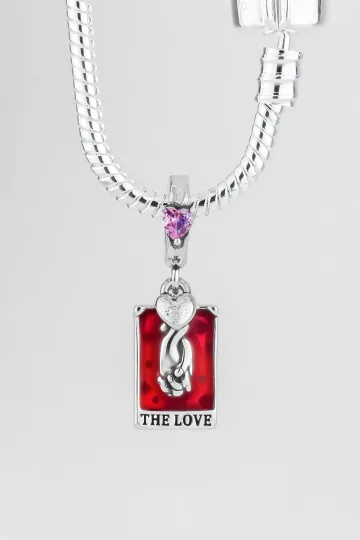
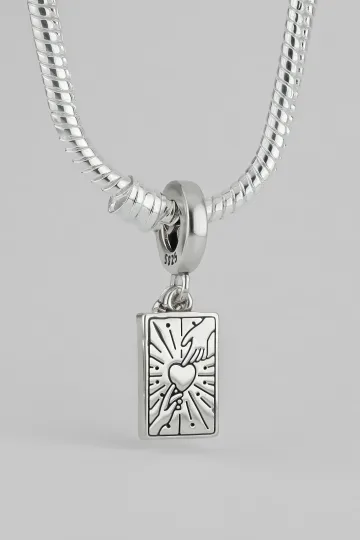
Wear the symbol, don't just read about it. These are in stock:



An engagement ring marks the intention to marry. It is given months or years before the wedding, and it lives in the space of waiting for an event. The classic version is a single large stone on a plain band, though that is hardly the only shape it can take.
A couple ring is tied to neither wedding nor proposal. It promises nothing; it simply states: "we are together, we wear a shared sign." In the eyes of the law it is two pieces of jewellery belonging to two different people. If the couple parts ways, no property or status consequences follow. Emotionally the ring weighs exactly as much as the two of them pour into it: from a light gift on the anniversary of a first meeting to the central symbol of a relationship measured in decades.
On the surface the three categories overlap. A couple ring can look like a wedding band (a plain hoop) or like an engagement ring (with a stone). The difference is not in the shape but in the function, and in what the two people read into it.
More on diamond engagement rings and on the promise ring and its meaning in separate pieces.
Who the Couple Ring Format Suits
Couple rings feel natural in exactly the places where a wedding band would be either a lie or an excess. A few typical situations.
A couple lives together for several years with no plans to marry. Shared home, shared finances, shared plans, but neither of them wants the registry office. The ring makes the bond physically visible at work, while travelling, at family gatherings, and it spares the pair some of the endless questions about status.
A second bond after a divorce. One or both partners have been married before, and repeating the registry office, emotionally or financially, holds no appeal. A couple ring marks the new bond without confusing it with the old one. Such couples often choose a deliberately different design from their first wedding bands: a different metal, a different width, engraving instead of a plain hoop.
An older couple after losing their first spouses. Two widowed people do not want to offend the memory of the dead with a new wedding, and do not want the property tangles of a second marriage, yet they want a sign. A quiet ring that makes no claim to the role of wedding band works precisely here.
Long-distance couples. Two people live in different cities or countries and see each other rarely. A physical object on the finger makes up for some of the other person's absence better than messages and video calls.
A principled rejection of marriage, for feminist, political, philosophical or religious reasons. Here the couple ring is a conscious choice: to mark the bond without taking part in an institution the pair disagrees with.
Long-standing unmarried couples, fifteen, twenty, twenty-five years together. For them the ring often becomes a deferred gesture: not for the fifth anniversary but for the twentieth, frequently after one partner's serious illness or the death of the last surviving parent. The engraving is usually the most spare of all: a date, or the coordinates of a place that has been shared for years.
Two rings milled to the same millimetre aren't a couple, they're a photocopy. Keep one difference, and I won't hear otherwise.
What to Wear Couple Rings With
Dozens of pairs have passed through my hands: some come for a thin everyday hoop, some for a ring with coordinates meant to last a lifetime. Here is what actually works on the hand, not just what looks tidy in the box.
What do I pair a couple ring with every day? I recommend a thin smooth hoop of 3 to 4 mm; it sits just as calmly with a work shirt, a weekend jumper and an evening outfit. A comfort-fit profile never catches on a cuff or gets in the way of a handshake. A light sleeve lifts silver and white gold, a dark one turns warm gold into the accent. One ring on a clear hand always beats one squeezed between three others.
Does it belong in the office? Yes, as long as you keep it restrained. I suggest a narrow hoop in silver or white gold, no stones and no heavy relief: it reads as a personal detail rather than a declaration, and it does not argue with a watch. A strict dress code is no obstacle, the smooth profile slips under the cuff and lives quietly.
How do I build an evening look? For the evening I choose a version with texture, light outer engraving or a single stone set in a bezel so nothing snags. Warm gold gets on with wine, emerald and sand tones, with velvet and dense fabric. Cool metal reads more evenly against black, graphite and icy shades.
One ring or a stack? The rule of one accent works. If the hand already carries an expressive watch or bracelet, I keep the couple hoop spare. When the hand is free, I add a thin decorative ring on the neighbouring finger and keep the couple pair recognisable between the two. Both partners wear the ring on the same finger, so the link reads at once.
What if the two of you want different metals and styles? That is fine, and often stronger than identical rings. I recommend tying the pair not by metal but by shape, width and engraving: one wears silver, the other yellow gold, yet the profile and the meaning stay shared. If you are unsure about width, go thinner, and hide the individuality inside the band.
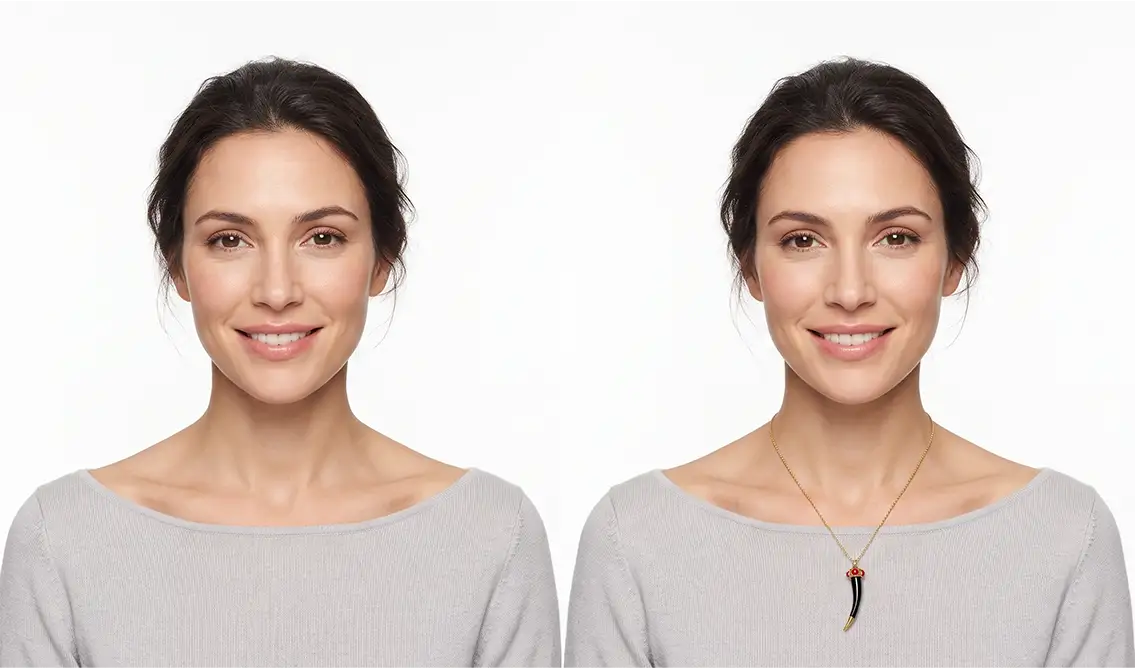
Turn on your camera, pick earrings, a pendant or a ring, and see the piece on yourself in real time.
Switch items in one tap.
Everything runs in your browser: no photo or video is ever uploaded.
The History of Couple Rings: 2000 Years Before Social Media
Couple rings are not an invention of recent years. Their story is longer than the history of most states that exist today. Every era produced its own version, but the idea stayed the same: two people wear a visible sign of a bond without appealing to any official system.
Roman Rings of Fidelity: a Handshake on the Finger, 1st Century
The first recognisable ancestor appeared in ancient Rome around the first century AD. The Latin manus in fide, "hands joined in faith," and two clasped right hands shaking became the central motif of these rings. The gesture was called dextrarum iunctio, "the joining of right hands," and in Rome it sealed any agreement: friendly, commercial, political, familial.
This ring was not exclusively a wedding object. It marked the fact of an agreement sealed by a handshake: a business partnership, a guardianship, the sworn bond of legionaries, a political alliance. Marriage was only one of its contexts.
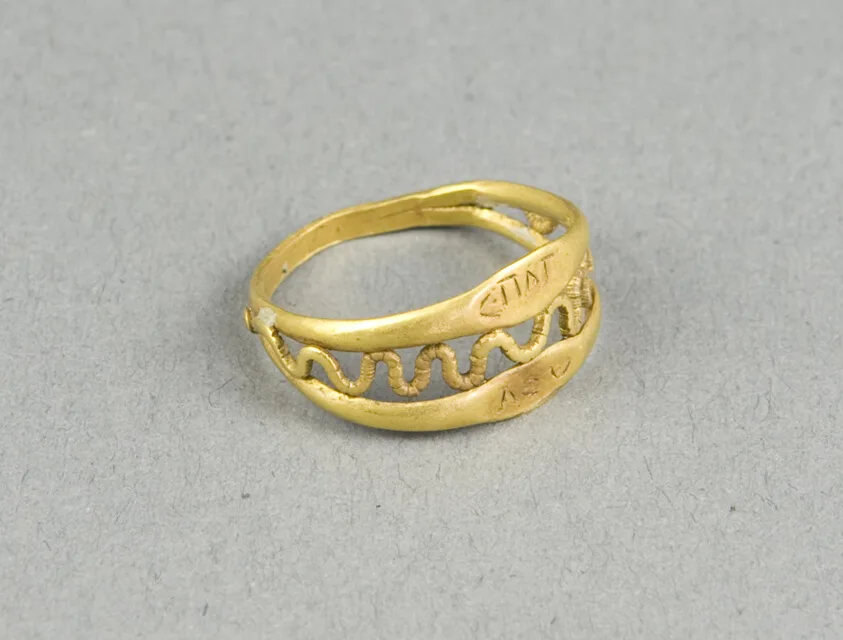
Archaeological finds of such rings are scattered across the former empire, from Britain to Syria and North Africa. They were made of gold, silver and bronze. Museum collections hold them in many forms: from rough soldiers' castings to fine gold signets with the owners' names on the inner band.
A direct descendant is still alive. The Irish Claddagh ring, which appeared in the seventeenth century, repeats the Roman scheme of two hands shaking, adding a heart between them and a crown on top. More on the Claddagh ring and its Irish history.
Byzantine Rings of Blessing: the First Step Toward a Wedding Rite
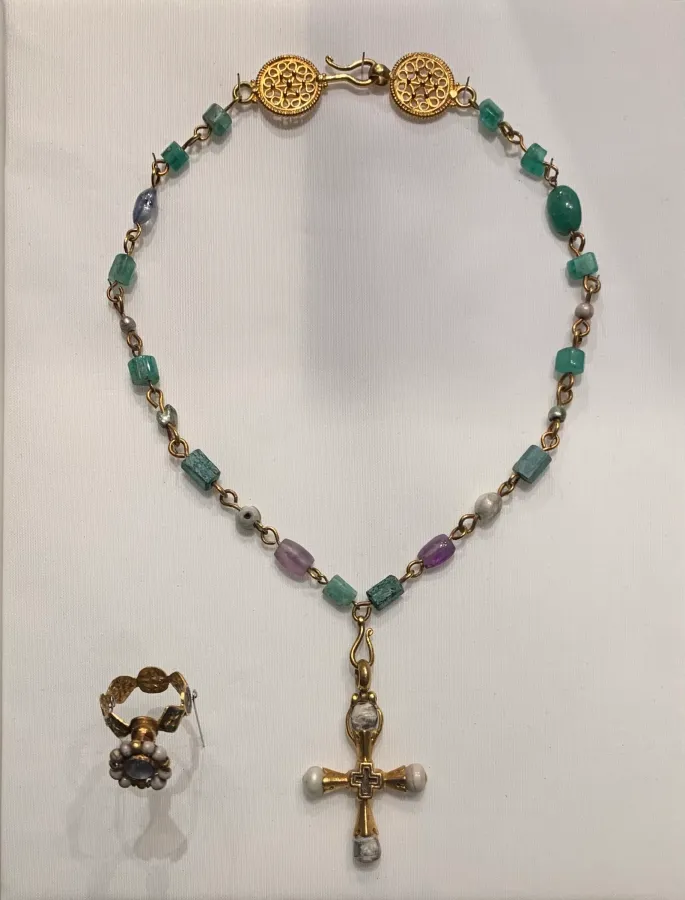
In the fourth and fifth centuries, when Rome turned Christian, these rings began to change. To the clasped hands were added a cross, the figure of a blessing Christ, the Chi-Rho monogram. A significant shift happened at the same time: the ring began to be associated specifically with the marriage bond rather than with any agreement. This is the first step toward becoming a wedding band in the modern sense. Yet the transformation was not complete: the same rings were worn at baptism and at the taking of monastic vows.
Medieval Twin Rings: One Ring That Splits in Two
By the thirteenth and fourteenth centuries Europe had the gimmel ring, from the Latin gemellus, "twin." The ring consisted of two (sometimes three) interlocking hoops that, when joined, formed a single solid band.
At the betrothal the ring was taken apart. The groom and bride each wore one half until the wedding, and on the wedding day the halves were rejoined. The metaphor was exact: neither half was a finished piece of jewellery on its own; it carried form and meaning only when joined with the other. And since the gap between betrothal and wedding could last months or years, the rings reminded each person that they were part of a pair physically incomplete.
The peak of its popularity came in the sixteenth and seventeenth centuries. The three-hoop versions are especially interesting: the middle hoop, when split, revealed a tiny heart or a hidden engraving. At the moment of the wedding the heart was hidden again beneath the two outer hoops, becoming the couple's inner secret. Inside, mottoes were often engraved: Quod Deus coniunxit homo non separet ("What God has joined, let no one put asunder"), Cor Cordis Mei ("Heart of my heart").
This is where the modern idea of "two rings from one source" comes from, the notion that two rings should be metaphorically linked and visibly alike.
Rings with Engraved Lines: a Forbidden Bond Worn as Jewellery
By the sixteenth to eighteenth centuries France, England and the Netherlands developed the tradition of poesy rings ("rings of poetry"). Plain gold hoops with a short phrase inside or outside, most often in Old French or Latin: Mon coeur est a vous ("My heart is yours"), Vous et nul autre ("You and no other"), Amor vincit omnia ("Love conquers all").
Unlike twin rings, tied to an official betrothal, these rings were often used where marriage was impossible: social inequality, different faiths, a second union while a spouse still lived, an aristocratic lover for a married woman. Thin silver rings were worn in secret, under gloves. Slipping off a glove in private, the wearer saw the engraving and remembered a bond that officially did not exist.
This is the direct historical ancestor of today's couple rings with no marriage context. Their wearers knew what modern couples know: a bond needs no state to be real.
Victorian Acrostic Rings: Stones as Code
In the eighteenth and nineteenth centuries a culture of acrostic jewellery arose. The first letters of the stones' names spelled out a hidden message. The best-known example is REGARD: Ruby, Emerald, Garnet, Amethyst, Ruby, Diamond. Six stones in a row, and their first letters give a word that in the Victorian era meant something between "I think of you" and "I value you deeply." Rings spelling DEAREST and ADORE were assembled the same way.
The context matters: in Victorian society the direct expression of feeling was thought improper. Lovers wrote coded letters, sent flowers with agreed meanings, exchanged acrostic rings. A REGARD ring was understood only by someone who knew the key to the cipher.
This is the direct ancestor of the modern engraving of coordinates, dates and code-phrases: two people wear something no one else can read. More in the piece on paired jewellery, halves and personal symbols.
The Promise Ring: a 20th-Century American Format
The promise ring in its modern form took shape in the United States in the first half of the twentieth century. It was given before an engagement, or instead of an engagement ring when a couple was too young, or across distance: soldiers of both world wars gave a ring to their sweethearts before shipping out. Where a promise ring is always aimed at the future (something is promised), a couple ring is aimed at the present (something is stated). More on the difference between a promise ring and an engagement ring.
East Asia and the Digital Age
Japan before the Meiji reforms (1868-1912) had no European wedding rings: marriage was sealed by an exchange of sake, family crests, betrothal gifts. The ring came from Europe in the second half of the nineteenth century, and by the end of the twentieth century Japanese pair-rings and Korean couple rings had become a phenomenon in their own right, neither engagement nor wedding rings but a sign of a serious relationship that a couple sometimes wears years before any possible wedding. The segment is democratic: such rings are often bought by students and young couples.
Since the 2000s couple rings have gone through a fresh transformation. Laser engraving, easy access to GPS coordinates, cheap small-batch production and the rising number of couples choosing long relationships without marriage have made the format mainstream. The modern ring is rarely just two identical hoops: it is two rings carrying the coordinates of a first meeting, a date in a format only the couple can read, or rings cast from a single ingot and split into two parts. The central idea is the same as that of the Roman rings of fidelity in the first century: two people wear a sign of a bond legible above all to themselves.
Customer reviews
Zevira is a real jewellery shop. Genuine payments, deliveries and customer thank-yous.
🥰🥰🥰 gracias
Ok, ¡gracias! 🙂
Design and Engraving Ideas
The design of couple rings is a field in itself. A few approaches, from the simple to the complex.
Two Rings From One Ingot
One of the most symbolically loaded options. The jeweller melts a single ingot in a single crucible and casts two rings from it. Both get an identical chemical makeup, the same trace impurities, the same crystal structure. It is the modern version of the medieval twin ring, but without the mechanical join: the joining happens not at assembly but at origin. Technically, from an ingot of 30 to 50 grams of silver you get two rings of 8 to 15 grams each, with the rest lost to the process.
A Phrase Split in Half
A Latin phrase is divided across two rings. On one Vitam meam, on the other habes ("You hold my life"). The whole phrase reads only when the two rings are set side by side. The same trick as the twin ring with its hidden heart: the full phrase exists only when the two people are physically together.
One Design in Two Sizes and Mirror Rings
The same hoop is made in two sizes, wider and narrower. Seen from the side, the couple's hands show one ring at two scales. A more complex variant is a mirror-symmetric design: on one ring the diagonal runs right to left, on the other the reverse. When the pair holds hands, the rings "mirror" each other.
Complementary Rings
Each ring on its own carries no obvious symbol. But set the two side by side and a figure appears: a sun and a moon, two semicircles forming a heart, two outlines making up a star. The trick demands precise geometry.
Coordinates of a Place
The most common modern approach. Inside both rings sits the same GPS coordinate: the place of the first meeting, the first date, the move into a shared flat. Four decimal places fix the location to a city block, five to a metre, six to ten centimetres (excessive for most cases). Decimal degrees (40.7128, -74.0060) sit more neatly along the curve of an engraving than the degrees-minutes-seconds format.
A variant for long-distance couples: each wears the coordinates not of a shared place but of the other's city or home. Inside one ring the partner's coordinates, inside the other your own.
Handwriting and Initials
Each person writes a short phrase or their name on paper, the sample is scanned and transferred to the metal by laser. Inside one ring the other's handwriting, and vice versa. The laser reproduces the character of the line: the pressure, the slant, the quirks of the letters. A similar trick, the partner's initials inside, is one of the oldest in the history of paired jewellery: a quiet way to carry a loved one's name at all times.
Remelted Metal From Old Jewellery
A strong approach for couples after each has been through a divorce. The old wedding bands are handed to the jeweller and remelted into new couple rings. The result is an alloy with trace impurities from both original rings; the past is not discarded but transformed. An extended variant is the remelting of family jewellery (a grandmother's earrings, a father's cufflinks): the metal holds the memory of several generations.
It is worth agreeing in advance with the maker that it is genuinely your metal being remelted, and recording the weight of the original pieces on handover.
Different Metals, Linked by Design
One partner wears silver, the other gold. Or one white gold, the other yellow. The rings differ in metal but share a common form, width and engraving. A solution for couples with different budgets, different skin (one reacts to silver, the other does not) or different family traditions. The link is created not by the metal but by the form and the meaning. More on how to mix silver and gold in jewellery.
One Stone for Two
A single stone (an amethyst, say) is cut by the lapidary into two identical halves, each set in its own hoop. Bring the rings together and the stone becomes whole again. A rare and difficult approach: the cut must be perfectly symmetrical.
What to Engrave: What Works and the Cliches
Latin works well: the phrases are short and dense, they read seriously, with no teenage sentimentality. Vitam meam habes ("You hold my life"), In via ("On the way"), Tecum tutus ("Safe with you"), Anima mea ("My soul"). Greek works too (Ἕν τὸ πᾶν, en to pan, "One, the all"), as does the phrase from the Song of Songs in Hebrew, אני לדודי ודודי לי (ani le-dodi ve-dodi li, "I am my beloved's and my beloved is mine"). A foreign language creates a double layer: for the couple it is a meaningful phrase, for everyone else a decorative pattern.
With dates it is better to take a concrete, actual step (moving into one flat, buying a shared car, the birth of a child) rather than a vague "the start of the relationship." If there is no clear date, it is more honest to put just the year than to invent an exact day for the sake of looking good. The format is yours to pick: DD.MM.YYYY, ISO (2019-06-15) or Roman numerals.
What does not work: "Love," "Forever," "My love," "My better half"; any generic phrase turns the ring into a stock gift with no character. "Mr. & Mrs." on an unregistered couple is simply untrue. Lines from current pop songs will date within ten years. Names with little hearts, the level of a school diary.
Upload a photo of your pet, someone you love, or an object. We'll build a 3D model and hand-cast it in pewter.



Summary Table of Differences
What to Avoid When Choosing
Two perfectly identical rings with not a single difference read as a clone, not as a pair. It is worth leaving at least one distinction: width (his wider, hers narrower), finish (one matte, one polished), engraving (his initials in her ring). Any difference keeps each ring belonging to that particular person.
Too "wedding-band" a look creates confusion. If a couple ring looks like a classic plain gold hoop, people around will take it for a wedding band. The signal for "not a wedding band" is a non-standard metal (silver, oxidation, two-tone), an unusual width or an outer engraving.
Excessively complex design lowers wearability. A couple ring is meant for constant wear. Protruding elements, large stones in prong settings, thin overlays catch on clothing, scratch the skin, lose their details. The design has to survive ten years of daily wear: smooth surfaces, stones in a bezel rather than prongs. Complexity is better hidden in the engraving inside than brought out into outer relief.
A mismatch between material and lifestyle. Silver on a partner who works around a pool darkens constantly from the chlorine. A ring with a prong-set stone catches on a doctor's surgical gloves. If one partner works with their hands, the rings should stand up to the load: 14K gold or steel, the fewest possible protruding elements.
Engraving without proofreading the text. A typo in the Latin, a swapped digit in a date or coordinate, is a frequent and painful error. With a good jeweller a trial engraving is done on a sample of metal, the customer signs off on the sample, and only then is the ring engraved. Any doubt about the text is settled before the laser touches the metal.
Buying at an emotional peak without discussion. A ring chosen by one partner in the heat of a moment can, a year later, prove uncomfortable or not the other's style and end up in a drawer. Couple rings are best chosen together, ideally after trying different options at the jeweller's.



Materials
The choice of material decides durability, budget and comfort.
Sterling silver, 925 (92.5% silver, the rest usually copper), is the most common material: a sensible price, excellent engravability, easy availability. It darkens in the air through a reaction with sulphur-bearing gases; this is a normal process, not a defect. The shine returns with a polishing cloth in minutes. It dislikes chlorinated water, bleaches and certain cosmetics. With normal care it lasts ten to twenty years, after which the band starts to wear visibly thin. More on 925 silver, its properties and care.
14K gold (585) is 58.5% gold, the rest alloy. A compromise between purity and strength: noticeably tougher than 18K and 24K, which matters for constant wear. It does not darken or oxidise; it can be worn in water and under load. It comes in yellow, white (with a palladium alloy, better for those with allergies) and rose. It wears for thirty to fifty years without significant marks, a material for those taking their rings for life.
18K gold (750) is higher in purity and warmer in tone but softer: a narrow band wears through faster. It suits those who want the most "gold" look and are willing to renew the polish more often.
Platinum 950 is the strongest and most durable option. It does not darken, keeps its shine for decades, and is heavier than gold (density around 21.5 g/cm³ against roughly 13 for 14K gold). It costs more and is noticeably heavier on the finger, which is why it appears less often in couple rings, mostly at the higher end of a budget.
Stainless steel (316L, 904L) is flawless on the price-to-durability ratio: it does not darken, causes no allergies, and survives any everyday situation. The downside is its lower symbolic weight: steel reads as a practical rather than a jewellery material. A good choice for an active lifestyle. It is laser-engravable.
Titanium is half the weight of steel, hypoallergenic, non-corroding, cooler in colour. The main limitation: a titanium ring can hardly be resized at all; with weight changes you will have to order a new one.
Two-tone rings contain two metals: yellow gold outside, white inside, or silver on the band and oxidised steel in the engraving. A solution for couples who prefer different metals: instead of choosing one, both are included in each ring.
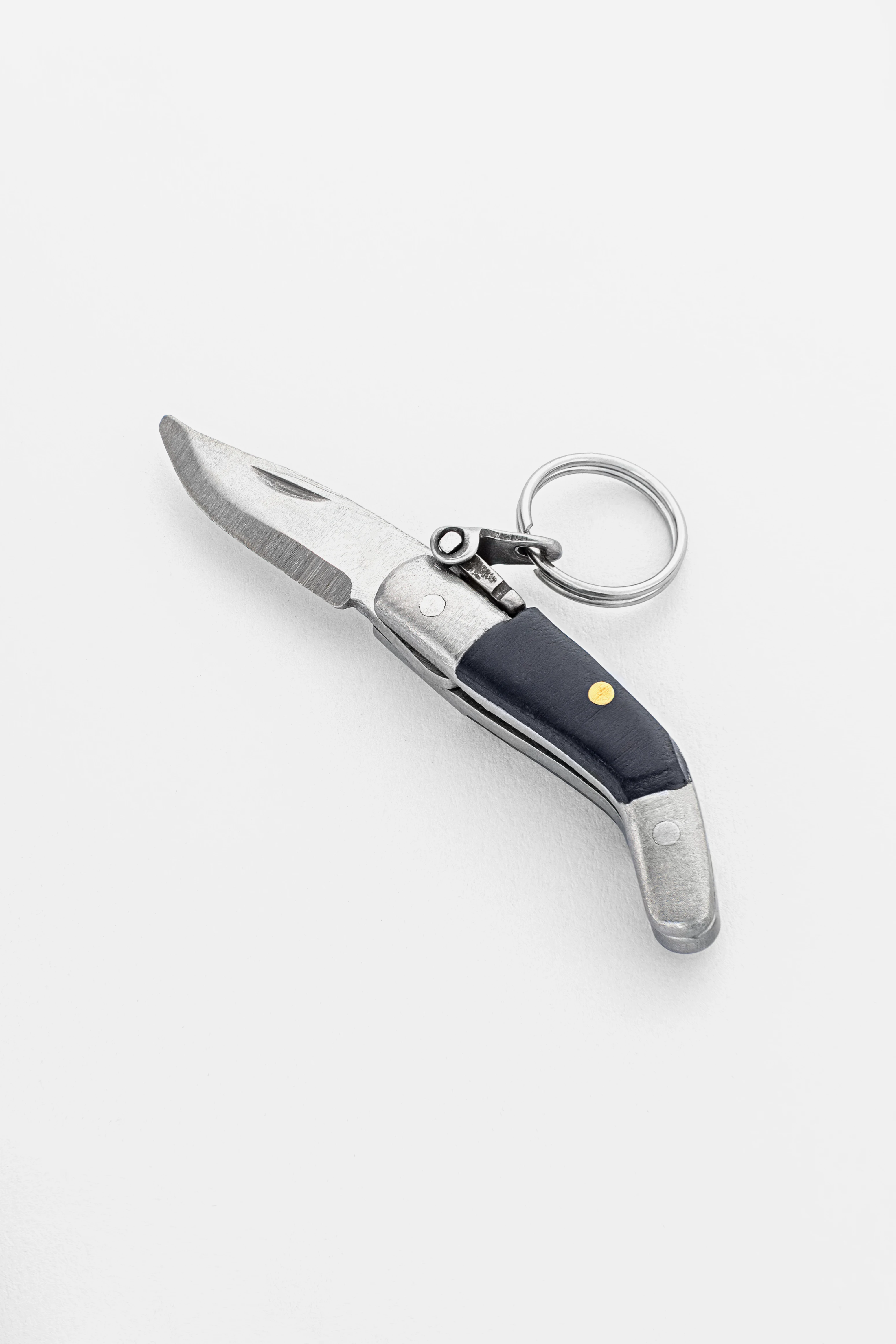
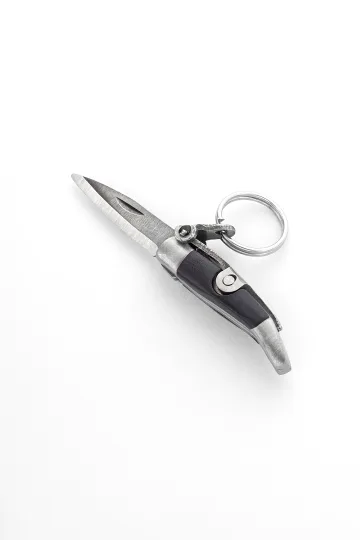
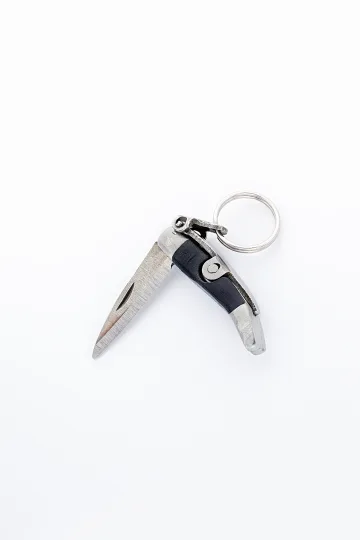
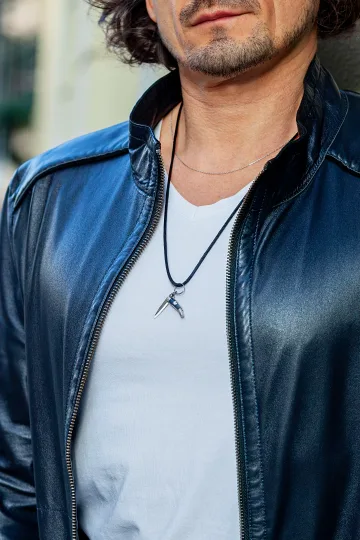
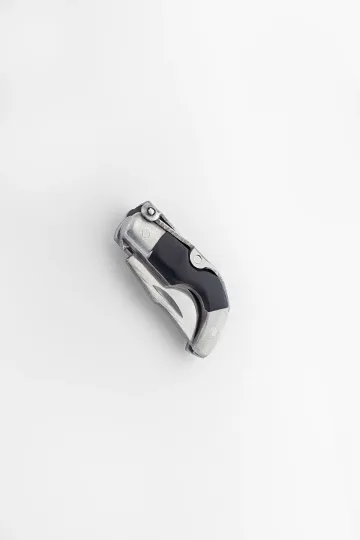
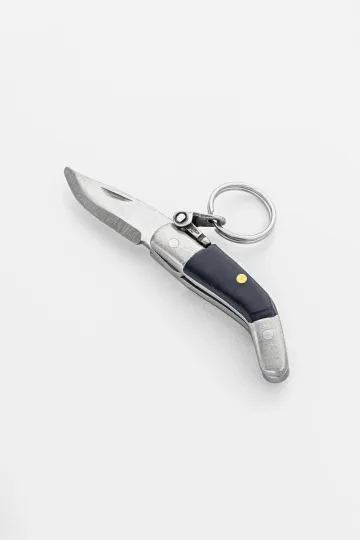
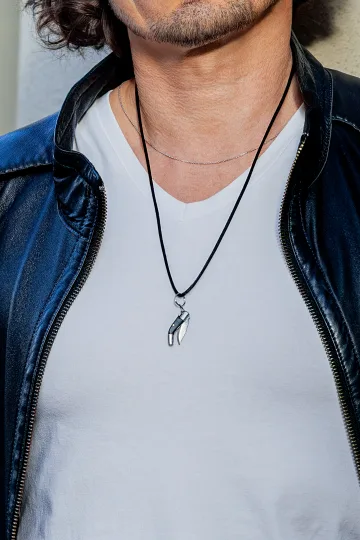
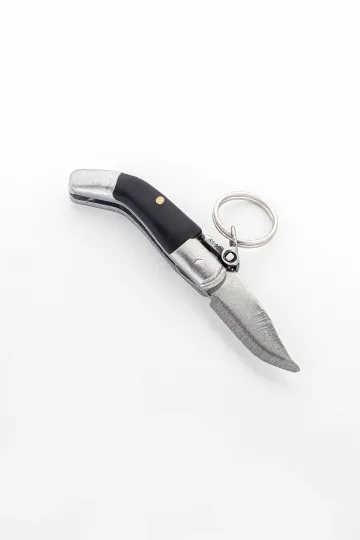
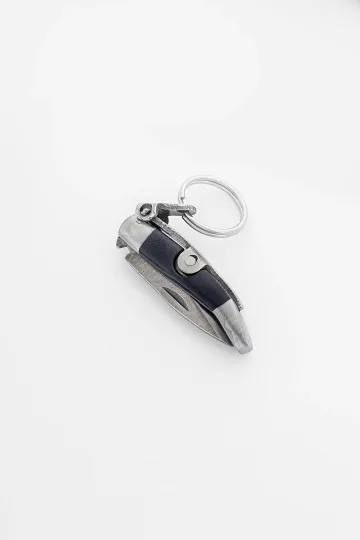
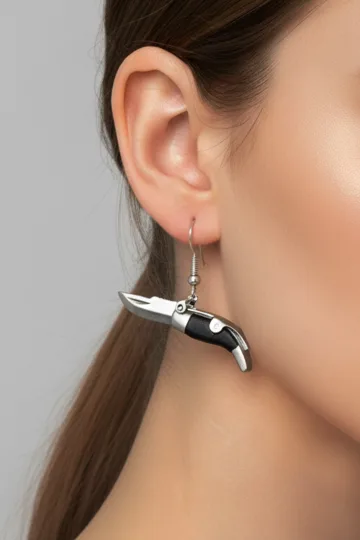
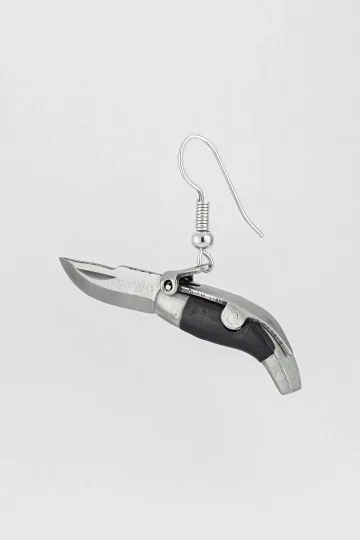
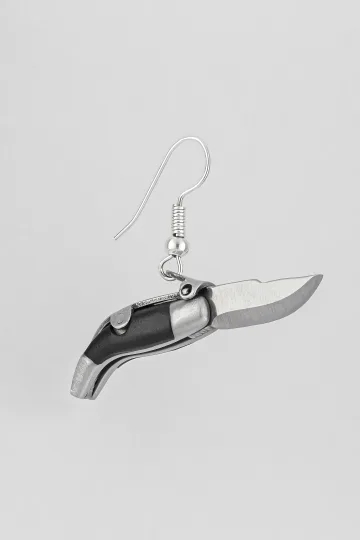
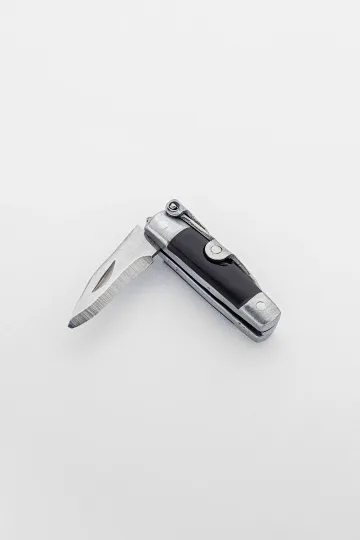
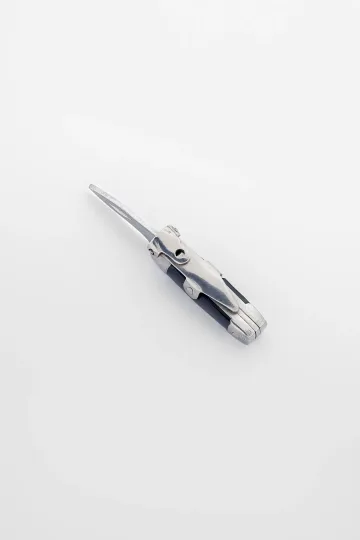
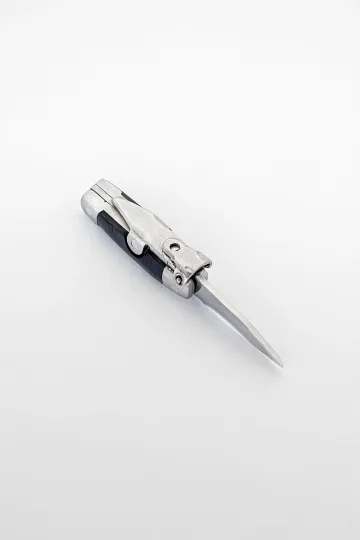
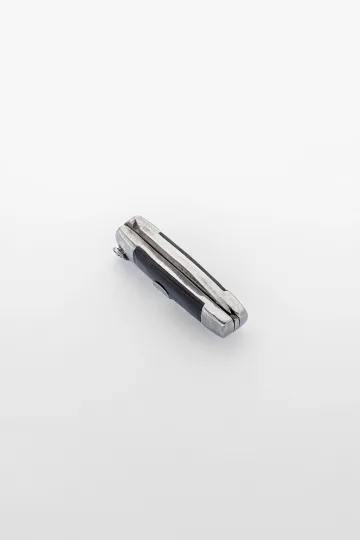
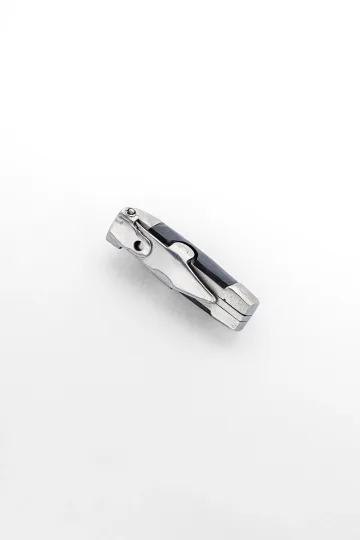
CAPAORA mini knife pendant
The 18th-century Spanish navaja in miniature: 40 mm of stainless steel, a real folding mechanism and a Palanquilla lock that clicks. An affordable gift to remember.
Authentic · Ships from Spain · 14-day returns
How to Find the Size, Including Discreetly
Couple rings are more often chosen together, in which case the size is taken right there at the jeweller's with a ring gauge. But some people still give the rings as a surprise, and then the size has to be worked out in advance without giving the plan away.
The most reliable quiet method: take a ring the partner already wears on the right finger and trace its inner diameter on paper, or measure it with a ruler along the inner edge. An inner diameter of 16.5 mm corresponds roughly to a UK size L / US 6, 17.3 mm to about UK N / US 7, 18.1 mm to about UK P / US 8. It is important to measure the ring from exactly the finger the couple ring will go on: the difference between the ring finger and the middle finger on one person can easily reach a size or two.
If there is no worn ring to hand, a thread or strip of paper works: wrap it around the base of the finger, mark where it meets, measure the length. That is the circumference; divide by 3.14 for the inner diameter. Measure in the evening: by the end of the day the finger is a touch fuller than in the morning, and a ring fitted to a morning finger may pinch by evening.
When the surprise matters more than precision, the sensible move is to build in insurance: order from a maker who resizes free or cheaply in the first weeks after purchase. Better a little loose than tight: a ring too snug cannot be put on at all, while one too loose can at least be worn until it is adjusted. For wide bands (from 5 to 6 mm) go half a size up from what you would for thin ones: a wide ring sits more snugly at the same diameter.
Leave your email, we'll send your discount code. No spam, unsubscribe anytime.
The code arrives by email, valid on your first order.
Ordering Couple Rings From a Single Maker
The main thing when ordering couple rings: for both to match in character, they are made by one maker. One technique, one hand, one sequence of operations give the very consistency the whole pair is undertaken for. Before ordering it is worth agreeing in advance on metal and hallmark, the shape and width of the band (usually 2 to 4 mm on one partner and 4 to 8 mm on the other), the finish and the exact engraving text. Sometimes a couple deliberately orders from two makers (in different cities, say) to one description, and the rings come out "from one series but different," which works especially well for cross-cultural couples.
Care
Couple rings are meant for constant wear; the care is simple but regular.
Sterling silver, 925. In the evening wipe with a dry soft cloth; this removes the film of grease that speeds darkening. Every two weeks go over it with a silver polishing cloth. Every three months do a deep clean with a soft toothbrush and a soapy solution (a teaspoon of baby shampoo in a glass of water), then rinse and dry. Do not, without need, drench silver in aggressive cleaning chemicals: with frequent use they speed the overall wear.
14K gold needs the minimum: wipe with a dry cloth once a week, clean with a soft brush and soapy water once a month, show it to a jeweller for polishing once a year.
Stainless steel and titanium need almost no care: wipe with a dry cloth every two or three weeks. A small scratch on steel can be smoothed with a fine abrasive paste.
Engraving clogs with dirt over time and becomes less legible. It cleans with a soft toothbrush and a soapy solution, and the fine lines with a wooden or plastic toothpick, never a metal one, so as not to scratch the metal.
Size. The finger changes over a lifetime: after forty it often fills out, reacts to heat and to weight swings. Gold and silver allow resizing within one or two sizes; the jeweller cuts the band and adds or removes a fragment. Rings engraved all the way around or set with a row of stones are harder to resize, which is worth bearing in mind at the order stage. Titanium can hardly be resized at all.
Storage. At home, in a little box or a soft pouch: less air, and silver darkens more slowly. On trips a box is essential, or the rings scratch against other things. If a ring is taken off at work, keep it in one dedicated spot: an accidental loss at work is one of the common reasons for a replacement order.
The Moment of Giving: How and Where Couple Rings Go On
Wedding bands come with a ready-made ritual; couple rings do not, and that is a plus: the couple invents the scene themselves. But precisely because of that freedom the moment is often muddled, the rings simply pulled from a box over dinner. A few approaches that work.
Tie it to a place, not to a phrase. If the rings carry coordinates, it makes sense to give them right there: on that bench, by that doorway, on that viewpoint. A ring put on at the very point whose coordinates it holds closes the meaning. It works even without words.
Put them on each other at the same time. Unlike a proposal, where one gives and the other receives, couple rings have no giver and receiver: both are equal. The natural gesture is for each to put the ring on the other rather than themselves. If the rings carry a split phrase or a completing image, before putting them on they are set side by side and read whole.
Skip the publicity if the couple dislikes it. The strength of the couple format is that it needs no audience, unlike a wedding. Many couples who chose rings instead of marriage value privacy, and a scene amid waiters and neighbouring tables runs against the very idea. At home, on the road, on a walk together is more honest.
On the packaging. Two identical little boxes look like two separate gifts; one box holding two rings reads as a pair, which is truer to the meaning. If the rings are cast from one ingot or carry a split inscription, it is worth saying so aloud at the moment of giving: the partner need not know that the metal is shared or that the phrase assembles only together, and that is the main part of the gift.
Couple Rings and a Wedding Band Together
A separate situation for couples who wore couple rings for years and then did marry after all. Several approaches: wear both on different fingers; wear both stacked on one finger (the wedding band at the base, the couple ring above it); put the couple ring away in a box as a keepsake of the time before marriage; remelt couple ring and wedding band into one new ring. The key point is that a couple ring is not set against a wedding band; they coexist calmly. On the principles of assembling several rings on a finger, in the piece on ring stacking.
Send a friend a discount code, they save on their first order.
Frequently Asked Questions
How does a couple ring differ from a wedding band?
A wedding band is put on at the wedding and marks a marriage that has happened; it is tied to the registry record or the church ceremony. A couple ring is not tied to marriage: it is worn by couples who have not formalised their relationship. In the eyes of the law it is simply jewellery with no legal weight.
What is the legal status of a couple ring?
None. It is two pieces of jewellery belonging to two different people. At a breakup no property or status consequences arise; each keeps their own ring. At the death of one partner the ring passes by the ordinary rules of inheriting material things, with no special status of "marital property."
If a couple marries after wearing couple rings, what should they do with the old ones?
A personal decision. You can wear both, wedding band and couple ring, on different fingers or stacked. You can keep only the wedding band and put the couple ring away as a keepsake of the time before marriage. You can remelt both into one new ring. You can pass the couple rings on to children.
What to do with a couple ring after a breakup?
Also a personal decision. Keep it as a memory, take it off and store it, remelt it into another piece, give it away or sell it. There is no ritual obligation, unlike with wedding bands.
What to engrave if a couple has no "date of their own"?
Many couples have no single clear starting date: the acquaintance was gradual. Then the engraving rests not on a date but on a place or a code-phrase, the coordinates of the city where you first spent a whole day together, the name of the place of an important conversation, a short phrase only the two of you understand. If nothing specific exists, you can put just the year, with no month and day. That is more honest than inventing an exact date.
What do couple rings cost as a segment?
The format spans the whole range. The budget segment, 925 silver with simple engraving. The middle, 14K gold with engraving and a single stone. The premium, platinum and a bespoke order from an artist-maker. The most affordable pairs of silver rings cost about as much as a dinner for two; gold with a stone is noticeably more.
How to choose a first couple ring for a pair who have never worn jewellery?
Start with 925 silver as a trial material. If neither has the habit of wearing rings, a thin inexpensive hoop helps them learn how comfortable constant wear actually is. If a year on both wear the rings without taking them off, you can order gold versions. If it turns out one partner does not wear the ring, the problem has surfaced with minimal loss.
On which finger to wear couple rings?
There are no compulsory rules. Most often people choose the ring finger or the middle finger. In some countries the ring finger of one hand is associated with wedding bands, so some couples deliberately put couple rings on the middle finger to avoid confusion. The main rule: both partners wear them on the same finger, so a visual link is created.
Do couple rings have to be identical?
No. They can be from one series but differ in form or width; they can share one common element while differing in design. The main thing is that both partners consciously wear the rings as a pair and the link between them reads.
Can engraving be added after the ring is bought?
Yes. Most jewellers add engraving to a finished ring by laser on almost any metal. What matters is that there is enough width: very thin rings (1 to 2 mm) hold fewer characters. For a long engraving it is better to take a width from 3 to 4 mm. It usually takes one to three days.
Can couple rings be worn in water?
It depends on the material. 925 silver can be, but not in a pool (chlorine speeds darkening). 14K gold, platinum, steel and titanium are worn without limits. With stones it depends on the setting: a diamond does not fear water, but prongs collect grime; soft stones (opal, moonstone, turquoise) are better kept from water.
Can a couple ring be given without the second?
Technically yes, but the meaning is partly lost: a couple ring assumes both people have one. If a one-sided gift is really what is wanted, it is better to choose an individual ring with engraving, or a promise ring. Couple rings are always two.
Are couple rings only for romantic couples?
Mostly yes in modern use. Historically such jewellery was also exchanged by close friends and business partners; the Roman rings of fidelity were a universal symbol of any bond. The practice of "couple rings for friends" exists, especially among the young, but commercially the niche is small.
Buying it as a gift? Each one arrives ready to give.
 A branded Zevira box and a little card come with every order.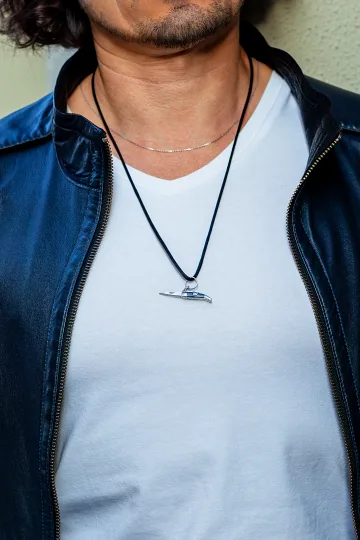




What Makes a Couple Ring "Work"
A couple ring works not through price and not through design, but through both partners wanting to wear it. An expensive ring that sits uncomfortably on the finger stays in the drawer. One unique in design but unsuited to the wearer's style does not get worn. A beautiful one, chosen by one partner without discussing it with the other, breeds tension.
A ring that works is a compromise between what both like. When choosing, it helps to answer the questions in order: is it comfortable to wear, does it suit the style, is the design liked, does it match the meaning. If all four answers are "yes," the ring fits. Price and material are secondary: many couples regret taking first rings too expensive or too fancy and then not wearing them, and almost no one regrets the plain inexpensive ones they wore with pleasure.
A ring worn for ten years becomes part of a person: the edge wears thin where the desk touches it while typing, the spot the skin touches darkens. "That one ring" becomes such; it is not bought ready-made. The main advice in choosing a first couple ring: do not look for the "perfect" one, take the one you will both want to wear tomorrow.
Common Questions
How to care for couple rings with daily wear?
Care depends on the metal, but the logic is shared: the more often you wipe, the less often you have to clean. Silver gets a dry soft cloth in the evening, a polishing cloth every two weeks, a wash with a soft brush in a baby-shampoo solution every three months. Gold, steel and titanium need only a dry cloth every week or two and an occasional wash with soap. Engraving cleans with the same soft brush, the fine lines with a wooden toothpick, never a metal one.
Can couple rings be worn in the shower, the pool and at training?
14K gold, platinum, steel and titanium take water and load calmly; they can stay on. Silver tolerates water, but chlorine in a pool speeds darkening, so it is better off before a swim. At strength training any ring is best taken off: a barbell bar and machines deform the band and wear the engraving faster than years of ordinary wear.
How to tell real 925 silver from a fake?
Look at the hallmark: real silver carries the 925 mark. Real silver darkens with air over time, and that is normal; cheap silver-look costume jewellery more often flakes to another colour rather than darkening evenly. A magnet does not attract silver. The most reliable route is to buy from a maker or seller who states the hallmark and composition, not a vague "silvery metal."
Which size to choose if the ring is a surprise gift?
Take a ring the partner already wears on the right finger and measure its inner diameter in millimetres, then convert to your local sizing. Measure from exactly the finger the couple ring will go on: the difference between the middle and ring fingers can easily reach a size or two. If there is no ring, wrap the base of the finger with thread in the evening, when the finger is a touch fuller. And build in insurance: better to buy from a maker who will resize for free afterward.
How long will couple rings last?
It depends on the metal. 925 silver with normal care lasts ten to twenty years, after which the band starts to wear visibly. 14K gold serves thirty to fifty years with almost no marks of wear; platinum and steel longer still. Narrow bands of soft 18K gold wear faster than wide ones. For rings "for life" take 14K, platinum or steel.
Do couple rings have to be expensive to "work"?
No, and that is a frequent myth. A ring works not through price but through both partners genuinely wanting to wear it. Expensive but uncomfortable settles in the drawer, while a plain silver hoop worn every day becomes the one. Many couples regret first rings that were too fancy, and almost no one regrets the inexpensive ones worn with pleasure.
Couple rings in 925 silver and 14K gold. With personal engraving of coordinates, a date, initials or a code-phrase. Handmade, crafted in Albacete.
Wear the symbol, don't just read about it. These are in stock:






About Zevira
Zevira makes jewellery in the artisan tradition of Albacete, Spain. Couple rings and paired jewellery for couples are one of the key directions of the collections: from minimalist hoops of a single series to personalised rings engraved with coordinates, dates and code-phrases.
What you can find in our couple-ring category:
- Thin hoops of a single series in 925 silver and 14K gold
- Couple rings from one casting of metal (one melt, split into two forms)
- Couple rings with engraving: date, coordinates, initials, code-phrase
- Rings for couples with different styles, from one series but different in width and finish
- Versions for two men, for two women, for couples with differing jewellery preferences
- Couple rings with the remelting of supplied metal (the partners' old jewellery)
Each ring is made by hand by a maker. Engraving is available for most models.
The full guide to paired jewellery for couples: paired jewellery for couples
Other pieces on the topic:
- Couple bracelets with engraving: how to choose and what to write
- Promise ring: the ring of promise and its difference from an engagement ring
- The Claddagh ring: history and the tradition of wearing it
- Ring stacking: how to wear several rings
- 925 silver: what it means and how to care for it
- How to mix silver and gold in jewellery
- Diamond engagement rings: a guide