Matching engraved bracelets: how to choose, what to engrave, and why a bracelet beats a ring
A bracelet gets lost far less often than a ring. Rings come off several times a day: at the gym, by the sink, while you cook or clean. A bracelet on a good clasp stays put for days at a time. For a couple that single fact changes everything, because a matching engraved bracelet actually gets worn, day after day, while the matching ring tends to live in a drawer. This guide is about choosing matching bracelets that work.
Why a bracelet rather than a ring: seven practical arguments
When a couple chooses one piece to wear every day, eight times out of ten the conversation lands on a ring. That is cultural muscle memory: weddings, engagements, anniversaries. The ring became the automatic answer to the question "what can two people wear together?" Yet on the sum of practical qualities, a bracelet beats a ring on almost every count, and any jeweller who has fitted rings for years knows the gap.
The anatomy of the wrist: the size does not drift
A finger changes size for several reasons. It swells overnight and slims down by evening. Hot weather can add half a size. After fifty, the ring finger quietly puts on a size or two for no obvious reason. Pregnancy adds a temporary increase, sometimes a permanent one. Rapid weight loss, whether from a diet, an illness, or surgery, shrinks the finger by a size within a couple of months. This is the eternal headache of the trade: an engagement ring fitted perfectly in February starts spinning loose, or biting painfully, by July.
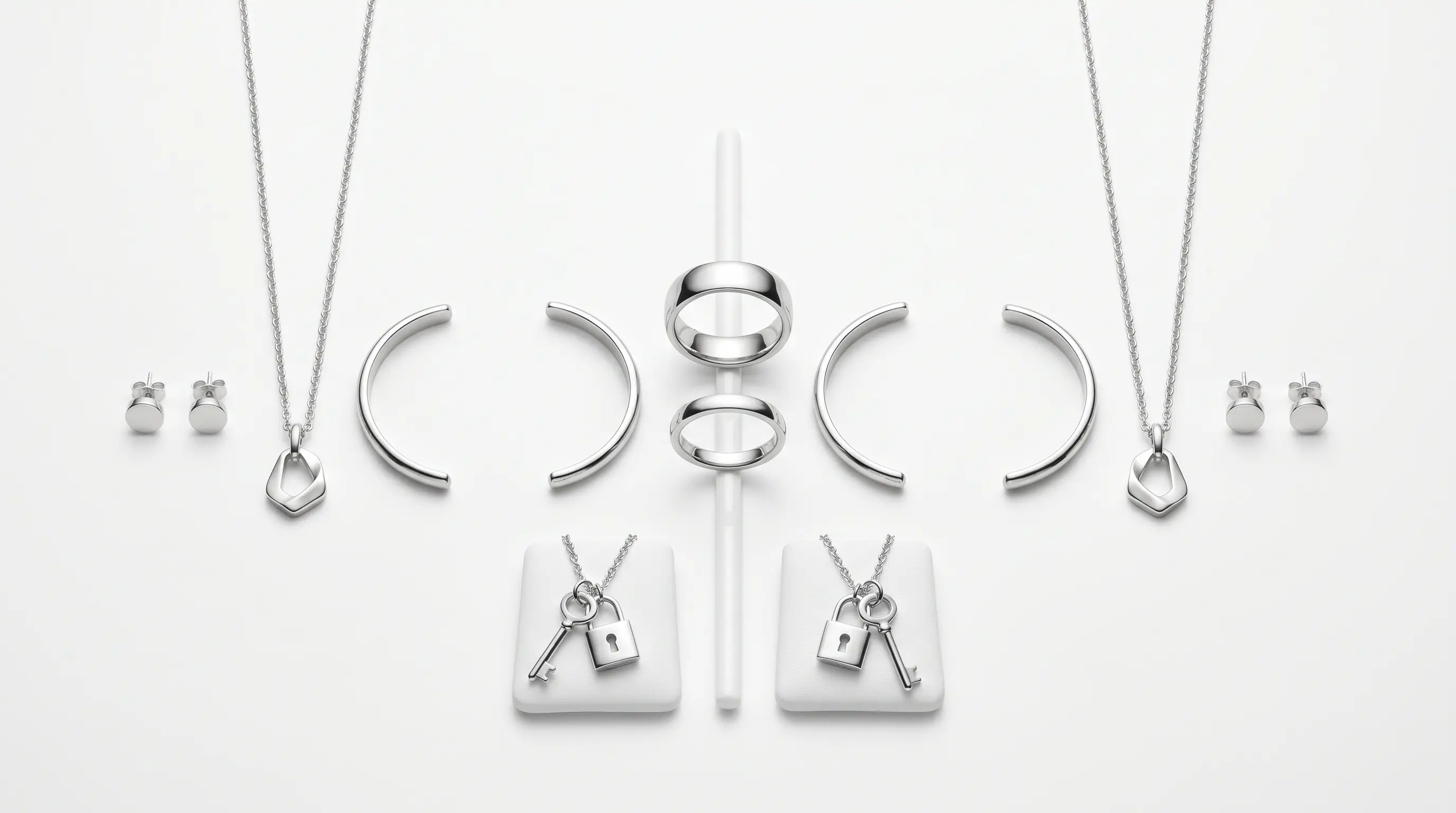
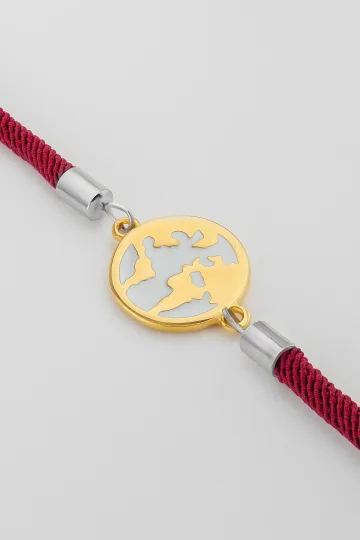
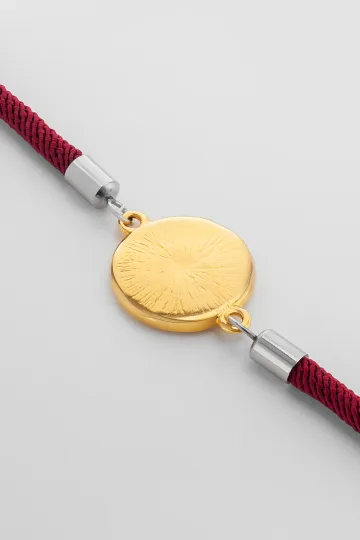
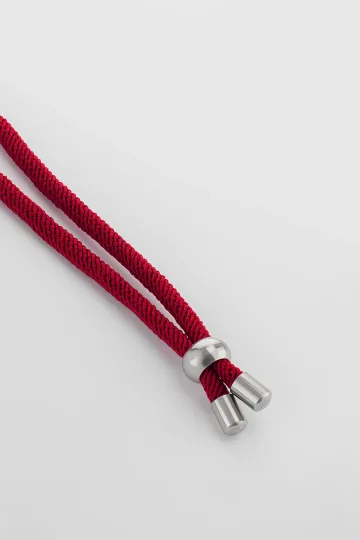
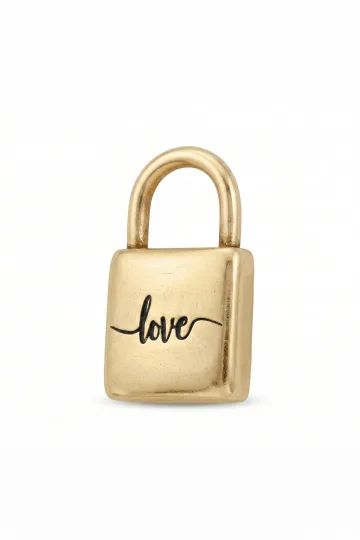
Wear the symbol, don't just read about it. These are in stock:

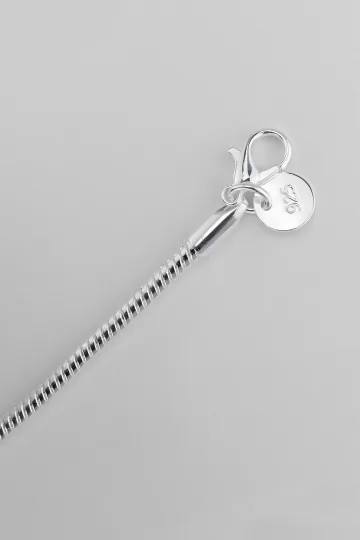
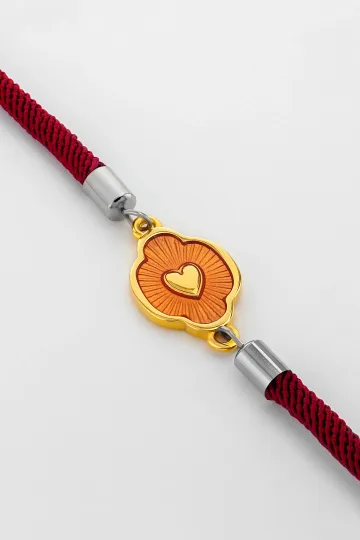
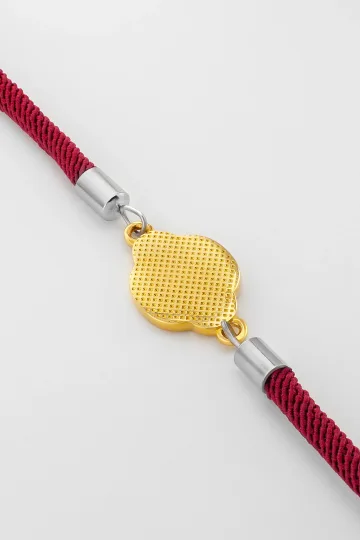
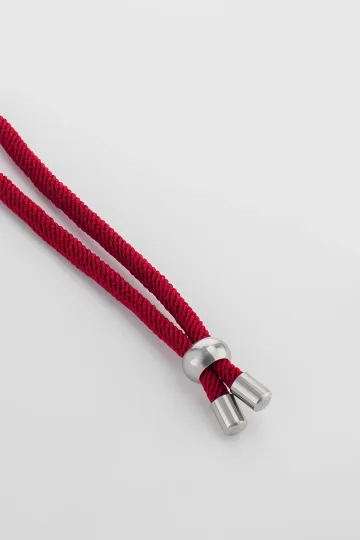
The wrist is built differently. It is bone, not flesh. The radius and the ulna fix the diameter, and it barely moves across a lifetime. Putting on ten or fifteen kilos leaves the wrist almost untouched, because there is very little fat there. Losing the same amount makes the wrist a touch slimmer, but rarely more than a single size. Age does not stretch the wrist the way it stretches a finger. Pregnancy does not register on the wrist at all.
The practical conclusion is simple. A bracelet bought at twenty-five fits the wrist at forty-five much as it did on the day it was bought. A ring bought at twenty-five almost always needs resizing by forty-five. For matching pieces this matters enormously, because the whole point holds only if both pieces are actually worn, not abandoned for being uncomfortable.
Comfort during physical work
Think of the trades where a ring has to come off: medicine, with its gloves and sterile fields; cooking, with dough and mince; mechanics, with oil and gloves; gardening, with soil; sport, where a ring can degloving the finger in a fall; pregnancy, with the swelling; any fine handwork, where a ring snags. That covers a huge slice of ordinary adult life. Rings are lost precisely in the moment of taking them off: by the restaurant sink, in the gym locker room, on the kitchen worktop.
A bracelet slips under a shirt cuff and stays out of the way of your hands. A surgeon operates with a bracelet under the glove, a cook shapes pasta with a bracelet on the wrist, a gardener digs with a bracelet up the sleeve. Most of the time there is no reason to take it off. And when there is, a lobster clasp fastens back in two seconds, unlike a ring that can jam on a swollen knuckle.
For a piece meant to live on two people every single day, this is decisive. The ring is a couple's piece at a lecture and at dinner. The bracelet is a couple's piece all day, work included.
Invisibility for delicate situations
Here is a case the matching-jewellery industry ignores, though it matters to a large share of buyers. Some couples live in a setting where openly showing the relationship is unwelcome or even dangerous: a workplace romance not yet out in the open, a family that disapproves, an interfaith pairing in a conservative circle, any bond without legal standing in a society that pushes back against it.
A ring on the fourth finger shouts. Everyone who looks at you sees it. Taking it off before visiting your parents, before a meeting, before work, reads as denying the relationship, which hurts. Wearing it openly puts the relationship up for discussion the couple may not be ready to have.
An engraved bracelet behaves differently. From the outside it is a silver band on the wrist. Under a cuff it is invisible. On the table at dinner it draws no eye. Only the wearer knows what is written there, or whose coordinates are engraved. It lets you carry the relationship with you without setting it out in public.
For couples at the "we are together, but the family does not know yet" stage, that is a relief. For people in a dress code that bans visible jewellery, the same. For those who live where an open declaration is physically unsafe, it is the only option there is.
Durability and contact with cleaning products
A ring meets cleaning products as many times a day as the hands are washed, which is dozens. Each wash brings soap, bleach, dish liquid, shampoo, shower gel. The chlorine in cleaning agents reacts with silver and platinum and leaves a film. Hard-water salts build up under stones. The mild abrasives in toothpaste scratch the polish. After five years of daily wear a ring needs professional cleaning and often re-polishing.
A bracelet meets water only when you wash your hands with the sleeve pushed up, which is rare, or in the shower, if you wear it through. Contact with cleaning products is minimal, and so is contact with abrasives. A bracelet that never touches toothpaste or dish liquid keeps its polish three to five times longer than a ring. Engraving on a bracelet does not wear away with soap, does not clog with it, does not fade.
Over five years the difference compounds. Matching rings, after five years, almost always need repair or restoration. Matching bracelets, after five years, look new if worn with ordinary care.
Freedom of size: one design, two fits
For couples with different wrist sizes, which is the norm rather than the exception, matching bracelets solve what matching rings cannot. An adjustable chain, a leather band with several buckle holes, a textile cord with a sliding knot, an open bangle that springs to the wrist: the same design sits on a 14-centimetre wrist and on a 20-centimetre one.
Rings offer no such freedom. For a couple where one partner is a size J and the other a size V, matching rings always mean two castings, two orders, two fittings. Matching bracelets can come from one collection, one width, one finish, differing only in the length of the fastening.
Visibility to the wearer
A contested but important point. A matching piece works when it is seen, not by society but by the wearer. A ring is visible when the hands are on the table or while typing. For most of the day the ring is out of sight, swinging between tasks, noticed only on a direct glance.
A bracelet on the wrist is in view constantly: every time you check the time, every time you type, every time you lift a cup, every time you reach for something. Hundreds of split-second glances a day, and the engraving flickers past in each one. For a piece whose purpose is a steady, reminding link, this works far harder.
Universality across gender and age
In mainstream taste a ring is gender-polarised. A man's ring "should be heavy", a woman's "delicate". It is not a rule, it is a template, but a strong one, and getting a man to wear a thin gold ring is hard even out of love. A bracelet is neutral on this. A slim silver bracelet sits naturally on a woman's wrist and a man's alike. A braided leather one with a metal plate suits both. One design in two sizes, and the couple gets a truly shared piece, not "his for him and hers for her, done differently".
The same holds for age. A "daughter at eighteen" ring and a "mother at fifty-five" ring are two different pieces. A bracelet from one collection, in one aesthetic, sits naturally in both cases. For parent-and-child, mother-and-grown-daughter, father-and-son pairs, a bracelet works without hunting for a separate look per age.
What a matching bracelet is: an everyday object, not a ceremony
A matching bracelet differs from an engagement or wedding piece on a basic level. It needs no public gesture, no formal moment, no special occasion. You put it on a Monday morning and wear it to the end of the month without taking it off. It is everyday wear, not a once-a-year piece you save and wait for.
That is why, over the last ten years, matching bracelets have moved well beyond the "Valentine's gift" category. They go to a best friend who is moving away, from a mother to a daughter at eighteen, between partners apart as a visible sign of presence, from a parent to a child heading off to study, between two friends after a trip. The logic is simple: it is a personal object you wear against the skin every day, and the engraving says something specific to you, not to everyone around.
How a matching bracelet differs from an identical one
A common misreading: matching bracelets must be identical. In truth, "matching" lives in meaning, not in form. Two bracelets from one set can be utterly different in design, one braided leather, one a fine silver chain. What ties them is the engraving, or a visual element that points to a shared story.
His piece and her piece in one metal but different widths and textures look more natural together than two identical medium pieces. One wide and matte, one narrow and polished. One braided, one smooth. The text or coordinates join them, not a matching shape.
A good rule of thumb: if a bracelet looks right on one person's wrist without any context, the pairing works. If a piece reads as a half that loses its sense without the other, it is a symbolic object, fine for special occasions but not for daily wear.
The everyday bracelet and the working environment
A point often forgotten: how well the bracelet fits a working life. For a surgeon, a builder, a chef, a competitive swimmer, the matching bracelet has to come on and off easily, so a lobster clasp beats a fixed bangle. For an office worker, a designer, a teacher, a manager, almost any bracelet suits daily wear without limits.
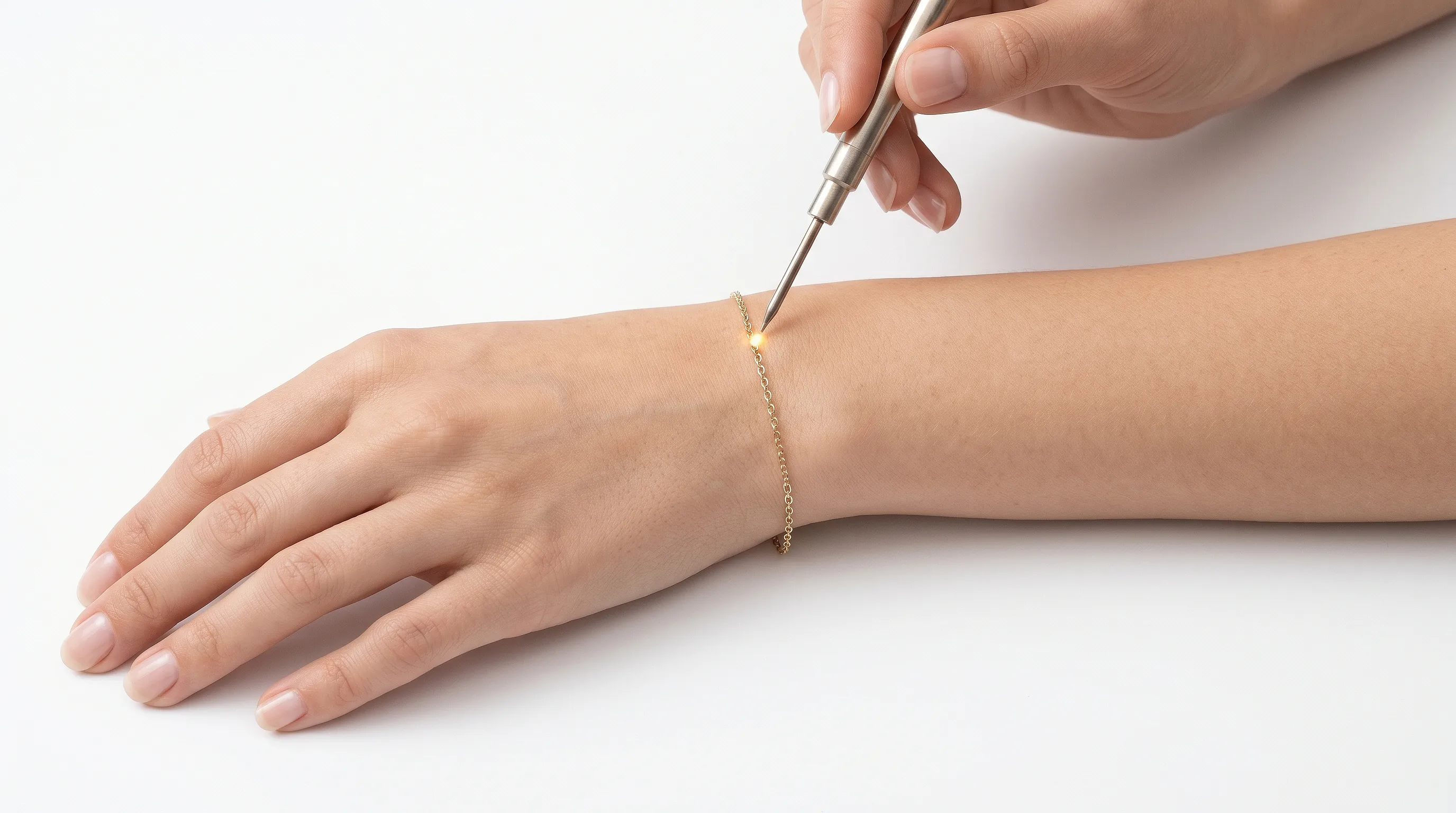
One key detail: laser engraving does not rub off, fade, or wash away. It is not paint but a physical change to the surface of the metal. A laser-engraved bracelet on the wrist of a surgeon who scrubs in several times a day will still carry its text twenty years on.
A matching bracelet lives under the cuff; it does not shout from a bare wrist. Love worn as a trophy is love unsure of itself.
What to wear matching bracelets with
After years of matching orders I can tell a bracelet that gets worn for ten years from one that settles into a drawer within a month. Here is what I suggest trying, occasion by occasion.
Which bracelet for every day? For daily wear I recommend a narrow steel or silver bracelet on the same arm as the watch, just above the case. It slips under a shirt or jumper sleeve, catches on nothing and argues with nothing else. Keep the engraving short: initials or a date, so it reads in one glance.
And for a keepsake pair? Here I go for width and texture: a cuff or a leather bracelet with a metal plate. A wide surface holds real engraving: coordinates, a bar of music, a Latin line split in two. One partner wears wider and heavier, the other narrower and lighter, and the text links them, not the shape.
What about a couple apart? I choose a chain with a plate and a solid lobster clasp, and I recommend an adjustable length for the season and the shirt. On the plate I suggest two lines of coordinates: your city and your partner's, identical on both bracelets. A thin line between the points reads as a route, and to everyone else it is simply an ornament.
Which metal for which wardrobe? Against dark fabrics silver plays brighter; with warm beige and wine tones gold or a gold plate on leather wins. For a sporty look I suggest steel and textile, for the classic one silver and leather. Hold to one metal with the rest, and mix gold with silver only on purpose, as a stated device.
Solo or in a stack? The rule is simple: either one expressive bracelet, or a stack of two or three thin ones in the same metal. The pairing logic is flexible: one wears a wide piece solo, the other builds a narrow stack, and the metal and engraving hold them together. Watch on the large side? I suggest the bracelet on the free arm, so the wrist does not look overloaded.
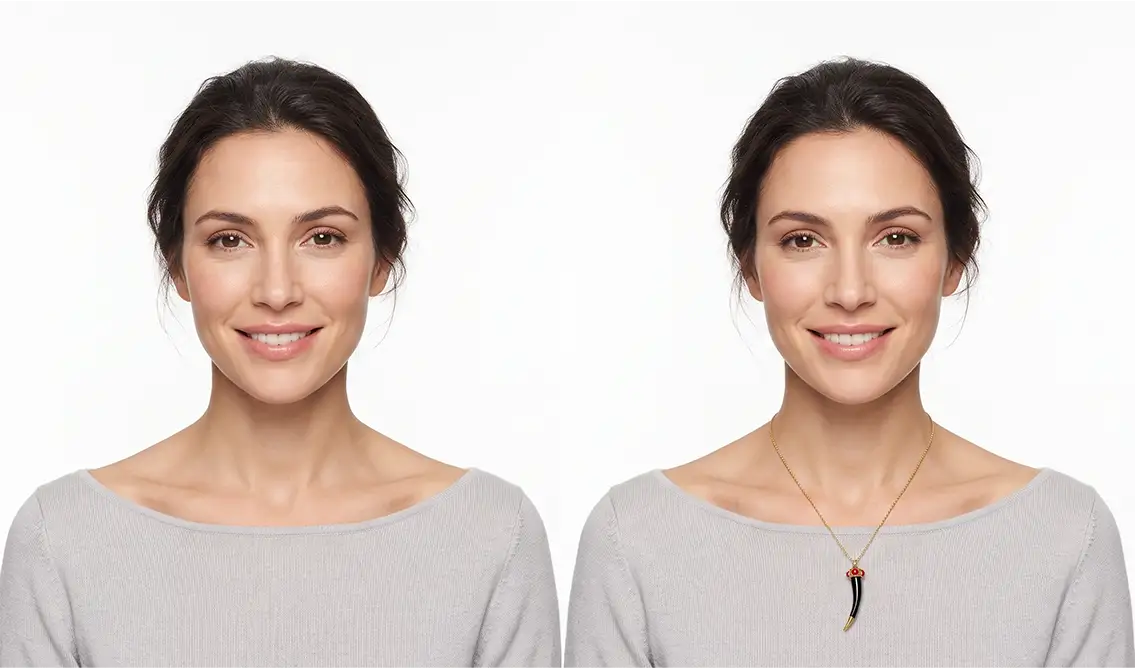
Turn on your camera, pick earrings, a pendant or a ring, and see the piece on yourself in real time.
Switch items in one tap.
Everything runs in your browser: no photo or video is ever uploaded.
A history of matching bracelets: from Etruria to Victorian mourning
Matching bracelets as an idea are older than most things we buy today. Long before they became the standard anniversary gift, they travelled from Etruscan grave goods to medieval armills, from Victorian mourning bracelets to the modern band engraved with GPS coordinates.
Etruscan gold bracelets of the sixth century BCE
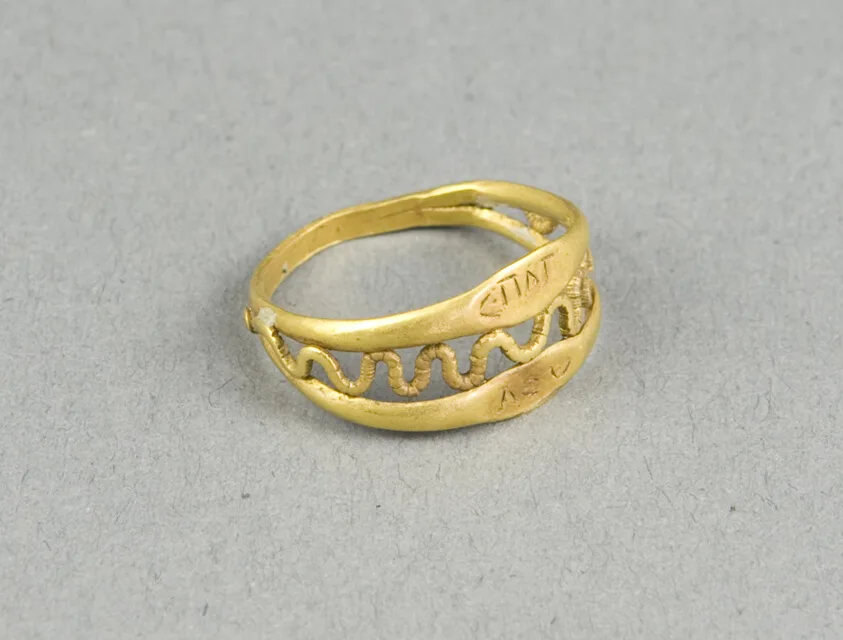
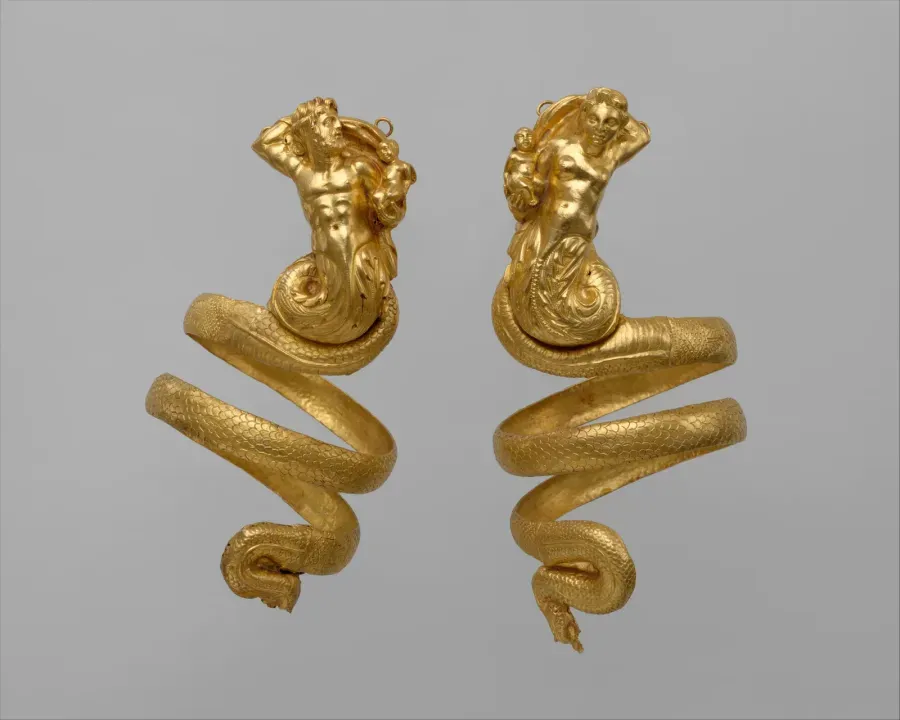
In the burial grounds of Etruria, in central Italy, archaeologists find matching gold bracelets from the late seventh and through the sixth century BCE. They are broad leaf-gold bands, sometimes with granulation on the surface, sometimes with filigree, always with a pin clasp. In wealthy graves these come in pairs: one on the right wrist of the deceased, the other beside the body, in a small casket or on the chest.
The pairing of the bracelet as a two-wrist set is plain here. The romantic reading, that one bracelet went into the grave while the other stayed with the living as a link across death, is a much later invention, not a documented Etruscan custom. One thing is certain: symmetrical bracelets were made and worn as sets long before our era.
Technically, Etruscan gold was high in purity, the metal softer than modern alloys, the surface heavily worked. Etruscan craftsmen mastered granulation, a technique only partly recovered in the second half of the nineteenth century. Until then the secret was thought lost. Any modern maker working with matching gold bracelets leans, directly or not, on that visual tradition: a broad sheet of gold, a pin clasp, an engraved or granulated surface, pairing through symmetry or mirrored asymmetry.
Roman "lacrimatoria": vessels for liquid
In the first to third centuries CE, the Roman Empire knew a particular class of small glass vessels later called "lacrimatoria" (from the Latin lacrima, tear). They are tiny narrow flasks of blown glass, two to four centimetres long, with a slim neck and a small swelling for liquid.
There is a historical debate about their use: the romantic name stuck because of a legend that mourners collected their tears in them, but most scholars think they held scented oil, myrrh, or unguents. Most likely the same vessel served different liquids in different settings.
For the history of jewellery these flasks matter as an idea: a small vessel you carry, holding something invisible and personal. The same logic surfaces centuries later in capsule pendants and in bracelets with a miniature flask, where the liquid matters less than the act of keeping. The modern heir to that thought is the bracelet engraved with GPS coordinates: different material, different technology, the same purpose, keeping an invisible sign close.
Medieval armills: armills and ceremony
In medieval Europe the word armilla (from the Latin armus, the arm) meant a broad bracelet worn at a monarch's coronation and other state ceremonies. The armill was a regalia item, not a decoration: a sign of power and of continuity with predecessors.
In the English coronation tradition the monarch received two armills, one for each wrist. They were tied to ideas of wisdom and sincerity, qualities ascribed to a worthy ruler. In modified form the tradition reached the coronation of Elizabeth II in 1953 and of Charles III in 2023: matching armills are still part of the coronation set.
The model itself matters here, the matching bracelet as a set of two, worn on two wrists. Coronation armills are one person's regalia, not a couple's gift, and crediting medieval nobility with a custom of giving "matching armills" to spouses would be a liberty. But the visual and conceptual idea of a set of two bracelets, read as a single whole, runs from here.
Technologically, medieval armills were made of gold or silver sheet, often with enamel, sometimes with gemstones in bezel settings. Their engraving was usually heraldic: the owner's arms, the family motto, the date of making. That is a direct continuation of the Etruscan tradition across more than a thousand years, and at the same time the prototype of the modern personally engraved bracelet.
Victorian mourning bracelets: keepers of memory
Victorian Britain built a whole aesthetic of memory jewellery. After the death of Prince Albert in 1861, Queen Victoria wore mourning for the rest of her life and set the fashion herself for black jewellery and memorial objects. British taste shaped all of Europe and North America.
Mourning bracelets were a genre of their own. They were made of black jet, black enamel over silver, onyx, sometimes of the deceased's braided hair. A bracelet with a lock of a late spouse's hair, plaited into a braid or an intricate pattern, set under mineral glass on a brooch or a pendant, was a standard piece of mourning dress.
The logic is plain: maximum physical closeness to the lost person through a material that was literally part of their body. Sometimes the hair of two people was plaited together, sometimes locks were exchanged in life, and from this the idea of pairing grew naturally, two pieces joined by a shared material and a shared memory. A century and a half on, the same logic appears in modern rings and pendants holding a loved one's ashes in resin: different material, same idea.
Alongside the mourning pieces, the Victorian era spread sentimental bracelets engraved with a name, a date, initials. They passed between couples with no link to death: for an anniversary, an engagement, a parting when a spouse left on service or for the colonies. The modern mass culture of engraved matching bracelets grew straight out of that Victorian tradition.
The twentieth century: a return through two world wars
Matching bracelets nearly vanished in the Art Deco and modernist years of the 1910s to 1930s. Taste shifted: jewellery grew more geometric, more individual, built to show off material rather than carry sentimental text. Engraving fell out of fashion.
The return came during and just after the Second World War. Allied servicemen, British and American especially, ordered matching bracelets for wives and fiancées before shipping out. These were identification bracelets, with a name, a serial number, sometimes a blood type. The engraving served two ends: official, in case of death, and sentimental, as a link to home.
After the war the tradition turned civilian: thousands of returning soldiers gave their wives and sweethearts matching bracelets in thanks for the waiting. In the 1950s and 1960s a matching bracelet engraved with initials and a date became a standard wedding-anniversary gift in many European and American households.
In the 1970s the tradition weakened under minimalist fashion, but in the 1990s it returned through hip-hop culture, with its heavy matching chains and bracelets, and in the 2010s it took a new turn as bracelets engraved with GPS coordinates or a partner's handwriting.
The modern matching bracelet: the digital age
GPS coordinates as an engraving theme appeared in jewellery around the early 2010s, when satellite navigation became ubiquitous and people began to treat coordinates as a kind of language. It is a direct consequence of digital mapping: online maps made coordinates legible to everyone.
A bracelet with coordinates may be the most technically precise piece of jewellery in history: it records a physical point on the globe to within metres. The sixth-century Etruscan bracelet and the GPS bracelet of the twenty-first, the same idea, realised twenty-five centuries apart. Pairing through symmetry, pairing through the sign of a specific place, pairing as a way to keep a partner close when they are not physically there.
Customer reviews
Zevira is a real jewellery shop. Genuine payments, deliveries and customer thank-yous.
🥰🥰🥰 gracias
Ok, ¡gracias! 🙂
Types of matching bracelet: rigid bangle, flat cuff, chain, leather
Matching bracelets come in six main constructions. The type sets the look, the wearing life, the fit of the engraving, and the ease of daily wear.
The rigid bangle
A bangle is a rigid bracelet with no clasp, usually a metal tube or band closed into a ring. It goes on over the hand and stays on. The size has to be exact: too narrow and it will not pass the hand, too wide and it falls off.
For matching bracelets the advantage is that, once on, a bangle does not come off by accident. It stays on through the shower, through sleep, through sport. For couples who want to "carry the pairing on the body", it is ideal. Engraving on the outer surface reads well. Inner engraving is possible too, though less common.
Technical notes: the South Asian tradition of kara wears several bangles on one arm; the European approach is usually one bangle, but wide and substantial. The minimum width for engraving is five to six millimetres; the ideal is eight to ten for one line, twelve to fifteen for two. Material is most often sterling silver, stainless steel, less often 14 to 18 carat gold. A silver bangle gradually gains a patina in the recesses of the engraving, which makes the text more legible. A steel bangle stays evenly polished for decades.
The downside is that the size must be exact. A bangle that passes the hand but sits loose on the wrist will spin around the arm. A bangle that fits snugly may chafe in the first week, until it settles.
The flat cuff
A cuff is an open bracelet that wraps the wrist only partly. The ends do not meet, leaving a gap of one to three centimetres. It goes on through that gap by springing the ends apart, and comes off the same way.
The advantage is a far wider surface for engraving than a bangle. A standard cuff is ten to twenty-five millimetres wide, room for several lines of text, coordinates, even small ornaments. Cuffs often become matching gift bracelets precisely for that large flat surface.
The material has to be strong yet flexible enough to survive repeated putting on and off without fatigue. Standard is sterling silver at increased thickness, one and a half to two millimetres, or stainless steel. A thin cuff in soft metal will bend out of shape irreversibly after a few hundred uses.
For pairing, cuffs work well as "his wider and heavier" plus "hers narrower and lighter", in one metal with one engraving. The feel of weight unites them, the visual proportion to each wrist divides them. The downside: a cuff is less secure than a bangle. Vigorous movement can shift or temporarily bend it, so it suits physical work less than a clasped bangle or a chain with a lobster.
A chain with a pendant or plate
A chain bracelet with one or more elements carrying the engraving. This is the most varied category: fine chains with a pendant plate, braided chains with an engraved clasp, chains with a small engraved tag.
The advantage is that a chain bracelet is easier to put on alone thanks to the lobster clasp. The length adjusts by adding links. The chain is decorative in itself, and the engraving sits on a separate plate or element without disturbing the overall look.
The plate for engraving must be rigid, not braided. The minimum size is fifteen by eight millimetres for a short text, twenty by ten for coordinates or a date with a phrase. A fine chain with one small charm suits initials or a symbol or two, but not coordinates or a phrase.
For pairing, the couple wears one design in two sizes, or two different chains, one polished anchor, one matte figaro, with the same plate and the same text. The downside: a chain bracelet snags on sleeves, hair, and necklaces in close wear. A lobster clasp can spring open during vigorous movement, especially a single one. For years of unbroken wear a chain loses to a bangle.
A leather bracelet with a metal plate
A strip of leather, natural or vegetable-tanned, with an attached metal plate for engraving. The ends close with a buckle, a stud, or a magnetic clasp.
The advantage is a strong unisex look. A leather bracelet sits naturally on a man's wrist and a woman's. Over time the leather takes the shape of the wrist, gains a patina, darkens at the folds, in other words it "wears character".
The engraving goes on the metal plate, usually sterling silver, less often steel; the plate is riveted or stitched to the leather. A plate fifteen to thirty millimetres long and eight to fifteen wide holds coordinates or a short phrase.
On leather type, vegetable tan holds its shape best. Chrome tan is softer and prettier at first but wears faster. For pairing, one partner wears a wide leather band with a large plate, the other a narrow one with a small plate, identical engraving. This works better than two identical bracelets, especially for couples with different tastes. The downside: leather dislikes constant water. The pool, the shower, washing up with the sleeves down, all of it deforms leather over time. Soaked through, leather dries and cracks unless conditioned.
Braided with a clasp
A braided bracelet of several strands of leather, textile, silk cord, or silver chain, closed with a metal clasp. The clasp may be an engraved element or simply a functional part.
The advantage is lightness and comfort. A braided bracelet is barely felt on the wrist and suits daily wear without removal. Very narrow versions, two to three millimetres, can be worn several to an arm.
The engraving goes only on the metal clasp or an added plate. Its length is limited to five to ten characters, enough for initials, a short word, a date as DDMMYY. For pairing, the couple wears identical braided bracelets of different lengths, or one with a silver clasp and one with a gold, joined by the same engraving on both. The downside: braided parts wear out. Silk cord begins to fray after two or three years of daily wear. Braided leather lasts longer, five to seven years, then also needs the braided part replaced, though the metal clasp can be kept.
Open-ring and non-standard constructions
A category apart, bracelets that do not fully encircle the wrist. The open ring, a double band with a gap between the ends, sometimes with decorative finials. The spiral, wrapping the wrist several times. The layered, a set of fine chains worn together as one piece.
The advantage is a visually interesting result, away from the standard, with room for a designer's hand. A matching pair of these reads as an authored statement rather than a mass product. The engraving usually sits on the band ends or on a separate plate attached to the spiral, and pairing comes through shared material and common engraving, with form left to vary. The downside: the look is more pronounced and does not suit everyone. For a couple where one prefers the classic, these will not work as a pair. They suit couples with one shared modern taste.
Mixed sets: leather plus metal, textile plus silver
The most practical option for couples with different tastes. One partner wears a wide leather band with a silver plate and engraving. The other wears a fine silver chain with the same engraving. The text joins the two bracelets, not the form. Such sets let each keep their own preference without compromise. Each wears what feels natural, and the bracelets stay matched.
Engraving ideas: from the simple to the unexpected
The hardest question when ordering a matching bracelet. Not because there are few options, but because you want the one that is exact for these two people, not for an abstract "romantic couple". Below are two dozen concrete approaches with examples and a note on each. Some need a master craftsman, some any engraving workshop will do on an ordinary budget.
1. Coordinates of the meeting place in decimal degrees
The most honest approach of all. Format: decimal degrees with five digits after the point, for example 41.65170, -0.87742. Five digits give precision to about a metre, enough for a specific spot. Six are excess, needed only for a particular bench.
Where to find them: on an online map, a right-click on any point copies the coordinates; on a phone, a long press does the same. Precision depends on how well you remember the place. If you met in a café, take the door of the café; if in a park, a specific bench or tree. Technically the coordinates run fifteen to eighteen characters, fitting a 20 by 8 millimetre plate on one line in a small font, laser-engraved.
2. The meeting date as a Julian day number
The Julian Day, an astronomical system of continuous day-counting from the year 4713 BCE, turns any calendar date into a single seven-digit number, no dots, no separators.
The appeal is that the number looks like a code. Seven digits, no decoding. Only those in on it know it is a date. To everyone else it is a handsome pattern of numbers. Online "date to Julian day" converters do it in a second. It is worth taking a second key date alongside the meeting date and splitting them between the pair: the JD of the day you met on one bracelet, the JD of the engagement or another key date on the other.
3. A Latin phrase split in two
A Latin phrase whose meaning is split between the two bracelets. Together, the couple reads the whole phrase. Apart, each carries half the sense.
Working phrases: "Vincit omnia veritas" (truth conquers all), "Vincit omnia" on one and "veritas" on the other. "Amor vincit omnia" (love conquers all), "Amor" and "vincit omnia". "Per aspera ad astra" (through hardship to the stars), "Per aspera" and "ad astra". "Dum spiro spero" (while I breathe, I hope), "Dum spiro" and "spero". The principle of the split: the first half leaves the intrigue. "Vincit omnia" on its own reads as an unfinished claim, conquers all what? The full phrase appears only when the pair meet.
4. A name in an archaic form on one, initials on the other
One partner wears the other's name in an archaic or calligraphic hand. The other wears the first one's initials in a modern face. An asymmetric pair: one full name, two letters.
Archaic hands: Carolingian minuscule of the ninth century for a Latin name, Greek uncial for a Greek one, square Hebrew for biblical names, blackletter for a Germanic look. The faces are chosen from specialist catalogues of historical calligraphy. The logic: one partner wears the other's "full presence", the other wears only a hint, two letters. This works in couples with a difference in emotional openness: the more reserved one wears the initials, the more open one the full name.
5. Coordinates of the first and the latest trip together
A double move. On one bracelet, the coordinates of the first trip together, the honeymoon, the first journey, the first weekend away. On the other, the coordinates of the latest trip at the time the bracelet is ordered.
Over ten years the meaning accumulates. The bracelet with the first-trip coordinates becomes a historical point. The "latest at the time of ordering" bracelet, by year ten, is no longer the latest, dozens have followed. But that is the documentation: here is where we started, here is where we were when we made this pair. Couples who want to update order a new pair every five or ten years, with the coordinates of the current point. The result is a personal travel chronology written in metal.
6. A musical phrase in notation, split in two
Three or four bars of melody split between the two bracelets. On one, the opening (clef, time signature, first two bars), on the other the continuation (the next two or three bars without a clef). Read together, the melody is restored.
What works: the opening bars of the couple's favourite song (without the words, only the melody, since the lyric turns the engraving banal while the notes stay a riddle); a theme from a shared film; a lullaby sung to a child; a theme one partner wrote for the other. Notes are engraved in standard notation, a five-line stave, a treble or bass clef, a time signature, notes with stems. The minimum legible stave height is eight millimetres, and the plate needs to be at least twenty-five millimetres wide for four bars. For those who do not read music, the engraving becomes a decorative pattern. That is not a flaw but a feature: the meaning is open only to those who hold it.
7. Chess notation of a favourite game
A chess game written in standard notation, for example 1.e4 e5 2.Nf3 Nc6 3.Bb5 a6. You can engrave the first five to seven moves of a favourite historical game.
Fitting historical games: Morphy versus the Duke of Brunswick and Count Isouard (Paris, 1858), the "Opera Game", one of the most famous short games in history. Kasparov versus Topalov (Wijk aan Zee, 1999), remembered for a stunning sacrifice. Byrne versus Fischer (New York, 1956), the "Game of the Century". For a couple where both play, the game in which they first played, or one that one of them won. A short game of five to ten moves fits a 20 by 15 millimetre plate; a full game of forty to fifty does not, so limit it to the opening.
8. An anagram or ligature of initials
Not "A.K." with a dot between the letters, but an interlaced A and K in the style of eighteenth-century monograms. The ligature reads as a single sign, the initials turn into ornament.
Source faces: eighteenth-century French monograms, Victorian monograms in the English tradition, ciphered family monograms with a crown. Technically a ligature is commissioned from a heraldic artist or a calligrapher; commercial services make bespoke monograms to order. The recipient sees two letters woven into one sign.
9. Coordinates of a childhood garden or home
For those whose childhood is tied to a specific place, a house, a street, a yard, the coordinates of that place on the bracelet make a link to the past that steadies the present. If both partners grew up in different places: on one bracelet the coordinates of his childhood home, on the other of hers. Take them from an online map by the address from memory. If the house is gone, use the coordinates of where it stood, from historical map layers.
10. A date in an exotic calendar
The Maya calendar (Long Count): the meeting date as 13.0.7.13.4 (five numbers). The Japanese era reckoning: "Reiwa 7" instead of "2025". The Ethiopian calendar (seven to eight years behind the Gregorian), the Coptic, the Iranian (solar Hijri). It works for lovers of history and anyone tired of "01.06.2024". For a pair, the same day in two different calendars is interesting: one partner wears the date in the Gregorian, the other in the Maya.
11. A name in Morse code
The other person's name written in Morse, dots and dashes. A plate five millimetres wide holds a name of five or six letters. Visually it is an abstract ornament; no one guesses it is a name. For the couple, a secret language read in an instant.
12. Coordinates plus altitude
The extended GPS format: latitude, longitude, altitude above sea level. The full set that pins a point in space exactly. It suits couples who met in the mountains, on a beach, at a specific height. Example: 42.6500, 0.9000, 2820, a point in the Pyrenees at 2,820 metres. The altitude is added as a third number, comma-separated.
13. A heraldic or family motto
If one partner's family has arms with a motto, the motto is engraved on the matching bracelets. If there are no arms, a new motto can be invented for the family the pair is starting. Mottoes are usually written in Latin or in the family's native tongue in an archaic form, two to five words to fit the plate.
14. Numbers from a shared life
The date a child was born, the wedding date, the meeting date, the date of the first home bought together, all in one line without separators, form a code legible only to the family. 14072018-25062019-30122021, three events on one line.
15. The outline of a meaningful place
Not coordinates but a line. The silhouette of a hill seen from the window of the shared flat. The outline of the cliff where the proposal happened. The shoreline of a lake where the couple spent every summer. The line is traced from a photograph and turned into a vector outline, then engraved as a decorative element along the curve of the plate.
16. A fragment of a map
A miniature map of an area with a point marked. A map of the city where the couple met, with the spot of the first meeting flagged. The map is built from open map data, simplified to main streets, and laser-engraved to a resolution of twenty-five microns. It looks striking on a wide cuff or a large plate.
17. Engraving in a partner's handwriting
One partner gets a bracelet in the other's handwriting. A word, a name, a signature, laser-engraved from a scanned sample. Technically you need a clear photograph of handwriting on a white background, written in black pen; the maker converts it to a vector file and checks legibility at the chosen width. It is especially valuable when the person is no longer near: a bracelet in the hand of a father, a grandmother, a late partner. Or, in a lighter version, in the hand of a partner living far away.
18. Inner engraving, seen only when removed
Text on the inner surface of the bracelet. From the outside it looks ordinary. The text shows only to the wearer, when the bracelet comes off. The tradition of "posy rings", engraved on the inside, goes back to the Middle Ages. A bracelet with inner engraving continues the same logic of an intimate text, seen only by the owner.
19. A sound wave as engraving
A short voice recording from a partner, a phrase or a laugh, turned into a waveform. Each wave is unique, like a fingerprint. It is engraved as a decorative line along the plate. Free audio tools output the waveform as a graph; the maker transfers it to a vector file and engraves it. From the outside it is a decorative line. For the couple it is the physical record of a specific sound.
20. A folded letter in a capsule
A capsule pendant on a chain bracelet with a tiny scroll inside. The letter is written by hand on parchment paper, rolled into a tube two or three millimetres across, and placed in a glass or metal capsule with a screw cap. It can be opened in ten or twenty years, at an important moment. It is a will written in life, an emotionally heavy gift, so be sure who you are giving it to.
21. A regional ornament
Folk embroidery from a partner's home region, carried into metal. A Celtic knot from a specific Scottish or Irish lineage, a Sardinian or Sicilian embroidery motif, a Breton pattern. The specific region matters more than the general style. "A Celtic pattern" in the abstract is the level of a tourist shop. A motif from the particular village of the recipient's grandfather is a sign they recognise at a glance.
22. A date plus a time
A date with the exact time. The time of the first meeting, of a child's birth, of the wedding. On the plate: "14.07.2018 18:43". The time makes the date specific. "14.07.2018" is just a day. "14.07.2018 18:43" is a particular minute, a moment.
23. A hash or a key
For couples tied to crypto or the digital world: the public key of a wallet or the hash of a first shared transaction. On the outside it is a long string of letters and numbers, read as ornament. For the owner, a specific address or a specific transaction recognised at once. Never engrave a private key under any circumstances.
24. The chords of a favourite song
Not notation but chords, letter symbols (C, G, Am, F). A favourite song fits one line of letter chords: "C G Am F". For anyone who plays guitar, it reads instantly as a melody.
How to combine without overload
Three approaches in one piece, at most. One read by everyone (the outer coordinates), one only by the couple (the split Latin phrase), one only by the owner (the inner engraving). A fourth layer breaks the composition and turns the piece into an overloaded souvenir.
The base rule: one text layer (coordinates, a date), one visual layer (a silhouette, an ornament), one hidden layer (inner engraving, a micro-photo). These three planes do not interfere. With someone you have known two years, better one strong layer and emptiness around it: the emptiness reads as restraint, and restraint works for effect.
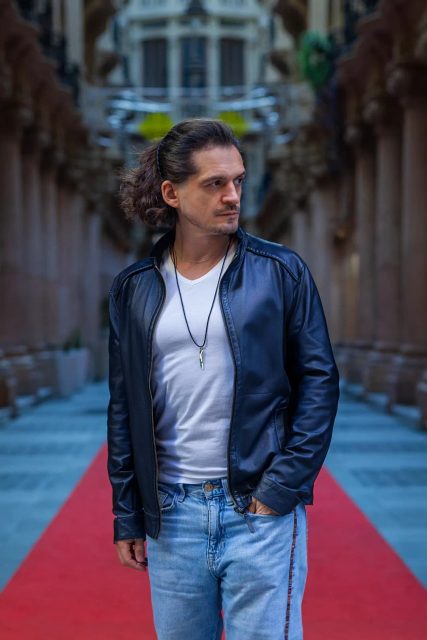
Upload a photo of your pet, someone you love, or an object. We'll build a 3D model and hand-cast it in pewter.


Five detailed cases: how these choices played out
Five composite, illustrative scenarios of ordering matching bracelets, with a close reading of what was wanted, how it was solved, and what came of it a year after the giving. These are not real clients but typical situations in which one engraving approach or another works.
Case 1. A couple of twenty years together: a Latin phrase split in two
They are forty-eight and forty-six. Together since university, married in their final year. Two children, both already teenagers. A settled couple, he a partner at a law firm, she a lecturer in art history. The occasion: twenty years married, twenty-three together.
The dead end: over twenty years they had accumulated a lot of gold and silver. Anniversary rings, memorial chains, earrings for every round date, engraved wedding bands. Each new piece risks joining the row of others, and the tenth-year purchase stops reading as an event.
What worked: matching bracelets with a Latin phrase split in two. On her cuff, twelve millimetres wide, "Vincit omnia" in classic Latin capitals (letters from second-century Roman monumental inscriptions). On his bangle, ten millimetres wide, "veritas" in the same face. The whole phrase: "Vincit omnia veritas", truth conquers all, an old Latin saying. The subtlety is in the placement: on her cuff the engraving sits central, flanked by an ornamental line of vertical strokes (an echo of an antique frieze). On his bangle it is shifted to the centre along the curve, no ornament, clean type on polished silver. Identical face, different placement, a visual asymmetry within one shared system.
An extra layer: inside her cuff, the wedding date as a Julian day number (seven digits, a 2002 date). Inside his bangle, the meeting date the same way (a 2000 date). The outside world sees only the Latin phrase. The family knows about the dates inside. Only the two of them know which date is the meeting and which the wedding, and who carries which. Ordered through a workshop in Toledo, six weeks of work. Sterling silver, laser engraving for the text, a hand-finished frieze on the cuff.
Given on the anniversary, at a restaurant, just the two of them. They opened the boxes together and saw the phrase. Twenty seconds later she read it aloud, whole. He nodded. They were silent another minute. Then she put on the cuff, he the bangle, and through the rest of dinner both kept touching their bracelets. A year on, both wear them constantly. Their twelve-year-old daughter once asked what the phrase meant. They explained together, finishing each other's sentences. The daughter was quiet, then said that one day she would want the same. That is the best result a matching bracelet can have: it becomes a family legend.
Case 2. A naval couple, both officers: four postings on one bracelet
They are thirty-five and thirty-three, both serving officers, he an engineer, she a doctor, now based in Plymouth after a transfer in 2024. Before that, Portsmouth (2019 to 2022), Faslane (2022 to 2023), and Gibraltar (2023 to 2024). Four postings in five years, a son of four with them everywhere. They married in Portsmouth in 2020.
The dead end: the couple lives in constant motion. Most belongings are sold at each move or shipped in minimal volume. Bulky jewellery, stone-set rings, chains with pendants, is impractical: rings come off on duty, and valuables are better not carried on deployment. They needed something compact, tough, maintenance-free, worn on duty under the uniform.
What worked: rigid steel bangles engraved with the coordinates of all four postings. Both bracelets carry the same four lines of coordinates, each line the coordinates of the base housing they lived in. The engraving runs along the outer curve, a minimal four-point font, four lines fitting a width of ten millimetres. Material: 316L stainless steel (medical grade, indifferent to sweat, salt water, no allergies). The bracelets were made through a metal engraver they knew through the service, minimal cost, three days.
For pairing, both bracelets are identical. That matters to them, symmetry of relationship, of service, of mobility. There is no "his" and "hers" in this couple, there are two people who walked one road together. Given in Plymouth, in the third month, at home, no ceremony. He brought two boxes, she opened hers, saw the coordinates, understood in two seconds. They put them on at once. A year on, the bracelets have come off only for medical procedures. After each new posting (one already came in 2025, to Faslane again) they plan to add the next coordinates, with room for three more lines.
What worked: steel over silver, the right choice for a service environment of aggressive sweat, seawater, rough handling. Coordinates over city names, a universal cipher readable across any border. Matching identity over asymmetry, right for a couple where both stand on one side of life.
Case 3. A creative couple, a musician and an illustrator: a gold plate with notation
He is thirty-one, she twenty-eight. He is a first-desk violinist in a symphony orchestra, she a children's-book illustrator working freelance. Together four years, unmarried, living in Berlin. Constant travellers: his orchestra tours Europe and Asia, she works from anywhere.
The dead end: both are aesthetes with opposite sensibilities. He is a minimalist (one shirt for five days, nothing extra, the instrument in perfect order). She is a maximalist (dozens of sketchbooks, a wardrobe of clothes from every era, in love with colour). A standard matching gift, two identical silver bracelets with initials, reads to them as shopping-centre level.
What worked: matching leather bracelets with a gold plate. On hers, black crocodile leather (rich texture, scaled relief), a plate of yellow 18-carat gold, 25 by 10 millimetres. On his, dark-brown smooth vegetable-tanned leather (minimal, no pattern), a plate of the same gold, the same size. Contrast in the leather, unity in the metal and the engraving. On both plates, the notation of their first shared piece, four bars he wrote for her on their second anniversary (she talked him into it, he resisted, then agreed and wrote a short piece for violin). Four bars in the treble clef, 4/4, in A minor, identical on both. Laser-engraved; the gold plate gives a deep dark line that reads like a drawing.
An extra layer on her bracelet: on the back of the plate, his signature (the one he signs scores with, in his archival autograph). On his, the back carries hers (from one of her drawings). The outside world sees only the notes. Only the two of them know that inside are their own hands. Ordered through a Berlin workshop specialising in leather and gold. Eight weeks: choosing the leather, making the plates, engraving the notes, engraving the signatures on the back, assembly.
Given on the anniversary of their meeting, at home, after dinner. He gave both at once: "One for you, one for me." She opened the box, knew the notes at once (she has the melody by heart). Two minutes later they were playing it from a recording of his performance on the phone. A year on, she wears hers every day; he wears his only off rehearsal (a bracelet on the left wrist gets in the way of the violin, so he wears it on the right, after work). What worked: a contrast of material with a unity of metal and engraving, ideal for a couple with different tastes. Notes over text, right for a couple where music matters more than words. The signatures on the back, the hidden layer no one but them sees.
Case 4. A couple after the loss of a child: coordinates of the grave and a Latin phrase
They are both thirty-eight. Together twelve years, married eight. A son born in 2020, died in 2023 of a rare genetic condition. After two years of therapy and going through everything that has to be gone through, the couple stays together. They decided to order matching bracelets not as a "gift" but as part of a continuing ritual of memory.
The dead end: any "normal" matching engraving is off-limits for them. The wedding date reads as ignoring the central loss of their life. The coordinates of the meeting place, the same. Any text about love, forever, eternity, after the death of a child these words turn harsh. They needed something that includes the loss in the pairing rather than skirting it.
What worked: matching bracelets with two layers. The outer layer (visible to others): the Latin phrase "Veni vidi amavi" (I came, I saw, I loved), a reworking of Caesar's "Veni vidi vici", with "vici" (conquered) replaced by "amavi" (loved). To the uninitiated, just Latin. To them, the exact account of what happened with their son: he came, he saw, he loved, he left. The inner layer (on the inner surface): the coordinates of the son's grave. Each bracelet carries the same latitude and longitude to five digits. The coordinates are unlabelled, undated. It is the most intimate layer of the piece. Material: sterling silver, a matte surface (not shiny, shine would be out of place), an ordinary bangle eight millimetres wide. Nothing ornate, nothing "memorial" in the look: the piece should fold into the everyday, not shout about loss.
Ordered through a workshop in Albacete, found through acquaintances who had a similar order after a loss. The maker had been through the loss of a child ten years before and works on such orders with special care. Eight weeks: a bespoke sketch, agreeing the face, hand-working the matte surface (not by machine, so there is no perfect polish, since perfection would be a lie), laser-engraving both inscriptions. Given on the son's birthday, at home, in the morning after a ritual breakfast with his photograph on the table. She opened the box first, saw the phrase, read it, wept. He opened his. They were silent for an hour. Then they put both bracelets on.
A year on, both wear them constantly. No stranger has asked about the Latin (this matters most, the bracelets do not invite a conversation about loss with those who should not enter it). Those close, who learned the phrase, understand, do not ask, do not console. After two years they touch the bracelets less through the day (grief is mobile, its intensity changes), but the bracelets stay. What worked: Latin as a protective layer, right for a couple who want to carry the memory without every conversation becoming a conversation about loss. Coordinates inside, an exact physical tie to where the son lies, without words. Matte silver over polished, the right look for grief integrated into life rather than displayed. Identity of both bracelets, right for a couple for whom the loss is symmetrical. This case is the rarest of the five, but it shows just how flexible a matching engraved bracelet is as a form. It need not be a "romantic couple". It is a form for documenting a shared biography, however hard.
Case 5. A long-distance couple: two bands of coordinates on each bracelet
They are twenty-seven and twenty-six. Together three years, a relationship begun in Barcelona, where both did their master's. After graduation: he returned home to Santiago, Chile, she to Berlin. Twelve thousand kilometres apart, six hours of time difference. They see each other two or three times a year, video calls in between.
The dead end: they are in the classic long-distance situation, for which a standard "one-engraving matching bracelet" works only partly. Too abstract. They needed something that fixes this specificity: two cities, two homes, two belts of the earth.
What worked: matching bracelets with two bands of coordinates on each. On hers: the first line, the coordinates of her flat in Berlin; the second, the coordinates of his home in Santiago. On his, the same coordinates of the same two places, in the same order. Not mirrored, identical. The logic: each wears both points on the wrist, "where I am" and "where they are". Every glance shows both. That is better than wearing only the partner's coordinates, which would read as "waiting for you to come back". Wearing both means fixing both positions as equal parts of one shared system.
An extra layer: between the lines of coordinates, a tiny sign, two dots joined by a thin line. Visually it is the link between the two cities, the flight path. To others, an ornament. To them, a literal picture of being together. Material: sterling silver, fine silver chain bracelets with a plate 18 by 10 millimetres. The length adjusts (which matters across seasons and shirts: loose in summer, snug in winter). A double lobster clasp (safer through separation). Ordered through a Barcelona workshop, chosen so that the city where it began would be part of the bracelets' making story. Six weeks.
Given at a meeting in Lisbon (chosen as a midpoint for a three-day break). He brought the bracelets in his hand luggage; they opened them the first evening at the hotel. She saw the coordinates, knew both hers and his, ran a finger along the line between the two points. "Is that a flight?" "Yes." A year on, both wear them constantly. Every two weeks the same joke on a video call: "Show me the bracelet." Each turns a wrist to the camera. Twelve thousand kilometres between them, but the coordinates on each wrist say one thing: we exist, and we know where the other is. What worked: the double coordinates, the exact formula for a long-distance couple. Not "wait for me" but "we exist in two places at once". The route between the points as a graphic element, the link made material. A silver plate of adjustable length, a practical chain build for active people who travel a lot.
Five cases, five different levers, one shared principle. A matching engraved bracelet works when the giver gives up the logic of "buy something ready-made" for the logic of "assemble something exact for these two people". The exactness comes from the material (steel for the service, gold with leather for the artists), from the technique (laser for notation, hand-finish for matte mourning silver), from the text (Latin for the long couple, coordinates for distance), and from the time spent thinking, from a few weeks to a few months between idea and giving.



The psychology of matching bracelets: how they differ from rings
A matching bracelet and a matching ring can carry the same engraving, be made of the same metal, ordered from the same maker, and work in completely different ways. The difference is not in the jewellery but in how body and mind engage with an object on the wrist versus one on the finger.
A different wearing ritual
A ring demands a ritual of putting on and taking off. On in the morning, off at night. Off to wash the hands, set down, remembered, put back on. Off for sport, stowed in a locker, not lost. That ritual, repeated hundreds of times, becomes automatic, but it stays a separate act. A bracelet on a secure clasp, or a clasp-free bangle, goes on once and is worn for weeks. No morning ritual. No removal to wash the hands. No removal for sport. It is a piece that asks for no daily attention. Psychologically these are different stances. A ring is a thing you return to. A bracelet is a thing that is with you. For matching pieces the second works harder: fewer points at which the piece can be forgotten.
Reading the "on or off" signal
A particular aspect couples discover after a few months. When the bracelet is always on the partner, you start to notice the moments when it is not. The bracelet is off, so something has changed. The partner is in hospital (jewellery comes off). The partner is at sport, where it cannot be worn. The partner forgot it in the morning. And the reverse: the partner put the bracelet on for an outing, so that outing means something, they are dressing "fully", the personal included. This language develops without words. After a year couples begin to read each other by the presence or absence of the bracelet. It is not control, it is attention.
When a matching bracelet fits, and when it does not
A matching bracelet fits an everyday bond, not a ceremonial one. An engagement ring is a ceremony. A wedding ring is a ceremony. A matching bracelet is not a ceremony but the everyday. It does not replace a proposal or a wedding, it works alongside them. So it is wrong to give a matching bracelet instead of a proposal, if a proposal is expected. The recipient will read it as dodging commitment: "he gave a bracelet because he is not ready for a ring." In that case the bracelet does harm, not good.
A matching bracelet fits as a gift for the anniversary of an existing relationship, as a sign of reunion after separation, as a memento of a key life transition, as a gift "for no reason" on one partner's own initiative, as an accompaniment to a proposal or wedding (but not instead), and as a gift to friends, parent-and-child, or business-partner "pairs". It does not fit instead of a proposal when one is expected, as a reaction to a quarrel ("an apology in material form"), as a gift for a relationship of two or three months (too heavy a gesture), or as a one-sided gift when the partner is not ready to wear one back.
Matching bracelets and transitional periods
A matching bracelet works especially well in periods of life transition. Not as a background of stability, but as a marker of change. A move to another city, bracelets as the line between before and after. A reunion after separation, bracelets as a record of having come through. A child's coming of age, bracelets for parent and child as the shift from "parent and infant" to "two adults in a continuing relationship". In stable periods a matching bracelet works as a background: quietly, reliably, daily. In transitional ones it works as an accent: the emotional weight of the moment is invested in the choosing and the giving, and afterward the object holds the memory of the transition for years.
Touch and emotional regulation
Many people find separation from a loved one easier to bear when a physical object tied to that person is to hand. This is a feeling familiar to many rather than a proven effect: a thing you can touch helps you feel the connection even when the person is not there. A bracelet on the wrist works better than most objects for this. You can touch it at any moment without fishing it out of a bag or pocket. A chance touch during a conversation, while walking, while typing, a constant non-verbal link to the partner. A ring works too, but a ring is less accessible: it is hard to spin, unlike a bracelet that rolls around the wrist. In moments of stress and anxiety, many couples who wear matching bracelets instinctively touch them, turn them around the wrist. It is a form of self-soothing through a familiar tactile object. After a few months the movement becomes automatic.
A two-way symbol: I know you wear yours too
What is interesting is that matching jewellery works symmetrically in the mind: both "I think of you when I see my bracelet" and "I know you think of me when you see yours". This creates a sense of constant mutual presence that a one-sided symbol cannot give. A gifted ring or chain works as a one-way link: "I have a memory of you." A matching bracelet works as two-way: "we both hold a memory of each other, at once, and it is symmetrical." This is especially clear for long-distance couples. To see your bracelet and know that at that moment a partner in another country sees theirs is a wholly different experience from looking at a one-sided keepsake.
Anti-patterns: eight mistakes with matching bracelets
Matching bracelets, like any category of matching jewellery, have their anti-patterns, approaches that seem logical at ordering but give a poor result over a year or more. Eight main mistakes and what to do instead.
1. Identical, with no split message
The most common mistake. The couple orders two identical bracelets with one and the same engraving: "I love you forever" on both, or a date on both, or a shared monogram on both. On paper it is right: a matching piece, a shared text, symmetry. In practice the pieces lose meaning when worn singly. A matching bracelet works when there is a relation of meaning between the two. If both hold the same thing, they are not a pair but copies, each self-sufficient, the second one redundant. Instead: a split phrase, the coordinates of two different places, one partner's name on the other's bracelet, any asymmetry that makes the second bracelet necessary to the whole sense.
2. The generic "I love you" and its clichés
"I love you", "My love", "Forever yours", "Together always", English has bred a whole library of clichéd engraving phrases, each at shopping-centre level. A discerning recipient reads the template at once, and the gift slides into "bought in a hurry". These phrases are not bad in themselves. They are bad because everyone uses them. On mass-production sites an engraving from a standard list costs pennies and takes five minutes. Instead: a quote in Latin or another classical tongue (still legible in fifty years), a specific date in place of "forever", coordinates in place of "my love", an inside joke only the couple gets, a word in one partner's native language that is not the obvious one.
3. Too ornate for constant wear
Engraving on every millimetre, stone settings, enamel in every recess, extra charms, chains within chains. In a catalogue photo it looks luxurious. On the wrist after a week of daily wear it becomes a problem. An over-decorated bracelet snags on sleeves, scratches the skin, collects grime in the recesses, needs daily cleaning. Within a month the owner stops wearing it daily. Within six it goes "for special occasions". And matching bracelets for special occasions do not work, they lack the daily closeness they exist for. Instead: a minimal design with one precise piece of engraving, a clean surface around a short text, one accent, not five. Simplicity gives wearing life, and wear gives the pairing its meaning.
4. Too thin: it breaks within six months
The reverse mistake. To look "expensive and delicate", people order bracelets in very thin chain or very thin metal. Visually it is delicate, technically it is fragile. A thin bracelet breaks when it snags a sleeve. A thin cuff bends under the weight of an ordinary bag. A thin chain snaps at the gym. Within six months to a year a thin bracelet usually takes damage. Repair is possible, but then it is no longer "the thing that is always with you", it is "the thing that broke again". Instead: a minimum sensible thickness, for a chain one and a half to two millimetres at the link, for a cuff one and a half to two millimetres of metal, for a bangle two to three. Still delicate, but they withstand daily load for years.
5. No safety clasp: lost within a year or two
A standard lobster clasp on a chain is reliable most of the time. But under active wear (sport, physical work, frequent snagging) the clasp can spring open on its own and the bracelet falls. Unnoticed, it is lost. Without a safety clasp (an extra security chain, a second clasp, a double-closure design) a matching bracelet in an active life is lost in a large share of cases over two or three years. Instead: a double lobster clasp (two separate clasps so one opening does not drop the bracelet), a safety chain inside the main one, a clasp-free bangle (no point of failure), a cuff (no clasp, held by its own shape). For matching bracelets this matters doubly: one lost bracelet breaks the pair, and recreating an identical pair a year later may prove impossible.
6. Engraving on a friction surface
The inner surface of the bracelet, where it meets the wrist, is under constant friction. Engraving there wears away. After two or three years of daily wear inner engraving can become illegible. This is especially bitter for matching bracelets with an inner romantic inscription: the "secret", lovingly engraved, physically disappears within a few years. Instead: if the engraving is on the inner surface, use deep mechanical engraving (a graver), not laser, since deep engraving wears slower. Or place it on the side edges, where there is no friction, or on the outer surface, where friction is minimal.
7. Text relevant to only one stage of the relationship
"First kiss 14.02.2022", "Engagement 30.08.2023", engravings that pin a specific moment exactly. They seem personal. In truth they are tied to a stage that will be passed. In ten years "first kiss" becomes one of a thousand small things. "Engagement" becomes background to later events (wedding, children, crises, anniversaries). A bracelet engraved for one moment only stops being relevant. Instead: something still exact in thirty years. Coordinates of a place (the place does not change unless demolished). The start date of the relationship (still the start). The partners' names. A quote with no tie to a moment.
8. Ordering two weeks before the date
Good matching bracelets take four to eight weeks: choosing the material, making, engraving, quality check, delivery. Ordering two weeks before an anniversary or another key date often ends in a compromise: either the bracelet is not ready in time, or the maker skipped a quality step for the deadline, or a standard design had to be taken instead of the bespoke one wanted. A matching bracelet is a piece you invest time in, as in its choosing. Haste breaks the process at both ends. Instead: order two to three months ahead. That gives the maker time for quality work and you time for sign-offs (sketch, face, a proof engraving on a test sample). If the date is near and you have not managed it, better to move the giving to the next meaningful moment than to order in a rush.
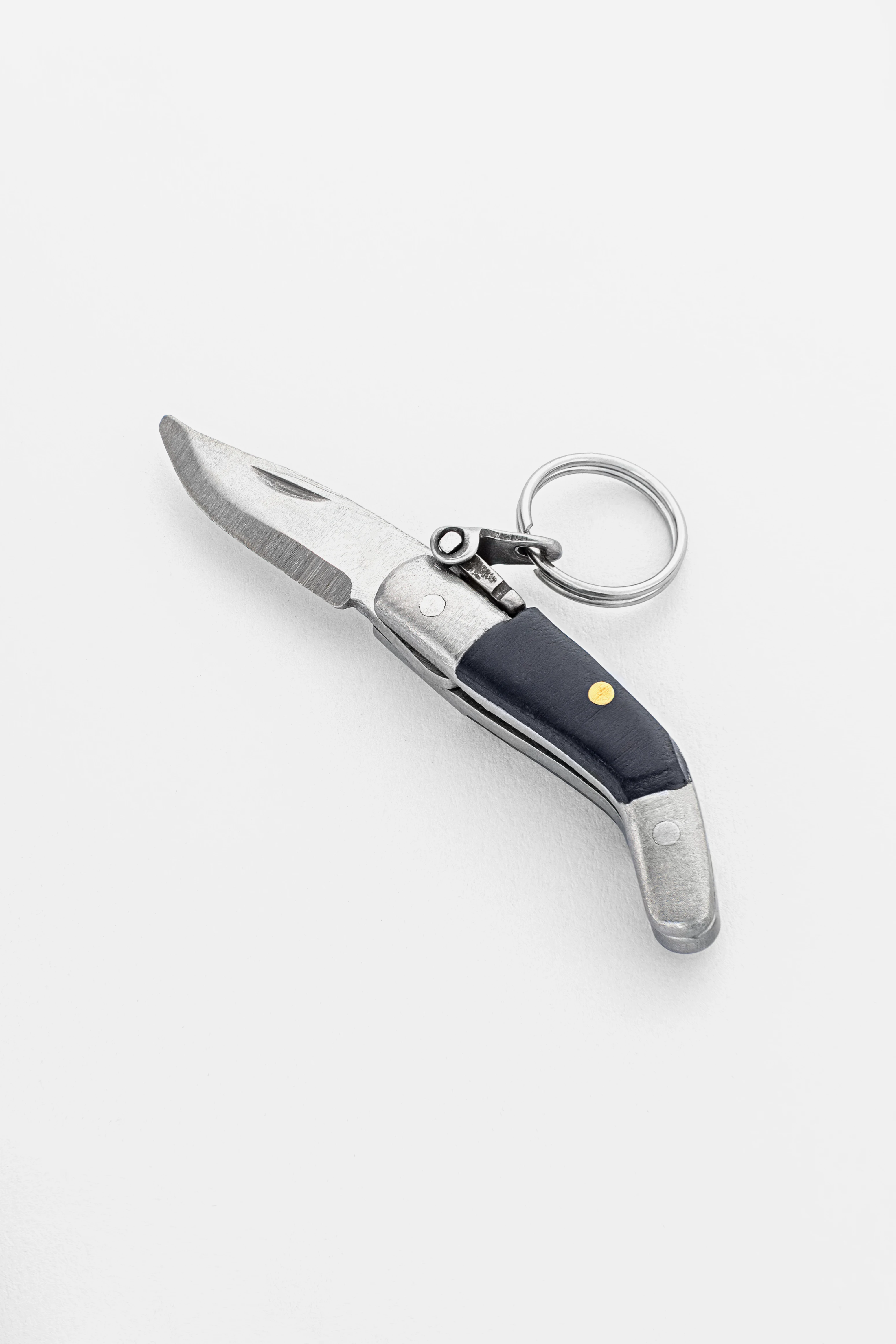
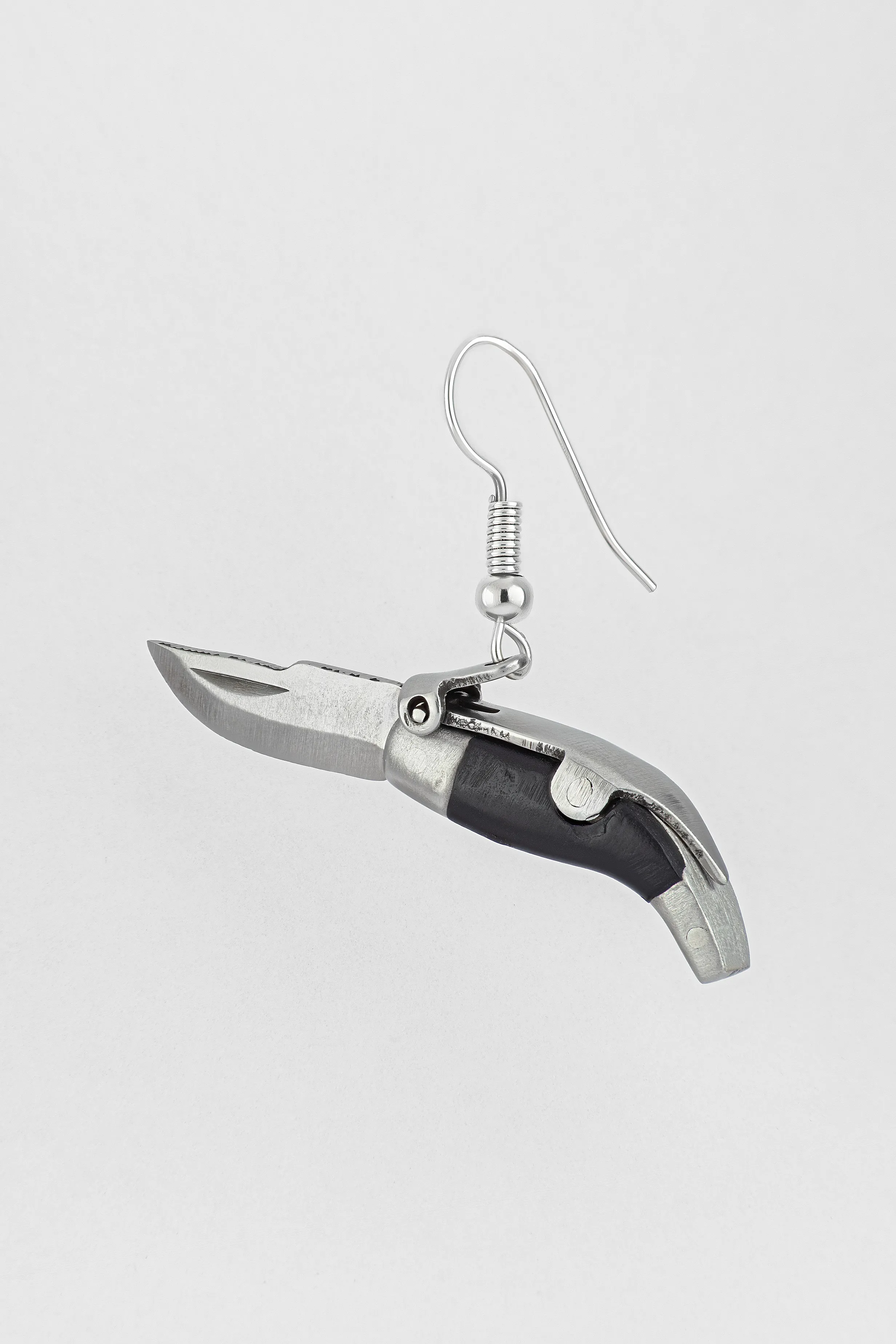
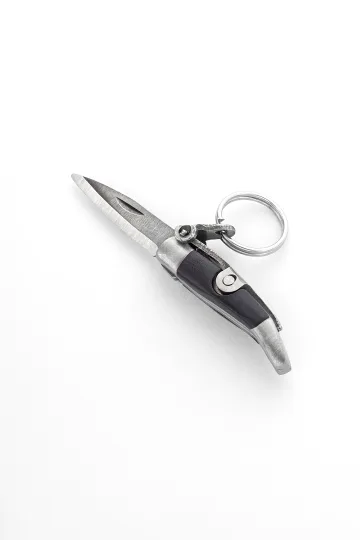
CAPAORA mini knife pendant
The 18th-century Spanish navaja in miniature: 40 mm of stainless steel, a real folding mechanism and a Palanquilla lock that clicks. An affordable gift to remember.
Authentic · Ships from Spain · 14-day returns
The technology of engraving on different bracelet types
Engraving on a matching bracelet is a technically different procedure depending on the type of piece. What works on a rigid bangle does not work on a fine chain. What works on leather does not work on solid metal. Understanding these differences helps you choose the type of bracelet to suit the engraving you want, not the other way round.
Engraving on a rigid bangle
A bangle is an ideal surface for engraving. A solid closed ring, usually two to three millimetres thick and six to fifteen wide, gives a large plane or smooth curve on which text lies evenly. Outer engraving runs along the curve of the outer surface, text "running" around the circle, read as the eye rises from the wrist. The minimum legible letter height is 1.2 millimetres; a ten-millimetre bangle holds one line of large letters or two of small. Inner engraving (against the wrist) is possible but must allow for friction; mechanical engraving or deep laser lasts longer than a surface laser pass. The inner perimeter of a standard bangle is about eighteen to twenty-two centimetres, room for thirty to forty characters on one line, more than enough for coordinates, a short phrase, a name with initials. The downside: a bangle cannot be lengthened or shortened after making.
Engraving on a flat cuff
A cuff is an ideal surface for wide engraving. Flat or slightly concave metal, ten to twenty-five millimetres wide, about fifteen to seventeen centimetres around the wrist (with a one-to-three-centimetre gap). Outer engraving can hold large fragments: coordinates of two places in two lines, a short Latin quote in one line and its translation in another, a date plus names. A wide twenty-five-millimetre cuff takes four or five lines in a small font. Ornamental engraving is possible too, the cuff being wide enough for relief, inlay, enamel. The downside: a cuff is more prone to shifting on the wrist, so the text may end up at the side or underneath. Engraving on both sides partly solves this.
Engraving on a chain with a plate
The pendant plate on a chain bracelet is a small but solid surface, usually fifteen to thirty millimetres long, six to twelve wide, one to two thick. Laser engraving across the surface, minimum letter height one millimetre; a 20 by 10 plate holds two lines of eight to ten characters, or one longer line. Double-sided engraving uses the front for public text (a name, a date) and the back for hidden text (coordinates, a personal phrase), two layers of meaning in one small detail. The downside: the plate moves on the chain and can flip back-side up; a plate with a clearly different texture front and back solves this.
Engraving on leather with a metal insert
A leather bracelet itself does not take deep engraving, but it carries a metal plate or elements (rivets, a clasp) on which engraving is possible. Engraving on the plate is as for a chain plate; sizes are usually larger because a leather cuff is wide. A plate twenty-five to forty millimetres long gives room for three or four lines or the coordinates of two places. Embossing the leather is an alternative: a relief text in the leather itself, less durable than metal engraving, smoothing out over three to five years. A combination is possible: embossing on the leather plus engraving on the metal plate, an outer layer of embossed initials read at a glance, a hidden layer of engraved coordinates under the cuff.
Engraving length and legibility
A general rule: the smaller the font, the worse it reads, especially with age. Engraving done at twenty-five, perfectly legible with glasses, may be unreadable without them by fifty. The minimum height for legibility without magnification is 1.5 millimetres; for people over fifty, two; for script faces, add another thirty per cent. The longer the text, the smaller the font on a limited surface. GPS coordinates in decimal run fifteen to eighteen characters. An ISO 8601 date (2025-07-14), ten. A short Latin phrase (Per aspera), eleven. That is a sensible length for one line on a standard plate. For long engravings (a full phrase, a quote) use a cuff or a wide bangle with a multi-line layout. Two lines of large type beat one line of small.
The font and its effect on legibility
Serif faces (Times, Garamond, Bodoni) look classic but lose legibility at small sizes; the serifs blur into the ground below 1.5 millimetres. Sans-serif faces (Helvetica, Futura) are cleaner small: each letter has clear edges and does not merge with its neighbour. A good choice for coordinates, numbers, short inscriptions. Script faces are beautiful but need more room, a minimum height of three to four millimetres, so they do not fit narrow bracelets. For matching bracelets the same font solution on both pieces matters: even if the content differs, the face should be the same. That creates visual unity.
Leave your email, we'll send your discount code. No spam, unsubscribe anytime.
The code arrives by email, valid on your first order.
Caring for matching bracelets
Matching bracelets, unlike dress jewellery, are worn every day. That means contact with sweat, water, chemicals, and knocks against other objects. Understanding the care extends their life by decades.
After the sea and salt water
Seawater holds chlorides especially aggressive to silver (a black sulphide film forms) and to stainless steel (pitting may appear). Gold of 14 to 18 carat is resistant. What to do: after every contact with seawater, rinse the bracelet in fresh water and wipe with a soft cloth. Do not leave seawater to dry on it, salt crystals bed into the recesses of the engraving. If possible, take the bracelet off before a long sea swim. Sterling silver after regular seawater contact needs polishing every two or three months; gold and steel are more forgiving.
After the pool and chlorinated water
Chlorine in a pool is harsher still than seawater: the concentration is higher and it works faster. Sterling silver darkens in a few visits. 316L steel resists but may lose polish at high chlorine levels. What to do: take the bracelet off before the pool. If you cannot (a clasp-free bangle), rinse in fresh water straight after and wipe. Polish silver after each month of regular pool visits.
After sweat
Sweat holds sodium chloride and a little of other salts. With heavy sweating (sport, hot climate) sterling silver darkens, but reversibly. Steel and gold do not react. What to do: after a hard workout or a hot day, wipe the bracelet with a soft dry cloth; once a week, a damp one (no soap). This removes the salt residue, which becomes an abrasive when it builds up. For lifelong wear without removal (often the case for matching pieces), a professional clean at a jeweller's every two or three months.
Regular silver cleaning
Sterling silver darkens naturally from oxidation in contact with air and traces of hydrogen sulphide in the atmosphere. A silver polishing cloth removes the tarnish in a minute and can be bought at any jeweller's. The cloth is two-layered: a coarser layer for the main clean, a soft one for the finish. Rub the surface in circles until the shine returns. In the recesses of the engraving some tarnish is often left on purpose, to strengthen the legibility of the text by adding contrast, so do not aim for a perfect polish inside the engraving. An ultrasonic cleaner suits smooth silver and steel bracelets without stones or enamel; with stones and enamel do not use ultrasound, it can loosen settings or damage the enamel. Chemical silver dips work fast but may leave streaks or alter a matte finish, so use only for significant tarnish and follow the instructions carefully.
Checking the clasp
This is the most forgotten part of care. A lobster clasp wears over time, the spring inside loses force, and at some point the clasp begins to open by itself. Check monthly: try to open it one-handed; if it opens too easily, the spring has weakened. That is a signal the clasp may open on its own and should be changed, or the bracelet replaced. A double clasp extends the bracelet's life. If you have an ordinary lobster on a matching bracelet, add a safety chain at the first chance.
Storage when not worn
If you sometimes take the bracelet off (at night, for sport), store it in a proper box or an anti-tarnish bag. Anti-tarnish bags slow silver oxidation tenfold; they cost little and are sold at jewellers. Do not store matching bracelets together with other jewellery without separation, they rub, scratch, and snag. Keep each bracelet in its own compartment or fabric pouch.
Caring for a leather bracelet
Leather needs particular care. Every two or three months apply a thin layer of leather conditioner (waxless), so the leather stays soft and does not crack. If it gets wet, dry at room temperature, not by a radiator or in the sun. Over time leather gains a patina: it darkens at the folds, softens where it meets the wrist. That is a sign of good leather, not of wear.
Caring for a textile bracelet
Wash by hand when needed in cool water without harsh agents. Dry flat in the air. Wipe the metal parts with a soft dry cloth. After three to five years the textile part may need replacing; the metal parts (with the engraving) can be kept and moved to a new cord.
Bracelets, pendants, rings, sets: how matching bracelets fit the system
A matching engraved bracelet is one of four main formats of matching jewellery. Each has its own specifics and its own use case. Understanding the differences helps you choose the right format for a particular couple.
Matching rings (covered in a separate article) are strong as a symbol of commitment but limited in daily wear: the size drifts, the ring comes off at work, it scratches against a keyboard.
A matching pendant with coordinates (a detailed guide) works for two people in different cities as a literal sign of place. Worn at the heart, visible only in a certain position of clothing.
A matching jewellery set (a separate cluster article) is a ring plus pendant plus bracelet in one design. For couples ready for the full set, and for those who want to cover everything with one gift.
A bracelet in this system is the piece for everyday closeness. Less status-laden than a ring. More tactile than a pendant. More often seen by the owner than either. Worn constantly, without removal. A general overview of all formats with selection criteria is in the hub on matching jewellery. On the technical detail of engraving on different pieces and how to choose a font, see the engraving guide. On the kinds of bracelet in general, matching and otherwise, the piece on bracelet types.
Truth and myths about matching bracelets
How to choose: a practical guide to the parameters
Wrist size: how to measure
For men: measure the wrist circumference at the narrowest part (just below the wrist bone) with a tape. Standard sizes: S (15 to 16 cm), M (17 to 18 cm), L (19 to 20 cm), XL (21 cm plus). Most men wear M or L. For women: the same standards, shifted. Most women, S (15 to 16 cm) or M (17 to 18 cm). Slim wrists, XS (13 to 14 cm), which is rarer. If you are choosing for a partner and do not know the exact size, choose an adjustable option (a chain with several clasp holes) or a mid size that a jeweller can shorten. For a clasp-free bangle, measure not the wrist but the diameter of the closed hand (so the bangle passes over it).
Bracelet width
Narrow bracelets (1 to 3 mm), delicate, almost invisible. Good for those who do not usually wear jewellery. Limited on space: initials or a very short word only. On slim wrists they look proportionate. Medium (4 to 8 mm), the most versatile range. Room for a phrase of ten to fifteen characters or coordinates. They sit well on most wrists. For a couple where one has a slim wrist and the other a broad one, both take a bracelet of the same width, which looks harmonious. Wide (9 mm and over), an expressive accent. Room for the coordinates of two places or a full phrase. On a slim wrist they can look bulky, on a broad one, natural and strong.
Clasp and fastening
The lobster clasp: standard for fine chains. Reliable but small and needing dexterity to fasten, which is exactly why many never take such a bracelet off for weeks. The double lobster: two clasps on one pair of links, so one opening does not drop the bracelet. Standard for matching bracelets worn without removal. The magnetic clasp: easy to fasten alone but less secure for an active life. Suits those who want to take the bracelet on and off daily. The buckle on leather bracelets: versatile, reliable, size-adjustable, more secure than most chain fastenings. The seamless bangle: goes on over the hand, no clasp, worn constantly, the size must be exact.
Price segment
Without specific figures, since they change and depend on the market. But the principle of segmenting helps in choosing. The "a coffee for two a month" segment: textile bracelets with metal elements, stainless steel with engraving. A good choice for friend pairs and symbolic gifts. The "dinner out" segment: sterling silver, basic laser engraving. This is real jewellery that will be worn for years. Most matching bracelets with coordinates or a date fall here. The "a weekend away" segment: sterling silver with a more complex design, or gold, or silver with stones. For important anniversaries and special gifts. The "a holiday" segment: 14 to 18 carat gold with handwriting engraving or a complex bespoke design. A lifetime piece. The key principle: the value of a matching bracelet is not in the weight of the metal but in the precision of the text. A silver bracelet with the coordinates of the first meeting works harder than a gold one with a generic phrase.
When to surprise, and when to choose together
Matching bracelets are often ordered as a surprise. One partner places the order and presents both at the giving. This works if there is enough knowledge of the other's taste and size. The alternative: choosing together. The couple visits a workshop, discusses options, picks a design together. A longer process, but one that becomes an event in the relationship in itself. A third option: a partial surprise. One partner chooses the idea (coordinates, say), the other learns of it and agrees the final details. This works well because it includes both while keeping the initiative with the giver.
A gift: matching bracelets for different occasions
A matching bracelet works in many contexts, far from only on Valentine's Day. Understanding these helps you choose the moment and the format.
A relationship anniversary (unmarried)
For couples who have not formalised the relationship, the anniversary is a main occasion for a paired gift. The bracelet works here as a marker of time: this many years together, here is the record. Engravings with the start date of the relationship work well, the same date on both bracelets, worn year-round as a background.
A wedding anniversary (a round one especially)
On a round anniversary (10, 15, 20, 25, 30, 50 years) a matching bracelet works as an exact mark of a long history. You can engrave not the wedding date (already on the rings) but the anniversary date: "25 years", or "XXV", or simply the current year in Roman numerals. The alternative: engraving a meaningful phrase chosen over those years. A quote from a book you reread together. A word that became internal to the couple. This takes inner work before ordering, but gives a result no one else repeats.
A departure to a distance
When one partner leaves (to study, for work, on service), matching bracelets with the coordinates of two cities work as a literal fixing of the situation. On each bracelet both places: where one stays, where the other goes. Give it before the departure, not after. Best a month ahead of the planned date, to allow time to order well.
A return after long separation
The mirror case. The couple reunites after months or years apart. Matching bracelets here work as a record of having come through: "we went through this and came back to each other." The engraving can fix the date of separation and the date of reunion, two points of time between two bracelets. Or a quote about return: "Here and now", "Home again".
A child's coming of age
For parent-and-child pairs, coming of age (eighteen in most countries) is an occasion for a paired gift that fixes the transition. A bracelet on the wrist of the child entering adult life, and an identical one on the parent's. Engraving: the coordinates of the childhood home, the child's birth date, the child's name on the parent's wrist (as a reminder) and the parent's name on the child's. This works especially when the child leaves to study in another city. The bracelet becomes a material link to home.
For no reason: a gift on an ordinary day
The strongest gifts are often untied to the calendar. A matching bracelet ordered "just because" on an ordinary Tuesday, with no anniversary, no round date, no occasion, lands harder than a standard Valentine's gift. The logic is simple: if there is no occasion, there is a decision of one's own. Not "I have to give because of the date" but "I want to give because I want to now." The recipient feels the difference.
Friend pairs: a best friend moving away
Not a romantic context, but one of the most common. A best friend moves to another city or country. Matching bracelets fix the friendship across distance. Engravings: the date you met, a shared word, the coordinates of the city where you met. For friend pairs, the initials of both also work, a double set of initials on each bracelet.
Send a friend a discount code, they save on their first order.
Frequently asked questions about matching bracelets
What to engrave on matching bracelets?
A specific date always works. The date you met, the wedding date, any moment both remember as the start of something. If there is no date, the GPS coordinates of a place that matters to both. If that does not suit either, the initials of both partners. Sometimes less means more exact. A detailed breakdown of options is in the section on engraving ideas above.
What bracelet length do I need?
Standard chain bracelet sizes: XS (15 to 16 cm total, 13 to 14 on the wrist), S (16 to 17 / 14 to 15), M (17 to 19 / 15 to 17), L (19 to 21 / 17 to 19), XL (21 plus / 19 plus). To find your size, wrap the wrist with a tape at the narrowest part and add 1.5 to 2 cm of slack for comfort. For a clasp-free bangle the size is the diameter of the closed hand (so the bangle passes over it).
How do men's and women's wrist sizes compare?
On average a man's wrist is 2 to 3 cm thicker than a woman's. Men most often wear M to L (17 to 20 cm), women S to M (15 to 18 cm). But it is very individual: an athletic woman may have an 18 cm wrist, a slim man a 16 cm one. For matching bracelets you usually order two different sizes in one design. If you are surprising and do not know the exact size, choose an adjustable option.
Bracelets instead of rings, why?
Seven practical reasons: the wrist does not change size as the finger does; a bracelet does not get in the way of physical work; a bracelet can be worn under clothing while a ring is always visible; a bracelet meets cleaning products less, so it lasts longer; the engraving on a bracelet is more often seen by the owner than on a ring; matching bracelets are easier to make thanks to adjustable size; a leather or textile bracelet looks equally good on a man's and a woman's wrist. It is not "instead" but an alternative format for couples to whom a ring is uncomfortable or unsuited.
Matching bracelets as a gift not for a wedding, which occasions?
A relationship anniversary (unmarried), a round anniversary of an existing marriage, a partner's departure to a distance, a return after long separation, a child's coming of age (for parent-and-child pairs), a best friend moving to another city, a friend pair after a shared achievement (a thesis defended, a project finished, a peak climbed), business partners after ten years and more together, any moment two people want to fix in permanent material form without a formal ceremony.
What to do with a matching bracelet after a breakup?
A hard question with no single right answer. A few approaches. Take it off and put it away, do not wear it but keep it as a memory. Take it off and return it to the partner, if the parting was peaceful. Melt it down, a radical path that keeps the material and removes the form. Remake it into another piece, for example a silver bracelet with the coordinates of the meeting place into a pendant with the same text, freed of the pairing. Pass it to heirs, if the bracelet has historical value. The main thing: do not wear a matching bracelet after a real breakup, it is self-deception and emotional confusion. Either take it off or remake the piece.
Matching bracelets in the shower and bathing, can you?
It depends on the material. Sterling silver and stainless steel take water fine, provided you rinse with fresh water after salt or chlorine. Gold of 14 to 18 carat takes any water. Leather dislikes water, deforming and wearing faster with constant soaking. Textile soaks and may run. Smart bracelets with electronics, per the maker's instructions. For "never take off" matching bracelets the optimal material is sterling silver or steel.
How long does ordering a matching bracelet take?
Standard laser engraving on a ready piece, one to three working days. Making matching bracelets from scratch, bespoke, four to eight weeks depending on complexity. With a custom font, handwriting engraving, enamel, or extra stones, eight to twelve weeks. Ordering two to three months before a key date leaves a margin for adjustments and quality.
Can I order a bracelet in a partner's or a loved one's handwriting?
Yes, with laser engraving. You provide the jeweller a clear photograph of the handwriting on a white background, written in black pen. The maker converts it to a vector file and checks legibility at the chosen width. Such bracelets are often ordered as a memory of a loved one or as a special gift for an important date. Technically it is standard laser engraving, but it needs a clear source.
What if my partner and I have different tastes?
The most common case. Solved by a mixed matching set: different materials (leather for one, silver for the other), different forms (a cuff for one, a chain with a plate for the other), but one engraving on both. Unity of meaning with freedom of form. Each wears what feels natural, and the pairing holds through the text. This works better than the compromise of "both wear what neither likes, but it matches".
Can a matching bracelet become an heirloom?
Yes, if made right. Matching bracelets of 14 to 18 carat gold with engraving are pieces that can pass from generation to generation. The story of the engraving makes them interesting to later owners: "this is the matching bracelet grandfather gave grandmother for twenty-five years married, the coordinates on it are our summer place." In fifty or a hundred years such a bracelet becomes a family legend, valuable not for the metal but for the context. Silver bracelets can become heirlooms too, but need more care to survive the decades.
And if one of the pair dislikes wearing jewellery?
Then a matching bracelet does not suit this couple. A matching piece works only if both wear it. If one partner does not wear jewellery, that is a base position, not a habit. To give a matching bracelet here is to make them wear it against their will, which destroys the meaning. The alternative: a matching pendant (worn under a shirt, can be invisible), matching pocket watches or keyrings, or a matching object for the home (for example, two identical stylised nails in the walls of two homes with each other's coordinates). The pairing need not be on the body, it can be in the surroundings.
Does engraving on matching bracelets wear off over time?
Laser engraving on metal does not rub off, fade, or wash away. It is a physical change to the surface (a microrelief), not a coating. Over thirty to fifty years of daily wear it may grow a touch less contrasting as the metal around it patinates or scratches, but the engraving stays. Mechanical engraving (a graver) lasts even longer, being deeper. Engraving on the inner surface (the one that rubs the wrist) wears faster than on the outer, but deeply cut mechanically it too lasts decades.
How much does a matching engraved bracelet cost?
Without specific figures (they change and depend on the market), four segments. Entry: textile with metal elements or stainless steel with engraving, the pair costing about a dinner out. Mid: sterling silver with laser engraving, like a couple of theatre tickets. Premium: sterling silver with enamel, bespoke design, hand-work, around an average month's pay. High: 14 to 18 carat gold with a bespoke design, around two or three months' pay. In every segment a matching bracelet works; the difference is in durability, look, and feel to the touch.
Can a matching bracelet be returned if disliked?
It depends on the seller and on whether there was custom engraving. A standard piece without engraving is usually returnable within the legal period. A bespoke order with engraving is rarely returned, since for the next buyer it holds no value. Good workshops offer an alternative: reworking to another text, or exchange for a similar piece with a surcharge. Check the return terms when ordering.
What engraving will not date in thirty years?
Latin (Vincit omnia, Amor vincit, Per aspera ad astra), tied to no living language, working across centuries. GPS coordinates, a universal format legible at any time. Dates in ISO 8601 (2025-07-14), not confused between British and American notation. Names in their ordinary form. What dates fast: sentimental phrases in everyday speech ("forever together"), trendy lyrics from a decade's songs and films, jokes legible only in the current cultural context.
Are matching bracelets a must for Valentine's Day?
Not at all. Valentine's Day as an occasion for a paired gift is a Western tradition, and even where it is observed it carries no obligation. Better to give matching bracelets at moments with a specific meaning for the couple: the anniversary of the relationship's start, a wedding anniversary, one partner's birthday, a move to a new flat, any date that matters to the two. A gift for no reason, or on a day that matters to the couple, lands harder than one tied to a calendar date.
Which is better for engraving, silver or gold?
Technically, comparable. Laser engraving works excellently on both. Aesthetically, there are differences. Sterling silver gives more contrasting engraving (dark text on light metal), especially if patina is left in the recesses, which strengthens legibility. Gold of 14 to 18 carat gives finer, more elegant engraving without strong contrast, the text "fitting into" the metal. The choice depends on the couple's taste: silver for those who like a restrained style, gold for those who want a more premium feel.
Matching bracelets for a long-distance couple, what to choose?
The most typical solution is matching bracelets with two bands of coordinates on each: the coordinates of one partner's place plus the other's, identical on both. Each wears both points on the wrist, seeing their own and the partner's. You can also engrave a miniature route between the two cities (dots joined by a line) as a graphic element. Material, sterling silver or steel (they withstand active travel). Clasp, a double lobster for security on long flights.
Can we order matching bracelets if we live in different countries?
Yes, a common situation. Most workshops ship worldwide with insurance. One partner orders both bracelets, and the workshop sends them to two different points (one to each partner). Or both order together over a video call, discuss the sketch remotely, and the maker makes one set and sends both. Delivery adds one to two weeks to the production time.
Buying it as a gift? Each one arrives ready to give.
 A branded Zevira box and a little card come with every order.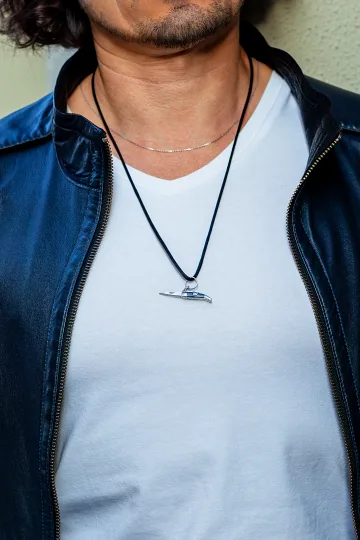
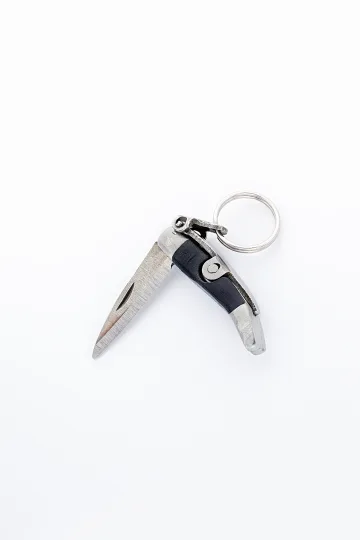


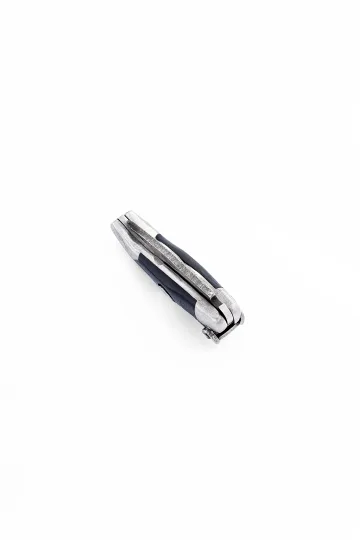

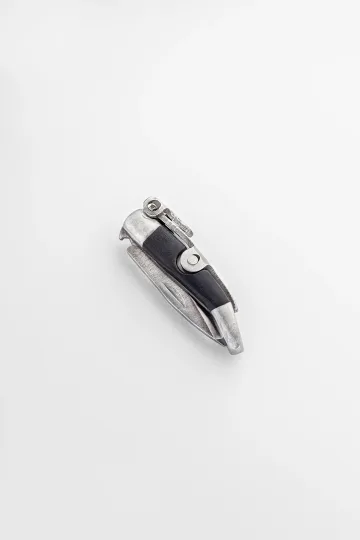
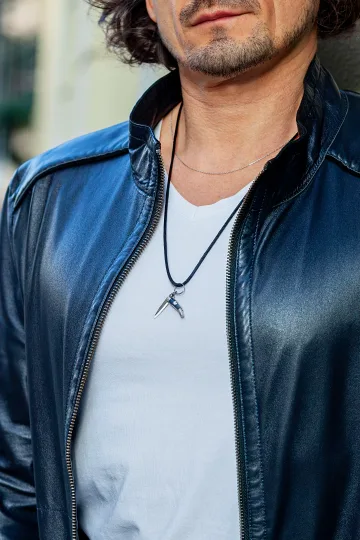

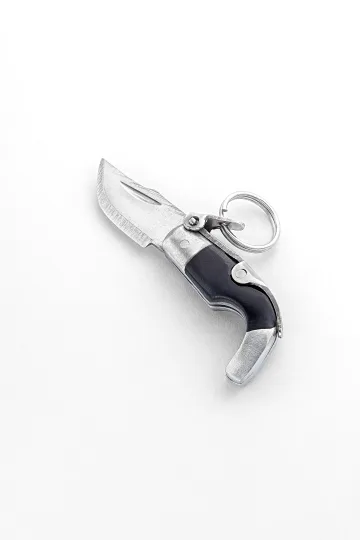
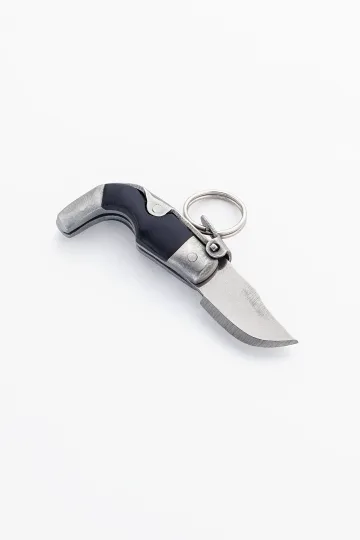
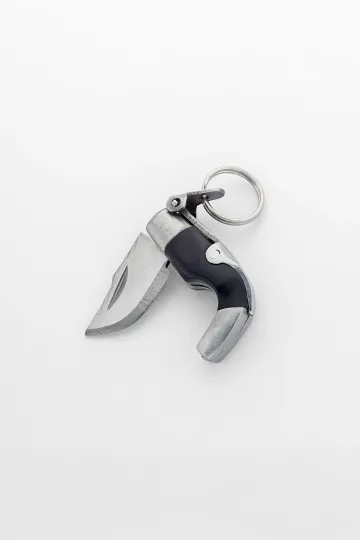
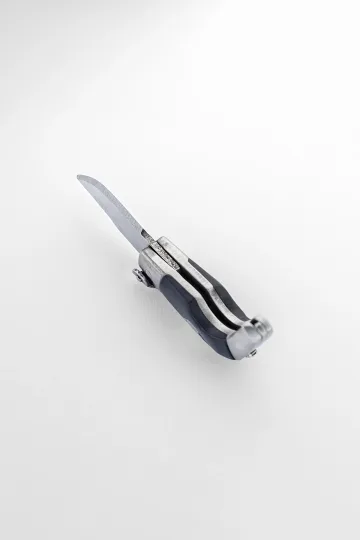
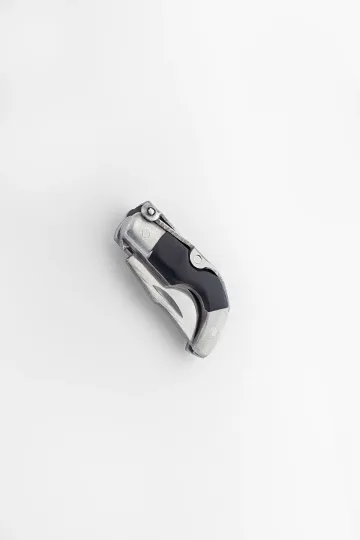
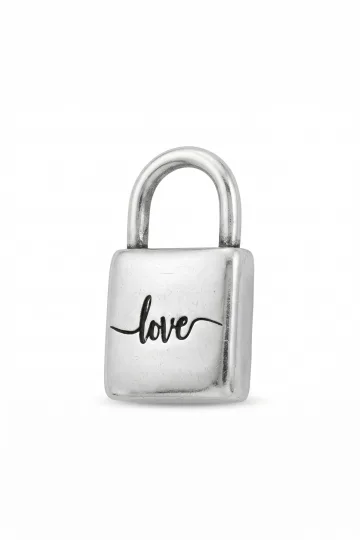
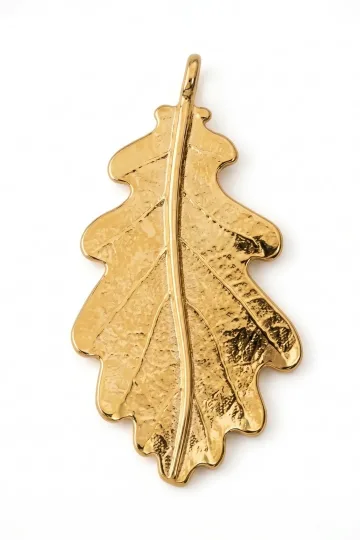
Frequent questions
How do I care for a silver matching bracelet?
Store it apart from other pieces, in a fabric pouch or box, to avoid scratches. Every couple of weeks wipe it with a soft silver cloth. If a dark film appears, warm water with a drop of dish liquid and a soft toothbrush over the engraving helps. Take it off before the pool and the sauna: chlorine and hot steam speed the tarnishing.
How do I tell real sterling silver from a fake?
Look for the "925" hallmark on the clasp or the inner side. Real silver feels heavier than plated costume jewellery of the same volume and leaves no green marks on the skin. Over time it tarnishes (patinates) in an even layer, while a cheap coating peels in patches, baring another metal. Keep the receipt and the seller's guarantee.
Can I wear a matching bracelet if I am allergic to metal?
The allergy is most often to nickel, not to the precious metal itself. Sterling silver, 14 to 18 carat gold, and 316L steel contain almost no nickel and suit most people with sensitive skin. If a reaction still appears, choose a leather or textile bracelet with a gold plate, where metal contact with the skin is minimal.
What to pair a matching bracelet with for everyday wear?
A bracelet sits happily next to a watch on the same or the neighbouring arm, if they are in the same metal tone. A fine chain can be worn in a set with two or three other bracelets; a wide cuff is better left a single accent. For a couple the point is not matching accessories around it but the bracelet itself on each wrist.
Must a matching bracelet be expensive and gold?
No. The pairing rests on the meaning of the engraving, not the price of the metal. Steel or silver with an exact text works as strongly as gold, and for an active life more reliably. An expensive material matters only if the bracelet is to be passed down.
Conclusion: what stays on the wrist in ten years
A matching engraved bracelet is one of the few pieces that works at the moment of receiving and keeps working over the years. A ring can be left off at the gym, removed for medical procedures, taken off at night. A bracelet on the wrist can stay for weeks. That means the wearer sees its text every day, while washing, while typing, while glancing at the time.
A good text, chosen precisely, does not tire. A poor one (too general, too clichéd-romantic) begins to grate precisely because it is always before the eyes. The best matching bracelets are the ones you need explain to no one but the other owner. Specific, a little mysterious to outsiders, immediately clear to the one they are for.
An Etruscan pair of the sixth century BCE, a Roman flask, a medieval armill, a Victorian mourning bracelet with a lock of hair, a modern bracelet with GPS coordinates, the same idea in different materials. Only the one it is addressed to knows what it means. Twenty-five centuries, one logic.
Matching engraved bracelets, sterling silver and 14 to 18 carat gold, a set of two with personal text, coordinates, a date, or a partner's handwriting, in the metalworking tradition of Albacete.
Wear the symbol, don't just read about it. These are in stock:
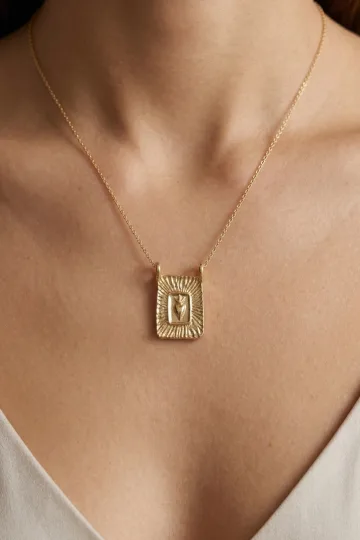
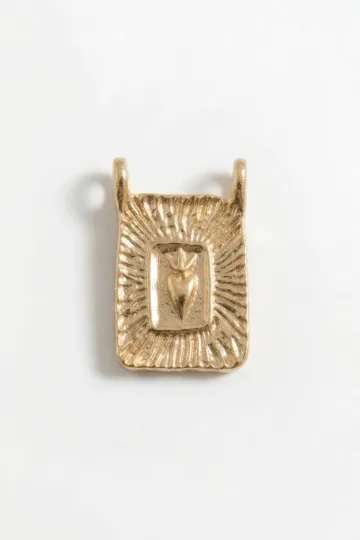
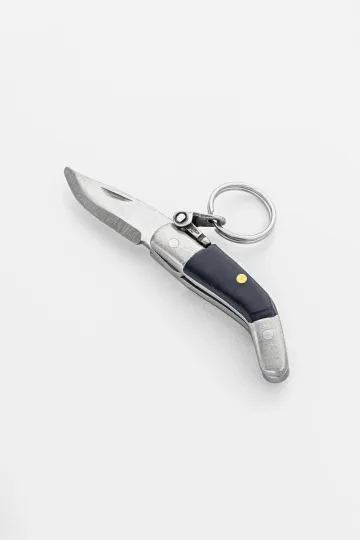
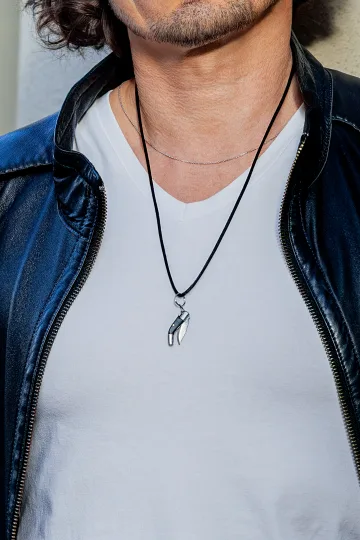
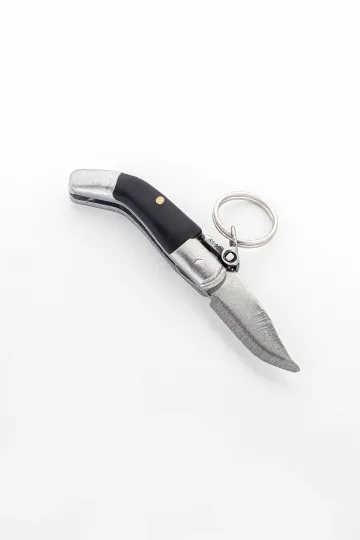
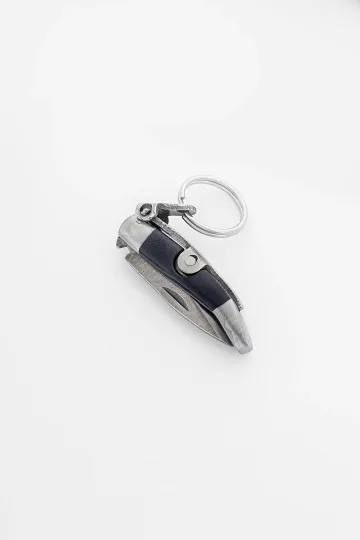
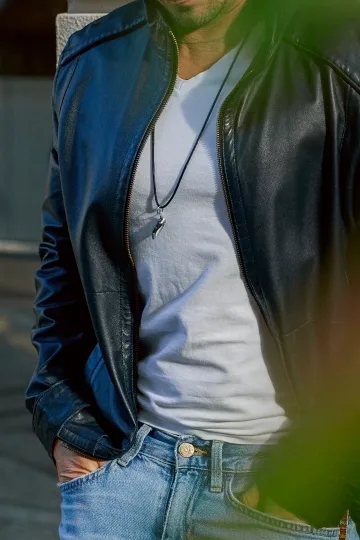
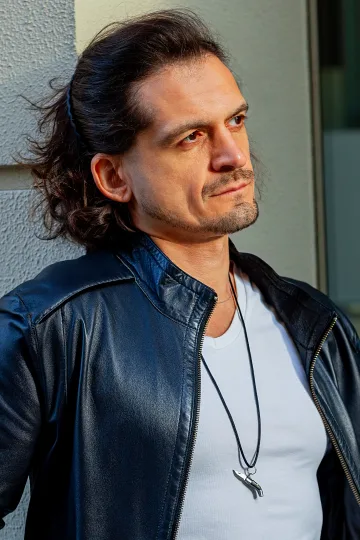
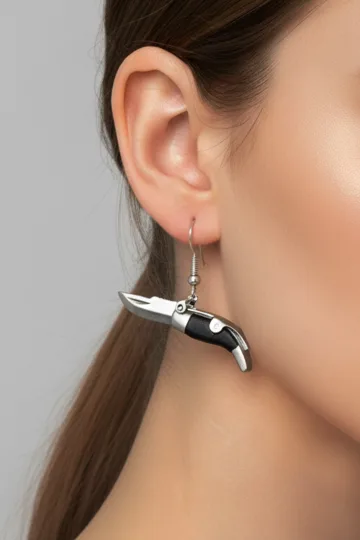
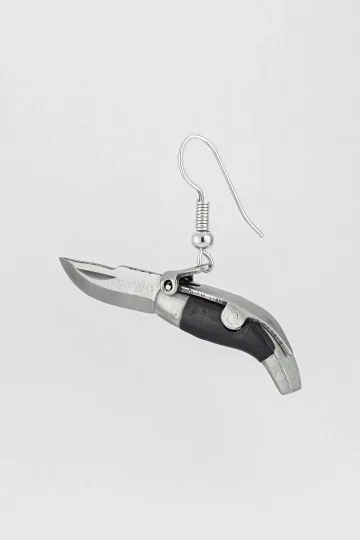


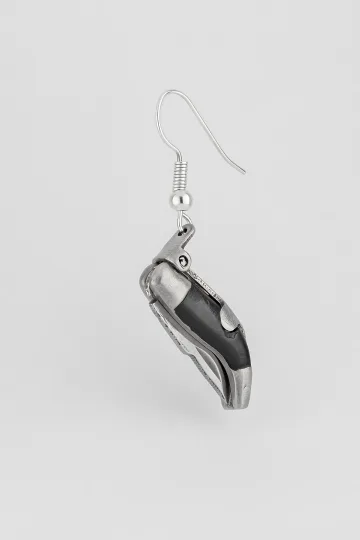

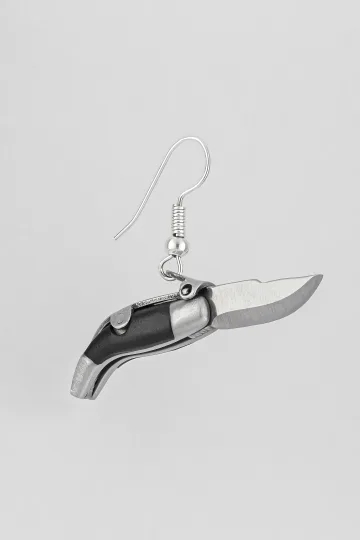
About Zevira
Zevira is a Spanish jewellery brand from Albacete, a handcraft workshop with its own sterling silver production. Matching engraved bracelets are one of the core directions of our range. We make classic silver sets, mixed sets (leather plus silver, textile plus silver) for couples with different tastes, leather bracelets with gold plates for creative couples, steel bracelets for active people and service couples, and gold sets for couples with a long history.
What you will find with us:
- Matching sterling silver bracelets with laser engraving of any text
- Matching leather bracelets with a silver or gold plate
- Matching rigid bangles engraved along the curve
- Matching flat cuffs with multi-line engraving
- Matching bracelets engraved with the GPS coordinates of two places
- Matching bracelets in a partner's or a loved one's handwriting
- Bracelets with a Latin phrase split in two
- Matching bracelets for long-distance couples, for friends, for parent and child
- Matching bracelets with chess notation, musical notes, a Pantone colour code
- Bespoke orders to the client's sketch
Every piece can be personalised with engraving. Engraving of any text, date, coordinates, initials, or handwriting, by agreement. We work in sterling silver and 14 to 18 carat gold. A certificate with every piece. Worldwide delivery with insurance.