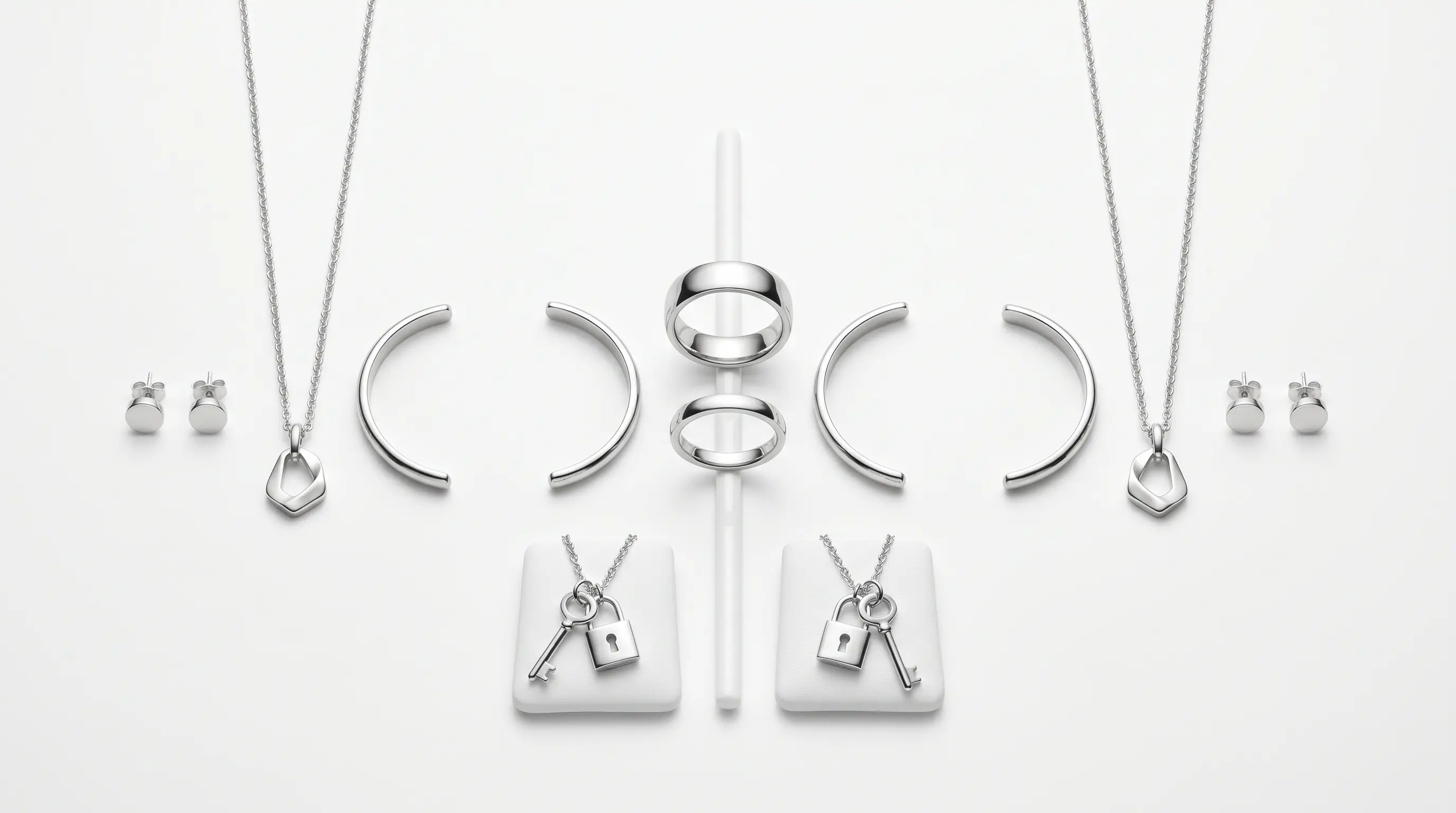
Matching Jewellery Set for a Couple: Ring, Bracelet, Pendant as One Series
A couple's set is never "two identical things." It is three things, different in shape, united by one idea. A ring plus a bracelet plus a pendant. Each piece holds its own. All three together quietly say "it's them." Below we work through how to build a set that does not look like a shop display and does not turn into a family photo where everyone wears the same jumper.
What a couple's jewellery set actually is
A couple's set is a group of two or more pieces, made for two people and built on a single logic. One metal, or one base metal with a single accent. One design line. One family of stones. One symbol. One engraving font. The result is three or four separate objects, each readable on its own, and together they form a system that could never have come together by chance.
The thing that separates a set from two similar pieces is intent. You can buy two silver bracelets in two different cities, years apart. A shared metal and a shared weave do not make them a pair. What makes them a pair is a decision taken on one day, by one person or by two people together: "these bracelets will be linked." Intent shows up in the detail. A shared motif. The same coordinate. Identical engraving split across one text. One stone of one origin, divided into several settings. Without a connecting element like that there is no set, just a collection of random jewellery.
Wear the symbol, don't just read about it. These are in stock:



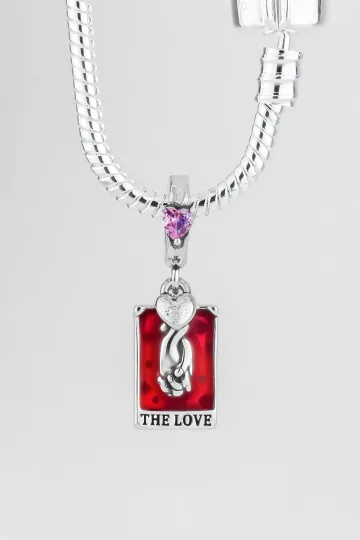
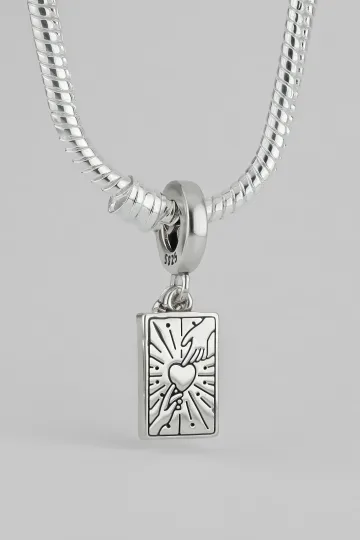
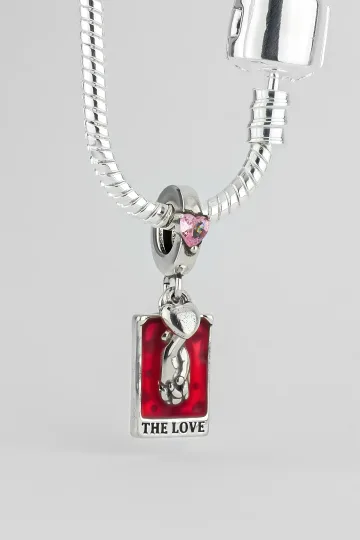

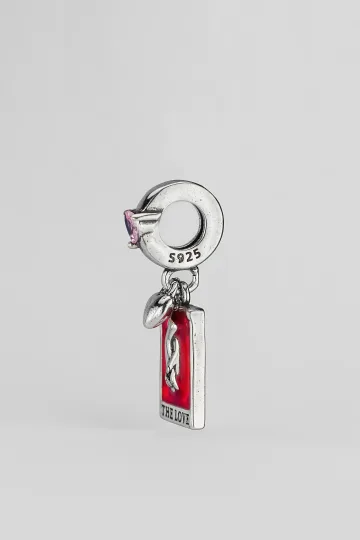
The second difference is architecture, and it works on two levels. The first is visual. A stranger seeing the two people at once reads the link between the objects without a word being said. Not because the objects are identical, but because they belong to one series. The second level is private. The wearers know that the series carries a meaning that is not broadcast outward. A coordinate only two people know. A date no one else remembers. A phrase split into three parts across three pieces. An outsider sees jewellery; the wearers know the cipher.
The third difference is the reliance on time. A couple's set is rarely assembled in one go. More often it grows. First a ring appears. A year later a bracelet joins it. Two years after that, a pendant. This is not buying a set. It is the slow accumulation of an archive. And because the set grows, the logic has to hold. Each new piece must obey the rules laid down by the first. One metal. One font. One style. If the fourth piece breaks the rules of the first three, the set stops being a set and becomes a pile of jewellery from different chapters of a life.
How a set differs from a wedding pair
A wedding pair is a subcategory of the couple's set, with its own rigid symbolism. Two rings. One metal. Often one engraving. Wedding bands almost always assume the same shape, because they declare marital status directly. A couple's set is broader. It takes in rings, bracelets, pendants, earrings, brooches, signets, chains. It does not require a wedding. It does not require matching shapes. It does not require both partners to wear the same thing.
Wedding bands become part of a couple's set when the couple is married. But a couple's set can exist for a pair who never intended to register anything, and in that case there are no wedding bands in it. Other pieces take their place: bracelets carrying the coordinate of where they first met, pendants with a phrase split between them, signet rings with no classic wedding symbolism at all.
Subtypes by composition
A couple's set comes in different densities. The more pieces, the harder it is to hold the unity, and the longer the set takes to assemble. A basic classification by composition looks like this.
Minimal, two pieces. Ring plus ring. Or bracelet plus bracelet. Or one pendant for one person and one bracelet for the other. This is the most common format for couples who want a connection without any display. Two pieces are easier to coordinate, easier to choose and easier to wear in real life.
Standard, three pieces. Ring plus bracelet plus pendant. Or ring plus earrings plus pendant. At this point the set already works as a system. Three pieces create a triangle with a lead element, a supporting one and a connecting one. The architecture reads, but there is no excess yet.
Full, four to five pieces. Ring, earrings, bracelet, pendant, sometimes a brooch or a watch as the closing element. This is the level for large events: weddings, silver and golden anniversaries, milestone birthdays. A full set more often belongs to one partner (the bride, say), while the other receives only a connecting piece (a ring or bracelet from the same series).
Ceremonial, six or more. A full set plus a tiara, plus a signet, plus an anklet, plus a decorative belt, plus a cloak brooch. A rare format you now see almost only in royal families and historical reconstructions. In ordinary life it is unnecessary and works only as a costume choice for one very large occasion.
A short history of couple's sets
The couple's set is not a modern invention. The idea of gathering a series of pieces for two people, united by one language, goes back more than two thousand years, and each era solved the problem in its own way. Here are four historical hinges that shaped what we now call a couple's set.
Ancient Rome: fascia and pronuba
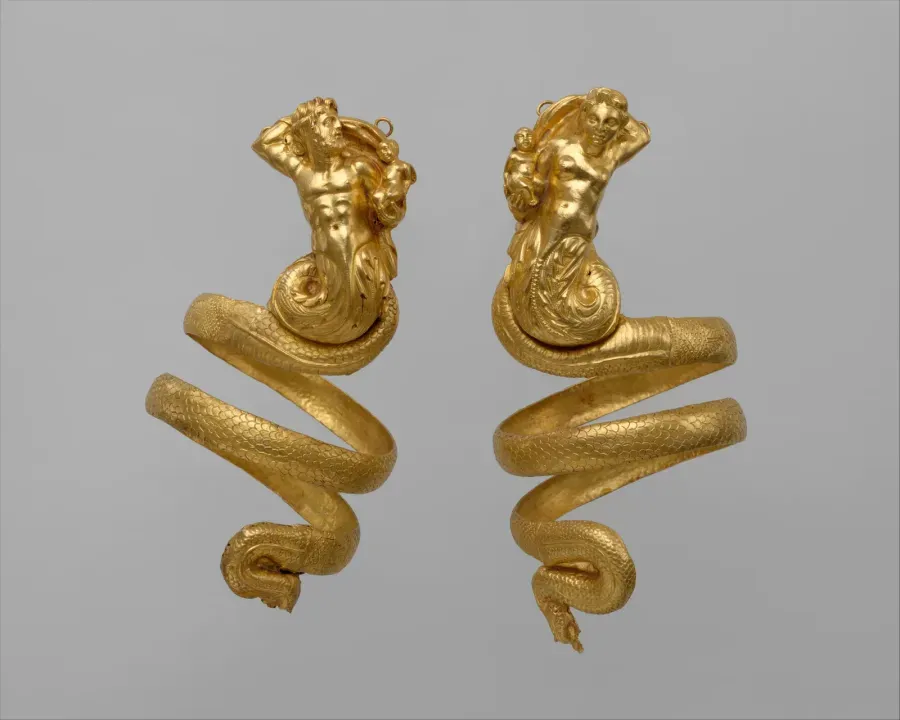
In Ancient Rome there was the practice of fascia, matching jewellery for a pair, mostly for married couples. In this context the word fascia meant not a belt, as in later Latin, but a decorative band or a cluster of several pieces united by one motif. Newlyweds in patrician families received fascia from their parents or from the guarantors of the marriage. A fascia usually held two rings, two fibulae (clasps for the toga or palla) and a pair of earrings for the bride. The groom wore a heavy signet with the family crest. The bride wore a finer ring, earrings and a fibula with the same motif.
The Roman wedding ceremony was called confarreatio for patricians and coemptio for most others. In confarreatio a priestess, the pronuba, physically joined the hands of the bride and groom. By that moment both had to be wearing the fascia given to them the day before. After the ceremony, one of the pair removed part of the fascia, a fibula or a ring, and exchanged it with the other. This is the first documented exchange of jewellery within a couple's set in European history. The act of exchange set down a logic that still works: both partners receive a set, but one piece of that set passes to the other.
Finds at Pompeii and Herculaneum produced several intact fascia, now kept in the National Archaeological Museum of Naples. One of the best known comes from the burial of a young woman, found in 1748. It holds two gold rings of different sizes (male and female), a pair of earrings with small garnets, a fibula with the same garnet and a fine chain. The shared motif across every piece is interlaced grapevines. That is the first surviving example of a couple's set in the modern sense: different objects, one design family, two people for whom they were made.
Roman tradition also knew the dextrarum iunctio, the joining of right hands. This is not jewellery in the strict sense but a sculptural motif found on sarcophagi, coins and rings. Two hands clasped in a handshake. It appeared on one of the fibulae of the wedding fascia and was read as the seal of the union. From the dextrarum iunctio came the medieval fede ring, with its two clasped hands. A few centuries on, that image turned into the Irish Claddagh ring. One Roman symbol gave rise to a whole line of couple's jewellery that survives today.
Roman fascia also carried a legal function. Under Roman law a wife held no property separate from her husband, apart from the dowry (dos) and the so-called peculium, personal belongings that included the fascia. If the husband ended the marriage, the fascia stayed with the wife and counted, in law, as her guarantee. The same principle survives two thousand years later in the law of many countries: jewellery given to a wife before or during a marriage remains her personal property in a divorce.
Medieval Europe: marriage jewels and the wedding chest
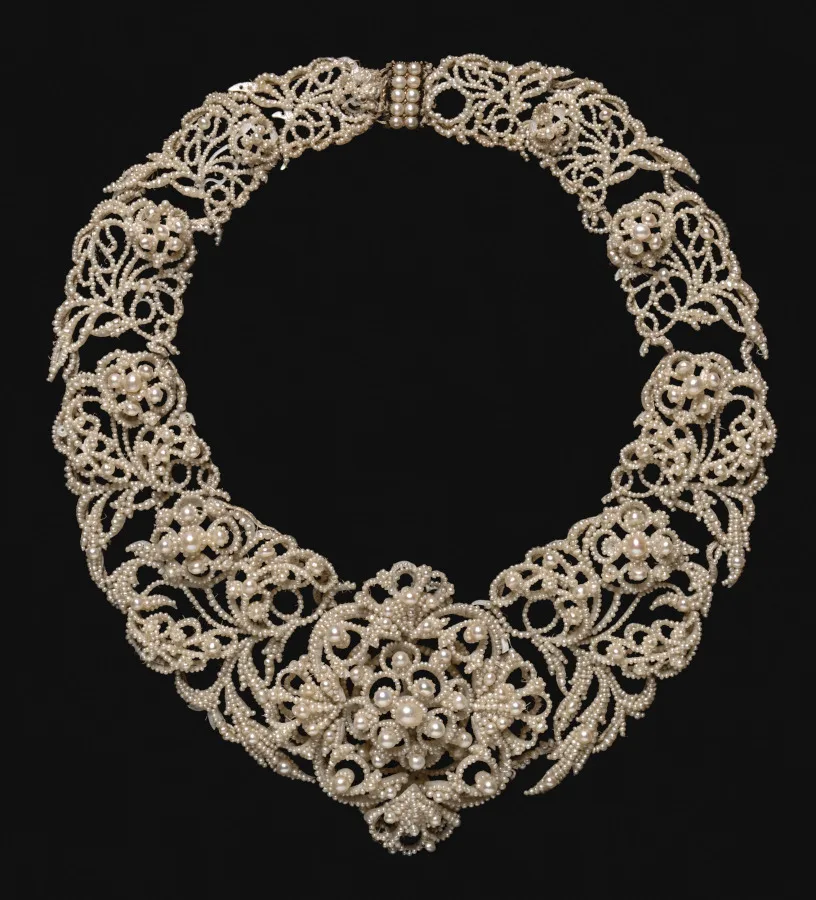
In the Middle Ages Europe built up the tradition of marriage jewels, a full set of wedding jewellery passed to the bride by the groom's family or by her own as part of the dowry. Unlike the Roman fascia, marriage jewels more often belonged to the bride alone. The groom received a separate, plainer set: a ring, sometimes a chain with a medallion, sometimes a signet.
The composition of the woman's set depended on region and era, but the basic structure was shared. A wedding wreath or diadem for the ceremony. Earrings or ear pendants. A neck chain with a medallion, often a miniature portrait of the husband or a religious symbol. A bracelet at the wrist. A wedding ring. A signet ring the wife could use to sign documents on behalf of the family. Several fibulae for outer garments. A decorative belt with metal plates.
Marriage jewels were kept in a special wedding chest: cassone in Italy, Hochzeitstruhe in the German lands. The chest passed to the bride together with the jewellery and became her personal property. This was legally important: in most medieval European legal systems a woman did not own property separately from her husband, yet the contents of the wedding chest stayed her private property even in divorce or widowhood. The couple's set worked at once as adornment and as a financial asset that protected the woman if the union broke.
The most famous surviving set of marriage jewels is that of Bianca Maria Sforza, received in 1493 on her marriage to Emperor Maximilian I. It held a diadem with thirty diamonds in the "point cut" (forerunner of the table), a pair of earrings, a neck chain about half a metre long, two rings and a belt of gold plates. Most of the set was later melted down, but three pieces (one ring, one earring and a fragment of the belt) survive in the collections of the Kunsthistorisches Museum in Vienna.
In the same period there was an active practice of splitting a couple's set between two cities or two owners. In dynastic marriages between Europe's ruling houses, delivery of a set could take weeks, sometimes months. Part of the jewellery was sent ahead to the bride's home city so she could wear it before leaving. Part went to the groom's city, where it was assembled into the final set. Splitting the set across two cities created a risk of loss, so each piece was recorded with its provenance, its maker and the exact weight of metal. This is one of the first examples of what we now call a jewellery passport.
The Baroque era: a couple in mirror image
In the seventeenth century, especially at the French court of Louis XIV, a tradition of paired portrait miniatures in jewellery appeared. The groom wore a miniature of the bride in a medallion or on the lid of a snuffbox. The bride wore a miniature of the groom. It was a ritual of mirrored presence: each partner carried the image of the other. The miniatures were small (3 to 5 cm across), painted in watercolour or gouache on ivory and protected under a thin layer of glass or rock crystal.
The French tradition of bijoux a deux ("jewellery for two") in the seventeenth and eighteenth centuries took this logic to its limit. Paired pieces were made, each carrying detail that formed meaning only together. Two charms, each one half of a lock. Two medallions, each part of one portrait. Two rings that, brought together, completed a single figure. This is the direct precedent of the modern complementary set: jewellery whose meaning is complete only as a pair, yet each piece stands alone.
The French also introduced split portraits in medallions. He wore her likeness, she his. The same principle as crossed initials, only in portrait form. In the nineteenth century such medallions became a standard parting gift: to a soldier going to war, a merchant on a long journey, a sailor on a distant voyage. The medallion came home with the person, or stayed with whoever waited, as the one material trace of the relationship if the person did not return.
The Victorian era: the parure as a full ceremonial system
In the nineteenth century European jewellery worked out the parure, a complete set of four to six (in the largest cases up to nine) pieces united by one design. The French word parure means "adornment" or "full dress." Strictly, a parure is not a set for two but a full set for one person, usually a woman. Yet its logic directly shaped how modern couple's sets are designed.
A basic parure held a diadem or hair comb, earrings, a necklace, a brooch or clasp, bracelets (often a pair, one per wrist) and a ring. The grand parure added a belt with a buckle, an aigrette (for hat or hair), a stomacher (the jewelled triangle for the bodice) and sometimes a second, smaller brooch. Every piece was designed as one series. The same stone, the same cut, the same kind of setting, the same ornament in the framing.
A parure passed down whole. It was a unit of family memory packed into the form of a jewellery collection. In the inventories of aristocratic houses a parure was recorded on a single line, with the year it was made, the maker's name and the value. Splitting a parure between several heirs was considered bad form and usually avoided: the set went to one daughter whole.
The Victorian parure set down several principles that still hold in the modern couple's set. First, unity of metal: every piece from one alloy, one fineness, one tone. Second, unity of stone cut: pear-shaped stones in one piece, pear-shaped throughout. Third, unity of setting style: cascade, crown, pave, bezel, one type across the whole set. Fourth, hierarchy: one lead piece (usually the central brooch or the necklace pendant), the rest subordinate to it in visual weight.
The best-known surviving parures are Queen Victoria's, given to her by Albert at their wedding in 1840 (diadem, necklace, earrings, brooch and two bracelets with Ceylon sapphires), and the ceremonial parure of Josephine de Beauharnais, made by the Nitot workshop in 1810 to Napoleon's order. Both survive almost complete and are held in royal collections.
The modern era: the wedding set for two
By the late twentieth century the parure as a format for one woman went into the archive. A new version appeared: the wedding set for two. This is a couple's set that accounts for both partners. The standard make-up: wedding bands (his and hers), paired bracelets (finer for her, wider for him), a pendant for the bride, sometimes an extra brooch or lapel pin for the groom.
The wedding set replaced the parure for several reasons. First, the structure of marriage changed. In the nineteenth century the bride received a full set as part of the dowry, and that set was her personal property. In the twentieth, property within marriage became shared, and the logic of "all to her" gave way to the logic of "one piece each, from an equal series." Second, the wearing of jewellery changed. A full Victorian parure required a ceremonial outing and the right outfit. The modern wedding set is worn in everyday life and has to fit office wear, sport and travel. That automatically cuts the number of pieces and simplifies their form. Third, inheritance changed. In the nineteenth century the parure went to one daughter. In the twenty-first the wedding set is more often divided among several children, one piece each, or melted into new jewellery for the next generation.
The modern couple's set inherits all of these traditions. From the Roman fascia it takes the idea of exchanging pieces between partners. From marriage jewels, the idea of the set's legal value as property. From the Victorian parure, the principles of unity in metal, cut and style. From the wedding set for two, the modern lightness and the tie to everyday life. That is the format this article is about.
From folk pairs to today's continental tradition
There is a separate chapter in regional European history: the era of mass-produced matching wedding rings. Across much of continental Europe in the mid-twentieth century, paired gold bands with one ornament became the standard wedding gift, not an add-on but the main event. At such weddings there was often no parure for the bride, no brooches, no diadems. There was one format: two wedding bands of identical design, different sizes. This is the most widespread format of matching couple's jewellery in the European tradition.
Bands were produced and sold strictly in pairs. The pairing was deliberate: the system of wedding gifts was built for couples and did not assume the band would be worn alone.
Later, paired chain bracelets were added, usually engraved with names or dates. This was the first expansion of the couple's set beyond the two rings. Engraving the partner's name inside the ring or on the bracelet plate became a standard still reproduced in families where such sets survive as heirlooms.
The recent era added a catalogue of Western formats: matching pendants, paired watches, paired charm bracelets. The current European tradition of the couple's set is a hybrid of the old matching approach and the Western complementary one. Couples often combine both: wedding bands in matching format (identical, different sizes) plus pendants or bracelets in complementary format (different shapes, united by one motif).
Ring on weekdays, pendant under the shirt, the whole set only for the wedding. Piling it all on for a Tuesday is matching-sweaters territory, and don't you dare.
What to wear a couple's set with
I have been styling couple's sets on shoots for years, and one thing holds true: a set gets worn only when it sits on real clothes, not on a mannequin. I recommend keeping a simple logic by occasion and never confusing "a set" with "all of it at once".
What do I wear from the set every day? I suggest one piece on show and the rest kept quiet. Ring on the finger, pendant under a thin polo neck or shirt, bracelet tucked under a cuff. Matte silver sits happily with denim, knitwear and linen and asks for no colour matching. This is for the person who wants to feel the jewellery on the skin all day rather than announce it.
How do I build the set for the office? I keep a restrained register: a thin ring, a small pendant in the neckline, a narrow bracelet under a watch. A cool wardrobe (grey, blue, graphite) I lead into silver and white gold; a warm one (beige, olive, chocolate) into yellow gold. One metal across the whole set matters here above all, since mixing reads as carelessness even to people who know nothing of jewellery.
What do I put on for an evening or a special occasion? For the evening I open the full register. A deep neckline I finish with a longer pendant (45 to 55 cm) so it falls into the line of the décolletage rather than hovering above it. A closed neck holds the pendant shorter (40 to 45 cm), on the fabric itself. Smooth textures (silk, satin, fine wool) let the piece shine, while tweed and textured knitwear dull it and call for something larger.
How do I combine the pieces with each other? Within one metal I stack two or three thin bracelets, set rings on neighbouring fingers, layer pendants of different length. Metals I mix only on purpose, repeating the accent in each zone, or the look falls apart. An older couple I lead towards one noticeable piece and quiet around it; a younger one I let carry layers and stacks with ease.
What do I do when a look feels off? I take something off. An under-loaded set always reads as more expensive than an overloaded one. I tie length and mass to the largest piece of the set: if there is a pendant, it sets the scale; if not, the ring does. Everything else I subordinate to that piece in descending order.

Turn on your camera, pick earrings, a pendant or a ring, and see the piece on yourself in real time.
Switch items in one tap.
Everything runs in your browser: no photo or video is ever uploaded.
Composition: four levels of density
A couple's set is built for one specific couple, and choosing the number of pieces is the first decision to make. Too large a set turns into an archive no one uses. Too small a set never becomes a system. Here are four standard density levels, with a note on who each suits.
Minimal: two pieces
The most common configuration. Two pieces are enough to create a connection and not enough to create overload. The minimal set works for couples who prefer quiet symbolism and want no display.
Base options. Wedding bands and nothing more. The most austere choice. Two rings in one metal, identical or with a symmetric difference in width. One date or one coordinate engraved inside. This suits couples for whom the rings alone are symbol enough. Paired pendants. For couples who do not wear rings or who work with their hands. Two pendants on chains, identical or complementary (sun and moon, key and lock, two coordinates of one place). Pendants hide under clothing, read at a glance, stay out of the way at work. Paired bracelets. For couples with a metal allergy at the finger, or those who want a "lighter" set. Two bracelets in one metal, different in thickness. Ring plus pendant. The archetype: she wears the ring, he wears the pendant, or the reverse. This suits when one partner wears no jewellery at all and agrees only to a minimal piece.
A minimal set needs neither a large budget nor a large concept. It can be assembled in one visit to a jeweller or ordered remotely. The one condition: both pieces must come from one series, otherwise it is not a set but two separate pieces.
Standard: three pieces
This is the level where the set works as a full architectural system. Three pieces create a triangle: a lead element, a supporting one and a connecting one. The architecture reads, with no sense of excess.
Standard configurations. Ring plus bracelet plus pendant. The most balanced option. One piece on the finger, one on the wrist, one at the neck. Spreading across three points of the body creates a visual frame in which each piece works in its own zone and none competes. Ring plus earrings plus pendant. For couples where one side does not wear a bracelet (a metal allergy at the wrist, or hands-on work). Two rings plus one pendant. Suits the wedding format: both wear rings, one additionally wears a pendant with engraving split between the pieces. Ring plus two pendants. One partner wears a ring, the other two pendants on different chains. Rare but workable for couples where one partner wears plenty of jewellery and the other no ring at all.
The standard set is the optimal level for most couples. It needs no enormous outlay yet is dense enough to be a full system. Most of the rest of this article is oriented to the three-piece set.
Full: four to five pieces
The level for serious occasions. A wedding with a ceremonial entrance. A silver or golden anniversary. A milestone birthday. A full set demands all pieces be thought through at once and a substantial budget for materials.
The standard four-piece make-up: ring plus earrings plus bracelet plus pendant. The five-piece adds a brooch, a second bracelet or a chain. The logic of adding is simple: after four pieces the rule of diminishing readability sets in. A fifth piece is already hard to fit so that it does not fall out of the system. Five is therefore the upper limit for most couples.
A full set is usually made by one maker or one workshop, to keep the unity. Ordering it "in parts" in different places is almost impossible: different makers have different hands, and the set falls apart into four independent pieces.
In modern practice a full set is more often made for one partner (the bride, say), while the other receives only one or two connecting pieces (a ring and a lapel pin, or a ring and a bracelet) from the same series. This solves the asymmetry: women traditionally wear more jewellery than men, and trying to assemble an identical full set for both leaves the man's set in the box.
Ceremonial: six or more pieces
A very rare format, now seen almost only in royal families, historical reconstructions or very large ceremonial events (coronations, state receptions). To the full set are added a diadem, a signet, an anklet, a decorative belt with a buckle, an aigrette, a stomacher.
The ceremonial level is almost impossible to assemble for everyday wear. Most of its pieces are worn once or twice in a lifetime and then handed down or given to a museum. For a real couple, rather than a royal family or a film prop, this level is almost always excess.
The one case where it makes sense for an ordinary couple is a very large event after which the set goes into the family archive and is not meant to be worn: a photo album for a silver wedding, say, where both partners dress in stylised historical costume and wear a full set for one shoot. After the shoot the set goes into a box and is kept as an heirloom.
Principles of coordinating a set
Once the number of pieces is set, the main work begins: coordination. Without it a couple's set turns into a pile of jewellery in one genre. Coordination rests on six principles. They all work at once. You can break one or two, never all six.
Principle one: one metal
The main visual rule. Every piece is either in one metal or in one base metal with one accent. Sterling silver throughout. 14K yellow gold throughout. 14K white plus 14K yellow gold only as narrow accent inlays (a border on the central element, say).
Mixing silver and yellow gold in one set without intent reads as accident. It looks as if one piece was bought in one place and another somewhere else, and they ended up side by side by mistake. Deliberate mixing is possible: a base metal, silver, with an accent, a thin gold thread or inlay of a set shape in every piece. This works if the accent repeats in every piece and forms a pattern. Without the repetition, mixing breaks the set.
Oxidising (blackening) silver is a tool for a complementary effect without leaving the one metal. His piece with blackened detail, hers polished. Both in sterling silver, but in a different register. This is the cleanest way to build a complementary set on one metal.
Principle two: one design line
Every piece obeys one of four design codes. Geometry. Straight lines, clean angles, symmetry. A flat square-link ring, a bracelet of square plates, a square pendant with engraving. Geometry works for couples who love minimalism and an architectural look. Organic. Flowing lines, natural forms, asymmetry. A twig-shaped ring, a bracelet of leaf links, a teardrop pendant. Organic suits couples who prefer softness and a warm look. Classic. Traditional forms, recognisable at a glance. A plain band, a tennis bracelet, a locket pendant. Classic is the choice for couples who want versatility and a style that lasts. Minimalist. Simple forms, no decoration, emphasis on the material. A plain bandless of stones, a thin chain bracelet, a clean circle pendant. Minimalism suits couples with a deliberate love of restraint.
Mixing two styles within one set is possible but takes skill. A classic ring plus a minimalist bracelet plus a pendant that connects both registers. Without that connecting piece, mixing reads as a random set from different eras.
Principle three: one family of stones
If the set has stones, they should belong to one family. That means either one stone throughout (diamonds everywhere) or one main stone plus one accent that repeats in every piece. Sapphires throughout, or sapphires as the base plus small diamonds as a framing that repeats in each piece.
Entirely different stones in every piece almost never work. A ring with a sapphire, a bracelet with an emerald, a pendant with a ruby is not a set but a collection of separate pieces. The exception is a themed set where different stones are chosen deliberately by a symbolic logic (the birthstone of each family member, in ring, earrings and pendant). There the variety itself becomes the unifying principle, but it needs explaining and works only if the wearer knows the explanation.
The safe path is diamonds throughout, sometimes with one coloured accent that repeats. Diamonds as the base plus one blue teardrop (sapphire, aquamarine or topaz) in the centre of each piece. Universal, never out of fashion for decades, easily extended with new pieces.
Principle four: one symbol or motif
This principle carries the private part of the set. One symbol repeated across the pieces creates a narrative bridge. Possible symbols and motifs. A cross. If both partners share a Christian tradition, a simple cross in the design of each piece (a small element in the ornament, the central figure of a pendant, an engraving on a ring) unites the set. A coordinate. One point on a map, engraved or hidden in the ornament of each piece: where they first met, the hometown of one partner. A zodiac sign or element. Air, water, fire or earth, or the sign of a particular constellation. An anchor, a wheel, a sail. Sea symbols for couples whose life is tied to the water. A specific plant. A flower or branch that means something to both (an olive branch, lavender, a grapevine), its image repeated in every piece. A professional symbol. If both belong to one profession, the symbol of that trade: musical signs for musicians, gears for engineers, a pen for writers or editors.
The same symbol across all pieces is one of the strongest ways to create the sense of a single set. The symbol works even when the metal, the form and the stones differ. A small repeating detail is enough for the whole series to read as one.
Principle five: the scale of sizes
This principle carries proportion. Every piece obeys one scale, in which each has its own register. The standard rule for a three-piece set: if the ring is 6 mm wide, the earrings are around 10 mm and the pendant around 25 mm. Each next piece is larger than the last by roughly one and a half to two times. This creates a visual hierarchy.
Breaking the scale is a common error. If the ring is very large (12 mm wide) and the pendant small (10 mm), the hierarchy flips and the ring "drowns out" the rest. The wearer ends up putting on the ring alone, because in one set it clashes with the others. The reverse error: a thin ring (2 mm) against a large, massive pendant (5 cm) gets lost, and the wearer almost always forgets to put it on.
The right scale is anchored to the largest piece, and everything else follows downward. If there is a pendant, it sets the scale. If there is no pendant, the ring sets it.
Principle six: one font and one language of engraving
If the set carries engraving (and a couple's set almost always does), every piece is engraved in one font, one technique and one language. This rule is often broken, and every breach shows at once.
One font. Laser engraving offers dozens of fonts: script, print, gothic, monospace. Within one set, one font. If the ring is in a cursive script, the bracelet is too, and the pendant. Changing font from piece to piece breaks the unity.
One technique. Laser engraving, hand graver and guilloche are three techniques with different textures. Within a set, one is used. Laser for all, or graver for all. Mixing gives the sense of pieces made at different times by different hands.
One language. If the engraving is in English, English everywhere. If in Latin (a common choice for longevity), Latin everywhere. Mixing languages is a frequent error. A ring with "Together forever," a bracelet in French, a pendant with a Latin phrase: such a set splits into three eras. One language across all pieces, even if it is exotic.
Customer reviews
Zevira is a real jewellery shop. Genuine payments, deliveries and customer thank-yous.
🥰🥰🥰 gracias

Ok, ¡gracias! 🙂

Thirty set ideas with concrete symbolic logic
To make this section practical, here are thirty concrete couple's-set ideas, each with composition, symbolism and the couple it suits. They are grouped by genre.
Family and wedding
1. A five-piece wedding set with one coordinate of the wedding venue. Two wedding bands, paired bracelets (finer for her, wider for him), a pendant for the bride with the central coordinate. The coordinate of the venue (a particular church or registry office) is engraved inside each piece. Nothing outward marks the unity except what the couple alone will notice.
2. A couple's set for an unmarried pair. Three pieces without overt wedding symbolism: ring, bracelet, pendant. The ring is worn not on the ring finger (the middle or index instead). No wedding shape. The engraving is not a wedding date but the date they first met or moved in together. For couples who have not formalised anything but want a couple's set.
3. An ancestral set from melted grandparents' jewellery. Three pieces made from metal melted down from both grandmothers' jewellery. Some fresh metal is added for workability, but the base is the old metal. Any stones from the grandmothers' pieces are set into the new ones without melting. The hardest format: it requires family jewellery from both sides and relatives' consent to melt it down.
4. A wedding set with a split vow. Four pieces, two rings and two bracelets. One line of the couple's vow on each. The full vow reads only when all four are together. Singly, each piece carries one line. For couples with their own written vow.
5. A "date plus date" set. Three pieces: a ring with the date they first met, a bracelet with the date they moved in together, a pendant with the wedding date. The chronology of the relationship made into a material archive. For couples with mature relationships and several key points already.
Tech and creative
6. A tech set for a couple of engineers. Three pieces engraved with the coordinates of a place and the ASCII codes of the partners' names. Coordinates in the form 41.3851 N, 2.1734 E, plus an engraving like 0x416C6578 (the name "Alex" in ASCII). For couples for whom engineering and code are part of their own identity.
7. A creative set for an "artist plus writer" couple. Three pieces, each with an inlay. One a fragment of her sketch (a drawing turned into engraving). Another his handwritten letter or phrase (handwriting turned into engraving). The third both elements together. Each piece carries a trace of the partner's work.
8. A musical set for a "violinist plus pianist" couple. Three pieces with the split score of their favourite piece. The first bar on the ring. The central part on the bracelet. The finale on the pendant. The full piece reads only when all three lie side by side. For couples for whom music is a shared passion.
9. An architectural set for architects or designers. Three pieces with an ornament that is the plan or facade of the first building they designed together, or the house they live in. The lines, turned into engraving, repeat across the pieces at different densities.
10. A literary set. Three pieces with a split quotation from a book that matters to the couple. Each piece carries its part of the phrase. The couple chooses the book. It works with any genre, from classic literature to science fiction, from poetry to popular science.
Professional
11. A military set. Three pieces in sterling silver with a dark patina, plus steel or titanium detail. Engraving: the coordinates of where they first met plus unit numbers (if both served). An austere style, no decorative elements. For couples where one or both have a connection to military service.
12. A medical set. Three pieces with an ornament based on a medical symbol, the bowl of Hygieia, the caduceus or a stylised "M". Metal: sterling silver (easy to clean, unreactive to disinfectant). Engraving: the date one partner finished their medical training, or the date of a significant patient saved.
13. A nautical set. Three pieces with sea symbolism, a shell, an anchor, a seahorse (one element per piece, or all three in each piece's ornament). For couples whose life is tied to the sea: sailors, fishers, boat owners, divers or sailing enthusiasts.
14. An aviation set. Three pieces with aviation symbolism, a wing, a propeller, a plane silhouette. Coordinates of two airfields: one partner's on one piece, the other's on the second, their meeting point on the third. For couples of pilots, cabin crew or people with aviation hobbies.
15. An agricultural set. Three pieces with plant symbolism, an ear of wheat, a grapevine, an olive branch, or another plant that matters to the couple. Metal: usually yellow gold or gilded silver. Engraving: the name of a place (farm, vineyard, garden) the couple owns.
Themed and symbolic
16. A religious set. Three pieces with religious symbolism, a cross, an ichthys fish, a Pax symbol. For a Christian couple, one of these three symbols on each piece, or all three. For other faiths, the equivalent symbols of their own tradition.
17. A minimalist set. Three pieces with one geometric line. A single thin band of silver, repeated across all three: diagonal in the ring, central in the bracelet, vertical in the pendant. No stones, no engraving. Pure geometry as the unifying principle.
18. A cosmological set. Three pieces, each carrying the image of a particular planet. One planet per piece: Venus, Mars, Mercury (the three planets nearest Earth, symbolising the link to Earth). Or the planets matching the partners' zodiac signs.
19. A seasonal set. Three pieces, each symbolising a season that matters to the couple. If they met in autumn, married in spring and had their first child in summer, the three seasons go one per piece. A stylised leaf on the ring (autumn), a flower on the bracelet (spring), a sun disc on the pendant (summer).
20. A colour set. Three pieces with one coloured stone in different cuts. All stones of one mineral, a Ceylon sapphire say, but in different cuts: round in the ring, oval in the pendant, marquise in the bracelet. One colour, one species, different forms. A rare, aesthetically clean format.
Personal and intimate
21. A set with crossed initials. Three pieces. His initials on her ring. Her initials on his bracelet. Both initials on a shared pendant (worn in turn or kept at home). The logic: each wears the other's mark on their own piece.
22. A "him plus her" set with a split symbol. Two pieces complementary in form. A ring with half a circle and a bracelet with the other half. A pendant with an arrow and a second pendant with a bow. Each piece is incomplete without the other, yet reads as jewellery on its own.
23. A "two numbers of one date" set. Three pieces with one date split among them. The day on one, the month on another, the year on the third. Only when all three are brought together does the full date appear.
24. A "phrase by syllables" set. Three pieces with one phrase split by syllables. The phrase "I love you" broken: "I" on one, "love" on another, "you" on the third. The phrase works only when all three are gathered.
25. A "coordinate in parts" set. Three pieces with the coordinate of one place, split into parts. Latitude on one. Longitude on another. The place name (or simply "here") on the third. The full coordinate assembles from all three.
Rare and unusual
26. A set with a photo-microfiche. Three pieces, each hiding a tiny photo print (a microfiche) under a microscopic lens or inside a hollow space. The photo is invisible from outside. To see it, you have to know it is there. For couples who value a private, unpublic connection.
27. A set with a strand or fragment. Three pieces, each holding a small fragment: a lock of the couple's child's hair, a thread from the wedding dress, a piece of wallpaper from the first shared flat. A Victorian tradition in modern dress.
28. A set with melting and added fresh metal. Three pieces, partly made from melted family metal of both partners (one ounce from each side), plus fresh metal for workability. Each piece holds a particle of both family lines.
29. A set with a split stone. Three pieces with fragments of one and the same stone. One large stone divided by the jeweller into three parts (or three separate stones cut from one piece), each set into one piece of the set. The stones look different but are geologically one species, one origin.
30. A "twin" set. Three pieces for one partner and three fully identical for the other. Six in total. The most direct matching format: both wear exactly the same. For couples who deliberately choose symmetry as the main principle of the relationship.
Five detailed cases: how decisions are made in practice
Ideas give direction, but real sets are built for specific people in specific circumstances. Below are five detailed cases working through the decision process and the logic of choice.
Case one: a comfortable couple at a 25th anniversary
A couple of 50 and 52. Silver wedding. A substantial budget, but the recipients dislike showy luxury. Both wear jewellery every day; both already have three or four full sets accumulated over twenty-five years.
Composition. Three pieces: a ring for her, a signet for him, a shared pendant. Not four or five, because both are sceptical of excess. Three is the exact number for a silver wedding (two partners plus one shared).
Metal. 14K yellow gold. Not white (both already have several white pieces), not rose (both find it "too youthful"), not platinum (heavy and lacking the anniversary feel). Yellow gold is a return to the classic of their first wedding set twenty-five years ago.
Stone. One Ceylon sapphire in each piece. The sapphire was chosen because one partner is a geologist and knows the difference between Ceylon, Kashmir, Australian and other sapphires. Ceylon sapphires give a cornflower tone that is hard to mistake. Three stones of one origin (bought from one parcel). Identical oval cut, around 4 mm.
Engraving. The coordinates of the wedding venue, inside each piece. No names or dates: the coordinate already holds all the information the couple needs.
Order. One maker, a workshop. Twelve weeks. The full cost is in the "a good car" range, but the price is never named to either partner before they receive it (a gift from grown children who pooled together).
Extra detail. With the set comes a handwritten note from the children, telling the story of choosing the venue: why that church, what two further events happened at the same geographic point. The note goes in the shared box. In a few years a fourth piece is planned, a brooch for the mother with the same sapphire, for the thirtieth anniversary. The series was chosen to be extendable, and the maker is already reserving sapphires from the same origin.
Case two: a young couple who do not want a "wedding look"
A couple of 27 and 28. Unmarried, with no plan to formalise anything for years. They want a couple's set as a sign of seriousness but are firmly against any wedding symbolism (both face "when's the wedding?" at work and would rather not invite it).
Composition. Three pieces with no wedding shape. Rings on the middle fingers (not the ring finger). Bracelets at the wrist. No pendants with hearts or "forever" dates. Minimal geometry, no stones.
Metal. Sterling silver. Not gold (for both it carries associations of older relatives). Not platinum (too heavy and costly for a couple still building careers). Silver gives a modern feel and does not read as a "wedding metal."
Stone. None at all. Minimalism as a matter of principle: any stone reads as "engagement," exactly what the couple wants to avoid.
Engraving. The same coordinate on all three pieces: the place where they moved in together (their first shared flat). No names, no dates, no words.
Order. A remote order through a workshop offering personal engraving. Six weeks. A moderate cost, in the "a month's rent on an average flat" range.
Case three: a couple after the loss of a child
A couple of 35 and 37. They lost a child young, a few years ago. They want a set in which the child stays with them physically, not as a memorial but as a continuing presence. A delicate case, because the line between mourning and an ongoing bond needs care.
Composition. Three pieces: a ring for her, a signet for him, a shared pendant that one of them wears and the other keeps at home (by agreement) for hard days. Each piece holds a small hollow space for a micro-photo or a fragment.
Metal. Sterling silver, blackened. The dark patina gives a noble muting without excessive ceremony. Blackened silver was traditionally used in Victorian mourning jewellery, but in modern form it reads simply as a stylistic choice, not an overt sign of grief.
Contents. A micro-photo of the child, a few millimetres across (a microfiche), under protective quartz glass in each piece. The photo is invisible from outside: to see it you open the hollow compartment. A version in which the child stays with them physically, but not as a public display.
Engraving. The child's date of birth inside each piece. No words like "forever" or "we remember." Only the day and month. The year is the year of birth, not of loss.
Order. Very careful communication with the maker, context explained in advance. Ten to fourteen weeks (the micro-photos need special preparation). Cost depends on metal but is not the main factor here.
Extra detail. The maker asks no questions about the child, simply does the work. This matters for such cases: emotional communication with the maker during the making is hard for the family, and good makers understand this by instinct. The couple receives the set in a plain box, no ceremony. They open it together at home, in silence. No words of presentation are needed.
Case four: a "he's a violinist, she's a pianist" couple
A couple of 30 and 32. Both professional musicians. Married five years ago; now a fifth anniversary. They want a set in which their shared profession is the main symbolic element.
Composition. Three pieces: a ring for her, a signet for him, a shared pendant. All three tied by one musical theme.
Metal. 14K yellow gold. The warm tone recalls old instruments (brass winds, the varnish of a violin's belly). It suits the professional context of classical music.
Theme. The score of their favourite piece (chosen together, a Chopin nocturne or a fragment of a Bach partita, say). The score is turned into a graphic ornament and engraved across the three pieces: the first bar on the ring, the central part on the signet, the finale on the pendant. The full score reads only when all three lie side by side.
Engraving. Besides the score, the wedding date in "MM.YYYY" form. Inside each piece.
Order. A maker who can turn graphic images into engraving. Ten weeks. Cost depends on the gold and the engraving, here moderate.
Case five: an older couple, 70+, an ancestral set
A couple of 73 and 75. Forty-eight years together. A fiftieth (golden) anniversary is two years off. For it they want an ancestral set from the melted jewellery of mothers and grandmothers on both sides. There is enough old metal: both families accumulated much over generations, and some of it is unused.
Composition. Three pieces: a ring for her, a signet for him, a shared pendant. All three from melted family metal.
Metal. Yellow gold and a reddish gold of the older continental style, plus sterling silver from one partner's grandmother. These different metals are melted into one alloy that comes out somewhere between classic yellow and red gold. The colour is unique; no one else will have it.
Stones. The melted jewellery holds three stones: a diamond from her mother's wedding ring, an amethyst from his grandmother's signet, a small ruby from her grandmother's earrings. These three are set into the new pieces without melting: the diamond in her ring, the amethyst in his signet, the ruby in the shared pendant.
Engraving. Inside each piece, the life years of both grandmothers and mothers. A list of six to eight years. No names, only years. It creates a sense of continuity: the piece remembers all the women of the line.
Order. A maker who works with the melting of family jewellery and understands the delicacy. Sixteen to twenty weeks (melting takes time, and the jeweller must design around the specific saved stones). The cost is mostly labour; the metal is their own.
Extra detail. Before melting, each old piece is photographed from several angles and described in writing. The history of each item (which grandmother, which year, who wore it) is recorded in the family archive. After melting, the old pieces physically cease to exist, but the record of them survives. The decision was not easy: some pieces they wanted to keep whole. The final choice: melt only those that had sat in boxes for decades unworn, and leave untouched those worn in recent years. This balance between keeping and transforming is key to any ancestral set.
Upload a photo of your pet, someone you love, or an object. We'll build a 3D model and hand-cast it in pewter.



Rituals of handing over the set
A couple's set rarely exists in a vacuum. It is handed over at creation (from maker to couple), at giving (from family to couple, or between the couple), and at inheritance (from parents to children). Each moment is a ritual, and the quality of the ritual shapes how the set is felt for years.
Handing over from the maker
A good maker does not hand the set over as a finished order. They tell the couple the story of each piece: how the metal was made, how the stones were set, what technical choices were taken. This information is part of the set's documentation: it stays in the couple's memory and passes to later generations.
The handover happens in person, in the workshop or at the client's. Not by courier in a box. A personal handover creates a direct link between couple and maker, which matters for long-term work with the set (repair, extension, restoration of lost pieces).
Handing over from family at a wedding
A wedding set given by parents is traditionally handed over at, or just before, the ceremony. It is part of the wedding ritual, with a short speech from one parent. Not a long one (a wedding is full of ceremonies and there is no time for long toasts). A short line: this set is made for the couple and should accompany them through life.
If the set holds inherited elements (melted metal, family stones), their history is told briefly, but always. It establishes continuity with earlier generations.
Handing over between partners
A couple's set can also pass between the partners themselves. One ordered the set and presents it to the other. A common format for romantic gestures on anniversaries or birthdays.
The strongest version is one where each partner orders one piece of the set for the other. Not one person assembling the whole set, but both taking part in its creation. He orders her part, she orders his. The pieces are handed over at the same time, or a few days apart. Each receives from the other something chosen personally for them.
Handing over by inheritance
This is the longest horizon. Thirty to fifty years may pass between the making of a set and its passing to the next generation. In that time makers die, details are forgotten, documents are lost.
So inheritance needs special preparation. The set's documentation (history and context included) should be gathered and packed with the pieces in advance, while the wearers are still alive. Ideally, not left for after death but handed to the heirs in person with an explanation: here is the set, here is its history, here are the documents, here is the maker's contact. That conversation is part of the handover. Without it the pieces become three pretty things with no meaning.





The craft of building a couple's set
Once composition, metal, symbolism and engraving are set, what remains is how to keep the unity of style while making it. Here a couple has three ways of working with makers, and each affects the set's coherence differently.
Method one: one maker makes every piece
The cleanest way. One maker or one workshop takes the whole set and answers for the unity of style from the first piece to the last. The usual term is 8 to 12 weeks for a three-piece set, up to 16 for a four-to-five-piece one.
Advantages. Stylistic unity is guaranteed at the level of execution. One maker makes every piece with one hand, one technique, one tool. The engraving font is identical (the same file is used). The polish is identical. The design line holds without drift. Communication is easy: one contact, one logistics, one payment, one deadline.
Drawbacks. Dependence on one maker. If they fall ill or run late, the whole set is delayed. The price is usually higher, because a good maker able to take the whole set values their time.
When to choose it. When the set is for a significant event (wedding, anniversary) and predictability matters. When there is budget to pay one good maker in full. When there is no hard time limit and you can wait 10 to 12 weeks.
Method two: different makers, coordinated design
Used when one maker does not specialise in all piece types, or when the set must be made faster than one person can manage. The client works with two or three makers in parallel, each making their part.
Advantages. The chance to pick the best maker for each piece type: one strong on rings, one on engraving on silver, one on coloured stones. Parallel work cuts the overall term: instead of 12 sequential weeks, 6 to 8 parallel ones.
Drawbacks. The main risk is a stylistic break. If the makers do not coordinate, each does it "their best way," and the final set falls apart into three independent pieces: different engraving font, different polish, a quietly shifted design line.
When to choose it. When there is a hard time limit and no chance to wait for one maker. When different specialisms are needed (complex stone work plus complex engraving, rarely combined in one workshop). When there is a reliable intermediary (an art director or designer) able to coordinate several makers.
Method three: one sketch, different executors
A hybrid. One person (an art director, designer or designing jeweller) makes a full sketch of the whole set, agrees every detail with the client, then passes the sketches to different workshops for execution. The art director controls each workshop's work and accepts finished pieces only when they match the sketch.
Advantages. A single concept is preserved through one author of the sketch. Speed is higher than with one maker, because the workshops work in parallel. It allows work with specialist makers while keeping one style.
Drawbacks. The whole method depends on a strong art director able to impose their will on the executors. If the art director is weak or barely involved, the makers will still do it "their way," and the result ends up like method two. The price is usually higher than the first two: the art director's fee plus a premium to makers for working to someone else's sketch.
When to choose it. When the set is complex (a full four-to-five-piece set) and no single maker can take it all. When there is budget for a separate art director. When there is a proven "designer plus workshop" pair that has worked together before.
Shared parameters matter most
Whichever method you choose, agree with the maker on identical parameters across the whole set: one engraving font, one technique (laser, graver or guilloche), one polish, one type of stone setting. This is the insurance against a stylistic break, even with one maker. When the set is ready, lay every piece out side by side: if one reads as "foreign," demand a remake at once rather than wear a set in which one piece falls out.
Anti-patterns: the main mistakes of a couple's set
Most failed sets fall into one of the following traps. Spotting the trap in advance saves both money and emotional effort.
Anti-pattern one: a set from one shop
The most common mistake of couples building their first set. Walking into a jeweller's and buying a ready "couple's set": two rings plus a pendant, laid out on one display, advertised as a set. Such a set always reads as a shop window. Everyone who saw it in the shop recognises it, and the set turns into a product, not the couple's own story.
A ready shop set carries no personal information. It has no engraving for a particular couple. It has no unique design. It is made in a run of several thousand, and there may be hundreds of couples in one city wearing the same set. That is not a set but a purchase. Not a couple's set but a pair of pieces bought at the same time.
The fix: even if you want a ready set, add personalisation. Engraving with a coordinate or date. Re-sizing one piece. Adding one detail (a stone, an element of melted family metal) absent from the shop version. Any one change that turns a production run into a personal order.
Anti-pattern two: all identical stones
When the set has three pieces and each carries three identical stones of exactly one size and cut, the set becomes visually predictable. The eye stops telling the pieces apart, because all three read the same. It is dull and works against the set.
The fix: one type of stone, but different cuts or sizes. Oval sapphires in the ring, round in the earrings, pear in the pendant. Or one larger central stone, the rest small as a framing that repeats in each piece. A hierarchy of size and cut creates interest.
Anti-pattern three: too "matchy" a look
When every piece looks plainly like one series and they are worn at the same time, the effect is the family photo where everyone wears the same jumper. That is not a couple's set but a uniform. A strong couple needs no uniform.
The fix: a complementary logic, not a repeating one. Not identical pieces, but pieces from one series with different form and complexity. The ring plainer, the pendant more complex, the bracelet in between. A hierarchy within the series. Worn not all at once but by the logic of the occasion: the ring to work, the ring plus pendant to dinner out, everything together for a celebration.
Anti-pattern four: making it all at once without singling out the ring
When the set is made in one order of four or five pieces of equal complexity, no piece stands out. The ring, which historically and symbolically stays the lead element of any couple's set, becomes one of equals, and its symbolic weight dissolves.
The fix: even in a full set the ring should be slightly prioritised. A slightly more complex design. A slightly more valuable stone. A little more engraving work. Not enough to "drown out" the rest, but enough for it to read as the set's anchor.
Anti-pattern five: different styles within one set
A classic ring with a central stone, a minimalist bracelet without stones, a pendant in an ethnic style with carving. Such a set falls apart into three separate pieces from different eras and does not work as a system.
The fix: one style across the whole set. If you want variety, make it within one style, not by mixing styles. Within minimalism: one geometric ring, one with a single wavy line. Both minimalist, but with different inner nuance.
Anti-pattern six: engraving big words like "forever," "always," "vincit omnia"
Big words in engraving often turn a couple's set into a standard souvenir. "Love conquers all" in Latin, "forever together" in English: all of it has been used in commercial jewellery for decades and carries no personal information. In ten years such engraving brings a faint embarrassment (like grand phrases from teenage messages).
The fix: the concrete instead of big words. A coordinate instead of "forever." A date instead of "we remember." Quiet, precise words instead of loud slogans. Engraving is a tool of personalisation, not a place for generic phrases.
Anti-pattern seven: a gift-set with no agreement with the recipients
When a set is ordered by one person (parents for their children's wedding, say) without agreeing the recipients' tastes, there is a high risk it ends up in the box forever. The young couple may prefer minimalism and receive a Victorian set, or the reverse.
The fix: even if the set is meant as a surprise, agree at least the basic parameters in advance. You need not show the design, but find out the preferences on metal, complexity, stone type. Better still, give the couple the lead: present a certificate for the making and let them choose the detail with the maker. A gift from parents turns into a shared ritual of creation, often more valuable than a finished piece.
Anti-pattern eight: all three pieces new, with no history
When a set is made "from scratch," with no link to the past, no melted family metal, no stones from old pieces, no reference to a place or event, it stays technically a couple's set but carries no depth. In twenty years it is hard to explain to children and grandchildren, because it has no story beyond "bought for the wedding."
The fix: build at least one detail of the past into the set. A stone from a grandmother. Part of the metal from an old piece. A coordinate of a meaningful place in one partner's life. A date tied to family history, not only to the couple. It does not make the set less modern but adds depth.
CAPAORA mini knife pendant
The 18th-century Spanish navaja in miniature: 40 mm of stainless steel, a real folding mechanism and a Palanquilla lock that clicks. An affordable gift to remember.
Authentic · Ships from Spain · 14-day returns
Engraving for a couple's set: what the format demands
Engraving for one piece and engraving for a couple's set are different tasks. On one piece, engraving works as a solo signature. On a set, it works as a score, in which each piece carries its part and the whole meaning forms only from all of them. Here are three main engraving formats made for the set.
One phrase split into three parts
A full phrase distributed across three pieces. Each piece carries its part. The meaning is complete only when all three are gathered.
Examples. The phrase "through all that was." On the ring: "through all." On the bracelet: "that." On the pendant: "was." Simple, quiet, without grandstanding. The phrase "one road, two lives." On the ring: "one road." On the bracelet: "two." On the pendant: "lives." It underlines the idea of a shared path. A Latin version: "omnia mutantur nihil interit." On the ring: "omnia." On the bracelet: "mutantur." On the pendant: "nihil interit." A line from Ovid ("all things change, nothing perishes"). For couples drawn to the classical languages.
Splitting a phrase into three parts requires each part to carry meaning of its own, not stay a scrap. If one piece is engraved only with "and" or "but," it does not work. Each fragment must be a meaningful word or a short group of words.
One coordinate on every piece
The simplest and most durable format. The coordinate of one meaningful place engraved inside each piece. The text fully identical across all three.
Possible coordinate forms. GPS in standard notation. 41.3851 N, 2.1734 E. GPS in shortened notation, no directions. 41.3851, 2.1734. Fewer characters, simpler engraving. An address in text form. City and country only (no street or number), less chance of going out of date if the place changes. A place name without coordinates. The name of a cafe, church or park instead of numbers. Suits when the place has a recognisable name.
One coordinate on every piece creates a precise anchor without singling out a hierarchy. All pieces are equal in this part of the engraving. It works when there is no reason to mark any piece as "lead."
One quote split into three parts with different depth of meaning
A development of the first format. Here, to the split of the phrase is added a distribution of the meaning's weight. On one piece the most visible, lightest part. On another the middle, contextual one. On the third the final, richest one.
An example with a line of poetry: a verse split so the shortest, most universal part goes on the ring, the middle part on the bracelet, and the whole opening of the line on the pendant (the lead piece). The distribution builds a hierarchy: the deeper the meaning, the "deeper" the piece it is set into.
Such engraving needs a precise choice of text. Not every quote breaks into three meaningful parts of different depth. Texts with a natural rhythm work best, lines of verse or song.
Links with the other articles in the cluster
A couple's set is one of four formats of couple's jewellery described in the cluster. Each of the other three has its own article with a detailed breakdown, and they are often used as building blocks within the set. Here is where to find the detail.
Paired rings. If the base of the set is two rings (a minimal set, or the core of a standard one), the detail of paired-ring formats is in the article on non-engagement paired rings. It covers width, metal, design types and the principles of matching sizes for a pair.
Paired bracelets. If the set has bracelets, the detail of weave types, materials and compatibility is in the article on paired bracelets. It also has advice on choosing length for different wrists and registers of wear.
Paired pendants. If the set has pendants, the article on paired pendants covers half-and-half formats, pendants of different shape with a shared narrative, and the logic of working with chains of different length.
The hub of all couple's jewellery. If you are only beginning and unsure whether you need a full set or one format is enough, start with the full guide to couple's jewellery. It gives the overall logic and help with the first choice of format.
The cluster articles complement one another. The couple's set is the top-level article that unites the three formats. Each of the three is covered more deeply in its own article.
Leave your email, we'll send your discount code. No spam, unsubscribe anytime.
The code arrives by email, valid on your first order.
The psychology of wearing a couple's set
Research in attachment psychology shows that physical objects can sustain a living connection with a close person. The theory of continuing bonds was developed by Dennis Klass, Phyllis Silverman and Steven Nickman in 1996. It first applied to loss but later extended to all forms of relationship where physical distance or temporary separation creates a need for a material anchor.
A couple's set uses the same mechanics. When one partner is away on a trip and the other looks at a bracelet carrying the coordinate engraved on the first one's pendant, the memory of the bond surfaces. For many people, touching an object associated with a close person feels, subjectively, like a way of sensing their presence at a distance.
Identity merging as the set's mechanism
The psychologists Arthur Aron and Gary Lewandowski described the merging of identities in long relationships. Partners begin to include each other in their own concept of "self." "We" gradually becomes part of "I." This happens at the level of memory, values and even physical habits: couples begin to move in sync, finish each other's sentences, choose the same food.
A couple's set works as the material embodiment of this merging. Engraving his initials on her ring is not sentimentality. It is the literal inclusion of the other person in one's own image. Her symbol on his wrist is a daily reminder that the other person is now part of you. Not dependence but an extension of identity.
Three pieces strengthen the effect, because the inclusion of the partner happens at three points of the body at once: finger, wrist, neck. Not one reminder a day but three constant ones. Every movement of the hand activates the ring. Every movement of the wrist, the bracelet. Every turn of the head, the pendant. The brain receives three independent channels carrying the same symbolic content.
Why a set works better than one piece
One piece works as a point anchor. A couple's set works as a network. The difference is fundamental.
A point anchor activates only when the person attends to it. The ring goes on in the morning, goes unnoticed through the day, comes off at night. Activation happens only at putting on and taking off.
A network of three works differently. The ring activates when working with the hands. The bracelet when raising the arm or fixing a sleeve. The pendant when bending the head or adjusting a collar. These movements happen hundreds of times a day. Each quietly activates the memory of the partner. Not consciously (no one thinks "here is my ring, I remember my love") but passively. The brain receives background information about the bond constantly.
This difference explains why couples wearing a full couple's set more often describe their relationship as "saturated with the partner's presence" even when physically apart. A network works for them, not a point.
What happens when one piece is lost or broken
If one piece drops out of the set (lost, stolen, broken beyond repair), it does not destroy the whole set. The rest go on working. But the network becomes less dense. Psychologically it is often felt as a "partial loss."
The fix is restoration. A good maker can make a new piece to the pattern of the survivors. If a photo of the lost piece survives, the restoration is almost exact. If not, a piece of the same series can be made (same metal, same cut, same engraving) and the set is restored to full.
The new piece takes on its own history and date of restoration. That date can be engraved on it as an extra layer. The set then becomes an "archive of losses and restorations," which adds another level of depth.
A couple's set as legacy
A couple's set is one of the most valuable types of jewellery for passing down. It is a single system with the history sewn in. When such a set goes to the next generation, dates, coordinates, the names of places and people go with the metal and the stones.
Whole to one heir
If there is one child in the family, or if the set is small in number (minimal or standard), it passes whole to one heir. This logic is especially strong for sets with engraving split between the pieces: if three pieces carry one phrase in parts, splitting the set among heirs destroys the meaning.
The recipient becomes the keeper of the family history. They inherit both the pieces and the context: the meaning of each element, the story of the set's making, the events to which dates or coordinates are tied. This requires the documentation to pass with the pieces.
Division by piece
If there are several children and the set is full enough (four or five pieces), it can be divided. One child receives the mother's ring, another her earrings, a third her pendant. Each piece goes with its part of the history.
Here written documentation matters. Each piece passes with a short note explaining that it is part of a set and describing the other parts (even those going to other family members). That record allows the set to be reassembled later if needed (by a grandchild, say, who wants to restore the full family history).
Melting for the next generation
The most radical version of inheritance is melting the parents' set into a new one for the next generation. The metal of the old set becomes the base of the new. Stones can be set into the new pieces without melting.
This is not destruction of history but its transformation. The continuing bond works here through matter: the old metal and stones physically enter the new set. The wearer of the new pieces wears a particle of the old.
Melting is especially apt when the old set's style does not suit the next generation's taste. A parents' Victorian parure can be melted into a modern minimalist set for a daughter. The old style goes, but the matter and the history remain.
The price of a couple's set: what it depends on
A couple's set is made up of several cost components. Understanding them helps to plan a budget and see where to save without losing quality.
Metal
The heaviest part of the cost. Sterling silver, the affordable tier. Yellow or white 14K gold, the mid tier. Platinum or 18K-plus gold, the high tier.
To gauge how much metal a set needs: an average three-piece set (ring, bracelet, pendant) takes around 25 to 40 grams, depending on the width and mass of the pieces. Silver of that volume costs in the "one good restaurant dinner for two" range. 14K gold, in the "a fortnight by the coast" range. Platinum, in the "three months' rent on a good flat in a large city" range.
Stones
Optional but often a significant part. Diamonds are the dearest category, the price rising nonlinearly with size. Sapphires, rubies, emeralds (the big three) are comparable to diamonds in small sizes, cheaper in larger ones. Semi-precious stones (topaz, aquamarine, garnet, citrine, amethyst) are far cheaper and can give a visual effect comparable to the precious.
If the budget is tight, swapping diamonds for topaz of the same cut and comparable size cuts the stone cost by tens of times with no noticeable loss in appearance. It works especially for the blue palette: blue topaz is visually close to blue sapphire while costing far less.
The maker's labour
The third significant component. Factory production (a mass-produced set) gives the lowest labour cost. Semi-handmade with a basic design, the middle. A fully bespoke order with an original sketch, the highest. Reworking family jewellery (melting, work with old stones), the highest of all.
Labour usually makes 30 to 50 per cent of the total cost at medium complexity. For a mass product, labour is 10 to 15 per cent. For a fully bespoke set with an original sketch, labour can be 60 to 70 per cent, leaving metal and stones the smaller part.
Engraving
The cheapest form of personalisation. Laser engraving of one date or short phrase on one piece, in the "dinner for two" tier. Engraving a full three-piece set with a split phrase, in the "a two-night stay in a good hotel" tier. The personalisation effect is at its maximum.
Graver engraving (by hand) is dearer than laser by roughly three to five times, being fully manual work. For most sets laser is enough. The graver makes sense only when historical authenticity is wanted (restoring a Victorian format) or when a family heirloom with a long ownership horizon is made.
A buy-in-parts strategy
One of the best ways to ease the load is to buy the set in parts. The first piece for one significant event. The second a year later for the next. The third two years after that. The budget spreads naturally. Each piece takes on its own date, and the set becomes a chronological record of the relationship.
This strategy works only if the chosen series will still exist with the maker a year and two on. So it matters to choose series built on durable designs, not on momentary trends. Basic minimalism or classic is the right choice for a growing set. Complex bespoke designs are riskier, because the maker may stop working or close the workshop.
Documentation and the set's passport
A couple's set is not a one-off purchase but a long-term archive. Documentation for it matters no less than the metal. Without it, in twenty or thirty years the set becomes three pretty pieces whose meaning is lost. With it, it stays a living system.
What must be recorded
The order date and the completion date. Not approximate, but exact. Day, month, year. If the set is assembled piece by piece, each piece's date is recorded separately. This is the first layer of the archive: even if everything else is forgotten, the dates keep the link between pieces and events.
The maker's or workshop's name. Full name, contacts if possible. This is critical for the chance of restoring or extending the set later. If a piece is lost, the maker can make a new one from their records and sketches, but only if the maker still works or there is contact with their heirs.
The exact metal composition. Not "silver" but "sterling silver, blackened by galvanic oxidation." Not "gold" but "14K yellow gold, 585 fineness." Technical detail matters for future repairs: to replace part of the metal you need to know which alloy was used.
The stones. Species, size in carats, colour, cut, origin if known. "Ceylon sapphire, 0.5 carat, oval cut, cornflower tone." Without such data the stone cannot later be matched for a replacement.
The engraving. The exact text, font, technique and placement on the piece. If a phrase is split between several pieces, record the full phrase and which part is on which piece. In twenty years, without a record, it may be impossible to restore what was engraved on a lost third piece.
The history and context. What the purchase was tied to, what event. "Ordered for a 25th anniversary," "bought after moving to a new city," "a gift from parents for a 30th birthday." This layer is the most valuable for later generations: it moves the piece from the category of "thing" to "story."
Where to keep the documentation
A paper copy in the box with the jewellery. The most reliable medium long-term. Good paper outlives several generations. A handwritten note or a printed document, both work. The point is for the paper to lie in the box with the jewellery and never be parted from it.
An electronic copy in the cloud. An extra back-up. Cloud storage with regular updating. Access to that folder is noted in a will or in emergency instructions.
Registration with the maker. If the maker keeps an archive of their work, your set is already in their records. It is worth confirming this and asking for a copy of the record card.
Registration with an insurer. If the set is insured (and full sets with precious stones are worth insuring), the insurer holds a full description with photos. An extra documentary back-up.
Passing the documentation with the pieces
Documentation passes with the pieces. If the set goes to an heir, they must receive both the pieces and the full description. Without the description the set loses half its meaning.
If the set is divided among several heirs (one piece each), each receives a copy of the full documentation, not a single sheet describing their own piece. This allows the integrity to be restored later: one of the heirs or their children may buy or accept the other parts and reassemble the set.
In a will it is worth setting down both the distribution of pieces and the wearers' wishes for the set's further fate. May it be melted? May it be sold? Should it stay in the family? These directions carry no strict legal force, but they set an ethical outline for the heirs.
Scenarios for wearing the set in everyday life
A couple's set is rarely worn all at once. In real life three or four pieces are spread across situations. Understanding these scenarios helps to design a set so each piece is comfortable in its role.
A weekday: one or two pieces
The base scenario is everyday wear. Usually one or two pieces of the set work. Ring and pendant. Or ring and bracelet. The third (or fourth and fifth, in a full set) stays at home.
For weekday wear pieces must withstand mechanical load: typing, dishes, pens, phones, handrails. So stones must be set securely (a cabochon is safer than a faceted stone). Engraving should be inside or on a side surface so it does not wear away from daily contact. Pendant chains must have a secure clasp that does not open by accident.
If the set is designed in advance, this factor is considered when choosing the lead piece. The lead pendant of the set is the one worn every day. Its form, weight and chain are tuned to the everyday. Additional pieces (brooch, earrings, a second pendant) are designed for occasion wear and need not be comfortable for the everyday mode.
The workplace: dress code and register
In a work context the dress code of the place matters. A strict office (finance, law, diplomacy) allows modest jewellery: a thin ring, a small pendant under clothing, a thin bracelet under a long sleeve. Large pieces (a massive brooch, a wide ring, a chain with a pendant over a blouse) may be read as a breach of the informal code.
A free office (creative industries, tech companies, media) allows a more pronounced set. Here you can wear several pieces at once, and it reads as style, not excess.
Manufacturing, medicine, sport, military service are fields where jewellery is often banned or limited by safety rules. Rings cannot be worn in surgery (risk of infection and of catching on tissue). Chains cannot be worn in manufacturing (risk of catching on machinery). Bracelets are awkward in sport. If one partner works in such a field, their part of the set should be made for daily putting on and off, ideally with pieces that come off easily (a pendant with a snap rather than a clasp on a spare link).
Celebrations and outings: the full set
The full set of three to five pieces is worn for large events: weddings (one's own or friends'), anniversaries, formal dinners, receptions, graduations. The logic is simple: if the event calls for special dress (an evening gown, a three-piece suit, a tailcoat), it calls for the full set.
Combining pieces at celebrations must consider the neckline, the sleeve shape and the hair. A deep neckline asks for a longer pendant (45 to 55 cm) so it falls in the line of the cut, not above or below it. A closed neck, a shorter pendant (40 to 45 cm) to sit on the fabric. Loose sleeves, a larger, more visible bracelet, because it reads from under the cuff. Fitted sleeves, a thinner bracelet so as not to feel excessive.
A wedding set is its own category. At your own wedding the whole set is usually worn. At friends' or relatives' weddings it is better to wear only part (one or two pieces), so as not to draw attention from the couple. A full, complex set at someone else's wedding is poor form in most European traditions.
Travel: safety and priorities
On trips the logic of wearing the set changes. You take not the whole set but only the pieces you will wear. The rest stay home in a safe place (a safe, a bank box, a home hiding place).
The base rule: on a trip wear only what you are ready to risk. A simple silver set with engraving can be taken almost without worry (the cost of restoration is low). A full gold set with diamonds is better left home, taking only the wedding bands (which are on the fingers and less exposed to loss).
In countries with a high level of property risk, visible jewellery can draw attention. The local practice: hide pendants under clothing, take rings off at night in the room, do not wear bracelets in the open street. With a full set, on such a trip, wear the minimum.
Travel also raises the risk of loss for everyday reasons: washed down a sink, left in a hotel room, lost on a beach. For a beach holiday it makes sense to take wedding bands off before swimming (risk of slipping off) and keep them in the room safe. Pendants on long chains survive swimming better than rings, because they do not slip off the body when moving in water.
Sport and physical load
Active sport is almost always incompatible with wearing a couple's set. Rings come off before training with heavy equipment (risk of catching and injuring the finger), before team games (risk of a blow to the hand), before martial arts (risk of injuring a partner). Pendants come off before running (the chain swings), before open-water swimming (risk of loss), before boxing (risk of the chain striking the throat).
Bracelets are often allowed in sport, especially thin ones in light materials. A thin silver bracelet under a sports glove or a watch is no hindrance.
For couples where one or both train seriously, it makes sense to design the set with this in mind. The lead piece is the one worn in ordinary life. The additional ones are those that come off easily and need not be constantly present. A pendant with a quick-fasten chain can go on leaving training and come off entering it.
Send a friend a discount code, they save on their first order.
Assembling the set over time: one at a time or all at once
One of the main strategic questions in creating a couple's set is the timing of assembly. Buy it all at once, or build it piece by piece over several years? Both paths have strengths and weaknesses.
Buying all at once
The "all at once" approach. All three or four pieces are ordered from one maker in one brief and arrive together.
Advantages. Guaranteed unity of style: every piece made by one hand in one stretch of time. The budget is fixed and clear at once. A whole gift, possible to present the entire set at one event (wedding, anniversary). Completeness exists from day one.
Drawbacks. A high one-off load on the budget. The risk of a mistake in choice: if the style does not suit, the whole set must be redone. No chronology: every piece dated to one day, the set deprived of an inner history. A possible "shop" feel: pieces as if bought as a ready set, even if bespoke.
When to choose it. When the set is for one specific event (wedding, silver anniversary) and completeness is needed from day one. When the whole budget is on hand. When there is no wish to stretch out the choosing.
Building piece by piece
The "gradual archive" approach. The first piece is bought for one event, the second for the next, the third some time after.
Advantages. A spread load on the budget (each piece funded as it appears). Chronology: each piece tied to its event and carrying its date. The chance to adjust the style along the way, if the first piece showed something is off, the second can be corrected. Lower risk of error: each decision is taken separately, not as part of a large package.
Drawbacks. The risk of a broken series: if the maker closes the workshop or the production style changes, the second and third pieces may not match the first. A long process: a full set may take five to ten years. A possible metal mismatch: if the first piece is in sterling silver of a certain make and seven years later the same supplier gives a slightly different tone (from changes in technology), the visual unity breaks.
When to choose it. When there is no hard time limit. When you want to tie each piece to its event. When the budget is spread across years rather than concentrated in one moment. When you want to test the style on the first piece before ordering the second.
A compromise: a core plus extension
A third path between the two extremes. The core of the set (one or two pieces) is ordered at once, the rest added later by events.
The standard scheme. Stage one. Wedding bands are ordered for the wedding. This is the core. Stage two (1 to 2 years on). A paired pendant or bracelet is added for an anniversary. Stage three (5 to 10 years on). Another piece (brooch, earrings, second bracelet) is added for a larger anniversary.
This version combines the advantages of both. Completeness of the core is guaranteed (the bands are there from day one). Chronology is built by adding new pieces. The budget is spread moderately.
The key condition of the compromise is choosing a durable series. If the core is made in a bespoke style available only from one maker, and in five years that maker stops, the extension becomes impossible or requires finding another maker able to reproduce the style with minimal loss.
A couple's set for a same-sex couple
A couple's set has no built-in gender logic. All the principles of coordination work the same for a man-woman pair, a man-man pair and a woman-woman pair. But there are a few nuances.
Two men's pieces
When both partners are men, the traditional split "finer for her plus wider for him" does not apply. Complement is built differently: one piece plainer, the other a touch more ornamented. Or both equally plain but with different surface treatment: matte and polished. Or one metal but different texture: smooth and woven.
A matching format for two men's pieces (two identical bracelets or rings with one date) works well when both partners wear jewellery and want straightforward symmetry. Two identical bracelets are a precise, honest gesture that needs no extra symbolism.
Two women's pieces
When both partners are women, the set is often built around more detailed design than in a mixed pair. This opens more room for the complementary format with different stones: one piece with moonstone, the other with sunstone. One with mother-of-pearl, the other with labradorite. A visual pair of stones as a symbolic pair of people.
In a pair of two women a full set may be divided between the partners: one wears the ring and bracelet of the series, the other the earrings and pendant. The full set exists only when they are together.
Gender-neutral formats
For couples where one or both partners do not identify within the binary, the optimal format is geometric jewellery without traditional gender connotation. Thin rings with texture, bracelets with a simple weave, pendants with abstract forms, all of it works without a tie to the traditional "his or hers."
Blackened silver gives a neutral enough look: not too delicate, not too brutal. A good base metal for a gender-neutral set.
The one rule for any couple: comfort matters more than symbolism. A piece worn every day matters more than one sitting in a drawer because it "ought to be worn."
Buying it as a gift? Each one arrives ready to give.
 A branded Zevira box and a little card come with every order.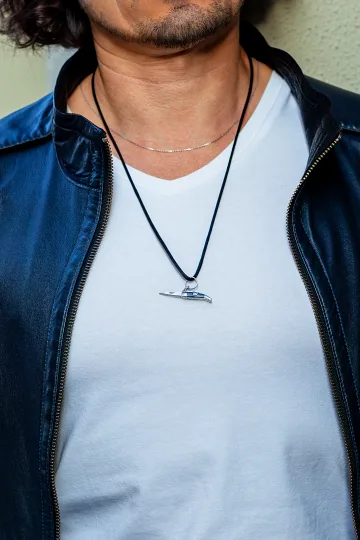
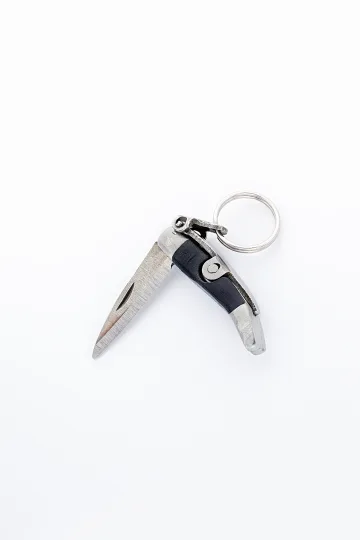


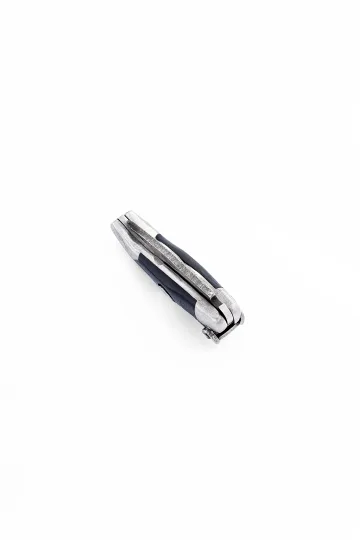

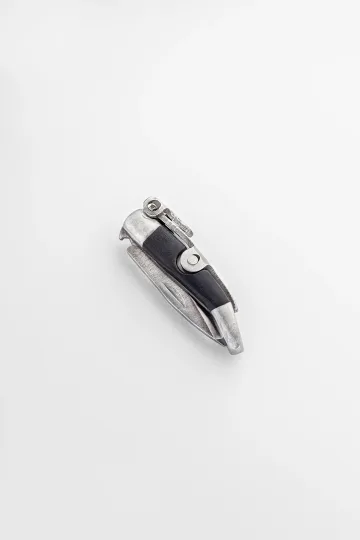
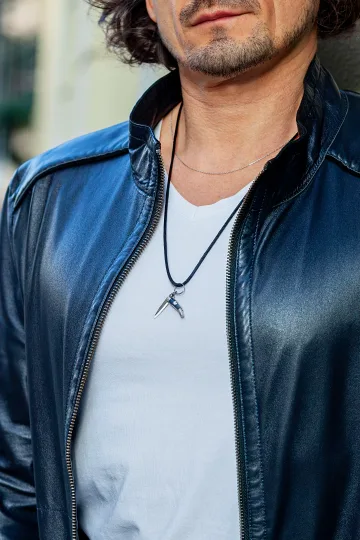

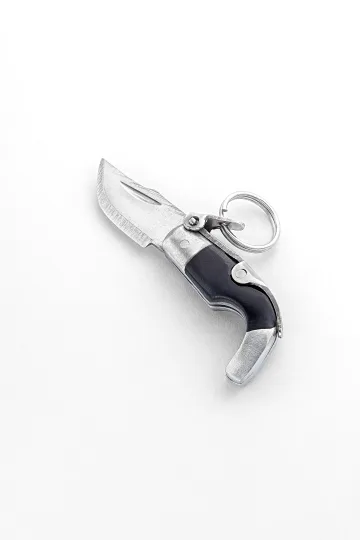
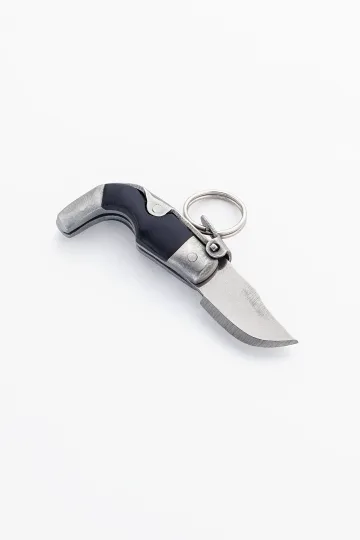
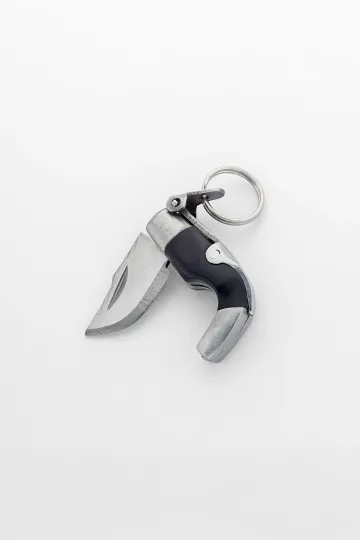
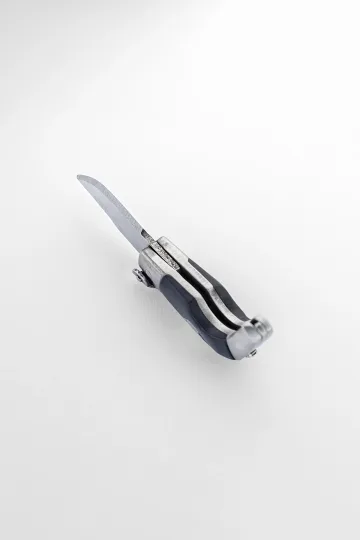
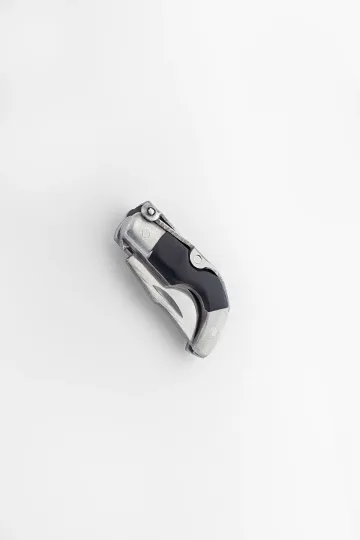
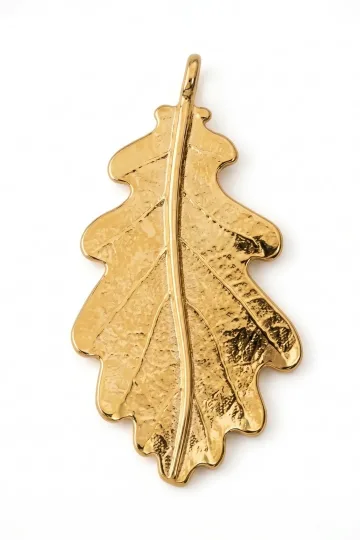
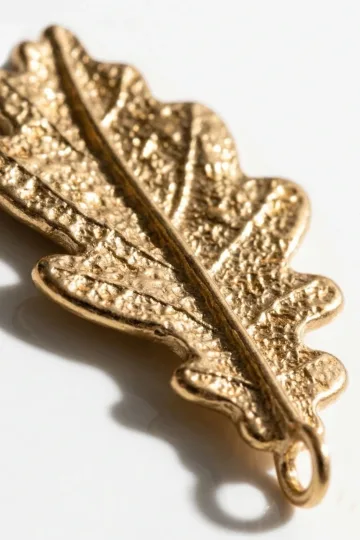
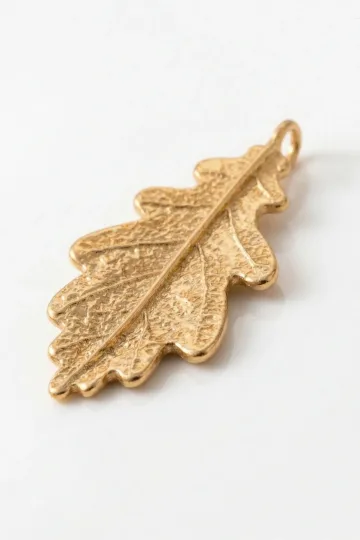
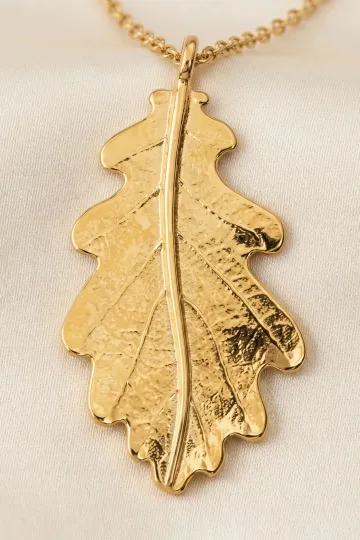
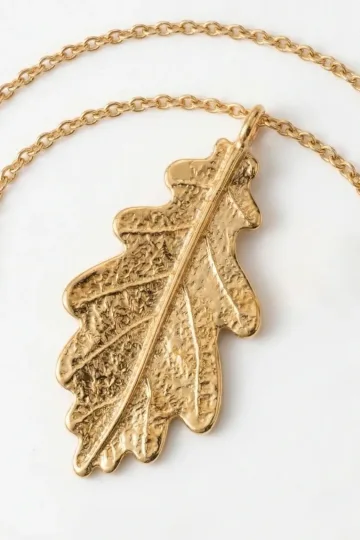
FAQ
How do I build a couple's set from scratch?
Start with the number of pieces. Minimum two, optimum three, maximum five. Then choose the lead piece the whole set will orient to (most often the ring). Set the metal (one base, optionally one accent). Choose the design line (geometry, organic, classic or minimalist). Settle the stones (one type across the set, or none). Set the engraving (one phrase in parts, one coordinate on all pieces, or one date). Once all six parameters are set, sketch each piece and agree with the maker.
How much does a couple's set cost?
It depends on metal, stones and labour. A minimal silver set of two pieces with engraving sits in the "good restaurant dinner for two" tier. A standard silver set of three in the "a week by the coast" tier. A gold set of three with one sapphire in the "six months' rent on a good flat" tier. A full set of five with diamonds in the "mid-range car" tier. The ceremonial level is outside the usual categories and is costed individually.
Can I buy a couple's set in parts?
Yes, and it is often the best format. One piece for one significant event. The second a year on. The third two years after. Each piece takes on its own date, and the set becomes a chronological record of the relationship. The key condition: choose a series that will still exist in several years. Durable designs (minimalism, classic) suit this strategy. Momentary trends do not.
A couple's set for the wedding or after it?
Both work. A wedding set is often more ceremonial, with a full make-up of four or five pieces and overt wedding symbolism (venue dates, registry coordinates). A post-wedding set (or one made for an anniversary) is quieter, with fewer pieces and symbolism not of the wedding itself but of separate events after it (a child's birth, a move, anniversaries). Many couples build both: one for the wedding, one for a milestone anniversary.
Can a couple's set be for an unmarried pair?
Yes, and it is one of the most common formats today. A couple's set requires neither a wedding nor any official status. The one condition is the intent to keep the relationship long-term. Unmarried couples often choose a minimal or standard set without overt wedding symbolism: no wedding shape, no "forever" in the engraving, no classic symbols of eternity. Instead, the coordinates of where they first met, the date they moved in together, symbolism only the two understand.
What if the partners have different styles?
The complementary set is made exactly for this. One partner loves minimalism, the other detail. A series is chosen with pieces of different complexity. Or one metal with different surface treatment: polished, matte, blackened. Different styles are an argument for the complementary format, not against a couple's set.
How do I choose the metal for a couple's set?
Sterling silver, the universal starting choice. Affordable, durable, hypoallergenic (for most), holds engraving well. Suits almost any couple. 14K gold, the choice for those wanting a metal for decades and a more ceremonial register. Yellow gold reads as classic, white as modern minimalism, rose as romance. Platinum, a rarely chosen option: costly, heavy, but absolutely durable.
What do I engrave on a couple's set?
The most durable option, one coordinate on all pieces. Where they first met, the hometown of one partner. A coordinate in GPS form or as a city name. An alternative, one date on all pieces. The most personalised format is one phrase split into three parts among the pieces. The full meaning reads only when all three are gathered. The main rule: avoid generic words ("forever," "always together") and pompous slogans. The concrete works better than the abstract.
What if one piece of the set is lost?
Restore it. A good maker will make a new piece to the pattern of the survivors or from a photo. The engraving can be reproduced exactly. The metal too. Mass-produced sets are restored more easily (the maker knows the series); bespoke ones are harder but not impossible. The new piece takes on its own date of restoration, which can be engraved as an extra layer. The set becomes an "archive of losses and restorations," which adds another level of depth.
How long does a couple's set take to make?
It depends on the method. One maker makes a three-piece set in 8 to 12 weeks. A full set of five, 12 to 16 weeks. Reworking family jewellery with melting adds another 4 to 6 weeks. With several makers in parallel, the term shortens to 6 to 8 weeks. A mass-produced set with basic engraving is ready in 1 to 3 weeks. A bespoke one with a unique sketch, 16 to 24 weeks.
Is a couple's set a good gift?
Yes, especially for significant events: a wedding, a silver or golden anniversary, a milestone birthday. The one condition is to agree at least the basic parameters with the recipients (metal, size, overall style). The ideal format is a certificate for the making of a set the couple chooses with the maker. A surprise gift of a ready set with no agreement risks ending up in the box if the style does not match the recipients' taste.
Which is better for a couple's set: matching or complementary?
It depends on the couple. The matching format (identical pieces) suits couples where both partners wear jewellery and both want visible symmetry. The complementary one (different pieces from one series) suits couples whose styles differ or where one partner wears no jewellery at all. The complementary format is more common today, being more flexible and accounting for each partner's individuality. The matching format is a precise, honest gesture for couples who deliberately choose symmetry.
Can I mix silver and gold in one set?
You can, but only as a deliberate design choice. Simple "accidental" mixing (one piece in silver, another in gold because that is how it worked out) breaks the set. Deliberate mixing works by the scheme "one base metal plus one accent repeated in every piece." Silver as the base in all three, plus a thin gold thread in the same position on each. The accent must repeat, not be a one-off.
Must both partners wear the whole set at once?
No. In a well-designed set each piece works autonomously. One partner wears the ring to work, forgetting the bracelet and pendant. The other wears the pendant under clothing, never putting on a ring. The pairing lives in the concept and the engraving, not in an obligation to wear everything at once. The full set goes on for celebrations and events. Single pieces are worn in everyday life. That is normal and right.
How do I explain a couple's set to a child or grandchild?
If the family has a couple's set that will one day pass down, it is better to start the story while the wearers are alive. A simple logic: "these three pieces are not separate. They are part of one story. They carry the same date (or coordinate, or phrase). It is the story of our relationship. When I am gone, you or your children will receive this set as a memory." The explanation need not be solemn. Better short and precise, at the right moment (when the child asks or is the right age). The set's documentation (a note in the box, a captioned photo, a voice message) helps preserve the context for future generations.
What do I do with a couple's set if the relationship has changed?
The decision is the wearer's alone, and there is no single right answer. Keeping it in a drawer as part of personal history is fine. Melting it into new jewellery is fine too: not destruction of history but its transformation. Dividing it (keeping one piece, putting the rest away or melting them) is also an option. Selling, if there is no sentimental tie and the metal is valuable. The one thing that does not work long-term: wearing it under duress because of its cost, when it creates daily discomfort.
How do I tell if a set is real silver or gold?
The fineness should be stamped or engraved on each piece. A certificate or warranty from the jeweller. A price several times below the real material cost is a warning sign. Quality blackening (oxidation) of real silver lasts for years. On plating over a cheap alloy it starts to flake within weeks. The magnet test: neither silver nor gold is drawn to a magnet. If it is drawn, the alloy contains iron and is not fully a precious metal.
A couple's set as part of the wedding ritual: what to add besides the pieces?
Besides handing over the pieces, several extra details work in the set's wedding ritual. Written documentation (a note from the jeweller describing the make-up, materials, dates of making and engravings) goes in the shared box. A photo of the making (a fragment of polishing or stone setting, say) adds the sense of craft. Handing over the box at the ceremony itself (not before or after) strengthens the ritual. The joint removal from neck or finger decades later, to pass to the next generation, closes the story begun at the wedding.
Wear the symbol, don't just read about it. These are in stock:
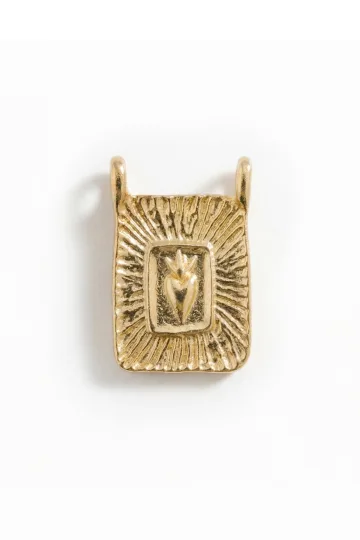
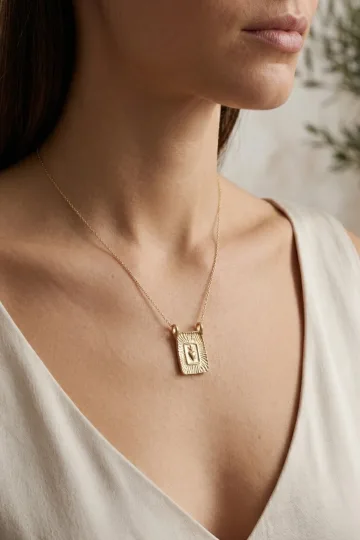
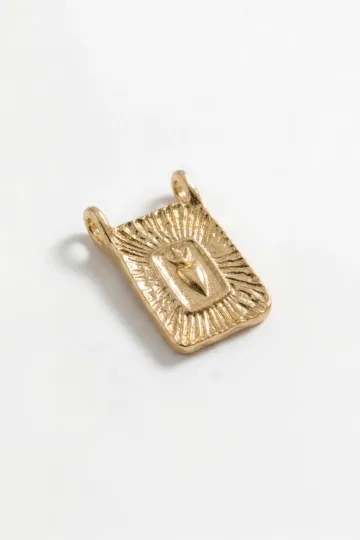
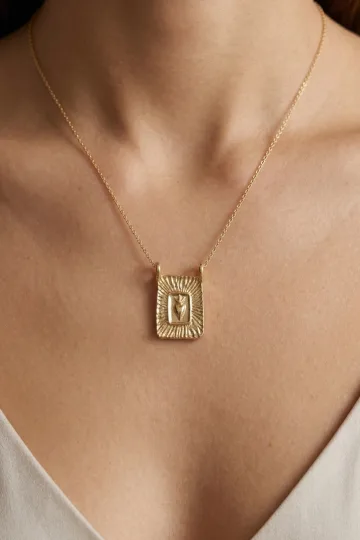
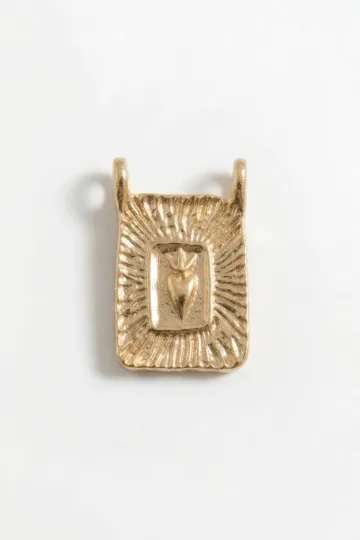
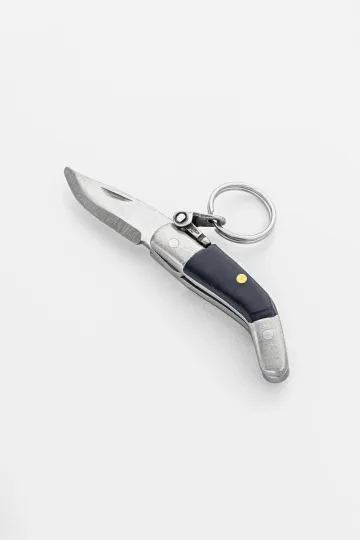
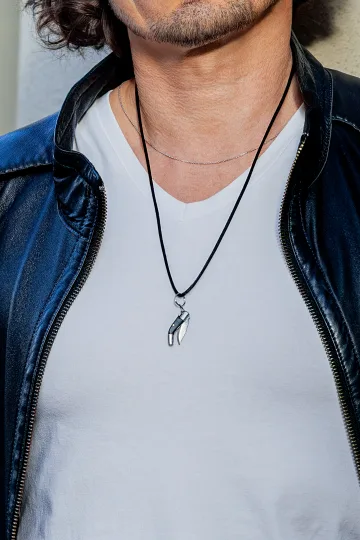
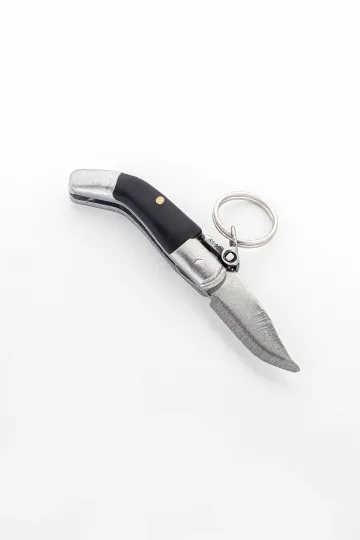
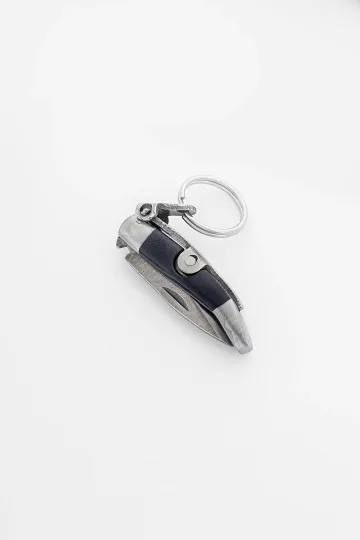
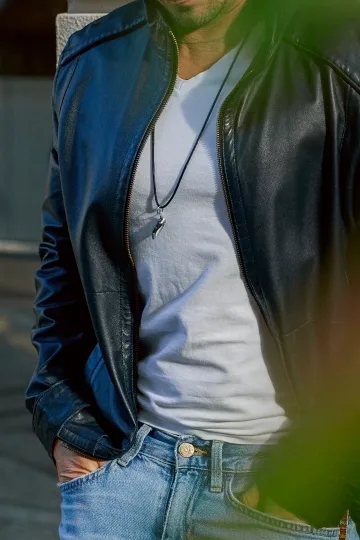

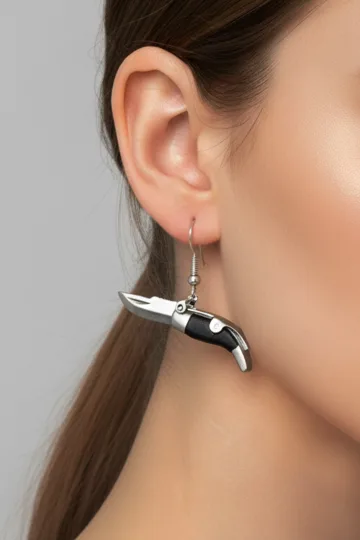
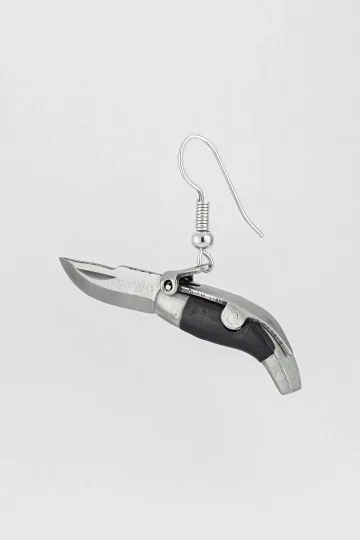


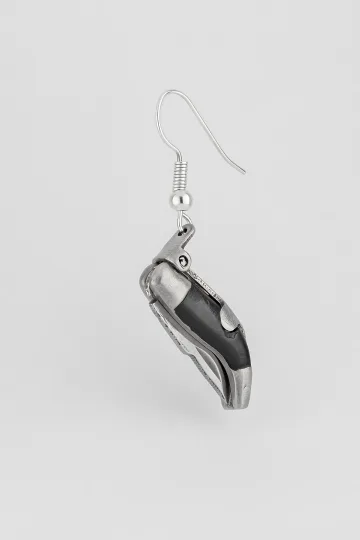

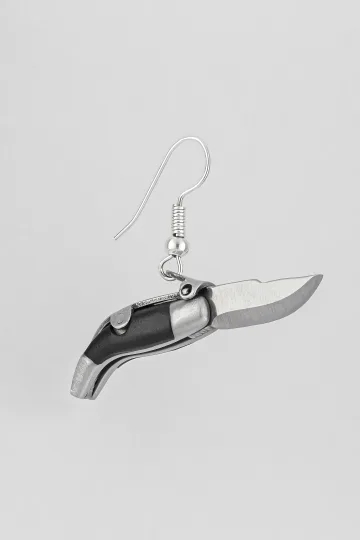
Conclusion: the set as archive
A couple's set is no purchase and no ordinary adornment. It is a material archive of a relationship. Each piece carries its part of the history. Together they form a system with the memory of people, events and places sewn in.
The best couple's set is the one assembled over years. Not bought at once but accumulated. The first ring for the meeting or the wedding. A bracelet for a fifth year. A pendant for a child's birth. A brooch or earrings for a twentieth anniversary. By the fiftieth a couple has a full set of five pieces with five dates, five stories, five points in the chronology.
Each piece in such a set reads on its own. A ring as a ring. A bracelet as a bracelet. A pendant as a pendant. But together they form a system that could never be assembled in any shop, in any collection of ready sets. It is a history written on metal, understood only by those who lived it.
That is what sets a couple's set apart from any other format of jewellery. It is not about beauty. It is not about status. It is not about fashion. It is about the archive. And an archive, unlike fashion, does not date.
Sterling silver, 14K gold, engraving on request. Minimal, standard and full sets. We work with couple's sets for a single event and with growing sets assembled over years.
About Zevira
Zevira makes jewellery in the artisan tradition of Albacete, Spain. Couple's sets are one of the directions we work with constantly. Our collections hold both matching formats (two or three identical pieces of different size) and complementary series, where the men's and women's pieces belong to one story but look different.
What you can find with us:
- Paired rings in sterling silver and 14K gold with engraving
- Bracelet plus ring from one series
- Pendants with coordinates for two
- Full sets for a wedding or anniversary
- Reworking of family jewellery into a new set
- Bespoke orders with unusual engravings and phrases split between pieces
Every piece is made with the option of personal engraving: a date, coordinates, names, numbers, phrases split between pieces. We work with sterling silver, 14K and 18K gold, and platinum on request.