Engagement Gift Ideas That Are Not a Ring
Introduction: three scenes from one night
The diamond ring as the one true engagement symbol is a twentieth century sales story, not an ancient law. In the medieval tradition of the fede ring both partners exchanged jewellery: two hands, two people, one gesture. The diamond engagement ring became the default only after the De Beers advertising campaign of the 1940s. Before that no single standard existed anywhere.
He proposed at a fountain in a small town they had stumbled into the previous November. They chose the ring together later, slowly, carefully, and that was good too. But in the moment of the proposal itself, he pulled a small pendant from his pocket. On the back were engraved the coordinates of that fountain. She put it on right there, standing by the water, and still wears it every day. The ring has changed twice since then. The pendant has not.
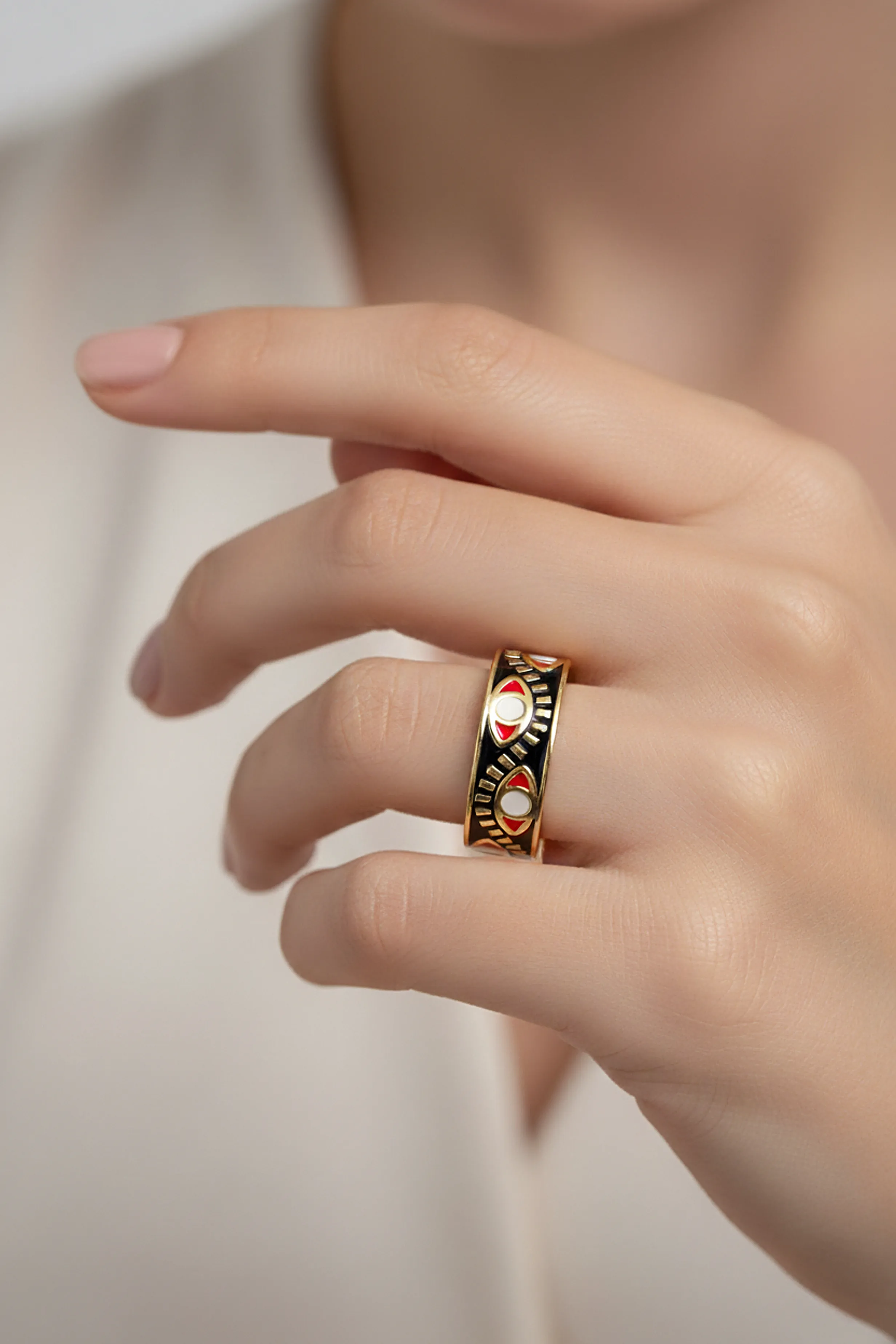
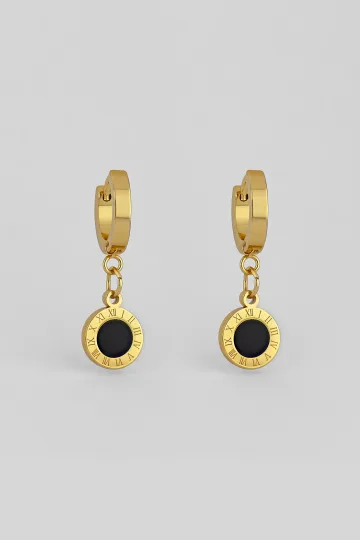
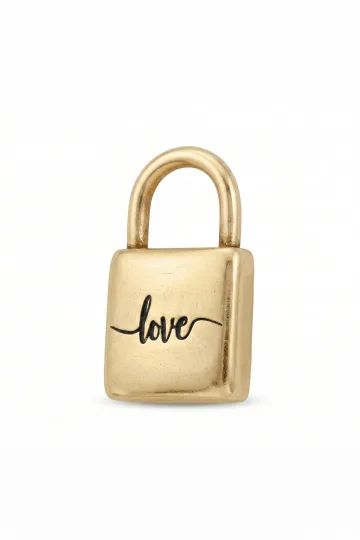
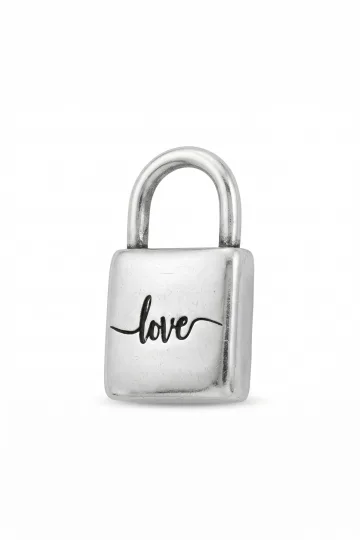
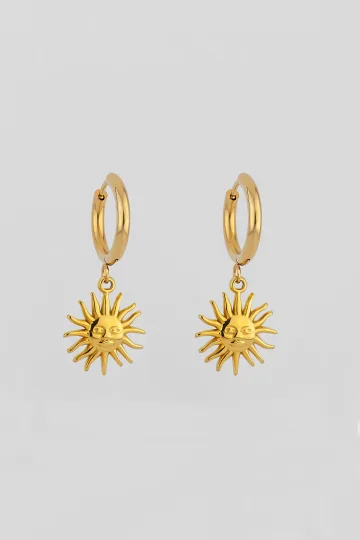
Wear the symbol, don't just read about it. These are in stock:

Another story: she prepared a reciprocal gesture. He proposed, she said yes, and a few days later she gave him a silver chain with a pendant bearing two numbers separated by a dot. He wears it under his shirt and almost never takes it off. He claims jewellery is not his thing, but this piece is his.
Third story: the groom's mother passed a brooch to the new bride. Not at the wedding. At the engagement. She said: in our family this is how it is done. The brooch goes to whoever joins us. The bride later had it reset as a pendant.
Three different gestures, three different bonds, and not a single engagement ring playing the lead role. The ring was there, or would be, separately. These pieces said something else: something about a specific person, a specific place, a family, two people who decided to build a life together.
This article is about what to give at an engagement beyond the ring. Or instead of it. Or alongside it, but with a different meaning.
Why an engagement calls for something beyond the ring
The engagement ring is firmly written into the Western script as the main symbol, and in many British, Irish, American and Australian families it is simply not up for discussion. But the culture is gradually shifting, and several practical circumstances are accelerating that shift.
The ring is increasingly chosen together
Jewellery research from recent years consistently shows that more than half of couples today choose the engagement ring jointly. Some do it for practical reasons: the right size, the right stone, the right metal for the wearer's skin tone. Others because a ring worn for decades feels wrong, almost presumptuous, to choose without the person who will wear it.
This is sound practice. But it shifts the emphasis: if the ring is a joint decision, the proposal loses its element of surprise. There is no ring surprise left, because the ring is not chosen yet, or because she saw it in the shop three weeks ago. And here a space opens up for a different gift. Something the groom, or the bride, or both, chooses alone, thinks about carefully, carries in a pocket to the moment of the proposal. A personal gesture that is not on the shared list.
This does not mean the ring is going away. It stays. But beside it appears another piece that belongs only to that moment and only to that person.
Not everyone wears rings daily
Surgeons, dentists and theatre nurses work in sterile conditions where jewellery must come off. Professional athletes, climbers and swimmers remove everything for training and competition. Chefs, pastry cooks and florists work with their hands, and rings get in the way. For joiners and builders, wearing a ring on the job is plainly unsafe. People with metal sensitivities wear only materials they have tested.
Beyond the professional reasons there are personal ones: some people simply do not wear rings. They are comfortable with pendants, bracelets and earrings, but a ring on the finger feels like a constraint. For such a person an engagement ring becomes a symbol that is uncomfortable to wear, which works against its own purpose.
For all of them an engagement gift can be almost anything except a ring.
An engagement involves several gestures, not one
The traditional ceremony has the proposal, the ring, the yes. But around that core a family context forms that unfolds over time: meetings with parents, the announcement to close friends, the first joint decisions about a home and a wedding. Each of those moments can have its own object. The ring is one thing. A bracelet from the groom's parents is another. A pendant from the bride to the groom in return is a third. Paired earrings handed down by the bride's family are a fourth.
An engagement is not a single moment but a period. There can be several pieces, each carrying its own connection, its own timing, its own giver.
Men deserve to receive something too
The tradition of giving jewellery only to the bride is asymmetric. The groom makes a gesture, the bride receives a ring, the groom receives nothing. Some couples are perfectly comfortable with this. Others find it awkward. He took the risk, he prepared, he carried the ring in his pocket for hours and was nervous. She said yes and received a piece of jewellery. He did not.
More and more couples resolve this differently: the bride prepares a reciprocal gesture. Not necessarily expensive or public. But something of her own, personal, made for him. Cufflinks with initials, a chain with a pendant, a signet ring with his letter, all chosen by her. It is a symmetric language: you mark me, I mark you.
Sometimes that exchange begins before the formal engagement. In that case a promise ring works well: a soft sign of intent that does not carry the full weight of an engagement ring but already signals the direction.
The cultural context is changing
Twenty years ago men's jewellery in much of the English speaking world was limited to a wedding band, a watch and, in some circles, a signet ring. Today men wear pendants, bracelets, rings on several fingers, earrings. Wearing something has become normal for men of many ages and professions.
That widens the options: giving a man a piece of jewellery at an engagement now means giving him something he will actually wear. Not a gesture that ends up in a drawer. A gesture that will be seen.
A ring is for the guests. The real gift hides under the collar, engraved on the back, and the room stays none the wiser. Do as I say.
What to wear it with
Dozens of engagement looks have passed through my hands, from quiet breakfasts to evenings out. Here is what actually works when a piece has to be worn every day rather than kept in a box.
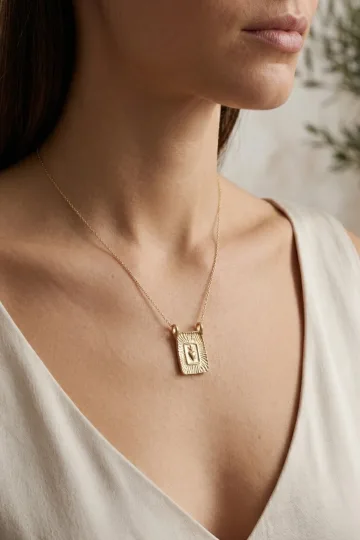
What do I wear a coordinates pendant with day to day? For an everyday look I recommend a thin 0.8 to 1mm chain and a simple top: a white crew neck tee, a linen shirt, knitwear in a calm colour. The quieter the clothing, the more the engraving shows. Under a high neckline I suggest a longer chain, around 50cm, so the pendant lies over the fabric rather than hiding under it.
Is a piece like this right for the office? It is, if you keep it delicate. A small pendant under a V neckline shirt or blouse, length 42 to 45cm. A men's chain with a pendant I tuck under the shirt, so it stays a personal sign. Cufflinks with a date or initials I suggest under a suit: only those who know where to look will read them.
How do I build an evening look? For the evening I choose an open neckline and a smooth fabric in a deep colour: wine, emerald, black. Polished silver or yellow gold suits here, on a mid length chain of 42 to 45cm so it sits at the centre. If there is a stone, let it catch the light at the collarbone.
How do I layer an engagement pendant? One short pendant with a date or coordinates and one longer chain with another symbol give depth without a tangle. I recommend spacing the lengths by at least 8 to 10cm so the pendants do not catch on each other. One rule: one accent in the look, the rest as background.
Which symbol suits whom? Thin minimalist forms sit on almost anyone. An expressive sign with a history, a Claddagh, a compass, a sacred heart, I suggest for those who like a piece with a legible meaning. For warm skin tones I choose yellow and rose gold, for cool tones silver and white gold.
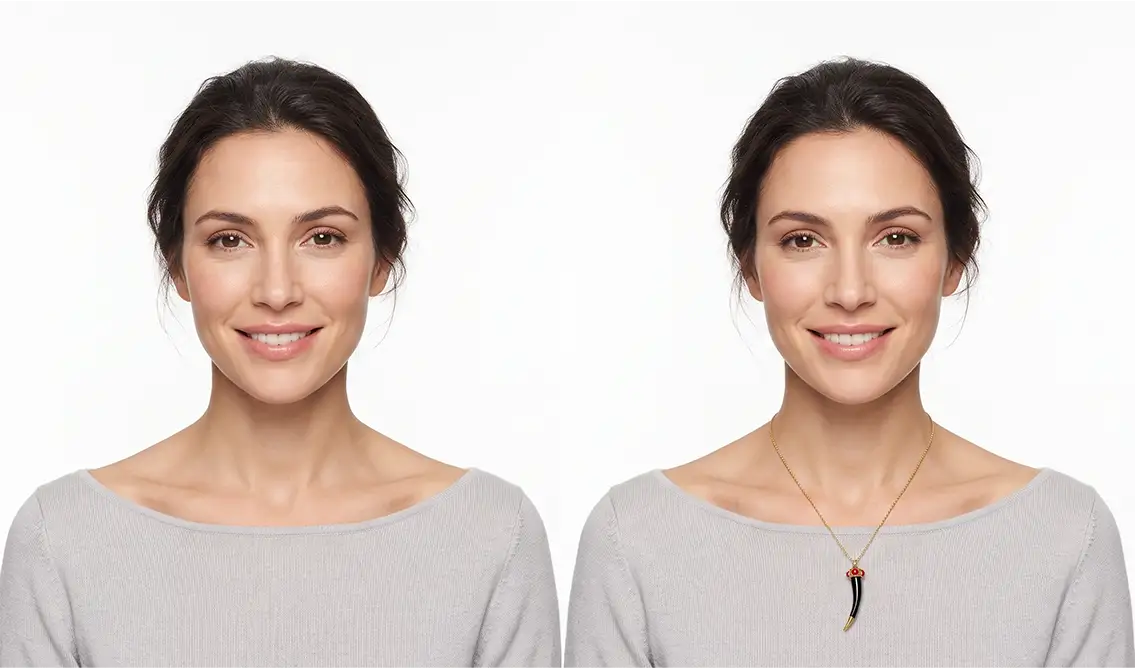
Turn on your camera, pick earrings, a pendant or a ring, and see the piece on yourself in real time.
Switch items in one tap.
Everything runs in your browser: no photo or video is ever uploaded.
From the groom to the bride: what besides a ring
The logic here is simple: choose something she will wear for a long time, something that carries personal meaning, and something that does not compete with the eventual engagement ring but complements it. An extra gift at the moment of the proposal is not an alternative to the ring but a second layer of the gesture.
A coordinates pendant
The place of their first meeting, first date, the proposal itself, or anywhere that holds significance only for the two of them. The coordinates engraved on the reverse of the pendant, or directly on the front as a coordinate scale. One of the most personal gifts imaginable: encrypted geography.
She can wear it for the rest of her life. To an outsider it is just a pendant with numbers. To her it is an address. Only she knows where those numbers lead, and that knowledge means something in itself.
For compass pieces this is a direct extension of the symbolism: a compass always knows where to return. A compass pendant with the coordinates of a specific place joins an abstract symbol to a concrete story.
A date pendant
The date of the proposal, the date they met, a meaningful number. Engraved on the back of a pendant or presented as the primary design in figures. A more refined option: the date in Roman numerals, engraved inside a simple ring shaped medallion. The form is quiet, but to her it reads instantly.
Twenty years on, a piece with a date becomes a chronicle: a beautiful object and at the same time a precise reference to a particular day, particular weather, the particular words he spoke while she listened.
A paired pendant
Two pendants sharing one symbol, or two halves of a single image. She wears one, he wears one. Couple jewellery given at an engagement differs from ordinary couple jewellery in that it is given in a specific moment with a specific intention: we are two now. This can be anything: two compasses with needles pointing toward each other, two identical infinity pendants, two halves of a word, two fragments of a map that line up to form one place.
A paired pendant works as the groom's gesture and as the bride's reply alike. When both wear something from the same exchange, it shows without a word.
Earrings with a family stone
If the groom's family has a stone that has been passed down, earrings at the engagement are a traditional form of transmission. The piece becomes the bride's introduction to family history. Grandmother's stone in a new setting made for her. The family enters this relationship through a tangible object.
If there is no heirloom, you can choose a stone tied to her birth month, to a colour she loves, to some other personal meaning. What matters is that the earrings are a statement about her.
A bracelet with initials or a date
His initial on her wrist. Or both initials. Or the date. A fine engraved bracelet is worn daily and is almost invisible to others. A personal object, seen only by someone who knows what to look for.
A more interesting version: the monogram on the inner face of the bracelet. Visible only to her when she looks at her own wrist. Others never notice. It is her own knowledge of what is there and what it means.
A sacred heart or anatomical heart pendant
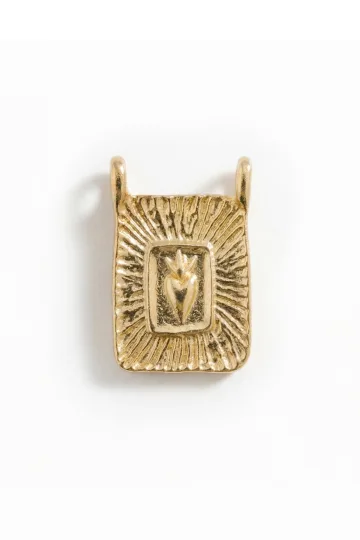
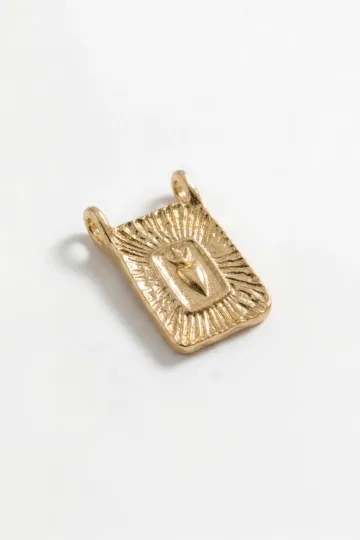
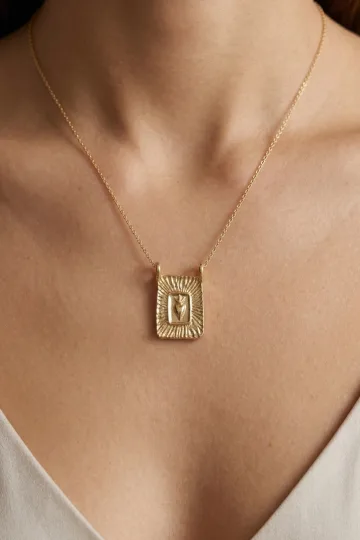
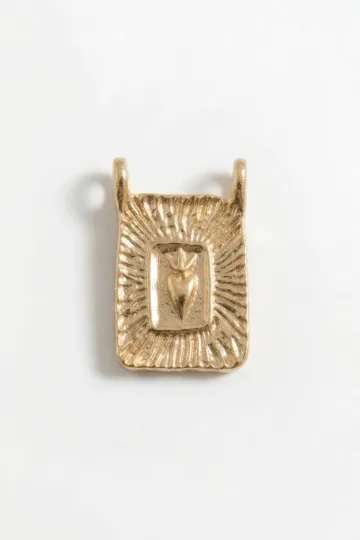
The sacred heart carries centuries of symbolism around devotion and love. In jewellery the image works on several levels: religious for those to whom that matters, artistic for everyone else, and symbolically legible without explanation in almost any culture.
The anatomical heart is a modern, direct image: literally what a person lives by. Not a decorative shape but a physical reality raised to a symbol. Both work well for an engagement precisely because the heart reads unambiguously, while the execution reveals the character of the couple: some choose the historical, some choose the exact.
A Claddagh
The Claddagh ring is an Irish symbol with a precise message: two hands holding a crowned heart. The hands stand for friendship, the heart for love, the crown for loyalty. These are exactly the three things an engagement announces.
Traditionally the Claddagh signals direction: the heart turned inward means taken. Putting it on at the moment of the proposal is at once a gesture and a public declaration. It works as a pendant, as a ring, and as an object to be passed from one partner to the other. For couples with Irish roots it is a choice with cultural depth. For everyone else it is a symbol with centuries of promise behind it.
From the bride to the groom: a reciprocal gesture
Symmetry in an engagement is a conversation each couple settles for themselves. But the bride's reciprocal gesture to the groom is increasingly common, and jewellery is its most durable form: something that remains and is worn, rather than disappearing into a drawer.
Cufflinks with initials or a date
Cufflinks are one of the few forms of jewellery that feel natural for men even if they have never worn anything before. A formal occasion, a business suit or a celebration, makes them appropriate without requiring anyone to leave their comfort zone. Her initials on his cufflinks: every time he fastens his shirt, he fastens her initials. A quiet but constant gesture.
The date version: the proposal date on the inner face of the cufflinks, seen by him alone as he puts them on.
A chain with a symbol
A men's chain with a pendant chosen by her. It might be a compass (he always finds his way back, and a compass knows the road), an anchor (stability, rootedness), an infinity sign (continuity of the bond), or a compass with the coordinates of a place. The choice of symbol is her statement about him. What she sees in him: a traveller who always returns, or an anchor that holds her in place, or the person with whom everything keeps going.
A chain with a pendant is worn under the shirt or over it. That is his choice. But it is there.
A signet ring with his initial
If he wears rings or is open to starting, a signet ring with his initial, chosen by her, is a strong gesture. The signet is traditionally a man's piece, understated and self-explanatory. His letter in silver or gold, from her.
An intriguing variant: her initial on his signet. Not his letter but hers. That is a different statement: he wears a sign of her, not of himself.
A paired pendant: one for her, one for him
He gives to her. She gives to him. Two pendants with a shared symbol, each keeping their own. This is the symmetric version of the engagement gesture, where both receive and both give. Wearing one piece from the exchange means the engagement was a mutual act, not a one sided one.
A bracelet or leather cord
For those who prefer less formal jewellery, a silver bracelet or a braided leather cord with a silver clasp and an initial. Unobtrusive, everyday, wearable. A leather cord works well for men who have never worn jewellery and need something that does not feel like jewellery at all.
Upload a photo of your pet, someone you love, or an object. We'll build a 3D model and hand-cast it in pewter.

From parents to the couple
Parents on both sides often want to mark the engagement with something tangible. This is a separate gesture from the couple's own exchange, with a different meaning: acceptance, welcome, transmission. Not "we are giving you a thing" but "we are letting you into our story."
A family heirloom
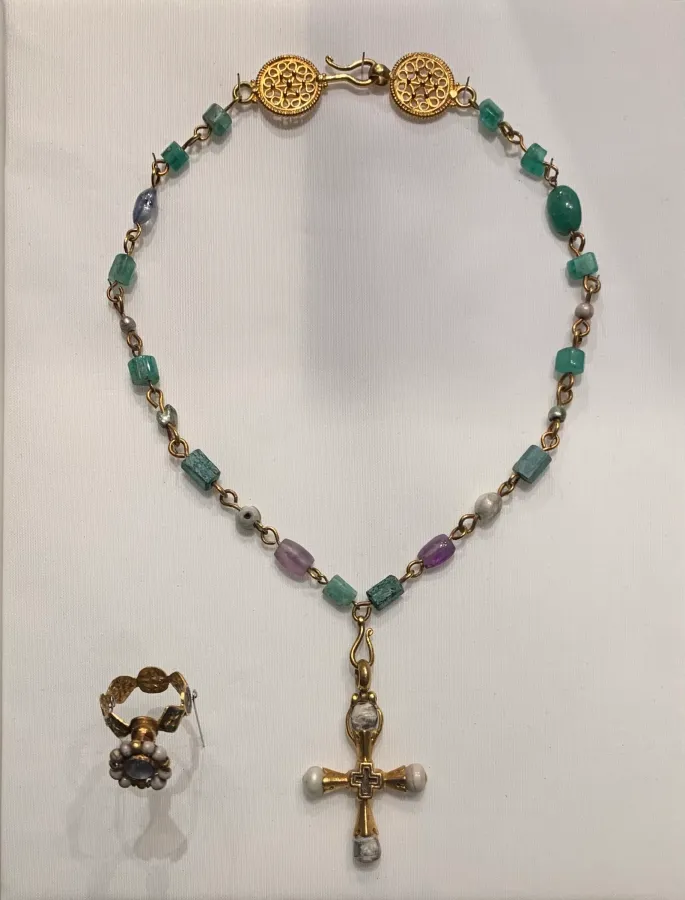
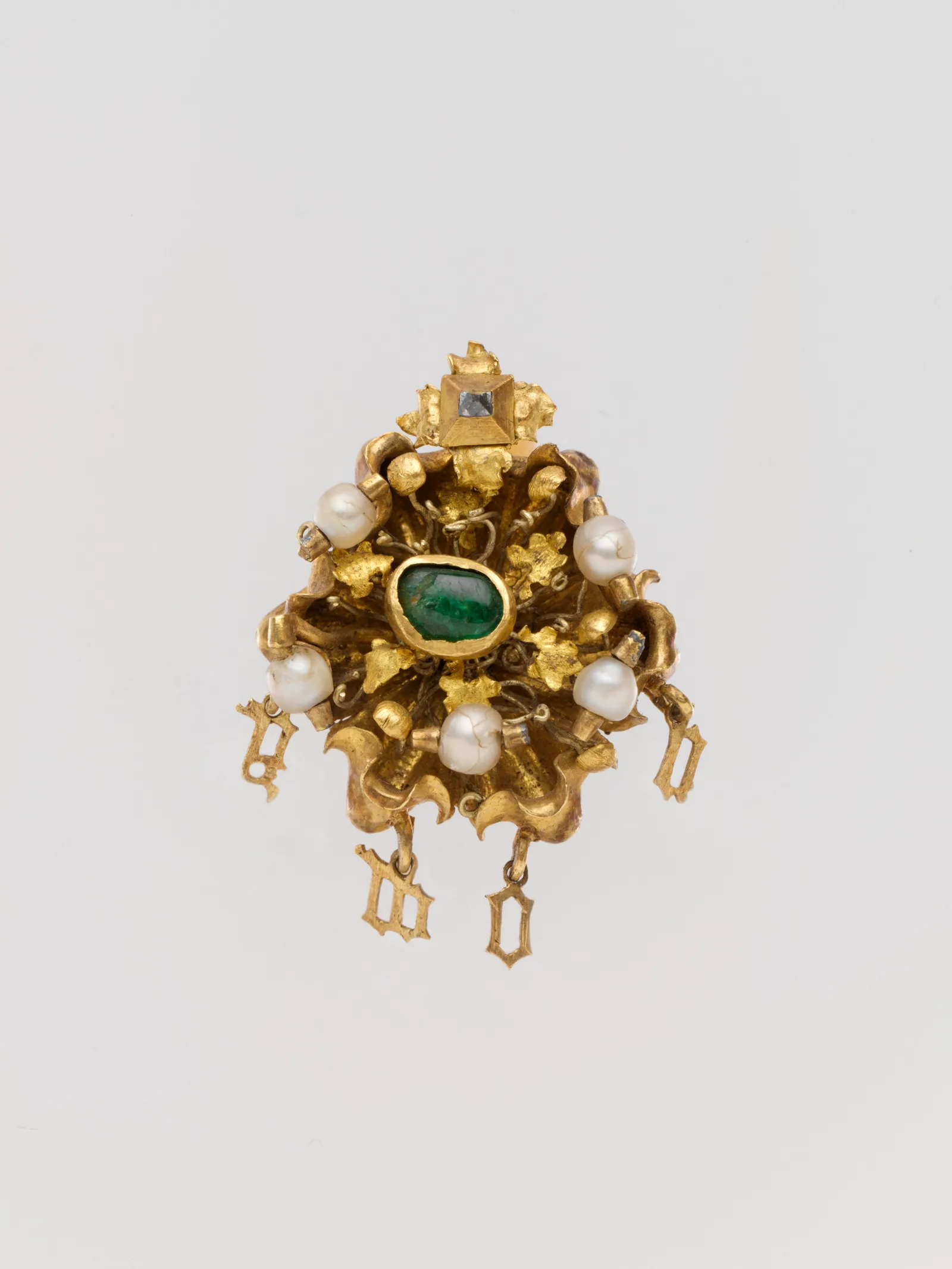
The most significant option. A piece worn by the groom's mother or the bride's grandmother, passed on at the moment of engagement. It is the act of including a new person in the family's history. A ring or brooch that is fifty years old and has seen other hands, other weddings, other family celebrations.
The heirloom can be kept as it is, handed over with the object's story: who wore it, how it came into the family. Or reset to the recipient's taste, keeping the stone or the enamel. Or its elements can be worked into a new piece made especially for her.
If there are no heirlooms, a new piece can be commissioned with a family stone or symbol, the first object in a future family history.
Paired pendants from both families
The groom's parents give to the groom, the bride's parents give to the bride. Two pendants from the same collection or with the same motif. This is the gesture of two families becoming one: each has something from their own side, and the two objects rhyme.
Symbols for such pendants: matching compasses, two halves of one image, paired initials, the engagement date on each.
A bracelet or chain with a commemorative engraving
The date of the engagement, a wish, a short phrase that carries meaning in the family context. A simple bracelet engraved with a line of text or the couple's initials. This is a less ceremonial option than an heirloom, but it lets you create an object with a specific story.
The phrase on the bracelet might be a family saying, a line from a song sung at every gathering, a wish a mother spoke to the groom in his childhood.
A coin medal
In some families it is customary to give a gold coin or medal at an engagement as a symbol of prosperity and good wishes. A coin in a jewellery setting, worn as a pendant, is both a traditional gesture and a contemporary piece. If the family has no coin ready, a medal can be commissioned with a date and names.
From friends to the couple
Friends often look for an engagement gift that is symbolically appropriate, does not duplicate what the parents have given, and does not require guessing the tastes of two people at once.
Paired bracelets
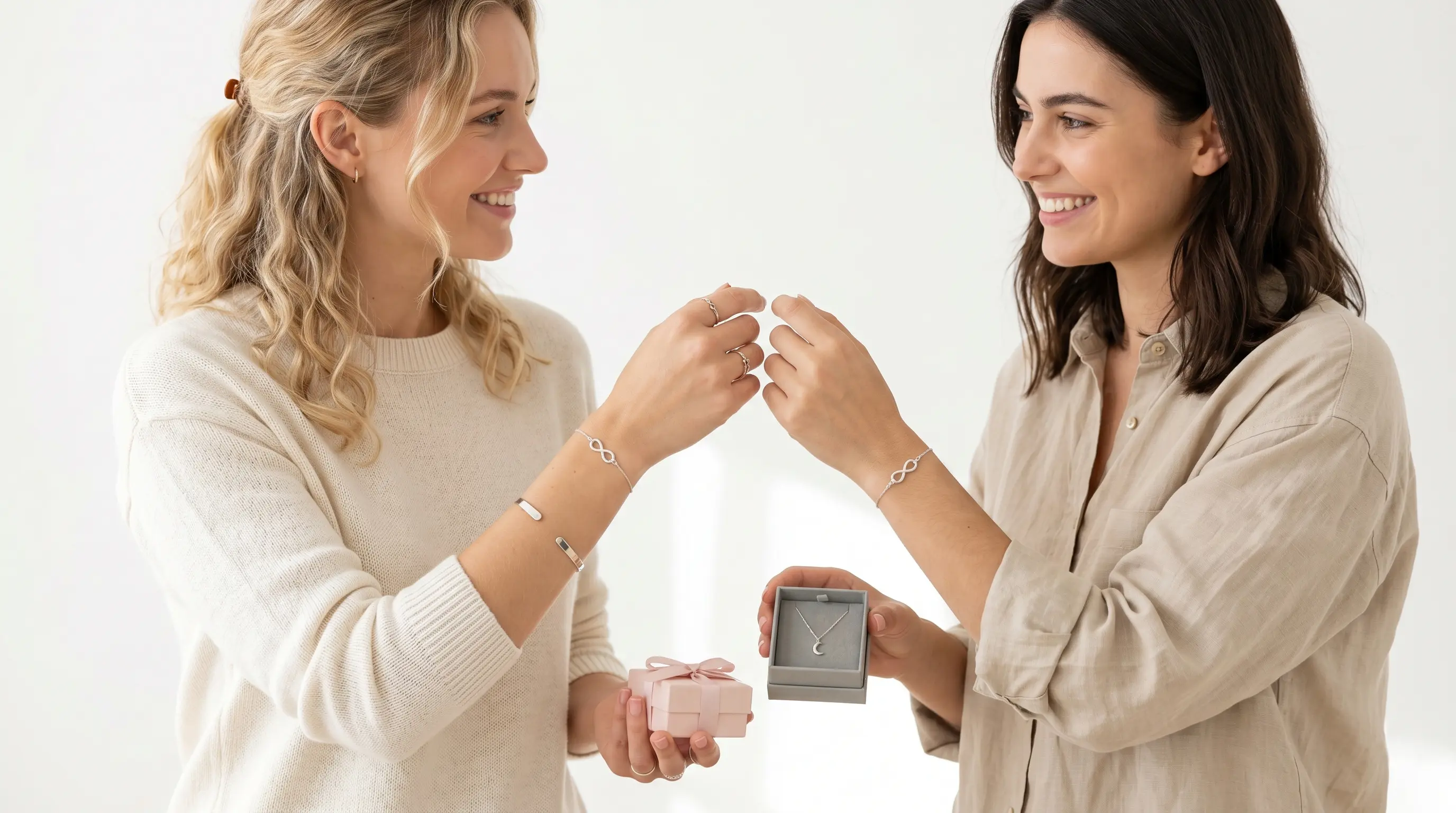
One for each. Identical or complementary. A versatile everyday option: worn daily, with no formal occasion required. A bracelet needs no explanation: they both wear something shared, and it shows without a word.
Split pendants
Split jewellery divides literally into two parts, each worn separately but together forming a whole. The classic version: half a heart for her, half for him. The contemporary version: two fragments of a map, two pieces of a single word, two abstract elements that line up into one form.
It works well as a gift from friends: a symbolic language without heavy sentiment. "You are one whole now," the object says, with no long toasts.
A gift voucher for engraving
Give the experience of choosing rather than an object. A voucher to a jewellery workshop where the couple can come and choose an engraving on a piece they already own, or commission something new with their own text. It lets you give something meaningful without guessing taste. They write what they want themselves. A date, coordinates, a word only they know.
Experience over object: a shoot or a workshop
If a piece of jewellery feels too specific, some friends give a voucher for a jewellery making workshop where the couple can create something themselves. This works especially well for couples who like making things with their hands, or who want a piece with a story literally made by their own hands.
Customer reviews
Zevira is a real jewellery shop. Genuine payments, deliveries and customer thank-yous.
🥰🥰🥰 gracias
Ok, ¡gracias! 🙂
A gift the couple gives themselves
A category rarely named out loud but one that exists and works. The couple chooses a piece for themselves, as a couple, together. Not a gift from one to the other but a joint act of choosing a symbol.
Couple jewellery exists in dozens of forms: matching pendants, complementary symbols, pieces from one collection in male and female versions. For an engagement, the ones that work best carry a shared narrative: we chose one symbol and we will both wear it. Not because someone gave it, but because we decided.
This is the quiet, unpublic version of an engagement as ritual. No audience, no surprise. The two of them go to the shop or to a jeweller and say: this one. Then they both put it on. That works too.
For couples who prefer rings to pendants, the same joint choice leads to a shared band worn by both partners by their own decision, neither wedding nor engagement ring, simply a common sign.
Engraving: what to write
Engraving turns a piece of jewellery from an object into a personal artefact. Good engraving works on two levels: to an outsider it is just symbols, to those who know it is a precise text. Standard choices work. Unusual choices work better.
A date
The proposal date. The date they met. The date of a first journey together. A date that means something only to them. Formats: DD.MM.YYYY for straightforward reading, DD.MM.YYYY with dots as separators, or Roman numerals for a more formal register. Roman numerals look less obvious to an outsider but read instantly to those who know.
Coordinates
Latitude and longitude of a special place. On the reverse of the pendant or medallion, in a clean coordinate format. For most people this is just a string of numbers. For the two of you it is an address. Only you know what place it is, and only you know why it matters.
Coordinates work beautifully with compass pieces: a compass always points to its place, and if the place is encrypted in the text on the reverse, the image becomes closed and self contained.
Initials
The classic. It can be made more distinctive: not simply "A + B" but a monogram where the letters interlock. A monogram takes less room and looks more considered than initials joined by a plus. Or initials on the inner face of a bracelet, so that only you know they are there.
A variant for a paired piece: her initial on his object, his initial on hers. They wear signs of each other rather than of themselves.
A short phrase or word
In one language or two. A motto, a word that means something between you. "Always." "Yours." "Home." The opening line of a poem he read aloud in their first autumn together. A line from the film they met over. A word from another language they learned together.
This requires deciding exactly what. But the result is unique: no other piece in the world carries this text.
The couple's motto
If you have an internal phrase, a quotation, something that repeats between you as a reference point, that is ideal material for engraving. No one outside needs to understand it. For both of you it will be clear at a glance. A small secret language on silver or gold.



Symbolic jewellery: what each piece says
Choosing engagement jewellery is choosing a symbol. Each of the following carries its own meaning, and understanding it helps you choose more precisely, not just more beautifully.
Paired pendant
The most direct statement: we are a couple. Both wear it, both see it. Works for the groom's gesture to the bride and for the reciprocal gesture equally. Couple jewellery exists across a very wide range of forms, from deliberately romantic to neutral and unisex. The choice of form is itself a statement about the couple: what they want to convey and in what language.
Split pendants
Halves work differently from simply paired pieces: they literally show that each of the two is part of something larger. A physical embodiment of a metaphor. Classic version: half a heart for her, half for him. Contemporary: two fragments of a map or landscape that together form a whole. Abstract: two curved elements, each incomplete, together making a closed form.
The essential quality of halves: they work only together, and that in itself is a statement about dependence and complementarity. It is not the same as two identical pieces that each stand fine on their own.
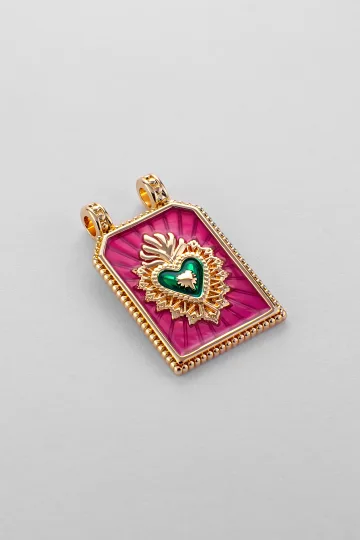
Sacred heart
The sacred heart in jewellery is a symbol of deep, devoted love with centuries of tradition. In iconography it is a heart in flame, in a crown of thorns, often with rays. In jewellery the image is stylised but keeps its weight: love that burns and is unafraid. In an engagement context it says: I give you what I have that is most essential. Not a decorative but a meaningful choice.
Anatomical heart
The anatomical heart is a modern and direct symbol. Unlike the stylised heart shape, it says: literally what I live by. A biologically accurate image raised to the symbolic. Well suited to couples with a medical or scientific background, to those who value precision over romantic convention, to people who like a symbol that works literally.
Claddagh ring
The Claddagh is an Irish symbol with a complete message. Two hands for friendship, the heart for love, the crown for loyalty. Three qualities in one symbol, and exactly the three an engagement announces. Turning the ring with the heart inward means the heart is taken. Wearing it on the day of the proposal is at once a gesture and a public statement without a single word.
Infinity
The infinity symbol in jewellery speaks of continuity, of a decision without an endpoint. For an engagement it is a natural choice: a commitment with no time limit. Works as a pendant, as a bracelet, as an element within a paired piece. A mathematical form with a human meaning.
Compass
The compass is one of the most enduring symbols in jewellery: it always knows the way home. In an engagement context: you are my reference point, I always come back to you. The compass works well for men: an object historically carried, with a practical connotation, that does not read as too romantic. With the coordinates of a special place engraved, the compass becomes more personal still: it has a specific destination.
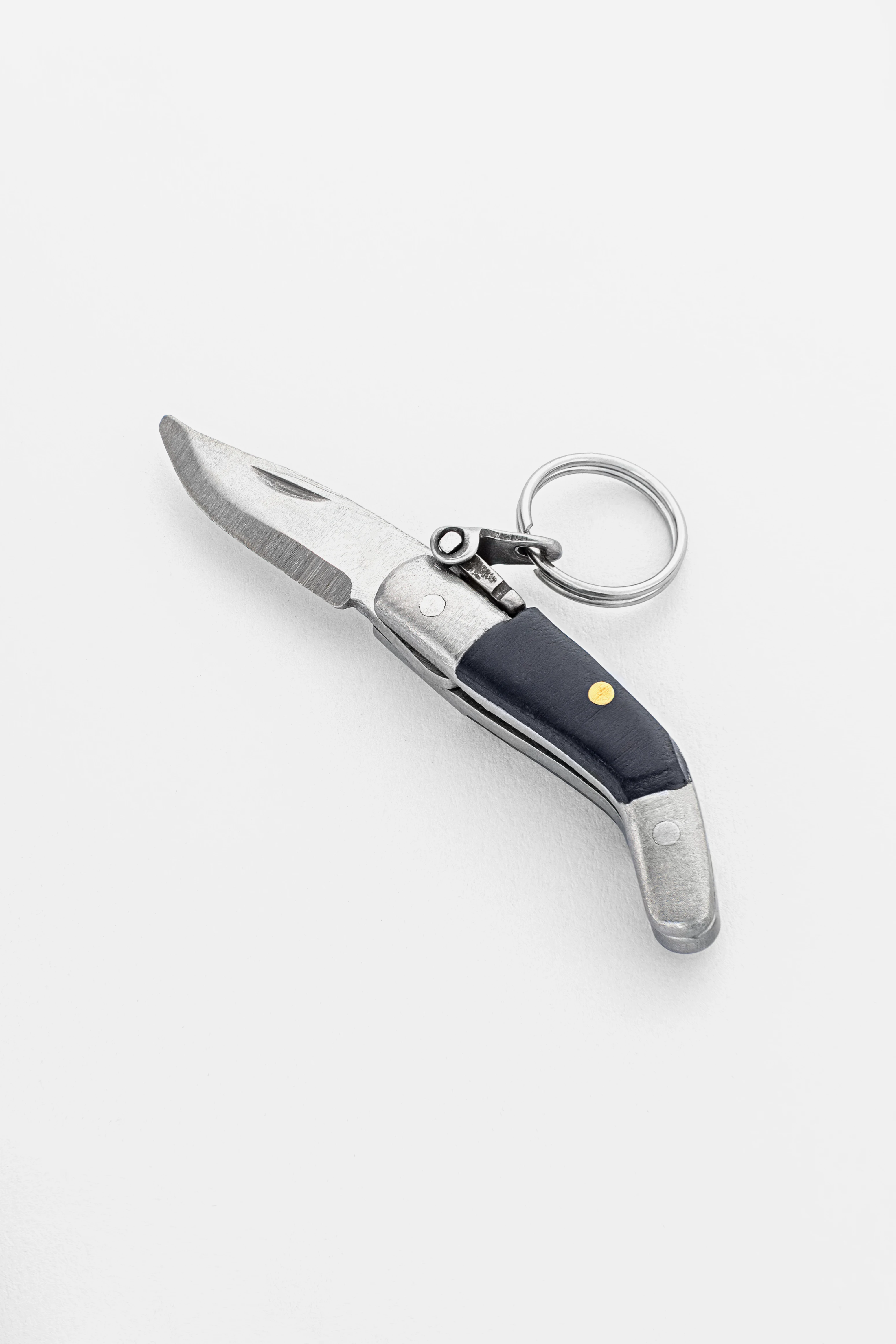
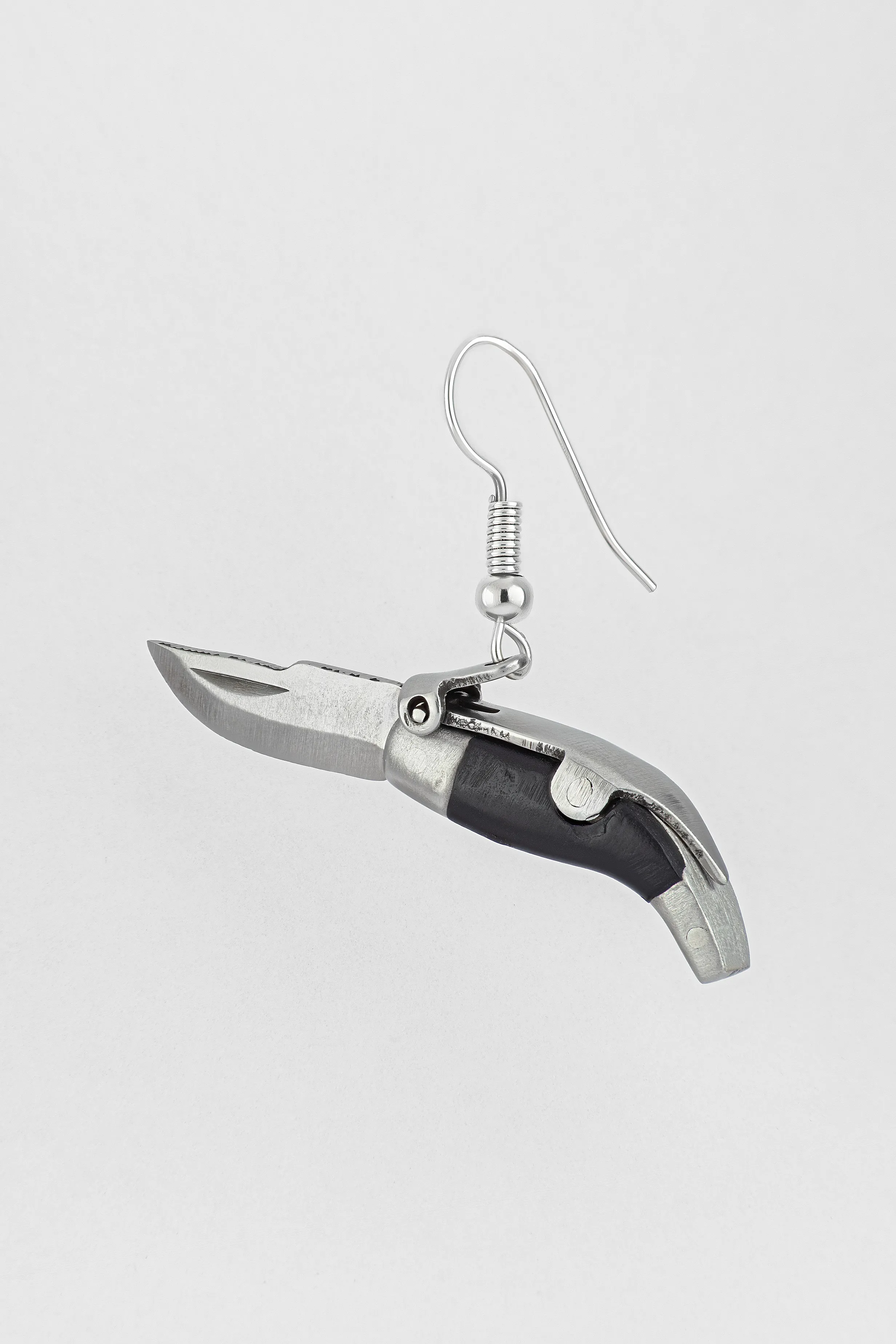
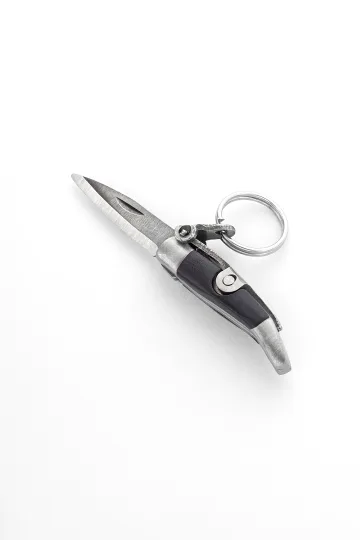
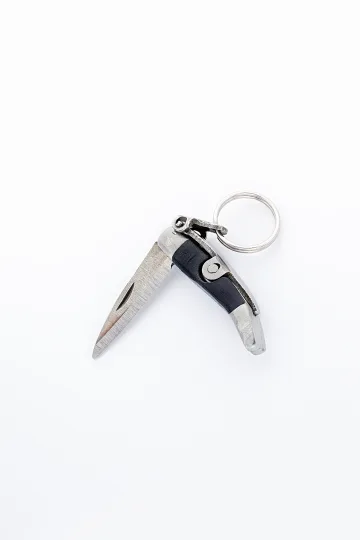
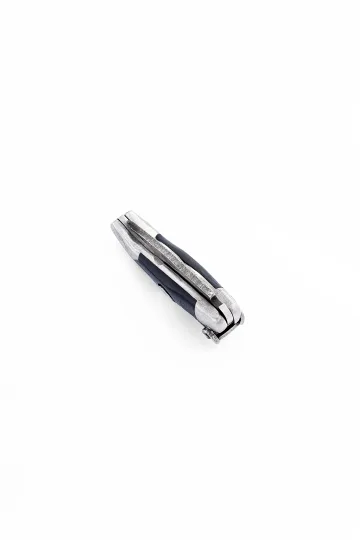
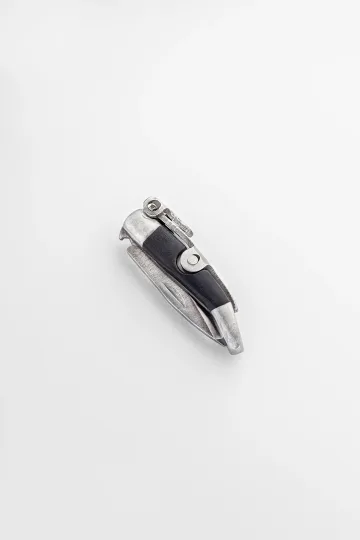
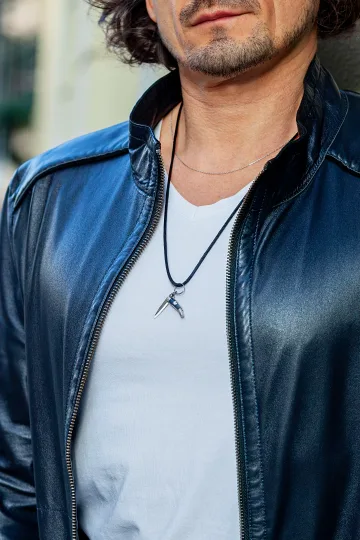
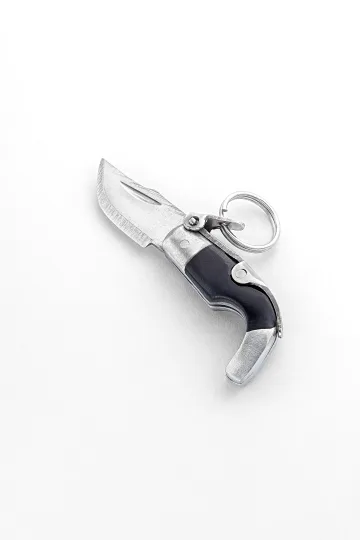
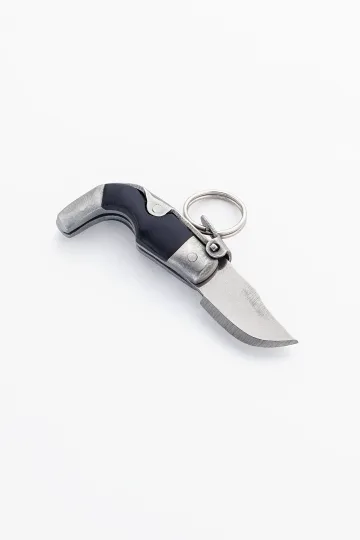
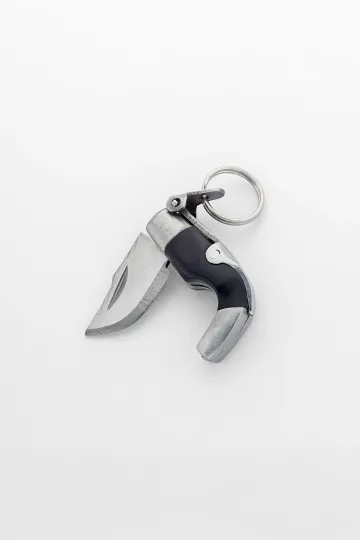
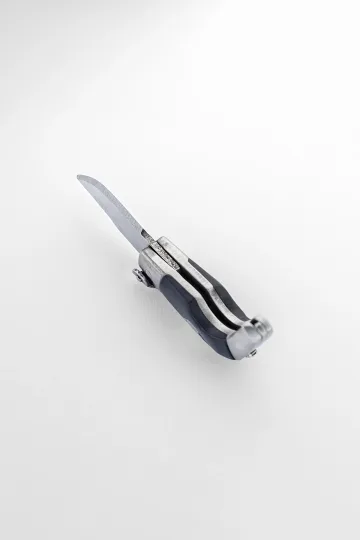
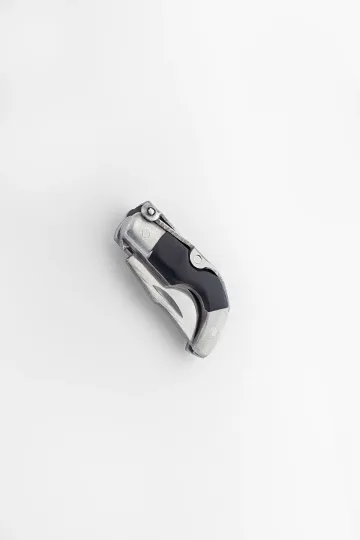
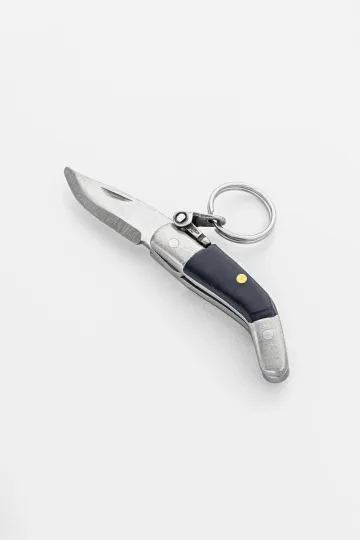
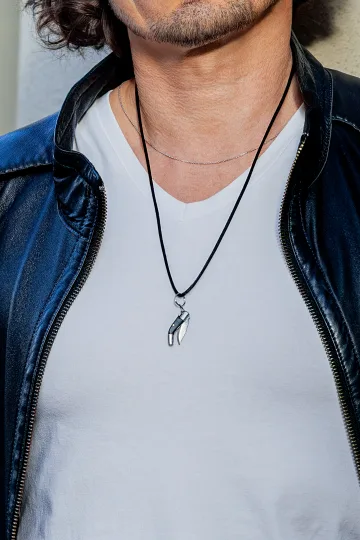
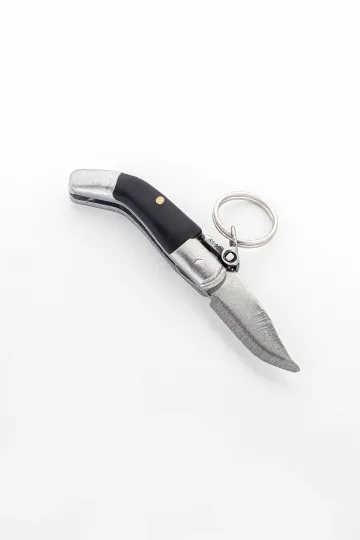
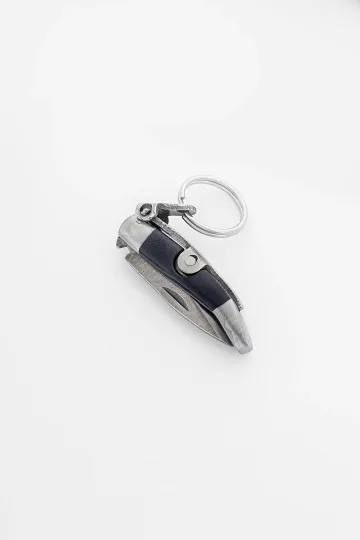
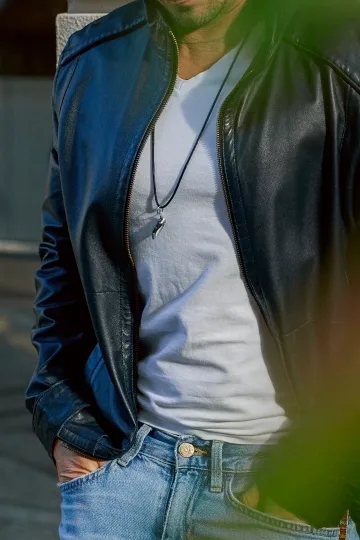
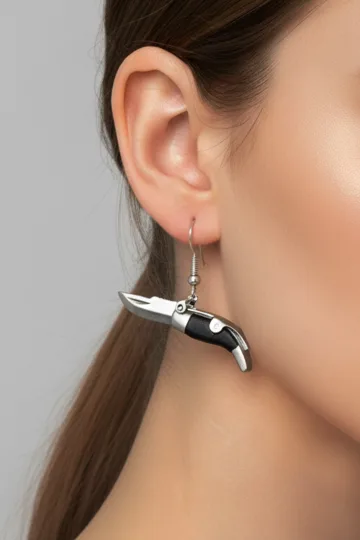
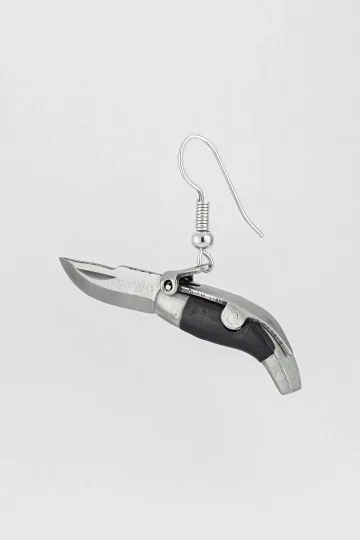
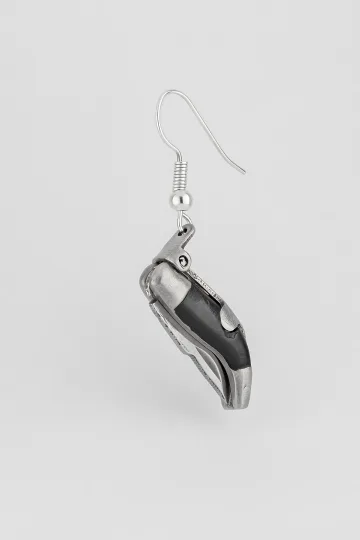
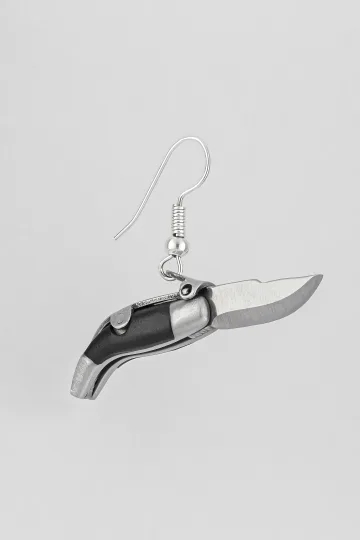
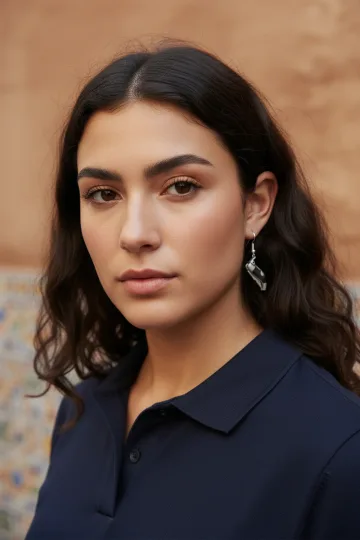
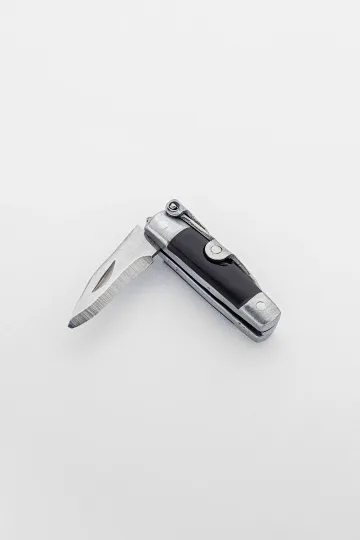
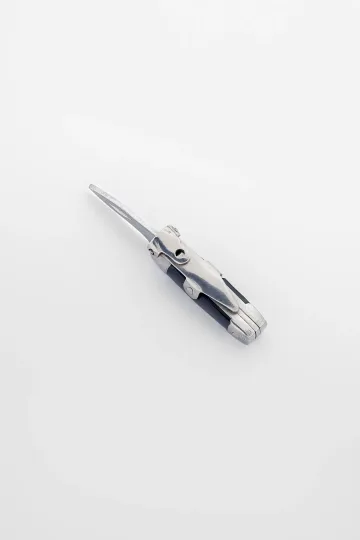
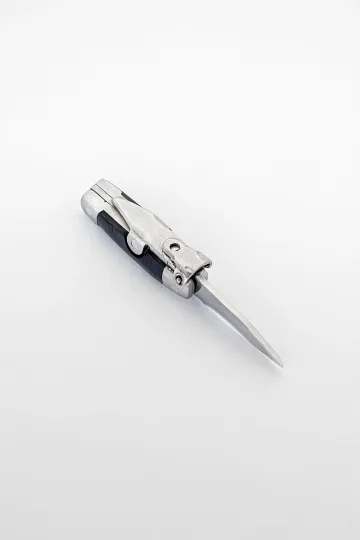
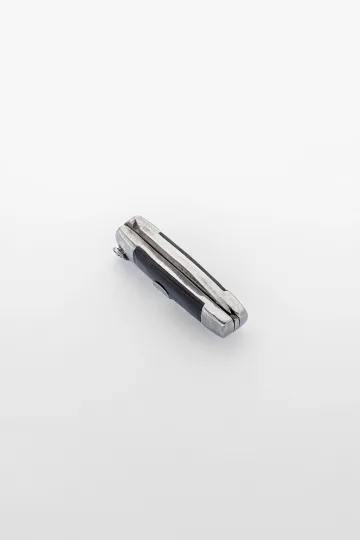
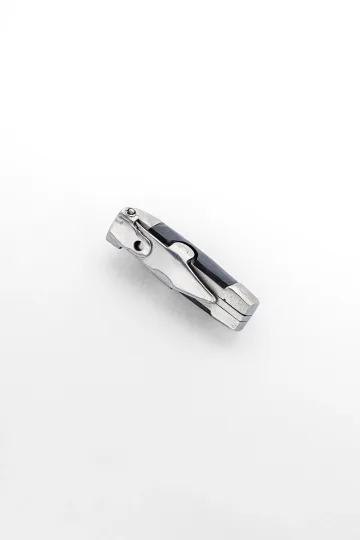
CAPAORA mini knife pendant
The 18th-century Spanish navaja in miniature: 40 mm of stainless steel, a real folding mechanism and a Palanquilla lock that clicks. An affordable gift to remember.
Authentic · Ships from Spain · 14-day returns
Etiquette of the proposal moment
The ring, if there is one, comes first. It is the central gesture of the proposal. A second gift, if there is one, appears afterward: either immediately, or later that evening, or the next morning.
A few principles worth keeping in mind.
Do not crowd the moment
Two gifts at once dilute the focus. If you want to give both a ring and a coordinates pendant, let the ring come first. Show the pendant afterward: explain that it is for her alone, not for "the engagement in general." A second gift offered a little later, even the same evening, often lands harder: the euphoria has settled a little, and attention is possible again.
A personal gift deserves a spoken explanation
If you engraved coordinates, say out loud what that place is. If the symbol means something between you, name it. A silent gift with deep meaning loses half its power if the meaning is never spoken. "This is the fountain where we stood waiting for a cab that first November" is not many words. But without them the pendant with numbers is just a pendant with numbers.
The bride's reciprocal gesture need not happen in the same moment
Some brides prepare a reply in advance and give it at once. Others give it in the days that follow, when the euphoria has settled and the gesture carries a quieter weight. Both are right. A reciprocal gesture a few days later is sometimes felt even more strongly: it says she thought about it, that she prepared, that her gesture was deliberate rather than immediate.
Parents' gifts traditionally come at the celebratory dinner
If the family marks the engagement over a meal, the moment of passing down a family piece or giving a commemorative gift fits naturally into that context. There is no need to create a separate ceremony: the dinner is already solemn. It can be said simply: "We wanted to give you this on this day."
The engagement ring does not compete with a personal pendant
They serve different functions. The ring is the social marker of engagement, visible to others, read in a particular cultural context. The coordinates pendant is a personal marker of connection, visible only to her and, occasionally, to you. There is no need to conflate them, and no need to explain: both objects are good, each in its place.
Style archetypes: choosing the jewellery language
A piece of jewellery should fit the person receiving it. Three broad archetypes help orient the choice.
The romantic archetype
Sacred heart, a heart shaped split pendant, an anatomical heart in fine silver. A locket with an engraved date. Pieces with moonstone or rose quartz, if a stone is wanted. A fine, delicate chain. The overall mood: open emotion, a direct language of symbols.
Works for: couples who are not afraid of direct love symbols, romantics, those who value history and tradition, those who feel no need to encrypt their feelings.
The minimalist archetype
A fine bracelet with a date, an infinity pendant on a 0.8mm chain, a disc medallion with coordinates. No stones, no volume: form, metal, text. A piece almost invisible, yet holding everything.
Works for: couples with a clean lines aesthetic, people who wear little and choose precisely, those for whom it matters that the piece is discreet, those who value the invisibility of the symbol.
The symbolic archetype
Claddagh, compass, a Claddagh pendant with engraving, a pendant with a small meaningful symbol that has a history and a cultural context. Here what matters is not the form but the weight of the chosen sign. A person who wears a Claddagh knows what it means and wants it to mean that.
Works for: couples drawn to history and cultural symbols, people for whom "what it means" matters more than "what it looks like," those who want a piece with an explainable narrative behind it.
What not to give at an engagement
Some things work poorly in this context, even when they seem appropriate on the surface.
A ready-made "for lovers" set
A box with two pieces pre-packaged by the manufacturer as an engagement set. The problem is not the pieces themselves but the absence of choice: you bought what someone else already decided for you. An engagement is a moment of personal decision. An impersonal set contradicts it, not because it is ugly but because it was not chosen. A choice that took thirty seconds shows.
Something she already has
If you give her a heart pendant and she already has three, the problem is not the pendant. It signals that you do not know her well enough. At an engagement this is particularly visible: the moment presumes attention to a specific person.
Something tied to her professional role
A stethoscope pendant for a doctor, a paintbrush charm for an artist, a book pendant for a teacher. These are excellent gifts in other contexts: a professional milestone, a birthday, a graduation. At an engagement the piece should speak to her as the person you love, not to her as a professional. An engagement is not a professional biography.
Too expensive without explanation
A piece costing a month's salary on top of the ring can read as a substitute for something else, or as a worrying signal about the proportion of gestures. If the additional piece costs more than the main one, that needs explaining. Without it a question arises that has no answer.
Too cheap alongside an expensive ring
A very cheap piece beside an expensive ring creates dissonance, not because it is cheap but because it looks as though it was chosen without effort. The issue is not price but the balance of the gesture. If the piece is inexpensive but personal (coordinates, a date, your shared symbol), price stops mattering: personal always beats expensive.
A stone with bad associations
In some cultures and families pearls are associated with tears and are not given at engagements. Some stones carry negative superstitions in particular traditions. It is worth knowing the context before choosing: the question is not the superstition but that the stone should delight the recipient rather than trouble her.
A short history of engagement jewellery
The tradition of the engagement ring as an obligatory element of a proposal is relatively young. In the form it exists today, with a diamond and a public proposal, it is roughly a century old. Mid twentieth century marketing campaigns shaped the perception of the diamond ring as the one correct symbol of engagement, and that perception became the norm fast, within a single generation.
But before that norm, other traditions existed, many of which involved jewellery other than a ring.
Medieval betrothal gestures
In medieval Europe a betrothal was accompanied by various exchanges of objects: gloves, coins, rings, cloth. The ring was one possible symbol, but not the only one and not obligatory. In some regions bracelets were exchanged. In other families jewellery passed down the female line was handed over.
The key point: the symbol of betrothal was always culturally specific. There was no worldwide "obligatory" object.
The Claddagh and the Celtic tradition
The Claddagh ring appeared in Ireland, by tradition in the seventeenth century, in a fishing village near Galway. From the start it was a symbol of love and loyalty, and the way it was worn, heart inward or outward, signalled the wearer's status. The piece served as a betrothal token, a wedding symbol, or simply a gift, never strictly for one function.
The Claddagh is a good illustration that an engagement symbol can be an object with a rich tradition that is not a "ring with a stone" in the modern sense.
The Victorian era: sentimental jewellery
In the nineteenth century, especially in Britain, a tradition of sentimental jewellery flourished: objects with an encoded message. Acrostics from the first letters of stones (ruby, emerald, garnet, amethyst, ruby, diamond spelling REGARD), locks and keys, earrings with initials. An engagement was marked by a piece that said something personal rather than something expensive.
It was an era when what mattered was what was written in a piece, not what it cost. Today we return to that logic through engraved coordinates and dates.
The modern shift: from norm to choice
Since the mid 2010s Western culture has gradually been rethinking engagement traditions. More couples choose the ring together. More couples choose an alternative main symbol: a piece with a different stone, a piece with personal meaning, a piece not for the hand. More couples introduce a symmetric exchange, with a gesture on both sides.
This is not a rejection of tradition. It is its expansion: the tradition says an engagement is marked by something meaningful on the body. What exactly that will be, each generation decides anew.
Leave your email, we'll send your discount code. No spam, unsubscribe anytime.
The code arrives by email, valid on your first order.
How to care for engagement jewellery
A piece received at an engagement is often worn very regularly, sometimes every day for years. That is a particular pattern of use and it calls for attention.
Sterling silver 925
The most common material for engraved pendants and paired pieces. Silver darkens from oxygen and perspiration: that is not damage but a natural process. The dark patina in the recesses of an engraving brings out the design and the letters, which is no bad thing. The surface can be wiped with a soft polishing cloth. Avoid contact with chlorine (the pool), salt water, perfume and creams. Store in a closed box or a sealed bag when not worn.
Oxidised silver (deliberately darkened) must not be cleaned with ordinary polishing cloths: they will strip the patina. Only a soft cloth, and only to remove dirt, not the finish itself.
Gold 14K and 18K
Does not tarnish, but acquires a film of oils and loses its shine. Wipe with a soft cloth after wear. A soft toothbrush with warm soapy water removes dirt from the detail. Rinse and dry. Gold is stronger than silver, but fine engraved lines can wear over time from contact with hard surfaces.
Pieces with stones
If a piece has a stone, you need to know how hard it is and whether it is sensitive to water. Moonstone, labradorite and opal are sensitive to knocks. Emerald and aquamarine dislike ultrasonic cleaning. Garnet and ruby are relatively robust. For pieces with set stones, ultrasonic cleaning is best avoided.
Engraving
Engraved surfaces need gentle cleaning: a soft brush with soapy water lifts dust from the recesses. Do not rub with abrasives: they wear the letters away. Fine engraved figures (coordinates, dates) wear faster than deep artistic engraving. When choosing a piece it is worth asking the jeweller how deep the engraving is: it affects how long it lasts.
Storage
Keep pendants on hooks or separately so chains do not tangle. Bracelets lie flat. Pieces of different metals (silver and gold) are best stored apart: they can leave marks on each other.
How to try a piece before buying: tips for choosing at a distance
Most engagement jewellery is bought online or commissioned remotely: the groom cannot try a pendant on the bride's neck while choosing it. A few practical tips.
Chain length
Chains come in standard lengths: 40cm, 42cm, 45cm, 50cm. The same length sits differently on different people, depending on height and neck shape. If you do not know what length she wears, 45cm is the universal choice for most. For a pendant worn over clothing, a little longer (45 to 50cm) usually works better.
Pendant size
A small pendant (2 to 3cm) is everyday, almost invisible. A medium one (4 to 5cm) is noticeable, works as an accent. A large one (6cm and up) is a piece in its own right. For an engagement pendant worn daily, a medium size is usually the most dependable choice: visible enough, but not pulling all the attention to itself.
Metal thickness
A thin pendant feels lighter and is better for constant wear. A bulky, cast pendant is a piece with character, but it is heavier and may not suit everyday use.
A photo of the piece on a person
Most good jewellery shops show the piece on a model. This matters: a pendant on its own always looks larger or smaller than it does on the neck. If there is no photo on a model, ask the shop for one or look for reviews with photos from real buyers.
Engraving online
When ordering engraving online, always ask for a preview or a layout template if available. Confirm the font and the size of the letters, especially for short texts (coordinates, a date). An error in the engagement date will be visible to you forever.
What to wear with engagement jewellery: style questions
A few practical thoughts on how a piece received at an engagement fits into a wardrobe.
A pendant with a ring
A pendant and a ring at once is a standard combination that works as long as they do not compete. If both are large and ornate, they will pull attention in different directions. If the ring is expressive, the pendant is better kept thin and small. If the pendant is bold, the ring can be more restrained.
On metals: mixing silver and gold is acceptable and often works better than strict matching. It takes confidence, but the result is more interesting.
A pendant with other pendants (layering)
A coordinates pendant on a fine chain works well in a layered composition: beside a longer chain with another symbol. Different chain lengths (say 40cm and 50cm) give levels that do not tangle or overlap.
A bracelet with rings
A bracelet on the same wrist as the engagement ring creates a richer look. If you do not want much metal on one hand, wear the bracelet on the other or alternate.
Men's jewellery and dress codes
A chain with a pendant under the shirt is invisible in a business context. Over a shirt with an open collar it is acceptable in most modern offices, especially in creative and technology companies. Cufflinks are a formal occasion. A bracelet on the wrist depends on the setting: in conservative professions, better kept under the cuff.
Earrings and other ear jewellery
If the engagement gift is earrings, they should relate to the rest of the ear jewellery. Heirloom earrings from another era can look unusual beside modern piercings, but that unusualness can be beautiful: history is visible.
The engagement as the start of a chronicle in jewellery
An engagement piece is the first object in a series that will grow. After it will come the wedding ring, a piece for the first anniversary, something for the birth of children, gifts for milestones.
If you think about this in advance, the choice of the engagement piece changes: less a "beautiful object" and more the first entry in a personal chronicle. With that understanding, the coordinates of the proposal spot engraved on the first pendant gain extra weight: it is the address where this story began.
Some couples deliberately build a "chronicle in jewellery": every significant moment gets an object with a precise date or symbol. Ten years of that practice produce a collection in which the biography of a relationship can be read: where they started, what they came through, what they celebrated.
If you begin the chronicle at the engagement, the next object might be a piece for the first anniversary. Then for the birth of a first child. Then for ten years together. Larger dates in such a chronicle suit an eternity ring well: a row of stones around the band as an image of time with no endpoint. Each piece with a date or symbol becomes an entry in a shared biography. By a wedding anniversary such a collection is worth more than any single expensive object, because each piece carries its own story and together they add up to something larger.
Materials: silver or gold for engagement jewellery
The choice of metal for an engagement piece is partly a question of budget. Different metals create different contexts, different feel and different durability.
Sterling silver 925
Silver 925 (the mark means 92.5% pure silver) is the most common material for symbolic engraved pieces. It takes detailed engraving well, is easy to work and comes in a wide range of forms. A silver pendant with coordinates or a date is a classic choice for an engagement piece with personal meaning.
The pros: a wide choice of forms and styles, well suited to text engraving, neutral with most styles of clothing, an accessible price at a high standard of making.
The cons: darkens over time and needs occasional polishing, not recommended for constant wear in water, and in some people causes allergy because of trace metals (usually nickel).
For an engagement piece silver works in most cases. If she is allergic to nickel, choose a hypoallergenic version or gold.
Gold 14K and 18K
Gold 14K (58.5% pure gold) is a balance between strength and price. It is the most popular standard for everyday pieces: hard enough to hold its shape for years, soft enough to take fine engraving.
Yellow gold gives a warm, classic tone. White gold is visually close to silver but stronger and keeps its look longer. Rose gold (with added copper) is a modern, soft shade that works well on warm skin tones.
Gold is a good choice if she wears mostly gold, if the piece must survive decades of daily wear, or if you plan to pass it on as a family heirloom.
Gold plating and gold filled
Plated pieces (a thin layer of gold over a base metal) look like gold, but with daily wear the layer wears off quickly. For a piece that should still look good years later, plating is not the best choice. Gold filled has a thicker layer and lasts longer, though it still falls short of solid gold. For an engagement piece meant to last decades, solid silver 925 or solid gold 14K is preferable to any coated alternative.
Mixing metals in a pair
If the ring is gold, the pendant can be silver, and the other way around. Mixing metals in one look became normal long ago and often looks more interesting than strict matching. The only condition: both pieces should be well made. Quality of making matters more than unity of metal.
Send a friend a discount code, they save on their first order.
How different cultures mark an engagement
The Western tradition with a diamond ring is not the only one. A look at other cultural practices helps make clear that the engagement gesture can take very different forms.
India: a set of jewellery and a mutual exchange
In the Indian tradition the engagement is accompanied by an exchange of jewellery that involves both families. The groom receives jewellery from the bride's family, the bride receives jewellery from the groom's. Often it is a set: earrings, bracelets, rings. Jewellery at an Indian engagement is a public act as much as a private gesture.
This tradition holds an important principle: both sides give and receive. The symmetry of the exchange is neither a Western invention nor a modern whim.
Ireland: the Claddagh across generations
The Claddagh ring has been used in Ireland for centuries as a betrothal symbol, a wedding symbol and simply a token of feeling. A piece with a specific message, it was handed down from generation to generation. In families that have a Claddagh, passing it to a daughter or daughter in law is a ritual act with a clear meaning.
In modern use the Claddagh has crossed Irish borders and become a symbol legible to couples worldwide. Its language is universal: friendship, love, loyalty.
Scandinavia: two rings at once
In the Scandinavian tradition, especially in Norway and Denmark, both the groom and the bride receive rings at the engagement. Both wear engagement rings. Wedding rings are added later at the wedding. This is the principle of symmetry in its pure form: both sides receive a visible sign. The tradition is gaining popularity beyond Scandinavia as well.
The Victorian era: jewellery as an encoded letter
In the nineteenth century a tradition of sentimental jewellery with an encoded message flourished in Britain. Acrostics from the first letters of stones, locks and keys, earrings with monograms. An engagement was marked by a piece that said something personal rather than something expensive. What mattered was what was written in the piece, not what it cost.
Today we return to that logic through engraved coordinates and dates: jewellery as an encrypted text legible only to two.
Specific scenarios: what to choose in your situation
A few practical situations to help you orient faster.
You are choosing the ring together and want to add a personal gesture
An extra personal gift makes the proposal special even when the ring is not a surprise. A coordinates pendant from the proposal spot, given at the moment of the yes, works precisely because there is no ring yet but there is already something personal. "First this, from me, for you alone," and then the joint "we will choose the ring together."
She does not wear rings
A pendant or bracelet becomes the main symbol rather than an addition. It takes time, knowledge of her style, good making. This is exactly the case where the choice of jewellery deserves the same care traditionally given to choosing an engagement ring.
He does not wear jewellery at all
A simple braided leather bracelet with a silver clasp and a minimal detail is less obvious than a chain. Cufflinks are not "worn" so much as "put on for the occasion": a good first step for a man unused to jewellery. If he is not ready for jewellery on the body at all, cufflinks let you make a gesture without a constant visible presence.
The budget is limited but you want personal meaning
A silver disc pendant engraved with coordinates or a date costs far less than a ring with a stone, and carries more personal meaning than many expensive options. Personality always beats price. A modest piece with the right text is remembered better than an expensive piece with no story.
You want to start a family tradition
Start it now. Commission a piece from a jeweller that will be the first in a series: with a symbol, a date, initials. Set the intention: "this is our family's first piece, I will pass it to my daughter." In twenty years it becomes an heirloom.
You do not know her taste
A simple disc medallion with no extra detail and an engraving. Only metal and text. Minimalism suits almost everyone and runs no risk of landing in the wrong style. Coordinates or a date on a clean silver circle is a piece hard to call unsuited to any taste.
The psychology of the engagement gesture
An engagement is a rite of passage. Two people stop being simply a couple and become people who have publicly announced their decision to be together. The material object in that ritual performs a concrete psychological function.
The object as an anchor of memory
Words are spoken and gone. The object remains. An engagement piece is an anchor: a concrete object you can hold in your hands, carrying the tactile memory of a particular evening, particular words, a particular feeling.
This is not superstition. It is how memory works: we remember events better when an object is tied to them. A pendant put on at the moment of the yes will bring back associations with that moment every time she wears it.
Why personal meaning beats cost
An expensive object without meaning is remembered worse than a modest one with a story. Studies of memory and emotional attachment confirm it: we remember not the price of an object but what is connected to it. A pendant with the coordinates of a particular fountain is remembered not because it is expensive but because it is an address. A precise, concrete link to a concrete moment.
So the search for the "most expensive piece" is often less productive than the search for the "most precise piece." Precision is a form of respect for a person: you know her well enough to choose something specifically for her.
Why a reciprocal gesture matters
When only one side makes a gesture, the other stays passive: he decides about her, not with her. A reciprocal gesture changes that dynamic: now both are acting. Both decided, both expressed.
Jewellery as a reciprocal gesture says: I too chose you, not just answered yes to a question. I thought about you, chose for you, brought something of my own.
This is a symmetry that, over the long run, strengthens the sense of equality in a couple. The engagement is remembered as the moment when both gave and received, rather than as the moment when one asked and the other agreed.
Why a family heirloom weighs more
When the groom's grandmother passes on her ring on the day of the engagement, it is a beautiful gesture. It is the inclusion of a daughter in law in the family line: an object that has seen other generations moves to her. A family object says: you are one of us now. Not because we decided so today, but because this object carries our history, and now that history is yours too.
When engraving is not needed: clean pieces
Not everyone suits a piece with text. Some people wear only clean forms: no engraving, no inscriptions, just metal and shape. In that case the choice of symbol becomes the sole bearer of meaning.
A clean Claddagh without engraving says everything needed through its form: friendship, love, loyalty. A clean infinity pendant is clear without words. Paired pendants with the same symbol (compass, heart, infinity) work precisely because they have one symbol for two, and that in itself is a statement.
If you choose a piece without engraving, make sure the symbol carries the meaning on its own. A random shape with no symbolic weight is just a pretty object that could have been given for any occasion. An engagement needs a symbol that reads as a sign of love or commitment, not merely as a pretty object.
Good options without engraving for an engagement: the Claddagh (meaning in the form), the compass (meaning in the symbol), infinity (meaning in the sign), the sacred heart (meaning in the iconography), halves (meaning in the separateness of each and the wholeness together).
In this sense the form of a piece is a language too. A Claddagh without a single letter tells a story of friendship, love and loyalty, because every detail of its form carries a specific meaning: a crowned heart held by two hands. That language of forms is legible without translation. A split pendant without words says: we are parts of one whole. That very legibility makes such pieces a powerful choice for the moment of an engagement: the object speaks for itself, and nothing more is required.
Buying it as a gift? Each one arrives ready to give.
 A branded Zevira box and a little card come with every order.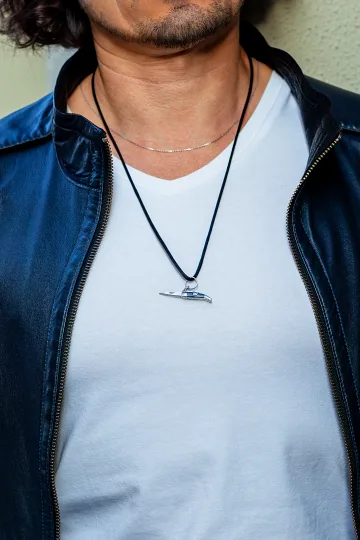




The engagement ring as a separate story
None of the above means the engagement ring is disappearing from the culture. It remains the central symbol, and for most couples it always will. The ring is worn publicly, read in a particular social context, and stays on the hand after the wedding beside the wedding band. It is a durable tradition.
But its role is shifting. The ring is increasingly a joint choice rather than a surprise. It is increasingly selected slowly, with a jeweller, with several fittings. This changes the proposal moment: the ring loses its surprise but gains precision. It is exactly what she wanted.
And here the personal gesture takes the place that surprise once held. A coordinates pendant, a date bracelet, a shared symbol, a family heirloom, all of these fill the space of "something unexpected, personal, just for you" that a ring chosen together can no longer fill.
They do not compete. The ring is the social marker of engagement. The coordinates pendant is the personal marker of a specific person, a specific evening, a specific decision.
If the topic of choosing the ring itself interests you, there is a full guide in a separate article: engagement ring guide.
Wear the symbol, don't just read about it. These are in stock:





FAQ
Is jewellery obligatory at an engagement?
No. An engagement is first and foremost the words and the decision of two people. No piece of jewellery is required. But jewellery with personal meaning creates a tangible object that carries the memory of the moment and remains, when the words have long since faded.
Can you give a piece of jewellery instead of an engagement ring?
Yes, and this is increasingly common. Especially when the couple has decided to choose the ring together later, when the bride does not wear rings, or when both want a different kind of symbol. None of these options makes the engagement any less real.
What do brides give grooms at an engagement?
Increasingly a reciprocal gesture is the norm in couples with a conscious approach to symmetry. Popular choices: cufflinks with the date or initials, a men's chain with a pendant, a signet ring with his letter. The emphasis is on the fact that she chose it: not something standard but something devised for him.
What do parents give at an engagement?
A family heirloom passed on at the engagement is the most significant option. If there are none, paired jewellery for the bride and groom from one set of parents works well, or a commemorative bracelet engraved with the date and a wish from the other side.
Should the date be engraved on the piece?
Not required, but the engagement date on a piece tends to become one of its most valued details over time. Twenty years later, a piece with a date is both a beautiful object and a precise reference to a specific day. It is a chronicle.
How to choose a symbol for a paired pendant?
Start with what makes sense to both of you. A place where something important happened? A compass with coordinates. A promise that matters? Infinity. A cultural connection? Claddagh. A physical sense of being two parts of one? Halves. If no ready symbol fits, an engraved date or initials on a plain disc medallion is the universal and elegant solution.
Expensive or inexpensive jewellery at an engagement?
Balance with the overall gesture matters. If the ring is expensive, an additional piece should match in quality of making, though not necessarily in price. A very inexpensive piece beside an expensive ring creates dissonance, not because it is cheap but because it seems to have been chosen without effort. Personal meaning (coordinates, a date, your shared symbol) always beats price.
Can parents give jewellery if they do not live nearby?
Yes. It can be sent in advance in an envelope with a letter for the bride to read at the moment of the engagement. Or passed via the groom to give on behalf of the family. Or saved for a separate moment at the first meeting after the engagement: a celebratory dinner or simply a first visit together.
How to explain the symbol engraved on the piece?
Say it out loud at the moment of the gift. "These are the coordinates of that fountain we stood by in November." "This is the date we first met." "This is our symbol, the one I chose for us." A gift with an explanation carries double weight: the object plus the words. Without words it is a good gift; with words, unforgettable.
Can a paired piece be ordered online or do you need a jeweller?
Most standard engravings (date, initials, coordinates) are available online with a text field at checkout. For complex engravings, non-standard symbols, resetting a family stone or joining several elements, a jeweller is needed. For a standard order with personal text, an online service is quite enough: the result is the same, the process more convenient.
How soon after the proposal is it appropriate to give a reciprocal gift?
There is no rule. The same evening, if she prepared in advance. The next day, if she wanted to let the moment settle. A few days later, on the first quiet evening together. Later does not mean less: a gift offered not in euphoria but in quiet is sometimes felt more strongly.
Does an engagement piece need nice packaging?
Yes, and more than it seems. Packaging is the first thing a person sees and holds. For a piece with personal meaning, a box, an envelope or a pouch sets the tone before anything inside is seen. If the piece was ordered online in a standard box, add a handwritten note: a few specific words about why this object, why now. A handwritten note is twice as strong as any pretty box.
Conclusion
An engagement is the moment when two people say yes out loud. What remains of that moment in material form depends on which objects acquire meaning on that day.
The ring remains the main symbol for most couples. But alongside it, more space is being claimed by other gestures: a coordinates pendant from the proposal spot, a reciprocal gift from the bride to the groom, a family heirloom from parents, paired pieces both will wear.
None of these replaces the ring. But each adds something of its own: a specific place, a specific date, a specific person who was thinking about you. That is what a personal gesture is. Not because it is expensive or beautiful, but because it was chosen for you, now, with this intention.
Paired pendants, halves, sacred heart, Claddagh, infinity, compasses with engraved coordinates. Handmade silver and gold. Engraving of dates, initials and coordinates on request.
About Zevira
Zevira makes jewellery in the artisan tradition of Albacete, Spain. An engagement is a moment that asks for an object with personal meaning, and those are exactly the pieces we make: engraved with a date, coordinates or initials, carrying symbols that read like a promise.
What you can find with us for an engagement:
- Paired pendants and split pieces in male and female versions, one for her and one for him
- Sacred heart and anatomical heart in silver and gold, in several sizes
- Claddagh as a ring and as a pendant, the symbol of friendship, love and loyalty
- A pendant and bracelet with the infinity symbol, for a promise with no time limit
- A compass that can be engraved with the coordinates of a special place
- Medallions and discs ready for an engraved date, initials or a short phrase
Every piece can be personalised with engraving, with personal engraving available on request. Sterling silver 925 and 14 to 18K gold.