Jewellery gift for a friend: ideas for a meaningful friendship gesture
Introduction: a fine chain after three years of silence
Kate bought a fine silver chain with a crescent moon pendant for Sophie. They had been friends since high school in Boston. Sophie had moved to Chicago, three years had passed almost without contact, they fell out through mutual friends and then drifted. When Sophie wrote "I am coming back for a week, let's see each other", Kate knew she needed a gesture. Not an apology in words, not a long letter, but something material. Something Sophie could put on and not take off.
The chain cost the price of one good dinner. The crescent moon was chosen because Kate remembered that Sophie had loved looking at the sky at night ever since their school camping trips. No hearts, no "BFF" engravings, no overblown wording. Just a symbol that meant something specific to the two of them.
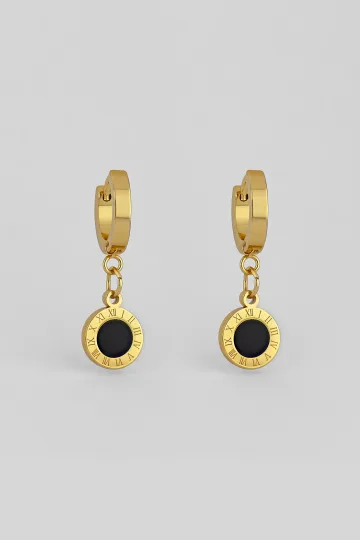
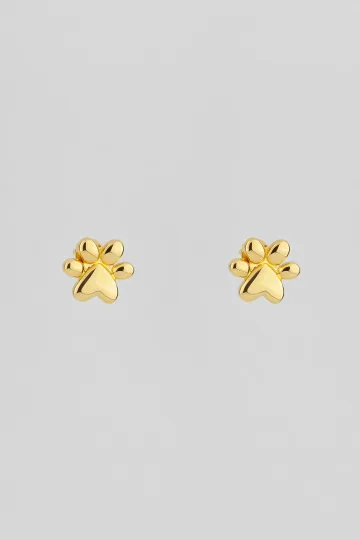
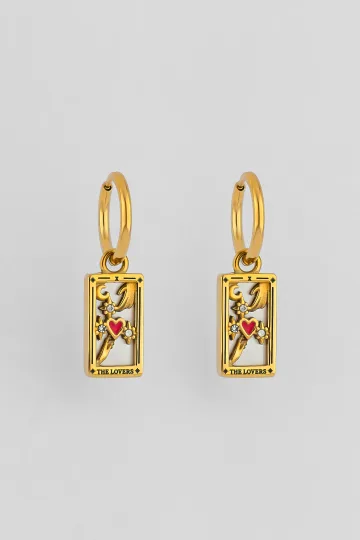
Wear the symbol, don't just read about it. These are in stock:



Sophie took the gift and cried. Six months later they were seeing each other every two or three weeks, the way they used to. The chain lives on her neck daily. She drinks coffee in it, washes her hair in it, sleeps in it. It is not a piece of jewellery, it is a sign of restored contact.
A jewellery gift between friends follows different rules than a gift to a partner or a relative. There is no hierarchy, no romantic intimacy, no duty. There is equality and choice: you could have not given anything, you gave because you wanted to. This guide goes through every situation where a jewellery gift suits a friend, what to choose, and what to avoid. For broader gift logic, see our jewellery gift guide by occasion, gift for mom, and matching jewellery for couples.
Why jewellery works as a friendship gift
Friendship often stays without material markers. Romantic relationships are marked with rings, anniversaries, shared purchases. Family ties are secured with documents, shared households, surnames. Friendship hangs in the air: memories, messages, meetings. When the friendship moves city or changes rhythm, it can fade without a trace.
Jewellery turns the friendship into a thing. A bracelet on the wrist or a pendant on the neck is material proof of the bond. The friend wears your gift and remembers you regularly, even when you have not spoken in two weeks. It works as a quiet anchor.
Psychologically, jewellery from a friend reads differently than from a man. From a partner, a piece of jewellery is often a declaration of feelings that asks for a response. From a friend, it is a gesture with no return move expected: "I thought of you and I am glad you exist". No obligation, no answering gesture. The gift is easier to accept.
Financially the friendship gift sits easier on the budget. For a partner or a mother you often want to reach premium tier. For a friend the mid tier is enough. A silver piece with a thoughtful symbol matters more than a generic gold one.
Emotionally a friendship gift can be braver. With a partner you guess the style carefully to avoid hurt. With a friend you can give something quirky, funny, unexpected, and she will appreciate the attempt at originality.
A short history of friendship jewellery
Giving a small worn object to seal a bond is one of the oldest habits in European jewellery, and for most of that history it had nothing to do with romance. Roman fede rings, the ones shaped as two right hands clasped, were exchanged between allies and business partners as often as between betrothed couples: the gesture they copied was the handshake that closed an agreement, not a kiss. The clasped hands survived through the Middle Ages and reached Britain and Ireland as the Claddagh, where the hands hold a crowned heart, and where the ring has always been passed between mothers and daughters and friends as readily as between lovers.
Medieval and Tudor England had its own version in the posy ring: a plain gold band with a short line of verse cut inside the hoop, invisible once the ring was on. Museum collections in London hold hundreds of them, and the inscriptions are far more varied than the wedding cliché suggests. Plenty read as pure friendship: promises to remember, to keep faith, to think of the giver. The point of hiding the words inside the band was that only the wearer and the giver knew what the ring said, which is exactly the appeal of a discreet engraved gift now.
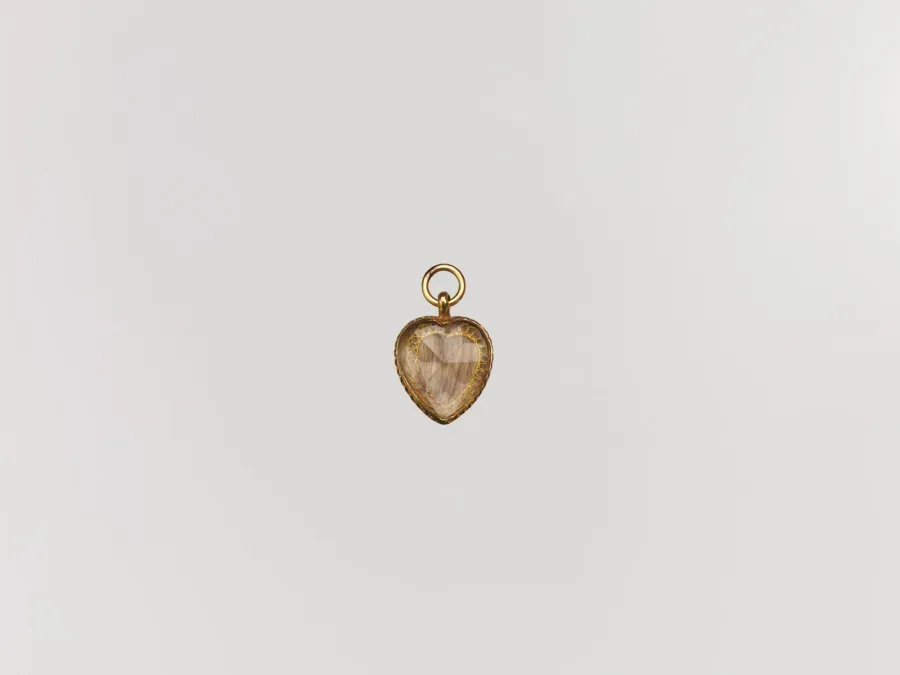
The Georgian and Victorian centuries turned sentiment into a craft. Acrostic rings spelled a word in the initials of their stones, so a band of ruby, emerald, garnet, amethyst, ruby and diamond read REGARD, and a longer row spelled DEAREST. Regard was a friendship word, deliberately warmer than politeness and cooler than a declaration, and it is the closest historical match to what a modern friendship gift is trying to say. Alongside them came lockets holding a plaited lock of hair under crystal, hair work bracelets, and the whole language of flowers, in which ivy stood for lasting attachment and forget me not for constancy across distance. Victorian women gave these to each other constantly, and the surviving pieces are usually inscribed to a female friend rather than to a husband.
The twentieth century added the braided thread bracelet, adapted from Central American textile traditions and picked up by British and American teenagers in the 1970s, along with the split pendant whose two halves make one shape only when the friends stand together. Both are direct descendants of the posy ring and the hair locket: a cheap material carrying an expensive meaning, and a private code readable by two people. When you buy a friend a fine chain with a small symbol, you are working inside a tradition that is several centuries deep and has always run alongside the romantic one rather than under it.
Give a friend what she wears on a Tuesday, not a boulder she hides in velvet. A gift that lives in the box is a failure of taste, not generosity.
How to pick a gift she will actually wear
I have styled hundreds of looks, and I build a friendship gift on one rule: the piece has to fit into her ordinary week, not wait for a special day. Here is what I suggest keeping in mind while you choose.
What should I give if I do not know her taste well? I recommend a fine chain of 42 to 45 cm with a small pendant, or a single stud. It is the safest move: pieces like these sit under a tee, a shirt or a turtleneck, do not argue with her wardrobe and suit almost any style. It is very hard to get wrong.
How do I choose between gold and silver? I suggest looking not at your own taste but at what she already wears daily. A cool skin undertone and a grey, blue or white palette go with silver; a warm undertone and beige or sand tones go with yellow gold. If in doubt, ask about metal casually and keep the rest a surprise.
Is a paired piece a good idea? I recommend a matching pair only for a close friend, and only when both of you will genuinely wear your half. For a friendship anniversary or a move it is a strong gesture: a split symbol, identical bracelets, the coordinates of a shared place. For a recent acquaintance it is too soon, as a pair carries an obligation.
How do I get the length right without knowing her size? For a bracelet I choose a middle 18 cm with room to shorten; for a chain, a universal 42 to 45 cm. Under a V-neck I go longer, under a boat or square neckline shorter, so the line of the piece echoes the neckline. An adjustable clasp forgives any guesswork.
How do I make it personal without risking the size? With an engraving on the back. A date you met, a short phrase or an initial that only she sees turns a simple piece into a personal one. I suggest making the hidden inscription the personal part, rather than the size or a big stone: that is the real gift.

Turn on your camera, pick earrings, a pendant or a ring, and see the piece on yourself in real time.
Switch items in one tap.
Everything runs in your browser: no photo or video is ever uploaded.
Best friend vs acquaintance: the tier difference
The word "friend" stretches across a wide spectrum, from "best friend since high school" to "colleague who might become a friend". The level of closeness sets the tier of the gift.
Best friend (10+ years of friendship). Personal, symbolic, paired pieces work. Budget mid to premium, no ceiling. Paired bracelets, paired split symbol pendants, engraving with dates or names. You know her style, size, allergies, metal preferences with certainty.
Close friend (3 to 10 years). Personal touches work, but carefully. Mid budget. Symbol pendants, minimalist studs, fine chains. You know the style but it is worth confirming through indirect questions.
Interest based friend (1 to 3 years, shared hobby or community). Neutral gifts. Modest to mid budget. Stud earrings, slim bracelets, lean pendants. Style guessed from social media and shared outings.
Acquaintance (colleague, mom friend, neighbour). Universal gifts. Modest budget. Something neutral: small stone studs, a basic fine chain, a simple bracelet. No personalisation, no symbols that need deep context.
Childhood friend, now seen rarely. Nostalgic gifts. Mid budget. Something that recalls your shared past: a pendant with a symbol from an old school joke, matching rings like the ones you wore at 15.
Never confuse the tier. If you have known her three months, do not give a premium bracelet. She will feel embarrassed and obliged to respond. A gift that is too expensive breaks the balance of the relationship.
When to give: with or without occasion
There are many reasons to give a friend jewellery. Each has its own tone.
Birthday. The main reason. Expected but still personal. The traditional pattern works: flowers plus a piece of jewellery plus a card. Budget depends on closeness. For a best friend a real piece, for an acquaintance a symbolic gesture.
Galentine's Day (February 13) or International Women's Day (March 8). A friendly gesture is welcome, but with care. Not too romantic (no hearts, no love wording). A fine bracelet, stud earrings, a minimalist pendant. In the US Galentine's has grown into a strong tradition for celebrating women's friendships, especially since the early 2010s.
Christmas. A symbolic stocking gift. Budget can be modest. A small pendant, stud earrings, a slim chain.
Wedding of the friend. Jewellery from you in addition to the main gift (cash, a honeymoon contribution, a registry item). Pearl studs, a small chain for the bride. See our bridal wedding jewellery guide.
Birth of her baby. A gift to the mother (and sometimes to the baby). Earrings or a chain with the baby's initial as a pendant. A gift to mom helps her keep her identity in the first months of motherhood.
Graduation. A fine chain with a pendant, a signet ring, earrings with a small stone. See our jewellery for graduation guide.
Promotion, new job, dissertation defence. A gesture that says "I am proud of you". A signet ring, hoop earrings, a minimalist chain.
A move to another city. A paired bracelet (one for you, one for her), or a pendant with the coordinates of your shared place.
Recovery from illness or surgery. A symbolic gesture of life. Something light to wear every day as a reminder that things are normal again. A tree of life pendant, an infinity pendant, a fine chain.
Divorce, breakup, a hard period. A supportive gesture. A slim ring or bracelet she can wear as a talisman. Not in engagement style, so the associations stay clean.
Just because, no occasion. The most valuable kind of gesture. Modest budget, precise choice. Studs with her favourite stone, a slim bracelet with an initial.
How to figure out her style in one conversation
Before buying you need to know what she wears. If you have known her for years, no problem. If you have not seen her in a while or you mostly chat online, you need a little reconnaissance.
Check her social media. What she wears in selfies. Metal colour. Earring size. Whether she wears a chain. Rings. Metal colour on her hands.
Ask indirectly. "Listen, I am looking for something for my mom. Does mom wear gold or silver? Wait, you wear gold too, right?" A short chat surfaces her preferences.
Ask directly. Sometimes the simplest works. "I want to give you something. Just tell me the metal colour. Everything else is a surprise." Many friends will not be offended by this.
Check for allergies. Nickel, cheap alloy jewellery causes reactions. See our jewellery allergy guide. Sterling silver 925 and 14 karat gold are safe for most people.
Ask her sister, mother or closest friend. If you share connections, ask them what she would want. They will help with specifics.
Look at what she already wears. Ask to see "that beautiful piece you wore last time" with an excuse of admiration. You will see what she already owns.
Paired friendship jewellery: a symbol of the bond
Paired pieces are a special genre for friendship. The logic is simple: an identical or complementary pair, one piece on you, one on your friend.
Types of paired pieces.
- Identical. Two of the same thing (two matching chains with the same pendant).
- Split. One thing divided in two (half a heart for each of you; "best" for one, "friend" for the other).
- Linked by symbol. Different objects united by a theme (sun and moon, key and lock, yin and yang).
- Coordinate based. Each piece with the coordinates of a place that matters to both of you, or with each other's initials.
More on the genre in our matching jewellery for couples guide. Even though it is built around couples, symmetric ideas carry across to friendship.
When to give a paired piece.
- A childhood friend you have known forever.
- A friend moving to another city.
- A friendship anniversary (10, 15, 20 years).
- After going through a hard period together.
When not to give a paired piece.
- If the friendship is recent (1 to 2 years). Paired pieces commit.
- If you are not sure she will wear it. The piece may sit in a drawer.
- If you yourself will not wear your half. Pairs only work when both wear them.
Customer reviews
Zevira is a real jewellery shop. Genuine payments, deliveries and customer thank-yous.
🥰🥰🥰 gracias

Ok, ¡gracias! 🙂

Paired bracelets: the classic of friendship jewellery
Paired bracelets are the most common friendship gift in the world. The category of "friendship bracelets" goes back to braided cord pieces in the 1980s and has now moved into fine jewellery.
Types.
- Plain chain bracelets with a small charm. Identical on both wrists. Length 17 to 19 cm.
- Bangles of identical shape. Sterling silver or 14 karat gold.
- Charm bracelets with the same starter charm. Each friend later adds her own.
- Engraved. Same date (the day you met, a shared moment), same phrase, the other friend's name.
- Permanent jewellery. A specialist service where the bracelet is welded onto the wrist without a clasp, worn for years without removal. Two friends do it together as a symbolic act.
Sizes. 17 cm on a slim wrist, 18 cm standard, 19 cm on a fuller wrist. If you do not know, choose 18 cm with the option to shorten.
Budget. Sterling silver in mid range, gold in mid to premium. Charm systems can start modest and grow over time.
The handover. Give both pieces together, putting yours on at the same time as hers. It creates a moment: you are both "linked" by the piece. A "our wrists side by side" selfie becomes a shared friendship photo.
Paired pendants with a split symbol
A paired pendant works a little differently than a paired bracelet. The pendant sits on the chest, closer to the heart. The logic is symbolic: each half of one whole thing.
Classic split symbols.
- Halves of a heart. One of the most cliched but still working genres. Each half carries part of the engraving: "Best" and "Friends", or names. When joined, the full phrase reads.
- Jagged break. Like a coin split in two. Each half is unique, the two fit together exactly. Sterling silver or gold, size 1.5 to 2 cm.
- Half moon for one, sun for the other. Symbolism of complementarity. Right for friends with different personalities.
- Yin and yang. Classical Chinese symbolism of balance. One half for each.
- Tree split. One has the crown, the other has the roots. The metaphor of "I am your sky, you are my earth".
Coordinate pendants. A pendant each, engraved with the coordinates of where you lived or first met. Size 1.5 cm. Sterling silver or steel.
"Best" and "Friend" pendants. A 1990s classic that still works with a little self irony. Right for friends with a sense of humour.
Same symbol in different metals. One in silver, the other in gold. Right when you have different skin tones or different metal preferences.
Minimalist stud earrings: the all rounder
Stud earrings are the safest genre for a friendship gift. They are worn every day, do not depend on outfit, suit almost every face shape. See our jewellery by face shape guide and earring types guide.
Stud genres for a friend.
- A small point stone (diameter 3 to 5 mm): cubic zirconia, a small diamond, or a coloured semi precious stone. Sterling silver or 14 karat gold.
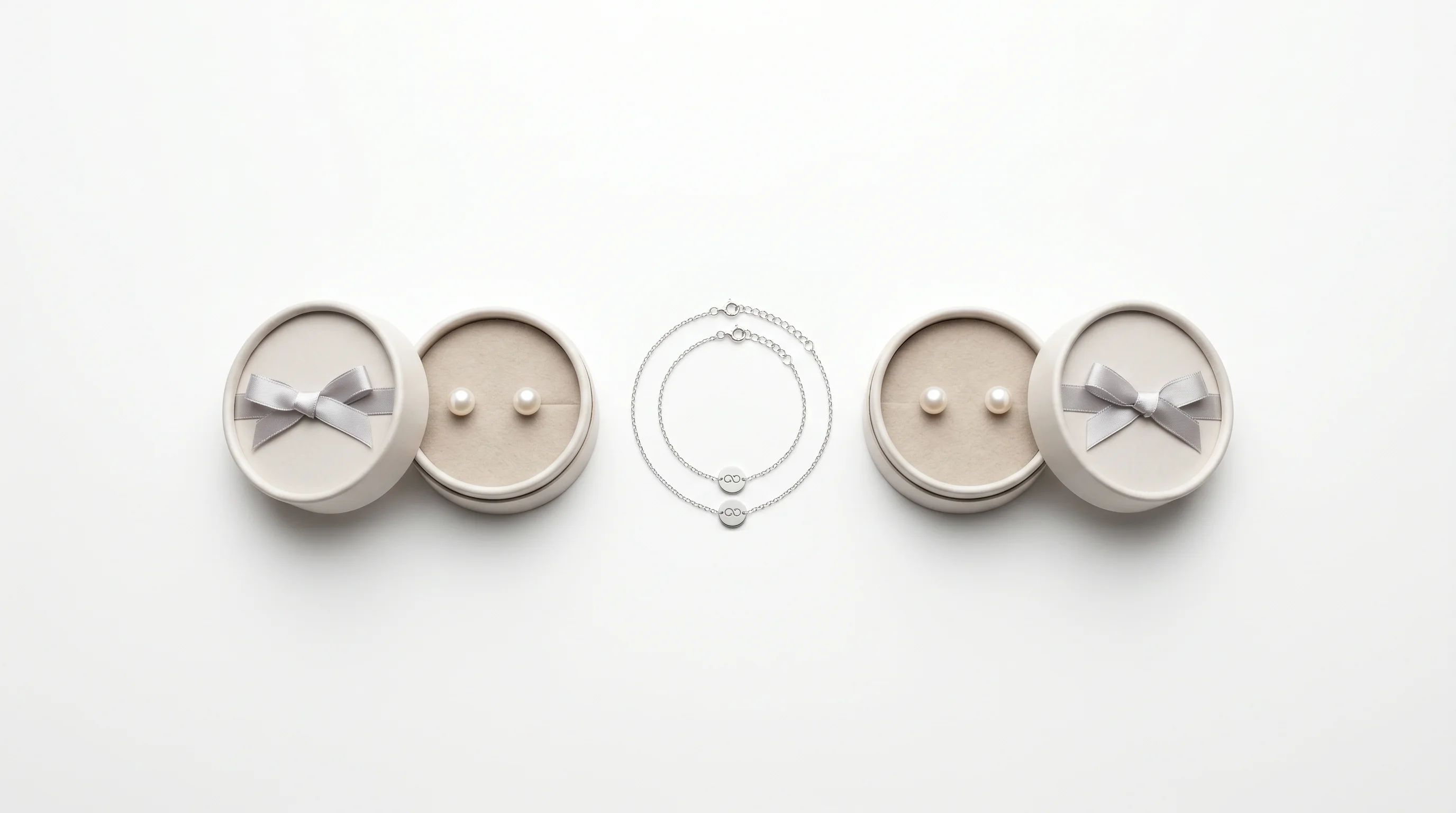
- Pearl 6 to 8 mm. A classic that suits almost any style.
- Geometry. Triangles, squares, circles, stars, 5 to 8 mm. For friends with a modern minimalist style.
- Nature motifs. Leaves, flowers, stars. Sterling silver or gold plated.
- Initial. A single letter, hers or a shared one.
Which stone. A stone for her birth month is always a win. January garnet, February amethyst, March aquamarine, April diamond, May emerald, June pearl, July ruby, August peridot, September sapphire, October opal, November topaz, December tanzanite.
A small set. Studs plus a fine chain with a matching small pendant in the same stone. Works well in the mid tier.
Note. Check that she has pierced ears and actually wears earrings. If her piercings have closed or she stopped wearing studs years ago, this becomes an awkward gift. In that case ear cuffs (no piercing needed) are a better choice.
Upload a photo of your pet, someone you love, or an object. We'll build a 3D model and hand-cast it in pewter.




Fine chains and pendants with symbols
A chain with a pendant is the second most popular friendship genre after the bracelet. It hangs in plain view, gets worn every day, and the symbol is visible to others.
Length. 40 to 42 cm (short princess) or 42 to 45 cm (standard princess). For long necks 45 to 50 cm.
Link type. Fine cable, curb, snake chain. Thickness 0.8 to 1.2 mm for a women's chain.
Pendant.
- A small round medallion 1 to 1.5 cm in diameter, silver or gold, with an engraved date.
- An initial pendant. Her first letter or a shared one. 0.8 to 1.2 cm.
- Point stone. A small bezel with cubic zirconia or a semi precious stone.
- Symbolic pendant. Infinity (see our infinity symbol guide), tree of life (guide), heart, moon, star, key. Full reading in our jewellery symbols guide.
Engraving on the back of the pendant. A key detail. The day you met, a small phrase ("for L"), her initial. Invisible to outsiders, but she knows.
Friendship rings: slim and neutral
A ring for a friend is a delicate genre. The main risk: it should not read as an engagement or wedding ring. So no single solitaire stone in a tall setting, no diamonds 0.3 ct and above.
What works.
- A slim plain band (1.5 to 2 mm wide). Silver or gold. A small engraving on the inside is welcome.
- A small signet ring (an oval face 6 to 8 mm) with an initial or symbol.
- A twisted band or a chain texture ring.
- A ring with small stones around the band, no central solitaire.
- Paired slim rings. One for you, one for her. Each in her own size.
What to avoid.
- A ring with a single central stone 5 mm or more in a tall setting (reads as engagement).
- A ring sized for the ring finger of the left hand without explicit discussion. The left ring finger carries symbolic weight in the US, UK and most western countries.
- An expensive complex ring for a friend whose finger size you do not know. Better to choose an open or adjustable ring.
Size. If you do not know, ask under the pretext of "I want to know my own, what is yours?" If you cannot get it that way, choose an open band or an adjustable ring.





Charm bracelets as a growing gift
A charm bracelet has a base (a chain) plus charms (small pendants added one by one). This is a special genre that grows with the friendship.
Logic.
- For her birthday you give the base plus one starting charm.
- For the next occasion (Christmas, March 8) a second charm gets added.
- At meaningful dates (friendship anniversary, a shared trip) new charms come.
Base types.
- A silver curb chain with sturdy links that can hold a charm.
- A bangle with a fixed clasp and slots for several charms.
- A snake chain bracelet with threaded connectors (only for specific systems).
Charms.
- Small thematic pendants, 1 to 1.5 cm.
- Cost of one charm comparable to a coffee with dessert in a cafe.
- Themes: travel (Eiffel tower, a coffee cup), hobbies (a book, a guitar), shared memories (a symbol from your school or college).
Main advantage. The gift grows over time, and it is easy to bring to every occasion. You do not have to invent something new each time.
Main caveat. Your friend has to wear the base, otherwise the charms cannot be added. If she forgets to wear it, choose a different category.
Permanent jewellery for two friends
Permanent jewellery is a service where a jeweller welds a fine chain directly onto your wrist or neck, with no clasp. You can remove it only by cutting. The service grew in the US and Europe in the 2020s.
For friends it is a special genre. You go to the studio together, you both sit down, and you both get identical welded bracelets. A symbolic act: a bond that cannot be unclasped by accident.
What to know.
- Bracelet length is fitted precisely to the wrist.
- Chain thickness is minimal (0.6 to 0.8 mm), so it does not interfere with daily life.
- Sterling silver 925 or 14 karat gold, less commonly 18 karat. Silver is cheaper but darkens over time.
- Worn during swimming, sleeping, sports. Some discomfort possible during MRI scans and at sensitive metal detectors.
- For removal (surgery, airport with very sensitive equipment) it is cut with a specialist tool.
Price. The service plus the chain itself. Mid range budget.
Availability. Specialist studios exist in big cities. Before booking, check reviews and the maker's certification.
An ideal day plan. Book the two of you, do the welding, then go for dinner or a coffee. The trip itself becomes part of the gift.
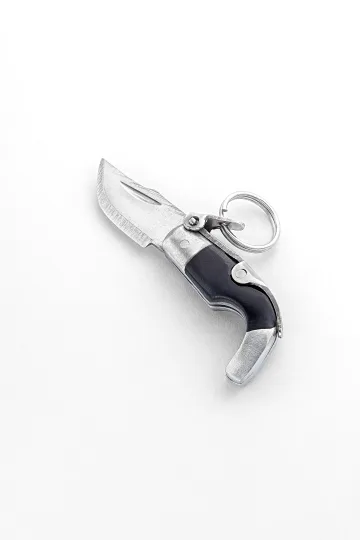
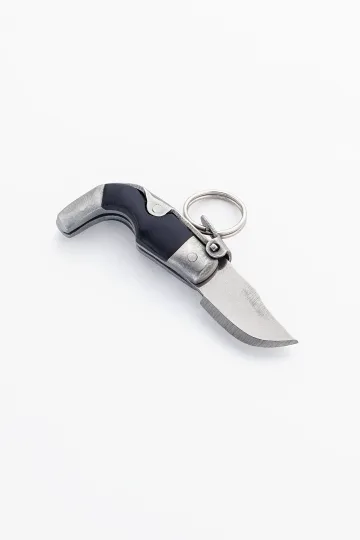
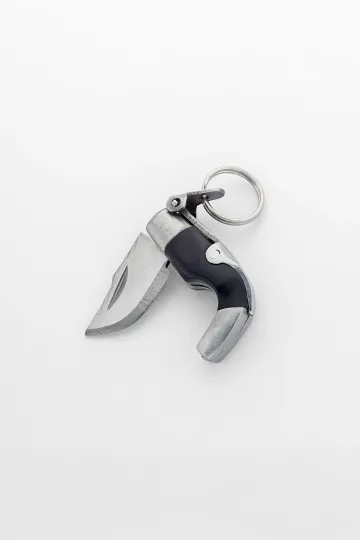
CAPAORA mini knife pendant
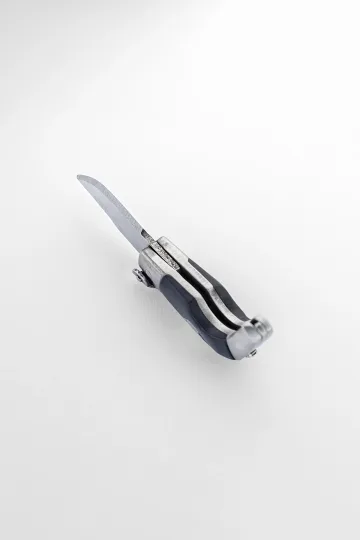
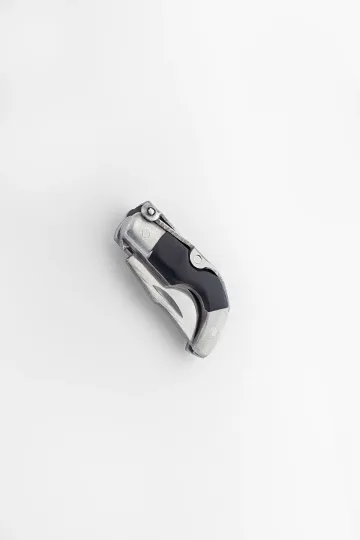
The 18th-century Spanish navaja in miniature: 40 mm of stainless steel, a real folding mechanism and a Palanquilla lock that clicks. An affordable gift to remember.
Authentic · Ships from Spain · 14-day returns
Friendship symbols: what to choose
Each symbol has its own history and tone. Choose by what fits your particular friendship.
Infinity (∞). A symbol of eternity. Universal, almost always works. Right for long friendships. See our infinity symbol guide.
Tree of life. Connection, roots, growing up together. Right for childhood friends or friends with a deep bond. See our tree of life guide.
Heart. A classic, but with care. It can read as romantic. Works better with teenagers and in charm form than for adult women 25 and up.
Moon and sun. A complementary pair. The moon for one (introvert, night), the sun for the other (extrovert, day). Right for friends with different personalities.
Star. Individuality, a dream. Universal.
Key. Opening, access to something important. Right for a friend who helped you in an important moment.
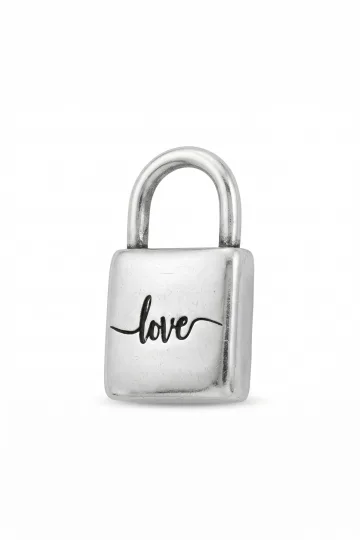
Lock. The pair to the key. Lock for one, key for the other.
Birds. Freedom. Especially right for a friend who is moving or starting a new life.
Knot. Connection. A Celtic knot or a sailor's knot as a symbol that cannot be undone.
Horseshoe. Luck. A friendship talisman without religious baggage.
Anchor. Stability, "you are my support". Right for a friend you can rely on in a hard moment. See our anchor guide.
Lotus. Rebirth. A good gift for a friend after a hard period (divorce, illness, depression).
Feather. Lightness, freedom of spirit. For a creative friend.
Leaf. Nature, sustainability. For a nature loving friend.
Coordinates. A place that matters to you both. Engraved latitude and longitude of your school yard, your favourite cafe, your childhood home.
Full reading of symbols in our jewellery symbols guide.
More friendship symbols worth knowing
The short list above covers the shapes most people recognise at a glance. There is a second tier that reads better precisely because it is less obvious: your friend has to ask what it means, and the answer is the gift.
Two birds
Two birds on one branch, or two swallows flying in the same direction, is an old shorthand for a pair that keeps its own wings. Sailors leaving British ports had swallows tattooed for a safe return, because the bird always comes back to the same nesting site, and that homing instinct is the useful half of the symbol for friendship: the two of you scatter and return. It suits friends who live in different cities and see each other twice a year. Read it in silver rather than gold if she dresses plainly, since the outline is busy enough on its own.
Four leaf clover
A genuine four leaf clover is a mutation that turns up roughly once in several thousand plants, which is the whole point of it. The gift says the odds of meeting this particular person were poor and it happened anyway. In Irish and British folk use the four leaves are usually read as hope, faith, love and luck, and the fourth is the one added for the finder. It works well as a small enamelled pendant or a single charm, and it is one of the few motifs that survives being cute because the story behind it is arithmetic rather than sentiment.
The friendship knot
Any knot that cannot be untied without cutting it carries the same idea, and Britain has several to choose from. The sailor's knot, two interlocking loops that tighten under load, is the plainest and the easiest to wear as a ring or a stud. The Celtic knot, an unbroken line with no start and no end, is the version most often stocked in Scotland and Ireland. The Herculean knot of the ancient Mediterranean, two ropes locked square, was worn as a protective clasp on Greek and Roman jewellery and is the oldest of the three. Choose by her taste in ornament: sailor for minimalists, Celtic for anyone drawn to pattern.
Split halves and mirrored pairs
The split pendant, one shape broken along a jagged line so the two pieces only lock together in one position, is the most literal friendship symbol there is. It has a reputation problem because the cheap versions of the 1990s were stamped tin, so buy the idea in a better material and a better shape: a circle cut in two, a moon and its missing crescent, a key and its keyhole, two halves of a compass rose. A related trick is the mirrored pair, two pieces that are not halves of one object but reflections of each other, which lets both friends wear something complete when they are apart.
Arrow and compass
An arrow only flies after it has been pulled backwards, which is the reading most people give it: the setback that launches you. Two crossed arrows are an older sign of alliance, used in several cultures for a pact between parties, and that is the version to buy for a friend rather than the single arrow. The compass rose belongs to the same family and is the more British of the two, being lifted straight off Admiralty charts. Give it to the friend who navigates for you, or to the one who is about to move abroad, and have the coordinates of somewhere you both know engraved on the reverse.
Feather
A feather is light, it is shed rather than taken, and it belongs to something that flies. In Victorian sentimental jewellery the feather stood for a truth that could not be weighed, borrowed from the Egyptian image of the heart balanced against Maat's feather at judgement. As a gift it suits the friend who tells you the truth when nobody else will. Practically it is a good shape for a long pendant because the outline is narrow and reads cleanly against a shirt or a knit, and it engraves well along the shaft if you want a date on it.
The wishbone
Pulling the wishbone of a roast bird and making a wish on the longer half is a household custom across Britain and one of the very few rituals that structurally requires two people. That makes it an unusually well aimed friendship shape: the object only works when it is shared, and one of you always gets the bigger piece. It has been a staple of British costume jewellery for a century, usually as a slim ring or a small pendant, and it stacks neatly with a plain band. If she already wears several fine rings, this is the safest addition on the list.
Forget me not
The forget me not carries its instruction in its name in English, German and half a dozen other European languages, which is why Victorian jewellers used it so heavily in enamel and turquoise. Turquoise was the standard stone for the petals, so a small blue flower on a chain is reading a hundred and fifty year old code whether the wearer knows it or not. The flower means constancy across distance rather than intensity, so it is the right choice for the friendship that survives long silences and picks up mid sentence.
Budget options: silver and steel
The modest tier is sterling silver 925, surgical grade stainless steel, sometimes bronze or brass with plating.
Sterling silver 925. The classic. Hypoallergenic (if it is truly 925 with no nickel additions). Can darken, but cleans in a minute. Good quality at reasonable cost.
Rhodium plated silver. Looks like platinum or white gold and does not darken. Higher price than plain silver but still modest.
Surgical steel 316L. Cheaper than silver, does not tarnish, does not trigger allergies. Right for permanent jewellery and sporty wear. The trade off: grey, less shine.
Bronze and brass with gold plating. A budget gold alternative. Plating wears off in 1 to 2 years; the base then shows through. Can trigger skin reactions in sensitive wearers.
What to buy in the modest tier.
- Silver studs with cubic zirconia.
- A silver chain bracelet with a small charm.
- A silver chain with a minimalist pendant.
- Paired steel bracelets.
- A slim silver ring.
Price band. Equivalent to a good dinner for two in a mid range restaurant. Or one hardcover book.
Leave your email, we'll send your discount code. No spam, unsubscribe anytime.
The code arrives by email, valid on your first order.
Mid range options: gold plated and 14 karat
The mid tier is 14 karat gold (58.5% pure gold) and silver with heavy gold plating.
14 karat gold. The European mass market standard. Strong, scratch resistant, holds shape. Available in yellow (classic), white (with rhodium), rose (with copper). See our hallmark guide.
Heavy gold plating on silver. 5 to 10 microns of gold over silver. Looks like 14 karat gold, wears 3 to 5 years without significant fading.
What to buy in the mid tier.
- A 14 karat gold chain 40 to 42 cm with a small pendant.
- 14 karat gold studs with a small 0.05 ct diamond or with garnet, amethyst, peridot.
- A 14 karat gold slim bracelet with a miniature initial charm.
- A charm bracelet starter (base plus one or two charms).
- Permanent jewellery in silver or 14 karat.
Price band. Equivalent to a domestic flight ticket. Or a two day trip with the friend.
Premium options: designer level work
Premium is 14 to 18 karat gold with central precious stones, paired designer pieces, custom designed work.
What to look for in the premium tier
At this level you are paying for two things that cheaper work cannot fake: the quality of the setting and the amount of hand finishing. Look at the underside of a piece before you look at the stone. Premium settings are finished on the back as carefully as on the front, the claws sit flush rather than proud, and a chain feels dense in the hand because the links are soldered rather than folded. British sellers list the hallmark and the assay office, and on gold over a certain weight that mark is a legal requirement rather than a courtesy, so its absence is a question worth asking.
- Paired rings with custom engraved design.
- A 14 to 18 karat gold chain with a pendant set with small diamonds around the edge.
- Studs with a diamond 0.15 to 0.25 ct.
- A pearl bracelet (natural pearls 7 to 9 mm).
- A custom paired piece made to a sketch (a jeweller's 2 to 3 weeks of work).
When premium suits a friend.
- A friendship anniversary (20, 25, 30 years).
- After your friend has been through something very hard and you want to mark it materially.
- A shared important moment (she was your witness at the wedding, or you were hers).
- You are in a strong financial period and want to make a big gesture.
What to avoid even at the top end
Expensive mistakes are the same mistakes with a bigger receipt attached. The main risk in this tier is that the piece stops reading as a friendship gift and starts reading as a proposal or as a display of your own budget, and both make the recipient uncomfortable in ways she will be too polite to mention. The second risk is buying a shape you admire rather than the shape she wears. A very good piece in the wrong style sits in a drawer exactly as reliably as a cheap one.
- Engagement style (single solitaire diamond in a high setting).
- Stones over 1 carat (reads like a partner's gift, not a friend's).
- Designs she would not wear (a loud statement piece for a minimalist).
Price band. Equivalent to an international trip or one month's rent in a big city.
Birthday gift for a friend
A birthday is the main personal celebration. The structure of a friend's birthday gift is usually flowers plus a small symbol plus a card plus the celebration itself.
If you are her best friend.
- Mid to higher budget.
- Category: paired or strongly personalised (her initial, a meaningful symbol).
- Genre: chain with pendant, bracelet, stud earrings.
- Engraving with her birth date or a phrase.
If you are a close friend, not best.
- Mid budget.
- Category: a universal genre with light personalisation.
- Genre: studs with her birthstone, slim bracelet, minimalist pendant.
If you are an acquaintance or recent friend.
- Modest budget.
- Category: neutral, no personalisation.
- Genre: a small silver pendant, modest studs.
Tip. Ask mutual friends what they plan to give, so the gifts do not duplicate or so you do not look extravagant against their modest gifts.
Card. Handwritten, not a pre printed message. A few lines of "what I value in you as a friend" matter more than the chain itself.
Galentine's Day and International Women's Day gifts
In the US and increasingly the UK, Galentine's Day on February 13 has grown into a popular celebration of women's friendships (the concept comes from the TV show Parks and Recreation). On March 8 International Women's Day, women in many European countries exchange small gestures of attention with their female friends.
The note. On both days the gift can stay modest, no need for a big gesture. Closer to a symbolic thank you note.
Good choices.
- Small studs with a floral motif.
- A chain with a flower pendant.
- A slim bracelet with a spring symbol.
Flowers and food usually carry the visual weight of the day. So a small piece of jewellery works as a warm surprise inside the package.
Thank you gift: for support, for help
Sometimes a friend does something you want to mark with a material gesture. Helped you move, let you stay at her place for a month, spent a night at the hospital with you, listened after a breakup.
This gift is different in tone from a standard birthday. It is not tied to a date, and the very fact of receiving it carries "I owe you".
What fits.
- A slim bracelet engraved with the date she helped you.
- A chain with an anchor pendant (the symbol of the support she became for you).
- Studs chosen specifically to fit her style.
The handover. A private meeting, no other people. An honest conversation about what you are grateful for. The gift complements the words, does not replace them.
Budget. Precision matters more than amount. A small silver piece chosen carefully is worth more than a generic gold one.
Making up, and standing by her when things go wrong
Two of the hardest moments to buy for are the apology and the bad patch. Both are places where a gift can help and where the wrong gift makes things measurably worse, because an object arriving instead of a conversation reads as an attempt to buy the conversation off.
After a falling out
The rule is simple: the gift comes after the apology, never in place of it and never in the same breath. Say what you got wrong first, in your own words, and give it a day. A piece of jewellery handed over mid argument looks like a bribe, and a friend who accepts it under those conditions has agreed to stop talking about the thing that hurt her, which is not the same as forgiving you.
When you do give something, keep it small and keep it specific to her rather than to the row. A fine chain she can wear daily, a charm for a bracelet she already owns, a pair of studs in the metal she actually wears. Avoid anything that references the argument, avoid engraving apologies onto metal, and avoid the grand gesture: scale signals guilt, and guilt puts the other person in charge of managing your feelings. If the friendship needs repairing, the repair is time and behaviour. The object is a bookmark saying the repair started.
Through a hard stretch
Bereavement, illness, a marriage ending, a job lost. In these weeks your friend has no capacity for admin, so the gift should ask nothing of her: nothing to resize, nothing to choose, nothing to reply to. A slim bracelet she can put on and forget, a pendant with a quiet symbol, a piece of the metal she already wears so it goes with everything she owns.
Symbols that carry here are the anchor, which in early Christian use stood for hope held steady in bad weather, the knot, and the plain circle. Skip anything that reads as instruction, which rules out most motivational engraving. What you write on the card matters more than what is on the metal: name the specific thing you are there for, and give a date you will turn up. Jewellery arriving alongside a cooked meal and a lift to an appointment is support. Jewellery arriving alone is a card with a higher price on it.
Friendship at a distance
Long distance is its own occasion, and the gift that suits it is the one that survives silence. Paired pieces work particularly well here, since the two of you are wearing the same object in different time zones. Coordinates of a shared place, engraved small on the reverse, do the same job and stay private.
Practical detail that matters more than the symbol: post it properly. Small parcels of jewellery cross borders badly if the customs declaration is vague, so declare the contents honestly and use tracked delivery. If she lives outside the country, buying from a seller who ships to her address is usually kinder than posting it yourself, because it moves the paperwork off both of you. And time the arrival to a dull week rather than a birthday. A parcel in February, for no reason, is worth two in the party season.
Just because: a gesture without an occasion
The most valuable gesture is a spontaneous gift with no occasion. You happened on something in a shop that suits her style perfectly or matches a shared memory, and you bought it.
Tone. Light, no obligation. The key is that your friend does not feel obliged.
Good options.
- A small pendant with a symbol that only the two of you would understand.
- A silver ring at a friendly price.
- A new charm for her existing collection.
What to say. "I saw this and thought of you. Here." No long explanation. Simple and easy.
What to avoid. Expensive gifts without an occasion. They oblige the friend to reciprocate and break the balance. A modest spontaneous gift is far more valuable than an expensive "no occasion needed" piece.
Send a friend a discount code, they save on their first order.
Matching the gift to her temperament
Style is what she wears; temperament is why she wears it. Two friends can both own silver studs and want completely different things from a present, so it is worth sorting by character before you sort by metal. The six sketches below cover most people you will be buying for.
The reserved, self contained friend
She dresses in a narrow palette, owns few pieces and wears them constantly, and finds being given things faintly embarrassing. Buy narrow: a fine chain of the right length, small studs, a plain band that stacks with what she already has. Match her metal exactly rather than introducing a new one, because she will not mix. Avoid anything that arrives with an audience, and hand it over privately with one sentence rather than a speech. The compliment she wants is that you noticed how precisely she chooses, so mention the detail you matched.
The bright, sociable friend
She is the one who wears the earrings people ask about, and she treats jewellery as conversation. Here you can go larger and more graphic: hoops, a pendant with an unusual shape, colour in enamel or a coloured stone. She will forgive a bold choice far faster than a boring one. The failure mode is buying something so safe it disappears on her, so if you are hesitating between two options, take the louder one. Wrapping matters to her as well, because half the pleasure is the moment of opening it in front of people.
The romantic, dreamy friend
Pearls, moonstone, opal, soft outlines, anything with a story attached. She keeps packaging, reads the card twice, and remembers who gave her what. This is the friend for whom the symbol carries most of the weight, so spend your effort on the meaning rather than the carat: a locket, a forget me not, a moon and its crescent. Write more on the card than you normally would. If you engrave something, engrave a date or a place from your shared history rather than an abstract word.
The practical, sporty friend
She swims, cycles, works with her hands, or spends her day in a role where dangling jewellery is a hazard. Everything you buy has to survive being forgotten about. Choose surgical grade stainless steel or titanium, low profile settings, screw back or lever back fastenings rather than butterfly backs, and short chains that sit above a collar. A permanent chain style bracelet, welded closed, suits her better than anything with a clasp to lose. Skip soft stones and plated finishes, both of which lose the argument with chlorine and sweat.
The creative, unconventional friend
She mixes metals on purpose, wears things in the wrong order, and would rather have one strange piece than three correct ones. Look for asymmetry, texture, hand hammered surfaces, mismatched earrings, an odd stone with visible inclusions. Vintage and antique sit well here, since the piece arrives with a history she can invent the rest of. The one thing to avoid is the mainstream best seller, because she will read it as evidence that you were in a hurry.
The friend who already knows what she likes
Some people have a fully formed jewellery wardrobe and a clear position on everything in it. Do not out guess her. Buy into what she already owns rather than beside it: another charm for the bracelet, a chain in the exact length she keeps replacing, a second pair of the studs she wears until they are lost. A gift voucher from somewhere she actually shops is not a cop out with this friend, it is accuracy. Alternatively, buy the service rather than the object and have a piece she loves cleaned, restrung or resized.
What not to give a close friend
Some categories do not suit a friendship gift.
Engagement style ring. A single solitaire in a tall setting, the classic shape. It creates an awkward association.
A ring sized for the left ring finger (or a suggestion to wear it there). That finger carries engagement weight, and even as a joke it is awkward for a friendship gift in the US, UK, France, Italy.
Very expensive jewellery on a short friendship. The friend will feel obligated and the balance breaks.
Religious symbols without discussion. A cross, a Star of David, a crescent, an om. If you are not sure about her faith, choose a neutral symbol.
Paired pieces if she has not signalled interest. A pair commits her to wearing the piece. If she does not like public gestures, the gift will feel awkward.
Engraving with a romantic undertone. "I love you", "you are my love". Friendship can be marked with words like "sister", "best friend", "forever", but not "love" in the romantic sense.
A piece that contradicts her style. If she is a minimalist, no chandelier pieces. If she is classic, no avant garde geometry.
Big drop earrings for a friend with short hair and a sporty style. She will not wear them.
A watch. Technically not jewellery, but borderline. A watch is a very personal gift; in friendship it more often happens between relatives or partners.
A brooch. A genre most ages no longer wear. Suits mom, grandmother or a friend with a vintage style.
Packaging, card and the handover moment
Silver, gold, engagement rings, symbolic jewellery, paired sets.
Packaging and ceremony matter as much as the piece. A small gift in beautiful packaging with a sincere card beats an expensive piece in a regular bag.
Packaging.
- The small jewellery box from the shop (usually included).
- An additional velvet pouch or a card box with a ribbon.
- A coloured paper bag with a themed card.
- You can wrap the piece in a silk scarf and the scarf is part of the gift.
Card.
- Handwritten, not a pre printed message.
- 3 to 5 lines in your own words.
- Something specific about your friendship, not generic wishes.
The handover.
- In person beats sending by post.
- If at a cafe or restaurant, separate the giving moment from the food (not mid course).
- At home, choose a moment of quiet (not during a film or while she is working on something).
- In a crowd (her birthday party with other guests), public handover works, but keep the speech short.
Her reaction. Give her time to look at the gift and read the card. Do not rush to explain. Silence sometimes says more than a "thanks".
When a gift misses, and how to avoid it
Sometimes a gift does not land. She does not wear it, or she politely takes it and then avoids the subject. To avoid this:
Find out in advance. What she already has. What she would like. What style she wears.
Do not buy for your own taste. If you love gold and she loves silver, buy silver. The gift is for her, not for you.
Check allergies. Nickel, brass, cheap costume metals.
Keep the receipt. If the size is off, the piece can be exchanged.
Ask directly afterwards. "Did you like it? I was not sure of the choice, I can exchange it if you want". A friend who did not love the gift will appreciate your honesty and can exchange.
If she does not wear your gift, do not push. Maybe it did not suit her style, size, or colour. Do not take offence. Sometimes a gift just does not work, and that is no one's fault.
Next time learn from it and ask more specifically. Friendship survives a missed gift; it does not survive the line "I gave you something and you never wear it".
Facts that surprise people
The posy ring was the original private message. Surviving English examples from the fifteenth to the seventeenth century carry their inscriptions inside the band, where nobody but the wearer could read them, and the National Museums and London collections hold enough of them to show the habit was ordinary rather than exceptional.
Regard rings spelled a word in stones. Ruby, emerald, garnet, amethyst, ruby, diamond, taken by first letter, gave a Georgian giver a way to say something warm without writing it down. Dearest used diamond, emerald, amethyst, ruby, emerald, sapphire, topaz. The code is easy to reproduce today with a jeweller who will source small stones to order.
Turquoise meant constancy long before it meant holiday jewellery. Victorian forget me not brooches and rings used it almost exclusively for the petals, which is why so much antique blue enamel and turquoise on the British market came out of friendship and mourning contexts rather than romantic ones.
Friendship bracelets crossed oceans as textile technique, not as jewellery. The braided thread pattern comes from Central American weaving traditions, and it reached British and American schools in the second half of the twentieth century as a craft rather than a product, which is why it never carried a price expectation.
Hallmarking in Britain is older than most national banks. The system of assay offices marking precious metal dates to the fourteenth century and still runs, which means a second hand piece can often be dated to a year from the marks alone. If you are buying an antique friendship piece, the date letter is the fastest way to check the seller's story.
Silver darkens because of sulphur in the air, not because it is low quality. The black film is silver sulphide and it lifts in a minute with a cloth. A friend who has stopped wearing your gift may simply have decided it looks tired, which is a two minute problem rather than a taste problem.
Nickel is regulated by law across Europe. Release limits for items in prolonged skin contact sit inside the REACH framework, which is why reputable sellers can tell you what a plated piece is plated over. If a friend reacts to costume jewellery, that reaction is usually to nickel underneath the finish rather than to the finish itself.
Buying it as a gift? Each one arrives ready to give.
 A branded Zevira box and a little card come with every order.








Frequently asked questions
Can I give a friend a ring without it being read as a hint?
Yes, if you choose the right genre. A slim ring with no central stone, a signet ring with an initial, a slim twisted band. The size should not match her left ring finger. On the middle or index finger, no romantic reading will arise.
My friend has everything. What do I give?
A paired piece (one for you, one for her) or an engraved piece with unique information (the date you met, the coordinates of a meaningful place). Uniqueness beats category.
She does not wear jewellery much. Should I give a bracelet or chain?
Probably not. The piece will sit in a drawer. Alternative: a non jewellery gift (a book, a perfume, an experience). Or a tiny piece intended as a memento, with no expectation of wear.
Can I give silver if she only wears gold?
If you know she strictly wears gold, give gold or heavily gold plated silver. Do not force her style.
How much does a friend's jewellery gift usually cost?
For a best friend, the equivalent of one or two good dinners for two. For an acquaintance, the equivalent of one book or one coffee with dessert. Precision matters more than amount.
How do I give a piece to a friend in another city?
Buy through an online shop with delivery to her address, or ask a mutual contact to drop it off. Or use a specialist service with packaging and a card. The surprise stays.
Can I pass on a piece from my own collection?
Yes, if the piece has a story and you tell it. "My grandmother's pendant that I wore for 10 years, I want you to have it now." A strong gesture of transmission. If it is just an old piece you got tired of, no story, better to buy something new.
She just got divorced. What do I give?
A light neutral gesture. A fine chain with a symbol of rebirth (lotus, phoenix, butterfly). No hearts, no roses, no romance. A modest bracelet or studs. The gift supports, not reminds.
Can I give her a wedding ring from her past marriage as a friendship gift?
Better not. A wedding ring carries a specific symbolic context, and turning it into a friendship gesture is hard. If she herself wants to melt the old gold and make a new piece, that is her decision and her path. Giving her back a wedding ring as a surprise gift will feel strange.
What if she has a metal allergy?
Titanium, surgical 316L steel, 18 karat gold without alloys or platinum. Sterling silver 925 is usually safe. Avoid plated pieces and alloys with nickel.
Is jewellery a fit for a housewarming gift?
Not the most common choice (people usually give something for the home), but possible. A small symbolic key pendant or a key charm matches the moving theme. The piece itself stays modest, the main gift is for the new home.
Can I give her a piece from my boyfriend on her birthday?
If he is actively part of it and agrees, yes. If you are choosing it alone, do not pass it off as a couple's gift. A gift from a couple to a friend works only when both partners are genuinely involved.
I already share paired pieces with my boyfriend. Can I also have paired pieces with my friend?
Yes. Paired jewellery is not exclusive. You can have paired bracelets with your partner and paired pendants with your friend. They work in different contexts.
Does this work for a male friend?
Yes, for close cross gender friendships. A silver bracelet with a charm, a fine chain with a minimalist pendant (no hearts), a signet ring. The key is to skip feminine romantic symbols.
For a friend's 30th birthday: jewellery or an experience?
Depends on her. If she loves things (dresses well, has a jewellery collection), jewellery. If she is a traveller or experimenter, an experience (tickets, spa, a workshop). You can do both: a small piece plus an envelope with tickets.
Conclusion
A jewellery gift for a friend follows different rules than a gift for a partner or a family member. There is no hierarchy here, no duty, only equality. So the gift can be braver, simpler, or more playful than a gift to a wife or mother.
The main principles: know her style and her metal, do not confuse closeness with budget, avoid engagement style, engrave thoughtfully, give the piece with a handwritten card. Paired pieces and charm bracelets suit best friends. Minimalist studs and fine chains are universal across friendship tiers.
A gift without an occasion is worth more than a gift on the calendar. A small silver pendant bought spontaneously with a thoughtful symbol is remembered more deeply than a standard birthday set.
For more ideas, see our jewellery gift guide by occasion, matching jewellery for couples, monogram and initials jewellery, jewellery symbols guide, bracelet types, and chain length. For mom gift ideas, see gift for mom.
About Zevira
Zevira makes jewellery in the artisan tradition of Albacete, Spain. We take a friendship gift literally: slim, wearable pieces with a thoughtful symbol and a personal engraving, the kind your friend puts on every day rather than tucking away in a drawer.
What you can find with us for a gift to a friend:
- Paired bracelets and pendants with a split symbol (moon and sun, two halves, infinity)
- Minimalist stud earrings with the stone of her birth month
- Fine chains with initial pendants and symbolic charms
- Delicate rings with no engagement styling, paired options included
- Charm bracelets that grow from one occasion to the next
- Engraving of the day you met or a short phrase on the back
Every piece can be personalised with engraving, with the option of a personal engraving. Sterling silver 925 and 14 to 18 karat gold.