Bridesmaid gifts: jewellery as a symbol of friendship and a role in the wedding
A bridesmaid gift lives by an awkward logic. It is the bride's thank-you to the people who helped her for months, and a gesture that lands too large reads like pressure, while one that lands too formal reads like buying off attention. A narrow corridor runs between gratitude and embarrassment.
Jewellery in this role behaves differently from any other pretty object: it stays on for years after the wedding and reminds her of that day every time she puts it on. Below is a practical breakdown of what to give, to whom, when and how, without the pink boxes stamped "Bridesmaid".
Where the tradition of gifting the bridesmaids comes from
The custom has a long history, and in it the gift was always something small, wearable and metal.
In ancient Rome a bride was accompanied on her wedding day by the pronuba, an older married woman from the family who had spent her whole life in a single marriage (univira). She joined the couple's hands in the dextrarum iunctio rite and led the bride to her new home. She received no gift in the modern sense, but there was a custom of presenting a keepsake, a fibula brooch or a bracelet. Silver appeared more often than gold: in Rome gold was worn only by women of the highest class.
By the twelfth and thirteenth centuries in England and northern Europe the institution of bride's maids had taken shape, a group of unmarried girls who escorted the bride from her home to the church in similar dresses. The logic was practical: rejected suitors were thought capable of trying to harm the bride, and a procession of look-alike girls worked as camouflage. The maids were owed a small token of recognition, thin silver chains, brooches, sometimes rings. Cheaper than the bride's, but always real metal.
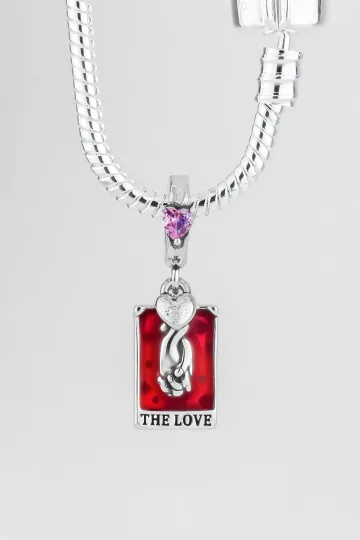
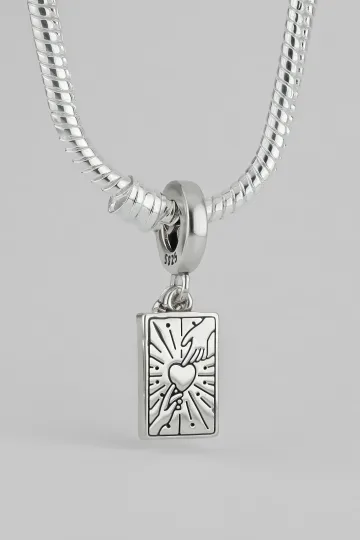
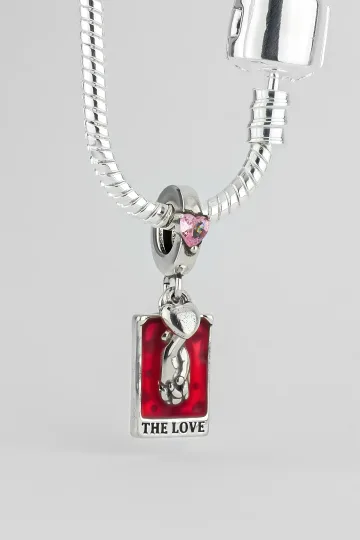
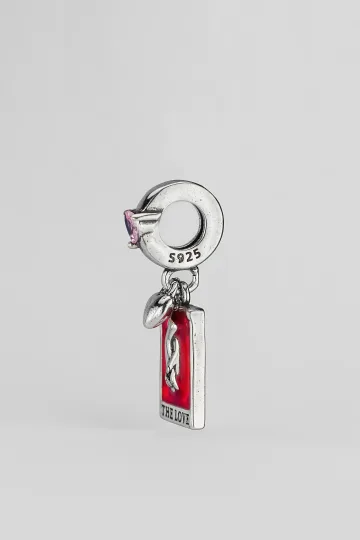
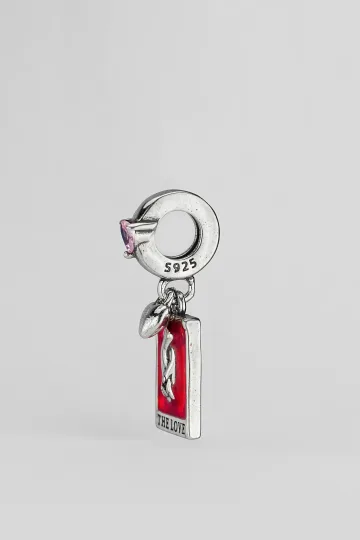
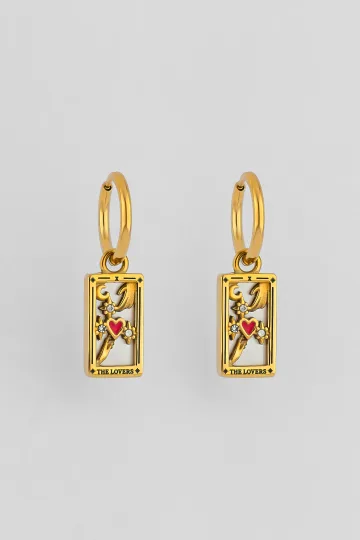
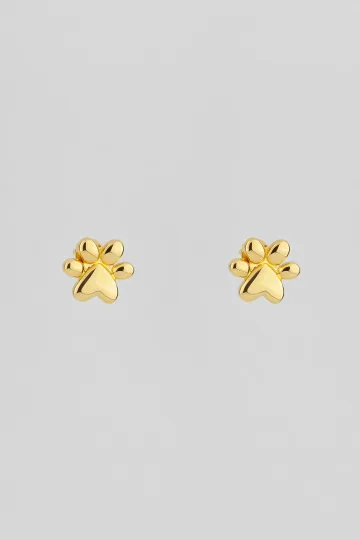
Wear the symbol, don't just read about it. These are in stock:



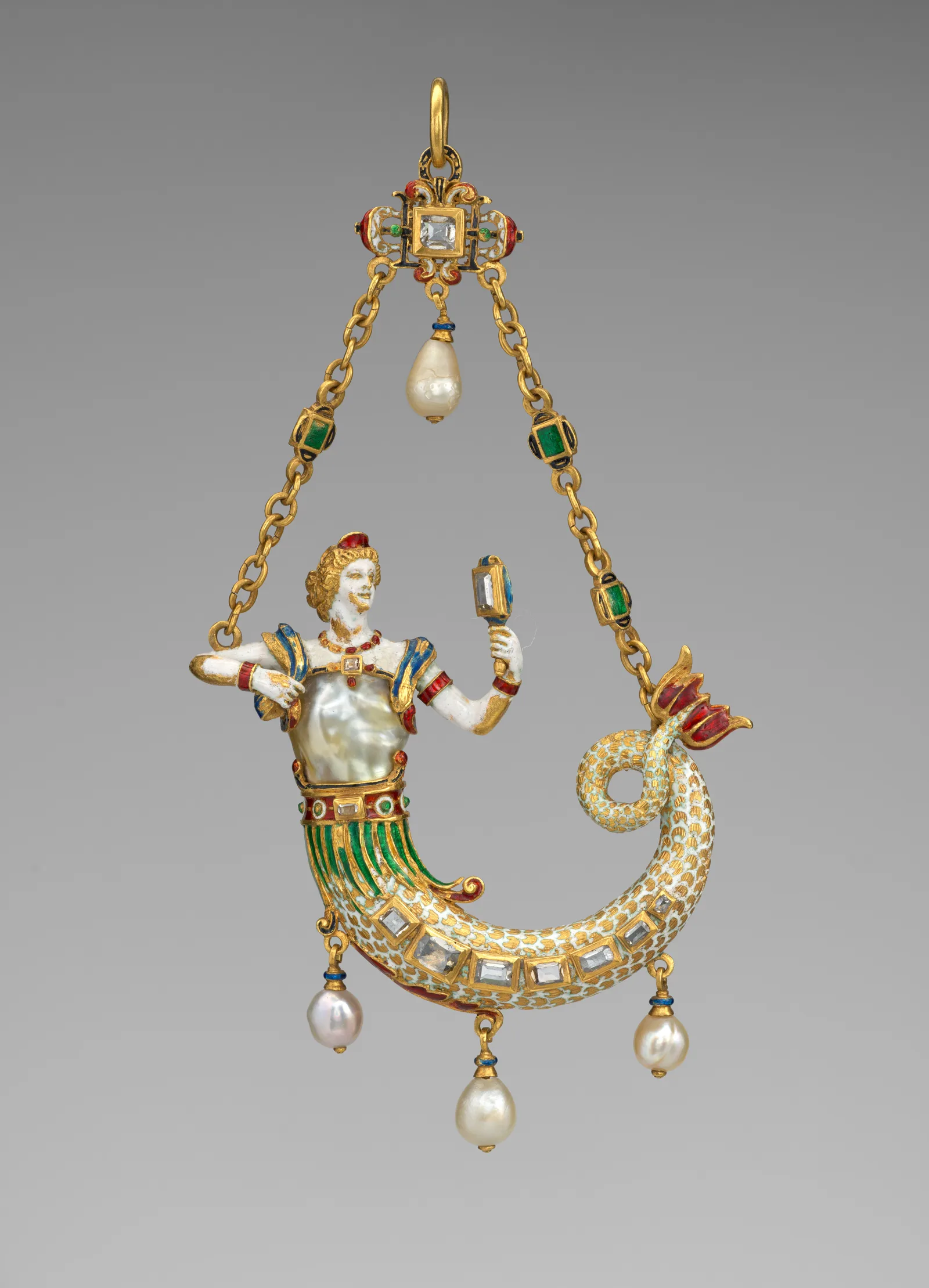
The Victorian era, after the wedding of Queen Victoria and Prince Albert in 1840, fixed a template that still holds: white dress, a group of four to eight maids in matching dresses, a public celebration. That is also when the bridesmaid's gift appeared as a settled genre, small silver objects engraved with the wedding date and initials: enamel lockets, bouquet-shaped pendants, arrow brooches. Victorian jewellers' catalogues survive with whole pages of such brooches. Etiquette added a detail: all the maids receive the same, and the chief one something slightly more elaborate.
In the first half of the twentieth century the American wedding industry turned the bridesmaid gift into a compulsory budget line. By the 1950s pearls took centre stage: a pearl strand for the maid of honour, studs for the rest. In the 1980s and 1990s the matching set in its modern sense appeared, identical pieces for the whole team for unity in the photographs. By the 2010s social media added the bridesmaid proposal box: a box with a piece of jewellery and a note, "Will you be my bridesmaid?".
For a long time, English-speaking weddings have had a full team of maids and obligatory gifts, but the questions inside that template never settle for good: what to give, whether everyone gets the same, what budget counts as normal, all of it gets decided afresh for each wedding.
A lot of stubborn misconceptions have built up around wedding gifts: from medieval charms to modern myths about the "obligatory" metal and budget. They are worth separating from the living tradition.
Three moments when the gift is given
A gift to a bridesmaid does not have to be a single thing. The wedding process has three points, each with its own function.
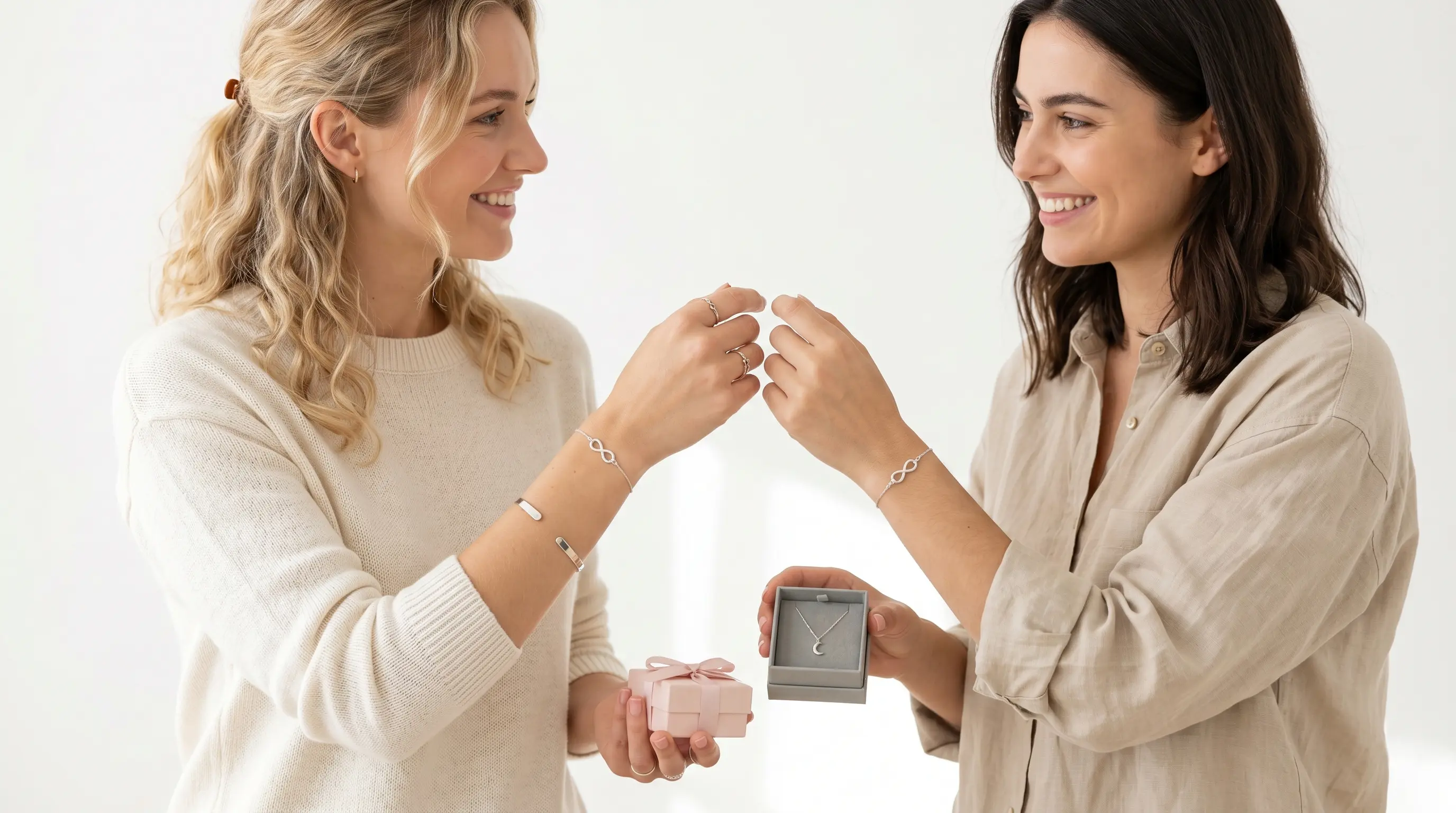
Before the wedding, the proposal piece. When the bride is assembling her team, a separate ritual has appeared: the bridesmaid proposal box, a small set with a note, "Will you be my bridesmaid?", and a little gift inside. Usually a charm pendant, a thin bracelet or a ring. It is the first gift in the chain, and it sets the tone for the whole run-up. It need not be expensive; its value lies in the attention, not the cost. Better to give it in person, with a note, not by post: the moment gains from presence and reaction.
Good formats for this stage: a small initial pendant (the letter of her name, nothing wedding-specific, worn afterwards too), a base bracelet with one charm to which others get added later, a thin ring, a Claddagh ring, the Irish symbol where friendship is literally written into the tradition. The note matters more than the box: not a formal "please be my bridesmaid", but something real, why her specifically.
The wedding day, the central gift. The main piece, the one the bridesmaid can put on right now. Given in the morning before the ceremony, when the whole team is together. The most emotional moment, part of the memory of the day. The point: the jewellery must either match what the bridesmaid is wearing or be neutral enough to match anything. Make sure in advance that she can actually wear it today.
After the wedding, the thank-you gift. Rarer, but it makes sense. A more personal piece, not for the ceremony itself but for ordinary life. Good when the bride did not manage to plan individual gifts in advance, or wants to follow up the wedding gesture with something once the dust has settled. Some do both: the morning piece on the wedding day plus a letter with a personal piece a month later.
What to wear the bridesmaid's gift with
Dozens of wedding parties have passed through my hands, and the question is almost always the same: how do you make the piece live past one day in the photos and stay with the person. Here is what actually works, occasion by occasion.
What should she wear on the ceremony day? I match the piece to the neckline, not the colour. For a deep V-neck I recommend a vertical: a thin chain with a small pendant along the line of the décolletage. A high neck frees the area around the face, so I suggest earrings there, pearl studs or small hoops. A thin bracelet suits a bare arm; under a long sleeve a ring sits better.
How do I choose the metal for her skin tone and dress? I go by the undertone. For warm skin and a warm dress palette (beige, sand, olive) I suggest yellow or rose gold; for a cool one (grey, blue, black), silver or white gold. If the team wears matching dresses, I keep the metal uniform so the pieces read as a set in the group photo.
How will she wear the gift after the wedding? I choose neutral formats that slip into an ordinary wardrobe: a chain with an initial, studs, a thin ring. They go under a shirt, knitwear, jeans, and never look like a souvenir. For the chain length I recommend 40 to 45 cm, the most universal one, sitting at the collarbones under any neckline.
Can the same gift build an evening look? Yes, the same pieces switch into a different register. A thin chain on a black dress already reads as an accent, and I suggest a charm bracelet in a stack with other bracelets on one arm. One rule: one metal in one look, otherwise the combination looks accidental.
Give the whole set at once or in parts? I never make her wear it all at once. I suggest spreading earrings, chain and ring across different days, so the gift turns up in her life more often instead of becoming a formal set in a drawer. For a close bridesmaid with a long history I choose personalisation, an initial or coordinates, rather than generic wedding symbolism.
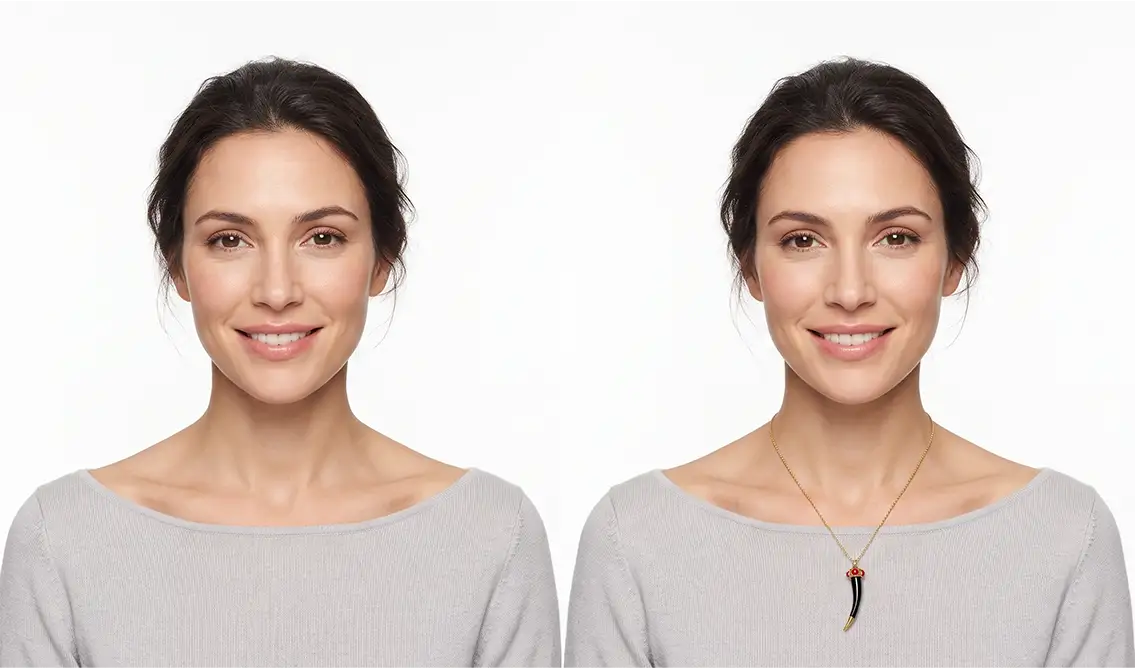
Turn on your camera, pick earrings, a pendant or a ring, and see the piece on yourself in real time.
Switch items in one tap.
Everything runs in your browser: no photo or video is ever uploaded.
Categories of bridesmaids and a gift for each
Bridesmaids are not identical, even when the wedding's styling calls for a single look. Each has her own standing and her own history with the bride. A gift that acknowledges those differences usually works better.
The maid of honour
The maid of honour plans the hen do, coordinates the others, holds the ring at the ceremony, straightens the train, gives a toast. Her load is objectively higher, and the gift should acknowledge that.
Principle: the maid of honour's gift stands out clearly, but not so much that the rest feel second-rate. Workable ways to differentiate:
- The same piece in a higher execution. Everyone gets a silver bracelet; she gets the same design in gold or with an extra stone.
- A different category of object. Earrings for the maids, a necklace for her. Thin rings for the maids, a charm bracelet for her. The difference is obvious by form.
- An extra piece. The others get one item, she gets two: earrings for the ceremony and a bracelet for the evening.
- An extra layer of personalisation. The same bracelet as everyone else, plus a separate engraving with a personal text on the back.
Stylistically, friendship symbols with a long history suit her: the Claddagh, infinity, an engraving with the bride's initials and her own. The note for her gift should be longer and more specific, listing real moments, "for driving over at three in the morning when the dress didn't fit". That specificity is the recognition no metal can carry.
The married bridesmaid
She already has her own wedding history, her own ring, her own memories. Wedding symbolism, a ring with white stones, a bell charm, can sound odd: that is a stage she has already passed. Better a piece with no obvious wedding connotation: a thin chain with an initial, a bracelet with the coordinates of the place where you spent a summer as students, a pendant with a symbol from a shared history. The date of this particular wedding is also not the best choice, it will duplicate her own wedding date. Use other markers: the date you met, an event that matters to you both, a code-phrase between you.
The single bridesmaid in a relationship
If a bridesmaid is in a serious relationship or waiting for a proposal, she has a particular relationship to someone else's wedding: genuine joy plus a background "when is it my turn". A gift can gently acknowledge that with a light hint, but a light one. What works: a Claddagh ring with an explanation of how it is worn, a bracelet with a heart charm, a thin chain with a symbol of openness. What not to do: give frankly "single" symbols (they fix her status) or frankly "paired" things (they create pressure). The note works through warmth, not through direct references to her future: "All the good moments are still ahead, yours and ours both".
The sister bridesmaid
A sister (full or cousin) shares childhood, parents, a common lineage with the bride. The gift can play on family symbolism: an engraving with the shared surname, a symbol from family mythology (a flower from grandmother's garden), a shared birthstone if the birth months happen to match.
Reworking is especially powerful: if a grandmother's or mother's ring has stayed in the family, its stone can be used in a new piece for the sister. That is the handing-down of a family object between generations through the bride's hands. Logistically harder, but emotionally a level stronger. More on this in the guide to reworking family jewellery. If the sister is also the maid of honour, the roles add up, and the gift can be especially generous.
The colleague or childhood-friend bridesmaid
These categories share a very specific context with the bride, working together or a shared childhood, and the gift hits hardest when it plays on that history.
For a colleague: the coordinates of the office where you met; a stylised icon of the profession (a little hammer for a lawyer, a brush for a designer); a short engraving "From work to life" with two dates. That pulls the gift out of the general category into "you specifically, the one I shared an office with".
For a childhood friend you have known for twenty or thirty years: the coordinates of the school or the yard, the year you met ("Since 1995"), a symbol from childhood mythology. A special case, a friend now living in another city or country: symbolism of connection across distance works, two sets of coordinates on one bracelet, a map with two points. In the note, stress the history rather than the day itself: "Thank you for twenty years, and for this day too".
Customer reviews
Zevira is a real jewellery shop. Genuine payments, deliveries and customer thank-yous.
🥰🥰🥰 gracias
Ok, ¡gracias! 🙂
Gift ideas by format
Once the basic principles are in place, you need concrete objects. Here are workable formats, from universal to more specific.
With a personal photograph
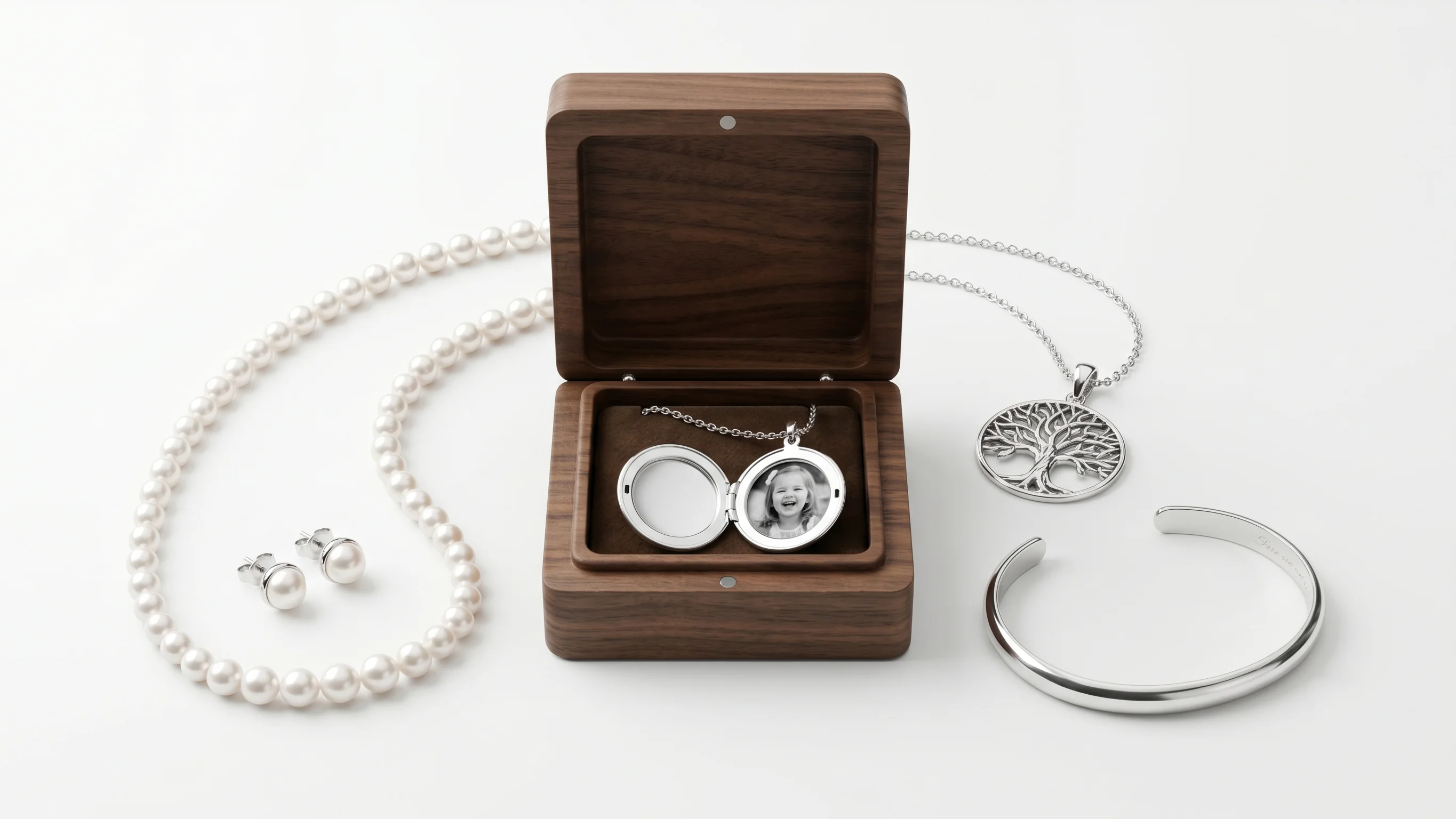
- A capsule pendant with a tiny photograph inside, a group shot of the bridesmaids or a photo of the bride with this particular maid. Worn like an ordinary locket, with a private detail under the glass.
- A locket with a childhood photo, especially for a sister or a childhood friend. An old scanned photograph under glass. Strongest if she has not seen it in years.
With engraved initials and names
- A thin chain with an initial pendant, the most universal format, working at any age and in any style.
- Paired stud earrings: the bride's initial on one, the bridesmaid's on the other. A tiny engraving, visible up close, but symbolically strong.
- A bracelet with the bridesmaid's name on the inside, a clean surface outside, her name inside. A private gesture.
- A ring with the bride's initial inside, the bridesmaid wears a reminder of whose presence she mattered to.
With coordinates
- A bracelet with the coordinates of where you met, a specific yard, school, café. Each gets her own set.
- A pendant with the wedding venue's coordinates, the same for everyone, a marker of being there together on one day.
- A bracelet with two sets of coordinates, the place you met and the place of the wedding: where it began and where you are together now.
With text and quotes
- Pendants with a shared quote split into parts, one phrase broken into pieces, each gets her own ("Amica", "vera", "in via"). The whole can only be read by putting them together.
- Bracelets with a short Latin phrase, "Amica vera" (true friend), "Soror in via" (sister on the road), "Semper" (always). Latin is neutral and carries depth.
- An engraving of a line from the team's song, recognisable only to your own.
With symbols
- Minimalist rings with dots, one dot as a metaphor for being present together, three dots as "me, you, our history".
- Pendants with the infinity symbol, the basic sign of a friendship that does not end. More in the article on the infinity symbol.
- A Claddagh ring, the Irish symbol of friendship, love and loyalty. History and meaning.
- Pendants with an anatomical heart, for bridesmaids with an unconventional taste or an interest in science. More in the guide to the anatomical heart.
With a practical function and to fit the context
- Earrings with the bridesmaid's birthstone, the stone of her birth month. Universal yet fully personal: each has her own stone.
- Thin stacking rings, a set of two or three thin rings, each with its own small accent.
- A bracelet with a charm of her profession, recognition of her identity beyond the bridesmaid role.
- A bracelet with an enamel charm of a dish or drink you love together, a coffee cup, a glass of wine. A sign understood only by your own.
- A pendant shaped like a game piece (a die, a counter), if you share a gaming history, chess, board games, cards.
- A chain with a miniature book, for a bookish bridesmaid.
Upload a photo of your pet, someone you love, or an object. We'll build a 3D model and hand-cast it in pewter.

The same for everyone or individual
The most common question brides ask. There is no single answer: it depends on the size of the team, closeness and means.
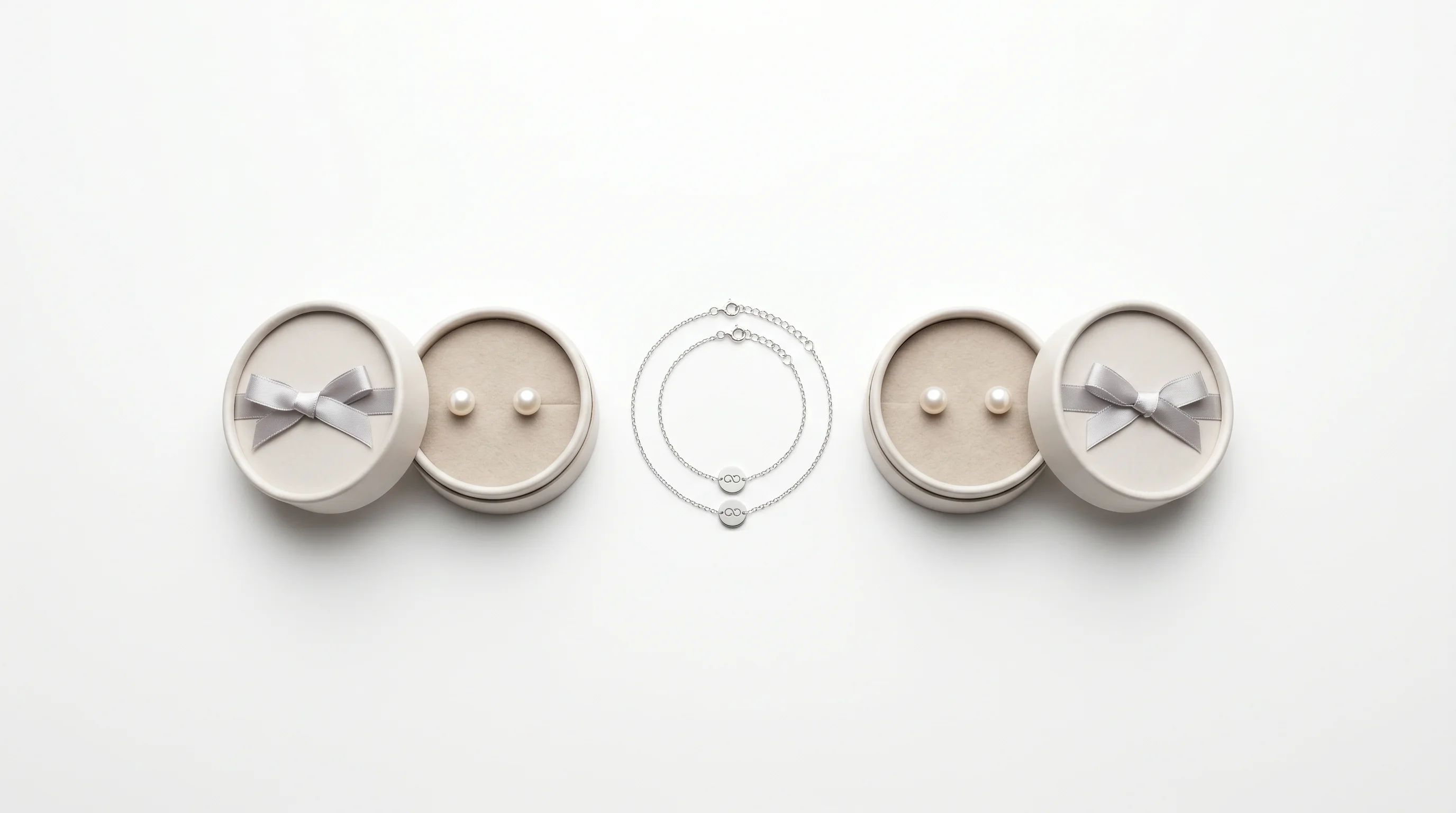
Matching jewellery (a matching set) creates visual unity in photos and at the ceremony, and it is fair, everyone receives the same attention and value, with no internal comparisons. It works well when the team is large (five or more), the bridesmaids do not know each other very well, the wedding's styling demands strict unity, or the budget is tight (one piece in several copies is easier to source). Even here you can leave room for the personal: identical bracelets each with the name engraved, technically one object, but each one personalised.
Individual gifts show that the bride sees each as a separate person. They work when the team is small (two to four), the bridesmaids differ a lot in style, and the bride has time to think about each gift. It is not hard when you know the people: for one, a chain with infinity, because you have been friends twenty years; for the second, a bracelet with an anatomical heart, because she is a cardiologist; for the third, a little heart, because right now she needs to feel loved.
A hybrid, the most common in reality: one category for everyone, but with variations. They all get a necklace, but each with her own pendant or her own birthstone. Unity of form in the photo plus uniqueness of content. It takes a little more effort at the order stage, but it solves the central dilemma.



Etiquette: when and how to present them
When to present them. Three workable options. At the rehearsal dinner the evening before, an intimate setting, time to look at the gift and read the note, but the jewellery does not work as part of the day itself. On the morning of the wedding, the most common and emotionally strongest format: the team together, the gift put on straight away for the ceremony, but less time for individual attention to each. During the week before the wedding, at a separate meeting with each, the most personal but the most labour-intensive option. Many combine: the main gift in the morning, plus a separate personal note for each a week earlier.
How to wrap. All the bridesmaids should get the same packaging, even if the contents differ. Bridesmaids compare boxes before contents: a different size or ribbon reads as a hierarchy. The standard here is simple: identical boxes, paper, ribbon, envelopes for the notes. The maid of honour may get a slightly bigger box only if her gift is physically larger (two items instead of one).
How to separate standings. The maid of honour gets a slightly more significant gift, that is etiquette norm. The difference should be "slightly", not "strongly": the same silver plus a small stone or an extra piece, not a diamond against cubic zirconia. Avoid sharp differences in material, box size and an obvious price tier. If there are several levels (chief, close, distant), two-level differentiation is better: a third level usually creates more problems than it solves, the distant bridesmaids end up feeling third-rate.
What to say. The words at the moment of giving sometimes matter more than the object. A baseline for everyone: "This day would not have been possible without you. Thank you". For the maid of honour, addressing her role: "I know how much you did". For a long friendship, with a reference to its length. If emotion takes over, simplicity works: "I just wanted to say thank you".
What not to do. Do not compare bridesmaids out loud ("you're my closest, unlike those others..."). Do not apologise for the gift, apologies devalue the gesture. Do not promise "something more later" if only this is planned. Do not present publicly with a speech if you are not up for it: a quiet handover in the corridor sometimes works better than pathos in the middle of the room.
What NOT to give the bridesmaids
A list of mistakes is sometimes more useful than a list of ideas.
Too expensive. A gift noticeably dearer than what the bridesmaids can afford, or than they spent on their own share of the load (dress, travel, hen do), upsets the balance of the relationship and triggers not joy but a sense of debt. The budget guide is a proportion: the gift is proportionate to what the bridesmaid put into the wedding load. Not maths, but a proportion of attention.
Something that clashes with her look or style. Big bright earrings under a minimalist dress code. A loud necklace under a high neckline. Jewellery that does not go with what the bridesmaid usually wears, it ends up in a drawer after the first try-on. The fix: either check compatibility with the dress in advance, or pick a format neutral enough (a thin chain, small studs) to go with anything.
A generic "Bridesmaid" item off the shelf. Pink accessories printed with "Thanks for being my bridesmaid" from mass-market shops read instantly as "you're part of the crowd, I didn't spend time on you". If you need a marker of the link to the wedding, use an engraving with the date, not printed text.
Consumables. Candles, bath bombs, champagne, cosmetics, good gifts in ordinary life but poor as thanks for a role in the wedding: a year on, nothing remains of them. Better one small piece of jewellery than a big set of consumables.
Symbolism that is alien to her. A cross for a non-religious bridesmaid, a heart for someone who dislikes sentimentality, a large, conspicuous piece for an introvert. Good jewellery plays on her existing aesthetic field, it does not try to drag her into a new one.
Paired jewellery with no second half. A pendant with half a heart, the other half with the bride, rarely works in practice: the bride wears hers next to her husband's or does not wear it at all, and the bridesmaid is left with a fragment that does nothing on its own. The alternative: a shared symbol without a physical split, each with her own version of one sign in a single style.
A tie to the groom. The groom's name or the couple's initials on a bridesmaid's piece shift the focus from friendship to someone else's marriage. An engraving with the bride's and the bridesmaid's initials works; with the couple's initials, no. The exception, if the groom is a long-standing mutual friend and part of your shared history, but that is a rare case.
Leave your email, we'll send your discount code. No spam, unsubscribe anytime.
The code arrives by email, valid on your first order.
Styling to suit the wedding theme
The gift should harmonise with the aesthetic of the day but not be openly "wedding-y": it is worn for years afterwards.
- A minimalist wedding (white, beige, grey): thin chains with small pendants, studs with a neutral stone, thin rings. Metal, sterling 925 silver or white gold for a cool palette, yellow for a warm one.
- A boho wedding (ochre, terracotta, olive): medium-length drop earrings, pendants with natural motifs, bracelets with natural stones (agate, lapis lazuli, tiger's eye). Metal, matte silver, aged gold.
- A classic wedding (pastels, pale pink, lavender): pearls, pendants in classic shapes (drop, oval), strand bracelets. Metal, yellow gold or platinum.
- A seaside wedding (white, blue, sand): shell, starfish and wave motifs, pearl as the universal sea stone. Metal, silver or white gold; salt air is hard on complex constructions.
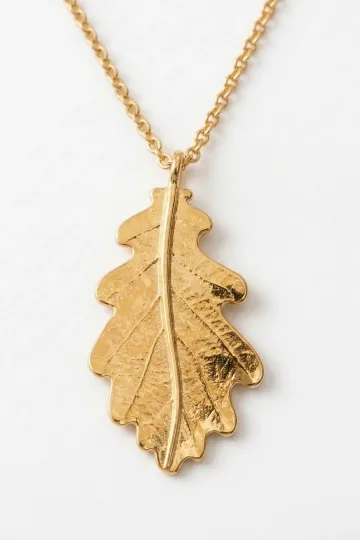
- A woodland wedding (green, brown, gold): pendants with natural motifs (oak leaf, pine cone, twig), dark stones (smoky quartz, garnet, obsidian). Metal, yellow or rose gold, aged silver.
If there is no theme, or you are not sure, neutral formats win: a thin silver chain with an initial pendant works at any wedding and is worn afterwards with no tie to its aesthetic.
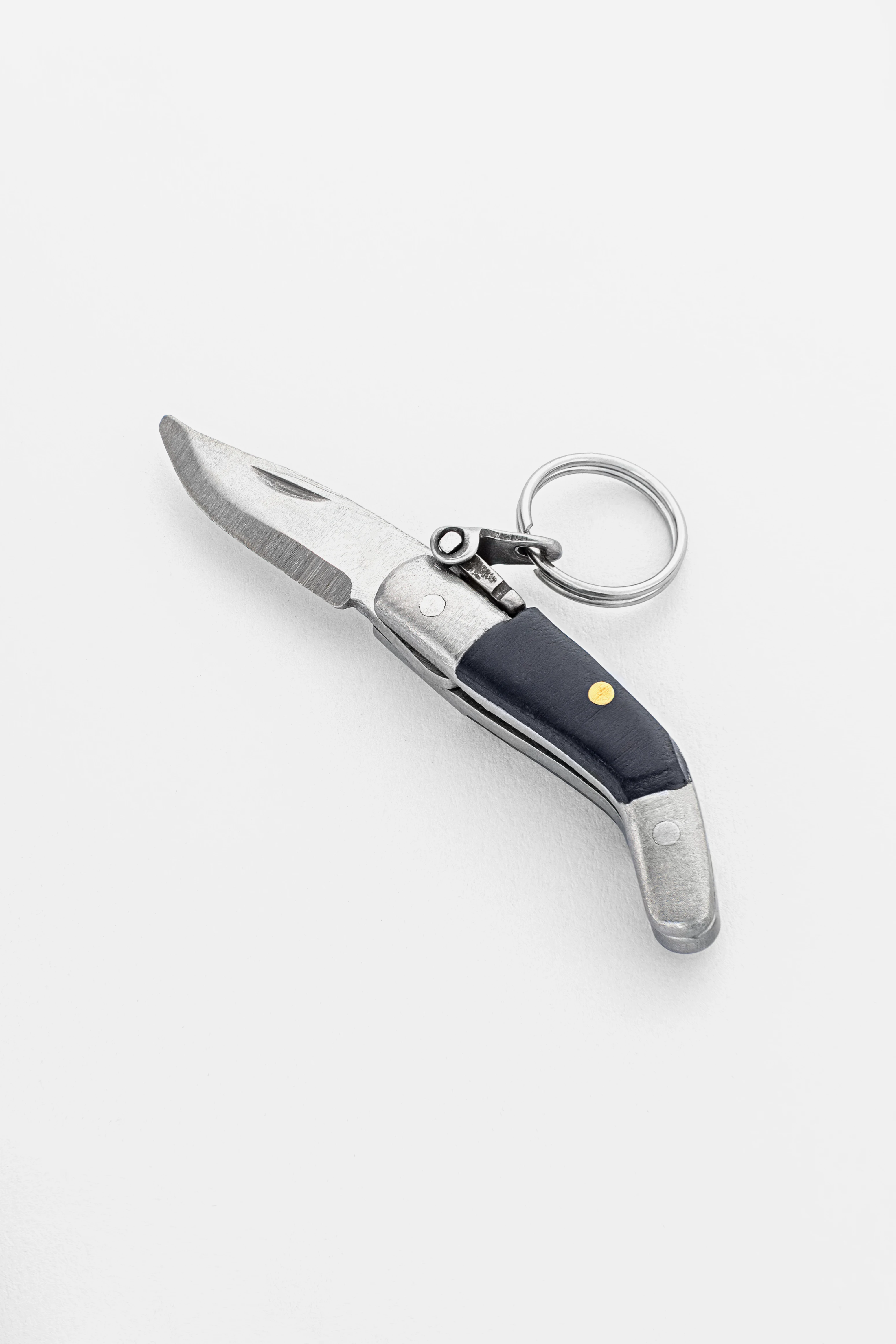
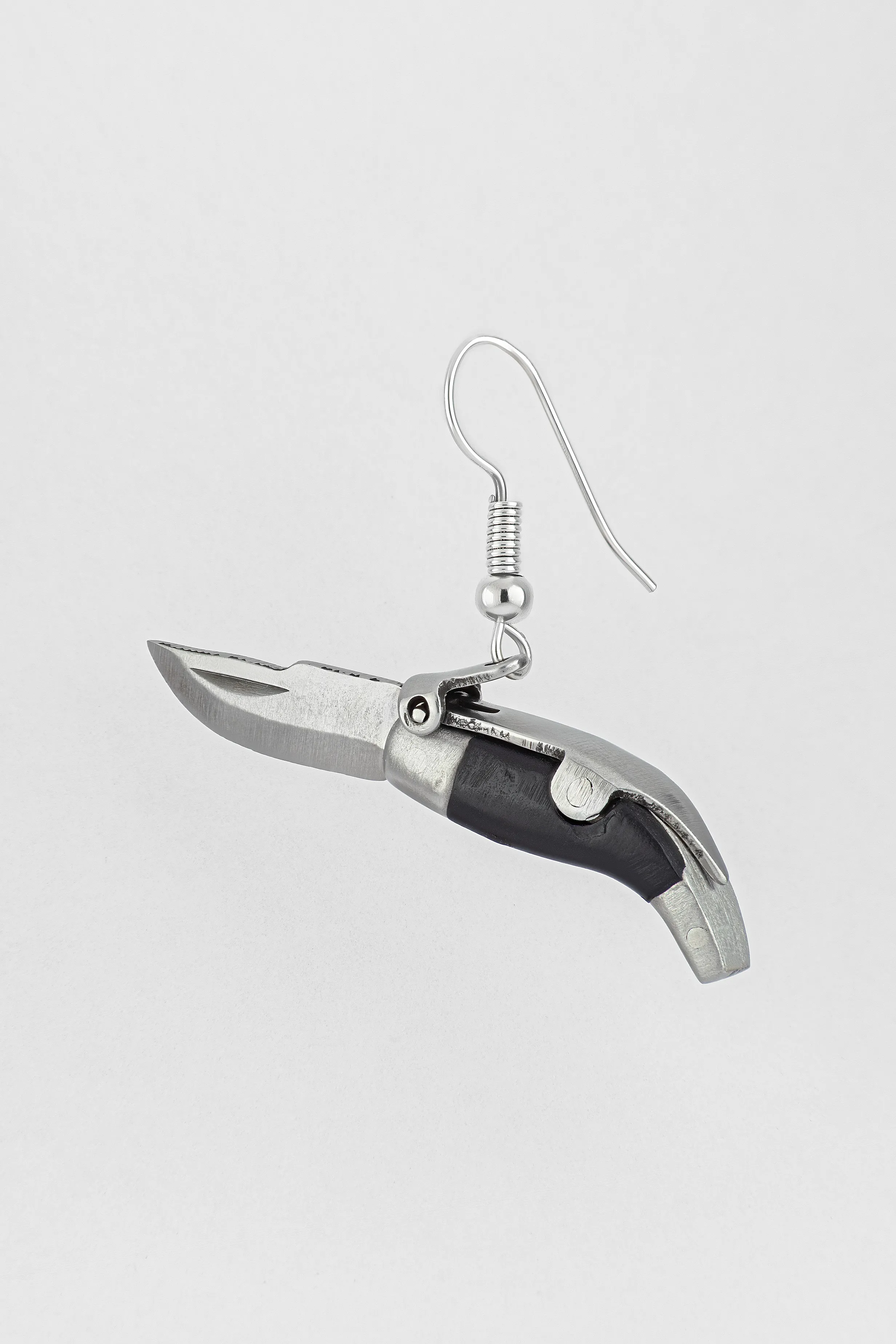
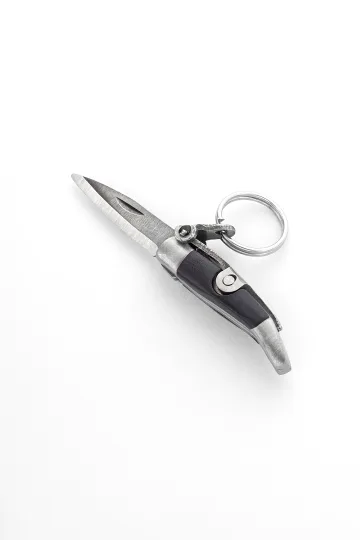
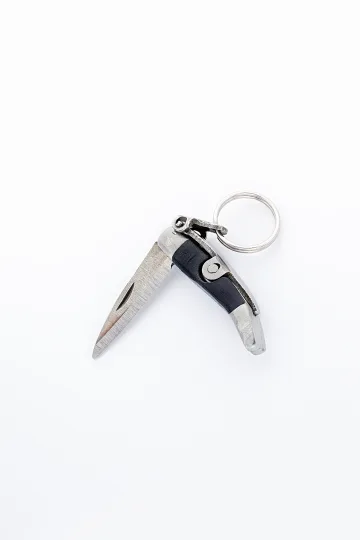
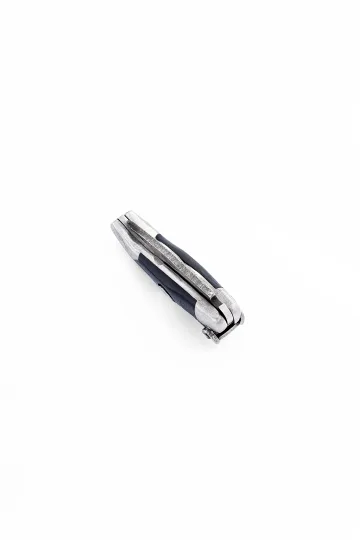
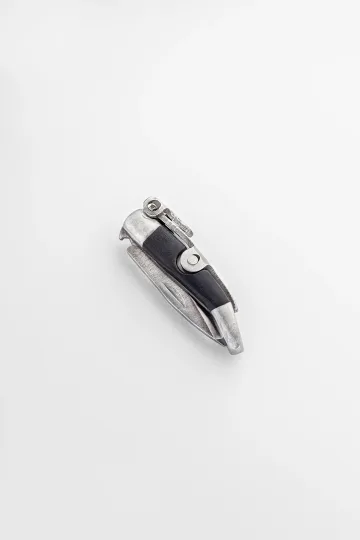
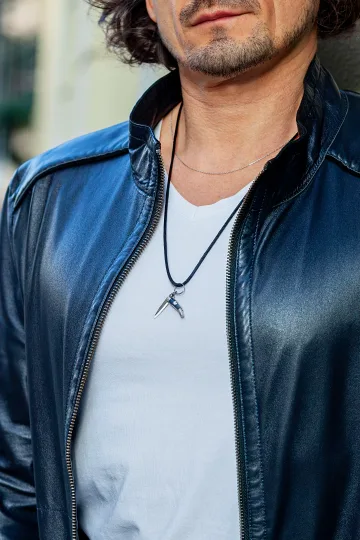
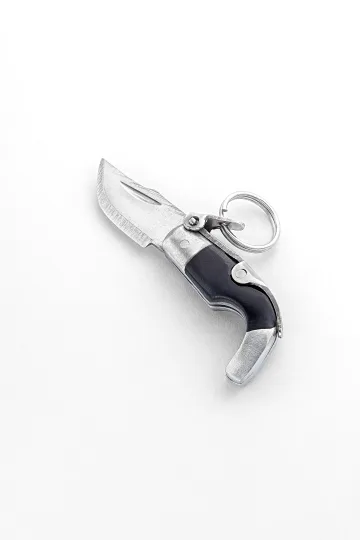
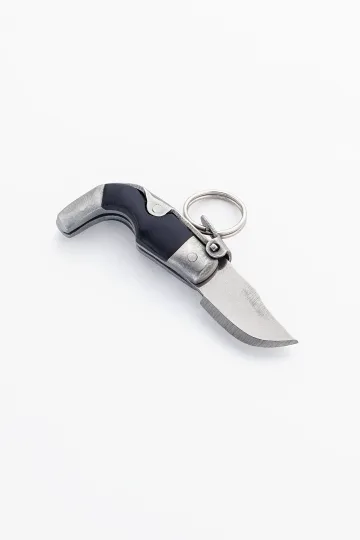
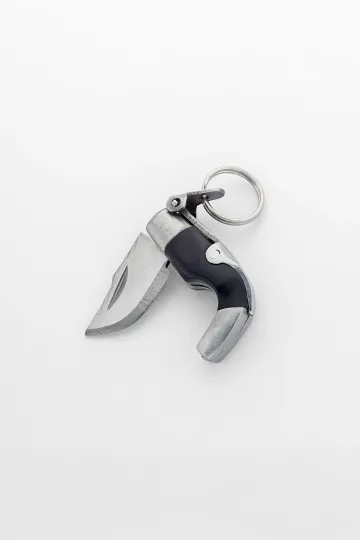
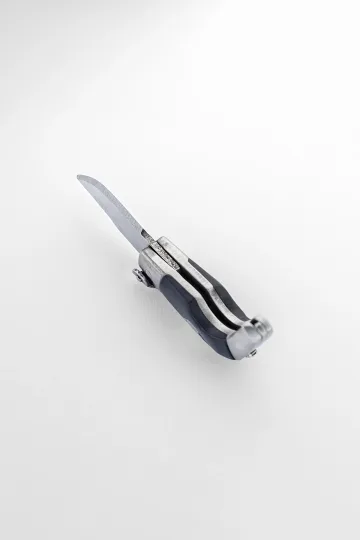
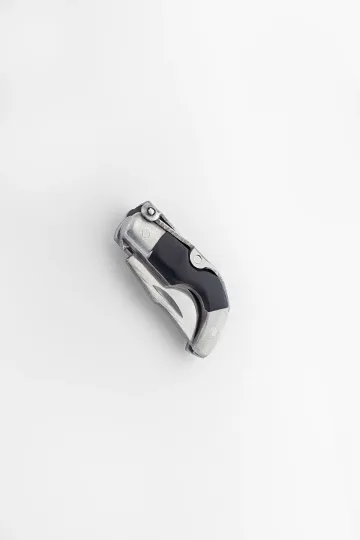
CAPAORA mini knife pendant
The 18th-century Spanish navaja in miniature: 40 mm of stainless steel, a real folding mechanism and a Palanquilla lock that clicks. An affordable gift to remember.
Authentic · Ships from Spain · 14-day returns
Engraving: what to write
Engraving turns a standard piece into a personal one. What exactly to engrave.
The wedding date, the most common format, universal and easy to do. The downside: it is a marker of someone else's event, not of the bridesmaid herself, and over the years it will fade behind her own dates. Better to combine: the date plus an initial or a short phrase.
The bridesmaid's name, not the bride's. Crucial: the gift is about her. A full name ("Anna") works better than a diminutive, "Annie" may start to grate in ten years' time. In a matching set a name turns a mass gift into an individual one without different designs.
A short code-phrase. Latin formulas are neutral and carry depth: "Una alia" (one with another), "Amica vera", "Soror in via", "Semper". Stronger than any maxim are quotes from a shared history: a line from a song, a phrase from a film, a joke from a chat. Principle: do not make the engraving long. Three to five words beat a paragraph, the space on the metal is limited.
The coordinates of a place. The latitude and longitude of a meaningful point: where you met, the wedding venue, the café of your regular meetings, two points for friends from different cities. Format "51.5074° N, 0.1278° W". Concrete and non-trivial.
What not to engrave. "Bridesmaid 2026", a marker of the role rather than the person, pointless in five years. The groom's name, about someone else's marriage. Long texts, "Thank you for everything you did...", read badly and turn the jewellery into a greeting card. Ironic phrases that seem funny at the wedding and sound odd a year later.
The technical side. Laser engraving is more precise, mechanical is warmer. Check at the order stage: not everyone engraves in every script, thin chains and rings have a strict limit (15 to 25 characters), bracelets more. A long idea needs a bracelet, not a chain.
When there are children on the team
Sometimes the team includes children, flower girls or young bridesmaids.
A flower girl (three to eight). Jewellery that is simple, sturdy and safe: a thin bracelet with one large charm and no small parts, a child's chain with a star or heart pendant, a hair clip with a decoration. The younger the child, the simpler: the goal is for her to feel dressed up, not for the jewellery to look expensive.
A young bridesmaid (ten to sixteen). A teenager between child and adult, with her own aesthetic. What works: thin rings, a chain with an initial pendant, small hoop earrings, a stacking bracelet. Principle: give what she will actually wear at school and with friends. A good move, ask her directly: teenagers value being taken into account.
A bridesmaid with small children. Practical jewellery: no small parts for a baby to pull, no long earrings. A bracelet or studs are safer. You can add the child's name to the engraving, an unexpected gesture that sticks.
Send a friend a discount code, they save on their first order.
Jewellery: which pieces exactly to choose
Different types of jewellery give the gift a different character.
A thin chain with an initial pendant, the most universal format. Works at any age and in any style, personalised through the letter but not shouting "wedding". Especially good when the bridesmaids have different styles and you need something neutral that suits each. For a matching set: 14K yellow gold for warm skin tones, 925 silver for cool, rose gold as a compromise. Full guide: initials and monograms in jewellery.
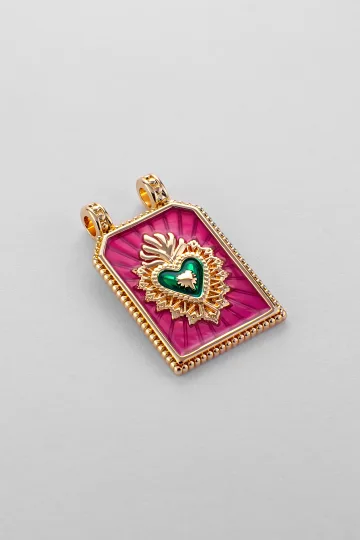
The heart pendant, three versions. The classic romantic heart, soft, clear, for those who like the classic. The anatomical heart, an exact image of the organ, "something real inside", for a bridesmaid with an unconventional taste or an interest in science (the symbol's history). The sacred heart, a baroque image with flame and a crown of thorns, for those who value rich symbolism (meaning). Choose the heart for the specific bridesmaid, not "a heart in general".
The Claddagh ring. Two hands holding a heart under a crown: hands, friendship; heart, love; crown, loyalty. It reads precisely: "you are my person, the one I trust". Worn in ordinary life, it does not look like a wedding souvenir. The way it is worn: point of the heart facing out, an open heart; facing in, taken. That can be mentioned in the note. Full history and rules.
The infinity symbol. It reads as "what does not end", an exact statement for a friendship of fifteen or twenty years. A delicate format on thin bracelets and chains. It can be paired with an engraving of the year you met: "Since 2008" on the back, already history. On the symbol's meaning.
A charm bracelet. A conceptually strong idea, because it is open-ended: the bride gives a base bracelet with one or two charms, the bridesmaid adds her own later. Good for a two-stage gift, one charm at the proposal, the second with the date on the wedding day, then she carries on herself. The format's history: the charm bracelet.
Earrings, studs and rings. The most practical gift: the bridesmaid puts them on in the morning before the ceremony. Pearl studs, a classic, wearable both at the office and at a celebration. Studs with her birthstone, personalisation through colour. Small hoops, an everyday option. The main principle: give what she actually wears. If she is always in small studs, long drops will end up in a drawer.
Thin stacking rings. Several thin rings on one or different fingers. For a matching set: identical rings with the wedding date inside, minimalist outside, a personal detail within.
A little history of the format
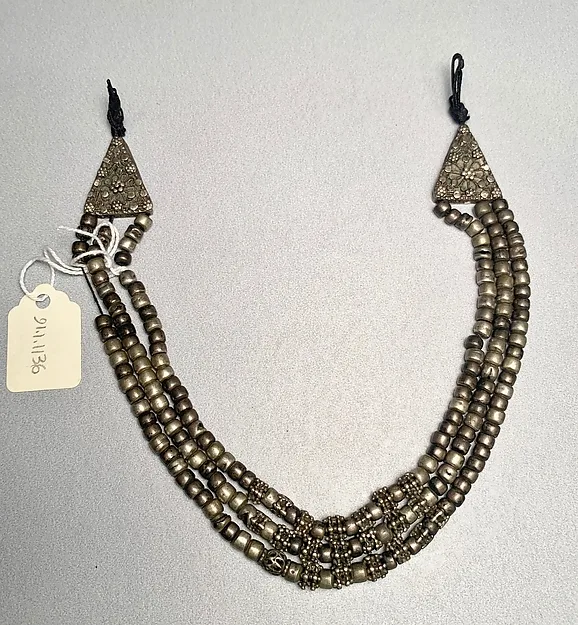
The bridesmaid gift was not invented on social media. The phrase "tying the knot" as a synonym for getting married comes from a literal practice: in seventeenth- and eighteenth-century England the bride gave her maids a knotted ribbon after the ceremony. Not jewellery in the modern sense, but the same function, something physical to take home and keep.
Victorian England made jewellery more democratic: industrial production lowered the cost of silver, and small monogrammed lockets or enamel brooches became the standard keepsake gift. The logic was the reverse of today's, the jewellery was meant to look right at the ceremony, not to be worn on a Monday at work.
In the 1920s art deco and jazz rewrote wedding aesthetics. Long strands of pearls became a symbol of the era, and that is when the concept of the matching set took shape in its first true sense: the whole team in identical pearls as a visual unit. The pearl studs that remain one of the most popular formats today inherit precisely from that tradition.
In the 2010s social media turned the gift into a public ritual. Two trends grew from this: the bridesmaid proposal box with an invitation piece, and mass personalisation, laser engraving of a name, coordinates or date, once available only to the well-off. The charm bracelet slotted perfectly into this logic: one charm at the proposal, the second on the wedding day, the third the bridesmaid adds herself. The jewellery became, not a symbol of a past event, but an entry point into a continuing story.
FAQ: common questions
How much to spend on a bridesmaid's gift?
The exact sum depends on the region and the financial situation, but the proportion matters more than the absolute number. A good guide: the gift is proportionate to what the bridesmaid put into the wedding load (dress, travel, hen do). An everyday analogy for a comfortable tier, an average monthly meal out. For the maid of honour, a tier one and a half to two times higher: her load is objectively different. Below the comfortable tier the gift reads as token; above it, it starts to create imbalance.
Identical gifts or different ones?
Both work. Identical is better with a large team (five plus) or when the bridesmaids are not very close to each other. Individual, with a small team (two to four), when the bride knows each well. The most common hybrid: one category of jewellery but with different personalisation, different stones, engraving, charms. That solves the dilemma of unity versus individuality.
What to give the maid of honour separately?
Clearly a separate gift: the same type of jewellery as the rest but in a higher execution (gold instead of silver, an extra stone); or a different category (earrings for the rest, a necklace for her); or an extra piece. The main thing is that the difference reads as recognition of her role, not an arbitrary hierarchy.
What if a bridesmaid is pregnant?
The concept is the same. Practical refinements: light jewellery (heavy bracelets are uncomfortable with swelling), no sharp edges or small detachable parts (safe to wear with a baby). An engraving with her name works better than the wedding date, the date will soon compete in memory with the child's birth date. You can, as a strong gesture, include the birthstone of the baby's expected birth month, but only if the sex and due date are known.
What if a bridesmaid is of higher standing than the bride?
If the bridesmaid is an older relative, a mentor or a person of higher standing, the logic is adjusted. Not a "girlish" aesthetic but classic shapes: a thin chain, studs, a minimalist bracelet. Restrained engraving, no sentimental Latinisms. It can be presented as "a token of gratitude for your part in this day", not "to you, my bridesmaid".
What if there are six to eight bridesmaids?
Individual gifts for a team that size are almost impossible in terms of attention and budget. The best strategy: a matching set in form, different personalisation (name or initial, a different birthstone). Thin, affordable formats without losing the quality of the gesture. 925 silver with engraving works better than cheap gold without personalisation. The maid of honour needs to be clearly singled out against the mass set.
When exactly to give them?
The most common and strongest option, the morning of the wedding, when the team is together. Alternatives: at the rehearsal dinner the night before, at a separate meeting with each a week earlier, or a hybrid, the main gift in the morning plus a short personal note beforehand.
Do you need to match the jewellery to the dress colour?
Not necessarily. The jewellery the bridesmaid will wear a year from now matters more than a perfect match with the fabric for one day. Only the metal is worth considering: a warm tone of dress and skin looks better with yellow gold, a cool one with silver or white gold. With identical dresses, a coordinated metal creates unity in the photos.
How to give it if the bridesmaids are in different cities?
A personal delivery: a beautiful box with the jewellery and a handwritten note before the wedding. Ask her not to open it until a specific date, for instance the morning of the wedding day. You can set up a video call at the moment of opening, to create a shared moment even at a distance. The jewellery should be sturdy enough for posting: a pendant or a bracelet is safer than open earrings.
Can you give jewellery with symbols?
Symbolism works when it is precise. A Claddagh ring for a bridesmaid you have been friends with for twenty years, a precise statement. The infinity symbol for a long friendship, the same. The problem is not the obviousness of the symbol but its imprecision: giving a heart simply because "it's wedding-y" is less interesting than because you shared something real.
What to write in the note?
Not general words but specifics: what exactly you are thanking her, specifically, for. A concrete moment, deed, trait. "Thank you for driving over at three in the morning in March when everything was going wrong" means more than "thank you for everything". Specificity is the attention.
Can you give it after the wedding?
You can, and sometimes it is the best option. After the wedding the bride knows who actually did what, not what was planned, and the emotional pressure of the day has passed. Such a gift is usually more personal: not "what is appropriate to wear today" but "what our friendship means".
What if there is no budget at all?
Some token of attention is still needed. A thin silver chain with an initial, a long handwritten note, a small symbolic object, all of it works. The absence of a gift altogether creates more awkwardness in the relationship than a modest gift.
What if all the bridesmaids are equal, with no chief one?
Then giving everyone the same is the right call. There is no need to single anyone out artificially if the team's structure is horizontal. It is a normal format for modern weddings: three or four close bridesmaids as equal members of the team.
Can you give jewellery to a male bridesmaid (a bridesman)?
Yes. Choose gender-neutral formats: a thin silver bracelet with an engraving, a pendant on a short chain, a signet ring with an initial. Not a "male version" with a different aesthetic, but inherently minimalist shapes that work for everyone.
Buying it as a gift? Each one arrives ready to give.
 A branded Zevira box and a little card come with every order.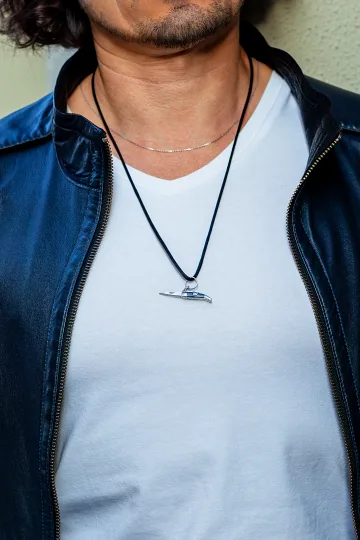




The main thing
The most important decision is not which type of jewellery but whether the specific bridesmaid is visible in it: her name, her style, her role in your life, your shared history. When that shows, any format works. When it does not, even expensive jewellery stays faceless. Identical or individual, gold or silver, pendant or ring, secondary questions. The primary one: did you make the jewellery about her or about the event?
For further reading: the full guide to wedding jewellery, the Spanish wedding tradition and its jewellery features, jewellery as a gift for a friend: the logic of choosing.
Personalised pendants, bracelets and rings with engraving. Matching sets and individual options. 925 silver, 14 to 18K gold.
About Zevira
Zevira makes jewellery in the artisan tradition of Albacete, Spain. For bridesmaids, several workable formats: personalised chains with initials, thin charm bracelets, rings with friendship symbols (Claddagh, infinity), classic stud earrings.
Engraving is available with a name, the wedding date or coordinates. Matching sets for the whole team; please check availability and lead times when ordering.
We work with 925 silver and 14 to 18K gold.