Golden Wedding Anniversary Jewellery: What to Give for 50 Years of Marriage
A golden wedding gift is chosen not for today but for the decades ahead. Only a minority of marriages ever reach the fiftieth anniversary; the figures vary widely by country and counting method, but it remains a small share of all unions. The rest are ended by divorce, by the early death of a spouse, or by a life that quietly pulled two people into different cities.
Think about what fifty years actually holds. Children who did not exist on the wedding day have grown up and become parents themselves. Whole technologies have appeared that nobody had heard of when the couple said their vows. Illness, house moves, losses, stretches of pure happiness. Two people went through all of it and stayed beside each other.
There is one more point that people rarely say out loud. A holiday is forgotten within a year, flowers last a week. A piece of jewellery stays with the person and passes to the children, sometimes to the grandchildren. That is why choosing jewellery for a golden wedding is a decision with a very long horizon. Below we work through which formats actually function, which gold purity to choose, what to put in the engraving, and how to care for a gift meant to outlive the couple who receive it.
Where the Image of Gold as the Symbol of Fifty Years Comes From
By the most common account, the tradition of marking wedding anniversaries with particular symbols goes back to medieval Germany. There a husband would give his wife a wreath: silver at twenty-five years, gold at fifty. Silver stood for the ability to stay together through hard times, gold for the fact that the couple had been through everything and held firm. A metal that resists corrosion, for a union that did not yield to time.
The word "golden" applied to the jubilee arose as a metaphor of endurance, not a statement about wealth. Poor families celebrated golden weddings too; the wreath might simply be gilded or made of yellow flowers. The point was the symbol, not the price.
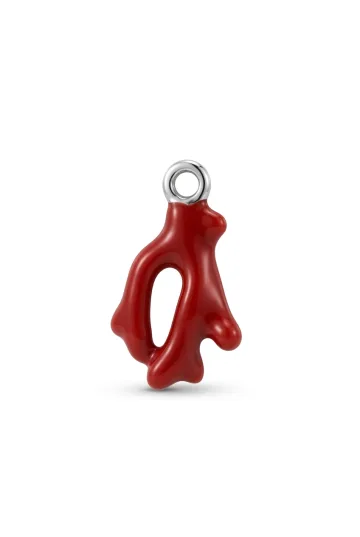
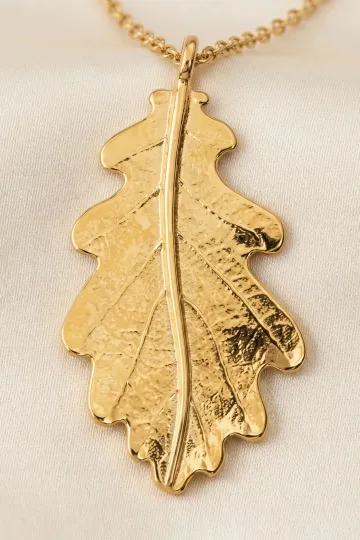
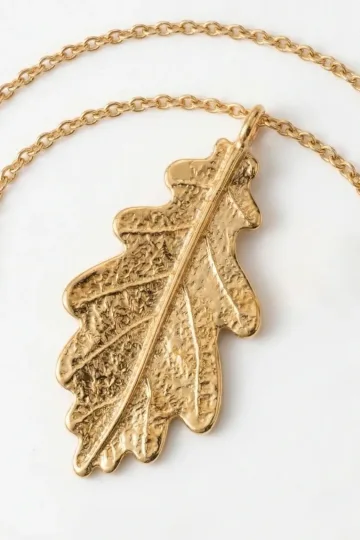
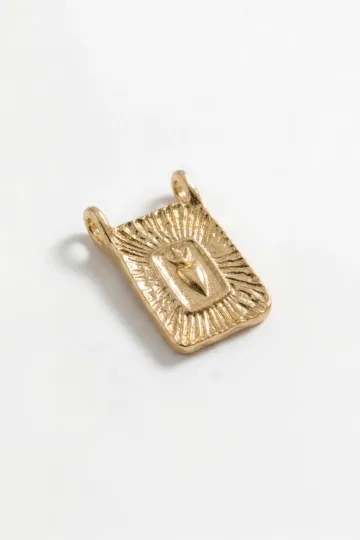
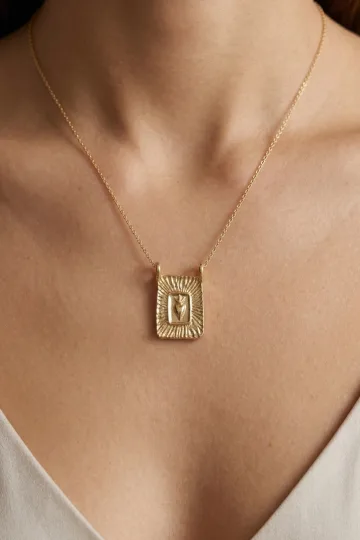
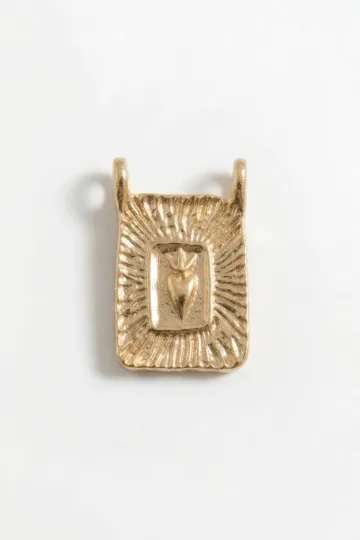
Wear the symbol, don't just read about it. These are in stock:
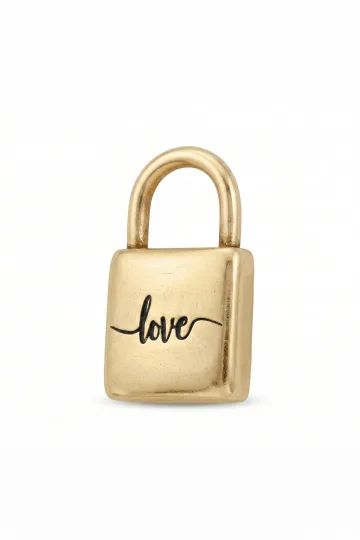
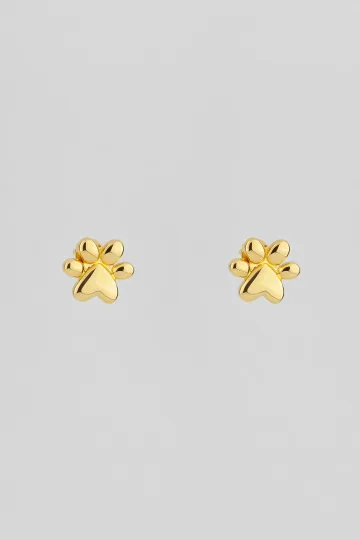

By the eighteenth century the golden wedding had acquired a church rite. In the Lutheran and Reformed communities of the German lands the practice of the "Goldene Hochzeit" took hold: the couple came forward at a Sunday service, and the spouses spoke aloud the vows they had given fifty years earlier. This rite of renewing marriage vows after half a century entered church tradition and survives in a close form in German churches today.
In parallel a custom of melting down wedding rings appeared, and the reason was purely practical. Over half a century of constant wear a gold ring visibly thins at the points of friction, the engraving disappears, the metal loses its springiness. German goldsmiths offered couples a way to take the old rings apart, check the composition of the metal, add fresh gold, and cast new ones. This service was a separate line on the bill and was timed to coincide with the anniversary service. From it grew the central idea of the modern fiftieth-anniversary gift, which we return to below.
The Central Idea: Melting Down the Wedding Rings
The deepest idea for a golden wedding gift cannot be bought from a display case. It is the melting down of the fifty-year-old wedding rings into a new pair of rings with fresh gold added. Technically the sequence runs like this.
Checking the purity. Older wedding rings vary widely in their gold content depending on where and when they were made. A jeweller establishes the actual purity before any work begins, because a ring sold long ago as one karat figure may test out as something different, especially if it was repaired with workshop solder over the years.
Composition analysis. Before the work the master checks the make-up of the metal: an old ring may contain unrecorded traces of crude solder that would make the new alloy brittle. A good jeweller staples the result of the test to the contract.
Melting. The old rings are melted, fresh gold is added together with the master alloy needed to reach the required purity (such as 18 karat). The result is an alloy in which atoms from rings half a century old physically live alongside fresh metal.
Casting. From this alloy two rings of a new matching design are cast to an individual sketch. Engraving is essential: two dates, both spouses' names, sometimes a short phrase. A set of documents accompanies the gift: the analysis report on the original rings, the melting record stating the proportion of the client's own material, and the certificate for the new piece.
A certificate reading "wedding gold plus fresh gold in a single alloy" carries a double value. Emotional, because it is the physical continuity of generations held in metal. And practical, because forty or fifty years from now, when the couple are gone, the children and grandchildren will see the document and understand that they hold a living family archive in the shape of two rings.
When Melting Down Does Not Fit
Sometimes the original rings are simply not there: lost, sold in hard years, given to a daughter for her own wedding. Or the spouses are firmly against destroying the old rings. In those cases there are equivalent formats that work by the same logic of fixing a date in metal, rather than "renewing" it.
Customer reviews
Zevira is a real jewellery shop. Genuine payments, deliveries and customer thank-yous.
🥰🥰🥰 gracias
Ok, ¡gracias! 🙂
Gold means gold. Turning up in white gold to a golden anniversary is like wearing someone else's blazer.
How to wear golden anniversary jewellery
A golden wedding gift outlives a single evening, so I always think about how it will fit into an everyday wardrobe. Here is what actually works, sorted by occasion.
What do I wear yellow gold with every day? The warm tone of 14 and 18 karat reads best against calm colours: cream, sand, navy, wine, olive, graphite. I recommend keeping to wool, linen, dense cotton or fine viscose, since cool fabrics with a silvery sheen mute the warmth of the metal. On black the gold looks formal and stately, on white it softens.
Where do I pin a brooch or a miniature locket? These pieces ask for a top with a clean line: the lapel of a jacket, the stand collar of a blouse, the turn of a coat. I suggest setting a brooch on a firm fabric that holds the weight rather than one that stretches. An enamel locket sits well at the centre of the collar, with no neighbouring pendants.
Which chain length suits a locket? The neckline decides it. For a deep V I recommend a longer chain so the pendant rests below the collarbones. For a closed collar I choose a short chain over the neckline. The rule is simple: pick the length for the neckline, not the other way round.
How do I build a dress set for the anniversary portrait? For a church service, a family dinner or a shoot I keep the set in one tone of metal: a brooch on one spouse, cufflinks or a tie clip on the other, both from the same alloy. Yellow with yellow, no cool silver in one look, which reads calmer at an older age.
Can I combine pieces from earlier jubilees? Yes, and it is a lovely move. If pearl, coral, ruby or sapphire have gathered from earlier anniversaries over the decades, I bring them into a single restrained layer of two or three pieces. For every day, one is enough: a ring or a short chain with a locket.

Turn on your camera, pick earrings, a pendant or a ring, and see the piece on yourself in real time.
Switch items in one tap.
Everything runs in your browser: no photo or video is ever uploaded.
Gift Formats
If melting down is off the table, several formats remain that work by the same logic of anchoring the date. Below we work through each one: who it suits, which gold it is made from, and how long it takes.
A Matching Pair of Rings Engraved with Two Dates
When the original rings cannot be melted, a new pair of wedding bands is made, engraved with the wedding date and the anniversary date. Yellow gold of 14 or 18 karat, four to six weeks to make. The design is best kept restrained: for an older couple a recognisable classic shape works more reliably than experiments.
A Gold Medal Engraved with Fifty Events
A disc thirty-five to forty-five millimetres across and two to three millimetres thick, in 14 or 18 karat gold. The surface on both sides is divided into fifty tiny fields, and into each one a single event is engraved: a year plus three or four words. The family draws up the list: the birth of the first child, a house move, a doctorate defended, the arrival of a grandchild, retirement.
The engraving here is done by hand with a graver, not by laser: a laser cannot cope with such a density of text while keeping it legible. The medal is not worn every day; it comes out of its case at family celebrations and is shown to the younger generations.
A Gold Brooch with a Miniature of the Wedding Photograph
An oval or round frame of twenty-five to thirty-five millimetres in 14 or 18 karat gold, holding a miniature photograph under protective mineral or quartz glass. The back is engraved with dates and names, and the clasp is a pin with a safety catch.
The format has real historical depth: such brooches were made in French ateliers of the nineteenth century, where the miniature was painted in watercolour on ivory, and from the 1850s a daguerreotype was set in, then an ordinary photograph. The technique today is the same: the wedding photograph is converted to digital, retouched, printed in miniature on archival paper with pigment inks (over a hundred years of stability in a place protected from ultraviolet), placed under glass and framed in gold.
If no wedding photograph survives (not unusual for weddings of the 1950s in the provinces), a painted miniature can be commissioned: an artist paints the two young people from their later photographs, taking the years away. This is no longer a document but a reconstruction, yet as a gift it works, giving the couple a physical image of their youth.
A Locket with Photographs of Three Generations
Inside, two compartments: on one side the couple half a century ago, on the other all their descendants today (children, grandchildren, great-grandchildren). From the children to the parents, or from the grandchildren to grandmother and grandfather.
A Pendant with Birthstones for the Children and Grandchildren
An arrangement of stones for the birth months of every child and grandchild in a gold setting. Each stone is a particular member of the family: a visible symbol of what has grown out of this marriage. There is a separate guide on choosing such stones.
A Composition of Fifty Miniature Plates
An idea from children to parents. Fifty miniature plates of 14 karat gold, each about eighteen by twelve millimetres, each engraved with one year and one key event of that year, brought together into a single composition in the shape of a wreath, a tree or a circle on a rigid backing. A miniature of the wedding photograph is often set in the centre. The composition hangs on the wall in a frame. The work takes six to eight months: hand engraving across fifty plates is several full working days for one engraver, plus assembly.
Cufflinks and a Tie Clip for the Husband
One of the few pieces of jewellery that men wear with pleasure. Cufflinks or a tie clip of 14 or 18 karat gold, engraved with the wife's initials or dates on the inner side. It works well as a paired gesture: a pendant or brooch with two dates for the wife, cufflinks with the same dates for the husband, both pieces from one alloy.
Matching "Two Halves of a Whole" Pendants
A pendant of yellow gold cut down the middle so that the two halves fit together into one. Both spouses wear them on a fine chain. A simple idea, read instantly, working even for couples who rarely put on jewellery.
Upload a photo of your pet, someone you love, or an object. We'll build a 3D model and hand-cast it in pewter.

Who Gives What: Children, Grandchildren, Guests
A golden wedding draws gifts from several circles of people at once, and without coordination it turns into a muddle: three lockets, two bouquets and not one piece worth pooling money for. The logic is simple. One central gift, with smaller personal gestures around it. Agreeing on the central piece in advance matters, otherwise the money is scattered.
The children usually take on the central gift, because they have the largest budget and the right to the most personal decision (melting down the parents' rings is their initiative, not the grandchildren's). If there are several children, they pool into one sum for one piece: this is both more sensible financially and more correct symbolically than four separate gifts from four families. One of the children takes the role of coordinator and runs the order with the jeweller, otherwise the master drowns in a chorus of conflicting edits.
The grandchildren give something in which they are physically present: a locket with photographs of all the generations, a pendant with stones for the months of their birth, their names engraved on the back. A gift from the grandchildren is not about the sum but about the grandparents holding in their hands the proof that the marriage gave continuation. Grandchildren clubbing together for one shared piece is more fitting than each giving something small.
Guests and friends. The central gift is not theirs to give: that is family territory. From friends, gestures of the same tone but more modest make sense: a silver locket, a gilded pendant, one date engraved. A silver piece with meaning is stronger than an empty gold one, so friends need not reach for gold to make their gift fitting.
What must not be broken: the children's gift should not be outweighed in heft and prominence by a guest's. If an acquaintance brings a large gold piece while the children give a modest engraved thing, it upsets the hierarchy of closeness. A family-side coordinator is worth it, if only to check who is preparing what, at least by circle.



Which Gold Purity to Choose: 14K, 18K, 22K, 24K
The choice of purity for a jubilee gift is not obvious, and the difference is worth knowing.
14 karat (585) contains 58.5% pure gold, the rest copper and silver (for yellow) or copper and palladium (for white). This is the standard for everyday wear: a ring holds its shape for decades, does not bend easily, and shrugs off water and household chemicals. For a pair of rings worn every day, 14 karat is the right choice.
18 karat (750) contains 75% pure gold. The colour is richer and warmer, more "golden" in the full sense of the word. The metal is softer, so pieces in 18 karat suit jewellery for special occasions better. For the central jubilee gift (a brooch, a medal, a locket) 18 karat is the optimal choice: the colour matches the symbolism of the date, and under moderate wear the metal lasts for decades.
22 karat (916) contains 91.6% pure gold. In Indian, Arab and Chinese traditions this is the standard for ceremonial jewellery. The colour is very rich, almost orange in daylight; the metal is soft and needs care. For a couple with Eastern roots it may be symbolically important; for a European tradition it is a non-standard choice.
24 karat (999) is pure gold with no master alloy. It is no good for rings because of its softness (it dents under a strong press of the finger), but it suits the "gold commemorative coin" format, which is not worn but kept in a family box.
Sterling silver 925 with gilding (vermeil) makes sense for the smaller gestures, when the central gift has taken the main budget. It looks like gold and, with careful wear, keeps its coating for ten to fifteen years. It does not suit a pair of rings: the gilded layer rubs away. Platinum 950 is fitting if one of the spouses wore cool-toned metals all their life and dislikes yellow gold; then the pairing is held in the design rather than in the material.
Yellow, White or Rose Gold
Purity governs the amount of pure gold; colour comes from the master alloy. The same 14 karat alloy exists in three shades, and for a jubilee gift the colour carries meaning.
Yellow gives a direct link to the name of the date, and that is the argument by default. The warm tone flatters mature skin, on which cool metals can sometimes emphasise the blue of the veins on the hands. If the choice is not dictated by the couple's habits, yellow gold is the correct one.
White gold is the same alloy in which palladium or nickel replaces copper in the master alloy, with rhodium applied on top for a cool shine. The catch is that the rhodium coating wears off over a few years of daily wear, and the ring begins to yellow at the friction points, after which it needs re-plating. For a gift meant to last half a century without intervention this is an extra cycle of maintenance. Choose white gold only if the couple wore cool-toned metal all their life and yellow would feel alien to them. Better to rule out the nickel master alloy from the start: contact allergy to nickel shows up more often in old age than in youth, so choose white gold on palladium.
Rose gold gets its warm pinkish tone from a higher share of copper in the master alloy. Copper both colours the alloy and makes it slightly harder than the yellow equivalent of the same purity, meaning the ring holds its shape better. The shade is understated and sits well on older skin. There is one drawback: when melting down original rings the rose colour is hard to reproduce exactly, as the copper share in an old alloy is unknown without analysis, so for a melt-down it is safer to stay in yellow.
Mixing colours within one matching set can be done deliberately: two rings of yellow and rose gold read as "he and she," but that decision needs both spouses' agreement rather than a designer's whim. If the couple already own a family set in a particular colour, it is more logical to keep the new piece in the same tone so the pieces are worn together.
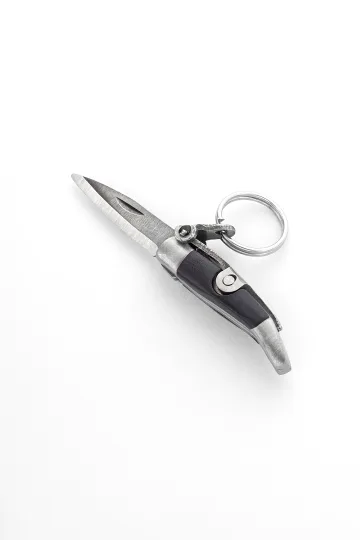
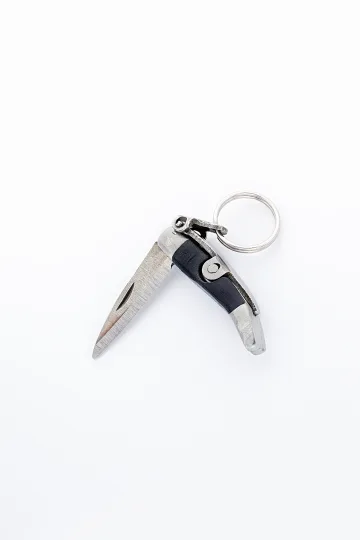
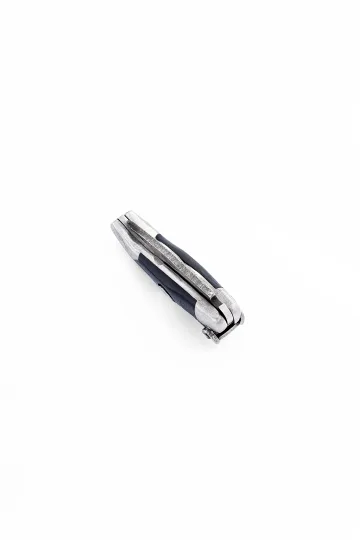
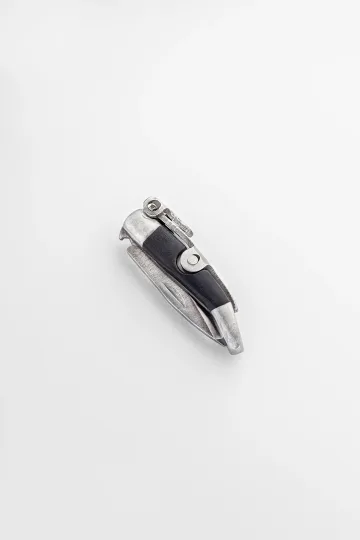
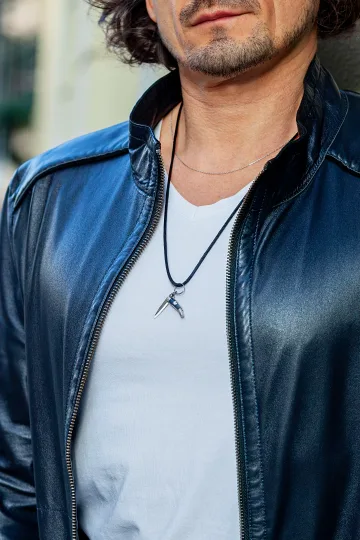
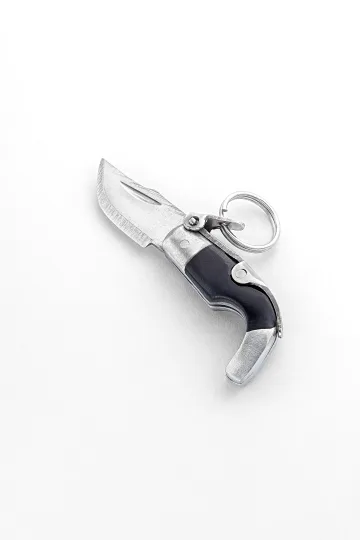
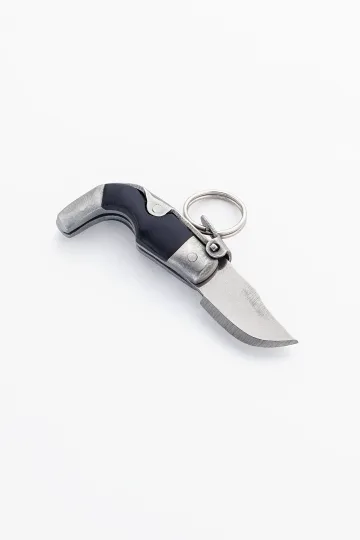
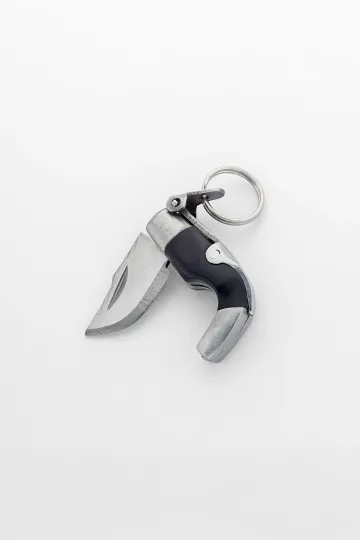
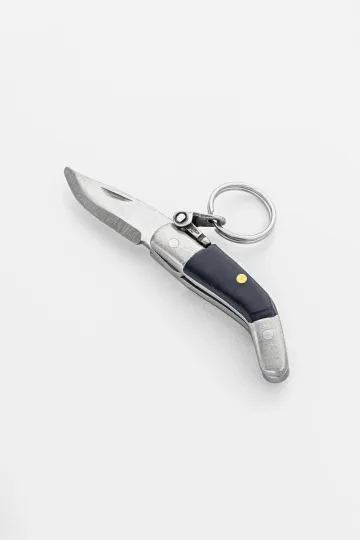
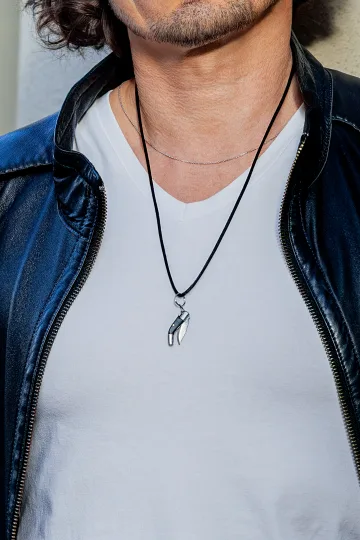
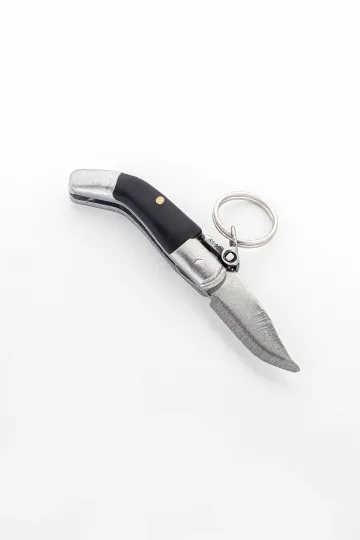
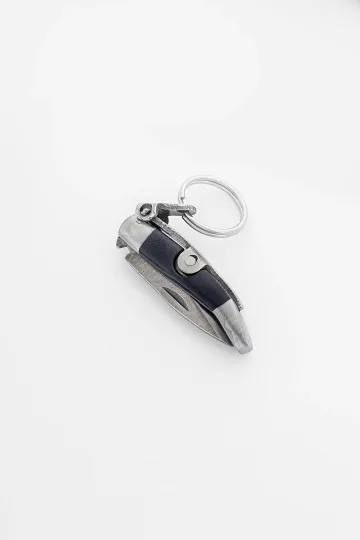
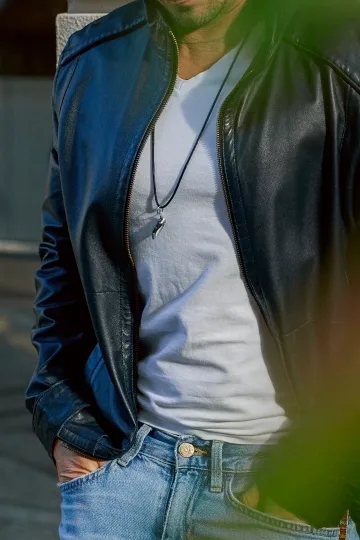
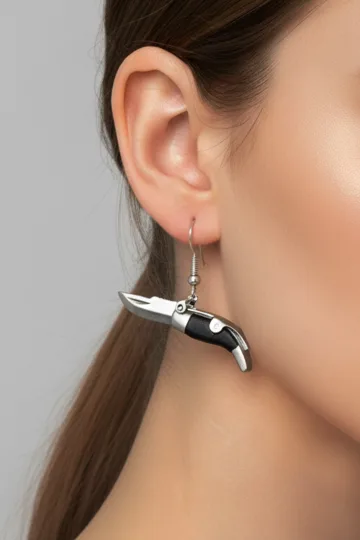
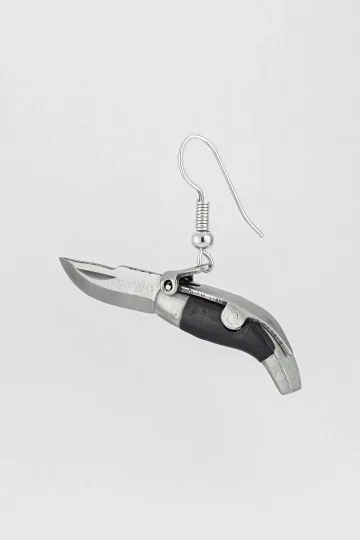
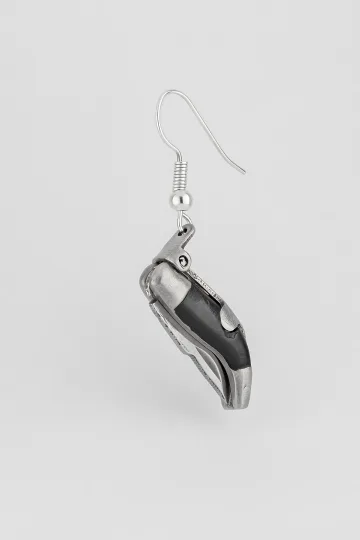
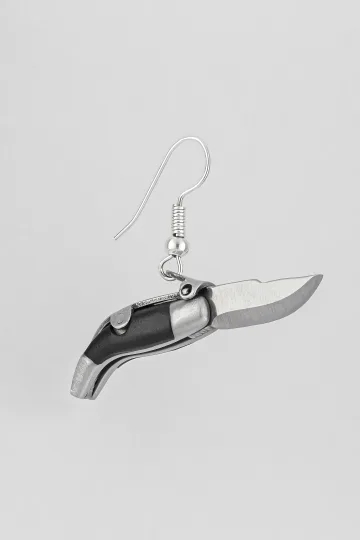
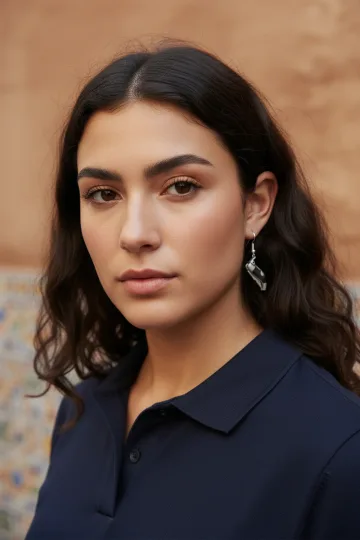
CAPAORA mini knife pendant
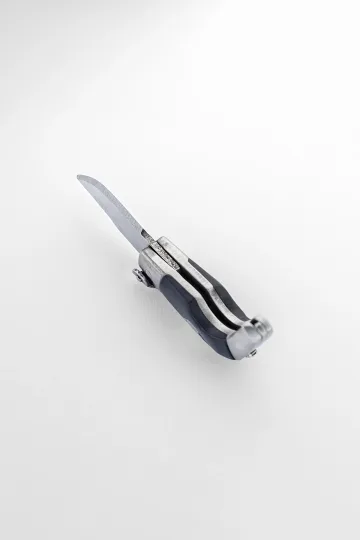
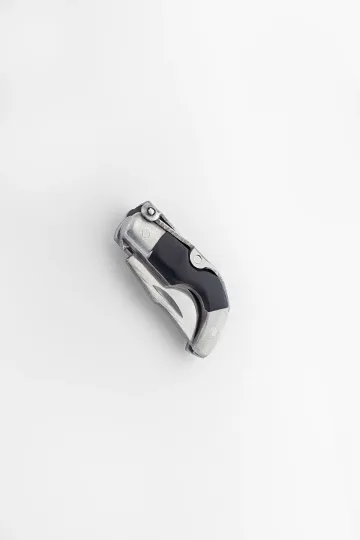
The 18th-century Spanish navaja in miniature: 40 mm of stainless steel, a real folding mechanism and a Palanquilla lock that clicks. An affordable gift to remember.
Authentic · Ships from Spain · 14-day returns
Engraving: What to Write, Where, and in Which Language
Engraving turns a gold piece into a document. Without it a ring is just metal; with it there is an author, a recipient and a year.
Two specific dates instead of "50 years." A formulaic "50 years together" is added by laser in five minutes to any blank, and an older person reads it in an instant. Two dates ("14.11.1975-14.11.2025") fix precisely their fifty years, not an abstract number. To the dates one adds both spouses' names.
A short phrase in Latin. Latin is shorter and more restrained than modern languages, not tied to fashion and slow to date. Working options: "Quinquaginta anni" (fifty years), "Aurum" (gold, one word for the material, the jubilee and the era at once), "In aeternum" (into eternity), "Et nunc et semper" (both now and always), "Iter alterum" (another path, for couples in a second marriage). A serif antiqua face, letters 1.8 to 2.5 millimetres tall.
A quotation from their own vow. If at the wedding the couple spoke a personal wording rather than the standard text, a fragment of it can go onto the new ring: "Where you go, I go," "One day at a time." No more than five to seven words, otherwise the eye does not finish reading. There is no need to invent a vow after the fact; better to leave room for the dates and one word of Latin.
Where to Engrave
- The inner side of the ring, the classic. The text is seen only by the wearer when the ring comes off. For a golden wedding this is the right place: an intimate document, not a public declaration.
- The back of a pendant or locket. A good place for a single phrase, the coordinates of the wedding place, or two dates.
- Under a stone in a high setting. A tiny hidden mark can be engraved that only the jeweller sees when the setting is taken apart. The genre of old rings with a secret.
What to Avoid
The names of departed partners (even if the fifty-year marriage was preceded by another) create needless semantic noise. Emoji and hashtags on gold look like a typo. Quotations from fashionable online authors date within two or three years; better to take ones tested over centuries. Long phrases are not engraved: more than seven words turn into ornament.
Leave your email, we'll send your discount code. No spam, unsubscribe anytime.
The code arrives by email, valid on your first order.
Restoring Old Rings Without Melting Them Down
If melting down is unacceptable to the couple but the rings need work because of wear, there is a middle path: restoration.
What Happens to a Ring Over Fifty Years
Gold of 14 karat wears slowly with daily use, but over half a century the loss at friction points becomes noticeable: how much exactly depends on the purity, the way of life and the conditions, and there is no precise norm. A ring cast on the thin side may have lost about a third of its thickness at the most loaded points by fifty years of wear. A shallow engraving on the inner side will usually have all but disappeared in that time. The metal loses its springiness: a ring that needed effort to bend in its youth begins to give under the fingers without resistance, and any accidental press can deform it.
The Restoration Process
- Cleaning. Ultrasound (40 to 80 kHz, warm soapy solution) removes deposits of cosmetics and skin oil from the micro-gaps in five to fifteen minutes. After cleaning the real state of the metal is visible.
- Building up the metal. The jeweller adds new metal of the same composition (14 karat with the same master alloy) by laser welding. The laser gives minimal heating of the neighbouring areas, which matters when stones are present, and an almost invisible seam.
- Turning and polishing. The built-up section is turned back to the original shape and polished to the same finish as the rest of the ring (if the surface was matt, the matt is repeated, not turned into a mirror).
- Restoring the engraving. Surviving engraving is deepened with a graver until legible; engraving that has worn away entirely is applied afresh by agreement with the couple.
- Checking. The finished ring is weighed (mass close to the original plus 5 to 10% from the building up), examined under a loupe at the joints, and tested for bending by hand force.
When to Restore and When to Melt Down
Restoration suits a ring that has value as a form (a particular design, a family ornament, engraving from an earlier generation) and is not worn down to a critical thickness. Melting down is needed when the metal is worn below 0.7 millimetres at several points, when there is a crack or deformation, or when the family wants a new design or wants to add fresh gold from the children as a symbol of continuity. If a ring is lost or finally broken, the remaining option is a new matching ring to a sketch suited to the surviving ring of the other spouse.
The Link with Earlier Anniversaries
A golden wedding does not exist in a vacuum. It has earlier jubilees before it, each with its own material, and a fiftieth-anniversary gift works well when it takes account of what came before. The full run of years and their materials is gathered in our wedding anniversary gifts by year guide.
- 30 years, the pearl wedding. Pearl as a symbol of accumulation: each pearl grows layer by layer, like a marriage year by year. If a pearl strand was given at thirty years, at fifty a single pearl can be reset into a new gold mount. More in the guide to the pearl wedding.
- 35 years, the coral wedding. Red coral, a warm step between silver and gold. If there was a piece with coral at thirty-five years, at fifty a small coral stone can be added to the corner of a gold brooch frame. It works especially well for Mediterranean families. See the coral wedding.
- 40 years, the ruby wedding. Ruby stands up well to resetting (hardness 9 on the Mohs scale), and it is easy to lift from an old mount and set in the centre of a new ring. More in the guide to the ruby wedding.
- 45 years, the sapphire wedding. Sapphire, like ruby, belongs to the corundums (hardness 9) and resets without trouble. See the sapphire wedding.
From the stones of earlier jubilees a single gold brooch composition can be assembled: pearl from the thirtieth, coral from the thirty-fifth, ruby from the fortieth, sapphire from the forty-fifth, with a gold mount at the centre. Four earlier jubilees in one piece, plus the chief material of the date. The full context across all the years is in the general guide to wedding anniversaries, and there are separate dedicated guides for the first and the fifth anniversary too.
What It Is Better Not to Do
Do not "renew" the rings to a bridal look. The commonest mistake: polishing the old rings "to a mirror," removing the marks, replacing the engraving. A worn ring is not a defect but a sign of a life lived. A polished facsimile on the same mass of metal reads as false: the weight is the same, but the thing becomes an imitation of a youth the couple no longer have. If a ring is critically worn, it is melted down, not disguised in age.
Do not give along a gender line. A "jewellery" gift only for the mother and a "useful" one for the father (a watch, wine) denies the equality of the spouses in the marriage. Both lived the fifty years. The solution: a paired gift with shared meaning in a form convenient to each.
Do not skimp on purity for the central gift. For the main piece 14 karat is a compromise; 18 karat is better. This is not snobbery but symbolic logic: the date is called golden.
Do not settle the matter with the size of a diamond. The logic of "there was a one-carat stone, let us give two" does not work for an older couple and shifts the focus from the couple to the stone. What works more strongly is not size but history: a 0.3 carat diamond from grandmother's ring, reset into a new mount, is worth more than a fresh two carats with no past.
Do not rush the order. Melting down rings takes three to four months, hand engraving across 50 plates six to eight, a brooch with a miniature two to three. The gift is worth planning six to twelve months before the date.
Send a friend a discount code, they save on their first order.
Caring for Gold Jewellery
A gift meant to live the next fifty years needs an understanding of how to look after it.
Yellow gold, 14 and 18 karat. One of the least demanding metals: it does not oxidise or darken in the air. The only problem is the film of grease from skin and cosmetics, which makes the surface less bright. The solution: a soft cloth every few weeks and warm soapy water with a soft toothbrush every three to four months. After cleaning, rinse in clean water and dry gently. No abrasives and no stiff brushes.
Ultrasound suits most gold jewellery without organic inserts. If there is pearl, opal, emerald or enamel, ultrasound is contraindicated. A locket with a miniature under glass is also not cleaned by ultrasound, so as not to break the seal of the glass.
Gilded silver (vermeil) needs more attention: the gilded layer wears at the clasps and raised parts. Apply perfume and cream before the jewellery, take it off before washing the hands and showering, store it in a soft pouch. Re-gilding is done once every ten to fifteen years.
Storage. Gold is soft: pieces with sharp details scratch other jewellery. It is best to store them in individual pouches or separate compartments of a box. For the main jubilee gift it is better to set aside a box of its own.
Resizing. With age the fingers change (arthritis, swelling or, on the contrary, weight loss). A yellow gold ring is resized without trace: it is cut on the inner side, metal is added or removed, soldered, polished, one or two days of work. Rings with stones are resized more carefully, protecting the stone from heat.
A preventive check every two or three years: the soundness of the soldering on a chain, the state of the clasp, the absence of micro-cracks, the firmness of the stone settings. This lets a problem be found before a stone falls out or a chain breaks.
Buying it as a gift? Each one arrives ready to give.
 A branded Zevira box and a little card come with every order.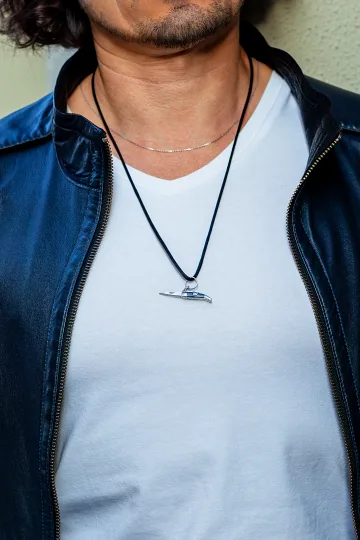




FAQ
What to give parents for a golden wedding?
The central gift, the melting down of their wedding rings into a new pair with fresh gold added: spectral analysis of the composition of the original rings (XRF), melting with the master alloy, casting of two new rings to an individual sketch with two dates and names engraved, a certificate stating the proportion of the client's own and the fresh material. The work takes three to four months; plan six to eight months before the jubilee. If the original rings cannot or should not be melted, the alternatives are: a gold medal engraved with 50 events, a brooch with a miniature of the wedding photograph, a locket with photographs of the generations.
If the rings are melted, can metal be lost?
With correct melting the burn-off (the natural loss in melting and finishing) comes to one to three percent of the original mass. That is normal. Five to ten percent means a poor workshop; fifteen and above is outright fraud. It is simple to keep an eye on: the rings are weighed in front of you on accurate scales, the figure goes into the receiving record, and at the end the finished piece is weighed again and the balance reconciled allowing for the weight of the master alloy. If the discrepancy is more than three percent, ask for an explanation.
What gold purity is needed for a golden wedding?
A minimum of 18 karat for the central gift (a brooch, a medal, a locket): 75% pure gold, a richer colour than everyday 14 karat. A pair of rings worn daily can be 14 karat for strength. For collector versions 22 karat (Eastern tradition) or 24 karat (pure gold for a commemorative ingot that is not worn) will do.
Can something be given without melting down?
Yes. A brooch with a miniature of the wedding photograph, a locket with photographs of all the generations, a medal engraved with 50 events, a new pair of rings with two dates, a composition of 50 miniature plates in one frame. Each format stands on its own.
What to give if no wedding rings have survived?
Melting down is ruled out. The alternatives: a new pair of rings to an individual sketch with fresh gold and two dates engraved; a gold medal engraved with 50 events; a locket with photographs of the generations and a miniature of the wedding shot under glass; a composition of 50 plates in a frame.
What to give if one of the spouses is in poor health?
A personal and practical piece: a locket with family photographs, a light chain with a pendant and a simple clasp, an engraving with the other spouse's name. It is worth taking physical function into account and checking contraindications with the treating doctor (an MRI, for example, requires any metal to be removed). If a large celebration is impossible, an intimate presentation in the circle of the couple and the children does not lessen the value of the date.
What to give if one of the spouses has already passed away?
A golden wedding can be marked as a day of remembrance for the years lived together. A gift for the surviving spouse becomes especially personal: a locket with a photograph of the one who has gone, a ring with two dates, a pendant with initials. This is not mourning jewellery but a sign of a continuing bond.
Can a silver piece be given for a golden wedding?
It can, as an additional gift: a silver locket with family photographs is worth more than an empty gold pendant, the meaning matters more than the metal. But yellow gold carries a direct symbolic link to the date that silver does not reproduce. For the main gift gold is better; silver works well as a gesture from grandchildren or friends.
What to write in the engraving on an anniversary ring?
The minimum: two dates ("14.11.1975-14.11.2025") and both spouses' names. Beyond that, a short Latin phrase ("Quinquaginta anni," "Aurum," "In aeternum"), the coordinates of the wedding place, or a quotation from the personal wedding vow. With a band width of 4 to 5 millimetres, 30 to 40 characters including spaces fit; at 6 millimetres and above, up to 60.
How to choose a jeweller for melting down?
The main thing is that the master checks the composition of the original gold, records the weight in the contract with photographs, and takes the order in person; the real time for such work is three to four months, and a promise of "in a week" is an alarm signal.
Can such a piece live a hundred years?
Yes, with the right material and servicing. Yellow gold of 18 karat or platinum 950 serve a century without loss of properties, and so do precious stones. The most vulnerable parts are the setting (the micro-solders can part after 50 to 70 years) and the clasp (springs and hinges wear out in 30 to 50 years). With a jeweller's check once a decade the piece lives a hundred years too. Documentation is critical here: in a century the great-grandchildren will confirm origin and quality by it.
Is a piece with a diamond fitting?
Quite. A small diamond of good quality in a pendant or in new rings carries the meaning "this is above the everyday," even if in ordinary life the person wore jewellery without stones. Size is not required. The alternative is rare minerals of small size (taaffeite, alexandrite, opal with a play of colour): the value comes from the rarity, not the carat weight.
How to keep the old rings after melting down?
After melting the rings no longer exist as forms; they have become part of a new alloy. But the memory of the form can be kept: before melting, take photographs from different angles and attach them to the certificate of the new piece, or take wax casts. Partial melting is possible too: part of the metal goes into the new ring, part stays in the old for a relic or becomes a small pendant for a new composition.
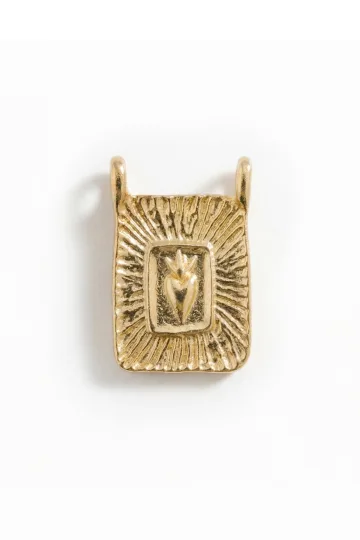
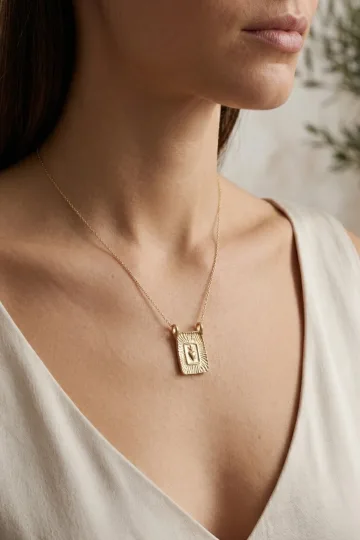
Wear the symbol, don't just read about it. These are in stock:



In Summary
A golden wedding is a biographical event that happens to a minority of marriages: only a small share of them reach it. A couple who have marked fifty years together have come through what stopped others, and that rarity deserves recognition not in the form of an ordinary family dinner but in the form of an object that marks the date beyond the day itself.
What works most strongly here is not "congratulation" but "anchoring": the melting down of their wedding rings into a new pair with fresh gold, with a certificate and an engraving of two dates and names. This is no longer jewellery but a document. In a hundred years a great-grandchild will find the ring in a box, read the two dates and understand: these two lived together for fifty years. The same logic is followed by the gold medal engraved with 50 events, the brooch with a miniature, the locket with photographs of all the generations and the composition of 50 plates. The main thing is to choose an object worthy of the fact: in quality, in meaning, and in the way it will be passed on.
Gold 14 to 18 karat, sterling silver 925, lockets, matching pieces, individual engraving of dates and names, melting down of family metal to bespoke order.
About Zevira
Zevira makes jewellery in the artisan tradition of Albacete, Spain. We work with sterling silver 925 and gold of 14 to 18 karat, offer individual engraving (laser or graver work), and put together pieces for a particular occasion. For a golden wedding we make bespoke orders with the melting down of family gold under a master's supervision, with XRF analysis of the original material and a certificate of the proportion of the client's own and the fresh gold in the new piece.
For a golden wedding you can find with us:
- A matching pair of wedding rings to bespoke order, engraved with two dates
- Gold lockets with engraving and a place for a miniature photograph
- Matching pendants and bracelets with the infinity symbol
- Pieces with the tree of life in 14 karat yellow gold
- Rings with the Claddagh symbol in gold
- Pieces with birthstones by month by the number of children and grandchildren
- Renewed wedding rings engraved with two dates
- Melting down of family gold with a certificate and photographic record of the process
Every piece can be personalised with engraving. Engraving is carried out on request: by hand with a graver for meaningful inscriptions, by laser for technical elements.