Hoop Earrings: A Guide to Choosing and Styling
A sailor would hang a gold ring through his ear as a kind of insurance: if the sea ever washed his body ashore, that gold would cover the burial. Since then the circle at the lobe has travelled from pocket capital to office dress code without changing shape. Egyptians, Nubians and Greeks wore rings of gold and copper long before the word "fashion" existed. Today people slip them on for a boardroom meeting and for the beach alike.
The most valuable thing about a hoop is precisely its plainness: one shape, one metal, one diameter. You read it all at a glance. That simplicity is what turns it into a working ornament for any situation, once you understand a few parameters of choice.
What follows is all practical: sizes, clasps, face shape, pairing with other pieces, care, and common mistakes. No romance about "the incomparable circle of life".
Anatomy of a hoop earring
Before you choose, let us break down what a hoop is made of.
The outer diameter decides how large the earring looks. It is the figure quoted in a product description: "20 mm", "40 mm" and so on. The outer diameter is measured from the outside edge of the ring to the opposite outside edge.
The inner diameter matters for a cartilage piercing: there you need a smaller diameter so the ring sits snug. For the lobe the gap between outer and inner diameter rarely matters in wear, but for cartilage it is decisive: a ring with too large an inner diameter will wobble on the piercing and snag.
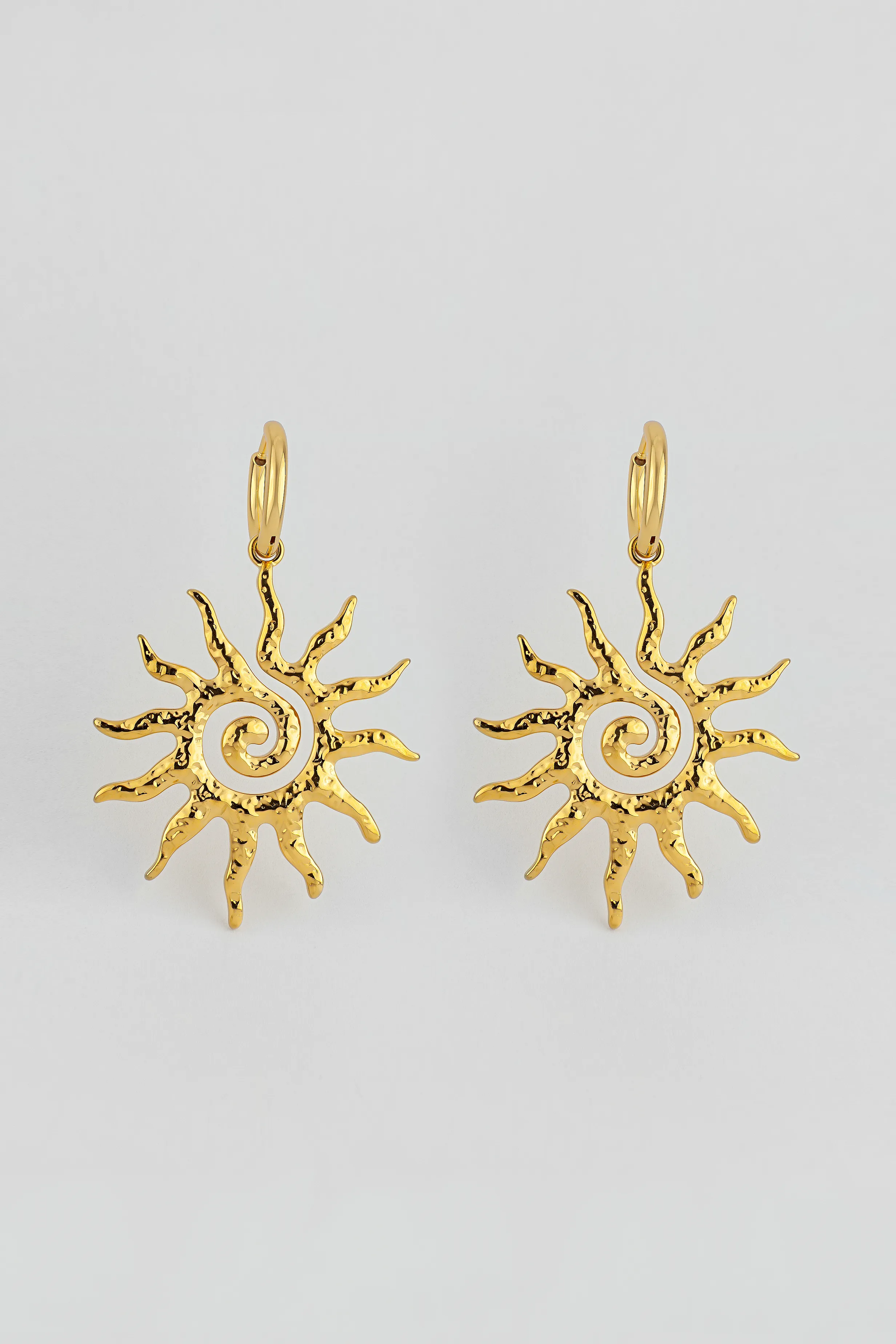
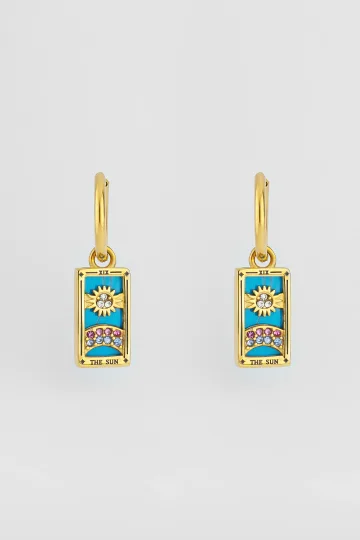
Wear the symbol, don't just read about it. These are in stock:
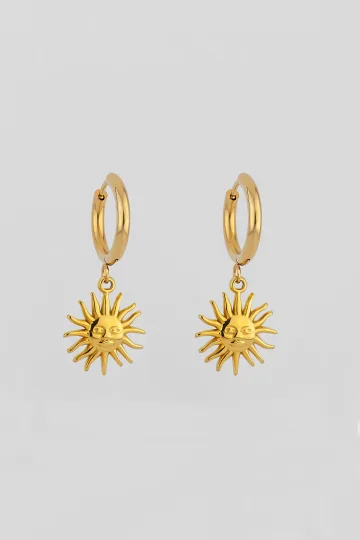
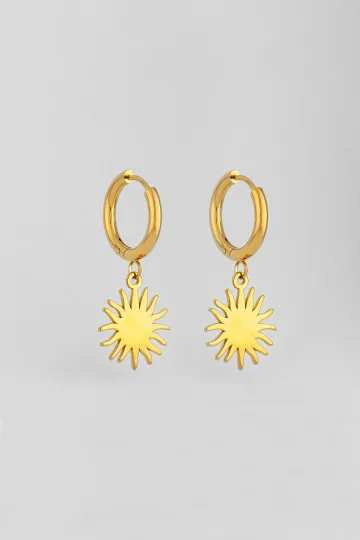
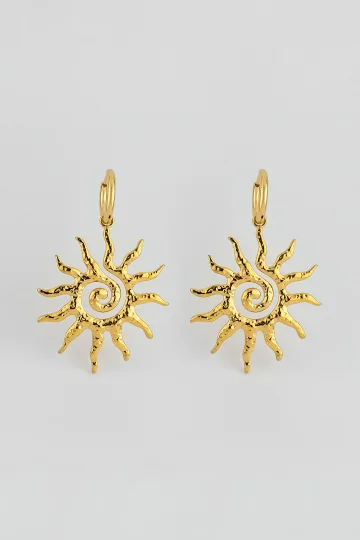
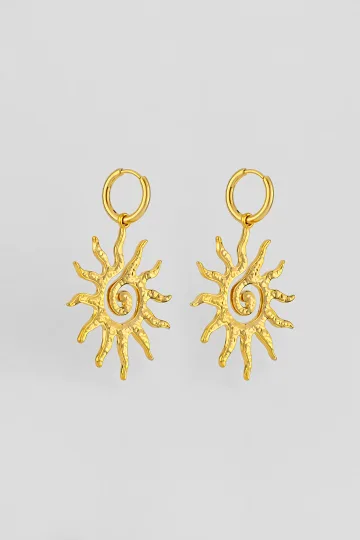



Tube thickness or gauge affects both weight and visual heft. Thin rings from 0.8 to 1.2 mm look airy and delicate. Wide tubes from 3 to 6 mm create volume and a sculptural character. Both work; the choice depends on how visible the piece is meant to be.
The clasp comes in several types. The clasp is what decides how you put the earring on and take it off, and it is the most frequent question from new owners. We will cover it in detail below.
Plating and metal: 14k and 18k gold, gold vermeil over 925 silver, rhodium-plated silver, stainless steel with PVD. Each option has its own care rules and a different lifespan under heavy use.
The shape of the ring varies: a perfect circle, an oval stretched vertically or horizontally, a polygon, a teardrop. All of them count as "hoops", though the visual effect differs greatly.
Sizes: from the tiniest to the huge
The size range of hoops runs from five millimetres to a hundred and beyond. It is easier to navigate if you break it into a few groups.
The tiniest (5-10 mm). They hug the lobe or cartilage tightly. Almost invisible, read as a light detail rather than a statement on their own. Good for upper cartilage piercings, the tragus, the anti-tragus. In the lobe they look like a full stop at the end of a sentence: present, but not overloading. Small rings work well at the top of a stack of several pieces on one ear.
Small (10-16 mm). The classic size for daily wear. They sit at the lobe or just below it. Visible, but they do not draw constant attention. They suit any dress code, including a strict office one. This is the safest choice when you buy your first pair of hoops.
Medium (16-25 mm). The most popular range. The ring extends a little past the lobe, giving a noticeable effect without theatricality. They work at the desk, on an evening stroll, at a meeting in a cafe. This is the range usually called the "universal hoop".
Medium-large (25-40 mm). A noticeable ornament. They drop below the lobe and create movement as you walk. They look good with a short cut or with hair tied up: if hair covers the ears, most of the effect is lost. They demand a light metal: heavy rings of this diameter slowly stretch the lobe.
Large (40-60 mm). A statement, accent piece. For evenings out, photo shoots, special occasions. Hard to pair with a large necklace or other loud pieces at the same time: they compete for attention.
Huge (60 mm and up). The territory of fashion and the stage. In an everyday wardrobe they need a deliberate context: a concert, a party, a shoot. They go with a jumper on a high street only if the whole look is thought through.
Choosing by size in practice
If you are only beginning to wear hoops, the easiest starting point is the 16-25 mm range. It is universal, does not overload the lobe with weight, works with most hairstyles and clothes. Once you have mastered that format, it is easy to move in any direction: towards a stack of small cartilage rings or towards a large evening hoop.
A big hoop wants your hair up and your neck bare. Bury it under loose curls and you have wasted good gold.
Stylist notes: how to wear hoop earrings
A hoop at the lobe is the most honest shape in jewellery: one metal, one diameter, nothing spare. When I put a look together for a client, I start from three things: the hair, the neckline and the occasion. Below are the questions I hear most often at the atelier.
What size works with loose hair? I recommend medium-large hoops from 25 mm, or a chunky huggie with a wide tube. Thick strands simply swallow a small, thin hoop. With hair pulled back and an open neck I suggest a large hoop instead: that is where it finally reads in full.
Gold or silver, what should guide me? I choose by skin undertone. A warm undertone takes yellow gold, a cool one silver or white gold. If both suit you equally, I look at the rest of the metal in the outfit: the watch, the buckle, the chain, so the hoop backs them up.
How do I wear hoops with a necklace without overloading the look? The main rule: I never repeat the scale. Under large hoops I recommend a thin, quiet chain; under small ones you can add a bolder necklace. One accent leads, the other supports.
Thin tube or thick? For a crisp shirt and clean lines I choose a thin tube, it reads as a tidy detail. For everyday knitwear I suggest a wide, sculptural tube: it holds the look on its own and asks for nothing beside it.
What to pick for a deep neckline in the evening? For an open neck and a deep neckline I recommend a single large hoop with no necklace. Let the pieces not compete: the hoop takes the top, the neckline stays clear.

Turn on your camera, pick earrings, a pendant or a ring, and see the piece on yourself in real time.
Switch items in one tap.
Everything runs in your browser: no photo or video is ever uploaded.
Clasp types: how to open and close hoop earrings
The clasp of a hoop determines both comfort and security. Let us go through the four main types.
Hinged clasp (hinge/snap)
The most common in the mass-market segment. The two ends of the ring are joined by a metal hinge on one side. On the other side a pin slots into a small hole or groove.
How to open it: take the ring in both hands, feel for the join with your thumbs and gently move one end away from the other in a "down and to the side" motion, not in the plane of the ring. Pulling both ends in opposite directions, as if straightening a wire, is forbidden: that warps the shape.
How to close it: bring the pin over the groove and press until it clicks. If the ring does not click, the ends are not aligned or the clasp is worn.
This clasp is convenient because it is secure and needs no special dexterity after a little practice. Most huggies and medium hoops use exactly this hinged clasp.
Latch-back clasp
Most often found on rings of medium and large diameter. One side of the ring becomes a movable little latch lever. To open it you swing the lever away from the body of the ring (usually by pressing a small tab), thread the ring through the piercing, and close the lever again.
This is one of the most secure options: the ring will not come undone by accident, even if it catches on hair or clothing. Recommended for large rings worn out: losing an expensive earring to an accidental opening is no fun.
Hoop with post
It looks like a classic stud, but the ring is attached to a post that goes through the piercing, with the end held by a back. Convenient for those used to studs who struggle with open rings. The downside: if the back is lost, the ring falls. It is wise to keep spare backs.
Sleepers (sleeper / endless hoop)
A thin wire ring with no visible clasp. The end of the wire enters a tube at the opposite end and is held by friction or a small spring.
A sleeper should be opened with a sideways motion, not by spreading the ends back and forth: the latter warps the round shape. If the ring will not give, turn it slightly on its axis: that helps you find the point where the spring releases. Sleepers are made for constant wear: it is convenient to leave them in for weeks while a piercing heals or after it has healed.
What to do if the clasp will not open
The main rule: do not force it. If a hinged clasp jams, dab the join with a drop of jewellery oil or baby oil and leave it for five minutes. If a latch will not lock back, the spring has most likely worn out: that is a job for a jeweller. Trying to bend the metal by hand means ending up with a warped ring and the same broken clasp.
Face shape and hoop earrings
Face-shape advice works not as a hard rule but as a hint. If you confidently wear what you like, no facial geometry limits you. But if you are still searching and want a reference, this scheme is useful.
Oval face
The most versatile. The face is a little longer than it is wide, with cheekbones slightly broader than the forehead and the lower part. Any size and shape suit it: from the tiniest rings to the huge. Here you can experiment with size for effect, not because something needs "fixing".
Round face
Width and length are roughly equal. Medium and large rings with a vertically elongated or oval form add length to the face. Thin rings work better than wide tubes: wide tubes echo the horizontal of the face and reinforce the sense of roundness. Teardrop hoops or elongated oval forms are recommended over a perfect circle. With a round face a huggie looks best in upper piercings, not in the lobe.
Square or rectangular face
An angular lower jaw. Round rings of medium diameter soften the geometry. Avoid hard angular polygon rings: they will argue with the jawline. Rings with drops work well, adding movement and drawing the eye away from the corners.
Heart-shaped face
A broad forehead narrowing to the chin. Medium and large hoops that widen below the lobe visually add volume to the lower part of the face. Hoops with drops and larger elements at the base work especially well here.
Long or elongated face
Length strongly outweighs width. Wide, not too long rings, or huggies with a wide tube, add a horizontal. Large teardrop hoops, on the contrary, stretch the face further. The optimal range: 15-30 mm with the accent on tube width rather than on the length of the drop.
Clothing style and ring choice
Office and business meetings
Small and medium rings (10-25 mm) in gold or silver. A thin tube, a simple clasp. Rings with stones are appropriate if they are small and do not dangle as you move. Huge rings stay at home.
A business setting generally accepts hoops in gold or white metal, as long as they are tidy and proportionate. Dented or tarnished earrings of any size look worse than polished rings of a larger size.
Everyday city look
Medium and medium-large rings (20-40 mm). Here texture already comes into play: rings with a ribbed surface, slightly twisted, with a matte finish. Mixed metal is allowed and often looks interesting.
The everyday style permits more freedom in shape: ovals, slightly asymmetric rings, rings with small drops.
Sport and active leisure
It is best to take earrings out. If removal is impossible (a constant piercing), use sleepers or very small cartilage rings: they will not snag on a mask, a helmet or a collar. Large rings at the gym are dangerous: caught on equipment or clothing, they can injure the lobe.
Evening and special occasions
Large and huge rings (40 mm and up). This is the moment for a ring you do not wear every day. Gold reads rich. Silver and white gold add a cold shine. Rings with stones work noticeably more interestingly under evening light than under daylight.
Holiday and beach
Thin medium rings in steel, vermeil with good PVD plating, or solid gold. Seawater and chlorine harm many platings: stainless steel and solid gold tolerate it best. You can read more about how metals behave in water in the guide on types of earrings.
Metal colour and skin tone
This is not a rule but a framing hint.
A warm skin undertone (yellow, peachy shades): yellow gold, 14k or 18k, looks organic. Rose gold underlines the warmth.
A cool undertone (pinkish, bluish): silver, white gold, rhodium.
A neutral undertone: both yellow and white sit equally well.
These are averaged recommendations. In practice much depends on contrast: against dark skin, yellow gold creates a powerful contrast that works on large forms. Against fair skin, silver gives the same effect.
Mixing metals (gold rings and a silver necklace) has become the norm in recent years. The one condition: one of the metals must read as dominant, the other as an accent.
Customer reviews
Zevira is a real jewellery shop. Genuine payments, deliveries and customer thank-yous.
🥰🥰🥰 gracias
Ok, ¡gracias! 🙂
Thin and thick rings: what is the difference
A tube of 1-1.5 mm reads as a delicate detail. A tube of 4-6 mm is already sculptural and has a character of its own.
Thin rings:
- do not overload the ensemble of jewellery
- combine well in a stack (several on one ear)
- underline elegance
- are lighter in weight at the same diameter
Thick rings:
- are the main accent in themselves
- need no extra pieces alongside
- give a feeling of confidence and volume
- are more visible with long hair
Tube thickness and ring size work together. A thick small ring looks dense and concise: that is exactly how a classic huggie looks. A thin huge ring looks like a line in the air: light, almost weightless. Both work, but they give an entirely different impression.
Hoop earrings combined with other jewellery
Hoops and a chain or necklace
The main rule: do not duplicate scale. Rings in the ears and pendants on the neck compete for attention. If the earrings are large, the chain should be thin and quiet. If the rings are very small or small, you can add a massive necklace.
By metal: matching tone (both gold or both silver) creates a strict, composed look. Mixing works when there is deliberate logic: for example, gold rings and a silver chain with a gold pendant.
Hoops and bracelets, rings on the hands
When the ears are active, the hands most often take a supporting role. A thin chain bracelet or a single ring on a finger will back up the look without overloading it. If the ears carry large hoops, several wide bracelets create a sense of excess.
Hoops in a composition of several earrings on one ear
The composition is built on the principle of decline: the largest pieces at the bottom (in the lobe), the smallest at the top (cartilage). A hoop in the lobe, a stud in the first cartilage piercing and a small ring in the helix make a working three-point scheme. The guide how to build an ear stack on one ear covers the principles of combining in more detail.
Upload a photo of your pet, someone you love, or an object. We'll build a 3D model and hand-cast it in pewter.



Double piercing and ring combinations
With two piercings in the lobe a typical scheme looks like this: the lower hole takes a ring (medium, 20-30 mm), the upper takes a stud or a small ring (8-12 mm). Two rings in one lobe work if they are of different diameters: identical ones side by side look accidental rather than deliberate.
Another option: the lower hole takes a snug ring, the upper takes a medium ring. Then the piercing looks composed and neat.
A combination of three lobe piercings has its own logic. The lower piercing: a large or medium ring, which sets the scale of the whole cluster. The middle piercing: a stud with a stone or a small snug ring. The upper piercing: a thin small ring or a plain stud. The spacing between piercings in this scheme must be even, or the proportions fall apart.
A separate theme: a double piercing with rings of different metals. Gold in the lower piercing and silver in the upper reads as a deliberate device, especially if you add a bracelet of the opposite metal on the wrist as a third element. The principle: repeat each metal in at least two points of the look, or the contrast looks like a mistake rather than a decision.
If you are only trying a double piercing and unsure of the scheme, start with the simplest: one medium ring below, one stud above. This works with any face, any hairstyle and any clothing style. From there you can swap elements one at a time, guided by what you like in practice. The guide on types of earrings examines the principles of wearing several earrings on one ear in detail.
Rings with drops and interchangeable charms
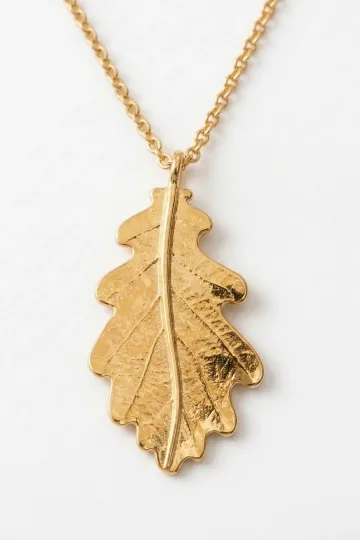
Some hoops carry drops: stones, hearts, leaves, geometric figures. Technically that is no longer a pure hoop, but the base shape remains a ring.
A ring with a drop has the added effect of movement: the drop swings and draws the eye. That swinging pendant relates such an earring to classic drop earrings, only here the support is not a stud but a closed circle. It is good for an evening look and makes the piece dressier without enlarging the diameter of the ring itself.
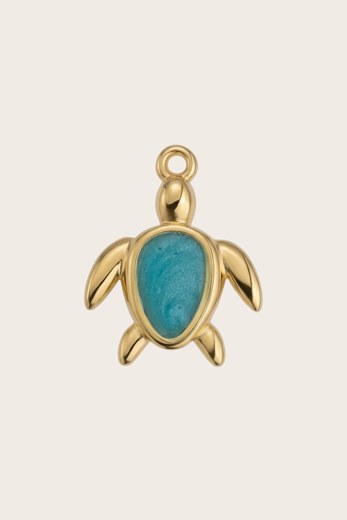
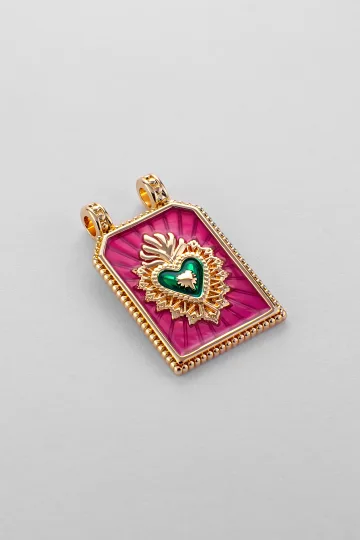
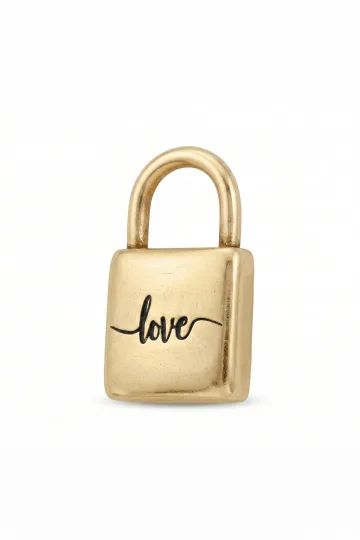
Rings with interchangeable charms let you change the drops on a single base. If the main ring is of good quality, you can attach a small charm, crystal or symbol to it. It is a handy system: one earring, several looks to match a mood or an occasion.
Drops come fixed and interchangeable. A fixed drop is soldered to the band: it will not be lost or slide aside. An interchangeable one attaches by a tiny clasp or a connector ring: it can be removed and replaced with another. For active wear the fixed kind is more reliable. For those who like to change the look with their mood, the interchangeable format is better value.
The size of the drop relates to the diameter of the ring. On a 20-25 mm ring a small drop of 6-8 mm looks proportionate. On a large ring of 40-50 mm you can place a heavier drop. If the drop is bigger than half the diameter of the ring, the ring visually stops reading as a ring and turns into a drop earring with a round element. That is not a mistake, just a different character of piece.
Rings with drops work well paired with a plain stud in an upper piercing or in the cartilage. The drop creates movement below, the stud keeps the upper point calm. Such a pair reads as finished without overload.
When buying a ring with a drop, it matters to check how it is fastened. A soldered drop is more reliable than a simple pin in the ring: a pin can bend open on an accidental snag.



Huggies: rings flush against the lobe
"Huggie" (literally a hugger) means a small ring that sits against the lobe with almost no gap. The diameter is usually 8-14 mm, the tube most often wide, from 2 to 5 mm. This makes a huggie a disproportionately noticeable earring: the tube volume is more pronounced than the diameter itself.
A huggie is good in layered compositions: it goes in the lower piercing, while classic rings or studs are added in upper piercings or cartilage. The difference in shape and in closeness to the ear creates interest without fuss.
A huggie with pave stones or a ribbed texture gives more shine at a small size. A smooth polished huggie looks minimal and expensive.
In terms of load on the lobe a huggie is one of the best options for daily wear: a small diameter means a small lever, a small lever means minimal load on the piercing.
Cartilage rings: helix, conch, tragus
Cartilage rings are distinguished by a small diameter (6-12 mm), a thin tube (usually 16G or 18G) and a secure clasp that does not catch on hair or clothing. Rings are not recommended for a fresh piercing: it is better to start with a stud and switch to a ring only after full healing.
The helix (the outer curve of the ear) takes thin rings of 8-10 mm. The conch (the central bowl of the ear) needs a larger diameter: 10-14 mm. The tragus (the nub in front of the ear canal) takes rings of 6-8 mm.
Material matters for cartilage. Recommended: ASTM F136 titanium alloy, solid gold or niobium. Surgical steel (ASTM F138 standard) is also acceptable, provided there is no alloy allergy. Read more about piercing types and care rules in the guide on types of ear piercings.
When choosing a cartilage ring, pay attention to the clasp type: hinged or a lobster clip is preferable, because they do not protrude beyond the plane of the ring and do not catch on clothing. Sleepers are good for cartilage but take practice to open.
Leave your email, we'll send your discount code. No spam, unsubscribe anytime.
The code arrives by email, valid on your first order.
When to take rings out
Sleep. The usual advice is to take them out. In practice many people leave sleepers and small rings in for years with healed piercings, and that is fine if the metal is good quality. Large rings are better removed: they catch on the pillow and can warp or damage the piercing in your sleep.
Sport. Take out or swap for small ones. Sweat speeds up the oxidation of plating. Physical contact with equipment is unsafe with large rings.
Shower and pool. Chlorine destroys plating and accelerates the tarnishing of silver. Solid gold and stainless steel tolerate water fine. Silver darkens faster from chlorine than from air.
Working with chemicals. Removal is essential: household chemicals, bleach, acetone and hair dye will do irreversible harm to any plating and to many metals.
With inflammation or allergy. If the ear swells or itching appears at the piercing site, the ring is better removed until things clear up. Continuing to wear it during an active reaction makes the irritation worse.
Hoop earrings and sport: helmet, cap, training
The general rule for sport is simple: take the earrings out before training begins. But life is arranged so that this is not always possible or wanted. So it is useful to know what exactly creates the risks and how to cut them.
Helmet. Cycling, skating and ski helmets have side straps that run in front of the ears. When buckled, the strap sits tight against the cheek and lobe. A large ring hanging below the lobe will be pinched between strap and skin in this scenario. That is unpleasant and puts pressure on the piercing. If you remove the helmet several times in a session, the strap will catch each time. For riding in a helmet only snug small rings up to 12 mm or flat studs are suitable. Rings of 20 mm and up are better put in a pocket before riding.
Cap and baseball cap. A cap itself does not bother earrings. The trouble appears on removal: if the ear slides past the edge of a hard peak, a large ring can catch. Earrings with a smooth surface and a clasp without protrusions come off under a cap without trouble. Sharp decorative elements and exposed pins catch more often.
Strength training. A barbell bar, machine cables, the edge of a bench: none of these threaten the ears with standard technique. Risk appears in exercises where the head is close to metal surfaces or to the apparatus. Rings do not interfere during back squats. In a bench press a ring in the ear is also clear of the load. The main inconvenience: large rings swing during movements and distract, especially during fast work.
Martial arts, contact sport, team games. Any direct contact with the ear area creates risk. Wrestling, boxing, rugby, basketball: earrings of any size come out without exception. The rules of most sports federations directly forbid jewellery in competition.
Swimming and water sports. Chlorine in a pool is aggressive towards plating and silver. Seawater is neutral towards stainless steel and solid gold, but salt speeds up the oxidation of silver. If you swim with rings constantly, choose stainless steel or unplated solid gold. Wipe them dry straight after.
Running and cardio. Light small rings interfere least of all while running. If the rings are small and the clasp is secure, you can quite well leave them in before a run. Large rings swing while running and may strike the neck, which is uncomfortable over long distances.
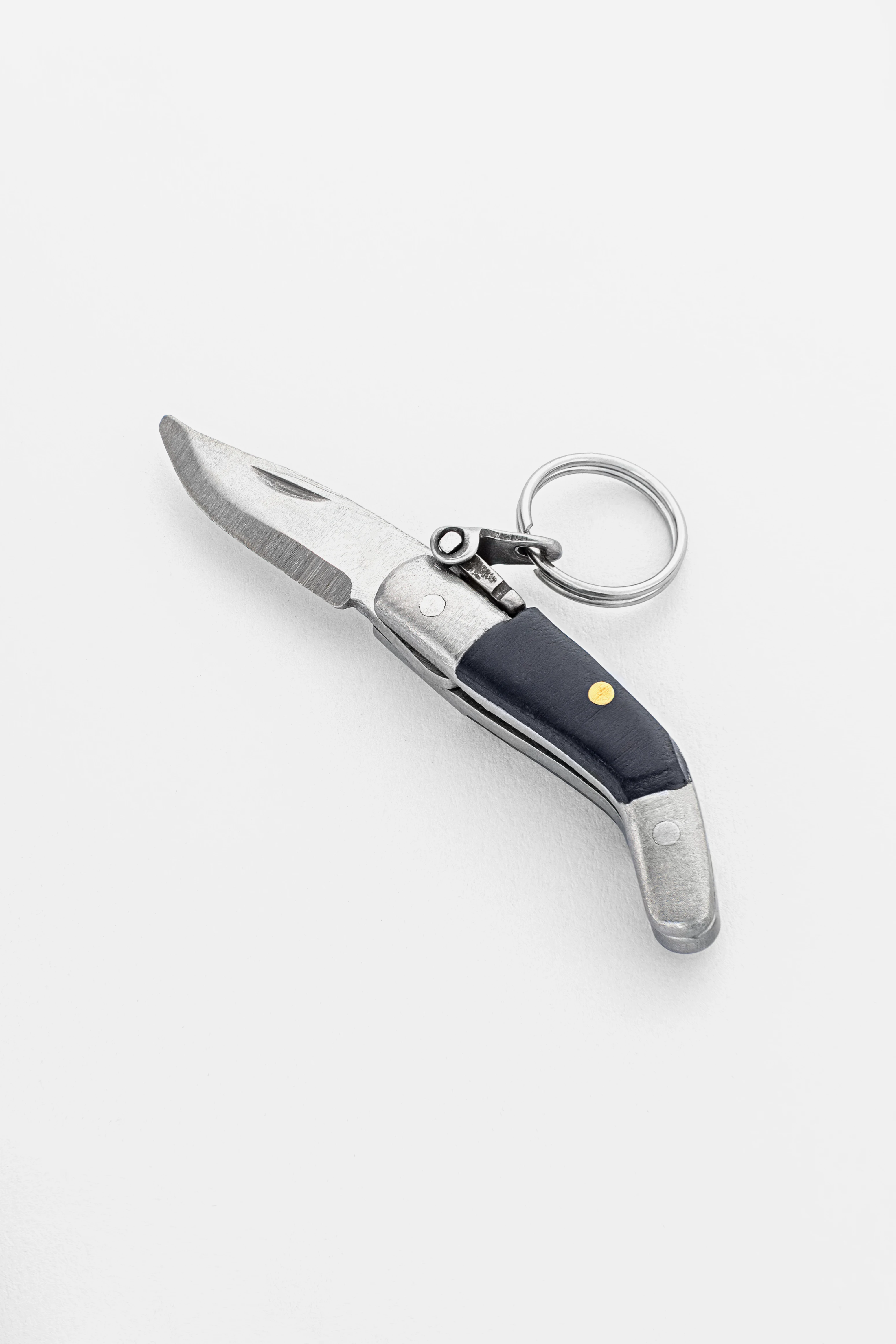
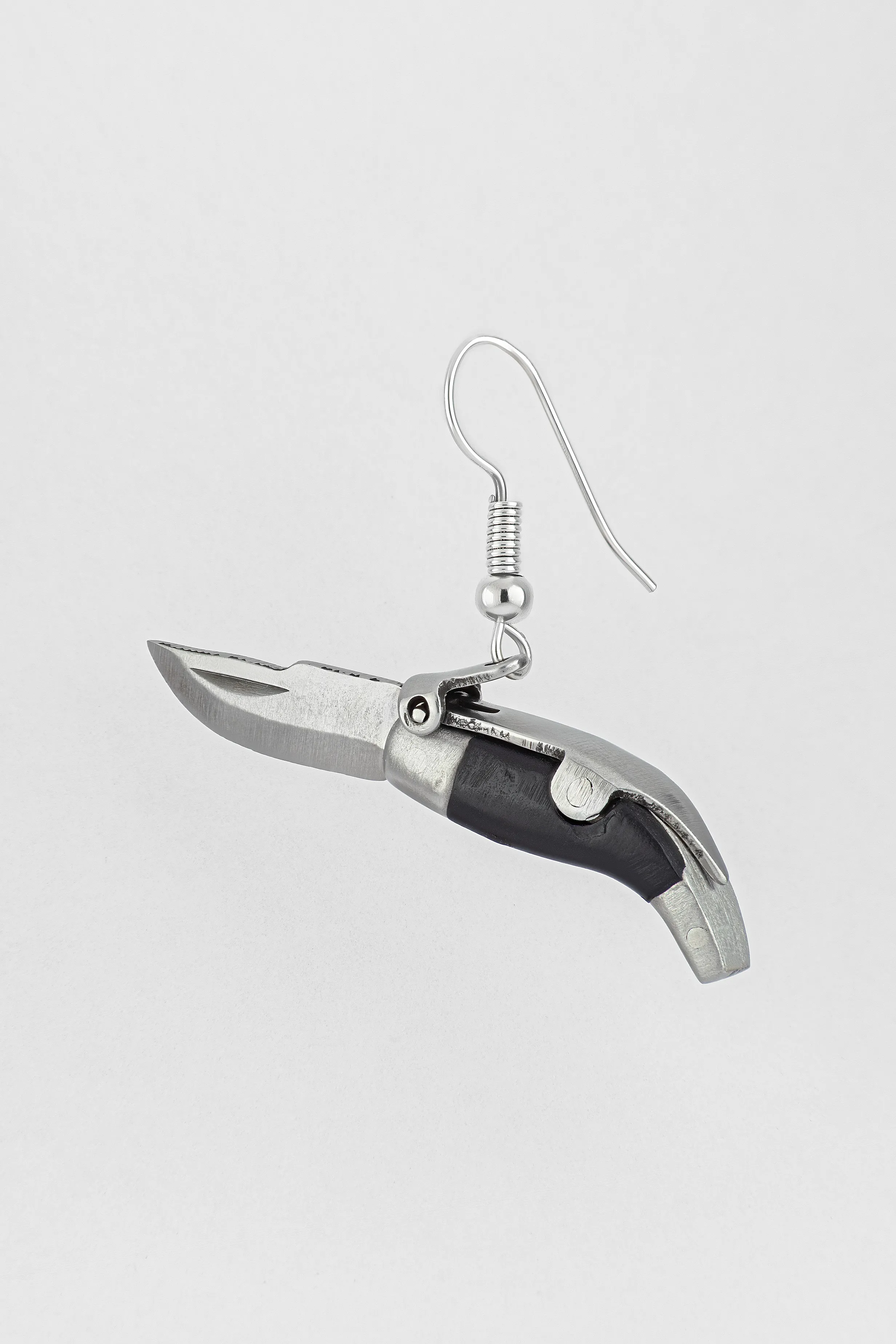
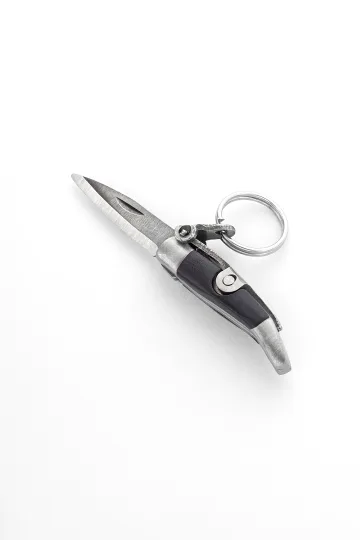
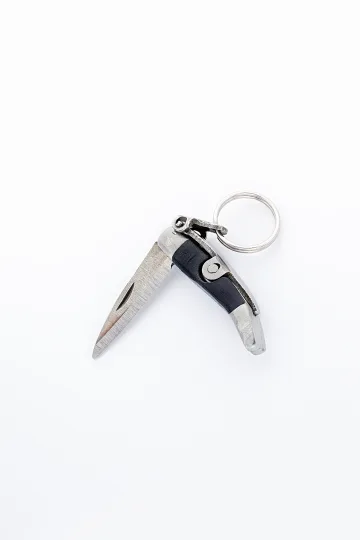
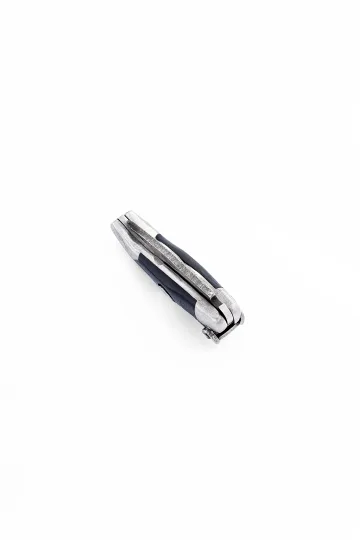
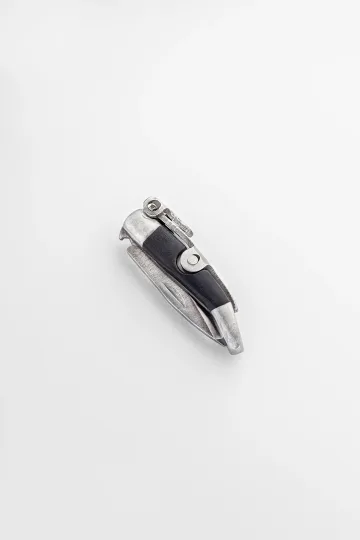
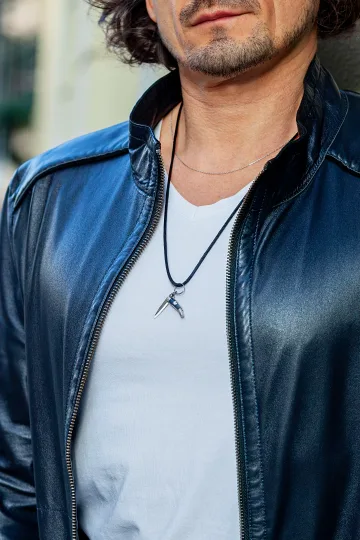
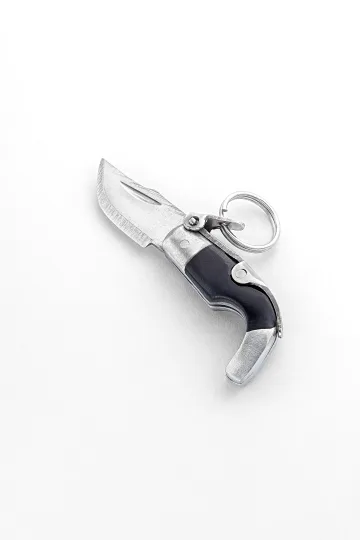
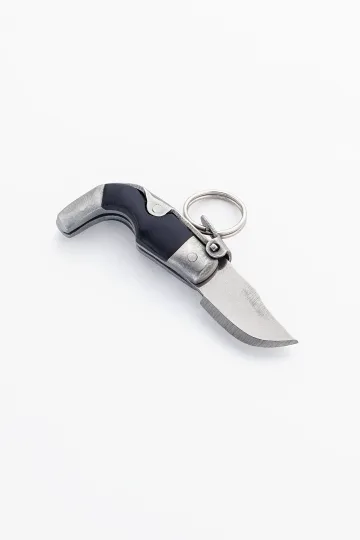
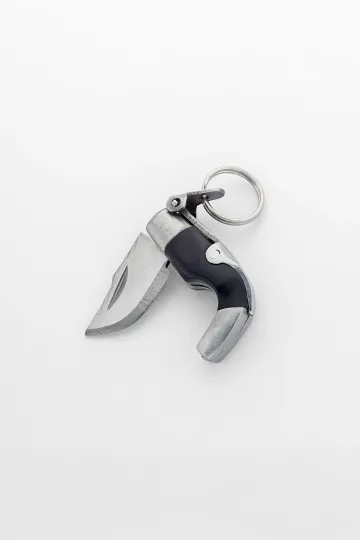
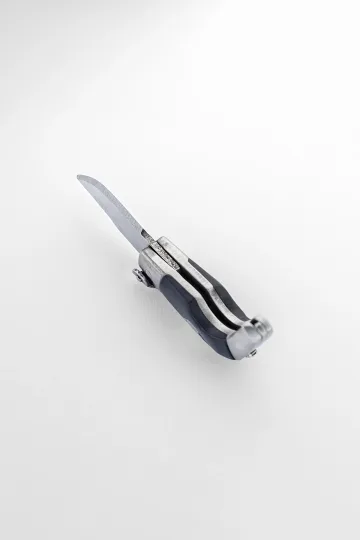
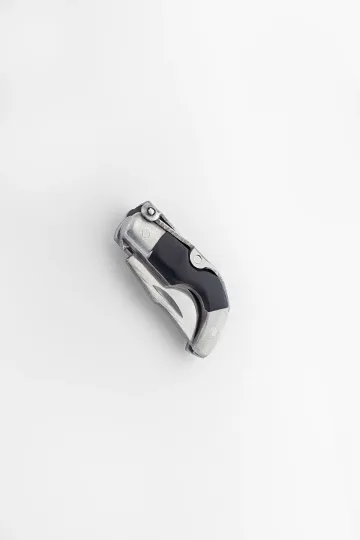
CAPAORA mini knife pendant
The 18th-century Spanish navaja in miniature: 40 mm of stainless steel, a real folding mechanism and a Palanquilla lock that clicks. An affordable gift to remember.
Authentic · Ships from Spain · 14-day returns
Quality: what to look for when buying
Seam and weld. On a quality ring the join of the seam is invisible to the naked eye. If the seam sticks out or can be felt with a finger, the metal can catch the skin of the piercing and cause irritation.
Clasp type. The best indicator of quality: open and close the ring ten times. The clasp should click crisply and without loosening. If the latch already "wanders" on the fifth closing, that foretells an early breakage.
Metal thickness. Too thin a metal deforms under the effort of opening. A good ring does not bend in the hand under light pressure.
Plating. Check the edges: that is where plating wears first. If a new ring already shows grey patches along the edge, it is a defect.
Weight. A 40 mm ring of thin plated metal will be light and may feel flimsy. A ring identical in appearance but of solid silver with vermeil will be noticeably heavier and last longer. For large diameters this is the difference between a stretched lobe after a year and normal wear.
Hallmark or marking. Look for a marking on the clasp or inner side: 925, 585, 750, "Steel", "Titanium". The absence of a marking does not always mean poor quality, but with a marking you know exactly what you are getting.
Care for hoop earrings
14k and 18k gold. Wash with warm water, mild soap and a soft brush. Store apart from other metals: gold is soft and scratches against silver. Polish with a soft jewellery care cloth once a year.
925 silver. Tarnishes in air, especially humid air. Wipe with a soft cloth after wearing. Store in an airtight bag or in a box with silica gel. For heavy tarnish: a silver jewellery paste or a polishing cloth.
Vermeil over silver. The most delicate option. Do not use it in the shower or pool. Do not rub with abrasives. Store in a separate compartment so it does not scratch. The plating wears with time: it can be renewed at a jeweller if needed (re-plating).
Stainless steel with PVD. The most low-maintenance option for active wear. Wiping with a cloth is enough. It scratches on contact with hard surfaces but is practically immune to corrosion.
A general rule. Put earrings on last, after perfume, hairspray and other products. Take them off first before household work. Do not store several pairs in one compartment without dividers.
Hoop earrings as a gift
Hoops are one of the safest choices as a gift, because the size is not as critical as for a finger ring. A few pointers.
If you do not know the person's style: small or medium rings (16-20 mm) in yellow gold or silver, without stones or drops. This is a universal option that suits any wardrobe.
If you know the person wears cartilage rings: very small, 6-10 mm, in surgical steel or solid gold.
For a teenager: steel or gold-plated rings in the 15-25 mm range, light, with a hinged clasp. Steel withstands an active lifestyle.
For a formal occasion: vermeil with a thick layer of gold, or solid gold, medium-large diameter, possibly with a stone.
You can read about choosing earrings as a gift and the meaning of the left and right ear in the guide earrings in the left and right ear: meaning and history.
Common mistakes
A lot of half-clichéd claims have piled up around hoops: about size, weight, clasps and face shape. Before we go through the specific slip-ups, it is worth testing a few common notions for strength.
Too heavy rings for every day. An earring weighing 5 grams or more, worn daily, slowly but surely stretches the piercing. That is irreversible without surgery. For constant wear choose rings lighter than 3-4 grams.
A cheap alloy of unknown composition. Nickel in a metal causes contact dermatitis: itching, redness, flaking at the piercing site. If a reaction appears to new earrings, change the metal first rather than treating the symptoms.
A ring too small in diameter for the thickness of the ear. If the ring presses on the piercing, it is not a matter of getting used to it. It is simply too small a diameter. You need a ring with a slightly larger inner diameter.
Opening the clasp by bending in the plane. The most common technical error: pulling the ends of the ring in opposite directions in one plane. That warps the round shape, and the ring will no longer close evenly. It should be opened perpendicular to the plane of the ring.
Wearing both ears the same with an asymmetric composition. Asymmetry works when it is deliberate: a large ring in one ear, a stack in the other. An accidental difference (one earring fell out) reads differently. Either build asymmetry consciously, or keep both ears the same. The principles of asymmetric wear are described in the guide on compositions of earrings on one ear.
Ignoring care. Gold-plated earrings darken from perfume and cream if you put them on "over the top". Apply perfume before the earrings, not after.
Mixing many elements without logic. A stack of earrings, a necklace, bracelets and rings on the hands all work together only with strict selection. If everything seems loud, only noise becomes loud.
Hoop earrings and hairstyle
A hairstyle changes how hoops work, and that is worth taking into account when choosing a size.
Hair tied up. A bun, a ponytail, a high bob, a pixie, a short cut, an open neck: the earrings are fully visible. This is the best context for large and medium-large rings. With the hair up, a ring of 30-40 mm reads in full and works as the main accent of the look.
Hair down. With long and medium hair the earrings may be partly hidden by strands. Rings up to 20 mm often get lost. The optimal size with hair down: medium-large from 25 mm up, or a huggie with a voluminous tube that stays visible at the lobe. A thin small ring will simply vanish in thick hair.
Bob and short cut. Here the rings are well visible and work as a structural element of the look. Medium rings of 20-30 mm complement the geometry of the cut. Huge rings look very expressive with a short bob.
Side parting. With a side parting one earring shows better than the other. This is a good reason for deliberate asymmetry: a large ring on the open side, a small one or a stud on the hidden side.
Braids and complex hairstyles. Small braids, dreadlocks, weaves: small rings can catch on the hair. Choose rings with a smooth clasp without protrusions, or a huggie with a hinged closing.
Send a friend a discount code, they save on their first order.
A short history of hoop earrings
You do not need history to wear hoops, but the context can be interesting to know.
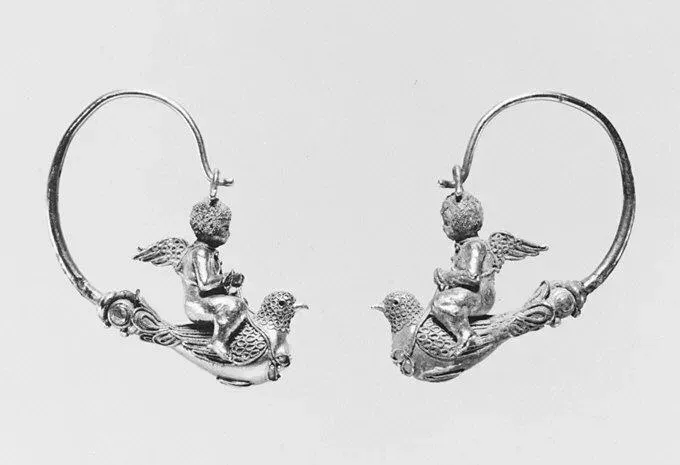
The first finds of hoop earrings date to the third millennium BCE. They were found in burials of Mesopotamia, Egypt and Nubia. Even then the material had meaning: gold marked high status, copper was worn widely, bronze was an intermediate option.
In Ancient Greece men rarely wore earrings in the classical period, while women actively used rings with drops. Greek jewellers made rings in the shape of a snake biting its own tail, an ouroboros in the ears.
The Romans inherited the Greek tradition and added stones. That line of succession reached our day through the workshops of the Apennines, where a recognisable Italian school of hoop earrings took shape with its love of dense gold and clean geometry. In Rome gold rings in the ears were worn widely. Slaves wore an earring in one ear as a mark of belonging. Seafarers wore a gold earring as portable capital.
In medieval Europe hoops temporarily went out of fashion: high collars and headdresses covered the ears. The return came in the Renaissance.
In the twentieth century hoop earrings became, in turn, the symbol of various subcultures. In the 1960s-70s large gold rings were worn by women of the civil-rights movement as a sign of cultural belonging. In the 1980s the punk and rock scene popularised cartilage rings among men.
Today hoop earrings carry no single symbolic code: anyone can wear them, and they are not a marker of any one group.
Hoop earrings for men
Men's hoops differ from women's mainly in proportion, not in the principles of choice.
Size. Men more often choose small and medium rings (10-25 mm), though that is a matter of style, not a rule. A small ring in one ear reads as a restrained accent. A cartilage ring (helix or tragus) has long become part of an ordinary look.
Metal. Yellow gold, silver, steel: all three options are common. A man's look more often leans towards thinner rings or cartilage rings, though large lobe rings are also used deliberately.
One ear or both. Both options are normal. A ring in one ear reads as an accent. Rings in both ears are neutral. Asymmetry (a ring in the lobe on one side and a cartilage ring on the other) creates a more complex look.
Hoop earrings with coloured stones and inserts
Classic hoops without stones are universal, but versions with inserts widen the possibilities.
Pave rings. A ring with small stones in a prong setting running along its outer surface. They create the effect of a sparkling band. They look good both in daylight and in the evening, when the shine intensifies. A huggie with pave is especially popular.
Rings with a single stone. A single accent stone on a ring: in the shape of a teardrop, a circle or a navette. Less dressy than pave, but it has character. Good in an everyday version. The same principle of a single stone that lies at the heart of the classic solitaire carries over to an earring: one clean accent reads as more expensive than a scatter of small inserts.
Rings with coloured enamel. A trend of recent years: a thin ring with a band of coloured enamel. It adds colour without the brightness of stones. It goes well with a single-colour look.
Rings with pearls. A pearl on a ring (as a drop or set on the band): a classic that works in both everyday and evening looks. Freshwater pearl is more affordable, saltwater more costly, the effect similar.
When choosing a ring with stones it matters to check the setting: the stone should be held securely and should not wobble under light pressure.
FAQ
What diameter is considered standard?
The standard for the lobe in most jewellery descriptions is 20-25 mm. This is the "medium" ring that most people wear in everyday life. For cartilage piercings the standard is different: 8-10 mm.
How do I tell whether a ring fits my piercing by diameter?
Buy a ring with some room: a little larger than seems needed. Too tight a ring presses on the tissue of the piercing, especially if the lobe is a little swollen in the morning. There should be a gap of 2-4 mm from the surface of the skin to the metal in comfortable wear.
Can hoops be worn all the time without taking them out?
Sleepers and small rings of an inert metal (titanium, solid gold, surgical steel) tolerate constant wear fine with a healed piercing. Silver, in constant contact with skin and moisture, darkens faster. Rings with a latch clasp are better taken out: the spring in the clasp wears under constant load.
Why does a ring darken faster against the skin?
Sweat contains salts and acids that speed up the oxidation of metal. Plus cosmetics, soap, moisturiser. The inner surface of the ring in contact with skin darkens noticeably faster than the outer. Wipe with a soft cloth after every wear.
What does G mean in the specs of a cartilage ring?
G stands for gauge, that is the thickness of the wire. 20G is thinner than 16G: the smaller the number, the thicker. For the lobe the standard piercing thickness is 20G or 18G. For cartilage 16G is more often used, slightly thicker for strength. It matters to match the ring to the size of your piercing.
How do I tell whether a metal suits my skin?
Wear a new earring for several hours one day. If itching, redness or burning appears, take the earring out. The reaction points to nickel or another allergen in the composition. Ask the seller for the exact composition, or choose earrings marked "nickel-free" or made of solid gold.
Can hoops stretch the lobe?
Yes, with systematic wear of heavy earrings. The earlobe is elastic but has no shape memory: under constant load it slowly stretches. This speeds up with age, when the skin loses part of its tone. For daily wear choose rings up to 3-4 grams.
How do I correctly clean rings with stones?
It depends on the stone. Hard stones (diamond, sapphire, ruby) tolerate a gentle damp clean with a brush. Soft stones (pearl, opal, malachite) lose their shine from water and soap: wipe them only with a dry soft cloth. Crystal and glass are cleaned with a damp cloth without abrasive.
How do huggies differ from ordinary small rings?
The main difference is how the ring sits on the ear. A snug ring touches the lobe almost without a gap. An ordinary small ring dangles freely around the piercing. On top of that, rings with a wide tube at a small diameter create a voluminous, textured look.
Can hoops be worn during pregnancy?
Wearing earrings during pregnancy is not in itself contraindicated. The question is that the body changes: the skin becomes more sensitive, and reactions to metals that were once tolerated fine may flare up. If in the first trimester irritation appears from earrings worn without trouble before pregnancy, it is worth switching to a hypoallergenic metal. Earrings are removed right before surgical procedures, so it is more convenient not to wear them on the days of scheduled appointments. Otherwise there are no restrictions.
Why does a ring in the ear rotate and slide down?
This is normal behaviour for a ring with a smooth surface worn in the lobe: gravity turns it so that the clasp ends up at the bottom. If the clasp is noticeable or unsightly, look for rings with a hinge clasp placed at the side rather than at the base. Some rings are deliberately made with a decorative element at the bottom, designed for this rotation. Another option: rings with a ribbed inner surface hold slightly tighter in the piercing and rotate less. You cannot fully remove this with smooth rings: it is physics, not a defect.
What to do if a piercing has begun to close but is not shut yet?
If a piercing is healing over after a long break, you must not force the earring in: that injures the tissue. Try massaging the piercing site with clean hands and a drop of oil (shea, coconut) for a few minutes. If the piercing has narrowed, start with a thin ring or a 20G wire. If the ring will not go in without effort, go to a piercing studio: a specialist will widen the piercing correctly without damaging the tissue.
Buying it as a gift? Each one arrives ready to give.
 A branded Zevira box and a little card come with every order.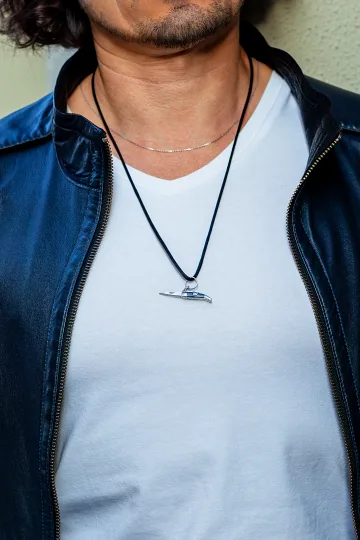




Conclusion
Hoop earrings work in any wardrobe precisely because they do not pretend to complexity. Diameter sets the scale, the tube sets the character, the metal sets the tone, and all the information is read at a glance.
Choosing a specific pair is easier if you keep priorities by situation in mind. For daily wear weight matters more than beauty. For the evening the effect matters more. For a cartilage piercing the metal matters more than the size. For a gift universality matters, not the personal taste of the giver.
If you are only beginning to build a collection of ear jewellery, rings of 20-25 mm in yellow gold or silver will be a universal base, to which you can add studs, snug rings and cuffs gradually. The guide on ear cuffs tells more about cuffs and jewellery without a piercing.
Hoop earrings of various diameters, huggies, cartilage rings and models with drops in 925 silver and gold.
About Zevira
Zevira makes jewellery in the artisan tradition of Albacete, Spain. Hoops are one of our basic shapes: we keep a range from snug huggies to large rings for going out, because the plain shape of the circle is exactly what works in any wardrobe.
What you can find with us in hoops:
- classic rings from small to huge, for every day and for the evening
- huggies with a smooth and a ribbed tube, comfortable for daily wear
- rings with hinged and latch clasps of different degrees of security
- models with drops and interchangeable charms for changing the look on one base
- thin rings for cartilage and for stacks on one ear
- options with pave, a single stone, enamel and pearl
Each piece is made by a craftsman by hand, with the option of personal engraving. 925 silver and 14-18K gold.