How to Not Buy Fake Jewellery: A Complete Verification Guide
Introduction: the counterfeit market is larger than you think
According to the OECD and the European Union Intellectual Property Office, counterfeit jewellery consistently ranks among the top ten categories of global counterfeiting by volume, and the trade is valued in the billions every year. That is only the traceable share. The real figure is probably several times higher.
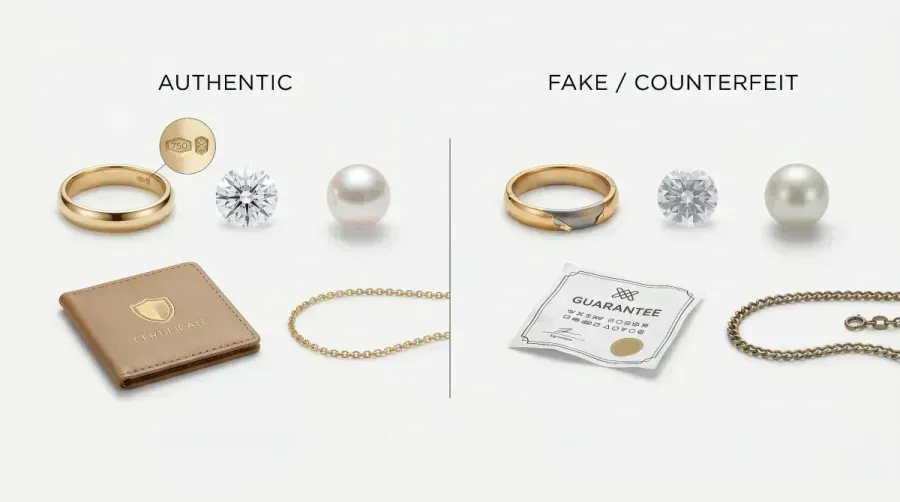
A fake in jewellery is rarely the obvious "cheap copy of a famous brand". Far more often it looks like one of these:
- Gold-plated pieces sold as solid gold (the most common scheme of all)
- Cubic zirconia passed off as a real diamond
- A laboratory-grown diamond sold as natural without disclosure
- Glittery plastic positioned as a "gemstone"
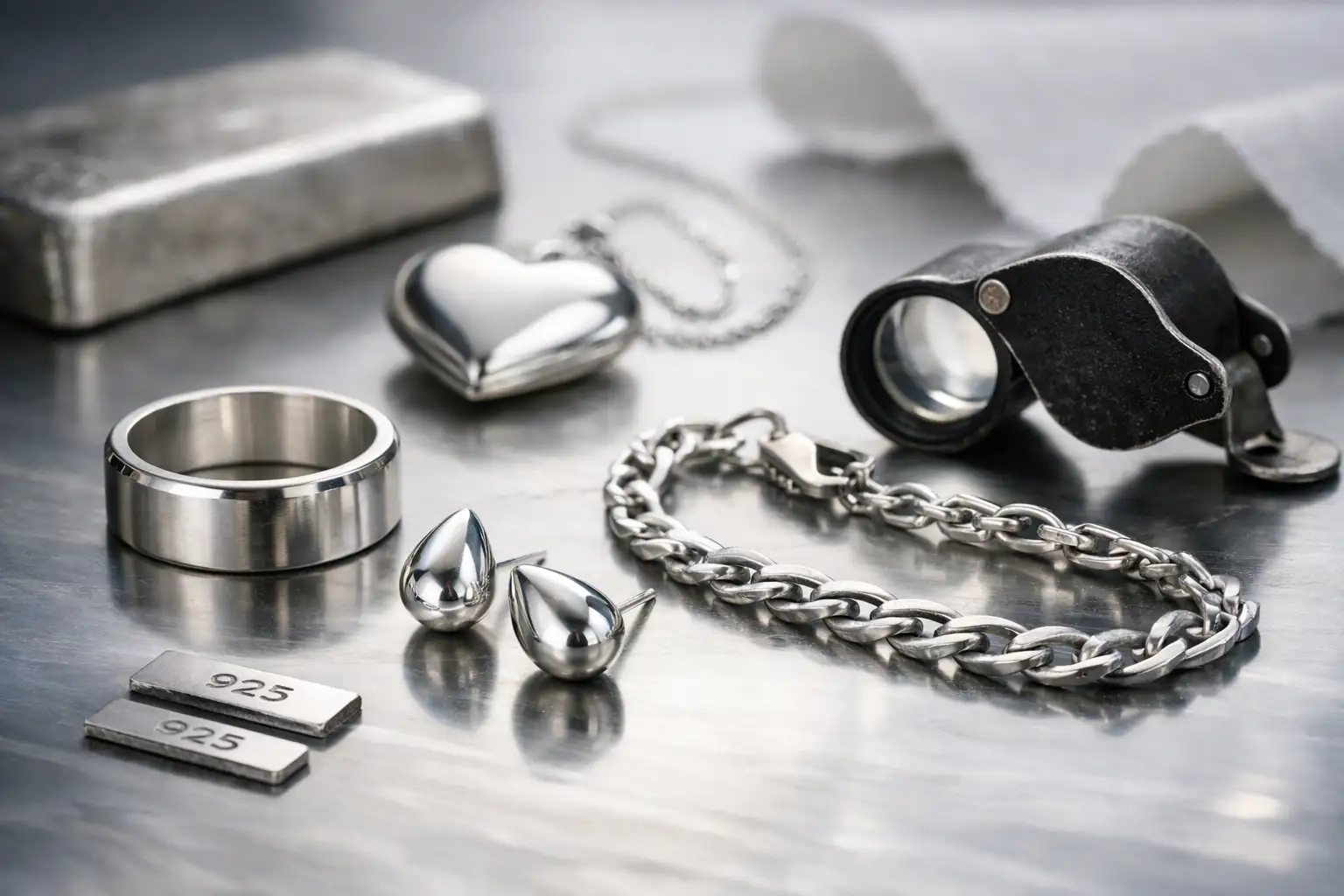
- A silvery base metal sold as 925 silver
- "925 silver" with no genuine assay-office hallmark
- A "natural diamond" that turns out to be laboratory-grown (or the reverse)
- An "emerald" that is green glass or garnet
- "Vermeil" that is in reality a thin flash on brass
- "Vintage" made last week
- Counterfeit hallmarks stamped onto a piece after it was made
Every category of purchase carries its own risks. Each also has verification methods that work even without a professional laboratory.
This guide covers how to avoid being deceived when buying jewellery: gold, silver, gemstones, branded pieces, vintage, buying abroad, inherited items, and online fraud.
Core rules before you buy
Rule 1: too cheap means a fake
If the genuine article belongs to the premium segment and is being handed over for next to nothing, you are looking at a fake. The rule is simple, and neglecting it is expensive.
A solid 14ct gold chain (fine, 40 cm) cannot cost the same as budget costume jewellery. The 14ct gold content alone is worth more than that. So that "deal" almost always hides a fake.
The same principle applies to:
- Natural diamonds priced well below the standard market range per carat
- Emeralds below the mid-market range per carat
- Rubies below the mid-market range per carat
- Genuine akoya pearls below the mid-market range per strand
- Platinum significantly below the current spot price per gram
- First-tier luxury brands at less than half of official retail
When a price looks impossibly good, stop and ask exactly how. Real gold has a spot value that cannot be sidestepped. If a seller quotes a figure below the metal cost itself, you are facing either a fake or a hollow piece with minimal weight, which should also be disclosed honestly. There is no case where a seller loses money on price out of kindness and somehow does not lose it on the material instead.
Rule 2: buy from reputable sellers
- Established jewellers with a reputation (not station kiosks)
- Known brands with an official store locator
- Licensed antique dealers
- Certified international auction houses
Avoid:
- Anonymous mass-market platforms full of cheap costume jewellery
- Sellers with offers that sound too good to be true
- Social-media accounts without a verified legal address
- Street markets in tourist spots and "wholesale" sales with no paperwork
A seller's reputation is easy to check. Look for reviews on independent platforms, find the year the company was founded, confirm a physical address and a returns option. Ten years on the market with real reviews and a clear returns policy is already a good sign. A shop that does not list a legal address or will not explain its returns policy is shedding responsibility in advance.
Rule 3: always ask for certification
For any significant purchase:
- Gemstones: GIA, IGI, AGL, SSEF, Gübelin (depending on the stone)
- Diamonds: GIA or IGI
- Gold: a recognised hallmark (375, 585, 750, 925)
- Antiques: documented provenance
No certificate means risk.
A certificate is financial protection on resale, evidence in an insurance claim, and an argument for a refund if it turns out you were deceived. A gemmological laboratory report costs only a small fraction of the stone itself, but it is what makes the purchase transparent.
Rule 4: read the documents at the point of sale
A proper invoice or receipt for a piece of jewellery contains full information:
- Metal type and fineness (585, 750, 925)
- Weight of the piece in grams
- Stone description: type, cut, carat weight, colour, clarity
- Stone origin: natural, synthetic, laboratory-grown
- List of treatments: heating, fracture filling, irradiation, rhodium plating
- Gemmological laboratory certificate number
- Date, the seller's legal name, signature
Without these details, a purchase document is not a sound legal basis for a complaint if a discrepancy comes to light.
Cheap plating rubs off in a month and gives you away. Honest silver beats gold that lasts one night.
How to choose an honest piece for your look
When I build a look for a client, the first thing I check is that the piece is real, because a fake gives itself away faster than you would think: it tarnishes, greens the skin, peels at the seams. Here is what I recommend keeping in mind before you hand over any money.
What do you look at first when you pick a piece up? I recommend starting with weight and hallmark. Real gold and silver are noticeably heavier than imitations, and on the clasp or the inner side you should find the fineness mark: 585, 750, 925. If a piece feels feather-light and the hallmark is missing or blurred, I leave it on the shelf, and I suggest you do the same.
What do you recommend for everyday wear? For daily wear I suggest honest 925 silver or solid metal rather than thin plating. Half-micron gold plating rubs off in a couple of months and exposes a copper base exactly where it shows most: at the clasp, on the raised edges of a pendant. A modest but genuine piece that survives the season is the better call.
How can you tell a stone is real without a lab? A couple of simple checks help: breathe on a diamond and a real one clears the fog at once; look through the stone under a loupe and a natural one shows inclusions while glass shows even bubbles. For any serious purchase, though, I always recommend asking for a certificate, because no eye tells a natural stone from a lab-grown one.
Is it worth chasing cheap gold? I would not. Metal has a market price, and honest gold never sits below it. If a seller hands you "gold" for pocket change, it will not serve a look: either the fineness is different or the piece is hollow. I choose an honest hallmark over a loud discount.
How do you pick a seller you can trust? I recommend looking at transparency: is the fineness stated, is there a physical address and a clear return policy, do they answer questions about composition without getting prickly. A seller who spells out the metal, the fineness and the stone origin for every item saves you both money and nerves.

Turn on your camera, pick earrings, a pendant or a ring, and see the piece on yourself in real time.
Switch items in one tap.
Everything runs in your browser: no photo or video is ever uploaded.
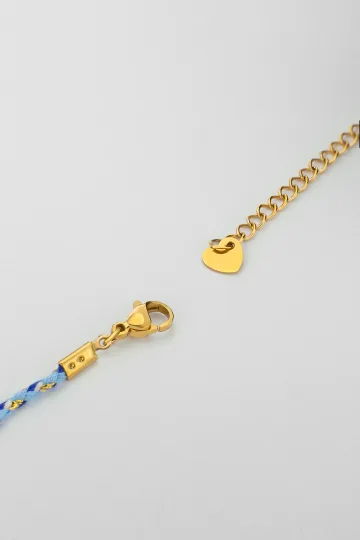
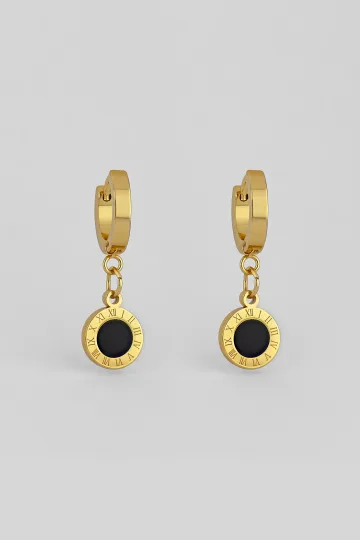
Wear the symbol, don't just read about it. These are in stock:


Hallmarks: what they mean by country
Hallmarks 925, 585 and 750 are a state or official guarantee of metal composition. Different countries follow different marking traditions, and knowing those differences helps you tell genuine from fake at a glance.
United Kingdom
British hallmarking is one of the oldest assay systems in the world. The Goldsmiths' Company of London began striking marks in 1300. Each UK Assay Office uses its own town mark:
- London: leopard's head (from 1300)
- Birmingham: anchor (from 1773)
- Edinburgh: castle
- Sheffield: York rose
Beyond the town mark, British jewellery carries: the sponsor's or maker's mark (compulsory), a date letter under a cyclical lettering system, and the fineness mark (375 = 9ct, 585 = 14ct, 750 = 18ct, 916 = 22ct, 999 = 24ct for gold; 925 for sterling silver). When you buy British antique jewellery, the date letter lets you establish the exact year of manufacture.
United States
The United States has no compulsory state assay office. Marking is governed instead by the National Gold and Silver Stamping Act and enforced by the Federal Trade Commission. Gold is marked by karat: 10K (the legal minimum to be called gold), 14K, 18K, 24K. Sterling silver is marked "Sterling" or "925". A maker's trademark must by law accompany any quality mark, so a "14K" stamp with no maker's mark beside it is a warning sign. Terms such as "gold-filled" and "vermeil" are also legally defined and must meet minimum thickness rules.
Germany and continental Europe
Since 1888 the German "Reichsstempel" for silver, a crescent moon plus a crown, has signalled silver fineness, and the system still applies to 800, 925, 935 and 999. For gold the standard figures are 333 (8ct), 375 (9ct), 585 (14ct), 750 (18ct), 916 (22ct) and 999. The maker's mark is not compulsory in Germany, but conscientious makers apply it. Many European countries also recognise the Common Control Mark (CCM) under the international hallmarking convention.
France
The French assay system is strictly state-run. The key marks:
- Minerva head (from 1838) for 950 silver
- Eagle head for 750 gold
The state Bureau de la Garantie controls every piece on the market, which is why French marks are considered among the most reliable anywhere.
Spain and Italy
In Spain the "contraste" system has run since the mid-nineteenth century through state assay offices. Silver is marked "925"; gold carries 750, 585 or 333. In Italy, regional marking systems applied until 1968; after that date a unified system combined a state stamp, a numerical fineness figure and a province code (for example "MI" for Milan), which identifies both the material and the region of manufacture.
Visual inspection: a step-by-step routine
Most fakes can be spotted on careful inspection. For that you need a good 10x jeweller's loupe, strong light and an idea of what to look for.
Step 1. The hallmark under magnification. Look at the hallmark through a 10x loupe. A genuine mark has sharp, crisp edges and the letters do not blur. A counterfeit mark often has fuzzy edges, smeared outlines and a "worn" look even on a new piece, because fake marks are stamped on afterwards, over a finished item, rather than during production.
Step 2. Clasps and fastenings. On genuine precious-metal jewellery the clasp is made of the same metal as the rest of the piece. If a ring reads "gold" but the bail is a different colour or noticeably lighter, that is a warning sign.
Step 3. Solder joints. Inspect the solder points on chains and joins. Genuine soldering is uniform in colour and sits flush. Poor, dirty or visibly different-coloured solder points to cheap or counterfeit production.
Step 4. Stone settings. In genuine jewellery the stone is held by settings (claws or prongs) that grip it firmly. If the stone is held in with glue, that is a sign of a cheap piece or a repair. Glue around the base of a stone, small gaps and uneven prongs are all red flags.
Step 5. Condition of the prongs. Bent, rough or clearly uneven prongs can mean a stone has been reset, or the original swapped for a cheaper one. A common scheme is to sell a ring with a "replaced" stone at the price of the original.
Step 6. Uniformity of the metal. On solid gold and silver the colour is even across the whole piece. On plating you often see places where the coating has worn through and a different-toned base shows underneath.
How to spot fake gold: tests
Gold can be checked by several methods, from simple home tests to professional ones.
The magnet test
Gold and silver are not attracted to a magnet. Iron, steel and other magnetic metals used as a base under plating are. A simple neodymium magnet (sold in any hardware shop) will quickly weed out items with an iron base.
One caveat: stainless steel is only weakly magnetic, so the test is less reliable for stainless pieces. The differences between brass, steel and silver are set out in a separate guide.
The density test
Genuine precious metals are far denser than their imitations:
- Gold (24ct): about 19.3 g/cm3
- Silver: about 10.5 g/cm3
- Platinum: about 21.5 g/cm3
Plated pieces on a light base will feel noticeably lighter than the real thing. If a piece feels too light for its size, that is grounds for suspicion. Weigh it on scales accurate to 0.1 g if you can. An experienced jeweller judges weight by hand almost without error.
The streak test (for gold)
Draw the piece across a white unglazed ceramic tile. Genuine gold leaves a yellow streak. Plating leaves a dark streak, because the base metal (often copper or brass) shows through the thin coating.
The acid test
The acid test (applying a drop of test acid to the metal) is used by professionals to determine gold fineness. It is not recommended for home use because of the risk of damaging the piece and the hazard of the acid itself. A proper acid test is done only in a jewellery laboratory or by an experienced jeweller with the right equipment.
Silver versus silver flash-plating
There are several ways to tell genuine 925 silver from cheap plating on nickel or steel.
The ice test: place an ice cube on the piece. Silver conducts heat exceptionally well, so the ice melts quickly. On a fake it melts more slowly.
The sound test: a silver coin struck against a hard surface gives a clear ring. Alloys give a dull thud.
The hallmark: look for "925" or "Sterling" on the clasp or inner surface.
Sterling silver darkens and develops a patina over time, which is normal and even confirms it is genuine. Silver flash-plating stays the same until it wears through completely, exposing a different metal.
Telling silver from silver-plated items
Silver-plated brass or copper looks like silver but carries silver only as a thin layer. The signs:
- A greenish or reddish tinge where the layer has worn
- The piece is too light for silver
- No "925" or "Sterling" mark
- A mark is present but blurred
How to tell a natural diamond from a fake
The basic tests
The breath test. Breathe on the diamond. A genuine one clears the mist instantly (excellent thermal conductivity). A fake (moissanite, cubic zirconia) holds the mist longer.
The newspaper test. Look at newsprint through the diamond. A natural diamond scatters light, so you cannot read through it. Through cubic zirconia the text is visible.
The water test. Drop the diamond into water. A genuine one sinks quickly (density 3.5 g/cm3). Glass fakes sink more slowly.
The heat test. Heat the diamond and drop it into cold water. A genuine one does not react. Glass cracks.
The UV test. Many natural diamonds fluoresce faintly under ultraviolet light (usually blue). Synthetics fluoresce differently.
The diamond tester. Special testers measure thermal conductivity. A real diamond conducts heat differently from cubic zirconia or glass. Domestic testers are affordable and easy to find. Advanced models can also distinguish moissanite, which cheaper testers may confuse with diamond.
Clarity, fire and the certificate
A diamond is described by four parameters that gemmologists call the "4Cs": Carat (weight), Cut (cut quality), Colour (on the D-Z scale) and Clarity (on the FL-I3 scale). Each affects value. Buy a diamond without a certificate and you accept every parameter on the seller's word. A GIA or IGI certificate fixes all four and is the only reliable way to compare stones.
A diamond's natural "fire" (the rainbow flashes as it turns) is created by a high refractive index and a precise cut. Cubic zirconia gives a similar effect, but on close comparison the fire is "too bright" and excessively rainbow-like. Moissanite has an even higher refractive index than diamond, which gives doubled rainbow flashes.
Natural versus laboratory-grown diamonds
Without a GIA certificate you cannot tell them apart with the naked eye. They are chemically identical.
The only reliable method: a certificate (GIA, IGI) stating natural or laboratory-grown.
Some clues:
- A laboratory-grown diamond is many times cheaper than a natural one of the same size and quality
- Laboratory stones are often cleaner (fewer inclusions), though natural stones can be clean too
- Specialist gemmological-laboratory equipment distinguishes them by the character of their inclusions and luminescence
A laboratory-grown diamond is a real diamond (the same chemical composition). It is not a fake. The problem arises only when it is sold as natural without disclosure.
Checking pearls: tooth, surface, drill holes
Pearls are faked very often. Imitations in glass, plastic and pressed shell look convincing but are simple to check.
The tooth test. Rub the pearl across a front tooth. A natural or cultured pearl feels gritty. An imitation (glass, plastic) is perfectly smooth. This is the most reliable quick test: the pearl's surface is covered with microscopic aragonite crystals that feel like fine sandpaper.
Surface under the loupe. A pearl shows microscopic ridges, slight surface irregularities and a characteristic nacreous lustre. A fake is perfectly uniform under magnification.
Drill holes. On a genuine pearl the holes have clean edges that line up visibly with the layers of nacre. On imitations the hole edges look like a cut through a uniform material with no layers.
Weight. A genuine pearl is heavier for its size than a plastic imitation. If a strand feels too light, that is a signal.
Temperature. A natural pearl is cool to the touch (it conducts heat slowly). Plastic warms quickly in the hand.
Cultured pearls are grown inside a mollusc with human assistance. They are genuine pearls, and the difference from wild natural pearls is only cosmetic. An imitation in glass or plastic has nothing in common with a real pearl by composition.
Customer reviews
Zevira is a real jewellery shop. Genuine payments, deliveries and customer thank-yous.
🥰🥰🥰 gracias

Ok, ¡gracias! 🙂

Coloured stones: how to tell them from fakes
Emerald versus glass and synthetics
Genuine emerald versus glass: The "garden" of inclusions. A genuine emerald has characteristic natural inclusions that gemmologists call the "jardin". Glass may contain bubbles, but they are different in character. A natural "garden" creates an inimitable pattern.
Most natural emeralds undergo resin or oil treatment to improve clarity. This is a legitimate treatment that must be disclosed by the seller. Always ask about treatments.
Natural versus synthetic emerald: A GIA or SSEF certificate states the origin: natural or laboratory-grown. Natural and synthetic respond differently under ultraviolet light.
Ruby: telling it from garnet and glass
Ruby versus garnet: Birefringence: ruby is doubly refractive, garnet singly refractive. You can check with a dichroscope. Spectroscopy also shows different absorption patterns.
Ruby versus glass-filled corundum: Inspection with a 10x loupe: the glass fill shows as internal fractures with a different refractive index. Reaction to ultrasonic or steam cleaning: a glass-filled stone may fracture.
Star ruby: a star ruby produces six rays under a point light source. Star spinel produces four rays. This is a simple way to tell them apart.
Amethyst and other semi-precious stones
The most frequent fake: dyed glass or acrylic. Checks:
- 10x loupe: a natural stone has inclusions (gas bubbles, fluid channels); glass has even bubbles
- Temperature: a natural stone is cooler to the touch than glass
- Weight: glass is lighter than most minerals
- Under magnification: a natural stone shows texture; glass is smooth
Buying inherited and antique jewellery
Jewellery "from grandmother" or from the antiques market needs a particular approach. A lack of paperwork does not in itself mean a fake, especially for items 50 years old and older, before modern marking systems applied.
What to do with an inherited piece
Take it to a local jeweller for a basic assessment. An experienced maker will identify the metal and the approximate era from construction and soldering features. For valuable items, commission a gemmological report. That is a written opinion with legal weight.
If there is a hallmark, its style tells the jeweller the country and the approximate date. Victorian, Edwardian and Art Deco marks read differently. British antique gold often carries the date letter that pins down the exact year, while older continental pieces may show a fineness in systems that predate the modern figures.
Signs of genuine age
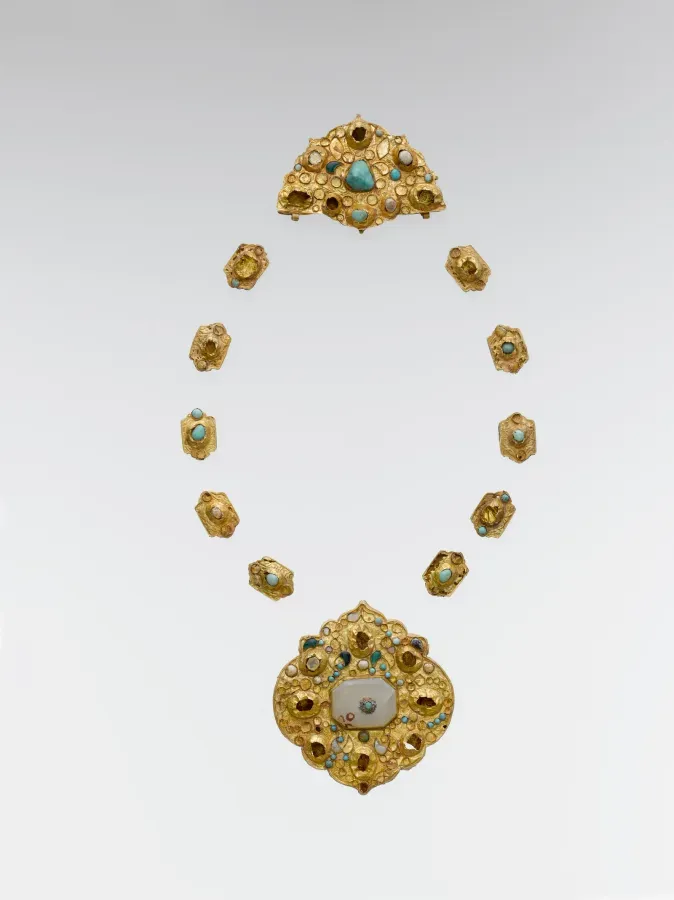
Patina: natural oxidation built up over decades is never imitated perfectly. Traces of hand work: soldering, file marks, slight unevenness. Stylistic coherence: a Victorian piece carries Victorian elements, Art Deco carries Art Deco features. Materials match the era: platinum was not used in mainstream jewellery before the early 1900s.
Signs of faked "antiques"
Artificial patina in a single tone, too even. Modern alloys (stainless steel) in a "nineteenth-century" piece. Immaculate condition on a 150-year-old item. Modern cuts: the round brilliant cut became standard only after 1919. Laser engraving (a modern technology).
Buying jewellery abroad
When buying jewellery in another country, learn the local marking rules and your rights in advance.
What to check on a purchase abroad
The hallmark of the country of origin. Within the EU there is mutual recognition of marks, but outside the EU the situation is different.
The customs declaration. Jewellery above a certain value must be declared on entry, and duty-free allowances are limited.
A receipt describing the composition of the piece. It should state the metal and fineness, the stone type (natural, synthetic, laboratory-grown) and any treatments.
Tourist markets in Turkey, Egypt, Thailand and India often offer jewellery with inflated stated fineness. "22-karat gold" priced below the spot value of the metal is almost always either hollow or a different fineness. Always check the hallmark and ask questions.
When buying abroad, keep the till receipt with its description, the certificate (if one was issued) and the shop's business card. These documents will be needed at customs.
Upload a photo of your pet, someone you love, or an object. We'll build a 3D model and hand-cast it in pewter.




Red flags in the seller and the listing
Warning signs in the item description
- "Filled gold" with no weight given: the word "filled" without an exact percentage or weight can mean a hollow piece with minimal gold content
- "Plated 14k" with no micron figure: coating thickness is decisive. 0.5 microns and 5 microns differ by several years of wear life
- Stones with no laboratory certificate: for any premium stone a certificate is essential
- Blurry photos of hallmarks: a conscientious seller will show the mark clearly. A blurred photo often hides a fake or absent mark
- A price below the cost of the material: genuine 14ct weighing one gram has a minimum metal cost. Below that, it is not what it seems
Warning signs in the seller
- Refusal to answer questions about origin
- Bank transfer or cryptocurrency only: the seller is deliberately removing your ability to dispute the payment and recover the money through the bank
- A recently registered seller: no sales history and no reviews
- Manufactured urgency: "only 3 left", "the discount expires in an hour" are pressure tactics, not a sign of a genuine deal
- Images taken from other listings: check with a reverse image search
- No physical address and no returns policy
What to ask a jeweller before buying
A handful of questions separate professionals from dishonest sellers at once:
- What is the metal fineness and is there a hallmark?
- Does it come with a gemmological laboratory certificate (GIA, IGI, SSEF)?
- What is the type and origin of the stone: natural, laboratory-grown, synthetic?
- What treatments has the stone had: heating, filling, irradiation?
- What is the returns policy and is there a physical address?
- Are you a member of a professional jewellery association?
An honest seller answers all six without dodging. If, in response to direct questions about composition, the seller becomes evasive or irritated, that is a bad sign.
How to check jewellery at home: the final checklist
Before you part with money, run through this list. It takes five minutes and exposes most obvious fakes at once.
Metal:
- Find the hallmark: look for 585, 750, 925, 375 on the inner surface or clasp
- Bring a magnet: solid gold and silver do not react
- Lift it in your hand: judge the weight, does it feel too light for its size
- Look at the colour: even across the whole piece, or are there worn patches
- Inspect the hallmark under the loupe: are the edges of the symbols crisp
Stone:
- If a diamond: is there a GIA or IGI certificate stating "Natural" or "Laboratory-grown"
- Breathe on the stone: a real diamond clears the mist at once
- Look at the clarity under the loupe: a natural stone has inclusions, glass has bubbles
- Judge the weight: the stone feels dense for its size
Seller:
- Is there a physical address and a returns policy
- Does the seller answer questions about composition without dodging
- Does the seller provide a receipt describing the metal and the stone
- Are there real reviews over a long period
If anything on this list raises doubt, do not rush the purchase. Jewellery is not a perishable; it will wait.
CAPAORA mini knife pendant
The 18th-century Spanish navaja in miniature: 40 mm of stainless steel, a real folding mechanism and a Palanquilla lock that clicks. An affordable gift to remember.
Authentic · Ships from Spain · 14-day returns
What a proper receipt and invoice should contain
A purchase document for a serious jewellery transaction should contain:
- An exact metal description: type of metal, fineness (585, 750, 925), weight of the piece
- A stone description: type, cut, carat weight, colour, clarity, origin
- A list of treatments: heating, fracture filling, rhodium plating
- The gemmological laboratory certificate number (if supplied)
- Date of purchase, seller's name, legal address
- The seller's signature
Without these details a purchase document is not a sound basis for a complaint.
Verifying metals
Gold
Fineness marks:
- 24ct (999) pure gold, soft, rare in everyday jewellery
- 22ct (916) Indian and Mughal standard
- 18ct (750) premium standard
- 14ct (585) everyday standard in the US and Europe
- 9ct (375) British standard, minimum 37.5% gold
- 10ct (416) US legal minimum to be called gold
Checks:
1. The hallmark. On the inner shank of a ring or the clasp of a chain there should be a small mark: "585", "750", "14K", "18K", "375". No mark means it is not gold (or it is outside any jurisdiction, which is also suspicious).
2. The magnet. Pure gold is not magnetic. If a magnet sticks, the base is magnetic.
3. The nitric acid test. A drop of nitric acid on an inconspicuous spot should not react with gold.
4. Density. Gold is around 19.3 g/cm3. If a piece is light for its size, it may be plating on a light metal.
5. The ceramic-tile test. Draw the piece across a white ceramic tile. Gold leaves a golden line. Plating leaves a dark line.
Silver
Fineness marks:
- 999 (fine silver) rare in jewellery (too soft)
- 925 (sterling) the standard
- 800 (European) an older continental tradition
- 830, 875 Scandinavian standards
Checks:
1. The hallmark. "925" or "Sterling" on the piece. A full set of home checks is gathered in the guide on how to tell real silver.
2. The magnet. Silver is not magnetic.
3. The ice test. Ice on silver melts quickly. On a fake more slowly.
4. Sound. A silver coin on a hard surface gives a clear ring. Alloys give a dull thud.
5. Patina. Genuine silver tarnishes over time. Silver plating stays the same until it wears through.
Platinum
Fineness marks:
- 950 (Pt950) the standard
- 900 minimum
- IRR, IRIDIR platinum-iridium alloys
Checks:
1. The hallmark: "Pt950", "Plat", "PT".
2. Very heavy. Platinum is denser than gold (21.5 g/cm3).
3. No reaction to nitric acid.
4. A cool white colour with no yellow tinge. White gold has rhodium plating (which wears off); platinum is naturally white.
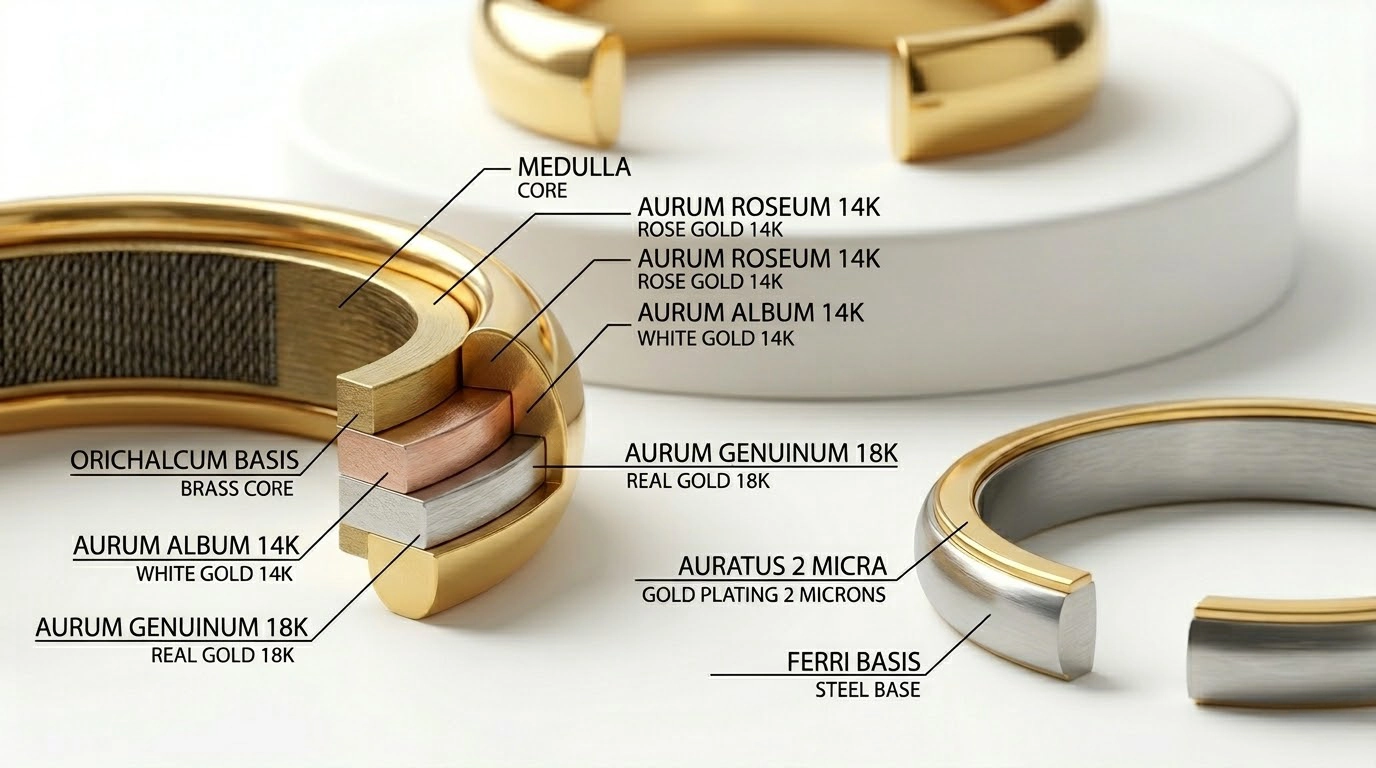
Solid gold, gold-filled, vermeil, flash-plating
Solid gold (14ct, 18ct): gold throughout the full thickness of the piece. Never wears through.
Gold-filled: a layer of 14ct or 18ct gold bonded to a base (usually copper or brass) under heat and pressure. Minimum 5% gold by weight (regulated by law in the US). More durable than flash-plating; the layer lasts 5 to 20 years.
Vermeil: gold plating on a sterling-silver base, minimum 2.5 microns of gold, minimum 10ct. Regulated by the US FTC.
PVD (physical vapour deposition): a modern vacuum process depositing gold on titanium or steel. Thinner than gold-filled but with very strong adhesion. Withstands 3 to 5 years of heavy wear.
Flash-plating: a thin layer (0.17 to 0.5 microns) on any metal. Wears through within weeks or months of active wear.
How to distinguish them
- Weight: solid is heavier than gold-filled or vermeil, those are heavier than PVD, and PVD is heavier than flash-plating
- Price: solid is far more expensive than gold-filled, which is dearer than vermeil or PVD, which are dearer than flash-plating
- Hallmark: "14ct" solid, "GF" gold-filled, "Vermeil" vermeil, "Plated" or no mark flash-plating
- Behaviour over time: solid does not change, flash-plating wears through quickly
Six fast checks, no tools. Leave your email, we'll send the PDF and a discount code.
No spam, unsubscribe anytime.
Verifying gemstones
Diamonds
Tests for a genuine natural diamond:
1. The breath test. Breathe on the diamond. A genuine one clears the mist instantly. A fake holds it.
2. The newspaper test. Look at newsprint through the diamond. Through a natural one you cannot read. Through cubic zirconia you can.
3. The water test. A genuine one sinks quickly (density 3.5 g/cm3).
4. The heat test. A genuine one does not react. Glass cracks.
5. The UV test. Many natural diamonds fluoresce faintly under ultraviolet light.
Natural versus laboratory-grown diamonds
Without a GIA certificate you cannot tell them apart with the naked eye. The only reliable method: a certificate (GIA, IGI) stating natural or laboratory-grown.
Pearl
The tooth test. Natural or cultured pearl feels gritty. A fake (glass, plastic) is smooth.
Light. A pearl shows ridges and surface irregularities. A fake is uniform.
Weight. Genuine pearl is heavier for its size.
Temperature. Natural pearl is cool. Plastic warms quickly.
Ruby and sapphire
Ruby versus garnet: ruby is doubly refractive, garnet singly refractive. Ruby versus glass: a glass fill shows as internal fractures with a different refractive index under a 10x loupe.
Emerald
A genuine emerald has characteristic natural inclusions (the "garden"). Green quartz costs many times less than emerald. Natural and synthetic are told apart by laboratory results (GIA, SSEF).
Emerald, amethyst, other semi-precious
Common fakes: dyed glass, acrylic, glass doublets.
Checks: 10x loupe (natural stones have inclusions, glass has bubbles), temperature (a natural stone is cooler), weight (glass is lighter than minerals).
Certificates: what they mean
Not all laboratories are equally strict. Here are the names that are trusted and what to look for in the document itself.
For diamonds
- GIA (Gemological Institute of America): the gold standard
- IGI (International Gemological Institute): good for laboratory-grown diamonds
- AGS (American Gem Society): a strict laboratory
For coloured gemstones
- Gübelin (Switzerland): prestige, especially for "pigeon's blood" rubies and padparadscha
- SSEF (Switzerland): prestige
- AGL (American Gemological Laboratories): US
- GRS (GemResearch Swisslab): commercial
- GIA (also for coloured stones)
For pearl
- GIA Pearl Report
- SSEF
What a certificate should contain
- Stone description (cut, carat weight, clarity, colour)
- Mineral identification
- Origin (where determinable)
- Treatment information (heating, oiling, filling)
- Natural, synthetic or laboratory-grown
- A unique certificate identifier
- Date of issue
- Gemmologist's signature
Authentication services in the UK and abroad
If your own tests do not give a clear answer, turn to an official assay office or a gemmological laboratory.
United Kingdom:
- Goldsmiths' Company Assay Office London (founded in 1327, the oldest in Britain)
- AnchorCert Birmingham
Germany:
- DGemG (German Gemmological Association, Deutsche Gemmologische Gesellschaft)
France:
- Laboratoire Français de Gemmologie (LFG), Paris
Switzerland:
- SSEF and Gübelin, for high-value coloured stones
United States:
- GIA laboratories, plus AGL for coloured stones
Approaching any of these gives a written opinion on the metal composition and the characteristics of the stones. That is a document with legal weight when returning an item or filing a complaint.
Consumer rights
Knowing your rights changes the balance considerably when returning a fake.
In the UK the Consumer Rights Act 2015 requires goods to match their description; a piece sold as gold that turns out to be plated is a clear breach, with the right to a refund, replacement or price reduction. For online purchases the Consumer Contracts Regulations give a 14-day right to cancel.
Across the EU the Consumer Rights Directive grants a 14-day right of withdrawal on online purchases, and up to two years to raise a complaint where goods do not match their description. In the US the position varies by state, but a material misrepresentation of metal or stone is actionable under both contract law and FTC rules.
The practical conclusion: if you bought a piece with a false description of the material (for example "gold" that proved to be plating), it is a breach of consumer-protection law, and a complaint is backed by concrete rules.
What matters when filing a complaint:
- A receipt or other proof of purchase from a specific seller
- A written opinion from a laboratory or assay office on the composition of the piece
- A record of correspondence with the seller (screenshots, letters)
- Photographs of the piece with the hallmark clearly shown (or its absence)
The complaint is made in writing to the seller. If the seller refuses a refund, the next step is the relevant consumer authority (Trading Standards in the UK) or a small-claims action. For small sums this route is deliberately accessible.
Verifying branded jewellery
Branded jewellery
1. Official service centres. Genuine brands maintain certified service centres. A piece can be brought in to confirm authenticity.
2. Hallmarks and certificate. Each major house has its own specific stamps, engravings and quality marks.
3. Box and documents. Original packaging, warranty card, purchase receipt.
4. Point of purchase. Only from authorised sellers, or the secondary market with verified provenance.
Vintage jewellery
- Known provenance. Who owned it before?
- Auction history. Check through the catalogues of established international auction houses.
- Maker's marks. Older houses had specific marks.
How to verify a vintage piece
Signs of genuine age
1. Patina. Natural oxidation over decades cannot be perfectly imitated.
2. Construction method. Old jewellery is hand-made. You can see hand-soldering, file marks, casting detail.
3. Stylistic coherence. A Victorian piece carries Victorian elements. Art Deco carries Art Deco features. Anachronisms point to a fake.
4. Period-appropriate materials. Platinum was not used in mainstream jewellery before the early 1900s. A "Victorian platinum ring" is suspicious.
5. Wear patterns. Rings show wear in specific places from decades of use.
Signs of faked vintage
- Heavily artificial patina: one tone, too even
- Modern alloys: stainless steel in a "nineteenth-century piece"
- Perfect condition: a 150-year-old item cannot be immaculate
- Modern cuts: the round brilliant cut became popular only after 1919
- Laser engraving (modern equipment)
Send a friend a discount code, they save on their first order.
What to do if you have bought a fake
First steps:
- Do not wear the piece. Cheap metals under plating can contain nickel or lead, especially in jewellery of unknown origin. Skin contact is best avoided until the composition is clear.
- Do not return it without documents. The seller needs concrete evidence, not your spoken suspicions.
- Record everything. Keep correspondence, receipts, photos of the piece and photos of the hallmarks.
- Get a written opinion. Take the piece to an official assay office or a certified gemmologist. A written opinion is a document.
- Approach a consumer body. With a laboratory document, the complaint becomes legally grounded.
If the seller is honest
Go back and request a refund. Under the law of many countries, selling goods with misrepresented information is grounds for a refund.
If the seller is a fraudster
1. Record everything. Keep correspondence, receipts, photos.
2. Legal action. Trading Standards, a consumer-protection body, a small-claims action.
3. A bank chargeback. If paid by card, the payment can be disputed and recovered through the bank.
4. A report. Police and fraud-reporting services.
Keep it or sell it?
If the piece is not very valuable and you like it aesthetically, you can keep it as costume jewellery. But never represent it to anyone as genuine.
Red flags before you buy
- "Secret sale": limited time, pressure through urgency
- No physical address for collection or returns
- A new seller: few or no reviews
- Payment by bank transfer or cryptocurrency only
- Photos reused from other listings: check with a reverse image search
- A diamond without a certificate: unacceptable for a serious purchase
- A mismatch between description and photos
- Ignoring questions about origin
How to assess a jewellery retailer
Good signs
- Years in business: ten years or more
- Professional staff: gemmologists on the website
- Hallmark checking: they can test metals
- Laboratory relationships: they work with GIA, IGI
- Returns policy: 14 to 30 days without questions
- Physical address: identifiable
- Membership of professional associations (national jewellery associations)
Red flags
- "Online only": no physical location
- Strongly negative reviews: especially recurring problems
- Impossible to reach: no phone, no email
- Demand for payment upfront with no escrow
- Too many sales (clearing stale stock)
Common scams at markets and online
Knowing the specific schemes makes them easier to recognise in advance.
The "tourist gold" scheme
The most common in tourist areas: the seller offers "real gold" with a "discount for good people" or "because today is the last day of trading". The piece may carry a hallmark, but it is fake or stamped on after manufacture. The buyer has no time to check, leaves, and at home discovers copper under the worn coating.
Defence: never buy gold on impulse. Ask for a receipt describing the composition. Check the hallmark under the loupe.
The "urgent liquidation" scheme
Online: the seller claims to be forced to sell a diamond or piece below market value because of a divorce, a move or debts. The story is convincing. The stone "exists", the certificate is "at home" or "coming soon". The money is sent, then both the seller and the money vanish.
Defence: demand the certificate before payment. Never send money before receiving documents.
The "lab-grown as natural" scheme
The seller offers a natural diamond at an attractive price. The stone is genuine, but laboratory-grown. Without disclosure, that is fraud. A laboratory-grown diamond costs many times less than a natural one, so the difference is significant.
Defence: only a GIA or IGI certificate with an explicit "Natural" or "Laboratory-grown".
The "overvalued antique" scheme
An item is positioned as a rare antique with high collector value. The price is tens of times the real figure. The provenance is unconfirmed.
Defence: check provenance through auction catalogues. Consult an independent appraiser before buying.
The "second layer" scheme
A piece carries a correct hallmark, but only in one place. The other parts (clasp, jump rings, stone) are made of different materials. The mark is legal but applies only to the part of the piece where it is stamped.
Defence: check every part of the piece, as well as where the mark sits.
Buying from private individuals: special rules
The secondary market in jewellery (auctions, listings, consignment shops) has its own pitfalls.
Reputable consignment jewellers usually check items before accepting them. That lowers the risk but does not remove it entirely.
Private listings carry the greatest risk. The seller may genuinely not know the piece is fake (bought long ago, believed it genuine). Or may know and conceal it.
What to do when buying from a private individual:
- Meet in a jewellery shop where the seller agrees to an assessment in front of the buyer
- Pay only by protected methods where the payment can be disputed through the bank, not in cash
- Ask for documents on the piece
- For valuable items, commission an independent gemmological report before handing over money
Buying it as a gift? Each one arrives ready to give.
 A branded Zevira box and a little card come with every order.
















FAQ
What is the most common fake in 2026?
A laboratory-grown diamond sold as natural in the mid-to-premium segment (0.5 to 1 carat). Without a GIA certificate it cannot be told apart.
How can I check without a laboratory?
A series of tests (magnet, breath, ice, sound, weight) plus hallmark and seller checks. In 80 to 90% of cases you can decide without a laboratory.
Where can I get a piece assessed in the UK?
At one of the four UK Assay Offices (London, Birmingham, Edinburgh, Sheffield) or through a certified gemmologist. The Gemmological Association of Great Britain (Gem-A) can direct you to qualified Fellows.
What if a family piece has no paperwork?
Take it to a local jeweller for an assessment. A qualified jeweller can identify 80 to 90% of standard materials (925 silver, 18ct gold) without a formal certificate. The absence of a hallmark does not in itself mean a fake: before modern marking systems, many pieces were made without marks. A gemmological report will clear the matter up.
Does an expensive price guarantee authenticity?
No. Fraud frequently involves selling a heavily overpriced fake as an "exclusive opportunity". Price is not a guarantee.
Online or offline: which is safer?
Offline with a trusted jeweller is usually safer. Online is fine only with registered sellers, not with private social-media accounts.
What should I ask the seller before buying?
A few questions that separate professionals from fraudsters at once: "Is there a hallmark and what is the fineness?", "Does it come with a gemmological laboratory certificate?", "What is the returns policy and is there a physical address?", "Are you a member of a professional jewellery association?" An honest seller answers all four without dodging.
What should the invoice contain at purchase?
The metal and fineness, the weight of the piece, a stone description with parameters (weight, colour, clarity), the stone origin (natural, synthetic, laboratory-grown), a list of treatments, the laboratory certificate number, the date and the seller's signature.
Do I need an appraisal for every piece?
Only for high-value pieces (premium and above). Small everyday silver pieces do not need one.
What about insurance?
For engagement rings and other high-value pieces, yes. Home contents insurance often covers jewellery up to a limit; above that a separate policy is needed.
Are laboratory-grown diamonds a "fake"?
No. Laboratory-grown diamonds are genuine diamonds (the same chemical composition). They are synthetic or laboratory-grown, but not a fake. A fake is cubic zirconia, moissanite, stone-free glass. The problem arises only when a laboratory-grown diamond is sold as natural without disclosure.
Conclusion
The fake-jewellery industry is huge, but the checks work. Magnet plus scales plus visual inspection plus documents will catch most fakes.
For important purchases (an engagement ring, a serious gift, an inheritance) do not economise on certification. A report from a leading international gemmological laboratory costs a fraction of the stone but saves losses many times larger. It is not an extra cost; it is part of the purchase.
Buy from reputable sellers. Ask for certificates. Check hallmarks. Ask about provenance. Insist on a proper invoice. Ask direct questions and watch the seller's reaction. And if a deal looks too good to be true, that is precisely what most jewellery fraud looks like.
Transparent disclosure of materials, fineness and stone treatments on every item.
About Zevira
Zevira is a Spanish jewellery brand based in Albacete. The full Zevira catalogue is our own. For current pieces and details, see the catalogue.