Iconic Style Archetypes in Jewellery: How to Build a Look That Lasts
Introduction: Jewellery as a Style Language
Some jewellery choices are instantly readable. A single pearl choker worn close to the neck. Three fine gold chains at different lengths. A solitaire on a barely-there band. A blush tone in every piece.
These images do not belong to one person and do not end with one season. They are style archetypes: visual patterns that recur across decades because they communicate something true about the wearer. In 2026 the conversation around jewellery has shifted: not "who wore this" but "what kind of person wears this." Search behaviour follows: "permanent pearl choker," "layered gold chains," "quiet luxury ring," "blush maximalism." The moodboard comes first; the piece follows.
This guide maps fourteen enduring and currently active style archetypes in fine and bridge jewellery, with preferred materials, care notes, and practical advice for building each one at a realistic budget.
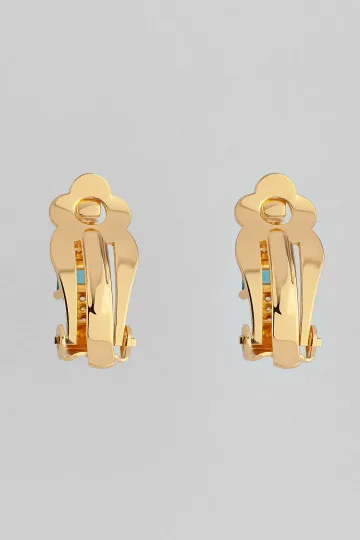
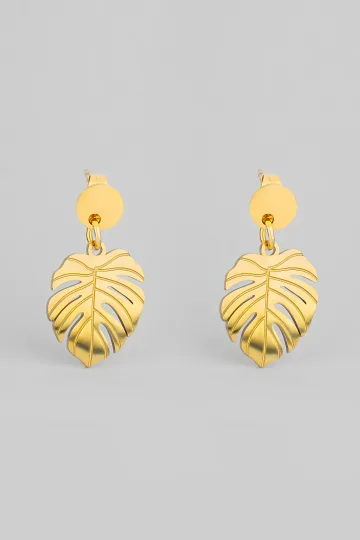
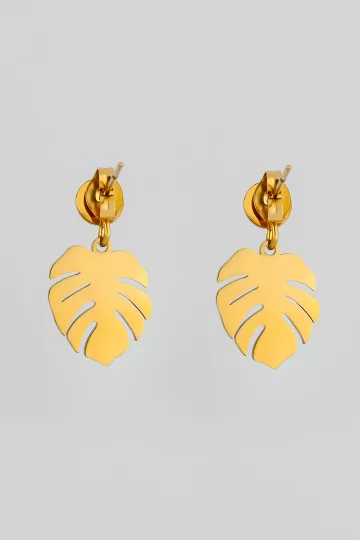
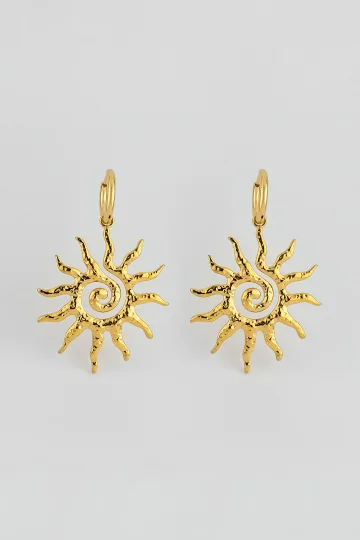
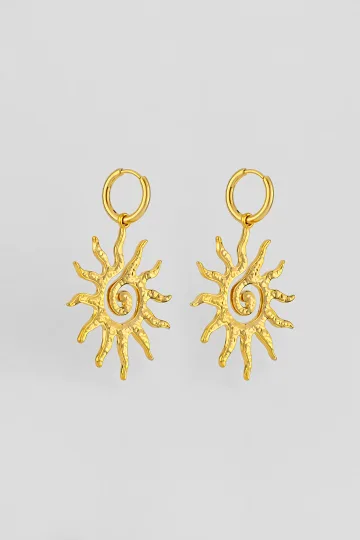
Wear the symbol, don't just read about it. These are in stock:



The Fourteen Archetypes and How to Wear Them
1. The Permanent Pearl Choker
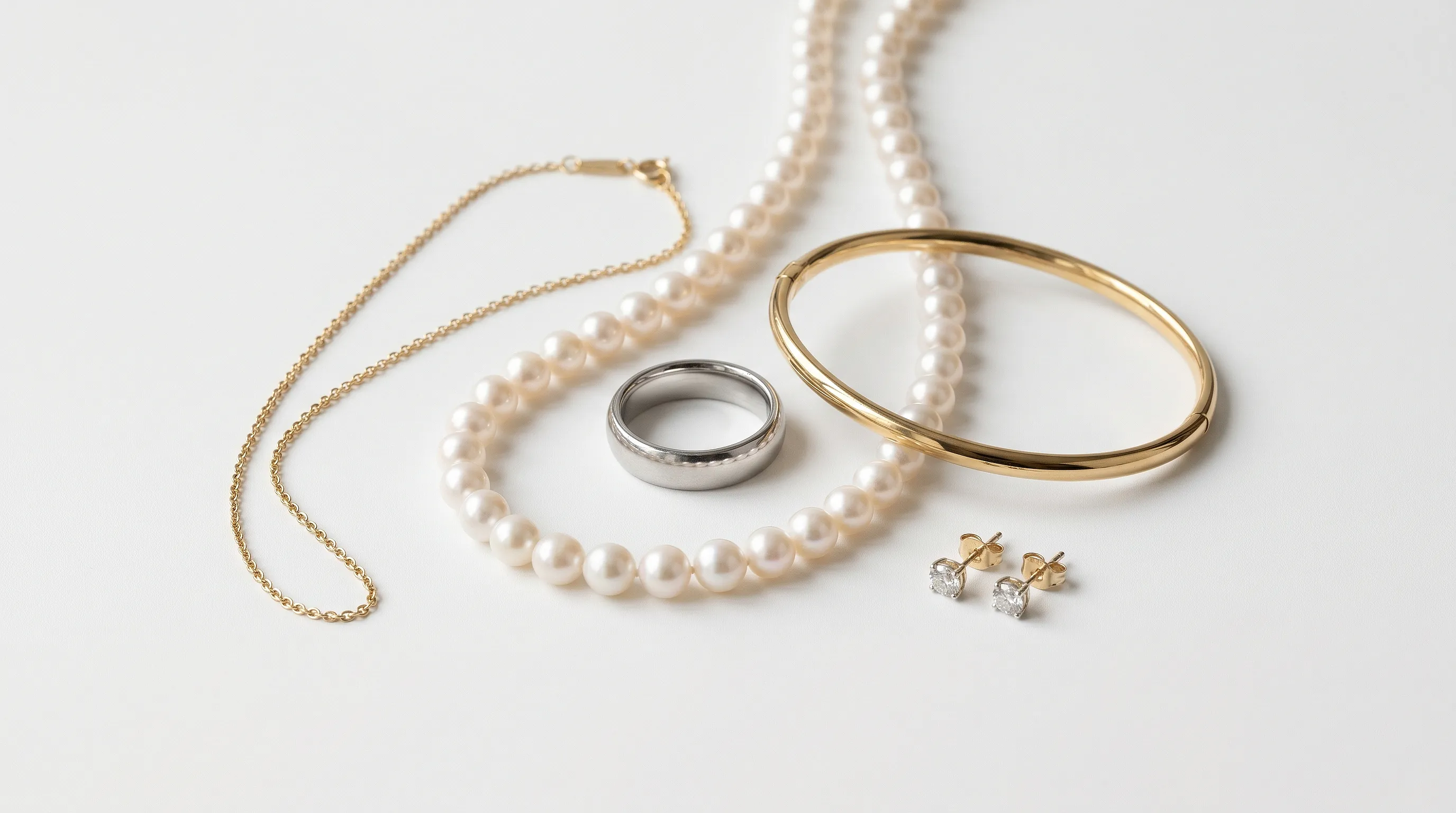
One of the clearest jewellery archetypes of the mid-2020s. A short pearl choker on a welded gold or steel base, worn round the clock without removal. The appeal is its commitment: it signals ease, confidence, and a certain quiet luxury that needs no occasion.
What it is: A fine gold choker chain, 30-35 cm, with one baroque pearl or a set of permanently welded pearls. No visible clasp. Layered with a longer pendant chain.
How to build it:
- 14K gold choker, 30-35 cm (short enough to sit at the collarbone)
- One baroque pearl (irregular shape, not round)
- Permanent weld at a jewellery studio, or a very fine lobster clasp
- Layer with a longer chain at 45-50 cm
Preferred materials: 14K or 18K gold, baroque pearl, sterling silver 925 with PVD plating.
Care: Gold in a choker worn continuously needs no polishing and tolerates daily skin contact well. Pearls dislike perfume and chlorinated water; wipe with a soft cloth, no abrasives.
Budget: mid-premium (thick-layer plating or sterling), premium (solid 14K), high-end (18K).
2. Folklore Gold and the Romantic Layered Look
Warm yellow gold, natural motifs, the feeling of an old postcard. This archetype absorbs cottagecore, dark academia, and autumnal aesthetics under one roof. The British expression of this archetype has a faintly Pre-Raphaelite quality: layered, leafy, slightly otherworldly.
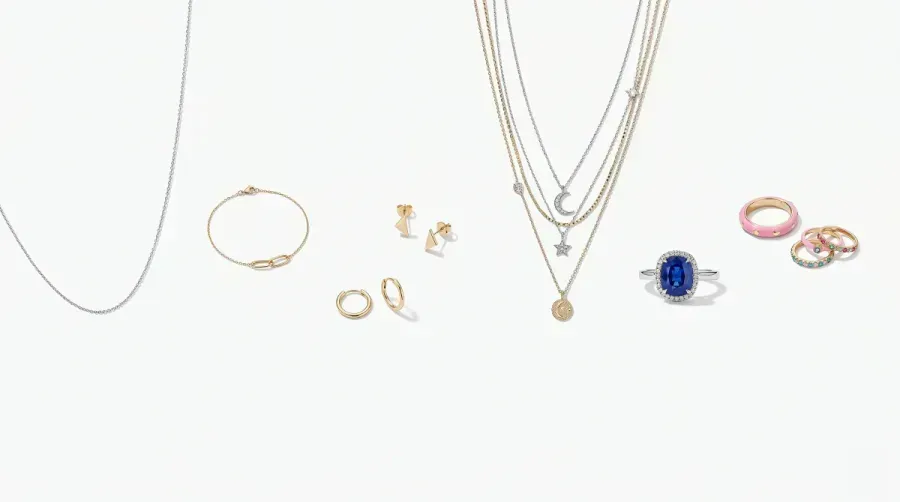
What it is: Multiple fine gold chains at different lengths, small star or sun stud earrings, nature-inspired and celestial charms.
How to build it:
- Three fine gold chains: 40 cm, 45 cm, 50 cm
- Small charms: star, crescent, initial, botanical motif
- Star or flower stud earrings
- A fine bracelet with thick-layer gold plating
Preferred materials: Yellow gold 14K, PVD gold plating, sterling silver with hot gold plating. Stones optional; if present, lemon quartz, citrine, labradorite.
Care: Matt gold, no polishing. Gold-plated silver pieces kept separate, away from household chemicals.
Budget: mid-range (PVD plating), mid-premium (solid sterling with plating), premium (14K).
3. Bold Minimalism: One or Nothing
The archetype where jewellery works on a binary: absolute minimum or one strong statement piece, never a vague middle. Currently the dominant aesthetic in editorial fashion. In British dressing, this maps onto a tradition of understated confidence: the sort of instinctive restraint associated with the Sloane Ranger aesthetic of the 1980s, stripped of its nostalgia and made contemporary.
Minimal version: One fine chain. One pair of studs. One ring. Nothing else.
Statement version: One large architectural earring. One substantial collar necklace. One bold cocktail ring.
How to build the minimal version:
- Fine 14K chain, 45 cm
- Diamond or white sapphire studs, 0.3-0.5 ct
- One plain band ring
Preferred materials: Solid 14K-18K gold, lab-grown diamonds or white sapphires. Metalwork without pattern or stones in the minimal version.
Care: Solid gold cleaned with a soft cloth, no products needed. Diamond studs cleaned every few months with a soft toothbrush in warm soapy water.
Budget: high-end (full execution), mid-premium (adapted).
4. Blush Maximalism
Pink stones established themselves as a standalone jewellery category around 2023 and have continued to grow. The archetype covers pink tourmaline, pink sapphire, morganite, rose pearl: blush tones across metals and stones.
What it is: A pink undertone running through every piece. Rose gold as the primary metal. Volume in earrings.
How to build it:
- A ring with a pink stone (tourmaline, sapphire, morganite)
- Rose gold as the dominant metal choice
- Hoop earrings in rose gold
- A pendant with a rose pearl
Preferred materials: Rose gold 14K, morganite, pink tourmaline, rose pearl.
Care: Rose gold needs no special care. Softer stones (morganite, tourmaline) should avoid ultrasonic cleaning; wipe with a cloth.
Budget: mid-premium.
5. Bold Layering: More Is the Point
The opposite of minimalism. Three to five pieces worn simultaneously, mixing metals and scales. This archetype has roots in hip-hop and R&B visual culture and has moved steadily into mainstream fashion.
What it is: Multi-chain layering, gold plus silver plus oxidised black, large pendant pieces.
How to build it:
- Three to five chains at varying lengths
- Mixed metals: gold and silver together
- One large pendant (cross, star, geometric shape)
- Rings on multiple fingers
Preferred materials: Combination of yellow gold PVD and sterling silver 925, oxidised silver for dark accents.
Care: Oxidised silver should not be polished: the patina is intentional. Sterling silver stored in anti-oxidant bags.
Budget: mid-range (accessible versions), premium (higher material quality).
6. Plain Yellow Gold Minimalism
Warm yellow gold with no stones, worn as the statement itself. Less sparkle, more presence of metal. The archetype of quiet confidence.
What it is: Clean gold shapes, a focus on metal quality and form rather than stones.
How to build it:
- Large gold hoop earrings (substantial but not oversized)
- Fine 14K chain (visible against skin)
- A slim gold cuff bracelet
- One signet ring
Preferred materials: Yellow gold 14K or 18K. No stones, no surface engraving required.
Care: Matt gold, no polishing. Bright gold wiped with a chamois. Cuff removed before physical work.
Budget: mid-premium.
7. Royal Sculptural Gold
Gold in bold architectural forms, motifs drawn from ancient cultures: Egypt, West Africa, Mesopotamia. This archetype treats jewellery as architecture and draws on the iconography of pre-modern civilisations.
What it is: Bold, regal, substantial in scale. Lots of gold. Strong silhouettes.
How to build it:
- A substantial gold collar necklace
- Chandelier or drop earrings
- A wide upper-arm or wrist cuff
- A ring with a large stone in a closed bezel setting
Preferred materials: Yellow gold 18K, amethyst, carnelian, dark opal, raw stones in closed settings.
Care: Heavy pieces stored separately to prevent scratching. Gold wiped with a damp cloth, no soap.
Budget: premium-high-end.
8. Vintage Glamour
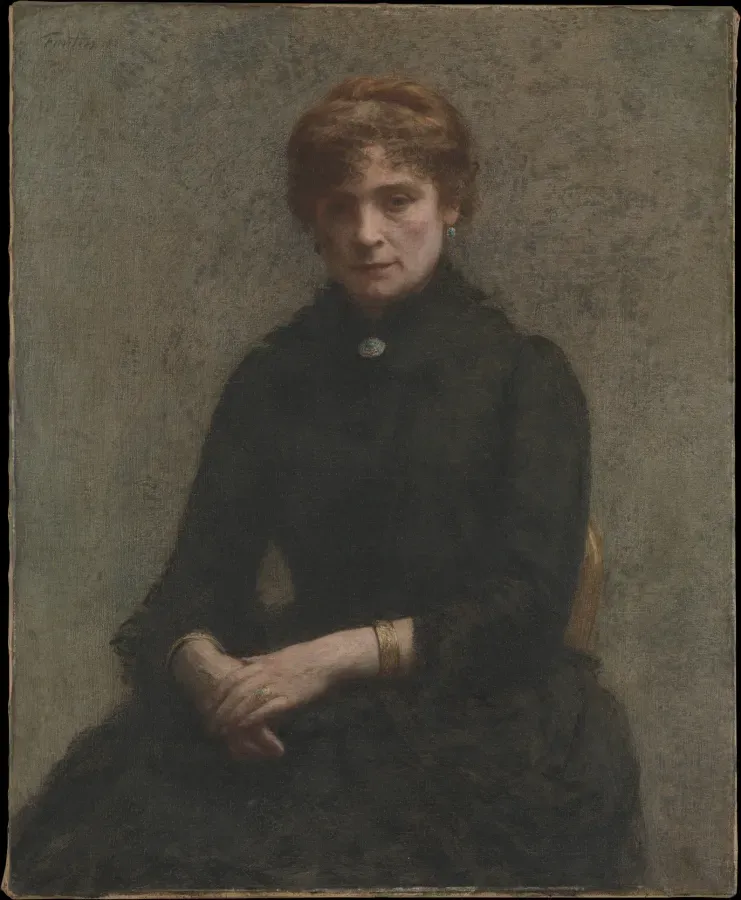
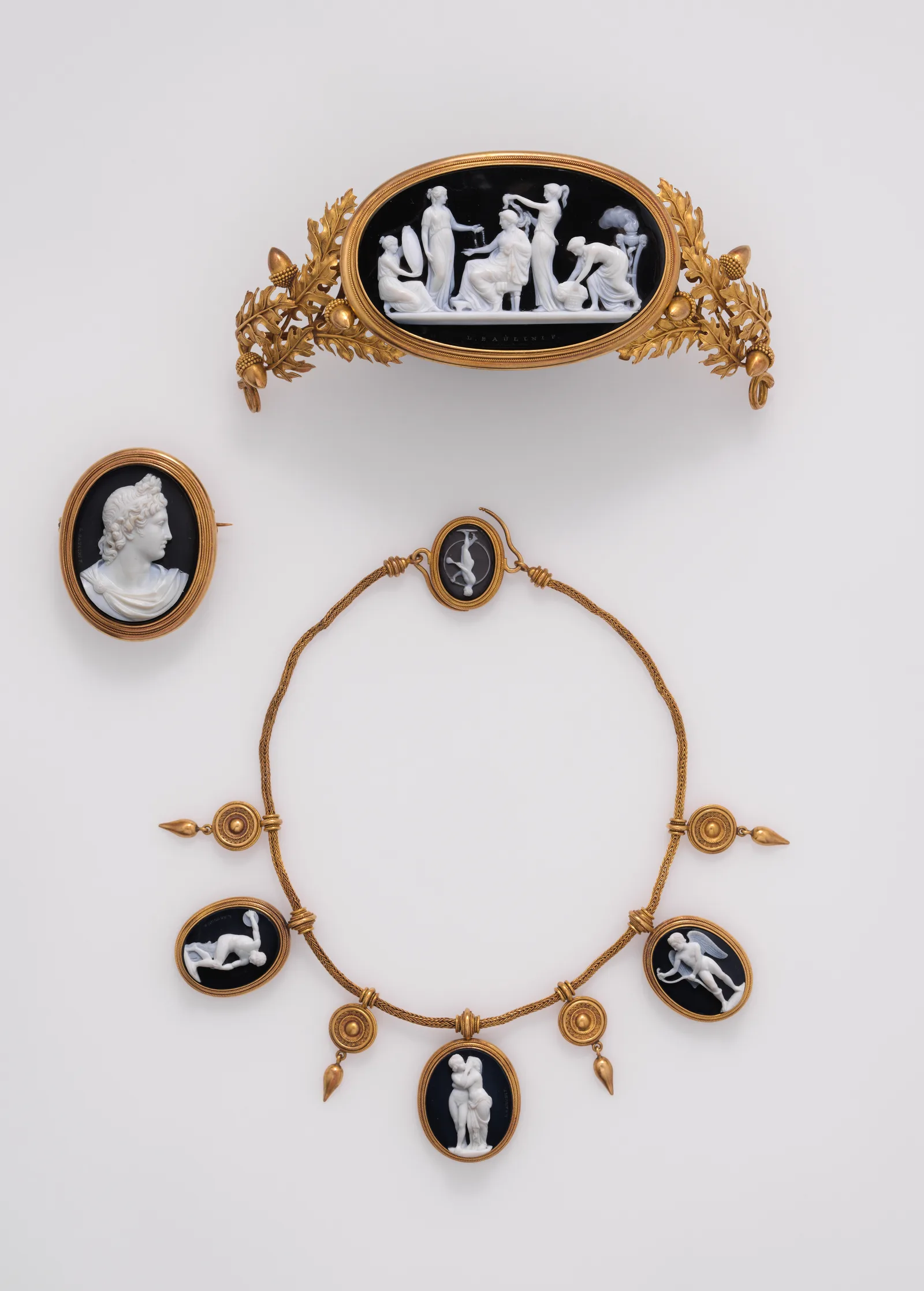
The aesthetic of a resort photograph from the 1950s or 1960s. A pearl rope, diamond cluster earrings, Victorian revival pendants. This archetype draws from the golden era of Hollywood and European couture, when jewellery was always formal and always present.
What it is: Classic pearl strand, old-cut diamonds, Victorian-inspired cross pendants.
How to build it:
- A classic pearl strand, 50 cm
- Small diamond hoop earrings
- A ring with a vintage-style setting (lab emerald or sapphire)
- A Victorian-style cross pendant
Preferred materials: Akoya pearls, 18K yellow gold, old mine or rose-cut diamonds, emerald or sapphire in a high closed setting.
Care: Pearls always worn after perfume application; stored in a soft pouch. Never in an ultrasonic cleaner.
Budget: mid-premium.
9. 2000s Revival: Playful and Maximalist
A return to the early 2000s: chunky silver, crystal chokers, playful charms. Currently popular as a nostalgic and gently ironic archetype.
What it is: Heavy silver, crystal heart chokers, playful pendants (hearts, flowers, butterflies).
How to build it:
- A silver choker with a crystal heart
- Large silver hoop earrings
- Lavender or violet sapphire studs
- A charm bracelet with a pink heart pendant
Preferred materials: Sterling silver 925, crystals, cubic zirconia in pink and violet shades.
Care: Sterling silver darkens over time; clean with a silver cloth or bicarbonate paste. Store in airtight bags.
Budget: entry-level to mid-range (most 2000s revival pieces are accessible).
10. Classical Sapphire-and-Pearl Elegance
The archetype of formal, composed, European jewellery tradition. Sapphire surrounded by diamonds, simple pearl studs, a fine chain. This look communicates history and restraint.
What it is: A sapphire ring with a diamond halo or cluster setting, pearl studs, a fine plain gold chain.
How to build it:
- A sapphire ring with a diamond setting (cluster, not solitaire)
- Pearl stud earrings
- A fine plain gold chain
- A slim classic bracelet
Preferred materials: Sapphire (natural or lab-grown), diamonds, 18K yellow or white gold, Akoya pearls.
Care: Sapphire and diamonds cleaned with warm soapy water and a soft brush. Pearls kept separate and away from chemicals.
Budget: premium-high-end.
11. Architectural Minimalism
Geometric shapes, modern lines, jewellery as a design object. This archetype is closer to a Scandinavian or Japanese understanding of beauty: form over decoration.
What it is: Rings with sharp angles, rectangular or triangular earrings, chains with unusual links.
How to build it:
- A ring with a geometric profile (trapezoid, rectangle)
- Bar earrings or angular-silhouette earrings
- A fine chain with one large geometric link
Preferred materials: Matt gold 14K-18K, sterling silver 925, black or grey PVD stainless steel.
Care: Matt surfaces should not be polished to a shine. PVD surfaces should not be cleaned with abrasives.
Budget: mid-premium.
12. Boho Heirloom
Multiple pieces with turquoise, coral, natural stones, ethnic motifs. This archetype references travel, freedom, and cultural exchange.
What it is: Stacking rings with coral, silver cuffs, turquoise strands, ethnic pendants.
How to build it:
- Two or three silver rings with natural stones on different fingers
- Layers of turquoise and lapis lazuli strands
- Silver earrings with ethnic ornament
- A wide silver cuff with coral
Preferred materials: Sterling silver 925, turquoise, coral, lapis lazuli, amber.
Care: Turquoise and coral are sensitive to chemicals, water, and direct sunlight. Store in a dark place; clean only with a dry cloth.
Budget: mid-range.
13. Dark Romantic
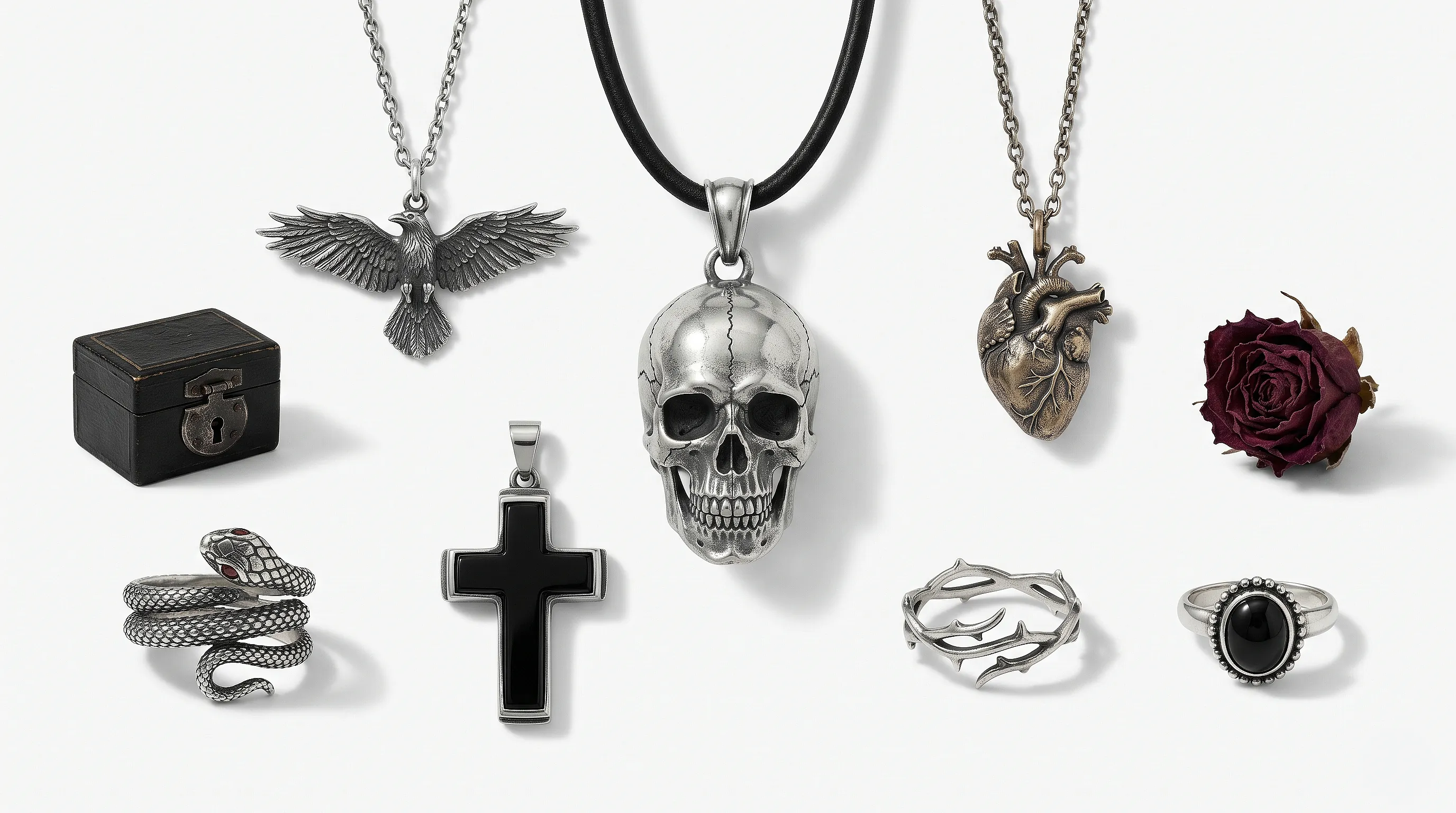
Oxidised silver, black tourmaline, onyx, garnet. The gothic archetype that finds beauty in shadow, mystery, and intricacy.
What it is: Jewellery in dark metals and dark stones, complex silhouettes, natural imagery.
How to build it:
- A long chain in oxidised silver
- A pendant with black tourmaline or onyx
- Garnet earrings in a high setting
- A wide silver ring with blackening
Preferred materials: Oxidised sterling silver 925, black tourmaline, onyx, garnet, black pearl.
Care: Oxidised silver must not be polished: the patina is deliberate. Store separately. Wipe only with a soft dry cloth.
Budget: mid-premium.
14. Athletic Refined
Durable PVD steel and minimal sterling silver. This archetype is for those who wear jewellery in any conditions: training, swimming, outdoors.
What it is: Fine PVD steel bracelets, minimal stud earrings in surgical steel, small pendants.
How to build it:
- A stainless steel bracelet with PVD coating
- Stud earrings in surgical steel (316L)
- A fine ring in sterling silver 925 or steel
Preferred materials: Surgical steel 316L, stainless steel with PVD coating, minimal sterling silver 925.
Care: Steel tolerates water, sweat, chlorine. Wash with mild soap and a brush. PVD coating should not be scratched by hard objects.
Budget: entry-level to mid-range.
Pick your two archetypes and commit. A magpie grabs everything shiny; you are not a magpie.
How to Wear the Archetypes: A Stylist's Notes
Over years on shoots I have tested nearly every one of these archetypes on real people, not on a moodboard. Here is what actually holds a look together, by occasion.
Where do you start when there are fourteen archetypes? I recommend against grabbing everything at once. Choose one anchor piece that reads unambiguously as your archetype: a pearl choker, a large gold hoop, a sapphire ring. Everything else grows from it. One strong anchor leads a look more confidently than five scattered pieces.
One archetype, or can you mix? I suggest mixing, but two per outfit at most. One leads, the other only hints: two thirds of the look to the dominant archetype, a third to the guest. Close pairs get along easily: plain gold minimalism with architectural minimalism, folklore with boho heirloom. Keep dark romantic away from blush maximalism; they argue in every detail.
How do you make gold and silver work in one look? The simplest route is one metal across the whole look, so different shapes read as one system. If you want the mix, repeat each metal at least twice: two gold pieces and two silver ones look deliberate. A lone silver piece among gold reads as an accident, not a decision.
What chain length for which neckline? Choose the length for the neckline, not the other way round. For an open neck and a V-neck I choose a short chain, 40-45 cm, sitting at the collarbone. For a closed collar I recommend 50 cm and up, so the pendant runs down the button line. Keep a real difference in length between layers, or the chains tangle.
What do you wear for the evening without overloading? For evening I choose one accent, not two. An open neckline asks for either a large earring with a bare neck, or a necklace with clean ears. Dark, smooth fabric (black, emerald, wine) carries both gold and a coloured stone. The more formal the fabric, the quieter the stack should be.
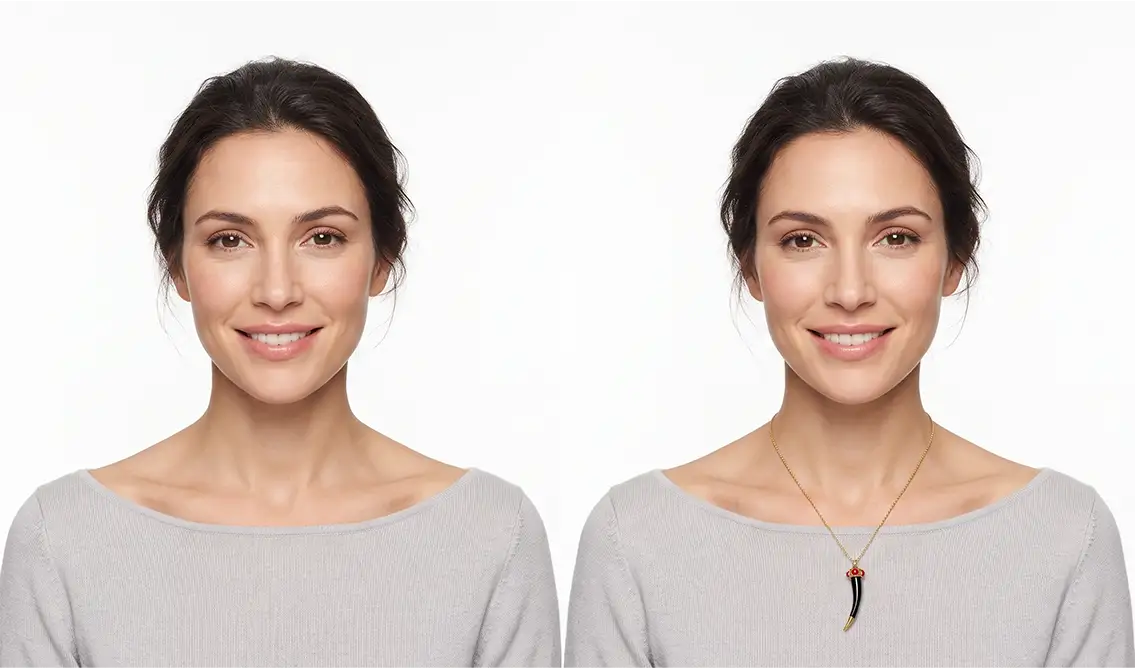
Turn on your camera, pick earrings, a pendant or a ring, and see the piece on yourself in real time.
Switch items in one tap.
Everything runs in your browser: no photo or video is ever uploaded.
How to Identify Your Archetype
Before buying anything, it helps to understand which archetype you gravitate toward. A few questions:
What do you put on every day without thinking? If it is one fine chain or small studs, you are closer to minimalism. If multiple rings simultaneously, you are closer to layering or architectural minimalism.
What dominates your wardrobe by colour? Neutrals and stone: minimalism or plain yellow gold. Dark colours: dark romantic or sculptural gold. Pastels: blush maximalism or classical sapphire-and-pearl.
What visual images do you save and return to? Images with natural motifs, old photographs: folklore gold. Black-and-white geometric compositions: architectural minimalism. Historical jewellery references: vintage glamour. Minimal images with one sharp accent: bold minimalism.
Which metal do you reach for most often? Yellow gold points toward the folklore or sculptural archetype. Silver: dark romantic, boho heirloom, or 2000s revival. Rose gold: blush maximalism.
How do you feel about jewellery care? Happy to maintain pieces with care: sapphire classical and pearl archetypes are for you. Prefer to wear and forget: athletic refined or PVD steel.
An archetype is not a sentence. Many people wear two adjacent archetypes: plain yellow gold minimalism on working days, blush maximalism for particular occasions.
Building a Wardrobe by Archetype
The most common mistake: buy everything from the archetype at once, become overwhelmed, and walk away disappointed. The right approach is incremental.
Step one: the key piece. Find one item that reads unambiguously as your archetype. The pearl choker for permanent pearl. A large plain gold hoop for yellow gold minimalism. This is your point of entry.
Step two: two or three sister pieces. Once the key piece has settled in, add things that work with it. For the pearl choker, a longer chain for layering. For sculptural gold, a wide cuff.
Step three: 30% for experiment. Reserve roughly a third of your jewellery acquisitions for pieces outside the archetype. These might be one-of-a-kind objects that belong to no category. They make the wearer a person rather than a catalogue illustration.
The main rule: do not replace everything at once. An archetype is built over time. Three pieces that are genuinely yours are worth more than a complete set bought in an evening.
Customer reviews
Zevira is a real jewellery shop. Genuine payments, deliveries and customer thank-yous.
🥰🥰🥰 gracias
Ok, ¡gracias! 🙂
Mistakes to Avoid
Copying a complete look. If you assemble every piece from one image, the result reads as costume. An archetype works when it is embedded in your life, not when it replaces it.
Ignoring proportion. Large chandelier earrings that work for one person overwhelm another. The archetype must be calibrated to you: the scale of a piece should relate to your face, height, and general dress.
Mixing too many archetypes at once. Two maximum in one outfit. More, and the archetype clarity disappears.
Sacrificing comfort for the look. The permanent choker is beautiful, but if you are conscious of it every second, it is not your archetype. Style that interrupts thought does not work.
Buying the trend rather than the archetype. A specific earring shape or chain width may be a trend. An archetype is broader than any trend. The current seasonal wave is mapped in the jewellery trends 2026 overview, which describes which shapes are in focus right now. Find the essence of the archetype, not its current seasonal version.
Investment versus Trend: What to Buy for Years
Archetypes are durable. Specific pieces can be either trends or enduring classics.
Buy for the long term: pieces in solid metal (14K-18K gold, sterling silver 925), natural stones, Akoya pearls. Solid metal and natural stones tend to keep their appeal over time, which is why pieces like these often stay in rotation far longer than seasonal buys.
Buy as trend: specific forms (heart, butterfly, star), a particular chain width or earring style that is fashionable right now. A more accessible price point is sensible here: PVD plating or thick-layer gold plating.
The rule of one real piece: in every look, one item in solid metal. Everything else may be mid-range. One real pearl choker anchors the entire look, even if the layering chain is gold-plated silver.
Upload a photo of your pet, someone you love, or an object. We'll build a 3D model and hand-cast it in pewter.


Care by Archetype: A Short Guide
Gold-dominant archetypes (folklore gold, plain yellow gold, sculptural gold, permanent choker): solid gold needs no polishing. Wipe with a soft cloth. Remove before chemicals and swimming.
Oxidised silver (dark romantic): never polish. Wipe only with a dry cloth, no products. Store in a separate dark container.
Pearl-dominant archetypes (permanent choker, classical sapphire elegance, vintage glamour): apply perfume before putting on jewellery. Store in a soft pouch. Never in an ultrasonic cleaner. Clean once a year with a weak solution of water and gentle soap.
Sterling silver 925 (dark romantic, boho heirloom, 2000s revival): store in airtight bags with an anti-oxidant strip. Clean with a bicarbonate paste or a specialist silver cloth. Do not store oxidised silver with regular silver.
PVD and steel (athletic refined, architectural minimalism): wash with soap and a brush. Do not clean with abrasives. Avoid hard contact with other metals.
Style Archetypes Through the Decades
1920s-1940s
- Art Deco geometry (platinum, white stones, architectural forms)
- Pearls as the default refinement statement
- The first wave of "wearable" jewellery for working women
1950s-1960s
- Mid-century glamour (large earrings, pearl ropes, cocktail rings)
- The rise of yellow gold as casual everyday wear
- Charm bracelets as personal narrative
1970s-1980s
- Bold sculptural gold (heavy chains, statement earrings)
- Coloured stones returning to fashion
- The beginnings of layered dressing
1990s-2000s
- Minimalism (the fine band ring, the tiny stud, the delicate chain)
- Silver and chunky crystal as youth archetypes
- The choker as a recurring device
2010s-2026
- The permanent pearl choker
- Quiet luxury and the no-logo approach
- Blush stone maximalism
- 2000s revival and nostalgic irony
- Classical sapphire and heritage aesthetics
- Architectural minimalism and geometric forms
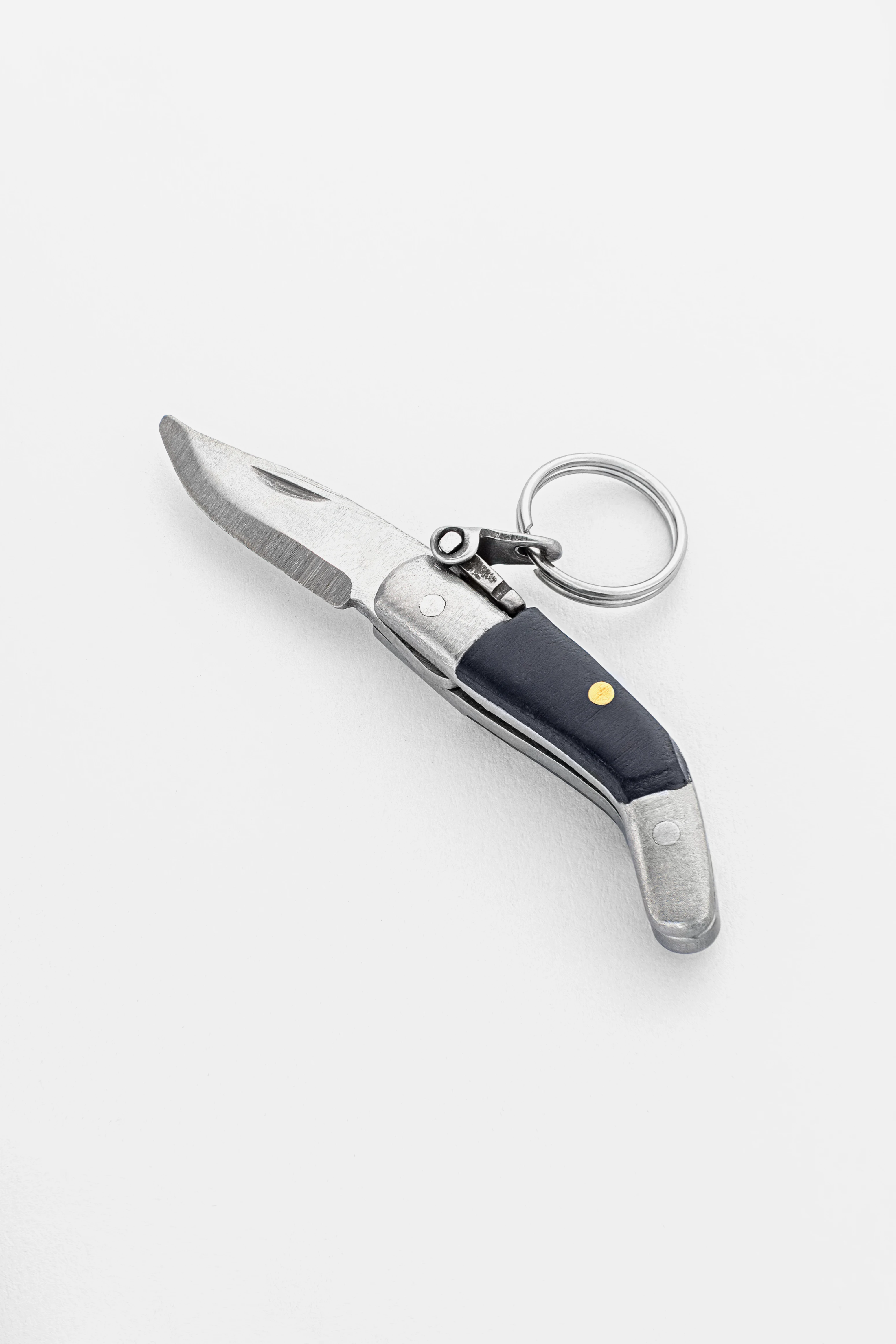
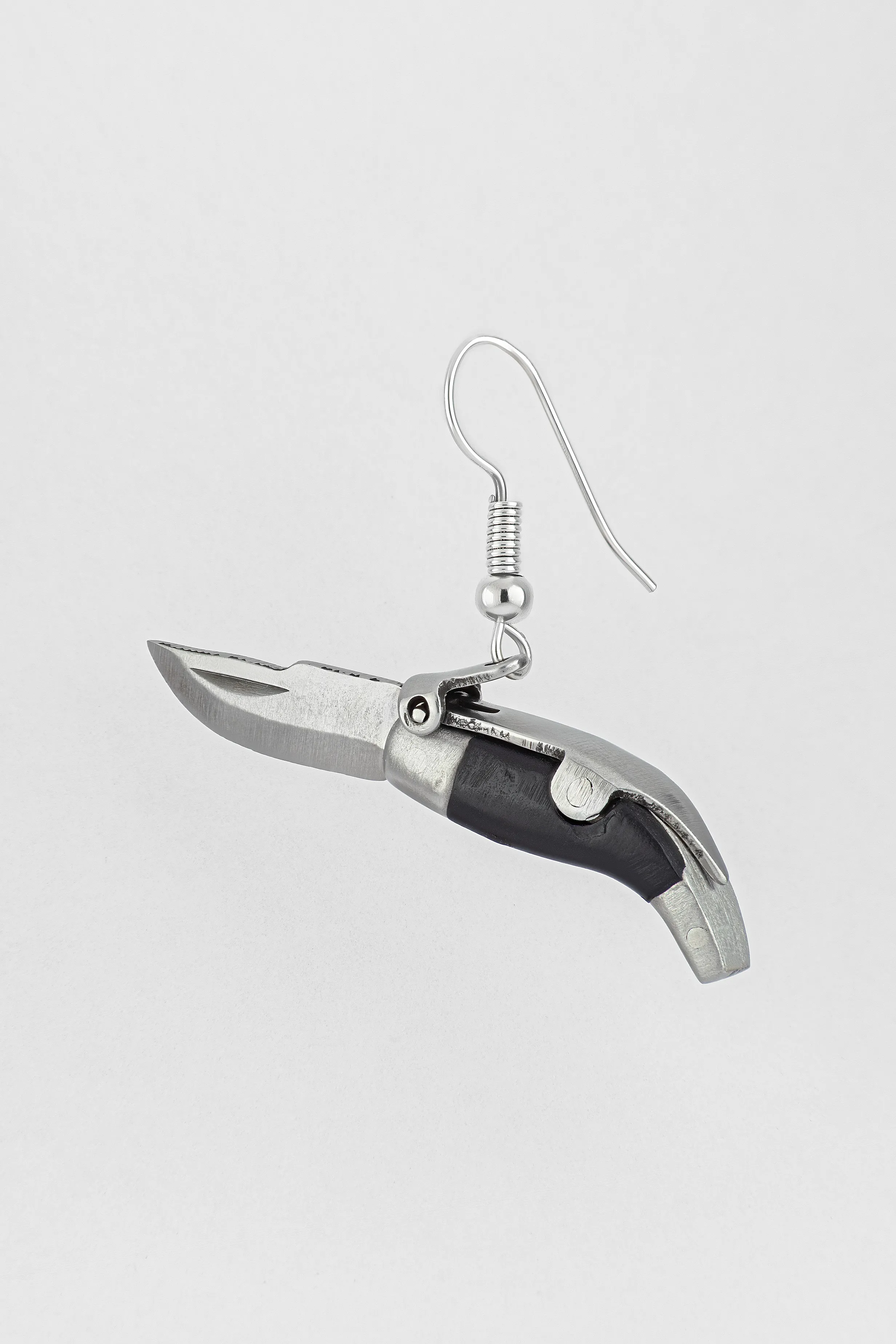
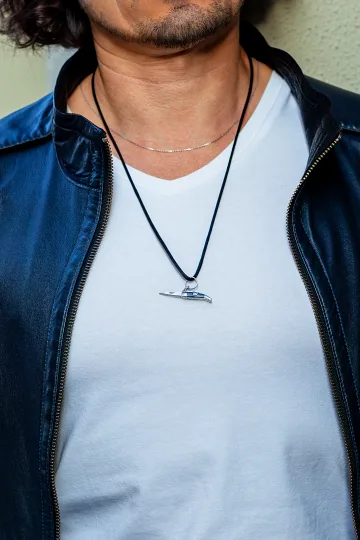
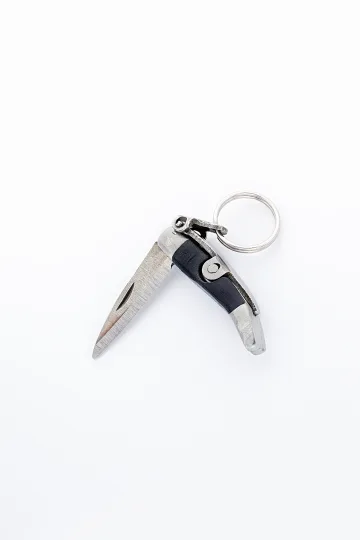
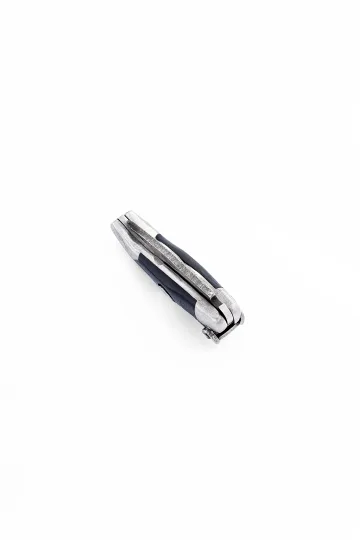
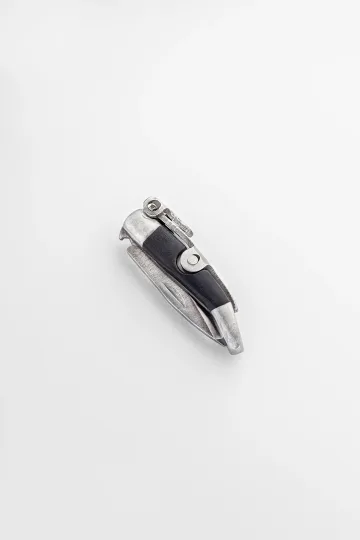
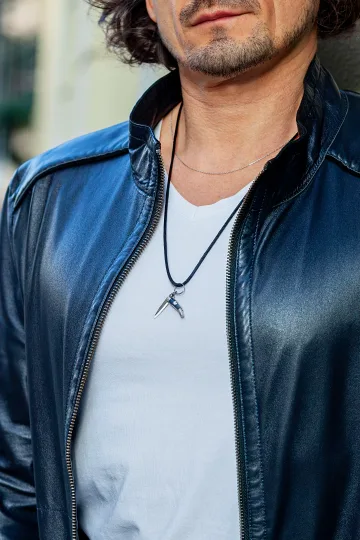
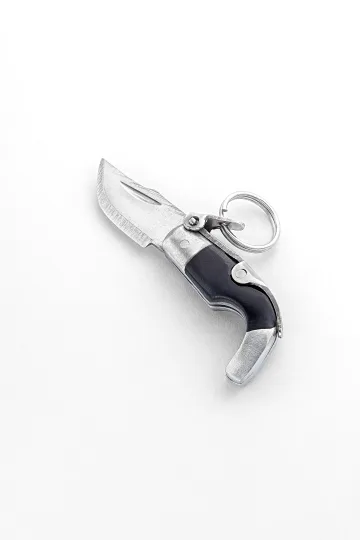
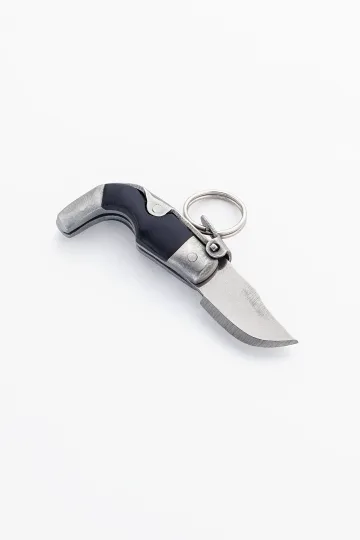
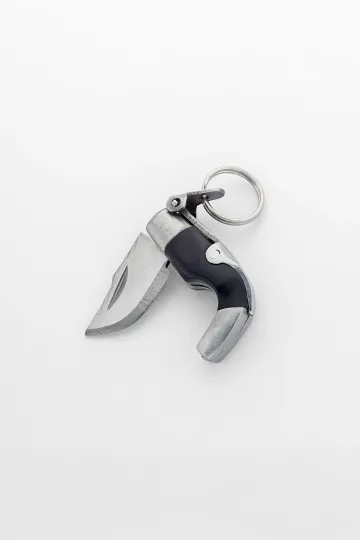
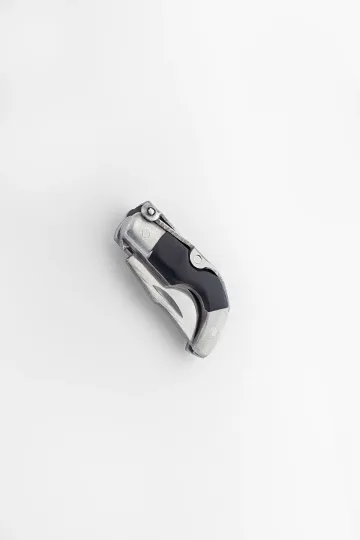
CAPAORA mini knife pendant
The 18th-century Spanish navaja in miniature: 40 mm of stainless steel, a real folding mechanism and a Palanquilla lock that clicks. An affordable gift to remember.
Authentic · Ships from Spain · 14-day returns
What Building an Archetype Actually Costs
The formal classical archetypes (sapphire halos, large diamond clusters, 18K pearl ropes) sit in the investment category. The everyday executions of most archetypes, however, are achievable in the mid-premium range: thick-layer plating or solid sterling silver for structural pieces, solid 14K for the one key item.
Many of the most effective archetype looks include a mix of price points. One real piece signals the archetype; surrounding pieces complete the aesthetic without breaking a realistic budget.
Leave your email, we'll send your discount code. No spam, unsubscribe anytime.
The code arrives by email, valid on your first order.
Frequently Asked Questions
Is it reductive to define your style as an archetype?
The opposite. An archetype is a starting point, not a ceiling. Knowing which visual language you gravitate toward makes it far easier to build a coherent jewellery wardrobe rather than accumulating pieces that do not speak to each other.
Can you move between archetypes?
Yes. Many people wear different archetypes in different contexts: one archetype for working days, another for evenings or special occasions. This is not inconsistency; it is versatility, and it maps neatly onto the usual office, wedding and date dress code decisions. The main rule: no more than two archetypes in one outfit.
How does your archetype change with age?
The archetype stays; its execution evolves. Large chandelier earrings in the sculptural gold archetype at twenty-five; the same archetype in a more restrained scale with higher material quality at forty-five. The essence remains constant; the form adapts.
Can you mix archetypes?
Yes, but a maximum of two at once. Architectural minimalism and bold minimalism mix organically. Folklore gold and boho heirloom are closely related. Dark romantic and blush maximalism conflict.
Where to buy jewellery that fits these archetypes?
Independent mid-range jewellery brands, craft jewellers, marketplaces for handmade pieces. Exercise caution with large mass-market platforms: quality consistency varies significantly.
Should you replicate an archetype exactly?
No. Take the key element and let the rest be yours. An exact replica reads as costume rather than personal style.
Which archetypes will last longest?
Minimalism, classical elegance, and vintage glamour are the most stable. Blush maximalism, 2000s revival, and bold layering are more cycle-dependent and may rotate within three to five years.
Can you give jewellery within an archetype as a gift?
Yes: "this is in the style you always return to." It works as an emotionally considered gift, especially when you know the recipient's visual preferences.
Jewellery archetypes for men?
Pearl necklaces, heavy gold layering, chain stacks, signet rings, and oversized pendants. The visual vocabulary borrows heavily from 1970s-1980s sportswear culture and 1990s hip-hop.
How to Mix Archetypes Without Chaos
A pure archetype is rare. Most people live at the junction of two, and that is not a failure of taste but a sign that a person is more complicated than a single picture. The question is not whether you may mix, but how to make the mixture read as deliberate rather than accidental.
Which Archetypes Get Along
Neighbouring archetypes share a vocabulary of metal, scale or mood, so they join almost without effort. Plain yellow gold minimalism and architectural minimalism speak the same language of clean form: a fine gold chain sits happily beside an angular earring. Folklore gold and boho heirloom share a love of natural motifs and warm stones, and the only real difference is the metal. Vintage glamour and classical sapphire elegance both reach for pearl and older cutting styles, which is why a strand of pearls with a sapphire ring looks whole rather than assembled.
Which Archetypes Fight
Some pairs conflict at the level of the idea itself, and joining them produces a sense of discord. Dark romantic is built on muting and shadow, blush maximalism on brightness and sweetness, and together they argue in every detail. Athletic refined rests on spare steel, royal sculptural gold on abundance of mass; side by side they look like two different lives lived by one person. Bold layering and bold minimalism cancel each other by definition: one is about quantity, the other about refusing it.
The Anchor and Support Rule
The working scheme for mixing is simple. One archetype leads, the second only hints. If minimalism leads, romanticism contributes one small star pendant rather than three chains at once. If glamour leads, minimalism brings in the clean line of a single chain to damp down the excess. The dominant archetype takes roughly two thirds of the look, the guest one third. That way the mixture reads as a decision rather than as everything at once.
The Connecting Metal
The most reliable way to join two archetypes in one look is a shared metal. When both the anchor and the guest piece are yellow gold, the eye takes them as one system even though their forms differ. If the metals do differ, repeat each of them at least twice: two gold elements and two silver ones read as an intended mix, while a lone silver piece among gold reads as a mistake.
A Jewellery Capsule: The Smallest Set That Covers Everything
A capsule is a compact group of pieces that combine with one another and cover almost any occasion. In jewellery it cures the feeling of having nothing to wear while the box is full. Seven or eight pieces are enough, provided they are chosen for one or two adjacent archetypes.
The Core: Five Essential Pieces
Every capsule stands on five supports. First, a fine chain of medium length, around 45 cm, the workhorse under almost any neckline. Second, a pair of small studs, a neutral background for the face every day. Third, one plain band ring that argues with nothing. Fourth, one expressive statement piece that reads as your archetype, whether that is a large hoop or a pearl choker. Fifth, a fine bracelet or cuff that closes the look at the wrist.
The Extension Layer: Two or Three More
On top of the core sit pieces that add depth. A long chain of 50 to 55 cm for layering with the base one. A second pair of earrings with more drop, for the evening. A ring with a coloured stone that adds a drop of character. These are not needed every day, but they are what turn a functional set into a living one.
How a Capsule Saves You Decisions
The strength of a capsule is that any of its pieces go together by construction. There is no puzzle to solve each morning: the chain suits the studs, the studs suit the ring, the statement piece suits the bracelet, because the whole set was gathered inside one visual language. It is the same logic as a capsule wardrobe, on a smaller scale and with a much longer service life.
Metal, Stones and Shapes for Each Archetype
An archetype is not set by one piece but by agreement between metal, stone and shape. When those three layers say the same thing, a look sounds coherent even when the materials are modest.
Which Metal Belongs to Which Archetype
Yellow gold carries warmth and history, and it leads in folklore gold, the sculptural archetype, plain gold minimalism and vintage glamour. White gold and platinum are cool and formal, and their territory is sapphire classicism and architectural minimalism. Rose gold is soft and sweet, made for blush maximalism. Silver is flexible and democratic, and it carries boho heirloom, dark romantic and the 2000s revival. Steel is practical and forgiving, and its home is the athletic refined archetype.
Which Stones Belong to Which Archetype
The stone sets the temperature and the character. Pearl leans towards glamour, classicism and the permanent choker. Diamonds and white sapphires reinforce minimalism and sapphire elegance. Warm stones such as citrine, labradorite and carnelian support folklore and sculptural gold. Turquoise, coral and lapis lazuli are the heart of boho heirloom. Black tourmaline, onyx and garnet make up the palette of dark romanticism. Pink stones, morganite and pink tourmaline, hold up maximalism.
Which Shapes Belong to Which Archetype
Shape often decides more than material does. Clean geometric lines and sharp angles are architectural minimalism. Natural and celestial motifs, stars, moons, botanicals, speak the language of folklore. Massive architectural silhouettes and wide cuffs are royal sculptural gold. Fine delicate links and tiny pendants lead romanticism and minimalism. Playful symbols, hearts, butterflies and flowers, give away the 2000s revival.
Send a friend a discount code, they save on their first order.
Choosing an Archetype for Your Life
The commonest mistake in choosing an archetype is going by a beautiful picture without accounting for your own day. A piece that gets in the way of work, or that has to come off five times between morning and night, loses however expressive it may be.
An Active Life and Sport
For anyone whose day includes the gym, the pool or physical work, the athletic refined archetype fits. Steel and PVD coating survive sweat, water and chlorine, and can stay on. A permanent choker also works, provided the base is steel or solid gold rather than plated. Pearl, turquoise and oxidised silver are better kept away from an active day: they want care and removal.
The Office and Business Settings
For a working environment where jewellery should not pull focus, sapphire classicism, gold minimalism and architectural minimalism all fit. One metal across the whole look, a short chain with a single pendant, neat studs. That register reads as composure rather than as a statement about yourself.
Creative and Open Environments
Anyone working somewhere self-expression is welcome has the expressive archetypes open to them: bold layering, boho heirloom, sculptural gold. Stacked rings, mixed metals and large pendants all belong here. The way you live earns you a volume that would look excessive in an office.
Home, Children and Everyday Life
For anyone whose day goes on looking after other people and running a household, safety and practicality matter most. Small studs rather than long earrings that catch. Smooth rings without sharp settings that scratch a child's skin. Chains on a secure clasp. Minimalism and athletic refined are not a compromise here, they are the sensible choice.
Facts That Take People by Surprise
Pearls Once Cost More Than Diamonds
Before pearl culturing became an industry in the first half of the twentieth century, natural pearls were among the most expensive gems in the world, frequently outpricing diamonds of comparable size. A strand of large natural pearls could be worth a townhouse. That is exactly why pearl embedded itself so firmly in the archetypes of glamour and classicism: it was the mark of the highest level of wealth.
The Signet Ring Was a Signature Rather Than an Ornament
The signet ring, today an element of the minimalist and layered archetypes, served for millennia as a tool rather than decoration. An impression in wax on a letter confirmed authenticity and sealed agreements. It was worn on the little finger or the index finger of the right hand, and losing one was equivalent to losing your signature.
Rose Gold Owes Its Colour to Copper
The warm blush of rose gold, the foundation of a whole archetype, comes not from any mysterious alloy but from adding copper to pure gold. The more copper, the deeper the pink. Jewellers valued the alloy as early as the nineteenth century, and its popularity returns in waves every few decades.
Oxidised Silver Is Deliberate Rather Than Dirty
The black film on silver in dark romantic pieces is often mistaken for tarnish left by careless owners. In fact it is a controlled patina: the silver is treated on purpose to deepen the relief and emphasise shadow. Polishing such a piece destroys what the maker intended, so it follows separate rules for storage and cleaning.
Baroque Pearls Are Valued for Being Irregular
The permanent choker most often carries a baroque pearl, meaning one of irregular, asymmetrical shape. Such pearls were once considered rejects and sold for less than round ones. Today they are valued more highly for their uniqueness: no two are alike, so every piece made with one is the only one of its kind.
The Choker Is Older Than the Fashion for It
The short necklace worn right at the throat, which looks like an invention of the last few years, was worn in ancient Egypt and at European courts across many centuries. It carried both protective and status roles. The modern archetype has merely rediscovered a form thousands of years old.
The Meaning of a Stone Has Shifted from Era to Era
Sapphire, today a symbol of restrained elegance, was in the Middle Ages a stone of spiritual purification worn by the clergy. Garnet, the core of dark romanticism, was carried on journeys in antiquity as a protective charm. An archetype assigns a stone a new mood, but every stone trails a long history of earlier meanings behind it.
Conclusion
Style archetypes in jewellery offer the clearest path to a coherent look: identify which visual language resonates, find the one key piece that anchors it, and build from there. Unlike specific trend moments, archetypes have track records. They recur because they communicate something that does not expire.
In 2026 the active archetypes include: permanent pearl, bold minimalism, blush maximalism, folklore gold, layered chains, plain yellow gold, royal sculptural gold, 2000s revival, classical sapphire, architectural minimalism, boho heirloom, dark romantic, athletic refined. Choose the one that feels closest and start with its anchor piece.
Buying it as a gift? Each one arrives ready to give.
 A branded Zevira box and a little card come with every order.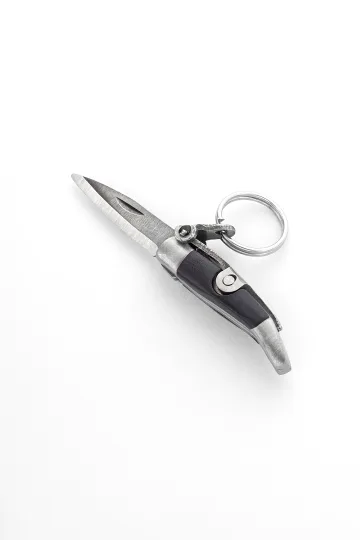





More Questions People Ask
Can I wear archetype jewellery in the shower and the pool?
That depends on the material rather than the archetype. PVD-coated steel and surgical steel cope calmly with water, sweat and chlorine, which is why athletic refined pieces are worn around the clock. Pearl, turquoise, coral and oxidised silver dislike water and chlorine: take them off before showering or swimming. In hard-water parts of Britain, a chain worn in the shower will also collect a dull limescale film over a few months, which is a slower but equally real problem.
How do I look after pearls in a choker or a strand?
Pearls go on last, after perfume and hairspray, and come off first. After wearing, wipe them with a soft cloth, with no abrasives and no cleaning products. Store them separately in a fabric pouch rather than in one box with hard stones, and never put them in an ultrasonic cleaner. A strand worn often wants restringing every couple of years, because the silk stretches and the knots between pearls wear.
How do I tell solid gold from plating?
Solid gold carries a hallmark inside the piece, struck at an assay office in London, Birmingham, Sheffield or Edinburgh, and it does not wear away at the edges over time. PVD or hot plating can rub through in the places that see constant friction. Weight is a further clue: solid metal is noticeably heavier in the hand than a plated piece of the same size.
What chain length should I choose for my archetype?
Go by the neckline. A short chain of 40 to 45 cm sits at the collarbone under an open neck and works in minimalism and layering. A long chain of 50 cm and more runs down the button line under a closed collar and layers beautifully in folklore looks. If you are buying one length only, 45 cm is the most forgiving.
Which archetype lasts longest, and which dates fastest?
Minimalism, classical elegance and vintage glamour hold up for years and never fall out of circulation. Blush maximalism, the 2000s revival and bold layering are more closely tied to a seasonal wave, so it makes sense to invest more modestly in those and let a single anchor piece carry them.
Do I have to buy everything expensive for a look to read?
No. The working scheme is this: one piece in solid metal sets the tone, and the rest can sit in the mid segment. One genuine pearl choker or one solid gold earring holds a look together even when the layering chain is gold-plated silver. What breaks a look is not modest material but a mismatch between metal, stone and shape.
Silver, gold, wedding rings, symbolic pieces, paired sets.
About Zevira
Zevira is based in Albacete, Spain. We do not make copies of any specific jewellery pieces, but we work within the visual archetypes described here: our own interpretations in the metalworking tradition of Albacete.
What you will find at Zevira across these archetypes:
- Minimalist sets in the quiet luxury register
- Layered chain collections for the bold layering archetype
- Yellow gold pieces in minimal form
- Pearl jewellery, paired and individual
- Classical sapphire in traditional settings
- All handmade, no visible logos on pieces
Each piece is made by hand, with the option of personal engraving. We work in sterling silver 925 and 14-18K gold.