Medusa in Jewellery: From Monster to Icon and Why She's Everywhere Now
The face you can't look away from
Here's a question that sounds simple but isn't: why would anyone wear the face of a monster around their neck?
Medusa, the woman with snakes for hair whose gaze turned men to stone. The creature Perseus beheaded with a mirror shield. The thing Athena stuck on her breastplate to terrify enemies. Every version of the story agrees on one point: looking at Medusa's face is dangerous.
And yet. Walk through any jewellery district in any major city and you'll find her. Gold pendants with her face. Silver rings with her snakes. Enamel earrings with those open, staring eyes. A famous Italian fashion house chose her as its logo and made the face globally recognisable. Feminist movements adopted her as a symbol of survival. Tattoo artists can barely keep up with demand.
Medusa is having a moment that has lasted about 2,700 years.
The reason is that her story, the real one, not the simplified "monster gets killed by hero" version, is actually about something that resonates with a lot of people right now. Power taken away. Power taken back. The face that was supposed to make you look away becoming the face you can't stop looking at.
This is that story. All of it.
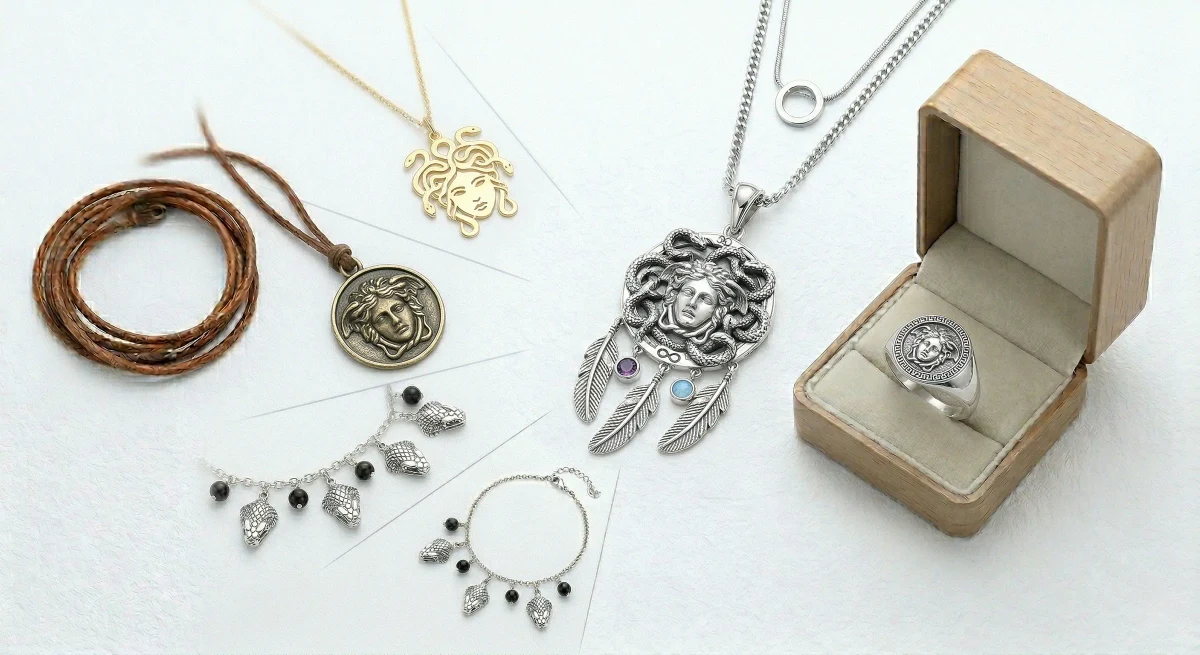
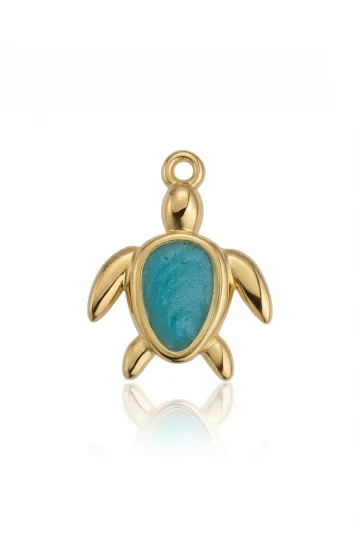
Wear the symbol, don't just read about it. These are in stock:


The Myth: What Actually Happened to Medusa
The original story (it's not what you think)
In the earliest Greek sources, Medusa is simply a monster. Hesiod's Theogony (c. 700 BCE) describes three Gorgon sisters: Stheno, Euryale, and Medusa. The first two are immortal. Medusa is the mortal one. They're described as terrifying creatures with snakes in their hair, tusks like boars, and bronze hands. No backstory. No tragic origin. Just monsters.
This is the version most ancient Greeks knew. Medusa was born monstrous, lived monstrous, and died when Perseus cut her head off. End of story.
Ovid's version: the one that changed everything
About 700 years after Hesiod, the Roman poet Ovid wrote the Metamorphoses (8 CE), and he completely rewrote Medusa's story. In Ovid's version, Medusa starts as a beautiful young woman. Stunningly beautiful, with magnificent hair that was her most admired feature.
Then Poseidon (Neptune in Roman naming) rapes her in Athena's temple. Medusa is the victim. But Athena's response isn't to punish Poseidon. It's to punish Medusa, transforming her beautiful hair into snakes and her face into something so horrifying that anyone who looks at it turns to stone.
Read that again. A woman is assaulted. And then she's punished for it.
Ovid wrote this in the context of Augustan Rome, and scholars debate whether he intended it as social commentary (he was eventually exiled by Augustus). But regardless of Ovid's intention, his version of the story embedded itself in Western culture so deeply that it effectively replaced Hesiod's simpler version.
This is the version that modern feminists point to. This is the version that makes Medusa not a monster but a survivor. And this is the version that gives the symbol its contemporary power.
Perseus and the mirror shield
The killing of Medusa is one of the most famous scenes in Greek mythology. Perseus, equipped with gifts from the gods (winged sandals from Hermes, a cap of invisibility from Hades, and a polished bronze shield from Athena), approaches Medusa while she sleeps. He uses the shield as a mirror, watching her reflection so he can cut off her head without looking directly at her face.
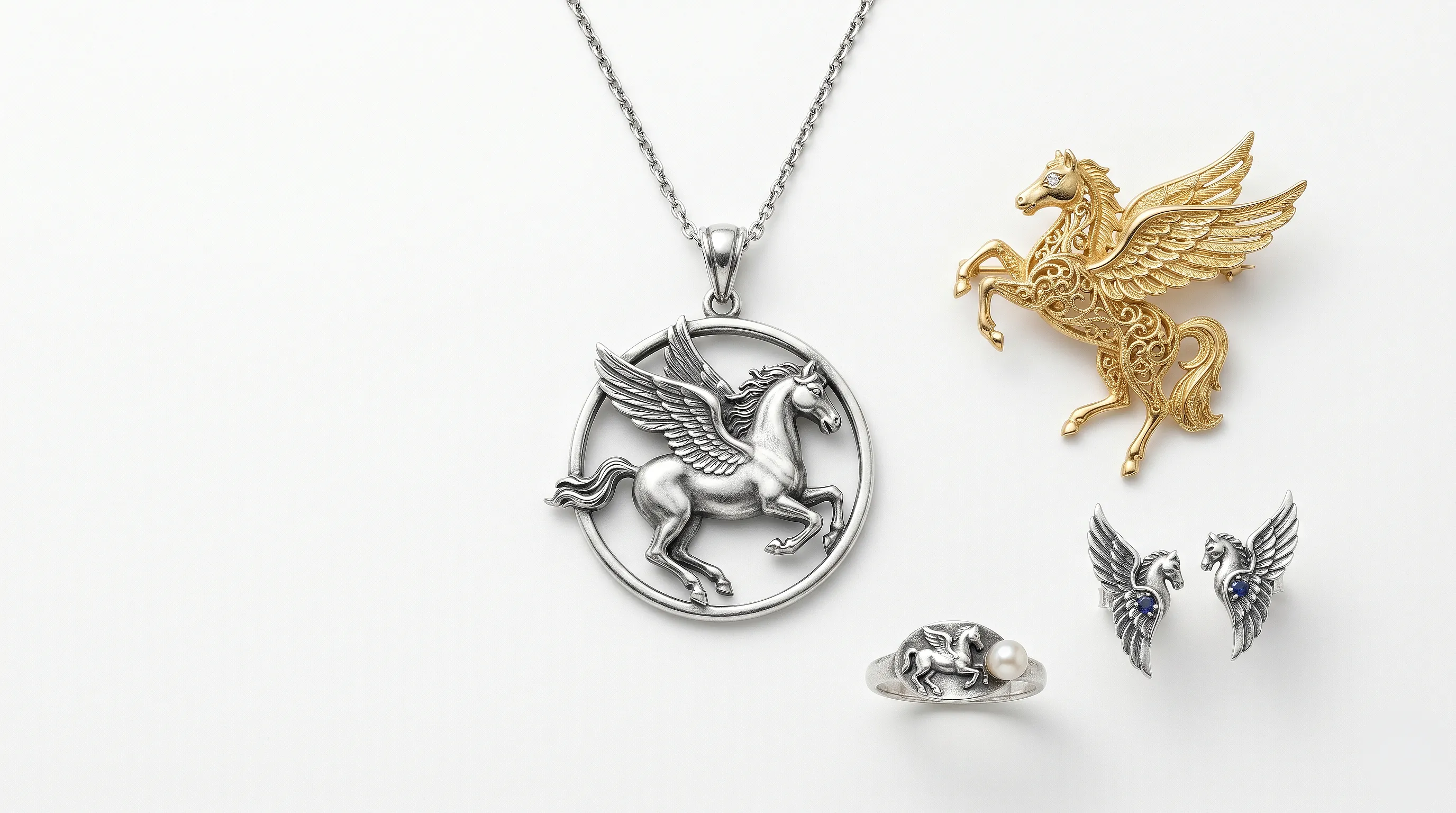
From Medusa's severed neck, two beings spring: Pegasus (the winged horse) and Chrysaor (a golden giant). These are Poseidon's children, conceived during the assault. Even in death, Medusa produces extraordinary things.
Perseus carries the head in a special bag (the kibisis) and uses it as a weapon multiple times before giving it to Athena, who mounts it on her aegis (breastplate or shield). The power of Medusa's gaze survives her death. She remains dangerous even as a severed head. She cannot be fully destroyed.
That detail matters. Medusa's power is not taken from her by death. It's transferred, used, weaponised by those who killed her. She becomes a tool. And this is the part of the myth that resonates most uncomfortably with modern readers.
Customer reviews
Zevira is a real jewellery shop. Genuine payments, deliveries and customer thank-yous.
🥰🥰🥰 gracias
Ok, ¡gracias! 🙂
Gold Medusa on black or wine. Pastel is beneath her.
How to wear Medusa
Medusa does not blend in with the rest, she gathers everything around her. So I build the look the other way round: first you decide which Medusa you want to show, then you choose the rest to serve it.
What do I wear Medusa with every day? For daily wear I recommend a small pendant, 20 to 25 mm, on a thin chain. A plain turtleneck in black or ivory, an open collar, or a shirt with a couple of buttons undone. The Gorgon face sits at the collarbones and reads as a personal sign, not as a statement.
Is it right for the office? Yes, if you keep it quiet. I suggest a closed neckline, calm tones and silver 925 instead of gold, which makes the whole look stricter. Here Medusa works as a detail of character without breaking a dress code.
How do I build an evening look? Evening is the territory of a larger pendant. I choose a deep V-neck, smooth silk or satin, a monochrome palette (black, wine, graphite) and one strong piece at the neck. The simpler the dress, the louder the Gorgon. In gold she speaks of allure and luxury, in silver of protection and myth, and both readings suit the occasion. Add thin snake stud earrings and nothing more, the gaze should stay the centre.
Can I layer Medusa with other pieces? She layers well if you keep the hierarchy. I recommend one main accent and the other chains shorter and thinner, in the same metal. She pairs beautifully with other protective symbols, a nazar, a hamsa, an all-seeing eye, for a layered guardian story where the Gorgon leads.
Who does it actually suit? Anyone who is not afraid of presence and likes jewellery to speak for them. It fits a confident, slightly daring mood, leather and dark fabrics, minimalism with one strong accent. My main advice: give Medusa room and do not crowd the neck. One gaze that holds the composition beats ten small details.

Turn on your camera, pick earrings, a pendant or a ring, and see the piece on yourself in real time.
Switch items in one tap.
Everything runs in your browser: no photo or video is ever uploaded.
The Gorgoneion: Ancient Protective Symbol
Athena's shield and the power of the face
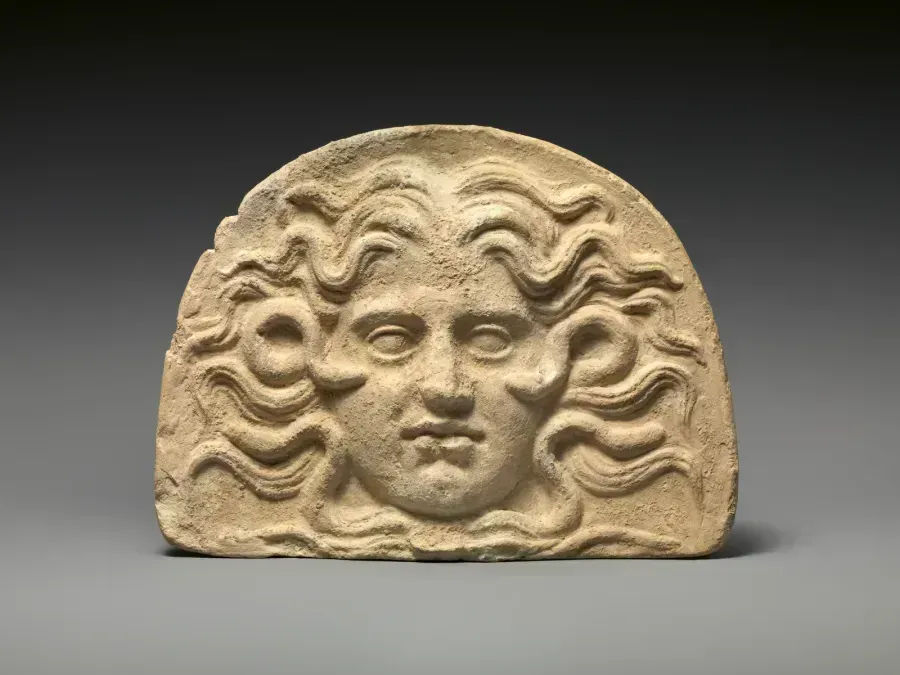
The Gorgoneion (literally "Gorgon-face") was one of the most widely used protective symbols in ancient Greece. It appeared on:
- Athena's aegis: the goddess herself wore Medusa's face as a weapon
- Shields: Greek warriors painted the Gorgon face on their shields to terrify enemies
- Temple pediments: the faces of Greek temples often featured a Gorgon
- Coins: multiple Greek city-states used the Gorgoneion on their currency
- Doorways: hung above doors to ward off evil spirits
- Ovens: placed near kilns to prevent pottery from cracking (evil eye protection)
- Ships: painted on prows for safe passage
The logic was consistent: Medusa's face has the power to petrify and repel. Point it at whatever threatens you. The thing that kills you becomes the thing that protects you.
This is a sophisticated magical concept. The Greeks called it "apotropaic" magic, from "apotrepein" (to turn away). The Gorgoneion doesn't attack. It reflects. It turns the gaze of the enemy back on themselves. The face that turns you to stone also turns away evil.
Greek temples and doorways
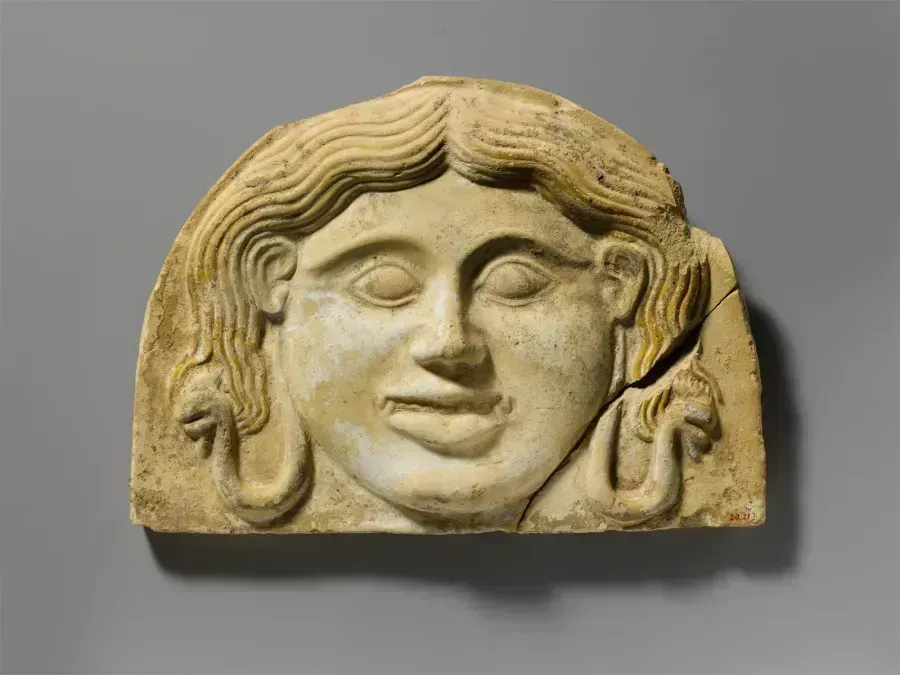
Walk through any major museum with a Greek collection and you'll see Gorgon faces everywhere. The Temple of Artemis at Corfu (c. 580 BCE) has an enormous Gorgoneion on its pediment, over 3 metres wide. The Gorgon is depicted with wings, snakes, and a wide, confrontational grimace, flanked by leopards.
This placement above doorways is significant. The Gorgon guards the threshold. She stands between inside and outside, sacred and profane, safe and dangerous. You must pass under her gaze to enter. If you belong, you're safe. If you don't, she sees you.
In private homes, small Gorgon masks were hung above doors for the same purpose. The practice survived well into the Roman period and echoes in the Mediterranean tradition of protective faces above doorways that continues to this day.
Roman adoption: from horror to beauty
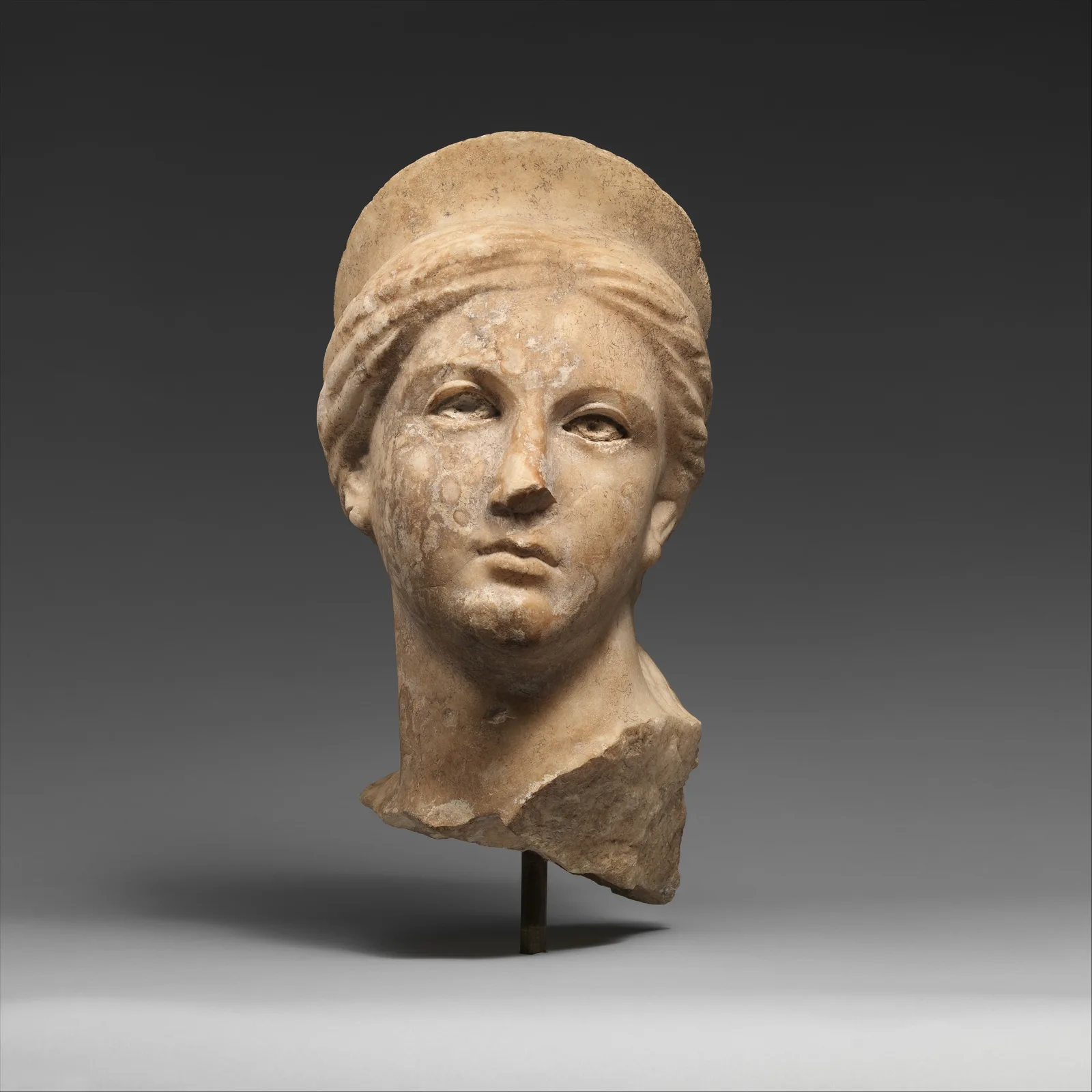
Here's where something fascinating happens. Over centuries, the Gorgoneion evolves from a terrifying monster face into a beautiful woman's face. Early Greek Gorgons (7th-6th century BCE) are all fangs and grimaces. By the Hellenistic period (3rd-1st century BCE), the Gorgon face has softened into something almost serene, a beautiful face with snakes in her hair but no tusks, no grimace, no horror.
The Romans completed this transformation. The "Medusa Rondanini," a Roman marble copy now in Munich's Glyptothek, shows Medusa as a beautiful woman with a slightly melancholy expression. The snakes are there, but they frame her face like an exotic hairstyle rather than a mark of monstrosity.
This evolution from monster to beauty is not accidental. It reflects a cultural shift in how people understood Medusa's power. The early version says: she's terrifying, and that's why she protects you. The later version says: she's beautiful, and that's what makes her dangerous. Both are true. Both survive in modern interpretations.
Upload a photo of your pet, someone you love, or an object. We'll build a 3D model and hand-cast it in pewter.



Medusa in Art: 2,500 Years of Staring Back
Caravaggio's severed head
Caravaggio painted "Medusa" (c. 1597) on a round wooden shield, as if it were an actual Gorgoneion. The face is caught in the moment of realisation, mouth open, eyes wide, snakes writhing. It's not beautiful. It's not monstrous. It's terrified. Caravaggio's Medusa looks like she just realised what's happened to her.
Some art historians believe Caravaggio used his own face as the model, which adds an autobiographical layer to an already complex image. The painting hangs in the Uffizi Gallery in Florence.
Bernini's scream
Gian Lorenzo Bernini sculpted a bust of Medusa (c. 1630s) now in the Capitoline Museums in Rome. His Medusa is beautiful and anguished, mid-transformation. Her hair is becoming snakes, and her expression captures the horror of someone watching themselves become monstrous. It's a portrait of violation and metamorphosis, carved in marble with Bernini's characteristic technical perfection.
Cellini's Perseus: the trophy
Benvenuto Cellini's bronze "Perseus with the Head of Medusa" (1545-1554) stands in the Loggia dei Lanzi in Florence. Perseus holds Medusa's severed head aloft, blood streaming from the neck. It's a celebration of the hero's triumph, but modern viewers often focus on the head itself. Cellini gave Medusa a beautiful, peaceful face in death. She looks almost relieved.
The Pre-Raphaelites: making her beautiful
Victorian-era artists, particularly the Pre-Raphaelites, became obsessed with Medusa. Edward Burne-Jones, Dante Gabriel Rossetti, and others painted her repeatedly, always as a beautiful, tragic figure rather than a monster. Their Medusa is a victim of divine injustice, not a creature to be feared.
This artistic rehabilitation set the stage for the 20th-century feminist reinterpretation. The Victorians started the conversation about Medusa as a sympathetic figure. The feminists finished it.



Fashion and the Modern Gorgon
In the late 1970s, a major Italian fashion house chose the Medusa Gorgon as its logo. The choice wasn't random. Its founder grew up in the south of Italy, surrounded by Greek ruins, and a Roman mosaic of Medusa's head was set into the floor of the family home. The image reportedly fascinated him as a child.
This was a specific version of Medusa: the beautiful, Hellenistic/Roman face, not the archaic monster. It's the face that seduces before it destroys. The logic was simple: Medusa's power isn't just fear. It's attraction. You can't look away. And that inability to look away is what petrifies you.
The choice was perfect for fashion. Fashion, at its best, has the same power as Medusa's gaze: it stops you in your tracks. It transfixes. A truly great outfit does what Medusa's face does, it makes you stare.
That single branding decision helped move Medusa from museum curiosity to mainstream fashion symbol. The face that once guarded temples now turns up in shop windows, recognised by people who have never read the myth.
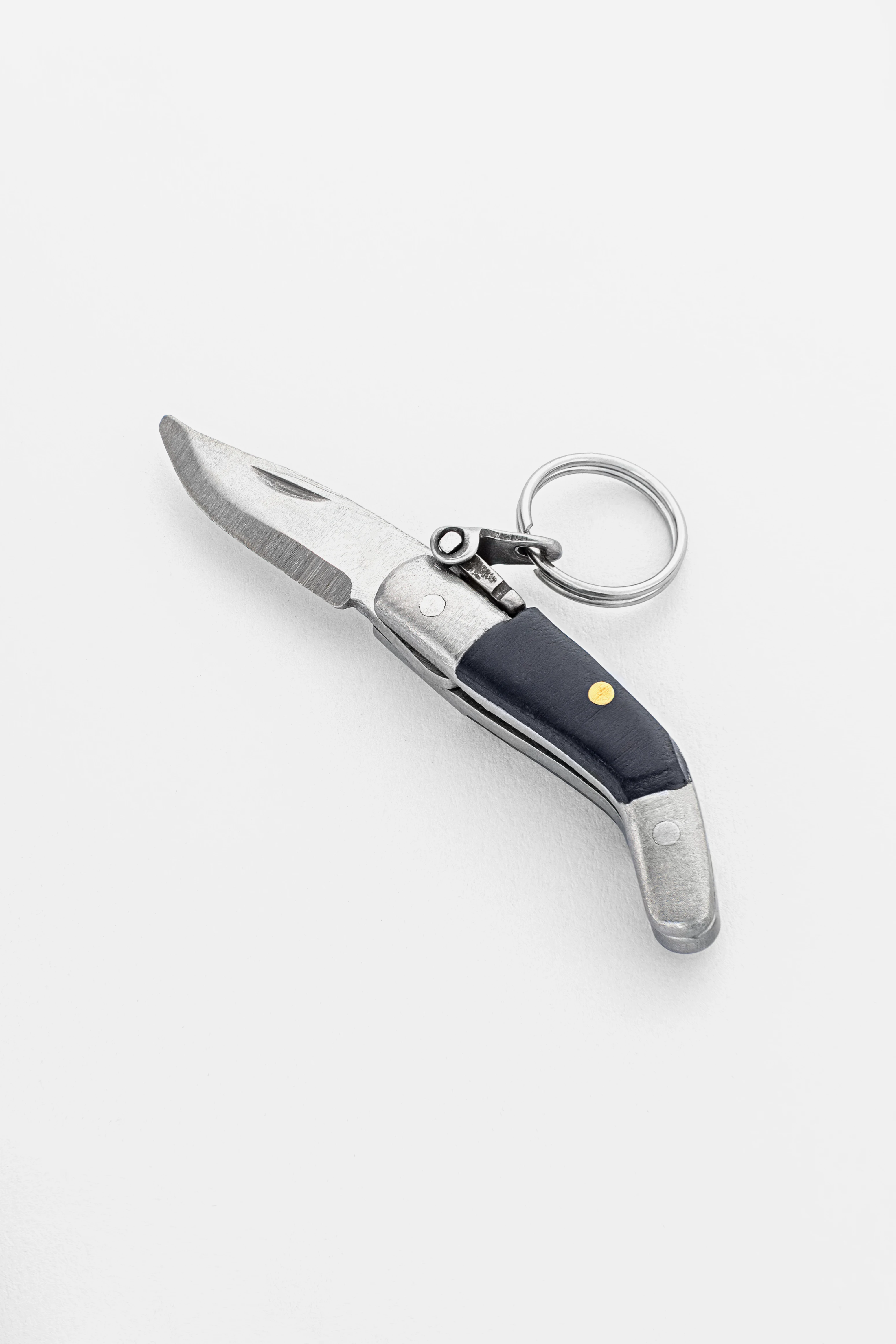
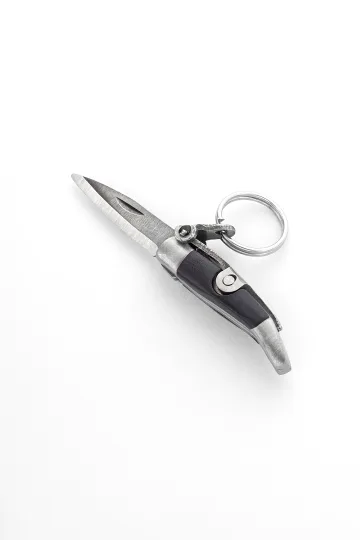
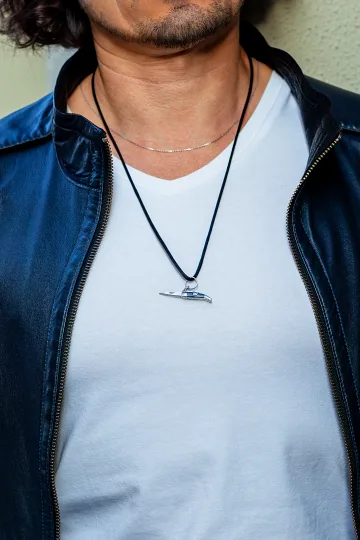
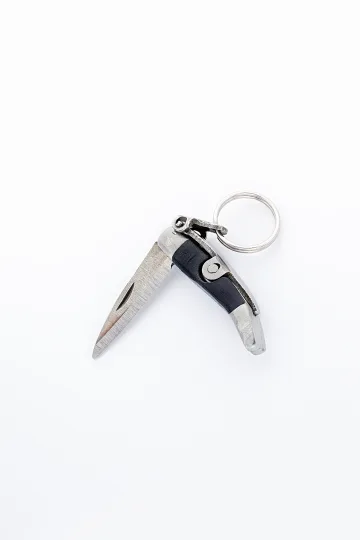
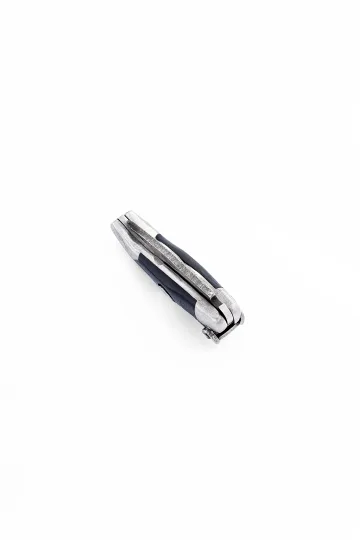
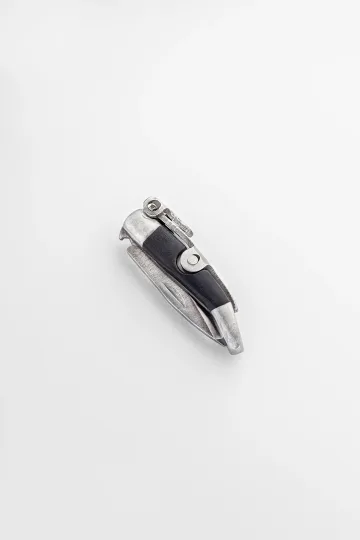
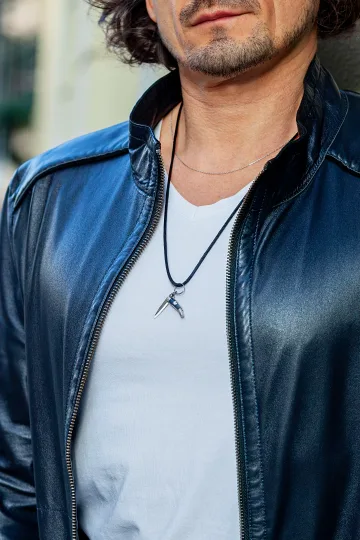
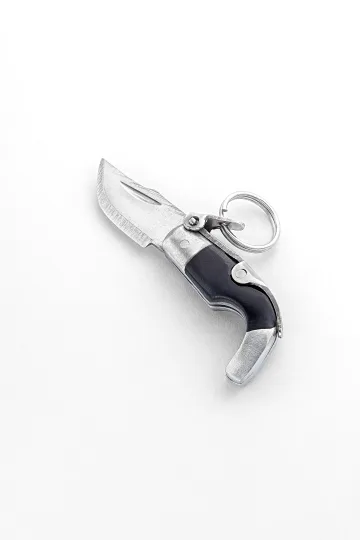
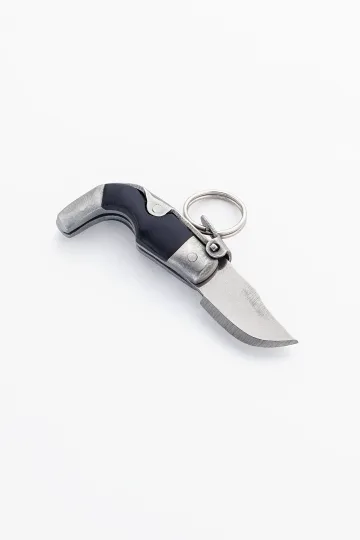
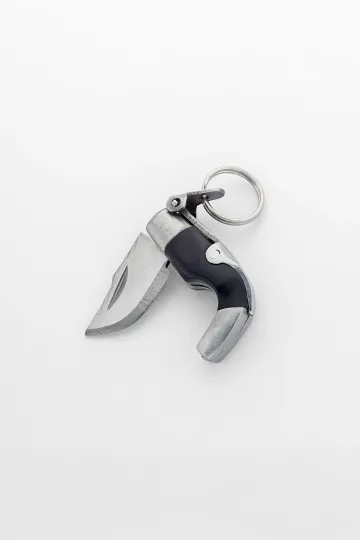
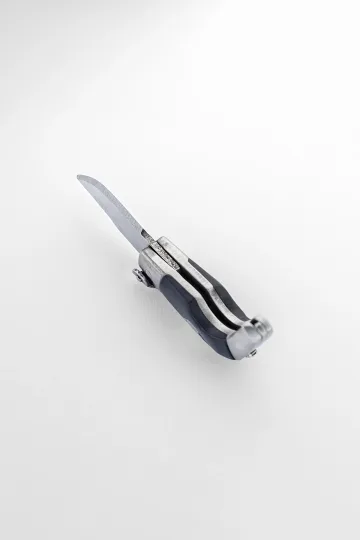
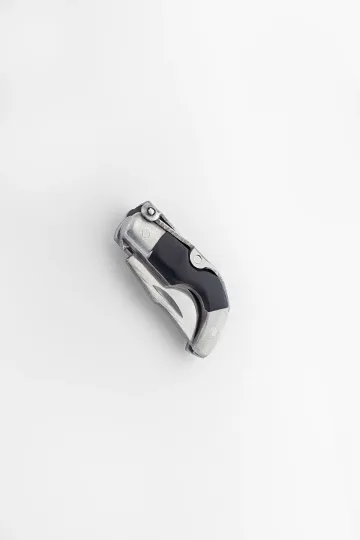
CAPAORA mini knife pendant
The 18th-century Spanish navaja in miniature: 40 mm of stainless steel, a real folding mechanism and a Palanquilla lock that clicks. An affordable gift to remember.
Authentic · Ships from Spain · 14-day returns
The Feminist Reclamation: Medusa as Survivor
The feminist reinterpretation of Medusa gained momentum in the 1970s with Helene Cixous's essay "The Laugh of the Medusa" (1975). Cixous argued that Medusa has been wrongly demonised, that the real horror of the myth is what happens TO her, not what she does. Medusa is a woman punished for being victimised. Her "monstrosity" is the rage and power that patriarchal society finds threatening in women.
Cixous wrote: "You only have to look at the Medusa straight on to see her. And she's not deadly. She's beautiful and she's laughing."
This reframing turned Medusa from a monster to be defeated into a symbol of:
Survivors of assault. Medusa was violated and then punished for being violated. Her story mirrors what happens to real assault survivors who are blamed, shamed, and transformed by their experience. Wearing Medusa says: what was done to me does not define me. My rage is valid. My power is my own.
Female anger. In many cultures, angry women are treated as monstrous. Medusa is the literal embodiment of that fear, a woman so angry that looking at her turns you to stone. For women who are tired of being told to smile, to calm down, to be nice, Medusa is permission to be furious.
Transformative power. Medusa didn't choose her transformation, but she owns it. The snakes, the gaze, the ability to petrify, these aren't curses she suffers. They're powers she wields. The thing that was done to destroy her became the thing that makes her invincible.
Subversion. Wearing the monster's face is itself an act of subversion. It says: I know what you're afraid of. I know what you call monstrous. And I'm wearing it as jewellery.
The #MeToo movement amplified this symbolism enormously. Medusa imagery surged in art, tattoos, and jewellery starting around 2017. A sculpture of Medusa holding Perseus's severed head (by Luciano Garbati, 2008, installed in New York in 2020) reversed the traditional power dynamic and became a viral symbol of the movement.
Medusa in Modern Culture
Beyond fashion and feminism, Medusa saturates modern culture:
Film. From the stop-motion Medusa in "Clash of the Titans" (1981) to Uma Thurman's version in "Percy Jackson" (2010) to the anime-influenced versions in recent adaptations. Each retelling shifts Medusa's characterisation slightly, from pure villain toward tragic figure.
Music. A mid-1990s pop artist released a "Medusa" album (1995). Contemporary metal bands use skulls with snake imagery. A famous 2013 Medusa-themed magazine cover connected the symbol to contemporary Black female power.
Tattoo culture. Medusa is one of the most requested tattoo designs globally. It went viral on TikTok in 2021-2022, with survivors of sexual assault getting Medusa tattoos as a symbol of reclaiming power. This trend made the symbol almost as common as the ouroboros in tattoo studios.
Gaming. From Assassin's Creed Odyssey to Hades to God of War, Medusa appears as both enemy and complex character in games that engage with Greek mythology.
Street art. Medusa murals have become common in major cities, often connected to feminist or anti-authority messaging.
The symbol's current popularity is driven by its versatility. Medusa can mean luxury (high fashion), survival (feminism), mythology (Greek culture), power (protection), or pure aesthetics (the snake-haired face is simply a striking image). Few symbols carry that range.
Leave your email, we'll send your discount code. No spam, unsubscribe anytime.
The code arrives by email, valid on your first order.
Wearing Medusa: What It Says About You
Who wears it and why
The fashion-conscious. The high-fashion connection makes Medusa a fashion symbol regardless of its deeper meanings. Wearing her face signals awareness of luxury aesthetics and fashion history.
Survivors and activists. Post-#MeToo, Medusa jewellery carries explicit political meaning for many wearers. It says: I know this story. I know what it means. And I'm not looking away.
Greek culture enthusiasts. For people who love mythology, ancient history, or have Greek heritage, Medusa is a connection to one of the richest mythological traditions on earth.
The "don't mess with me" crowd. Medusa's apotropaic function, turning evil back on itself, makes her a protective symbol. Wearing her face says: whatever you're sending my way, I'm reflecting it right back.
The art lovers. Anyone who's stood in front of Caravaggio's Medusa in the Uffizi or Cellini's Perseus in the Loggia knows the visceral power of this image. Wearing it is carrying a piece of art history.
How to style it
Bold statement. A large Medusa pendant on a chain is one of the most commanding pieces you can wear. It demands attention, which is appropriate for a symbol whose entire mythology centres on the power of the gaze.
Subtle detail. A small Medusa cameo, a ring with a tiny Gorgon face, or stud earrings with snake motifs. These carry the meaning without the volume.
Mixed mythology. Medusa pairs naturally with other Greek-inspired pieces, and with protective symbols from other traditions. An evil eye bracelet with a Medusa pendant creates a layered protection narrative.
With edge. Medusa works with leather, dark metals, and punk-influenced styling. She was counterculture before counterculture existed.
The gift guide
For someone who's been through something difficult. Medusa is the ultimate "you survived and you're stronger" symbol. More specific and powerful than a generic "strength" pendant.
For a mythology lover. One of the most recognisable figures in Greek myth. The story depth makes it a meaningful gift.
For a fashion-forward person. Its place in high fashion gives it instant fashion credibility.
For yourself. Because sometimes you need a reminder that the thing that was supposed to destroy you is now the thing that protects you. And that's worth wearing.
Frequently Asked Questions
What does Medusa symbolise in jewellery? Multiple things depending on the wearer: protection (ancient Greek apotropaic tradition), survival and female empowerment (feminist interpretation), luxury and fashion (high-fashion association), beauty-and-danger paradox, or simply striking visual aesthetics. It's one of the most layered symbols in jewellery.
Is Medusa a good or evil symbol? Neither, exactly. In ancient Greece, she was used as a protective symbol (good) despite being a "monster" (evil). Modern interpretations emphasise her as a victim-turned-powerful figure. Medusa transcends simple good/evil categories, which is precisely what makes her compelling.
Why did a major fashion house choose Medusa as its logo? Its founder grew up in southern Italy surrounded by Greek ruins and saw a Roman Medusa mosaic in his childhood home. The appeal was the idea that Medusa's beauty was so powerful you couldn't look away, even knowing the consequences. That's fashion in a nutshell.
Is it OK for men to wear Medusa jewellery? Absolutely. Medusa was used on male warriors' shields, on coins held by men, and on temples visited by everyone. The feminist interpretation doesn't make it "women only." The symbol's meanings (protection, power, surviving transformation) are universal.
What's the connection between Medusa and the #MeToo movement? Ovid's version of the myth describes Medusa being assaulted by Poseidon and then punished by Athena. This mirrors the experience of assault survivors being blamed for their victimisation. Medusa tattoos and jewellery became symbols of reclaiming power, particularly after 2017.
Why is Medusa so popular in tattoo culture? Medusa went viral on TikTok in 2021-2022 when survivors of sexual assault began sharing their Medusa tattoos as symbols of reclaiming power. The trend connected ancient mythology to modern experience in a way that felt personal and immediate. For people who want the symbolism but not the permanence of a tattoo, jewellery serves the same purpose. A Medusa pendant carries the same message as the tattoo: this story is mine, and I am not ashamed of it.
Is Medusa related to the evil eye? Functionally, yes. The Gorgoneion (Medusa's face) was used in ancient Greece the same way the nazar is used in Turkish culture: as a protective symbol that reflects negative energy back at its source. Both use eyes/gaze as the mechanism. Different traditions, same principle.
Which version of Medusa is most common in jewellery? The beautiful, Hellenistic/Roman version, the Medusa with a serene or melancholy face framed by snakes. This is also the version popularised by high fashion. The archaic, monstrous Gorgon with fangs and a grimace appears in some edgier or historically-focused designs but is less commercially common.
Medusa in Western Art and Literature: A Deeper Look
Nietzsche, Freud, and the philosophical Medusa
Medusa did not stay in art and mythology. She entered philosophy, psychology, and literary theory, and she never left.
Friedrich Nietzsche wrote about the Greek relationship with horror in "The Birth of Tragedy" (1872). For Nietzsche, the ability of the Greeks to transform the monstrous into beauty was a sign of cultural maturity. Medusa was one of his examples. The beautiful Medusa, the one the Romans created, is not less dangerous than the ugly one. She is more dangerous, because you do not want to look away. The beauty becomes the trap. This is a concept Nietzsche found central to Greek art: the ability to face the terrible and make it bearable through aesthetic transformation.
Sigmund Freud wrote a short essay called "Medusa's Head" in 1922, in which he interpreted Medusa's snake hair as a castration symbol. Freud's reading is disputed today, but it shows how deeply Medusa had entered Western intellectual life. Even psychoanalysis could not get past her. The essay is rarely cited as Freud's best work, but it demonstrates something important: Medusa is a symbol so loaded that every discipline tries to claim her. Art, literature, fashion, feminism, psychoanalysis. She belongs to all of them and none of them.
Rainer Maria Rilke wrote a poem called "Archaic Torso of Apollo" (1908) that ends with the famous line: "You must change your life." The poem is about being looked at by a work of art, not the other way around. Rilke describes the feeling that the statue sees you, not you the statue. That is exactly the Medusa experience. A face that stares back. A gaze that hits the viewer, not the viewed.
The philosophy of the gaze
The philosophy of the gaze is a central theme in European intellectual history, and Medusa stands right at its centre.
Jean-Paul Sartre described the gaze of the Other in "Being and Nothingness" as a form of objectification. When someone looks at you, you become an object. Medusa is the extreme version of this concept. Her gaze turns you literally into an object. Stone. Cold. Immovable.
Jacques Lacan spoke of the "gaze" (le regard) as something that comes from the object, not from the subject. The artwork looks at you. The world looks at you. Medusa is the mythical embodiment of this concept: a gaze that comes from the Other and captures you before you can react.
For jewellery wearers, this has a practical dimension. A Medusa pendant is not passive. It looks back. It confronts the viewer. This makes it one of the few jewellery pieces that has its own presence, something that goes beyond decoration. A Medusa pendant is not an object you wear. It is a subject that wears along with you. That is the difference between a "pretty pendant" and a piece with power.
Send a friend a discount code, they save on their first order.
Medusa as a Jewellery Motif: Practical Considerations
If you are looking for Medusa in jewellery, you will find a wide range. A few orientation points help with the choice.
Size and detail. Medusa's face lives on details: snakes, eyes, expression. Below 15mm diameter, these details get lost, and the pendant becomes an indistinct face. For a readable Medusa pendant, 20 to 30mm is ideal. Larger becomes a statement. Smaller becomes a secret.
Style choice. The archaic Medusa (fangs, grimace, confrontational) is rarer in jewellery but visually powerful. The Hellenistic Medusa (beautiful, melancholy, framed by snakes) is the more common version and works for both daily wear and special occasions. The high-fashion variant (symmetrical, idealised, gold on black) is the most fashion-forward.
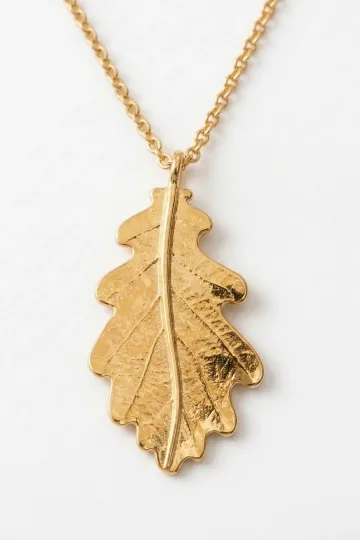
Combining. Medusa pairs naturally with other Greek-inspired pieces: meander patterns, olive leaf motifs, Greek key designs. She works just as well solo, on a simple chain, without company. Medusa does not need company. She was always strongest alone.
The Gorgoneion revival. Beyond Medusa pendants, the broader Gorgoneion motif has found its way into contemporary design. Architects use the Gorgon face above doorways in the same spirit as the Greeks did, a protective face at a threshold. Interior designers place Medusa prints in entryways. Tattoo artists report that Gorgoneion designs (the face without the body) are requested as often as full Medusa portraits. The motif works because the concept is simple: a powerful face that watches over the space it occupies.
Material matters. Sterling silver suits the archaic, confrontational Medusa. Gold suits the beautiful, Hellenistic version. Steel works for minimalist interpretations. The choice of material shifts the tone of the symbol. A gold Medusa whispers luxury and seduction. A silver Medusa says protection and mythology. A steel Medusa says "I am practical and I do not care what you think." All three are valid readings of a symbol that has always carried multiple meanings.
Silver and gold jewellery, wedding bands, symbolic pendants, paired sets.
Buying it as a gift? Each one arrives ready to give.
 A branded Zevira box and a little card come with every order.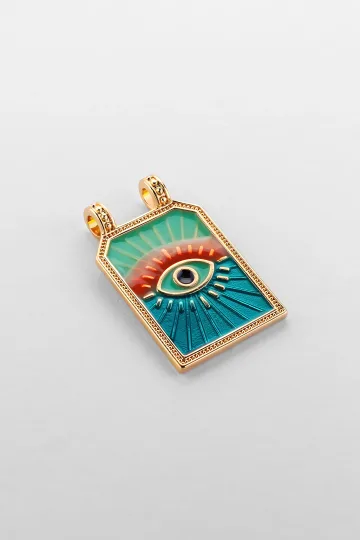

She's still looking
Here's the thing about Medusa that every retelling of her story somehow captures, whether it means to or not: she endures.
Perseus cut off her head, and her power didn't end. Athena mounted the head on her shield, and Medusa became more visible than ever. Ovid rewrote her as a victim, and she became more sympathetic. Feminists reclaimed her as a survivor, and she became more relevant. Fashion put her on its runways, and she became more famous.
Every attempt to use her, contain her, or redefine her just makes her stronger. The monster that can't be killed. The face that can't be ignored. The story that keeps finding new audiences because the things it's about, power, beauty, violation, survival, transformation, never stop being relevant.
You can wear her face for protection. For fashion. For politics. For mythology. For the pure aesthetic impact of snakes and staring eyes.
But whatever your reason, you're wearing a face that has been staring back at humanity for almost three thousand years. And in all that time, not once has she blinked.
Wear the symbol, don't just read about it. These are in stock:





About Zevira
Zevira makes jewellery in the artisan tradition of Albacete, Spain. For us Medusa is not a fashion logo but a symbol with three thousand years of history behind it: protection, transformation, the power of the gaze. We treat her exactly that way.
Here is what you will find with us on this theme:
- Pendants with mythological and protective motifs that read well at both a bold and a delicate size
- Pieces with snake imagery and faces in the spirit of the Gorgoneion
- Protective talismans that layer naturally with Medusa in one look (nazar, hamsa, all-seeing eye)
- Greek-style jewellery: meanders, olive leaf motifs, the Greek key
- Options in sterling silver for the protective reading and in gold for the beautiful, Hellenistic one
- Paired and themed sets to gift someone who has been through something hard
Every piece can be personalised with engraving, with personalised engraving available. Sterling silver 925 and 14 to 18K gold.