Jewelry After Therapy: A Quiet Symbol of Completed Inner Work
Introduction
Years of work with a therapist leave no diploma, no medal, no public recognition. From the outside it stays invisible. And still, people have long marked important crossings with an object: a ring after a divorce, earrings for finishing a degree, a bracelet for a hard personal milestone. Jewellery after therapy works the same way. It is not a trophy and not an announcement, but a private mark of a moment, legible only to the person who wears it.
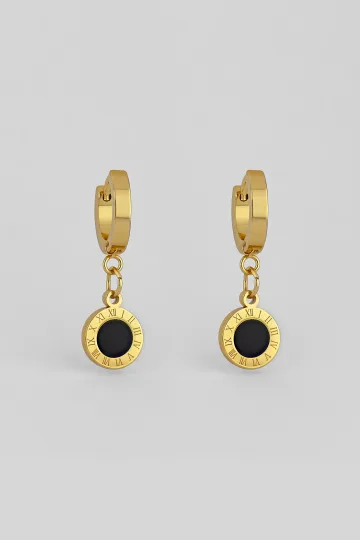
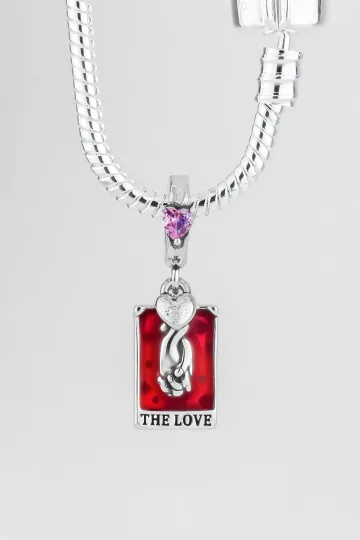
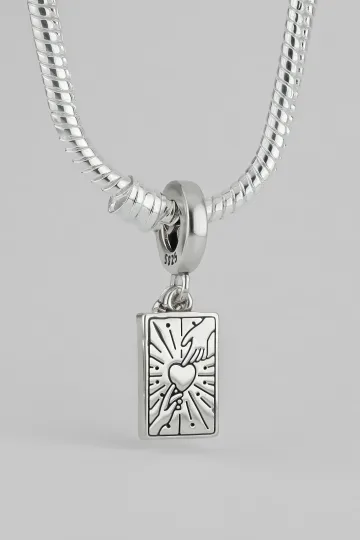
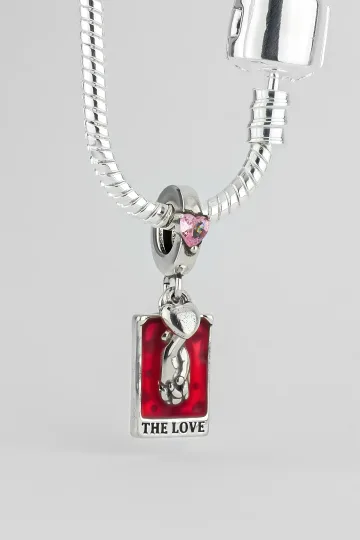
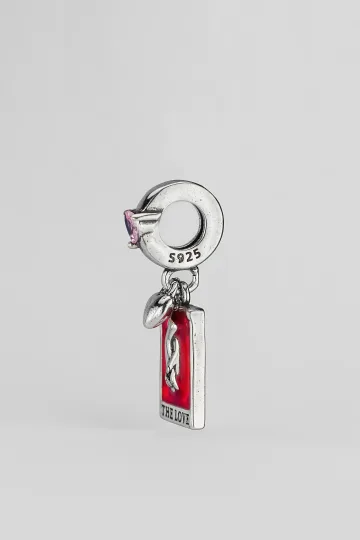
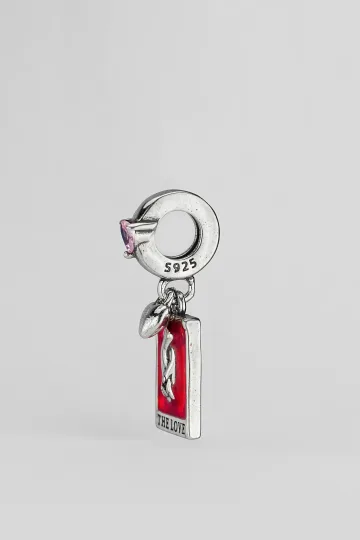
Wear the symbol, don't just read about it. These are in stock:




Why Mark the Ending at All
Big inner work tends to close without any ceremony. The sessions simply stop appearing in the calendar. The event has no visible edge, which is why it slips past notice, even the notice of the person who lived it. The changes piled up slowly, and it is hard to say where the "before" stopped and the "after" began.
An object helps draw that line. Not magic and not superstition, just the way memory happens to work: a specific thing, chosen in a specific moment, binds itself to that moment and later carries you back to it. A ring, a pendant or a bracelet bought on purpose to mark the ending becomes a quiet flag for a new chapter.
The idea of marking a crossing with an object is old. Medieval pilgrims came home from Santiago de Compostela with a scallop shell, visible proof of the road behind them. In Japan, anyone who walked the Kumano pilgrimage routes or climbed Fuji collects stamps in a dedicated book, and every stop leaves its trace. In the English-speaking world the class ring, a tradition that grew out of West Point in the early nineteenth century, marks the close of a meaningful stage. Jewellery after therapy joins the same line, only without a cultural ritual built around it.
This one lives under the collar, and it owes no one an explanation. Someone asks what it means? Smile and say nothing.
How to Wear Your Meaning Piece
A piece like this hides easily and travels from one look to the next, and the more naturally it sits in everyday clothes, the more often it stays close. Here is what actually works, sorted by occasion.
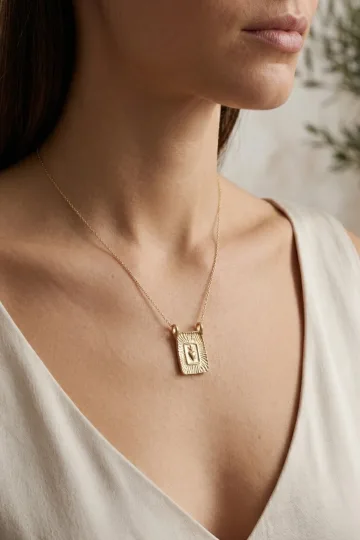
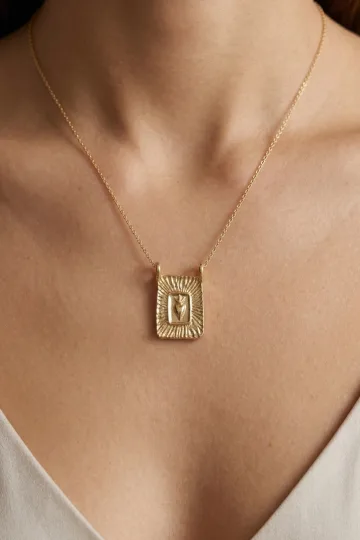
How do I wear it day to day? For everyday I recommend a pendant on a thin chain under a turtleneck, a crew-neck tee or a linen shirt. A neutral base (beige, grey, graphite, sand) does not argue with the symbol and leaves it the main accent. The rule is simple: the deeper the neckline, the longer the chain. Under a V-neck a pendant sits well just below the collarbones; under a high neck I suggest a shorter chain resting on the fabric.
Is it fine for the office? Yes, as long as you keep it restrained. I suggest a small pendant under a blazer, a thin ring with a quiet pattern or a narrow bracelet showing from a cuff. For formal clothing I choose clean metal without extra texture: the piece reads as a tidy detail, and only you know its history.
How do I open the symbol up for evening? For an evening out I suggest an open neckline and a smooth fabric in a deep colour: wine, emerald, black. I take the chain longer than usual so the charm catches the light. Silver with a sheen or moonstone reads well under evening light.
Can I layer it? For a special occasion, yes. I recommend two chains of different lengths: the symbol on one, a smooth charm on the other. Or a stack of two or three thin rings, one of which carries the meaning. Mixing silver and gold takes the edge off, and the quieter the occasion, the fewer pieces alongside it.
What do I choose if I want it as a tactile anchor? Then the shape matters as much as the design. I choose smooth rounded edges and a moderate weight: a disc pendant rounded at the rim, a plain ring, a bead on a chain. The hand reaches for a piece like that on its own, which means it is nearby more often in the moment you need it.
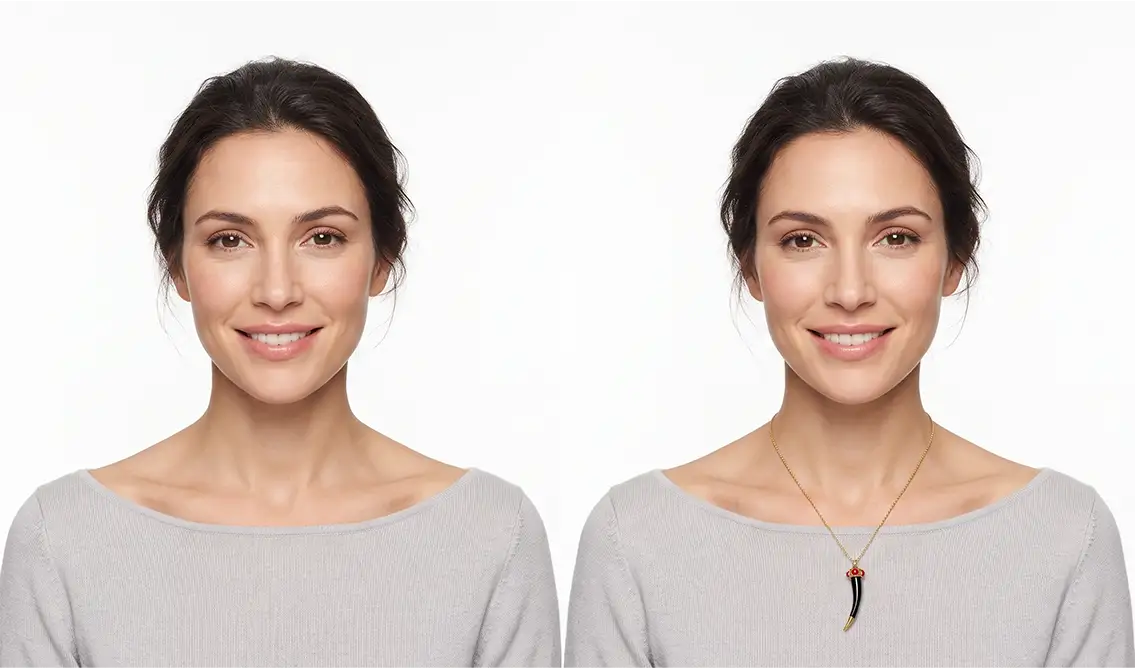
Turn on your camera, pick earrings, a pendant or a ring, and see the piece on yourself in real time.
Switch items in one tap.
Everything runs in your browser: no photo or video is ever uploaded.
A Gift to Yourself
Buying yourself something meaningful to honour your own serious work is a simple and honest gesture. Not "treating yourself," but acknowledging that what was done is real and matters. Not because some outside party graded it, but because you know it from the inside.
Giving yourself that kind of recognition is often harder than it sounds. The habit of discounting what is yours, the sense that praising yourself is out of place, the feeling that you still have to "earn it" first, those are the very patterns people come into therapy to work on. Buying a piece of jewellery to mark the ending can be a small part of a new relationship with yourself.
What Makes a Piece a Fitting Symbol
Not every piece suits this role. A few qualities matter.
It sits close to the body, in daily life. A pendant under a shirt, a ring on the hand, a thin bracelet. Not a showpiece kept for special occasions, but the thing that is with you on an ordinary working Tuesday, on a bad day and on a good one.
It carries a private meaning, legible only to its owner. Not a motivational line with an obvious message, but a symbol you chose because it is exact for your story.
It is quiet enough that it never asks to be explained. The ideal is when it simply looks like a pretty piece of jewellery, and only you know its history.
It feels good to the touch. When the tactile sensation is right, the hand reaches for it naturally, which means the piece ends up nearby more often.
It is durable. Not disposable. Something that will last for years and can hold its role for as long as you need it.
Symbols That Fit the Meaning
The choice of symbol is personal. But a handful of images line up naturally with the theme of completed inner work: passing through the hard part, coming out, changing, finishing. They are not "correct" and not "magical," their history simply rhymes with what happened.
The Phoenix: Renewal Through Destruction
The phoenix appears in the mythology of many cultures, and everywhere it carries a similar idea: destruction as the condition of renewal. The bird burns completely and is reborn from the same ash, already different.
The Greek phoenix lived, by various accounts, five hundred or a thousand years, then set its own nest alight and rose again from the ashes a few days later. The Chinese fenghuang joins the masculine and feminine principles and stands for harmony after crisis. The Egyptian Bennu, the sun bird, died at sunset and was reborn at dawn.
The common thread: destruction is not the end but the condition of the next cycle. For a person who has come through depression or worked with the aftermath of trauma, the phoenix carries a precise metaphor. Not "I became better," but "I went through what was breaking down the old configuration, and it turned out you come out of that alive."
The Butterfly: Metamorphosis as Fact
The butterfly is such a common motif in jewellery that the metaphor can feel worn thin. But the biology of metamorphosis says something unexpected. The caterpillar does not "turn into" a butterfly gradually. Inside the pupa it dissolves almost to a cellular soup, losing its former structure, and reassembles into an entirely different creature. This is not a gentle process but a radical rebuild.
The butterfly as a symbol carries exactly that: metamorphosis, not repair. A process that required taking the old thing apart in order to assemble something else.
The Lighthouse: A Bearing in the Dark
The lighthouse is easy to misread as a symbol. A lighthouse does not sail out to meet ships and does not haul the drowning ashore. It stands in one place and shines: it gives direction to those moving in the dark, and it makes a shore that already exists visible.
That idea matches what often happens in therapy. The capacity to cope was already in the person, it was simply out of reach, covered over, unrecognised. The lighthouse does not create the path, it makes visible what was always there.
The Labyrinth: The Path Already Walked
The labyrinth deserves precision. English distinguishes a maze (with dead ends, where you can get lost) from a labyrinth (with a single path to the centre and back). They are different structures, and the difference matters here.
The classical Cretan labyrinth, which underlies most of the patterns used in jewellery, is a labyrinth in the strict sense. You cannot get lost in it, there is one path. But it keeps leading you toward the centre, then back out to the edge, until at last it brings you to the middle. Long work often feels just like that: progress, then what seems like a relapse, the same theme again that you thought you had closed. That is not failure, it is the structure of the road. A piece with a labyrinth pattern confirms that the whole path, with all its turns, has been walked.
The Ouroboros: A Completed Cycle
The ouroboros, the serpent biting its own tail, is the symbol of a completed cycle. It turns up in Egyptian, Greek, Germanic and Chinese traditions. An end that is at the same time a beginning; closure not as emptiness but as wholeness.
In alchemy the ouroboros stood for the cycle of dissolution and recombination; for Jung it tied into the image of the self and the psyche as a whole system. For someone finishing therapy, the meaning is concrete: this circle has been drawn in full, you can let it go, not forget it and not cross it out, but precisely complete it.
The Star of Tarot: Arcanum XVII After the Tower
The Star, the seventeenth Arcanum of the Tarot, in the Waite system follows directly after the Tower. The Tower is the collapse of structures that seemed solid. The Star comes afterward: a bare figure by the water under a starry sky, openness without defences, two jugs pouring water into the pool and onto the land, replenishment and renewal.
The card is called a card of hope, but not the naive hope that comes before the trial. It is the hope that comes after. Its light is recognised by the person who has already passed through the breaking. In the Waite-Smith deck (1909) the large star is eight-pointed; in Sumerian tradition that is the sign of Inanna, goddess of love and war, and eight reads as the number of a completed cycle. A small pendant with an eight-pointed star is one of the most exact and private options, since only its owner knows what it means.
The Lotus: Clean Out of the Murky
The lotus grows from the silt at the bottom of a pond, rises through cloudy water and opens at the surface flawlessly clean: the mud does not cling to the petals. In Buddhist and Hindu traditions the flower became a lasting image for exactly this reason, not because it avoids the mud, but because it passes through it and stays itself.
For a person who has worked for a long time with a heavy past, the metaphor is exact and at the same time gentle. The point is not to cross out what happened, but that what was lived became the soil. The lotus does not deny the bottom of the pond, it grows straight out of it. In jewellery the flower shows up both as a flat graphic silhouette and as a layered three-dimensional bud; the first is quieter and closer to the idea of everyday wear, the second closer to a ceremonial piece.
The Semicolon: The Sentence Continues
The semicolon is the most direct of the modern symbols on this theme, and its origin is worth getting right. The mark was chosen because a writer places a semicolon where they could have used a full stop and ended the sentence, but decided to go on. The phrase is not cut off, it continues. The image was born in communities supporting people who lived through severe mental health crises, and for many it became a private mark that the story did not end.
It is a strong symbol, and because of that strength it deserves to be handled with care. It is more open than the phoenix or the lotus: anyone who knows it will read it at once and unambiguously. So some wear a semicolon piece openly, as a conscious statement and a sign for their own people, while others choose an extremely small, almost invisible form so the meaning stays private. Both choices are honest, the difference is only how much privacy you want. As a pendant, or engraved on the inside of a ring, the mark works most quietly of all.
The Forget-Me-Not: Memory Without Pain
The forget-me-not is a small blue flower that European tradition has tied to memory and faithfulness of recollection for centuries. For the theme of completed inner work it holds a subtle, non-obvious meaning: not "forget and move on," but "remember without the old pain." Often the result of long work is exactly that. The event has not gone anywhere, but the memory of it has stopped wounding the way it used to, and has taken its calm place in the story.
In jewellery the forget-me-not is good because it simply looks like a pretty flower and asks for no explanation. It is often made in enamel, with a vivid blue tone, or engraved as a fine outline. A small flower on a chain reads to outsiders as a sweet ornament, while for its owner it points back to a careful relationship with one's own past.
The Tree and Roots: What Grew in That Time
The tree as a symbol works not on the idea of blossoming but on the idea of support. The visible crown holds up because of invisible roots, and the deeper the roots, the steadier everything above. In therapy this hidden part is often exactly what gets stronger: outwardly the life looks like the old one, but the ground under it has become more reliable.
The image of roots suits those who, over the course of the work, did not so much "transform" as steady themselves, finding firm footing where the ground used to give way. Unlike the phoenix with its drama of destruction and rebirth, the tree carries a quiet, slow idea of growth that is invisible day to day but becomes obvious over years. In jewellery you find a realistic tree with a spreading crown, a stylised circle filled with interwoven roots, and a single thin branch as a graphic minimum.
Customer reviews
Zevira is a real jewellery shop. Genuine payments, deliveries and customer thank-yous.
🥰🥰🥰 gracias
Ok, ¡gracias! 🙂
Which Symbol for Which Work
These are not strict rules, only thoughts on where the meanings overlap.
After a long depression, the closer images are those of returning light: the lighthouse, the star, the phoenix. For materials, silver with a sheen or gold, moonstone with its milky glow.
After working with anxiety, the symbols of path and movement through uncertainty: the labyrinth, the lighthouse, the ouroboros. Here a pleasant texture to the touch matters especially.
After working with trauma, the symbols of transformation, where the old was taken apart and put back together differently: the phoenix, the butterfly. The aesthetics of kintsugi belong here too (the Japanese practice of mending broken pottery with gold, emphasising the cracks rather than hiding them); in jewellery that becomes visible seams or engraving along a fracture line.
After long psychoanalytic work, the symbols of depth and the path inward and back: the labyrinth, the ouroboros, the owl with its idea of seeing what is hidden.
After work where the main gain was steadiness rather than a sharp change, the closer images are those of support and slow growth: the tree with roots, the lotus. They speak not of a flash but of what grew over the years.
After a severe mental health crisis, if what you want is a sign of life continuing, the semicolon fits; if a careful memory of the road behind you, without the old pain, matters more, the forget-me-not does. These are open symbols, and the form for them is worth choosing by how much privacy you need.
If No Symbol Fits
The images above are not compulsory. Sometimes neither the phoenix nor the labyrinth lands in a personal story, and forcing someone else's metaphor makes no sense. Then quiet, abstract marks work, the ones with no ready meaning, where only the owner sets it.
A single dot. A small cast or engraved bead, a single point on a smooth pendant. It reads as nothing and as everything at once: the place where the full stop was set. The most minimal option there is, with zero outward narrative.
Coordinates. The latitude and longitude of a place tied to a turning point in the work: the room, the city, the home where it first became easier. Engraved as 40.4168, -3.7038 or in degrees. To an outsider it is just numbers.
A smooth blank disc, sometimes called a tag. The point is that the page is clean: the story has already been written inside, and there is no need to display it on the metal. If you like, one word or a date on the back.
A line. A thin horizontal stroke on a ring or pendant, scored or engraved. A straight line like a steady pulse, like a drawn border between "before" and "after." Graphically quieter than any symbol.
Morse. A short word or date set out in dots and dashes as relief or engraving. It looks like an abstract ornament and is legible only to someone who knows the key. Handy for a phrase you would rather not spell out in letters.
These options suit especially well when you need utter privacy or when symbolism simply does not resonate. Clean geometry asks for no explanation and does not go out of date.
Upload a photo of your pet, someone you love, or an object. We'll build a 3D model and hand-cast it in pewter.



Durability: What Survives Ten Years
A piece worn every day and kept for decades is tested not by how it looks in the case but by how it ages. A few technical things decide whether it lasts to the moment when the meaning settles into the background.
The chain clasp. The weakest point of an everyday pendant. A spring-ring or lobster clasp is more reliable than a thin jump ring, which works itself loose and opens on its own over time. If the pendant is meant to be worn under clothing all the time, choose a lobster clasp and a soldered, not an open, ring at the bail from the start.
Chain thickness. A very thin chain (under 1 mm) is lovely, but it wears through at the bends and snaps after a few years of daily wear. For a lifelong piece it is wiser to go from 1 mm up: cable, curb and rolo links hold the load better than a thin snake or lacy links.
Engraving depth. Shallow laser engraving on silver rubs away over time against fabric and skin, especially on a ring that is in constant friction. Deep mechanical or hand-graver engraving lasts longer. On a ring the inscription is better placed inside the band, where it is protected from wear and reads just the same.
Fine relief and patina. On darkened silver the design holds through contrast: dark in the recesses, bright on the raised parts. In wearable spots (a ring, a bracelet) the raised parts polish away against everything over time, and a phoenix with its drawn feathers gradually loses depth. On a pendant under clothing this barely happens. For a ring it is more honest to choose a simpler pattern or gold, which does not depend on patina.
Silver and the body. Sterling 925 darkens from contact with sweat, creams, perfume, household chemicals and hydrogen sulphide (even from onions and eggs). This is not damage but a normal oxide film, removed with a polishing cloth in a minute. But if you want a piece that always looks the same, 14K gold removes the upkeep entirely.
What to take off. Showering, the pool (chlorine eats away at silver and at solder joints), the sea, sleep, sport and cleaning with strong agents all shorten a piece's life. A pendant under clothing usually stays on overnight without harm; an engraved ring and a thin bracelet are better taken off at night and in water, so they are not rubbed or snagged.
What to Give if Someone Close Finished Therapy
If someone close to you is finishing long-term therapy and you want to mark it, the choice of object matters: it is easy to pick something with the wrong meaning.
What Not to Give
Motivational jewellery with obvious words like "Strong" or "Brave." That turns a private process into a public declaration.
Self-help books. The person has just finished years of professional work, and the suggestion to "read a bit more on the subject" lands oddly.
Anything with the subtext "you are fixed now." The person was not broken, they worked. The gap between those two stories is wide, and a gift should not echo the first.
Anything that sets up a situation of explanation. If the gift prompts the question "what does this mean?", which then has to be answered with an account of therapy, you are handing over not a gift but an obligation.
What to Give
A quiet piece with a symbol that holds several layers of meaning: phoenix, butterfly, lighthouse, star, labyrinth, ouroboros. Each works both as a beautiful image in its own right and as the symbol you are putting into it.
Something worn close to the body that asks nothing of strangers: a pendant under clothing, a thin ring, an understated bracelet. Durable and built for long wear.
An engraving, if you are sure it is fitting for that person. A date, a short phrase, a symbol.
If It Is a Partner or Someone Close
When a partner finishes long-term therapy, the gift should belong to the person, not to your relationship with them. Not a reward for "becoming better," and not "now things will be easier for both of us." The best form is recognition of the work without grading the result: "I wanted to mark what you did." Let the jewellery be quiet and personal, the kind a person wears for themselves.
If the Person Does Not Want to Mark Anything
That is fine. Not everyone needs a physical mark; for some, inner acknowledgement is enough, and some would rather mark it another way, with a trip or a dinner with the people they love. There is no need to insist. A good gift matches what the recipient needs, not what the giver thinks is right.



Engraving: When and What
Engraving is not required. But if the decision is made, precision matters.
What is worth engraving. The date of completion, the quietest and most exact choice: it tells a stranger nothing and tells you everything. One word or a short form of a meaningful phrase, if the work held an idea that changed a great deal ("Enough," "Here"). A small symbol that became navigational for the whole stretch of work. A name or an initial, if it carries personal meaning.
What not to engrave. A motivational line in the style of a greeting card. Text that will need explaining. An inscription that is too long: engraving works as a mark, not as a story, a few words at most. The start date of therapy: the point of completion carries a different meaning from the point of entry.
Materials: What to Choose
Sterling 925 without oxidation, cool to the touch, slowly warming to body temperature, smooth. Over time it darkens and takes on a living patina. A good choice if you like the feel of metal "as metal."
Sterling 925 with a dark patina, more textured, because the details stand out in sharper relief: a phoenix with drawn feathers, a crisp labyrinth pattern. With wear the patina rubs off the raised parts and stays in the recesses.
14K gold, warmer to the touch, does not darken, asks for no special care. It suits you if you want a piece that will always look the same and clean. It carries more of a sense of occasion.
Size. For a piece with private meaning, small often works better than large: a little pendant 1 to 2 cm, a thin ring, a narrow bracelet. Bold symbolism invites conversation, which is fine if you want the conversation; if not, choose the modest version. Sterling 925 takes engraving well and is more accessible; gold is more durable and more ceremonial. The choice of metal is first of all about which material is pleasant to touch and which you will want to wear ten years from now.
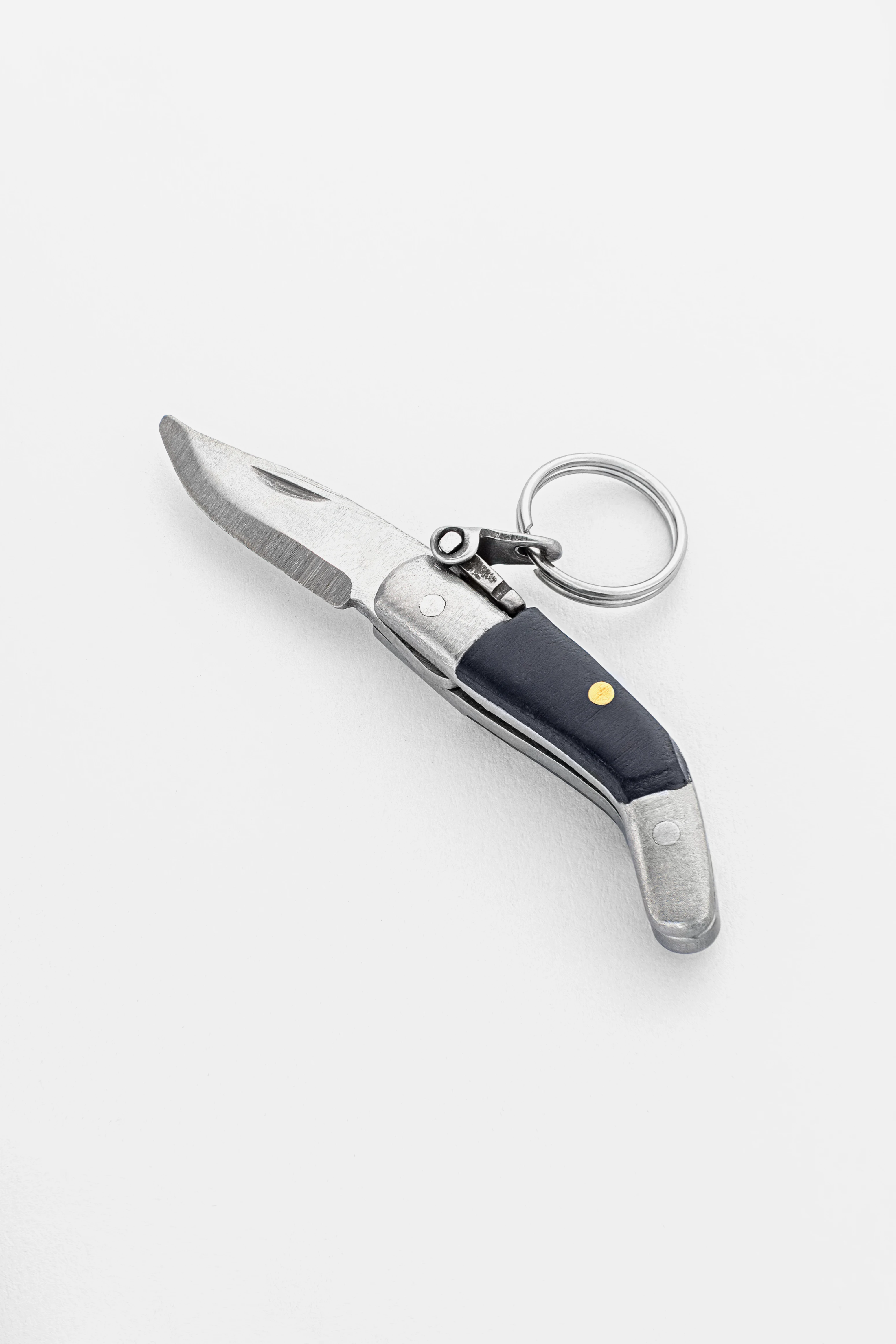
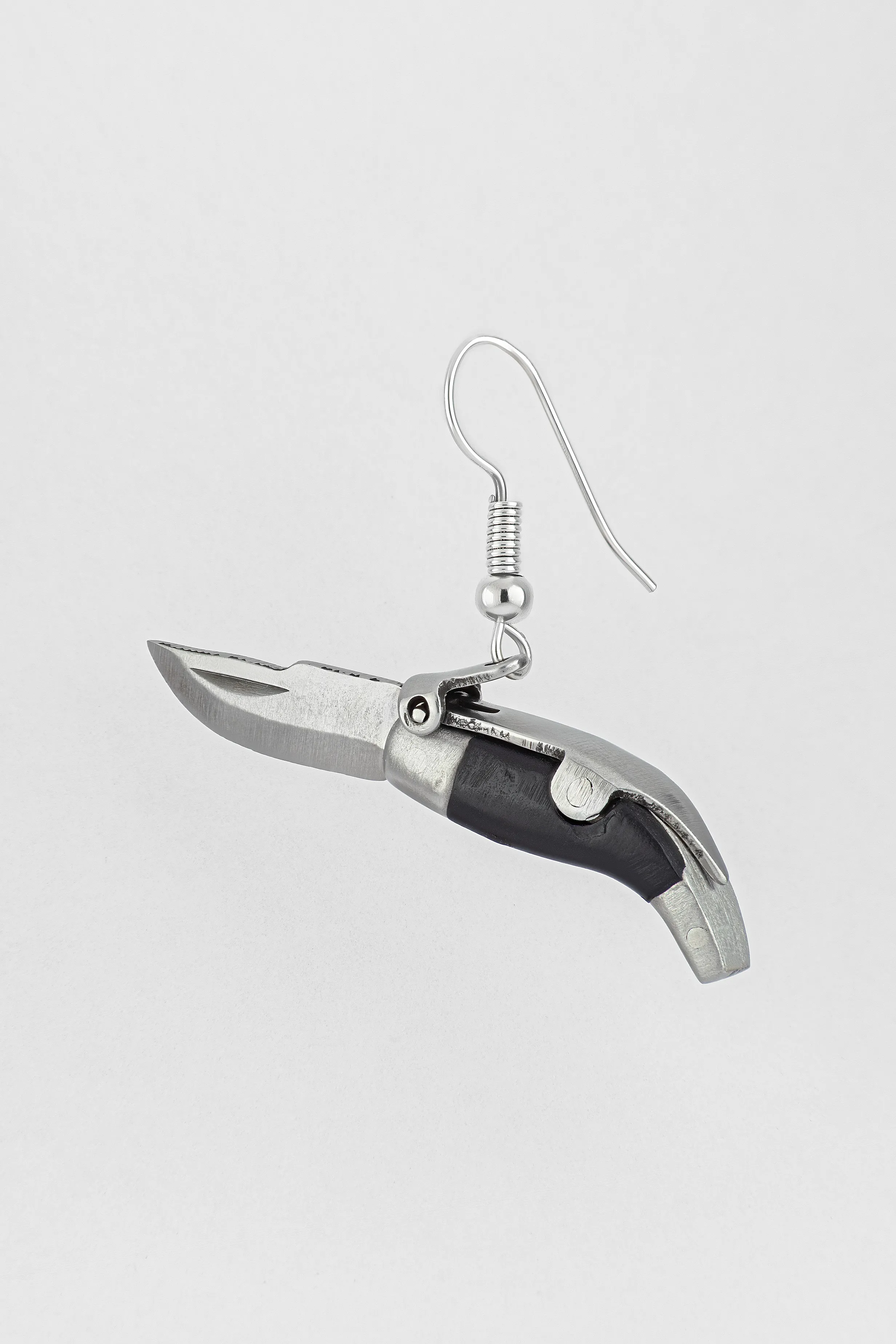
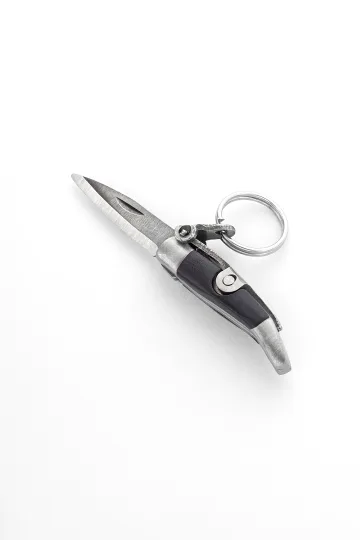
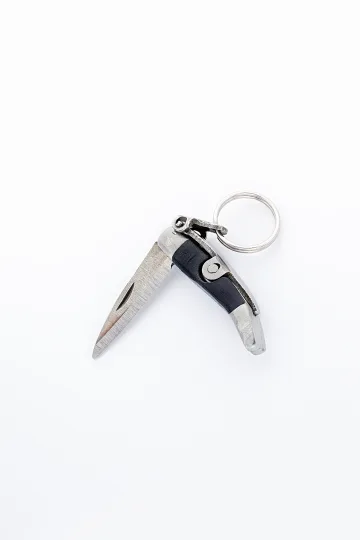
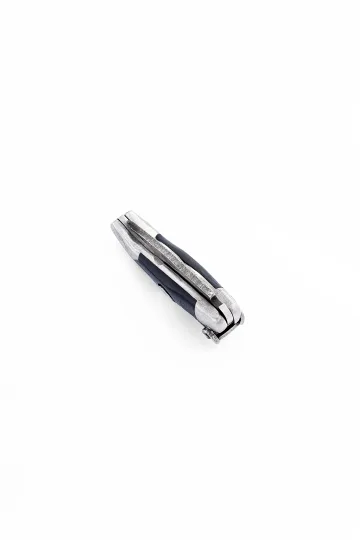
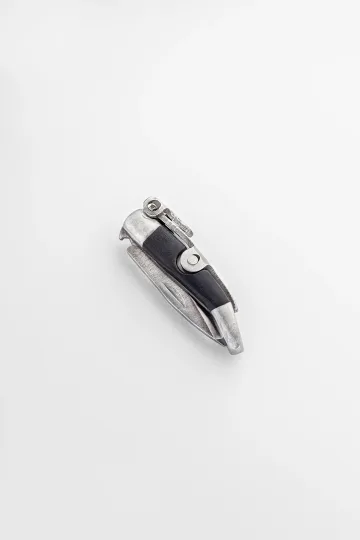
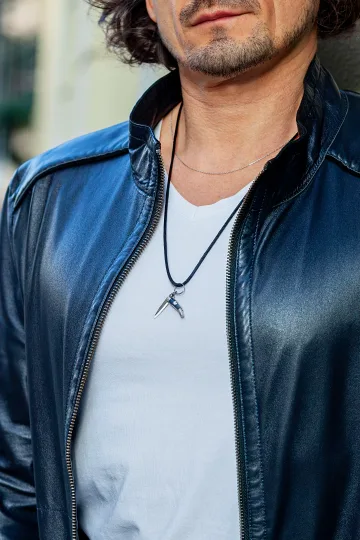
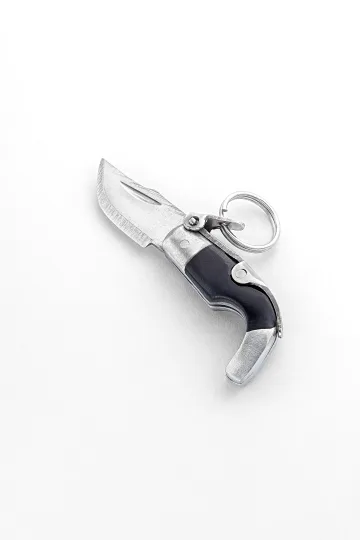
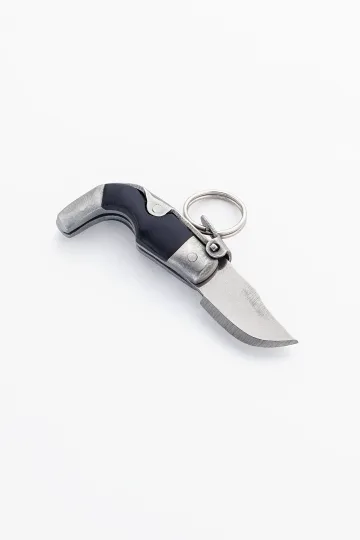
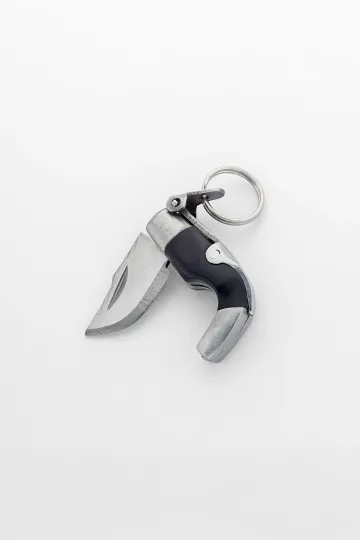
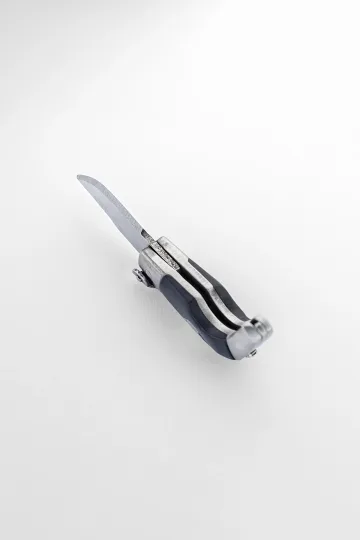
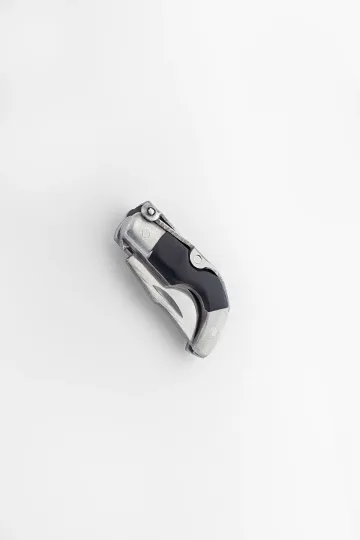
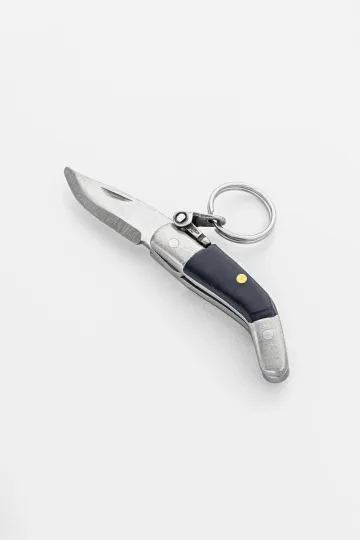
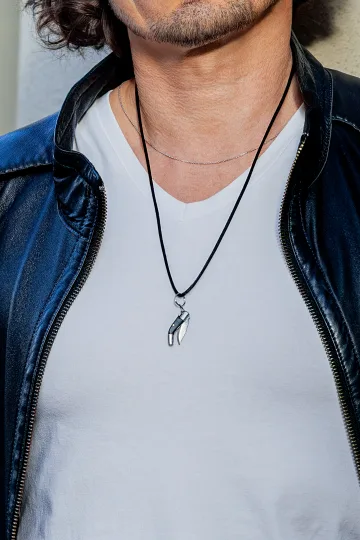
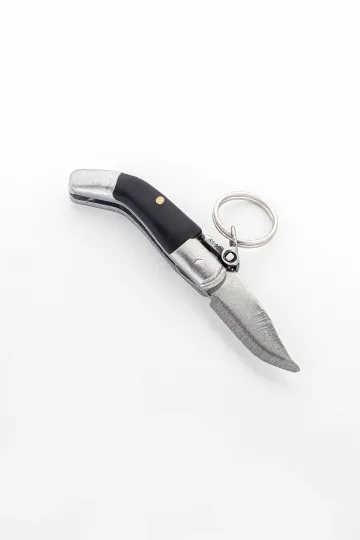
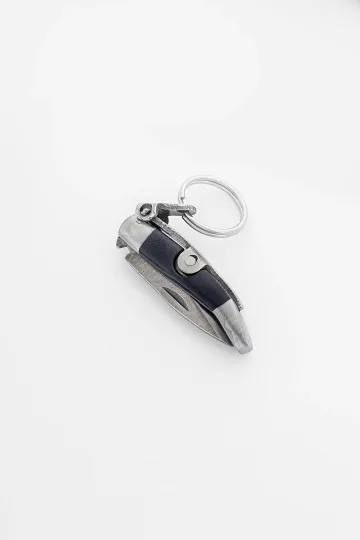
CAPAORA mini knife pendant
The 18th-century Spanish navaja in miniature: 40 mm of stainless steel, a real folding mechanism and a Palanquilla lock that clicks. An affordable gift to remember.
Authentic · Ships from Spain · 14-day returns
How to Wear It
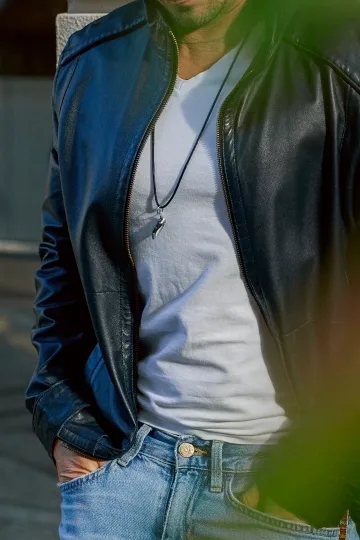
Under clothing, the most common choice for jewellery with private meaning. A pendant under a sweater or blouse is with you but not seen; you can feel it through the fabric, and once the clothing comes off, see it in the mirror. No questions and no explanations: therapy is part of life, not part of a public narrative.
A ring gives constant tactile contact: the hand brushes it with every movement. A thin ring with a symbol, stacked with others or alone on the ring finger, does not stand out visually but is felt all the time.
A bracelet sits between the pendant and the ring: a little more visible, but easily hidden under a sleeve and easily taken off. An ouroboros bracelet, a thin chain with a small charm, a labyrinth pattern.
Leave your email, we'll send your discount code. No spam, unsubscribe anytime.
The code arrives by email, valid on your first order.
What Changes Over Time
The meaning of such a piece shifts over time, and that is not a flaw but how symbols work.
Right after the ending it carries a sharp immediacy: it reminds you of a particular session, of that evening in the shop. After a year the sharpness fades and steadiness remains: it is now a reminder not of a moment but of a period that became part of the story. After a few years the piece becomes simply yours, the meaning settling into the background like a familiar tune.
Some people deliberately take such a piece off after a while: "I no longer need this reminder." That is a good sign too: the mark did its job. Others wear it for life and value the presence it has gathered. Both choices are right.
Why a Reminder Object Works at All
The fact that an object can hold meaning has a plain explanation, and it is not about magic. Human memory works largely through association: a recollection surfaces more easily when something from the same setting is nearby. A scent, a melody, an object carries you back to the moment they belonged to. Jewellery chosen on purpose to honour the end of the work becomes that kind of anchor by choice: you yourself bind it to the meaning, and from then on it keeps that meaning.
Memory Holds On to the Concrete
Large abstract ideas like "I have become steadier" hold attention poorly: they are too general, and the mind slides past them. A concrete thing works differently. It has a shape, a weight, a story of being bought, that particular evening. Through that concreteness the abstract idea gets something to grip. So a small phoenix pendant remembers more than the phrase "I went through something hard": it pins the idea to an object you can hold in your hand.
An Anchor Chosen on Purpose
Random reminders of the past arrive uninvited and often painful. A thing chosen deliberately is built the other way around: it reminds you when you yourself look at it or touch it, and it reminds you of what you yourself put into it. That moves memory out of the "it swamps me" mode and into the "I turn to it when I need to" mode. The difference is large, and it is exactly what makes a conscious object supportive rather than wounding.
Not an Amulet but a Bookmark
It matters not to turn the piece into a charm expected to bring protection or luck. It does nothing on its own and guarantees nothing. Its role is closer to a bookmark in a book: it marks the place where you were and helps you return your attention to it. All the work has already been done by the person; the object merely holds a reference to it. That attitude is both more honest and more durable: it does not lay on the metal what the metal cannot carry.
A Tactile Anchor: A Thing You Can Touch
A separate and underrated side of such a piece is that you can touch it. Sight asks you to look; touch works unnoticed by anyone around you, at any moment. In a hard minute the hand finds the ring on its own, traces the rim of a pendant, runs through the links of a bracelet, and that brief physical act carries you back to the chosen meaning without a single word.
Why Touch in Particular Helps
A simple conscious movement of the hand, the contact with cool smooth metal, its gradual warming under the fingers, gives a point of support in a moment when thoughts speed up. This is not treatment and not a technique from a manual, but an everyday gesture many people make on their own without any theory: turning a ring, holding on to a charm. A piece with private meaning simply turns a familiar gesture into a meaningful one, because the object under the fingers now has its own history.
Which Shape Is Kind to the Hand
If the piece is meant as a tactile anchor, the shape decides as much as the design. Smooth rounded edges are kinder than sharp facets, which start to irritate with frequent contact. A disc pendant rounded at the rim, a smooth ring, a bead on a chain settle well into the fingers. A light texture, shallow relief or a soft notch gives the finger something to catch on without scratching. A thing the hand reaches for on its own ends up nearby more often, which means it does its job better.
Weight and the Feel at Rest
How a piece feels when you are not thinking about it matters too. A thing too light is forgotten; a thing too heavy gets in the way and is eventually taken off. A moderate weight, one that reminds you of itself just slightly through the swing of a chain or the cool of metal on skin, holds a soft background link to the meaning without distracting. A pendant that occasionally swings with a step, a ring that sits familiarly on the finger, work as a quiet background rather than a constant signal.
A Motto in the Engraving: A Phrase That Guides
If a phrase emerged over the course of the work that became a support, engraving turns it into a quiet motto that is always with you. Not a motivational slogan from a card, but your own few words, bought with personal experience and therefore weighty. Such an inscription works differently from a beautiful quotation: it proves nothing to strangers and is addressed only to you.
How a Motto Differs from a Slogan
A slogan is universal and faces outward: it can be hung on anyone's wall. A motto is personal and faces inward: outside your story it means almost nothing, while inside it holds a whole layer of meaning. That is why short, at first glance unremarkable words work better than flashy formulas. "Enough," "I stay," "Onward" say little to a stranger, but bring back to you the specific state they stand for.
Where to Place It So It Stays Yours
The most personal mottos are hidden from outside view. The inner face of a ring band, the back of a pendant, the inner plane of a bracelet: the inscription touches the skin and is read only when you yourself decide to read it. On the outside the piece stays simply a piece, with no caption and no occasion for questions. This trick, where the meaning is literally turned toward the body rather than the viewer, is what makes a motto truly your own.
In Your Own Words, Not Someone Else's
Someone else's quotation, even an apt one, is always a little about another person. A few of your own words, however plain and imperfect, hold the meaning more firmly, because they grew out of your work. If there is no phrase yet, there is no need to invent one for the sake of beauty: then it is more honest to leave a date or a single symbol, and add the motto engraving later, when the right words come on their own. An empty pretty phrase fades from attention faster than a real, even clumsy one.
Facts That Surprise
The theme of transformation symbols is full of details that shift the familiar reading of familiar images. A few are worth knowing before you choose.
The caterpillar inside the pupa does not rebuild gently but dissolves almost completely into a uniform mass and reassembles as a butterfly. And research shows the butterfly can keep some of what the caterpillar learned: memory survives even that radical a rebuild.
The semicolon was chosen as a symbol for a purely grammatical reason. A writer places this mark where the sentence could have been ended with a full stop, but chose to go on. The image is built precisely on that choice to continue rather than stop.
The lotus does not merely grow out of mud; its petals physically do not get wet and repel water and particles thanks to the microstructure of the surface. This is a real physical property that engineers later named the lotus effect and began to reproduce in self-cleaning coatings.
The ouroboros, the serpent biting its tail, appears independently in cultures very far apart: Egyptian, Greek, Norse, Chinese. The same image of a closed cycle occurred to people in places with no contact between them.
The Cretan labyrinth in most jewellery is not a tangle with dead ends but a single road. Getting lost in it is impossible: you can only walk it to the end. That is why it fits so precisely onto the idea of a path already walked that only seemed tangled.
The phoenix lives differently and is named differently in different traditions (the Greek phoenix, the Egyptian Bennu, the Chinese fenghuang), but the idea is the same for all: rebirth is possible only through the destruction that precedes it.
The forget-me-not got its name almost identically in many European languages, and everywhere it is a direct plea: do not forget. A rare case where the name of a flower is itself a short address.
The lighthouse, by its nature, saves nothing and sails nowhere. It stands in one place and simply makes visible a shore that was there anyway. The most common misreading of this symbol is to expect rescue from it, when its role is only in the light.
Common Misconceptions
Send a friend a discount code, they save on their first order.
Comparison: Jewellery, a Tattoo and Other Ways to Mark
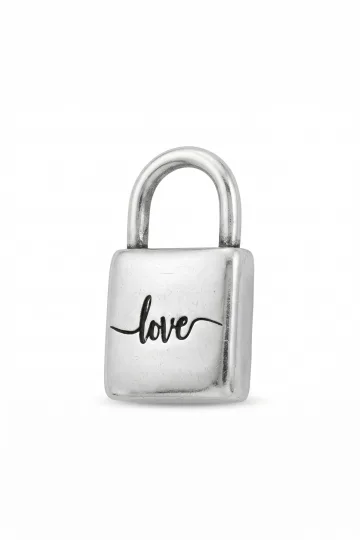
Buying it as a gift? Each one arrives ready to give.
 A branded Zevira box and a little card come with every order.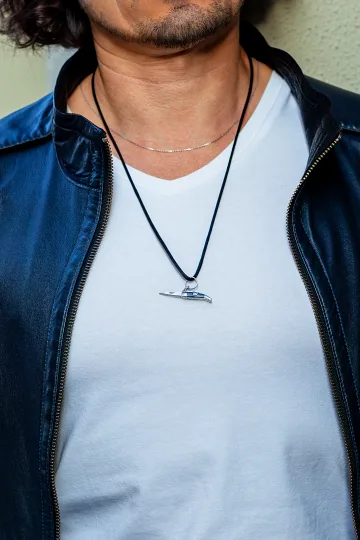




Whether to Give Anything to Your Therapist
A separate and delicate matter. The relationship with a therapist is built in a particular way, and any gesture at the end of the course calls for care.
Within the profession, attitudes to gifts vary, from a strict "no gifts" to "a small gesture is fitting at the close of long work." They converge on a few points: the gift should not be significant in cost, should not create a continuation of the relationship in another format, should not turn a professional relationship into a personal one. If the therapist has not stated their own position, you can ask directly: "Do you accept small tokens of thanks from clients?"
What makes sense: a handwritten card or letter, a concrete and personal form of gratitude that therapists often keep. A book that mattered during the work. A small symbolic object with no monetary weight, if you know the therapist is open to that. Something from your own making.
What not to do: valuable jewellery, which is too intense both in cost and in the level of relationship it implies, and which creates a difficult ethical situation for the therapist. Nothing that leaves a sense of "you owe me now." A gesture of thanks, if it is wanted, should be quiet and final; written words are often more exact than any object.
FAQ: Jewellery After Therapy
Do I need to wait a certain time after the last session?
No. Some buy on the day of the last session, some a few months later, some find the right piece years on and realise it is exactly about this. The moment of buying does not set the meaning: the person sets the meaning, and it is valid at any moment.
Does the jewellery have to be expensive?
No. A thin silver chain with a small charm works as a symbol just as well as an elaborate gold piece. The meaning is in it, not in the price. Sometimes a more modest object works even better: less weight, more of the personal.
Can I wear such a piece openly?
Of course. Some wear it under clothing because the privacy of the meaning matters; others wear it openly and are glad to be asked; others wear it openly but do not explain. All options are valid, the jewellery belongs to you.
I have had several different stretches of therapy work. One piece or several?
A personal decision. Some mark each stage with a separate piece that can be worn together or apart; some choose one that carries the whole path; some add a new charm to the same chain. There is no rule.
My therapy is not finished yet. Can I buy jewellery as a reminder of the process?
Yes. The meaning will be different, not "completion" but "I am in the middle of this, I am doing it." Some choose a piece at the start of the course as an intention, others find a symbol in the middle of the work. That is valuable too.
Should I tell my therapist I want to buy jewellery to mark the ending?
It is a fitting topic for the last sessions, especially if symbolism ever came up in the work. The therapist can help choose a symbol that reflects your particular work more exactly: what was central, which image came up most often.
What if the jewellery is lost or breaks?
The meaning it carried is not lost with it: the meaning stays in you, not in the metal. If you want to find a replacement, you can; if there is no sense that you need to, then you do not. You remain the person who did the work, whatever becomes of the jewellery.
Which metal is better?
There is no "best" metal. Sterling 925 is more accessible, takes engraving well, takes on a patina over time. 14K gold carries more of a sense of occasion and does not tarnish. The choice is first of all about which material is pleasant to touch and feels like "yours."
Is the semicolon too open a symbol?
It depends on how much privacy you want. Anyone who knows it will read it at once and unambiguously, and that is both its strength and its risk. Some wear it openly, as a conscious statement and a sign for their own people; others choose an extremely small form or hide the engraving inside a ring so the meaning stays private. Both choices are honest, there is no wrong one here.
What does it mean that the jewellery works as a tactile anchor?
That you can touch it in a hard minute, and that brief movement carries you back to the chosen meaning without words. The hand finds the ring or charm on its own, and contact with smooth cool metal gives a point of support in the moment. If you want exactly that effect, choose smooth rounded shapes and a moderate weight: the hand reaches for such a thing more often.
Should I engrave a whole phrase or better just a couple of words?
Better a few words. Engraving works as a mark, not as a story: a short motto of your own holds the meaning more firmly than a long beautiful quotation. If there is no supporting phrase yet, do not invent one for the sake of beauty; leave a date or a symbol and add the words later, when they come on their own.
Is there a difference between jewellery for yourself and as a gift?
Yes, a significant one. For yourself it is your choice, your symbol. As a gift, the symbol needs to match how the other person experiences their own road. For a gift it is better either to ask, if the person is open to the conversation, or to choose a symbol with several layers of meaning that also works as a beautiful image in its own right.
Wear the symbol, don't just read about it. These are in stock:

Conclusion
Several years of psychotherapy or long recovery is not an achievement you can feel from the outside. Inner work is done quietly, in ordinary moments: between sessions, on a plain Monday, when something habitually painful passed a little more gently. No one applauds, sometimes no one even notices, including you, because the changes are real and slow.
Jewellery after such work is not a trophy and not an announcement. Just a small private mark: I am here, I went through this, it was real. Wearing it is not required, marking it is not required. But if you want to give the crossing a form in the shape of a small object with private meaning, that is not sentimentality but honesty toward what happened.
Phoenix, butterfly, lighthouse, labyrinth, ouroboros, the Star of Tarot. Sterling 925 and 14K gold, with the option of engraving.
About Zevira
Zevira makes jewellery in the artisan tradition of Albacete, Spain. A few of the symbols in our collections line up naturally with the theme of finishing a long stretch of inner work:
Phoenix: a symbol of transformation through fire. Silver and gold pendants of the bird rising from its ashes.
Butterfly: metamorphosis as a biological fact. Slim minimalist charms and more detailed pieces.
Lighthouse: an inner point of reference. Small pendants for everyday wear.
Labyrinth: the path already walked. Pendants with the classic Cretan labyrinth pattern.
Ouroboros: a completed cycle. Rings and bracelets with the serpent closed into a circle.
The Star of Tarot: Arcanum XVII, hope after the Tower. Eight-pointed stars in silver.
Personal engraving is available on every piece. We work in sterling 925 and 14 to 18K gold.