Meteorite Jewellery Guide: Wearing a Fragment of the Solar System
Introduction: Material That Is 4.5 Billion Years Old
Pick up a meteorite pendant and look at the cross-section. Thin, interlocking bands form a geometric pattern found in no terrestrial alloy. These are Widmanstatten figures. They formed inside the core of an asteroid cooling at a rate of one degree per million years. Reproducing that structure in any earthly laboratory is simply impossible; there is not enough time on this planet to do it.
When you wear such a piece, you are carrying matter that pre-dates Earth itself. Most meteorites used in jewellery are approximately 4.5 billion years old, contemporaries of the Solar System, formed alongside our planet but never drawn into its molten core. They remained small cosmic bodies drifting between Mars and Jupiter for hundreds of millions of years before falling here.
By 2026, meteorite jewellery has moved well beyond a narrow collector's niche into a fully established segment. Wedding bands with meteorite inlays are particularly sought after by men looking for something genuinely individual. Pendants and earrings set with pallasites -- iron laced with olivine crystals -- have become an alternative to conventional gemstones for anyone drawn to unconventional beauty.
This guide covers the types of meteorite jewellery available, how to choose, how to distinguish authentic material from imitation, and how to care for a piece so that its unique patterning does not dissolve into rust within a year.
Wear the symbol, don't just read about it. These are in stock:


Meteorite Jewellery: What to Choose
Meteorite Rings
The most popular form, especially for men.
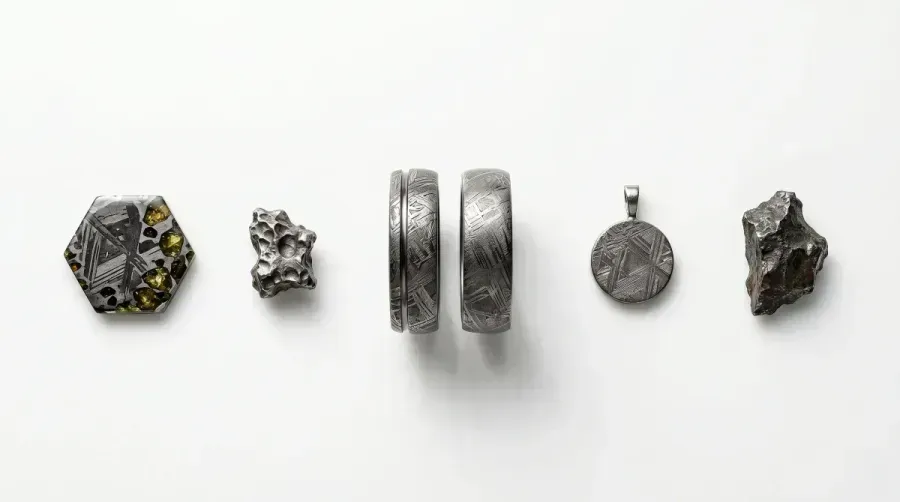
- Wedding band with meteorite inlay: a central strip of acid-etched meteorite flanked by titanium, steel or gold. Mid-to-premium segment. Widmanstatten figures are visible across the top of the band.
- Signet ring with meteorite: a square or oval meteorite plate set in silver or gold. Classic men's style, mid-to-premium segment.
- Pallasite ring: a slice of pallasite (iron with green olivine crystals) in a setting. Premium-luxury, owing to the rarity of the material.
- Women's ring with meteorite and diamond: a central diamond flanked by a meteorite channel. An engagement-ring alternative. Premium.
- All-meteorite ring: solid, no secondary material. Visually dramatic, but requires reinforced corrosion protection. Mid-to-premium.
Meteorite Pendants
- Meteorite slice in a silver or gold frame: 1 to 4 cm in diameter. The most common form. Mid segment.
- Raw fragment in a wire cage: bespoke aesthetic, meteorite set as found, unpolished. Bohemian, raw style. Budget-to-mid.
- Pallasite in a transparent setting: olivine crystals glow from within when lit. Premium.
- Capsule pendant with a fragment: a small piece of meteorite sealed inside a glass or crystal capsule. Contemporary minimalism. Mid segment.
- Composite pendant: fine meteorite grains suspended in jewellery resin, creating a shimmering effect. Budget segment.
Meteorite Earrings
- Disc studs, 5-8 mm: small round slices. Pairs, everyday wear. Mid segment.
- Drop earrings with rectangular plates: dramatic, for evenings. Mid-to-premium.
- Asymmetric pair: one with meteorite, one with a diamond or pearl. A contemporary take on mismatched earrings.
- Hoop earrings with an inlay: a band of meteorite running around the circumference. Premium segment.
Meteorite Cufflinks
Men's classic. A business suit with a story up the sleeve. Square, round or rectangular plates set in silver, steel or gold. Mid-to-premium segment.
Meteorite Bracelets
- Cuff bracelet with an inlay: substantial, statement piece. Mid-to-premium.
- Slender bracelet with a small disc: everyday wear. Mid segment.
- Beads of polished fragments: several small pieces on a leather or elastic cord. Bohemian style.
Watch Bezels with Meteorite
Premium segment. Certain watch collections feature a meteorite ring around the dial, or even a dial cut entirely from a thin meteorite plate. Striking, rare and expensive.
A meteorite wants steel and a dark sleeve, not a heap of yellow gold. Pile the bling on and your slice of space ends up at a car-boot sale.
How to Wear Meteorite Jewellery
Meteorite is in my kit constantly: a grey metal with character that slots into almost any look, once you know a couple of rules. Here is what actually works, sorted by occasion.
How do I wear meteorite every day? For daily wear I recommend a thin inlay ring or small disc studs. The cosmic pattern works as a quiet detail noticed up close. I suggest a calm palette around it: white, grey, graphite, navy. Jeans and a grey jumper carry it better than any dress shirt.
Is it right for the office? Yes, as long as you keep it to one detail. I recommend cufflinks with a French cuff or a restrained signet on the ring finger. Against a charcoal, navy or grey suit the meteorite lands perfectly and echoes the metal of a watch, a belt buckle, a pair of frames. One rule: a single accent, nothing piled on.
How do I build an evening look? For evening I choose the larger formats: drop earrings with rectangular plates, a substantial pendant on a long chain, or a pallasite that glows with olivine under focused light. Against dark fabric (black, wine, emerald) the silvery pattern reads strongest. Bare shoulders or a deep neckline give the pendant room.
Which metal do I pair with meteorite? I suggest staying in the cool range: silver, white gold, steel and titanium sit with it more naturally than warm yellow gold. The inlay in its metal mount is already an example of a bimetallic, two-tone piece. If you want colour, I add at most one contrasting stone: diamond, onyx or sapphire.
Who does it actually suit? Anyone who likes a piece with a story and a cool palette rather than shine for its own sake. It sits equally well on minimalism, on dark alternative, and on boho, where a raw fragment hangs on a leather cord. And in layers: a meteorite pendant closes a stack of several chains of different lengths cleanly.

Turn on your camera, pick earrings, a pendant or a ring, and see the piece on yourself in real time.
Switch items in one tap.
Everything runs in your browser: no photo or video is ever uploaded.
Types of Meteorites Used in Jewellery
Not all meteorites are alike. A handful of specific types are used in jewellery, and the choice of material has a marked influence on appearance.
Iron Meteorites (Octahedrites)
The primary material for jewellery. Composed of an iron-nickel alloy (5-20% nickel). Acid etching reveals the Widmanstatten figures.
Muonionalusta (Sweden). Found in 1906 near the village of the same name above the Arctic Circle. Age approximately 4.5 billion years; fell about one million years ago. A fine-grained octahedrite, producing the most delicate and beautiful Widmanstatten figures of any iron meteorite. Slightly more resistant to corrosion than most iron meteorites. The most widely used material for wedding bands.
Campo del Cielo (Argentina). The fall site in northern Argentina was known to indigenous peoples long before European documentation in 1576. A coarse-grained octahedrite with a bolder pattern than Muonionalusta. Large quantities on the market; relatively accessible.
Gibeon (Namibia). Fell approximately 30,000 years ago, found in 1838. A classic fine-grained octahedrite with well-defined figures. Export is now restricted under Namibian law, and remaining market stock is appreciating.
Sikhote-Alin (Russia). One of the largest documented meteorite showers in recorded history: it fell on 12 February 1947 in the Russian Far East. The surface is rough and torn -- fragments broke apart in an atmospheric explosion -- and bears characteristic regmaglypts, the thumb-print-like depressions formed during atmospheric entry. The Sikhote-Alin fall attracted considerable attention from the British scientific community and specimens reached the Natural History Museum London shortly after recovery. Pieces with the raw, explosive texture are prized by British collectors for exactly that unpolished drama.
Nantan (China). Fell in 1516, documented in Chinese records. Commonly found in mass-market jewellery.
Pallasites
Stony-iron meteorites. Inside an iron matrix float crystals of olivine, the same mineral as terrestrial peridot. A cross-section of a pallasite is one of the most beautiful natural objects in existence: golden-green crystals suspended in a metallic web. Rare and expensive.
Seymchan (Russia). Found in 1967 in the Magadan region. One of the more accessible pallasites, with vivid olivine grains. The majority of pallasite jewellery on the current market derives from Seymchan.
Esquel (Argentina). Found in 1951. One of the largest and most beautiful pallasites ever recovered. Highly expensive.
Brahin (Belarus). Found in 1810. A classic pallasite with clearly defined olivine crystals.
Sericho (Kenya). A relatively recent find (2016). Pallasite with small olivine grains. Comparatively accessible.
Stony Meteorites
Less commonly used in jewellery because they are visually less striking (resembling ordinary stone). Specific types, however, are notable:
Ordinary chondrites. Contain chondrules -- tiny spherical inclusions. Used as pendant insets; valued by collectors.
Lunar meteorites. Fragments of the lunar surface ejected by impacts and subsequently recovered on Earth. Extremely rare and expensive. In jewellery they appear only as tiny pieces inside capsules.
Martian meteorites. Rarer still. A piece of Mars in a pendant is not a marketing claim but a gemmological fact; however, the material costs as much as a prime property.
Carbonaceous chondrites, and Murchison in particular. The most scientifically important stony meteorites are the ones least likely to end up on a finger, and Murchison is the standing example. It fell over Victoria, Australia, in September 1969, in daylight, in front of witnesses, and roughly a hundred kilograms were collected within days, before terrestrial contamination could get into it. Analysis found dozens of amino acids in the material, including many that do not occur in life on Earth at all, along with grains of stardust older than the Sun itself. Murchison is a large part of the reason anybody takes seriously the idea that the raw chemistry of living things arrived here from space.
For jewellery this matters in an indirect way. Carbonaceous chondrites are dark, crumbly and soft; they cannot be cut, polished or set the way iron can, and reputable dealers will not release research grade material for ornamental use. If a seller offers you a "Murchison ring", that is the single clearest signal you are being sold something else. The honest way to wear this class of meteorite is as a small labelled fragment in a sealed capsule, and even then the named research falls are effectively unobtainable.
NWA and Other North African Finds
Over the past thirty years, vast quantities of meteorites have been recovered from the Sahara (Morocco, Algeria, Libya) and Oman. They carry designations such as NWA (North-West Africa) or JaH (Jiddat al-Harasis). Many are chondrites; some are lunar or Martian. They represent the main source of material for contemporary mass-market meteorite jewellery.
Widmanstatten Figures: A Cosmic Fingerprint
When you examine a polished and etched cross-section of an iron meteorite, you see a lattice of intersecting bands of varying width. This is not decorative engraving. It is the structure of the metal itself.
How They Form
An iron-nickel alloy in space cools extraordinarily slowly: between one and ten degrees per million years. Over that timescale, iron and nickel atoms separate into two distinct crystalline phases -- kamacite (low-nickel, up to 7%) and taenite (high-nickel, 25-50%). Kamacite forms broad plates; taenite occupies the space between them.
When the meteorite is cut, polished and etched with dilute nitric acid, kamacite etches faster than taenite. The result is a visible, three-dimensional pattern of interlocking plates.
Why They Cannot Be Faked
Producing Widmanstatten figures requires cooling an iron-nickel alloy over millions of years. Under terrestrial conditions this is impossible. Even the slowest industrial furnace cannot replicate a cooling period measured in geological time. The presence of a correct Widmanstatten structure is therefore one of the primary markers of meteorite authenticity.
The Austrian scientist Alois von Widmanstatten first observed these figures in 1808 by heating a meteorite section to a blue temper colour. William Thomson of England had, in fact, made the same observation in 1804, but his account was not widely circulated, so the structure carries the Austrian's name.
Band Width as a Meteorite's Signature
Each iron meteorite has its own unique kamacite band width, ranging from 0.3 mm to 15 mm. Geologists use this measurement to classify iron meteorites into subgroups. For jewellery purposes it means that the pattern on a cross-section can identify where a particular piece originated. Muonionalusta, Gibeon and Sikhote-Alin are visually distinguishable from one another.
Customer reviews
Zevira is a real jewellery shop. Genuine payments, deliveries and customer thank-yous.
🥰🥰🥰 gracias
Ok, ¡gracias! 🙂
How Meteorite Jewellery Is Made
The journey from cosmic rock to finished ring is a lengthy one.
Step 1: Cutting
The meteorite is cut with a diamond saw under water cooling. Iron machines easily, but the material is dense. A large fragment yields flat plates 1-3 mm thick. The logic mirrors the standard cycle of how jewellery is made, only with much harder raw stock.
Step 2: Polishing
The plate is ground and polished to a mirror finish. At this stage the Widmanstatten figures are not yet visible.
Step 3: Etching
The polished surface is immersed in a weak nitric acid solution (typically with ethanol -- "nital"). Within minutes the pattern emerges. Longer etching produces deeper relief.
Step 4: Stabilisation
Meteorite iron rusts readily in air, especially in contact with skin. Without protection a piece can deteriorate into a brown mass within months. Several protective methods are used:
Rhodium plating. A thin rhodium layer over the meteorite surface. Protects against corrosion and preserves colour. The most common method in mainstream jewellery, technologically adjacent to PVD coating. Drawback: wears over time and must be renewed.
Lacquering. Clear jewellery lacquer. Less expensive than rhodium but can appear slightly plastic and may yellow.
Oil bluing. A traditional method of protecting iron through heat treatment with oil. The meteorite acquires a deep, dark tone. Attractive, but requires periodic renewal.
Passivation. Chemical treatment that creates an oxide layer. Does not protect completely, but slows corrosion.
Encapsulation. The meteorite is sealed inside a glass or acrylic capsule, fully isolated from air. Used for pallasites and especially valuable fragments.
Step 5: Setting
The plate is secured in a silver, gold, steel or titanium mount. Rings more often use steel or titanium (greater strength); pendants and earrings use silver or gold.
Step 6: Finishing
The edges of the plate may be left square (contemporary aesthetic) or shaped to the setting. Some makers use laser engraving on the interior of a ring for personal inscriptions.
Certificate of Authenticity: What the Document Should Contain
Every piece of genuine meteorite jewellery should come with a certificate. Without one there is either a fake or a serious risk. The certificate should contain:
The meteorite name. Muonionalusta, Campo del Cielo, Seymchan and so on. Not a vague "iron meteorite" but a specific named fall or find.
Classification. Type (octahedrite, pallasite, chondrite), sub-type (fine-grained, coarse-grained), nickel content.
Location and date of fall or recovery. Geographic reference, verifiable against catalogues.
Fragment weight in the piece. In grams or carats.
Ask the seller about provenance documentation. A named, well-documented meteorite with verifiable geographic and classification details is the key criterion -- not the presence of any single registry entry.
Maker or company signature. Responsibility for the claims made.
IMCA membership. If the seller is a member of the International Meteorite Collectors Association, they will have a number (e.g. IMCA #1234). Not compulsory, but a positive indicator. The Natural History Museum London and the British Meteorite Association are additional points of reference for British buyers seeking to verify material.
Some sellers also include a booklet describing the specific meteorite and a photograph of the original fragment before cutting.
What a certificate actually proves, and what it does not. This deserves saying plainly, because the trade is not always honest about it. A certificate of authenticity is a statement by the seller, printed by the seller, on paper the seller chose. It is not an independent laboratory report and it carries no legal weight of its own. Nobody licenses meteorite dealers, and there is no equivalent of the Assay Office for extraterrestrial iron. A handsome certificate with a gold seal and a serial number can be produced by anyone with a printer.
What gives a certificate value is everything standing behind it: a named fall that appears in the Meteoritical Bulletin Database, a seller whose reputation is traceable and who has been trading under the same name for years, an IMCA number you can actually check against the association's own list, and a willingness to answer specific questions about where the parent mass came from and who cut it. A dealer who says "found in the desert, iron meteorite, certified" and cannot go further is telling you nothing.
If you want genuine independent confirmation, it exists but it is rarely proportionate. Electron microprobe analysis of nickel and cobalt content, or a nickel test on an inconspicuous edge, will distinguish meteoritic iron from terrestrial steel; university earth sciences departments and the Natural History Museum in London handle enquiries of this kind, though not as a commercial service. In practice, for a piece in the ordinary market, the three things worth checking yourself are a named locality, a visible Widmanstatten pattern with the band width the locality should show, and a seller who does not flinch when asked follow up questions.
Upload a photo of your pet, someone you love, or an object. We'll build a 3D model and hand-cast it in pewter.



Caring for a Meteorite Piece
The cardinal rule: meteorite iron rusts actively. Without proper care a piece will deteriorate into a brown stain within months. With the right maintenance it will last for decades.
What to Avoid
Contact with water. Meteorite dislikes moisture. Remove it before showering, swimming or washing up. Do not get caught in rain with the piece uncovered.
Salt water. Categorically not. Salt accelerates corrosion. One day at the beach wearing a meteorite ring can destroy the pattern.
Perspiration. Remove before exercise. If you wear the piece on a hot day, rinse it with fresh water and dry it thoroughly.
Perfume, creams and lotions. Apply these before putting on the jewellery. Any cosmetic product in direct contact with the meteorite is harmful.
Standard jewellery cleaning methods. Ultrasonic cleaning, steam cleaning and chemical solutions are prohibited. Even mild jewellery soap can be aggressive.
What Is Safe
A dry cloth. Wipe with a soft microfibre cloth after each wearing.
Isopropyl alcohol on a cotton bud, occasionally. For targeted cleaning without water. Only when genuinely needed.
Storage in a dry place with silica gel. A sachet of silica gel in the jewellery box absorbs moisture. Replace every six months.
Periodic check with a maker. Every year or two, have a jeweller inspect the coating. If it has worn, have it renewed.
If Rust Appears
Rust is the single real problem with wearing meteorite, and it is worth being blunt about it before anything else. An iron meteorite is roughly ninety per cent iron with five to ten per cent nickel, and it spent four and a half billion years in vacuum before arriving in an atmosphere that is a fifth oxygen and, in this country, damp for most of the year. It has no evolved resistance to any of that. Every protective measure applied by a jeweller, rhodium plating, lacquer, oil bluing, is a temporary barrier over a material that wants to corrode, and no coating survives daily wear indefinitely.
Two things accelerate it more than anything else, and both are ordinary. The first is chloride: sweat, seawater, and the salt used on British roads through the winter. The second is condensation, the film that forms when a cold ring comes indoors from a January street, which sits in the etched grooves of the pattern precisely where you cannot wipe it. Meteorite pieces that fail usually fail across a winter, not across a summer, and the owner is often surprised by that.
The practical consequence is that meteorite is a considered choice rather than a default one. It suits a pendant worn over clothing better than a ring worn while washing up, and it suits someone willing to dry the piece and store it with a silica gel sachet better than someone who never takes their jewellery off. If that sounds like too much attention, a meteorite inlay set into a titanium or gold band, protected on three sides, will give you the pattern with a fraction of the exposure.
The stages of intervention, if it does start:
Minor spots. Try removing with a cotton bud moistened with a minimal amount of isopropyl alcohol. Work very carefully.
Widespread corrosion. Take it to a jeweller. There is often a chance to polish, re-etch and re-coat, but this removes a thin layer of material.
Deep rust. The meteorite surface is gone. The only option is to replace the inset in the piece.
How Often to Renew the Coating
Rhodium on a ring worn daily: every two to three years. On a pendant worn less frequently: five to seven years. Lacquer: every one to two years. Oil bluing: every three to five years.
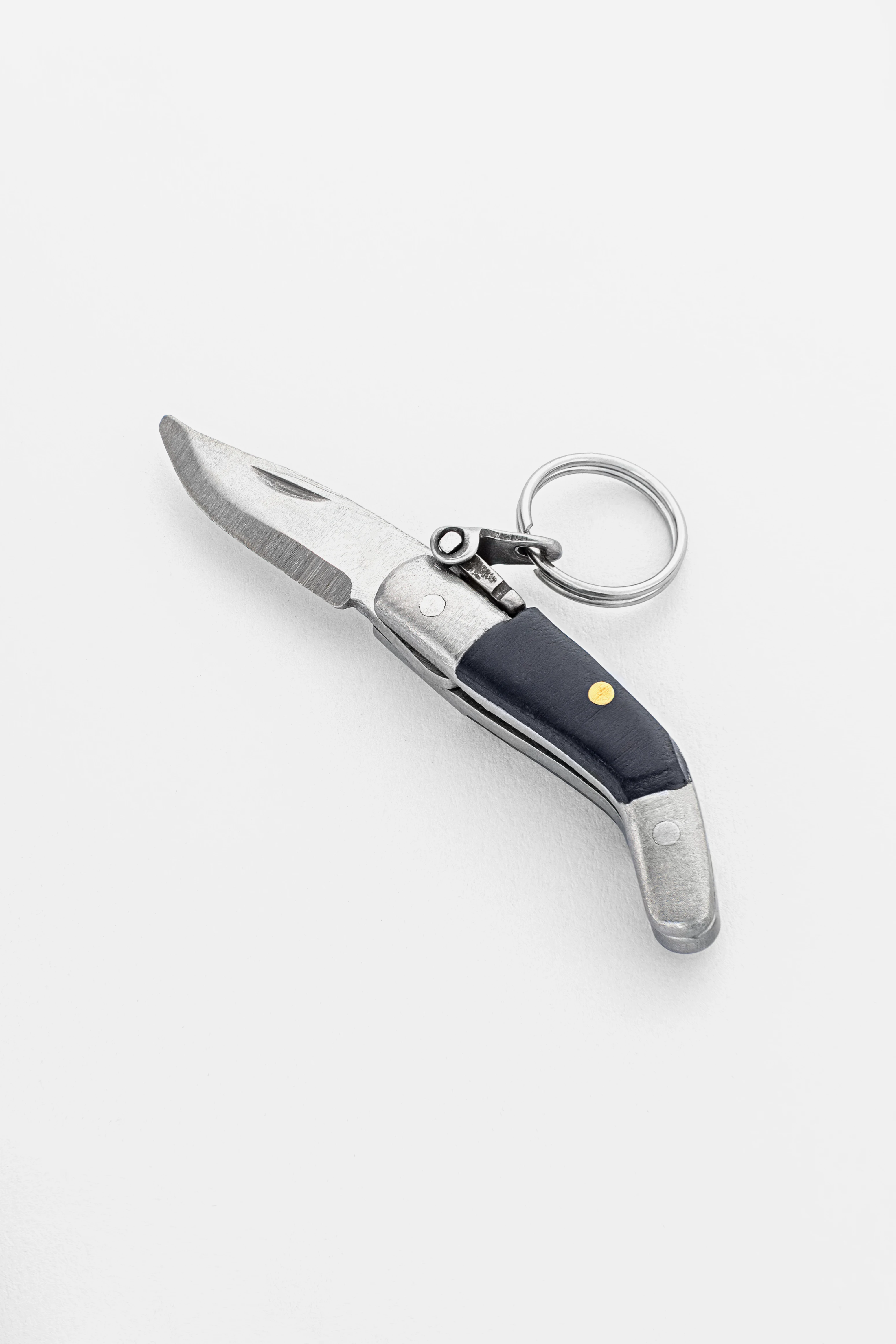
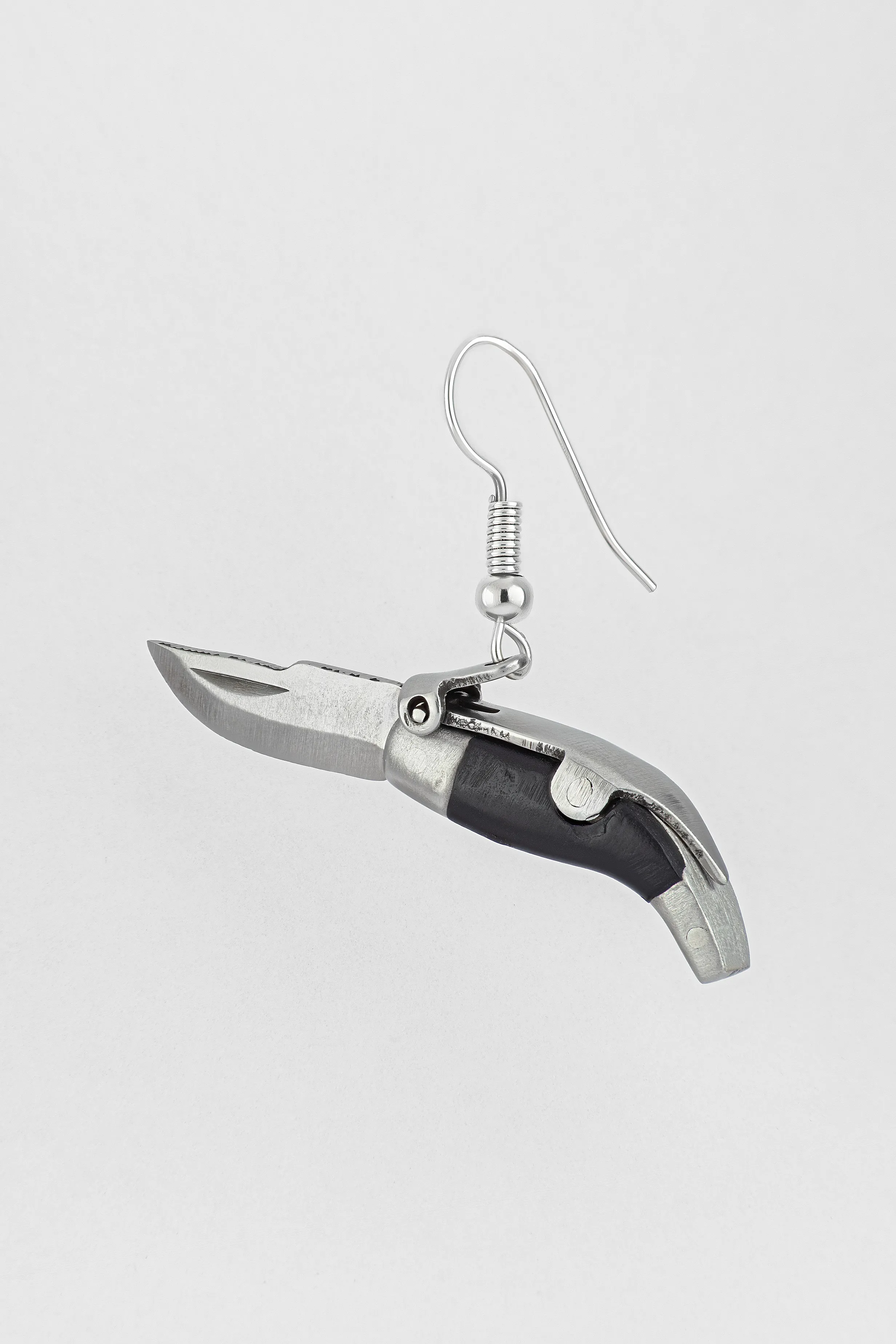
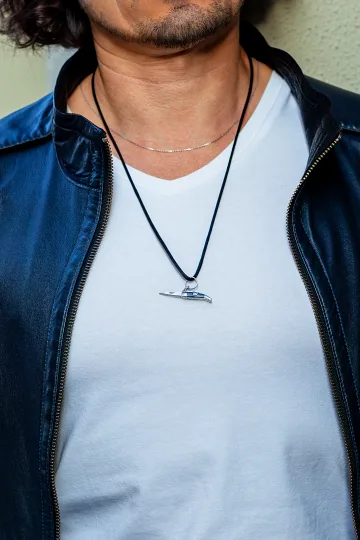
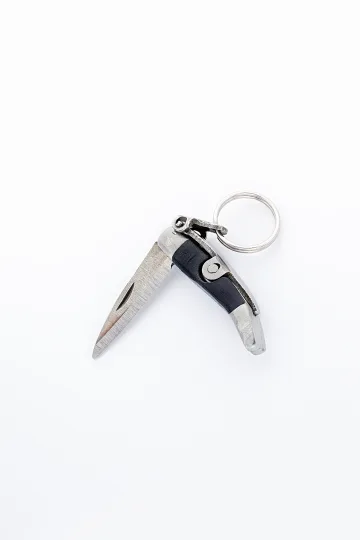
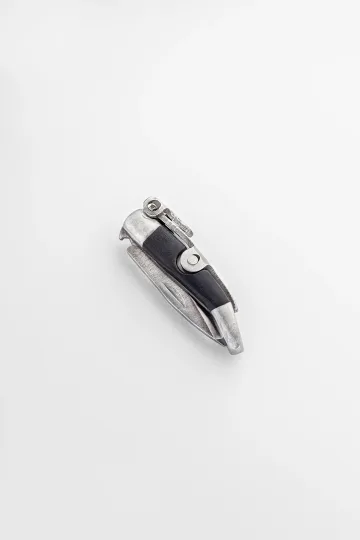
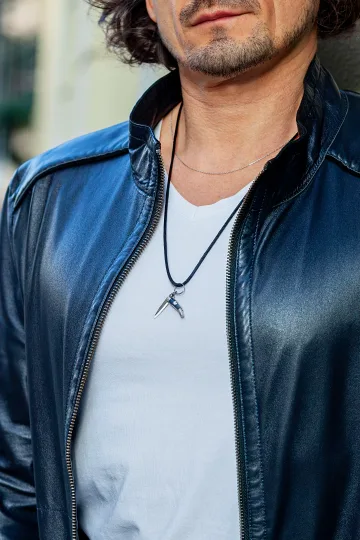
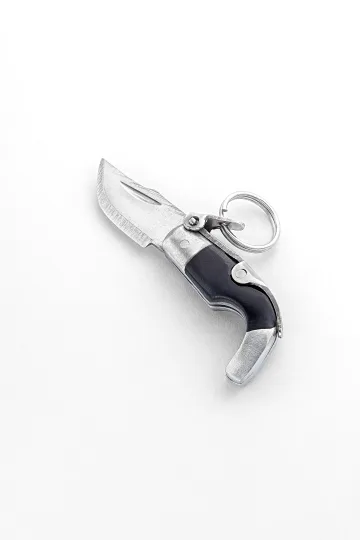
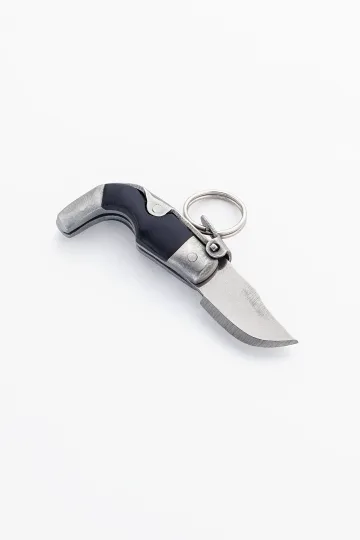
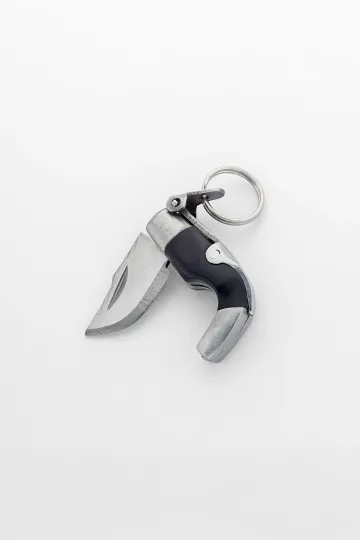
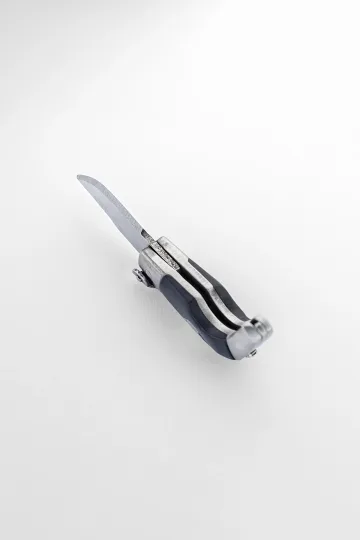
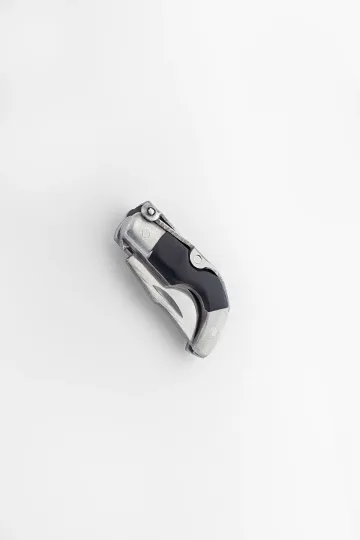
CAPAORA mini knife pendant
The 18th-century Spanish navaja in miniature: 40 mm of stainless steel, a real folding mechanism and a Palanquilla lock that clicks. An affordable gift to remember.
Authentic · Ships from Spain · 14-day returns
What Meteorite Jewellery Symbolises
A meteorite in jewellery carries several layers of meaning simultaneously.
Connection to the cosmos. Literally. You are wearing a piece of matter that has no origin on Earth. It is a material contact with the universe.
Antiquity. Most iron meteorites are approximately 4.5 billion years old. Nothing older can be physically held in human hands. A meteorite ring is a ring of matter that existed before the Earth.
Endurance. The meteorite passed through the atmosphere, survived the fall, often lay for thousands of years in soil or desert, was recovered, cut -- and remains. A symbol of resilience and the capacity to endure anything.
Uniqueness. Every meteorite plate is unique. No two Widmanstatten patterns are identical. This is a piece of jewellery that physically cannot exist in two identical copies.
Scientific aesthetic. For those drawn to astronomy, space and geology, this is not merely a beautiful object but a material with a precise scientific history. One can read about the specific meteorite, its composition, its fall site.
An alternative to conventional stones. For those who have tired of conventional diamond symbolism. Meteorite offers a way out of the standard repertoire.
A masculine symbol. Meteorite rings are particularly popular as alternatives to conventional wedding bands for men. Strong, unusual, carrying a story. In Britain, as in the United States, this is one of the fastest-growing segments in bridal jewellery.
Remembrance. Some commission meteorite jewellery as a memento -- in memory of someone lost or to mark a significant moment. Eternity and the stars form a natural metaphor for loss.
Meteorites in History and Culture
People used meteorites long before they understood what they were.
Ancient Egypt
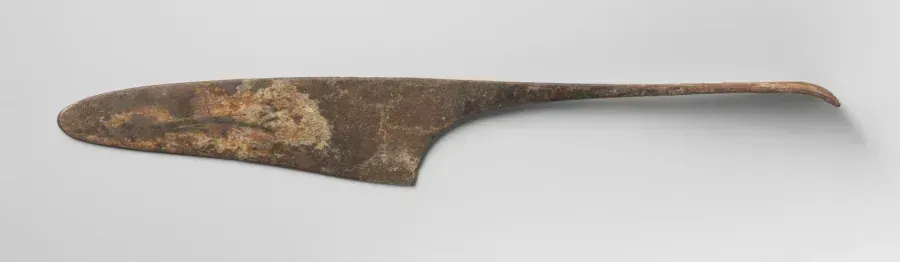
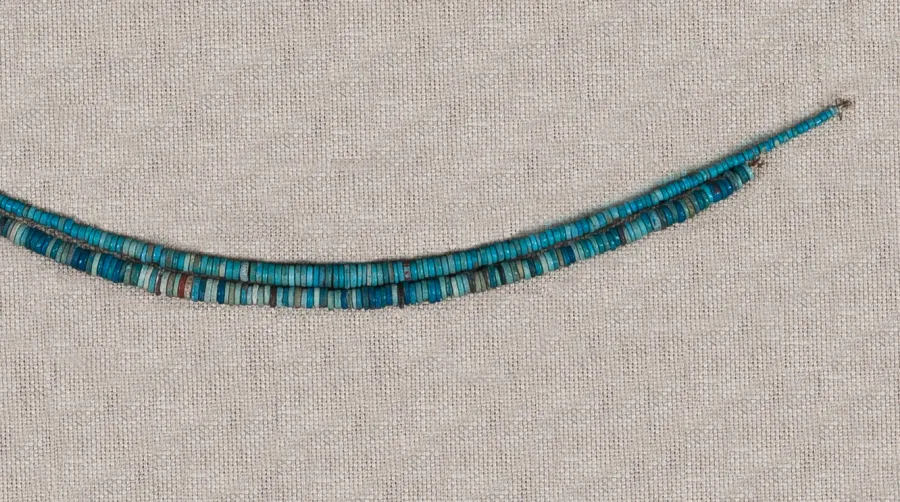
The earliest known use of meteorite iron in jewellery is a set of beads from the Gerzeh cemetery in Egypt, dated to approximately 3200 BC. Long before smelted iron was mastered, Egyptians fashioned beads from meteorite fragments. Chemical analysis confirmed a high nickel content -- an unambiguous sign of cosmic origin.
In Tutankhamun's tomb (14th century BC) an iron dagger was found whose composition also points to meteoritic origin. "Iron from the sky," as ancient Egyptian texts called it, was valued above gold precisely because of its rarity. In the Bronze Age it was a material entirely of another world.
The Greenland Inuit
In the Cape York valley in north-western Greenland lies a vast iron meteorite known as the Ahnighito. Inuit communities chipped fragments from it for centuries, forging harpoons and knives. It was their sole source of iron, obtained through lengthy journeys across glaciers.
In 1894-97, American explorer Robert Peary removed the three largest fragments to New York. They are now held at the American Museum of Natural History.
Ancient China and India
Chinese records document meteorite falls from the 9th century BC. Some blades from the Shang dynasty (1600-1046 BC) contain meteorite iron. In India, several ancient blades are thought to have been made from cosmic metal.
Islam: the Black Stone of the Kaaba
Set into the corner of the Kaaba in Mecca is the Black Stone (al-Hajar al-Aswad). Islamic tradition holds that it descended from the heavens. Modern scholars incline towards the view that it is either a meteorite or a volcanic rock; direct scientific analysis is not possible. Culturally, this represents a connection between meteoritic material and spiritual practice spanning fifteen hundred years.
Classical Europe
In ancient Greece and Rome, "stones from the sky" were collected and kept in temples as sacred objects. The statue of Diana of Ephesus, one of the Seven Wonders of the ancient world, is described in some accounts as incorporating a meteoritic stone.
France and L'Aigle, 1803
The fall at L'Aigle in Normandy on 26 April 1803 is regarded as the moment European science formally accepted that stones fall from the sky. The physicist Jean-Baptiste Biot conducted a meticulous investigation for the Institut de France, interviewing hundreds of witnesses and collecting specimens. His report removed the last respectable objections to the extraterrestrial origin of meteorites. Today the fall site and its specimens are part of the collections of the Museum national d'Histoire naturelle in Paris, and L'Aigle is considered a landmark in the history of meteoritics. For French-speaking audiences, the Biot report remains a touchstone.
Medieval Europe
Until the 18th century, the educated establishment in Europe officially doubted that stones could fall from the sky. Ernst Chladni's 1794 treatise changed that. Gradually the scientific community accepted the extraterrestrial origin of meteorites, and systematic collection and cataloguing began.
19th and 20th Centuries: Collecting
By the late 19th century meteorites were firmly within the interests of wealthy collectors. Specialist dealers appeared. The 20th century saw geochemistry develop meteorites into primary material for studying planetary history.
Jewellery Fashion: From the 2000s
The use of meteorites in mainstream jewellery is a relatively recent development. The first mass-produced wedding band collections with meteorite inlays appeared in the United States around 2005. By the 2010s this had become a distinct niche. In the 2020s, meteorite jewellery moved beyond the bridal segment into an independent category.
Silver, gold, wedding bands, symbolic pieces and paired sets -- including the meteorite collection.
Leave your email, we'll send your discount code. No spam, unsubscribe anytime.
The code arrives by email, valid on your first order.
Who Meteorite Jewellery Suits
Astronomers, space enthusiasts and science fiction readers. Self-evident.
Geologists, gemmologists, mineralogists. A professional connection.
Pilots, aerospace professionals. A symbol of the field.
Couples who want non-standard wedding rings. Particularly for men.
Those who prize uniqueness. No two cross-sections are the same. Every piece is literally the only one of its kind.
Lovers of minimalism. Fine black-and-silver patterning works well with a clean aesthetic. No additional stones required.
The philosophically inclined. Wearing a fragment of the Solar System as a reminder of the scale of the universe.
In memory of someone lost. Eternity and the stars are a powerful metaphor.
As a gift for a scientist, researcher or engineer. A piece of jewellery that carries a genuine scientific history.
Men who do not normally wear jewellery. A meteorite ring is often the first serious piece a man who has never worn anything before chooses for himself.
Paired Wedding Rings with Meteorite
A distinct sub-category. The idea: a couple selects a single large meteorite fragment, from which both rings are made. The patterns are visually consistent -- as though two pieces of a whole.
Options:
Both rings from one Muonionalusta fragment. Widmanstatten figures match in character. Excellent for an "his and hers" wedding set.
His ring in iron meteorite, hers in pallasite from the same batch. A contrasting pair: metal and olivine.
Both rings mixed: meteorite plus gold or steel. Structurally identical, with parallel patterning.
Coordinates engraved inside. Where they met, where the proposal happened, where they married -- coordinates inside the band, meteorite pattern outside.
The symbolism of a paired meteorite set is powerful: "we are of the same matter, which has endured for billions of years."
Meteorites and British Scientific Heritage
Britain's engagement with meteorites is long and substantive. The Natural History Museum London holds one of the world's most significant meteorite collections -- thousands of specimens representing virtually every known type, from common chondrites to lunar and Martian material. Many pieces have been held since the 19th century, when British collectors and institutions were at the forefront of systematic cataloguing.
The Sikhote-Alin fall of 1947 produced specimens that reached British collections through exchange with Soviet scientific institutions. The raw, regmaglypted surface of Sikhote-Alin fragments -- shaped by violent fragmentation in the atmosphere -- is distinctive and immediately recognisable, and British collectors have long prized this material for that quality.
The British Meteorite Association connects enthusiasts across the country. For anyone buying meteorite jewellery in Britain, cross-referencing with recognised databases and, where relevant, with established natural history institutions, offers a sound route to verifying authenticity.
Send a friend a discount code, they save on their first order.
Frequently Asked Questions
Is it genuinely a real meteorite?
Three verification routes exist. First: a certificate linked to an international database. Second: visual -- polished and etched iron meteorites must display Widmanstatten figures. Third: chemical analysis confirming nickel content of 5% or above. A supplementary marker is magnetism: iron meteorites are magnetic, though less strongly so than ordinary iron.
Is meteorite radioactive?
No. This is a persistent myth. By the time a meteorite reaches Earth, its radioactivity is no higher than background levels. It is entirely safe to wear.
Why does it rust?
Because iron plus nickel plus atmospheric oxygen plus moisture equals corrosion. In space or in an arid desert the meteorite may have rested undisturbed for millions of years. In terrestrial air, against human skin, corrosion begins within weeks. Protective coating is critical.
Can a meteorite ring be worn daily?
Yes, with proper care. Remove it before contact with water, perfume or exercise. Renew the coating every two to three years. Maintained correctly, it will last for decades.
Is meteorite a gemstone?
Formally, no. It is a mineral from space, not a gemstone in the conventional sense. In jewellery it is used analogously: as a rare, valuable, unique material with its own classification.
Why do prices vary so widely?
It depends on the type of meteorite, fragment size, rarity, quality of workmanship and the setting. Muonionalusta is relatively abundant -- mid segment. Pallasite is rare -- premium. A lunar meteorite sits in the luxury-investment tier. The mount material (silver, gold, platinum) also influences price.
Is a meteorite wedding band durable?
The meteorite itself is reasonably hard (iron rates 5-5.5 on the Mohs scale). The band's structural integrity, however, comes from the titanium, steel or gold mount. The meteorite inset is protected by the setting. The ring withstands everyday wear, though impacts and chemical exposure remain harmful.
Can I commission a ring with a specific meteorite?
Yes. Most jewellers working with meteorite material carry a selection of fragment types. Muonionalusta, Seymchan, Sikhote-Alin and others can generally be requested.
Does meteorite suit women's jewellery?
Yes. Meteorite jewellery began as a predominantly male niche, but over the past decade many women's formats have appeared: slender rings, small disc studs, pallasite pendants. For women, pallasites work particularly well -- the green olivine crystals have a delicacy that the bold iron patterns do not.
Can meteorite be combined with other stones?
Common combinations include diamond (contrast between matte structure and brilliance), sapphire (blue and grey), black onyx (deepening the cosmic theme) and moonstone (a thematic complement). A meteorite plate set in a precious-metal mount is one of the most striking examples of bimetallic, two-tone jewellery, where two materials of very different origin meet in a single piece.
Iron or pallasite -- which is better?
A matter of preference. Iron is the classic option: a strict, geometric pattern, more accessible in price. Pallasite is rarer, visually arresting and more expensive. For a wedding band, iron is more common (stronger, quieter). For a pendant, pallasite is more striking in direct light.
How do I know whether a price is fair?
Compare by meteorite type and fragment size. The per-gram price of raw meteorite is documented on the international market and can be looked up. Add the cost of workmanship and the mount. If a ring costs ten times the combined material value, something is wrong.
What if the meteorite loses its pattern (coating worn, rust appeared)?
Take it to a jeweller. In most cases the old layer can be removed, the surface polished, re-etched and re-coated. The pattern returns. This is a thorough restoration, undertaken every five to ten years as needed.
Meteorite and Style: What It Pairs With
Visually a meteorite is grey metal with a pattern cut into it, which makes it far more adaptable than its cosmic backstory suggests. It sits comfortably in several very different registers.
With minimalism. The clean geometry of Widmanstatten figures agrees with plain clothes: a white shirt, jeans, a black coat. The pattern supplies all the visual interest the outfit needs, and nothing else has to be added.
With tailoring. A meteorite signet on the little finger or the ring finger works under a suit. Meteorite cufflinks with a double cuff are the classic version: formal in shape, unmistakably individual in material, and the sort of detail that gets noticed across a table rather than across a room.
With gothic and alternative dress. Dark metal, an unusual pattern, a subject that is literally out of this world. Meteorite belongs naturally to black outfits and pairs well with oxidised silver, heavy chain and surgical steel.
With boho. An unworked meteorite fragment in a rough silver bezel on a leather cord carries an atmosphere of travelling and finding. This is the version that looks best slightly worn.
With wedding dress. A meteorite band against a morning suit or a wedding dress sets the formal against the unexpected. It works particularly well for couples who have deliberately chosen a ceremony outside the usual pattern, a registry office and a pub, a hillside, a beach in Pembrokeshire.
With layered jewellery. Several chains at different lengths, one of them ending in a meteorite pendant. This holds its own in complicated contemporary looks where a simpler pendant would disappear.
With black stones. Onyx, black tourmaline and black pearl all reinforce the cosmic reading, and the tonal difference between polished stone and etched iron keeps the combination from going flat.
With blue stones. Sapphire, lapis lazuli and blue topaz build the night sky version of the same idea. Lapis in particular has the advantage of a shared history: it was traded across the ancient world at the same time meteoric iron was, and the two materials have been meeting in jewellery for four thousand years.
Metals to set it in. Meteorite is a cool grey, so white metals extend it and warm metals frame it. White gold, palladium and titanium read as one continuous surface with the meteorite, which suits minimal designs. Yellow gold does the opposite and makes the inlay read as an object placed inside a border, which suits a wedding band where you want the material to be clearly the point.
Buying Meteorite Jewellery: What to Look For
A seller with a name and a reputation. Not a random social-media account. A specialist jeweller or brand with a documented history of working with meteorites.
A certificate included. Do not buy without one. If the seller cannot supply it, that is a serious question mark.
IMCA membership or similar. Not obligatory, but a positive sign.
A returns policy. A reputable seller will guarantee authenticity.
A photograph of the original fragment. Many jewellers photograph the meteorite before cutting. If such photographs exist, that is an excellent sign.
Transparent care information. The seller explains what can and cannot be done with the piece and provides written instructions. There is nothing to conceal.
Buying it as a gift? Each one arrives ready to give.
 A branded Zevira box and a little card come with every order.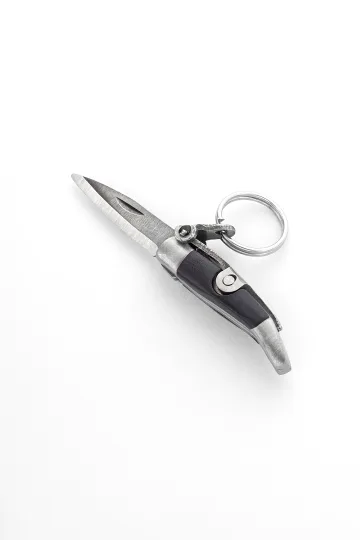




About Zevira
Zevira is a Spanish jewellery brand from Albacete. The meteorite line is one of the most specialist categories in the catalogue: rings, pendants, earrings, cufflinks, paired wedding sets and capsule pendants. Check the catalogue for current availability and details.
If a particular configuration interests you -- a specific meteorite, a specific mount type, a specific inset size -- get in touch and we will discuss it.
Conclusion
A meteorite piece is not simply a rare object. It is something that genuinely arrived from space. You are holding matter that formed before the Earth, that passed through the atmosphere, survived the fall, often lay for millions of years in soil or sand -- and is now set in silver or gold.
Every cross-section is unique. Every Widmanstatten structure is the fingerprint of a specific asteroid that cooled in a specific part of the Solar System. This is not metaphor or poetic licence; it is physical fact.
For a wedding band, for a pendant in memory of someone, for a gift to an astronomy enthusiast or simply to carry a fragment of the universe -- meteorite jewellery does what nothing else can.
The one essential: care. This material survived 4.5 billion years in space, but in terrestrial air it requires protection. Keep it dry, away from perfume and water, and renew the coating every few years. With that regime a piece will last for decades and pass to the next generation as an heirloom with its own story.
Not every day can you wear something older than the planet itself.