Office Jewellery and the Art of Dry Humour: Paper Clips, Scissors, Pens
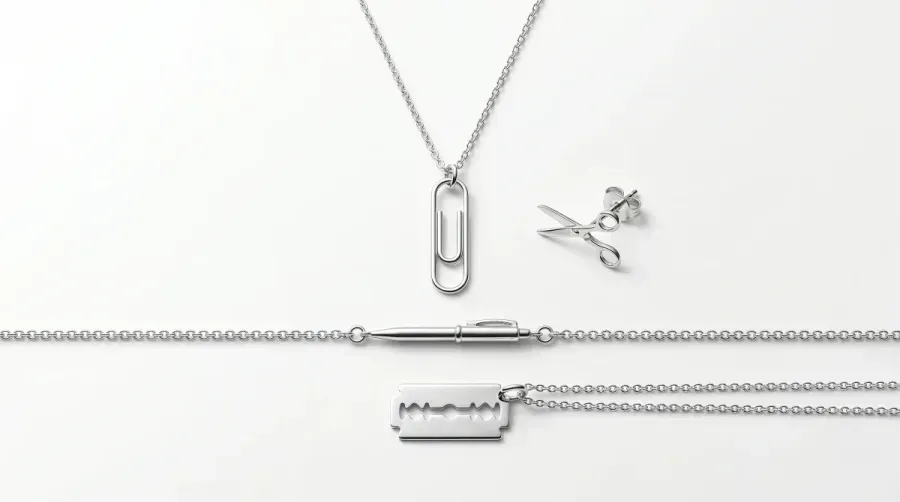
Some pieces stop you mid-sentence. A miniature paper clip on a fine chain. Tiny scissors at the earlobe. A pendant shaped like a fountain pen. A razor blade in silver on a leather cord. You look at them once with mild confusion, then ask: is that actually jewellery? When the answer is confirmed, you smile. That is precisely how conceptual jewellery with everyday objects works.
The idea of turning a stationery item into a jewellery piece is not new, but it remains rare. The jewellery industry historically clings to safe imagery: flowers, hearts, geometry, nature symbols. An office or workshop object in that space looks like someone who has wandered into the building wearing entirely the wrong thing. That is exactly where the meaning lives. Precious metal in the shape of something you throw in the bin at the end of a working day carries an internal contradiction, and contradiction in jewellery is always more interesting than its absence.
A piece that provokes the question "why is this here?" tends to be the one people remember longest. A paper-clip pendant in silver stays in the mind of whoever you spoke to at the drinks reception far longer than any standard crystal on a chain. Scissors earrings start a conversation where other pieces would stay silent. In that sense, conceptual jewellery with everyday motifs does not merely decorate: it makes a statement. It says the person wearing it has a good eye for ordinary forms and is not afraid to look unexpected.
There is another aspect worth noting. Most objects that end up in this category have remarkably clean geometry. A paper clip is two nested ellipses joined at one end. Scissors are a pair of blades pivoting at a fulcrum, with two symmetrical rings. A razor blade is a strict rectangle with a fine bevel. These forms work in silver as well as any abstract geometry, and often better, because each has a name and a history. Nameless geometry is anonymous; a paper clip is recognised by any adult anywhere in the world.
At Zevira, everyday objects receive a jewellery treatment: sterling silver and steel, occasional gold plating, meticulous detail. A paper clip with its characteristic double bend. Scissors with moving blades. A drawing pin with a rounded head. A razor blade with fine engraving along the edge. These are not illustrations from a stationery catalogue; they are pieces with personality. That personality comes from the mismatch: a utilitarian form, a precious material, and in the gap between them the irony that makes the thing interesting.
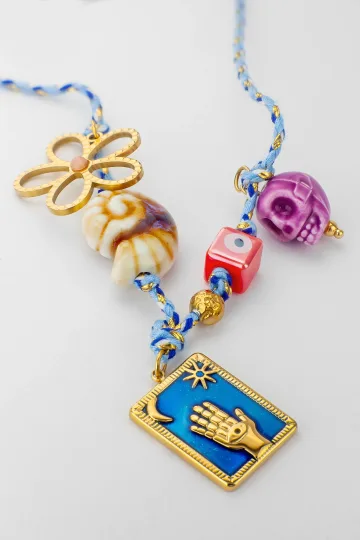
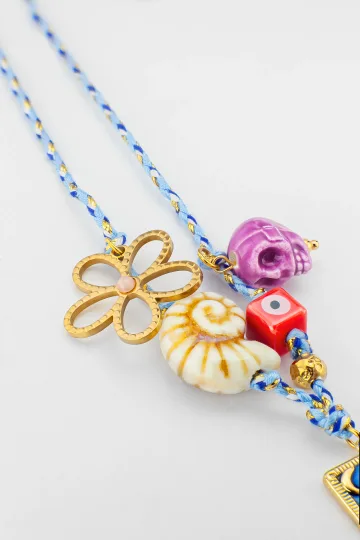
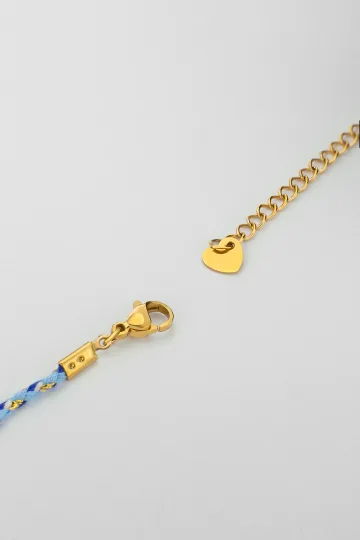
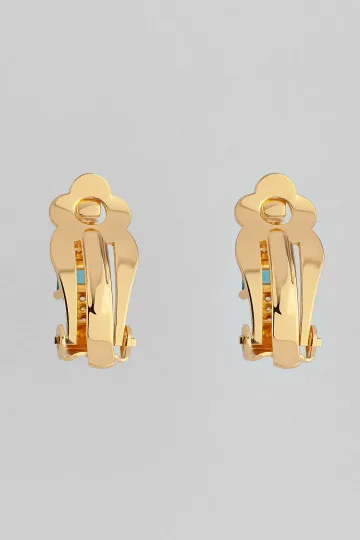
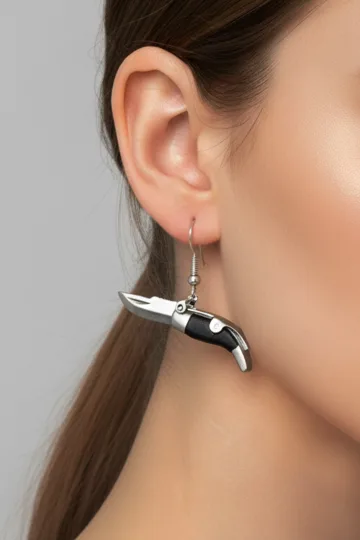
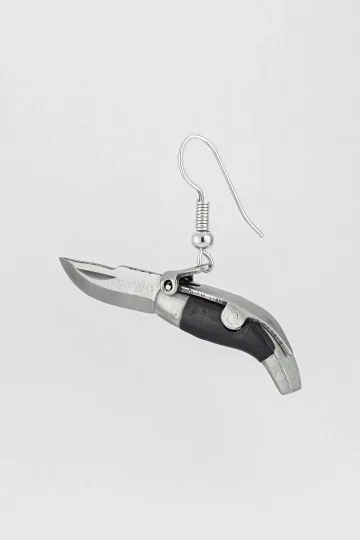
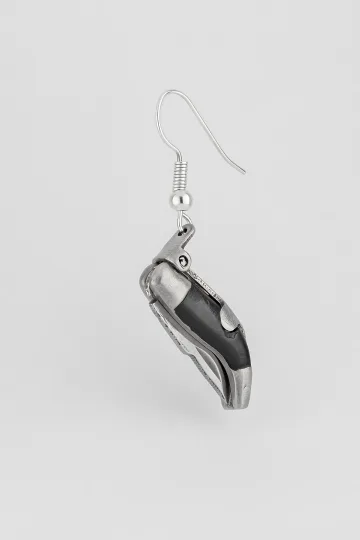
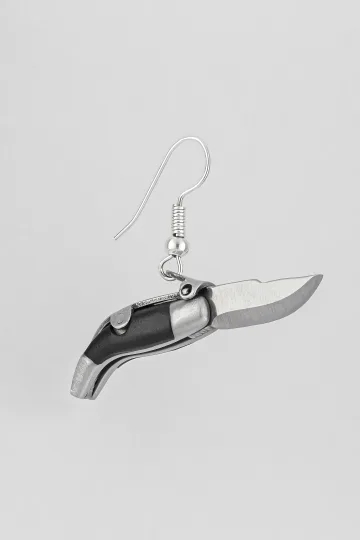
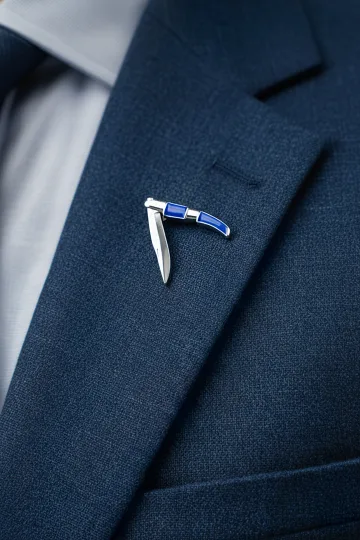
Wear the symbol, don't just read about it. These are in stock:







Jewellery with Everyday Objects: What to Choose
There are many motifs in this category, and each has its own character. Understanding the logic of the different formats makes it easier to find what works for you.
Pendant. The most versatile format. A paper clip, a padlock key, a razor blade, a drawing pin, a fountain pen on a chain of 40 to 50 cm. It sits at the neckline, reads immediately, works with any collar, and requires no particular occasion. A paper clip as a pendant is effective because the form stays legible at minimal scale, from about two centimetres upward.
Earrings. Scissors, small paper clips, drawing pins as studs or drop earrings. Studs with a pin head or the cross-section of a pencil weigh next to nothing, do not pull at the lobe, and keep the form readable. Drop earrings shaped like scissors or a pen are longer and make a stronger accent.
Brooch. A larger format, three to six centimetres. Paper clips as a brooch, a fountain pen on the lapel of a blazer, scissors on a coat. A brooch with an office motif sits in the direct sightline of whoever you are talking to and reads as a deliberate choice, not an accidental accessory.
Cufflinks. For anyone wearing shirts with double cuffs. A pin head as a cufflink. A paper clip as a cufflink. A pencil in cross-section. This format works particularly well in an office context: a literal stationery object as part of formal dress. A double irony, and rather Pratt's sort of wit.
Ring. A paper clip as the basis for a ring, following the arc of the form. Or a flat band with a motif engraved on the outer face. A ring with a scissors motif, or a razor blade silhouette in the shank.
Bracelet. Several paper clips linked together the way real clips chain together. Or a flat cuff with a rhythmic repeating pattern of office silhouettes. The bracelet allows play with the narrative: a chain of paper clips is literally a chain, and there is a quiet poetry in that image.
Pendant on cord. A leather or textile cord instead of a metal chain changes the tone of the whole piece. A paper clip on a fine chain reads as minimalist fine jewellery. The same paper clip on a leather cord reads as something with a more industrial, almost brutalist character. A razor blade on a cord follows the same logic: the object feels heavier, even though physically nothing has changed.
The choice of format comes down to two things: where you want the piece to be seen (neck, ear, lapel, wrist, hand), and how loudly you want to say it. A small paper clip stud is a quiet personal nod to the concept. Scissors as a brooch is irony stated at full volume. Paper clip cufflinks are irony tucked inside formal dress, revealed only when someone shakes your hand.
The Paper Clip as a Jewellery Motif
The paper clip is particularly interesting as a jewellery subject because its form is already a design solution in its own right. Norwegian inventor Johan Vaaler patented the recognisable double bend in 1899, and the shape has barely changed since. A rounded outer loop, a parallel inner loop, and a small "tail" at one end. No ornament, no excess. Functional beauty in its purest state.
That very functionality is what makes the paper clip a curious jewellery material. It does not try to be beautiful; it holds sheets of paper together. When it is transposed into silver or gold, a mismatch appears: the material is precious, the purpose is utilitarian. That gap is where the effect is generated.
Paper clip pendant. Scaled down or actual size, in sterling silver. The form is copied faithfully: the double oval curve, smooth surface, rounded edges. The bail integrates into the top bend without disturbing the silhouette. Around the neck it reads as an object from a different register entirely: an office item, deprived of its paper, hanging where convention expects a heart or a monogram.
Paper clip earring. One or two loops. A stud with a miniature clip on the post. Or a drop earring in which the clip moves freely on a small hook, keeping its characteristic gentle swing. A matched pair of paper clips in each ear produces a crisp, almost corporate image that is then undercut by the irony of the form.
Paper clip brooch. A larger version, five to eight centimetres. Sometimes a single piece, sometimes several clips linked together as they join in a stack. A brooch of several clips reads like a small art object. It can be worn on a blazer, a coat, or a bag.
Paper clip ring. The proportions of a clip are close to those of a ring shank. The size is fitted to a particular finger, and the metal strip with its double bend wraps around the base. The paper clip ring looks as though someone absent-mindedly bent a piece of stationery and slipped it on. That spontaneity is what makes it appealing.
Paper clip bracelet. Links shaped like paper clips, joined the way actual clips join one another. The result is a chain in which each link is individually recognisable. It wears like a medium-weight bracelet and pairs well with a watch or other bracelets.
The paper clip also has a striking neutrality as a symbol. It carries no mythology, no political charge, no astrological dimension. It is simply an object that everyone recognises at once. A universal reference point. That is why a paper clip pendant works without preparing the audience: nothing needs explaining; the form is self-evident.
There is one lesser-known fact about the paper clip. During the German occupation of Norway in the Second World War, Norwegians wore paper clips on their lapels as a quiet sign of resistance and solidarity. The German occupying authorities later banned the gesture. What today looks like a harmless jewellery detail was, in a specific historical context, a manifesto. That fact does not make a paper clip pendant a political statement today, but it gives the object an additional layer of meaning for those who know it.
A silver paper clip on a black roll-neck, and do not you dare pin the scissors next to it. One office object is wit; three are a stationery shop hanging off your neck.
How to Wear Office Jewellery
These pieces cross my desk all the time, and the question is always the same: how do you make a paper clip round the neck read as wit rather than as lunch left on the table. Here is what I sort out, occasion by occasion.
What do I wear a paper clip pendant with every day? For daytime I recommend a silver paper clip pendant or a drawing pin stud over a plain top: a white tee, a grey roll-neck, a denim shirt. A calm background works like a blank sheet, and the silver shape becomes the only accent. An open collar or a round neckline gives the piece room to hang freely.
Does it belong in the office? That is exactly where the trick lands hardest. I suggest paper clip cufflinks on a double-cuff shirt, or a small pendant under an unbuttoned collar. The stricter the suit and the more neutral its colour, the more precisely the mismatch fires. Oxidised or matte silver holds a quiet note, with no shine flooding the whole room.
How do I build an evening look? For evening I choose a larger form: a scissors brooch on smooth silk, or a razor blade on a long chain over a black dress. A deep neckline opens the throat and gives the pendant space. Smooth textures such as satin and dense knit set off the polish of the metal.
How many of these do I wear at once? One. A paper clip pendant, scissors earrings and a drawing pin brooch together turn into a themed costume rather than a piece with character. I recommend keeping one office motif and placing something neutral beside it: a fine chain, pearl studs, a wedding band.
How do I pick the metal? Silver gets on with any wardrobe and suits any season. I suggest gold plate against cool tones of clothing, so the warm metal has something to contrast with. I choose oxidised silver when I want a hard, almost industrial character, and polished silver when the day calls for a soft, quiet detail.

Turn on your camera, pick earrings, a pendant or a ring, and see the piece on yourself in real time.
Switch items in one tap.
Everything runs in your browser: no photo or video is ever uploaded.
Customer reviews
Zevira is a real jewellery shop. Genuine payments, deliveries and customer thank-yous.
🥰🥰🥰 gracias

Ok, ¡gracias! 🙂

Scissors, Pens, Blades and Other Office Motifs
The paper clip may be the most minimal object in this category, but there are more complex forms to consider.
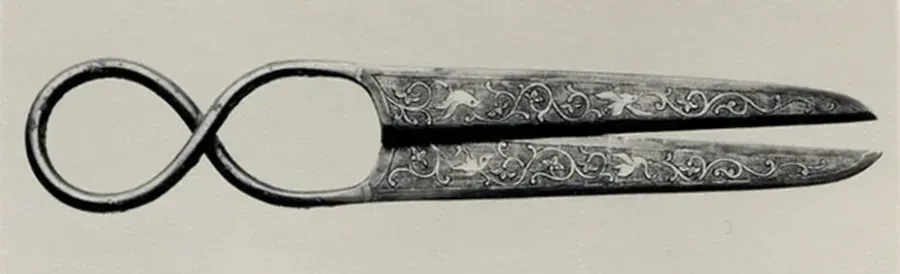
Scissors. An immediately legible silhouette: two blades, two rings, a cross at the pivot. Scissors as a pendant are usually made with a moving joint; the blades genuinely open and close. A small mechanism at your collar. Size ranges from three to seven centimetres; sterling silver is standard, with clearly defined details you can actually examine: the notching on the handles, the shape of the tips. Scissors earrings are rarer; a working joint at small scale is technically more demanding, though not impossible. A scissors brooch is larger, immediately visible, and reads well against the dark ground of a blazer or coat.
Fountain pen and pencil. A jewellery pendant in the shape of a pen is typically precise in its details: cap, barrel with clip, nib. Sterling silver with engraving on the nib. A pencil reproduces the hexagonal wooden body (imitated by relief engraving), the sharpened tip, the eraser. Scale ranges from full size (fifteen to seventeen centimetres) down to miniature (three to four centimetres). This kind of pendant is particularly meaningful for writers, editors, teachers and artists: those for whom a pen or pencil is not merely a tool but a badge of trade.
Razor blade. Here the form works harder. A narrow rectangle with angular edges, the characteristic bevel, two holes in the centre. A razor blade in silver on a leather cord or a fine chain carries an aesthetic far removed from conventional "feminine" jewellery. It is a provocative piece: beautiful, but with a sharp edge in the figurative sense. People who wear razor blade jewellery tend to be those who do not need to explain themselves through what they wear, but who enjoy having a piece that says something on their behalf.
Safety pin. Unlike the blade, the safety pin with its protective cap carries more of a punk aesthetic, anchored since the 1970s in London and subsequently spread through global youth culture. A miniature silver safety pin in the ear or as a pendant refers to that history without being aggressive. Sizes range from one and a half to four centimetres. The cap is usually hinged.
Staples and drawing pins. A stapler staple and a drawing pin are less common motifs but have their own formal language. A drawing pin is a sphere on a point; a staple is a small U with a flat base. Both translate well into a stud earring: the point becomes the earring post, the head of the pin becomes the decorative element. A drawing pin stud is small, neat, barely noticeable, and yet anyone who spots it close up recognises the form instantly.
Stamp, seal, paragraph mark. The paragraph sign (§) migrates from legal typography into jewellery. A stamp or seal in miniature pendant form. These objects carry a slightly different connotation: not the office as a physical space but the work of handling texts, documents, the law, bureaucratic systems. Well suited to lawyers, notaries and civil servants who can make a joke of their own profession.
Padlock, key, shackle. A category adjacent to office motifs: objects found in workshops, storerooms and utility rooms. A padlock as a pendant carries a double meaning, literally closed and metaphorically reliable. A key to a padlock works particularly well as a pair, one person wears the lock, the other the key. A shackle, a nut, a bolt: these are more radical choices, workshop objects transposed into silver. That kind of jewellery exists at the border between conceptual art and wearable ornament.
Upload a photo of your pet, someone you love, or an object. We'll build a 3D model and hand-cast it in pewter.




A Short History of Funny Jewellery
Intuition suggests that humour in jewellery is a recent phenomenon. In fact it is not.
Art Deco: Decorative Rationalism of the 1920s and 1930s
Art Deco jewellery was built on geometry, on the contrast of black and white, on quotations from machine aesthetics. Steam engines, skyscrapers, aeroplanes, rulers, typewriters: all of it entered the visual vocabulary of jewellery as symbols of progress. In the 1920s designers made pendants shaped like small aircraft, cufflinks modelled on gear wheels, brooches that evoked parts of a telegraph machine. This was not humour in the current sense; it was enthusiastic irony: expensive metal taking the form of a cheap industrial object.
Art Deco jewellery frequently incorporated functional elements: coin clips, small cigarette cases, perfume bottles shaped like industrial objects. The boundary between domestic object and ornament was deliberately blurred. A woman could wear the piece and use it simultaneously, which seemed revolutionary in 1925.
Surrealism: Salvador Dali and Elsa Schiaparelli
In the 1930s, at the intersection of haute couture and avant-garde art, a collaboration took shape that changed the logic of jewellery permanently. Italian designer Elsa Schiaparelli and artist Salvador Dali created several collections in which common sense was deliberately inverted. A telephone receiver as a clutch bag. A lobster on an evening gown. A shoe hat. A chest of drawers built into the torso of a mannequin. The jewellery from this system followed the same logic: brooches shaped like insects with open wings, pendants in the form of lips, hand earrings.
Schiaparelli described her aim openly as "shocking with elegance". Not crudely, not vulgarly, but with precision: expensive material, impeccable execution, a completely unexpected object. The principle still holds. A silver paper clip polished to a mirror finish, made with jeweller's accuracy, follows the same logic. The form is banal; the execution is flawless. The mismatch creates the effect.
Dali, for his part, made jewellery independently from 1941, working with the goldsmith Carlos Aléd among others. Among his pieces: a pendant shaped like a beating heart with ruby capillaries, the "Eye of Time" brooch with a clock face in the iris, a necklace of corn cobs. Each piece was simultaneously an ornament, a conceptual object and a manifesto.
The surrealist tradition has a direct influence on contemporary conceptual jewellery design. When a designer today makes a pendant in the shape of a razor blade or a pair of scissors, they are working within a coordinate system established in the 1930s.
The 1960s and 1970s: Pop Art and Anti-Conventional Jewellery
After the Second World War, a long process of democratising style began in Western culture. Pop art made banal objects into art: a tin can, a banknote, a newspaper spread became museum pieces. Jewellery picked up the same logic. Pieces appeared in acrylic and plastic, shaped like hamburgers, cola bottles, telephone receivers. The material was deliberately cheap; the form was deliberately "low". It was a reaction to the official solemnity of fine jewellery.
At the same time, a conceptual jewellery tradition developed in the academic sense: artist-jewellers deliberately worked with objects that had no relation to conventional ornament. Paper, wood, found objects, industrial components. The premise, advanced by the Munich Academy of Applied Arts in Germany in the same decade, was clear: a piece of jewellery is not obliged to be beautiful, expensive or conventional in form.
Today: Conceptual Jewellery as Self-Expression
In contemporary jewellery, the humorous and conceptual approach has become a recognised direction rather than a marginal gesture. Jewellery with everyday object motifs comes from small studios producing limited runs, not from serial manufacture: authored series with a clearly stated idea.
Interest in this kind of jewellery is linked to a broader shift: people increasingly buy pieces not for occasions but as an expression of a point of view. When someone chooses a paper clip pendant, they are saying something about their relationship with convention. Not necessarily nihilism or cynicism; simply a disposition to think slightly sideways from accepted standards.
Alongside this sits jewellery that comments on the body and medicine: thermometers, syringes, forceps, anatomical hearts, cells seen under a microscope. That is a different branch, with a different quality of provocation. But the root is the same: an object with no ordinary connection to jewellery, transposed into a precious material. And in every case that transposition asks a question: what does it mean to adorn yourself with precisely this? Sometimes the answer is humorous, sometimes unsettling, sometimes poetic. A paper clip answers quietly and with a smile; a razor blade answers with more edge.
CAPAORA mini knife pendant
The 18th-century Spanish navaja in miniature: 40 mm of stainless steel, a real folding mechanism and a Palanquilla lock that clicks. An affordable gift to remember.
Authentic · Ships from Spain · 14-day returns
What Such Pieces Say About the Person Wearing Them
Jewellery with office and humorous motifs reads in a particular way. These are not neutral objects.
A sense of humour expressed in detail. Someone wearing a silver paper clip around their neck has already communicated something about themselves before a word is spoken: they have a sense of humour, they are not afraid to look unexpected, and the choice was deliberate. This is not a piece from a distant aunt. It is a decision.
Confidence that requires no justification. Conceptual jewellery is not for people who need approval. When someone looks at such a piece sceptically and says "is that a paper clip?", the wearer says "yes" with a smile, not an apology. That is a different mode of relating to one's own style.
Professional self-deprecation. An editor wearing a pencil pendant, a lawyer with a paragraph-sign pendant, a designer with paper clip earrings: all of them are making a joke about their own profession. Not disparagingly, but lightly. It is the mark of someone who knows their craft well enough to take it with a degree of irony.
Non-conformity without aggression. A silver razor blade carries sharpness without menace. Scissors earrings cut an image, not fabric. The provocation here works softly: not through loud statements but through the mismatch of form and material. This approach more often produces admiration than resistance.
Conceptualism as a way of thinking. People who wear jewellery with office motifs tend to be interested in design, conceptual art and the history of objects. They are people for whom it matters that the things around them carry meaning, not merely function.
A connection to profession or interest through the object. A dressmaker chooses a scissors pendant. A writer chooses a pen pendant. An office worker with a good sense of humour chooses a paper clip. The piece becomes a sign readable by colleagues and peers, even if to outsiders it simply looks peculiar.
A refusal to follow jewellery convention. Many people buy jewellery because it is expected: earrings for an evening out, a ring to go with a dress, a chain for the collar. A conceptual piece breaks that logic: it is acquired not because it "goes with something" but because it has meaning in itself. That approach to jewellery is characteristic of people who treat style as a conscious choice rather than conformity to an accepted norm.
Humour as a form of intelligence. A good joke requires understanding the context, the ability to spot a mismatch and the willingness to share it. Good humorous jewellery works exactly the same way. A silver paper clip is funny not because it has a smiley face drawn on it, but because the choice of form itself says something intelligent. This kind of humour is not loud; it is calibrated for those who take a moment to notice.
One point is worth making: humorous jewellery does not turn the wearer into a clown. The line is held by the quality of execution. A polished silver paper clip with a neat bail and a fine chain is jewellery. A plastic paper clip on a piece of string is fancy dress. Context determines everything.
Leave your email, we'll send your discount code. No spam, unsubscribe anytime.
The code arrives by email, valid on your first order.
Materials and Techniques
Humorous jewellery with office motifs demands a particular approach to materials. The form already carries the irony, so the material should work in the opposite register: serious, costly, executed with jewellery-grade precision.
Sterling silver (925). The primary metal for this category. The cool white colour faithfully reproduces the metal surface of real office objects: paper clips, scissors and blades are typically this colour. Silver is also expensive and requires skilled work, which creates the necessary effect. A paper clip in silver looks more valuable than the thing it resembles. That gap in cost is part of the concept.
Sterling silver holds fine detail well: you can engrave the notching on scissors handles, reproduce the bevel of a blade, convey the form of a safety pin spring. Relief engraving on a small surface reads clearly.
Stainless steel. For pieces where durability and lightness are important. Steel feels cooler than silver to the touch, costs less to produce, and holds its shape without deformation. Steel earrings do not bend during wear. Steel pendants can be made thin without risk of breakage.
Gold plating. Yellow, rose or white gold over silver or steel. It changes the aesthetic: a paper clip in gold plating is no longer a neutral office object but something almost baroque. A paper clip in gold is a stationery item elevated to the status of regalia. Amusing, in the right way.
Oxidising. Intentional darkening of silver in the recesses of a relief. If the surface of a scissors pendant has notches and cutouts, oxidising emphasises the depth, makes the relief more legible and adds a patina of age. An oxidised silver paper clip looks like something found in an old desk drawer rather than fresh from a stationery shop.
Enamel. Coloured enamel inserts on the surface of a pendant. A drawing pin with a red enamel head. A pencil with a yellow body. A pink eraser. Enamel returns to the object the colour that its real counterpart has, but in a jewellery context that colour reads differently: as a deliberate quotation.
Miniature engraving. Laser or hand-cut. On the flat face of a blade you can engrave text; on the barrel of a pen, a name or a date. Engraving turns a production piece into a personal object.
Precision of detail as a jewellery requirement. The fundamental requirement for this category is legibility: the piece must be recognisable. A paper clip must read as a paper clip; scissors must read as scissors. That means scale, proportion and level of detail are all critical. A piece that is too small loses its form. A piece that is too abstract stops functioning as a quotation.
Paper clips, scissors, blades and drawing pins in sterling silver. Office jewellery with humour, for those who appreciate irony in the details.
Who It Is For
People with a sense of humour who know how to keep it in proportion. Humorous jewellery is not for people who want to be "funny". It is for those who value subtlety, subtext and mismatch. The difference matters.
Office workers with the capacity for self-deprecation. A designer, an editor, an accountant, a lawyer, anyone whose work involves paper, documents and tools that can be reproduced in silver. Such a piece simultaneously acknowledges "yes, these are my objects" and makes a joke of that fact without bitterness.
Creative people accustomed to unconventional thinking. Artists, illustrators, writers, architects. People for whom the form of an object is already a statement. They are drawn to an approach in which a piece carries a concept and not merely decoration.
Anyone tired of standard jewellery. The collection has accumulated; the usual pieces have grown stale; there is a desire for something that provokes a response. Jewellery with office motifs fills exactly that gap.
Young people exploring style. This group often reaches for conceptual choices in jewellery first, being less constrained by adult convention. A safety pin in the ear or a drawing pin stud sits at the accessible end of the price range while carrying a clear aesthetic position.
People who like gifts with a story. A paper clip pendant as a gift requires an explanation: "I chose this because..." It is a gift with a narrative, not merely a pretty object. Those are the gifts people remember.
Those who collect unusual pieces. The jewellery box already holds a piece with a symbol, a monogram ring, a paired pendant, and now something with irony is needed. A paper clip or scissors adds a note of self-deprecation that the collection may have been lacking.
People who value objects with a history in their form. A paper clip, a pair of scissors, a pencil: each has a history of invention, of widespread adoption, of its relationship with human work. A piece of jewellery in that shape carries the whole of that history in condensed form. You do not need to know all of it; simply the awareness that the form is not arbitrary gives the object depth.
Send a friend a discount code, they save on their first order.
Frequently Asked Questions
Is this jewellery for adults or for children?
For adults, even if the format can look playful. Conceptual jewellery with everyday motifs works precisely because the wearer consciously selects an unserious form and places it in a serious context. A child plays with the shape; an adult makes a statement with it. The material and quality of execution are the same as for any fine jewellery piece: sterling silver, clean solder lines, functioning fastenings.
How do you explain to people why you have a paper clip around your neck?
You do not need to. If someone asks, and they will, saying "I like the shape" or "it is a paper clip in silver" is enough. The fact that they asked means the piece has done its job: it drew attention and started a conversation. That is exactly what is expected of it.
Can you wear office jewellery to formal events?
Yes, with judgement. A small paper clip pendant or a drawing pin stud in a professional context works as quiet irony, noticed only by those who come close. A large scissors brooch at a formal dinner is a bolder choice. Paper clip cufflinks on a formal shirt, on the other hand, work brilliantly: a stationery object in the role of a formal accessory.
Is a razor blade as jewellery not too provocative?
It depends on the context and the specific piece. A silver blade with rounded edges on a fine chain is more of a graphic object than an aggressive one. Real sharpness is not reproduced in a jewellery piece: the metal is smooth. The blade works as a symbol of sharpness in the figurative sense, an image of decisiveness. If it raises questions, those questions are useful: good jewellery raises questions.
How do you care for silver jewellery with fine detail?
Sterling silver darkens over time. Fine recesses (the notching on scissors, the gap in a paper clip, the grooves on a pen barrel) collect dust and moisture. Clean with a soft brush (a toothbrush with soft bristles) with a small amount of washing-up liquid, rinse with warm water and dry thoroughly. With ultrasonic cleaning, take care with oxidised and enamelled elements: ultrasound can strip the oxide layer or damage enamel. For everyday maintenance, a polishing cloth on the exposed surfaces is sufficient.
Can you give such a piece as a gift? How do you frame the choice?
A humorous piece is a gift that requires knowing the recipient. A paper clip pendant for a colleague you work alongside and whose sense of humour you know will land perfectly. The same paper clip for someone you know less well may produce puzzled looks. A gift of this kind is well served by a brief note: where the idea came from, what the brand is, why that particular form. Not to justify the choice, but to pass on the story along with the piece.
About Zevira
Zevira is a Spanish jewellery brand based in Albacete. The conceptual line with office motifs -- paper clips, scissors, blades -- is one of the categories in the catalogue. For current availability and full details, visit the catalogue.
Buying it as a gift? Each one arrives ready to give.
 A branded Zevira box and a little card come with every order.