The Raven in Jewellery: Odin's Messenger, Edgar Poe's Obsession, and the Smartest Bird Alive
A bird that shows up in every mythology on Earth, and there's a reason for that
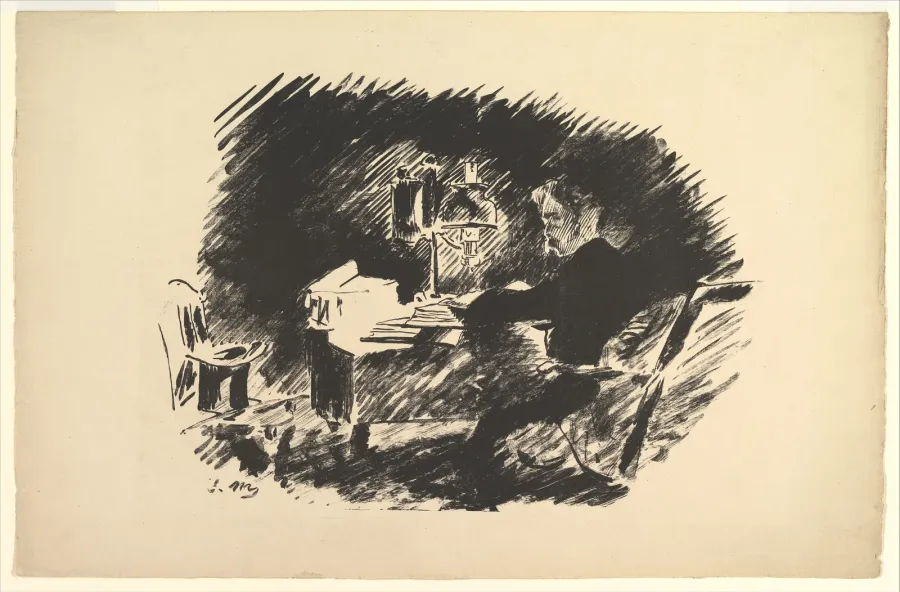
There is no bird on this planet with a longer cultural resume than the raven. It sits on Odin's shoulder in Norse mythology. It shapeshifts into a war goddess in Celtic legend. It steals the sun in Native American creation stories. It guards a kingdom in London (literally, right now, today). Edgar Allan Poe turned it into the most recognisable bird in all of literature with a single word: Nevermore.
And then there's the science. Ravens are not just symbolically powerful. They are among the most intelligent animals ever studied. They use tools, solve multi-step puzzles, plan for the future, play in the snow for fun, and hold what appear to be funerals for their dead. When you wear a raven pendant, you're wearing a symbol that carries more cultural weight than almost any other animal in human history.
This is not a list of "cool raven facts." This is the full story of why the raven has captivated humans for thousands of years, across every continent, and why it remains one of the most meaningful symbols you can wear.
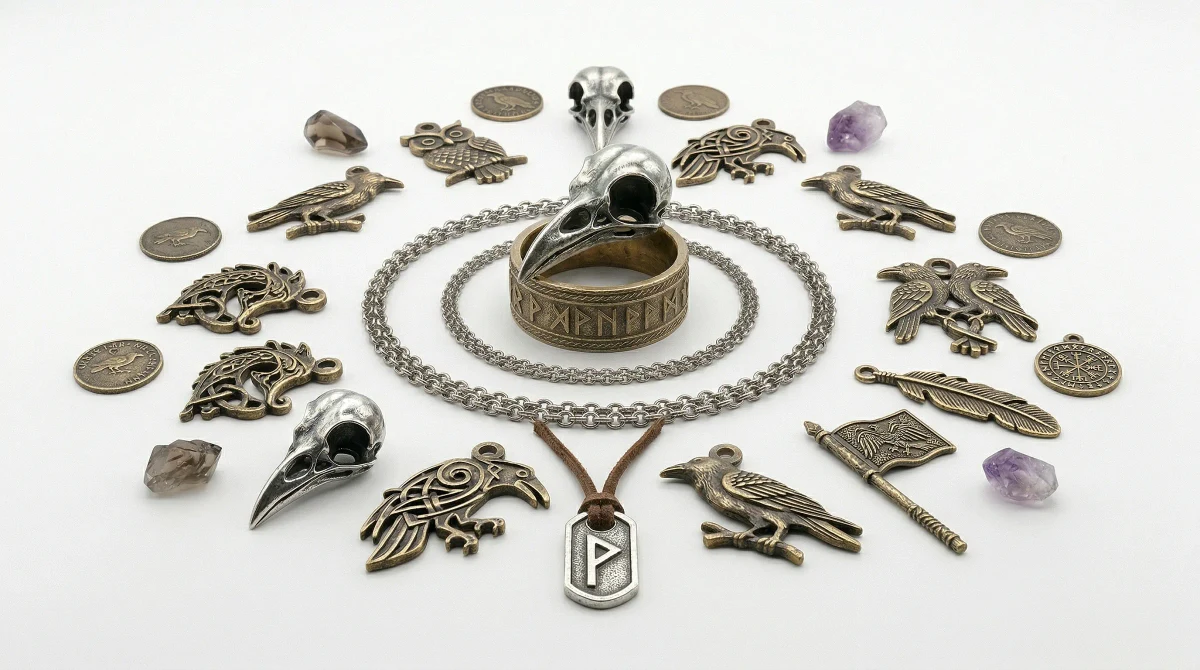
Wear the symbol, don't just read about it. These are in stock:







Huginn and Muninn: Odin's Ravens and the Price of Wisdom
Thought and Memory
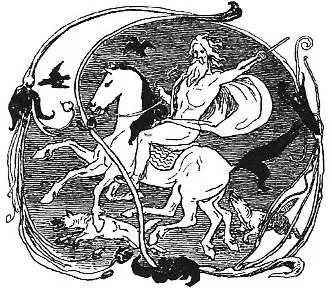
In Norse mythology, Odin, the Allfather, the chief of the gods, kept two ravens named Huginn and Muninn. Their names translate to "Thought" and "Memory." Every morning at dawn, the two ravens would fly out across Midgard (the human world) and observe everything that happened. Every evening, they returned to Odin's shoulders and whispered what they had learned into his ears.
This is where Odin got his famous wisdom. Not from sitting on a throne issuing commands, but from sending out his thought and his memory to gather information. The image is striking: the most powerful god in the Norse pantheon depended on two birds for his knowledge of the world.
The Prose Edda, written by Snorri Sturluson in the 13th century, records Odin's own words about his ravens: "Huginn and Muninn fly each day over the spacious earth. I fear for Huginn, that he come not back, yet more anxious am I for Muninn." The god of wisdom was afraid of losing his memory more than his thought. That's a detail that resonates differently depending on your age, and it gets more poignant the older you get.
The Raven God
Odin had many names. One of the most important was Hrafnagud, which translates directly as "Raven God." This wasn't a minor title. The association between Odin and ravens was so fundamental that you could identify Odin in art and literature primarily by the presence of his birds.
Vikings took this connection seriously. Raven imagery appears on helmets, shields, coins, and carved stones throughout the Viking world. The raven was Odin's eyes in the world, and carrying raven symbols meant carrying the god's watchfulness with you.
This also had a practical dimension. Ravens followed Viking ships because they knew ships meant sailors, sailors meant food, and where there was a sea voyage there would eventually be a landing and a meal. Viking navigators reportedly released ravens from their ships and followed the direction the birds flew to find land. The raven was navigation technology before it was mythology.
The Raven Banner
The Raven Banner (hrafnsmerki) was a real war standard used by Viking leaders. According to multiple sagas, the banner showed a raven and carried powerful magic: if the raven's wings appeared raised and fluttering, victory was coming. If the wings drooped, defeat was certain.
Several historical Viking leaders carried raven banners, including Sigurd the Stout, Earl of Orkney, who carried one at the Battle of Clontarf in 1014. The Anglo-Saxon Chronicle records that a raven banner was captured from Danish Vikings in 878. These were not fictional stories. These were real military standards that real commanders carried into real battles, and they chose the raven because it was the symbol of Odin's favour.
Customer reviews
Zevira is a real jewellery shop. Genuine payments, deliveries and customer thank-yous.
🥰🥰🥰 gracias

Ok, ¡gracias! 🙂
A raven wears silver, never gold. A gold raven is bad taste, and I will not hear otherwise.
How to style a raven
A raven sits equally well in jeans and at an evening entrance; only the delivery changes. On shoots I have styled it dozens of ways, and it always asks for one thing above all: a clean background. Here is what works, sorted by occasion.
How do I style a raven for every day? For daily wear I recommend a compact raven in profile on a medium-length chain, over a plain sweater, a turtleneck or a basic tee. You do not need a deep neckline; a clean, solid background lets the silhouette read. I choose oxidised silver with a light patina, since it stays quieter than bright polish.
Does a raven work at the office? Yes, as long as you drop the shine. The same raven sits happily under a shirt or a strict knit; oxidised silver reads as restrained and does not argue with a business dress code. Keep it small and let it stay a detail rather than an announcement.
How do I build an evening look? For evening I suggest going larger: long drop earrings with the full bird, a heavy ring with a raven skull, or a pendant on a short chain over an open neckline. For a special night I recommend a small layer of two chains of different length, with the raven hanging lower so it becomes the focus.
Which colours and fabrics suit a raven best? The raven is friends with black, but I choose deep wine, dark green, ink blue and charcoal, which give the bird contrast and pull it away from costume. In fabric, velvet, dense knit, leather and matte silk look the most interesting under it.
Which metal suits it, and who is it for? I lean to silver and cool tones with dark stones (onyx, obsidian, black tourmaline); a warm note of gold nods to the sun-stealing Raven if you want it. It suits anyone who values character and intelligence in a piece, whether the mood is calm and melancholic or boldly dark. Two rules I keep: give the raven one strong role and do not crowd it, and for layers pair it with a moon, a star or a key.

Turn on your camera, pick earrings, a pendant or a ring, and see the piece on yourself in real time.
Switch items in one tap.
Everything runs in your browser: no photo or video is ever uploaded.
The Morrigan, Bran the Blessed, and Celtic Battle Ravens
The Morrigan: war goddess in raven form
In Irish mythology, the Morrigan (sometimes called the Morrigu) was a goddess associated with war, fate, and death. She could take the form of a raven, and her appearance on the battlefield in bird form was an omen that decided the fate of warriors. Seeing the Morrigan's raven before a battle could mean victory or doom, depending on which side she favoured.
The Morrigan was not simply a death figure. She was a goddess of sovereignty, prophecy, and transformation. Her raven form represented the ability to see the full scope of a conflict from above, to understand its outcome before the first blow was struck. In the Tain Bo Cuailnge (the great Irish epic), the Morrigan appears to the hero Cu Chulainn in various forms, including a crow, warning him of events and shaping the course of the war.
Celtic warriors saw ravens gathering over battlefields as a sign that the Morrigan was present, choosing who would live and who would die. This connection between ravens and battle was not superstition in the modern sense. It was a framework for understanding the terrifying randomness of war by placing it within a divine narrative. The bird that arrived to feed on the fallen became the goddess who decided the fallen.
Bran the Blessed and the head that protected Britain
One of the most important figures in Welsh mythology is Bran the Blessed (Bendigeidfran), a giant and king of Britain whose name literally means "raven" or "crow." The Mabinogion tells us that after Bran was mortally wounded in a war against Ireland, he ordered his followers to cut off his head and carry it back to London.
According to legend, Bran's head was buried at the White Hill in London (the site where the Tower of London now stands), facing toward France, to protect Britain from invasion. As long as the head remained buried, no foreign army could conquer the island.
This myth connects directly to the Tower of London raven tradition. The idea that ravens protect Britain originates in this Welsh legend, with Bran's name literally meaning "raven" and his head buried at the tower's location. The myth layer runs deep.
Upload a photo of your pet, someone you love, or an object. We'll build a 3D model and hand-cast it in pewter.

The Tower of London Ravens: If They Leave, the Kingdom Falls
You can visit them today. Right now, at the Tower of London, there are at least six ravens living in the tower grounds, cared for by a dedicated Ravenmaster (currently a Yeoman Warder, a real official position). The legend states that if the ravens ever leave the Tower of London, the Crown will fall and Britain with it. The Crown Jewels are kept in the same fortress, and the prophecy makes more sense once you understand what the crown actually carries as a symbol: not just monarchy, but the continuity of an entire civic identity.
Charles II is often credited with formalizing the tradition in the 17th century, supposedly after his astronomer John Flamsteed complained that the ravens were interfering with his observations from the tower. The king allegedly ordered the birds removed, was told of the prophecy, and decided to move the observatory to Greenwich instead. The ravens stayed.
The practical reality: during World War II, the raven population at the Tower dwindled to just one bird, a raven named Grip. Winston Churchill, who understood the power of symbols, reportedly ordered that the raven population be restored to at least six. The ravens have been carefully maintained ever since.
Each raven has a name. Recent residents have included Jubilee, Harris, Poppy, Georgie, Edgar, and Branwen (note: a Welsh name meaning "white raven," connecting back to Bran the Blessed). The Ravenmaster clips one wing on each bird to prevent full flight, ensuring they stay on the grounds. The ravens are fed raw meat, blood-soaked biscuits, and the occasional egg. They are, by all accounts, extremely well cared for and slightly temperamental.
Is the prophecy real? Of course not. But the tradition is real, the birds are real, and the continuity of the practice across centuries tells you something about how deeply ravens are embedded in British identity. It's not magic. It's culture doing what culture does: turning a symbol into a practice that no one wants to be the first to break.



Raven the Trickster: How a Bird Stole the Sun
The one who brought light to the world
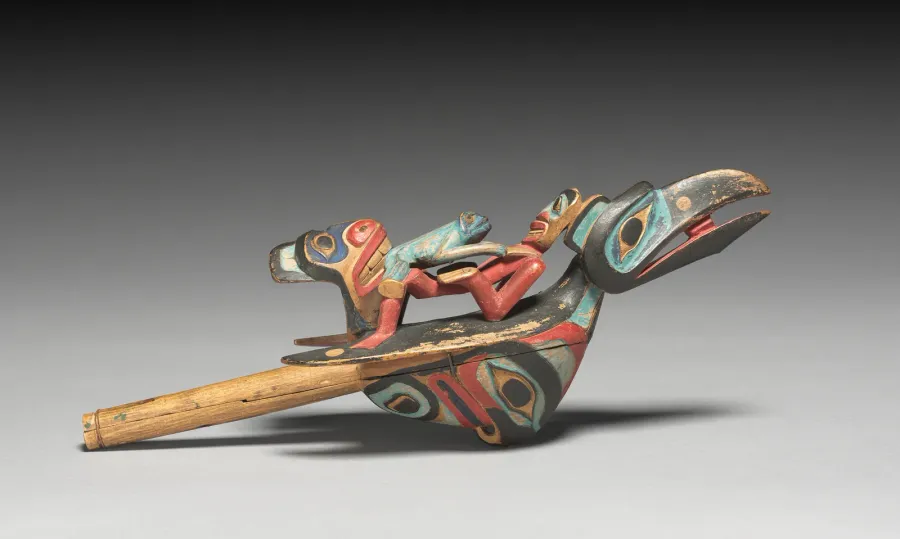
In the mythology of Pacific Northwest Indigenous peoples, including the Tlingit, Haida, and Tsimshian nations, Raven is one of the most important figures in all of creation. The most famous story tells how Raven stole the sun and brought light to the world.
In the beginning, the world was in darkness. An old chief kept the sun, moon, and stars locked in three boxes in his house. Raven wanted to free them. He transformed himself into a hemlock needle, fell into the water the chief's daughter was drinking, and was reborn as her baby. As a child, Raven cried and fussed until the old chief gave him the boxes to play with. Raven opened the box of stars and threw them into the sky. He opened the box of the moon. Then he grabbed the box containing the sun, transformed back into a bird, and flew through the smoke hole in the roof, carrying the sun up into the sky where it has remained ever since.
This story positions Raven as the being who literally created the world as we know it. Not through brute force, not through solemn divine authority, but through cleverness, trickery, and the willingness to be devious in pursuit of something good. Raven brought light to the world by being smarter than anyone expected.
Trickster, creator, transformer
Raven in Pacific Northwest tradition is simultaneously a creator, a trickster, and a glutton. He's responsible for major cosmological events (placing the sun, creating rivers, shaping the land), but he's also constantly getting into trouble because of his appetite, his curiosity, and his inability to resist a clever scheme.
This dual nature is central to understanding why the raven is not simply a "dark" symbol. In Indigenous traditions, Raven is funny, flawed, brilliant, and essential. He creates the world not because he's pure or noble, but because his selfish desires accidentally produce outcomes that benefit everyone. The trickster archetype is more complex than "good" or "evil." It represents the creative force that comes from breaking rules and testing boundaries.
Raven art from the Pacific Northwest is among the most distinctive visual traditions in the world. The formline design style, with its characteristic ovoid and U-shapes in red and black, creates raven images that are instantly recognisable. These designs have influenced artists and jewellery makers globally, though they carry deep cultural significance and traditional ownership.
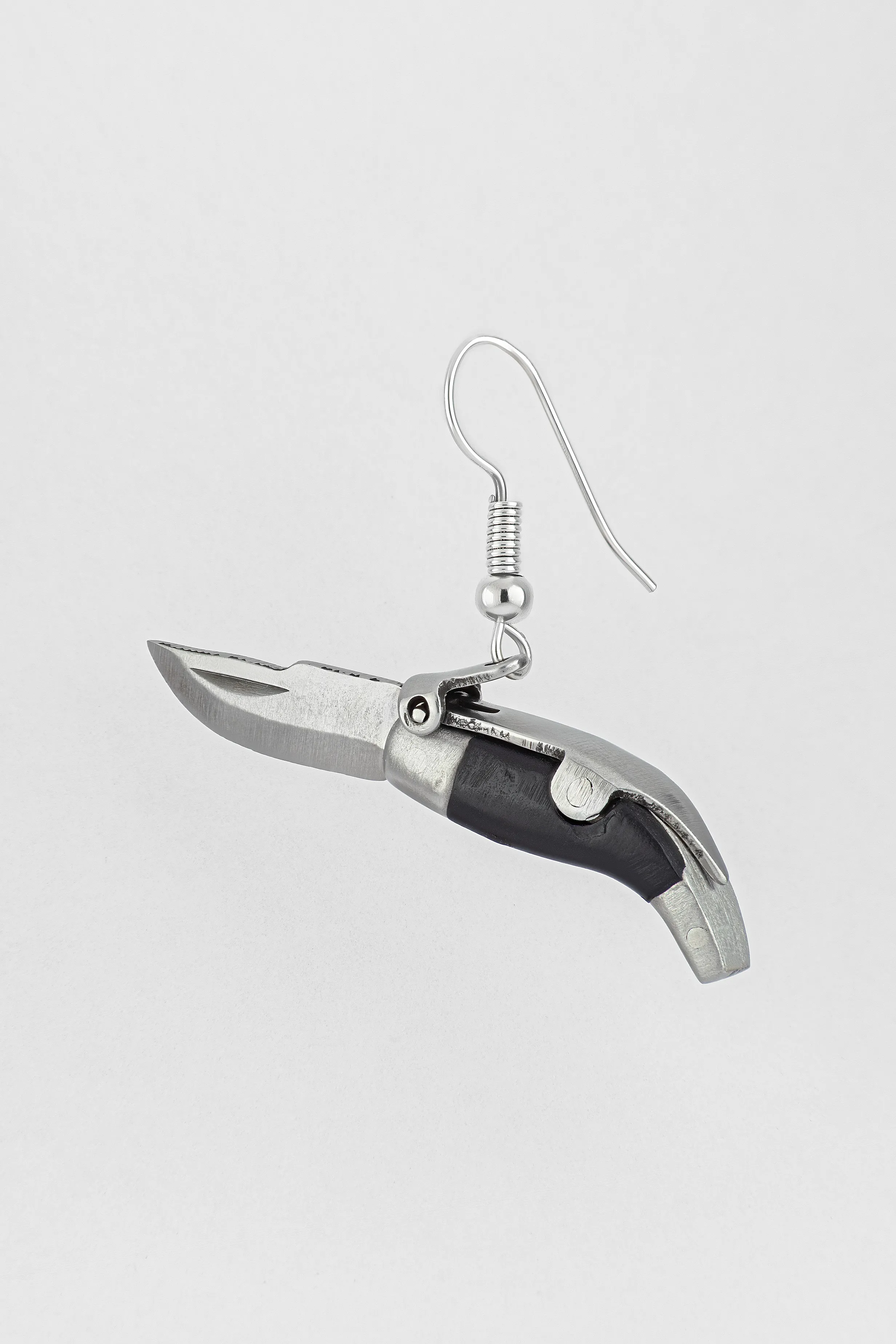
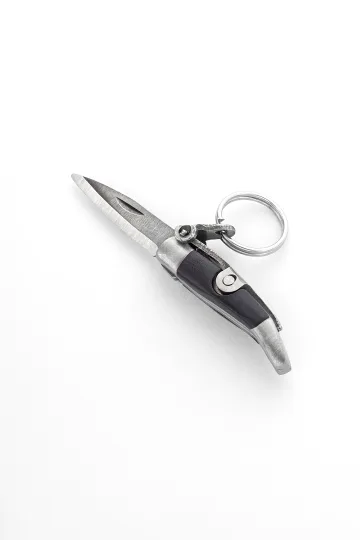
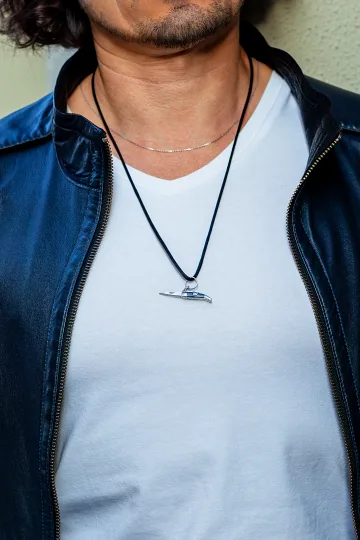
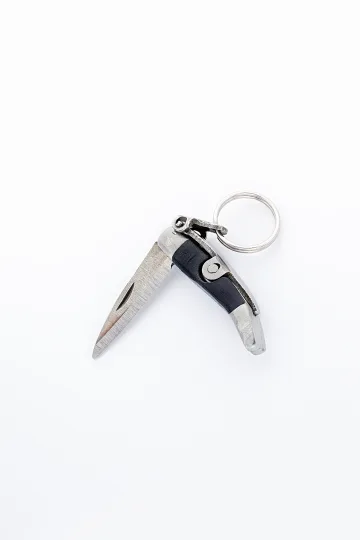
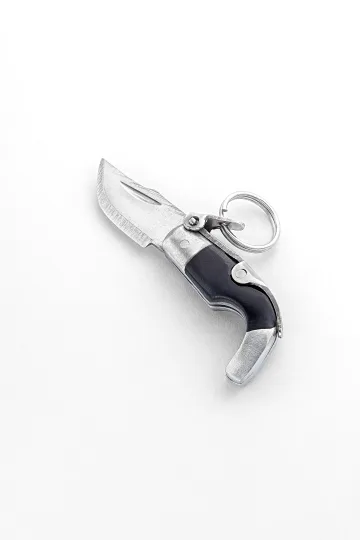
CAPAORA mini knife pendant
The 18th-century Spanish navaja in miniature: 40 mm of stainless steel, a real folding mechanism and a Palanquilla lock that clicks. An affordable gift to remember.
Authentic · Ships from Spain · 14-day returns
Yatagarasu: The Three-Legged Crow That Guided an Emperor
In Japanese mythology, Yatagarasu is a three-legged crow (or raven) sent by the gods to guide Emperor Jimmu, the legendary first Emperor of Japan, on his journey from Kumano to Yamato. The three legs are traditionally interpreted as representing the sky, the earth, and humanity, though interpretations vary.
Yatagarasu appears in two of Japan's oldest texts: the Kojiki (712 CE) and the Nihon Shoki (720 CE). In these accounts, the crow serves as a divine messenger and pathfinder, leading the emperor through unknown terrain to establish the Japanese state. The bird represents divine intervention and guidance, the idea that even when the path forward is unclear, there is a way through.
The three-legged crow is not unique to Japan. It appears in Chinese mythology (where it's associated with the sun) and Korean mythology (the Samjogo, a three-legged crow that was a symbol of power). The motif stretches across East Asian culture, suggesting ancient shared roots.
In modern Japan, Yatagarasu is the symbol of the Japan Football Association. The national football team plays under the emblem of a three-legged crow. This is one of those wonderful moments where ancient mythology walks directly into contemporary life: millions of people watch a football match and cheer under a symbol that dates back over 1,300 years.
Edgar Allan Poe and the Most Famous Bird in Literature
The poem that changed everything
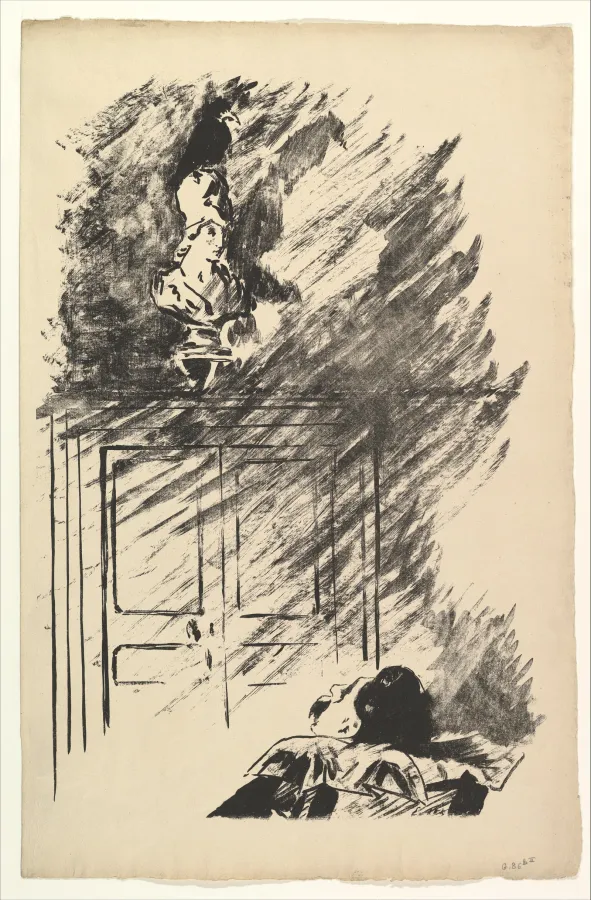
On January 29, 1845, Edgar Allan Poe published "The Raven" in the New York Evening Mirror. The poem made him famous overnight. It tells the story of a man, grieving the death of a woman named Lenore, who is visited at midnight by a raven that speaks a single word: "Nevermore."
The poem is structured as a psychological unraveling. The narrator asks the raven questions, knowing the bird can only say "Nevermore," but choosing questions that make that answer increasingly devastating. "Will I see Lenore again in heaven?" Nevermore. "Will this grief ever end?" Nevermore. The narrator is torturing himself, using the bird as a mirror for his own despair.
"The Raven" became one of the most famous poems in the English language almost immediately. It was reprinted, parodied, translated, and discussed across the country. Poe was paid almost nothing for it, roughly half a week's wages for a craftsman of that era. The man who wrote the most famous American poem of the 19th century lived in poverty.
Why Poe chose a raven
In his essay "The Philosophy of Composition" (1846), Poe explained his process for writing "The Raven." He said he started with the desired effect (melancholy) and worked backward. He wanted a refrain of a single word, and the most sonorous, melancholy sound in English was "o" combined with "r." That gave him "Nevermore." He then needed a creature capable of speech but without reason, so the word would feel mechanical and inevitable rather than conscious. A parrot could speak but was too absurd. A raven was perfect: dark, intelligent, associated with ill omen, and capable of mimicking human speech.
Whether Poe actually worked this methodically is debatable (writers don't always tell the truth about their process). But the choice of the raven was inspired regardless. The bird's real-world intelligence, its black plumage, its association with death across cultures, and its actual ability to mimic speech all combined to create the perfect literary symbol.
After Poe, the raven was permanently fused with literary darkness, melancholy, and intelligence. Every raven in Western art since 1845 carries a trace of "Nevermore."
Leave your email, we'll send your discount code. No spam, unsubscribe anytime.
The code arrives by email, valid on your first order.
The Science of Ravens: Genuinely Among the Smartest Animals on Earth
Tool use and problem solving
This is not exaggeration or anthropomorphism. Ravens (Corvus corax) and their relatives in the corvid family consistently demonstrate cognitive abilities that rival great apes.
New Caledonian crows (close relatives) manufacture tools from sticks and leaves to extract insects from tree bark. They shape the tools, improving them through a process that shows understanding of cause and effect. In laboratory settings, ravens have solved multi-step puzzles that require planning: choosing a tool, using the first tool to access a second tool, and using the second tool to reach food. This requires what cognitive scientists call "executive function," the ability to plan a sequence of actions toward a future goal.
A famous experiment by researcher Can Kabadayi at Lund University showed that ravens could select a tool, wait 17 hours, and then use it to solve a puzzle the next day. They were planning for the future. This ability was previously considered unique to humans and great apes.
Social intelligence and play
Ravens live in complex social groups with shifting alliances, grudges, and reconciliation. They remember which individuals have cheated them and adjust their behaviour accordingly. They share information about food sources (but sometimes lie about it to misdirect competitors). They engage in what researchers call "tactical deception," hiding food and then pretending to hide it somewhere else when they know they're being watched.
They also play. Ravens have been filmed sliding down snowy rooftops on their backs, repeatedly climbing to the top to do it again. They play with objects, tossing sticks in the air and catching them. They play with other species, including dogs and wolves, engaging in games of chase and tug. Play in animals is considered a sign of cognitive complexity, because it serves no immediate survival function and requires imagination.
Mourning and memory
Ravens and crows exhibit behaviours around dead members of their species that researchers describe as "crow funerals." When a crow or raven finds a dead member of its species, it calls loudly, attracting other corvids to gather around the body. The gathering can include dozens of birds, who remain near the dead bird for extended periods.
Research by Kaeli Swift at the University of Washington demonstrated that these gatherings serve a learning function: the crows are assessing the cause of death to avoid similar threats. But the behaviour also has characteristics that go beyond simple threat assessment. The birds linger. They are quiet. The social dynamic shifts. Whether this constitutes "mourning" in the way humans experience it is an open question, but the behaviour is real, documented, and deeply suggestive.
Ravens also have extraordinary memories. They recognise individual human faces and remember whether a specific person has been friendly or hostile. A study in Seattle showed that crows remembered researchers who had captured them and scolded those specific individuals for years afterward, even teaching their offspring which humans to distrust.
Ravens in Gothic Culture: From Tim Burton to the Three-Eyed Raven
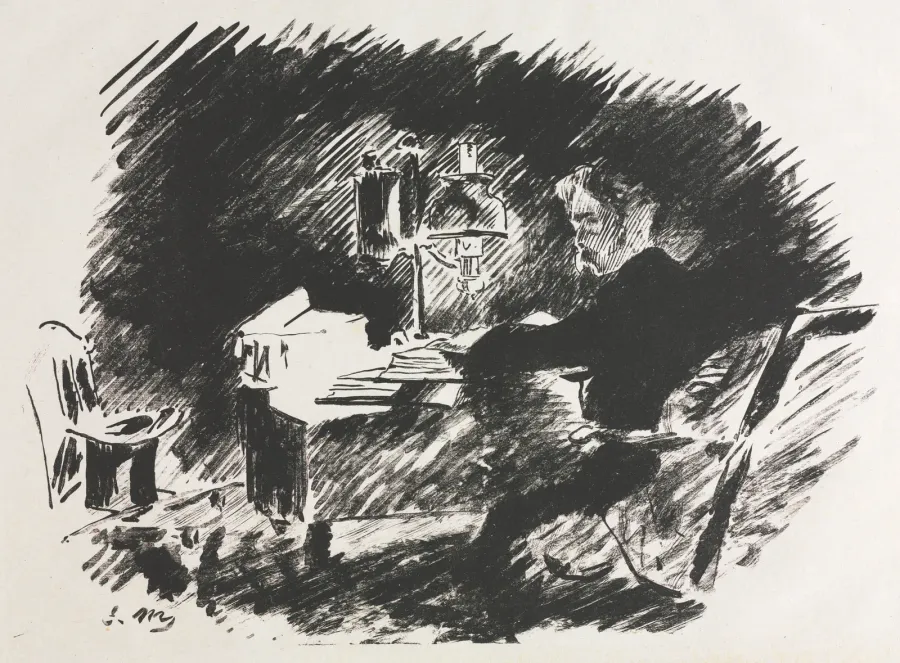
The raven's position in gothic culture is so established that it barely needs explaining. But the story of how it got there is worth telling.
Gothic literature, which began in the late 18th century with works like Horace Walpole's The Castle of Otranto (1764) and Ann Radcliffe's The Mysteries of Udolpho (1794), drew heavily on medieval imagery: crumbling castles, shadowy churchyards, moonlit ruins. Ravens were part of that landscape, both literally (ravens do live in old buildings and churchyards) and symbolically (as creatures associated with death and prophecy).
Poe's "The Raven" in 1845 cemented the bird as the central animal of the gothic aesthetic. From that point forward, any work that wanted to signal darkness, intelligence, and melancholy could reach for the raven and know the audience would understand.
In contemporary culture, the raven appears everywhere gothic and dark-aesthetic content thrives. Tim Burton's visual style, with its stark black-and-white contrasts and spindly, angular shapes, frequently incorporates ravens and crows. Game of Thrones featured the Three-Eyed Raven as a figure of ancient knowledge and prophetic vision, directly drawing on the Norse tradition of ravens as carriers of wisdom. Brandon Stark becoming the Three-Eyed Raven is the Odin story retold: a young man sacrifices his former self to gain knowledge that transcends ordinary human understanding.
The Sandman (Neil Gaiman) features a raven companion to the Lord of Dreams. The Crow (1994) built an entire mythology around the bird as a guide between the worlds of the living and the dead. In music, ravens and crows appear in the work of artists from The Black Crowes to Counting Crows to the entire genre of dark folk and neofolk.
What makes the raven's position in gothic culture interesting is that it's not just decoration. The bird genuinely is intelligent, genuinely is associated with death and transformation across world cultures, and genuinely does live in the kinds of environments (old buildings, wild landscapes, tower ruins) that gothic aesthetics celebrate. The symbol works because the reality supports it.
Raven Jewellery: What It Means and How to Wear It
Pendants and necklaces
A raven pendant is one of the most layered symbols you can wear. Depending on the design and your intention, it can reference Norse mythology (Odin's wisdom), Celtic tradition (the Morrigan's power), literary culture (Poe's darkness and intelligence), or simply the natural world (the smartest bird alive).
Raven pendants work best when the design captures the bird's character: alert, intelligent, slightly imposing. Look for pieces that show the raven in profile (emphasising the distinctive heavy beak and intelligent eye) or in flight (emphasising wingspan and power). The best raven jewellery avoids making the bird look cute or cartoonish. The raven is not cute. It is beautiful, but in the way a storm is beautiful: compelling precisely because it's a little bit intimidating.
A raven necklace on a longer chain (18 to 24 inches) works well layered with simpler chains. The raven becomes a focal point against a clean background. On a shorter chain or choker, a raven pendant reads as bolder and more intentional, a statement piece rather than a subtle accent.
Earrings and rings
Raven earrings can range from small studs (a raven silhouette or a single feather) to larger drops that incorporate the full bird. Asymmetric designs work particularly well: one raven and one complementary symbol (a moon, a key, an eye) on the opposite ear. This plays on the duality of Huginn and Muninn (thought and memory) or the raven's role as a creature that moves between worlds.
Raven rings tend to work best as statement pieces. A silver ring with a raven in relief, or a ring featuring a raven skull, carries enough visual weight to anchor an entire look. These are not everyday-office rings (unless your office is considerably more interesting than average). They're pieces for when you want your jewellery to say something specific.
Send a friend a discount code, they save on their first order.
Frequently Asked Questions
What does a raven symbolise in jewellery? The raven symbolises wisdom (Norse tradition), prophecy (Celtic), transformation and creation (Native American), intelligence (scientific reality), and literary darkness (Poe). It's one of the most multi-layered animal symbols in human culture.
Is there a difference between raven and crow symbolism? In mythology and symbolism, ravens and crows are often used interchangeably. Both belong to the corvid family. Ravens are larger, and their symbolism tends to lean more toward wisdom and prophecy, while crows can carry more trickster energy. In jewellery, the distinction is primarily aesthetic (size and silhouette) rather than symbolic. The other great wisdom bird in Western tradition is the owl, with its own three-thousand-year layered symbolism that overlaps with the raven without duplicating it.
What does wearing a raven pendant mean? It depends on your intention. For some, it references Norse mythology and Odin. For others, it's about Poe and gothic literature. For many, it simply represents intelligence, independence, and a connection to the mysteries of the natural world. The raven is broad enough as a symbol to carry personal meaning.
Are ravens really that smart? Yes. This is not folklore. Ravens and crows are among the most cognitively advanced animals on Earth, rivalling great apes in problem-solving, tool use, and social intelligence. Their brain-to-body ratio is comparable to that of great apes.
Why are there ravens at the Tower of London? Legend holds that if the ravens leave the Tower, the Crown and Britain will fall. The tradition is linked to the Welsh myth of Bran the Blessed, whose name means "raven" and whose head was said to be buried at the Tower's location. Six or more ravens are maintained there today by an official Ravenmaster.
What metal suits raven jewellery best? Sterling silver and oxidised silver are the most popular choices, because the dark, cool tones complement the raven's aesthetic. But gold works too, especially if you want to reference the Pacific Northwest tradition of Raven as a sun-bringer. Mixed metals can also work beautifully.
Can men wear raven jewellery? Absolutely. Raven symbolism has no gender association. Viking warriors wore raven emblems. Odin was the Raven God. Raven pendants, rings, and cuffs are designed and marketed across all gender presentations.
Silver and gold jewellery, wedding bands, symbolic pendants, paired sets.
Buying it as a gift? Each one arrives ready to give.
 A branded Zevira box and a little card come with every order.





Intelligence, mystery, and every mythology on Earth
The raven is not a dark symbol. Or rather, it's not only a dark symbol. It's a symbol of intelligence, transformation, creation, prophecy, and the kind of mystery that invites curiosity rather than fear. The Norse saw it as wisdom. The Celts saw it as fate. Indigenous peoples of the Pacific Northwest saw it as the being that literally brought light to the world. Poe saw it as the perfect embodiment of beautiful melancholy. Scientists see it as one of the most remarkable minds in the animal kingdom.
When you wear a raven, you're wearing all of those things at once. The specific meaning depends on you, on what you bring to the symbol and what you want it to say. That's the advantage of choosing a symbol with thousands of years of accumulated meaning: it's rich enough to hold whatever you put into it.
The raven is watching. It's always been watching. And it remembers.
Wear the symbol, don't just read about it. These are in stock:





About Zevira
Zevira makes jewellery in the artisan tradition of Albacete, Spain. For us the raven stands for intelligence and character, not cheap gothic shorthand, so we draw the bird strong and recognisable: the profile with its heavy beak, the sharp eye, the spread of the wing in flight.
What you can find with us on the theme of the raven and dark symbolism:
- Raven pendants in profile and in flight, in 925 silver and oxidised silver
- Rings with a raven in relief and accent pieces to anchor a look
- Earrings ranging from studs with a bird silhouette to expressive drops
- Moon, star, and key motifs that pair naturally with the raven
- Pieces set with dark stones: onyx, obsidian, black tourmaline
- Paired sets in the spirit of Huginn and Muninn, thought and memory
Every piece can be personalised with engraving, with the option of personal engraving. Sterling silver 925 and 14 to 18K gold.