Amber in Jewellery: A Complete Guide to Fossilised Resin and Its Energy
Amber is neither a stone nor a mineral. It is the hardened resin of conifer trees that lived roughly 40 to 50 million years ago. It is softer than your fingernail at the top of the scale, it floats in salt water, and when you rub it against wool it starts pulling scraps of paper towards itself. The Greek word for amber, "elektron", is where the word "electricity" comes from. In the pages that follow we will look at where amber comes from, what colours it appears in, how to tell the real thing from plastic, and which of the old legends hold a grain of truth and which are simply beautiful invention.
The History of Amber: From Ancient Kingdoms to Royal Treasures
Amber has kept company with people for thousands of years. It was found along the shores of the Baltic and the Adriatic, and one thing was noticed at once: it glows like gold yet weighs less than stone, it warms in the hand, and it builds up a charge against cloth.
Greece and Rome: Amber as Luxury
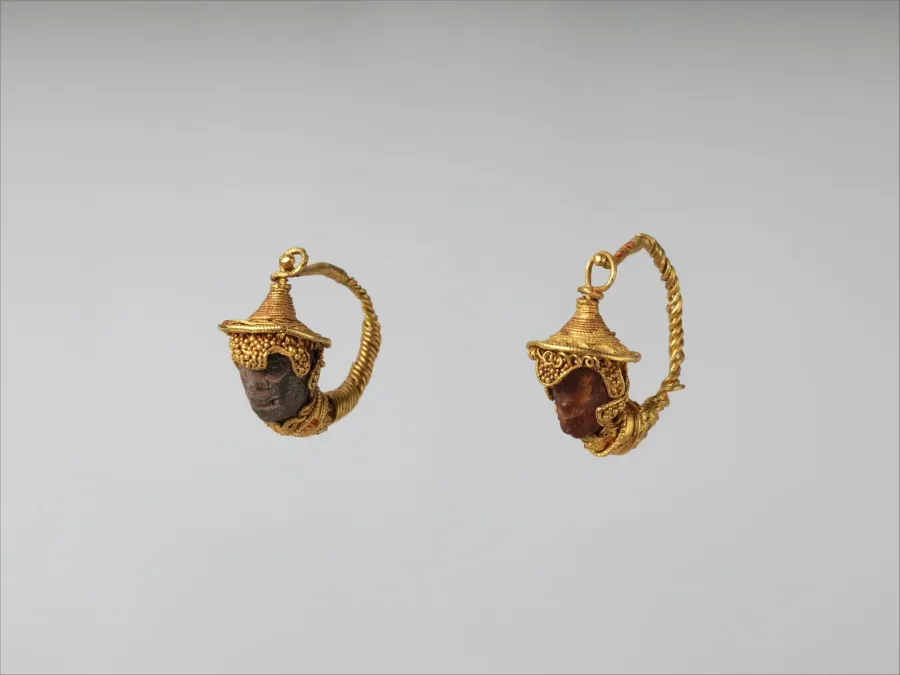
The Greeks called amber "elektron". The word meant the amber itself, not the sun, as is sometimes claimed. From it the term "electricity" was later coined. The Greek philosopher Thales of Miletus (roughly 624 to 546 BCE) noticed that rubbed amber attracts light down and fibres. That is one of the first recorded observations of static electricity.
Wear the symbol, don't just read about it. These are in stock:



In Rome amber was a fashionable luxury. Pliny the Elder wrote that a small amber figurine cost more than a healthy living slave, and he disapproved of such extravagance. The Greeks knew about insects trapped in amber and explained its origin through myth: it was said to be the hardened tears of nymphs mourning Phaethon.
The Middle Ages: Trade and Monopoly
In the Middle Ages, Baltic amber travelled along the Amber Road, one of the oldest long-distance trade routes, running from the Baltic coast through Europe down to Italy. Amber was used in rosaries and amulets for pilgrims, and the Church burned it as a fragrant resin.
From the thirteenth century the mining and trade of Baltic amber was tightly controlled by the Teutonic Order. Gathering amber without permission was forbidden on pain of harsh punishment, and the monopoly kept prices high. Towns rose along the Baltic coast that lived on amber: Danzig (now Gdansk), Konigsberg (now Kaliningrad) and Memel (now Klaipeda).
Royal Collections (16th to 18th Centuries)
Amber became a favourite material at the European courts. It was gathered in cabinets of curiosities, and turned into caskets, goblets and jewellery. The most famous amber monument is the Amber Room. Work on it began in Prussia, and the Prussian king presented it as a diplomatic gift in 1716. Several tonnes of amber went into the panelling, with masters from Danzig and Konigsberg at the bench. The room was called the eighth wonder of the world. During the Second World War it was removed to Konigsberg, and after the war its trail went cold. A recreated copy was opened near Saint Petersburg in 2003.
Around the same time science took up amber. Gottfried Leibniz, in his work Protogaea (written in the early 1690s, published posthumously in 1749), proposed that amber was the resin of ancient trees that had lain in the earth. The guess proved correct long before palaeontology existed as a discipline.
The 19th and 20th Centuries: Mining and a New Reading
In the nineteenth century industrial mining began on the Baltic, and scholars turned in earnest to inclusions, the insects and plants trapped inside amber. Amber jewellery grew cheaper and reached the urban middle class. In 1993 the film "Jurassic Park" reignited public interest in amber as a vault of ancient life, though the plot about rebuilding dinosaurs from DNA remained pure fiction.
The Amber Road: Europe's Oldest Trade Artery
The Amber Road was never a single road. It was a network of routes along which Baltic amber flowed south towards the Mediterranean for thousands of years, while wine, bronze, glass, and finished ornaments travelled north in exchange. Archaeologists find Baltic amber in the shaft graves at Mycenae, in Egyptian burials, and at Bronze Age sites across central Europe. Long before Rome existed, northern resin was valuable enough to justify journeys of two thousand kilometres on foot and by river.
Britain sits on the edge of this story rather than at its centre, but it is in the story. Amber beads turn up in Wessex barrows of the early Bronze Age, most famously in the burials around Stonehenge, and the great amber cup found at Hove in Sussex was turned from a single lump of Baltic material some three and a half thousand years ago. Whoever was buried with it had access to a supply chain that reached the far side of the continent.
Where the Amber Came From and Where It Went
The main branch ran from the southern shore of the Baltic across what is now Poland and the Czech lands to the head of the Adriatic, arriving at Aquileia in northern Italy. Workshops there cut and polished the raw material, and the finished pieces dispersed across the empire. Side branches reached the Black Sea, the Danube, and the Rhine, and from the Rhine mouth traffic crossed to Britain. Amber was not currency in the strict sense, but it functioned as a commodity equivalent: a handful of clear pieces could be exchanged for goods of serious value, and it had the enormous advantage of being light enough to carry a fortune in a pouch.
The Roman Knight's Expedition
One curious episode from the first century survives. Under the emperor Nero, a Roman knight was despatched to the Baltic expressly to buy amber for a set of gladiatorial games. He came back with so much raw material that it was used to decorate the weapons, the litters, and even the netting around the arena floor. Pliny the Elder, who recorded the journey, found the extravagance worth noting, and for us the anecdote fixes two things: the trade route was well enough known to be travelled deliberately, and demand in Rome was strong enough to fund the trip.
Amber in Burial Rites
Many ancient cultures placed amber in graves. A warm, sun-coloured material was associated with life and with return, so it was given to the dead for the journey. Whole necklaces of amber beads come out of Baltic and Scandinavian burials, and individual plaques often show wear consistent with having been carried as charms during the owner's lifetime before going into the ground with them. The same logic appears in British barrows, where amber is found alongside jet from Whitby, the two materials sharing a role as light, warm, electrically active stones set apart from ordinary rock.
Honey amber belongs in gold and daylight, not in silver under a strip light. And don't you dare argue.
What to Wear Amber With
Years of working with this stone taught me one thing about amber: it is warm and alive, and you should not smother it under clutter. Here is what actually earns its place, by occasion.
What do I wear amber with every day? For daytime I recommend a small honey or cognac pendant against the skin, or a string of beads under plain knitwear and a linen shirt. Stay in warm shades: sand, terracotta, chocolate, olive. Textured fabric and a V-neck leave the drop room to breathe, and the stone glows. On white amber looks soft, on black it flares up and pulls the eye towards the face.
Can I take it to the office? Absolutely, as long as you keep it modest. I suggest a restrained option: brown or honey amber in silver, neat drop earrings, a fine chain. One accent, no more. Save the large red piece for the evening, and let a quiet warm detail do the work under a blazer.
How do I build an evening look? For evening the logic reverses: I choose a large pendant or a bold ring with red or milky white amber, and it takes the lead while everything else steps back. Smooth fabric in a rich colour and an open neckline show the stone off best. For a special occasion, pull together a set in one palette: earrings and pendant in the same shade read as a whole.
Which metal should I choose for amber? Warm amber (yellow, orange, red) I set in gold or brass, which amplify its light. Cool milky white looks better in silver and white gold. Copper and bronze give an ethnic, bohemian mood. Take your cue from your skin undertone: warm skin loves gold, cool skin loves silver.
How do I layer amber? Amber lives happily in layers: a long string of beads over a short pendant, a stack of fine bracelets with a single amber accent. I never mix more than two textures of the stone in one look, or the depth is lost. On length I keep it simple: a short pendant (40 to 45 cm) draws the eye to the face, a long string (from 60 cm) lengthens the silhouette and sits well over a jumper.

Turn on your camera, pick earrings, a pendant or a ring, and see the piece on yourself in real time.
Switch items in one tap.
Everything runs in your browser: no photo or video is ever uploaded.
The Origin of Amber: Resin of Ancient Forests
Amber is the fossilised resin of extinct conifers. Baltic amber formed roughly 40 to 50 million years ago, in the Eocene. That is well after the dinosaurs died out (around 66 million years ago), so the common phrase about "Jurassic amber" is wrong. In amber of this age you find evidence of Eocene life: insects, pollen, occasionally small vertebrates.
How Resin Becomes Amber
In the warm, humid climate of the Eocene, on the shores of an ancient sea where the Baltic now lies, vast coniferous forests grew. When a tree was wounded by a storm, an insect or a fungus, it bled resin. The resin ran down the trunk, and flies, ants and beetles stuck to it while leaves, pollen and spores fell in. That is how inclusions form.
Later the forests were flooded and buried under layers of sand and silt. Under pressure and gentle heat the resin changed its chemistry: volatile components (terpenes) evaporated, and the molecules cross-linked into large networked chains (polymerisation). Over millions of years the soft resin turned into a hard, stable substance. Amber contains succinic acid (C4H6O4), and Baltic amber is especially rich in it.
How Amber Reaches People
Tectonic movements slowly raise the amber-bearing layers closer to the surface, and erosion uncovers them. Amber is lighter than sea water and floats, so the waves carry it ashore. On the Baltic, after strong storms the surf throws up noticeably more amber, and local people have long gathered it precisely after a blow.
What Amber Is Made Of: The Chemistry and Physics of a Warm Stone
Amber is built differently from the gemstones it sits beside in a shop window. A sapphire or a garnet is an ordered crystal with a regular lattice; amber is amorphous, with no crystal structure at all, its molecules cross-linked into a chaotic three-dimensional network. It is, in plain terms, a natural organic polymer, a very old relative of the resins in a modern varnish. That structure is the reason it behaves so unlike a mineral: light, warm to the touch, soft, and yet not brittle in the way glass is brittle.
Composition: Resin Acids and Succinic Acid
The bulk of amber is made of resin acids, alcohols, and esters that were once the living sap of a conifer. Over millions of years the light volatile fractions evaporated away and the heavy ones polymerised into a stable mass, a process called maturation that is still slowly continuing in every piece. One component matters more than the rest for identification: succinic acid. In Baltic material its share reaches several percent, appreciably more than in amber from other deposits, and it is on that basis that the Baltic variety is classified as a separate mineraloid and given the name succinite, from the Latin succinum.
Physical Properties That Matter in Jewellery
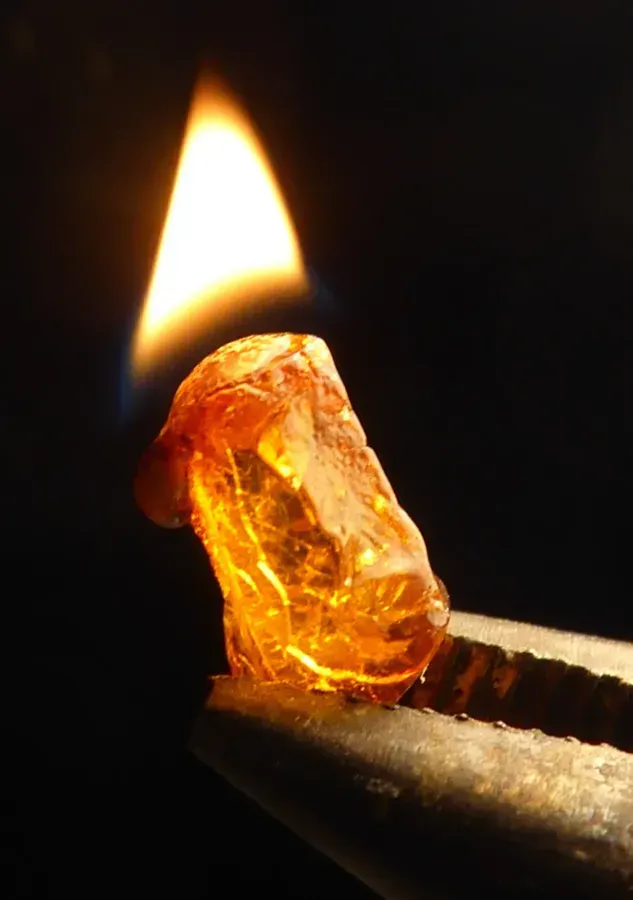
The density is remarkably low, roughly 1.05 to 1.10 grams per cubic centimetre, barely above water. That accounts both for the famous lightness in the hand and for the way amber floats in a strong salt solution. Hardness on the Mohs scale is only 2 to 2.5, softer than a copper coin and far softer than glass, which is why amber scratches so readily and why it should never share a box with anything harder. The softening point is low, around 150 to 180 degrees Celsius, after which the material melts and burns with a fragrant smoke. Poor thermal conductivity explains the sensation everyone notices first: amber does not feel cold, because it does not pull heat out of the skin the way metal or a crystalline stone does.
Succinite and the Other Mineraloids
Not all fossil resin is chemically alike. Baltic succinite is rich in succinic acid, while Dominican and Mexican amber belong to the retinite group and contain almost none of it. The difference in composition shows up in hardness, in colour range, and above all in behaviour under ultraviolet light, which is why an experienced gemmologist can often guess the origin of a piece from the bench before any laboratory analysis is done. It also has a practical consequence for buyers: claims about the health benefits of succinic acid, which are dubious in any case, are simply irrelevant to a Dominican or Mexican piece, since the acid is not there.
Customer reviews
Zevira is a real jewellery shop. Genuine payments, deliveries and customer thank-yous.
🥰🥰🥰 gracias
Ok, ¡gracias! 🙂
Amber Deposits
Amber only formed where ancient conifer forests grew and conditions for burial were right. Today it is mined in several regions.
Baltic Amber
Baltic amber (from the lands around the Baltic Sea) is the best known and the most prized. It is around 40 to 50 million years old. The colour range is wide: yellow, orange, reddish, milky white, and more rarely greenish or bluish. The inclusions are rich: flies, ants, mosquitoes, beetles, occasionally small lizards. The shores around the Baltic account for most of the world's Baltic amber.
The mineralogical name for it is succinite, and that word matters when you are buying. Succinite is defined by a relatively high content of succinic acid, between three and eight percent, which is what separates true Baltic amber from the other fossil resins that share its look. Laboratories identify it by infrared spectroscopy, where succinite produces a distinctive absorption pattern known as the Baltic shoulder. Anything sold as Baltic amber that fails that test is a different resin, whatever the label says.
The material comes out of a marine clay layer known as blue earth, laid down in the Eocene, and it is worked both by open-cast extraction near Kaliningrad and by simple collection along the beaches. Storms are the traditional harvest: rough seas tear amber out of the seabed sediment and wash it ashore mixed with seaweed, and collectors walk the tideline afterwards with nets.
That habit reaches Britain too. Amber washes up on the coasts of Norfolk and Suffolk after winter storms, along beaches such as Cromer, Southwold, and Dunwich, carried across from the same Baltic deposits by currents and by glacial drift. Pieces are small, usually pebble-sized and often mistaken for sea-worn plastic, but they are genuine Baltic succinite, and East Anglian beachcombing for amber is an old local pursuit with its own following. If you find a translucent orange pebble that feels far too light for its size, warm it in your palm and hold it up to the light before you throw it back.
Mexican Amber
It formed around 20 to 30 million years ago in the states of Chiapas and Tabasco. It is often reddish or dark honey-coloured. Red Mexican amber is rare and expensive, and collectors prize it.
Dominican Amber
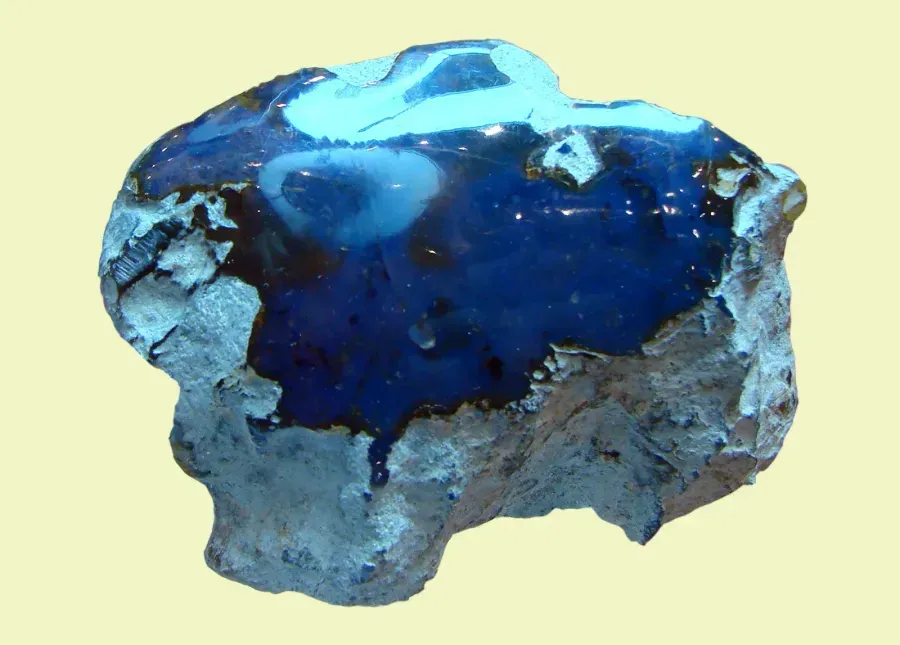
From the Dominican Republic, around 15 to 20 million years old. It is famous for its rare blue amber, which looks honey-coloured under ordinary light but shimmers blue in sunshine and under ultraviolet. We cover that variety in detail in a separate guide to Dominican amber.
Other Sources
Amber is also mined in Myanmar (Burmese amber is often cloudy, brown or red), in Denmark and Sweden, and across other parts of the Baltic group. When people say simply "amber", they usually mean Baltic.
Types of Amber by Colour
If you have only ever seen yellow amber, that is just part of the palette. The colour depends on impurities and on the number of tiny air bubbles in the resin, and it has a marked effect on price.
Clear and Pale Yellow
The most common amber: clear, yellow or pale orange. It comes from clean resin without much in the way of impurities. Inclusions, if there are any, show through it well. This is the most affordable tier.
Milky White
Milky, or "cloudy", amber is opaque because of countless microscopic air bubbles that scatter the light. Across much of northern and eastern Europe it is highly valued.
Brown and Dark
Shades from light brown to dark chocolate come from organic impurities and iron oxides. It looks good with both gold and silver, and is often the most practical choice for everyday jewellery.
Red
Reddish tones arise as the resin and its pigments oxidise. Red amber is rare and dear, and is sometimes called "precious". It is often Mexican amber. It costs several times more than the yellow kind.
Blue and Green
Blue amber, which glows blue under ultraviolet, is one of the rarest varieties, mostly from the Dominican Republic. Under ordinary light it can look honey-coloured. A greenish tint is rarer still. These varieties sit in the upper price tier.
What Is Often Sold as Amber
Jet ("black amber") is not amber at all but a fossilised plant material of the coal family. It is cheaper than amber and goes into inexpensive jewellery.
Pressed amber is made by sintering amber crumb and dust under heat and pressure. It is reprocessed amber rather than a fake, but it is not a whole natural stone either. It is cheaper, betrayed by visible sintering lines and a less uniform structure.
Synthetic resins and plastic have nothing to do with amber; they are imitation. They contain no ancient inclusions and carry no history.
Copal: Young Resin Passed Off as Amber
The market's chief honest trap is copal. It is the same tree resin, but young: anywhere from a few hundred to a few hundred thousand years old, sometimes a couple of million, rather than forty or fifty. Polymerisation in it has not finished, so strictly speaking it is not yet amber but its immature forerunner. To the eye copal is almost indistinguishable: warm, yellow, light, sometimes with an inclusion. It is copal that is most often sold to tourists as "amber with an insect": a modern beetle is easily set into resin that has not hardened.
What gives it away is that copal is softer (Mohs hardness around 1 to 1.5 against 2 to 2.5 for amber) and holds up poorly against solvent. A drop of acetone or alcohol turns the surface of copal tacky and dull within seconds, because the young resin still dissolves. On real amber the same drop simply evaporates without a trace. The test spoils the surface, so do it only in a hidden spot and only when you have a serious doubt. Another clue: copal softens noticeably sooner than amber when heated and gives a sharper, more acrid smell, without the clean resinous, pine-like note.
Upload a photo of your pet, someone you love, or an object. We'll build a 3D model and hand-cast it in pewter.


Treating Amber: What Is Honestly Done to It
Most amber on the market is treated in one way or another, and that is normal practice rather than deception, as long as you are told. A natural piece is often cloudy because of millions of microbubbles, so it is clarified. For this the amber is heated in an autoclave for several hours at 180 to 200 degrees in an inert gas: the bubbles go, and the stone turns clear. It must cool slowly, or it cracks.
A side effect of clarifying is "sun spangles" inside the stone, shiny disc-shaped cracks. Many sellers pass these off as a mark of naturalness, but it is exactly the reverse: spangles arise precisely from heating, when the pressure inside a bubble drops sharply and the wall bursts. Natural, unheated amber usually has no such discs. Whether they are pretty is a matter of taste, but as proof of authenticity they do not work.
Colour, too, is brought out by heat. If amber is heated at a high temperature with access to oxygen (around 210 degrees), the resin oxidises and reddens. That is how ordinary yellow is turned into the fashionable cognac and red shade. An important detail: the heated colour lies in a thin layer near the surface and does not go deep. So a deep scratch or chip in such amber reveals a pale core. Green and bright, unusual tones on the market are also almost always the result of treatment; natural green is extremely rare. All this is legal, but an honest seller will mention the treatment, and it shows directly in the price of a rare natural colour.
Inclusions: A Window onto an Ancient Ecosystem
Inclusions are objects trapped in the resin millions of years ago: whole insects or their parts, leaves, flowers, seeds, pollen, spores, rarely small vertebrates. Amber with a well-preserved inclusion is worth markedly more than a clear piece of the same size, since it is at once a rarity, scientific material and a ready-made miniature composition. We devote a whole piece to how a frozen insect turns a lump of resin into a window onto the past in our guide to amber with inclusions.
How to Spot a Fake Inclusion
Fraudsters drill a hole in real amber, set a modern insect inside and pour resin over it. Signs of a fake:
- Position. In a natural inclusion the insect lies at the angle at which it met the running resin. A fake often sits near the surface or at an unnatural angle.
- Too-perfect preservation. Usually only parts of a body or a damaged insect become trapped. A whole, flawless specimen should put you on guard.
- Microcracks. Tiny resin cracks are often visible around a genuine inclusion.
- Certificate. For expensive specimens with inclusions it is worth asking for a gemmologist's report.
A common misconception about DNA: you cannot rebuild a dinosaur from an insect in amber. DNA breaks down over roughly a million years, and in very old amber no whole genome survives. Scientists find only short fragments, and even those are disputed.



How to Tell Natural Amber from a Fake
Glass, plastic, synthetic resins and pressed crumb are all sold as amber. No single test is a hundred-percent guarantee, so it is safer to combine several. Run them in order of increasing damage: start with the loupe, which costs the piece nothing, move through the tests that are merely inconvenient, and keep the hot needle for last, because it is the only one that leaves a permanent mark.
A loupe, first of all. A ten-times lens tells you more than every other test put together, and it tells you before you have touched the piece. Look for a flow structure inside: real amber shows swirls, clouds of tiny bubbles, and darker resin streaks that run in a direction. Cast plastic and poured resin show either nothing at all or perfectly round, evenly distributed bubbles, which is what a liquid does in a mould and not what tree resin does over forty million years. Check the surface as well. Old amber carries a fine crazed weathering skin and small conchoidal chips; a moulded imitation carries a seam line, and a pressed piece shows a granular boundary where the crumb was fused. Look at the drill hole on a bead too, since a plastic hole has a smooth melted rim and an amber one has a slightly chipped one.
Buoyancy in salt water. Amber has a low density (around 1.05 to 1.10 g/cm3), and in a saturated salt solution it floats. Dissolve 2 to 3 tablespoons of salt in a glass of water and lower the item in: if it floats, that is a good sign. But some plastics float too.
Static charge. Rub amber against wool or hair and bring it near small scraps of paper. Natural amber attracts them. Some synthetic resins also build up a charge, so the test is a supporting one.
Ultraviolet. Under black light amber usually glows bluish, yellowish or greenish. An absence of glow is suspicious, but some imitations luminesce too.
Weight and clarity. Amber is very light for its size and lets light through softly, not like glass. If a pendant feels noticeably heavy, that is reason to doubt.
Hardness. On the Mohs scale amber is soft, around 2 to 2.5. Glass (5 to 6) cannot be scratched with a fingernail, while amber and plastic are softer.
Smell when heated. Natural amber melts from a hot needle with a pleasant resinous, pine-like smell, while plastic smells of chemicals. The test spoils the surface, so do it only in a hidden spot.
Smell when heated, and only at the end. Natural amber melts under a hot needle with a pleasant resinous, pine-like smell that is unmistakable once you have met it, while plastic gives off a sharp chemical reek and copal produces a sweeter, softer smell and softens far sooner. This is the last resort precisely because it scars the surface: choose a hidden spot, the inside of a bead hole or the back of a setting, and accept that you are marking the piece.
Acetone and strong-heat tests damage the item and are better left to specialists. For expensive purchases with inclusions, a gemmological laboratory report is the most reliable answer.
Myths About Amber
Myth: Amber Always Contains an Inclusion
Not true. The vast majority of pieces are empty. An inclusion is a rarity, and a clear, transparent amber with no insect often looks finer than a cloudy one with a spider.
Myth: An Inclusion Means the Amber Is Older
Age does not depend on whether there is an inclusion. A young specimen, by amber's standards, may contain an insect while a very old one is empty. An inclusion is simply the luck of the moment: something landed in the resin before it hardened.
Myth: Amber Heals Illness
The ancients believed amber warded off sickness, but a pendant heals nothing. Succinic acid does have a mild anti-inflammatory effect, yet it is released from jewellery in negligible amounts. The only real effect is psychological: you like the object, you feel calmer, and your sense of wellbeing is subjectively better.
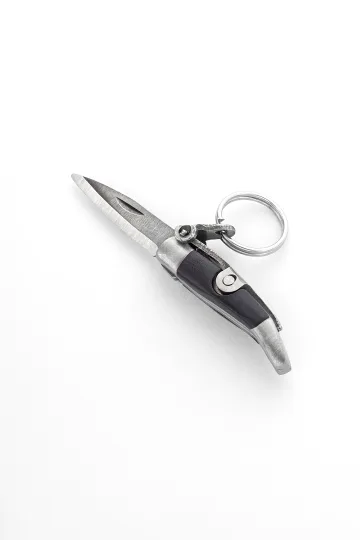
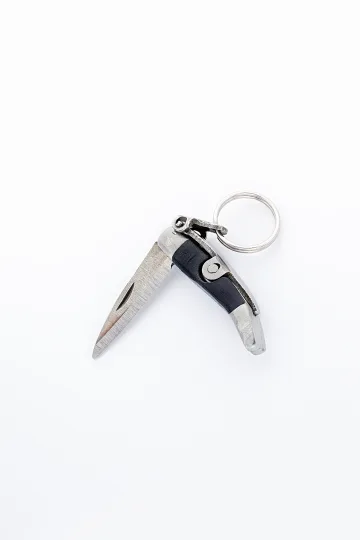
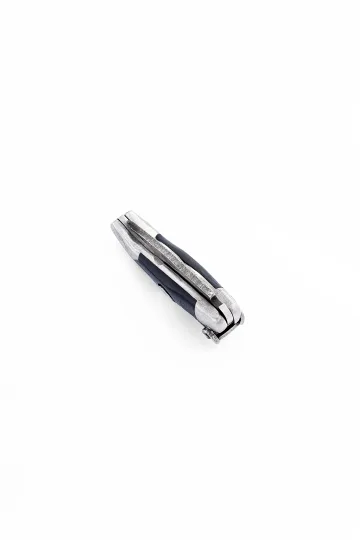
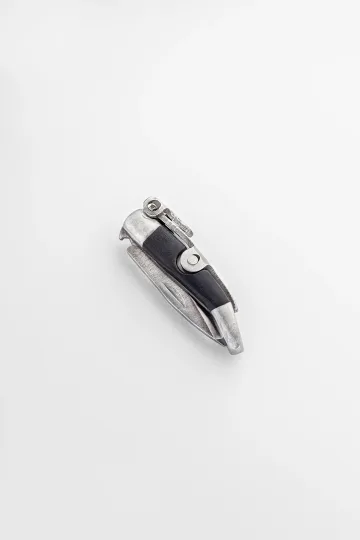
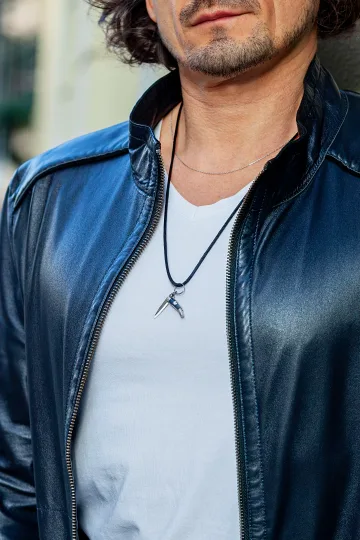
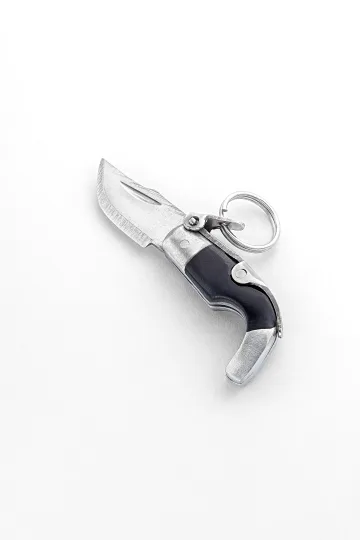
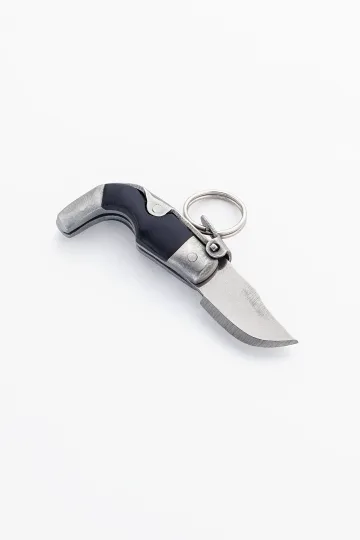
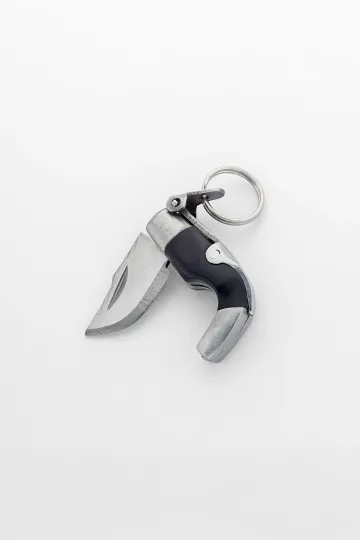
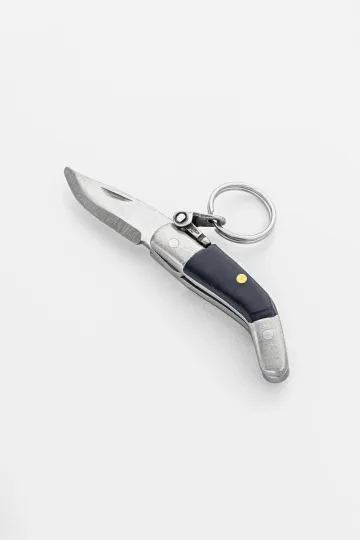
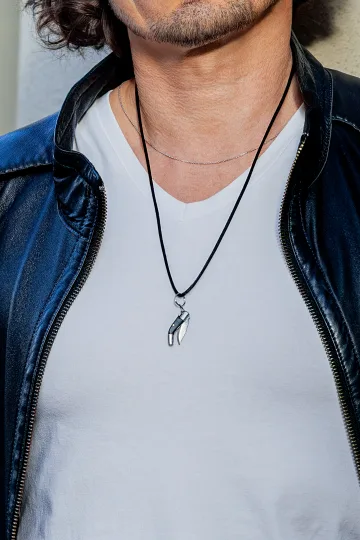
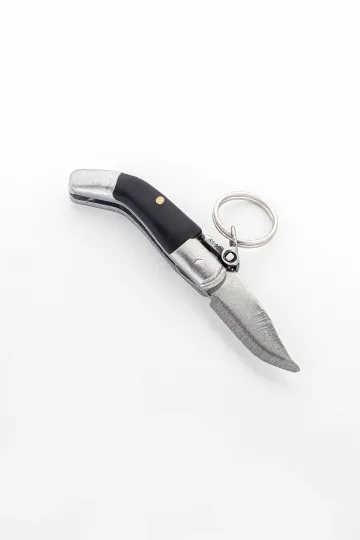
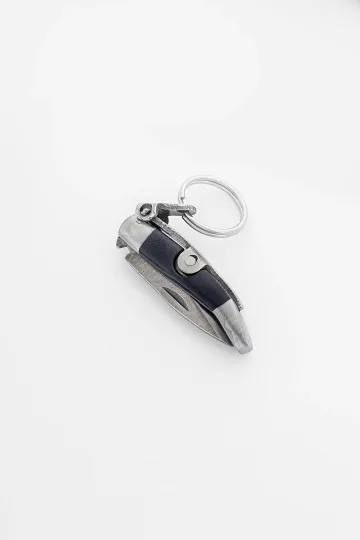
CAPAORA mini knife pendant
The 18th-century Spanish navaja in miniature: 40 mm of stainless steel, a real folding mechanism and a Palanquilla lock that clicks. An affordable gift to remember.
Authentic · Ships from Spain · 14-day returns
How Amber Looks on Different Skin Tones
On fair, cool skin amber gives contrast: yellow rings out brightly, and milky white looks refined, especially in silver. On olive and deeper skin amber warms and seems to glow: brown, dark and red work well, better in gold. On dark skin amber works on contrast, with golden and red looking striking. Worn in the hair (a clip or comb) amber draws out its warmth.
Leave your email, we'll send your discount code. No spam, unsubscribe anytime.
The code arrives by email, valid on your first order.
The Energy of Amber: Legends and Psychology
Whether or not you believe in the energy of stones, amber has an honest, explicable effect: on the touch and on the mood.
A Time Capsule
Amber with an inclusion is a material piece of history: the insect inside lived tens of millions of years ago. People who wear such amber often say they feel a connection to nature and to the scale of time. That is a strong psychological effect, not magic.
Legends of Different Peoples
In the Greek tradition amber is the tears of the nymphs mourning Phaethon, or "tears of the sun". In Norse tales amber was linked to the goddess Freyja: by legend her tears fell into the sea and became amber. The Baltic peoples have a story of the sea sovereign Jurate, who lived in an underwater amber palace: the waves cast shards of that palace onto the shore. Curiously, the legend mirrors reality exactly: amber really does rise from the seabed and reach the shore after storms.
Succinic Acid: What It Actually Is
Succinic acid (C4H6O4) is a natural substance, abundant in Baltic amber. It is used as a food additive, in cosmetics and in the food industry, and it has antioxidant properties. But it is released from worn jewellery extremely slowly and in tiny doses, so a pendant should not be thought of as medicine.
Why Amber Feels Warm
Amber conducts heat poorly, so to the touch it does not feel cold like metal but quickly warms to body temperature and holds it. Hence the sense that the stone is "alive" and "warm". On top of that the golden colour is associated with the sun and with warmth, and works on the mood. This is colour and tactile psychology, not esotericism.
Chakras and Zodiac: A Cultural Language, Not Science
In the esoteric tradition yellow amber is assigned to the solar plexus and red to the root chakra, while in astrology amber is linked to the Sun and counted a stone of Leo and Sagittarius. In folk custom it was hung as a symbol of family wellbeing, and milky white was given to children as a charm. All this is a cultural language with which the warm, calm feeling of the stone has been described for centuries, not a proven property.
Amber Jewellery: Shapes and Styling
Amber is made into almost everything: beads, pendants, rings, earrings, brooches.
Pendants and drops are the most popular: cut, free-form (often with an inclusion), round beads, carved. They are set in silver or gold.
Rings are usually wide, with a large piece at the centre. Amber is soft, so it needs a bezel setting so the stone does not rub against surfaces.
Bracelets are more often strung from beads, plain or mixed in tone.
Earrings are often made as drops: they are light and comfortable all day.
Brooches are rarer but striking, usually a large piece in a metal mount.
For shaping, amber is most often worked as a cabochon (a smooth rounded form without facets): that suits it best. Less often it is given flat facets, carving, or left in its natural shape.
Warm amber (yellow, orange, red) gets on well with gold and brass; cool milky white is finer in silver and white gold. Copper and bronze give an ethnic, bohemian feel.
How to Choose a Pendant
- Size and weight. A pendant should be noticeable but not heavy.
- Colour. Yellow and brown are versatile, red is bold, milky white is rare and dressy.
- Clarity. In the light the piece should glow from within, with a soft sheen.
- Inclusion. If you want one, check that the insect lies naturally rather than being glued near the surface.
- Setting and chain. Silver for cool skin, gold for warm; a strong chain that suits the style.
How to Buy Amber and Not Be Disappointed
The amber trade is more honest than the market for many coloured gemstones, but it has its traps: young copal sold as amber, pressed crumb sold as a solid piece, a modern insect inserted into resin and presented as an ancient inclusion. A few simple habits will keep you out of most of them.
Ask About Origin and Type
An honest seller answers without hesitation: Baltic, Dominican, or Mexican; solid or reconstructed; treated for colour and clarity or left alone. If a direct question produces a vague answer, or visible irritation, that reaction is information in itself. Pressed amber is not a fake, and it has been made industrially since the nineteenth century, but it should not be presented or valued as solid natural material. In Britain, established dealers and members of the recognised gem trade associations will put the description in writing on the receipt, which is worth asking for.
Look at the Stone Against the Light
Natural amber glows from within with a soft, warm light, and it contains cloudiness, bubbles, and natural irregularity. A perfectly even, boiled-sweet transparency full of identical spangles more often indicates heat treatment or plastic. Those disc-shaped sun spangles, incidentally, are the result of rapid heating rather than proof of authenticity, whatever the seller says about them. Turn the piece slowly and watch how the internal structures move relative to one another; genuine amber has depth that a moulded imitation cannot fake.
Do Not Overpay Blindly for an Inclusion
An inclusion raises the value, and inclusions are exactly where the deception concentrates. Be cautious if the insect sits neatly just below the surface, looks perfectly intact with every leg and antenna present, and is noticeably large for a drop of resin. Real trapped insects usually struggled, and the struggle shows: detached limbs, a trail of bubbles, a distorted body. For an expensive specimen with a rare inclusion, a gemmological laboratory report is a sensible expense, and in the UK a laboratory such as the Gem-A associated bodies will issue one on a single piece.
Use Value as an Orientation, Not a Guarantee
An implausibly cheap large clear stone with a beautiful beetle inside is almost always copal, reconstructed material, or plastic. The economics simply do not work otherwise. At the other end, ordinary yellow Baltic amber is an accessible material rather than a rare one, and a large multiple over the going rate for a routine piece is equally unjustified, however good the story attached to it. A calm sense of proportion protects you better than any of the legends a seller may offer.
Care and Storage
Amber is undemanding, but soft, and afraid of a few things.
What to avoid. Strong heat and direct sun (it can darken and fade), alcohol and solvents (amber dissolves in them), perfume, lotions and creams containing alcohol. Put jewellery on after scent, not before.
How to clean. Warm water with a drop of mild, alcohol-free soap and a soft cloth or microfibre. Wipe without pressure, then rinse and dry. That is enough for any amber piece.
How to store. In a box or soft pouch, in a cool dry place, away from metal and harder stones so the amber is not scratched, and well away from heaters and sun.
If it is damaged. Small scratches are removed by polishing. Deep ones need re-polishing by a craftsman, which slightly reduces the stone. A serious crack is glued with a special resin, but glued amber loses value. For an expensive or vintage piece it is best to go straight to a restorer.
How Amber Ages and Where to Wear It
Amber is not eternal in the way a sapphire is. Over time it slowly oxidises in the air: the surface darkens, and the yellow drifts towards cognac and brown. In old family beads this warm, darkened tone is exactly a sign of age, not of spoiling. The process runs over years and cannot be stopped entirely, but it slows markedly if you keep the amber in the dark and out of bright sun.
The second trait is crazing, which jewellers call cobwebbing or craquelure. From sharp changes of temperature, from dry air beside a radiator and from old clarifying inside the stone, a network of fine cracks appears. They do not destroy the piece at once on their own, but they make it brittle and lower its value. So amber dislikes a hot bath, a frost, and the swing from the street into a warm room.
Because of its softness (2 to 2.5 on Mohs, softer than glass and almost any stone) amber is not for every kind of jewellery. Rings and bracelets suffer first: the hand is forever knocking against something, and the amber quickly rubs and scratches. If you want to wear the stone every day and for a long time, earrings and a pendant win out, hanging freely and not rubbing against surfaces. An amber ring is best saved for best and taken off for cleaning, sport and washing up.
Amber in Science: The Palaeontology of Ancient Life
Amber works not only as jewellery but as valuable material for palaeontology. An inclusion preserves not bone but the very flesh of the insect, with hairs and structural detail by which the species, kinship, and sometimes diet and behaviour can be determined.
The age of amber from different deposits varies: Baltic around 40 to 50 million years (Eocene), Mexican roughly 20 to 30 million, Dominican around 15 to 20 million. It is established from the host rocks and from the species composition of the inclusions (biostratigraphy).
From the pollen, spores and seeds in amber, scientists reconstruct which plants grew in the ancient forests, and from the insects they judge the climate. Baltic amber shows that this latitude once held warm, almost subtropical forests, markedly warmer than today's. Modern methods such as computed tomography allow inclusions to be studied without destroying the stone.
Send a friend a discount code, they save on their first order.
Amber in Culture
In the Baltic lands amber is a symbol of the sun and of protection; across much of Europe it has been seen as a sign of time and memory. In the nineteenth century the Romantic movement valued amber for its natural beauty, and jewellers paired it with pearls and gold. Amber museums work in Gdansk, Riga and Tallinn, and hold collections with inclusions and historical jewellery.
Today amber is in fashion again: designers value it for being natural, collectors for the uniqueness of every piece, and lovers of natural materials for its ecology, since amber need not be synthesised but is simply drawn from the earth and the sea.
Buying it as a gift? Each one arrives ready to give.
 A branded Zevira box and a little card come with every order.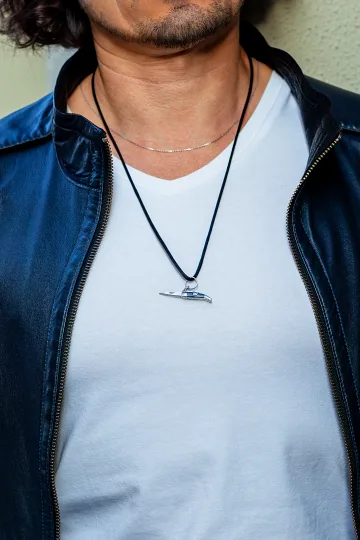




Surprising Facts About Amber
Amber looks like a simple warm pebble, and then keeps producing surprises. Here are a few that change the way the familiar material reads in the hand.
The Word Electricity Was Born from Amber
The Greek name for amber was elektron. When a seventeenth-century English physician and natural philosopher catalogued the substances that attract light objects after being rubbed, he named the property after amber, coining the Latin term electricus. The resin of ancient trees gave its name to an entire branch of physics and, in due course, to the whole electrical age. Every time a light switch is thrown, the word traces back to a lump of fossil pine resin on a Baltic beach.
Amber Floats
Of all the materials used in jewellery, amber is close to unique in refusing to sink in salt water. Its density is so low that a saturated brine pushes it to the surface. That single property explains why storms have thrown amber onto Baltic beaches for millennia and why it was gathered at the tideline for thousands of years before anyone dug for it. It is also the basis of the simplest authenticity test anyone can run at a kitchen table.
It Is Not Only Insects Inside
The familiar image is a fly or a mosquito caught in a drop of resin. Palaeontologists have recovered a great deal more than that: dinosaur feathers, tiny frogs and lizards, fragments of fungi, flowers of extinct plants, and bubbles of ancient atmosphere sealed at the moment the resin closed. Each of these is a direct photograph of a world that no longer exists, taken with a shutter speed of a few seconds and a storage medium good for a hundred million years.
It Burns, and It Smells of Pine
Bring a hot needle to amber and it melts and smoulders with a pleasant resinous, coniferous scent. In earlier centuries amber crumb was burned outright as incense in churches and houses, and powdered amber went into varnishes and medicines. The German name for the material, Bernstein, comes from a root meaning burning stone, which tells you exactly which property struck people first.
Amber Is Not Always Yellow
The natural palette is wider than most people expect: from nearly colourless and milky white through cherry, brown, and greenish to the rarest blue. Dominican blue amber looks like honey under ordinary indoor light and then flares a cold electric blue in sunlight, an effect produced by fluorescence and light scattering rather than by any dye. Green Baltic material, often called earth amber, gets its colour from plant debris trapped in the resin.
Amber Has Its Own Museums and a Legendary Room
Whole museums are devoted to the material in Kaliningrad, Gdansk, Riga, and Tallinn, and British collections including the British Museum hold significant early amber from Bronze Age burials. The most famous amber object of all, the Amber Room, was described as the eighth wonder of the world: its walls were faced entirely with mosaic worked from thousands of pieces of resin, and its disappearance during the Second World War remains one of the largest unsolved mysteries in the history of art.
It Is Millions of Years Old and Still Maturing
The boundary between fresh resin, copal, and true amber is a gradient rather than a line. Polymerisation proceeds slowly and continuously, which means that somewhere in the ground right now there are pieces that will be amber in another few million years. What you hold in your hand is a very long process caught partway through, still quietly changing, still losing volatiles, still darkening by imperceptible degrees across a human lifetime.
FAQ: Common Questions About Amber
Is amber a stone or a resin?
The fossilised resin of ancient conifer trees. It is an organic material, not a mineral.
How do I tell natural amber from a fake?
Combine tests: light weight, soft (not glassy) clarity, static charge, glow under ultraviolet, softness to a scratch. For expensive pieces with inclusions, ask for a laboratory report.
Why does amber glow under ultraviolet?
It contains organic compounds (resin acids) that luminesce under ultraviolet. The colour of the glow depends on origin: Baltic is more often bluish, Dominican can lean towards blue and red.
Is amber expensive?
It depends on the type. Ordinary yellow is affordable: a pendant costs about as much as a good dinner out. Rare colours (red, blue) are markedly dearer. Amber with a fine rare inclusion can cost as much as a week's holiday and more.
Which amber is best: Baltic, Mexican or Dominican?
Baltic is considered the highest quality and most versatile, Mexican is good for its red colour, and Dominican is famous for its rare blue. For everyday jewellery, Baltic is the usual choice.
Is amber afraid of water?
Not water; you can wash it in water. It is afraid of alcohol and solvents: do not clean it with alcohol, and keep it away from perfume and deodorant.
Does amber suit men?
Yes. Large pendants of dark or red amber in silver work well, as do bold rings and bead bracelets. A dark-metal setting (steel, titanium) looks more rugged.
Is amber safe for children?
Any beads or necklaces on a child carry a risk of strangulation by the cord and of choking on small parts, especially while asleep or unsupervised. Regulators (including the FDA and EU bodies) advise against infants wearing amber teething beads. Small loose beads must not be given to children.
Can scratched amber be restored?
Yes. Small scratches are removed by polishing, deep ones by re-polishing with a craftsman, which slightly reduces the stone.
How does copal differ from amber?
Copal is fossil resin too, but it is young: thousands to a few hundred thousand years old rather than tens of millions. Polymerisation has not finished in it, so it stays softer and more volatile. It gives itself away in several ways. A drop of acetone or even nail-varnish remover on an inconspicuous spot makes copal tacky within a minute while true amber is unaffected. A hot needle softens copal at a much lower temperature and gives a sweeter, less pine-like smell. Under ultraviolet copal usually fluoresces a strong, milky white rather than the blue of Baltic amber. Copal is also where most fake inclusions live, because it is easy to melt and reseal, which is why an unusually large and perfectly intact insect should always slow you down. Copal is a legitimate material sold honestly under its own name; the problem is only ever the label.
Why is some amber clear and some cloudy?
The difference is microscopic bubbles. Clear amber formed from resin that flowed slowly and released its gases before hardening. Cloudy and milky material is full of tiny bubbles of air and water, sometimes hundreds of thousands per cubic millimetre, which scatter the light before it can pass through. Neither is more genuine than the other, and neither is a fault. Historically the clear grades were prized in Western Europe while the opaque butterscotch and white grades were prized elsewhere, which is a matter of fashion rather than quality. Heat treatment can clarify cloudy amber by driving the bubbles out, which is a normal, disclosed practice rather than a deception.
Does amber darken over time?
It does, slowly and irreversibly, through oxidation at the surface. A piece worn regularly over decades deepens from pale honey towards a warmer orange or reddish brown, and antique amber is often several shades darker than it was when it was cut. A fine crazed weathering crust develops at the same time, which collectors read as a sign of age and value rather than damage. The change is faster in bright light and in dry heat, which is one reason not to leave amber on a sunny windowsill or near a radiator. If you want to keep a piece looking as it does today, store it in the dark, in a soft pouch, away from central heating.
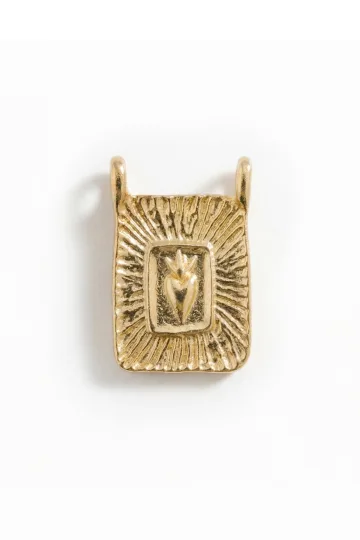
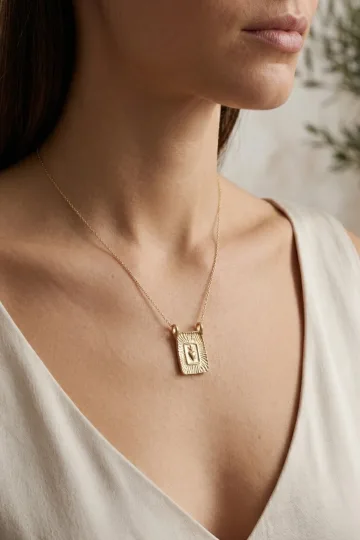
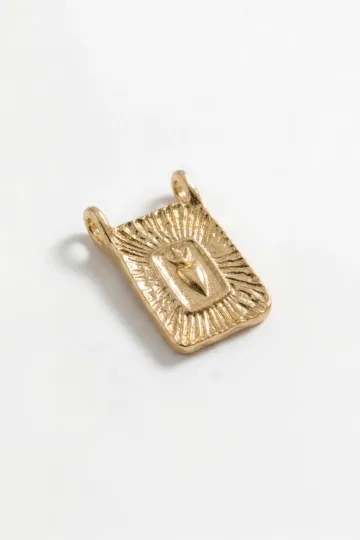
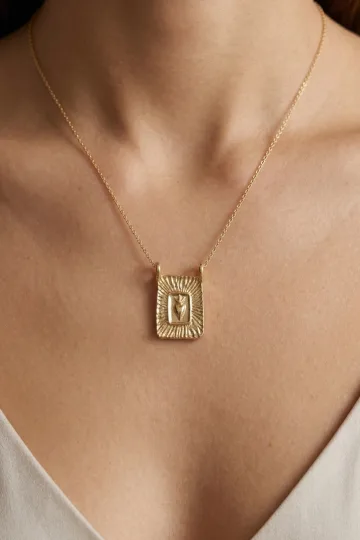
Wear the symbol, don't just read about it. These are in stock:

Conclusion
Amber is hardened resin tens of millions of years old: light, warm to the touch, with its own story in every piece. It comes both affordable and very dear, and serves equally for every day and for a collection. Choose honestly: check for authenticity, guard it from alcohol, sun and knocks, and amber will serve you long. And there is an extra pleasure in wearing it, because it is that rare case where a piece of jewellery literally carries within it a fragment of an ancient forest.
About Zevira
Explore our collection of amber jewellery. Each piece is a unique work of art with a story of its own.