Dominican Amber: the Sun Stone of the Caribbean
Inside a piece of Dominican amber no bigger than the tip of your finger, a whole mosquito, an ant or a flower can lie hidden, frozen in place twenty-five million years ago. This is not a mineral in the strict sense of the word, but fossilised tree resin, and within it often rests an untouched fragment of a forest that no longer exists anywhere on the planet. That is why amber is so often called not a stone but a time machine you can wear around your neck.
What Dominican amber actually is: the chemistry and physics of the stone
Amber is not a mineral but an amorphous organic substance: the fossilised resin of ancient trees that has gone through full polymerisation. It has no crystal lattice and no fixed chemical formula. The bulk of it is carbon, hydrogen and oxygen in shifting proportions, plus resin acids, terpenes and a small share of succinic acid. Because of this, amber is classed as a mineraloid, a natural body of mineral origin but without a crystalline structure.
Composition, hardness and density
On the gemstone scale of hardness, amber sits right at the bottom: 2 to 2.5 on the Mohs scale. That is roughly the hardness of a fingernail and a touch harder than gypsum. Any harder stone sharing the same jewellery box will scratch it. The density of amber is unusually low for a gem, around 1.05 to 1.10 g/cm³. This single figure has a very practical use: amber sinks in fresh water but floats in a saturated salt solution, and the most reliable home test for authenticity is built on exactly that.
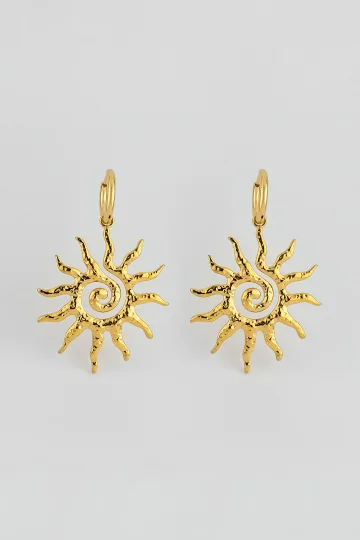
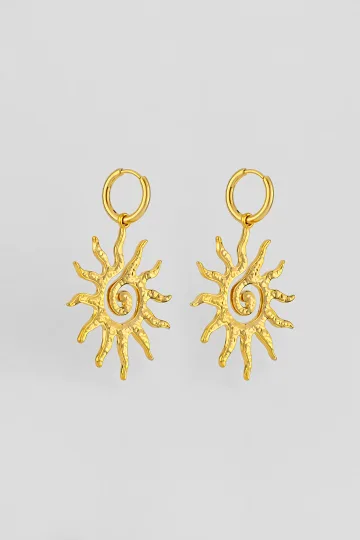
Wear the symbol, don't just read about it. These are in stock:



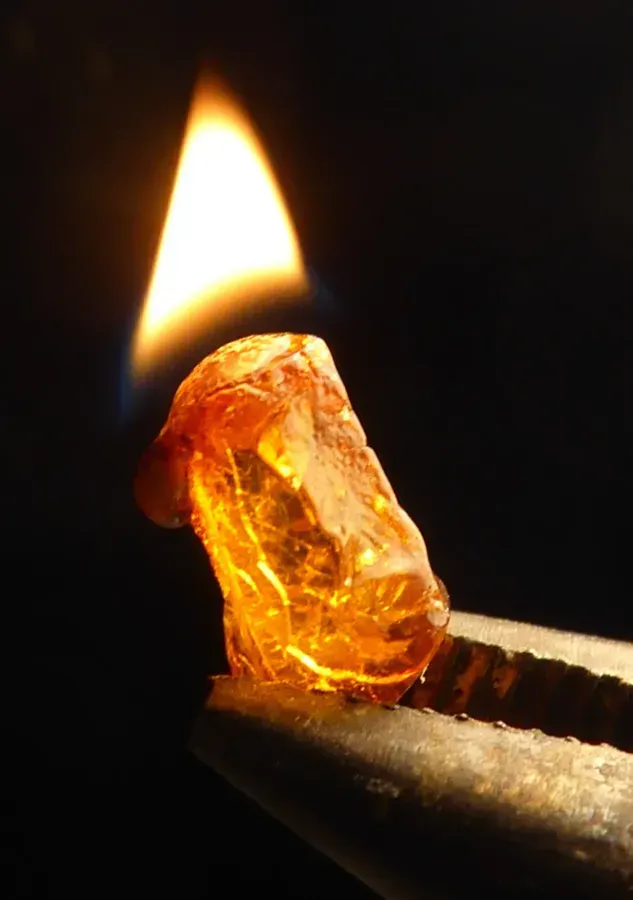
Its melting point is low. At 150 to 180 °C amber already softens, and under strong heat it burns with a bright, sooty flame, giving off a resinous, pine and vanilla scent. This too is a diagnostic sign: plastic smells of burnt synthetics, while copal and pressed amber give off a sharper chemical note.
Optics: refractive index, lustre, fluorescence
Amber is amorphous, so it is optically isotropic. It does not show birefringence and gives none of the pleochroism you find in crystalline stones. The refractive index is modest, around 1.54, and it has none of the fire and dispersion of a diamond. The lustre is resinous and soft, slightly waxy on a polished surface. Yet amber responds vividly to ultraviolet light: Dominican amber glows blue, more rarely greenish, thanks to the aromatic compounds in the resin. It is this bluish fluorescence that gives rise to the famous blue amber effect discussed below.
The ancient Greeks prized another property: rubbed against wool, amber becomes electrically charged and attracts light straws and hairs. The Greek word for amber, elektron, eventually gave electricity its name.
Succinic acid and the smell of resin
Succinic acid was first isolated from amber itself, by distillation, which is exactly where its name comes from: succinum is the Latin word for amber. In Baltic succinite the content runs to several per cent by weight, and it is high enough that the older chemical literature treats Baltic amber as a source material. In Dominican amber it is markedly lower, and this is one of the genuine chemical differences between the two stones rather than a marketing distinction. It also quietly undermines a good deal of the wellness claims attached to amber in northern Europe, since a stone with little succinic acid in it cannot plausibly be doing what those claims say a stone rich in succinic acid does.
The smell of warmed resin, that pine and vanilla note, comes from volatile terpenes and resin acids that never entirely escaped across millions of years of polymerisation. A freshly polished piece smells strongest, because cutting exposes material that has not yet oxidised. Over time the surface oxidises and the scent fades, until you rub the stone between your fingers or warm it in a pocket and it returns. This is worth knowing because it is also a test: a warmed piece of amber smells of pine forest, a warmed piece of plastic smells of a workshop.
Colour and clarity as a consequence of chemistry
Clarity depends on how clean the resin was at the moment it hardened. Where there were almost no bubbles and no suspended matter, light passes straight through and the stone reads like glass with a warm tone in it. Microscopic air bubbles scatter light and produce a milky haze, which is why cloudy amber is cloudy: not an impurity in the chemical sense, just trapped air at a scale too small to see individually. Plant dust and soot from ancient forest fires darken the resin through brown to nearly black.
The yellow and honey tones themselves come from oxidised resin acids. The rarer reds and oranges are associated with further oxidation, often at the surface of a piece that had already set, which is why red amber frequently has a graded colour: deeper at the rind, paler towards the centre. Understanding this explains something that puzzles new buyers. Two stones cut from the same lump can differ visibly in colour, because one came from nearer the original outer surface than the other. It is not a sign of mixed material or of dyeing; it is a record of where in the drop of resin that particular slice was sitting.
How amber forms in nature
A living tree exudes resin to defend itself against insects, fungi and damage to its bark. Drops of resin run down the trunk, fall to the ground and pick up everything that sticks along the way: small creatures, pollen, leaves, scraps of bark. Sediment then buries the resin under sand, clay and silt. Beneath those layers, cut off from oxygen, polymerisation begins: scattered organic molecules cross-link into long chains. The resin hardens, loses its volatile components, darkens and grows denser.
The process stretches across millions of years and runs through three rough stages. First the sticky resin turns into a hard but still immature material, copal. Then the last of the volatile substances escape, and the mass becomes dense and semi-transparent. Finally polymerisation is complete, and you get amber: chemically stable, insoluble in alcohol and acetone, unlike young copal. This is why age decides everything here. Dominican amber is about 25 million years old, and over that time the resin has become a fully fossilised material.
Origin and geology of Dominican amber
Dominican amber is the result of a rare coincidence of conditions: the right tree, a humid tropical climate, the rapid burial of resin and calm geological layers that preserved it down to our own day.
The tree that gave us amber
The source of almost all Dominican amber was an extinct tree, Hymenaea protera, a large tropical species related to the modern legume genus Hymenaea that still grows in Central and South America today. In the ancient humid forest, under constant pressure from insects and fungi, this tree produced resin especially abundantly. The resin was viscous and hardened quickly on the surface, and that determined the chief trait of Dominican amber: high transparency and a rare wealth of well-preserved inclusions.
The geology of the island
Hispaniola is a geologically active island, raised at the meeting point of the North American and Caribbean tectonic plates. Around 25 million years ago, in the late Oligocene and early Miocene, a humid tropical forest covered the territory of what is now the Dominican Republic. The resin of Hymenaea gathered in coastal and river sediments, then was buried under layers of sandstone and siltstone. Later, tectonic movements lifted these layers into the mountains of the northern coast, where amber is mined today.
Why insects survive so well inside it
When an insect fell into fresh resin, it was instantly coated and the air was driven out. Without oxygen, bacteria and fungi could not begin decay. The resin then hardened, forming an airtight capsule around the body, and the chitinous shell, sometimes even finer tissue, was preserved for millions of years. The viscosity of Hymenaea resin and the speed with which it set gave Dominican amber an unusually high proportion of whole, clearly visible organisms, more than the amber of most other regions. For a closer look at how amber with inclusions keeps whole ancient ecosystems intact, it is worth reading on its own.
The deposits
Amber is mined in several districts of the island, and each one yields a stone with its own character.
- The Cordillera Septentrional, Puerto Plata Province (the La Cumbre district), the main and best-known source. Most of the transparent amber and almost all the scientifically significant finds with inclusions come from here. Mining is artisanal: narrow tunnels dug by hand into the mountains by local families.
- The eastern mines (the El Seibo district), deposits in a younger sedimentary formation. The stone is a little more brittle and needs careful handling, but large clear pieces turn up among it. These deposits are growing in importance as the western ones are exhausted.
- Other sites in the north produce dark, smoky amber that more often goes into jewellery than into science.
Most Dominican amber is mined by hand, and the road from mine to display case passes through many hands: miners, sorters, polishers, wholesalers, exporters. This is one reason a good stone costs so much.
How Dominican amber differs from the rest
Amber is found in many parts of the world, but the conditions of its formation differ everywhere.
- Baltic amber, older at around 35 to 50 million years, formed from the resin of conifers in a colder climate. It is often cloudier, holds more succinic acid, and inclusions are rarer.
- Burmese amber (burmite), the oldest at around 99 million years, of Cretaceous age, often contains unique prehistoric organisms, but its extraction is tied to the ethical and political problems of the region.
- Mexican amber, the closest relative of the Dominican kind: also from Hymenaea resin, of similar age, also transparent and rich in inclusions. Telling the two apart can be hard even for a specialist.
Dominican amber occupies its own niche: old enough to hold organisms of fully extinct species, yet not molecularly degraded, transparent and rich in inclusions.
Customer reviews
Zevira is a real jewellery shop. Genuine payments, deliveries and customer thank-yous.
🥰🥰🥰 gracias

Ok, ¡gracias! 🙂

Honey amber is a creature of daylight and bare collarbones. Bury it under a work collar and you have murdered the sun. Don't.
What to wear with Dominican amber
I always treat amber as the accent, never the backdrop, and I build the outfit so the stone has room to catch fire. Here is what I recommend, occasion by occasion.
What do I wear with amber every day? For everyday I recommend a small transparent pendant in a honey tone on a thin silver chain. It gets on with a white shirt, a linen dress, a simple chunky-knit jumper. Light transparent amber has a daytime character; it lifts a calm wardrobe and sits best on a plain, light background: white, beige, grey, muted green.
Does it work at the office? It does, if you keep it measured. I suggest a restrained form: stud earrings with a small inset or a neat silver ring. One piece, not three. A closed collar or a shallow neckline leaves the stone its space, and it never quarrels with workwear.
What should I wear for the evening? For evenings I choose dark, red and smoky amber; under artificial light it grows deeper and more expressive. It meets a rich-coloured evening dress (wine, emerald, black) most precisely. A V-neckline or a bare neck lengthens the line and brings the stone forward.
How do I wear the rare blue amber? Blue amber I save for special occasions. It flares with a cold glow in direct sun and over a dark background, so I give it a stage: one large piece in a setting, few other pieces, and a dark top the glow can read against. This is the case where a single stone carries the whole look.
Which metals and stones pair with it? For metal, amber keeps warm company: yellow gold reads as unity, silver gives a soft contrast and brings out the honey. For neighbours I suggest rock crystal (a light contrast), carnelian (a warm palette) and pearl (a kindred organic material). Next to a ruby or an emerald, though, amber loses; do not put them together.

Turn on your camera, pick earrings, a pendant or a ring, and see the piece on yourself in real time.
Switch items in one tap.
Everything runs in your browser: no photo or video is ever uploaded.
The history of Dominican amber
The story of this stone is built from concrete eras, and it matters to separate the well-documented from the later legends.
The island's first peoples
Long before the Europeans arrived, amber was known and valued by the indigenous peoples of the Caribbean. Archaeological finds on the northern coast reveal amber pendants with holes drilled by hand: drilling was done by spinning a sharpened bone with sand as an abrasive, and the work took days. Amber was linked to the sun because of its warm colour, worn as ornament and as a mark of status. These are well-attested facts; everything else sometimes added about rituals and trance is later invention without any support.
Colonisation and trade
After 1492 amber entered the trade exchange between the islanders and Europeans. A record survives that amber ornaments passed from hand to hand alongside European goods. From there the stone flowed into Europe, where it ended up in the cabinets of curiosity of the nobility, rooms crammed with marvels from across the world. A transparent piece with an insect inside was a coveted exhibit, an object of pride and scholarly curiosity.
Amber and the medicine of the past
In medieval and Renaissance Europe amber was prescribed for diseases of the throat and held to be a remedy for a host of ailments. The reasoning was naive: the yellow stone was linked with gold and with health. Modern science has found no healing mechanism in amber, more on which in the section on symbolism.
The age of science
As ideas about evolution and the geological age of the Earth spread, amber gained a new standing as a piece of physical evidence. If the insect species inside it differed from the living ones, then life had changed over time. By the end of the nineteenth century, describing new fossil species from amber had become a respected branch of science, and Dominican amber was prized especially for the clarity with which it preserved organisms.
The twentieth century
Systematic industrial mining in the north of the island began in the middle of the twentieth century, once geologists had described the northern deposits. Before that, Dominican amber remained little known beside the Baltic kind. Interest in it rose sharply after popular culture fixed the image of amber that holds ancient DNA. The image is beautiful but fantastical: DNA breaks down over far shorter spans, and recreating a living organism from it is impossible.
Upload a photo of your pet, someone you love, or an object. We'll build a 3D model and hand-cast it in pewter.




Types and shades of Dominican amber
The words Dominican amber call up the image of a transparent yellow-honey stone, but the real palette is much wider. The shade depends on the makeup of the resin, on its impurities and on the conditions in which it hardened.
The main colours
- Yellow and honey, the most common and classic. Transparent, it lets light through beautifully and shows off inclusions well.
- Brown and smoky, where the resin hardened in a setting rich in plant remains; fine particles scatter the light, and the stone is semi-transparent or opaque. Prized in jewellery for its deep colour.
- Red, arising from the oxidation of organic compounds, often linked to stress in the tree. Rarer than yellow.
- Orange, an intermediate shade between yellow and red.
- Milky (waxy), holding a multitude of tiny air bubbles and looking cloudy.
- Black, saturated to the limit with organic material and completely opaque.
The rare colours
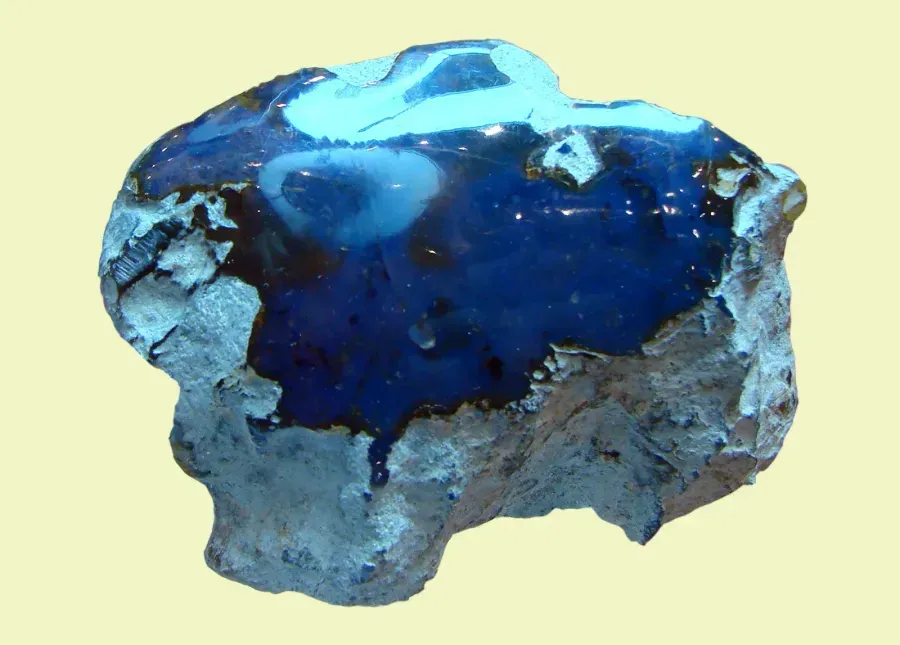
Blue amber, the calling card of the Dominican Republic and one of the rarest kinds of amber in the world. In ordinary light it looks like plain yellow, but against a dark or blue background, and especially under direct sun, it lights up with a cold blue glow. This is not a pigment but fluorescence: aromatic compounds in the resin absorb ultraviolet and re-emit it as blue. The Dominican Republic is generous with rare blue gems in general: it is the only place that also mines larimar, the blue variety of pectolite. Green and violet amber are rarer still than blue, and they too are tied to special luminescent compounds.
Fluorescence and optical effects
The blue glow under ultraviolet is valued both for its beauty and as an important diagnostic sign. Plastic imitations usually do not glow at all, or glow differently, with a flat, dead tone. Natural amber also shows internal effects: thin disc-shaped cracks (the so-called spangles or sun spots) that appear as the stone shrinks, and the soft waxy lustre of a faintly oxidised surface. All of these are signs of natural origin.





Blue Dominican amber: why it glows
Blue amber deserves a section of its own, because more confusion surrounds it than any other aspect of the stone. It is not a pigment and not a rare impurity. It is an optical effect that depends entirely on how the resin interacts with light, and once that is clear, most of the myths dissolve on their own.
What actually produces the blue
The resin of the Hymenaea tree contains aromatic hydrocarbons, chiefly compounds of the perylene family. These absorb the ultraviolet part of the spectrum, which the eye cannot see, and re-emit it as visible blue light. The stone itself stays yellow in its own body colour throughout. The blue glow sits, in effect, on top of the yellow, and it becomes visible only when enough ultraviolet is falling on the stone and the background behind it is dark enough not to drown out a fine, cold shimmer. Put the same stone on a white tablecloth and the effect vanishes; put it on black velvet and it returns. Neither situation says anything about the stone's quality, which is worth remembering when a seller stages a demonstration.
Daylight against an ultraviolet lamp
Under a UV lamp, practically any Dominican amber glows blue, and the only difference between stones is brightness. Genuinely blue in ordinary sunlight, with no lamp at all, is a much smaller share of the material. The reason is straightforward: the solar spectrum reaching the ground carries relatively little ultraviolet, so the re-emitted blue is only strong enough to see when the concentration of fluorescing compounds in the resin is high. Stones that burn blue in daylight over a dark surface are therefore valued far above the rest, and the honest way to test a blue amber is in the sun rather than under a lamp. A seller who will only show you the effect under UV is showing you something almost every Dominican stone can do.
Where resin like this comes from
The abundance of aromatic compounds is generally attributed to forest fires in the ancient Hymenaea woodland and to partial charring of the resin under heat. The island has been and remains a geologically restless place, and the combination of one particular tree, a tropical climate and thermal exposure produced a resin that has very few equivalents anywhere else. Similar bluish amber is occasionally found in Mexico and in Indonesia, but the Dominican material remains the benchmark for purity and for the strength of the effect. This is one of the few gemstone claims where the geographical exclusivity is real rather than a trade convention.
The green and crimson sheen
Alongside the blue there are stones with a greenish glow, and a very few with a violet or crimson cast. Green usually appears in darker, more saturated resin, where the fluorescence combines with the body colour of the stone itself to shift the result down the spectrum. These varieties are scarcer even than blue, so they turn up in jewellery only rarely and remain more a collector's subject than a market one. If you are offered green Dominican amber at an ordinary price, the sensible assumption is that it is dyed material or glass rather than a piece of extraordinary luck.
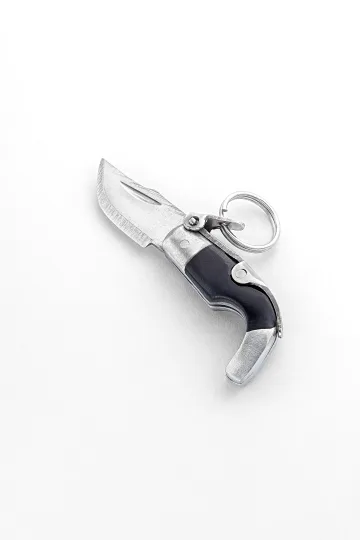
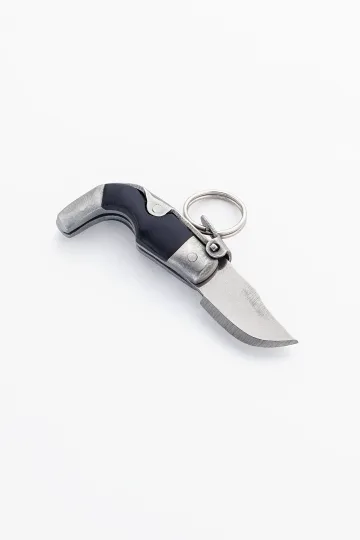
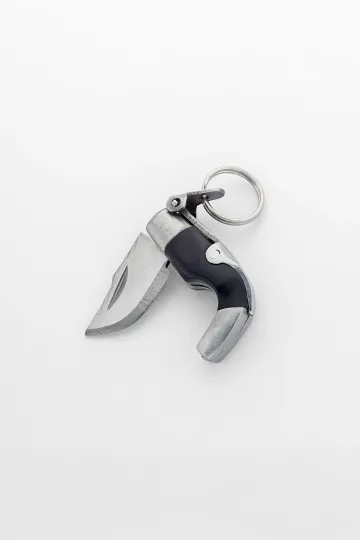
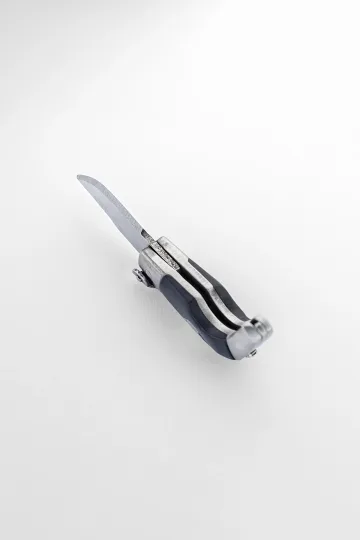
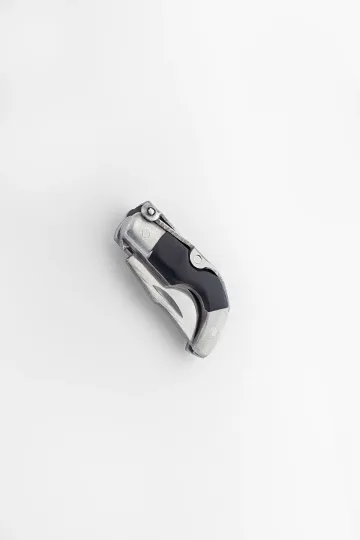
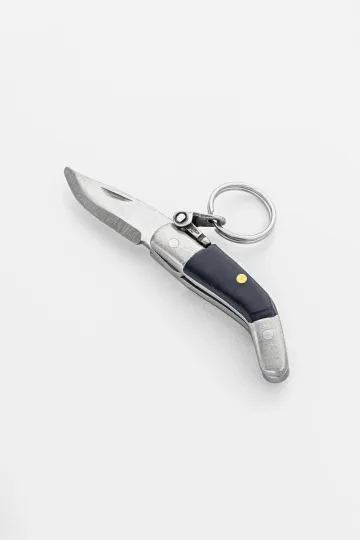
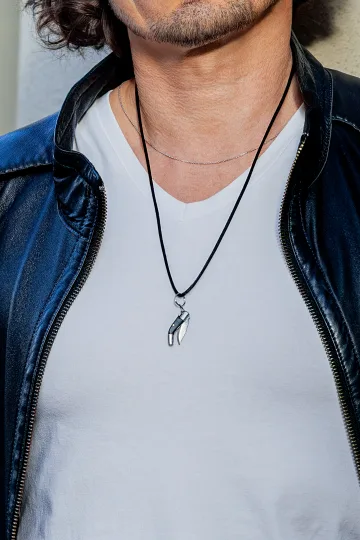
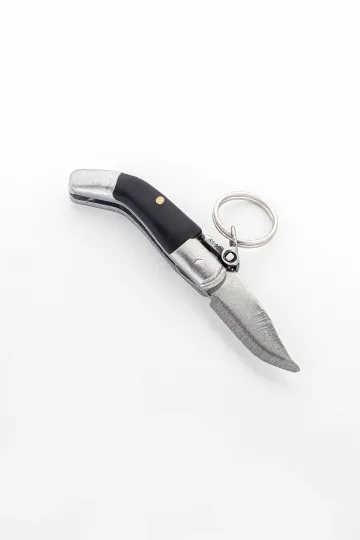
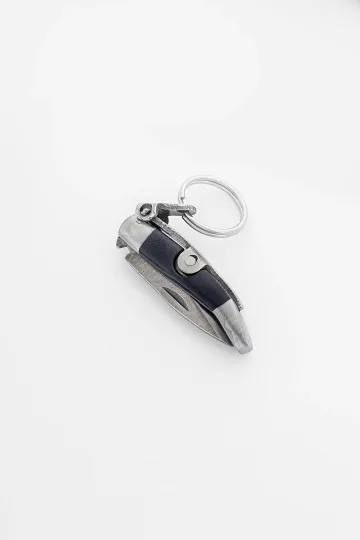
CAPAORA mini knife pendant
The 18th-century Spanish navaja in miniature: 40 mm of stainless steel, a real folding mechanism and a Palanquilla lock that clicks. An affordable gift to remember.
Authentic · Ships from Spain · 14-day returns
Inclusions: ancient life inside the stone
The chief scientific value of Dominican amber lies in its inclusions. This is the point at which the stone stops being an ornament and becomes a source of knowledge about a world that no longer exists anywhere else.
What is found inside
The commonest finds are small flies: mosquitoes, midges and biting midges, which were drawn into the resin in far greater numbers than anything else. Less often there are ants, termites, beetles, spiders, mites, butterflies and winged forms of insects that have no living descendants. Beyond animals, the resin preserves pollen, spores, fragments of flowers, leaves and moss, and even droplets of water and bubbles of ancient air. From these finds researchers have reconstructed the appearance of an entire late Oligocene tropical forest, down to which plants flowered when and which insects visited them.
Why Dominican inclusions are exceptional
Hymenaea resin was transparent and hardened quickly, so an organism caught in it stayed visible in full, without distortion and without a haze around it. Under a microscope the veins in the wings, the hairs on the legs and the facets of the eyes can all be made out. For a palaeontologist this is close to an impossible luxury: fossils in rock are usually flattened and incomplete, whereas here the creature has set in three dimensions, as though in glass. A considerable number of species are known to science solely from Dominican amber and from nowhere else on Earth.
Scenes of behaviour
The rarest and most costly pieces preserve not a single complete insect but a frozen scene of behaviour. Dominican amber has yielded spiders caught in the act of building a web, insects in a mating pair, ants dragging prey, a predator with its victim in its grip. Such specimens are a snapshot of living nature tens of millions of years old, and they go to museums and serious private collections rather than into jewellery. When one appears at auction it is described and photographed the way a painting would be, because that is effectively what it is.
Telling a real inclusion from a fake
In fakes the insect is usually modern, whole and suspiciously large, embedded in clear plastic or in melted copal. Several signs give the deception away. The insect looks too fresh and too vivid. The bubbles around it are perfectly round, whereas in natural resin the flows and bubbles are stretched out by the movement of the resin. The specimen sits precisely in the centre, which almost never happens by chance. Genuine inclusions are more often small, incomplete, lying at an arbitrary angle, and sometimes surrounded by fine shrinkage cracks. An expensive specimen with an inclusion is worth buying only with a specialist's report, and any reputable dealer will expect you to ask for one.
How to tell real amber from fakes and lookalikes
The amber market is full of imitations: dyed plastic, synthetic resins, pressed chips passed off as a solid stone, and copal sold as amber. A few simple checks weed out most fakes.
- Salt solution. Dissolve about a spoonful of salt in a glass of water. Real amber floats (its density is lower than that of salt water), while most plastics sink. The most reliable home test.
- Ultraviolet. Dominican amber glows blue or greenish. Plastic more often fails to glow, or gives an alien tone.
- Scent from friction. Rub the stone vigorously with a wool cloth until it is warm and bring it to your nose: real amber gives a resinous, pine and vanilla aroma. No destructive heating is needed for this.
- Static charge. Rubbed amber attracts small straws and hairs; plastic does not behave this way.
- The solvent test gives away copal. A drop of alcohol or acetone makes the surface of young copal sticky; mature amber resists it.
- Pressed amber is betrayed under magnification by elongated, flowing-looking bubbles and blurred boundaries between the fused particles. In a solid stone the bubbles are round and the structure uniform.
The main giveaway of fake blue amber is an even glow throughout the whole volume instead of natural fluorescence against a blue background and under ultraviolet. A costly stone is best bought only from trusted sellers and, where possible, with a certificate.
Leave your email, we'll send your discount code. No spam, unsubscribe anytime.
The code arrives by email, valid on your first order.
Caring for amber
Amber is soft and more sensitive to its surroundings than most gems, so care matters more than it does for hard stones. A hardness of 2 to 2.5 means a simple thing: amber scratches easily and does not enjoy heavy wear.
Cleaning
It is enough to wipe the stone with a soft, dry cloth. If needed, use warm (not hot) water with a drop of mild soap and dry it at once. No abrasives, no baking soda, no tooth powder, no stiff brushes and no household chemicals; they cloud and scratch the surface. Perfumes, hairsprays and alcohol-based lotions eat into amber: put the piece on only after the cosmetics have dried on your skin.
Storage
Keep amber apart from hard stones and metal, in a soft cloth pouch or a separate compartment of a jewellery box. Avoid direct sun, the nearness of radiators and very dry air: drying out leads to clouding and a web of fine cracks. Do not keep the stone for long in a sealed plastic bag; it needs moderately humid air. And protect amber from sharp swings in temperature: it is these, rather than heat or cold themselves, that most often crack it.
How hardness affects wearability
Because of their softness, rings and bracelets with amber wear out fastest, as the hands are in constant contact with surfaces. Pendants and earrings last longer. For frequent wear, choose amber in a protective setting where the metal takes the knocks, and remove the piece when working with your hands, during sport and around water. For an everyday engagement ring, amber is not the best choice: a hard stone forgives carelessness, amber does not.
The symbolism of Dominican amber: what stands behind it
Amber has a rich cultural symbolism, and it is worth knowing as part of the history of jewellery rather than as a guide to action. In various traditions amber was linked to the sun because of its warm colour, held to be a stone of warmth, protection and memory. A Greek myth called it the frozen tears of the sun god. In medieval Europe it was prescribed for diseases of the throat.
Here it is worth speaking plainly: amber has no proven healing or magical effect. Modern science has found no biochemical mechanism through which the stone could affect health. The succinic acid in its makeup does indeed exist, but in a piece of jewellery it is not released in meaningful amounts and does not turn amber into a medicine. The folk practice of amber teething necklaces for infants is not approved by mainstream medicine and is dangerous because of the risk of choking and swallowing.
This is no reason to belittle the stone. A genuine ancient history, tangible warmth and an inimitable beauty are enough to love amber without crediting it with things it does not do.
Amber in jewellery: types of pieces
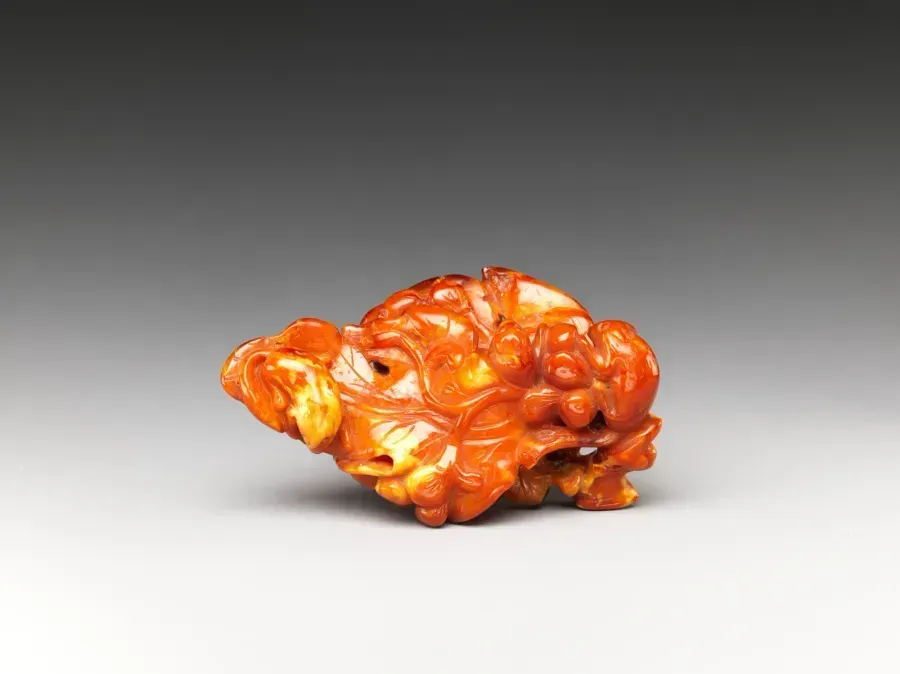
Pendants are the most common format. A pendant with an inclusion is unique: inside the transparent amber an ancient organism is visible, and no two are alike. Pendants without inclusions look cleaner and calmer. On a thin silver chain such a pendant makes little contact with surfaces and so wears out the most slowly.
Bracelets come in two types: strung amber beads and a large piece in a metal setting. Beads are the traditional option; a setting protects the stone and suits those who value the minimal. A bracelet on the wrist takes more knocks than a pendant, so a protective design is preferable for it.
Rings with amber are noticeable and expressive, but they are precisely the ones that wear out fastest. To make a ring last longer, choose a setting in which the stone is recessed and shielded by metal rather than standing proud of the surface.
Earrings and brooches. Stud earrings with a small inset look restrained, drop earrings more expressive. Amber brooches are rarer and so look especially individual, bringing a warm accent to a coat or a jacket.
The material itself in jewellery is covered in detail in a separate article on amber in jewellery.
Send a friend a discount code, they save on their first order.
Facts that surprise
Dominican amber has accumulated a good many stories, and some of them are true to a degree that makes them sound stranger than anything invented.
A famous film and a mosquito in resin
The idea of ancient DNA recovered from the blood of an insect trapped in amber was made famous by a well known adventure film about a park of revived dinosaurs. The choice of stone for that image was not accidental: clear amber with whole insects inside it is the one material that genuinely looks like the past held still. Science has since established firmly that the trick cannot be repeated, because DNA does not survive anything like that long. It degrades into unreadable fragments within a few hundred thousand years under the best conditions, and amber is not the best conditions. The lasting consequence was commercial rather than scientific: interest in Dominican amber rose so sharply after the film that prices for good pieces with inclusions jumped and have never really come back down.
Amber that glows blue in the sun
Most people are certain that amber comes only in warm tones. Blue Dominican amber breaks that assumption completely: in bright sunlight over a dark surface, an ordinary looking yellow piece flares with a cold blue light. The effect is so unexpected that a first-time viewer is hard to convince that this is the same stone that looked like honey a second earlier. It is one of the very few gemstone demonstrations that reliably surprises people who thought they knew what gemstones do.
The word electricity comes from amber
The ancient Greeks noticed that amber rubbed against wool attracts straws and hairs. Their word for the stone, elektron, became the root of the word electricity many centuries later, by way of the sixteenth-century English physician William Gilbert, who coined the Latin term electricus for substances that behave the way amber does. The whole of modern electrical engineering therefore carries the name of hardened tree resin.
Amber is lighter than it looks
Pick up a large piece of amber and the lightness is genuinely startling. The density of the stone is so low that it floats in salt water, whereas almost every imitation sinks. The most reliable home authenticity test rests on this property, and so does the simplest one of all: among glass and stone beads, amber gives itself away by weight the moment you hold it.
Species known only from amber
Dozens of species of insects and other small organisms are known to science exclusively from finds in Dominican amber. They appear in no rock formation and in no other deposit anywhere. Without those bodies set in resin we would have no idea whatever that they had existed, and every new clear piece coming out of the mountains potentially holds a species that has not yet been described. This is one of the few situations in which a jewellery material and a research material are literally the same object competing for the same lump of stone.
Mines dug by hand
Most Dominican amber is extracted not by machinery but by people with simple tools. Narrow tunnels run through the mountains of the north of the island, dug by local families in conditions that are demanding and often dangerous. The stone is dug out of the mountain by hand, and every clear piece with an inclusion is a prospector's luck rather than the output of a production line. This is worth knowing when you compare the price of amber with the price of a machine-mined stone: the labour behind it is of a different kind entirely.
The island is generous with blue stones
Blue amber is not the island's only blue rarity. This is the only place in the world where larimar is mined, the soft blue variety of pectolite. A small Caribbean island has therefore given the planet two unique blue gems at once, and both of them are tied to the same turbulent volcanic geology.
Buying it as a gift? Each one arrives ready to give.
 A branded Zevira box and a little card come with every order.








Frequently asked questions about Dominican amber
How old is Dominican amber?
About 25 million years: it formed in the late Oligocene and early Miocene from the resin of the extinct tree Hymenaea protera. For comparison, Baltic amber is older (around 35 to 50 million years), and Burmese amber, at around 99 million years, is of Cretaceous age.
Is amber a precious stone?
In the strict geological sense amber is not a mineral but a mineraloid: fossilised organic resin without a crystal lattice. In jewellery classification it is grouped with the organic gems, like pearl and coral. It is considered precious in the everyday sense for its rarity, beauty and history.
How does Dominican amber differ from Baltic amber?
The two differ in age, in clarity and above all in what is inside them. Dominican amber is younger, at around 25 million years against the 35 to 50 million years of Baltic succinite, and it comes from a different tree in a different climate: a tropical Hymenaea rather than the conifers of the ancient northern forest. That difference in origin shows up directly in the material. Hymenaea resin was clearer and set faster, so Dominican amber is usually more transparent and far richer in well-preserved inclusions, with the specimen visible whole and in three dimensions rather than crushed or clouded. Baltic amber is older, more often milky, and holds a good deal more succinic acid, which is why the northern folk-medicine tradition attached itself to it rather than to the Caribbean stone. Under ultraviolet the Dominican material glows a brighter blue. By eye, on a single ordinary yellow bead with nothing inside it, even specialists sometimes hesitate between the two, and the honest answer is that a small plain piece often cannot be sourced by sight alone.
What is blue amber and why is it so rare?
Blue amber is mined almost exclusively in the Dominican Republic. In ordinary light it looks yellow, but under direct sun and against a dark background it lights up with a cold blue glow. This is fluorescence due to rare aromatic compounds in the resin, not a pigment. Reserves are extremely limited, so large clear pieces are among the most valuable kinds of amber.
Can you extract DNA from an insect in amber and bring back ancient creatures?
No. DNA breaks down over far shorter spans, and after millions of years only short fragments remain. Scientists can read individual stretches of ancient genomes with advanced methods, but reconstructing a complete functional genome and creating a living organism is impossible. The famous film plot on this theme is fiction.
Why do insects survive so well in Dominican amber?
The resin of Hymenaea was viscous and hardened quickly, instantly coating the organism that fell into it and driving out the air. In the airtight, oxygen-free environment decay does not begin, and the body is preserved for millions of years with fine detail.
How does amber differ from copal?
Copal is the same tree resin, but young: it is thousands or hundreds of thousands of years old and has not gone through full polymerisation. Copal is softer, melts more easily and dissolves in alcohol and acetone. Mature amber resists these solvents. Unscrupulous sellers sometimes pass copal off as amber.
Does amber glow under ultraviolet?
Yes. Under a UV lamp Dominican amber glows blue, more rarely greenish, because of the fluorescent compounds in the resin. This is a handy sign of authenticity: most plastic imitations glow differently or do not glow at all.
Does amber darken over time, and is that bad?
Over time amber naturally darkens from the slow oxidation of the surface and takes on a deeper shade. This is the patina of age, which many people value. The only bad thing is sudden clouding and cracking, the result of direct sun, overheating and swings in temperature.
Can you wear amber every day?
You can, but with caveats. Because of its softness, rings and bracelets scratch quickly, while pendants on a long chain and earrings wear out more slowly. For frequent wear, choose amber in a protective setting and remove the piece when working with your hands, during sport and around water and chemicals.
How do you clean amber at home?
Wipe it with a soft cloth, and if needed with warm water and a drop of mild soap, then dry it at once. No abrasives, no baking soda, no stiff brushes and no household chemicals. Leave a deep re-polish of a scratched or clouded stone to a craftsman: at home it is easy to take off too much and damage an inclusion.
Does real amber sink in water?
In fresh water it sinks, as do many fakes, so that test is useless. But in a saturated salt solution (about a spoonful of salt to a glass of water) real amber floats, because its density is lower than that of salt water. Most plastic imitations sink in it.
Is amber suitable for people with sensitive skin?
Amber itself is inert and usually does not irritate the skin. More often it is the setting or the chain that causes an allergy, for instance a cheap alloy containing nickel. Choose amber in 925 silver or gold and remove the piece if you notice redness.
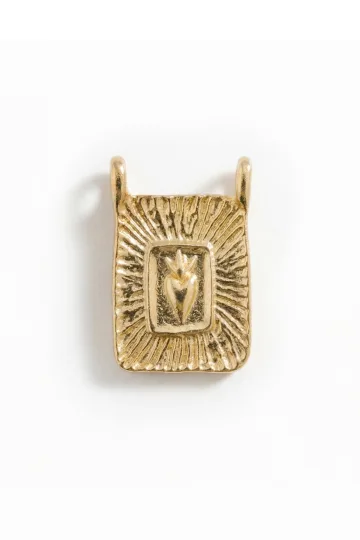
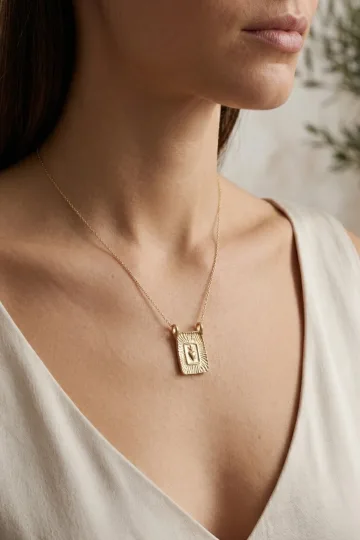
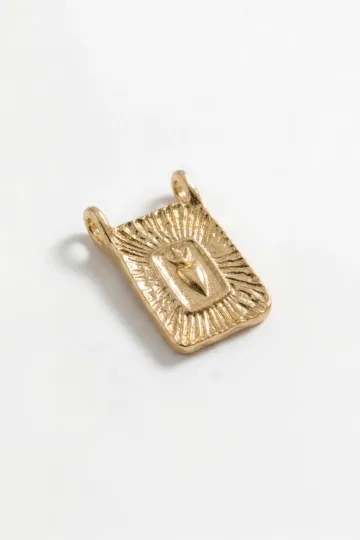
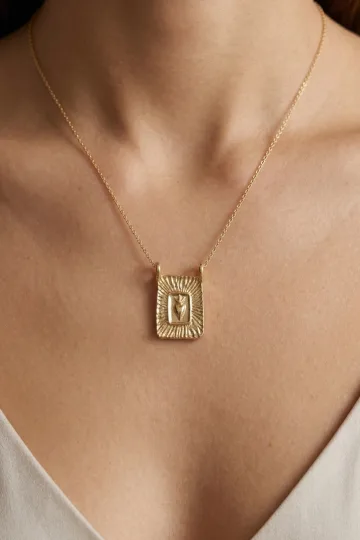
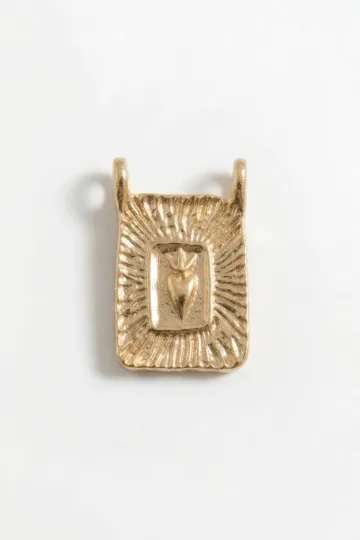
Wear the symbol, don't just read about it. These are in stock:

About Zevira
Zevira makes jewellery in the artisan tradition of Albacete, Spain. Dominican amber, ancient frozen resin with a real history inside, is exactly the material worth working by hand for: every stone is unique, and what matters to the maker is to reveal it, not to hide it in a templated setting.
What you can find with us on the subject of amber:
- Pendants with transparent amber in honey and golden shades on a thin silver chain
- Minimalist pieces where the amber sits in a protective setting and is fit for frequent wear
- Stud and drop earrings with amber insets in warm tones
- Rings with an amber inset in 925 silver for everyday and evening looks
- Combinations of amber with rock crystal, pearl and carnelian in the spirit of a warm palette
- Pieces that become a family heirloom and are passed down through generations
Every piece is made by a craftsman by hand, with the option of personal engraving. 925 silver and 14 to 18K gold.