Bee Jewellery Meaning: Why the Bee Is the Most Powerful Symbol You Can Wear
Introduction
A friend of mine has a tiny gold bee pinned to the inside of her jacket lapel. Not where anyone can see it. She told me she got it after a year that nearly broke her: a divorce, a career change, and a move across the country, all within twelve months. She did not choose a heart, or a cross, or a star. She chose a bee.
When I asked why, she said something that stuck with me: "Because bees do not stop. They just keep building."
That conversation sent me down a rabbit hole. I started looking into the history of the bee as a symbol, and what I found was staggering. This tiny insect has been revered by more civilisations, for more reasons, across more centuries than almost any other creature on earth. Egyptian pharaohs put it on their crowns. Greek priestesses took its name. Napoleon covered his coronation robe in golden bees. The Freemasons built an entire moral philosophy around the beehive.
This is the full story of the bee in jewellery and culture: where it came from, what it means, and why it keeps showing up on the necks, wrists, and fingers of people who want to carry something meaningful.
Wear the symbol, don't just read about it. These are in stock:






What makes the bee so special as a symbol
Most animal symbols carry one or two meanings. The lion is courage. The dove is peace. The owl is wisdom. Simple, clean, easy to pin down.
The bee is different. It carries at least half a dozen major symbolic meanings, and they do not contradict each other. They stack. Community. Hard work. Royalty. Fertility. The soul. The divine. Resurrection. Order. Sweetness. Defence. All in one small insect.
Part of the reason is biological. The bee genuinely does remarkable things. It builds complex architecture from its own body. It communicates through dance. It creates food that never spoils. It dies defending its home. No other insect comes close to that kind of resume.
But the other part is cultural momentum. Once the Egyptians deified the bee, and the Greeks made it sacred, and the Romans put it on coins, and the Christians gave it theological significance, and Napoleon made it an imperial emblem, by that point the symbol had so many layers that it became almost impossible to exhaust.
When you wear a bee, you are not wearing one idea. You are wearing a library.
There is also a practical dimension that people overlook. The bee is instantly recognisable. Unlike obscure alchemical symbols or abstract spiritual motifs, everyone knows what a bee looks like. A child can identify it. Your grandmother can identify it. A stranger on the train can identify it. That immediate recognition means the symbol does its work without explanation. It communicates before a single word is spoken.
And yet, despite being universally recognisable, its meanings are layered enough that two people can wear the exact same bee pendant for entirely different reasons. One wears it for resilience. Another for community. A third because her grandmother was a beekeeper. The bee accommodates all of these readings simultaneously, which is rare for any symbol, animal or otherwise.
Finally, there is the environmental dimension. In an era where bee populations are declining and the phrase "save the bees" has entered mainstream consciousness, wearing a bee carries an implicit ecological message. It says: I care about the natural world. I understand that this small creature matters. That layer was not present when Napoleon chose the bee, but it is present now, and it adds yet another stratum to an already impossibly rich symbol.
A gold bee belongs on honey and sand. Silver only leaves it cold - warm metal, please.
What to wear a bee with
Over years on shoots the bee has passed through dozens of looks with me. Here is what actually works, sorted by occasion and by type of piece.
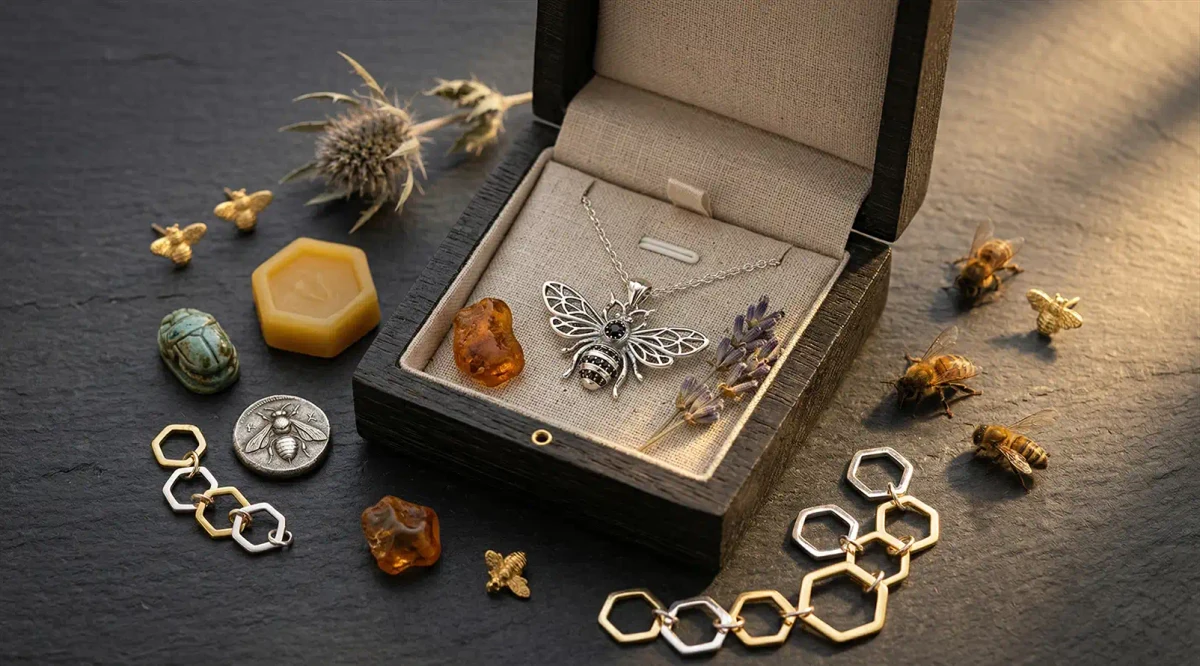
Gold or silver: which do I choose for a bee? For a bee I almost always recommend a warm metal. Gold echoes the honey theme and the tears of Ra, and it lifts the honey and sand tones in skin and fabric. Silver cools the bee down and makes it read colder and stricter. If you lean toward silver, I suggest a matte finish paired with warm clothing, so the bee keeps its honey.
One large bee or a scatter of small ones? It depends on what you are building. I choose one large bee as an accent: a pendant at mid-chest on a clean chain, and nothing else near it. A scatter of small bees I recommend for anyone who loves layers: several chains at different lengths, or bee studs together with a pendant. One bee speaks loudly, a scatter speaks quietly and close to home.
What clothing does a bee look best with? I build the look around a honey palette: sand, mustard, warm beige, olive, cream. Against those a gold bee reads like an extension of the fabric. A dark smooth cloth (graphite, navy, wine) turns the bee into the accent. I avoid busy small prints under a bee, they fight its silhouette.
Does a bee brooch work on a jacket? Very much. I recommend a bee brooch on a jacket lapel, on a coat collar or on heavy knit. On a jacket it holds its shape and reads as a considered detail, not a stray badge. For the office I suggest a mid-size gold brooch, for evening something larger with enamel or stones.
What occasions is a bee good for? A bee is easy because it goes anywhere. For everyday I choose a small pendant or bee studs under plain clothes. For the office I build a restrained look: the bee under a jacket, the metal matching small earrings. For evening I add a dressier bee with enamel and layers of two or three chains. One silhouette, three moods.
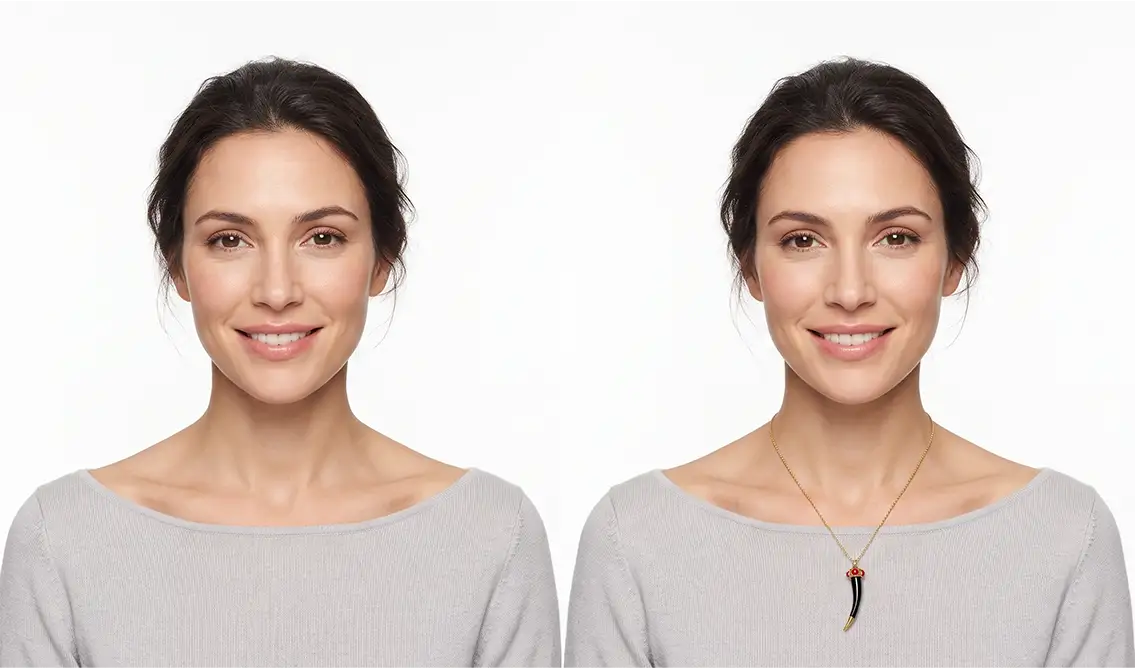
Turn on your camera, pick earrings, a pendant or a ring, and see the piece on yourself in real time.
Switch items in one tap.
Everything runs in your browser: no photo or video is ever uploaded.
Customer reviews
Zevira is a real jewellery shop. Genuine payments, deliveries and customer thank-yous.
🥰🥰🥰 gracias
Ok, ¡gracias! 🙂
The bee in the ancient world
Egypt: the tears of Ra
The oldest and arguably most beautiful bee myth comes from Egypt. According to the ancient texts, bees were born from the tears of the sun god Ra. When his tears fell to earth, they transformed into bees, and those bees immediately began creating wax and honey. The honey was seen as a gift of the sun itself.
This was not a minor detail in Egyptian religion. Bees were so central to Egyptian identity that the pharaoh of Lower Egypt was literally called "He of the Bee" (the hieroglyph "bit", a bee symbol). For over 3,000 years, from the First Dynasty to the Ptolemaic period, the bee appeared in royal titles, temple carvings, and tomb decorations.
Honey was used in embalming. Beeswax sealed canopic jars. Offerings of honey were left for the dead. The bee connected this world to the next, a bridge between the living and the divine.
Egyptian jewellery reflected this reverence. Gold bee pendants, amulets, and pectoral ornaments have been found in tombs dating back to the Middle Kingdom (around 2000 BCE). The bee was not just decoration. It was protection for the afterlife.
What makes the Egyptian bee tradition particularly significant for modern jewellery is how deeply the aesthetic was embedded. Egyptian goldsmiths did not just slap a bee shape onto a piece of metal. They observed real bees closely: their wing structure, the segmentation of their bodies, the way light hit their surfaces. The best Egyptian bee jewellery shows a level of naturalistic detail that would not be matched in Europe for another two thousand years.
The Temple of Neith at Sais in Lower Egypt was sometimes called "the House of the Bee." Priests there wore bee amulets during rituals. Honey was offered to the gods in golden vessels shaped like honeycombs. The entire economy of Lower Egypt was symbolically centred around the bee and its products: wax for sealing, honey for offerings and medicine, propolis for embalming compounds.
When modern archaeologists catalogued Egyptian royal regalia, they found that the bee appeared more frequently than the cobra, the vulture, or any other animal symbol except the falcon of Horus. That is how central the bee was to Egyptian power. Not secondary. Not decorative. Foundational.
Greece and Rome: sacred messengers
If Egypt gave the bee its divine origin story, Greece gave it institutional power.
The priestesses at the Temple of Artemis in Ephesus (one of the Seven Wonders of the Ancient World) were called Melissae, the Greek word for bees. The high priestess held the title of Queen Bee. This was not a cute nickname. It was a formal religious designation.
The bee was also sacred to Demeter, goddess of the harvest. In the Eleusinian Mysteries, the most important secret religious rites in ancient Greece, honey played a central role. Initiates drank a sacred mixture containing honey as part of their spiritual transformation.
The connection went even deeper. The Greeks believed that bees could travel between the world of the living and the world of the dead. They were psychopomps, guides of souls. When a person died, bees were said to carry their soul upward.
The Minoan civilisation on Crete produced what may be the most famous piece of bee jewellery in history: the Malia Bee Pendant, dating to around 1700 BCE. Two bees face each other, holding a drop of honey between them, with a cage-like disc above. It is exquisite goldwork, and it sits in the Heraklion Archaeological Museum to this day.
Rome inherited much of this symbolism. Roman coins from Ephesus feature the bee prominently. Virgil devoted a large section of his Georgics to beekeeping, treating the hive as a model of the ideal state: orderly, productive, and selfless. For the Romans, the bee was civic virtue made visible.
Celtic and Norse traditions
Northern Europe had its own bee traditions, independent of the Mediterranean.
In Celtic culture, the bee was a messenger between worlds. Bees were believed to possess ancient wisdom, and it was considered important to "tell the bees" about major events in the household: births, deaths, marriages. If you did not tell the bees, they might leave, and that was considered a terrible omen.
Norse mythology connects mead, the fermented honey drink, to divine inspiration. The Mead of Poetry, brewed from the blood of the wise being Kvasir mixed with honey, granted anyone who drank it the gift of wisdom and poetic ability. The bee, as the source of honey, was thus linked to knowledge and creative power.
In both traditions, harming bees was taboo. They were considered sacred visitors, not pests.
The Irish tradition adds another fascinating layer. In early Irish law texts, bees were considered so valuable that there were specific legal codes governing bee ownership, swarm rights, and compensation for stolen hives. A person's social status could be partly measured by the number of hives they kept. Honey was used as currency in some transactions. The bee was not just symbolically important in Celtic culture. It was economically essential, and that practical value reinforced the symbolic weight.
In the broader European folk tradition, the custom of "telling the bees" (informing them of births, deaths, and marriages in the household) persisted well into the 19th century. There are recorded instances from England, Ireland, Germany, and the Netherlands. The practice was based on the belief that bees were sentient beings who deserved the same respect as human members of the household. If the bees were not told of a death, they might die themselves, or swarm and leave. If not told of a wedding, the marriage would be unhappy. This remarkably persistent folk belief underlines just how deeply the bee was woven into the fabric of European life, not as an abstract symbol, but as a genuine member of the community.
Upload a photo of your pet, someone you love, or an object. We'll build a 3D model and hand-cast it in pewter.

From the Middle Ages to the modern era
Napoleon and the imperial bee
This is where the bee goes from sacred symbol to political weapon.
When Napoleon Bonaparte needed an emblem for his new empire in 1804, he had a problem. He could not use the fleur-de-lis. That belonged to the Bourbons, the dynasty he had replaced. He needed something older, something that said "I am not a usurper; I am a continuation of something ancient."
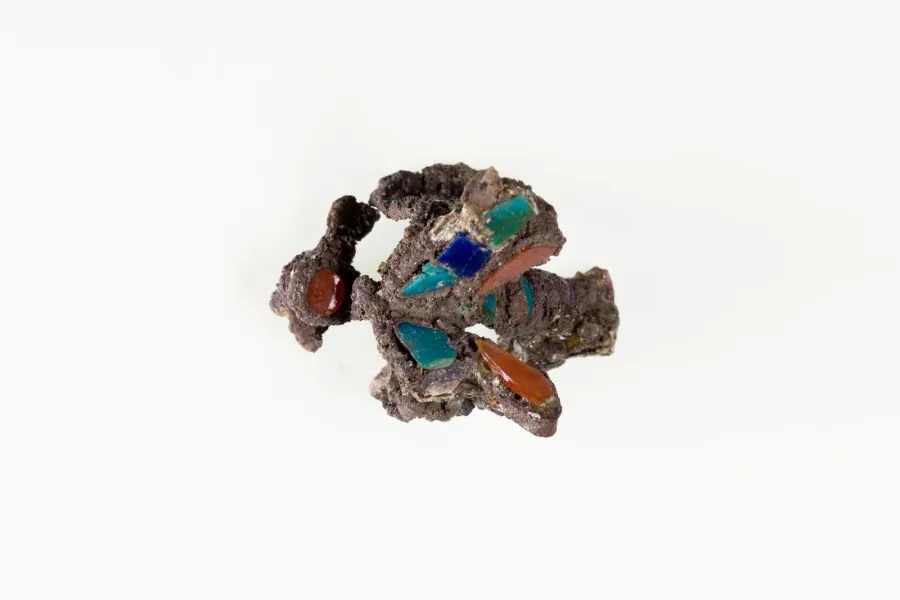
His solution was brilliant. In 1653, the tomb of Childeric I (a fifth-century Merovingian king and the father of Clovis, founder of France) had been excavated. Inside were found over 300 small gold objects shaped like bees (or possibly cicadas; scholars still argue about this). Napoleon seized on these golden insects.
By claiming the Merovingian bee, Napoleon was saying: my authority does not come from the Bourbons. It comes from the very first rulers of France, a thousand years before the fleur-de-lis even existed.
The bees appeared everywhere. On his coronation robe. On the imperial coat of arms. On furniture, fabrics, and official documents. The Pope's ceremonial carpet at the coronation in Notre-Dame was embroidered with golden bees. Josephine's gown was covered in them.
After Napoleon's fall, the Bourbons tried to erase the bee. But you cannot erase a symbol that powerful. The Napoleonic bee survives in French culture, architecture, and jewellery to this day. When the Manchester Arena bombing happened in 2017, the city of Manchester, which has used the worker bee as its symbol since the Industrial Revolution, rallied around the bee as a sign of resilience. Thousands of people got bee tattoos. The connection between the bee and the refusal to be defeated proved it still carried force.
Freemasonry and the bee as a moral symbol
The Freemasons adopted the beehive, not just the bee, as one of their central symbols. In Masonic teaching, the beehive represents the ideal society: a community where every member contributes, where laziness is not tolerated, and where the common good takes priority over individual desire.
This was not borrowed from Egypt or Greece. The Masonic beehive comes from Enlightenment-era moral philosophy. It reflects the belief that human beings reach their highest potential when they work together toward shared goals, the same principle that drives the hive.
The state of Utah adopted the beehive as its official emblem in 1847, directly influenced by the Masonic backgrounds of many early Mormon settlers. The word "Deseret," an early name proposed for the territory, comes from the Book of Mormon and means "honeybee." To this day, Utah's nickname is the Beehive State.
In Masonic lodges, the beehive is typically displayed alongside tools like the compass, the square, and the trowel. It serves as a constant reminder: be industrious, be cooperative, and serve the greater good.
The bee in fashion and design
The luxury world has had a long love affair with the bee, and the Napoleonic emblem never really went out of circulation.
In the mid-19th century, a celebrated French perfume house created an imperial eau de cologne for the wife of Napoleon III, and its bottle was adorned with rows of golden bees as a deliberate nod to the Napoleonic tradition. That gesture set a pattern. Over the following decades, French jewellery houses and fashion designers returned to the bee again and again, often playing on the same imperial connection while making the motif feel accessible and modern. The court jeweller who served Napoleon himself worked the bee into his pieces, and later design houses kept the symbol alive in clothing, jewellery, and home decor.
But the bee is not limited to heritage luxury brands. In contemporary jewellery, the bee has become one of the most popular nature motifs, right up there with the butterfly and the tree of life. It appeals to people precisely because it carries so many meanings at once: strength, community, sweetness, resilience, nature, and a connection to something very old.
The Instagram and Pinterest era has given bee jewellery another push. Nature-inspired pieces photograph well, and the bee is visually distinctive enough to stand out in a scroll. Jewellery designers have noticed: bee-themed collections have multiplied dramatically since the mid-2010s, with styles ranging from hyper-realistic anatomical pieces to abstract, geometric interpretations.
What is particularly interesting is how the bee bridges the gap between fine jewellery and accessible everyday pieces. You can find bee motifs in the display cases of Parisian haute joaillerie ateliers and on the shelves of neighbourhood boutiques. The symbol is democratic in a way that, say, a diamond solitaire never will be. The bee does not care about your budget. It cares about what you stand for.
The craft beer and artisanal food movement has also reinforced bee symbolism. As people become more conscious of where their food comes from and how it is produced, the bee, the ultimate artisan of the natural world, has become a mascot for slow, intentional, quality-over-quantity living. Wearing a bee is, for some people, a statement about values: patience, craft, and the belief that good things take time.



What the bee symbolises when you wear it
Community and belonging
The most immediate symbolism of the bee is community. Bees cannot survive alone. Every bee exists as part of a hive, and every hive functions as a single organism. The individual matters, but only in relation to the whole.
When someone wears a bee pendant or charm, they are often, consciously or not, expressing their connection to a group. A family. A team. A circle of friends. A cause. The bee says: I am not a lone wolf. I belong to something, and I am proud of it.
This is one of the reasons bee jewellery is so popular as a gift. Giving someone a bee is a way of saying "you are part of my hive." It is intimate without being romantic, meaningful without being heavy.
Hard work and persistence
This is the meaning most people think of first, and it is well earned. The honey bee visits between 50 and 1,000 flowers per trip, makes about 10 trips per day, and produces roughly one-twelfth of a teaspoon of honey in its entire lifetime. A single jar of honey represents the collective lifetime work of hundreds of bees.
That fact alone makes the bee one of the most potent symbols of persistence in nature. When you wear a bee, you are wearing a reminder that meaningful results come from consistent, unglamorous effort. Not a sprint. Not a shortcut. Just steady, daily work.
This resonates strongly with people who are building something: a business, a career, a family, a creative practice. The bee does not wait for inspiration. It just goes.
Royalty and personal power
From the pharaohs of Egypt to Napoleon to the Queen Bee of the Artemis temple, the bee has always been associated with leadership and authority. But not the kind of authority that comes from force. It is the kind that comes from being essential.
The queen bee does not rule through dominance. She is the heart of the colony, the source of its future. Without her, the hive dies. Her power is generative, not coercive.
This makes the bee a very different kind of "royalty" symbol compared to, say, a crown or a lion. It suggests power that is earned through contribution, not inherited or seized. It is leadership that serves the community, not the other way around.
For people who see themselves as leaders, particularly women in leadership, the bee can feel deeply personal. It is sovereignty without aggression.
Fertility, abundance, and sweetness
Honey is one of the oldest symbols of abundance in human culture. The "land of milk and honey" from the Bible. The honey offerings in Egyptian temples. The mead halls of the Norse. Wherever honey appears, prosperity follows.
The bee, as the creator of honey, is naturally linked to fertility and the sweet things in life. In many cultures, bee motifs were traditionally given to brides, new mothers, and families starting fresh. The message was simple: may your life be as sweet and productive as the hive.
This symbolism extends beyond the literal. "Sweetness" here also means kindness, gentleness, and the ability to create something nourishing from ordinary materials. The bee takes nectar, which is basically sugar water, and transforms it into honey, royal jelly, beeswax, and propolis. It is an alchemist.
Wearing a bee can be a reminder that you, too, can transform what life gives you into something richer.
In Hindu tradition, the gods Vishnu, Krishna, and Kama are all associated with bees. Vishnu is sometimes depicted as a blue bee resting on a lotus flower. Krishna is called Madhava, which means "born of honey." The Hindu god of love, Kama, carries a bow with a string made of bees, and his arrows cause the sweet sting of falling in love. This cross-cultural consistency is striking. The bee connects to sweetness, love, and abundance in virtually every major civilisation, east and west.
In practical terms, this means that bee jewellery carries a kind of universal emotional passport. You do not need to know about Ra or Napoleon or the Melissae to feel what the bee represents. The association between bees and good things (honey, flowers, summer, warmth) is almost instinctive. The deeper layers of meaning are there for those who want them, but the surface-level resonance works on its own.
The soul and the afterlife
This is the oldest and perhaps most profound layer of bee symbolism, and it is one that many people are not aware of.
In ancient Egyptian, Greek, and Celtic traditions, bees were believed to be connected to the souls of the dead. The Greek word for bee, "melissa," also means "soul" in some ancient texts. Bees were seen as psychopomps, guides that accompany the soul on its journey after death.
This belief persisted well into the Christian era. In many parts of Europe, the custom of "telling the bees" when someone died survived until the 19th and even 20th century. Beekeepers would drape the hive in black cloth and whisper the news to the bees, believing that the bees carried the message to the departed.
For people who have lost someone, a bee pendant can carry a quiet, personal meaning that goes beyond fashion. It is a connection to the idea that the people we have lost are not truly gone, that something carries on.
There is something worth noting here about how grief and jewellery interact. Many people find that wearing a specific symbol after a loss gives them a sense of continuity and quiet strength. Unlike a photograph or a written memory, jewellery is tactile. You can touch it, hold it, feel its weight against your skin. A bee pendant worn in memory of someone becomes part of your daily physical reality in a way that other memorials do not. You carry it with you to work, to the shop, to bed. It becomes inseparable from your body and your routine. For many people, that physical presence is more comforting than any words.
The fact that the bee carries this soul-guide symbolism without being obviously funerary is part of its appeal as a memorial piece. A black armband says grief. An angel pendant says loss. A bee says life: life that continues, life that builds, life that transforms. It is grief processed through hope rather than through sorrow, and that distinction matters enormously to people who are trying to move forward while still honouring the past.
What the bee means in love
The bee has long been tied to love, and the link is not a marketing invention. In Hindu tradition the love god Kama carries a bow strung with bees, and his arrows bring the sweet sting of falling for someone. Honey was a wedding symbol of plenty and tenderness between spouses across many cultures, and bee motifs were given to brides for a happy marriage. A bee pendant reads as a sign of affection that grows slowly and solidly, like a comb, rather than flaring up and burning out. The bee returns to its flower again and again, and that image of loyalty makes a bee a warmer gift for a couple or a partner than a plain heart.
The bee as good luck and a lucky sign
In many folk traditions the bee is a lucky sign. In French and Italian folklore a bee that lands on your hand or flies into the house brings money and good news rather than trouble, because its arrival was linked to harvest, honey, and plenty, everything people called luck long before lotteries existed. That is why a bee piece is worn as a quiet charm for gain and a prosperous home. Unlike a horseshoe or a clover, the bee adds work to the idea of luck: it reminds you that fortune favours those who keep going. A bee makes a fitting gift for a housewarming or the start of a new venture.
The spiritual and esoteric meaning of the bee
In esoteric reading the bee stands for the immortal soul and a link to a higher order, which is where the search for its angelic meaning comes from. The logic runs back to the ancients: Greeks and Egyptians saw the bee as a guide of souls, and its knack for building flawless comb was read as a reflection of the divine geometry of the world. In spiritual practice the bee signals discipline, a clear purpose, and service to the whole rather than the ego. When someone treats a bee sighting as a sign, it usually reads as: gather yourself, work in step with others, and trust your circle. Worn this way, the bee is a reminder of inner order and calm focus, with none of the loud mysticism.
The queen bee as a symbol
Apart from the wider theme of power stands the queen bee, now searched as a symbol in its own right. The queen is not a tyrant of the hive but its heart and its source of life: without her the colony dies. So the queen bee is worn as a mark of a feminine strength that leads not by force but by becoming the centre of its world and growing others around it. It is chosen by women building a business, a family, or a team that rests on them. Unlike a crown, the queen speaks of power that is earned rather than inherited by birth. A queen bee pendant or ring reads as a quiet "I hold my hive," with no aggression and no pose.
The bee in Christianity
Christian tradition gave the bee a special place. The bee was held up as a model of purity and industry, and because people once believed bees bred without mating, it was linked to the image of the Virgin Mary. Beeswax made church candles, so the labour of the bee literally lit the church, which is why the bee is honoured in the Easter hymn known as the Exsultet. Church writers held the hive up to their congregations: unity, obedience, and shared work for the whole. The sweetness of honey was read as the sweetness of faith and of the word of God. A bee piece sits easily on this Christian sense too: modesty, diligence, and service to others, with no need for loud symbols.
Bee tattoo meaning
The bee is one of the most requested subjects for a small tattoo, and its meaning matches the pendant, only permanently. Most often a bee is inked as a mark of hard work and loyalty to one's craft, a memory of a loved one, or belonging to one's circle, "my hive." After the 2017 Manchester Arena bombing thousands of people had bees tattooed as a sign of the city's resilience, and that meaning spread widely. A small bee sits well on the wrist, the forearm, or behind the ear. For anyone not ready for a tattoo, a bee piece carries the same symbol without the needle: it can be taken off, passed on, or given as a gift.
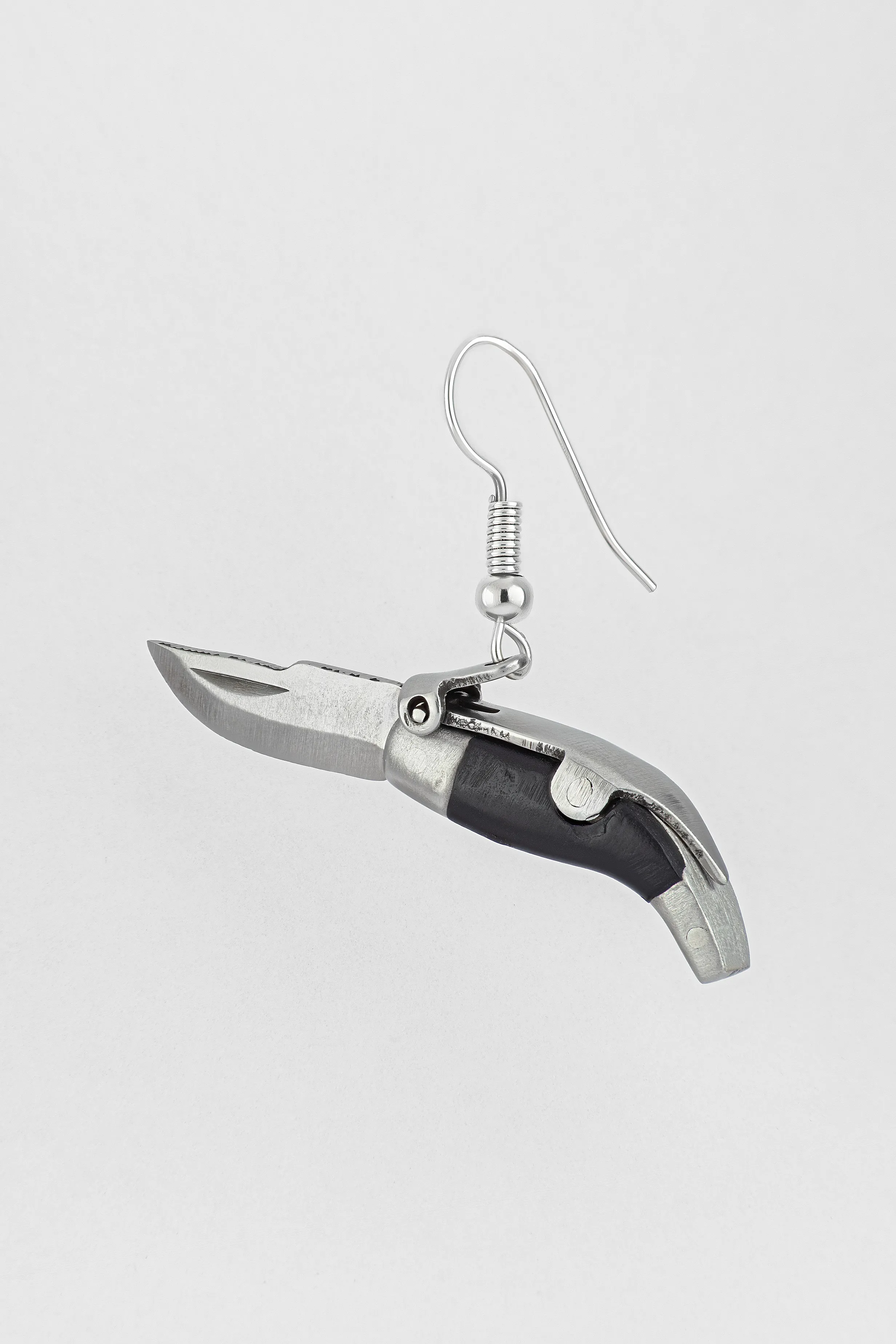
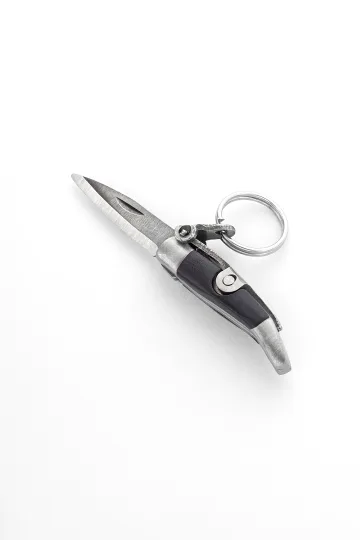
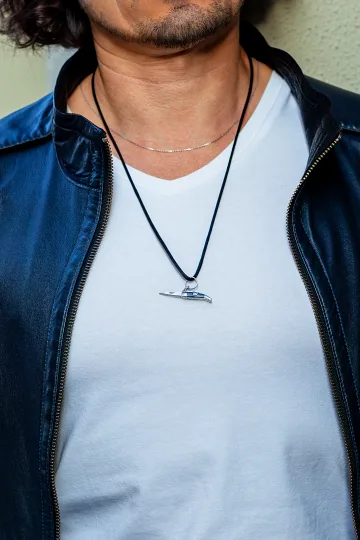
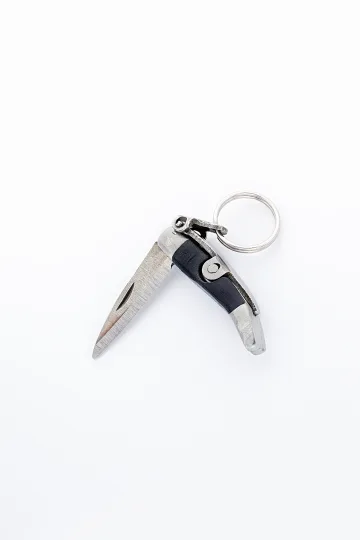
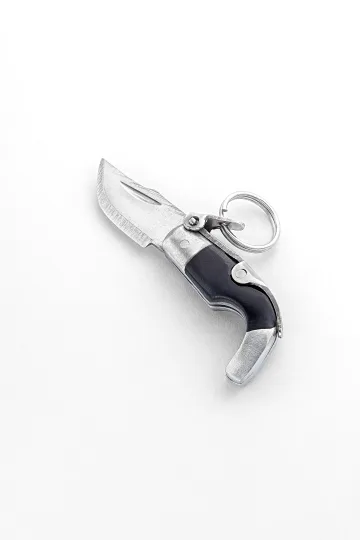
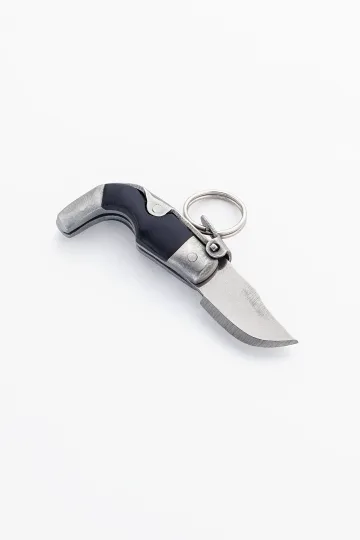
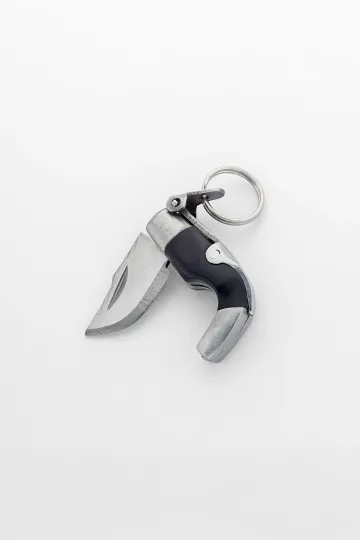
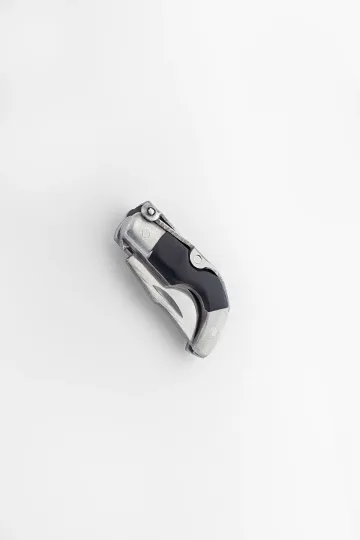
CAPAORA mini knife pendant
The 18th-century Spanish navaja in miniature: 40 mm of stainless steel, a real folding mechanism and a Palanquilla lock that clicks. An affordable gift to remember.
Authentic · Ships from Spain · 14-day returns
Types of bee jewellery and what suits you
Bee jewellery comes in a surprising range of styles, and the one you choose says something about what the bee means to you.
Realistic bee pendants show the insect in full anatomical detail: wings, body segments, legs, antennae. These tend to appeal to people who value nature and science, and who want the symbol to be immediately recognisable. A realistic bee on a chain is a conversation starter.
Stylised or geometric bees simplify the form into clean lines and shapes. Think Art Deco influence: hexagons, angular wings, minimalist outlines. These suit people who prefer modern aesthetics but still want the meaning behind the symbol.
Bee-and-honeycomb combinations add the hive element, which shifts the emphasis toward community and home. A bee sitting in a honeycomb is specifically about belonging: having your place, being where you are meant to be.
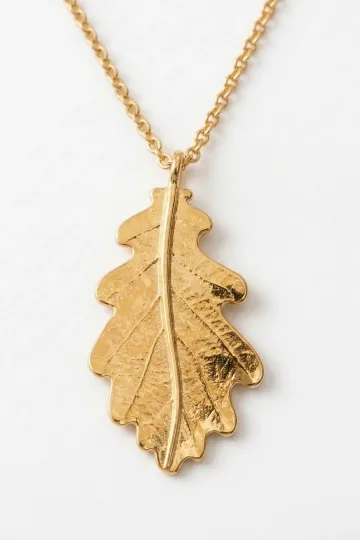
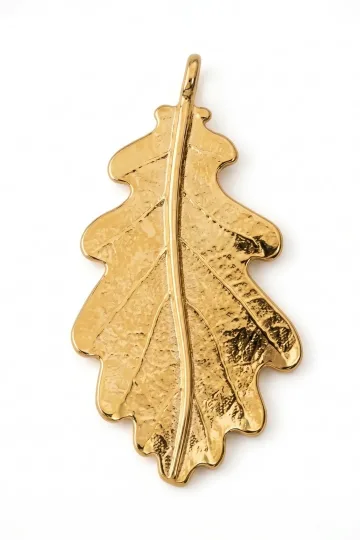
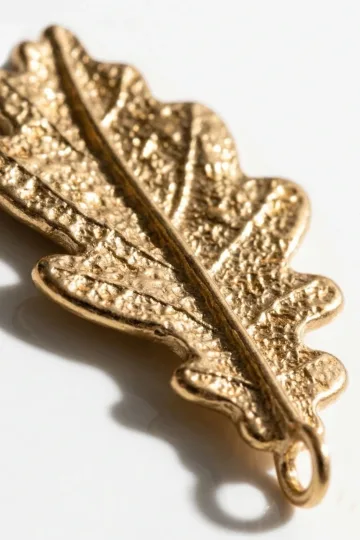
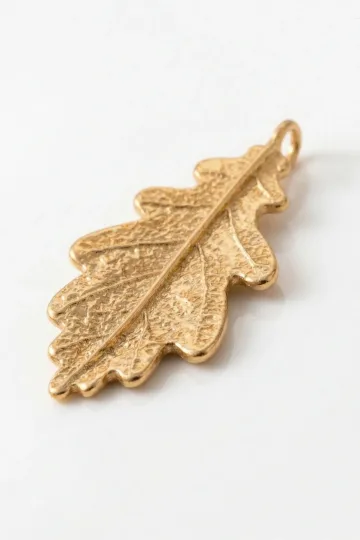
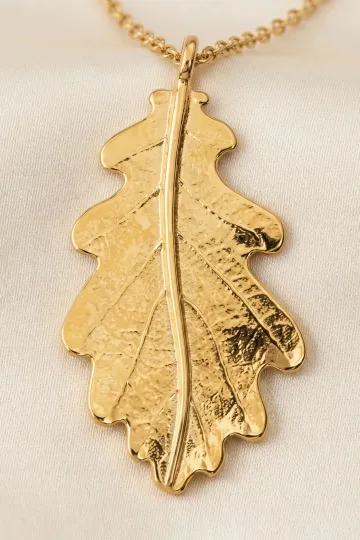
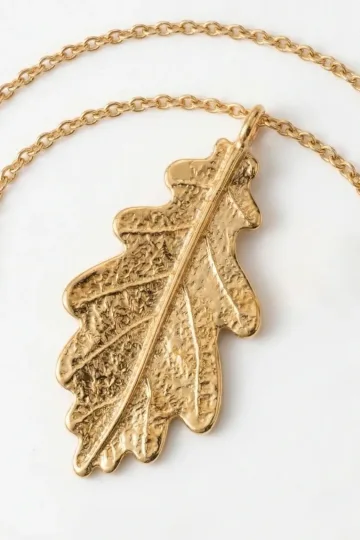
Nature cluster designs pair the bee with other natural elements: flowers, leaves, acorns. An oak leaf or a textured acorn alongside a bee creates a whole ecosystem on your neck. It is about the interconnection of all living things.
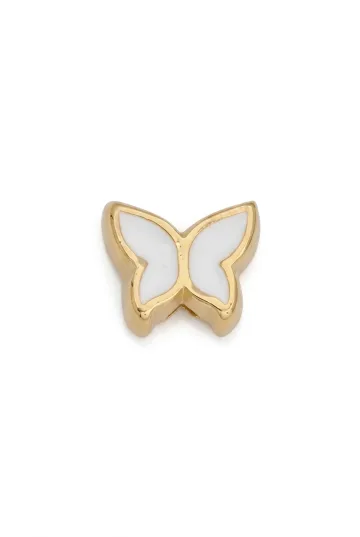
Enamel and colour bees bring vibrancy and playfulness. A butterfly bead in gold and white enamel next to a bee pendant creates a beautiful nature-themed stack. Enamel pieces add personality without sacrificing the symbol's deeper meaning.
Price ranges vary widely. You can find bee jewellery at every level, from affordable everyday pieces to mid-range collections with detailed craftsmanship to premium designer pieces from established jewellery houses. What matters is not the price. It is the intention.
Leave your email, we'll send your discount code. No spam, unsubscribe anytime.
The code arrives by email, valid on your first order.
How to wear bee jewellery
As a pendant
The most classic way to wear a bee. A single bee pendant on a chain is elegant, understated, and carries all the symbolism without shouting about it. For the strongest visual impact, wear it at mid-chest length on a fine chain, where the bee should be the focal point, not competing with other elements.
For layering, a bee pendant works beautifully at different chain lengths alongside other nature symbols. Try a short choker or collar chain with a longer bee pendant for a modern cascading look.
On a bracelet or charm
Bee charms on bracelets have a different energy. They are more playful, more casual, and they move with your body. Every time you gesture, the bee catches light. This is a great option if you want the meaning close to you but prefer wrist jewellery over necklaces.
Charm bracelets also allow you to build a story over time. Start with a bee, add a flower, then a leaf, then a honeycomb. Each piece adds a layer of meaning.
Stacking and combining with nature motifs
The bee is a team player in jewellery, just as it is in nature. It pairs naturally with:
- Flowers and botanicals: because that is where the bee lives and works
- Trees, leaves, and acorns: for an earth-connected, grounded feel
- Butterflies: for a transformation and freedom combination
- Honeycomb: for the home and community emphasis
- Sun motifs: a nod to the Egyptian origin, the tears of Ra
The key is to keep the palette coherent. Gold-toned bees with warm nature motifs create harmony. Do not overload. Three to four complementary pieces is the sweet spot (no pun intended).
One styling approach that works particularly well is seasonal rotation. In spring and summer, pair your bee with flowers and butterflies for a lush garden feel. In autumn, shift toward acorns, leaves, and warm tones. In winter, let the bee stand alone on a simple chain. It carries enough meaning to hold its own without supporting players.
Another consideration is the occasion. A single bee pendant works for everyday wear, office settings, and casual outings. For special occasions such as weddings, milestone celebrations, and significant dinners, you can layer more deliberately, adding a second chain with a complementary nature motif or switching to a more elaborate bee piece with enamel or stone details.
For a ready-made nature symbolism stack, consider combining a bee in honeycomb pendant with an oak leaf pendant or a gold acorn pendant. These pieces share a visual language and reinforce each other's meaning: growth, nature, home.
Who wears bee jewellery and why
The beauty of the bee is that it speaks to very different people for very different reasons. Here are some of the most common profiles:
The builder. Someone in the middle of creating something: a business, a project, a new life chapter. The bee is their daily reminder that persistence pays off. Small actions, repeated consistently, create extraordinary results.
The connector. Someone who values their community above almost everything else. The bee represents their role in their family, their friend group, or their professional network. They are the person who holds things together.
The griever. Someone who has lost a loved one and wants a quiet, non-obvious way to carry that person with them. The bee's ancient connection to the soul and the afterlife gives the symbol a private depth that only the wearer understands.
The history lover. Someone fascinated by Egypt, or Napoleon, or Greek mythology, or any of the dozens of cultural traditions that revered the bee. For them, the jewellery is a wearable piece of history.
The nature devotee. Someone who feels drawn to the natural world and wants their jewellery to reflect that connection. The bee, as a keystone species whose survival is linked to our own, carries an environmental message as well.
The gift giver. Bee jewellery makes an exceptional gift because it works for so many occasions: birthdays, graduations, new jobs, new homes, recoveries, or simply "I am thinking of you." The symbolism is always appropriate and never too personal. Check out the complete gifts catalog for ideas on pairing bee pieces with other meaningful symbols.
Bee vs butterfly vs dragonfly: nature symbols compared
All three are beloved in jewellery, but they carry very different energies.
The bee is about community, work, legacy, and belonging. It is grounded. It is social. It says "I am part of something bigger than myself." The bee is also uniquely connected to royalty, divine creation, and the soul, layers that the butterfly and dragonfly simply do not have.
The butterfly is about transformation, freedom, and beauty. It is a deeply personal symbol, and the journey from caterpillar to winged creature mirrors personal growth and reinvention. But the butterfly is solitary. It does not build anything lasting. It is about the individual, not the collective.
The dragonfly is about change, adaptability, and seeing through illusion. In Japanese culture, it represents courage. In Native American traditions, it symbolises renewal. The dragonfly is lighter and more ethereal than the bee. It skims the surface where the bee digs deep.
If you want a symbol of personal transformation: butterfly. If you want a symbol of agility and lightness: dragonfly. If you want a symbol that carries history, community, purpose, and a touch of the sacred: bee. For the wider family of small flying creatures and what each one carries, the dedicated guide to winged creatures in jewellery, swallow, hummingbird, dragonfly sits naturally next to this one.
Many people combine all three for a rich, layered nature story on their jewellery. They complement rather than compete.
There is also an interesting generational pattern. Younger wearers tend to gravitate toward bees and butterflies, symbols of purpose and transformation. Older wearers often prefer the bee on its own, appreciating its associations with legacy, community, and accumulated wisdom. The dragonfly sits somewhere in between, appealing to people in transitional moments regardless of age.
If you are building a symbol-rich jewellery collection for the first time and want to start with something versatile, the bee is arguably the best entry point. It works alone, it works in combination, it works at every price point, and its meaning deepens the more you learn about it. You will never outgrow a bee. It grows with you.
For a deeper dive into nature-themed symbols and what they mean, see the complete guide to jewellery symbols and their meanings.
Send a friend a discount code, they save on their first order.
Bee jewellery as a gift
A bee almost always reads as a warm gesture. It gathers together steady work, a close family and a feminine kind of energy, which is why a bee piece sits so easily as a present for someone you love. Given to a mother, it works as thanks for years of care: the bee guards its hive and turns simple things into sweetness, much as a mother does. Given to a close friend, it speaks of belonging to the same circle with no romantic undertone, a quiet "you are part of my hive." Given to a woman on her birthday, it carries the sweetness of life and a creative strength, the kind that grows from patience rather than loud gestures.
The bee is easy precisely because it fits so many moments: an anniversary, a housewarming, or no occasion at all. If you are choosing carefully, look through the jewellery gift guide by occasion, and for a specific person browse ideas for a jewellery gift for mum or a gift for a friend. Ready bee and nature pieces are gathered in the amulet catalogue.
Buying it as a gift? Each one arrives ready to give.
 A branded Zevira box and a little card come with every order.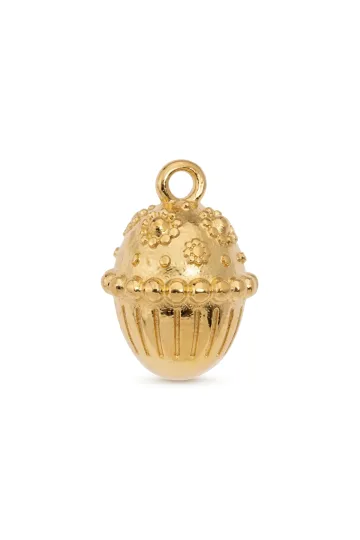



Frequently asked questions about bee jewellery
Is it bad luck to wear a bee if you are allergic to bees?
No. There is no tradition anywhere that connects wearing a bee symbol to bee stings or allergic reactions. If anything, wearing a bee could be seen as making peace with something that frightens you, turning fear into familiarity. Plenty of people who are allergic to actual bees wear bee jewellery without any issue, symbolic or otherwise.
What does it mean if someone gives you bee jewellery as a gift?
It is almost always a compliment. The giver is saying one or more of: you are hard-working, you are an important part of our group, you create sweetness in the world, or you are a leader. It can also simply mean "this reminded me of you," which is its own kind of beautiful.
Can men wear bee jewellery?
Absolutely. The bee has been a masculine symbol for most of its history: think pharaohs, Napoleon, Freemasons, and Roman soldiers. The modern association of bees with femininity is relatively recent. A bee pin on a jacket lapel, a bee signet ring, or a bee pendant under a shirt collar are all classic men's choices. The symbol is genuinely unisex.
Is bee jewellery appropriate for a memorial or remembrance?
Yes, and this is actually one of its most meaningful uses. The bee's connection to the soul and the afterlife in Egyptian, Greek, and Celtic traditions makes it a powerful and subtle memorial symbol. Unlike a heart or an angel, which are obviously sentimental, a bee is quiet. Only you know what it means.
Does the type of metal matter for the symbolism?
Traditionally, gold bees carry the strongest symbolic weight because of the Egyptian connection to Ra and the sun. Napoleon's bees were gold. The Minoan pendant is gold. But the symbolism is in the shape, not the material. Silver bees, rose gold bees, and enamel bees all carry the same meaning. Choose what suits your style and skin tone.
What is the difference between a bee and a wasp in jewellery symbolism?
Significant. The bee is almost universally positive: community, sweetness, hard work, divinity. The wasp carries more aggressive associations: anger, revenge, sharp wit. In jewellery, bee motifs are far more common. If a piece is labelled "bee" it should have a rounded, fuzzy body rather than a narrow, sharp wasp silhouette. The two are not interchangeable.
Is there a best time of year to start wearing bee jewellery?
There is no rule, but spring is a poetically fitting time. That is when bees emerge and begin their work. A bee pendant received or started in spring carries the additional symbolism of new beginnings and renewal. That said, the bee's connection to persistence and hard work makes it relevant year-round.
How do I know if a bee pendant is well-made?
Look at the details. A well-crafted bee will have defined wings (often with texture or veining), a segmented body, and visible antennae. The proportions should feel natural, not too squat, not too elongated. The finish should be consistent. In enamel pieces, look for clean colour boundaries and no visible bubbles or chips. In metal pieces, check that the surface is smooth where it should be smooth and textured where it should be textured.
Can I wear a bee pendant with other symbolic jewellery, like a cross or an evil eye?
Absolutely. The bee does not clash with other symbolic traditions. It predates most of them. Wearing a bee alongside a cross, an evil eye, a hamsa, or any other protective or spiritual symbol is perfectly natural. In fact, many people build personal symbol systems on their jewellery that combine elements from different traditions. The bee adds a nature-and-community dimension that complements religious or spiritual symbols well. The key is to wear what resonates with you personally, rather than worrying about symbolic "rules" that do not actually exist.
Is there a difference between a single bee and a swarm or hive motif?
Yes, and it is a meaningful one. A single bee emphasises the individual: your personal qualities, your own journey, your resilience. A swarm or hive motif emphasises the collective: your community, your family, the group you belong to. A bee sitting on a flower emphasises the relationship between effort and reward. A bee in a honeycomb emphasises home and belonging. Each variation carries its own nuance, which is part of what makes bee jewellery so endlessly versatile.
What cultures consider the bee to be bad luck?
Very few. In most traditions worldwide, the bee is overwhelmingly positive. However, there are minor exceptions. In some parts of Scotland, a bee entering the house was considered an omen that a stranger would arrive, not necessarily bad luck, but not entirely welcome either. In a handful of African traditions, certain species of stingless bees are associated with witchcraft, though this is the exception, not the rule. Globally, the bee is one of the most consistently positive animal symbols across all cultures.
Silver and gold jewellery, wedding bands, symbolic pendants, paired sets.
Wear the symbol, don't just read about it. These are in stock:

Conclusion
The bee has been carrying meaning for at least 5,000 years, and it shows no signs of losing relevance. From the tears of Ra to the coronation robes of Napoleon, from the Masonic lodge to the imperial perfume bottle, from ancient Cretan goldsmiths to the person reading this right now, the bee endures because it says so many things at once. Community. Effort. Sweetness. Power. The soul. Home.
There are not many symbols that can do all of that. Most symbols peak and fade. The bee just keeps building.
If I had to name the one quality that sets the bee apart from every other symbol in jewellery, it would be this: the bee is earned. You do not wear a bee because it is pretty, though it is. You do not wear it because it is trendy, though it has been trending for four millennia. You wear a bee because you recognise something of yourself in what it represents. The persistence. The commitment to something larger. The willingness to do the work even when no one is watching. That is not a meaning you read in a book. That is a meaning you live.
Whatever the bee means to you, whether it is a reminder to keep working, a tribute to someone you have lost, a celebration of your community, or simply a beautiful piece of nature to carry with you, it is one of the few symbols that will never feel dated or empty. It has earned its place.
About Zevira
Zevira makes jewellery in the artisan tradition of Albacete, Spain. The bee, the honeycomb, and other nature motifs have lived in our work for years as symbols of persistence, community, and the sweetness of life. That is why we treat them with care: the shape has to be recognisable, the details honest, and the story behind a piece clear to whoever wears it.
Here is what you will find with us on the bee theme:
- Pendants with a realistic bee and carefully worked wings
- "Bee in honeycomb" pieces that lean into home and belonging
- Stylised and geometric bees made for everyday wear
- Nature sets: a bee paired with a flower, a leaf, or an acorn
- Enamel bees with colour for brighter combinations
- Paired and gift-ready arrangements of nature symbols
Every piece can be personalised with engraving by a craftsperson, with the option of personal engraving. Sterling silver 925 and 14 to 18K gold.