How Jewellery Is Made: From Raw Metal to the Piece on Your Neck
What you never think about when you pick up a pendant
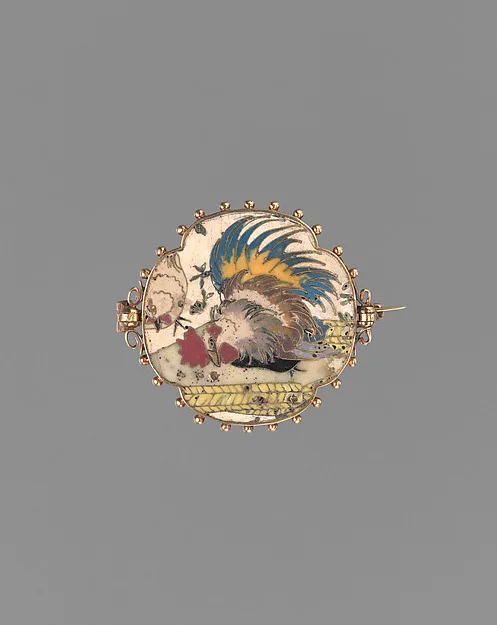
You pick up a pendant from a display. It sits on a velvet cushion, gleaming, looking finished. As if it has always been this way. As if someone opened a box of pendants and pulled this one out, already perfect.
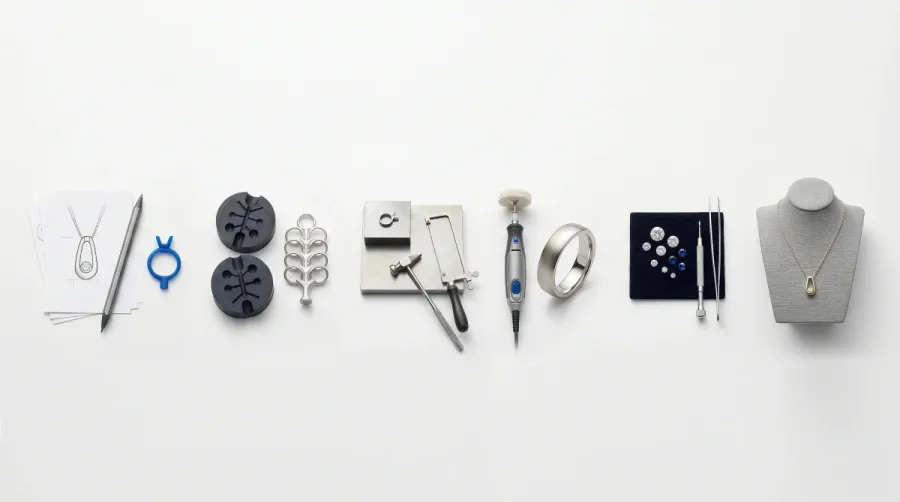
In reality, that pendant went through 15 to 25 production stages. It was designed, sculpted, cast, cooled, broken from its mould, filed, polished, coated, inspected and packaged. At each stage, an inspector could have rejected it. At each stage, something could have gone wrong. What you hold in your hand is a survivor. The one that passed every filter.
Wear the symbol, don't just read about it. These are in stock:
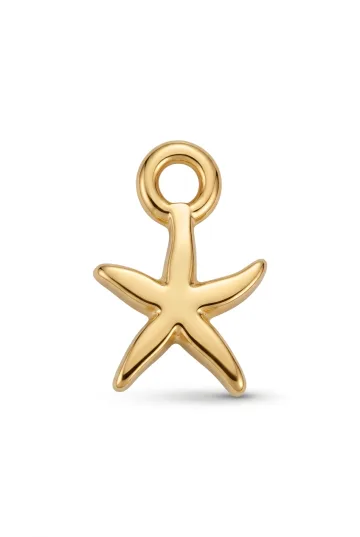


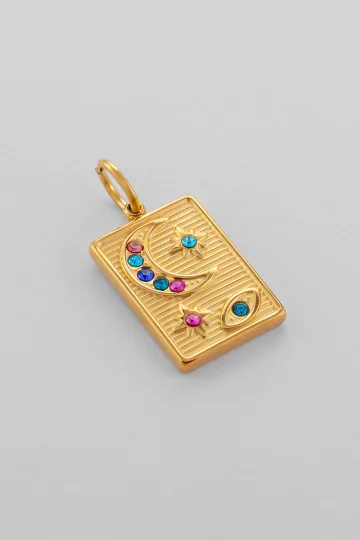
Understanding how jewellery is made changes the way you look at it. You stop seeing "a thing that costs X pounds" and start seeing a process, a craft, and a sequence of decisions that led to this particular shape, this particular shine, this particular weight against your skin.
This guide covers the entire journey. From raw metal to finished jewellery. Whether you are buying your first pendant or your fiftieth, knowing what happens behind the scenes helps you tell the difference between something made with care and something assembled on autopilot.
In Britain, this craft has deep roots. The Birmingham Jewellery Quarter has been producing fine pieces since the 18th century. Hatton Garden in London remains one of Europe's oldest jewellery districts. Sheffield built its reputation on metalwork long before stainless steel existed. The craft of turning raw metal into something beautiful is woven into the industrial history of these islands.
Stage 1: Design
The Sketch
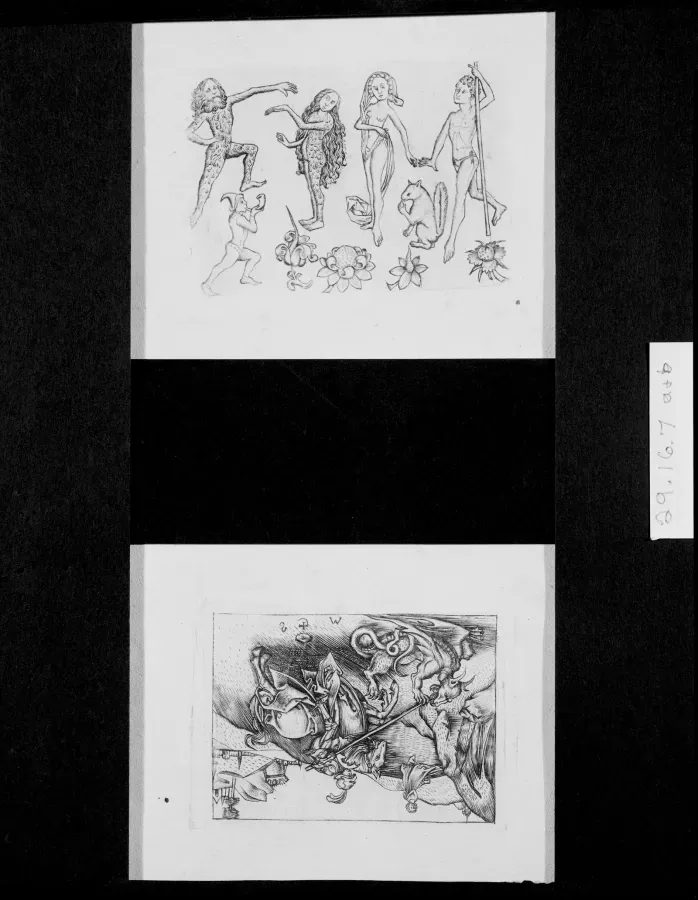
Everything begins with a drawing. A jewellery designer sketches the idea by hand, on a tablet, or directly in a 3D programme. The sketch is not a finished blueprint. It is a mood. Proportions, silhouette, character. At this stage, the fundamental decision is made: will the piece be chunky or delicate, geometric or organic, minimalist or decorative.
A good designer thinks about how the piece looks and also about how it will sit, move and catch light. A pendant that looks beautiful in 3D can hang terribly on a chain. A ring that is perfect on screen can be uncomfortable on a finger. Design is not just aesthetics. It is ergonomics.
The best British jewellery schools (Central Saint Martins, the Birmingham School of Jewellery, the Royal College of Art) teach both. Students learn to draw, but they also learn to think in three dimensions, to consider weight distribution, and to design for the human body rather than for a screen.
3D Modelling
Modern jewellery almost always passes through CAD (Computer-Aided Design). Programmes like Rhino, ZBrush or MatrixGold allow the creation of a precise three-dimensional model with millimetre accuracy.
At this stage, everything is determined: wall thickness (too thin and it breaks, too thick and it is heavy and expensive), hole sizes for stones, clasp and bail shapes, the weight of the finished piece. The CAD model is the blueprint from which the jewellery will be manufactured.
Why this matters to you as a buyer. CAD enables mass production of identical pieces. Each pendant from the same model is an exact copy. This is not hand-crafted work where each piece differs slightly. It is industrial precision. And that is not a bad thing: it means the photo on the website corresponds to what you will receive.
Prototyping
Before production begins, a prototype is made. Usually it is 3D-printed from wax or resin. The prototype can be touched, tried on, weighed and assessed for proportion.
Changes often happen at this stage. The pendant turns out heavier than it appeared on screen. The earrings do not hang as planned. The ring is uncomfortable on the finger. The prototype is the reality check for the design.
You can hear a good piece: the clasp shuts like a bank vault. If it rattles like tin, put it back down.
How to wear and pair your jewellery
Knowing how a piece is made helps at the counter and when I style a look. The method and the finish decide where a piece sits best. Here is what I recommend, by occasion.
What should I wear every day? For daily wear I suggest stainless steel with a satin or brushed finish: it shrugs off water, sweat and the odd knock against a desk. A thin cast chain with a clean pendant works under a crew-neck tee, a linen shirt or knitwear. Keep the outfit neutral and the metal reads as an accent instead of getting lost.
Is jewellery fine for the office? Here I choose a mirror-polished finish in a quiet scale. Stud earrings rather than long hooks, one chain of medium length, a ring with no sharp relief to catch a sleeve. A collared shirt or a roll-neck opens the neck right where a pendant on a 45-50 cm chain should sit.
How do I build an evening look? Evenings run on contrast and shine. I recommend an open neckline, a smooth fabric and a piece with claw-set stones that catches the light. Hand-forged, textured work belongs here too: under artificial light the hammer marks throw a lively play of highlights. You can layer two or three chains of different lengths.
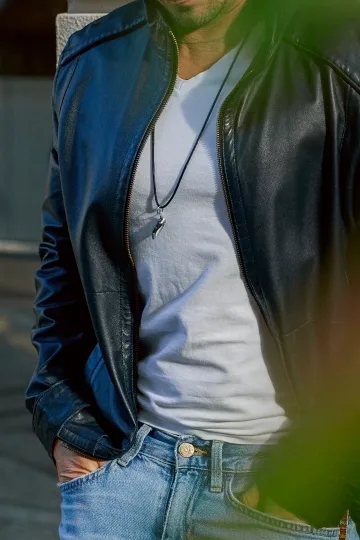
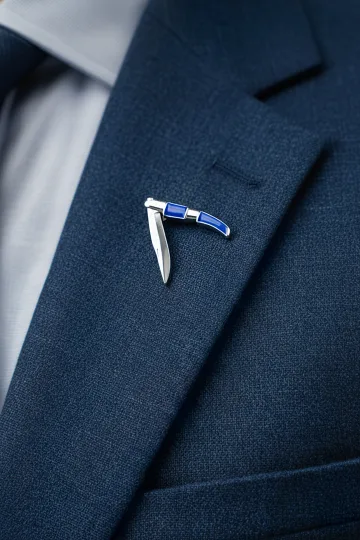
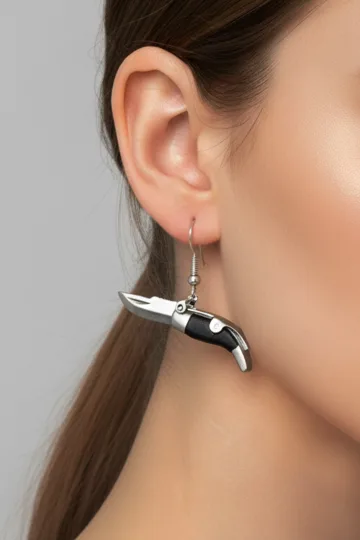
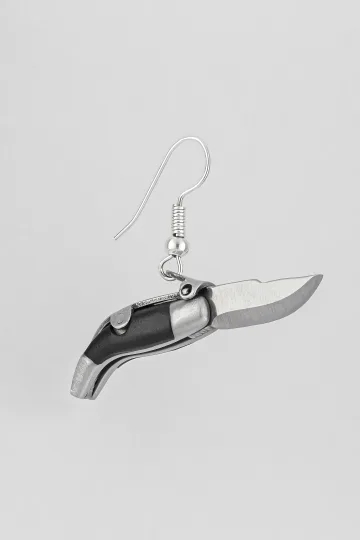
And for a special occasion? For an event I choose an artisan or small-batch piece with character: a miniature navaja, an enamelled design, a one-off pendant. That detail plays the soloist, and I suggest muting the rest.
How do I mix metals without overdoing it? Metals mix happily when the pieces share a motif: a shape, a finish or a line weight, otherwise the look falls apart. The bigger the piece, the fewer neighbours it wants, one strong item beats a stack of small ones. Cool skin tones sit better with silver and rhodium, warm tones with gold and golden brass.

Turn on your camera, pick earrings, a pendant or a ring, and see the piece on yourself in real time.
Switch items in one tap.
Everything runs in your browser: no photo or video is ever uploaded.
Stage 2: Creating the Form
Lost-Wax Casting
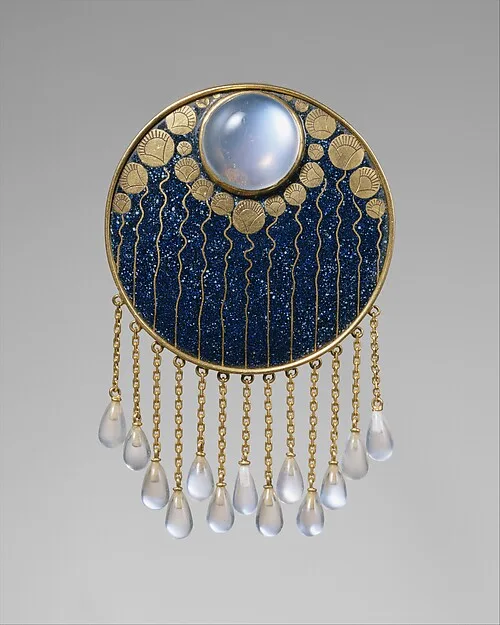
The most widespread method of jewellery manufacturing. It is 5,000 years old and still current. The principle: a wax model is created, a plaster shell is formed around it, the wax is melted out, and molten metal is poured into the void.
Step 1: The wax model. A 3D-printed wax copy is used, or a model is carved from a wax block by hand. The wax model is an exact replica of the future metal piece.
Step 2: The wax tree. Multiple wax models are attached to a wax rod, like branches to a tree trunk. This allows dozens of pieces to be cast at once. The rod becomes the sprue channel through which metal will flow.
Step 3: Investing. The wax tree is placed in a cylindrical flask and covered with a special plaster compound (investment). The plaster hardens around the wax, creating a precise negative form.
Step 4: Burnout. The flask is placed in a kiln at 700-800 degrees Celsius. The wax melts and drains out, leaving a void inside the plaster. This is where the name "lost wax" comes from. The wax is lost, but its shape is preserved in the plaster.
Step 5: Pouring the metal. Molten metal (steel, silver, gold: depending on the piece) is poured into the hot flask. The metal fills every void left by the wax. Under centrifugal force or vacuum, the metal penetrates the finest details of the form.
Step 6: Cooling and extraction. The flask cools. The plaster is broken away. Inside is a metal "tree" with pieces on its branches. They are cut from the sprues, and each piece moves on to finishing.
The Birmingham Jewellery Quarter still houses dozens of workshops that use this exact method. Walk down Vyse Street or Warstone Lane and you can hear the hum of casting equipment behind workshop doors that have been open since the Victorian era.
Stamping
For flat elements (chain links, flat pendants, discs), stamping is used. A metal sheet is placed between two parts of a die (matrix and punch), and a press cuts the shape in a fraction of a second.
Stamping is faster and cheaper than casting but limited to simple shapes. Sculptural, three-dimensional pieces cannot be stamped.
Sheffield's metalworking heritage includes extensive stamping expertise. The same city that perfected steel cutlery production developed many of the stamping techniques still used in jewellery manufacturing today.
Forging and Handwork
The traditional method: a craftsperson takes a piece of metal and shapes it with hammers, pliers and files. This is how jewellery has been made for millennia, and it is still how masters of haute joaillerie work.
Hand forging gives character: slight irregularities, hammer marks, uniqueness in every piece. But it is slow, expensive and unpredictable. For mass production, it is impractical. For one-of-a-kind pieces, it is the only right approach.
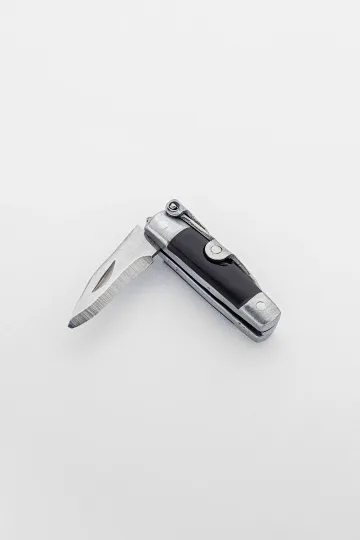
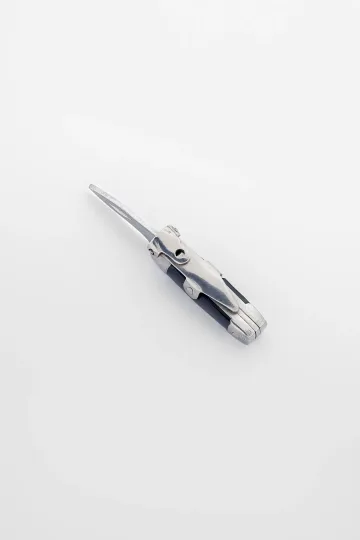
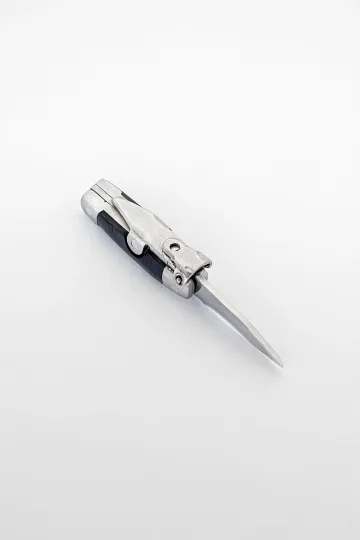
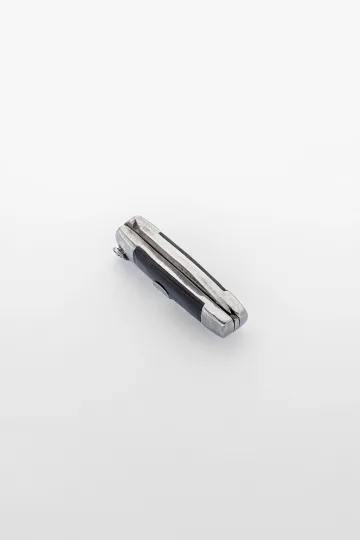
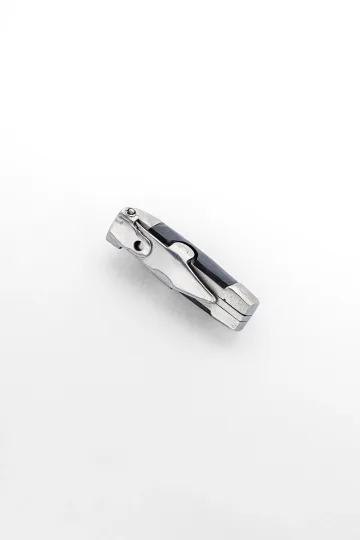
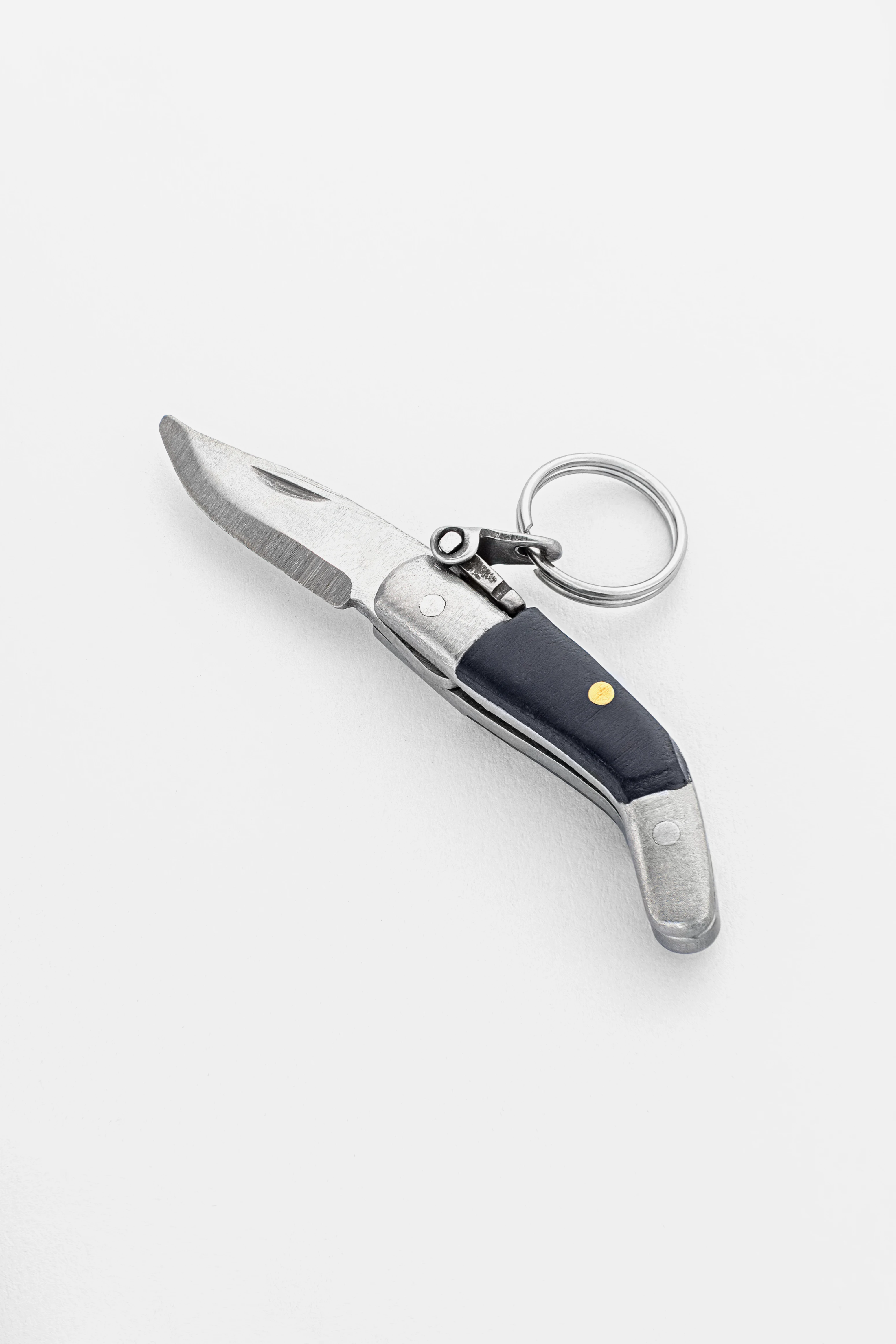
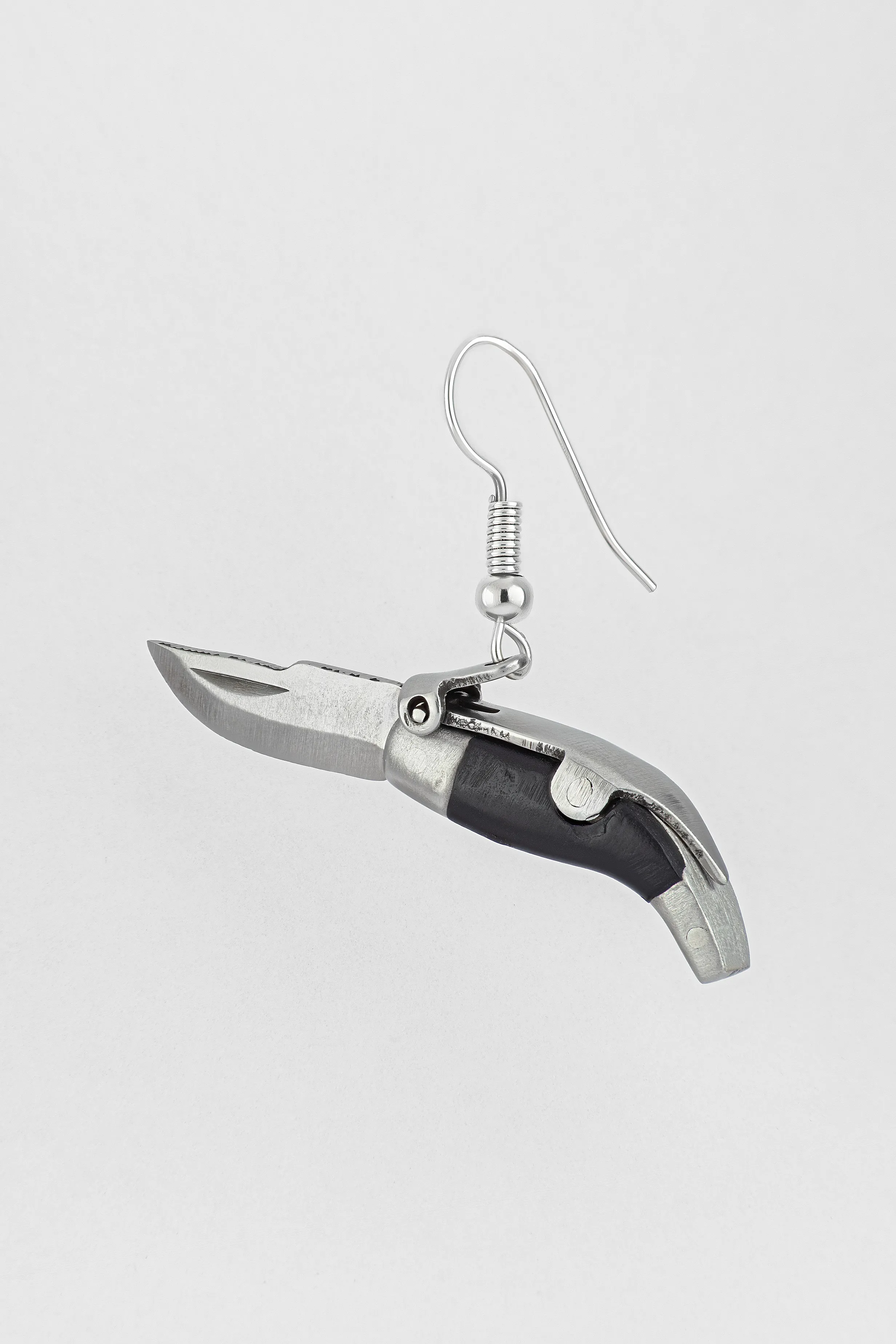
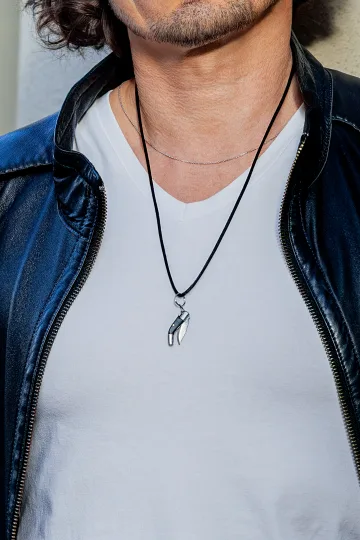
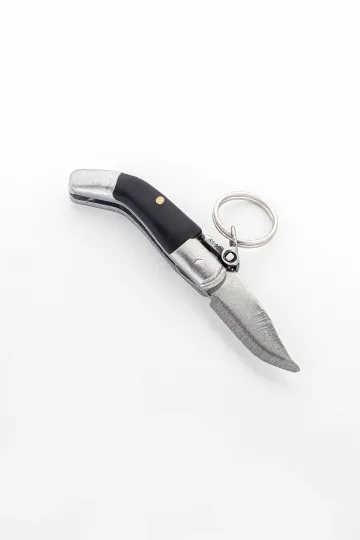
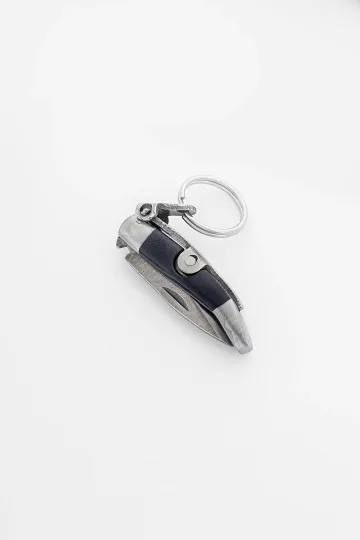
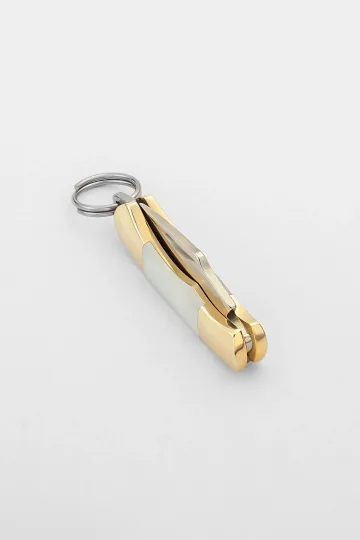
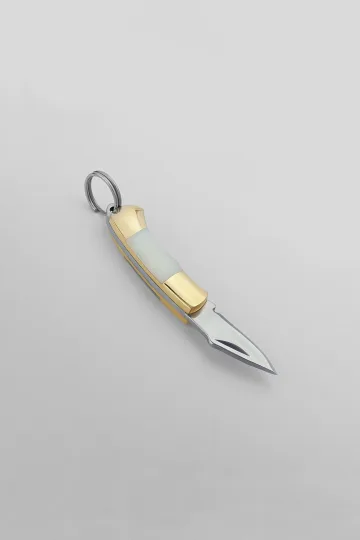
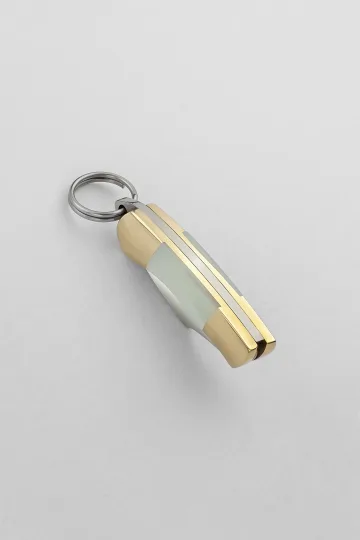
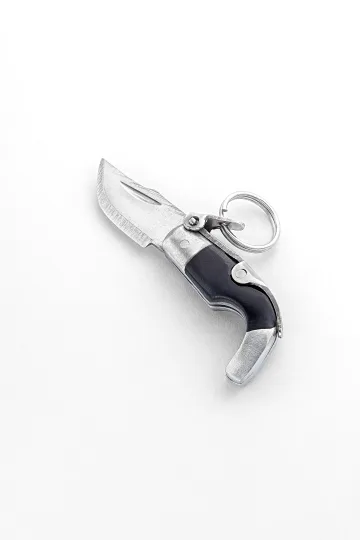
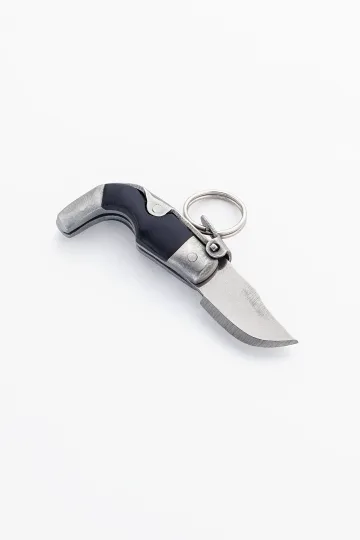
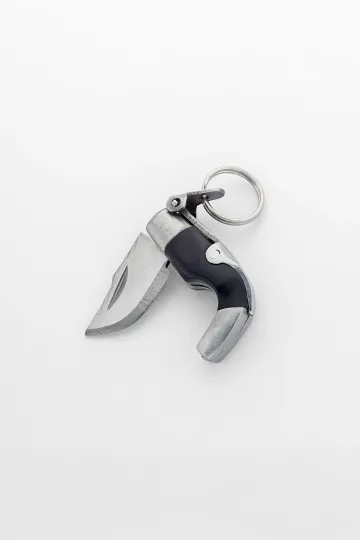
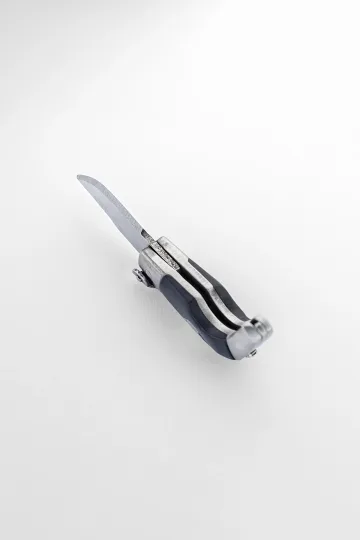
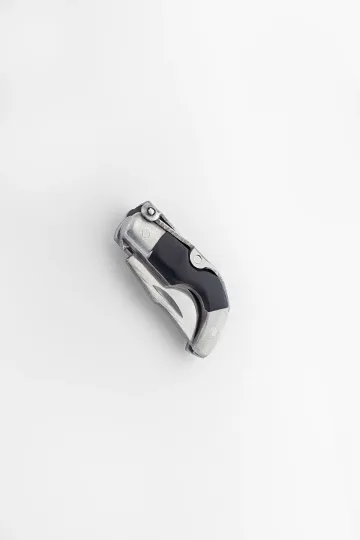
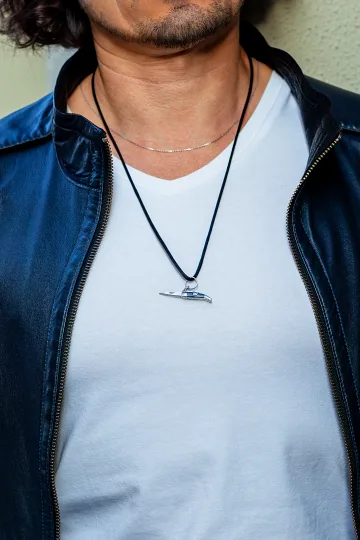
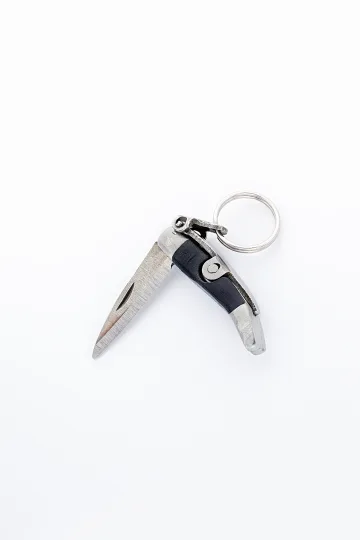
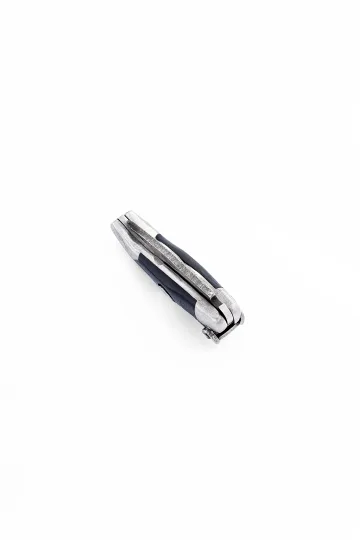
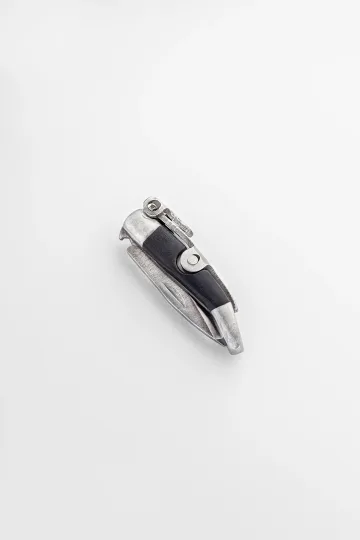
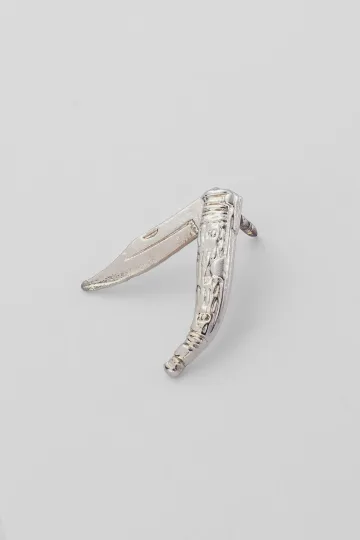
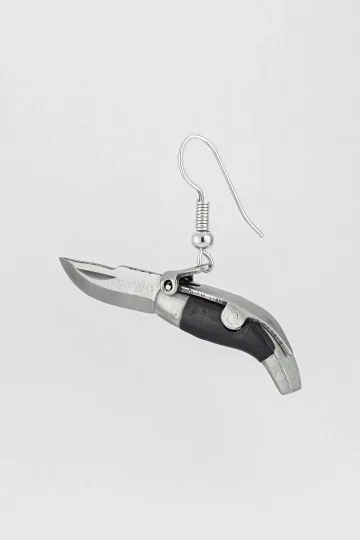
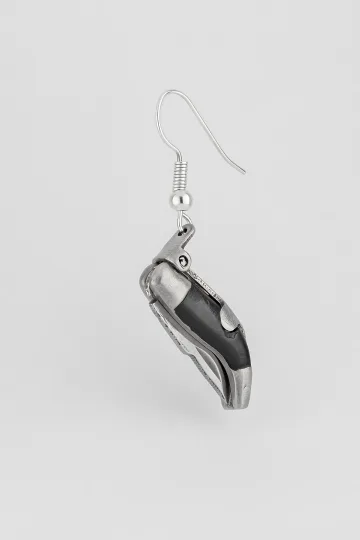
The Spanish navajas of Zevira's Forja Espanola collection take their form from that school: miniature knives with a real hinge that opens and closes like the full-size ones. The logic of the object is cutlery logic, not decorative pendant logic, and that is why the piece has weight, closes properly and sounds like what it imitates.
Stage 3: Surface Treatment
A piece extracted from its mould looks rough. Gritty, with sprue marks, burrs and unevenness. It is a long way from a gleaming pendant.
Cutting and Filing
Sprues (where the piece was attached to the "tree") are cut with nippers and filed down. Burrs are removed with files and burs. Sharp edges are rounded. At this stage, the piece takes its proper shape but remains matte and rough.
Tumbling
Pieces are placed in a barrel with special abrasive media (ceramic, plastic or steel shot) and water. The barrel rotates for hours. The abrasive media gently wear away imperfections, smooth the surface and begin to create a sheen.
Tumbling works like natural river erosion: water and pebbles turn angular boulders into smooth pebbles. Just faster.
Polishing
After tumbling comes hand or machine polishing. A polishing wheel with compound (chromium oxide, aluminium oxide or diamond paste) brings the surface to a mirror finish.
Polishing is not just "making it shiny." It is the removal of micro-scratches invisible to the eye but noticeable to light. A perfectly polished surface reflects light like a mirror, without scattering. This is why quality jewellery gleams "deeply" while cheap pieces look "cloudy."
Types of finish:
- Mirror (polished). Maximum shine. The classic jewellery finish.
- Satin (matte). The surface is slightly textured, light diffuses softly. Modern, restrained.
- Brushed. Fine parallel lines across the surface. Industrial, masculine character.
- Textured (hammered). Hammer or stamp marks. Artisanal, handcrafted appearance.
Upload a photo of your pet, someone you love, or an object. We'll build a 3D model and hand-cast it in pewter.


Stage 4: Coating and Plating
Not all jewellery is coated, but much of it is. Coating can be functional (corrosion protection), decorative (colour change) or both.
Electroplating
The piece is submerged in a solution containing metal ions and connected to an electrical current. Ions deposit on the surface, creating a thin, even layer.
- Rhodium plating. A coating of rhodium (a silvery-white platinum-group metal). Makes silver brighter and protects against tarnish. Standard treatment for silver jewellery.
- Gold plating. A layer of gold over silver, steel or brass. More detail in the gold plating guide.
- Oxidation (blackening). Intentional darkening of silver to create an antique effect or to emphasise relief.
PVD (Physical Vapour Deposition)
The piece is placed in a vacuum chamber where metal (titanium, zirconium) is evaporated and deposited on the surface as an ultra-thin but incredibly hard layer.
PVD coating is 5 to 10 times harder than electroplating. It does not wear off from friction, does not scratch easily and does not tarnish. This is why watch brands switched to PVD for black and gold cases.
Enamelling
Application of coloured glass (hot enamel) or polymer (cold enamel) coating to specific areas of the piece. More detail in the enamel care guide.
Stage 5: Stone Setting
If the design calls for stones (cubic zirconia, crystals, semi-precious stones), they are set after polishing and coating.
Prong (Claw) Setting
The stone is held by 4 to 6 metal "claws" (prongs) that are bent over the edge of the stone. The most common setting for round stones. Maximum light access to the stone equals maximum brilliance.
Bezel Setting
The stone is surrounded by a continuous metal rim that completely encircles its perimeter. A more protected option: the stone will not catch on fabric and will not fall out from impact. But less light enters the stone, making it slightly less brilliant.
Pave
Multiple small stones set close together so the metal is barely visible. Each stone is held by tiny metal beads. The result is a surface encrusted with sparkle.
Channel Setting
Stones are placed in a channel (groove) in the metal without individual prongs. Stones sit in a row, held by the walls of the channel. Often used in tennis bracelets and eternity rings.
Customer reviews
Zevira is a real jewellery shop. Genuine payments, deliveries and customer thank-yous.
🥰🥰🥰 gracias
Ok, ¡gracias! 🙂
Stage 6: Assembly
Many pieces of jewellery consist of several components: pendant plus bail plus jump ring. Earrings: base plus hook or post. Bracelet: links plus clasp.
Assembly is the joining of all parts. Jump rings are soldered closed. Hooks are secured. Clasps are screwed or pressed into place. At this stage, the piece becomes functional: it can be worn, fastened, hung.
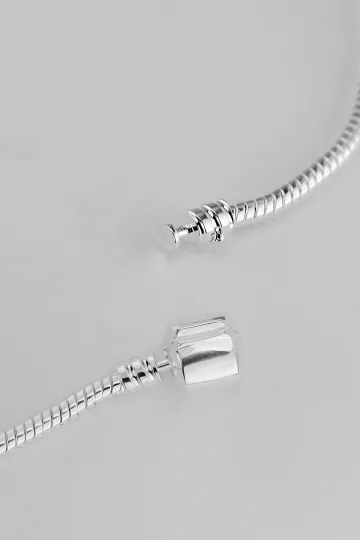
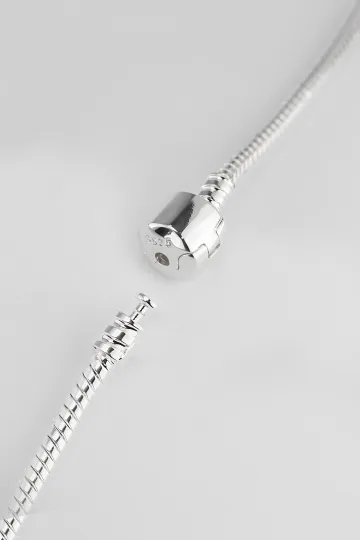
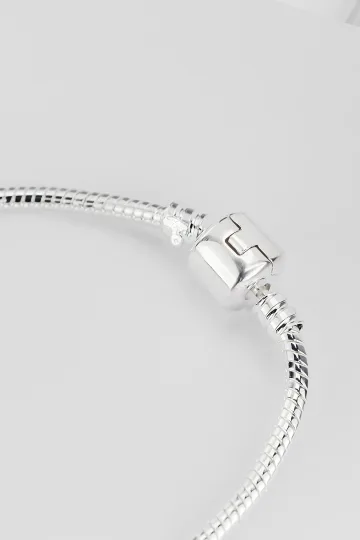
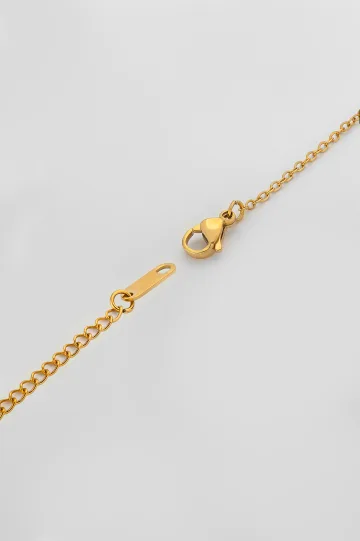
Clasps are a critical element. A beautiful pendant on an unreliable clasp is a lost pendant. The lobster claw is the most reliable for chains. A post with silicone or metal butterfly back is standard for earrings. A spring ring clasp suits fine chains.
Stage 7: Quality Control
Every piece (in a proper production facility) undergoes final inspection.
Visual inspection. Loupe or microscope. Looking for: scratches, missed burrs, uneven polishing, chipped enamel, poorly set stones.
Functional inspection. Do clasps open and close? Does the hinge work? Does the ring catch on skin? Do earrings hang evenly? Does the chain twist?
Weight inspection. Does the weight match the specification? Too light means the walls may be thinner than standard. Too heavy means excess metal, incorrect casting.
Reject rate. In jewellery manufacturing, a normal reject rate is 5 to 15 per cent. Rejected pieces are melted down and go into the next batch. The metal is not lost. The time and labour are.
In Britain, the Assay Offices in London, Birmingham, Sheffield and Edinburgh add another layer of quality control for precious metals. Every piece of gold, silver or platinum sold in the UK must carry a hallmark, part of a system that has been protecting consumers since 1300. More on this in the hallmarks guide.



Mass vs Artisan Production
Mass Production
Thousands of copies of a single design. CAD to casting to tumbling to polishing to coating to assembly to inspection. A conveyor optimised down to the minute per operation. Every piece identical. Price drops with volume.
Most jewellery you see in shops and online is mass-produced. And there is nothing wrong with that. Mass production does not mean "bad." It means "repeatable." Quality depends on the factory's standards, not on the method.
Artisan (Handcrafted)
One craftsperson, one piece. Handwork from start to finish. Every piece unique, with slight variations. The price is higher because the artisan's time is expensive, and every minute is devoted to a single piece.
Hatton Garden and the Birmingham Jewellery Quarter are home to dozens of independent artisans who still work this way. Each piece carries the fingerprint of its maker.
Small-Batch
The golden middle ground. 50 to 500 copies of a single design. Casting is used (as in mass production), but finishing may include hand elements. A good balance between price and character.
How the Method Affects Price
The cost of a piece of jewellery is built from:
- Material (30-50% for mass production, 15-25% for handcrafted). The metal costs the same, but handwork takes more time, and labour costs dominate.
- Labour (20-30% for mass production, 50-70% for handcrafted). Caster, polisher, assembler, inspector: each spends minutes on every piece. A master jeweller spends hours.
- Stones (if present). Stone costs vary by orders of magnitude: CZ costs pennies, a natural sapphire costs a fortune.
- Equipment and overheads (10-20%). Kilns, vacuum chambers, polishing machines, rent, electricity.
- Design and development (5-10%). Amortisation of CAD modelling, prototyping and revision costs.
When you pay for a piece of jewellery, you are not just paying for metal. You are paying for every person and every machine that touched it.
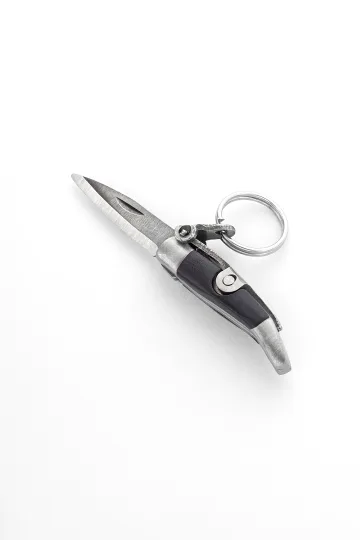
CAPAORA mini knife pendant
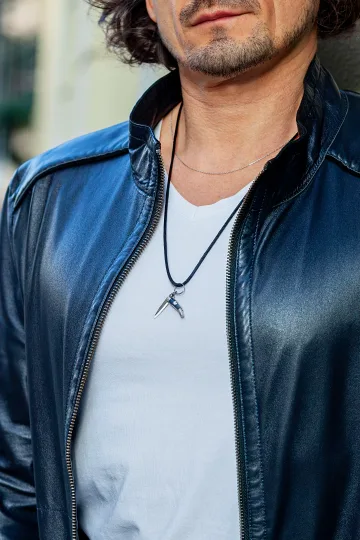
The 18th-century Spanish navaja in miniature: 40 mm of stainless steel, a real folding mechanism and a Palanquilla lock that clicks. An affordable gift to remember.
Authentic · Ships from Spain · 14-day returns
Materials: What Jewellery Is Made From
316L Stainless Steel
An alloy of iron, chromium (16-18%), nickel (10-14%) and molybdenum (2-3%). The "L" stands for Low carbon, which makes the steel more resistant to corrosion.
316L is used in surgical instruments, implants and marine equipment. In jewellery, it is used because it does not tarnish, does not rust, does not cause allergic reactions in most people, and costs a fraction of the price of silver.
925 Silver
92.5% pure silver plus 7.5% other metals (usually copper). Pure silver (999) is too soft for jewellery. It dents, scratches and deforms. Copper adds strength. More detail in the silver 925 guide.
Gold
Pure gold (24K) is soft. For jewellery, it is alloyed:
- 18K (75% gold): premium, rich colour
- 14K (58.5% gold): balance of strength and colour
- 10K (41.7% gold): minimum US standard
- 9K (37.5% gold): minimum UK standard
Colour depends on the alloy: copper gives rose gold, nickel or palladium gives white gold, a standard mix with silver and copper gives yellow gold.
The 9-carat standard is particularly British. While much of Europe considers 14K the entry point for gold jewellery, the UK has long accepted 9K as a practical, affordable option. It contains enough gold to carry the warm colour, with enough alloy metals to resist the wear and tear of daily life.
Brass
An alloy of copper (60-70%) and zinc (30-40%). Inexpensive, easy to work with, golden in colour. Downsides: it oxidises (turns green), may contain nickel (allergy risk), leaves marks on skin. More detail in the green skin guide.
Titanium
Light, incredibly strong, completely hypoallergenic. Used in aviation, medicine and jewellery for people with allergies. Difficult to work with (requires specialist equipment), so more expensive than steel but significantly cheaper than gold.
Chains: A Separate Story
Chains deserve their own section because their manufacture is fundamentally different from that of pendants and rings.
Machine Weaving
Specialist machines form wire into links and join them at remarkable speed, up to 600 links per minute. Anchor, curb, rolo, box chain: all are made on different machines.
After weaving, the chain goes through: soldering (each link is soldered shut so it does not open), rolling (if links need to be flattened, as in curb chain), diamond cutting (if facets are needed to catch light), polishing and tumbling.
The quality of a chain is defined by its soldering. Cheap chains are not soldered. Links are simply bent closed. These break at the first serious tug. Quality chains have every link soldered. More on chain types in the chain types guide.
Hand Weaving
Exists for complex chain types that machines cannot replicate: Byzantine, Persian, chainmaille. The craftsperson connects each link by hand. Slow, painstaking, expensive. But the result is a texture and character that no machine can reproduce.
Length and Clasp
The chain is cut to the required length and fitted with a clasp. Lobster claw is the most reliable. Spring ring suits fine chains. Toggle (a T-bar that passes through a ring) is decorative but less secure.
The clasp is the most vulnerable point of a chain. Most lost pendants are lost not because the chain broke but because the clasp opened. More on lengths in the chain length guide.
Leave your email, we'll send your discount code. No spam, unsubscribe anytime.
The code arrives by email, valid on your first order.
Rings: Production Nuances
Size Range
Rings are produced in a size range, typically from UK size H to Z (or US 4 to 13). Each size requires a separate casting or separate finishing.
For cast rings, each size needs a separate wax model and a separate mould. For simple rings (plain bands), metal tubing is cut and finished to each size.
Comfort Fit
The inner surface of a ring can be flat (standard) or domed (comfort fit). Comfort fit reduces the contact area with the finger, making the ring feel lighter and freer at the same size. More labour-intensive to produce but significantly more comfortable to wear.
Resizing
Silver and gold can be stretched (increased by 0.5 to 1 size) or compressed (decreased by 0.5 to 1 size). Stainless steel practically cannot be resized (too hard). Titanium cannot be resized at all. If the size is wrong for steel or titanium, the ring must be exchanged.
More on sizes in the ring size guide.
Earrings: Specific Considerations
Hypoallergenic Posts
An earring post passes through a piercing, in direct contact between metal and tissue. If the post contains nickel, a reaction is almost guaranteed in sensitive individuals. Posts are therefore made from titanium, surgical steel or silver with rhodium plating. The decorative part of the earring can be any metal, since it does not enter the piercing.
More on allergies in the nickel allergy guide.
Balance
An earring must hang correctly. If the centre of gravity is off, the earring will twist or hang at an angle. During design, the weight of each element and the position of the suspension point are calculated. It sounds simple, but in practice, earring balance is one of the most common reasons for prototype revision.
Posts vs Hooks
Posts (a pin with a butterfly or push back) are more secure: the earring is fixed and will not fall out. French hooks are lighter: the earring hangs freely, moves beautifully, but can slip out when you bend over. The choice between them is a balance of security and aesthetics.
Sustainable Production: The New Standard
The jewellery industry has historically not been a model of sustainability. Gold mining pollutes waterways. Diamond mining destroys ecosystems. Production waste enters rivers.
But the situation is changing.
Recycled metals. An increasing number of manufacturers use recycled gold and silver. Metal loses nothing in recycling: remelted gold is physically identical to "new" gold.
Laboratory stones. Moissanite and laboratory diamonds are chemically identical to natural ones but without destroying the earth. More detail in the moissanite vs lab diamond guide.
Certifications. Fairmined Gold, Responsible Jewellery Council, Kimberley Process: systems for tracking the origin of metals and stones. Not perfect, but better than nothing.
Durability as sustainability. One stainless steel piece worn for 10 years is more sustainable than ten plastic ones discarded each season. The best "green" decision is to buy things that last.
What Separates Cheap From Quality (With Identical Design)
Two pendants on a counter look the same. One costs as much as a lunch, the other as much as ten lunches. The difference is not in the design. The difference is in the process.
Finish
A cheap pendant is polished quickly, in one pass. The surface shines, but under close inspection you can see micro-scratches, unevenness, cloudy patches. A quality pendant is polished in multiple stages, from coarse abrasive to fine, finishing with diamond paste. The surface is mirror-like, deep, "liquid." The difference is visible to the naked eye, if you know where to look.
Casting
Cheap casting means rapid cooling and minimal vacuum treatment. Inside the piece there may be porosity (microscopic air bubbles) that weakens the metal. Quality casting means slow cooling, deep vacuum, no porosity. The piece is denser, heavier, stronger.
Porosity is visible only under magnification or reveals itself over time: after months of wear, tiny pits may appear on a cheap pendant. These are bubbles that surfaced through friction.
Coating
Cheap gold plating: flash plating, less than 0.175 microns. Wears off in weeks. Quality: 1 to 2.5 microns, lasts months to years. PVD: 3 to 10 years. The difference in coating thickness is the main factor in longevity. More detail in the gold plating guide.
Assembly
Cheap assembly: jump rings are not soldered (they will open), clasps have play, earrings are crooked. Quality assembly: every element is fitted, soldered, inspected. The clasp clicks with a satisfying resistance, no wobble. Earrings hang straight.
Quality Control
Cheap production: inspection is random (every tenth piece) or absent. Quality production: inspection is piece-by-piece. Every piece passes through the hands of an inspector. Rejects do not reach the customer.
Geography of Production
China
The largest jewellery manufacturer in the world. Yiwu is the global capital of costume jewellery. Guangzhou and Shenzhen are centres for higher-quality production. Chinese factories operate across a range from "as cheap as possible" to "premium, indistinguishable from Italian." Quality is determined by the client and the specifications, not by the country.
Italy
A traditional centre of jewellery craftsmanship. Vicenza, Arezzo and Valenza are three cities that produce a significant share of European jewellery. Italian production is associated with quality of finish, design and attention to detail. The price reflects it.
United Kingdom
Birmingham's Jewellery Quarter has been a centre of British jewellery manufacturing since the 1740s. At its peak, it employed over 30,000 people and produced a third of all jewellery made in Britain. Today, it remains home to over 400 jewellery businesses, from large manufacturers to independent artisans working from workshops passed down through generations.
Sheffield contributed metallurgical innovation. The development of Sheffield plate (a layer of silver fused to copper) in the 1740s was one of the earliest forms of metal plating, a forerunner of modern electroplating. Hatton Garden in London has been the diamond and jewellery trading centre since the medieval era.
Spain
Albacete has been the capital of knife-making since the 15th century. Spanish navajas are a national craft recognised as cultural heritage. Zevira works with Albacete workshops for the Forja Espanola collection, where each miniature knife passes through the hands of a blacksmith rather than through a casting mould.
Beyond knives, Spain is known for jewellery production in Cordoba (filigree) and Toledo (damascening, gold inlay into steel).
Thailand
A major producer of silver jewellery. Chiang Mai is the centre of silver craft, where hill tribes preserve traditions of handmade production. Bangkok is the centre of mass production with stone cutting.
India
Jaipur is the world capital of coloured stone cutting. Rajkot and Mumbai are centres of gold production. Indian jewellery-making is among the oldest in the world, with an unbroken tradition spanning over 5,000 years.
Buying it as a gift? Each one arrives ready to give.
 A branded Zevira box and a little card come with every order.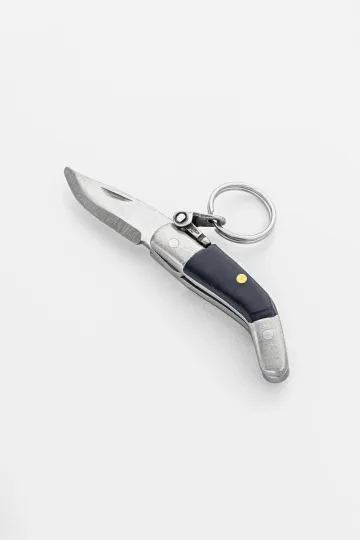






The Future of Jewellery Manufacturing
3D Metal Printing
No longer science fiction. Direct 3D printing from metal powder (DMLS, or Direct Metal Laser Sintering) allows the creation of jewellery without casting, without moulds, without wax models. A laser fuses metal powder layer by layer, creating a finished piece.
Advantages: complex forms impossible for casting (internal cavities, lattice structures, interlocking elements). Disadvantages: the surface requires post-processing, the choice of alloys is limited, equipment costs are high.
For now, metal 3D printing is more expensive than casting for mass production. But for one-off and small-batch pieces, it is already competitive. Within five to ten years, it may become the standard for custom jewellery.
Artificial Intelligence in Design
AI generates design variations from text descriptions. "A pendant shaped like an owl, minimalist, Scandinavian style, for stainless steel", and the neural network produces 20 variants in a minute. The designer selects the best and refines it.
This is not a replacement for the designer. AI does not understand how a piece sits on the body, how it catches light, how it feels in the hand. But as a tool for generating ideas, it accelerates the process dramatically.
Blockchain and Traceability
Every piece of jewellery could carry a digital passport: where the metal came from, where the stones were cut, who manufactured it, what certifications it holds. Blockchain makes this information tamper-proof. The buyer scans a QR code and sees the full history of the piece.
For now, this is a niche practice for premium brands. But the trend towards transparency is clear, and within a few years "where did this jewellery come from" will be as standard a question as "what is it made of."
How to Judge Quality When Buying
Without a loupe and a laboratory, right in the shop or when your parcel arrives:
Weight. Quality casting is denser. If two similar-looking pendants differ noticeably in weight, the lighter one is porous or has thinner walls.
Surface. Run your fingernail across the surface. If you feel bumps, burrs or roughness, the finish is poor. Quality jewellery is smooth as glass.
Clasp. Open and close the lobster claw five times. The spring should be firm, the closure crisp, with no wobble. A weak spring means it will stop closing within a month.
Jump rings. Look at the small rings that connect pendant to chain, earring to hook. Can you see a gap in the ring? If so, it is not soldered and may open.
Earring symmetry. Place both earrings side by side. Identical? If one noticeably differs from the other in shape or size, quality control was weak.
Smell. Seriously. Cheap brass with thin plating can smell metallic (like copper). Stainless steel, silver and gold have no smell.
Send a friend a discount code, they save on their first order.
Famous Workshops and Their Methods
Behind every great jewellery house stands a set of principles and techniques refined over decades.
The architectural school of fine jewellery. Some workshops build geometric precision inspired by architecture. Every piece is designed like a building: foundation (construction), facade (design), engineering (functionality). This approach favours clean lines and structural balance over ornament.
Italian hand-engraving traditions. Certain Milanese ateliers are known for parallel-groove engraving, where fine lines worked into the metal surface by hand with an engraving tool create a matte, silky finish. A single engraved bracelet can require hundreds of hours of work, and the technique is still done entirely by hand.
Invisible stone setting. A demanding technique developed in the early twentieth century sets stones so the metal is invisible, and the surface appears as a continuous mosaic of stones. Each stone is cut with rail grooves on its underside that slide onto metal tracks. Setting a single stone can take up to an hour.
Albacete Workshops (Spain). A different tradition entirely: not haute joaillerie but artisanal forging. Albacete navajas are bladesmithing adapted to jewellery scale. The master forms a miniature blade with a forge hammer, machines a hinge, assembles a handle. Each knife is a functional mechanism that opens and closes despite being pendant-sized.
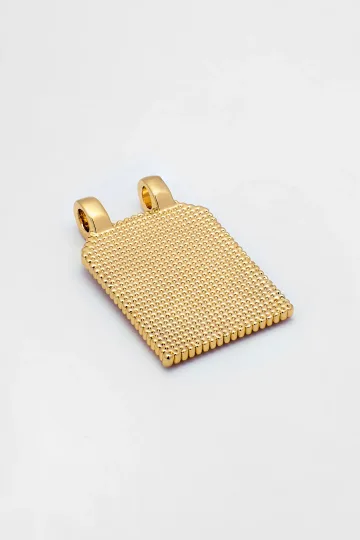
Wear the symbol, don't just read about it. These are in stock:


Certifications in the Jewellery Industry
RJC (Responsible Jewellery Council). An international body certifying jewellery companies on responsible business standards: metal origins, working conditions, environmental impact.
ISO 9001. The international quality management standard. A factory with ISO 9001 has documented processes from raw material inspection to final product checks.
Hallmarks and Assay. In the UK and many European countries, pieces made from precious metals undergo assay: independent testing of precious metal content. A 925 hallmark on silver means a government laboratory has confirmed the alloy contains at least 92.5% silver. For stainless steel, no such system exists. It is not a precious metal, and its composition is confirmed by the steel manufacturer's certificate.
Fairmined Gold. Certification for gold mined at artisanal operations meeting environmental and social standards. Miners receive fair pay, do not use mercury and restore land after mining.
FAQ
Why do identical-looking pieces cost differently? Material (steel vs silver vs gold), production method (mass vs handcrafted), finish quality (quick polish vs multi-stage), and brand (margin).
Is handcrafted better than mass-produced? Not objectively. Handcrafted means uniqueness and character. Mass-produced means precision and consistency. Different tools for different purposes.
Can you tell cast from forged? Often yes. Casting gives a smoother, more uniform surface. Forging leaves slight irregularities, tool marks, a sense of "living" metal. For most buyers, the difference is minimal.
Why is stainless steel cheaper than silver despite being stronger? Because the raw materials (iron, chromium, nickel) are cheaper than silver. Strength and price are different parameters. Diamond is harder than gold, but diamonds are more expensive than gold rings. Value is determined by rarity and demand, not strength.
How long does it take to make one piece of jewellery? Mass production: from a few minutes (stamping a simple link) to several hours (casting plus finishing plus assembly of a complex piece). Handcrafted: from several hours to several days.
What is "jewellery-grade steel"? A marketing term for 316L or 304 stainless steel. "Surgical steel" is the same thing. It is not a special "jewellery" alloy but standard stainless steel that happens to work well for jewellery.
Why do some pieces respond to a magnet and others do not? 316L stainless steel is weakly magnetic or non-magnetic. Silver and gold are non-magnetic. If a piece is strongly magnetic, it is likely ordinary steel with plating, not 316L.
Can an old piece of jewellery be melted into a new one? Gold and silver, yes, any jeweller can do it. Stainless steel is technically possible but practically uneconomical (the raw material is cheap). Brass can be melted too, but rarely worth the effort.
How are pieces with moving parts made? Hinges, springs, folding elements: all are separate components cast or machined individually and assembled by hand. A miniature navaja that actually opens and closes is a dozen parts assembled with microscopic precision.
What is a "hypoallergenic metal"? A metal that does not contain free nickel or contains it in a bound form (as in 316L, where nickel is locked in the crystal lattice). More in the nickel allergy guide.
Silver and gold jewellery, wedding bands, symbolic pendants, paired sets.
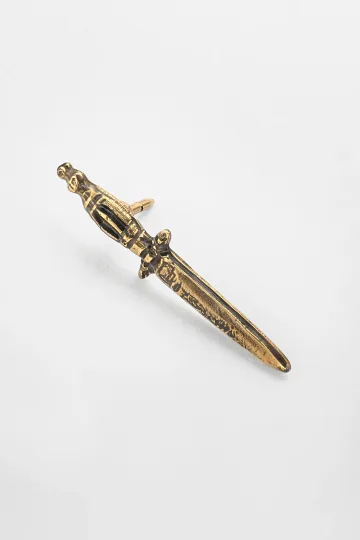
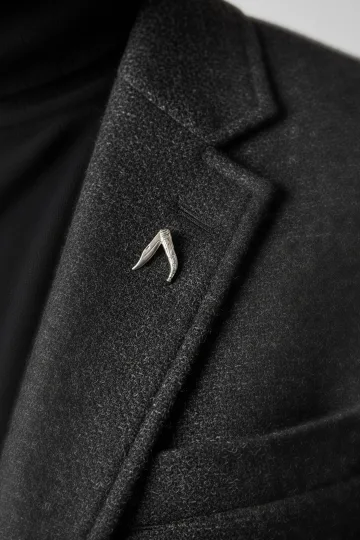
Wear the symbol, don't just read about it. These are in stock:









The Craft Behind the Shine
Every piece of jewellery is the result of dozens of decisions and stages. A designer decided how it looks. An engineer decided how it holds together. A caster decided how it forms. A polisher decided how it shines. An inspector decided whether it was worthy of you.
Knowing the process does not make jewellery more or less expensive. But it changes perspective. When you understand that a mirror finish is not an accident but the result of three polishing stages, you start noticing the difference between "shiny" and "radiant." When you know that soldered chain links are a separate operation that cheap production skips, you start checking clasps before buying.
This is not about snobbery or "expensive equals good." A stainless steel piece costing as much as a lunch can be better made than a gold piece costing as much as a holiday. The price of the metal and the price of the work are different things. And often it is the work that determines whether a piece stays with you for a year or a decade.
When you pick up a pendant from a display, you are picking up the end product of a long chain of decisions, people and machines. Now you know what stands behind it. And you can appreciate it not as "a thing that costs X pounds" but as the result of a process that began with a pencil sketch and ended with the piece on your neck.
About Zevira
Zevira makes jewellery in the artisan tradition of Albacete, Spain. Albacete is one of the two historic centres of Spanish metalwork, and every stage described in this guide happens under one roof here: from the first sketch to the final polish.
What you will find with us:
- Original design, not a mass-market stamp
- Hand casting with quality checks at each step
- Traditional three-stage polishing
- Personal engraving treated as its own production stage
- Quality control at every step and again before packing
Each piece is made by hand by a craftsperson, with the option of personal engraving. We work in 925 silver and 14 to 18K gold.