Chrysoberyl: the third-hardest gemstone and the original cat's eye
On the hardness scale, chrysoberyl sits in third place among gem minerals: 8.5 on Mohs, right behind diamond and corundum. A ring set with it can be worn for decades without fear of scratches from dust and daily wear, and a faceted stone holds its crisp edges longer than almost any coloured gem.
Yet most shoppers have never heard of chrysoberyl. They have, however, heard of two of its special forms: the true cat's eye, with its narrow white band of light that glides across the stone like a pupil, and alexandrite, which shifts from green to red. Both of those celebrities are varieties of one modest mineral.
Here we take chrysoberyl apart on its own terms: what it is made of, why it is so hard, how it produces the cat's eye effect, how it differs from look-alike stones and fakes, where it is mined and how to care for it. No mysticism, and no promises that the stone will "do" anything for you.
What chrysoberyl is: composition, hardness, optics
Chrysoberyl is an oxide of beryllium and aluminium, with the formula BeAl2O4. Despite the similar name, it has almost nothing to do with beryl (the family of emerald and aquamarine): beryl is a silicate, whereas chrysoberyl is an oxide, a different class of mineral. The shared part of the name comes from the Greek "chrysos" (golden) and a common root "beryl": historically this label covered a whole group of golden-green stones, and the word simply stuck.
Chemistry and physics
The dry facts worth leaning on when you buy:
Wear the symbol, don't just read about it. These are in stock:




- Chemistry: an oxide of beryllium and aluminium, BeAl2O4. Trace elements give it colour: iron produces yellow-green and golden tones, while chromium produces the rare green-to-red alexandrite effect.
- Crystal system: orthorhombic. Crystals often form characteristic twin intergrowths shaped like a six-rayed star or a "wheel".
- Hardness: 8.5 on the Mohs scale, third among gemstones after diamond (10) and corundum (9, that is ruby and sapphire).
- Density: roughly 3.7 to 3.8 g/cm3, almost 3.8 times heavier than water. The stone feels noticeably dense for its size.
- Refractive index: around 1.74 to 1.75, higher than quartz, hence its pronounced sparkle.
- Lustre: vitreous, and on a good cut it approaches an adamantine sheen.
- Optical effects: pleochroism (different colour at different angles), chatoyancy (the cat's eye effect) in fibrous varieties, and colour change in alexandrite.
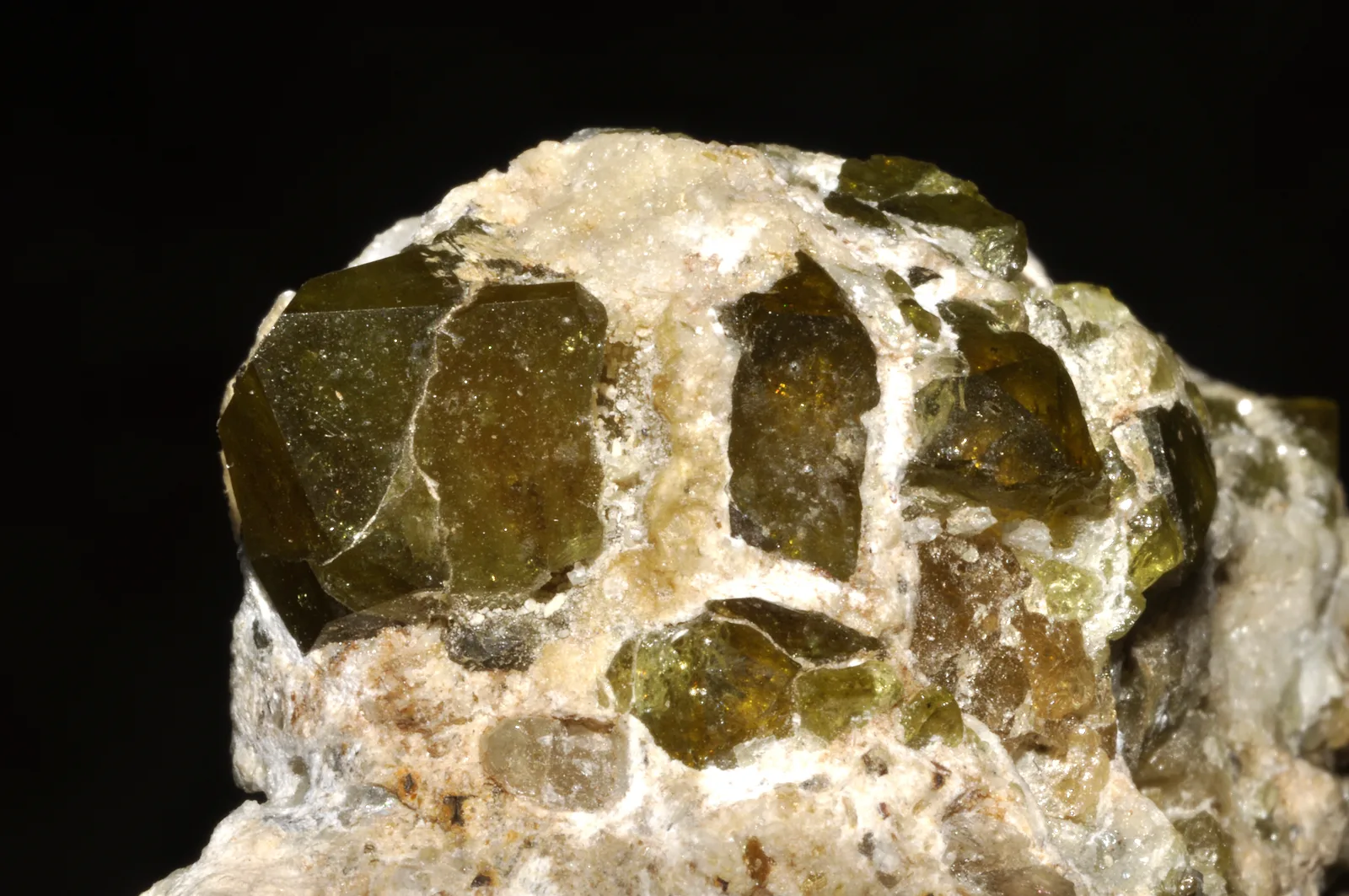
Pure chrysoberyl is colourless, but in nature it is almost always tinted by trace elements. The most common, everyday colour is yellow, golden-green, honey-green, sometimes with a brownish cast. This ordinary yellow-green chrysoberyl is the baseline, while cat's eye and alexandrite are its special cases.
To the touch, chrysoberyl is cool, smooth and heavy. A hardness of 8.5 makes it one of the most wear-resistant coloured stones: it shrugs off the daily wear in a ring that would soon dull a soft gem. Only diamond and corundum can scratch it.
Three faces of one mineral
Chrysoberyl wears three gemmological guises, and the confusion around the stone comes precisely from the fact that they are rarely linked together:
- Ordinary chrysoberyl: a transparent yellow-green or golden stone, faceted like a precious gem.
- Cymophane, also known as cat's eye: a translucent variety threaded with the finest parallel inclusions (channels or rutile needles) that reflect light as a narrow, mobile band. It is chrysoberyl cat's eye that people mean when they say simply "cat's eye" with no species named: the name itself belongs to it.
- Alexandrite: the rarest chromium-bearing variety, which shifts from greenish in daylight to red-purple under warm light. The colour change and its history are covered in detail in a separate article on alexandrite, the chameleon stone.
A combination also exists: alexandrite cat's eye, which both changes colour and shows the band of light. This is one of the rarest gem phenomena of all.
An honest frame for the symbolism
Chrysoberyl, and the cat's eye in particular, has traditionally been credited with protection and clarity of mind. That belongs to the culture of stones and to crystal lore, not to the mineral itself. There is no proven effect on the mind or on health. More on the symbolism below, as a short separate section, kept in proportion.
Why the cat's eye effect appears
The cat's eye effect (chatoyancy) in chrysoberyl is one of the sharpest and most beautiful in the gem world. To understand where it comes from, you have to look inside the stone.
Needles that catch the light
Inside cymophane lie thousands of the finest parallel inclusions: hollow channels or microscopic rutile needles. All of them run in a single direction. When the stone is cut en cabochon (a smooth, domed form with no facets), these parallel fibres do not scatter the incoming light in every direction; they gather it into a single narrow band running across the direction of the needles.
The result is a bright line travelling across the dome of the stone. Turn the stone, or move the light source, and the band glides across the surface, exactly the way a cat's pupil narrows and widens in sunlight. Hence the name.
The "milk and honey" effect
The finest chrysoberyl cat's eyes carry a separate mark of quality: the "milk and honey" effect. Light the stone from the side and one half (closer to the source) looks honey-gold while the other looks milky-pale. A sharp boundary between them runs exactly along the band of light. The crisper that contrast, and the finer and brighter the band itself, the more valuable the stone.
What defines the quality of a cat's eye:
- Sharpness of the band. A thin, bright, crisp line is prized above a blurred, broad one.
- Centring. The band should run straight down the middle of the dome and not drift to one side.
- Mobility. As the stone is turned, the band should glide smoothly, "opening" and "closing".
- Body colour. Classic honey-gold and greenish-yellow rank above grey and dull.
- The milk and honey effect. A contrast between the two halves is a sign of high grade.
A note: the term "cat's eye" applies to many stones (quartz, tourmaline, apatite). But if you are told simply "cat's eye" with no mineral named, tradition takes it to mean chrysoberyl cymophane, the sharpest and historically "the one".
Customer reviews
Zevira is a real jewellery shop. Genuine payments, deliveries and customer thank-yous.
🥰🥰🥰 gracias
Ok, ¡gracias! 🙂
A cat's eye wears gold, never cool silver. Cold metal under a honey stone is brown shoes with a black tie. Don't.
How to wear chrysoberyl
I have styled chrysoberyl in all three of its faces: the honey cat's eye, the faceted sparkler and the temperamental alexandrite. Each has its own logic for clothes and metal, and you should not mix them up. Here is what actually works.
How do I wear a honey cat's eye? I recommend keeping a honey-gold cabochon in a warm range: beige, ochre, chocolate, khaki, earthy tones, tweed, suede. Warm metal is non-negotiable, yellow gold or brass; I do not suggest silver under this stone, as it kills the honey. One stone on a clean chain, no neighbours: that moving band deserves the whole stage.
And where does a faceted chrysoberyl go? I place a greenish-yellow faceted stone on a fresh, cool base: white, grey, olive, denim. Here silver and white gold do the work, pulling out the green. The stone is underrated, with more fire than half the famous gems, so I say do not hide it: let it catch the light on an open neckline or on the wrist.
How do I wear an alexandrite so it performs? I suggest setting an alexandrite on a plain, restrained base: graphite, ink, wine. Everything around it should stay quiet, and then the colour change reads like a magic trick. Cool metal only, silver, white gold, platinum, or a warm glint fights the play of the stone. And one piece per look, no more.
Does chrysoberyl work at the office? It does, if the format stays restrained. I recommend a small cat's eye in a ring or earrings, no large cabochon on the neck. A honey stone in yellow gold reads as a quiet, solid detail rather than a loud accent. For a strict dress code it is an ideal stone: hard, calm, no firework sparkle.
Can I wear two optical stones at once? I strongly advise against it. Two moving effects on one person cancel out: the eye does not know where to look and both stones lose. A cat's eye and an alexandrite want calm neighbours: smooth metal, matte stones. Want layers? Give the star stone its own line and set quiet pieces beside it.

Turn on your camera, pick earrings, a pendant or a ring, and see the piece on yourself in real time.
Switch items in one tap.
Everything runs in your browser: no photo or video is ever uploaded.
Geology: how chrysoberyl is born
Chrysoberyl is a stone whose birth requires a rare meeting of two chemical elements. Beryllium and aluminium have to come together under the right temperature and pressure, and that does not happen often.
Where and how it forms
Most often chrysoberyl is born in pegmatites, the coarse-crystalline vein rocks that crystallise from residual melts in the late stages of granite formation. Pegmatites are precisely where rare beryllium concentrates. The second setting is metamorphic rock, mica schists, where chrysoberyl forms during recrystallisation under pressure.
Because the stone is very hard (8.5 on Mohs) and chemically stable, it survives the breakdown of its parent rock well. The crystals are washed out by water, tumble down riverbeds and accumulate in placers, river and coastal deposits, where they are mined alongside other heavy, durable minerals.
Deposits
- Brazil. One of the world's main sources of chrysoberyl, including cat's eye and alexandrite. The states of Minas Gerais, Espírito Santo and Bahia yield both faceting rough and cabochon material.
- Sri Lanka (historic Ceylon). The classic source of high-grade honey-gold cat's eyes recovered from river placers. Ceylon cat's eye was historically regarded as the benchmark.
- India. The south of the country (Andhra Pradesh, Kerala) yields cat's eye; the stone has long been valued in Indian culture.
- Tanzania, Madagascar, Zimbabwe, Myanmar. African and Asian sources that yield both ordinary chrysoberyl and the rare varieties.
- The Ural Mountains. The historical home of the alexandrite variety; nineteenth-century Ural alexandrites set the world standard for colour change.
The alexandrite variety occurs orders of magnitude more rarely than ordinary chrysoberyl, so most deposits are valued above all for the yellow-green stone and the cat's eye.
Upload a photo of your pet, someone you love, or an object. We'll build a 3D model and hand-cast it in pewter.


History: a stone of soldiers, sages and imperial courts
Unlike many gems with an invented "ancient" pedigree, chrysoberyl has a genuine, traceable history, especially in two of its forms.
Antiquity and the cat's eye
Chrysoberyl was known in antiquity, though for a long time it was not separated from other golden-green stones under the catch-all word "chrysolite" (in old texts that name covered various greenish gems). The cymophane cat's eye was prized for its mobile band of light, in which people saw a watchful, all-seeing eye. The stone was worn as a charm against danger and the evil eye.
India and Sri Lanka
In Indian and Ceylonese tradition the cat's eye held a special place and was regarded as a stone that turned away misfortune and preserved well-being. For centuries Ceylon honey-gold cat's eyes were exported as one of the island's most prized gems. Chrysoberyl cat's eye has carried, throughout history, a reputation as a stone of vigilance and protection.
The discovery of alexandrite
The alexandrite variety was found in the Ural Mountains in the first half of the nineteenth century, in an era when emeralds were being mined intensively there. The stone, green by day and red by candlelight, matched the green and red of an imperial military livery, which added symbolic weight and made it fashionable at court. So the modest oxide of beryllium and aluminium gained its most famous form. The story of the colour change is covered in detail in the article on alexandrite.
The Art Nouveau era and the peak of the cat's eye
At the turn of the nineteenth and twentieth centuries, in the Art Nouveau era and the first decades of the twentieth century, chrysoberyl cat's eye enjoyed a wave of popularity in European jewellery. It was set into men's signet rings and tie-pins, valued for its severe, "watching" effect and the high hardness that suited everyday men's jewellery.




Types and varieties
No two stones are the same, but by character chrysoberyl divides into a few recognisable types.
Ordinary (faceted) chrysoberyl
A transparent stone in yellow, golden-green, honey or brownish-green. It is given a faceted cut, like a precious gem, to bring out its sparkle and play of light. High hardness and a good refractive index make this chrysoberyl an underrated gem: it is tougher and brighter than many better-known stones.
Cymophane (cat's eye)
A translucent variety with a dense "mesh" of parallel inclusions that produce the cat's eye effect. It is only ever cut en cabochon: facets would kill the optical effect. The best colours are honey-gold and greenish-yellow. This is the most recognisable form of chrysoberyl.
Alexandrite
The rarest chromium-bearing variety, with its colour change: greenish in daylight, red-purple under warm light (an incandescent lamp, a candle). The sharper and fuller the change, the higher the value. A fine natural alexandrite is one of the most expensive coloured stones in existence.
Alexandrite cat's eye
A combination of both effects: the stone both changes colour and shows a band of light. An exceptionally rare variety prized by collectors.
What matters more than colour: the optical effect
For faceted chrysoberyl, purity and saturation of colour matter. For the cat's eye, what matters is the sharpness, brightness and centring of the band, plus the milk and honey effect. For alexandrite, what matters is the strength and purity of the colour change. A dull stone with a saturated body can be worth less than a pale one with a bright, "living" effect.
What to ask the seller:
- Exactly which variety: ordinary, cat's eye or alexandrite.
- Origin (Sri Lanka, Brazil, the Urals for alexandrite).
- Sharpness and centring of the band on a cat's eye.
- Strength of the colour change on an alexandrite, and under what light it was assessed.
- Whether the stone is natural or treated, and whether there is a laboratory report.
How to tell chrysoberyl from look-alikes and fakes
Cat's eye and alexandrite are imitated more often than most, because high-grade natural material is expensive and scarce. Let us go through the differences.
Cat's eye: chrysoberyl against the other "eyes"
The cat's eye effect occurs in many stones, and they are often sold simply as "cat's eye" with no species named. Genuine chrysoberyl cymophane is set apart by:
- Sharpness of the band. In chrysoberyl the band is thin and bright as a blade. In quartz cat's eye it is usually broader and softer.
- The milk and honey effect. A clear split of the stone into a honey half and a milky half is characteristic of chrysoberyl in particular.
- Body colour. Classic honey-gold and greenish-yellow. Grey and dull green "eyes" are more often quartz.
- Density. Chrysoberyl is noticeably heavier than quartz of the same size (3.7 against 2.6 g/cm3).
- Hardness. Chrysoberyl is not scratched by glass or by most stones; quartz is softer.
The most common substitute is a glass "cat's eye" (ulexite, a fibre-glass imitation). In such glass the band is too sharp, perfectly even and "mechanical", the body is uniform in colour, and the stone is warm to the touch and light. Natural cymophane is cool, heavy and not perfectly uniform.
Alexandrite: natural, synthetic, imitation
With alexandrite the picture is more complicated, since it is both grown and imitated on a large scale:
- Synthetic alexandrite. Grown in a laboratory, it is chemically identical to the natural stone but cheaper and widespread. It can be told apart by its inclusions and spectrum, often only in a laboratory.
- Corundum or spinel imitation. Synthetic corundum or spinel with a touch of vanadium shifts from blue-violet to red-violet. This is the most common cheap "alexandrite" fake; its colour change is different, not green to red.
- Natural alexandrite is checked by the character and strength of the colour change, by pleochroism and by inclusions. An expensive purchase should always come with a gemmological laboratory report.
Signs of imitation and treatment
- An overly bright, "electric" colour change from blue to violet: almost certainly corundum or spinel, not alexandrite.
- A perfectly even, "ruler-drawn" band of light and a body that is warm to the touch: a glass cat's eye imitation.
- A suspiciously low price for a "natural alexandrite" or a large "Ceylon cat's eye".
- Many identical "natural" stones from a single seller: nature does not work that way.
Documents and price as a signal
For ordinary yellow-green chrysoberyl and an inexpensive cat's eye, documents are overkill: it is enough to check hardness, weight and the character of the band. For alexandrite, and for a large Ceylon cat's eye, a report from an independent gemmological laboratory is justified: the price gap between natural and synthetic alexandrite is enormous.
A fine natural alexandrite cannot cost the same as a handful of beads. If the colour changes "perfectly" and the price is everyday, you are looking at a synthetic or a corundum imitation. That is fine as a product, but it should honestly be called by its proper name.
Leave your email, we'll send your discount code. No spam, unsubscribe anytime.
The code arrives by email, valid on your first order.
Care and storage
A hardness of 8.5 makes chrysoberyl one of the most low-maintenance gems. It shrugs off what would ruin a soft stone, but it has its weak points too.
What to do and what to avoid
You can:
- Clean it with warm water, mild soap and a soft brush; chrysoberyl takes this well.
- Wipe it with a soft cloth after wear to remove grease and cosmetics.
- Wear a faceted stone or a cat's eye in a ring every day; the hardness is more than enough.
You should not:
- Store it loose among other jewellery: hard chrysoberyl will scratch softer stones (emerald, opal, pearl, turquoise).
- Knock the stone against hard surfaces: the hardness protects against scratches, but a sharp point impact on an edge can chip it.
- Clean a cat's eye or alexandrite with ultrasound or steam unless you are sure there are no fractures: if the stone has inclusions or has been impregnated, sudden heat and vibration are dangerous.
- Use abrasives, acids or harsh chemicals.
How hardness affects wearability
High hardness makes chrysoberyl an ideal stone for rings, the very format in which gems suffer most from daily friction and knocks. Faceted chrysoberyl and cat's eye are perfect for an everyday ring. A cat's eye cabochon is additionally protected by its shape: it has no sharp facets to chip. Alexandrite, because of its cost, is more often saved for special occasions than for rough wear.
Storage
Because of its hardness, chrysoberyl is the "predator" in the jewellery box: it will readily scratch its neighbours. Keep it separately, in a soft pouch or its own compartment. Cat's eye and alexandrite are best kept away from direct scorching sun and sharp temperature swings, especially if the stone has noticeable inclusions.
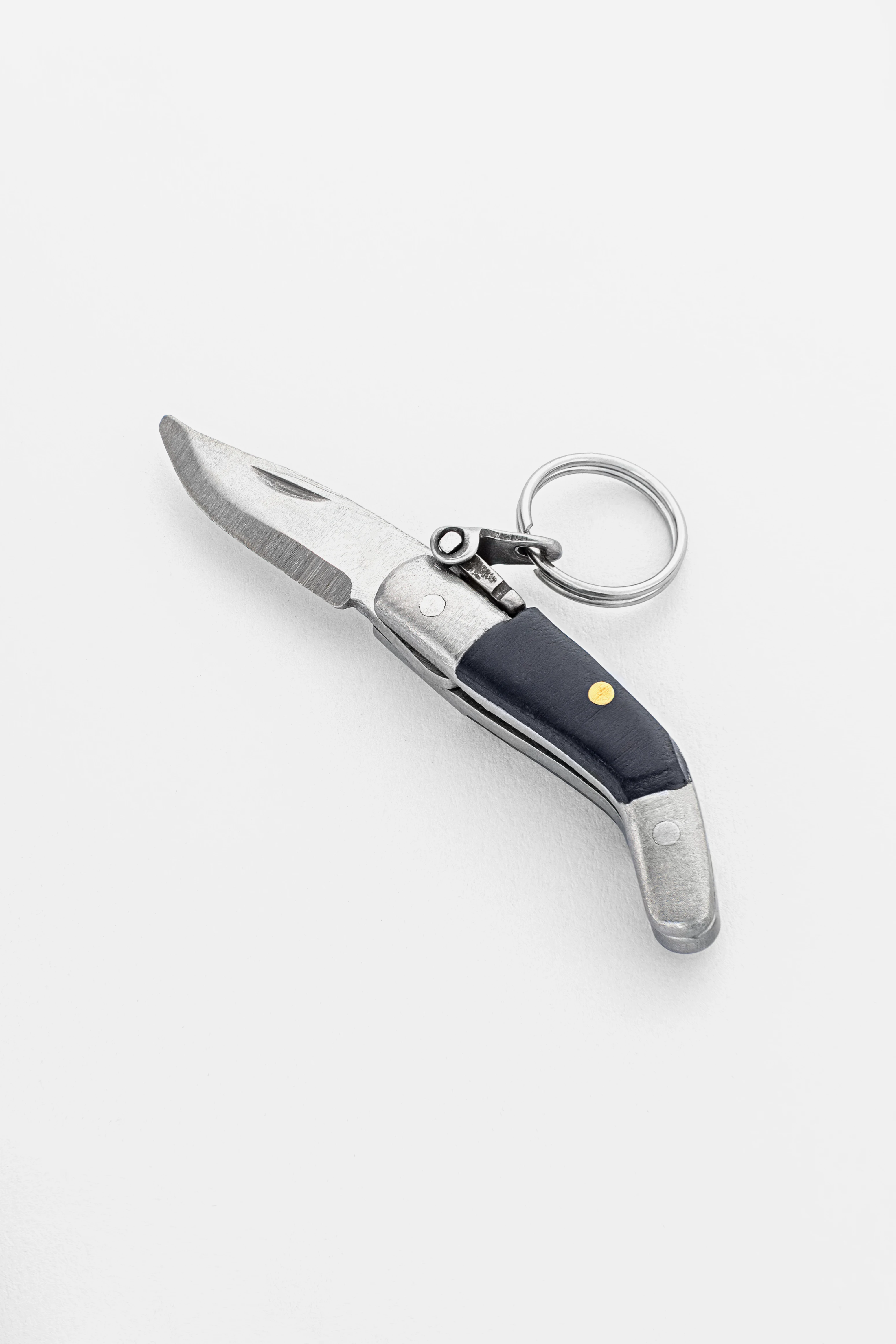
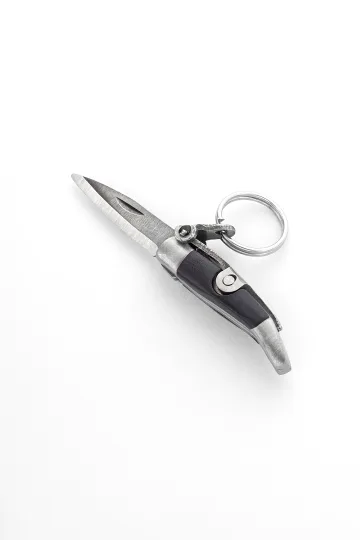
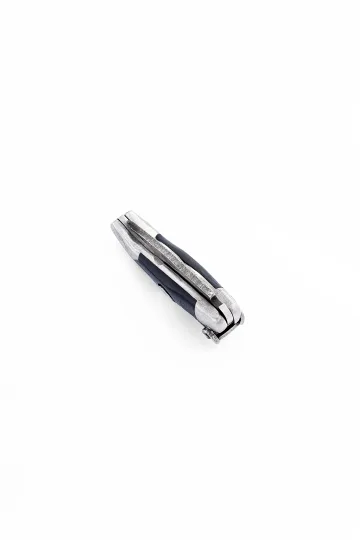
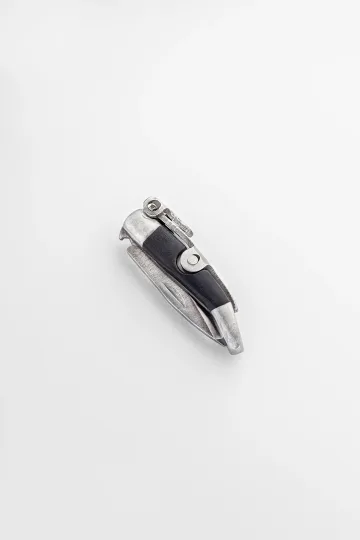
CAPAORA mini knife pendant
The 18th-century Spanish navaja in miniature: 40 mm of stainless steel, a real folding mechanism and a Palanquilla lock that clicks. An affordable gift to remember.
Authentic · Ships from Spain · 14-day returns
Symbolism: what tradition says
Everything below is cultural symbolism and crystal lore, not a medical or physical fact. The mineral has no proven effect. We are reporting what people believe, not what "will happen".
In tradition, chrysoberyl, and the cat's eye especially, is credited with several themes, and nearly all of them grew out of the stone's appearance:
- Vigilance and protection. The mobile band of light reads as an open, watching eye, so the cat's eye has been worn since antiquity as a charm against danger and the ill-wishing gaze.
- Clarity of mind. That same "eye" was linked to a clear-headed view of things and the ability to see what is hidden.
- Transformation. Alexandrite's colour change reads as a capacity for change, hence its symbolism of flexibility and renewal.
The stone "does" nothing on its own. If it supports a person at all, it does so the way any meaningful keepsake does, through attention and habit, not through any mystical radiation. There is nothing shameful in that, but nothing to overstate either.
Jewellery with chrysoberyl: rings, pendants, earrings
Chrysoberyl is a stone that reveals itself differently depending on the variety. The faceted one plays with sparkle, the cat's eye with its mobile band, the alexandrite with its colour change.
Rings
A ring is the best format for chrysoberyl precisely because of the hardness: the stone is unafraid of daily friction. A cat's eye is set as a cabochon so the band can work, and in a ring it glides beautifully with every movement of the hand. A faceted chrysoberyl in a ring throws off bright sparkle. An alexandrite in a ring is striking when its colour shifts as you step from the street into a room.
Cool sterling silver and white gold underline the greenish and honey tones and suit alexandrite well. Warm yellow gold deepens the golden-honey colour of a cat's eye.
Pendants
A pendant is the format for a large stone. A big cat's eye in a pendant gives the band room to travel well. A faceted chrysoberyl pendant catches the light on the chest. On a chain or a leather cord is a matter of taste and look.
Earrings
In earrings, a cat's eye demands a matched pair: two cabochons must agree in body colour, sharpness and centring of the band. A perfect match is impossible, but a good craftsman brings the stones close in character. Faceted chrysoberyls and alexandrites in earrings are matched by colour and by strength of the effect.
Men's jewellery
The cat's eye has historically been popular in men's jewellery: signet rings, tie-pins, cufflinks. The severe, "watching" effect and the high hardness make it a practical stone for an everyday men's ring. A honey-gold cabochon in silver or yellow gold looks restrained and solid.
Matching the metal to the stone's colour
- Honey-gold cat's eye: yellow gold, brass, warm metal.
- Greenish-yellow chrysoberyl: sterling silver, white gold.
- Alexandrite: white metal (silver, white gold, platinum), so as not to argue with the colour change.
- Men's pieces: blackened silver, steel, yellow gold.
The point of a setting is not the metal itself but a secure fit: an expensive alexandrite and a fine cat's eye demand a sturdy mount, because the stone is irreplaceable.
Send a friend a discount code, they save on their first order.
Frequently asked questions
What is chrysoberyl in simple terms?
It is a very hard gemstone, an oxide of beryllium and aluminium (BeAl2O4), third hardest after diamond and corundum. Most often it is yellow-green or golden and is faceted like a precious gem. But two of its special forms are famous: cat's eye (cymophane) with its mobile band of light, and alexandrite, which shifts from green to red. In other words, chrysoberyl is the "parent" of both of those famous stones.
Are chrysoberyl and beryl the same thing?
No, despite the similar name. Beryl is a silicate, and its family includes emerald, aquamarine and morganite. Chrysoberyl is an oxide, a different class of mineral with a different formula and structure. The only resemblance is in the name: both words come from an ancient root "beryl" used for greenish stones. As minerals they are distinct, and chrysoberyl is markedly harder than beryl.
Why is the cat's eye called a cat's eye?
Because of the optical effect. Inside the stone lie thousands of parallel, very fine inclusions (channels or rutile needles). When the stone is cut as a smooth cabochon, these fibres gather light into a single narrow, bright band. Turn the stone and the band glides and narrows, like a cat's pupil in sunlight. The effect is called chatoyancy (from the French for "cat's eye"). In chrysoberyl it is the sharpest, which is why the name "cat's eye" itself attached to chrysoberyl cymophane.
Which cat's eye is the real one, when there are so many?
The cat's eye effect occurs in quartz, tourmaline, apatite and other stones, and all of them are honestly called cat's eye of their own species. But if you are told simply "cat's eye" with no mineral named, jewellery tradition takes it to mean chrysoberyl cymophane, the sharpest, brightest and historically "the one". Its band is thinner and crisper than the quartz version, and the "milk and honey" effect is often visible.
What is the milk and honey effect?
It is a mark of a quality chrysoberyl cat's eye. Light the stone from the side and one half looks honey-gold while the other looks milky-pale, and a sharp boundary between them runs exactly along the band of light. The crisper that contrast, and the finer and brighter the band, the higher the grade and the price. Cheap cat's eyes and imitations show no such split.
Is alexandrite a chrysoberyl?
Yes. Alexandrite is the rarest variety of chrysoberyl, coloured by a trace of chromium, thanks to which the stone changes colour: greenish in daylight and red-purple under warm light (a lamp, a candle). It is the same mineral, BeAl2O4, as ordinary chrysoberyl, simply with a different trace element and a rarest of optical effects. A detailed look at the colour change is in our article on alexandrite.
How hard is chrysoberyl, and can it be worn every day?
Chrysoberyl is very hard, 8.5 on the Mohs scale, third among gemstones after diamond and corundum. That means it can be worn in a ring every day without fear of scratches from dust and daily life. Only diamond and corundum can scratch it. The one caution: a sharp point impact on an edge can chip it, so it is best to avoid really rough knocks against stone and metal.
Where is chrysoberyl mined?
The main sources are Brazil (Minas Gerais and other states), Sri Lanka (the classic honey-gold cat's eyes), India, Tanzania, Madagascar and Myanmar. The alexandrite variety was historically made famous by the Ural Mountains in the nineteenth century. Cat's eye and alexandrite are mined mostly from river and coastal placers, where the hard, durable crystals end up after the breakdown of the parent rock.
How does chrysoberyl cat's eye differ from quartz cat's eye?
By several signs. In chrysoberyl the band is thinner, brighter and crisper, like a blade; in quartz it is broader and softer. Chrysoberyl often shows the milk and honey effect, which quartz usually lacks. Chrysoberyl is noticeably heavier than quartz of the same size (density 3.7 to 3.8 against 2.6 g/cm3) and markedly harder (8.5 against 7). Chrysoberyl's body colour is classically honey-gold, while a quartz "eye" is more often grey or greenish and duller.
How do you tell a genuine alexandrite from a fake?
The key is the character of the colour change. Natural alexandrite shifts greenish to red-purple. Cheap imitations on synthetic corundum or spinel shift blue-violet to red-violet, a different, "electric" change, not green to red. Synthetic alexandrite is chemically identical to the natural stone and differs only in its inclusions and spectrum, often only in a laboratory. For an expensive purchase, always take a report from an independent gemmological laboratory.
Is there such a thing as artificial chrysoberyl?
Yes. Alexandrite is grown in the laboratory on a large scale: synthetic alexandrite is chemically identical to the natural stone but far cheaper and widespread. Ordinary faceted chrysoberyl and cat's eye are less interesting to grow commercially, so cat's eye imitations are more often made from glass (a fibre-glass "cat's eye") or from the soft mineral ulexite. The natural stone is told apart by weight, hardness, coolness to the touch and a lack of uniformity.
Can chrysoberyl be wetted and cleaned?
Faceted chrysoberyl and a dense cat's eye take warm water with mild soap and a soft brush without trouble; this is a safe way to clean them. Caution is needed with stones that have many inclusions or that may have been treated by impregnation: they are best kept away from ultrasound, steam and sudden heat. Alexandrite, because of its cost, is also better cleaned gently. After wear, a wipe with a cloth is enough.
Is chrysoberyl a precious stone?
In substance, yes, especially its rare varieties. Ordinary chrysoberyl is an underrated but genuine precious stone: hard, brilliant, tough. A high-grade cat's eye and especially alexandrite count among the valuable and expensive gems, and a fine natural alexandrite is one of the most expensive coloured stones in existence. Ordinary yellow-green chrysoberyl is more affordable, yet even it surpasses many better-known stones in toughness.
Why is chrysoberyl so little known?
A paradox: the mineral itself is obscure, yet two of its forms are famous. Cat's eye and alexandrite are household names, but few people know they are the same stone. Ordinary faceted chrysoberyl rarely makes it into mass-market jewellery, because better-publicised yellow and green stones overshadow it. On top of that, the name muddle with beryl confuses buyers. For its combination of hardness, brilliance and toughness, ordinary chrysoberyl deserves more attention than it gets.
For an everyday ring, which to choose: cat's eye or faceted chrysoberyl?
Both are excellent thanks to the 8.5 hardness. A cat's eye cabochon is more practical: it has no sharp facets to chip, and the mobile band plays beautifully with the movement of the hand. Faceted chrysoberyl gives more sparkle, but the sharp facet edges call for a little more care. For an everyday men's ring, the cat's eye is a tried and tested classic choice.
Quick takeaways
- Chrysoberyl is an oxide of beryllium and aluminium (BeAl2O4), the third-hardest gemstone: 8.5 on Mohs, density 3.7 to 3.8 g/cm3.
- It has almost nothing to do with beryl (emerald, aquamarine), despite the similar name.
- Three forms: ordinary yellow-green, cat's eye (cymophane) and colour-change alexandrite.
- Cat's eye gives a sharp, mobile band and the milk and honey effect; the name "cat's eye" itself belongs to chrysoberyl cymophane.
- Alexandrite is the rarest chromium-bearing variety, made famous by nineteenth-century finds in the Urals.
- Main sources: Brazil, Sri Lanka, India; alexandrite is historically linked to the Urals.
- Fakes: a glass "cat's eye" and a corundum imitation of alexandrite; expensive stones need a laboratory report.
- High hardness makes chrysoberyl ideal for rings; the symbolism (vigilance, protection, change) is cultural tradition, not a proven fact.
Buying it as a gift? Each one arrives ready to give.
 A branded Zevira box and a little card come with every order.












About Zevira
At Zevira we love stones with character, and chrysoberyl is exactly that: a modest mineral that hides within it two of the most spectacular optical wonders in the gem world. We choose a cat's eye by the sharpness and centring of its band and by the crispness of the milk and honey effect, and faceted chrysoberyl by the purity of its honey-gold and greenish colour. We set cabochons so that the band of light stays in motion with you at all times: in sterling silver and white gold for cool greenish tones, in warm metal for honey ones.
We talk about stones honestly: where the history is, and where the pretty legend is; where the fact is, and where the tradition. Chrysoberyl owes you nothing, but if you want to wear a truly tough stone with a living light inside, it is hard to imagine a more practical or interesting option.
Find your cat's eye
Rings, pendants and jewellery with natural chrysoberyl and cat's eye. Every stone with its own character in the band of light. We will match a piece to your shade and occasion.
See chrysoberyl jewelleryWant to dig deeper into colour-change stones and optical effects? Read our detailed look at alexandrite, the chrysoberyl variety with the chameleon effect. And if you are curious about how stones end up in jewellery at all, and why some are valued above others, take a look at the history of the jeweller's craft.