Jewellery for Las Fallas: the traditions of the Valencian costume
The box from under the bed
In a building on Calle Colón, three blocks from Valencia's Central Market, lives a family the neighbours have known for four generations. Every year, at the start of March, eight-year-old Clara watches her grandmother Consuelo reach up to the loft and bring down a large cardboard box with worn corners. Inside, wrapped in soft tissue, lie the pieces of jewellery. Pearl earrings almost as long as a hand. Hairpins with intricate carving. A heavy brooch set with deep red stones. A golden medallion on a twisted chain.
Her grandmother lays everything out on the bed with the care of someone handling surgical instruments. To her that is exactly what it is: each piece in its place, each one carrying a name. These are the earrings of great-grandmother Dolores, bought in 1934 at a workshop on Calle de la Paz. These are the pins given to Consuelo when she came of age. Here is the medallion bought for the first year she held a title in her neighbourhood falla committee. And here is the brooch her mother commissioned to match a dress of dark blue espolín with a silver pattern.
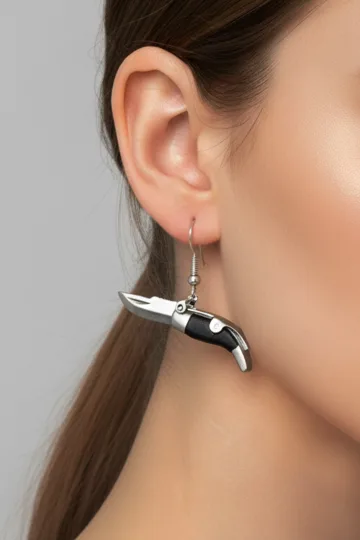
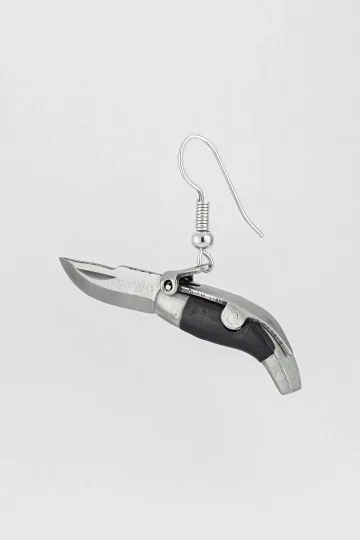
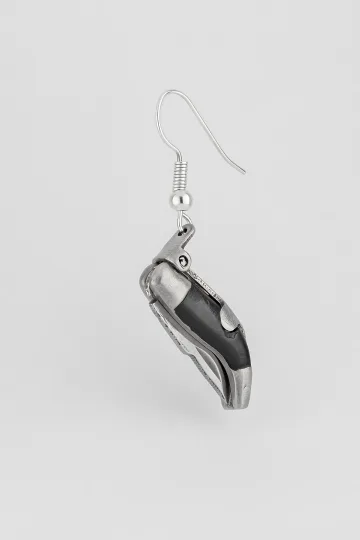
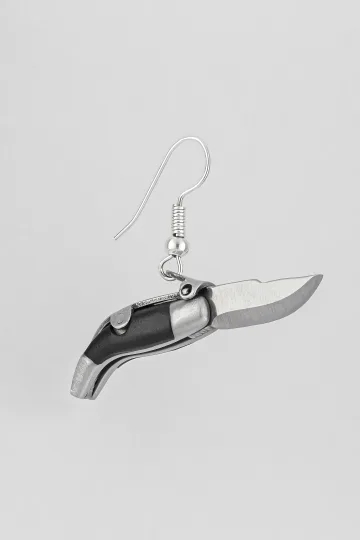
Wear the symbol, don't just read about it. These are in stock:







Clara looks at all of it and understands that her turn has not yet come. But her grandmother is already trying lighter earrings on her, children's earrings with tiny pearls. And she says the word Clara hears every March: fallera.
In Valencia the word does not mean "a festival participant". It means identity, belonging to a place, to a neighbourhood, to a family history. And the jewellery here is no accessory to the dress. It is the language through which that belonging passes from one generation to the next. A wordless language, read by those who know the system. By those who see in a pair of long pearl earrings both a beautiful object and a document of whose daughter you are and where you belong.
What Las Fallas actually is: the context the jewellery needs
Las Fallas runs in Valencia every year from 1 to 19 March. Officially the festival honours Saint Joseph, patron of carpenters. Local tradition says that medieval carpenters burned the wooden candle stands (called llums or falles) they had used through the dark winter months. As the days grew longer the extra light was no longer needed, and these stands were thrown onto fires right in the middle of the street. In time, effigies were attached to the stands, then caricatures, then whole satirical scenes.
Today hundreds of fallas are raised in the streets of Valencia: elaborate multi-figure installations of cardboard, plastic, wood and polystyrene, some up to ten metres tall. They are built over many months by specialist makers, the artistas falleros. On the night of 19 to 20 March, during La Cremà, every falla is set alight. The whole city comes out to watch the fire. In 2016 UNESCO inscribed Las Fallas on its list of the Intangible Cultural Heritage of Humanity.
Before they burn, though, the fallas pass through a series of solemn ceremonies. The greatest of these is the Ofrenda de Flores, a procession to the statue of the Virgen de los Desamparados (the patron of Valencia) carrying fresh flowers. Thousands of falleras in traditional costume take part. This procession is the festival's central visual event, the one broadcast on television and photographed by reporters from around the world.
The costum fallera, the traditional dress of the fallera, descends from the working and festive clothing of Valencian women in the eighteenth and nineteenth centuries. Over three hundred years it has turned from a living folk fashion into a strictly codified system in which every element, jewellery included, follows its own rules.
Silver with silver, gold with gold. Mix your metals in one aderezo and all of Valencia will clock it, no arguments.
How to wear the aderezo and its separate pieces
Dozens of sets have passed through my hands for the Ofrenda and the evening processions. Here is what actually works, by occasion and by the fabric of the dress.
Where do you start when building an aderezo? I always start with the fabric of the dress, not with the jewellery. For a pale espolín with a floral pattern I recommend silver and white pearl: the look comes out airy and daytime, ideal for the morning Ofrenda under the March sun. A dark burgundy or emerald ground I suggest balancing with gilded silver and garnet, and that is already a dense evening look for solemn ceremonies. The deeper the colour of the fabric, the quieter I keep the pearl in quantity.
How do you avoid breaking the look with layers? I work by the rule of layers without mixing. Earrings, pins, necklace and brooch have to speak one metal and one family of stones. A multi-row pearl necklace I pair with a compact joya principal, and if the central piece is large I drop the necklace to a single strand of medium length so the details do not argue for attention.
What earring length should you choose? I match the length to the oval of the face and the hairstyle. Three-part drops of maximum length I choose for tall hairstyles and solemn days, since they sway nicely as you walk. Shorter lágrimas work more softly on a round face and in a daytime look.
Can these pieces be worn beyond Las Fallas? They can, if you keep it to a single detail. Moderate pearl or garnet earrings from the set I suggest with a plain dress in a deep colour for the evening, or with a silk blouse and an open neckline at the office. A strand of pearls settles onto a plain black or cream dress and pulls the look together in a second.
How do you carry a costume piece into everyday wear? I keep one simple rule for the crossover. I choose a single piece, keep the metal the same as my usual jewellery, and never load the look with layers. Otherwise the aderezo detail starts to read as stage property rather than as everyday jewellery.

Turn on your camera, pick earrings, a pendant or a ring, and see the piece on yourself in real time.
Switch items in one tap.
Everything runs in your browser: no photo or video is ever uploaded.
The anatomy of the fallera costume: from fabric to jewellery
Before talking about the jewellery, it helps to understand what it completes. The costum fallera is not one dress with extras attached. It is a layered system of interlocking elements, and the jewellery is built into it naturally rather than placed on top.
The espolín dress. The central element. Espolín is a particular technique of silk weaving with a raised metallic pattern: gold or silver thread on a coloured ground. The word comes from "espuela" (spur): on the old jacquard looms a special hook resembled a spur. Fabric like this has been produced in Valencia since the fifteenth century. Its weight is tangible: a quality espolín is heavy, it holds the shape of the skirt and creates that characteristic silhouette with broad hips. The colour and pattern of the dress decide the choice of jewellery: pale fabrics with floral patterns call for silver and pearl, while dark burgundy or emerald grounds suit gilded silver and garnet.
Underskirts and crinoline. The espolín skirt keeps its shape thanks to several underskirts, sometimes with a stiff base. This is what creates that ceremonial volume of the silhouette.
Shoes and stockings. Traditionally: low-heeled or flat shoes with a bow, white or flesh-toned stockings. Modern costumes treat this part more freely.
The hairstyle with the peineta. The hair is shaped into a strict structure of buns (moños), into which the hairpins (agujas) are set, and over which the peineta sits. The hairstyle is so specific that it has become an art of its own, practised by professional peinadoras.
The jewellery (joyas falleras). Together these form a complete set known as the aderezo. Earrings, hairpins, a principal piece, a necklace, a brooch for the mantilla, sometimes a bracelet. The whole system of jewellery serves a single purpose: to build a look that reads from across the procession and still rewards a close inspection.
A well-chosen aderezo does not shout. It talks to the fabric. Silver with pearl goes with pale espolíns and floral patterns. Gilded silver with garnet strengthens a dark burgundy or emerald ground. Jewellery that is too loud against a loud dress creates competition between elements rather than harmony.
The aderezo: a system, not a collection
In jewellery terms the word aderezo means a coordinated set of pieces. For the fallera it is a strictly codified composition with both obligatory and optional elements.
The classic aderezo fallera includes three obligatory elements that together form an inseparable whole:
Agujas pareja. The pair of main hairpins for the side buns (rodetes). These are the chief pins, set symmetrically into the moños on either side of the head, and they must match in shape, metal and stones. They are the first thing a person sees when looking a fallera in the face.
Joya principal (the principal piece). The central and most important element of the whole aderezo. A large decorative piece worn in the hair (usually in the main bun at the back) or as a medallion on a chain. Its form and craftsmanship set the tone for the entire set: it is by this piece that the level of an aderezo as a whole is judged. The joya principal can take the form of a flower, a star, a medallion, or a brooch with intricate ornament. In older sets it carries ornament typical of a particular era and workshop.
Pendientes (earrings). Traditionally long, made of several parts, with movement. Fallera earrings are made for wearing in a procession, not for a quiet evening at home. They are meant to swing as you walk, to catch the light, to give a sense of ceremonial motion.
To these three obligatory parts are added:
Collar (necklace). Usually pearl, in one strand or several.
Broche (brooch). For fastening the mantilla. It may be a separate piece or part of the aderezo.
Agujas secundarias (secondary pins). Smaller pins to hold additional details of the hairstyle in place.
Pulsera (bracelet). For the most solemn occasions: the Falleras Mayores traditionally wear a five-strand pearl bracelet.
The whole logic of the aderezo rests on a single shared language. Every part speaks in the same metal, the same stones, the same style of ornament. Silver and gilding are not mixed within one aderezo. The pearls in the earrings and the pearls in the necklace must be calibrated to match in lustre. This is not pedantry: it is the condition under which an aderezo works as a whole, rather than as a collection of pretty things gathered at random.
The fallera's earrings: shapes, history, and why they are long
Pendientes valencianos are traditionally long. This matters and has always mattered: short earrings in a fallera costume look like a missed line in a conversation. Their length goes back to the baroque jewellery style of the eighteenth century, when drop earrings became the leading ornament in the festive dress of middle-class Spanish women.
The classic shapes of fallera earrings:
Almendra (almond). The upper part of the earring shaped like an elongated almond kernel, from which the drop hangs. One of the oldest variants. In Valencian culture the almond carries a meaning of its own: the almond tree blossoms in February, first of all the trees, and stands for the awakening after winter. The region of Valencia is covered in vast almond groves, and the shape of the kernel is familiar to everyone. Almendras in earrings are at once a jeweller's form and a local symbol.
Lágrima (teardrop). The lower drop in the shape of a tear. One of the most popular modern variants. The lágrima takes a pearl as its central stone beautifully: the shape of a pearl and the shape of a tear are naturally close. A romantic shape, soft, free of sharp angles, it works on any kind of face.
Pera (pear). Similar to the lágrima but rounder at the bottom, recalling a pear. Found in older sets of the eighteenth and nineteenth centuries. A slightly fuller form than the teardrop, it carries more visual weight.
De tres piezas (three-part). The earring divides into three visual tiers: an upper part, a middle section, a lower drop. Each tier may be a separate ornament or joined by a hinge, which gives that lovely swing as you walk. Three-part earrings are considered the most solemn: they are worn for the Ofrenda and other major occasions.
De barquillo (little boat). Named for the shape of the upper part, like an upturned boat. The construction is stiffer, with less movement. Favoured by those who prefer stability to swing.
De chorro (waterfall). Earrings with several vertical strands of pearl or stones falling in parallel. They create a waterfall effect, hence the name. The combination of pearl and silver works especially well in this style.
What unites all these forms is one thing: length. Fallera earrings fasten to the ear and descend at least three to five centimetres, sometimes more. In motion they swing, creating a rhythm visible even from several metres away.
On weight as part of the tradition
Historically fallera earrings were made of silver or gilded silver set with natural stones. That meant real weight: twenty grams of earrings on your ears for a full festival day, and the Ofrenda lasts several hours.
Women say that by evening their ears make themselves known. But no one thinks of taking the earrings off: that would break the look. There is something important in this detail about the nature of tradition. Fallera jewellery is not light decoration you put on and forget. It is worn. It is present all day as a physical sensation.
Customer reviews
Zevira is a real jewellery shop. Genuine payments, deliveries and customer thank-yous.
🥰🥰🥰 gracias
Ok, ¡gracias! 🙂
Hairpins: the agujas
Agujas, literally "needles", are the pins set into the buns of the hairstyle. They serve two functions: a mechanical one (holding the moños) and a decorative one (adorning the hair). In a well-assembled look it is impossible to say where one function ends and the other begins.
A typical fallera hairstyle has three buns: one at the back (the moño trasero, the larger one) and two side rodetes. Into each bun go one or more agujas.
Joya. A pin with a decorative top coordinated with the rest of the aderezo. These are the main pins, the ones the viewer sees. The form of the top often echoes the motif of the earrings or the joya principal: if there is a flower in the earrings, the top of the pin is a flower too. This creates an ornamental echo noticed by those who know how to look.
Raspa. A secondary pin of simpler construction for fixing a bun. Less decorative, but still visible in the hair.
Espasa y cañón. A system made of a "sword" (a long pin, the espasa) and a "barrel" (the hollow base, the cañón), around which a figure-of-eight bun is shaped. The system has existed since at least the eighteenth century and is shown in Spanish engravings of the period. Mechanically it is a very dependable solution: the bun does not come apart even under vigorous movement.
The profession of peinadora exists in Valencia as a specialism within hairdressing. Good peinadoras work from early morning in March, taking clients one after another: the processions start early, and every fallera has to arrive with her jewellery ready. The peinadora builds the hairstyle and sets the pins exactly to the aderezo. Wrongly set agujas press on the skin and can come apart at the worst possible moment.
The peineta: a crown
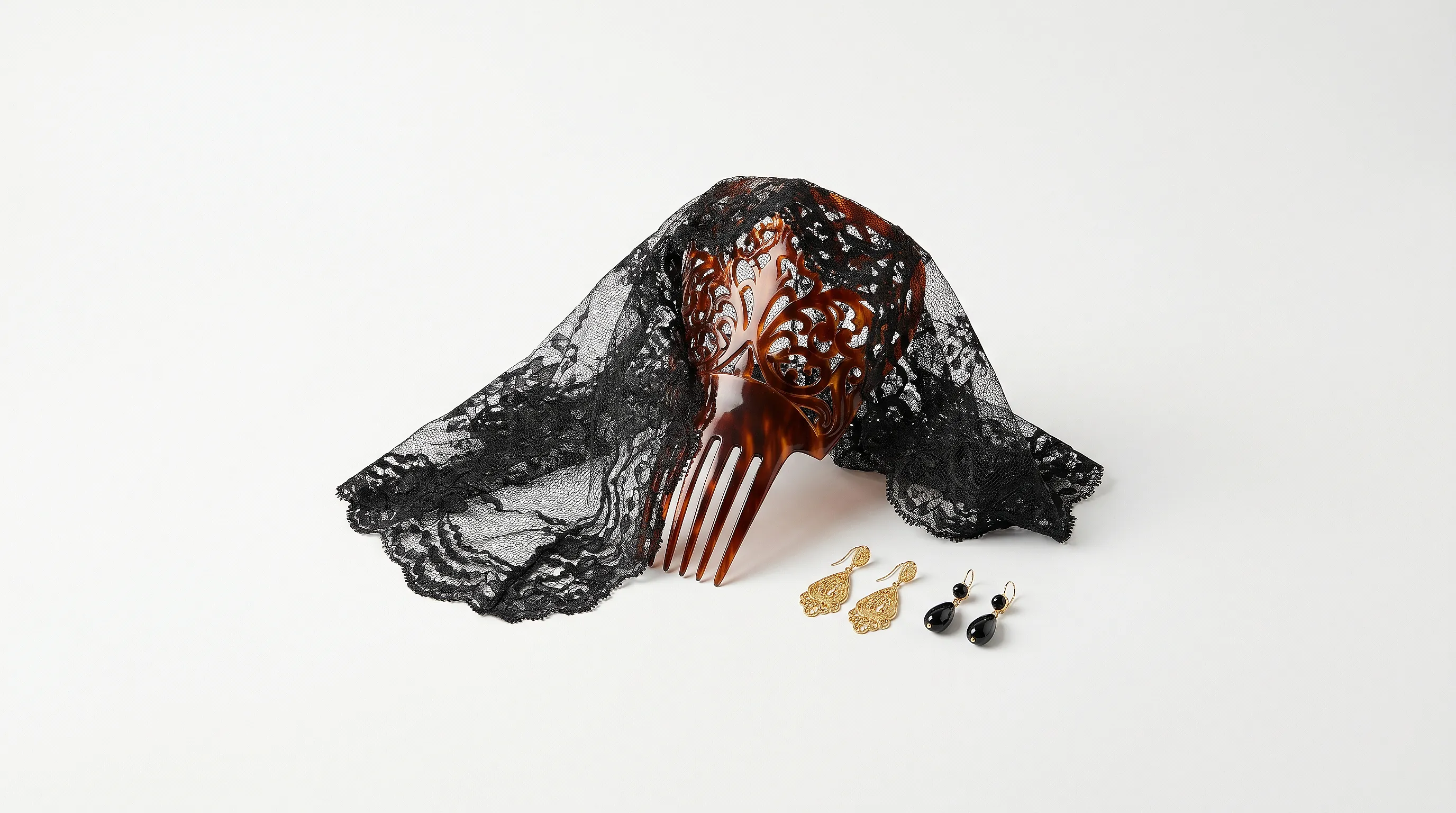
The peineta is a large decorative comb set into the hair from above, rising over the head. In the fallera costume it is one of the most visually striking elements. A woman in full costume with a peineta fifteen centimetres tall reads as a silhouette even in a crowd. The pairing of peineta and lace veil came into the Valencian costume from the wider Spanish tradition, covered in detail in the piece on the peineta and mantilla as a Spanish symbol.
Historically peinetas were made of tortoiseshell (carey). The material polished well, gave a beautiful pattern of brown and gold streaks, and was strong enough. In the nineteenth century large tortoiseshell peinetas cost a great deal. They were an expensive gift and a sign of family means.
Natural tortoiseshell is now banned: the turtles whose shells were used are on CITES protected lists. Modern peinetas are made of celluloid or cellulose acetate with an imitation pattern: concha (shell, a light pattern), tortuga (tortoise, a brown-amber pattern) or habana (tobacco, a darker tone). To the eye the difference from natural tortoiseshell is minimal.
The size of the peineta varies with the solemnity of the occasion. Classic peinetas of the sixteenth to eighteenth centuries did not exceed six to eight centimetres in height. The later ceremonial peinetas of the nineteenth century reached fifteen to seventeen centimetres. Modern ones for the appearances of a Fallera Mayor can be larger still.
The techniques for making metal peinetas with ornament are chasing (cincelado), embossing (repujado), openwork carving (calados) and filigree (filigrana). Valencian jewellers make peinetas to order, adapting the ornament to a specific aderezo and the colour of the dress.
Some peinetas are neutral in their ornament and suit different dresses. Others are made for a particular espolín, the comb's pattern rhyming with the pattern of the fabric. Such peinetas are made for one look, but that look is flawless.
Upload a photo of your pet, someone you love, or an object. We'll build a 3D model and hand-cast it in pewter.
The necklace and the medallion
The collar in an aderezo fallera is traditionally a pearl one. A strand of pearls in one row or several is a classic resistant to fashion and time. Pearl was available along the Mediterranean coast, it was highly valued, and it sat well with silver. Sixteenth and seventeenth century Spain was a major consumer of pearl from the American markets, and that left its mark on the Spanish jewellery tradition.
For more solemn occasions a medallion is added to the necklace (a colgante or medallón). A pendant with a central stone or a miniature image, often religious. Girls who are falleras often wear medallions with images of the Virgen de los Desamparados, the patron of Valencia. For grown falleras the medallion may be a family heirloom with a story of its own.
The length of the necklace is chosen to suit the neckline of the dress and the proportions of the figure. The principle is firm: the necklace must not compete with the joya principal. If the central piece is large, the necklace can be a single strand of pearls of medium length. If the joya principal is compact, the necklace may be richer, in several rows. Balance between the parts of a look, not competition, is the guiding principle of any aderezo.
A multi-row pearl necklace combined with a multi-row bracelet and de chorro earrings makes the most solemn look of all, the one typical of the Falleras Mayores on the festival's main days. It is a look in which pearl becomes an architectural element of the costume, comparable in weight to the fabric of the dress.
On the properties and kinds of pearl, the differences between them and how to choose, there is a complete guide to pearls.
The brooch: function and symbol
The broche in the fallera costume solves a concrete mechanical problem: it fastens the mantilla or pañoleta at the shoulder. At the same time the broche remains one of the visible points of the look, so it must belong to the aderezo rather than be a chance addition.
Traditional mantilla brooches are round or oval, with a central stone and an openwork frame. They often repeat the ornamental motif of the earrings or the joya principal, creating a visual unity between the jewellery in the hair and the piece at the shoulder.
There is a separate category: the broche de cintura, a belt brooch worn at the waist over the dress's sash. Large and decorative, it creates a third "focal point" in the look. In the most solemn aderezo it is coordinated in ornament with the earrings and the joya principal.
Smaller additional brooches are sometimes placed on the lace insert of the bodice. These are details invisible from a distance but clearly seen by anyone looking up close.



Stones in the Valencian aderezo: the logic of the choice
The stones in fallera jewellery follow tradition and the logic of visual balance with the fabric, not a random choice by the fashion of the season.
Pearl. The main one. Present in most aderezo in one form or another. Pearl was available along the Mediterranean coast and along the trade routes, it was highly valued, and it sat well with silver. Modern sets use cultured pearl: Japanese (Akoya) or South Sea. In replicas and more affordable sets, imitation pearl (perla cultivada sintética), which looks dignified if it is calibrated and has a steady lustre.
Garnet. Deep red, saturated. One of the traditional stones of the Iberian Peninsula: in Spain garnet occurs both in natural deposits and in trade from the sixteenth century. It works well with gilded silver, creating a combination typical of Spanish baroque jewellery of the seventeenth and eighteenth centuries.
Coral. Red Mediterranean coral was historically widespread in the jewellery of Valencia and Catalonia. Some old sets keep coral insets as an authentic detail. Today natural red coral is rare and expensive, and in new aderezo it is replaced by imitation or acrylic.
Rock crystal and paste. In more affordable sets the central stones are made of rock crystal or high-quality glass. This is not a fake: crystal appeared in Valencian jewellery of the eighteenth and nineteenth centuries no less often than natural stones. Good paste, well cut, gives a sparkle that reads clearly from across the procession.
Emerald. In expensive and antique sets. Green emerald looks wonderful with fabric in golden-burgundy or cream tones. Dark green insets in silver with pearl create a combination seen in Spanish baroque painting as a sign of means.
Ruby. A saturated red ruby adds depth to dark looks. In an aderezo the ruby appears more often in historic sets; in modern ones it is often replaced by garnet or a red hydrothermal crystal.
Sapphire. For looks with pale blue or white fabric. A blue sapphire or a synthetic blue stone in a silver setting with pearl gives a cool, austere beauty.
One rule does not change: the stones in an aderezo must be coordinated with one another and with the metal. Not necessarily identical, but from one family of colour and tone.
Pearl: the heart of the system
Pearl holds in the Valencian tradition the place that in other jewellery cultures belongs to diamonds: it is the marker of solemnity. The more important the occasion, the more pearl there is and the more carefully it is chosen.
This is no accident. Pearl has several qualities that make it ideal for the fallera look.
The first: readability at a distance. In a procession, under the open sky, in the bright March sun, small transparent stones get lost. Round white pearls are seen clearly from several metres away. Their form is universal: they do not "sag" in a look under any lighting.
The second: neutrality of colour. Pearl suits any ground. White pearl with silver and white pearl with gilding give different effects, but both work. This is a rare quality: most stones are demanding about their neighbours.
The third: cultural memory. From the fifteenth to the seventeenth century Spain was one of Europe's largest consumers of natural pearl: the mother-of-pearl shells were fished off the coasts of Venezuela, Panama and Mexico. That pearl went into the jewellery of Spanish families of every station. It entered everyday life, the small luxuries of the household, the very idea of dignity. The fallera tradition inherited this relationship with pearl.
Today no serious aderezo does without pearl. Even in the simplest sets a strand of imitation pearl remains an obligatory element.
Leave your email, we'll send your discount code. No spam, unsubscribe anytime.
The code arrives by email, valid on your first order.
Antique jewellery and modern makers
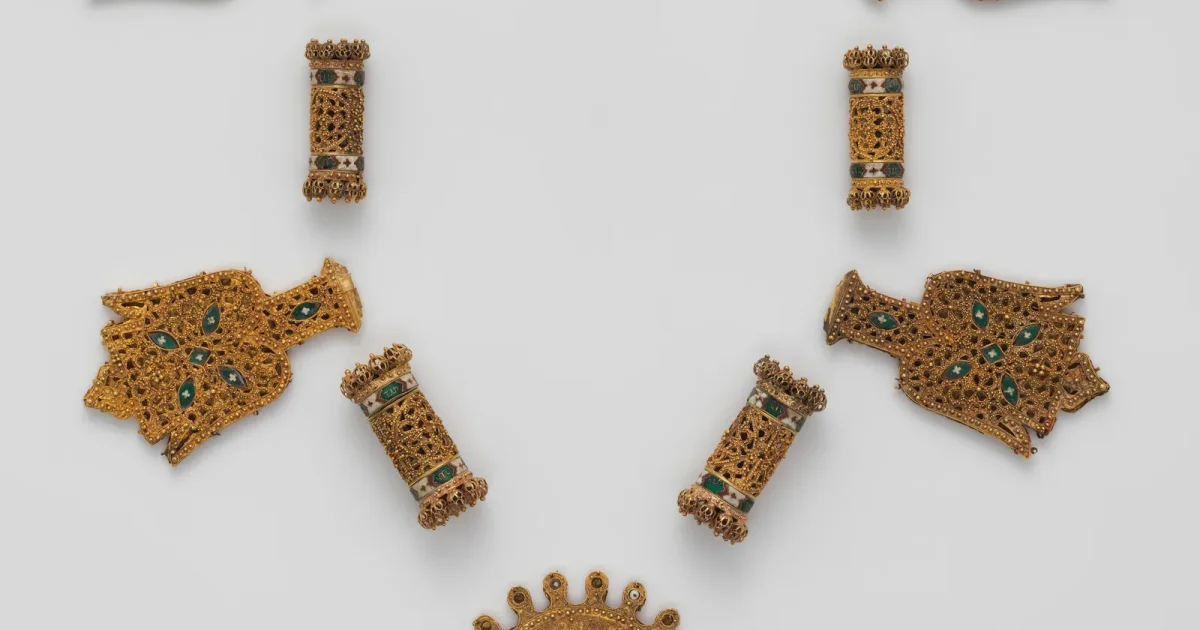
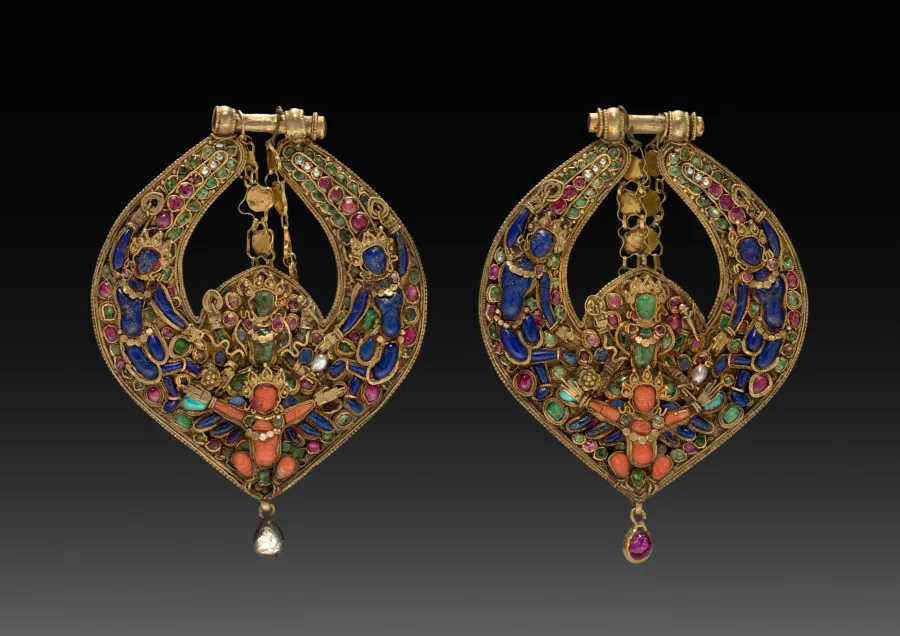
A full aderezo of the nineteenth or early twentieth century is today a historical document in the form of jewellery. The record of a specific jewellery tradition: a specific maker, specific silver, a specific hand. The orfebres of that time worked in recognisable styles, and a specialist can identify the workshop by the character of the filigree or by the form of the settings. The Valencian school is only one branch here: on how the regional jewellery traditions of Spain and their techniques differ, it is worth reading separately.
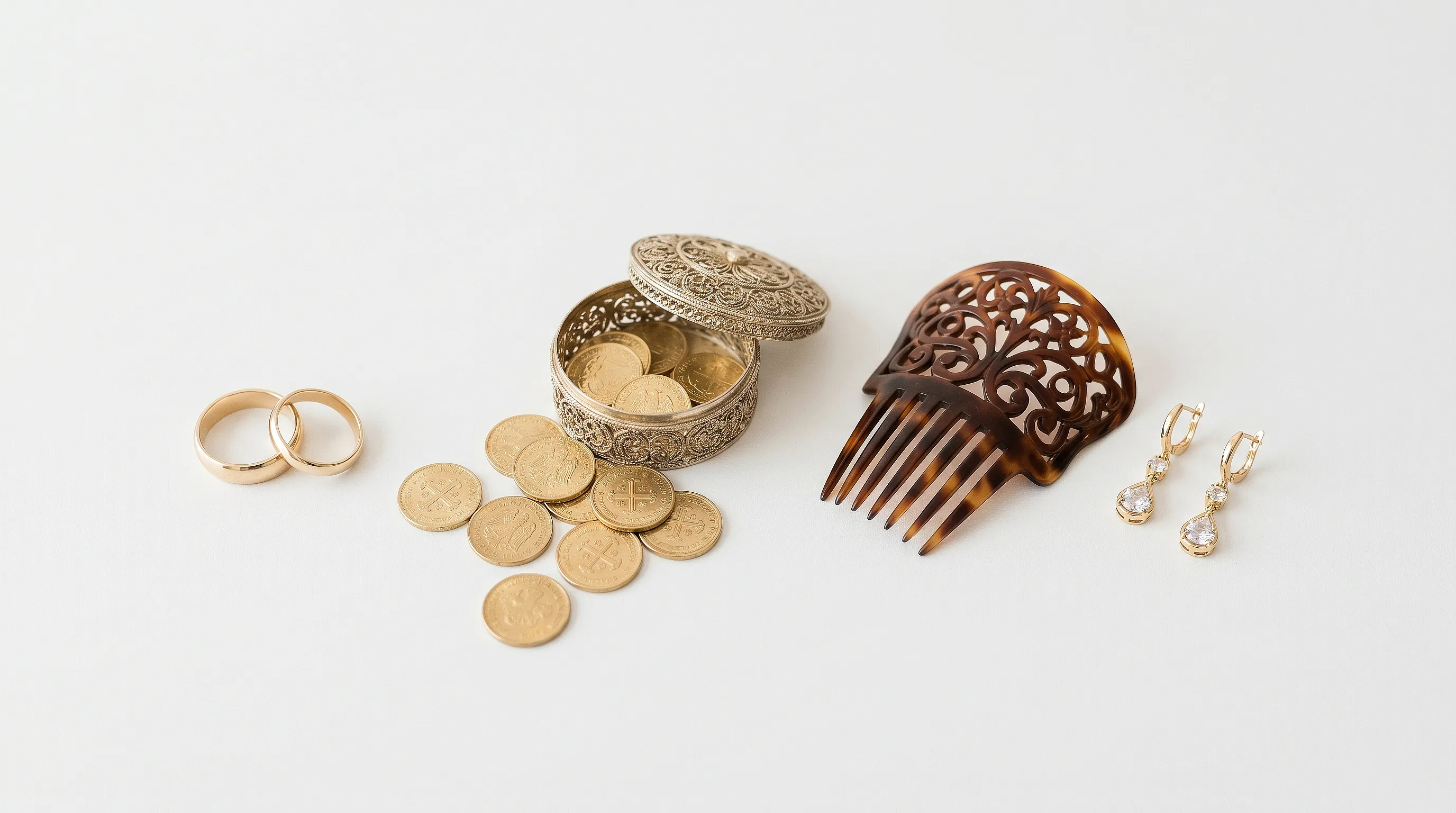
Many families keep their historic aderezo as an indivisible part of the family property: they do not break it up into parts, they do not sell it. An antique aderezo is a memory of specific people, and money here is secondary. A family that sells its grandmother's earrings separately loses something money cannot replace. This way of treating jewellery as a family heirloom links the aderezo with other Spanish ritual objects: for instance with the wedding arras and wedding rings, which are also kept and passed down through the generations.
At the same time the market for modern aderezo in the traditional style is well developed. Valencia's craftsman jewellers make new aderezo by hand, using traditional techniques: filigrana, repujado, cincelado. Such a set will be entirely new, but it will hold the same logic and the same weight as a historic example. And in a hundred years it will become an antique with a story of its own.
The difference between a replica and an original modern aderezo is fundamental: a replica copies a specific historical example. An original modern aderezo is created anew within the traditional system, with the maker's own eye.
A good deal of stubborn misunderstanding has gathered around fallera jewellery: about its age, its materials, and about who may wear it and how. The most common of these deserve a closer look.
How to read the quality of an aderezo
A few concrete criteria for judging it:
Weight. A quality aderezo has a tangible weight. Earrings of thin metal with plastic insets weigh a few grams. Real silver earrings with stones and pearl weigh fifteen to twenty grams. The difference is felt at once.
The silver hallmark. A genuine aderezo is made of 925 silver. The hallmark should be marked on each piece. In Spain silver is hallmarked by law: look for the "925" mark or the Spanish jewellery hallmark. If there is no mark, it is not silver.
Handwork. You can tell handwork from stamping by the unevenness of the details. In handwork there is no absolute symmetry: there are small variations in the ornament, slight irregularities in the filigree. This is not a defect, it is a mark of authenticity.
Hinges and clasps. Long earrings should have secure, tightly closing fastenings. Fallera earrings are worn all day, and the clasp must withstand hours of movement without risk of losing the earring. A poor clasp is a systemic error, not a small one.
Calibration of the pearls. In a quality aderezo the pearls are matched and calibrated: every pearl in the necklace is of equal diameter (give or take half a millimetre), of even lustre. Variation in size or uneven lustre points to a budget assembly.
Coherence of the elements. Within an aderezo everything speaks one language. If you are offered the chance to "put together" an aderezo from mismatched pieces of different styles and eras, that is not an aderezo but a collection.
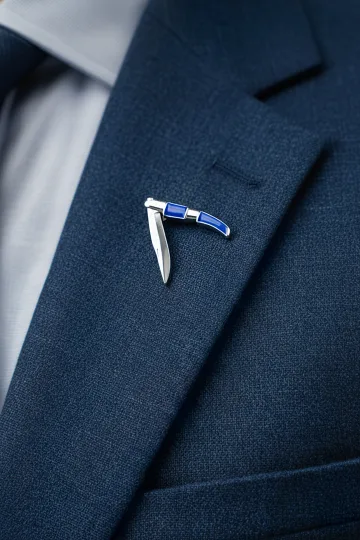
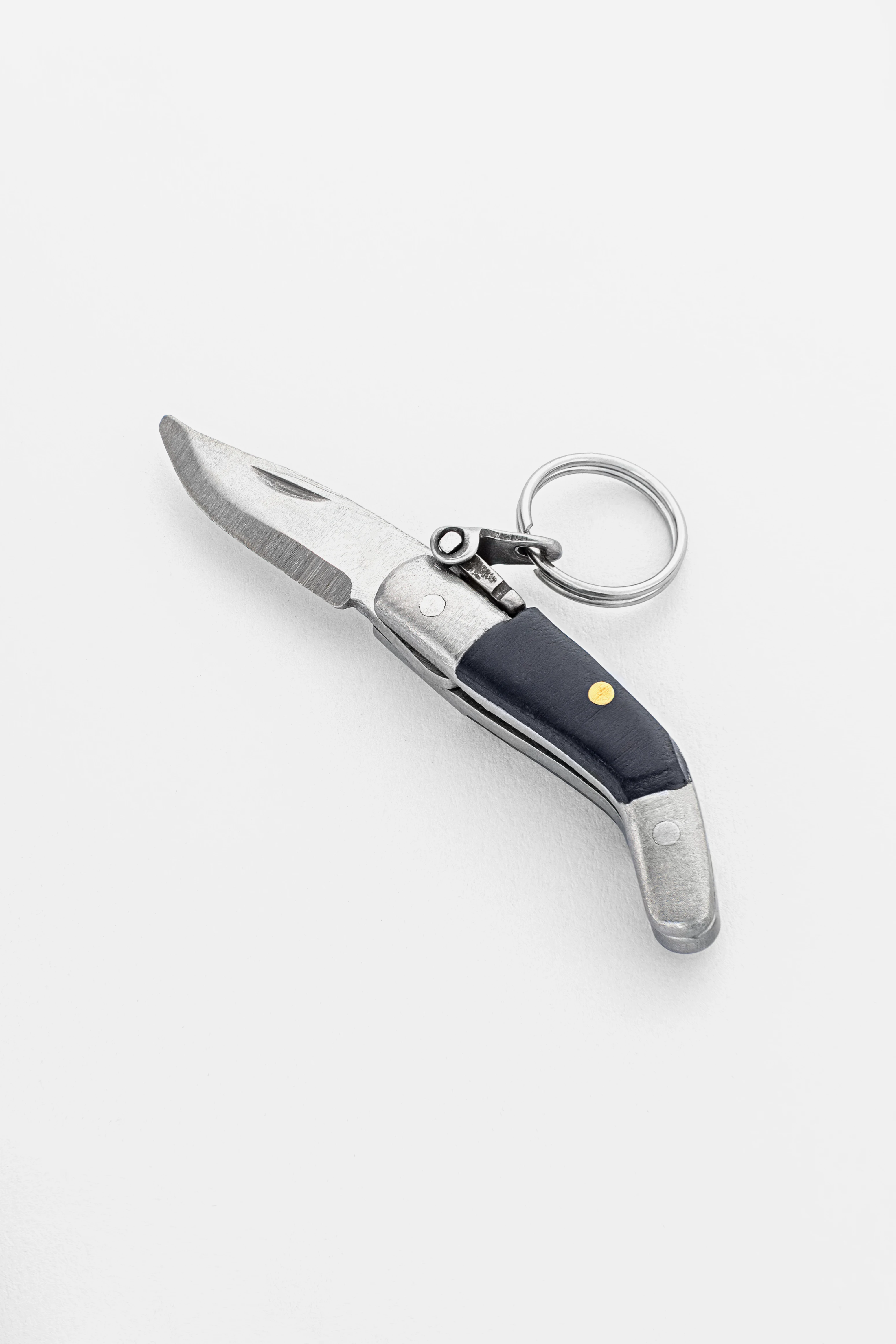
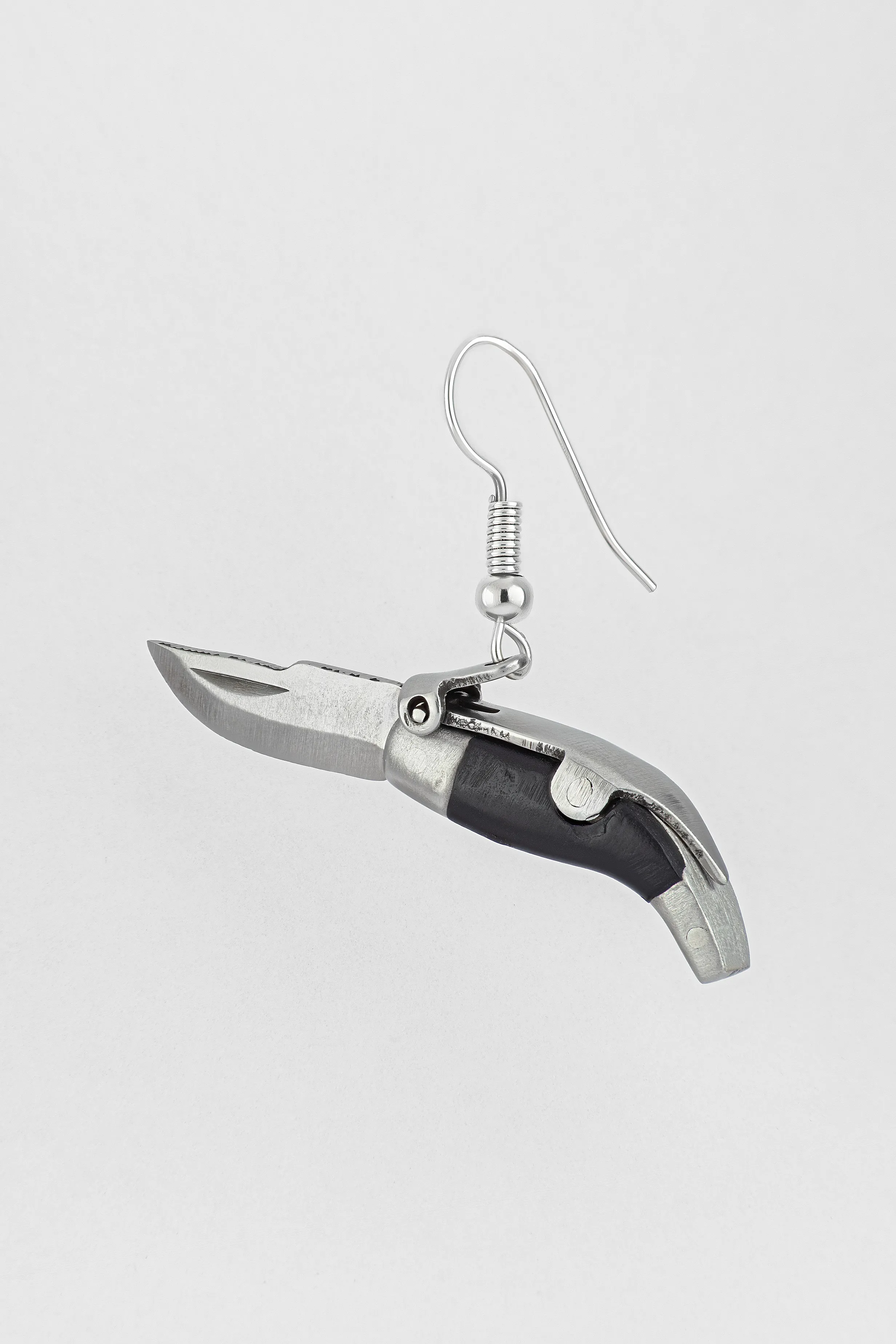
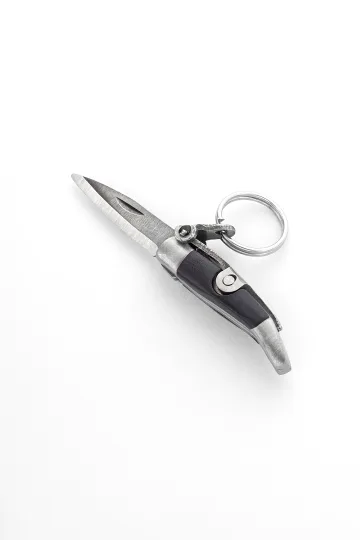
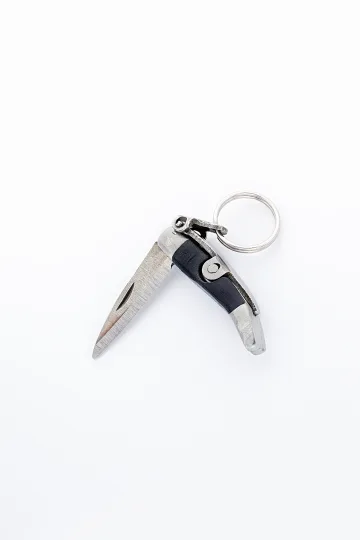
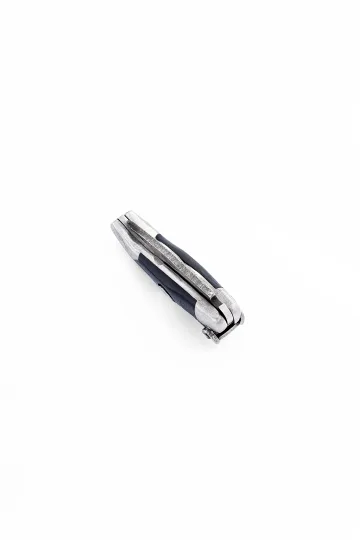
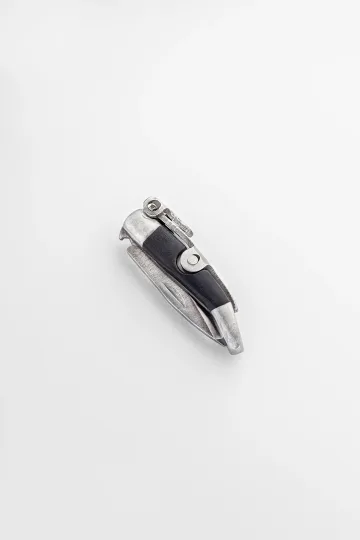
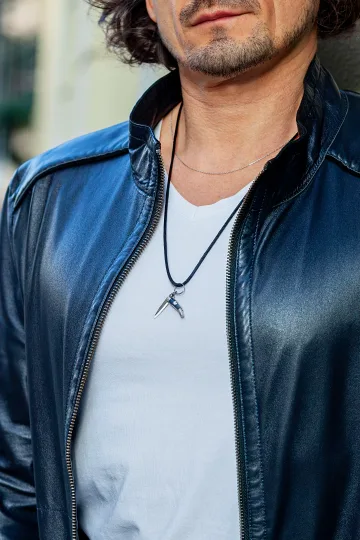
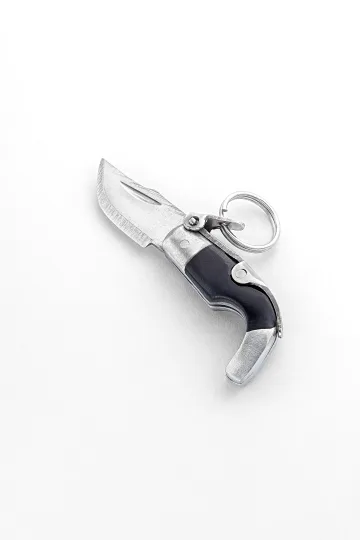
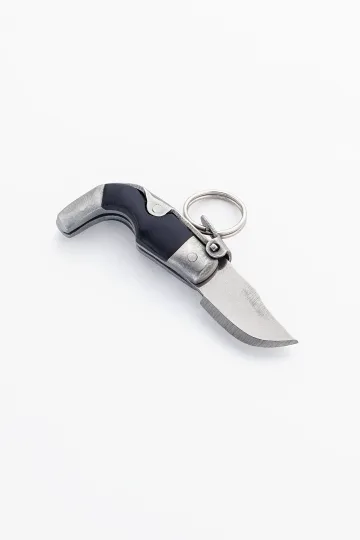
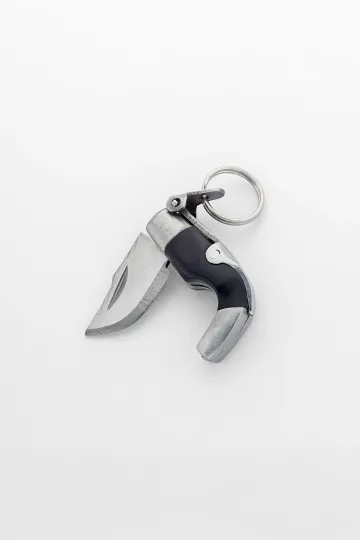
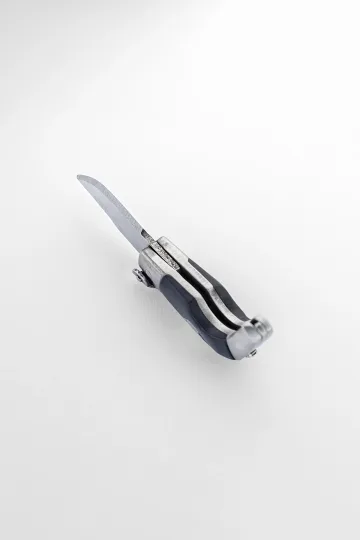
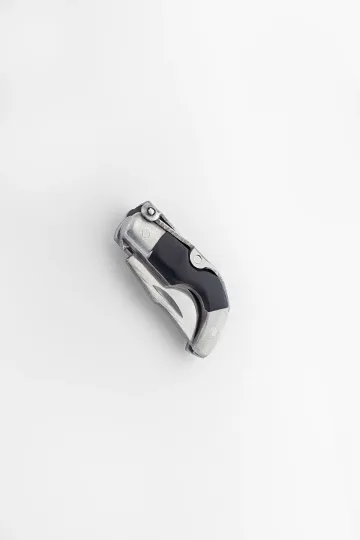
CAPAORA mini knife pendant
The 18th-century Spanish navaja in miniature: 40 mm of stainless steel, a real folding mechanism and a Palanquilla lock that clicks. An affordable gift to remember.
Authentic · Ships from Spain · 14-day returns
Passing the jewellery down
In the families of Valencia the passing of an aderezo from mother or grandmother to daughter or granddaughter is an event with a solemnity of its own. Not every family owns a full antique set, but many keep the key pieces: the earrings, the joya principal, a strand of pearls.
The handing over does not necessarily happen at an official moment. Often it is that very March ritual before the Ofrenda, when the grandmother brings out the box and first tries the earrings on her granddaughter. The moment of trying on can be an unofficial handing over: see how they suit you, keep them for next year.
When a girl puts on her great-grandmother's earrings for the Ofrenda, she literally walks in the same jewellery the older woman walked in a hundred years ago. This is not a metaphor of continuity, it is a physical connection to a specific person through an object.
Some pieces are passed on unchanged. Others are adapted: old earrings may have an outdated type of fastening, which is replaced with a modern one without changing the look of the piece. A broken pin is restored by a jeweller while keeping its patina.
The tradition of keeping family jewellery has created a separate market in Valencia: the restoration and adaptation of historic aderezo. Good makers know how to work with old metal without destroying its character: they preserve the patina in the recesses of the ornament, work with the original stones, and strengthen the weakened places without visible signs of intervention.
Jewellery for child falleras
Girls take part in Las Fallas from a very early age. Each falla chooses its Fallera Mayor Infantil, the chief little fallera of the neighbourhood, and she carries all the attributes of the role, including a full costume and aderezo.
Children's jewellery follows the same system as the adult one, with adjustments:
Weight. A child's aderezo is lighter. The earrings are smaller, with finer detail. The pins are shorter. The necklace is a single strand.
Fastenings. Children's earrings are often on a discreet clip or a thin hook rather than a fishhook, which is harder for a child to fasten alone.
Materials. Children's sets more often use cultured pearl of a smaller diameter, or imitation pearl. The stones are usually rock crystal or glass.
The size of the peineta. A child's peineta is smaller than an adult's, otherwise it is out of proportion to the child's height.
Many families set up a first aderezo for their daughter even before her first procession, often for her first March birthday or her christening. It becomes the first piece of jewellery the girl remembers as her own.
Falleras Mayores: the special sets
The Fallera Mayor of the city and the Falleras Mayores of the neighbourhood commissions wear an aderezo of another scale. These are the most solemn sets of the festival: the maximum amount of pearl, large peinetas, multi-part earrings of the highest level of craftsmanship.
For the Fallera Mayor Infantil and the Fallera Mayor de Valencia there are traditional requirements for the composition of the aderezo. A bracelet of five rows of natural pearl. A multi-row necklace. Ceremonial agujas with a large joya principal. Earrings of maximum length with several drops.
Such sets are often provided or arranged with the involvement of the juntas, the organising committees. Some historic aderezo are kept in museums and worn only on special days. Others are commissioned specially for a particular Fallera Mayor from the best jewellers in the city.
To be a Fallera Mayor means, among other things, to carry this aderezo with dignity. It is physically demanding: the weight of the jewellery, the weight of the hairstyle, several hours under the March sun. But that, precisely, is part of the role.
Trends for 2026: what changes and what stays
The world of Valencia's traditional jewellery moves slowly. This is not fashion in the ordinary sense: nothing radical happens in a single season. But over a decade changes accumulate that you can see in hindsight.
Sustainable materials and lab-grown pearl. A new generation of jewellers works with recycled silver, with lab-grown pearl, with synthetic stone alternatives. Lab-grown pearl of the Akoya type often surpasses cheap natural pearl in lustre and calibration. This is not a fall in quality: it is a shift in the criterion of quality from "natural" to "beautifully and precisely made".
Minimalism as an interpretation. Some young falleras choose a more restrained aderezo: fewer details, cleaner lines, high-quality stones instead of their quantity. This is not a rejection of tradition but a reading of it through modern taste. A minimalist aderezo of 2026 still includes the same three obligatory elements, only each of them is less ornamented.
Colour accents. Brooches and joya with stones in colours untypical of the classic sets: deep blue, rich emerald, dark purple. This works as a modern detail within a historical system, especially when the colour of the stone rhymes with an accent colour in the pattern of the espolín.
Bespoke brooches. Commissioned broches with a personal ornament: initials, the flora of the region (orange blossom, almond, pomegranate), the symbols of a particular barrio. This is a way of staying within the tradition while adding a personal biography to it.
Mixing generations in one aderezo. Antique earrings with a new joya principal. A grandmother's pins with a new necklace. Such "hybrid" aderezo are increasingly accepted: they create a piece with a layered history and let young falleras include family heirlooms in their look without trying to assemble a full antique set.
Send a friend a discount code, they save on their first order.
Where the aderezo is bought in Valencia
The market for traditional fallera jewellery is concentrated in a few parts of the city.
Calle de la Paz and the surrounding streets. Valencia's central jewellery street. Here are several shops specialising in traditional jewellery for the indumentaria. In February and March the windows of these shops look their best.
The Russafa district. A younger artistic quarter. Here are small workshops combining traditional technique with an individual eye. You can find modern interpretations of classic forms with unusual stones or unconventional proportions.
The Barrio del Carmen. The historic centre, where small jewellery workshops working to commission have survived. Here the aderezo is created for a particular costume: the jeweller looks at the fabric of the dress and chooses the stones and the metal.
Specialist indumentaria fallera shops. Shops selling the complete set for the costume: fabric, dresses, underskirts, shoes and jewellery. Buying an aderezo here is convenient, but the choice is often limited to standard sets.
The artesanía fallera fairs in March. Temporary markets where jeweller-makers sell their work directly. This is a good chance to see the whole range of prices and quality, to talk to the maker and commission something specific right at the fair.
When buying an aderezo it is worth carrying a photograph of the dress or a sample of the fabric. A jeweller who knows the trade will judge in a few minutes what from the range will suit a particular espolín in colour and tone. Without that reference, buying an aderezo turns into guesswork: a piece that looked good on the stand may get lost against a particular fabric or create an unwanted clash of colour.
Caring for the antique pieces of an aderezo
Antique silver needs care different from that of modern jewellery.
Storage. Each piece of the aderezo is stored separately, wrapped in a soft cloth free of synthetic fibres. Soft cotton flannel is best. The silver must not touch other metal: contact speeds oxidation. The box should be dry and away from direct light.
Patina. Antique silver has a deliberate patina in the recesses of the ornament, formed over decades. This patina need not be removed: it emphasises the relief of the work and visually "reads" the detail. Clean only the raised surfaces, leaving the patina in the recesses untouched.
Cleaning. For silver: a special silver paste, a soft cloth, gentle work in circular motions over the raised parts. No ultrasound for antique pieces: ultrasound destroys old clasps and weakens the soldering.
Pearl. Pearl fears acid, perfume and sweat. Before putting jewellery on: perfume first, then jewellery. After wearing, the pearl is wiped with a soft damp cloth. The string of a pearl necklace is restrung by a jeweller every few years with regular use: over time the string soaks up grease and stretches.
Checking the stones before wearing. The stones in old settings are held by prongs or by glue that weaken over time. Before each use it is worth checking that all the stones are in place and that not one of them moves. A moving stone is a risk of losing it in the procession. Better to take it to a jeweller in good time.
The cost of an aderezo: bearings without figures
The market for an aderezo fallera covers a very wide range. Some bearings without prices:
A cup of coffee a day. A set of plated metal with imitation stones. It looks good at a distance and suits a first appearance or children. It does not last: the plating wears off, the imitation pearl loses its lustre.
A dinner for two at a good restaurant. An aderezo of 925 silver with cultured pearl and quality crystals. Pieces worn for years. This is the level to start from if you plan to take part in Las Fallas regularly.
A short holiday. A full handmade aderezo from a Valencian maker with natural stones and calibrated pearl. A piece for a decade, one that only gains character over the years.
A family heirloom. An antique aderezo of the nineteenth or early twentieth century, or a full bespoke set from a well-known jeweller of the city. A piece kept and passed down.
An aderezo lives a long time. A good set, bought once, will serve a lifetime and pass to the next generation. This is a different economy from that of fashion jewellery.
FAQ
Is it obligatory to wear the full aderezo, or can you limit yourself to a few pieces? Tradition assumes a coordinated aderezo, but there are no strict prohibitions. Many participants, especially in their first years, limit themselves to earrings and a pair of pins. Over the years the set usually grows: a necklace is added, then the joya principal, then a brooch. An aderezo is not a single purchase but an accumulation.
Can you wear pendientes valencianos outside Las Fallas? Technically yes. In practice, long earrings and the joya fallera are so associated with the festival and the particular costume that in everyday life they are rarely worn. The exception: individual pearl or garnet earrings from an aderezo, of moderate size, work well as everyday jewellery with no tie to the costume.
What do you do if part of an antique aderezo is lost? Good Valencian jewellers know how to create replacement pieces in a particular historical style. This does not contradict the tradition: historically aderezo were supplemented and restored. The key is that the new piece be coordinated with the remaining ones in metal, ornament and stones.
How do you tell a quality aderezo from a souvenir product? Weight, the 925 silver hallmark, handwork in the details. Souvenir sets are light, without a hallmark, with perfectly identical details of industrial stamping. A genuine aderezo has weight, is hallmarked, and has the irregularities of the hand.
Do you need a professional for the peineta and the agujas? You can set the peineta yourself if you know the right position. Complex agujas in a three-part hairstyle with three moños are better left to an experienced peinadora: wrongly set pins press on the scalp and may fail to hold the bun at the critical moment.
Which silver is better: rhodium-plated or natural? It depends on preference. Rhodium-plated silver does not tarnish and keeps its shine longer without care. Natural silver darkens over time and needs periodic cleaning, but many prefer exactly this living, changeable character of the metal, especially in antique pieces.
Can a tourist or a non-Valencian wear an aderezo fallera? Without restriction. Las Fallas is an open festival, glad to welcome everyone. If a visitor comes in traditional costume with an aderezo, it is taken as respect for the tradition. Jewellers and indumentaria sellers are used to explaining the system to people without local roots.
Buying it as a gift? Each one arrives ready to give.
 A branded Zevira box and a little card come with every order.




In closing: a language understood without translation
Every March Valencia puts on its jewellery. More than a million people in the processions, thousands of aderezo, from the children's sets with their small earrings to the ceremonial ones of a Fallera Mayor with their multi-row pearl.
Fallera jewellery is no display of wealth, though wealth may be part of it. It is a system for passing memory through objects. A family that has its great-grandmother's aderezo keeps not the metal and the stones but a living thread to a specific time and a specific person.
In that sense the tradition of Valencian jewellery for Las Fallas matches what jewellery does in general: it turns the material into a carrier of meaning. Rings, earrings, pins live longer than those who wore them. And each time little Clara tries on her great-grandmother's earrings, something of that life continues.
That is the true function of jewellery. To keep and to pass on, to the next Clara. The Valencian tradition of the aderezo fallera has lasted three hundred years not because it bent to fashion but because each generation found meaning in it: personal, family, local. That very rootedness is what keeps it alive today, and gives the confidence that Clara will pass her earrings on.
Pearl earrings, hairpins, brooches and pendants in 925 silver and gold that sit well with the traditional Valencian costume and are worn every day.
About Zevira
Zevira makes jewellery in the artisan tradition of Albacete, Spain. The logic of the aderezo fallera is close to us: jewellery as a coordinated system and as something passed on rather than a single-use accessory. That is why we make pieces that come together into a whole look and last for decades.
What you can find with us on the theme of the costume and the sets:
- Long earrings with pearl and drops, close in form to pendientes valencianos.
- Pearl necklaces in one strand and several for a coordinated set.
- Brooches and pendants with restrained ornament for the mantilla and the bodice.
- Jewellery in 925 silver with garnet, rock crystal and cultured pearl.
- Light children's earrings and fine chains for a girl's first set.
- Matched pieces, coordinated in metal, that come together into a single aderezo.
Every piece can be personalised with engraving by a maker, with the option of personal engraving. 925 silver and 14 to 18K gold.