Fire Opal: Chemistry, Geology, History and How to Choose the Stone
The fire that isn't really there
Pick up a fire opal and it sits cool in your palm, like any other mineral. No heat at all. The entire "fire" of this stone is pure optics: the warm orange-red tone is born inside hardened silica, not on the surface. And unlike ruby or garnet, which owe their colour to chromophore impurities, the colour of a fire opal rests on tiny inclusions of iron oxides scattered through an amorphous, water-rich mass.
From here on, no esoterics and no invented auction records. We will look at what this stone is made of, where it forms in the earth, what different cultures did with it, how to tell it apart from look-alikes and fakes, and how to care for it so it does not cloud over or crack.
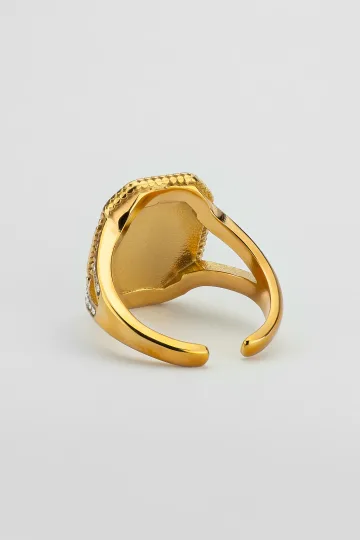
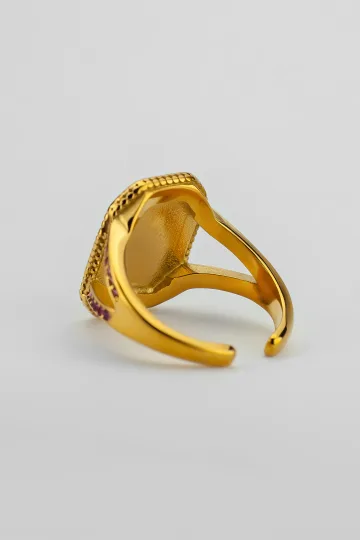
Wear the symbol, don't just read about it. These are in stock:



What a fire opal is: composition and physics
Amorphous silica with water
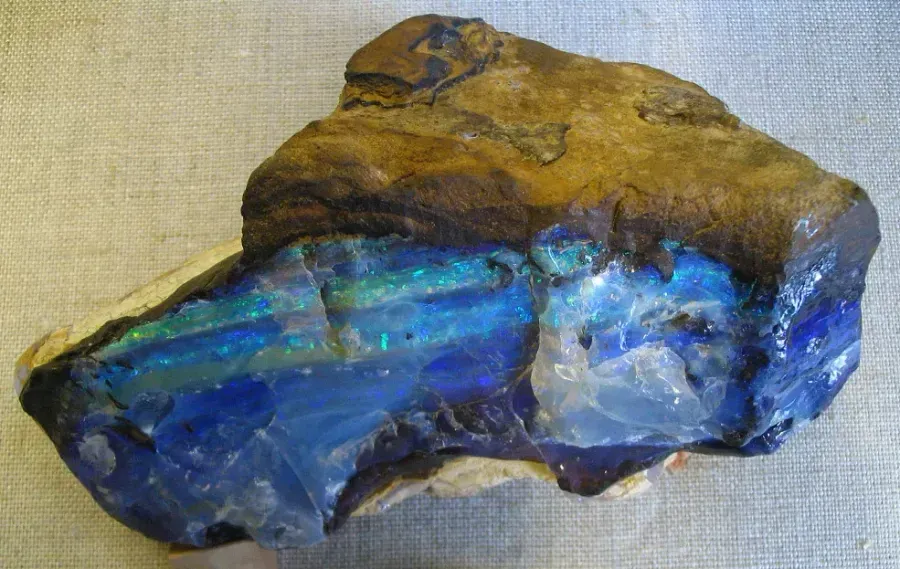
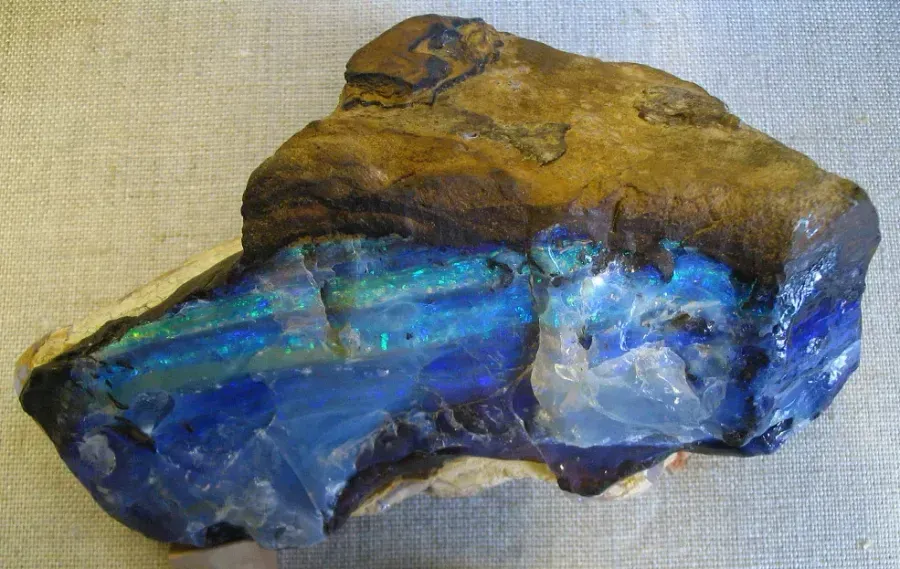
Fire opal is a variety of precious opal, a mineraloid with the formula SiO2·nH2O. The base is silicon dioxide, the same as in quartz, but with one fundamental difference: opal has no crystal lattice. It is an amorphous substance whose molecules are not arranged in a regular geometric order. Gemmology classifies it as a mineraloid rather than a mineral in the strict sense, precisely because it lacks a crystalline structure. Opal has no crystal system.
The second key feature is water. Opal's structure holds between 3 and 10 per cent of it, sometimes up to 20. The water is locked between silica spheres and in the pores. If it gradually evaporates, the stone clouds over and can crack. This phenomenon is called crazing, and it is the reason behind all the strict storage rules we will return to below.
Hardness, density, optics
On the Mohs scale opal sits at 5.5 to 6.5. That is noticeably softer than quartz at 7, and far softer than corundum at 9. The stone is easily scratched by sand, glass and many everyday particles, which has a direct bearing on how you can wear it.
Density is low because of the pores and the water: around 1.98 to 2.25 g/cm3, usually closer to the lower end for fire opal. The stone feels light for its size.
Optics:
- The refractive index is low, roughly 1.37 to 1.47. For fire opal it is more often 1.40 to 1.45. That is lower than most faceted gems, and one of the reasons opal is faceted less often than other stones.
- Opal is optically isotropic (an amorphous substance), so it shows no pleochroism.
- Dispersion in the usual sense (as in diamond) is also absent in opal; the "play" comes from a different mechanism, diffraction.
Why iron in particular gives the orange
Colour in minerals is a conversation about which parts of the spectrum a substance swallows and which it lets through. In fire opal the warm tone is the work of iron, and what matters is less the sheer amount of it than the form it takes. Ferric iron (Fe3+), present as the finest particles of oxides and hydroxides, absorbs the blue and green end of the spectrum and passes the yellow, orange and red. The eye sees what is left over, which reads as warmth. The finer those particles and the more evenly they are scattered, the cleaner and more transparent the tone looks.
When there is a great deal of iron and the particles coarsen, a brownish murk creeps in and the stone loses value. That is exactly why a saturated clean red with no brown cast is such a rarity: it needs a narrow sweet spot in both the quantity of iron and how finely it is dispersed. Two stones from the same pocket in the same mine can sit either side of that line, one glowing like a coal, the other looking like weak tea.
How fire opal differs from precious opal with play
The terms are worth separating, because shop counters muddle them constantly. Precious opal is any opal with a rainbow play of light, and that covers white, black, crystal and boulder opal. Its whole value sits in those flashes; the body is often milky white or dark, chosen mainly because the play reads more brightly against it.
Fire opal is prized the other way round, for the warm colour of the body itself, and rainbow play is a pleasant bonus that is often absent altogether. In other words, in precious opal it is the structure doing the work (the packing of the microspheres), while in fire opal it is an impurity (iron). When both effects meet in one stone, you are looking at the rarest and most expensive option there is: a warm transparent body with rainbow sparks laid over it.
Where the colour and the play of light come from
A fire opal has two separate optical effects, and they are often confused.
The first is the body of the stone itself: a warm yellow-orange-red colour. It comes from finely dispersed iron oxides and hydroxides in the silica mass. The more there are and the more concentrated they are, the closer the result moves to a saturated red.
The second is opalescence, that rainbow spark. It appears when the silica microspheres are stacked in ordered layers of roughly equal size (on the order of 150 to 300 nanometres). Such a lattice works like a diffraction grating: light passing through it breaks into spectral colours. This is the same physics seen in an ordinary rainbow opal, only fire opal adds a warm iron-based background to it.
One important caveat: not every fire opal shows bright rainbow play. Many of them are simply transparent and orange, with no shimmer, and that is a normal, fully valid variety rather than a flaw.
A fire opal wants candlelight and a black polo neck. Pin it to a beige cardigan and it dies like a match in the rain, so don't.
What to wear fire opal with
Dozens of opals have passed through my hands on shoots, and this stone is only temperamental on paper. Here is what actually works on the body, sorted by occasion.
How do I wear opal every day? I recommend a dark base: a black roll-neck, grey knitwear, dark jeans. Against that backdrop the warm red-orange flashes are visible from across the room, and a single pendant on a 45-centimetre chain at the collarbones is plenty. I suggest matte fabrics, velvet or dense cotton; shiny satin next to opal fights for attention, and I will not have that.
Will it work for the office? It will, if you keep it restrained. I choose an ivory shirt or a graphite blazer, with neat cabochon earrings or a slim ring. Opal adds warmth to a cool, businesslike palette and reads as a quiet detail, not a shout. For a ring I advise a protected setting, so the soft stone does not pick up scratches against the desk.
How do I build an evening look? For the evening I take a dress in deep wine, emerald or black, an open neckline, and one large pendant in the décolletage. By candlelight and warm light the opal literally ignites. For a celebration (a wedding, an anniversary) I leave one larger accent and let everything else recede: let the fire of the stone be the only note in the frame.
Which metal should I wear it with? I recommend white metals: white gold and silver give a cool rim against which the warmth of the stone reads more vividly. I use yellow gold cautiously and only with red opals, or the colours blur into mush. Warm fabric tones (terracotta, rust, sand) support the opal, cool ones (blue, emerald) make it glow more strongly.
What about layers and length? I allow layers on the "one hero" principle: opal on its own chain, a thin smooth one beside it without pendants, no second coloured stone. By day the length is 45 centimetres at the collarbones; in the evening I lengthen it to 60 to carry the accent into the décolletage. And the rule that never fails: one opal per look, it tolerates no competition.
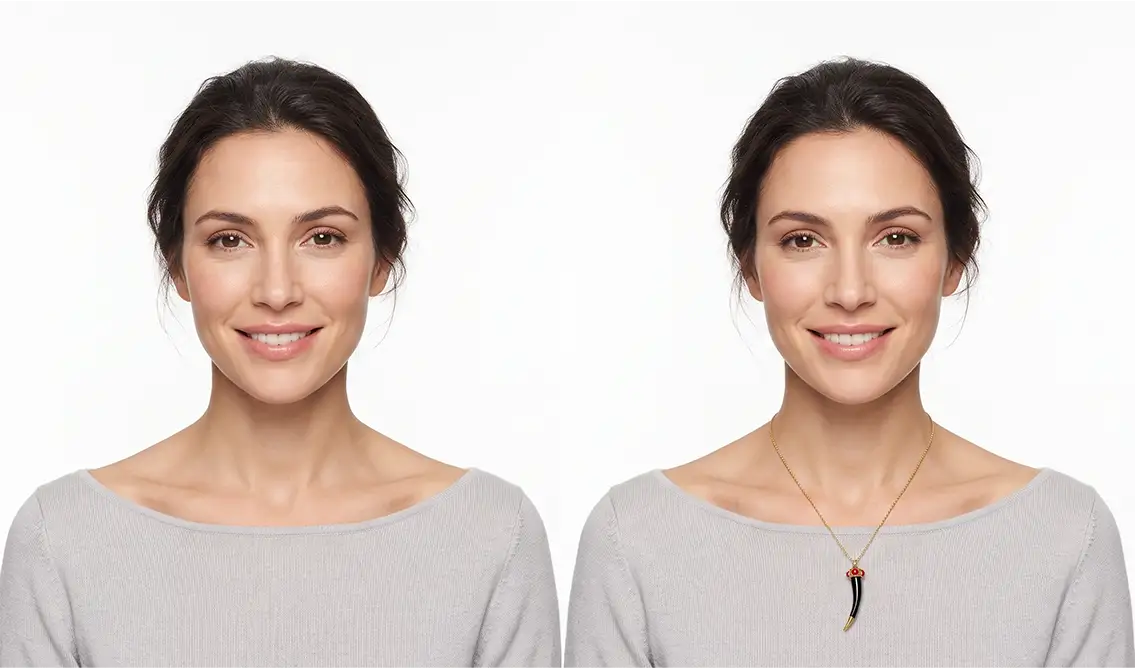
Turn on your camera, pick earrings, a pendant or a ring, and see the piece on yourself in real time.
Switch items in one tap.
Everything runs in your browser: no photo or video is ever uploaded.
Geology: how and where fire opal is born
How it forms in nature
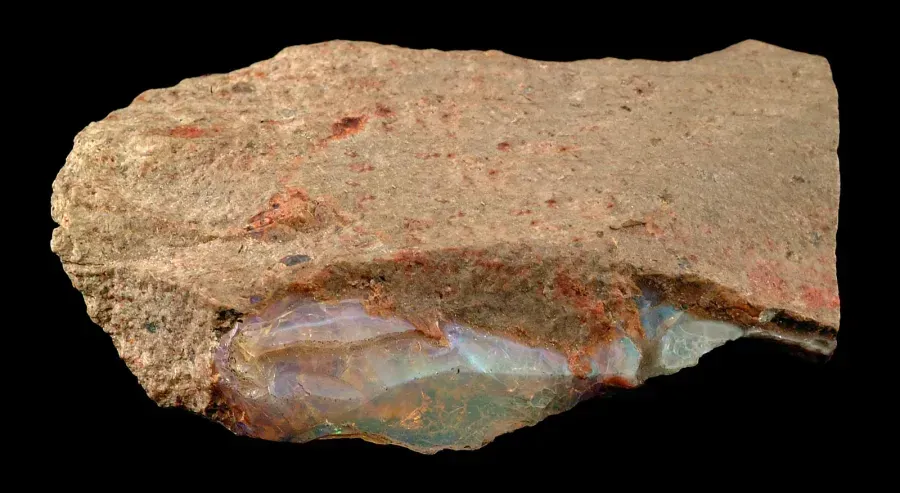
Opal is deposited from silica-rich solutions at low temperatures. Groundwater and hydrothermal water saturated with silica seeps through porous rock and cavities. As it cools and evaporates the silica drops out, layer by layer, filling cracks, the almond-shaped cavities in volcanic rock, and voids. The process is slow and runs over thousands and millions of years.
For fire opal the volcanic setting is decisive. It often forms in rhyolites and other acidic volcanic rocks: hot solutions wash out the silica, while iron compounds from the surrounding rock tint the future stone in warm tones. That is why fire opal is almost always linked to areas of young volcanism.
The main deposits
The classic and best-known source of fire opal is Mexico, above all the states of Querétaro, Hidalgo and Jalisco. Mexican material is prized for its clean, transparent orange-red colour; for most buyers and gemmologists it is exactly this material that the name "fire opal" brings to mind.
Fire opal turns up in other countries with the right geology too:
- Ethiopia has become a major source of opal in recent decades, including bright orange varieties.
- Brazil yields opal that is usually paler and more yellowish.
- The United States (Nevada, Oregon), Australia, Turkey, Kazakhstan, Guatemala and Honduras also produce some fire opal, usually in smaller quantities.
Australia remains the leading supplier of precious opal in general, but its calling card is not fire opal; it is white and black opal with strong rainbow play.
Mexican and Ethiopian: why they behave like different stones on the hand
Two very different schools of material are sold today under the single name "fire opal", and for the buyer the difference is not geography but how the stone behaves.
Mexican opal is mostly non-hydrophane. It is dense, barely absorbs moisture, and stays stable and predictable. Ethiopian opal from the Welo deposits arrived on the market in volume after 2008 and is by nature more often hydrophane, meaning porous and thirsty for water.
A hydrophane behaves like this: if it gets wet, it absorbs water slowly, over minutes or hours, and changes its look for that time. A milky stone turns clearer, a clear one turns cloudy, and the colour and play fade temporarily. It dries back out even more slowly, sometimes over several days. This is not in itself a defect, but a drop of perfume, soapy water or hand lotion can switch the opal off for half a day right there on your hand.
The more serious risk lies elsewhere: when it absorbs water and then dries out fast, a hydrophane can crack. So when choosing an Ethiopian opal it is worth asking the seller directly whether the stone is hydrophane, and keeping it further from water and cosmetics than you would a Mexican one. If maximum stability and a minimum of surprises matter to you, Mexican material is the calmer choice in this respect.
Customer reviews
Zevira is a real jewellery shop. Genuine payments, deliveries and customer thank-yous.
🥰🥰🥰 gracias
Ok, ¡gracias! 🙂
The history of the stone
Ancient Mesoamerica
Opal was known in Mesoamerica long before the Europeans. Archaeological finds and chronicles link opal mining to the territory of present-day Mexico, and opal is still considered the national stone there. Sources describe how local peoples valued iridescent stones and used them in jewellery and ritual objects. It is best not to invent specific names and dates here: what is documented is the presence of opal in the region, not detailed legends about priests.
After the Spanish conquest in the sixteenth century, Mexican gems made their way to Europe, but fire opal long remained a rarity on the European market; systematic mining of the Mexican deposits unfolded later, closer to the nineteenth century.
The Aztecs and the iridescent stone
The cultures of Mesoamerica had a pronounced taste for iridescent, vivid materials: quetzal feathers, turquoise, obsidian. Opal slid neatly into that appetite for the play of colour and light. Sources mention that names existed among the local peoples for an iridescent stone linked to the image of a bird and a wing catching the sun.
The line between fact and pretty invention is worth holding here. What is documented is that opal was known and valued in the region. Detailed tales about named priests and specific rituals are usually late additions of the tourist-brochure kind. The honest version is this: fire opal comes out of the same ground and the same aesthetic as many famous objects of pre-Columbian Mexico, and that gives the stone a real depth rather than a manufactured one.
The revival of the Mexican mines in the nineteenth century
The modern fame of Mexican fire opal begins not in antiquity but in the nineteenth century, when the deposits in the state of Querétaro and neighbouring districts were rediscovered and worked systematically. That is when transparent orange-red material reached the world market and fixed Mexico's reputation as the principal source of the stone.
By the close of the century opal was firmly tied to the country, and in the twentieth century it was formally recognised as Mexico's national stone. Querétaro remains the most recognisable address for fire opal, and the words "Mexican fire opal" still function as a mark of both quality and origin. When a dealer cannot say where a warm orange opal came from, that gap is worth noticing.
Antiquity and Europe
The word itself goes back to the Latin opalus and, further still, probably to the Sanskrit upala, meaning "stone". The Romans rated opal highly; there is a written record placing opals among the most costly stones, alongside emeralds. That said, this was mainly about precious opal with its play of light, not fire opal specifically.
In the Middle Ages and later, a double reputation trailed the opal: at times a stone of luck and good eyesight, at others a harbinger of misfortune. The surge of superstitious distrust is often tied to the nineteenth century and a popular novel that cast the opal as a sinister stone; afterwards the fashion for opals dipped for a while. That is a cultural fact about perception, not a property of the mineral.
Its heyday in jewellery
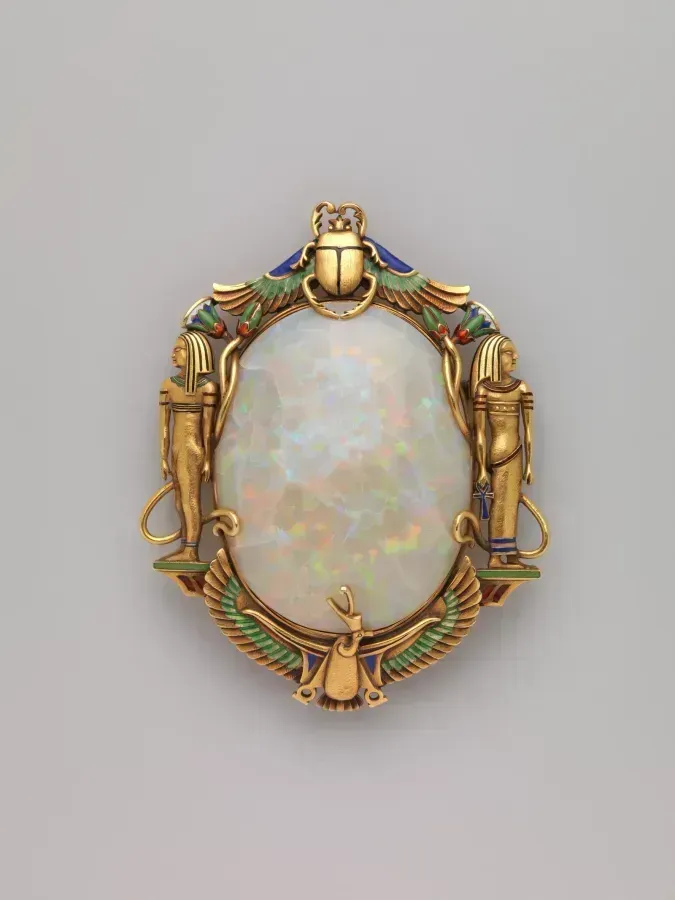
Opal truly flourished in jewellery at the turn of the nineteenth and twentieth centuries, in the Art Nouveau era. The masters of that movement loved the shimmering play of light and warm organic shapes, and opal fitted that language perfectly.
Types and varieties
Fire opal is not a single stone but a whole group, sorted by transparency and colour.
By transparency
- Transparent ("crystal"). Clear as glass, with a warm orange-red body. The most striking for faceting, and valued most highly when the colour is vivid.
- Translucent. A light milkiness softens the colour and scatters the light more gently. A common and practical choice for jewellery.
- Opaque. Dense, with no light passing through, in a warm tone; usually the most affordable.
By colour
The body ranges from pale yellow through honeyed orange to a saturated red. The closer to a pure red with no brownish cast, the rarer and more expensive the stone. Yellow and orange opals are not "worse"; they are simply more common.
With and without play
Some fire opals show rainbow sparks (opalescence), others do not. A stone with a vivid body and rainbow play at the same time is the rarest and most desirable. A smooth, transparent orange opal without shimmer is a fully valid variety, often faceted to bring out the purity of its colour.
Upload a photo of your pet, someone you love, or an object. We'll build a 3D model and hand-cast it in pewter.

Fire opal and fire agate: why they are completely different stones
The names look alike, and search results mix them constantly, yet these are two minerals with different natures, different behaviour and different price brackets. The confusion costs the buyer money, so it is worth taking point by point.
Different chemistry and structure
Fire opal is amorphous silica with water in it and no crystal lattice at all. Fire agate is a variety of chalcedony, which means cryptocrystalline quartz. Agate has an ordered structure at the microscopic level; opal has none. At that level alone you can see that the kinship between them lives entirely in the word "fire".
A different mechanism for the "fire"
In fire opal the warm colour comes from iron scattered through the mass, while the rainbow play, where present, is born from diffraction on microspheres. Fire agate works quite differently: inside it, the thinnest films of iron oxides and hydroxides (goethite, limonite) are laid down in layers, and light bouncing off those films produces rainbow shifts by interference, the way a film of oil does on water. So in opal it is usually the body of the stone doing the work, while in agate it is a multi-layered film effect.
Different hardness and wearability
This is the decisive difference for everyday wear. Agate, as a variety of quartz, has a hardness of around 6.5 to 7 on Mohs and holds no water at all, so it is stable, indifferent to dry air and sudden swings, and does not crack from moisture loss. Fire opal is softer at 5.5 to 6.5, more temperamental, and dependent on humidity. If you want a warm "fiery" stone in a ring for daily wear, agate is the practical answer. If transparency and a clean glowing colour matter more, nothing competes with opal, but it asks to be handled with care. There is a separate piece on the other stone in fire agate.
A different price and market segment
A transparent Mexican fire opal of good colour costs noticeably more than fire agate at the same size. Agate is an accessible decorative stone, while opal sits closer to the mid and premium gemstone segment. A suspiciously cheap "fire opal", therefore, often turns out to be agate, dyed glass or plain plastic. If the tag says fire opal and the stone is opaque, heavy in the hand and covered in banded stripes, you are almost certainly holding an agate.



How to tell it apart from look-alikes and fakes
Fire opal is easy to confuse with hessonite, spessartine (an orange garnet), orange citrine, Madeira quartz, or with glass. A few factual markers.
- Weight in the hand. Opal has a low density and feels noticeably lighter than garnets and quartz of the same size.
- Refraction and lustre. The low refractive index (around 1.40 to 1.45) gives a less "sparkly", more glassy-resinous lustre than garnet or citrine.
- Hardness. Opal is soft (5.5 to 6.5): fine scratches and worn edges appear faster on it, whereas quartz and garnet hold up better. You should not scratch a stone deliberately, of course; this is just a sign a gemmologist notices.
- Inclusions and structure. Natural opal often has a faint internal "wave", a barely visible unevenness of the body. A perfectly even orange stone with no unevenness at all is a reason to look more closely.
- Glass and bubbles. In cheap glass imitations, round gas bubbles and sometimes swirling streaks are visible under a loupe; natural opal has none of these.
- Synthetic opal. Synthetics have been made for a long time; you spot them by the overly regular "lizard-skin" mosaic of sparks and the columnar structure of the segments, visible from the side under magnification.
- Doublets and triplets. A thin slice of opal is sometimes glued onto a dark backing and capped with quartz or glass. From the side you can see the glue join, a straight, even dividing line between the layers.
For an expensive purchase the decisive argument is a gemmological laboratory report: it pins down the nature of the stone and any treatment. If a seller leans only on "energy" instead of the stone's parameters, that is a reason to ask more questions about origin, transparency and treatment.
Treatment: what is really done to opal
Opal is porous, and that porosity is a loophole for treatment. An honest seller declares it, because treatment affects both the stability of the stone and the price. Here is what you meet in practice.
Resin or wax impregnation. The pores of the opal are filled with polymer or oil to strengthen the stone and lift its lustre. This is the most harmless treatment, but it changes the stone's stability and should be named.
Smoke treatment. The opal is wrapped in paper and heated: soot clogs the pores and the body darkens. This is often done to turn pale Ethiopian opal into an imitation of a dark one. Under a loupe you can see soot particles settled in the cracks and pores.
Sugar treatment. The stone is soaked in a sugar solution, then in acid, and dark carbon settles in the pores, darkening the body to grey, brown or almost black. The signs are the same: dark particles and patches along the pores under magnification.
Dyeing. The pores are filled with dye for a vivid tone. A simple home test for a water-soluble dye: put the opal in room-temperature water overnight, and if the water turns orange, the dye has washed out. Natural colour does not behave that way.
The main rule is simple. Natural Mexican fire opal is warm and transparent on its own, with no darkening. If you are offered something suspiciously dark, "black" or unnaturally even and bright at an affordable price, that is a reason to ask about treatment and request a laboratory report: smoke, sugar and dye are reliably caught there.
Leave your email, we'll send your discount code. No spam, unsubscribe anytime.
The code arrives by email, valid on your first order.
Care: how hardness and water dictate the rules
Fire opal needs more attention than corundum or quartz, and the reason is purely physical: it is soft and it holds water.
Wearability
A hardness of 5.5 to 6.5 means the stone scratches and chips more easily than many gems. The most vulnerable piece is a ring: it constantly knocks against desks, keyboards and door handles. The safest are a pendant or earrings, which take almost no knocks. If you really want a ring, a closed or protected setting that shields the girdle makes sense, along with wearing it less than every day.
Cleaning
- Only a soft cloth or soft brush, warm (not hot) water, and a drop of mild soap if needed. Rinse thoroughly and dry.
- No ultrasonic or steam cleaning: vibration and sudden heat trigger cracks.
- No aggressive chemicals, acids, alkalis, household bleaches or abrasives.
- Take the piece off before cleaning the house, swimming, showering, sport, and applying cosmetics or perfume.
Storage
Avoid sharp swings in temperature and humidity, and prolonged direct sun and heat; all of this dries the stone and threatens clouding and crazing.
Keep it apart from hard stones (diamond, sapphire, quartz) that will easily scratch it: a soft pouch or a separate compartment in a box.
Long storage in a completely dry, hot place is contraindicated for opal. A stable room environment suits it best.
If an opal has already cracked internally, you cannot "heal" it; the cracks are irreversible. So it is easier not to let it get that far.
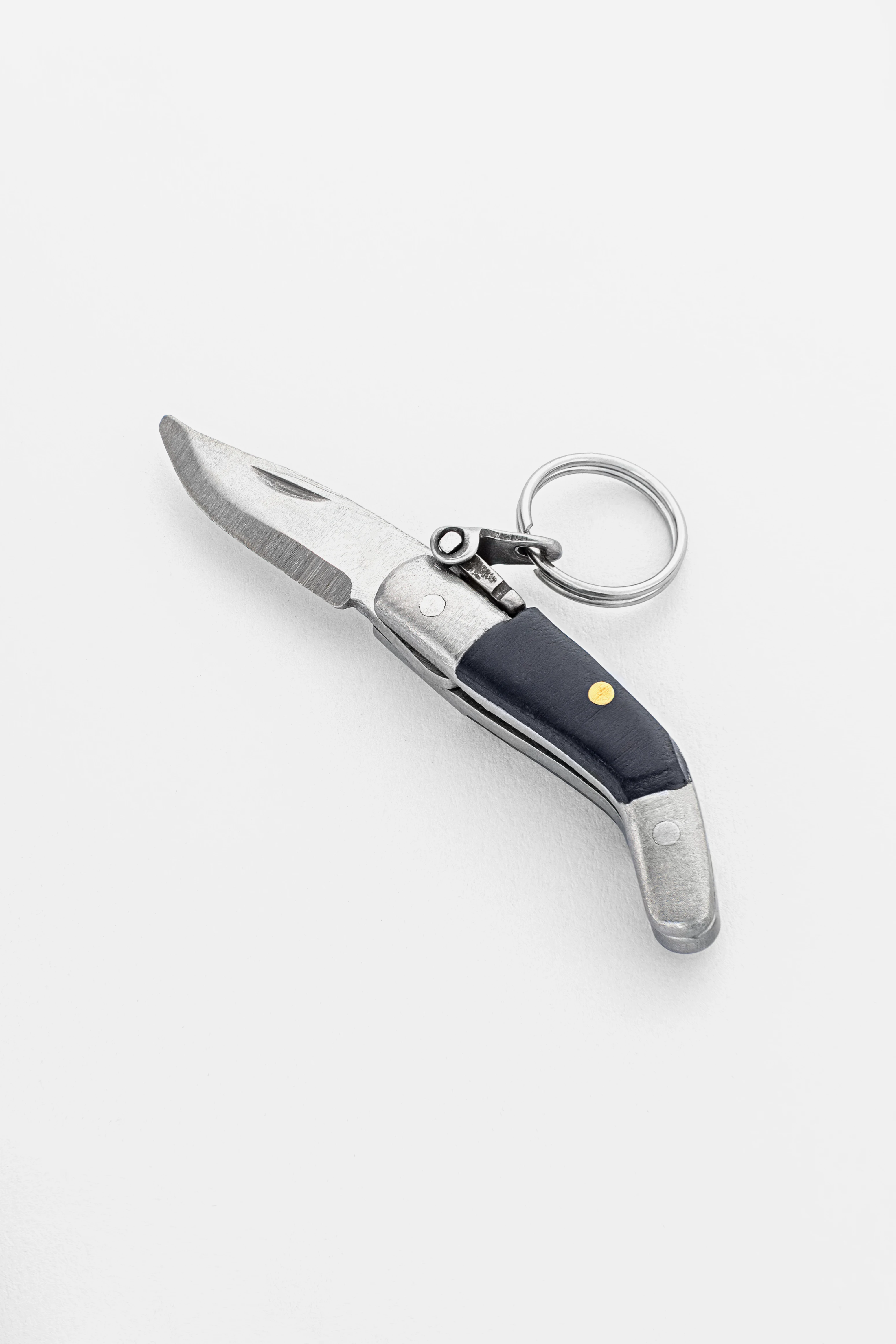
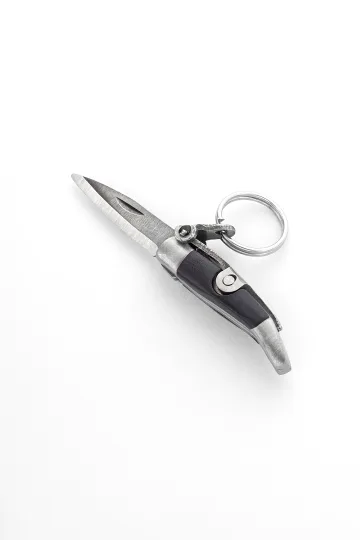
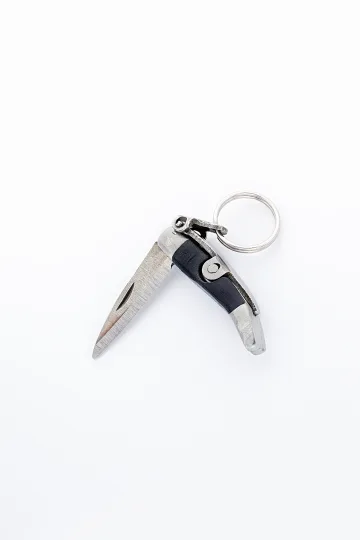
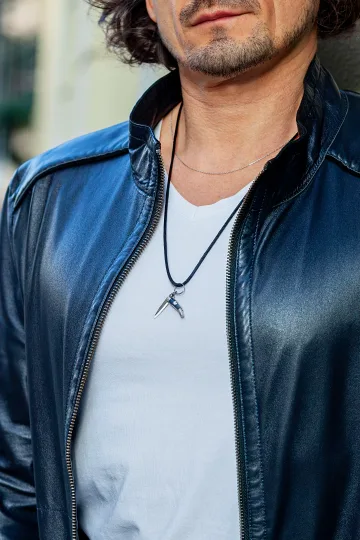
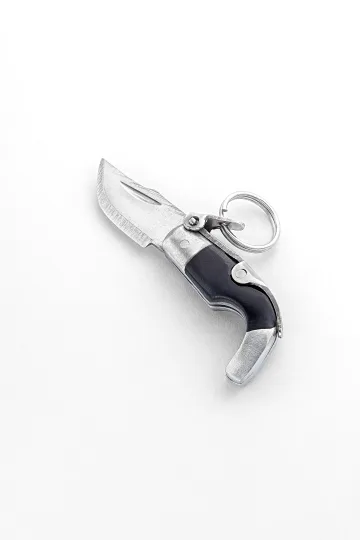
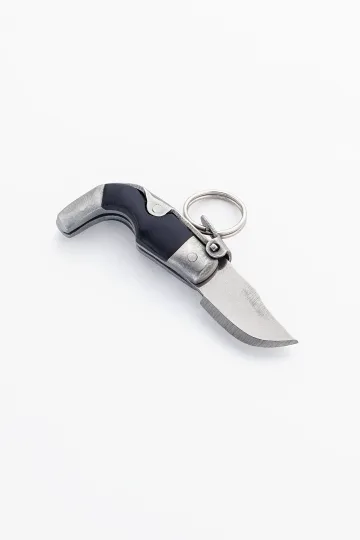
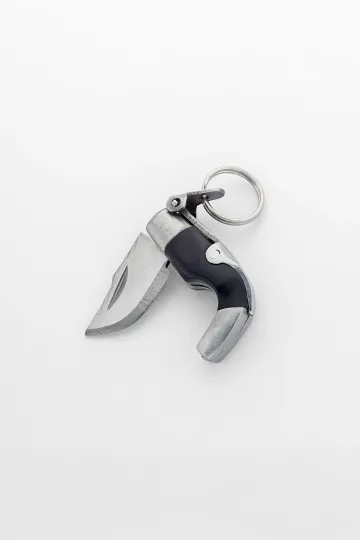
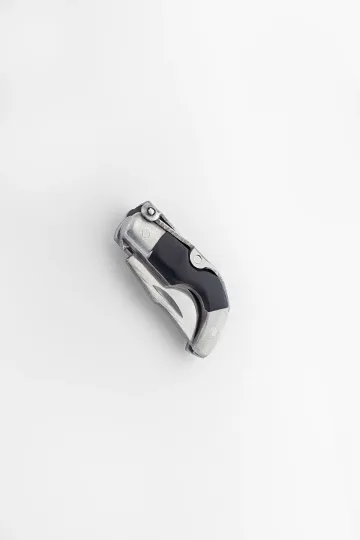
CAPAORA mini knife pendant
The 18th-century Spanish navaja in miniature: 40 mm of stainless steel, a real folding mechanism and a Palanquilla lock that clicks. An affordable gift to remember.
Authentic · Ships from Spain · 14-day returns
Symbolism: briefly and honestly
Across different traditions opal has been given many meanings: a stone of hope and eyesight for some, a harbinger of misfortune for others, a symbol of changeability and creativity because of its play of colour. Fire opal, with its warm tone, was associated with energy, passion and warmth.
All of this is cultural association, not a property of the mineral. There is no confirmed influence of the stone on health, mood, sleep, blood pressure or the course of events, and opal neither heals nor "charges" anything. It is worth wearing because it is beautiful and interesting, not for an effect that has simply never been recorded in the stone. If the theme of "optical fire" in a harder, more wearable stone appeals to you, look at fire agate, which has the same warm palette but a higher hardness.
How to choose a quality stone
When choosing a fire opal you look at several factual parameters.
- Colour. The cleaner and more saturated the orange-red tone, with no brown murkiness, the more valuable it is. Red is the rarest of all.
- Transparency. Transparent crystal stones are valued above translucent and opaque ones at equal colour.
- Play of light. Bright rainbow opalescence raises the value, but even without it a clean transparent opal is fine.
- Clarity and integrity. The absence of visible cracks and any sign of incipient crazing (a network of fine cracks, cloudy zones) matters.
- Cut. Transparent opals are often faceted for colour and brilliance; translucent and opaque ones are more often made as cabochons to gather the light and play softly.
- Treatment. Opal may be impregnated with resins or oils, its pores filled. This affects stability and price, so an honest declaration of treatment is the norm.
For stones of any real value a laboratory report removes most questions: the nature, the origin where possible, and the fact of any treatment.
Size and why a large red opal is rare
In jewellery a faceted Mexican fire opal most often appears in the range of roughly half a carat to five carats. Larger stones are found, and specimens of tens of carats are known, but that is already a rarity, and each step up in clarity and size narrows the choice at once.
Several factors converge here. Transparent material with no visible inclusions is uncommon in itself, a saturated red tone with no brown murkiness is rarer than yellow and orange, and the combination of "large plus transparent plus red plus rainbow play as well" is the peak of the pyramid, which almost never occurs. So the rise in price with size in fire opal is not smooth: a small clean red stone can cost more by weight than a large but pale one.
The practical conclusion for buying. If the budget is limited, it is wiser to take a small but clean and vivid stone rather than a large cloudy one: against a dark background, in a pendant or earrings, it is the purity of colour that works, not the millimetres. And chasing a large "red as ruby" opal at a suspiciously modest price is not worth it; more often than not there is treatment or dyeing behind it.
Send a friend a discount code, they save on their first order.
Who fire opal suits
Fire opal is a stone with a temperament, and it does not fit every way of living equally well. A few honest markers, so the purchase does not disappoint later.
By way of life
To anyone prepared to treat a piece gently, opal pays back with a colour almost no other stone can offer. If your hands are permanently in work, water and cleaning products, and taking a ring off is the thing you always forget, choose the opal in a pendant or earrings, where knocks and water contact are far rarer. For an active person who wants a warm stone in an everyday ring with no thought required, the fairer suggestion is a harder option such as fire agate or an orange garnet.
By taste in colour
Fire opal was made for people who like a warm palette: orange, amber, red. It looks excellent on warm-toned skin and supports ginger, chestnut and honey hair. Against a cool background of clothing the stone lights up by contrast, so it works equally for those who love a bright accent and for those who wear a calm dark base and want one living flash of colour in it.
As a gift
As a present, fire opal works when you know the person values unusual stones and is willing to look after them. It is not the most trouble-free gift for someone who wears jewellery hard and never takes it off. For a lover of rare gemstones, though, a warm glowing opal becomes a piece nobody else has, and that is its strength.
Facts that surprise
Fire opal belongs to the group of stones with more curiosity packed into them than you would guess. A few things that surprise even people who have worn jewellery for years.
There really is water inside it, and quite a lot
Opal is a rare case of a gemstone in which water is part of the construction rather than an impurity. It can run from a few per cent to roughly a fifth of the mass. So what you wear on your finger is set silica with ancient water locked inside it, and that water decides whether the stone stays transparent or clouds over one day.
Opal has been found beyond the Earth
Spacecraft studying Mars have recorded deposits whose composition matches opaline silica. For geologists that is a meaningful signal: opal on Earth forms with the participation of water, so opal-like rocks on another planet argue indirectly that water was once there. The stone in your box and those distant Martian deposits share a chemistry.
A fire opal can "go out" right there on your hand
If you have a porous hydrophane stone, a drop of water, soap or perfume is enough for it to soak up moisture and turn temporarily dull and cloudy. After a few hours or days it dries out and the colour returns. This is a feature of the porous variety rather than a fault, but it looks close to a conjuring trick.
It has no crystal lattice
Most gemstones are crystals with a strict internal order of atoms. Opal is built otherwise: its silica is amorphous, there is no ordered lattice, and formally it counts as a mineraloid rather than a mineral. The rainbow play, meanwhile, is born not from a crystal but from the stacking of microscopic silica spheres, something only made visible under the electron microscope in the twentieth century.
Transparency alone does not make an opal dearer
With most gemstones the cleaner and clearer the material, the higher the value. With fire opal the logic is subtler: what decides matters is the purity and saturation of the warm tone. A small but vividly red transparent stone can be worth more by weight than a large pale yellow one. Colour outranks size here.
The same stone can look different under different light
The warm tone of fire opal depends heavily on lighting. Under cool daylight it is calmer; under warm evening light or candles it genuinely flares. A stone that looked modest in a shop under cold lamps often opens up quite differently at home in the evening, which is a good reason to view any opal under more than one light before deciding.
FAQ
Are fire opal and red opal the same thing?
Not quite. Fire opal is the group of opals with a warm yellow-orange-red body. Red opal is its most saturated and rarest variety. All red opals are fire opals, but not all fire opals are red.
Why does fire opal have such a warm colour?
Because of the finest inclusions of iron oxides and hydroxides in the silica mass. This is colour from the body of the stone itself, not the rainbow play of light, which arises through a separate mechanism, diffraction on ordered microspheres.
What is its hardness, and can it be worn every day?
Hardness is 5.5 to 6.5 on Mohs, so the stone is relatively soft. For everyday wear it is safest in a pendant or earrings, where there are few knocks. A ring is better worn carefully and in a protected setting.
Why can an opal cloud over or crack?
There is water in the structure of opal. Under strong dryness, heat and sharp temperature swings it leaves, and the stone clouds over or develops a network of cracks (crazing). That is why a stable environment and protection from overheating matter.
Can opal be cleaned with ultrasound or steam?
No. Vibration and sudden heat are dangerous for opal. Clean it with a soft cloth or brush in warm water, with a drop of mild soap if needed, then rinse and dry.
How does fire opal differ from orange garnet or citrine?
Opal is noticeably lighter (low density), has a lower refractive index and a softer, resinous-glassy lustre, and is also softer in hardness. Garnet and citrine are denser, harder and more "sparkly".
Are there fakes, and how do you spot them?
Yes: glass, synthetic opal, glued doublets and triplets. Glass gives itself away with gas bubbles; synthetics, with an overly regular mosaic of sparks and a columnar structure from the side; doublets, with a straight glue line on a side cut. For an expensive purchase a laboratory report is the most reliable.
Where is fire opal mined?
The classic source is Mexico (Querétaro, Hidalgo, Jalisco). Also Ethiopia, Brazil, the United States, Australia, Turkey and a number of other countries with young volcanism.
Is it a precious stone or a mineral?
From the point of view of mineralogy, opal is a mineraloid: it has no crystal lattice. In the jewellery sense, precious and fire opal are fully valid gemstones.
Can a cracked opal be repaired?
Internal cracks and crazing are irreversible; you cannot "glue" the structure back together. A chip on the girdle can sometimes be partly smoothed by recutting at the cost of size, but it is easier to protect the stone in advance.
How does fire opal differ from fire agate?
They are different minerals. Opal is amorphous silica with water, soft at 5.5 to 6.5 and sensitive to humidity. Agate is a variety of quartz, harder at around 6.5 to 7, water-free and therefore more stable. In opal the prized feature is a transparent warm body; in agate it is the film-based rainbow play. For an everyday ring agate is the practical choice, for a clean glowing colour opal wins.
How do you quickly tell opal from glass at home?
A loupe is the most reliable tool: under magnification glass shows round gas bubbles and sometimes swirling streaks, which natural opal never has. Weight helps indirectly, since opal is noticeably lighter than glass or quartz of the same size. For an expensive purchase, though, household tests are not enough and a laboratory report settles it.
Mexican or Ethiopian opal, which should I choose?
If stability and a minimum of surprises matter, take the Mexican material: it is dense and absorbs almost no moisture. Ethiopian opal from the Welo deposits is more often hydrophane, meaning porous and reactive to water and cosmetics, though it can be very bright and comes in a friendlier bracket. Ask the seller directly whether the stone is hydrophane before buying.
Can I swim in a fire opal or get my hands wet while wearing it?
Mexican opal takes brief contact with water calmly, but regular soaking is a bad idea. Hydrophane Ethiopian opal is genuinely afraid of water: it absorbs moisture, clouds temporarily, and can crack if it then dries out fast. Take the piece off before a shower, a swim, cleaning the house and washing up.
Is it true that opal brings bad luck?
That is a late cultural myth, inflated largely by nineteenth-century fiction, rather than a property of the stone. Before that opal was held to be a stone of luck and good eyesight. The mineral does not steer events in either direction, and the reason to wear it is simply that it is beautiful.
Silver, gold, wedding rings, symbolic pieces, matching sets.
Buying it as a gift? Each one arrives ready to give.
 A branded Zevira box and a little card come with every order.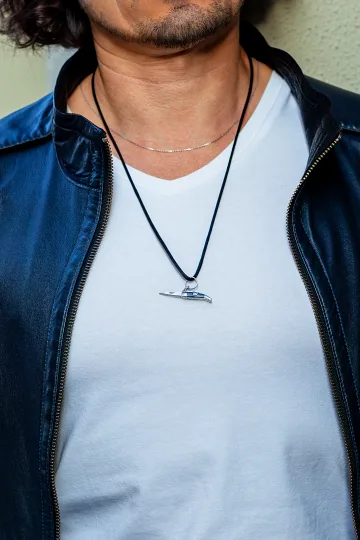




About Zevira
Zevira jewellery with fire opal means stones selected by their factual parameters and handwork on the setting. We look at colour, transparency, clarity and the integrity of the stone, check it for cracks and signs of crazing, and only suitable opals go into production.
We make the setting for an opal both protective and colour-enhancing: white gold and silver give a cool rim against which the warm body of the stone reads more vividly. That way the piece is both beautiful and kind to a soft stone in wear.