Flower Jewelry: From Ancient Amulets to Modern Symbols
Queen Victoria received a bracelet embroidered with flowers on the eve of her wedding. Each flower meant something different, a crimson rose next to a forget-me-not, a yellow tulip beside a violet. Her ladies-in-waiting spent hours guessing what it all meant, while the queen smiled, knowing her fiancé had whispered his love in a language almost no one understood. Flower jewellery isn't just a pretty detail. It's a way to say what's too embarrassing to say out loud.
Flower Jewellery: The Symbolism Behind the Petals
People adorned themselves with flowers long before they learned to polish diamonds. In ancient Egypt, women wove fresh flowers into their hair, then began embroidering them onto clothing, and eventually carved and cast them in metal. The history of flower jewellery is the history of humanity's attempt to stop a fleeting moment of beauty.
Antiquity: Flowers as Divine Symbols
In ancient Egypt, the lotus was a sacred flower. It emerges from mud but rises above water pure and perfect. For Egyptians, this symbolised rebirth after death, purification, and the divine. People wore lotus jewellery not as women's ornaments, but as amulets worn by pharaohs and priests to connect them with the gods.
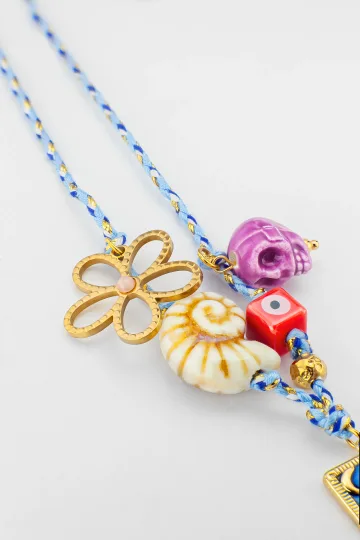
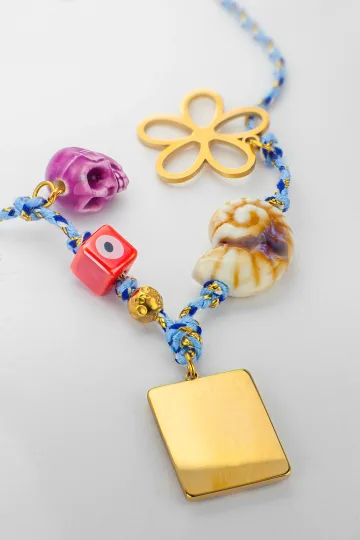
Wear the symbol, don't just read about it. These are in stock:



The lotus appears in hieroglyphics, in sculptures, in golden pendants. When archaeologists excavated pharaonic tombs, they discovered jewellery already four thousand years old, with flower patterns etched with such precision that every petal was visible.
In ancient Greece, the rose was the symbol of Aphrodite, goddess of love. But the Greeks didn't think roses were simply beautiful. The rose was the goddess's chosen messenger, her way of communicating with mortals. Wearing rose jewellery meant you were under Aphrodite's protection, that your beauty was not your own achievement but a gift from the goddess.
The Chinese revered the peony as a symbol of wealth and prosperity. A peony on jewellery wasn't decoration, it was a hieroglyph saying "I wish you prosperity." This is why empresses and court ladies wore brooches and hairpins with peonies, carved entirely from jade, the most precious stone in ancient China.
Medieval Times and the Renaissance: The Language of Beauty
In the Middle Ages, flowers continued to adorn metalwork, but a transformation occurred. Flowers on jewellery became symbols of courtly love. A knight gave a lady a flower jewellery not out of religious reverence, but as recognition of her beauty. It was a language of love that could be read but not spoken aloud.
Renaissance jewellers, especially Italian and Flemish masters, began creating floral jewellery with incredible precision. They studied living flowers, sketched them in albums, then recreated them in gold, precious stones, and enamel. Each petal was a separate element, each stem slightly curved, as in nature.
This required phenomenal craftsmanship. The jeweller had to understand both metalworking techniques and botany. He had to know how a lily looks in bloom, how violet petals curve, how rose stamens spiral.
The Victorian Era: The Secret Language of Flowers
The golden age of flower language in jewellery was the Victorian era. In nineteenth-century England and Europe, a strict code of conduct existed. Women couldn't express feelings directly, and men shouldn't be pushy. But flowers, flowers could speak.
The language of flowers was precise as mathematics. A red rose meant passionate love. A pink rose meant tenderness and gratitude. A white rose meant innocence. A yellow rose signified jealousy. It was an encoding system that allowed people to express their most intimate feelings without breaking society's rules.
Jewellers created jewellery based on this language. When a woman received a brooch with a bouquet of roses in different colours, she could read her suitor's message in that bouquet. The combination of flowers, their number, their arrangement, everything mattered.
Victorian brooches, rings, and pendants often took the form of bouquets. A master would craft each flower separately from gold, platinum, or silver, then unite them into a bouquet, securing them between precious stones. The result was astonishing, these pieces looked as though life itself had frozen into eternal beauty.
Flower Types in Jewellery: Meanings and Symbols
Different flowers symbolise different ideas, and jewellers choose them deliberately. Each flower has its own history, its own code, its own way of speaking to the world. Here are the main flowers found in jewellery and their meanings, values that have accumulated over centuries and been passed from generation to generation.
The Rose: Queen of Jewellery and Her Colours
The rose is the queen of jewellery-making. Often called the most perfect flower, rose jewellery is the most common. But the rose's meaning depends on its colour.
The red rose is passion, deep love, desire. Red rose jewellery is given as a declaration of the strongest feelings. These pieces are often commissioned for engagements, wedding anniversaries, declarations of love.
The pink rose is tenderness, gratitude, recognition of beauty. It's the flower for a mother, a friend, someone you respect and love, but not passionately. Pink rose jewellery can be worn in everyday life without fear of being misunderstood.
The white rose is innocence, purity, secret love. Brides often choose white roses for wedding jewellery. It symbolises the purity of marriage, a new life, a beginning.
The yellow rose signifies jealousy, infidelity, sadness. In the Victorian era, giving yellow rose jewellery was almost an insult, a hint of unfaithfulness. This meaning is now partly forgotten, but in some cultures, yellow roses still suggest parting.
The violet or deep purple rose represents majesty, dignity, perfection. It's a rare flower, and jewellery with such roses is made for women with strong personalities.
Aesthetically, roses in jewellery look magnificent. Jewellers create spiraling petals from platinum leaves and white gold, each slightly different from its neighbour. Often a central stone, a sapphire, ruby, or diamond, is placed inside to symbolise the rose's heart.
In the Victorian era, rose jewellery often came as a parure, a set of matching pieces worn together. A typical parure included a brooch with a rose bouquet, earrings with drops resembling falling petals, and a ring with a miniature rose. It was a system that told a story through its components.
Modern designers often use the rose in minimalist style. A single gold rose fastened to a delicate chain can look more elegant than a full bouquet. This approach became popular in the early twenty-first century, when people began valuing simplicity and restraint.
The Lily: Royal Flower of East and West
The lily is the flower of kings. In France, three lilies on a shield (the heraldic fleur-de-lis) signified royal power. Lily jewellery was often given to members of royal families and nobility.
In the West, white lilies symbolise purity and grandeur. In the East, especially in China and Japan, white lilies mean purity and innocence but are also used in funeral rituals. Red lilies in the East represent passionate love, desire, energy.
In jewellery, lilies are often shown as open flowers with visible stamens. Jewellers used enamel to create colour gradients from white centres to saturated petal colours. The stamens were often made from pomegranate seeds or other red stones.
People who value elegance and grandeur choose lily jewellery. The lily isn't a flower of passion but of dignity and sophistication.
The lily's place in jewellery has a special history. During the Renaissance, the fleur-de-lis became a symbol of royal power in France, and jewellers created pieces with this motif specifically for the royal court. A crown adorned with gold and precious stone lilies meant not just beauty but the legitimacy of power.
In the Far East, lilies appear frequently in earrings and pendants. Japanese masters working with jade created lilies that looked incredibly delicate despite the stone's hardness. Each petal was an ultra-thin, translucent slice of jade.
The Chrysanthemum: Symbol of Longevity and Culture
The chrysanthemum is Japan's national flower. In Japanese culture, it symbolises longevity, joy, and health. Once, only emperors could wear jewellery bearing a chrysanthemum.
In Europe and America, the chrysanthemum was long considered a flower of sorrow, used in funeral rites. So European jewellers rarely created chrysanthemum jewellery, though its beauty was undeniable.
Visually, the chrysanthemum is a flower with many petals, often spiraling. In jewellery, this creates an effect of complex geometry and depth. Chrysanthemums are often rendered in yellow, orange, or white tones.
Now, chrysanthemum jewellery is becoming more popular as designers re-evaluate flower symbolism. In modern jewellery, the chrysanthemum often means longevity, robust health, and benevolence.
Interestingly, symbolism shifts culturally. In America, thanks to Japanese influence, the chrysanthemum is being redefined. No longer a flower of sorrow, it's become a flower of good wishes and long life. Chrysanthemum jewellery is now given as a wish for health and longevity, especially to older people.
In jewellery, the chrysanthemum often appears as a brooch, since the number of petals allows for voluminous, almost sculptural forms. A gold chrysanthemum in filigree technique looks like a cloud of precious metal.
The Tulip: From Madness to Elegance
In the seventeenth century, Holland experienced "tulip mania." Striped and variegated tulips cost more than houses. People ruined themselves trading rare bulbs. This period inspired jewellers to create tulip jewellery.
In jewellery, tulips are often shown as simple, elegant flowers with three petals. Its form is more geometric than a rose, attracting modern designers who value minimalism.
A red tulip means deep love. Yellow means hopeless love and despair (which is why yellow varieties were used in tulip mania legends). A purple tulip is gratitude and loyalty.
Tulip jewellery is popular in Holland and Scandinavian countries, where this flower is part of national identity. But it's rarely seen in other regions.
The seventeenth-century tulip mania, when rare striped varieties sold for thousands of guilders, left a cultural mark. It was the first financial bubble in history and sparked interest in the tulip as a symbol of the fragility of wealth. Jewellers began creating tulip jewellery as a reminder of this story.
The tulip's form is a chalice that closes in the evening and opens at sunrise. Metaphorically, this means life's cycle, the shift between day and night. So tulip jewellery is sometimes given as a wish for new beginnings.
The Lotus: Buddhism, Purification, and Spirituality
In Buddhism, the lotus is a symbol of enlightenment. It emerges from dirty water but rises completely pure. This is a metaphor for the spiritual path, from ignorance and suffering to enlightenment and purity.
In jewellery, the lotus is often shown in full bloom, with open petals, visible stamens and seed pods. Jewellers use vivid colours, red, pink, white, purple.
People engaged in yoga, meditation, and spiritual practices choose lotus jewellery. This piece has deep meaning and isn't merely decorative.
In India and Thailand, lotus jewellery is part of traditional dress. Women wear lotus pendants, earrings, and bracelets as a way of expressing their faith.
In jewellery, the lotus is often shown not just as a flower but with its root system visible beneath it. This emphasises the idea of growing from mud, transformation, and purification. Buddhist nuns often wear wooden or stone lotus bracelets as a reminder of the path to enlightenment.
The red lotus (symbolising love in Buddhism), white lotus (symbolising purity), pink lotus (symbolising Buddha), each colour has meaning. Jewellers working in Buddhist tradition are very attentive to these distinctions and create pieces that correspond to specific practices and teachings.
The Peony: Wealth and Prosperity in Chinese Tradition
The peony is called the king of flowers in China. It symbolises nobility, prosperity, marriage happiness, and good fortune. For thousands of years, the peony has been a favourite motif in Chinese art, including jewellery.
The peony looks like a rich, full flower with many layers of petals. Each petal differs slightly from its neighbour, creating a natural beauty effect. In jewellery, peonies are often made from jade, since jade is a noble stone in China.
A peony jewellery piece is both beautiful and symbolic. When you give someone peony jewellery, you're wishing them prosperity and good fortune. It's a perfect gift for a married woman or a business partner.
Now, peony jewellery is popular worldwide, especially as pendants and brooches. Designers love the peony for its complexity and layering.
In traditional Chinese painting, the peony is one of four noble flowers (along with the orchid, plum, and bamboo). A peony piece in Chinese style often includes calligraphic elements, characters that read as wishes for happiness and prosperity.
European jewellers, enamored with Eastern art, began creating peony jewellery in the "Chinoiserie" style (European imitation of Chinese style). These pieces often combine the peony with other elements, birds, branches, abstract patterns reminiscent of Chinese scrolls.
The Orchid: Rarity and Exotic Beauty
The orchid is a rare, exotic flower. For a long time, orchids were accessible only to wealthy people who could afford rare plants in greenhouses. Orchid jewellery immediately speaks of taste and prosperity.
In jewellery, the orchid symbolises rarity, exotic beauty, refinement. Its form is complex and unusual, attracting experimental jewellers.
Often, the orchid in jewellery is shown in unusual colours, black orchid, blue orchid, green orchid. This is because very rare varieties exist in nature, and jewellers love expressing that rarity.
Orchid jewellery is chosen by women with independent taste who don't follow trends but create their own style.
Orchids in jewellery are often rendered asymmetrically, because the orchid's form itself is asymmetrical. This sets it apart from other flowers. A jeweller working with orchids must understand that asymmetry isn't a defect but the flower's essence.
In the Victorian era, orchids were so rare and expensive that only the wealthiest women could afford jewellery with them. The orchid meant exclusivity, unattainability, exotic beauty. Now this symbolism persists, though orchids themselves have become more accessible.
The Daisy: Simplicity and Sincerity
The daisy carries none of the grandeur of the rose or the lily, and that is exactly why people reach for it. White petals around a yellow eye give a silhouette so clear that it survives being shrunk to the size of a fingernail, which makes the daisy the workhorse of everyday jewellery. It reads as youth, honesty and good humour, and it asks for no expensive stone to do it.
Jewellers usually build the daisy flat, almost like a small medal. The petals are cut from thin strips of metal or laid in white enamel, and the centre takes a yellow stone, citrine most often, or simply a polished dome of gold. Silver suits it better than anything, because the contrast of white metal and white petal keeps the shape crisp.
The old game of pulling petals one by one, loves me, loves me not, gave the flower a quiet romantic edge that no dictionary of flowers ever assigned to it. A daisy pendant is often given as a sign of affection that does not want to announce itself, which is a very different gesture from a rose and, for many people, an easier one to accept.
The Sunflower: Sun, Loyalty and Warmth
The sunflower turns its head to follow the sun across the sky, and the language of flowers turned that habit into a meaning: loyalty, constancy, warmth that does not waver. A piece of jewellery with a sunflower is almost always cheerful, which is why you will practically never find one in mourning work. It belongs to summer collections and to gifts for people you want to wish light upon.
For a jeweller it is a generous flower. The ring of petals is a clean geometric problem that yellow gold solves beautifully, and the dense centre is packed with small dark stones or with granulation, tiny beads of metal soldered in place to imitate the seeds. That centre is the whole trick. A sunflower rendered flat becomes an ordinary star; it is the raised, textured heart that tells the eye what flower it is looking at.
The sunflower works best at scale, which makes it a brooch flower rather than an earring flower. On a lapel it carries its size without apology, and it has become a favourite for anyone who wants a piece that lifts the mood of an outfit rather than whispering from a collarbone.
The Poppy: Memory, Sleep and Peace
The poppy carries two meanings at once, and they sit oddly together. In antiquity it belonged to sleep. Its brief, brilliant life and the drowsiness of its sap linked it to the gods of sleep and to the borderland between rest and death, and Greek and Roman art gave poppy heads to figures of night. That reading is still there in the flower, faint but present.
The second meaning is much younger and, in Britain, much louder. After the First World War the red poppy became the flower of remembrance across Britain and the Commonwealth, worn as a small brooch in the weeks before the eleventh of November because poppies grew over the churned ground of the Western Front. Jewellers make enamel and silver poppies for that purpose every year, and for many British families a poppy brooch is the only piece of floral jewellery in the house that everybody knows the meaning of.
In metal the poppy is recognised by its thin, slightly crumpled petals and its dark heart. Enamel suits it particularly well, because the shift from bright red at the edge to near black at the centre is exactly what enamel does best. The petals are made deliberately uneven; that creased, wind blown quality is what separates a poppy from the disciplined symmetry of a rose, and a jeweller who tidies it up loses the flower entirely.
The Forget-Me-Not: Remembrance and Devotion
The forget-me-not is a small blue flower whose name in most European languages is a plain instruction to the person receiving it. That gives it the most literal symbolism of any flower in the jeweller's vocabulary: remembrance, devotion, a bond that outlasts distance. Victorian mourning jewellery used it constantly, and the habit never fully stopped. People still wear forget-me-nots for someone who is no longer there.
Its size makes it a supporting flower rather than a soloist. Jewellers scatter several blooms across a piece or tuck them among larger flowers in a bouquet, where the blue reads as a spark of colour rather than the main event. The colour comes from enamel or from small stones, turquoise, blue topaz, sapphire in the better work, and each little flower takes a dot of yellow at its centre. Miss out that yellow dot and the flower stops being a forget-me-not.
Because of what it means, this is the flower most often handed down. A forget-me-not brooch that passes from mother to daughter is being passed on for the message it carries rather than for the value of what it is made from, and that is a rare thing in jewellery.
Cherry Blossom: The Beauty of a Moment
Sakura, the Japanese cherry, flowers for a handful of days and then goes. Japanese culture made that brevity the point rather than the flaw: the blossom is beautiful because it does not last, and hanami, the practice of going out to look at the flowering trees, has been a fixture for well over a thousand years. The flower runs through Japanese poetry, textiles, lacquer and metalwork, and it arrived in European jewellery in the late nineteenth century when Japanese design swept through Western workshops.
In jewellery the blossom is soft and pink, with five rounded petals notched at the tip. That notch is the identifying mark; without it you have drawn a generic five petalled flower. Jewellers rarely show a single bloom. A branch carrying several buds at different stages of opening is the more usual treatment, so the piece captures the flowering as a process rather than a snapshot.
Rose gold and rose quartz belong here more than anywhere else in floral jewellery, because they repeat the tone of the petal itself rather than approximating it. Pale enamel over engraved metal does the same job with more depth. Cherry blossom jewellery tends to be chosen by people drawn to the idea behind it as much as the look, which is not true of most flowers on this list.
One rose on a bare collarbone beats a whole bouquet. A bloom over a floral print is a flowerbed, not a look. Don't.
How to Wear Flower Jewellery
I have pinned more blossoms on models than a florist moves in a season, so let me save you the trial and error, occasion by occasion.
What flower piece works for every day? For daytime I recommend a single flower on a fine chain: a small rose or lily over a plain blouse, a turtleneck, a shirt. A round or soft V neckline brings the flower right to the collarbone, which is where the eye goes. Keep the clothes in calm tones (cream, grey, navy, olive) so the flower reads as an accent instead of getting lost in a print.
How do I build an evening look? Evening changes the rules. Here I choose petal earrings, a full bouquet brooch, or a larger pendant. For a bare shoulder or a deep neckline I suggest long drop earrings that fall like petals. Smooth fabric (satin, silk, velvet) works better than textured tweed: the shine of the metal answers the shine of the dress.
How many flowers at once? One. A single floral piece leads and everything else supports it. I would not pair a bouquet brooch with a heavy collar, and next to petal earrings I choose a plain ring with no flower. Several chains of different lengths look good when the floral pendant is the only bloom and the neighbours stay smooth.
How do I get the metal right? Keep the metals at one temperature. I recommend warm gold with warm flowers (red rose, yellow orchid) and silver or white gold with white and cool ones (lily, lotus, forget-me-not). You can mix them on purpose, but only if both metals repeat across separate pieces rather than in one.
Who does flower jewellery suit? Almost everyone, because you can match the bloom to character: for a romantic I suggest the rose and the peony, for the composed the lily and the orchid, for those after calm the lotus. One rule on length: a pendant that sits just above the neckline always looks tidier than one hidden under fabric. And choose a flower without sharp petals if you wear it daily, or it will catch on cloth and hair.
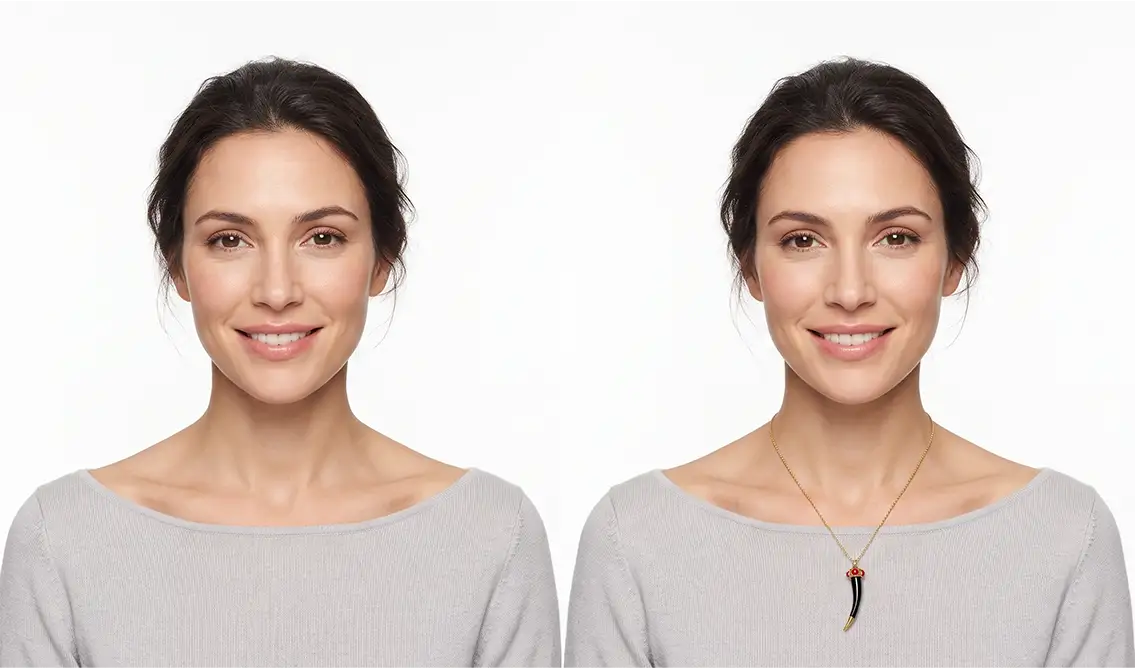
Turn on your camera, pick earrings, a pendant or a ring, and see the piece on yourself in real time.
Switch items in one tap.
Everything runs in your browser: no photo or video is ever uploaded.
The History of Floral Jewellery
The history of floral jewellery is the story of how our relationship with beauty and symbolism has changed.
Art Nouveau and the Floral Motif
At the turn of the nineteenth and twentieth centuries, a revolution occurred in jewellery. The Art Nouveau movement rejected symmetry and geometry. Instead, artists and jewellers began drawing inspiration from nature. Flowers, plants, animals, all this living, beautiful, asymmetrical stuff, became the centre of design.
Art Nouveau jewellers created pieces where the flower wasn't just a symbol but a complete work of art. The stem curved naturally, petals were different sizes, leaves were arranged asymmetrically. This was revolutionary because before this, jewellery was either strictly symmetrical or abstract.
René Lalique, the famous Art Nouveau master, created flower jewellery that looks as though it's just been plucked from a bush. He used enamels of different colours, creating gradients and transitions that previously seemed impossible in jewellery-making.
Other Art Nouveau masters, like Georges Fouquet and Lucien Gaillard, created pieces where the floral form was as naturalistic as possible. They studied botany and worked from scientific illustrations to create jewellery that was not just beautiful but botanically accurate.
The Art Nouveau era was an era of possibility. Equipment for jewellers improved, different coloured enamels became more available, and techniques developed that allowed work with very delicate forms. This let jewellers bring their complex ideas to life.
Victorian Jewellery Art
During Queen Victoria's reign (1837-1901), floral jewellery reached its peak. Technology allowed jewellers to create incredibly complex pieces where each petal was separately crafted and set.
Victorian jewellers created full-bodied bouquets frozen in precious metals. These bouquets often had specific meanings, the collection of flowers told a story.
The social reasons behind the Victorian boom in flower jewellery ran deep. In the conservative society of the nineteenth century, a woman couldn't express feelings directly. A man couldn't simply approach and declare his love. But flowers? Flowers were a socially acceptable way to communicate. Jewellery with flowers, given by a man to a woman, was simultaneously romantic and entirely proper.
Flower language was coded as carefully as Morse code. Even the number of flowers mattered. One rose meant love. Two roses meant deep love. Three meant "I love you." Thirteen roses meant "I wish you happiness."
Mourning jewellery also became popular in the Victorian era. When someone died, their loved ones commissioned jewellery with flowers to commemorate them. Often these were forget-me-nots (symbolising remembrance) or black roses (symbolising grief). The deceased's hair was often incorporated into the jewellery, creating a memorial piece worn over the heart.
Victorian flower jewellery isn't just a beautiful object. It's a cultural artifact in which is encrypted the history of emotions, social norms, the ways people communicated in a society where direct expression of feeling was impossible.
The Twentieth Century: From Art Nouveau to Minimalism
In the twentieth century, attitudes toward flower jewellery changed several times. The early part of the century saw the peak of Art Nouveau. Then came Art Deco, which preferred geometry and lines. Flowers in Art Deco jewellery became more stylised, less naturalistic.
Art Deco redefined the flower. If the Art Nouveau flower was alive and breathing, the Art Deco flower was geometric, almost mathematical. Petals became triangles, circles, abstract forms. But this was beauty of another kind, cold, perfect, engineered beauty.
After World War II, flower jewellery returned but in new form. Mid-twentieth-century designers created pieces where flowers were more abstract, where form mattered more than realism. Gold became minimal, stones more vivid and geometric. The flower stopped being romantic and became architectural.
In the late twentieth and early twenty-first centuries, a reassessment of values occurred. Designers returned to natural forms and flower language. Modern jewellers create pieces that simultaneously honour the craftsmanship of past eras (Victorian and Art Nouveau) and contemporary minimalism. This is a synthesis of history and modernity.
Today, flower jewellery exists in all styles at once. It can be minimalist (a single rose on a chain), it can be historical (copies of Victorian brooches), it can be avant-garde (abstract floral forms in titanium).
Customer reviews
Zevira is a real jewellery shop. Genuine payments, deliveries and customer thank-yous.
🥰🥰🥰 gracias
Ok, ¡gracias! 🙂
The Language of Flowers: Victorian Floriography
Floriography is the practice of carrying meaning through the choice of flower, and in the nineteenth century it hardened into something close to a cipher. In a society with firm rules about what could be said out loud, a direct statement of feeling was an impertinence, so the bouquet took over the work of the letter. The flower given, its colour, even which hand accepted it, could all be read as parts of a sentence. Jewellers picked the language up almost immediately, and a floral brooch became a message you could wear in public without anyone but the intended reader understanding it.
Where the Flower Dictionaries Came From
The idea of coded bouquets reached Europe through accounts of an Ottoman custom in which objects and flowers were assembled into messages. Travellers' letters from Constantinople described it in the early eighteenth century, and by the 1810s the first flower dictionaries were being printed in France, with English editions following quickly. The fashion spread through the drawing rooms of London and the provinces, and by the middle of the century a respectable household was likely to own a small book listing each flower against its meaning, consulted whenever a gift arrived that needed decoding.
There was never a single authority. The dictionaries disagreed with each other, sometimes flatly, and the same flower could carry different meanings in two books printed a decade apart. This produced genuine confusion and also a certain thrill, because sender and recipient had to be working from the same volume for the message to land. Publishers knew it and kept issuing new editions; getting the wrong dictionary as a gift was a small social hazard.
How Colour Changed the Meaning
Colour was not decoration in this system, it was vocabulary. A red rose spoke of passion, a white one of purity, a yellow one of jealousy, a pink one of gratitude. The same logic transferred straight into metal. A jeweller building a brooch matched the enamel or the stone to the exact shade required, and the customer understood perfectly well that what was being commissioned was a particular declaration rather than a piece of jewellery in general.
Combinations sharpened the meaning further. A red and a white rose together stood for unity, a bud beside an open bloom hinted at youth alongside maturity, a flower shown with its thorns intact said something quite different from the same flower with the thorns stripped away. Set as a single bouquet in gold, these pairings were legible to a trained eye and invisible to everyone else, which was the entire point.
Position and Detail as Words
Where the flower sat and which way it leaned mattered as much as which flower it was. The stricter dictionaries assigned different readings to a bud tilted to the left and the same bud tilted to the right; a flower stripped of leaves said one thing, the same flower in full dress said another. Jewellers carried these distinctions into metal deliberately, setting the angle of the stem, the presence or absence of leaves and the number of buds with the meaning in mind rather than the composition.
The greenery had its own vocabulary. Ivy meant fidelity, fern meant sincerity, laurel meant achievement, and a master added them to a bouquet to qualify the statement rather than to fill space. In the best Victorian work every element is doing a job, which is why these pieces reward slow looking. What appears to be a pretty arrangement of leaves is usually a sentence with its clauses in order.
Why the Language Faded and Came Back
By the early twentieth century the etiquette had loosened, people had begun saying what they meant, and the need for coded bouquets simply evaporated. The dictionaries went out of print, most of the meanings went with them, and today yellow roses are handed over cheerfully by people who have no idea that a century earlier the gesture read as an accusation.
The language never disappeared completely. A handful of meanings sank so deep into general culture that they still hold: the red rose is still love, the forget-me-not is still remembrance, the poppy is still the fallen. Contemporary jewellers sometimes return to the old dictionaries on purpose, building pieces that carry a message for anyone who knows how to read them, and a buyer who holds the key sees considerably more in such a flower than a passerby does.
Upload a photo of your pet, someone you love, or an object. We'll build a 3D model and hand-cast it in pewter.


Techniques for Making Flower Jewellery
Every flower jewellery piece results from specific techniques. Here are the main ones.
Enamel with Floral Design
Enamel is a vitreous substance applied to metal and then fired in a kiln at high temperature. It's one of jewellery's oldest techniques, with roots in ancient Greece and Rome.
Enamel is ideal for flower jewellery because it allows smooth colour transitions and depth. The jeweller sketches a flower design on a metal plate, then fills each area with different-coloured enamel. When the piece is fired in a kiln at 800-900 degrees Celsius, the enamel melts and becomes a smooth, shiny surface that looks like a precious stone.
The most complex technique is cloisonné (compartment enamel), where special partitions made from thin wire are created on the metal to hold the enamel in place. This requires incredible precision, the wires must be thinner than hair but strong enough not to bend when enamel is applied.
There's also champlevé (recessed enamel), where depressions for enamel are etched into the metal with acid or carved by hand. This allows very precise lines and details.
The history of enamel in flower jewellery is the history of chemistry. In the Middle Ages, masters didn't fully understand why enamel melted and hardened. It was more art than science. Over time, jewellers learned to control the process, creating pieces that look as though the flower is coated with multilayered varnish or precious glass.
Stone Carving
When flower jewellery is made from jade, granite, marble, ivory, or other materials, carving technique is used. The master takes a hard material and carves a flower shape into it by hand.
This is very difficult work because the material is fragile. One wrong move and the flower crumbles. The master must understand the material's structure, the direction of grain, where the material is strong and where vulnerable.
In the Chinese tradition, jade carving is an art form that developed over three thousand years. A jade carver goes through years of training before working on expensive stones. He must develop sensitivity to the material and understand its "spirit."
Carving requires very sharp tools. In ancient times, steel tools were used; later diamond burrs appeared, which sped the process but didn't simplify it. Jade is so hard that polishing a single petal can take hours.
The result of this labour is worth the expense. A stone carving can last thousands of years without losing beauty. Unlike wood or bone, jade doesn't warp, crack, or fade. Jewellery carved today will look exactly the same in a thousand years.
Filigree in Floral Form
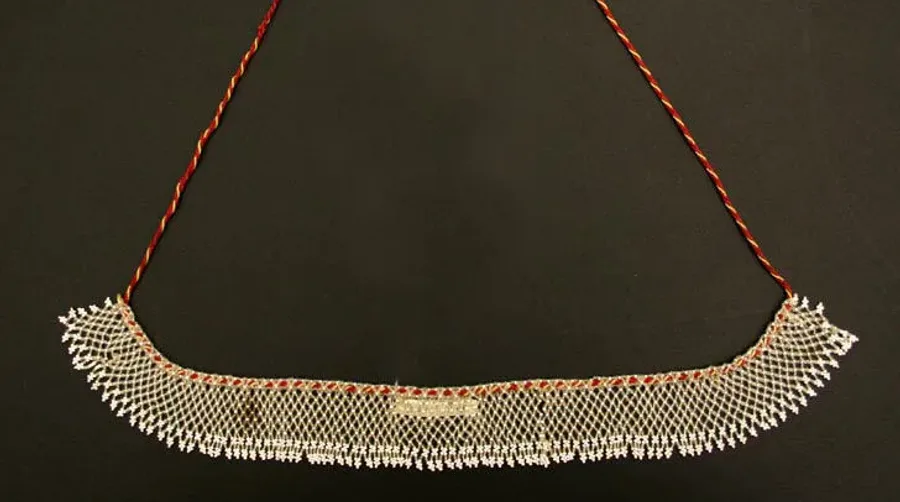
Filigree (from Latin filum, thread and granum, grain) is a technique where very thin wire (often gold, silver, or copper) creates a lacy pattern. For flower jewellery, wire is twisted into spirals that form flower petals.
Filigree is a technique that originated in ancient civilisations and was refined in Persia, India, and later in Europe. Ancient Persian masters created gold wire jewellery so delicate it looked like lace.
It's incredibly painstaking work. The jeweller must bend wire precisely so each petal is identical, or conversely, create asymmetry for a more natural look. Wire is twisted by hand, sometimes with simple tools, into spirals as thin as hair.
Filigree flower jewellery looks airy, almost weightless, though actually it's very durable. Tightly twisted wire is stronger than it seems.
In contemporary jewellery, filigree is experiencing a rebirth. Young designers fascinated by craft and history are studying old filigree techniques and creating modern pieces in this style. A filigree flower looks both ancient and contemporary because the technique transcends time.
Complex Pendants with Individual Petals
Complex pendants are pieces where each petal is a separate element. The master makes each petal individually, then assembles them into a flower, securing them with wire or soldering them together.
This allows the creation of flowers with maximum naturalism, since each petal can be slightly different in size or shape. The flower's centre is often decorated with a precious stone.
Materials for Flower Jewellery
Material choice matters for both durability and appearance.
Noble Metals: Gold, Silver, Platinum
Gold is the classic choice for flower jewellery. Yellow gold (750, 585, or 375 karat) creates a feeling of warmth and luxury. It's especially good for warm-coloured flowers, red roses, yellow orchids, orange chrysanthemums.
White gold looks more contemporary and suits silvery stones like diamonds or blue sapphires. White gold is often rhodium-plated for shine but requires occasional refinishing.
Rose gold is a trend of the last ten years. It has a beautiful pink tint from copper content. Rose gold works well with soft-toned stones and pastel flowers. Rose gold jewellery looks both traditional and contemporary.
Silver (925 or 950 karat) is more affordable but no less beautiful. Silver is especially good for flower jewellery because its cool shine emphasises the delicacy of floral forms. Silver requires regular polishing to prevent darkening, but this care is part of the romance of working with it.
Platinum is the noblest and most expensive metal. Platinum jewellery will last forever without losing shine or fading. It doesn't oxidise, doesn't require rhodium plating, doesn't change colour. If you can afford platinum, it's the best choice for a family heirloom to pass down generations.
Stones: Diamonds, Sapphires, Other Precious Gems
A precious stone, diamond, sapphire, ruby, or other gem, is often placed at the flower's centre. The choice depends on the flower's meaning and the effect the jeweller wants to create.
Diamonds are universal and suit any flower. They create a star effect at the flower's centre, a sparkle that draws the eye. A diamond in a flower's centre signifies classic choices, timeless beauty, luxury.
Sapphire or ruby is chosen to create a specific colour combination. For example, a red ruby at a red rose's centre creates a deep, saturated effect, as though the flower is filled with blood, life, energy. A blue sapphire in a white rose's centre creates contrast and intrigue.
An emerald, especially for flowers with green leaves, can be a perfect centre stone. Green emerald symbolises nature, life, rebirth.
Less expensive stones, amethyst, topaz, garnet, citrine, are also common in flower jewellery, especially in contemporary design. Amethyst jewellery can be as beautiful as diamond jewellery if the jeweller has sufficient skill.
In the Victorian era, a technique was popular where a stone was wrapped in metal foil to look larger and brighter. This "foil backing" created a magical effect. Modern jewellers rarely use this technique now because it requires special care and can be hidden from view.
Alternative Materials: Wood, Enamel, Resin
Wooden flower jewellery is a tradition in many cultures. Woodcarving requires skill but allows the creation of pieces that seem almost alive. In African, Asian, and South American cultures, woodcarving is a primary jewellery-making technique.
Wood has advantages: it's light, warm to the touch, ecological. But it's also fragile, can warp in humidity changes, can be damaged by insects. Wooden jewellery requires care, periodic oiling, protection from moisture.
Enamel (beyond use as a technique with metal) can be an independent material. A piece made entirely from coloured enamel can be beautiful and quite durable. Enamel was invented in ancient Egypt and used as an independent material.
Ceramic and porcelain are materials especially popular for flower jewellery in Asia. A porcelain flower can be delicate, almost translucent, looking like a living flower frozen in material.
Resin and plastic are contemporary materials allowing creation of affordable flower jewellery. Though not as noble as metal and stones, they can be very beautiful and functional. Resin can contain inserted petals or real leaves, creating a piece that is simultaneously modern and organic.



Flowers by Occasion
Choosing flower jewellery often depends on the occasion it's intended for.
Engagement and Rose Engagement Rings
An engagement is the most romantic occasion for giving flower jewellery. Traditionally, red roses are chosen because they symbolise passionate, deep love.
An engagement ring with a rose is not just jewellery but a symbol of a promise. Often the central stone of such a ring is a diamond surrounded by rose petals in gold or platinum.
The history of the engagement ring is the history of social conventions. In the eighteenth-nineteenth centuries, the engagement ring was given as a marriage guarantee. It wasn't decoration but a contract written in metal and stones. If the young man didn't fulfil his promise, the girl could demand the ring's return.
Today, an engagement ring is a love declaration but retains its weight and significance. Choosing a floral motif for an engagement ring is a good way to personalise it, make it unique for the specific couple.
Some people choose not a rose but another flower that has special meaning for the couple. For example, if they met in a garden full of lilies, then a lily would be more symbolic. If they both love orchids, an exotic orchid at the ring's centre will remind them of their shared interests.
Wedding: White and Cream Flowers
At a wedding, flower jewellery is usually white or cream, symbolising purity and new life. The bride often wears jewellery with a white rose or white lily. Cream flowers (which rarely occur in nature) are often created in jewellery from ivory or beige enamel.
Wedding jewellery has its own special status. It's often specially commissioned and frequently custom-designed by jewellers. A bride can describe her dream image, and the jeweller brings it to life.
The tradition of "something old, something new, something borrowed, something blue" often includes jewellery. A bride might wear jewellery she borrowed from her mother or friend (a white rose might be "something borrowed"), or she might wear jewellery with a blue stone (a blue sapphire in the centre of a white rose).
Wedding jewellery often becomes family heirlooms passed down generations. Jewellery your grandmother wore, then your mother, then you, this is a connection between generations, the material embodiment of family history. Some families have jewellery that's been passed down for 150-200 years.
Birth of a Child: Delicate Flower Jewellery
When a child is born, gifts often include jewellery with delicate flowers, forget-me-nots, snowdrops, daisies, crocuses. These flowers symbolise new life, hope, innocence, the fragility of beginning.
Jewellery for a newborn is often small, delicate, and might be a brooch, earrings, or pendant. Often these pieces are made from silver (softer, warmer, less valuable, allowing more design attention).
The forget-me-not is one of the most popular flowers for a newborn. Its name means "don't forget me." This means that even when the child grows and goes into life, people who love them won't forget. Jewellery with a forget-me-not passes from mother to daughter, father to son, becoming a connection between generations.
Some parents choose a flower corresponding to the birth month. For example, rose (June), peony (May), daffodil (March). This adds extra personal meaning to the piece.
Grief and Memory: Black and White Symbols
During mourning, flower jewellery is used to express grief and memory. This tradition goes back to deep antiquity, when people believed jewellery could hold the spirit of the deceased and protect it in the afterlife.
Black roses (which are actually very dark red or dark purple because true black flowers are rare in nature) symbolise grief, ending, death. Jewellery with a black rose can express sorrow.
White roses symbolise innocence, purity, peace. White rose jewellery can mean the deceased is at rest.
Forget-me-nots are flowers of memory. Jewellery with forget-me-nots says "I remember you." After World War I, people began wearing forget-me-not jewellery in remembrance of the fallen, and this tradition persists.
In the Victorian era, mourning jewellery made from blackwood, black enamelled gold, or black stone (onyx, black tourmaline) with flower images was popular. These pieces often contained the deceased's hair woven into gold filigree.
In some cultures, commemorative jewellery is commissioned and then placed on the grave. In others, loved ones wear it on their chest, near the heart, as a physical symbol that the deceased remains in their memory.
Leave your email, we'll send your discount code. No spam, unsubscribe anytime.
The code arrives by email, valid on your first order.
How to Choose Flower Jewellery
Choosing flower jewellery is a personal decision depending on many factors. It should look beautiful and also carry meaning that's important to you.
Choosing by Image and Style
Think about your usual style. If you love minimalism, choose jewellery with a single flower in clean lines. A minimalist rose on a delicate chain looks contemporary and elegant.
If you love romance, choose bouquet jewellery with several flowers. A Victorian brooch with a bouquet of different flowers looks as romantic now as it did 150 years ago.
If you love exotic style, choose orchids, lotuses, rare flowers. These pieces will be the centre of your look and will attract attention.
The piece's colour should harmonize with your skin and hair. This basic principle works for all jewellery. If you have warm tones (golden, warm olive, peachy), choose jewellery with pink, red, yellow, orange flowers in warm metals (yellow gold, rose gold).
If you have cool tones (pinkish, bluish, silvery), choose jewellery with white, purple, blue flowers in cool metals (silver, white gold, platinum).
If you have neutral tones (both work), you're lucky, you can choose any colour and metal.
Seasonal Preferences
Seasonality in jewellery choices is an ancient tradition that still makes sense. Season affects not just fashion but our mood and how we see ourselves.
In summer, wear jewellery with bright, cheerful flowers, daisies, sunflowers, tulips, buttercups. They make your look fresh and youthful. Summer jewellery is often made from silver or white gold, creating a cool impression. Often people choose jewellery with blue or white stones, topaz, aquamarine, diamond.
In autumn, wear jewellery with deep rose, chrysanthemum, peony, maple colours. They create a feeling of wealth and elegance. Autumn jewellery is often made from yellow or rose gold. Often people choose jewellery with red, orange, yellow, dark-green stones, ruby, garnet, topaz.
In winter, wear white flower jewellery with green leaves and black elements. It creates contrast with the winter landscape and snow. Winter jewellery often has geometric shapes, sharp angles, cold shine. People often choose diamond, sapphire jewellery.
In spring, delicate, light flowers, daffodils, snowdrops, crocuses, lilacs, cherries. They reflect nature's renewal and awakening. Spring jewellery is often made from silver or rose gold. People often choose pink, lavender, green stone jewellery, rose quartz, amethyst, emerald.
Choosing by Symbolic Meaning
When you give flower jewellery, choose a flower symbolising your feelings. This adds special significance to the piece.
A red rose for deep, passionate love. This is the choice for an engagement or love declaration.
A pink rose for tenderness and gratitude. This is for thanking a mother or recognising someone's beauty.
A white rose for purity and new beginnings. This is for a bride or a newborn.
A forget-me-not for memory. This says "You're forever in my heart."
A peony for wishes of prosperity and marriage happiness. This is for marriage or business success.
A lotus for the spiritual path, purification, enlightenment. This is for someone practising yoga, meditation, seeking life's meaning.
An orchid for refinement and rarity. This is for a woman with independent taste, recognising her uniqueness.
If you're choosing jewellery for yourself, think about what flower intuitively attracts you. Often our intuition tells us what we need. If you're drawn to a lotus, perhaps you need spiritual transformation. If you're drawn to a rose, perhaps you need to express your love. Jewellery can be a mirror of what's happening in your soul.
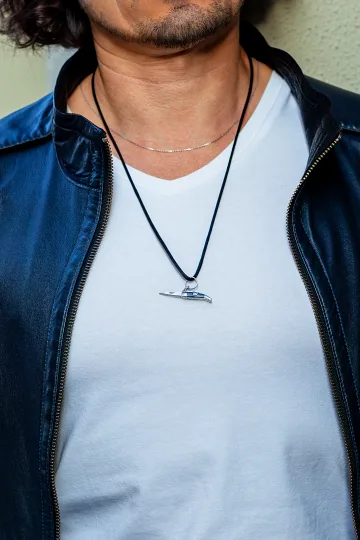
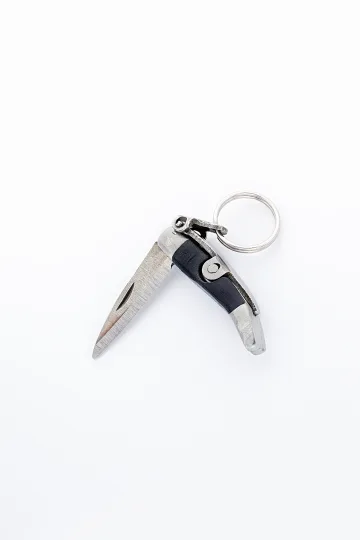
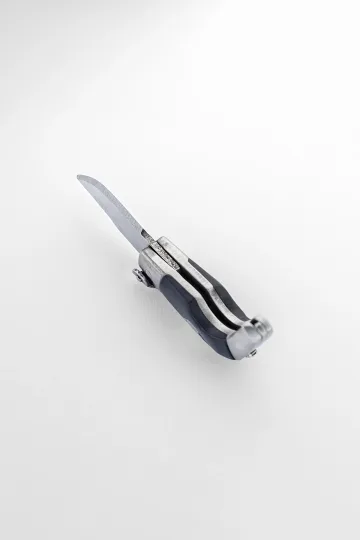
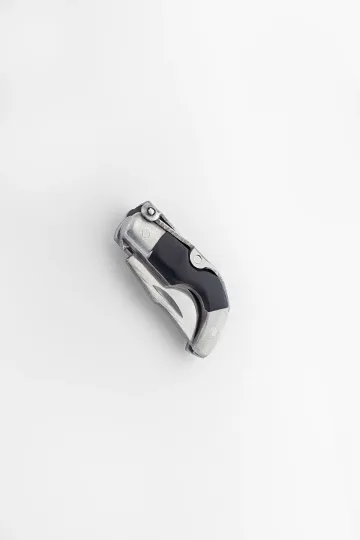
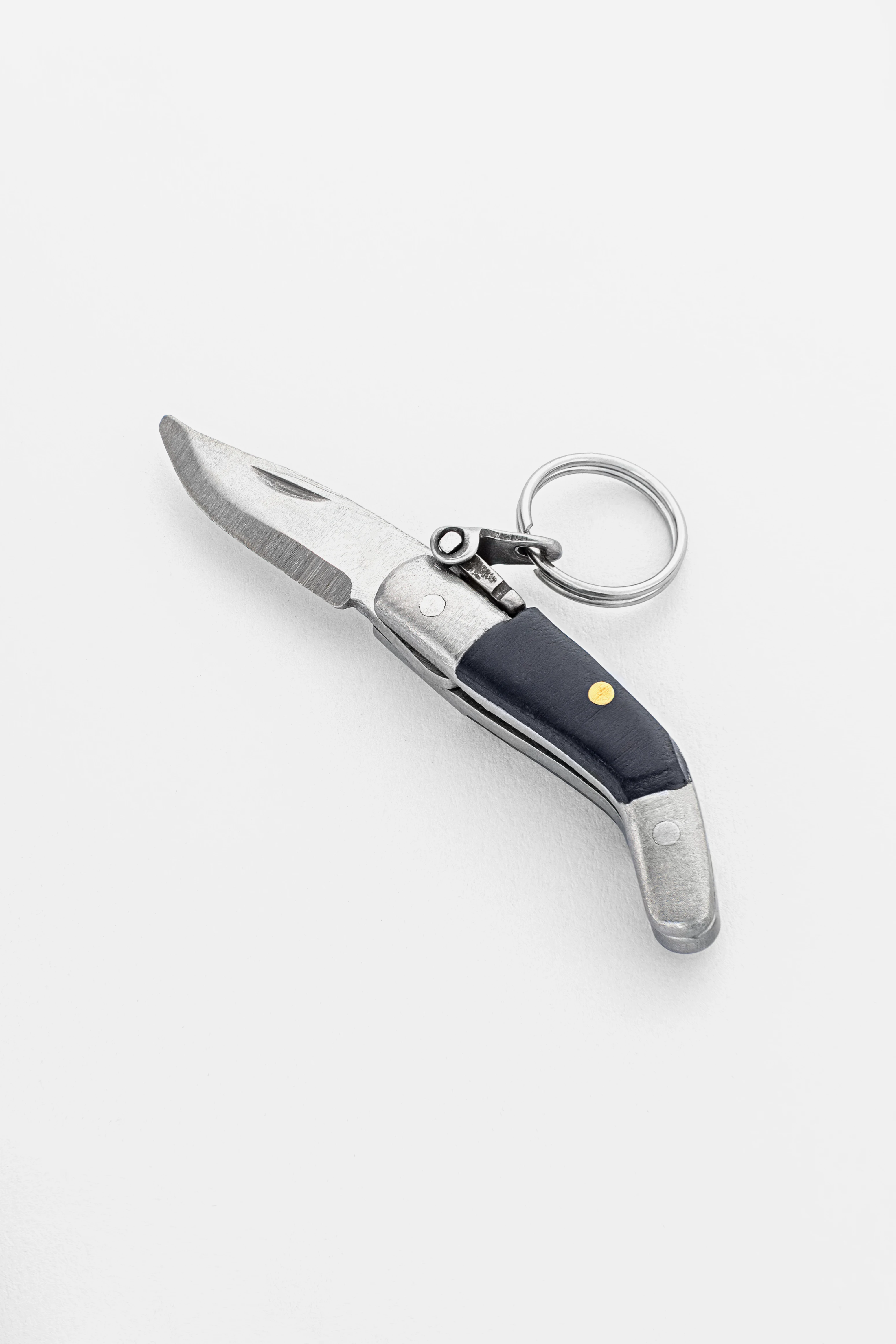
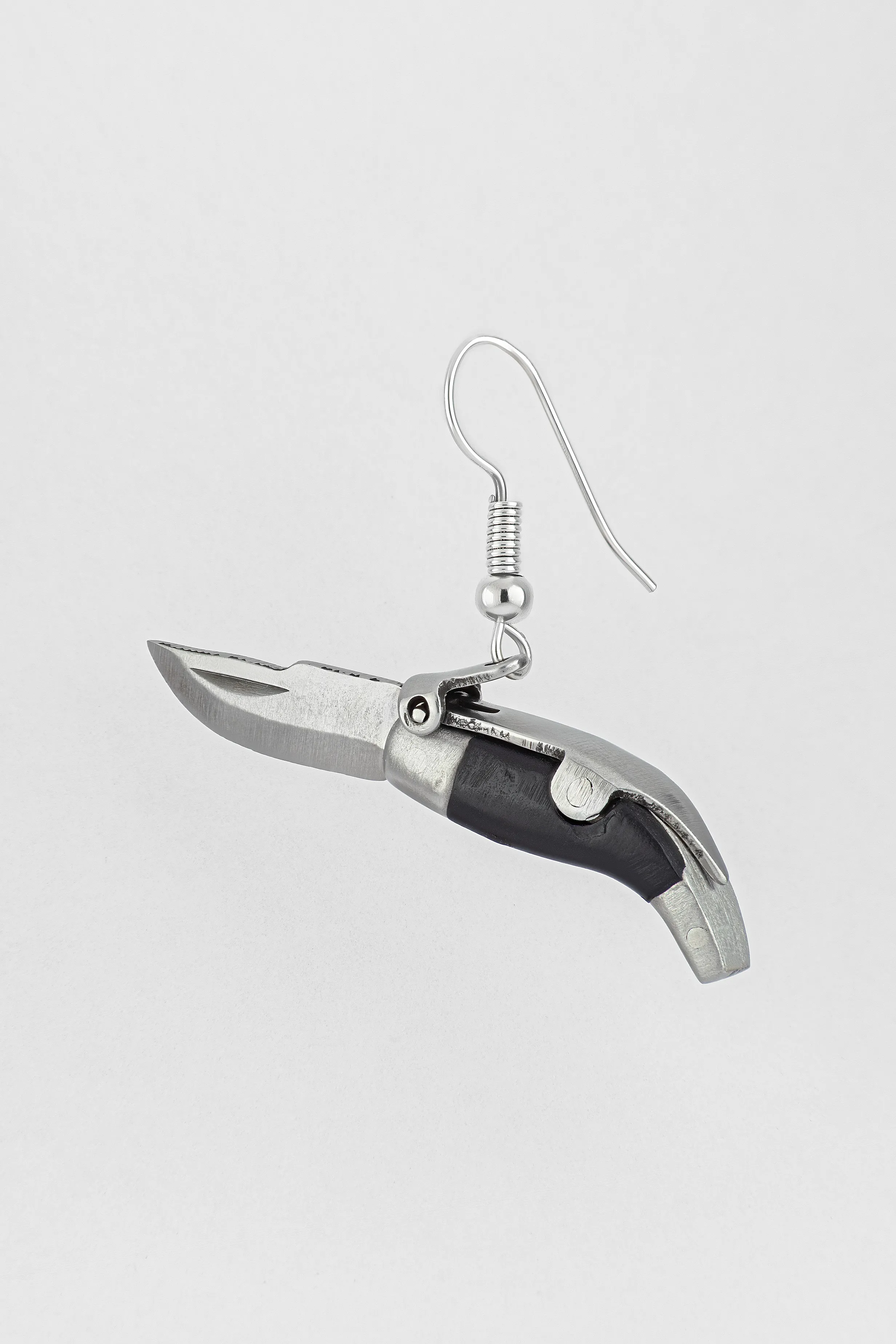
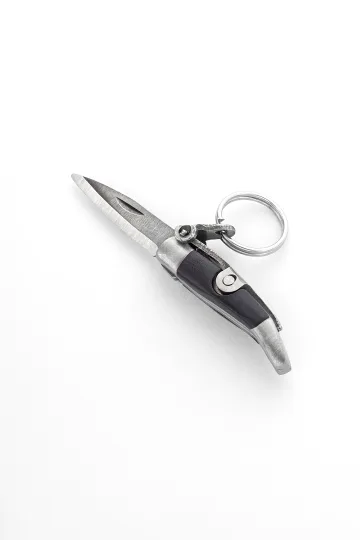
CAPAORA mini knife pendant
The 18th-century Spanish navaja in miniature: 40 mm of stainless steel, a real folding mechanism and a Palanquilla lock that clicks. An affordable gift to remember.
Authentic · Ships from Spain · 14-day returns
Caring for Flower Jewellery
Flower jewellery requires special care because it often has delicate elements. Well-maintained jewellery will serve you for life and pass to your descendants.
Enamel Jewellery Care
Enamel jewellery can't get wet because water can seep under the enamel and cause metal corrosion. This is especially important to remember when wearing jewellery in daily life, avoid washing dishes, swimming, prolonged rain exposure.
If jewellery gets wet, immediately wipe it with a soft, dry cloth. Then let it dry at room temperature in a ventilated place. Don't use a hair dryer or other heat sources.
Enamel can crack from sudden temperature changes. Don't wear enamel jewellery in ice water or intense sun without protection. If you plan an ice bath or sauna, remove the jewellery.
Clean enamel jewellery carefully with a soft-bristled brush and soft cloth. Never use abrasives that might scratch the enamel. For cleaning, you can use a slightly damp cloth, but don't let water seep between the enamel and metal.
If enamel cracks or falls off, take the jewellery to a professional for repair. Attempting to fix it yourself might make it worse.
Preserving Carved Details and Petal Details
Carved jewellery requires careful handling because carved details can be damaged. Don't wear them during sports, gardening, heavy work. Carvings are beauty that require protection.
If jewellery has sharp angles (like sharp petal tips), they can catch on fabric, hair, or other things. Be careful putting it on and taking it off. Store such jewellery separately so it doesn't scratch.
Carved work requires periodic polishing. Every few years, take the jewellery to a jeweller for polishing and restoration of its original shine. If a crack appears in the carving, fix it quickly before it develops.
Check the jewellery's setting with a jeweller once a year to ensure all elements are firmly fastened. Over time, metal weakens and fastenings need reinforcing.
With wood carving, remember that wood is sensitive to humidity. Store such jewellery in normal humidity conditions (45-55%) so wood doesn't warp.
Cleaning and Storage
Store flower jewellery in a soft cloth pouch or a separate compartment in a box so it doesn't rub against other jewellery. The pouch protects it from dust and damage.
If storing jewellery for a long time, make sure it's completely dry before storing. Moisture can cause metal corrosion.
Clean the piece with soft cloth and lukewarm water with mild soap (preferably use baby soap without additives). Soak the jewellery in soapy water for a few seconds, then carefully clean with a soft brush or cloth. After that, thoroughly rinse with distilled water and dry with a soft cloth.
For silver jewellery, special cleaning cloths remove tarnish. But be careful, these cloths can damage enamel or polish. Use them only on metal parts.
For jewellery with precious stones, use a soft toothbrush to clean around the stones. Dirt often collects in these spots.
Every few years (or annually if you wear the jewellery often), take it to a professional jeweller for polishing, setting checks, and repair if needed. Professional polishing will restore original shine.
Flowers in Different Cultures
Flower symbolism differs across cultures. What means love in the West might mean death in the East. Understanding these differences is important, especially when giving jewellery to someone from another culture.
Eastern Interpretations of Flower Symbolism
In Japan, the chrysanthemum is the emperor's flower. The Japanese imperial seal contains a sixteen-petaled chrysanthemum. It's one of few flowers that both royalty and commoners can wear, but with different meanings. Chrysanthemum jewellery in Japan means respect for tradition and eternity.
In the East, the rose might have a different meaning than in the West. In some Asian cultures, a red rose is associated with blood and death because of its colour suggesting violence. A white rose in the East means death of a young person, innocence, an interrupted life.
In India, the lotus is the most sacred flower. Lotus jewellery is a religious symbol, not just decoration. In Hinduism, white lotus symbolises Brahma (god of creation), pink lotus symbolises Shiva and beauty, red lotus symbolises the heart and love.
In China, the peony is the flower of wealth, honour, and marriage happiness. Rulers gave peony jewellery to close advisors as a sign of favour. Moreover, the peony represents spring, rebirth, new beginnings. Peony jewellery in China is often given to young women as a wish for a happy marriage.
In Korea and Thailand, the lotus also has sacred significance connected to Buddhism. Lotus jewellery in these countries is often worn as protection and a reminder of the spiritual path.
Western Tradition and the Language of Flowers
In the West, the rose means love, a global language understood everywhere. White rose means purity, new beginning, youth. Yellow means jealousy, infidelity; in some contexts, joy and friendship.
The lily means purity and grandeur. White lily means death, innocence, purity. Red lily means passion. Orange lily means pride and gratitude.
Violet means modesty and loyalty. Forget-me-not means memory, loyalty, devotion.
Lily of the valley means return of happiness, purity. Tulip means perfect love (red), hopeless love (yellow).
Flower language developed in the Victorian era and remains relevant today. It's used in literature, painting, flower compositions.
African and American Motifs
In Africa, flower jewellery is often made from natural materials with ethnic direction. Traditional African flower jewellery often appears as wood or bone carving. Flowers in African culture often symbolise connection with nature, fertility, life.
In Africa, jewellery with local flower motifs is popular, lilacs, hibiscus, magnolias. These flowers are often carved in sandalwood, creating jewellery that emits a pleasant scent.
In America, especially Latin American culture, flower jewellery often has tropical motifs, hibiscus, orchids, passiflora. These flowers symbolise the beauty of Caribbean, Central American, and South American nature.
In Mexican culture, flower jewellery often has religious meaning. A ring or brooch with a flower might mean a connection with the Virgin Mary or local saints.
In many Native American cultures, flower jewellery is made from turquoise, decorated with floral motifs connected to tribal teachings. These pieces are sacred and often pass down through families.
Live Flowers vs Flower Jewellery
A common question: what to give, live flowers or jewellery with flowers? Both choices make sense but inspire different emotions.
Durability and Meaning
Live flowers are beautiful but temporary. They're in full beauty for three to four days, then begin to fade and die in a week or two. This is life's natural cycle.
Flower jewellery will bring joy for a lifetime. If made from noble materials, it will last a hundred years or more. You can pass it to your descendants.
On the other hand, live flowers embody beauty in its purest form. They smell, they're fresh, they're alive. They're part of nature we can hold in our hands. Jewellery is memory of that beauty, fixed in material.
When to Give Live Flowers, When Jewellery
Live flowers are good choices in these situations:
- When you want to say something temporary: "Thank you for helping," "Happy birthday," "Get well"
- When you know someone but not well enough to give jewellery
- When you want to give a pleasant surprise without obligation
- When you want to add beauty to another gift
Flower jewellery is a more serious gift. You're giving someone something they'll wear, something that reminds them of you daily. This is a gift for:
- Close people: mom, sister, best friend
- Important moments: engagement, wedding, child's birth
- Recognizing something deep: people who matter to you, people you love
Psychological Effect of the Gift
Silver, gold, engagement rings, symbolic jewellery, paired sets.
When someone receives live flowers, they feel joy at the gift moment. They smell them, admire them, put them in a vase. But the feeling passes quickly. They watch the flowers lose petals, leaves yellow, and finally die. This can be a sad reminder of beauty's transience.
When someone receives flower jewellery, the joy can last longer. Every time they wear it, they remember that moment of receiving it. The piece becomes part of their story. It can be a lifelong companion.
Also, jewellery is more personal. Almost everyone gives live flowers. But jewellery is a rarer, more valuable gift. The person understands you spent time and money choosing something special for them.
An ideal gift is often live flowers right now and jewellery later. This shows you think about the person not once but many times.
Send a friend a discount code, they save on their first order.
Facts That Surprise
So much history has settled around floral jewellery that some of the details sound invented. These are not.
There are almost no black flowers in nature. What is sold and worn as a black rose is in fact a very dark crimson. Petals do not produce a true black pigment, so jewellers reach that colour with dark enamel, oxidised silver or onyx rather than by copying a living bloom. The black orchid is in the same position: the name promises more than botany can deliver.
A tulip bulb once cost as much as a house. In the Dutch Republic of the 1630s, rare streaked varieties changed hands for sums that would have bought a canal side property in Amsterdam. When the market collapsed in 1637 a good many people were ruined, and the tulip has carried a reputation as the flower of fragile wealth ever since, an association designers occasionally play with on purpose.
The most expensive tulips were diseased. The flamed and feathered patterns that collectors paid fortunes for were caused by a virus that weakened the plant and reduced the number of bulbs it produced. Buyers were paying record sums for a symptom, and nobody understood the cause until the twentieth century.
Victorian jewellery had hair woven into it. Mourning brooches and rings frequently concealed a lock of the dead person's hair, sometimes plaited into a fine pattern and set under glass at the back. To that era it was touching rather than macabre; the piece held a physical part of the person, which is as close to keeping them as anyone could get before photography became common.
The lotus opens out of mud, and that is why it became sacred. Both Buddhist tradition and ancient Egypt prized the flower for rising clean out of murky water. Two cultures with no contact between them arrived at the same image of renewal from the same observed fact, which is unusual enough to be worth noticing.
The Japanese emperor sits on the Chrysanthemum Throne. A stylised sixteen petalled chrysanthemum is the crest of the imperial house of Japan, and the throne itself is named after the flower. A chrysanthemum piece therefore reads completely differently in Tokyo than it does in much of Europe, where the same flower spent a long time associated with graves and All Souls' Day.
The forget-me-not became a flower of memory after a war. The small blue bloom was worn in remembrance of the dead in several countries, and the meaning has held ever since. In a piece of jewellery it works as a quiet signal, obvious to anyone who knows the history and invisible to everyone else.
Art Nouveau enamel deceives the eye on purpose. The translucent enamel that gave those workshops their petal gradients was laid in layers and fired so that light passes through it much as it passes through a living petal. Some of the techniques, plique-à-jour in particular, where the enamel is held in a metal frame with no backing at all, were considered close to lost for decades, and the number of workshops able to do it well is still small.
FAQ: Common Questions About Flower Jewellery
Can I wear flower jewellery every day?
It depends on material and technique. Jewellery from noble metals with firmly set stones can be worn daily. But jewellery with enamel, carving, or delicate elements should be reserved for special occasions.
How do I restore scratched flower jewellery?
If the piece is noble metal, take it to a jewellery workshop for polishing. If it has complex carving or enamel, restoration might be expensive and complicated.
Should I give jewellery with a specific flower if I don't know its meaning?
Yes. Flower meanings are interesting, but if you simply like the flower, give it. Often beauty wins over symbolism.
What flower jewellery suits a man?
Men often choose jewellery with more geometric flowers like tulips or simple roses. Often made as cufflinks, tie pins, or brooches.
How do I know if jewellery is an antique?
Genuine Victorian and Art Nouveau jewellery often bears maker's marks with dates and names. If buying antiques, request documentation confirming age.
What flower jewellery holds the most meaning over time?
Gold or platinum jewellery with natural precious stones is durable and ages well. Some buyers value antique jewellery for its historical and sentimental significance. When buying a vintage piece, ask for documentation about its origin and authenticity.
Can flower jewellery be everyday?
Of course. Choose jewellery from durable materials with firmly set centre stone. Minimalist design with a single flower looks more casual than a bouquet. A rose pendant on a chain, small lily earrings, a simple flower ring, all can be worn daily. It's important to choose something durable and that you enjoy looking at every day.
How do I choose flower jewellery as a gift if I'm unsure of size?
Choose jewellery on a chain (adjustable) or pendants (size doesn't matter). Necklaces work for everyone. Brooches are also universal. For earrings, choose clip earrings, which don't require pierced ears. For rings, ask the seller about resizing or buy an adjustable ring.
Is there flower jewellery suitable for both men and women?
Yes. Minimalist pieces with a single flower in silver or white gold look neutral and suit anyone. A rose pendant can be worn by anyone if they chose it for themselves. Flower cufflinks are a good choice for men who like jewellery.
What if my jewellery lost its shine?
Take the jewellery to a jeweller for professional polishing. It's inexpensive and takes one day to a week. Don't try cleaning it with abrasive materials yourself, you might damage it.
Can I remake old flower jewellery?
Yes, an experienced jeweller can remake an old piece into something new. If you inherited rose jewellery but prefer lotus, the jeweller can remove the centre stone and remake or refashion the metal into a new design with a new flower. This preserves old precious materials but creates a new design.
What flower means "just friendship"?
Forget-me-not often means devotion and loyalty in friendship, but also memory. Violet means modesty and loyalty. If you want to express friendship feelings, choose yellow rose (though it might be misunderstood as jealousy) or choose a flower your friend likes without specific meaning.
Conclusion
Flowers in jewellery are humanity's way of stopping beauty, preserving it forever. From ancient Egyptian lotuses to Victorian bouquets, from Japanese chrysanthemums to contemporary abstract roses, flower jewellery tells the story of our relationship with beauty.
When you choose flower jewellery, you choose more than something beautiful. You're choosing a way to express yourself, a way to tell your feelings, a way to preserve memory of life's important moments.
Every piece of flower jewellery is a story. The story of the craftsman who made it, the story of the flower it symbolises, the story of the people who gave and wore it. When you wear flower jewellery, you become part of that story.
Buying it as a gift? Each one arrives ready to give.
 A branded Zevira box and a little card come with every order.