Wood in jewelry: humanity's first material, the one that barely survived to reach museums
Why we know less about wooden beads than about stone ones
Wood was an ornament before metal, before fired clay, almost at the same moment as the first shells on a cord. That is exactly why Stone Age wooden beads are nearly absent from museums: timber rots away over a few centuries, while stone and bone lie in the ground for millennia. We judge the oldest jewellery by what survived, not by what people actually wore.
The result is a frustrating bias. Archaeologists find drilled shells, bone pendants and stone beads, then conclude that these were the materials people used for their first ornaments. In reality, beads of berries, seeds, bark and wood almost certainly lay right beside them, but they decayed without a trace. Wood is both the oldest jewellery material and the most underrated one, and a conversation about it is a conversation about what excavations nearly took from us, yet what came back to us in the form of rings, beads and carved pendants.
What follows is a long road: from Palaeolithic cords and African masks to prayer beads and rosaries, the Art Nouveau era with its love of texture, and modern wooden wedding bands inlaid with resin and metal. Along the way we sort out the species themselves, the fear of water, the weight, the hypoallergenic side and the care, so a wooden piece serves for years rather than crumbling in a month.
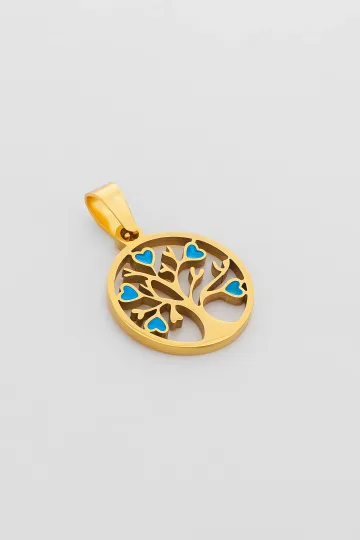
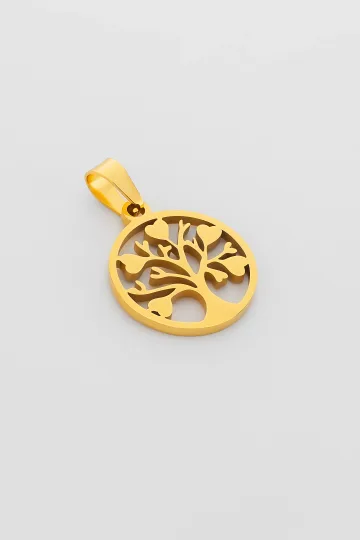
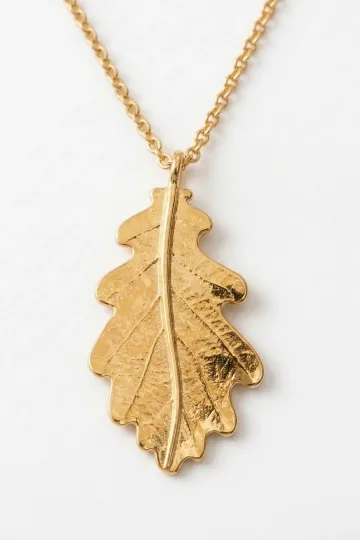
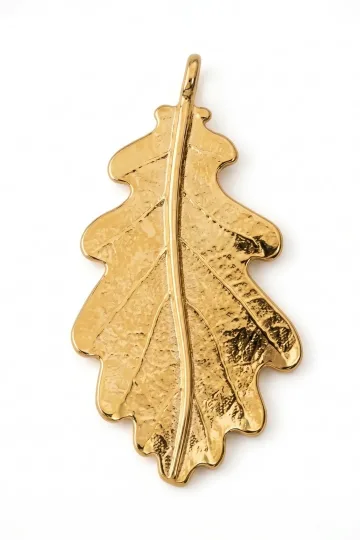
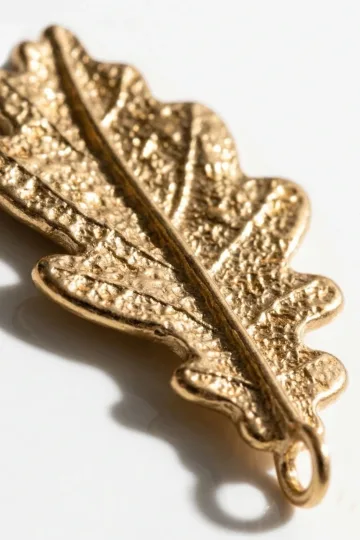
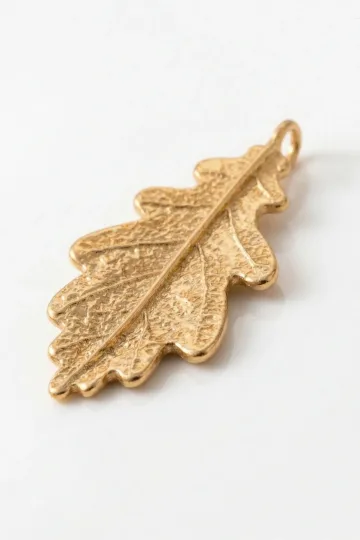
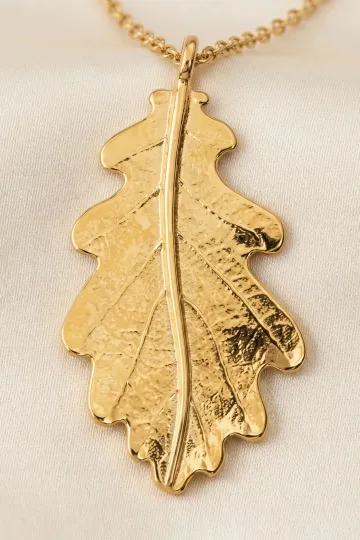
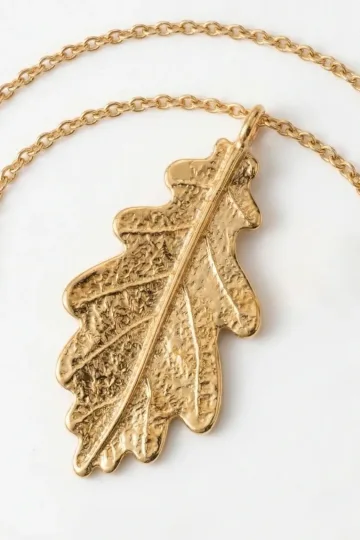
Wear the symbol, don't just read about it. These are in stock:

History: wood as the oldest ornament
The Palaeolithic: beads we never found
The earliest proven ornaments are drilled shells nearly a hundred thousand years old and Palaeolithic bone pendants. Wood is almost absent from these finds, and the reason is not that nobody wore it, but that it does not last. Organic matter rots, and at most sites nothing remains of wooden beads except indirect traces: imprints, residues of the ochre that pieces were rubbed with, and wear marks on other elements from rubbing against a cord.
The logic runs counter to the familiar picture. Wood, bark, berries and seeds are easier to work than stone: you can pierce them with a sharp flake, thread them on a sinew, bend them, tie them. Anyone who could make a spear with a wooden shaft could certainly make a pendant from a piece of branch. So wooden ornaments are almost certainly older than stone beads; history simply erased them completely and left us a lopsided record made of a single hard material.
The rare exceptions only prove the rule. Wood reaches us only under special conditions: in oxygen-free peat bogs, in permafrost ice, in dry desert tombs where there is no moisture for rot. That is how wooden objects from ancient Egypt and the northern bogs survived, and each such find is a rare stroke of luck. Everything else that people wore in wood for tens of thousands of years went into the earth without a trace, and we can only guess at the scale of the loss from how readily people of every culture turned to wood later, once written history could record it.
Africa: wood, the mask and status
In Africa, wood is not a backup material for when metal runs short, but a tradition in its own right with its own language of forms. Carved wooden pendants, beads, combs and plug earrings carried signs of clan, age and marital standing. Wood was joined with cowrie shells, glass beads, seeds and metal into elaborate chest ornaments where every element meant something.
A chapter of its own is the bond between ornament and mask. A ritual wooden mask and a chest ornament were often made by one hand, in one workshop, by the same carving canons. The wood sculpture of West and Central Africa later strongly shaped European art of the early twentieth century, and the interest in the texture of wood in jewellery of that period came largely from here.
Plug earrings and tunnels, seen today as a modern phenomenon, in fact have roots in this same tradition. Among several peoples, wooden discs in a stretched earlobe or lip signalled age, marriage and clan membership, and they were carved from dense local species so they would not crack or chafe. The same approach shows in combs and hairpins: wood gave a material that was strong, light and warm to the touch, and carving turned an everyday object into a marker of status read at a glance.
Asia: sandalwood, prayer beads and scent
In Asia, wood in jewellery is almost always tied to two things: prayer and scent. Prayer beads of sandalwood and of agarwood were and still are worn as objects of spiritual practice, the beads slipped through the fingers while repeating mantras and prayers. Wood was prized here for both its form and its aroma: sandalwood and agarwood have a scent, and that scent was considered part of the ornament itself.
From this grew an entire culture of fragrant timber. Bracelets and beads of sandalwood were warmed in the hand so they would give off heat and scent, passed down through generations, and given on important occasions. Unlike the European tradition, where wood was more often a cheap material, in Asia the fragrant species were costly and counted as noble, on a par with precious stones.
Prayer beads and rosaries: wood held in the hands
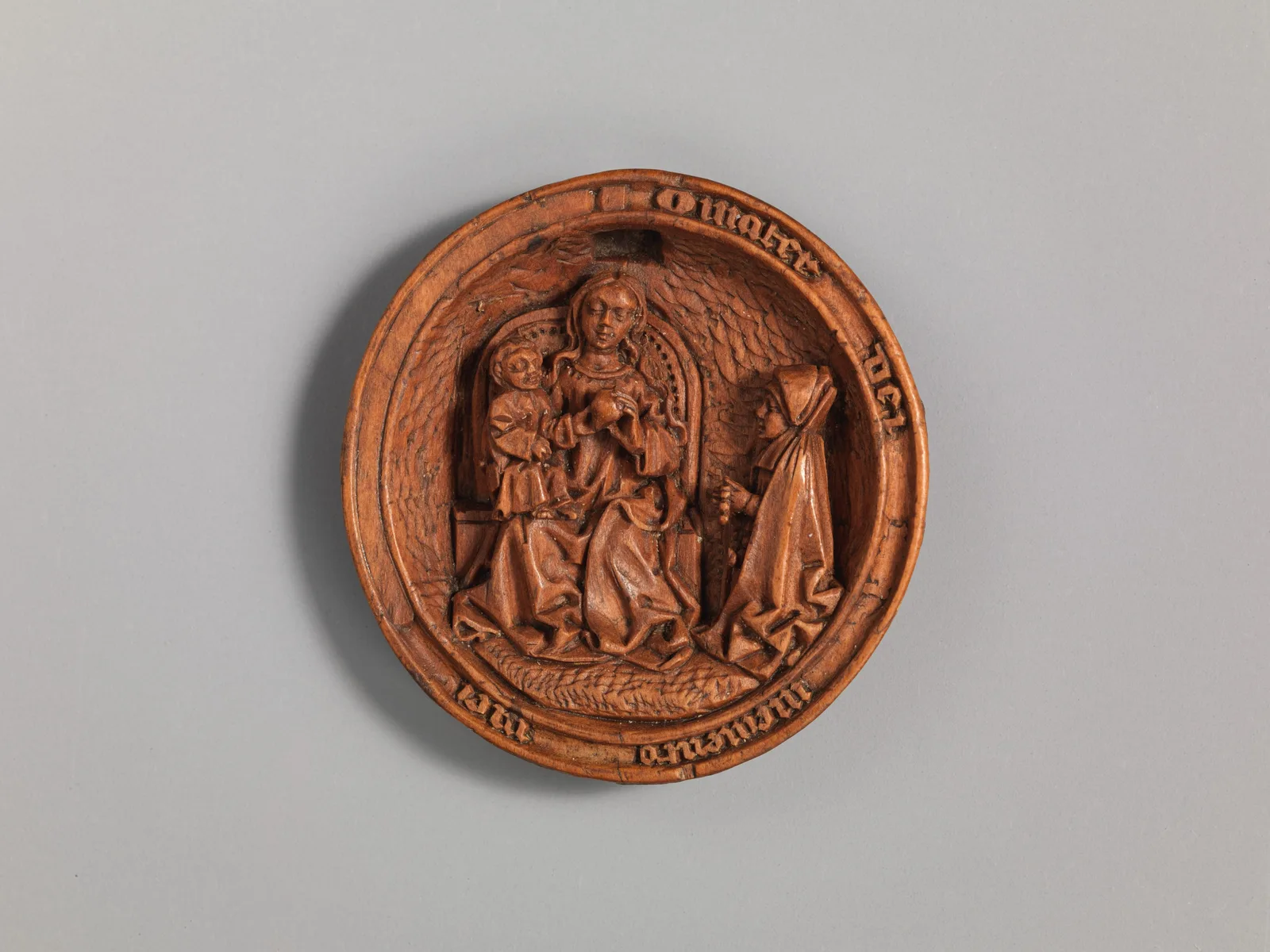
The Christian rosary and Orthodox prayer beads were also often made of wood, and the material had its own logic here. Wood is warm to the touch, it does not clink, it does not chill the hand, and it is pleasant to finger for a long time. Beads of juniper, pear, olive and boxwood served for decades, darkening and polishing under the fingers, and that wear was read not as damage but as the mark of prayer.
Olive wood from the Holy Land held a special place. Prayer beads and crosses of olive, brought back from pilgrimage, were valued as relic and gift. Wood worked here less as ornament in the pure sense and more as an object on the border between household item, talisman and a personal thing carried against the body for years.
Art Nouveau: wood as part of the living line
The turn of the nineteenth and twentieth centuries was the first time the Art Nouveau movement looked seriously at wood in expensive jewellery. The masters of this era valued natural materials for texture and colour rather than for cost, and set horn, bone and wood alongside enamel and gold. Wood fit the flowing plant lines of Art Nouveau naturally, as a continuation of the same nature as the dragonflies, irises and waves on a brooch.
This was a shift in thinking. Before Art Nouveau, wood in European jewellery meant poverty or mourning. Its masters showed that warm timber with its grain pattern can be noble if presented and joined with metal and stone the right way. The idea of an expensive ornament made from an inexpensive material, prized for the craft, was born largely then.
Art Deco and beyond: exotic species and contrast
The Art Deco of the twenties and thirties loved contrast and geometry, and wood came in handy here. Dark exotic species, ebony and rosewood, were set beside pale bone, mother of pearl and metal, achieving sharp black and white pairings. Bangle bracelets of wood with metal inlays, long bead ropes, and wooden mounts for powder compacts and cigarette cases became hallmarks of the style.
After the war, interest in wood faded and flared in waves. Mid-century studio jewellers rediscovered it as a material for one-of-a-kind pieces, and later the taste for sustainability and the natural brought wooden rings, beads and earrings back into everyday use. Today wood is a deliberate choice by someone who wants a warm, light, characterful material, not a compromise forced by lack of money.
Wood wants linen and warm skin, not satin and rhinestones. Hang it on an evening gown and you have understood nothing.
How and with what to wear wooden jewellery
Wood has passed through hundreds of my looks on set, and I long ago worked out simple rules for it. It is warm, light and alive, so it likes the same company around it, not cold shine. Here is what really works, by occasion.
What do I wear wood with every day? For daily wear I recommend light beads of olive, juniper or ebony over knitwear, a linen shirt or a cotton dress. Pale wood sits beautifully on a dark top, dark ebony reads clearly on light and pastel. A thin beech hoop bracelet or a wooden ring I suggest as a restrained accent that does not argue with the clothes.
Is wood fitting at the office? Quite, if you keep it restrained. In a strict setting ringing metal and the shine of stone are often too much, while a warm wooden detail works more quietly. I suggest a wooden inlay in a silver or steel ring: the wood is on show, but the build stays severe. Leave the large beads and bold earrings for later.
How do I build an eye-catching look? For a statement without weight I choose a large form: big bamboo or pale-wood hoop earrings, a carved pendant. Wood gives a volume that neither drags the earlobe nor presses on the neck, so the impact comes for free. For boho I add glass beads, tassels and rough silver to the wood, building up the layers.
Which clothing colour and skin tone? Wood is a warm neutral, so it is hard to go wrong. Pale olive, pear and birch I recommend on dark, saturated clothing; dark ebony and rosewood on light and pastel. For warm skin I suggest golden-pink wood, olive and pear, while cooler types are closer to very dark ebony or pale birch with a cool sheen.
Which metal and stone do I pair it with? With silver and steel wood gives a graphic contrast of warm and cold; with brass and copper it falls into one warm chord. As a setting for stone I choose wood where I want to mute the shine of turquoise, malachite or labradorite. I especially love the pair of wood and amber: amber is hardened resin, and in one strand they look like kin.

Turn on your camera, pick earrings, a pendant or a ring, and see the piece on yourself in real time.
Switch items in one tap.
Everything runs in your browser: no photo or video is ever uploaded.
Types of wood: how the species differ
Ebony, the black wood
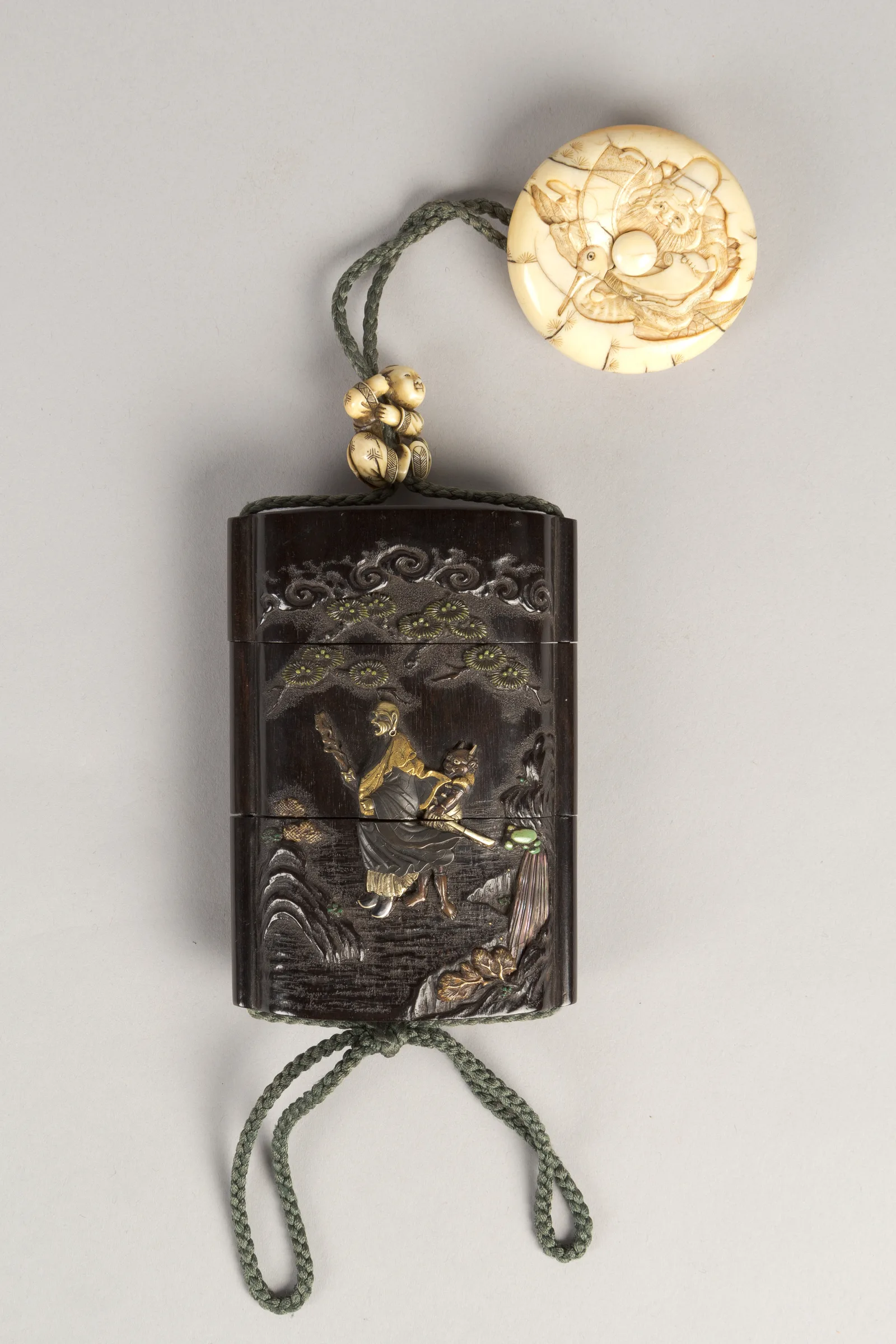
Ebony is a dense, almost black wood, so heavy that it sinks in water. It is prized for the deep colour that needs no dye and for the way it takes a mirror polish. In jewellery, ebony goes into beads, inlays, dark rings and contrasting elements set beside pale wood, bone or metal.
The blackness of ebony has a flip side: true ebony is costly and hard to work, so dyed pale wood is often sold as black wood instead. Weight, density and the behaviour of a fresh cut help tell them apart: genuine ebony has almost no visible grain and does not leave dye on the hands.
Historically, ebony was prized by kings and craftsmen long before it became a material for jewellery inlays. It was brought to ancient Egypt as tribute from the south, and used for sarcophagus details, handles and ivory inlays. The contrast of black ebony and white bone became a classic device that masters of many later eras repeated. In jewellery the pairing works the same way: a dark wooden bead beside a pale one sets up a rhythm that needs no colour, the graphic of black and white is enough.
Rosewood
Rosewood is a group of dense species with expressive figure, from chocolate to a purplish brown, often with dark streaks. Many rosewoods have a scent, which is where the name comes from for part of the group. In jewellery, rosewood is loved because every piece is unique: the grain pattern turns a plain bead or ring into a small painting.
An important caveat concerns protection: a number of rosewoods are heavily restricted in trade by international agreements because of logging. So responsible makers work with certified material or with offcuts from old pieces and furniture, and it is worth asking about this when buying.
Juniper
Juniper is a light, fragrant wood with a warm honey colour and a faint coniferous scent that lasts for years. Prayer beads, beads, combs and small carved objects were traditionally made of juniper because it cuts softly and smells pleasant. The scent weakens over time but returns if you rub the surface.
Juniper has a characteristic quirk: a cut often shows small knots and an uneven figure, which some see as a flaw and others as the charm. The wood is not the hardest, so juniper beads fear knocks and scratches more than ebony or boxwood.
Olive wood
Olive wood gives a golden-yellow timber with a bright wavy figure and dark veins. It is dense, polishes well and barely needs a stain: the natural pattern is so expressive that an oil finish is enough. Olive goes into beads, rings, crosses, handles and inlays.
Olive grows slowly and gnarled, so large even blanks are rare, and it is precisely the material with bends and burls that is prized. Every olive piece comes out unique in its figure, and finding two identical rings of it is almost impossible.
Sandalwood
Sandalwood is the benchmark of fragrant timber, a warm pale tone with a lasting sweetish scent that is the reason it is worn at all. Sandalwood beads and bracelets are warmed in the hand to release the aroma, which is thought to be calming. The wood is dense and turns and polishes well.
Real sandalwood is costly and scarce, so the market is full of fakes: scented pale wood that smells while fresh and quickly fades. The mark of the genuine is a scent that holds for months and returns with friction, not one that vanishes in a week.
Pear
Pear wood is a carver's favourite: an even, fine-grained timber with no pronounced figure, a warm pinkish-beige colour. It is precisely the absence of a large pattern that makes pear ideal for fine carving, where the details matter rather than the texture of the background. It goes into carved pendants, beads and miniatures.
Pear is often stained and toned to imitate costlier species right up to ebony, and so convincingly that you can tell only by weight and cut. In its natural state it is soft, warm and calm, well suited to pale, delicate ornaments.
Beech and birch
Beech and birch are light, affordable, strong species, the ones people often learn on and the ones everyday wooden ornaments are made from. Beech is dense and even, and bends well after steaming, so hoop bracelets are made from it. Birch is light, with a faint silky sheen, especially Karelian birch with its famous figured grain.
These species make no claim to luxury, but they are reliable and cheap, and they are the comfortable place to start getting to know wooden jewellery. Under lacquer or oil, pale beech and birch look clean and graphic and pair well with silver and steel.
Bamboo
Strictly speaking, bamboo is not a tree but a giant grass, yet in jewellery it counts among the woody materials. It is light, hollow, strong in bending and fast-growing, which makes it one of the most sustainable options. Bamboo goes into bracelets, hoop earrings, inlays and large light costume pieces.
Bamboo has a recognisable texture with nodal partitions and lengthwise fibres that designers play with. Because of the hollow structure it is lighter than dense species, so large bamboo earrings barely drag the lobe down.
Burls and growths: wood with the most beautiful figure
A burl is a growth on the trunk or root where the fibres twist into a dense chaotic pattern. Burl wood is considered the most decorative: the swirls, eyes and shimmer make every cut unique. Burls of walnut, maple, birch and poplar are prized apart from the ordinary wood of the same trees.
Working with burl is hard: the fibres run in every direction, the material is temperamental to carve and prone to chipping. But a finished burl piece looks costlier than plain wood and often needs no extra finish beyond polish and oil, because the pattern itself is the ornament.
Customer reviews
Zevira is a real jewellery shop. Genuine payments, deliveries and customer thank-yous.
🥰🥰🥰 gracias
Ok, ¡gracias! 🙂
Does wood fear water, and how is it protected
What water actually does to wood
Wood is a porous material that absorbs moisture and gives it back, swelling and shrinking. Brief contact with water is no threat, but long soaking followed by sharp drying makes the fibres move, cracks appear, the surface raises a nap, and the polish dulls. Constant damp on top of that opens the door to mould and fungus.
So the rule is simple: a wooden ornament dislikes swimming, the sauna, washing dishes while wearing it, and storage in a damp bathroom. This does not mean a drop of water will kill it, it means that regular soaking shortens its life many times over.
Oil: protection that breathes
An oil finish is the most delicate way to protect wood. Linseed, tung and mineral oils soak into the pores and repel moisture from within, leaving the wood matte, warm to the touch and with the texture open. Oil forms no film, so it is easy to renew: wipe the piece, let it soak in, take off the excess, and the protection works again.
The downside of oil is that it needs upkeep. The finish gradually washes and wears off and has to be refreshed every few months, especially on rings and bracelets that rub against the skin. But a scratched oiled piece is easy to restore, unlike a lacquered one.
Wax: a matte barrier
Wax, usually beeswax or carnauba, is applied over oil or on its own, and it gives a thin water-repellent layer with a soft semi-matte sheen. Wax is pleasant to the touch, does not change the colour of the wood much, and is easy to renew by buffing. In durability it sits somewhere between oil and lacquer.
A wax finish fears heat: near a radiator or in the sun it can soften and gather dust. But it is safe for the skin and suits anyone who wants to keep the natural matte look of wood rather than a gloss.
Lacquer: a tough film and its price
Lacquer forms a hard film on the surface that reliably holds moisture out and gives a gloss or a matte finish as chosen. Lacquered wood fears water and dirt less, holds its look longer without care, and lacquer is the finish most often used on mass-market wooden jewellery.
The price of that toughness is repairability. When the lacquer film scratches or chips, it is hard to fix in spots: usually you have to strip the whole layer and lacquer again. So lacquer is good for pieces worn hard by people who do not want to fuss over them, while oil and wax are closer to those ready to renew the finish now and then for the sake of living texture.
Upload a photo of your pet, someone you love, or an object. We'll build a 3D model and hand-cast it in pewter.



Wood in rings, inlays and combinations
Wooden wedding bands
A wooden wedding band is a deliberate choice for those who want a warm, light, unusual piece. Such rings are made from dense species, ebony, olive, juniper, often from stabilised wood pressure-soaked with resin so the ring does not fear moisture or crack. You can wear a pure wooden ring every day, but it is treated more gently than a metal one.
Wood in a wedding band carries its own symbolism: a living material warmed by hands and changing over time along with its owner. The honest downside: wood is less durable than metal and can chip on impact, so many choose combined designs with a metal core.
Inlay: wood plus metal
The most reliable way to wear wood on the finger is a ring where the wood is an inlay and the load-bearing part is metal. A strip of wood is set into the channel of a steel, titanium or silver ring, shielded on the sides by metal and bearing no pulling load. Such a ring is stronger than a pure wooden one while keeping the warm wooden band on view.
The reverse version is metal inlay in wood: thin veins, dots and rings of metal set into the timber. This technique is close to the old intarsia and marquetry, where a pattern is assembled from pieces of different woods and metal. The contrast of warm wood and cold metal works both ways.
Wood and resin
The union of wood and clear resin is one of the most expressive devices in modern jewellery. Resin fills cracks, voids and the gaps between pieces of wood, is tinted to colour, given glitter or dried flowers, and made to imitate water, sky or mist over a forest. The result is a material where living timber borders on a transparent stone of human making.
Technically, resin also rescues fragile wood: it stabilizes rotten burls, glues fragments and gives a waterproof surface. It is worth reading separately about the material itself and its properties of jewellery resin and epoxy, because it has its own rules of strength and care. Paired with wood, resin turns a piece of branch into a ring you can wear for years.
Wood with stone, wood with amber
Wood gets along well with natural settings. A turquoise cabochon, a piece of malachite or a labradorite bead set into a wooden base looks whole, because both come from the earth. The warm wood mutes the shine of the stone and makes the ornament calmer than a metal mount.
The pairing of wood and amber is especially natural: amber is itself fossilized tree resin, that is, a former part of a tree. Beads where wooden beads alternate with amber ones look like one family of materials, and it is no accident that they are often combined. There is a separate guide to amber in jewelry about amber itself, its types and inclusions.



Weight, the hypoallergenic side and who wood suits
Wood is the lightest material
The main practical virtue of wood is weight, or rather its near-total absence. Large wooden earrings that look massive weigh many times less than the same in metal and do not drag the lobe. A big wooden collar does not press on the neck, a bulky bracelet does not tire the arm. For those who love a large form but cannot bear the heft of metal, wood is the rescue.
Lightness matters most in earrings. Heavy metal drops stretch the piercing over time, while wooden ones of the same size barely load the lobe. So large wooden earrings can be worn all day without fatigue.
Hypoallergenic: wood does not give metals to the skin
A wooden ornament contains no nickel, and nickel is precisely the main cause of contact allergy to costume jewelry. Wood does not release metal ions into the skin, does not turn it green, and is usually tolerated well even by sensitive skin. That makes it a sensible choice for anyone who reacts to cheap alloys. If you are unsure what is causing the irritation, this guide to nickel allergy and nickel-free jewelry helps sort it out.
Still, wood cannot be called completely safe. Allergy to the wood itself does happen, more often to exotic fragrant species such as rosewood, and to the components of lacquers and impregnations. A reaction to wood is rare but possible, so people with sensitive skin should try fragrant tropical species cautiously.
Who wood suits especially well
Wood is a good choice for several groups. For those allergic to metals, it gives large ornaments with no risk. For those who cannot bear weight, it lets them wear a big form. For those who love natural materials and warm texture, it is closer than cold shine. And for those who want an unusual piece with character, because no two pieces of wood are alike.
There are also those for whom wood suits less well. If someone wants an ornament that needs no care at all and fears no water, metal or steel is more reliable. Wood is a material for someone ready to make a few allowances for it in exchange for warmth and lightness.
Leave your email, we'll send your discount code. No spam, unsubscribe anytime.
The code arrives by email, valid on your first order.
Carving, pyrography and other techniques
Wood carving
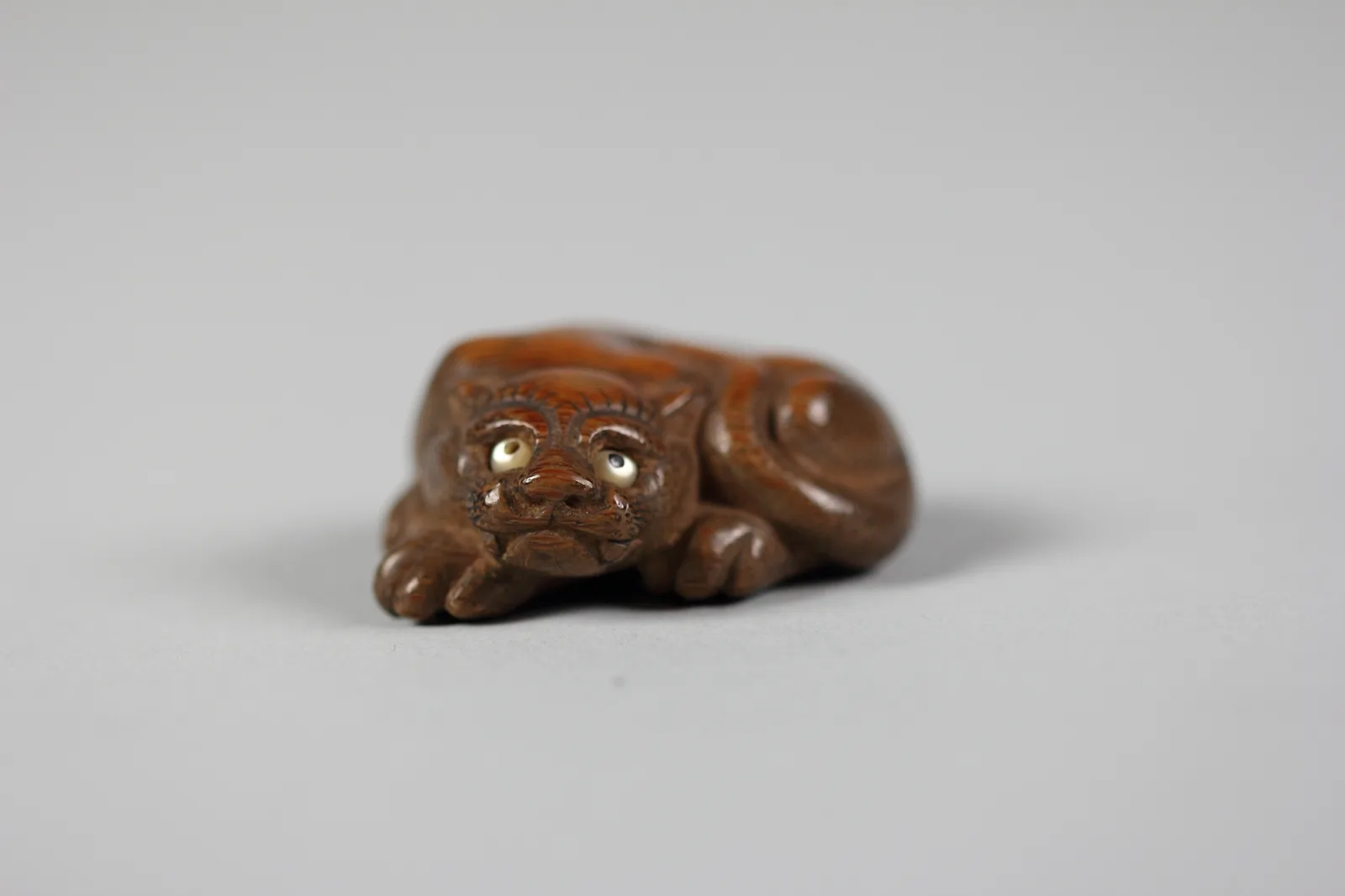
Carving is the oldest technique for decorating wood: the master removes the excess with a knife, chisel or rotary tool, leaving relief. On soft even species like pear and linden the finest details are cut, while dense ones like ebony and boxwood take durable miniatures that do not fear wear. Carving turns a plain bead into a figure, a pattern, a face.
The quality of carving shows in the cleanness of the lines and in how the master accounted for the grain direction. A good carver guides the tool so the wood does not chip and picks the species for the task: a tough wood for openwork, a dense one for sharp edges.
Pyrography, woodburning
Pyrography is a drawing made with a hot needle on the surface of the wood, giving brown lines and tonal shifts from light gold to almost black. It works best on light, even species where the contrast between wood and burn shows clearest: linden, birch, beech. Ornaments, inscriptions and miniature pictures are applied this way to pendants and bracelets.
Unlike paint, a burned drawing is part of the wood itself, it does not rub off or fade. Oil or lacquer is usually laid over the burning to protect it and bring the drawing out more deeply.
Bending, turning and stabilization
Thin timber is steamed and bent into rings and hoops: that is how beech bangle bracelets and seamless whole wooden rings are made. Turning gives even beads, rings and balls on a lathe. And stabilization is the impregnation of wood with resin or special compounds under vacuum and pressure, after which even a rotten burl becomes hard, waterproof and fit for a ring.
Stabilized wood is in many ways the answer to the material's main weaknesses. It barely fears moisture, does not crack from swings, and holds its shape while still looking like wood. Many modern wooden rings are made precisely from stabilised timber.
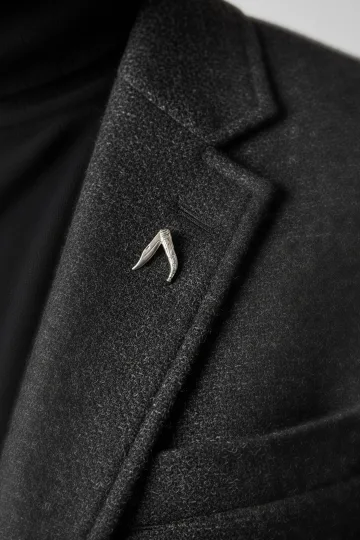
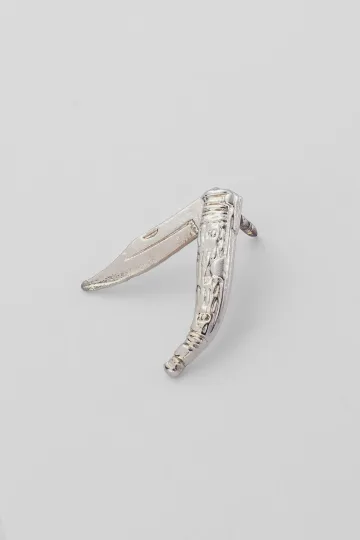
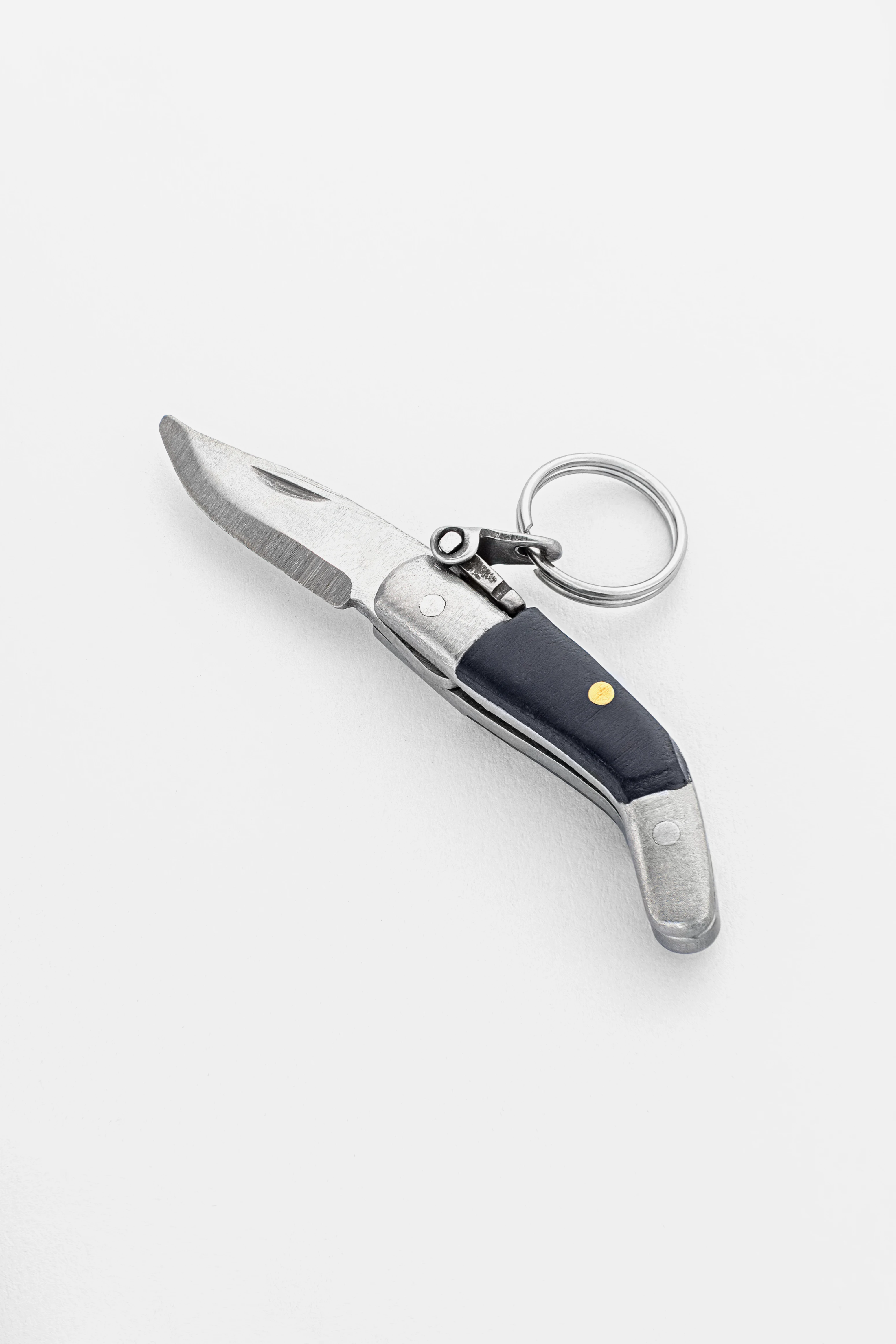
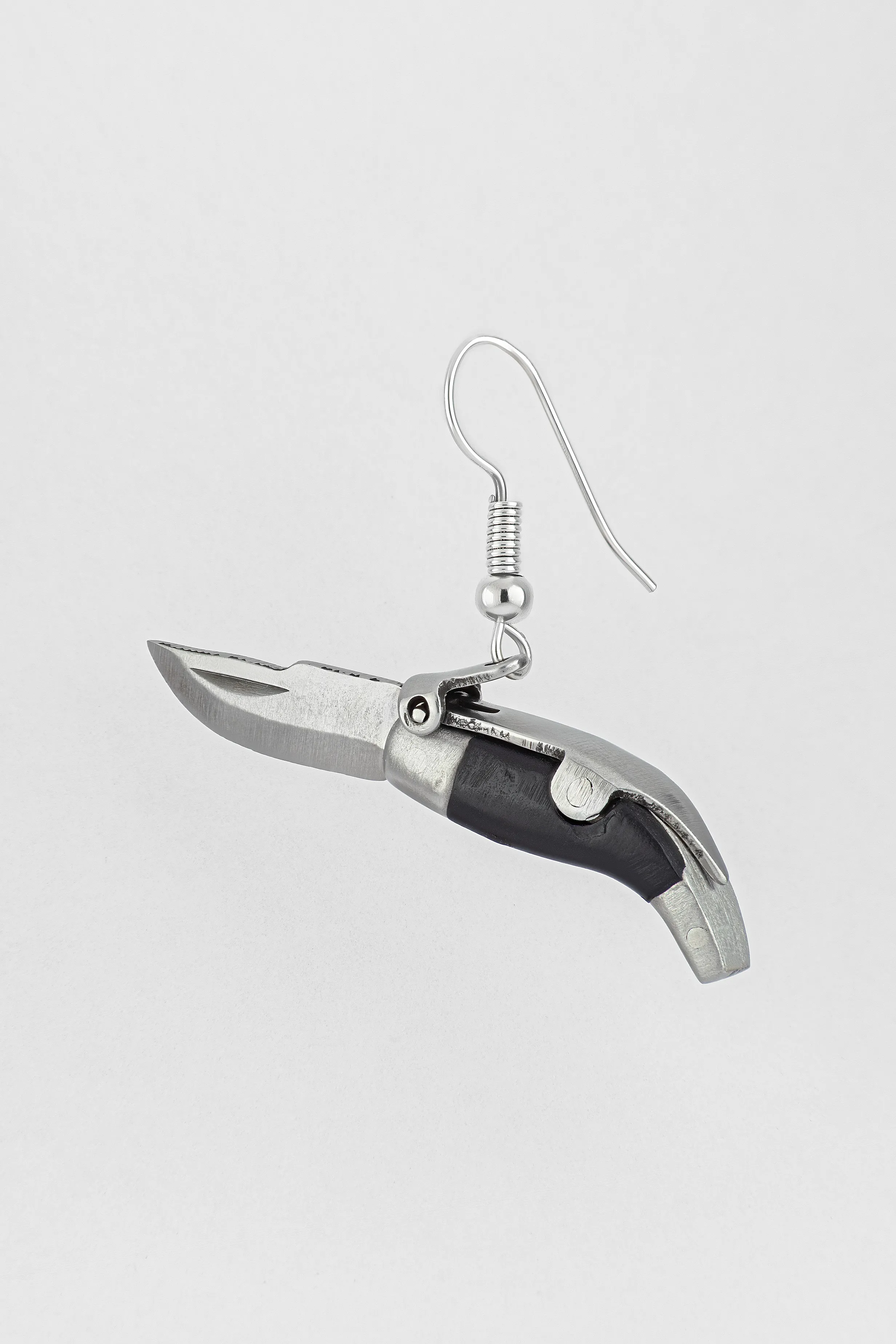
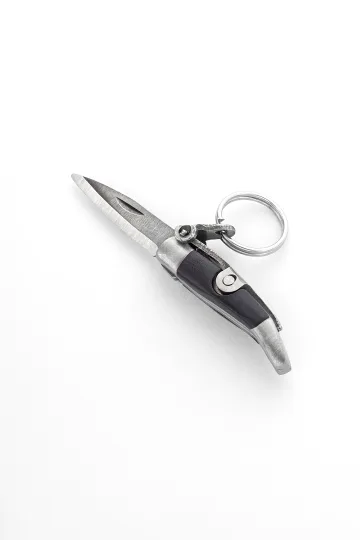
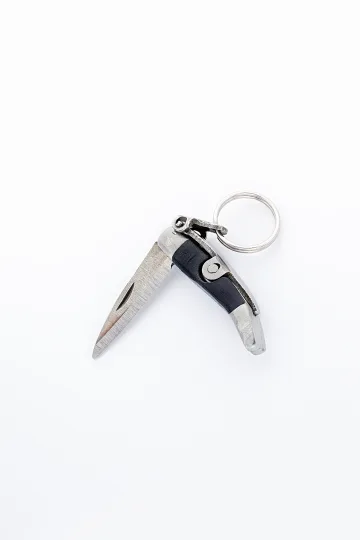
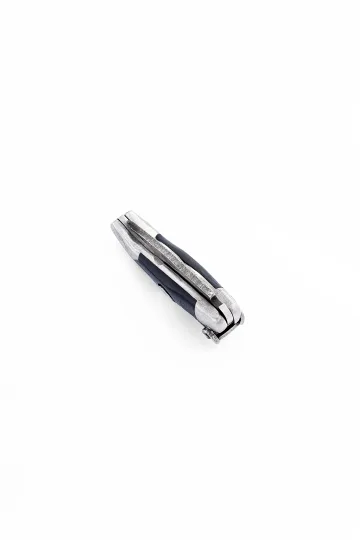
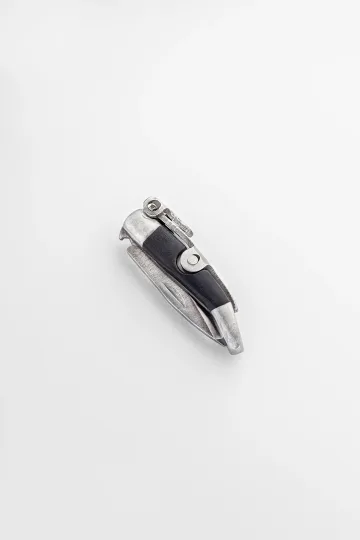
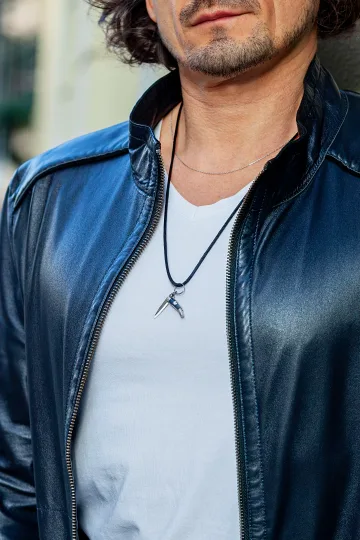
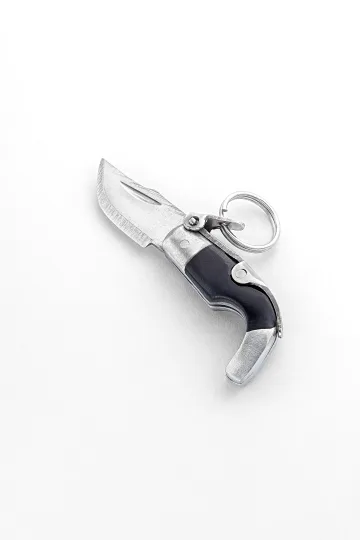
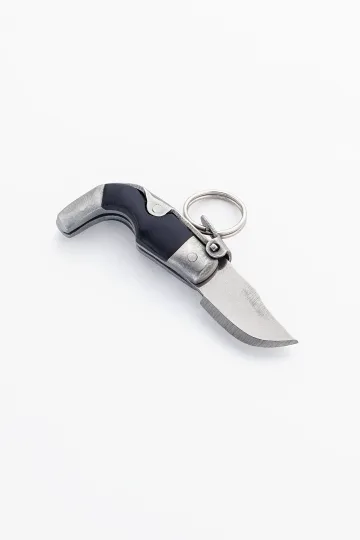
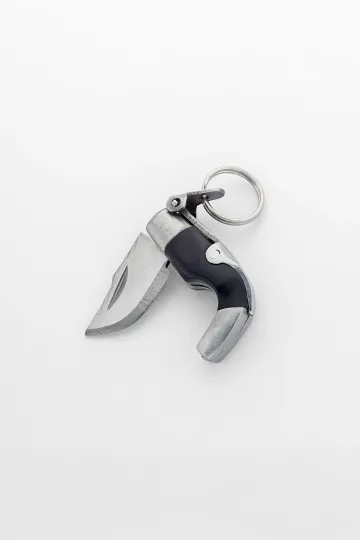
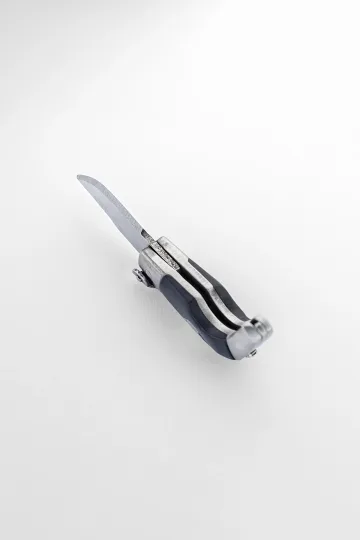
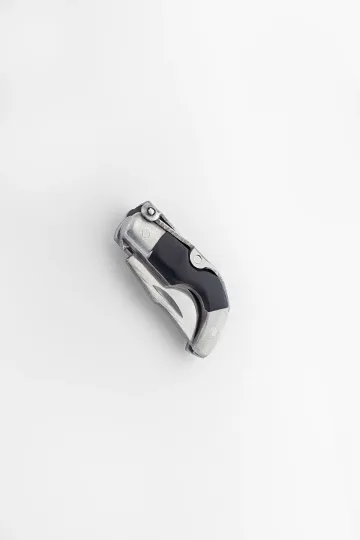
CAPAORA mini knife pendant
The 18th-century Spanish navaja in miniature: 40 mm of stainless steel, a real folding mechanism and a Palanquilla lock that clicks. An affordable gift to remember.
Authentic · Ships from Spain · 14-day returns
Caring for a wooden ornament
What wood dislikes
Wood has three main enemies: water, heat and sharp swings. Long soaking leads to swelling and cracks, dry hot air near a radiator or a hairdryer over-dries and warps, and the jumps from wet to dry are the most destructive. Add to that knocks, which chip wood, and scratches, which ruin the polish, and you have the list of what to avoid.
The practical conclusion is simple. Take a wooden ornament off before the shower, the pool, the sauna, washing dishes and cleaning with chemicals. Do not leave it in direct sun or near sources of heat. Do not toss it into a shared box where metal will scratch it.
How to clean and renew the oil
Clean wood with a soft dry or slightly damp cloth, with no soaking and no harsh chemicals. If a piece has dulled, wipe it with a suitable oil, let it soak in for a few minutes and remove the excess with a clean cloth. Oil brings back the colour, feeds the wood and renews the water-repellent layer.
How often to renew it the piece itself will tell you. Rings and bracelets that rub against the skin a lot are oiled every one to three months, beads and pendants less often. Lacquered pieces need no oil, a wipe is enough, and if the film is damaged they go in for re-lacquering.
Storage
Store wood in a dry place at room temperature, apart from metal, ideally in a pouch or soft box where it will not knock against other ornaments. A damp bathroom is the worst place: there wood takes on damp and can grow mould. Air that is too dry is harmful too, but that is more a museum's problem than an ordinary home's.
Fragrant species, sandalwood and juniper, are stored so the scent does not waft off for nothing: in a closed pouch the aroma lasts longer. If the scent has weakened, a light polish or a drop of oil often freshens it.
Ethics and certification of species
Why the origin of wood matters
With wood, as with stones and metals, there is the question of a responsible source. Some valuable species, above all rosewoods and certain kinds of black and pink wood, are logged illegally and have fallen under international protection. Buying an ornament of such wood with no documents can mean unwittingly supporting the felling of rare trees.
So responsible makers make a point of knowing and naming the species and the origin. Certified timber, material from legal plantations, or reclaimed wood from old furniture and offcuts is normal practice and worth asking about. A good seller has nothing to hide about where their wood comes from.
The most sustainable options
If sustainability matters, there are species with an obviously clear conscience. Bamboo grows fastest of all and renews itself in years rather than centuries. Olive wood for jewellery is often taken from the offcuts of fruit orchards. Reclaimed wood, rescued from old furniture, tools and barrels, requires not a single felled tree at all.
Such an approach to the material fits the very idea of a wooden ornament. Wood is about warmth, nature and the long life of a thing, and it makes sense for its origin to be honest too. Asking about the species and the source when buying is not nitpicking but part of the culture of handling the material.
Facts that surprise
Wood can be heavier than water. Ebony and some tropical species are so dense that they sink rather than float, contrary to the familiar idea of wood as a light material.
Amber is wood. More precisely, it is the resin of ancient trees fossilised over millions of years, so an amber ornament is in a sense an ornament made of wood that reached us in solid form.
The costliest wood has a scent. Agarwood infected by a particular fungus yields the resinous timber oud, prized by weight on a par with precious metals precisely for its aroma.
Wood can breathe through sound. Prayer beads and beads of dense species give a soft warm click when fingered, by which connoisseurs tell the species and the quality of seasoning by ear.
Burls are a disease turned into beauty. The most prized decorative figure of wood, the burl, forms because of injury, infection or stress to the tree, so the most beautiful pattern grows out of its ailment.
The colour of wood changes in the light. Many species darken or, on the contrary, fade over time under the sun, so a wooden ornament looks different years later than on the day it was bought, and this is considered part of its life.
Wood was a material of mourning. In the nineteenth century, dark wooden ornaments and similar ones were worn as a sign of grief alongside jet, and only Art Nouveau gave wood back its reputation as a beautiful material rather than a sorrowful one.
Send a friend a discount code, they save on their first order.
Frequently asked questions
Can a wooden ornament get wet? Brief contact with water is no threat, but long soaking and bathing in it are harmful: wood swells and then cracks as it dries. Take a ring or beads off before the shower, the pool and washing dishes, and if it does get wet, just blot it and let it dry at room temperature, away from a radiator.
Do wooden rings break quickly? A pure wooden ring is less durable than a metal one and can chip on a hard knock. But stabilised wood and designs with a metal core serve for years under normal wear. If you work with your hands or worry about strength, choose a ring where the wood is an inlay in metal.
Does wood cause allergies? Wood itself contains no nickel and is usually tolerated well, which is why it is often chosen for metal allergy. A reaction to exotic fragrant species or to lacquers and impregnations does happen rarely, so a new tropical species is worth trying cautiously on sensitive skin.
How do I revive a dulled wooden ornament? Wipe it with a suitable oil, let it soak in for a few minutes and remove the excess with a clean cloth. Oil brings back the colour and shine and renews the protective layer. Rings and bracelets are oiled every one to three months, beads less often. Lacquered pieces need no oil; if the film is damaged they are re-lacquered.
How do I tell real ebony from dyed wood? Genuine ebony is heavy, dense, almost without visible grain and does not stain the hands. Dyed pale wood is lighter, a chip shows the pale colour under the black layer, and a damp wipe can lift a little dye. Weight and cut give the fake away most reliably.
Does sandalwood really smell for years? Real sandalwood holds its aroma for months and years, and the scent returns if you rub the surface or warm a bead in the hand. If a piece smelled for a couple of weeks and then went flat, it is almost certainly scented cheap wood, not sandalwood.
Is wood and resin a strong combination? Yes, resin fills cracks and voids, makes the surface waterproof and strengthens fragile wood, so such ornaments are worn for years. Resin has its own care rules, it fears scratches and long sun, but paired with wood it tends to extend the life of the piece.
Can a wooden ornament be worn every day? Yes, if you treat it a little more gently than metal: take it off in water, keep it away from heat, renew the oil and do not toss it into a shared box with metal. Treated this way, wooden beads, earrings and rings serve for years and over time only grow more beautiful from a light patina.
In short
Wood is the oldest jewellery material and the most underrated, because it barely survived to reach the digs. It travelled from Palaeolithic cords and African masks to Asian prayer beads, the olive of the Holy Land, wood in the Art Nouveau era, and modern rings with resin and metal. The species give everything: from heavy black ebony to light bamboo, from fragrant sandalwood to decorative burls. Wood is light, warm, hypoallergenic and unique in its figure, but it asks for respect toward water, heat and time. Protected with oil, wax or lacquer and kept in a dry place, it serves for years and ages beautifully, and an honest origin for the species makes it a calm choice for the conscience too.
Silver, steel, warm materials, coloured stones, amber and symbols with a history.
Buying it as a gift? Each one arrives ready to give.
 A branded Zevira box and a little card come with every order.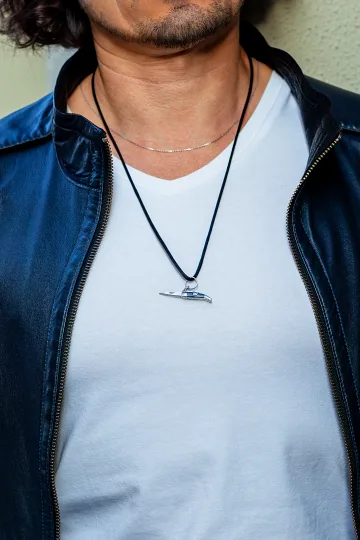




About Zevira
Zevira is a Spanish brand from Albacete, a city of craftsmen. We love materials with character: warm metals, living texture, colored stones and symbols with a history. If natural materials alongside wood interest you, start with the guide to amber in jewelry, and for the noble metal there is the guide to 925 silver.