Beads in jewelry: beadwork, types and techniques that whole cultures can read
Beads are older than writing. The earliest known beads, carved from ostrich eggshell in Africa, were worn around forty thousand years ago, long before anyone scratched their first words into clay. A small bead with a hole through the middle turned out to be one of the first things people made not for food and not for shelter, but for meaning. You strung it on a thread to show who you were, where you came from, whether you were married, in mourning, or in your prime.
Glass beads came later, but they repeated that same logic in thousands of variations. Venice and Bohemia learned to make tiny glass beads as even as grains and to dye them in every colour they could melt. Those grains spread across the planet: Plains nations embroidered moccasins with them, Zulu royalty wove them, village girls across Europe strung them by the handful. A pattern of beads could spell out a whole biography, and in that sense a bead sits closer to language than to plain decoration.
This article is about beads as a material and as a craft: what they are and how a tiny glass bead differs from an ordinary one, where they came from, what types and sizes exist, which techniques people use to weave and loom them, what jewellery comes out of them, how to tell even Japanese beads from cheap crooked ones, and how to care for all of it so the thread does not wear through within a year.
What a seed bead is and how it differs from beads
A tiny glass bead with a hole
A seed bead is a very small bead with a hole, usually glass, strung onto thread or fishing line by the dozen and the hundred. The English name says it plainly: seed beads, beads the size of seeds, because they really do resemble grains of poppy, millet, or mustard. The main difference between a seed bead and an ordinary bead is not the material but the role. A large bead is seen on its own, working as a standalone element. A seed bead works in mass: many identical grains add up to a fabric, a rope, a pattern, or embroidery, where every bead is a single pixel of the picture to come.
That is exactly why seed beads are measured not in pieces but in grams and rows. You do not assemble a piece of jewellery from them, you weave, loom, or embroider it, the way you would with thread. That difference changes everything: the technique, the tools, the maker's mindset, and the result itself.
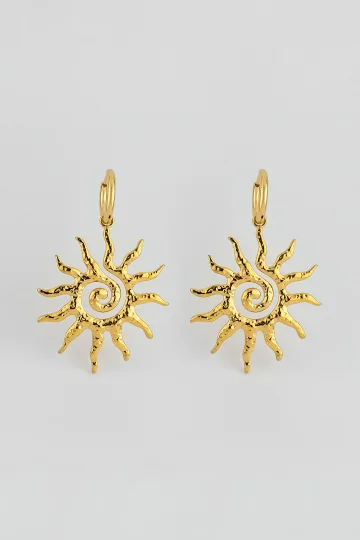
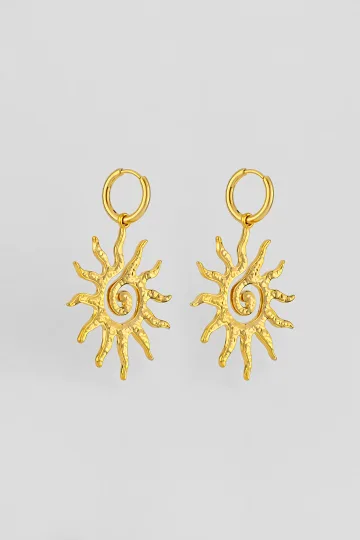
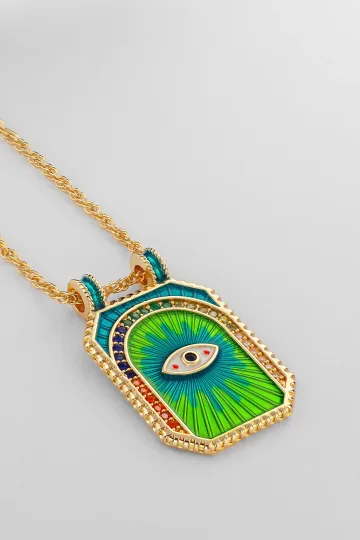
Wear the symbol, don't just read about it. These are in stock:



How seed beads differ from large beads
If you are stringing a strand of large glass beads or stones, you work with finished parts: pick them, string them, clasp them shut. We have a separate conversation about restringing beads and pearls and about putting together a natural gemstone bead necklace. There the bead is an accent.
Seed beads follow a different logic. A single seed bead means almost nothing on its own; the meaning is born from quantity and order. So seed beads call not for a taste in pairing but for patience and precision: an even count of rows, consistent tension, clean geometry. A large Venetian bead is a tiny sculpture, the kind we wrote about in our piece on Venetian Murano glass. A seed bead is paint and thread at once, a material for the canvas rather than for a single feature.
Where the word comes from
The English word "bead" began as something spiritual rather than ornamental. It comes from the Old English "bede", which meant a prayer. People counted prayers on a string of small balls, the rosary, by sliding one ball along for each prayer said. Over time the name of the act, the bede, slid from the prayer itself to the little object you moved while praying. The thing you held came to be called a bead, and only later did the word widen to cover any small pierced object strung on a thread. So the word carries a quiet memory of devotion: the first beads counted in English were not jewellery at all, they were prayers made countable. It is fitting that the same small grain that once tracked faith later became a way to tell the world who you are.
A history of beads: from shell to the furnaces of Venice
Shells and eggshell: humanity's first beads
Long before glass, people made beads from whatever was at hand. Ostrich eggshell beads in Africa tens of thousands of years old, drilled sea shells, seeds, bones, animal teeth, scraps of amber. They drilled them, polished them, strung them on sinew or plant fibre. Even then a bead was a sign: which shells you wore and how many of them hung on the cord told everyone your standing. Beadwork did not start with fashion; it started with the urge to make visible what words could not say.
Egypt and faience grains
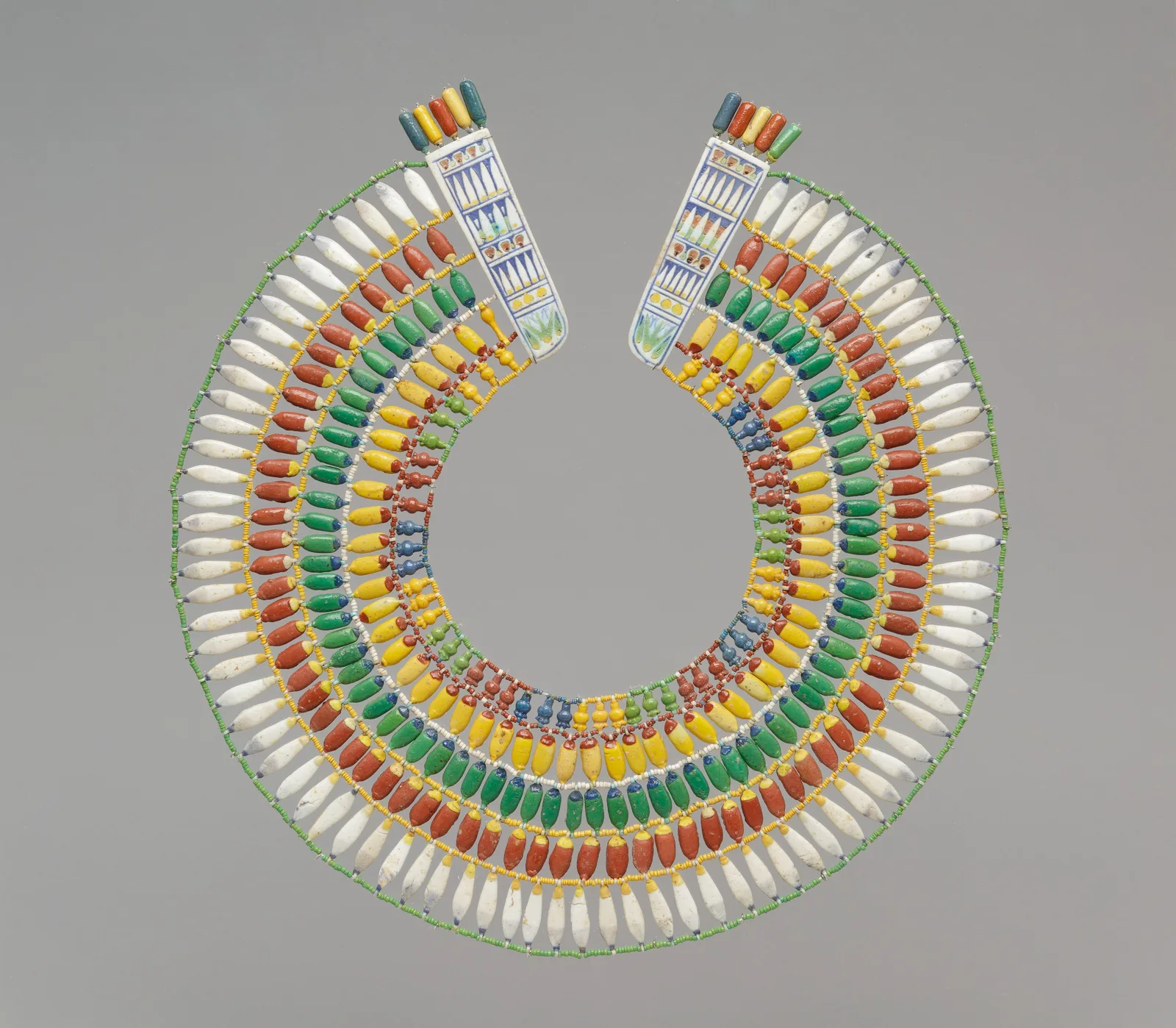
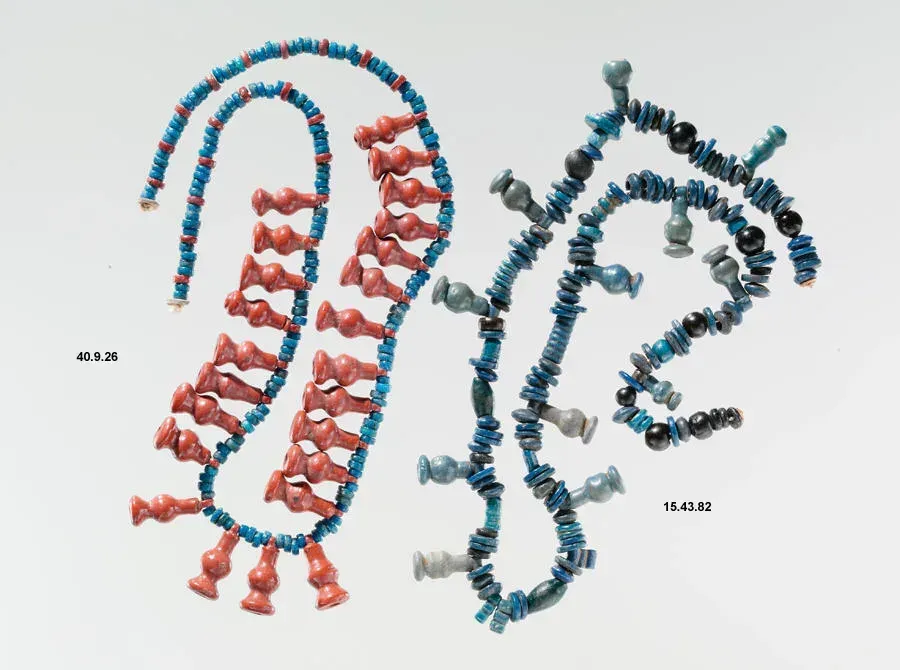
In Ancient Egypt, long before clear glass, people learned to make faience beads: they fired ground quartz with copper additives and got bright blue and turquoise grains. Those beads embroidered the netted capes worn over a linen dress, formed broad shoulder collars, and made the funerary nets laid over a mummy. Blue counted as the colour of sky and rebirth, and even rows of tiny beads turned cloth into a shimmering chainmail. This is one of the earliest examples of a whole fabric woven for the body out of small grains.
Venetian beads and the secret of Murano island
The real revolution came when the Venetians put glass bead production on an industrial footing. On the island of Murano, where in the thirteenth century the city moved all its glass furnaces to guard against fire and to protect its secrets, masters perfected the technique of drawing glass tubes. They pulled molten glass into a long hollow thread, cooled it, chopped it into pieces, tumbled it so the sharp edges melted smooth, and produced thousands of identical beads. Venice held a monopoly for centuries and watched its recipes closely: a maker who gave away the secrets of glassmaking faced harsh punishment. Venetian beads travelled the world as currency, as ornament, and as a luxury good.
Bohemian beads and the glass villages
The monopoly was gradually undermined by Czech, or more precisely Bohemian, glassmakers. In the mountain villages of northern Bohemia a whole industry took shape: some melted glass, others drew the tubes, others chopped and tumbled the beads, others sorted them by size, and much of it happened right in peasant homes. Bohemian beads became famous for saturated colours, pressed beads of complex shape, and an affordable price. By the nineteenth century Bohemia was one of the world's main bead suppliers, and the words "Czech beads" still ring like a mark of quality and a rich palette.
Trade beads: glass grains as currency
From the age of great voyages onward, beads became a commodity that bent the course of history. European ships carried glass beads to Africa, the Americas, and Asia and traded them for furs, gold, spices, ivory. This commodity was known as trade beads. To some they were cheap baubles; to others a rare treasure, because many peoples had no glass of that quality of their own. Beads became one of the first truly global currencies, and behind the harmless look of glass grains lies a difficult, often unjust history of exchange.
Wampum and the beadwork of Indigenous North America
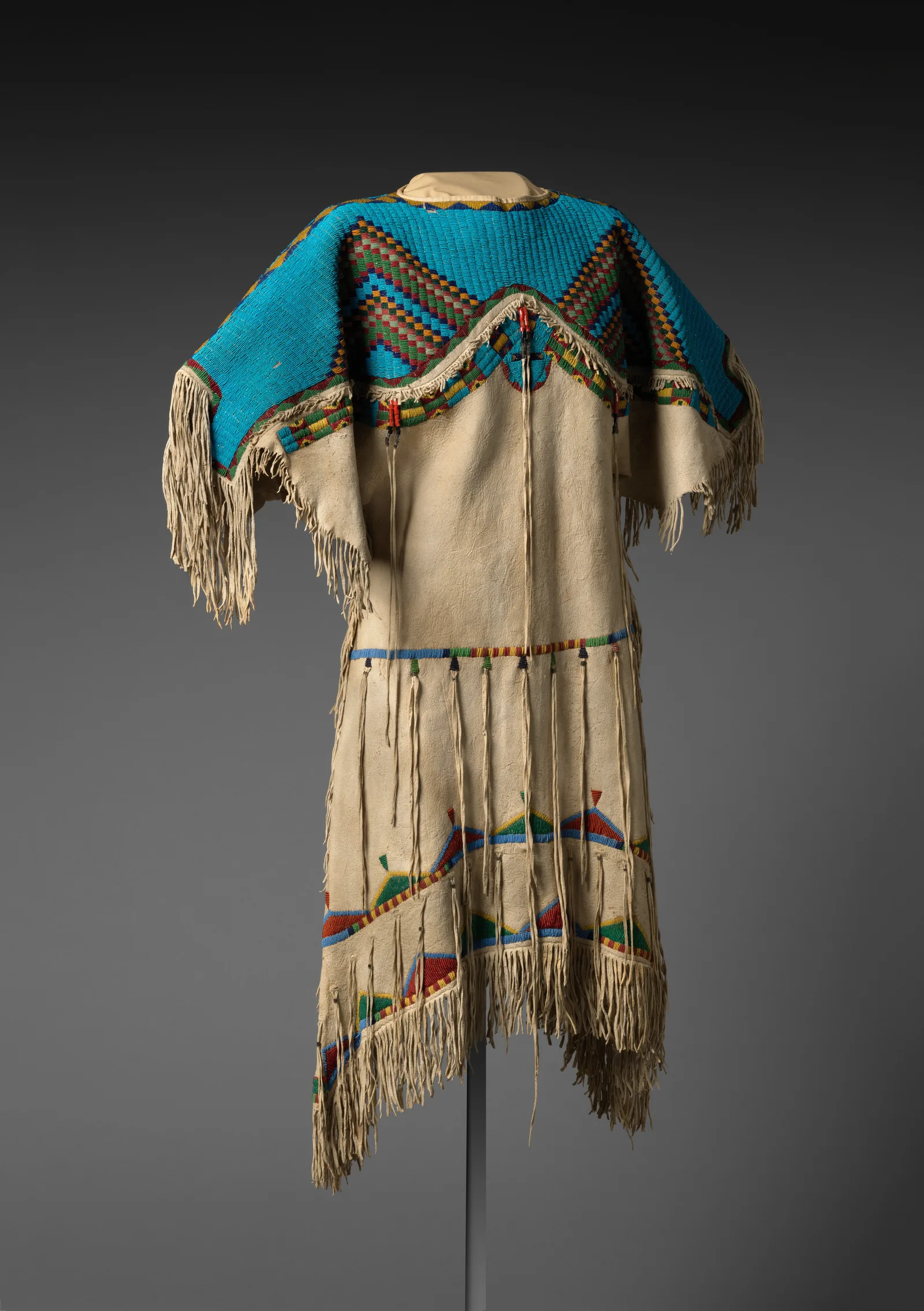
The Indigenous peoples of northeastern North America had a bead tradition of their own, wampum: beads made from shell, white and purple, strung into wide belts. Wampum served not as ornament but as record: the pattern on a belt sealed a treaty, declared war or peace, kept the memory of an event. When Europeans arrived with glass beads, the Plains nations took to them at once. Beaded moccasins, headbands, bags, and ceremonial dress became a signature of many peoples. Floral and geometric patterns in glass grains replaced the older porcupine quill and became one of the continent's most recognisable forms of folk art.
African beadwork: a language worn on the body
In Africa beadwork is a full sign system. Among the Zulu and Xhosa there were entire beaded messages: the colour and pattern of a bracelet or collar spoke of feelings, status, consent, or refusal. Among the Maasai, wide flat beaded collars and layered necklaces read like a passport: they show age, marital standing, belonging to a clan. Girls wove such pieces themselves, and skill with beads was part of growing up. Here beadwork comes closest to its ancient purpose: not decor but a way to show the world who you are. In West Africa, powder-glass beads were also made by local masters, melting broken glass in moulds, and such beads were prized in rites of passage, at weddings and funerals. Colour here is never accidental: each people has its own range with its own meanings, and choosing a foreign palette by mistake meant saying the wrong thing.
Folk beadwork as a village craft
Across rural Europe, beadwork flourished in the eighteenth and nineteenth centuries. Imported Venetian and Bohemian beads embroidered purses, pipe stems, icon covers, pictures, and church furnishings. In wealthy households, beading was a favourite pastime for young women, while in northern and river villages beads entered folk costume: they decorated headdresses, breast ornaments, and fringes worked in pearl and bead along the edge of a cap. A recognisable style took shape, with dense stringing and geometric patterns. Russian folk beadwork is one well documented branch of this wider European story, where tight netted edges and bright geometry mark the regional dress. Across the continent beadwork was at once a parlour handicraft and a peasant trade.
A beaded collar wants a bare neck and empty ears. Pile a pendant on top and it is a craft fair, not an outfit.
Who suits beads and how to wear them
Over the years on set, hundreds of bead pieces have passed through my hands, from a thin thread at the wrist to a full parade collar across the chest. Here is what actually works on the body, not just on the display, sorted by occasion.
How do you wear a wide bead collar? I recommend a wide collar as the single accent: bare neck, a clean plain dress or a simple top, ears left free. It is jewellery enough on its own, and any pendant beside it is one too many. Pale linen and cotton let it sound, gloss and metallic fight it for shine, so I suggest leaving those aside.
And how do you build up thin ropes and bracelets? Those, on the contrary, I love in a cluster. Several thin bead ropes and strung strands at the wrist or the neck live well together and get along with a silver or gold chain. Here the layer works, not the solo: the calmer the clothing, the more freely you can multiply the thin strands.
Which bead colour should you choose for yourself? For warm types I suggest amber, copper, terracotta, bronze. For cool types I recommend silvery, blue, emerald, a cool berry. Matte earthy beads I choose for every day, sparkling chopped beads and metallic for going out. The same pattern in a different palette sounds now ethnic, now strict, now festive.
When are beads fitting, and when are they too much? A simple strung strand or a thin rope I will wear any day and at any age. A large ethnic collar and layered strands I ask you to save for an occasion: a celebration, a shoot, a holiday, a themed outing. For a business day I choose something thin and matte, so the piece does not argue with the clothes.
Where do you start if beads are new to you? I suggest starting small: a thin bead rope bracelet or teardrop earrings fit anywhere and help you tell whether this is your material. Bead earrings are light even in a large shape, so a lush pair never drags at the lobe. If it clicks, you can move on toward the collar and the layers.

Turn on your camera, pick earrings, a pendant or a ring, and see the piece on yourself in real time.
Switch items in one tap.
Everything runs in your browser: no photo or video is ever uploaded.
Customer reviews
Zevira is a real jewellery shop. Genuine payments, deliveries and customer thank-yous.
🥰🥰🥰 gracias

Ok, ¡gracias! 🙂

Types of beads: from rocaille to Japanese delica
Round rocaille beads
The most common type is the round bead, often called rocaille. The beads are slightly flattened, like tiny bagels or doughnuts, with rounded edges. Rocaille is universal: you can string it, weave it, and embroider with it. Because of the rounded shape, fabric made from it comes out a little textured, alive, with a soft play of light on the curved sides. This is the basic bead almost everyone starts with and keeps coming back to.
Chopped beads and bugle tubes
A chopped bead is a bead with cut rather than melted edges. A glass tube is chopped into short cylinders, and the facets stay sharp and bright, so chopped beads sparkle more strongly than round ones, almost like a faceted stone. The downside is the flip side of that sharpness: the keen edges wear thread faster, so a sturdy foundation matters especially in pieces with chopped beads. They are used wherever you want a cold, sparkling shine.
Bugle beads: long tubes
Bugle beads are the same glass tubes, but left long rather than chopped into small pieces, from a few millimetres to a couple of centimetres. Long shiny rods give a completely different texture: they make fringe, rays, dimensional drops, rows that swing and catch the light beautifully when you move. Bugle beads were loved in early twentieth-century dress for the way they play in light with every step. Gowns sewn all over with bugle beads weighed a fair amount and rustled as you moved, yet under lamps they flashed with thousands of sparks. It was the bugle bead that gave that flowing shimmer associated with the dance dresses of that era.
Pressed and shaped beads
A separate family is the pressed bead: drops, cubes, barrels, hexagonal columns. Bohemian glassmakers became especially famous for pressed beads of complex shape, cast in moulds rather than drawn from a tube. Shaped beads are set between round ones for rhythm and texture, and floral and leaf motifs are assembled from them. They widen the language of beadwork beyond an even grid of identical grains.
Japanese delica: the cylinder brick
The Japanese cylinder bead, whose best known form is called delica, turned beadwork on its head. These are not flattened balls but even thin-walled cylinders with a large hole and almost perfect calibration: the beads are so identical that they stack wall to wall without gaps. Delica makes a dense smooth fabric that looks like cloth or seamless mosaic, which is why it is adored for crisp images and tidy pieces. It is a premium material for those who care about geometric precision.
Sizes and the riddle of the numbers
Bead size is marked with a number and a zero sign: 8/0, 10/0, 11/0, 15/0. The logic runs backward from what you expect: the bigger the number, the smaller the bead. The most common size for weaving is 11/0, a bead about two millimetres across. Large 6/0 and 8/0 go into simple strung pieces and beginner work, while the tiny 15/0 goes into fine openwork and embroidery. The number historically meant how many beads fit into an inch of length, which is where the reverse count comes from. We gathered a summary of sizes and uses in the table below.
Upload a photo of your pet, someone you love, or an object. We'll build a 3D model and hand-cast it in pewter.



Beadweaving and bead loom techniques
Stringing: the oldest technique
Stringing is simply threading beads onto a line in a row. It is the oldest and most intuitive technique, the one humanity began the bead craft with. Plain stringing makes necklaces, multi-strand collars, and wraps. Stringing with loops and crossing threads gives rise to openwork nets, flowers, and dimensional collars. Despite its simplicity, stringing offers huge range: by changing the number of beads, the rhythm, and the interlacing of threads, you can build a strict strand or a lush netted necklace. Parallel and cross stringing with two needles lets you build openwork diamonds and flowers, while stringing back through a bead locks the pattern so it holds shape without a loom and without complex weaving. Stringing is a sensible place to start with beads: it forgives mistakes and gives a clear result right away.
Peyote, the mosaic stitch
Peyote, also known as the mosaic stitch, is the basic needle-weaving technique, where beads sit in a staggered order, each one in the gap between two from the previous row. The fabric comes out dense, flexible, and a little like offset brickwork. Peyote weaves ropes, strap bracelets, covers for beads and cabochons, and dimensional figures. It is probably the most popular technique in modern beadwork, and most complex pieces use it to some degree.
Brick stitch
Brick stitch looks like peyote from the outside, with beads also set with an offset, like bricks in a wall, but the fabric is built differently: each bead attaches to the thread bridge between beads of the previous row. Because of this, brick stitch makes decreases and increases easy, so it is often used for earrings, pendants, and shaped elements that need a triangular or teardrop form with a clean tidy edge.
Ndebele, or herringbone
Ndebele is named after the southern African people from whom the technique was learned. The beads sit in pairs at a slight angle, and the fabric comes out with a characteristic herringbone pattern, soft and slightly dimensional. Ndebele suits elastic ropes and cords beautifully, the kind that stretch nicely and hold shape. It is one of the techniques inherited directly from the African bead tradition, where it was brought to perfection.
Loom weaving
Bead loom work is done on a loom, like a tiny weaving frame. You stretch the warp threads and run a needle with beads across them, one bead between each pair of warp threads. The result is an even fabric with perfect rows and columns, ideal for weaving complex multicolour patterns from a chart, grid by grid. On the loom people make strap bracelets, long pendant strips, bookmarks, panels, wide collars. It is a technique for those who love a crisp image and are willing to work from a chart.
Bead embroidery
Embroidery is sewing beads onto a fabric or leather base. Beads are stitched one by one or in short rows, filling the outline of a design like strokes of paint. Bead embroidery decorates clothing, bags, and brooches, frames cabochons and stones, and builds dimensional collars on a stiff base. This technique comes closest to painting: the maker literally draws with beads, choosing shades and the direction of rows so the light falls just right.
Beaded ropes: bead cords
A beaded rope is a dimensional bead cord, woven or crocheted. Hollow or dense inside, it holds its shape and looks like a single coloured cord of beads. Crocheted ropes are worked with beads pre-strung onto the thread from a chart, so the pattern spirals around, or they are woven with a needle in stitches like peyote and ndebele. Ropes make bracelets, lariats, and long pendant cords to hang charms from. It is one of the most striking results in beadwork: the piece looks intricate, whole, and rich.





What beads are made of: materials
Glass: the main material
The overwhelming majority of beads are glass, and glass has an enormous palette of finishes. Transparent and opaque beads, colour in the mass and a coloured centre inside a clear grain. Beads with a silver or coloured lining in the hole, which glow from within. Iridescent with a shimmering coating, metallized, matte, with a golden or pearly lustre. It is precisely this variety of glass finishes that lets you build a palette finer than paint, and that is why glass stays the unmatched material.
Metal beads
Metal beads are made of brass, copper, steel, sometimes plated to look like gold or silver. They are heavier than glass, give a noble muted shine, and hold shape well in stiff pieces. Small metal beads and spacers are often set between glass ones for accent and gleam. Anyone drawn to precious metals should look at our breakdown of what sterling silver 925 means: findings for bead pieces are often chosen in silver specifically.
Wood, bone, and natural materials
Wooden beads are warm, light, and large, loved in ethnic and boho style. Bone and horn beads trace back to the most ancient tradition of beads from natural materials. The same family includes beads from seeds, coconut shell, mother-of-pearl, and horn. These materials give a muted earthy palette and a matte texture, the opposite of glass shine, and so they pair well with natural fabrics and leather.
Plastic and modern materials
There is also plastic, acrylic bead: light, cheap, safe, which is why it is often given to children for their first crafts. For serious jewellery it is rarely chosen, because plastic looks plainer and over time dulls, scratches, and yellows. Yet it is irreplaceable where minimal weight and bright colour matter without any claim to durability.
Bead jewellery
Collar necklaces
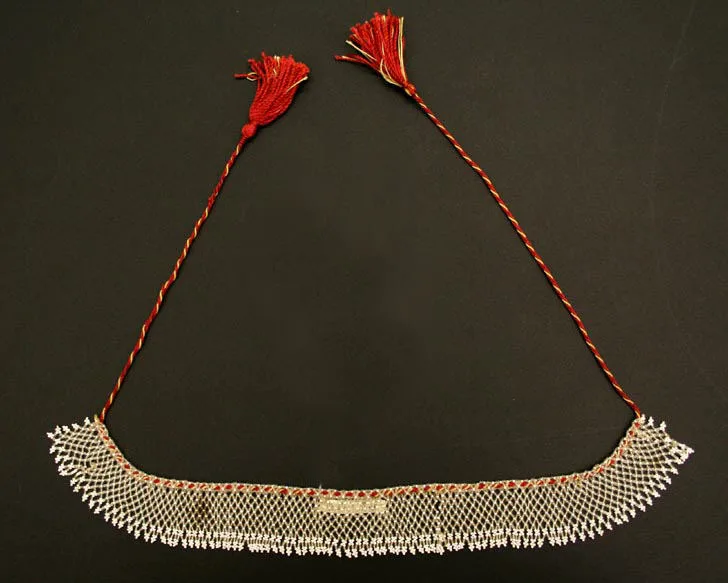
The wide collar necklace, sitting snug against the neck and shoulders, is a classic of bead art from Egyptian shoulder collars to Maasai collars. The woven or loomed fabric lies along the base of the neck like a crown of beads. Such a piece makes a look formal and pulls the eye straight to the face. A collar can be strict and geometric or lush and floral, with fringe along the lower edge or smooth.
Ropes and lariats
A beaded rope is worn as a standalone bracelet or a long necklace. A lariat is a long rope without a clasp, whose ends you knot, loop, or finish with tassels. It lets you change length and silhouette to suit the mood and the outfit. Crocheted ropes look like a single coloured cord and hold their shape well, so they make both spiral bracelets and layered necklaces.
Bead earrings
Earrings show the whole wealth of techniques in miniature. Brick stitch and peyote make flat geometric drops, dimensional bugle-bead tassels, openwork teardrops, flowers, and figures. Bead earrings are light, so even a large lush pair barely pulls the lobe. Long tassel earrings of bugle beads swing and shimmer beautifully with every turn of the head.
Bracelets
A bracelet is the most frequent first project in beadwork. Loomed strips with ornament, peyote and mosaic-woven bands, ropes, simple strung strands wrapped several times. A bracelet is easy to fit to the wrist, and it is a comfortable place to learn technique and try patterns. Beads make both wide cuffs on a stiff base and thin elegant strand bracelets.
Fringe: the part that moves
Fringe is a row of hanging bead threads, usually with a larger or bugle bead at the end. Fringe is hung from the bottom of a necklace, from earrings, from the edge of a collar. Its main strength is movement: with every step or turn the threads swing, sift the light, and bring the piece to life. Fringe of bugle and round beads gives that flowing shine it was invented for. The length and density of fringe are chosen to suit the look: sparse and short adds lightness, long and dense turns a piece into formal wear. The end bead both decorates and weights the thread, so the fringe hangs straight and sways nicely.
Leave your email, we'll send your discount code. No spam, unsubscribe anytime.
The code arrives by email, valid on your first order.
Bead quality: how not to buy crooked grains
Calibration: the main mark of good beads
Bead quality is first of all calibration, that is, the sameness of beads in size and shape. In good Japanese and Czech beads the grains are like twins: one diameter, equal height, an even hole. From such beads the fabric weaves smoothly, rows do not wander, the image comes out crisp. Cheap unsorted beads dance in their sizes: one bead thicker, another thinner, a third skewed, and the fabric ripples. So the first thing that separates a successful piece from a crude one is the quality of the original grains.
Japanese versus Chinese
Japanese beads, above all delica and round beads from leading makers, are considered the benchmark of calibration: the beads are almost perfect, the holes even and wide, the colour durable. Quality Czech beads are a touch less even but rich in colour and proven over centuries. Cheap Chinese beads vary a lot: some are decent, but you often meet poorly sorted ones, with crooked grains and unstable dye. For learning crafts cheap beads will do, but for a piece meant to live for years, saving on beads will cost you.
How to check beads before buying
Good beads can be judged by eye and by touch. Pour a handful onto a white sheet: the grains should look alike, without obvious oversized ones or half pieces. The holes should be even, not clogged, not chipped. The dye should not rub off if you rub beads between your fingers or run them over light cloth. With colour-lined beads, check the durability of the colour: cheap lining washes out over time and the grain dulls. Better to buy fewer even grains than many crooked ones.
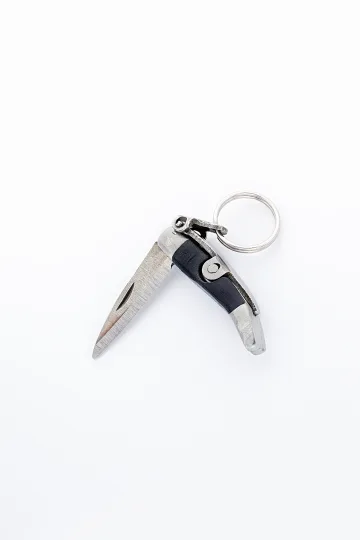
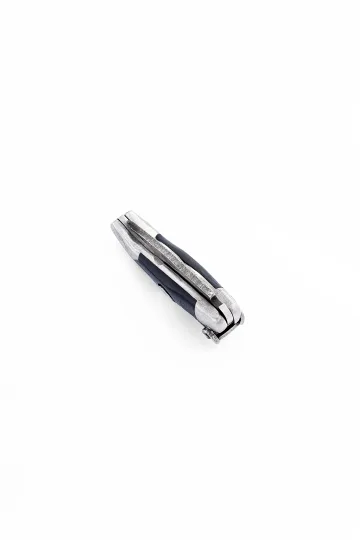
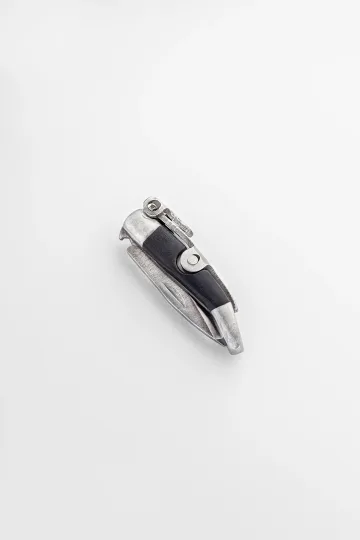
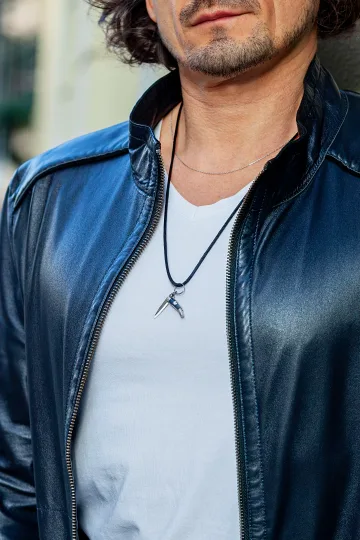
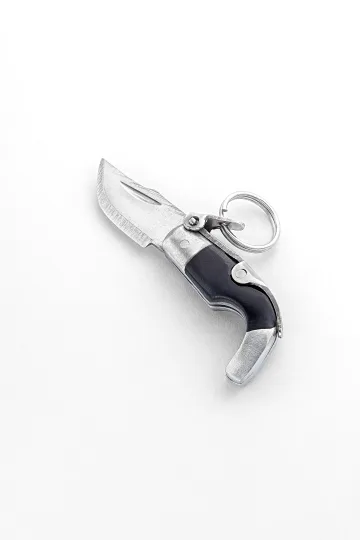
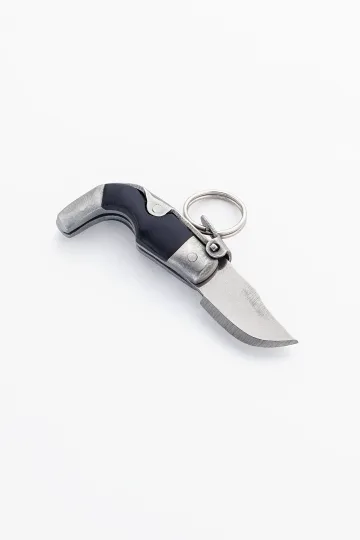
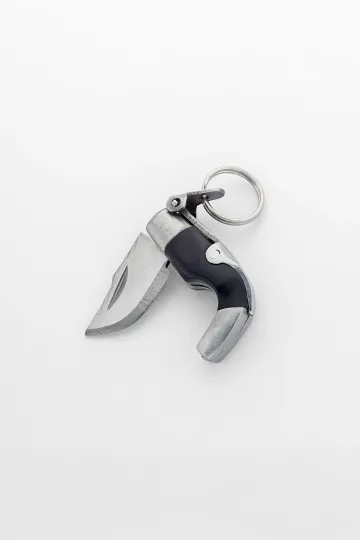
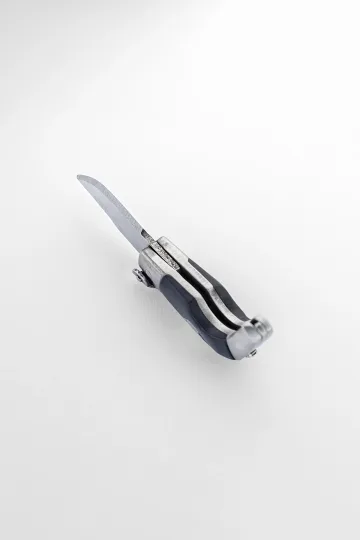
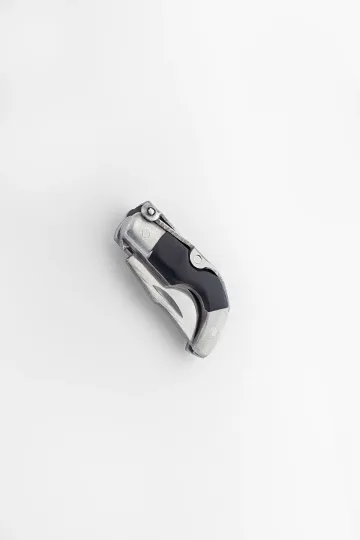
CAPAORA mini knife pendant
The 18th-century Spanish navaja in miniature: 40 mm of stainless steel, a real folding mechanism and a Palanquilla lock that clicks. An affordable gift to remember.
Authentic · Ships from Spain · 14-day returns
Caring for bead jewellery
Beads fear friction
The main enemy of a bead piece is not the glass itself but the thread holding it together. The sharp edges of beads, especially chopped beads and bugle beads, wear the thread from inside over time, and one day the piece falls apart. So bead pieces dislike constant friction against rough cloth, bag straps, stiff collars. Wear them gently and do not pinch them under clothing so they rub with every move.
When the thread may wear through
Any thread ages over time, especially if a piece is worn often. If a bracelet or necklace has begun to sag a little, the beads gone loose, the thread darkened somewhere or frayed, it is a sign to restring the piece before it bursts in a crowded place. Restringing a bead piece is delicate work, and you should approach it as carefully as a strand of pearls. We wrote in detail about how it works in our piece on restringing beads and pearls.
Water, cosmetics, and storage
Beads should not be soaked for long. The glass itself does not fear water, but moisture harms the thread, and with colour-lined and metallized beads water and cosmetics can damage the colour. Take bead jewellery off before a shower, a pool, and sleep, and put it on after perfume and cream, not before. Store pieces flat, in a soft pouch or box, not heaped together with chains and rings, so metal does not scratch the coating and grains do not catch on one another.
Handwork and its value
Why beads are always time
Behind any dense bead fabric stand hours, sometimes dozens of hours, of painstaking needle work. A collar or a complex rope is thousands of beads strung one by one, row after row, with a constant count and even tension. A machine cannot do it: beads truly come alive only in the hands. So the price of a good bead piece is first of all the paid time of the maker and their trained eye, not the cost of the glass.
How to tell handwork
Real handmade beadwork shows character: even but living rows, neat but not sterile machine edges, a thoughtful reverse, sturdy findings. The pattern does not repeat mechanically to the millimeter; there is a hand in it. Cheap stamping gives itself away with glued rather than woven elements, a sloppy reverse, stray threads, crookedly seated beads. We reflected on how to read the marks of handiwork in jewelry at all in our note on how to tell a handmade ring, and many of the signs there hold for all handwork.
What you buy along with the beads
Buying a bead piece, you pay not for a gram of glass but for the skill to build from those grams a pattern that holds shape, does not tear, and lies beautifully on the body. For calibrated beads, a sturdy base, a reliable clasp, and the fact that the piece will outlast more than one season. A good bead piece can be restrung and refreshed, and with gentle handling it serves for years, gradually becoming a personal thing with a history.
Send a friend a discount code, they save on their first order.
Facts that surprise
Beads have left their mark on history in ways that make some facts sound improbable. Here are a few.
Glass beads were one of the first intercontinental currencies. For centuries trade beads bought furs, gold, and spices, and behind those harmless glass grains lies a huge, not always honest layer of world commerce.
The earliest known beads are not glass at all. They are about forty thousand years old and made from ostrich eggshell, meaning people wore jewellery long before they invented writing.
Bead numbers count backward: the bigger the number, the smaller the bead. 15/0 is a tiny grain for fine openwork, while 6/0 is a large bead for simple strands and beginner crafts.
Among the Zulu there was a real language of beads: combinations of colours in a bracelet added up to a message about feelings and consent, so a gifted piece could literally be read.
Wampum, the shell bead belts of the peoples of northeastern North America, served not as ornament but as document: the pattern sealed a treaty, declared peace, or kept the memory of an event, and such a belt was valued like a written deed.
Venice guarded its glassmaking secrets so closely that it moved all its furnaces to a separate island, Murano, and a maker who revealed the recipes faced a heavy reckoning. Beads were a state secret.
In Ancient Egypt, netted capes were woven from tiny faience beads right onto the body, and these bead garments are older than clear glass. People dressed in beads before they learned to make a glass window.
Japanese delica is prized because the beads stack wall to wall without gaps. The fabric from it comes out so even that from a distance it is mistaken for cloth or smooth enamel.
Frequently asked questions about beads
How do seed beads differ from ordinary beads?
A seed bead is a very small bead that works in mass: from many identical grains you weave, loom, or embroider a pattern where each bead is one pixel. An ordinary large bead is a standalone part seen on its own. The difference lies less in the material than in the role and in the technique of working.
What are seed beads?
Seed beads is the name for very small glass beads, literally beads the size of seeds. They are called that because the tiny glass grains resemble seeds of poppy or millet. A seed bead is a small glass bead with a hole, strung and woven by the dozen and the hundred.
Which beads are the highest quality?
The benchmark of calibration is Japanese beads, above all the cylindrical delica and round beads from leading makers: the beads are almost perfectly identical, the holes even, the colour durable. Quality Czech beads are a touch less even but rich in palette and proven over centuries. Cheap unsorted beads can be crooked and fading, fit only for learning crafts.
What bead size should a beginner choose?
For first projects the handiest size is 11/0, a bead about two millimetres across, the most common for weaving. The large 8/0 is easier to string and hold in the fingers, good for simple bracelets and necklaces. Remember the reverse count: the bigger the number in the fraction, the smaller the bead.
Can you get bead jewellery wet?
The glass itself does not fear water, but a piece should not be soaked for long: moisture harms the thread, and with colour-lined and metallized beads water and cosmetics damage the colour. Take beads off before a shower, a pool, and sleep, and put them on after perfume and cream, not before.
Why does bead jewellery break?
Most often it is not the bead that breaks but the thread beneath it: the sharp edges of beads, especially chopped beads and bugle beads, wear it from inside over time. If a piece has sagged, the beads gone loose, and the thread darkened or frayed, it is time to restring it on a new sturdy base, before it falls apart.
How do Czech beads differ from Japanese ones?
Czech beads are famous for saturated colours, the Bohemian tradition, and a wide choice of shapes, at an affordable price. Japanese beads, especially delica, win on calibration: the beads are more even, the holes wider, the fabric smooth as cloth. The Czech bead takes the palette and the character, the Japanese the precision and the tidiness of the result.
How long does bead jewellery last?
With gentle handling bead jewellery serves for years. The main thing is to protect the thread from friction, take a piece off before water and sleep, and store it apart from chains and rings. And when the thread ages, the piece can be restrung on a new base, and it will live just as long again, gradually becoming a personal thing with a history.
A small grain with a big history
Beads travelled the road from ostrich eggshell and wampum to the furnaces of Venice and Japanese delica, staying a language worn on the body. At Zevira we love this quality in a piece: a thing with time put into it feels different. Look through the catalogue and find your own.
Open the catalogueBuying it as a gift? Each one arrives ready to give.
 A branded Zevira box and a little card come with every order.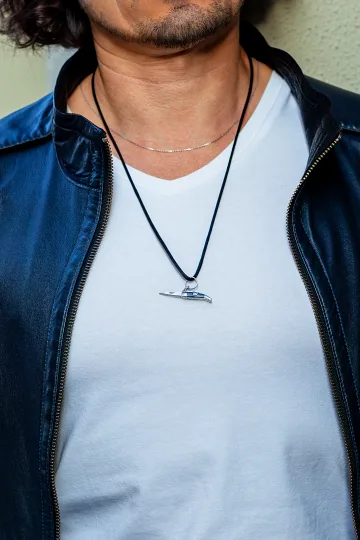




About Zevira
Zevira is jewellery with meaning and character. We value things with a history and with real craft behind them, where you can see a maker's care and not the stamp of a conveyor. Beads are part of this great tradition for us: a material that for thousands of years taught people patience, precision, and the knack of telling a story without words. If this approach is close to you, you are among your own.