Restringing beads and pearls: when the thread breaks or stretches
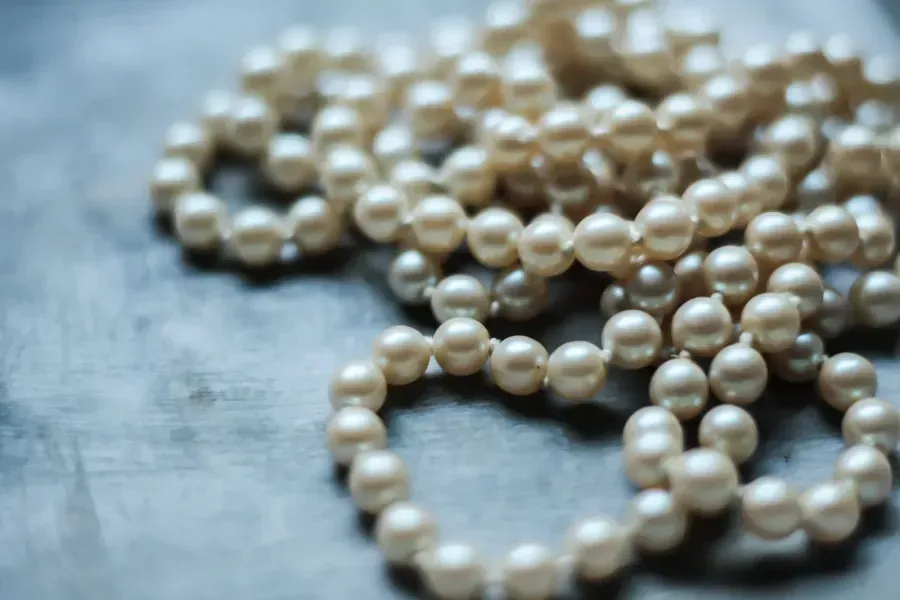
Those tiny knots between pearls are not decoration or a nod to tradition. If the thread snaps, a knot stops the spill at a single bead instead of scattering the whole strand across the floor. The same knot keeps the pearls apart so the soft nacre does not rub against its neighbour and pick up scratches. A knot is insurance and a shock absorber at once, and it lasts a few years rather than forever.
The thread under your beads is a consumable. It ages faster than the pearl or the stone itself, because it takes on everything: sweat, perfume, hand cream, the weight of the beads, the constant bending at the neck. Nacre lasts a century, while the silk beneath it gives out after a couple of seasons of active wear. The trouble is that thread dies quietly: on the outside it looks intact, while inside it is already worn through, and you find out only at the moment it breaks. So you watch the thread the way you watch the tires on a car, by its age and its warning signs, not by the crash itself.
This guide is about how to tell when the thread needs changing, whether you can restring at home, which thread to choose for pearls and for soft stones, when the work is better left to a professional, and how to store beads so they last as long as possible between restringings.
Why restring beads at all
Any bead strand lives in a state of constant fatigue. Every time you tilt your head, sit down, or put on a scarf, the thread flexes at dozens of points, and at each one the fibre rubs against the edge of a bead hole. The hole in a stone or a pearl is not a smooth tube but a drilling with microscopic sharp edges, and it works like a blunt knife. Over a year or two this file wears the silk through from the inside, even if the thread looks intact on the outside.
The thread stretches and sags
Silk and nylon lengthen over time under the weight of the beads. Fresh thread holds the pearls tight, each one sitting against its neighbour, knot to knot. After a season or two, gaps appear between them, the thread begins to wander, and the strand settles lower and looks untidy on the neck. A stretched thread is the first and most honest sign: the material is tired and has lost its spring. You cannot tighten it back, you can only restring it from scratch.
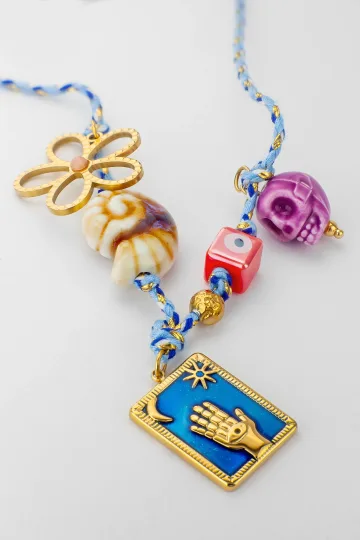
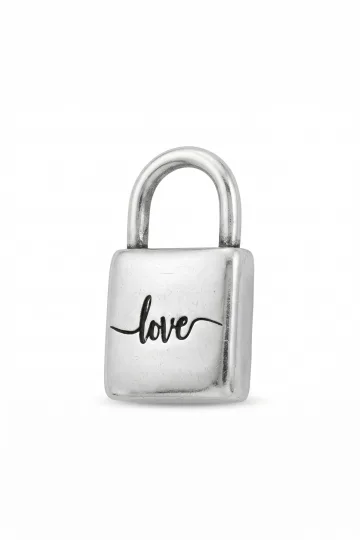
Wear the symbol, don't just read about it. These are in stock:
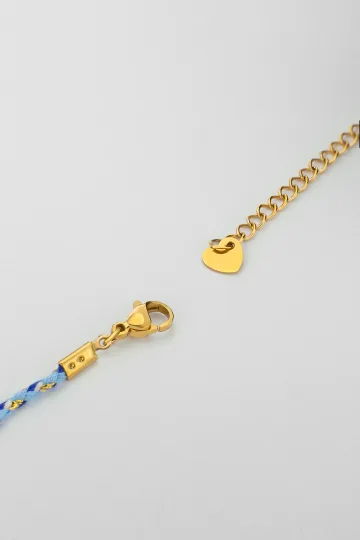
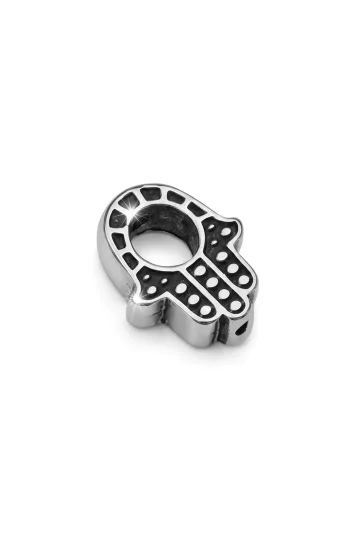
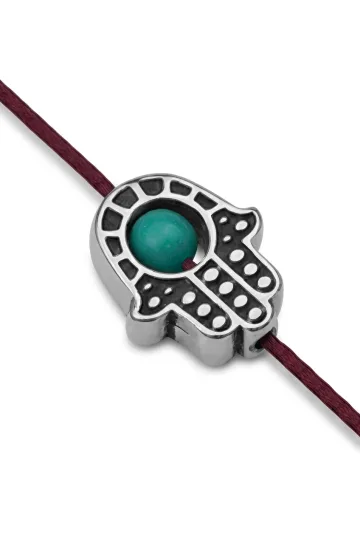

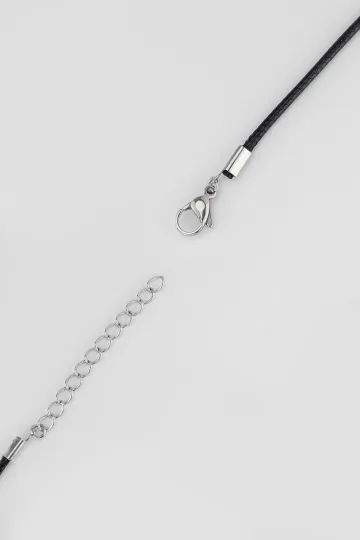


The thread darkens and gets dirty
Light silk under pearls slowly turns from milky to grey. The culprits are skin oil, powder, and the traces of cream and perfume that soak into the fibre and settle in the knots. Grey thread shows up especially on white and cream pearls: held to the light, a grubby strand peeks out between the pearls, and the whole necklace looks tired, even though the pearls themselves are perfectly fine. You cannot wash the thread, since wet silk loses strength even faster, so a dirty thread is a reason to restring.
Grime builds up in the knots
A knot between two beads is a loose loop of fibre, and it works as a dust trap. The longer the beads are worn, the more tightly a grey film packs into the knots, and it does not rinse out or brush clean without risking the thread itself. This grime is not only ugly, it also holds moisture against the surface of the pearl, and constant moisture harms nacre. Clean, fresh knots are part of care, not cosmetics.
Wear at the clasp
The most loaded point of any strand is the spot by the clasp. Here the thread is run through the clasp ring and doubled over, and here it takes the main pull when the strand is yanked over the head or tugged at while undone. Nine breaks out of ten happen right at the clasp. Look closely and the thread by the clasp is often already frayed, splitting into separate fibres or sagging more than it does in the middle. This is the last warning before a break.
Perfume and cream speed up the wear
Thread ages from mechanics and from chemistry alike. Alcohol from perfume, acids from hand cream, sweat, and powder soak into the fibre and eat at it from within, making silk brittle ahead of its time. The same chemistry harms the beads themselves: nacre clouds, coral fades. A thread that is regularly doused in perfume needs restringing noticeably more often than the same thread put on over finished makeup.
How often to change the thread
There is no universal interval, it all comes down to how often you wear the piece and under what conditions. Beads that sit in a box and come out once a year can last a decade on a single thread. Those worn almost daily need attention far more often. The rule of thumb is simple: the more often a piece is on the skin and the softer the bead, the shorter the thread's life.
Pearls worn often
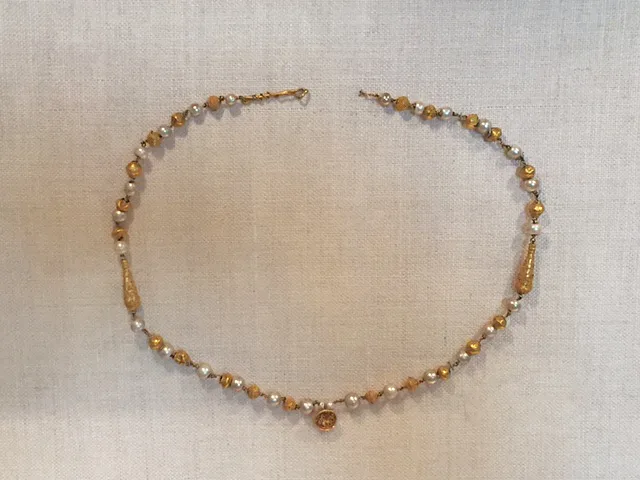
For pearls worn regularly, jewelers advise restringing every one to two years. Pearls are especially demanding: they are worn close to the body, nacre absorbs everything, and the weight of the pearls pulls the thread down noticeably. If you wear a pearl strand to work several times a week, treat restringing as scheduled maintenance, not an emergency repair. There is more on pearl types and care in the separate pearl guide.
Beads for rare occasions
A strand that comes out a few times a year wears slowly, and you can change it every few years or as wear demands. Here the calendar matters less than the inspection: before you put on a rarely worn necklace, pull it by the ends and hold it to the light. If the thread is springy, clean, and holds the beads tight, wear it without worry. If it sags or has grayed, set it aside for restringing.
How to catch the moment before a break
The best rule: change the thread at the first signs of fatigue rather than wait for it to snap in the street. A planned restringing costs your time and a cheap length of thread. A break in a crowded place costs you lost pearls that roll across the pavement or into a drain, and a good deal of stress. Twice a year, spend a minute inspecting frequently worn beads, and it almost never comes to a disaster.
Pearls on bare skin, never over a turtleneck. And knotted silk only, save the elastic for your banknotes.
How to wear and style bead necklaces
After years on shoots I have strung hundreds of necklaces on models, and I know beads either carry a look or drown in it. Here is how I pick them by occasion and by texture.
What do I wear pearls with every day? I recommend taking pearls off the pedestal and wearing them with something plain. A white shirt, grey knitwear, a linen dress: a short choker or the classic 45 cm sits on the collarbones and pulls an everyday look together. Warm cream pearls I suggest against beige and sand tops, cool silvery ones against charcoal and navy. One strand on bare skin beats a fistful of chains.
How do I style stone beads? Coloured stone I keep as the single accent of a look. Turquoise, coral, carnelian pull the eye, so I choose calm, solid-colour clothing under them so the beads do not compete with a print. Large stone strands I suggest under an open neckline and smooth fabric, while smaller stones sit happily with everyday knitwear.
Which length do I choose for a neckline? I always pick the length for the neckline, not the other way round. Under a high closed collar I recommend a long opera strand that lies over the fabric and draws a vertical line. Under an open V-neck I suggest a short strand or a choker, landing right in the open zone at the collarbones. A round neck asks for a mid length so the beads rest on skin instead of hiding under the edge.
Can I wear beads in several rows? You can, as long as you play with lengths instead of piling it all up. A multi-strand piece I build like a staircase: each row a couple of centimetres longer than the last, so the rows stay separate and readable. Mixing pearls with rough stone I would not suggest, but two or three strands of related beads in different lengths look expensive and considered.
What do I wear for the evening? For evening I choose a deep solid colour below and an open zone at the neck: wine, emerald, black. A classic pearl strand or a smooth dark stone that catches the light belongs here. A ball clasp or a decorative fastening I suggest turning to the front, so the closure becomes jewellery in its own right. I take off large earrings then, so the strand holds all the focus.

Turn on your camera, pick earrings, a pendant or a ring, and see the piece on yourself in real time.
Switch items in one tap.
Everything runs in your browser: no photo or video is ever uploaded.
Why knots between beads, and when you do not need them
A knot between every pair of beads is the classic pearl strand, and it was invented not for looks. It has two engineering jobs, and both matter precisely for expensive and soft beads.
A knot saves the whole strand in a break
If a knotless thread snaps, the beads all spill at once, and gathering them off the floor does not always succeed. A knotted thread behaves differently: in a break, at most one or two beads slip off, the rest held by their own knots. You lose one pearl instead of the whole strand. For a long necklace of expensive pearls, that is the difference between a minor nuisance and the loss of the entire piece.
A knot protects the pearl from friction
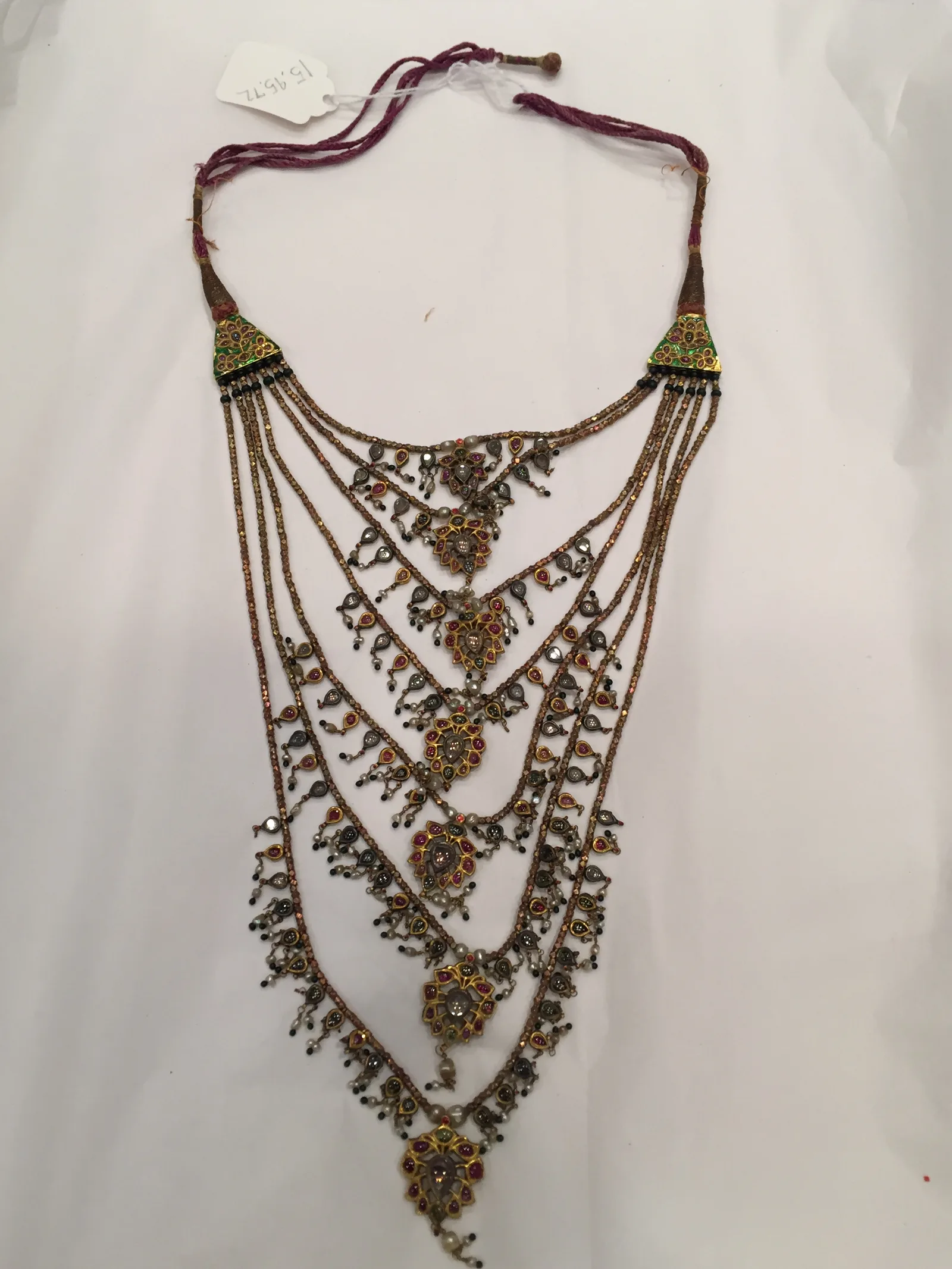
Without a divider, pearls knock and rub against one another with every movement. Nacre is soft, and constant friction leaves it scuffed and chipped around the hole, especially on large pearls that are heavier and strike harder. A knot sets a soft silk spacer between them, cushions the impacts, and keeps nacre from rubbing on nacre. For pearls this is not an option but a defence.
When you do not need knots
Knots between beads are not always worth it. On small glass seed beads, on hard polished stones like agate or onyx, on inexpensive beads meant for frequent restyling, knots only take time and add unwanted millimetres to the strand. Hard stone is not afraid of rubbing against a neighbour, and a cheap glass strand is no loss to restring whole if it breaks. Knots are a must for pearls and for soft, expensive stones, but for the rest of costume jewellery they are a matter of taste and style, not of preservation.
Customer reviews
Zevira is a real jewellery shop. Genuine payments, deliveries and customer thank-yous.
🥰🥰🥰 gracias
Ok, ¡gracias! 🙂
What to string with: thread materials
Thread for beads is not just any strong little cord. Each material behaves in its own way: one stretches, another is cut by the bead's edge, a third will not hold a knot. Choosing the right thread for specific beads is half the success of restringing.
Natural silk
Silk is the historic material for pearls, and it remains the benchmark for knotted strands. It is soft, drapes beautifully, holds a neat tight knot, and lets a pearl strand flow along the neck. Silk has one real downside: it is not durable, it stretches over time, and it dreads water. You choose silk when a perfect fit and a classic knotted strand matter most, and you accept in advance that it will need changing more often than the rest.
Nylon thread
Nylon is the workhorse of modern restringing. It is stronger than silk, stretches less, fears moisture less, and comes in various thicknesses to suit any hole size. A knot holds less well on it than on silk, and under strong heat it can melt, but for most beads nylon is a sensible compromise between cost, strength, and service life. Many of today's "silk" threads with a needle on the end are in fact nylon.
Beading wire with crimp beads
Steel wire in a nylon sheath, known as beading wire, is the strongest option. It almost never breaks, does not stretch, and does not fear the sharp edges of stone, so it is used to string heavy stone beads and strands of faceted beads that saw through silk in a season. You do not tie knots on beading wire; the ends are fixed with metal crimp beads, flattened with pliers. The downside: beading wire is stiffer than silk and does not drape as softly, so for delicate pearls it is chosen less often than for stone.
Elastic cord and why it does not last
Elastic cord, the "stretch" you string clasp-free bracelets on, is convenient and popular, but it is the least durable material of all. Elastic stretches with every put-on, loses its spring over time, dries out from cream and perfume, and one day snaps without warning, scattering the beads. It makes sense to string only inexpensive bracelets on elastic, ones you do not mind restringing often, and you should never put pearls or expensive stones on stretch. Treat it as a temporary fix, not a thread for the years.
Thread colour to match the beads
A subtle point often missed: the thread colour shows between beads and in the knots, especially on translucent pearls and light stone. For white and cream pearls you use white or milky thread, for dark stone a dark one, for amber and carnelian a golden beige. A contrasting thread gives itself away in the knots and cheapens the look, while a matching thread blends into the bead and makes the work look clean. When a professional restrings, the thread colour is chosen deliberately, and that is part of the quality.
Upload a photo of your pet, someone you love, or an object. We'll build a 3D model and hand-cast it in pewter.



Signs that it is time to restring
Beads rarely break out of nowhere; they usually give warnings ahead of time. Learning to read them is easy, and it saves you from losing pearls. Here is what to inspect.
The thread has grayed or darkened
If the light thread between pearls has turned grey, grubby, or lost its original colour, the time has come. Grey thread is not only unsightly, it is also a sign that oil and moisture have built up in the fibre and are speeding its aging. Clean pearls on a dirty thread look neglected, and no amount of cleaning the pearls themselves will fix that.
The beads have spread apart, gaps have appeared
When noticeable gaps show up between the pearls or knots where there were none before, the thread has stretched. On a fresh thread the beads sit snug, knot against bead. Gaps mean stretching, and a stretched thread will not return to shape. This is a cue to restring, even if the thread has not broken yet.
The thread sags noticeably
Compare how the necklace lies on the neck now with how it lay when new. If it has grown longer, droops, and sits lower than it should, the thread has stretched under the weight of the beads. Sagging is especially visible on pearls: the thread loses its springy arc and hangs in a limp loop. This is the same wear as gaps, just read through the overall fit.
A knot has come undone or the thread is fraying
If one of the knots on a knotted strand has loosened, come undone, or a bead has begun to crawl along it, the thread is at its end. The same goes for frayed, split fibres, especially at the clasp. An undone knot means the neighbouring ones are hanging by a thread. Do not wear such beads until restringing; one tug and they are on the floor.




Can you restring at home, and what tools you need
A simple strand of inexpensive beads can realistically be restrung yourself in an evening. It is calm handwork that calls for patience and care rather than rare skills. But the more expensive and softer the beads and the more involved the knotting technique, the higher the cost of a mistake, so it is best to start with something simple.
A basic tool kit
Home restringing needs little. A thin flexible beading needle, or thread with a needle already fixed to the end, to pass through narrow holes. The thread itself in the right thickness: silk or nylon for pearls, beading wire for heavy stone. Small sharp scissors. A drop of dedicated glue to fix the knot and the thread's tip. For a knotted strand, a fine awl or a special tool comes in handy to nudge the knot snug against the bead so no gap is left.
Bead tips, clamshells, and crimp beads
To hide the thread ends and attach the clasp, small findings are used. A bead tip, also called a clamshell or knot cup, is a tiny metal shell cup that closes over the knot at the end of the thread and holds the clasp ring. For beading wire, instead of knots and clamshells you use crimp beads: a loop of wire is run around the clasp ring and the crimp is flattened dead tight with pliers. This small part decides how neat and strong the clasp attachment will look.
Matching thread thickness to the hole
The main technical point: the thread should pass snugly through the bead hole but not rattle in it. Too thin a thread leaves play, the bead crawls and rubs, and the knot may slip into the hole. Too thick a thread will not pass or will wear against the edge as you tighten. Ideal is when the thread passes with light resistance. If the holes are very narrow, as on small freshwater pearls, you use the thinnest thread and the finest needle.
How to restring: the general order
A detailed step-by-step is beyond this guide, but it helps to picture the overall flow so you understand what a professional actually does and what you are paying for. The logic is the same for silk and nylon.
Remove the beads and remember the order
First, the old thread is carefully cut and the beads removed, laid out strictly in the order they ran. For a symmetrical strand with a gradient or a central large pearl this is critical: mix up the order and the strand loses its look. It is handy to lay the beads in the groove of a special tray or on a strip of fabric with a raised edge so they do not roll away.
Secure one end and string with knots
To one end of the thread you attach a clamshell and the clasp ring, fixed with a knot and a drop of glue. Then you string a bead, tie a knot snug against it, string the next and knot again, nudging the knot to the bead with an awl so there is no gap. Bead by bead the whole strand comes together. The most laborious part here is even, tight knots of the same size; it is precisely the neatness of the knots that makes handwork prized.
Secure the second end and check
At the end you set the second clamshell, run the ring of the second clasp half through, pull the final knot tight, fix it with glue, and trim the excess. Once the glue has dried, the strand is checked for tension: it should hold the beads tight but drape softly. It is best to let the finished strand hang for a day so the knots and thread settle, and only then wear it.
Common beginner mistakes
The most common home-restringing mistake is a loose or, conversely, over-tightened knot: a loose one crawls and leaves a gap, an over-tight one tears the fine thread during assembly itself. The second mistake is the wrong thread for the hole, when a thin one rattles and a thick one is forced through and wears against the edge. The third is rushing the glue: an extra drop spreads over the bead and leaves a matte mark on a pearl. And the fourth, the most galling, is a scrambled bead order on a graduated strand. If you hurry and work on your knee, it is easier to ruin the piece than to save on a professional.
Leave your email, we'll send your discount code. No spam, unsubscribe anytime.
The code arrives by email, valid on your first order.
When to take it to a professional
A lot can be done at home, but there are cases where saving on a professional ends in a ruined piece. If the beads are dear to you in price or in memory, take them to a workshop just to be safe. Professional restringing of inexpensive pearls costs about as much as a dinner out, and peace of mind for the piece is priceless.
Expensive pearls and large strands
A strand of expensive pearls, especially large, saltwater, or with a matched lustre, goes to a professional. This calls for even knots, perfect fit, the right silk thickness, and careful work with the findings, and the cost of a mistake is a scratched or lost pearl worth as much as a whole piece. A good professional will also inspect each pearl and tell you whether a cracked one needs replacing.
Antiques and heirloom beads
Old beads passed down from a grandmother need special handling. Antique pearls and old stone can have fragile, widened, or damaged holes, material weakened by time, a nonstandard clasp. Such a strand must not be yanked or rushed, and it should be taken apart by someone who has seen its like before. A professional will preserve the historic clasp, match thread to the old one, and not harm the valuable beads. Restoring heirloom jewellery is a craft of its own.
Complex clasps and multi-strand pieces
Multi-strand necklaces, strands with spacers, beads with a complex multi-row clasp or with intermediate elements are better trusted to a professional. Bringing several rows into one clasp while keeping their lengths and order is technically tricky, and going it alone here ruins the piece more often than it fixes it. If your beads have more than one row or an unusual clasp, that is a cue for the workshop.
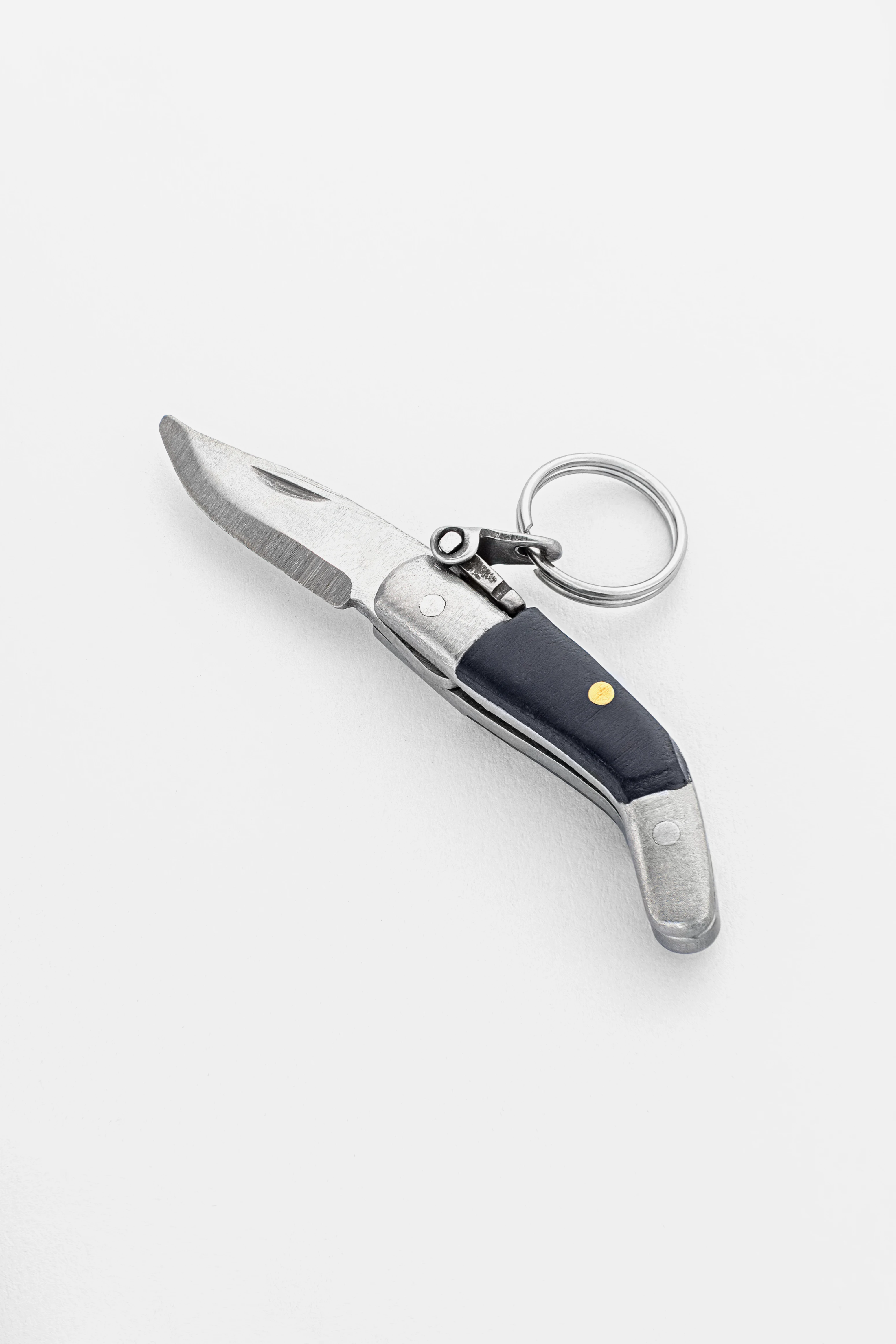
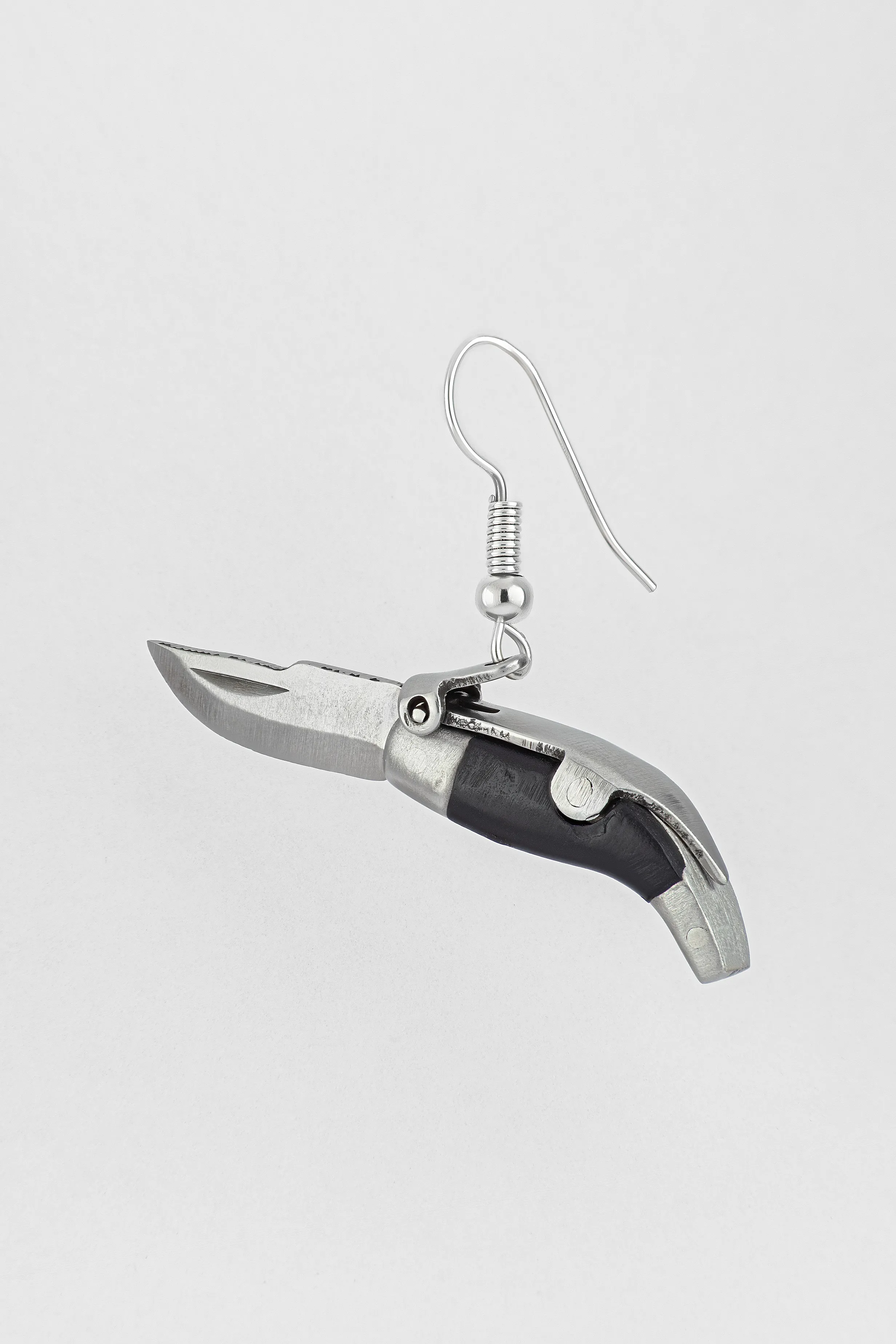
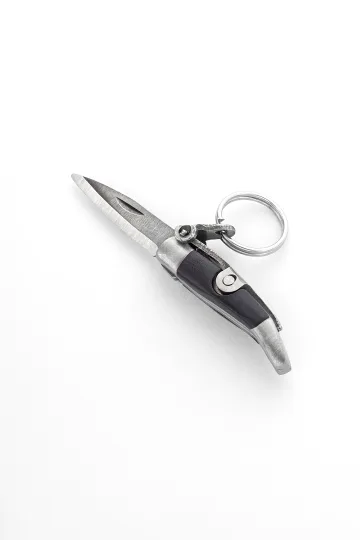
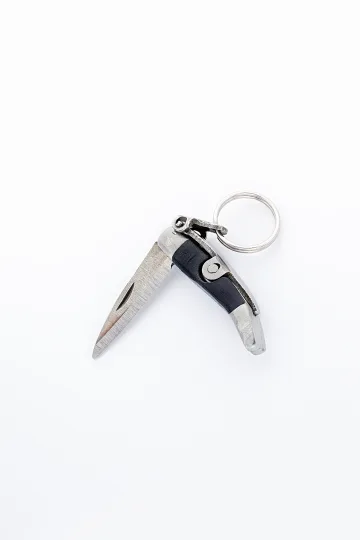
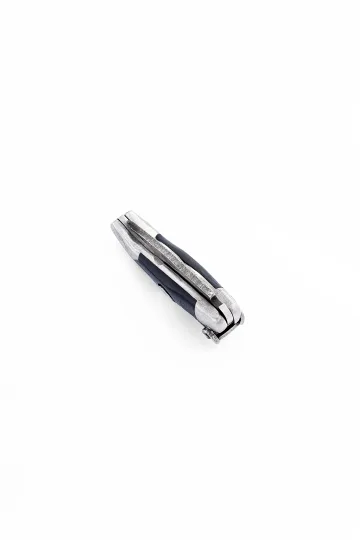
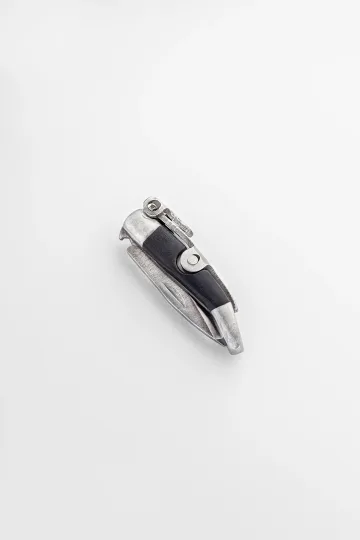
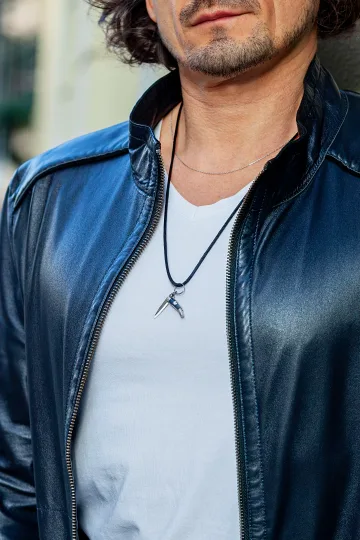
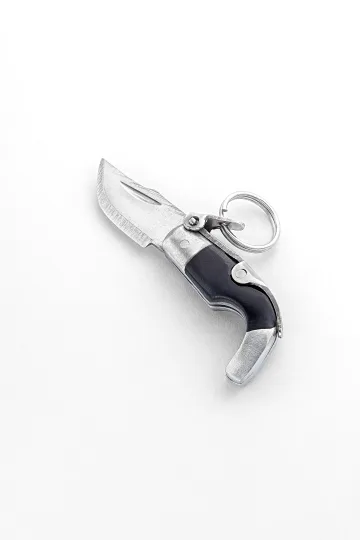
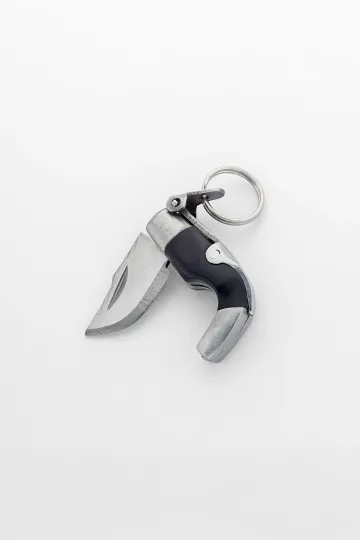
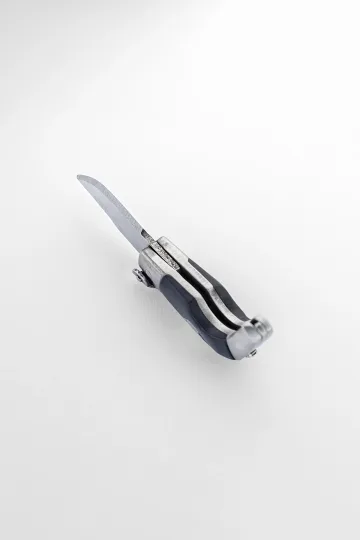
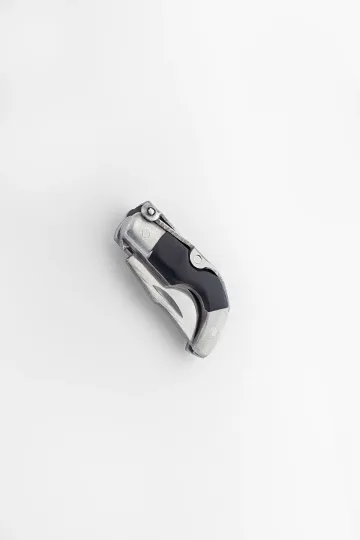
CAPAORA mini knife pendant
The 18th-century Spanish navaja in miniature: 40 mm of stainless steel, a real folding mechanism and a Palanquilla lock that clicks. An affordable gift to remember.
Authentic · Ships from Spain · 14-day returns
Clasps and findings during restringing
Restringing is a handy moment to put both the thread and the clasp in order. A clasp wears out along with the thread, and it makes sense to change them together. There is a separate guide on how different clasp types work in the piece on the choker with a clasp.
Check and replace the clasp
An old clasp can work loose, stop closing securely, or simply lose its looks. A spring ring with a weakened spring, a bent jump ring, worn gold plating on the clasp are all reasons to fit a new clasp right at the restringing, while the thread is taken apart anyway. A reliable clasp matters no less than strong thread: beads are lost both when the thread breaks and when a poor clasp quietly comes undone.
Choose a clasp for weight and style
The clasp is matched to the weight and character of the strand. Heavy stone beads need a strong clasp with a secure catch, light pearls suit a delicate clasp that does not overpower the look. For pearls, decorative ball clasps or shaped clasps are often used, becoming part of the piece themselves and sometimes worn at the front. The clasp style is the final touch of a restrung strand.
Jump rings and connecting elements
Between the thread and the clasp sit connecting jump rings and clamshells, and they too are worth renewing at restringing. A bent or worn jump ring is the weak link that will fail before the thread. Fresh small findings in the same metal as the clasp hold tight and look of a piece. A small detail you cannot skimp on, because it is exactly what holds the whole strand on the clasp.
Finding metal to match the piece
The clasp, jump rings, and clamshells are more visible than they seem, so they are matched to the thread and the look. Silvery pearls and cool stones go with silver or rhodium, golden pearls and warm stone go with gold or gold plating. A mismatch of metals at the clasp jumps out when the strand is turned clasp forward, as pearls are often worn. At restringing it is easiest to assemble all the findings in one tone and metal at once, so the attachment looks deliberate rather than accidental.
What different beads need
The thread and the technique depend on what exactly you are stringing. Soft pearls, porous coral, and hard agate each call for a different approach, and there is no universal recipe. Here is what to watch for with the most common materials.
Pearls
Pearls are the most demanding material. Soft nacre scratches easily, dreads acids, perfume, and sweat, and the holes are narrow. Pearls are always strung with knots between the beads: both for protection from friction and as insurance in a break. The thread is soft, silk or fine nylon, the thickness matched precisely to the hole. Before restringing it helps to clean pearls; there is a separate guide on cleaning jewelry at home.
Coral
Coral is porous and relatively soft, close to pearls in fragility. It dreads acids, household chemicals, and sharp knocks, and fades easily from sun and sweat. Coral beads are also sensibly strung with knots so the beads do not knock together and chip at the edges. The thread for coral is soft and neat, and the coral itself is kept away from perfume and sun so the colour holds longer.
Turquoise and soft stones
Turquoise is soft and porous, many of its grades are treated for strength, and it dreads water, oils, and acids. Soft stones such as turquoise, malachite, and amazonite scratch and chip relatively easily, so they too benefit from spacer knots and gentle thread. The main rule with porous stones: less contact with cosmetics and water, and then the thread and the beads themselves last longer.
Hard stones
Agate, onyx, jasper, rock crystal, and other hard stones behave differently. They are not afraid of rubbing against each other and need no knots for protection, but their sharp drillings mercilessly saw through soft thread. Hard faceted beads are better strung on beading wire, which is not cut by the stone's edge. Knots here are added by choice, for style rather than preservation. There is a guide to natural stone bead necklaces on how to assemble multi-strand stone beads.
Amber and organics
Amber, jet, and other organics are light, warm, and yet fragile: amber splits on impact and dreads alcohol, jet scratches. The light weight is a plus here, thread under organics ages slower than under heavy stone, but the beads themselves call for gentle assembly and soft thread without sharp pulls. Knots between organic beads are added for protection from chipping, and thread and findings are chosen without sharp parts that a fragile bead could strike.
Send a friend a discount code, they save on their first order.
Storage to make the thread last longer
Half the thread's wear is not from wearing it but from improper storage and contact with cosmetics. Simple habits double the time between restringings, and they cost a minute a day. There is a guide on pearl strand length about length and how different formats lie on the neck.
Put on last, take off first
The old rule for pearls and soft stones: the piece goes on last, after perfume, hairspray, and cream, and comes off first, before washing. Perfume, alcohol, and cosmetics destroy both nacre and thread, settling in the knots. Train yourself to this order and the thread stays clean and springy far longer, and the grey film in the knots is slow to appear.
Store flat, not on a hook
Beads and pearl strands are stored laid flat, not hung on a hook. On a hanger the thread is constantly stretched under its own weight and sags faster. Best of all is to lay a necklace in a soft pouch or a fabric-lined box, spread out along its length without bends or knots. Each strand gets its own pouch so the beads do not rub against other pieces.
Guard against water and dryness
Pearls and soft stones dread both water and dryness. You do not swim, wash dishes, or sleep in the jewelry, because water and sweat weaken the thread, while chlorine and salt harm nacre. On the other hand, the very dry air of radiators and safes makes silk brittle. The happy medium is ordinary room humidity, a soft pouch, and wiping the thread with a dry cloth after wear. There is a guide on tarnished jewelry on what to do if a piece does dull.
Wipe the thread after every wear
A minute of care after every wear stretches the time between restringings most of all. As you take the beads off, run a soft, dry or slightly damp cloth over the thread and beads, removing sweat, skin oil, and settled cosmetics before they soak into the fibre and the knots. Pearls are especially grateful for this habit: clean nacre and clean thread stay fresh longer, and the grey film in the knots appears far later. It is a habit that costs less than any restringing.
Do not coil into a knot or tie it
A long strand must not be stored wound into a tight knot or ball: the thread kinks at the bends, and the beads press on each other in a heap. Long opera and rope necklaces are laid in a loose loop or in a few wide coils without tightening. The same logic travels: the strand goes flat in its own soft case, not stuffed into a shared makeup bag where it twists up and chafes against other things.
Facts that surprise
Restringing seems a dull trifle, but plenty of curiosities have gathered around the bead strand. A few things that change how you see the knot and the thread itself.
The knot was invented to save pearls
The habit of tying knots between pearls came not from designers but from plain sense and the cost of pearls. In an age when natural pearls were prized on par with the finest stones, losing a spilled strand was ruin. The knot guaranteed that in a break one pearl fell to the floor, not a fortune. The protective trick was born of thrift, and only later became a mark of quality work.
Pearls age the thread faster than stone
A pearl strand wears out noticeably faster than a stone one, and it is not down to weight alone. Nacre is alive, it absorbs and gives off moisture, and that moisture along with skin oil constantly works into the thread. A stone bead is inert, it gives nothing to the fibre. So identical-looking strands of pearls and of agate live different lengths of time: pearls ask for restringing more often precisely because of their porous nature.
A bead's drilling is a hidden knife
On the outside a bead hole looks smooth, but under magnification the edge of the drilling is studded with microscopic burrs, especially on stone. It is this edge, not age in itself, that wears the thread through from inside. On cheap beads with chipped hole edges the thread dies in a season, while on a well-finished bead with a rounded edge the same thread lasts years. The price of a bead often hides precisely in the neatness of the hole.
A long knotted pearl strand is a half-day's work
A long opera or rope necklace of small pearls with a knot after every pearl means hundreds of knots, and each is tied and fitted by hand. Restringing such a strand for a professional takes not minutes but hours of painstaking work. When you see the price of hand-knotted restringing of a long strand, remember you are paying for hundreds of identical knots, not for a yard of silk.
The clamshell was invented to hide the knot
The small metal cup at the ends of the thread appeared as a solution to a purely aesthetic problem: a bare knot at the clasp looked crude and came undone. The clamshell closed the knot inside a shiny little droplet and at the same time joined the thread securely to the clasp. A tiny detail that almost no one notices holds the whole strand and decides whether the attachment looks cheap or expensive.
Frequently asked questions
How often should pearls be restrung?
Pearls worn regularly are restrung every one to two years. Pearls worn for the occasion a few times a year can last several years on a single thread. Go by both the calendar and the inspection: a grey, stretched, or sagging thread is a cue to replace it regardless of age.
Can you restring pearls at home?
A simple strand of inexpensive pearls can be restrung at home if you stock up on a fine needle, silk or nylon thread, scissors, and glue, and do not rush. Expensive, large, saltwater, or antique pearls are better left to a professional: there you need even knots and a precise fit, and the cost of a mistake is a scratched or lost pearl.
Why are knots tied between pearls?
Knots solve two problems. In a thread break one or two pearls slip off, not the whole strand, the rest held by their own knots. And they keep soft nacre from rubbing against the neighbouring pearl, protecting it from scuffs and chips. For pearls knots are a must, for hard stone and glass seed beads they are a matter of style.
Which thread is better for restringing, silk or nylon?
Silk is softer, drapes more beautifully, and holds a perfect knot, but it stretches and is not durable. Nylon is stronger, stretches less, and fears moisture less, but holds a knot less well. For a classic knotted pearl strand silk is more often chosen, for everyday and inexpensive beads nylon is sensible. Heavy faceted stone is strung on steel beading wire.
Why can't you string pearls on elastic?
Elastic cord stretches over time, dries out from cream and perfume, and one day snaps without warning, scattering the beads. It does not hold knots and does not protect nacre from friction. Elastic is only for inexpensive bracelets you do not mind restringing often. Pearls and expensive stones on elastic are a risk of losing the piece.
How can you tell the thread needs changing?
The main signs: the thread has grayed or darkened, gaps have appeared between the beads, the necklace has sagged and sits lower than when new, a knot has come undone, or the thread is fraying at the clasp. Any one of these signals is enough. Inspect frequently worn beads twice a year, pulling them by the ends and holding them to the light.
How much does it cost to restring beads professionally?
There is no point quoting a flat figure here, it depends on the strand length, the number of knots, and the material. The rule of thumb: restringing a short strand of inexpensive pearls costs about as much as a dinner out, while a long knotted strand of small pearls, where hundreds of knots are tied by hand, costs noticeably more for the hours of work. A clasp replacement is counted separately.
Do you need to change the clasp when restringing?
Not necessarily, but it is a handy moment. If the clasp has worked loose, closes poorly, or is worn, fitting a new one is best done at the restringing, while the thread is taken apart. Worn connecting jump rings and clamshells are changed at the same time. A reliable clasp matters no less than strong thread, since beads are lost when a poor clasp quietly comes undone too.
Buying it as a gift? Each one arrives ready to give.
 A branded Zevira box and a little card come with every order.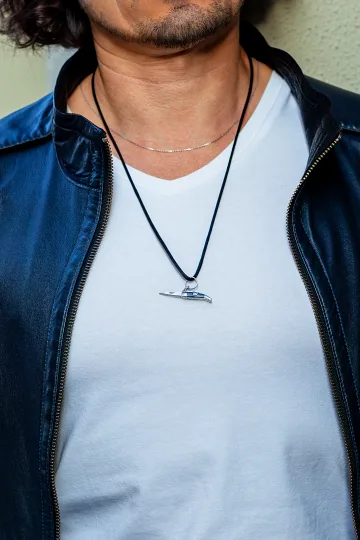





About Zevira
Zevira is jewellery made to be worn, not hidden in a safe. Pearls and stone beads are strung the way the craft requires: the thread matched to the weight and character of the beads, knots tied where they protect the nacre, and a clasp fitted that holds securely and looks like part of the piece. We write guides on care, restringing, and storage because we want a piece to last for years and pass on, rather than end up in a drawer after the first broken thread.