Venetian Glass Jewellery: Murano, Millefiori and a Thousand-Year Secret
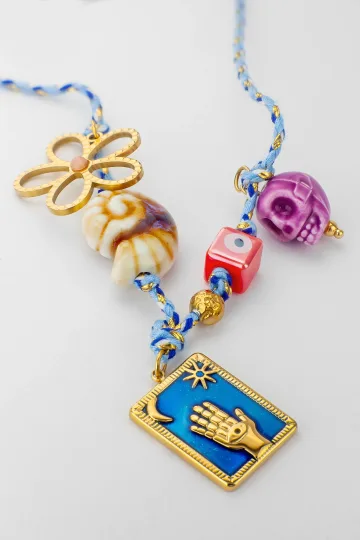
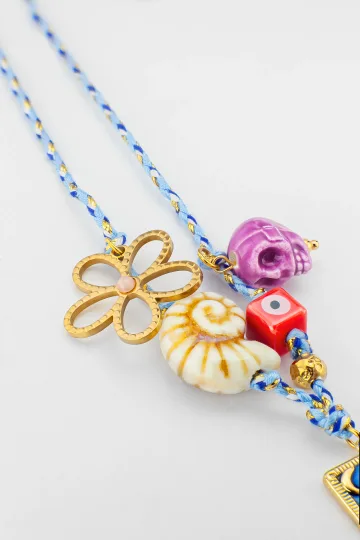
Wear the symbol, don't just read about it. These are in stock:




The island you could not leave
In 1291 Venice moved every glassmaker out to the island of Murano. Officially it was about fires: furnaces in a wooden city built on water were lethally dangerous. In truth the republic was guarding a secret. A glass master was allowed to carry a sword, his daughter could marry a nobleman, but he had no right to leave the island. Flee with a recipe and they might send killers after you. Glass was kept as a matter of state.
Out of that sealed laboratory came Venetian glass, a luxury for centuries that still lives on in jewellery. We will look at what sets it apart from ordinary glass, the techniques Murano invented, how to tell the real thing from a fake, how to wear and care for it, and why seven centuries of history sit behind a single clear bead.
Why glass moved to Murano
Venice stood on piles in a lagoon, the city was packed tight with timber, and a glass furnace burns around the clock at close to fifteen hundred degrees. One overturned crucible could set a whole district alight, and in a city on water a burnt district cannot be rebuilt in a season. So on 8 November 1291 the Great Council ruled that every glass workshop be moved to Murano, a kilometre and a half offshore. The furnaces went to the island; the masters' houses and stores could not stay in the city.
But it was not only about fire. Glass brought the republic enormous money, and the recipes had to be protected. An island in the lagoon is a natural fortress: you reach it and leave it only by water, and boats are easy to watch. On Murano the masters were simpler to keep an eye on, and so glassmaking became a state monopoly.
A master's privileges and lack of freedom
Glassmakers were given a standing no other craft enjoyed. From 1376 a glassmaker's daughter who married a patrician did not lose noble status for her children, and the masters themselves were entered into the Golden Book almost as nobility. They were allowed to bear arms, and creditors were kept away from their furnaces. The finest were named in person; their families, the Barovier, the Serena, the Brigadin, held secrets across generations.
The other side of these privileges was captivity. The master was bound to the island. To leave the republic's territory with a recipe of the craft counted as treason, and a fugitive faced harsh measures: the republic could outlaw him, jail his relatives, and by some accounts even send a hired killer to bring him back or silence him. The Council of Ten, Venice's secret service, took such cases seriously. The loudest tales of poisoned runaways are more legend than fact, but the legal threat was real, and many masters did indeed flee to Bohemia, France and England, carrying Murano's methods with them.
Monopoly, decline and return
For several centuries Murano had no rival. Venetian glass was carried to every European court, and the word cristallo meant luxury. The turning point came when the secrets did leak out. In the seventeenth century Bohemia learned to melt a hard potash glass that could be cut with facets like a stone, and in England George Ravenscroft, around 1674, produced lead crystal, heavier and more brilliant than the Venetian. Against them Murano's thin glass began to lose out to a fashion for cutting and sparkle.
Then came a direct blow. In 1797 Napoleon destroyed the Venetian Republic, the island lost its privileges, the market collapsed and the furnaces went cold one after another. By the mid nineteenth century only scraps of the great craft remained. The revival is tied to the lawyer Antonio Salviati: in 1859 he founded a workshop on the island and set about gathering masters and old recipes again, making copies of historic pieces for collectors and museums. By the end of the century Murano was once more supplying glass across the world, and that second life of the island continues to this day.
Beads that circled the earth
Beads deserve a chapter of their own. Murano shipped out tiny glass beads by the million, the conterie and perle, made by cutting and reheating the finest glass tubes. Venetian beads spread through Africa, Asia and both Americas, and for centuries served in trade on a par with money: they were exchanged for gold, spices and hides, and in some regions used to pay directly. So glass from a single island in a lagoon scattered across the whole world and became one of the first truly global goods.
Murano glass was born to hog the spotlight. Park a diamond beside it and you have two divas hissing, so send the diamond home.
How to wear Venetian glass
Over years on set, coloured glass has passed through dozens of looks with me, and the lesson is simple: it wants to lead. Here is what actually works.
What do I wear a millefiori necklace with every day? I give the glass all the attention and send the rest into the shade. Under a bright necklace I suggest a plain top - black, white, beige, grey - so the coloured glass rings at full strength. A busy print fights it, so I drop patterned fabric. For the ears I choose small studs in the colour of one of the beads, never a second coloured accent.
How do I wear a large gold-leaf pendant? I hang a pendant like this on a simple chain or a silk cord, so the setting never pulls attention off the glass. I pick the metal by mood: warm gold goes with gold leaf and amber tones, cool silver I keep for blue and turquoise glass. One pendant like this already makes the look, and I do not load it further.
Which occasions does the glass like? I recommend bringing Venetian glass out where you can allow yourself colour and celebration: an outing, a trip, summer, a festive day. For a strict business code I leave the bright bead at home, while milk-white lattimo or a plain single-tone piece sits happily on a weekday too.
How do I play up how light it is? Glass weighs almost nothing, and I always put that to work. A large multi-strand necklace or long drop earrings that would drag the neck and ears in stone wear all day in glass without tiring you. So size is no enemy here - I reach for the expressive shape with confidence.
Who does Venetian glass suit best? Anyone who loves colour and is not afraid to wear it. On open, sociable people it reads best, and for lovers of strict monochrome I suggest starting with one calm lattimo bead. Two rules that never fail. First: one bright piece per look, the rest quiet metal without stones. Second: hold the glass colour with clothing in a calm tone rather than fighting it with a print.

Turn on your camera, pick earrings, a pendant or a ring, and see the piece on yourself in real time.
Switch items in one tap.
Everything runs in your browser: no photo or video is ever uploaded.
Customer reviews
Zevira is a real jewellery shop. Genuine payments, deliveries and customer thank-yous.
🥰🥰🥰 gracias

Ok, ¡gracias! 🙂

How Venetian glass differs from ordinary glass
Murano's great breakthrough was clarity. In the mid fifteenth century the master Angelo Barovier brought the formula to an almost colourless, pure glass that was called cristallo, "crystal", though it held no lead. Before that, glass had been cloudy, greenish and full of bubbles, spoiled by iron in the sand. Venetian cristallo shone like rock crystal and could be drawn into the thinnest threads without cracking.
The secret lay in the raw material and its purity. Instead of river sand full of iron, the masters used clean quartz pebbles from the rivers of northern Italy, crushed to a powder. Their alkali came from the ash of a Mediterranean saltwort, a soda they called allume catino, and it gave a soda glass softer and more workable than the northern potash kind. The mix was melted twice and skimmed of its scum to remove impurities, and a little manganese, "glassmaker's soap", was added to bleach out the green of the iron.
That very purity and plasticity let the Venetians do what others could not: blow the thinnest vessels, fuse patterns inside the glass, draw coloured threads, seal gold within. Soda glass cools more slowly than potash, so the master had more time for fine work at the fire while the material stayed soft. From this grew all the famous techniques. Venetian glass is known not by one sign but by a combination: lightness, clarity against the light, living colour in the body, and the traces of hand work.
Upload a photo of your pet, someone you love, or an object. We'll build a 3D model and hand-cast it in pewter.




Venetian glass techniques
There is no single kind of Venetian glass but a whole family of methods, each with its own recognisable pattern. It is worth knowing them: the technique tells you at once what is in your hand and how much hand labour went into it.
Millefiori
Millefiori means "a thousand flowers". At its heart is the murrina, a coloured rod with a hidden pattern inside. The master layers coloured glass, presses the blank into a star or flower shape, then layers more colour over it, and when the glowing mass is drawn out lengthwise by two people, the pattern shrinks but keeps its proportions along the whole rod. The result is a glass stick that shows the same flower or star in any cross section, sometimes no thicker than a match.
The cooled rod is then sliced into thin discs, and every disc carries the finished pattern. These rounds are laid out to form a future bead or pendant, packed tight with no gaps, and reheated so the slices fuse into a single surface. The piece ends up strewn with tiny flowers, and no two beads come out alike: the pattern falls differently each time. Millefiori is easy to recognise, a mass of small rounded blooms with crisp rays. The method was known to the Romans and Egyptians, but Murano brought it to perfection, and the word millefiori only took hold in the first half of the nineteenth century.
Lampwork (working over the flame)
Lampwork, in Italian a lume, is work with a ready glass rod over the flame of a torch rather than at the great furnace. The fire once came from an oil lamp with a bellows, hence the name. The master holds a coloured rod in the flame, melts the tip and winds a drop of molten glass onto a coated metal rod, the mandrel, turning it constantly so the drop does not run off. While the glass is soft, dots, spirals, coloured threads, scraps of gold leaf or finished murrine are fused into it, building the pattern layer by layer.
When the bead is gathered, the mandrel is pulled out, leaving a clean channel for the thread. Afterwards the bead is cooled slowly in an annealing kiln, or the temperature shock would shatter it. This is how the most intricate one-off beads are made, each unrepeatable. It is a slow handcraft, and it is exactly what gives Venetian beads their living, slightly uneven character: the gentle asymmetry, the thickening near the channel, the unique pattern are the mark of the maker's hand, not a flaw.
Avventurina and goldstone
Avventurina is glass shot through with shimmering sparks. In the seventeenth century copper found its way into a glass melt on Murano, and as it cooled slowly in an oxygen-free atmosphere it precipitated out as a mass of tiny flat copper crystals. The mechanics are exacting: the copper must first dissolve fully in the hot glass, then, as it cools in a furnace closed to air, fall back out as metal flakes of one precise size. Overheat the melt, let in oxygen or cool it too fast, and the sparks either fail to appear at all or the glass clouds into a dull brown lump. Each good crystal works like a microscopic mirror catching the light, so the glass seems full of golden sparks, like a starry sky inside a stone. There is also blue and green avventurina, where the colour comes from the glass body itself while the flecks stay copper.
The alloy was named avventurina, from a ventura, "by chance", because the lucky glass came out almost by accident and long resisted repetition: the exact cooling regime was kept a strict family secret on Murano for centuries. Curiously, the natural mineral aventurine took its name later from this Venetian glass, not the other way round: the stone with a similar sparkling sheen was named for its likeness to the glass. There is a separate piece on aventurine the stone.
Gold leaf (foglia d'oro)
Into clear glass the Venetians learned to fuse the thinnest sheet of real gold or silver, foglia d'oro. Gold leaf is beaten to fractions of a micron thick, laid on a still-hot glass base, rolled so it sticks without burning away, and then sealed under a layer of clear glass. The gold ends up locked between the layers and glows from within with a warm metallic sheen, and if the leaf is cracked slightly during the work, a crackle network runs through it that catches the light even more playfully.
It is one of the most festive methods and a durable one: the gold is inside the glass, not on the surface, so it does not rub off against skin and clothing, does not tarnish in the air and does not wash away in water. Beads with gold leaf are known by a deep glow that seems to come from the core rather than sit on the surface.
Sommerso
Sommerso means "submerged". Coloured glass is enclosed in a thick layer of clear glass, sometimes in several layers of different colours one over the other, gathered by dipping the blank into the melt again and again. The result makes a saturated core of colour seem to float somewhere deep in the clear mass, like a drop of ink in water, shifting its shade as it turns because the thickness of clear glass over the colour varies everywhere.
The technique was brought to an art by Murano's masters in the twentieth century, above all the Seguso house in the 1930s. Sommerso gave jewellery a volume and depth that flat colouring cannot reach: a pendant works like a small lens in which the colour lives at varying depths. Sommerso is recognised by the thick clear "shell" around a dense coloured centre.
Filigrana and zanfirico
This is the family of thread glass, the Venetians' highest skill. Filigrana, or vetro a fili, is clear glass with fine glass threads fused inside, most often white lattimo. The threads are laid into the blank in rows, and as it is blown they stretch with the glass into straight stripes or twisted spirals.
Zanfirico is a step higher. Here the rod itself is built in advance from several coloured threads twisted into a tight cord, and from these finished spiral rods the wall of the piece is gathered. Inside the glass you get not a simple stripe but a lacy braid, as if fine glass lace were worked into the body. The name, by one common account, is a corruption of the nineteenth-century antique dealer Antonio Sanquirico, who supplied masters with old models to copy. Zanfirico is known by the distinctive openwork pattern inside the clear glass, impossible to reproduce by surface colouring.
Lattimo, milk glass standing in for porcelain
Lattimo is a dense, milk-white opaque glass, and its name comes from the Latin lac, milk. Its whiteness and opacity come from opacifiers: tin compounds, and in old recipes bone and arsenic compounds, which scatter the light in the body with a fine suspension of tiny crystals. The Venetians made tableware from lattimo in imitation of costly imported porcelain long before Europe, in the early eighteenth century, learned to make true porcelain itself. The milk glass was painted with fine enamels after Chinese models, and from a distance it was almost impossible to tell from porcelain. In jewellery lattimo is valued for a dense, warm white that serves as a clean ground for coloured threads and murrine without competing with them.
Calcedonio, glass that mimics agate
Calcedonio is a multicoloured glass that imitates a semiprecious stone: chalcedony, agate, onyx. The effect was achieved with a mix of metal oxides, above all silver and copper, with added salts, and in the melt the colours separated into swirls and veins like natural agate. Every piece came out unrepeatable, since an accidental run of colour cannot be exactly reproduced. The calcedonio recipe was made famous in the second half of the nineteenth century by Lorenzo Radi, who rediscovered the lost old method. In a bead or cabochon such glass passes for stone so convincingly that you can tell the difference by weight and warmth rather than by sight.
Reticello, the glass net
Reticello, "little net", is the summit of the thread method. Two filigrana blanks are taken, with threads twisted in opposite directions, and joined one inside the other so the spirals cross. Where the threads cross you get the finest even net, and in each of its cells a tiny air bubble is left on purpose. Only a handful can make reticello without flaws, and such a piece reveals a true master's hand at once.
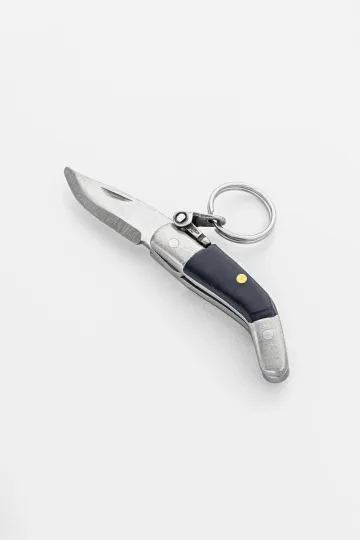
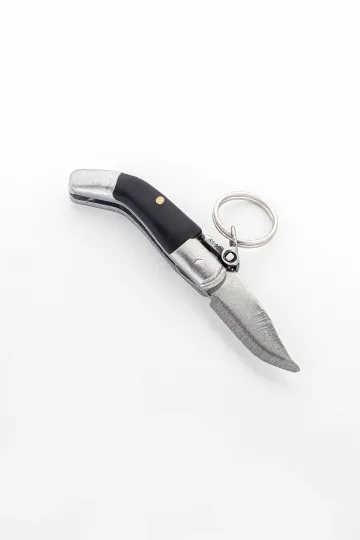
CAPAORA mini knife pendant
The 18th-century Spanish navaja in miniature: 40 mm of stainless steel, a real folding mechanism and a Palanquilla lock that clicks. An affordable gift to remember.
Authentic · Ships from Spain · 14-day returns
Types of Venetian glass jewellery
Almost any form can be made from Venetian glass, and in each the glass works in its own way.
Beads and necklaces
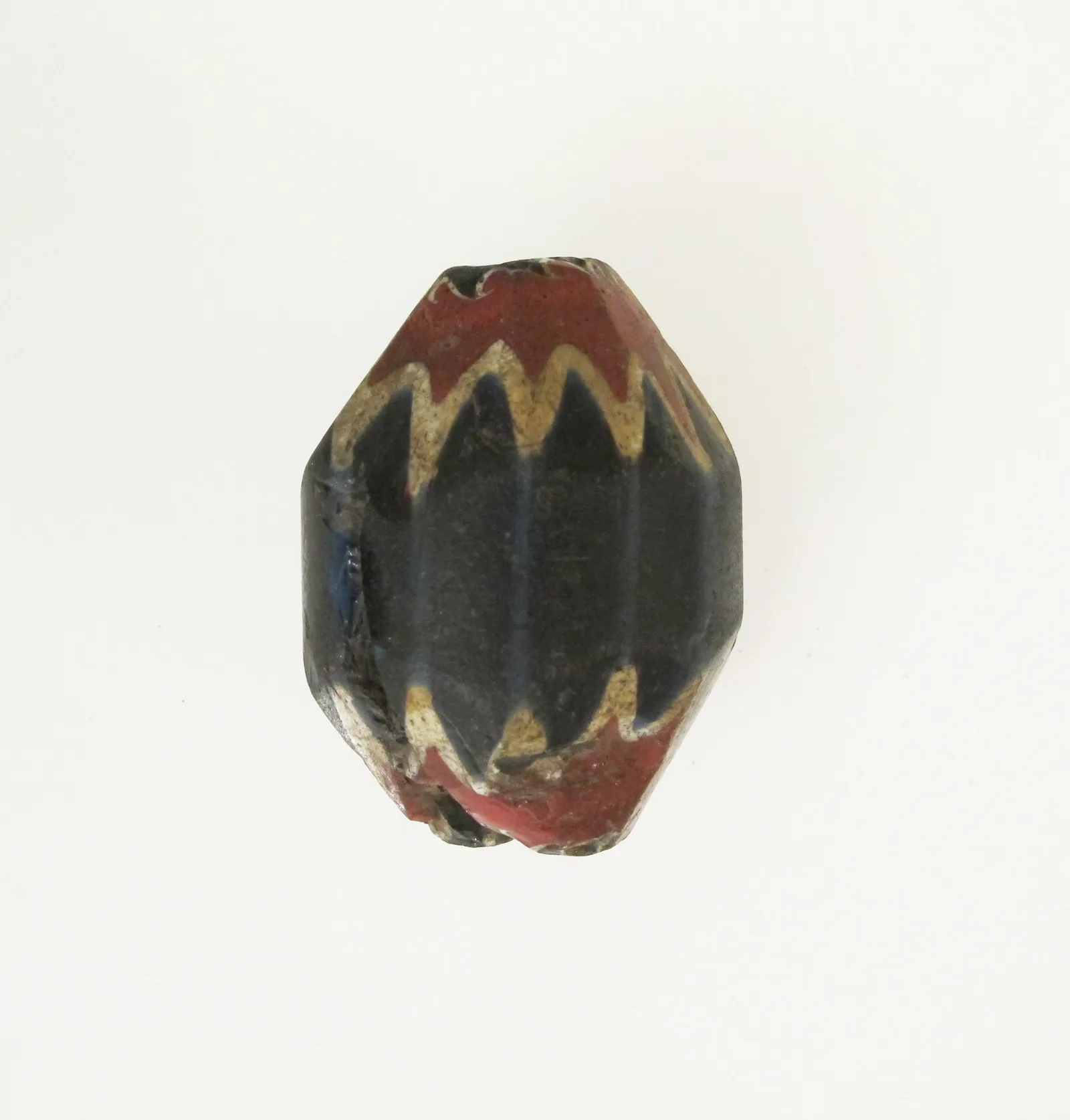
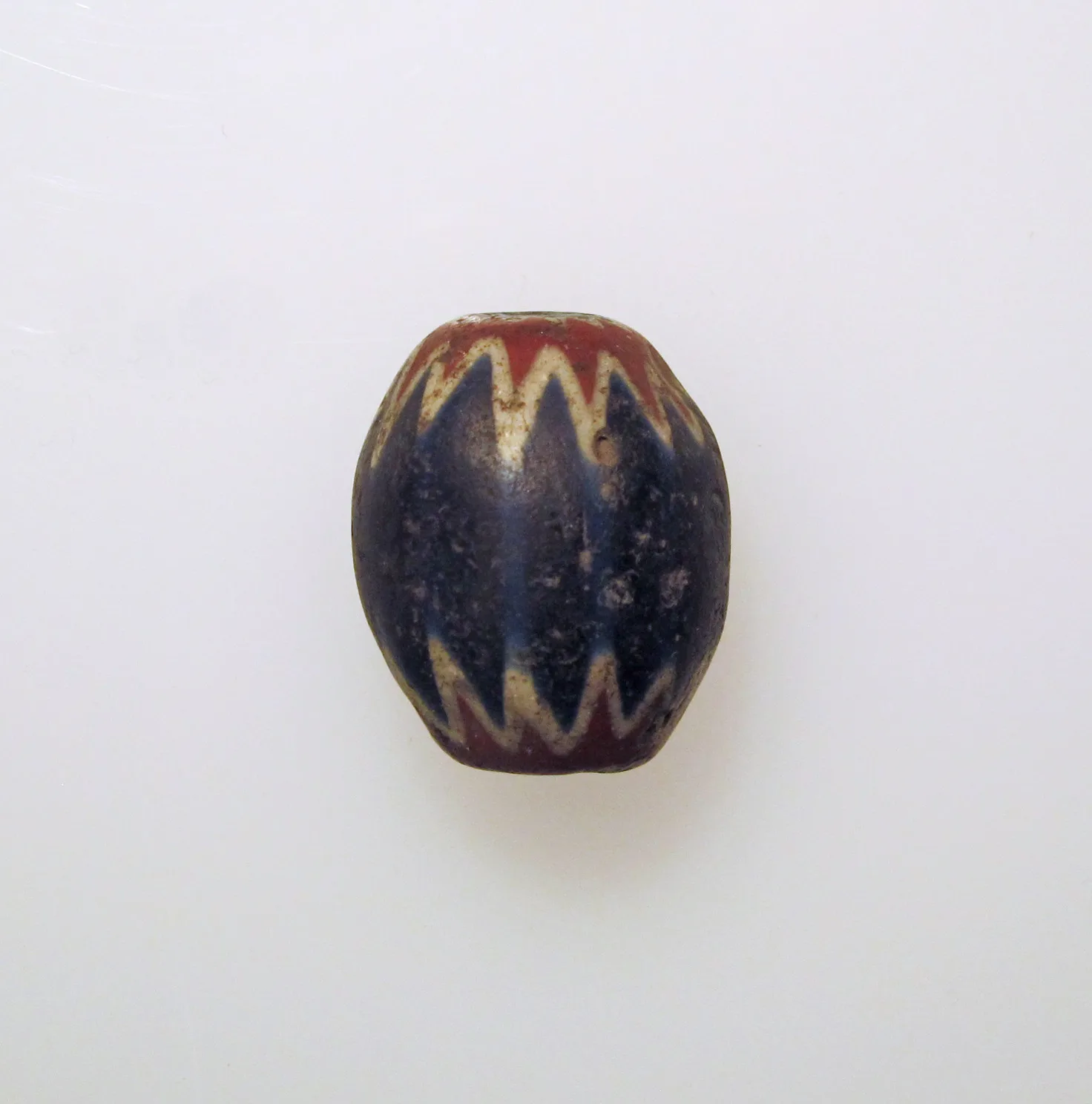
The most classic form and the oldest. Millefiori beads, beads with gold leaf or plain coloured ones are strung in a single row or in several tiers of different length. Glass is noticeably lighter than stone, so even a large multi-strand necklace does not drag at the neck, where the same volume in agate or quartz would be unbearable. Venetian beads are always about colour: a row of them makes the look on its own and stands in for any other piece. The historic variety is the chevron, a layered bead with a star pattern in cross section, the very one Murano shipped around the world for centuries.
Pendants
A large flat or three-dimensional glass pendant works like a small painting: it shows at once the millefiori pattern, the play of gold leaf and the depth of sommerso. Here the glass reveals itself most fully, because the surface is larger than a bead's and the maker has room to spread the design. The pendant hangs on a simple chain, a leather cord or a silk ribbon, so that mount and cord do nothing to compete with the glass or pull attention from it.
Earrings
Glass earrings bring colour right up to the face and weigh almost nothing, which matters above all for long drop styles: they can be made large without fear that the lobe will tire by the end of the evening. Sommerso drops that play with the light look fine here, as do paired millefiori beads. Since every bead is unique, a perfectly matched pair is hard to find, and a slight difference between two earrings is normal for handmade glass.
Rings and bracelets
In a ring a glass cabochon sits in a metal mount like a gemstone and catches the light on a faceted or smooth surface. Bracelets are strung from glass beads on elastic or wire, or a single large glass insert is set into a rigid base. Here it is worth remembering the fragility: on the wrist a piece more often knocks against tables, door handles and keyboards, so glass rings and bracelets are taken for the look and for special occasions rather than for hard daily wear alongside metal.
Rosary beads
Glass prayer beads and the Catholic rosary are an old and very Venetian form: the word for "bead" in many languages comes from prayer, and Venice supplied glass beads for rosaries to all of Europe for centuries. Glass works perfectly in a rosary: the beads must be the same size, smooth and pleasant to the touch, since they are told over by the fingers a hundred times, yet light, so that a long strand does not tire the hand. Milky lattimo and smooth plain beads give a calm surface that does not distract from prayer, while gold-leaf beads mark the larger "Our Father" beads between the decades. Glass is practical here too: it does not darken from the sweat of the palms and does not wear down, unlike wood or bone.
Buttons and cufflinks
A glass button is a small ornament in its own right, and Murano made them for dress clothing for centuries. In lampwork a button is gathered like a bead but with a loop shank instead of a through channel, holding the same millefiori, gold leaf or sommerso. Cufflinks follow the same logic: a pair of dense glass cabochons in a metal mount brings colour to the cuff, where restrained metal usually rules. Glass wins here through its lightness and through colour that will not fade, and each pair differs a little in pattern, as handwork should.
Brooches
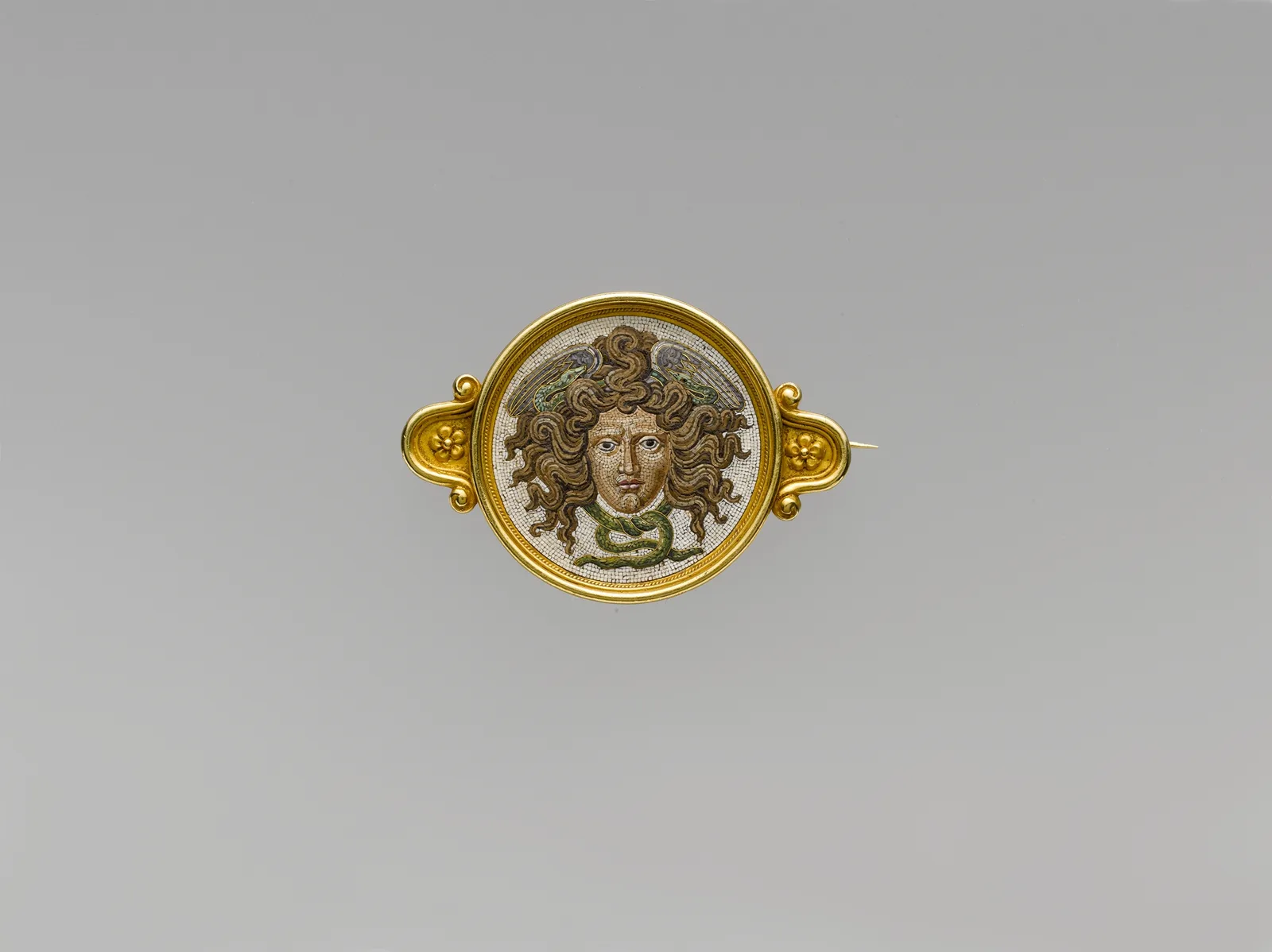
A brooch gives the glass surface and at the same time holds it in metal that shields the fragile material at the edge. The historic peak of the form is micromosaic: the tiniest glass tesserae, cut from drawn rods, are laid edge to edge in a metal frame to build a whole picture, a flower, a dove, Roman ruins. Such a brooch can take hundreds or thousands of tiny pieces of glass, and the work is closer to jewelled mosaic than to ordinary glassmaking. A simpler brooch sets one large sommerso or millefiori glass cabochon in a mount like a gemstone.
Bottle pendant
A separate festive form is the tiny glass bottle on a chain, worn as a pendant. The Venetians blew such miniature vessels with virtuosity: the thinnest walls, gold leaf in the body, coloured filigrana threads along the case. Historically the bottle pendant held scented oil or smelling salts, and was both an ornament and a useful thing. Today it is taken more for its beauty or for a drop of a favourite scent. Here glass reveals its chief gift: to be at once a transparent vessel and a coloured ornament.
Colour and the chemistry of colour in Venetian glass
Colour in Venetian glass is not a paint on the outside but a metal and mineral dissolved in the melt itself. The final shade depends on which metal oxide was added to the batch and in what furnace atmosphere it was melted, and the masters knew these matches by heart long before chemistry explained them.
Cobalt gives a deep, saturated blue; a vanishingly small share, a fraction of a percent, is enough to colour the whole mass. Copper is more capricious: in an ordinary furnace its oxide gives green and turquoise, but in a reducing regime with no oxygen the same copper atoms gather into colloidal particles and produce a ruby-red "copper" glass that the old masters called venturina rossa. The most costly and unpredictable red, gold ruby, is melted with real gold: a tiny share of dissolved gold, on reheating, precipitates as the finest particles and stains the glass a deep wine-red, so that a goblet of such glass cost a fortune.
Further along the palette: manganese gives violet and amethyst, but in a small dose the same manganese works the other way, as a decolouriser, killing the green of iron, for which it was called "glassmaker's soap", sapo vitri, for centuries. Chromium goes into a rich grass-green, antimony and later silver compounds into yellow, selenium and cadmium into bright yellows and orange-reds. Iron without correction gives that very bottle-green that the whole struggle for purity was about; tin and arsenic compounds give the milky white of lattimo. One and the same oxide can give a different colour depending on how much oxygen is in the furnace, so a recipe is not only a composition but a regime of the fire, and it was this part the masters guarded most strictly.
Hence the character of a Venetian piece. The colour lives in the body of the glass and plays against the light rather than lying as a film on the surface, so it is deep and does not fade with time. The piece is almost always bright, festive, in a carnival mood rather than strict restraint. It is jewellery for those who love colour and are not afraid to wear it: glass easily becomes the main accent of a look, and then everything else is best kept calm.
Leave your email, we'll send your discount code. No spam, unsubscribe anytime.
The code arrives by email, valid on your first order.
How to tell real Murano from a fake
Murano's fame bred a sea of fakes: cheap "Murano-style" beads are shipped from countries with cheap glassmaking and passed off as Venetian, marking the price up many times over. Real glass can be told by several signs, and it is best to check them together rather than one at a time.
Traces of hand work
Real handmade glass is never perfectly uniform. In an artisan bead you see tiny differences in pattern from its neighbour, a slight asymmetry of shape, sometimes rare microbubbles of air inside or a slightly offset thread channel. All of this is the mark of a hand at the fire, not a flaw. A machine fake, by contrast, is suspiciously even: a dozen beads like twins, the pattern stamped identical, the shape geometrically exact. If every element in a set matches down to the detail, that is reason to be wary.
Weight, temperature and sound
Glass is noticeably heavier and cooler to the touch than the plastic most often used to fake costly beads. Take a bead in your hand: a real one stays cool for a while and pulls pleasantly at the palm, while plastic warms instantly from the skin and weighs almost nothing. Glass on glass gives a thin clear ring, plastic answers dully, and a tooth slides slightly on glass while it catches on plastic. The surface of real glass is smooth and slightly slippery; a cheap imitation often shows a moulding seam round the bead's equator and flash at the hole. Hold a bead up to the light: in real millefiori the slices of murrine are crisp, with sharp pattern edges, because it is cut glass, while in a printed imitation the little flowers look blurred, like a decal under gloss.
Mark, certificate and wording
Genuine Murano often comes with a paper certificate from the workshop and bears the Vetro Artistico Murano mark, a trademark with a maker's number introduced in 1994 specifically to protect the island's real masters from fakes. Here is how buyers are caught: sellers write "Murano-style", "Venetian glass" or "murano style", and that honestly means it is not the island's glass. Too low a price for "handmade from Venice" is almost always a sign of a fake, since a real artisan bead cannot cost the same as a handful of costume jewellery. A certificate is worth checking for the name of a specific workshop rather than for an abstract "Made in Murano" with no maker.
Caring for glass jewellery
Glass has one weakness, and that is fragility. It does not fear water, sweat, cosmetics or time, does not darken or fade, the colour in it is eternal because it is metal in the body of the melt. But glass fears a blow and a scratch, and all care is built around this.
A glass piece must not be dropped on anything hard, and it is best not worn where it knocks against stone, metal or ceramic: glass rings and bracelets are especially vulnerable, since the hand is forever catching on something. Take off glass before cleaning, sport and sleep. Store it apart from other pieces, in a soft pouch or a separate compartment of the box, so that metal clasps and the facets of neighbouring stones leave no scratches on the glass and the beads do not knock against each other.
Glass is cleaned with a soft damp cloth, with a drop of mild soap if needed, and wiped dry. Abrasive pastes, soda, hard brushes and any powders are forbidden: they matt the bright surface with fine scratches, and the mirror shine cannot be brought back afterwards. Pieces with gold leaf inside are safe to wash: the gold is sealed between layers of glass and will not rub off, so they can be washed like ordinary glass. Glass does not like a sharp change of temperature either, so do not wash it now in icy, now in hot water, and do not lay a piece on a hot radiator or a windowsill in direct sun beside the cold glass of the window. A word on the thread: glass beads are heavier than they look, and an old thread frays over time against the edges of the holes, so a large necklace is worth restringing on a fresh cord every few years, lest it scatter at the wrong moment. The main rule is short: guard glass against a fall, not against water.
Who it suits and which occasions to give it for
Venetian glass suits those who love colour, warmth and a handmade thing with a history. It is jewellery with a festive character; it goes to open, sociable people who are drawn to brightness, and less often to those who prefer strict monochrome and minimalism. By age and occasion there are almost no limits: a light glass bead is equally at home on a young woman and on an older one, the difference being only in size and palette.
As a gift Venetian glass has the advantage of being almost always unique: an artisan bead gathered over the flame exists in a single copy, and the gifted piece is literally one of a kind. It is given as a meaningful souvenir from a trip to Venice rather than a fridge magnet, given to lovers of colour and those who value craft, given as a festive but unobliging present to a colleague or a friend. And the lightness of glass makes it convenient even for those who do not like and do not wear heavy jewellery.
Send a friend a discount code, they save on their first order.
Venetian glass: facts that surprise
More history hides behind a clear bead than it seems. A few verified facts.
Glassmakers were kept almost as prisoners. From 1291 Murano's masters had no right to leave the republic's territory. For this they were given the privileges of nobility, the right to bear arms and noble status for their children, but a fugitive with a secret of the craft was counted a traitor, and by some accounts killers were sent after him. The secret of glass was guarded by the Council of Ten, Venice's secret service.
The mineral aventurine is named after the glass, not the other way round. First, in the seventeenth century, Murano accidentally produced the sparkling glass avventurina, "by chance", from copper that fell into the melt. Only later did a natural stone of similar appearance take the same name for its likeness of sheen.
Venetian mirrors cost more than paintings. While Murano held the monopoly on clear glass, a framed mirror could cost more than a canvas by a famous painter. France resorted to industrial espionage: the minister Colbert secretly spirited Venetian masters away to set up its own mirror production for Versailles, and the republic, by rumour, tried to get them back at any cost.
Lattimo faked porcelain centuries before European porcelain. With milk-white lattimo glass the Venetians imitated precious Chinese porcelain and painted it with enamels after eastern models long before Europe, in the early eighteenth century, learned to make true porcelain itself.
Venetian beads were a world currency. Tiny conterie beads from Murano were shipped around the world by the million and used in trade for centuries, including as money in distant lands: they were exchanged for gold, spices and hides. Glass from a single island in a lagoon circled the globe.
Cristallo was the work of one man. The almost colourless clear glass that turned the craft on its head is tied to the name of Angelo Barovier in the mid fifteenth century. His family still works with glass on Murano, one of the oldest craft dynasties in Europe, alongside such houses as the Seguso and the Toso, whose workshops also stretch across the centuries.
Bohemia and England pushed Murano off the throne. In the seventeenth century Bohemia learned to melt a hard potash glass that was cut with facets like rock crystal, and in England, around 1674, George Ravenscroft produced a heavy lead crystal that sparkled brighter than the Venetian. Fashion swung towards deep cutting and sparkle, and for the first time in centuries Murano's thin blown glass began to lose to its rivals.
Murano glass has its own annual festival. The island still lives by glass: in summer it holds a glass festival with old furnaces, demonstrations of work at the fire and contests of the masters, while the glass museum on Murano holds pieces from Roman times to our own day. The craft is no museum antiquity but the living trade of families who melt glass to this day.
Colour in glass is metal. Ruby-red glass the Venetians melted with real gold, blue with cobalt, green and turquoise with copper, violet with manganese. The colour lives in the body of the melt, so Venetian glass plays against the light and does not fade.
The mark of real Murano was only introduced in 1994. To tell the island's genuine glass from the flood of fakes, the Vetro Artistico Murano trademark with a maker's number was created. Before that almost anything in a shop could be called "Venetian".
Frequently asked questions
How does Venetian glass differ from ordinary glass? Above all by the purity of its composition and its technique. In the fifteenth century Murano created an almost colourless clear glass, cristallo, that shone like rock crystal and could be drawn into the thinnest threads without cracking. This allowed what others could not: fusing millefiori patterns, sealing gold leaf in the glass, drawing coloured threads, gathering sommerso. Ordinary glass cannot do this, and Murano's recipes were kept a strict secret for centuries.
What is millefiori? Millefiori means "a thousand flowers". Coloured glass rods are fused and drawn out lengthwise so that any cross section shows a flower or a star, then the rod is sliced into thin discs, the murrine. Each disc carries a finished pattern, and these discs are laid out and fused over the surface of a bead. So a millefiori bead is strewn all over with tiny flowers, and no two are alike.
How do you tell real Murano from a fake? Check the signs together. Real handmade glass is not perfectly uniform: you see small differences in pattern and sometimes microbubbles inside. It is heavier and stays cool longer than plastic, and rings clear. Genuine Murano often comes with a workshop certificate and the Vetro Artistico Murano mark with a maker's number. Wordings like "Murano-style" and "Venetian style" usually mean it is not the island's glass, and too low a price for "handmade from Venice" is almost always a fake.
Does Venetian glass fear water? No. Glass does not fear water, sweat, cosmetics or time, does not darken or fade, because the colour in it is metal in the body of the melt. Its only weakness is fragility: it fears a blow and a scratch, and also a sharp change of temperature. So it must be guarded against a fall, not against water.
Is it true that real gold is fused into the glass? Yes. In the foglia d'oro technique the thinnest sheet of real gold or silver leaf is laid between layers of glass and sealed over with clear glass. The metal is locked inside, so it glows through the glass with a warm sheen and yet never rubs off against the skin or tarnishes in air and water.
Is Venetian glass jewellery heavy? No, and that is one of its great advantages. Glass is noticeably lighter than stone and metal, so even a large necklace or long earrings are barely felt. You can allow yourself an expressive form that in stone or metal would drag at the neck or the lobes.
Is every glass piece unique? Artisan beads gathered by hand over the flame exist in a single copy: the pattern, asymmetry and bubbles cannot be repeated exactly. Pieces made from cut millefiori murrine are also all different, because the discs fall differently each time. So Venetian glass is given as a knowingly one-of-a-kind thing, and a perfectly matched pair of earrings can be hard to find.
Glass, silver, gold, coloured beads, pendants, symbolism, matching sets.
Buying it as a gift? Each one arrives ready to give.
 A branded Zevira box and a little card come with every order.
















About Zevira
Zevira is a Spanish jewellery brand from Albacete. Coloured glass, beads and pendants are one of the catalogue's categories. We love pieces with character and a history, and Venetian glass is one of the most alive among them: every bead carries a colour and light that cannot be repeated. Alongside glass in the catalogue live stone beads and pieces with enamel, a kindred art of colour. For current pieces, see the catalogue.