Aventurine: the green and yellow stone of luck
Aventurine owes its name to an accident. In eighteenth-century Venice, glassmakers fumbled a batch and let copper filings drop into the molten mix. Out came a shimmering glass they called avventurino, from the Italian a ventura, meaning by chance, or with luck. Only later did mineralogists meet a naturally shimmering quartz and borrow the same word for it. So the stone was named after an imitation, not the other way around.
It is a green, yellow, more rarely red or blue quartz with a sparkling glint known as aventurescence. For a modest price it offers deep colour and a lively play of light, which is why it has been cut into cabochons, beads, seals and small carvings for centuries. Below we go through what it is made of, how it forms, where it comes from, how the green variety differs from the yellow, and how to avoid mistaking the stone for glass.
What aventurine is: composition and mineralogy
Aventurine is not a mineral in its own right but a variety of quartz. At its core sits microcrystalline or granular quartz, silicon dioxide, SiO2. Quartz on its own is colourless; the colour and the glint come from tiny platy inclusions of other minerals scattered through the stone.
That shimmer is called aventurescence. When light hits the stone, it reflects off countless flat flakes of inclusion, all roughly aligned in one plane. Each flake works like a minute mirror, and as you tilt the stone, sparks run across the surface. It is an optical reflection effect, not a glow from within.
The key physical characteristics:
- Hardness 6.5 to 7 on the Mohs scale. The quartz base is hard, but the mica inclusions lower the strength locally. For comparison: topaz sits at 8, quartz at 7, feldspar at 6, window glass at about 5.5. Aventurine scratches glass.
- Density around 2.64 to 2.69 g/cm3, the same as ordinary quartz.
- Trigonal crystal system, like quartz, though the granular build means you never see individual crystals in a piece.
- Fracture uneven and splintery; no cleavage.
- Lustre from glassy to greasy, translucent to opaque.
- Refractive index around 1.54 to 1.55.
Because aventurine is an aggregate of many small quartz grains with inclusions, it does not split along clean planes and it holds a polish well, which explains its popularity in cabochons and beads.
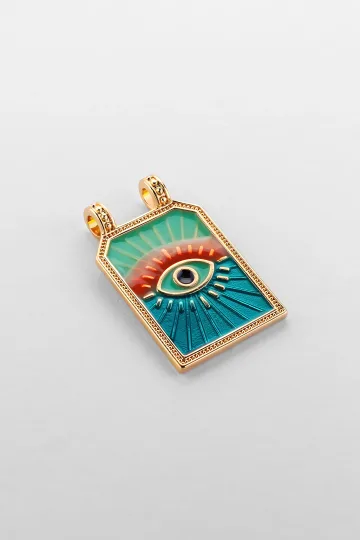
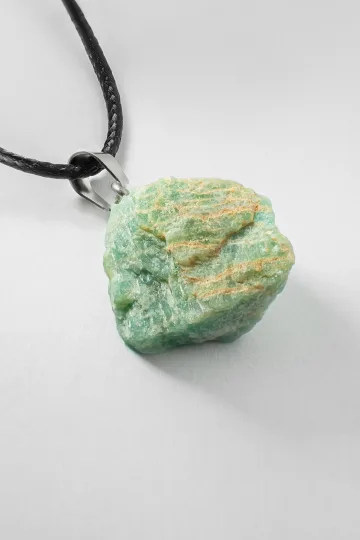
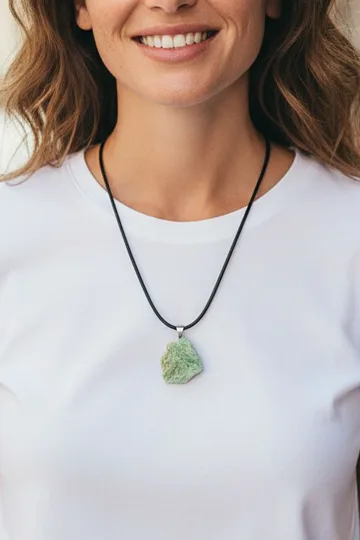
Wear the symbol, don't just read about it. These are in stock:





Where the colour and the sparkle come from
The colour and the character of the sparks depend directly on which mineral is doing the inclusion work inside the quartz.
Green aventurine takes its colour from flakes of green mica, fuchsite, a chromium-bearing muscovite. The chromium gives the green tone, and the flakes themselves create a soft silvery-green shimmer. This is the most common variety.
Yellow, orange and reddish-brown aventurine draw their colour from inclusions of hematite and goethite, the oxides and hydroxides of iron. Their platelets throw back golden and copper-red sparks. The more iron, the warmer and richer the tone.
Blue and grey-blue aventurine turns up less often; the blue usually comes from inclusions of dumortierite, a borosilicate mineral. This material is valued for its unusual cool shade.
The size and density of the inclusions decide whether the shimmer is coarse and sparse or fine and continuous. Coarse flakes give bright, separate sparks; fine ones give an even, silky glow.
Green aventurine belongs on bare skin under linen, never over a boardroom collar. And do not dare pass off souvenir-shop glitter as the real quartz.
What to wear aventurine with
Over years on shoots, green aventurine has passed through dozens of looks with me. Here is what actually works, sorted by occasion.
What do I wear aventurine with every day? For daily wear I recommend a thin chain with a small pendant or a modest beaded bracelet. A stone like this looks excellent over a white shirt, a beige jumper, a linen tee. Natural fabric shades (milk, sand, grey-green, khaki) pick up its colour and deepen it. Under a V-neck I suggest 40 to 45 cm, so the pendant settles right below the collarbones.
Is it right for the office? Yes, as long as you keep the setting restrained. A green pendant on silver or small stud earrings add a living detail to a strict suit without breaking the business code. If you wear a watch, put a bracelet with aventurine on the same wrist and the look pulls together. Yellow aventurine works a little bolder here, and I choose it for anyone who wants a light accent rather than neutrality.
How do I build an evening look? For evening I choose a larger stone: a chunky ring, a pendant on a long chain or earrings that catch the light in a dim room. Aventurine loves dark fabrics (emerald, graphite, wine, black velvet) and satin, where its play of light reads best. Under a deep neckline I recommend a long chain; under a closed dress, play with earrings and a ring.
Can I mix metals and layers? Yes, freely. For a special occasion I layer the aventurine: a thin chain plus a short collar, two or three bracelets of different texture on one wrist. The stone gets on with both silver and gold, so I suggest mixing metals without fear. Green sits beautifully beside clear rock crystal and pearl, yellow beside amber and honeyed tones.
Who does it actually suit? Anyone who likes natural, understated looks and quiet elegance. One rule for every day: let only one hero be on show. If you have chosen an expressive pendant, keep the earrings minimal, and vice versa. Then aventurine will not get lost in the noise but stay the warm accent you want to reach out and touch.
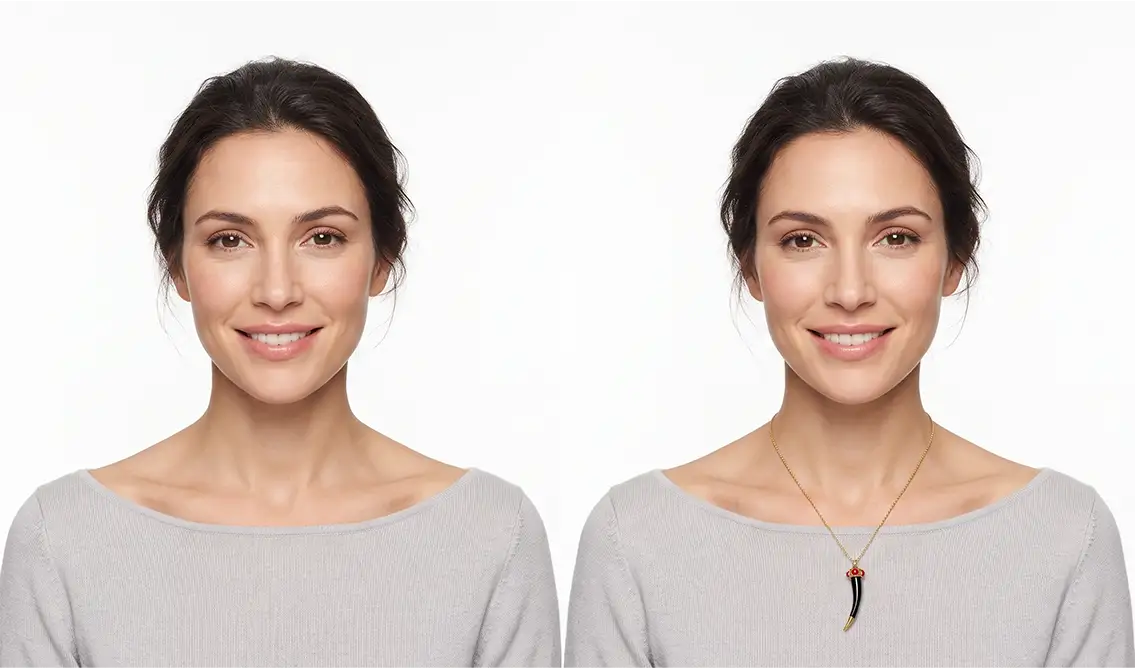
Turn on your camera, pick earrings, a pendant or a ring, and see the piece on yourself in real time.
Switch items in one tap.
Everything runs in your browser: no photo or video is ever uploaded.
How aventurine forms in nature
Aventurine is not born from clean quartz but from rock where quartz grows interleaved with mica. Most often this is a metamorphic quartzite: sandstones and quartz veins that spent millions of years under pressure and heat deep in the earth's crust. Under that load the quartz grains recrystallise and knit tightly together, trapping flakes of mica among them.
Green fuchsite appears wherever the original rock held chromium. The chromium settles into the mica, colours it green and at the same time produces that mirror-like flake that drives the shimmer. This is why green aventurine is geographically tied to regions with chromium-bearing rock. The yellow and red varieties form differently: instead of mica, iron in the form of hematite and goethite is sprinkled through the quartz, usually from sedimentary and hydrothermal processes.
One detail worth knowing as a buyer: the mica flakes do not sit at random in the rock; they line up along the layers the pressure followed. That is exactly why aventurine shimmers across a plane rather than at a single point, and why a cutter deliberately orients a cabochon so the glint runs over the dome. If the mica lies crooked or sparse in a given piece, the shimmer stays weak no matter how you cut it.
The history of the stone
People worked granular quartz threaded with mica long before it had its present name. In the ancient Near East and in India, green and mica-rich stones were cut into beads, seals and inlays, simply as an attractive, affordable carving material.
The word itself took hold in Europe through Venetian glass. In the seventeenth and eighteenth centuries the masters of Murano learned to melt a shimmering aventurine glass shot through with copper, and they guarded the recipe closely. The glass became fashionable, and when mineralogists came to describe a natural quartz with a similar glint, they handed it the same name: aventurine.
In the nineteenth century aventurine was busy in the lapidary trade, turned into caskets, handles, snuff boxes, seals and small carvings. The green variety looked well in a setting and cost little, so it travelled widely.
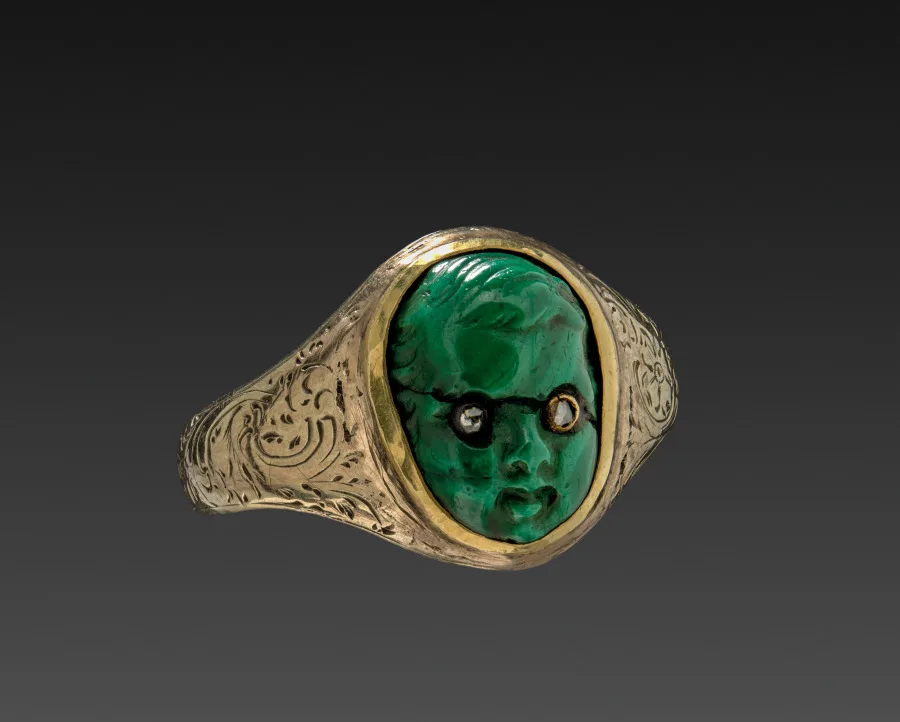
Today aventurine is one of the most widely traded ornamental stones. It is cut into cabochons, beads and inexpensive inlays, and the name stone of luck stuck to it as part of everyday folklore rather than any proven property.
Deposits
Aventurine is mined across several continents, and the region shapes the colour and the character of the shimmer.
- India (Rajasthan and the south of the country) has historically been the main source of green fuchsite aventurine. Indian material is often dense, with a fine, even glint.
- Brazil yields green as well as yellow and reddish aventurine with even colour; a large source for beads and cabochons.
- The Alps and central Europe produce a pale, often greenish or rosy aventurine, long worked by local stonecutters into larger objects.
- Austria, Chile, Tanzania and the United States give aventurine in various shades, including reddish-brown and the rare bluish kind.
Customer reviews
Zevira is a real jewellery shop. Genuine payments, deliveries and customer thank-yous.
🥰🥰🥰 gracias
Ok, ¡gracias! 🙂
The science of the spark: what aventurescence is
The effect that gives the stone its name has a proper optical explanation, and it is worth separating from the other shimmering tricks minerals play, because the words get used interchangeably in shop descriptions when they mean quite different things.
How aventurescence differs from opalescence and iridescence
Aventurescence is straightforward reflection. Thousands of flat, thin mineral platelets lie inside the quartzite in roughly parallel orientations, and each one acts as a tiny mirror; when a platelet catches the light at the right angle it flashes. Opalescence, the milky glow of common opal and of moonstone-like material, comes from light scattering off structures smaller than the wavelength of light, which is why it looks like a haze rising out of the stone rather than a set of points. Iridescence, the rainbow film on labradorite or on a soap bubble, comes from interference between light waves reflected off closely spaced layers, which is why its colour changes as you move. Aventurescence produces no rainbow and no haze; it produces glints of the same colour as the included mineral.
Why the spark runs across the surface
Because the platelets are aligned rather than randomly scattered, they light up in groups. Tilt the stone and one band of flakes falls out of the reflecting angle while the next band falls into it, so the sparkle appears to travel across the surface like a wave. In a well-oriented cabochon this movement is smooth and continuous. In poorly oriented material the platelets sit at all angles, the flashes fire at random, and the stone looks speckled rather than alive. A cutter who understands the rock orients the dome so that the plane of the flakes runs parallel to the top of the cabochon.
Flake size and the character of the shine
Coarse platelets give a bold, chunky glitter with visible individual points, the kind that reads across a room and is easy to confuse with glass. Fine platelets give a soft, silky sheen where the individual flashes are too small to separate by eye, and the whole surface seems to be lit from within. Neither is better as such, but they suit different pieces: the coarse sparkle is showy and works on a large statement pendant, while the fine sheen is quieter and holds up better in something worn every day. Indian green aventurine is prized specifically for the fine, even variety.
Aventurine under the loupe: what magnification reveals
A ten times loupe, which costs very little and lives happily on a keyring, settles most questions about aventurine faster than any other test.
Flakes rather than glitter
Under magnification natural aventurine shows flat mineral platelets embedded in the rock, each with a definite outline, lying at slightly varying depths. They look like leaves suspended in ice. Aventurine glass, by contrast, shows sharp geometric spangles of metallic copper, most of them near-triangular or hexagonal, all of them the same bright metallic orange and all at the same brilliance. Once you have seen the two side by side, the difference stops being subtle.
The granular base
The other tell is the ground the flakes sit in. Aventurine is a quartzite, which is to say a rock made of fused quartz grains, so under the loupe the body between the flakes has a faintly sugary, granular texture and a slightly uneven, waxy lustre where the polish crosses grain boundaries. Glass has none of that. Its body is perfectly homogeneous, glossy and featureless, and its polish is uniformly bright across the whole surface because there are no grain boundaries to interrupt it.
Gas bubbles
Look for round bubbles. A rock cannot contain them; a melt very often does. Small spherical or slightly stretched gas bubbles trapped in the body are conclusive evidence of glass, and in aventurine glass they usually sit among the copper spangles near the surface. Finding even one settles the matter. The absence of bubbles proves less on its own, since well-made glass can be free of them, which is why the granular base and the flake shape matter alongside.
Upload a photo of your pet, someone you love, or an object. We'll build a 3D model and hand-cast it in pewter.

Green and yellow: two different characters
The two common colours of aventurine are not simply two shades of the same thing. They come from different included minerals and they behave differently in a piece of jewellery.
Where green gets its calm
Green aventurine owes its colour to fuchsite, a variety of mica coloured by chromium, dispersed through the quartzite in fine flakes. Because the colouring mineral is also the reflecting mineral, the green and the sparkle arrive together and the flashes are green rather than metallic. The overall effect is muted: a soft, slightly dusty green with a sheen rather than a glare. That restraint is why green aventurine sits comfortably in everyday jewellery and against ordinary clothing, and why it has become the default the word aventurine brings to mind.
Why yellow is brighter and more translucent
Yellow, orange and reddish aventurine take their colour from iron minerals, goethite and hematite, in flakes that are more reflective and more metallic than mica. The result is a warmer body colour and a distinctly harder, brighter spark that catches light from across a room. Yellow material is also frequently more translucent than green, so light enters the stone and comes back out through the flakes, which lifts the whole effect. The trade-off is that it looks more like glass at a glance, so yellow aventurine is where careful buyers use the loupe first.
When one stone carries both colours
Because aventurine is a rock rather than a single crystal, one block can contain zones with different inclusions. Cutters occasionally find pieces where a green fuchsite-rich zone runs into an iron-stained yellow or rust one, sometimes with a clean boundary and sometimes as a gradient. These are cut to show the transition rather than to hide it, and they make unusually characterful cabochons. They are also a useful reminder of what the material actually is: a metamorphic rock with a history, not a manufactured colour.
Varieties by colour
Green aventurine
The most recognisable version. Colour ranges from a pale apple-green to a deep dark green, with silvery-green sparks thanks to fuchsite. It sits well in silver and against light clothing, calm and understated.
If the theme of green stones and growth appeals to you, take a look as well at hiddenite, the green spodumene and stone of new beginnings: a different mineral, but the same fresh green range.
Yellow aventurine
Warm, honey-gold, with sparks from iron inclusions. Usually a touch more translucent than the green. It pairs with amber and honeyed tones and reads brighter and more noticeable than the green.
Red and brown aventurine
Colour runs from rusty-orange to deep brick, with copper-red sparks from hematite. Rarer than green and yellow, it sits well in an autumn palette.
Blue aventurine
A cool grey-blue tone from dumortierite inclusions. The rarest natural variety; sometimes dyed quartz or glass is sold under this name, so blue aventurine deserves a closer look.



Aventurine or imitation: how to tell them apart
The main substitute is artificial aventurine glass, the very same Murano goldstone. It is pretty, but it is not a stone. You can tell them apart this way:
- The character of the sparks. In glass the flecks are coarse, uniform, evenly spaced and sparkle sharply; you can see they are metal inclusions. In a natural stone the shimmer is softer, the flakes vary in size and sit unevenly.
- The clarity of the background. Aventurine glass between the sparks is usually transparent, like coloured bottle glass. Natural aventurine is translucent or cloudy, grainy when held to the light.
- Bubbles. Under a loupe, glass often shows round gas bubbles; a natural stone has none.
- Hardness. Quartz aventurine (6.5 to 7) scratches ordinary glass; the glass itself (about 5.5) will not scratch the stone.
- Temperature and weight. Stone feels cooler to the touch than plastic and noticeably heavier: a density of around 2.65 g/cm3, heavier than plastic, lighter than most metals. A bead that feels too light is reason to suspect plastic.
A separate word on dyed quartz: pale material is sometimes tinted to pass as a saturated green or a rare blue. A suspiciously even, chemical-looking colour and dye pooling in the cracks give the treatment away. Heating and standard polishing of a natural stone do not count as fakery.
Green aventurine and lookalike stones
Glass is not the only confusion. Green aventurine is often taken for other green stones or sold under borrowed names. Here is how to separate them.
- Nephrite and jadeite. Green aventurine is frequently sold as Indian jade or Australian jade because it is cheaper. The difference is in the glint: true nephrite and jadeite give no sparkle, just an even oily glow and a fibrous rather than granular structure. If a green jade shows separate flecks, it is aventurine.
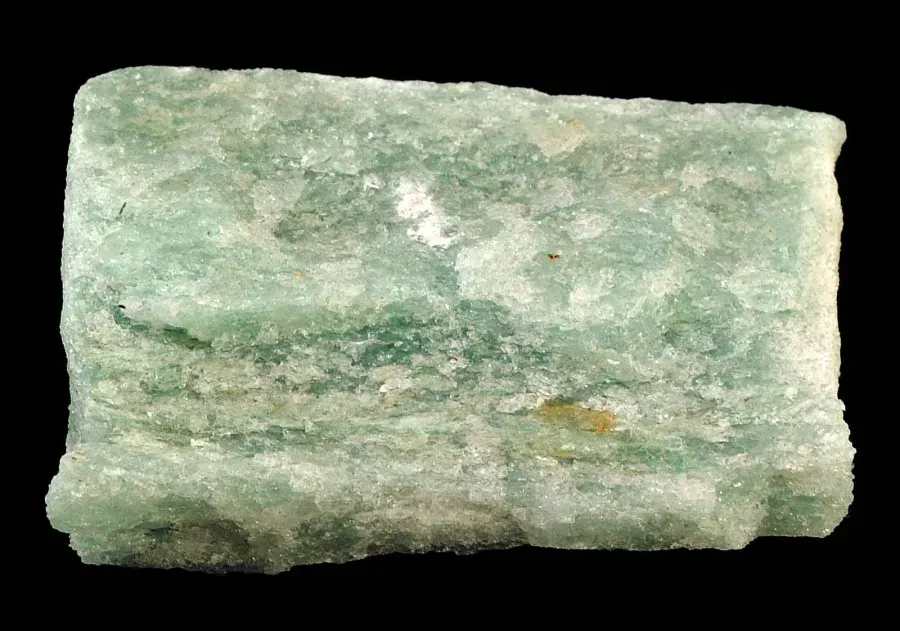
- Amazonite. Also green-blue and inexpensive, but it is a feldspar, not a quartz. Amazonite often shows a white grid-like vein and has no aventurescence; its hardness is lower (6 to 6.5) and it cleaves more easily.
- Green quartz (prasiolite, dyed quartz). Transparent, faceted, with no flakes inside. Aventurine is almost always an opaque cabochon with a spark, so they are hard to confuse if you keep the shimmer in mind.
- Malachite and chrysoprase. Malachite gives itself away with concentric banding and far lower hardness; chrysoprase is evenly apple-green, translucent, with no flecks. Neither one sparkles.
A simple rule: aventurine almost always reveals itself by the spark. If a green stone shimmers with flat flecks as you turn it, the odds are strong it is aventurine rather than nephrite, amazonite or malachite.
Leave your email, we'll send your discount code. No spam, unsubscribe anytime.
The code arrives by email, valid on your first order.
Goldstone: the history of a glittering fake that became its own thing
The strangest fact about aventurine is that the imitation came first. Aventurine glass was being made in Venice before the mineral had a name, and the stone was eventually named after the glass rather than the other way round.
The secret of the Murano workshops
Glassmakers on Murano developed a copper-flecked glass in the seventeenth century, and one family held a privilege for it that kept the recipe closed for generations. The Italian name, avventurina, comes from a phrase meaning by chance, because the batch succeeded or failed unpredictably and even an experienced worker could not guarantee the result. When mineralogists later met a quartzite that sparkled in the same way, they borrowed the glassmakers' word for it. Today the glass is usually sold in English as goldstone, and the borrowed name has gone on to describe an optical effect in mineralogy generally.
Copper that turns into stars
The chemistry is genuinely clever. Copper is dissolved into the molten glass, and the melt is held in conditions that starve it of oxygen so that the copper stays as metal rather than turning into a blue or green compound. As the glass cools slowly, the copper comes out of solution and grows into countless tiny flat crystals suspended throughout the body. Cool it too fast and nothing precipitates; cool it too slowly or too hot and the crystals grow coarse and dull. The narrow window between those failures is what made the process worth keeping secret. Blue and purple goldstone are the same trick with a cobalt or manganese coloured base glass.
Why the confusion will not go away
Goldstone is attractive, cheap and widely sold, and a good deal of it is described online simply as aventurine, which is technically the older meaning of the word and practically a way to charge more. The two are easy to separate once you know how: glass has bubbles, a perfectly uniform body, and metallic spangles of identical brightness, while the stone has a granular texture and softer, mineral-coloured flakes. Goldstone is worth owning on its own merits; it is a handsome material with four centuries of craft behind it. It simply is not a rock, and it should not be sold as one.
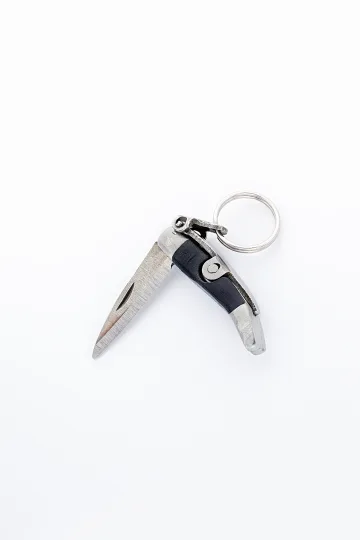
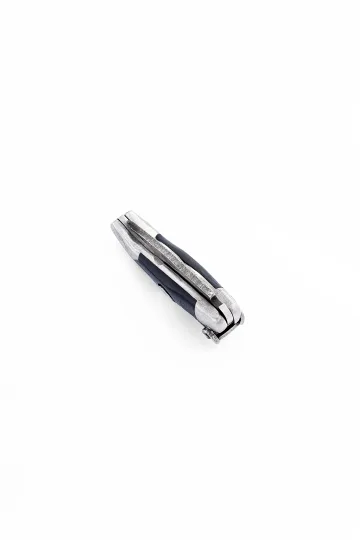
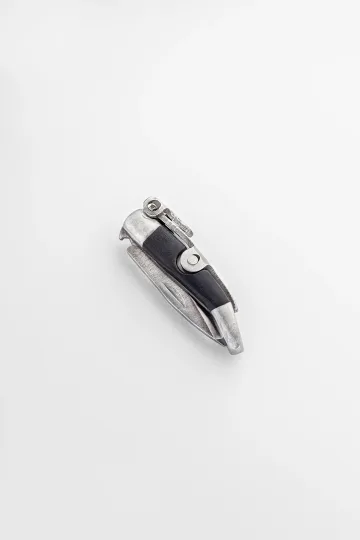
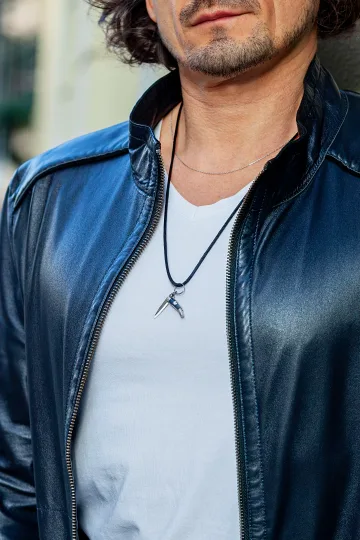
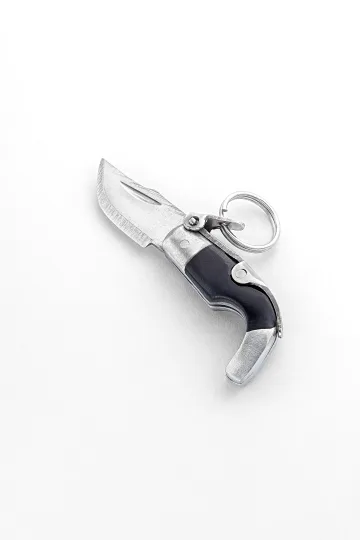
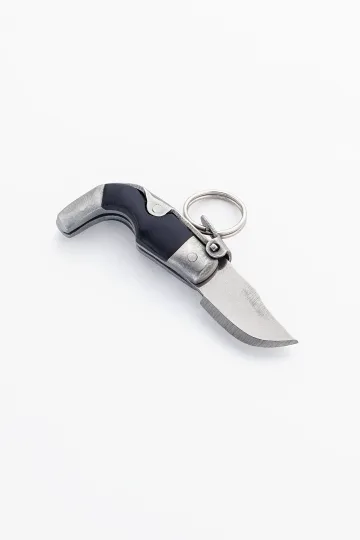
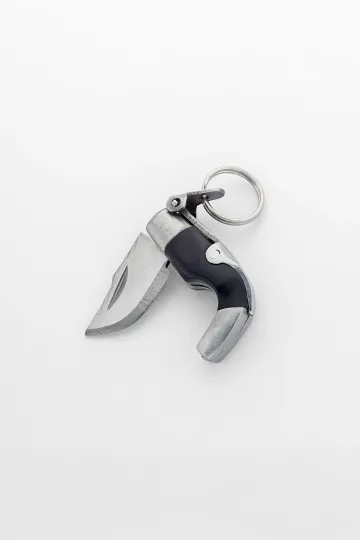
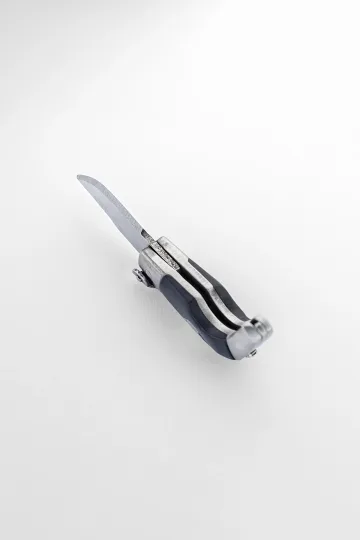
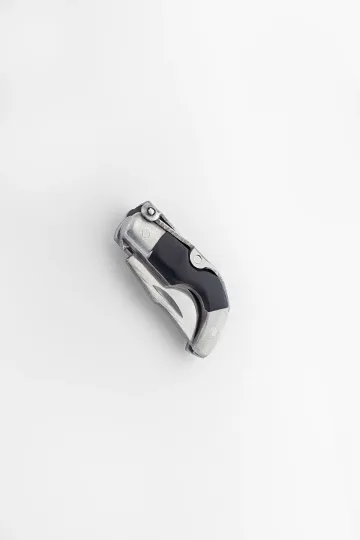
CAPAORA mini knife pendant
The 18th-century Spanish navaja in miniature: 40 mm of stainless steel, a real folding mechanism and a Palanquilla lock that clicks. An affordable gift to remember.
Authentic · Ships from Spain · 14-day returns
Symbolism and the reputation of a lucky stone
Aventurine carries a persistent reputation as a stone of luck and opportunity. That reputation has a traceable history, and it is worth setting out where it came from and where the claims stop.
Where the reputation for luck came from
Two threads feed it. The first is the name itself: a material named after chance, from a process that worked or failed at random, was always going to attract associations with fortune. The second is the colour. Green has meant growth, money and good prospects across Europe for centuries, and a cheap green stone with a lively sparkle was an obvious candidate when twentieth century crystal writers were assigning meanings. Once assigned, the label stuck, and green aventurine is now sold almost everywhere as a stone of opportunity, sometimes with the added claim that it favours gamblers, which says more about marketing than about mineralogy.
What tradition says and where the line falls
Tradition is worth knowing as culture. It is not worth treating as advice. Aventurine has no demonstrated effect on health, mood, income or luck, and any seller who tells you otherwise is selling you a story rather than a stone. What a piece of jewellery genuinely does is sit on your body and remind you of whatever you decided it means, which for some people is a useful habit and for others is nothing at all. There is no harm in the first and no obligation to the second. Buy aventurine because the green pleases you and the sparkle is good, and the rest is optional.
Green in culture
The colour has a long and mixed record. In heraldry, vert stands for hope and loyalty in love, and the medieval English forest laws gave us Lincoln green, the cloth of foresters and outlaws in the ballads. Green is the colour of spring and renewal across almost every northern tradition, and of the folk figure of the Green Man carved into the roof bosses of a good many English parish churches. It is also, in older English superstition, unlucky at weddings and in theatres, a belief that survives in odd corners of the profession. A stone that carries the colour inherits all of this contradictory baggage, which is a good reason to enjoy the associations without taking any of them literally.
Aventurine in the lapidary arts
Long before it became a bead, aventurine was a carving stone. It is tough, it takes a high polish, it comes in large clean blocks, and it costs little, which is a combination lapidaries have always liked.
Caskets, seals and desk pieces
Nineteenth century workshops turned aventurine into the whole vocabulary of the well-appointed desk: seal handles, paperweights, letter openers, inkstand bases, small boxes and the lids of caskets. The material suited the job because a flat polished plane shows the shimmer better than a curved one, so a box lid or a seal face is arguably the best possible showcase for it. Pieces of this kind turn up regularly in British salerooms among general hardstone lots, often catalogued vaguely as green stone, which is where a patient collector finds a bargain.
Hardstone workshops and the great vases
The imperial lapidary works of continental Europe took aventurine much further, cutting it into vases, bowls, tabletops and columns that had to be hollowed out with abrasive powder and hand-turned tools over months of work. Objects of this class weigh tens of kilograms and are effectively architecture rather than ornament. One of the largest ever cut from the stone, a vast shallow bowl on a pedestal, came to Britain as a diplomatic gift in the 1840s and remains in a national collection in London, where it is easy to walk past without realising what the shimmering green rock actually is.
Why bead cutters love the stone
For the bead trade aventurine is close to ideal. Quartzite has no cleavage, so it does not part along a plane when drilled; it is hard enough at 6.5 to 7 to take a lasting polish; it comes in blocks of even colour large enough to yield a matched strand; and it is affordable enough that a maker can cut freely without agonising over waste. The one hazard is the mica, which can chip around the drill hole, so good bead cutters drill from both sides and finish the hole edges. That is the difference between a strand that survives a decade and one that frays in a season.
How to choose good aventurine
What to look at when buying:
- Colour. Even and saturated, with no grey, dull zones. Green should be green, not grey-green; yellow should be clean, not muddy.
- Shimmer. Lively sparks as you turn the stone under light are the mark of good material. A total absence of glint means either a poor grade or no aventurine at all.
- Polish. The surface should be smooth, with no streaks or matte patches, and pleasant to the touch.
- Soundness. Held to the light there should be no deep cracks; small scratches from wear are normal, large chips are a defect.
- Shape. Aventurine is most often cut as a cabochon or beads: a smooth domed surface shows the shimmer best.
On price the guideline is simple: aventurine is an affordable ornamental stone. A small pendant or a bead costs about the price of a coffee, a large silver ring around the cost of a relaxed dinner out. If aventurine is offered at the price of a precious gem, it is either a very rare specimen or a substitute.
Aventurine jewellery: shapes and how to wear them
Pendant
The classic for green aventurine is a cabochon in a silver setting on a chain. The stone rests on the chest and catches the light as you move. A chain of 40 to 50 cm is comfortable, dropping the pendant just below the collarbones rather than at the throat.
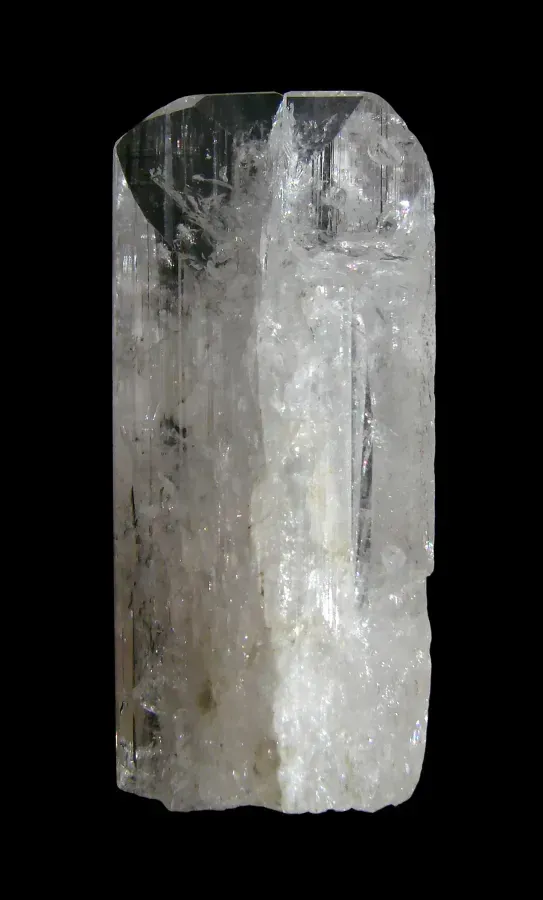
Green aventurine sits happily alongside clear, light stones. It is easy to pair, for instance, with danburite, the clear stone with a glassy glint: the contrast between matte green and pure clarity works well.
Ring
In a ring aventurine usually comes as a large cabochon or a signet with a smooth face. Keep the hardness of 6.5 to 7 in mind: a ring on the finger catches against surfaces more often, so a large stone is best protected from knocks and removed for manual work.
Bracelet
The most common format is a strand of smooth beads or an elastic bracelet. Beads show the shimmer from every side. Aventurine is often strung into a bracelet with other quartzes, citrine or rock crystal, to build a gradient of colour.
Earrings
Light cabochons or beads of aventurine sit well in earrings and do not weigh down the lobe, thanks to the stone's moderate weight. The green version freshens the face, the yellow adds warmth.
Send a friend a discount code, they save on their first order.
Durability in practice: where the weak point is
A hardness of 6.5 to 7 sounds dependable, but aventurine has a quirk that uniform quartz does not. The stone is built of fused grains with soft mica platelets lying between them. Mica has a hardness of around 2 to 3, and it is along the mica that microcracks travel on impact or while drilling.
In practice this means two things. First: on drilled beads the most vulnerable place is the rim of the hole, where the mica reaches the surface and chips away easily, so a bracelet on a rigid wire frays around the holes over time. An elastic cord and beads with smoothly finished edges last longer. Second: thin cabochons with a sharp edge chip along the rim faster than chunky ones with a rounded shoulder, especially in a ring that catches against things more often.
The conclusion is simple. For daily wear, choose aventurine with rounded shapes and a decent thickness, and leave the thin slabs and sharp edges to earrings and pendants, which meet fewer knocks.
Who aventurine suits and why people choose it
Every stone has a natural constituency. Aventurine's is easy to describe, and so is the group it will disappoint.
People who like the natural and the understated
Aventurine looks like what it is: a piece of rock, polished. The green is soft rather than vivid, the sparkle is present rather than aggressive, and nothing about it announces expense. For anyone whose wardrobe runs to linen, wool, denim and earth colours, which covers a great many people in Britain, it slots in without effort. It also survives daily life better than most affordable coloured stones, so it can be worn rather than saved.
People starting a stone collection
As a first mineral it teaches more than almost anything else on the shelf. It demonstrates aventurescence, so you learn one optical effect properly. It has a famous glass imitation, so you learn to use a loupe and to think about how fakes are made. It is a rock rather than a single mineral, so you learn that distinction early. And it costs so little that handling, testing and even breaking a piece carries no real penalty. A green cabochon, a piece of goldstone and a ten times loupe make an excellent starter kit.
As a gift with a legible meaning
The luck association, whatever one thinks of it, gives a gift a ready sentence: a green stone that people have long linked with good prospects, handed over at a new job, a move or an exam season. That is enough narrative for a present without straying into claims about health. Green aventurine also has the practical merit of being unisex, hard-wearing and inoffensive in almost any setting, which makes it a safe choice when you do not know someone's taste well.
Which colouring it flatters
Green aventurine sits most comfortably against warm and neutral colouring, since its slightly dusty, yellow-leaning green picks up the same warmth in the skin. Against very cool, high-contrast colouring it can look a little muddy, and a cooler green stone or a blue one usually does better. Yellow and reddish aventurine are warm by definition and suit golden and olive skin tones particularly well. As with any stone, the reliable test is to hold it near the face in daylight rather than under a shop's tuned lighting, which is designed to make everything look good.
Caring for aventurine
Aventurine is undemanding, but a quartz base with mica inclusions calls for a little care.
- Cleaning. Warm water, mild soap and a soft cloth or brush. That is enough to lift dust, sweat and traces of cosmetics.
- No harshness. Avoid ultrasonic and steam cleaners, acids and abrasive pastes, which can damage the polish and loosen the mica flakes near the surface.
- Storage. Keep it apart from harder stones (topaz, sapphire, diamond), which will scratch aventurine easily. A separate soft pouch is convenient.
- Light and temperature. Long direct sun can slightly fade bright, especially red, specimens. Avoid sharp swings in temperature.
- Knocks. Despite its hardness, a hard blow can chip a cabochon, so take off rings and bracelets for physical work.
Facts about aventurine that surprise people
A few things about this stone that rarely reach the label on the tray.
The stone was named after a fake
Aventurine glass existed in Venice before mineralogists had a word for the rock. When they found a natural material that behaved the same way, they borrowed the glassmakers' name for it. So the genuine mineral is named after its own imitation, which is an unusual direction of travel and worth remembering the next time someone insists that goldstone is the copy.
The sparkle is effectively millions of mirrors
There is nothing luminous about aventurescence. Every flash is plain reflection from a flat mineral platelet a fraction of a millimetre across, and a good cabochon contains an enormous number of them lying in roughly the same plane. The stone does not glow; it reflects the room back at you in pieces.
The green is a trace of chromium
Fuchsite, the mica that gives green aventurine its colour, is ordinary muscovite with a little chromium substituted into the structure. The same element in a different host gives emerald its green and ruby its red. A modest ornamental stone and the most expensive green gem in the world therefore owe their colour to the same trace metal, arranged differently.
The largest pieces made from it weigh tens of kilograms
Aventurine occurs in blocks big enough for monumental work, and imperial lapidary workshops cut it into vases and bowls that took years to hollow out. One such vessel, over a metre across, has been in a London museum since the 1840s, having arrived as a diplomatic gift. It is one of the largest worked pieces of the stone anywhere and a reminder that this was once a material for state presents rather than for bead strands.
Blue aventurine exists and it is real
Plenty of blue goldstone is glass, but genuinely blue natural aventurine also occurs, coloured by flakes of dumortierite rather than mica or iron. It is scarce, mostly from India and Brazil, and it looks quite unlike the glass: the blue is greyish and the sparkle is soft rather than metallic. Anyone who has only met the manufactured version tends to be disappointed by the real one, which is usually a good sign that it is real.
It shimmers as a plane, not as a point
Aventurescence differs from the shimmer of a cat's eye or a star stone in a way that is easy to see once pointed out. A cat's eye concentrates light into a single moving line and a star into fixed rays, because the inclusions are needles. Aventurine's inclusions are plates, so the light comes back as a broad field of separate glints spread over the surface. Plates give a plane, needles give a line.
The name became a term for the whole effect
Because the glass came first and the stone came second, the word ended up describing the phenomenon rather than the material. Mineralogists now speak of aventurescence in sunstone, in some feldspars and in other quartzes, none of which are aventurine. A Venetian glassmaking accident of the seventeenth century therefore supplied the technical vocabulary that gemmology still uses today.
Buying it as a gift? Each one arrives ready to give.
 A branded Zevira box and a little card come with every order.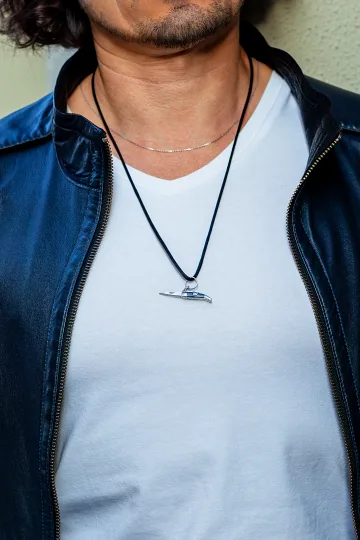




Common questions about aventurine
Is aventurine a precious or an ornamental stone?
Ornamental (a jewellery and carving stone). It is an affordable variety of quartz cut into cabochons and beads. It does not belong among the first-rank precious gems.
How does green aventurine differ from yellow?
Only in the inclusions. Green is coloured by flakes of fuchsite (chromium mica), yellow and reddish by iron inclusions (hematite, goethite). The base is the same for both, quartz.
Can aventurine be worn every day?
Yes. A hardness of 6.5 to 7 allows regular wear. For daily use, pendants, earrings and beads are more practical; large cabochon rings are best protected from knocks.
How do you tell aventurine from glass?
In glass the sparks are coarse, uniform and even, the background between them transparent, with bubbles visible under a loupe. In a natural stone the shimmer is softer and less regular, the background grainy and a little cloudy. Quartz also scratches ordinary glass, not the other way around.
Is aventurine afraid of water?
The stone itself tolerates water well and does not dissolve. But a silver setting tarnishes from chlorine and sea salt, and gold plating can suffer, so it is best to take the jewellery off before a pool or the sea.
Why is aventurine called the stone of luck?
It is an everyday tradition tied to the name itself (from the Italian for by chance) and to the green colour, which many cultures associate with growth. The stone has no proven properties that affect luck or wellbeing: it is an ornamental quartz.
Can blue aventurine be genuine?
Yes, rarely: the blue comes from dumortierite inclusions. But dyed quartz or glass is often sold as blue aventurine, so such material is worth checking more carefully by the character of its glint and its clarity.
About Zevira: jewellery with aventurine
In the Zevira collection aventurine appears in pendants, bracelets, rings and earrings. The green variety we most often set in 925 sterling silver: the calm green of the stone and the matte silver give a restrained, versatile piece that suits the office and everyday wear alike.
Each stone is selected for colour, clarity and quality of shimmer: we take material with an even tone and a lively aventurescence, free of dull zones and large cracks. Cabochons and beads are polished so the glint reads in any movement. On request, aventurine can be ordered in gold.
Aventurine is one of those cases where a beautiful natural stone is within reach without compromising on looks. A green pendant or a bracelet with a spark is a simple way to add a warm, natural accent to a look.
Find your aventurine
Choose the shape that suits you best: pendant, bracelet, ring or earrings.
Go to the catalogue