Handmade Silver Ring: How to Spot the Real Thing
Picture a small market stall in an old quarter of a European city. On adjacent counters sit two silver rings. Both gleam, both carry a stone, both are stamped "925". One costs ten times more than the other. A shopper looks back and forth and cannot work out what justifies the gap. The seller of the expensive one just smiles and says nothing.
The difference between these rings is not in the shine, and not in the grams of silver. It lies in how each one came into being: who held it, how many hours went into every curve of the band and every facet of the setting. And that difference is visible, once you know where to look.
Below, you will learn how the world of artisan jewellery actually works, what separates handwork from a stamped batch, what hallmarks really mean, and what to ask a maker before you pay.
The historical development of handwork in jewellery
Before we unpack what "handmade" means today, it helps to look back. This tradition runs deep.
From ancient smiths to medieval guilds
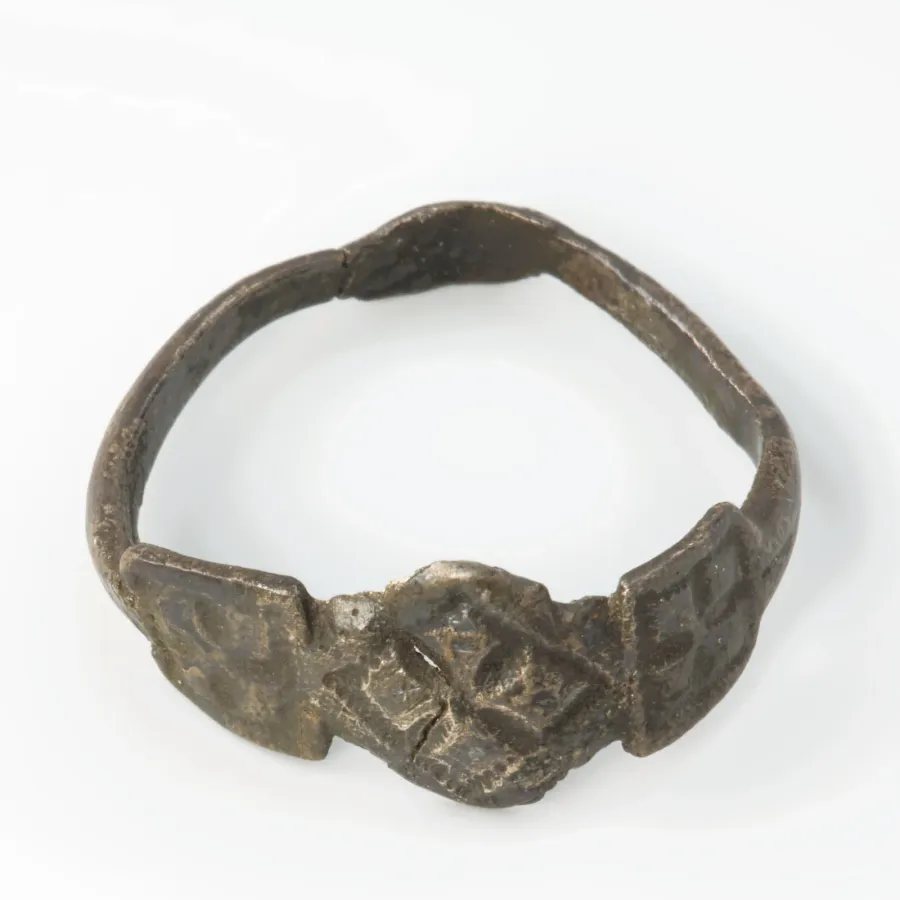
Working metal by hand is one of the oldest crafts known to humanity. By the time of the Etruscans and ancient Rome, jewellers already commanded engraving, casting and soldering, techniques that have barely changed since. Granulation, cloisonné enamel and filigree appeared in the second millennium BC and demanded the same patient handwork they do now.
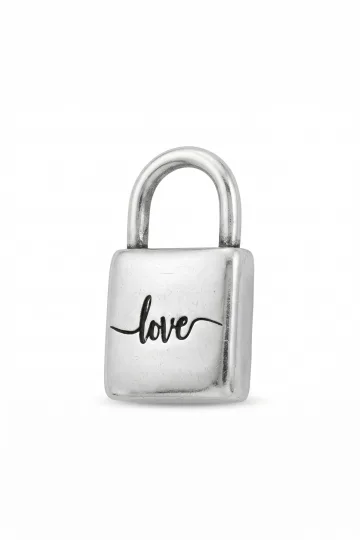
Wear the symbol, don't just read about it. These are in stock:


In medieval Europe the craft was strictly ranked. An apprentice served roughly seven years, then became a journeyman, and only later could open a workshop of his own. The trade carried real social standing.
The goldsmiths' guilds and their rules
Medieval guilds policed the quality of jewellery, set standards for purity, and fined makers for shoddy work. In the German lands, the goldsmiths' guild required a "masterpiece" (Meisterstück) before a craftsman could earn the title of master. Those proofs of skill ended up in museums as benchmarks of the trade.
It is from this guild tradition that the European hallmarking system descends, the one we will get to below. States treated jewellery work as something worth regulating.
Industrialisation and the response of the Arts and Crafts era
In the nineteenth century, machine production pushed the craft aside. Stamping, automated casting and mechanised polishing arrived, and handwork came to look inefficient by comparison.
In Britain, the Arts and Crafts movement rose in answer. It defended handwork as a form of creativity and set it against mass manufacture. William Morris and his circle argued that handwork carries the trace of a particular maker, not the blank uniformity of a production line.
The modern revival of handwork
It seems a paradox, but the digital age has revived interest in the handmade. Surrounded by mass goods and screens, people have started to value objects that bear the print of a human hand. Craft stopped being an antique and became a sign of a considered choice.
In larger cities the number of young jewellers who deliberately choose handwork keeps growing, turning away from the factory option. Blogs, video channels and social platforms let makers speak to buyers directly, bypassing distributors.
What "handmade" actually means
The phrase "handmade" turns up on a vast number of price tags today. But it hides very different realities.
Fully handmade means the maker took sheet silver or wire and personally marked it, cut it, bent it, soldered it, ground and polished it. No casting mould, no industrial blanks. Every millimetre passed through one person's hands. Work like this takes anywhere from a few hours to several days per piece.
Hand-assembled from ready-made parts means the individual elements (band, setting, clasp) were industrially cast or bought from a supplier, and the maker joined, soldered and finished them by hand. The result can be lovely, but it is not the same level of labour.
Designer-led, factory-produced is common with small labels: the design is original, but the casting and grinding happen in a batch at a factory. Such a ring is made to a maker's drawing, not by a maker's hands.
Hybrid working means the maker hands routine operations to machines (cutting, rough grinding) but does the final stages (engraving, fine polishing, soldering small parts) by hand. It is a common and honest approach in mid-sized workshops.
None of these categories is inherently worse than another. But the price and the value differ, and it is worth knowing in advance which one you are buying.
Factory shine belongs on a teaspoon, not on your hand. Wear the ring the hammer touched, and don't argue.
What to wear a handmade silver ring with
Years at the bench and on shoots have put hundreds of artisan rings through my hands. Here is what actually works, by occasion.
What do I wear a bespoke ring with every day? For every day I recommend a ring with a textured, slightly matt surface. It gets on with jeans, a loose linen or cotton shirt, knitwear in calm tones. Matt silver catches daylight softly, without harsh glare, and it does not argue with plain clothes but lends them character.
Is it right for the office? It is, if you keep it restrained. I suggest strict geometry: a smooth or barely textured band, no large stones. Silver settles into a cool clothing palette: grey, blue, white, graphite. One ring on the hand reads as a considered choice rather than ornament for its own sake.
How do I build an evening look? For the evening I choose a ring with engraving, granulation or a stone: under artificial light the relief comes alive and the hand looks more expressive. It pairs well with a plain dress in a deep colour and an open neckline, where the ring becomes the focal point.
Can I wear several rings at once? You can, and silver holds its own here. I recommend a set of two or three slim rings on one hand or neighbouring hands. Mix smooth and textured bands within one metal, so the look stays collected. Silver gets on with gold too, as long as the gold stays an accent and does not fight for attention.
Who does handmade silver suit? Those who value quiet individuality: calm by temperament, fond of pieces with character and a story rather than loud status markers. The advice is simple: let the bespoke ring be the meaning of the look and keep everything around it quieter. A slim ring suits a delicate hand; a wide band shows up more on a larger hand.

Turn on your camera, pick earrings, a pendant or a ring, and see the piece on yourself in real time.
Switch items in one tap.
Everything runs in your browser: no photo or video is ever uploaded.
The craft tradition: who is who in jewellery
Across Europe, several professions are traditionally distinct that elsewhere get blurred together.
The jeweller in the broad sense makes pieces from metals of various grades: silver, gold, steel, plated alloys. It is a wide term covering both the lone maker with a small workshop and the employee of a retail chain.
The gem-setter or fine jeweller specialises in precious stones: diamonds, rubies, sapphires, emeralds. The work centres on setting stones, building complex mounts, and a high level of precision. This sits at the most expensive end of the market.
The silversmith historically worked precious metals broadly: jewellery, tableware, vessels, liturgical objects. Today the word more often means a maker working silver in older techniques: chasing, engraving, inlay.
When you are after an artisan silver ring, the maker you want is the artisan jeweller or the silversmith. With these makers, the work of the hand is visible to the naked eye.
Hallmarks: what they say about a ring
European hallmarking law is among the strictest in the world. For silver jewellery, several compulsory marks usually apply.
The maker's mark is compulsory for every producer and importer. It is struck inside a shaped frame and carries the initials of the maker or brand plus a small symbol. It is a signature that lets a piece be traced back to whoever made or imported it. By this mark, a buyer can, if need be, find the producer.
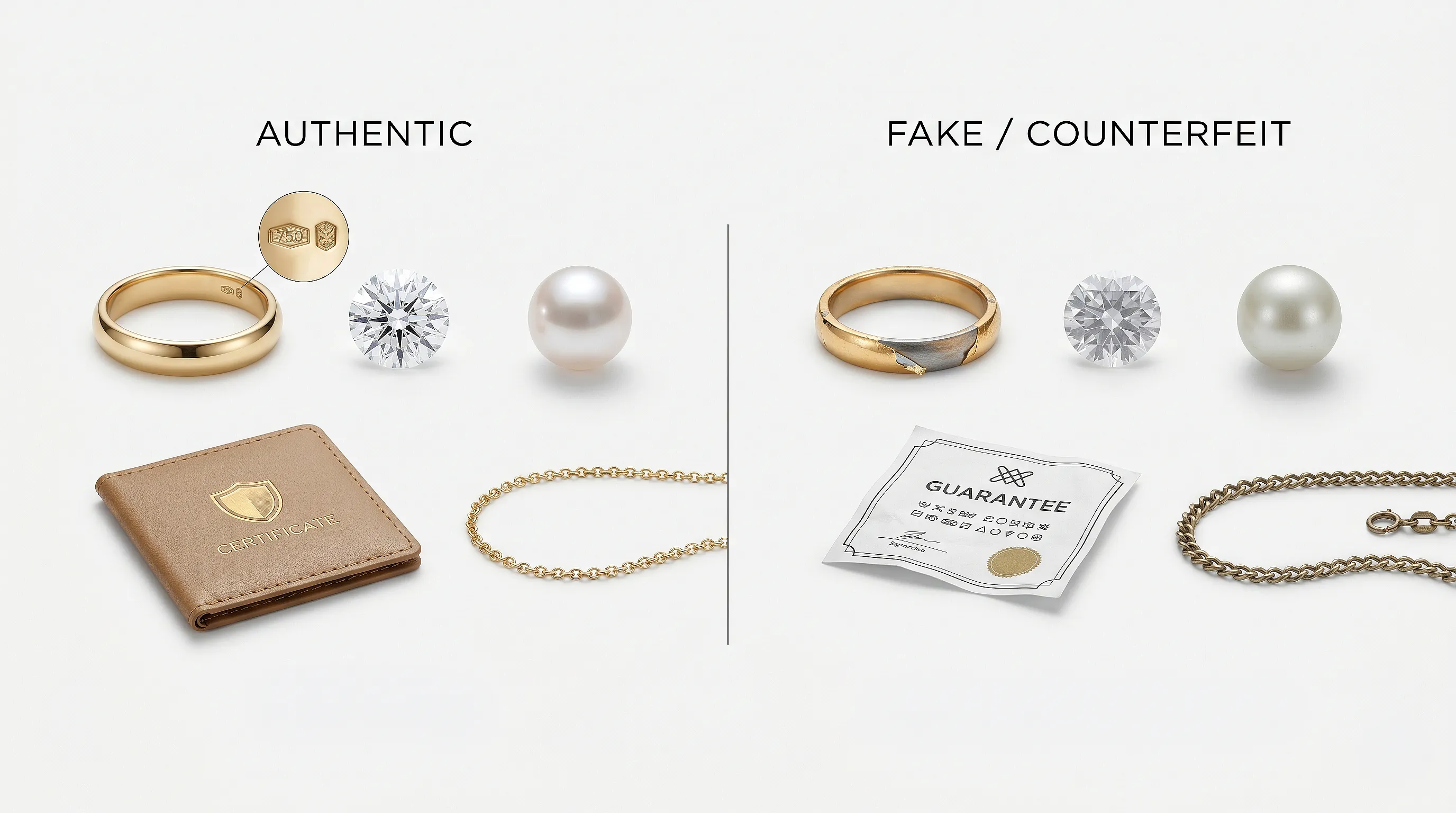
The fineness mark confirms the metal content. For 925 silver, national assay marks attest to the standard. The number "925" stamped on a ring carries no legal force on its own: it can be punched onto anything without any check. Only the mark of an official assay office has legal weight.
The assay (guarantee) mark is applied by a state assay office to pieces above a certain weight. It means the piece passed an independent test of its metal content.
For imported pieces brought in from outside the relevant customs union, an additional import mark is applied.
In practice this means: a ring with genuine hallmarks can be traced to a particular maker. A ring carrying only the number "925" with no official assay mark gives no such guarantee, and in that case it is worth checking the metal itself separately, drawing on the ways to tell genuine 925 silver.
For more on the marking system and what the different standards mean, see our piece on silver and gold hallmarks 925, 585, 750.
The maker's mark under a loupe
Find the maker's mark on the ring you own or are considering. It usually sits on the inner face of the band, next to the fineness mark.
A good maker's mark is:
- crisp and tidy, not blurred;
- placed squarely, not crooked;
- inside an undeformed frame.
A smudged, partial or absent maker's mark points to either a very old piece, poor stamping, or a piece that never went through compulsory registration. On a new ring, that is a cue to ask further questions.
Customer reviews
Zevira is a real jewellery shop. Genuine payments, deliveries and customer thank-yous.
🥰🥰🥰 gracias
Ok, ¡gracias! 🙂
Workshop, small studio and factory: how the processes differ
If you understand how the work actually proceeds, the external signs of a piece are easier to read.
The one-person workshop. The maker works with a limited kit: needle files, hammer, soldering torch, anvil, polishing motor. A handful of pieces a day is the ceiling, and each one needs the maker at every stage. The traces of that process stay in the metal as slight irregularities, visible solder seams, a faint asymmetry in the patterns.
The small studio. Several makers split the operations. One cuts and bends, another solders, a third polishes. There may be a simple casting setup. Output is higher and results more uniform, but every ring still passes through hands.
Industrial production. Automated casting in rubber moulds, machine stamping, vibratory finishing, industrial polishing barrels. One mould can yield thousands of identical pieces. The final polish is hand-done only in a loose sense: a worker simply holds the ring against a wheel.
It is these different processes that leave the different traces visible on inspection.
Signs of handwork: what to look for
The surface under a loupe
Take a 10x jeweller's loupe (a strong phone magnifier at a pinch). On genuine handwork you will see:
Micro-irregularities of texture. Not scratches, not flaws, but a faint liveliness to the surface. Machine polishing gives a perfectly smooth, uniform mirror. A maker's hand leaves something slightly more complex.
File marks on the inner band. Inside the ring, where no one usually looks, the maker runs a needle file to remove excess metal and level the surface. Those parallel scratches, barely visible under a loupe, speak of handwork. On industrial rings the inside of the band is perfectly smooth: a machine did it.
Solder seams. On a handmade piece, the joints between parts show as the thinnest line of a slightly different silver tone when viewed at an angle. A solder seam is always there. On factory casting the seam is absent, because the part was cast whole.
Imperfect but not careless symmetry. Hand-engraved patterns or notches will not be mathematically identical on both sides. Each flower differs a little from its neighbour. That is not an error, it is a tell. Machine patterns repeat to the micron.
Weight and sound
Handwork often uses more metal, because the maker cuts the blank with margin and removes the excess later. Industrial casting economises on wall thickness: a ring may have thin walls and feel light next to a handmade equivalent of the same size.
If you gently flick the metal with a fingernail, a solid, thick-walled ring gives a deeper note than a thin-walled one. It is not an absolute test, but useful alongside the other signs.
The maker's mark
A personal producer's mark means the piece is registered and its origin traceable. That alone signals a serious attitude to the work.
Upload a photo of your pet, someone you love, or an object. We'll build a 3D model and hand-cast it in pewter.



Signs of mass production
Once you know the tells of handwork, the reverse is easy to describe.
Perfect machine symmetry. If every element of a pattern repeats the last with copier-machine precision, it is casting or stamping.
Mould lines. On some industrial pieces, especially cheap ones, you can see a thin line or groove around the perimeter, left by the join of two halves of a casting mould. Workshop work does not produce this.
Thin band walls. An industrial ring often has a band under 1 mm thick. That is metal saved. Handwork tends to be more substantial.
Standard elements with no identification. If the band carries no maker's mark and no distinguishing sign beyond "925", that points to a serial product.
A perfectly smooth inner band. The absence of hand file marks indicates machine finishing.
Core techniques of handworking silver
Forging (raising and hammering)
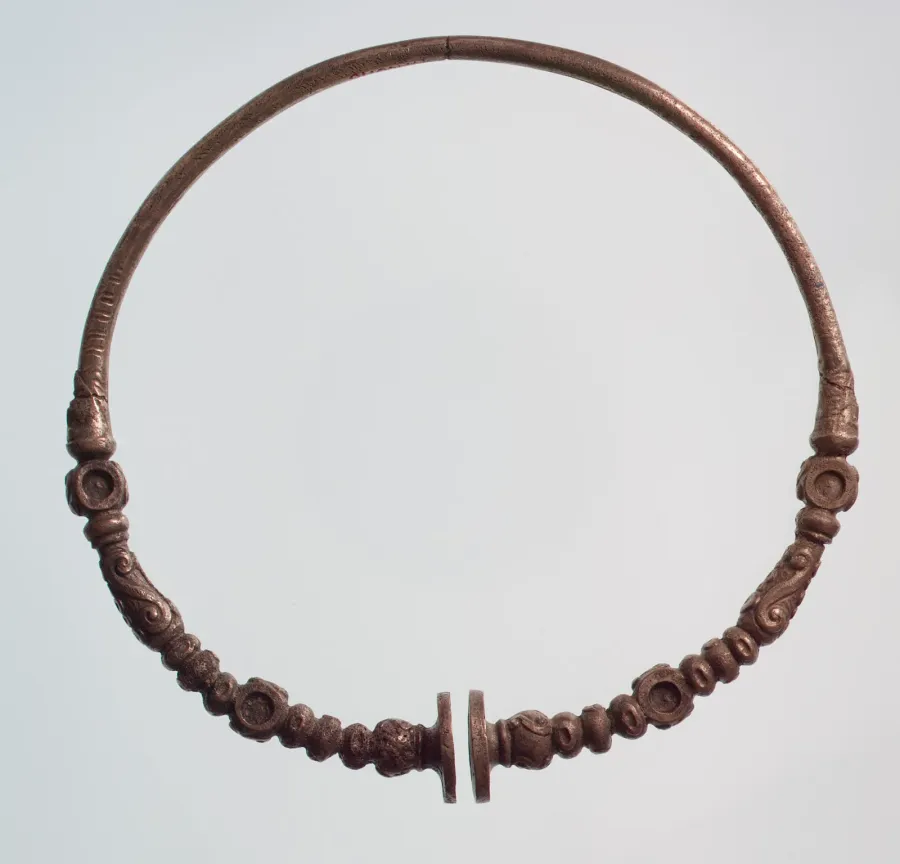
Forging is one of the oldest and most physically demanding methods. The maker shapes the silver with a hammer, working on an anvil and on mandrels of various forms. The metal compacts, grows stronger, and its crystal structure settles. A ring forged from sheet is always stronger than a cast equivalent of the same thickness.
A modern maker often alternates forging with annealing: periodically heating the silver to a red glow to soften the lattice and keep working it. It is taxing labour that demands experience.
Drawing and rolling
The maker passes a thick silver ingot through a rolling mill, gradually working it into sheets of the needed thickness. Band and setting blanks are then cut from those sheets. Solid sheet material guarantees uniformity and extra strength.
Casting (lost wax and rubber moulds)
Lost-wax casting by hand means building a wax model by hand, modelling or carving it. Each model is unique and destroyed during the pour. The result is never identical to a previous piece, even from one maker.
Rubber-mould casting can be either industrial or workshop work. A jeweller may keep a small crucible and cast pieces in batches of a few. The point: even casting by your own hands is a different level of involvement than forging.
Engraving (hand, with laser mixed in)
Hand engraving is done with a graver by hand, or by etching. Cutting with a graver demands serious skill and steady concentration. The maker lays in fine lines, controlling depth and direction. Laser engraving may play a part in intermediate steps (adding an inscription, say), but truly authorial patterned engraving stays a hand job.
Lapping and polishing
By hand this can go two ways: with a polishing wheel (the motor runs, but the maker holds the ring by hand) or with brushes and pastes without any machine. Both create a micro-texture distinct from industrial polishing. An industrial vibratory barrel gives a perfectly even mirror. A maker's hand creates a "living" surface with barely perceptible shifts of light.
Soldering and fusing
Joining parts needs either solder (an alloy with a lower melting point than the base metal) or diffusion fusing. Both demand skill: heat it wrong and you leave marks, or the solder seam stays visible. Clean soldering is the sign of an experienced maker.



Techniques that demand only the hands
Several jewellery techniques resist full mechanisation by their very nature. Their presence in a piece is, in itself, proof of a living maker's hand.
Filigree
The finest silver wire is twisted, bent, woven into patterns and soldered onto a metal base. The work takes hours of concentration. Mechanising it is impossible in principle: the work with a fine, flexible material is too delicate and unpredictable. Genuine silver filigree is always handwork.
Filigree calls for a loupe, tweezers, a torch, and the ability to plan a form in three dimensions. A single ring with full filigree can take four to eight hours.
Granulation
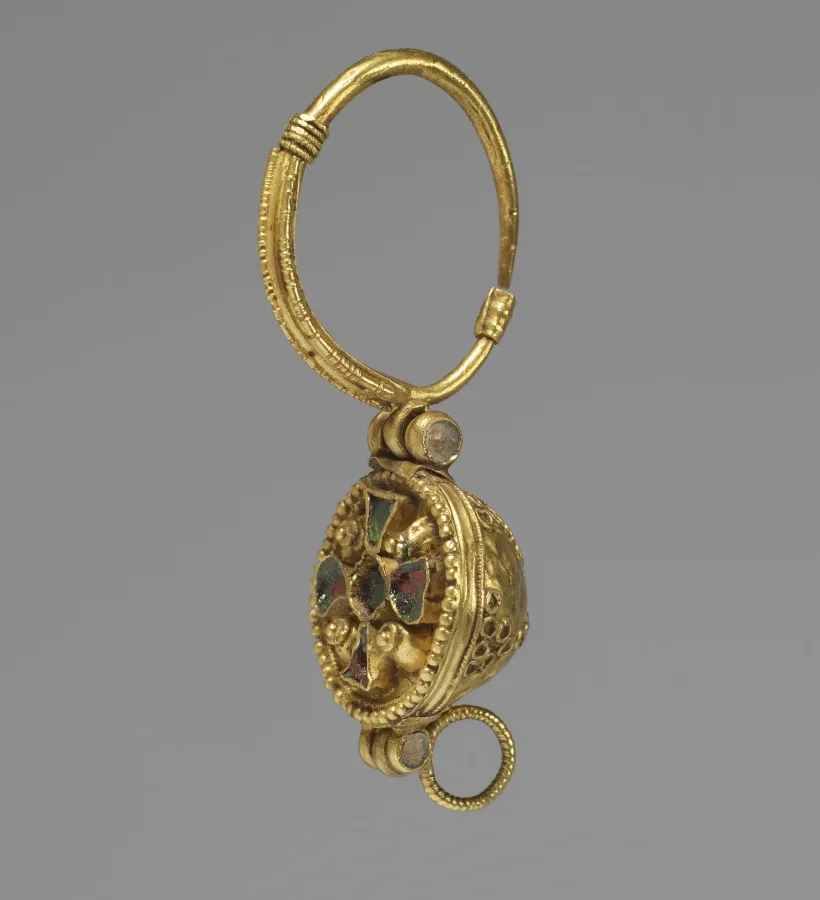
Tiny silver spheres are attached to the surface by diffusion fusing, with no visible solder. The technique has been known since Etruscan times. A modern maker forms each sphere separately, places them with tweezers and finishes the work. Granulation on a ring tells you of genuine handwork.
This technique demands an understanding of melting and oxidation temperatures: the metal has to be heated just enough for the spheres to fuse but not melt. One mistake with the heat, and several hours of work are lost.
Hand chasing and engraving
Chasing is done with a set of special steel punches and a hammer. The maker methodically drives the pattern in, moving the punch across the metal. Engraving, whether with a cutting tool or acid etching, gives a unique pattern that cannot be reproduced mechanically and identically.
The graver has to be held at the right angle at all times, and that takes tens of thousands of hours of practice. Even a professional can slip, which is why makers often redo an entire pattern if they catch a flaw halfway through.
Champlevé enamel
The maker hand-carves recesses into the metal, fills them with enamel paste in various colours, and fires the piece. Each ring with true champlevé, rather than a paint-imitator, has gone through several hours of handwork.
Enamel demands a grasp of chemistry and physics: different pigments fuse at different temperatures, and the wrong firing can ruin everything. It is an old and difficult technique that needs specialised training.
925 silver in handwork: the nature of the alloy
Why 925 and not 950 or 990
925 silver means the alloy is 92.5% pure silver and 7.5% other metals (traditionally copper). It is a standard set in the Middle Ages, when science had no way to work with wholly pure silver.
Pure silver (999 fineness and up) is too soft for jewellery: it deforms under the slightest pressure. The 925 alloy is a compromise: enough silver for the look and the value, while copper adds strength and spring.
The 950 standard is rarer, used in higher-grade pieces that call for maximum purity. The 800 standard was historically used in continental European silver, and today it marks an older piece or a cheaper production.
For handwork, 925 is the ideal balance: soft enough that the maker can forge, bend and solder it, hard enough that the piece holds its shape.
Properties of the alloy: ductility, strength, conductivity
The copper in 925 silver raises hardness, but with caveats.
Ductility: the alloy stays fairly ductile at room temperature, which lets the maker bend and forge it. With re-heating (annealing), the ductility comes back.
Conductivity: silver is one of the most heat-conductive metals. That means when soldering, the maker has to heat the target spot quickly, or the heat spreads through the whole ring and the solder will not melt where it should.
Response to mechanical work: under hammer forging, the silver compacts and hardens, but it can crack if over-bent while worked cold. The maker has to know when annealing is due.
Problems in handwork: oxidation, brittleness
Oxidation: heated in air, silver darkens as oxide forms on the surface. That is not a crack and not a flaw, it is a surface layer easily removed with a brush or a flux-removing liquid. A novice maker may panic and assume something went wrong.
Brittleness after bad annealing: if annealing is done too hot or too long, the silver can turn brittle. The maker re-heats it, but controlling the temperature by hand is hard.
Porosity in casting: in rubber-mould casting, pores can form in the silver if the gases do not vent properly. It shows only under a microscope or when polishing is attempted. A good maker checks casts carefully and re-melts any rejects.
A comparison with 585 gold: by difficulty of working
585 gold (58.5% gold, 41.5% other metals, usually copper and palladium) has similar properties, with some differences.
Gold oxidises less readily, so oxidation problems during soldering are smaller. But gold is more viscous and harder to forge: it takes more effort. Gold is also dearer, so an error in the work means a real financial loss for the maker.
Gold's melting point is higher than silver's, so soldering gold pieces calls for more powerful torches.
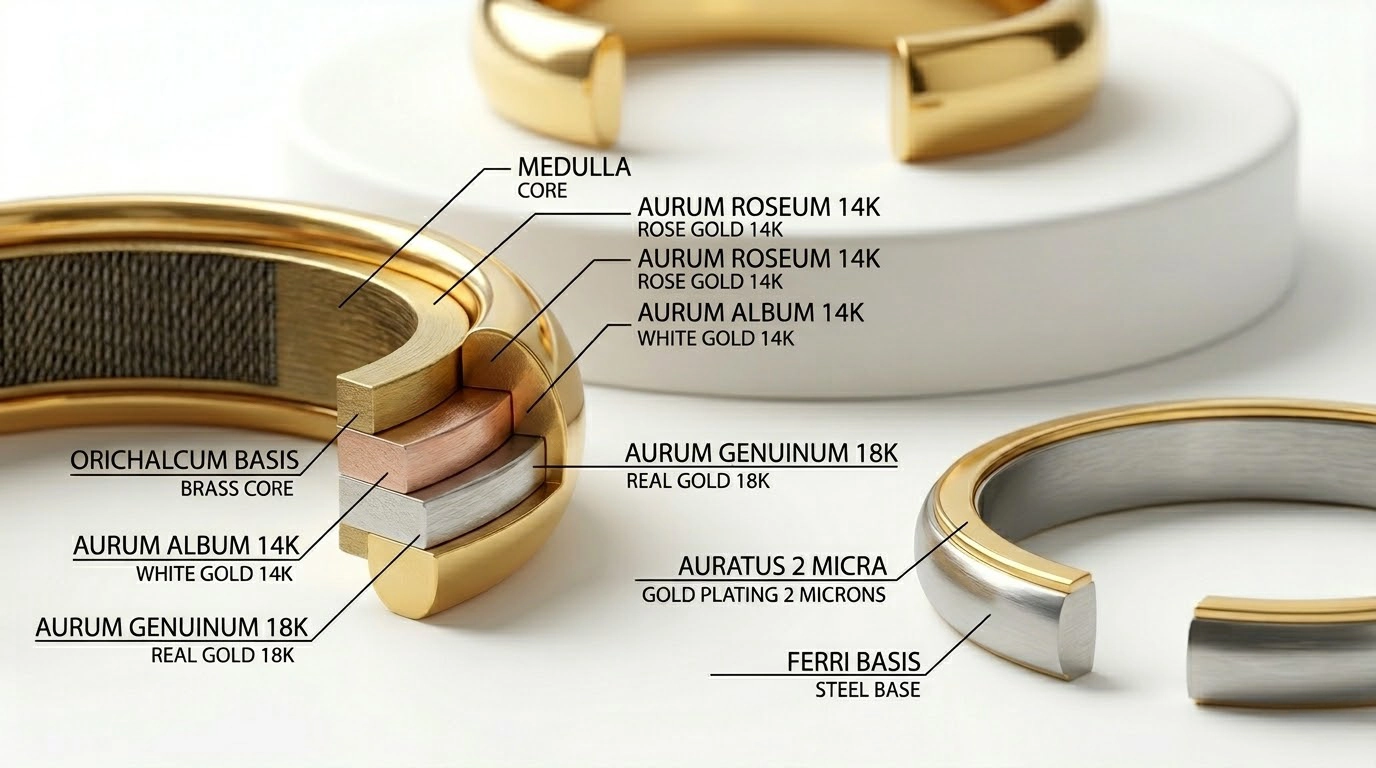
Silver is the gentler material for handwork: errors are rarer, work goes faster, the metal is cheaper. That is why young jewellers often start with silver. A separate matter is when a ring looks gold but is actually gilded silver or an alloy; how genuine gold differs from a coating is something we cover in our honest comparison of gold plating and gold.
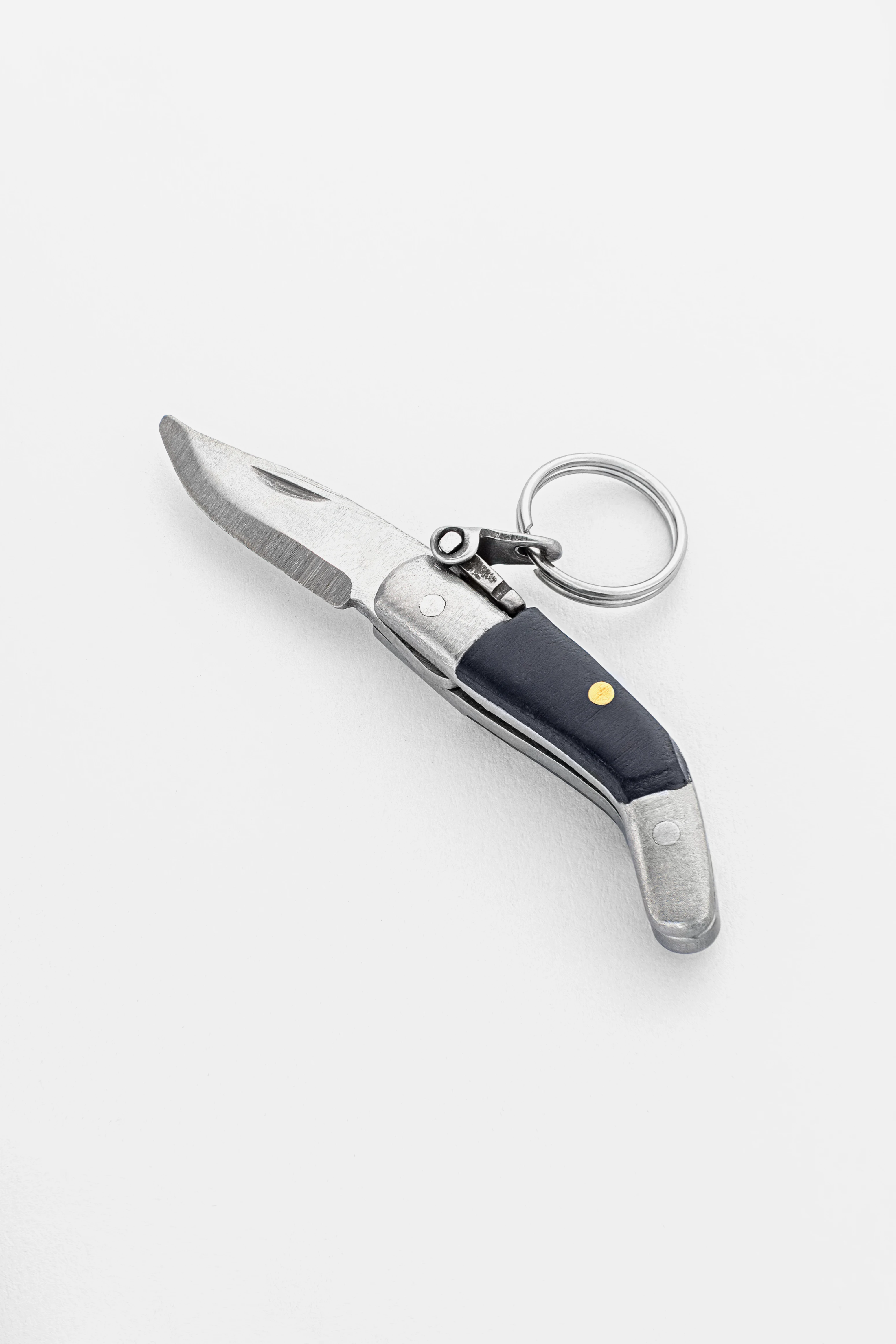
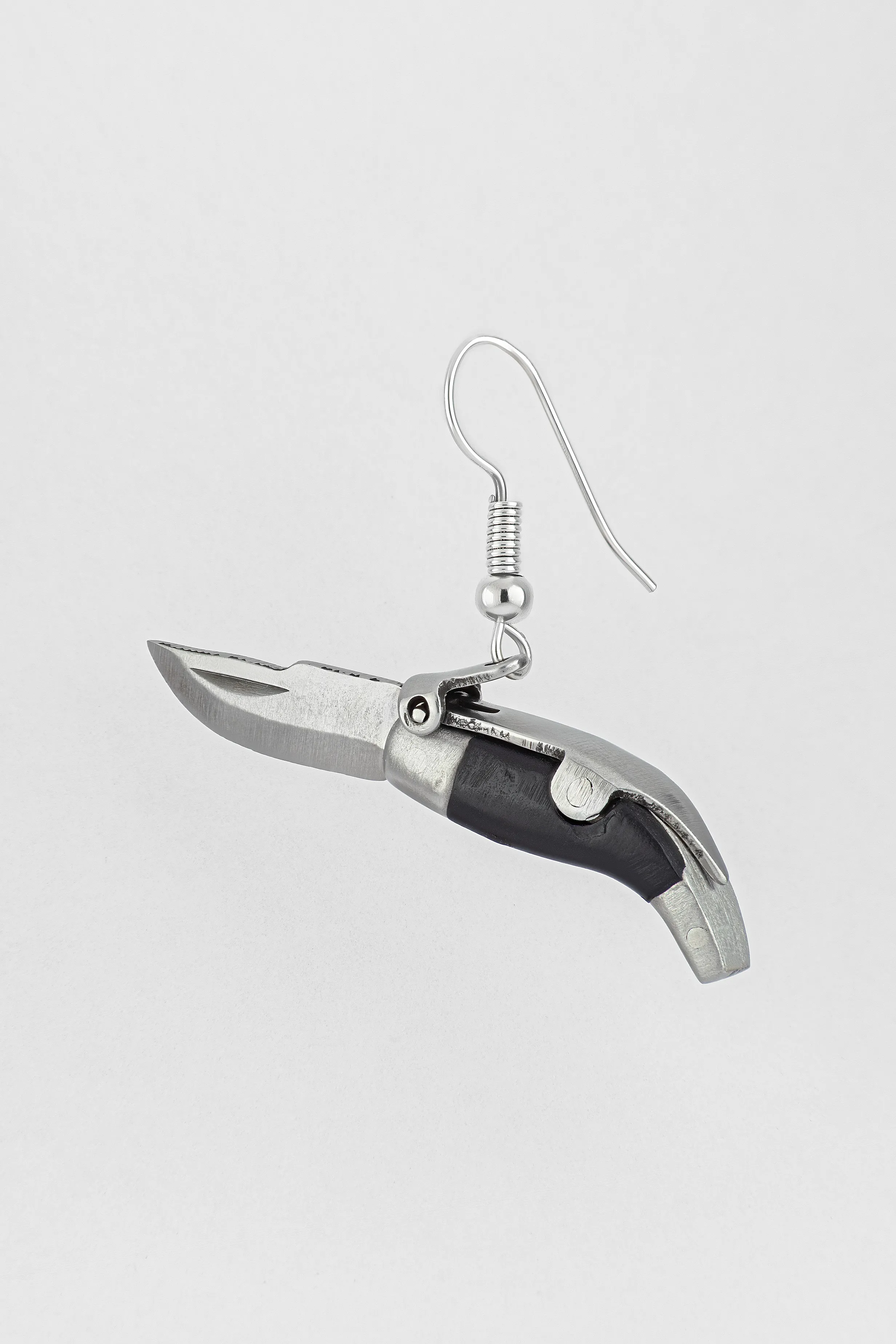
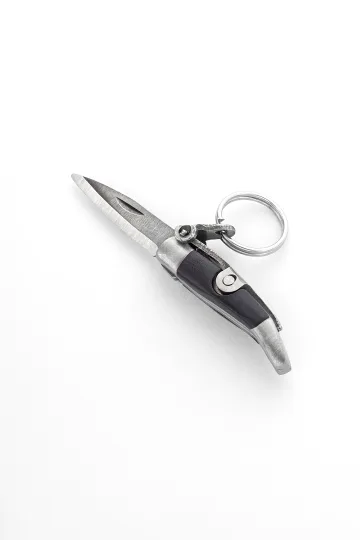
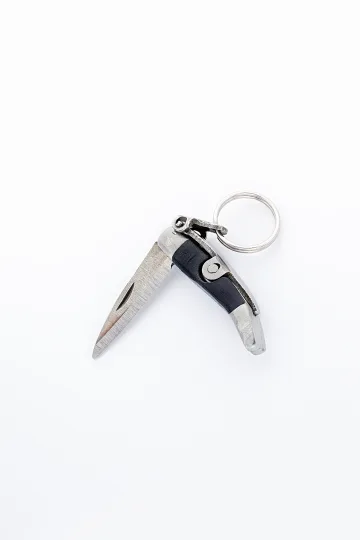
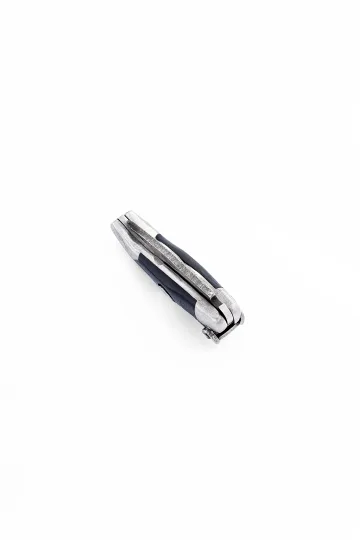
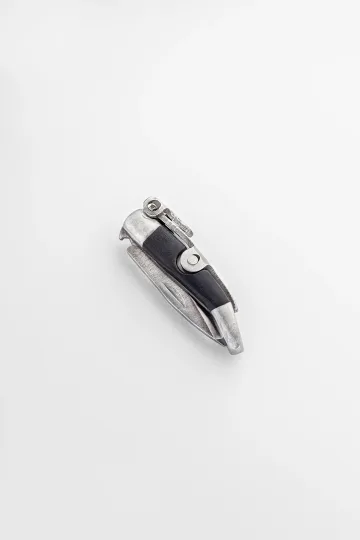
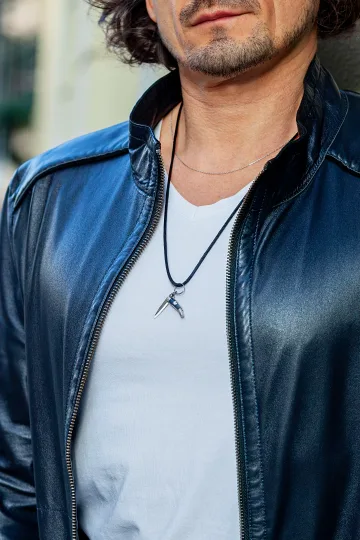
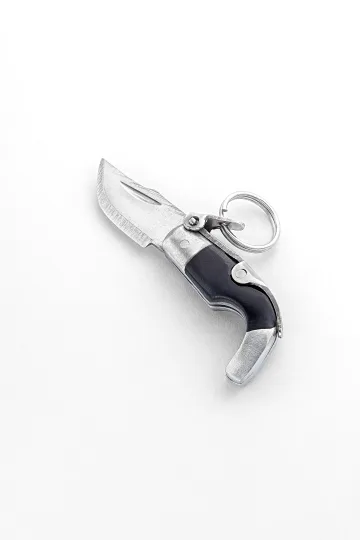
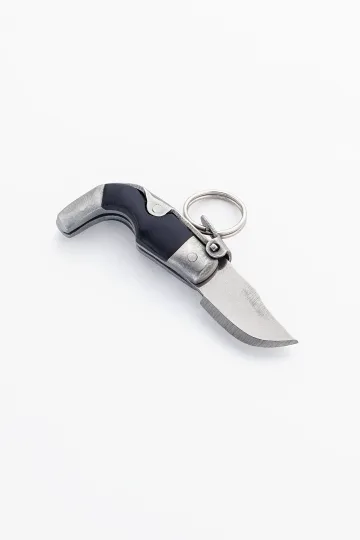
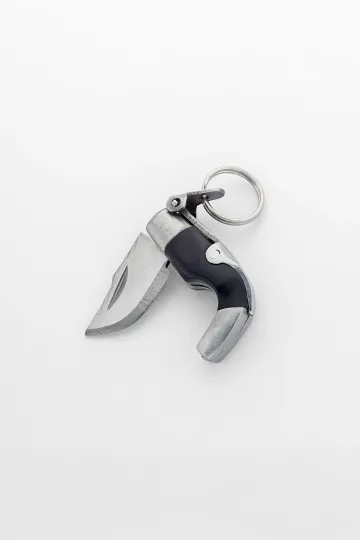
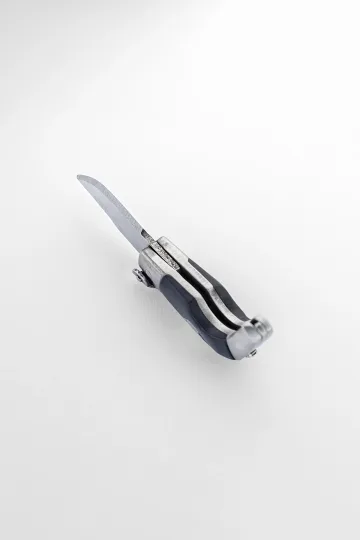
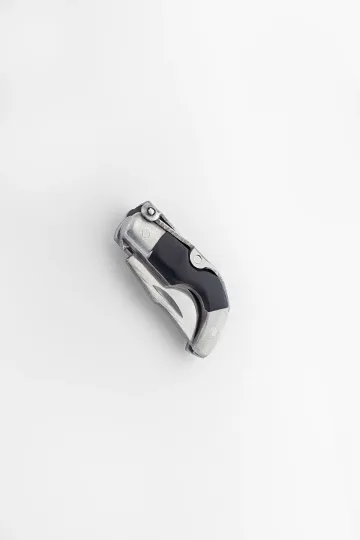
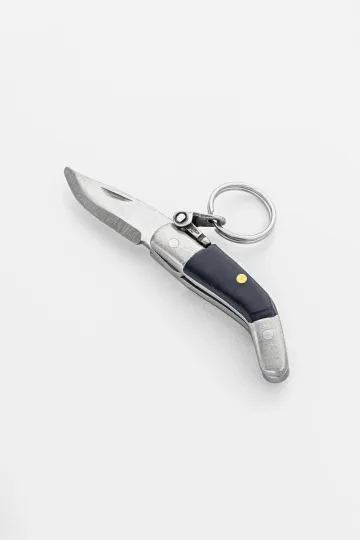
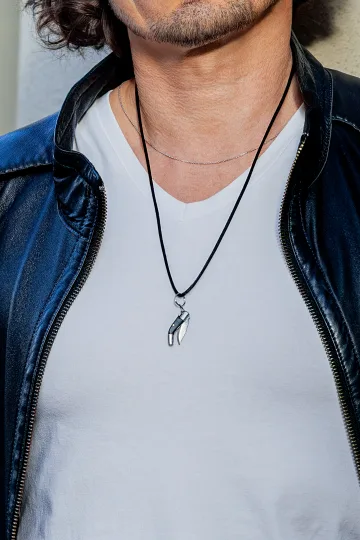
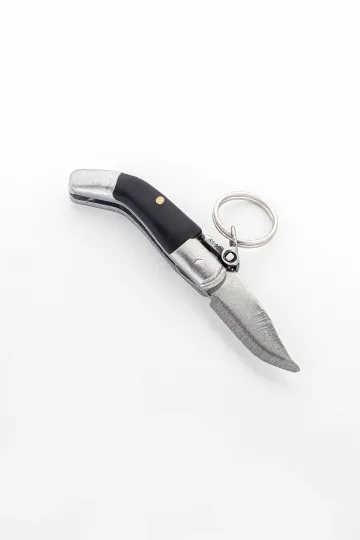
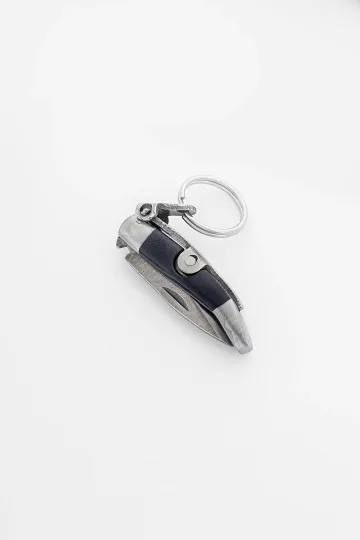
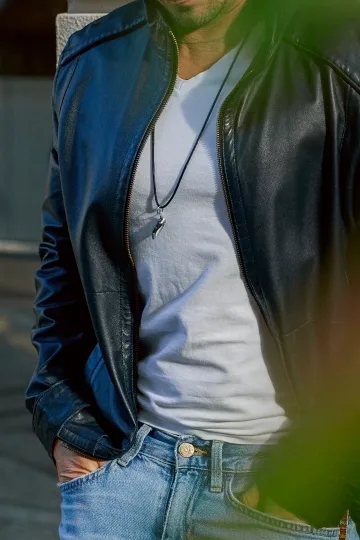
CAPAORA mini knife pendant
The 18th-century Spanish navaja in miniature: 40 mm of stainless steel, a real folding mechanism and a Palanquilla lock that clicks. An affordable gift to remember.
Authentic · Ships from Spain · 14-day returns
The aesthetics of handwork: why people pay for "the trace of hands"
Micro-textures and the maker's traces
Under a loupe, handwork looks different from machine work. The surface has a faint waviness, barely visible shifts of light, invisible reference points.
These micro-textures are not flaws. They are proof the ring passed through a person's hands and not through a press. Some buyers seek out precisely these signs, because they mean authenticity.
Organic form
A machine reproduces a form with mathematical precision. A maker's hand leaves small variations. Even two blanks from one mould come out slightly different: the melt sets differently, the finish lies its own way.
People prize that imperfection as a sign of uniqueness. Even where a maker has a dozen similar-looking rings, each differs a little from the next, and you can see it up close.
Imperfection that is not a flaw
A faint waviness of surface, a barely visible difference of tone after polishing, a pattern that differs slightly on the two sides, all of these are traces of handwork, not defects. A machine piece gives an even mirror without character; a handmade one lives in the light differently. Many buyers choose precisely for that difference.
Sizing and fit in handmade rings
How a maker finds the right size
In handwork the piece is often made for one particular person. The maker talks with the client, learns the size of the hand (the ring and the finger, its shape), and the preferred inner diameter.
If a ring is ordered with a known size, the maker works to those figures. If the client brings an old ring or tries on different options, the maker can adjust.
Once the main work is done, the maker can enlarge the ring (if it came out a touch tight) or reduce it (if it is too big). This is done by heating and careful stretching with a hammer and shaped mandrels.
Sizing systems: Europe, the US, the UK
European sizes run from 16 to 23 (on some scales from 1 to 30). Size 17 corresponds to an inner diameter of roughly 54 mm.
US sizes use a numeric system (3, 4, 5...13, with half sizes: 5.5, 6.5 and so on). Size 7 corresponds roughly to European 54.
UK sizes use letters (A to Z and beyond). Size N corresponds roughly to European 54.
When ordering a bespoke ring, it matters to confirm which system is in use, and best of all to state the inner diameter in millimetres.
Adjustable rings and individual fit
Some makers use a special construction: the ring has a small gap at one point, closed over the top by a decorative element. Put on, the ring narrows slightly; taken off, it springs open. This lets you wear the ring on a slightly fuller hand, or change the fit by season (fingers swell in the heat).
Rings like this take even more careful work: the gap has to be the right size so the ring neither splays out nor jams.
Six fast checks, no tools. Leave your email, we'll send the PDF and a discount code.
No spam, unsubscribe anytime.
What makes up the price of handwork
Material, labour and time
The price of a bespoke ring barely depends on the weight of the silver. The silver itself is a small part of the cost: a gram of metal costs about the same as a cup of coffee, and a ring usually holds a few grams. The maker also buys metal with margin for offcuts and re-melting, so the real consumption runs higher than the calculation, but in the total sum it is still the smaller share.
The main part of the price is labour. That is the hours at the bench plus what the buyer rarely sees: workshop rent, tool wear, years of training, insurance. If a ring takes several hours and the maker charges an hourly rate for skilled work, the bulk of the price tag is that time.
The remainder goes to selling: a shop or gallery percentage, if the maker does not sell directly. Whoever sells their own work keeps that share.
Why handwork costs more than industrial
An industrial ring of the same weight usually costs several times less. The reasons are simple:
- Speed. A machine stamps hundreds of rings a day; a maker makes one or two.
- Metal use. Industrial casting optimises the form for minimum silver. Handwork often uses more.
- Share of living labour. On a line a person holds the ring against a wheel for a few seconds. With a maker the whole process runs through their hands.
- Scale. At a run of thousands, the unit cost falls.
Handwork costs more because it is slower, not because the result is worse. Rather the opposite.
How long a ring takes
An experienced maker makes a simple ring in two or three hours. A piece with engraving or filigree takes six to eight hours, and one with several stages of annealing and redoing can stretch to a week. A beginner spends twice as long on the same ring, and part of the time goes on fixing errors. For a maker every lost hour is income forgone, and a serious flaw means a remake and real losses.
When handwork is suspiciously cheap
Sometimes a bespoke ring turns out cheaper than a machine one. That is worth a second look. The reasons can be honest: a beginner underprices for portfolio's sake, or a studio is closing down. Some are worrying: a hidden flaw the seller knows about and stays quiet, or a ring made of low-grade silver instead of the stated 925. If the price looks implausibly low, check the standard separately and inspect the piece.
When "handmade" in a shop is a lie
Let us be blunt: the word "handmade" is often a cover for the dishonest.
The most common case: the ring was made serially, but the final polish was done by hand. A factory worker holds the piece to a polishing wheel for a few seconds. That is handwork in the literal sense, but not what the buyer assumes.
Another variant: "handmade" means hand-assembly of ready-made parts bought from a supplier. The band itself is cast, the setting stamped, the stone fitted by the maker. That is craft labour, but not handmade jewellery in the full sense.
A third, subtler case: the design was developed by hand, the prototype modelled by the maker, but then a rubber mould was made and a batch run off. The first piece was handmade; all the rest were not.
Ask directly: "How many copies of this ring have you made?" If the answer is "a few hundred", it is a serial product, whatever the label says. If the answer is "three, and one is already sold", you are most likely looking at genuine workshop work. The same seller tricks used with the word "handmade" work in other jewellery categories too, so the general rules on how not to buy a fake are worth keeping in mind at any counter.
A lot of received wisdom has piled up around handwork. Let us sort through the main claims.
How to tell you are dealing with a real workshop
Genuine craft is easy to check by how the maker shows their work. Good signs: an open account of the process, photos of the bench and tools, willingness to show a workshop section or the studio in person, the maker's mark on the piece. That speaks of a real producer, not a reseller passing off a serial batch as handwork.
The worrying signs are the reverse: evasive answers about how the ring was made, no maker's mark with only the number "925" present, a large number of "identical" pieces on display. A direct question about the number of copies and the technique usually clears it up at once.
Guarantees and legal protection for handwork
Hallmarking as a form of guarantee
The state hallmarking system in Europe works as a contract between maker and state: the maker stands behind the claim that the ring holds the stated silver standard. A state assay office tests the piece and applies a control mark.
If it later turns out the silver is off-standard, the buyer can lodge a complaint with the assay office. The maker's mark allows the producer to be traced and a claim brought.
Certificates of quality
European law does not provide a separate "handmade certificate". The main confirmation is the hallmarks (maker's mark and fineness mark), registered in a state registry.
Some makers additionally provide a card describing the material, the technique, the weight in grams and the date of manufacture. That is goodwill, not duty, but it is a document that helps later if needed.
If a maker offers a paper stamped "handmade" with no link to the state hallmarking system, that paper carries no legal value. The marks in the metal matter more than any certificate on paper.
Guarantees on handwork
In most of Europe, standard consumer warranties (the kind on electronics) do not cover bespoke jewellery. But honest makers often offer their own terms:
- Solder guarantee: if a solder seam parts within a year, the maker re-solders it free.
- Defect guarantee: if a hidden flaw appears (a micro-crack, an unsoldered joint), the maker remakes the piece.
- Sizing guarantee: if the ring split because of a wrong size (the maker mismeasured), the maker remakes it.
The guarantee does not, however, cover normal wear, or a ring deformed by impact or bad storage.
What to do if you find a flaw
If you find a defect in a freshly bought ring:
- Take a photo under a microscope or loupe.
- Contact the maker within a week of purchase. Most makers will agree to a remake or refund.
- Do not try to fix it yourself, that can hide the signs of the flaw.
- If reaching the maker is difficult, turn to the state metals assay office (testing the authenticity of the standard, and in some cases mark-quality control, falls within their remit).
Caring for handwork: micro-textures and delicacy
The nature of textures: why dust lodges in the crevices
One paradox of handwork: because of the surface micro-irregularities, dust, dirt and cosmetic residue collect in the tiny crevices and hollows. That is normal and does not mean the ring is spoiled. The surface texture is simply like that.
Over time the silver may darken in those hollows, creating a contrasting pattern. Some people like it (it recalls aged silver), others do not.
Cleaning methods: what works, what does not
For all silver:
- A soft brush and warm soapy water: the safe way for everyday cleaning.
- A specialist silver dip (from jewellery suppliers): the ring goes in for 5 to 15 minutes, then is rinsed and dried.
For smooth silver (industrial or lightly textured):
- Silver polishing cream: rubbed in with a soft cloth. The downside: it removes a little of the top layer of silver with frequent use.
- Ultrasonic cleaning: safe for 925 silver, but it can damage enamel or fragile elements (filigree, granulation).
Do not:
- Use abrasive dish-cleaning products.
- Clean with stiff-bristled brushes.
- Leave the ring in a solution overnight (a chemical reaction can occur).
For a ring with filigree or granulation, go to a specialist: the wrong cleaning can damage the fine elements.
Polishing after cleaning
After cleaning, a ring often needs polishing. If you cleaned it at home, use soft flannel. If a dip left a matt finish, go over the ring with polishing cream and a soft cloth.
There is no need to chase a mirror shine: a light matt glow is a sign of authentic handwork.
Restoring the look
If the silver has darkened heavily (which is normal, silver oxidises in air), you can try:
- Cleaning in hot soapy water with baking soda: wet the ring, then rub gently with a baking-soda-loaded soft brush.
- A specialist silver compound with more active ingredients (but check it is compatible with enamel or stones).
- Going to a maker: if the darkening is stubborn and will not lift, a maker can re-polish the top layer.
Important: silver that darkens is normal. There is no need to clean a ring every day. Once a month, or when darkening is noticeable, is enough.
What to ask a maker
Five questions that clear a lot up at once:
"How long do you spend on a ring like this?" An honest maker names concrete hours.
"How exactly was this ring made?" Listen for the detail. "Hand-forged from sheet" and "cast to our design" mean very different things.
"Where is your maker's mark?" A maker will show it without fuss and explain what it says.
"Can I see a similar piece you made earlier?" If the maker's pieces are very alike but not identical, that is a good sign.
"Do you do all the stages yourself, or is part of the work farmed out?" A direct question, and an honest answer tells you a lot about the piece.
Send a friend a discount code, they save on their first order.
Artisan silver as a gift
A handmade silver ring does not lose to a gold one in the category of "a meaningful gift". The metal matters less than the story. A ring a maker spent several hours on in their workshop carries that labour for good.
Across Europe the tradition of giving artisan jewellery runs steady and deep. To give a piece with a maker's mark and a known origin is to choose with intent, rather than buy at the nearest mall. The difference in cultural weight is real.
Why silver does not lose to gold as a material for a meaningful gift is something we unpack in our silver guide 925 silver: what it means.
Order bespoke or buy ready-made
Both paths are valid. Here is the difference.
A maker's ready-made piece is made on their own judgement. You see the result before you pay. No waiting, no risk of "I won't like it". The maker has already put their vision into it.
A bespoke order means you take part in the creation: you discuss the band's shape, choose the stone, decide whether to engrave. The piece is made to you and for you. It takes several weeks, costs more, and calls for trust in the maker.
If you are buying artisan silver for the first time, start with a ready-made piece from a studio. Look at the work in the flesh, talk to the maker, get a sense of their style. If the wish arises to make something of your own, you will already have someone you trust.
On assessing and choosing a jeweller, more in our article how jewellery is made.
Buying it as a gift? Each one arrives ready to give.
 A branded Zevira box and a little card come with every order.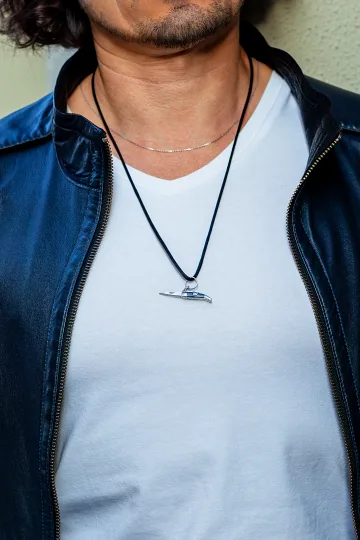




How to check the silver apart from the making technique
Even superb handwork can be made of a metal other than the one stated. So the authenticity of the metal and the fact of handmaking should be checked separately.
To check silver, people use:
- state hallmarks (described above);
- the magnet test (silver is non-magnetic, but the test is not absolute);
- a silver nitrate acid test in a lab (precise);
- XRF analysis (fluorescent spectroscopy) at a jeweller's.
The full list of methods for verifying silver's authenticity is in our article how to identify real silver.
How hallmarks relate to fineness
The fineness mark and the maker's mark together give the full picture: where the metal came from and who worked it. But the fineness mark says nothing about the making technique. A factory and a lone maker can use the same 925 silver and mark it the same way. The difference shows not in the mark but on the surface of the metal under a loupe.
A detailed explanation of all the marks for silver and gold is in our piece on hallmarks and standards.
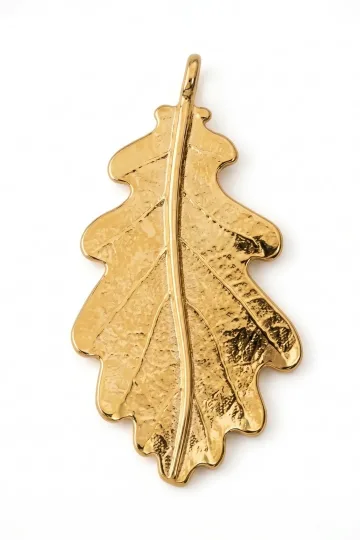
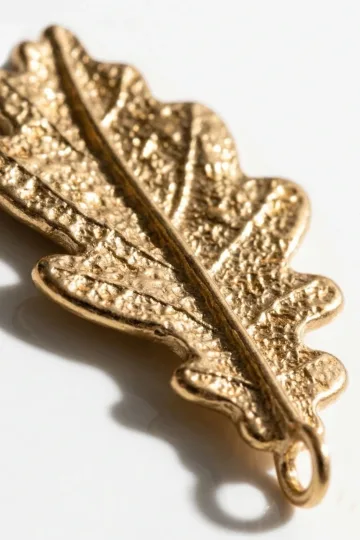
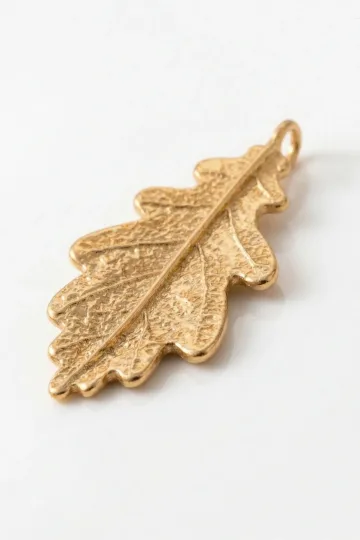
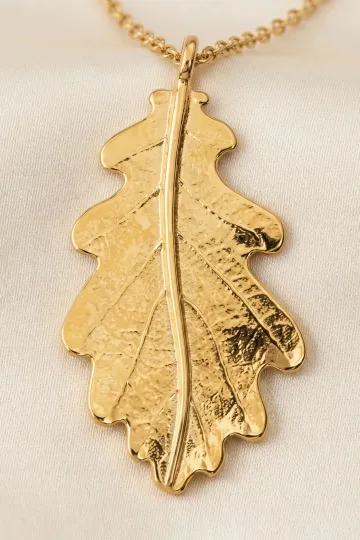
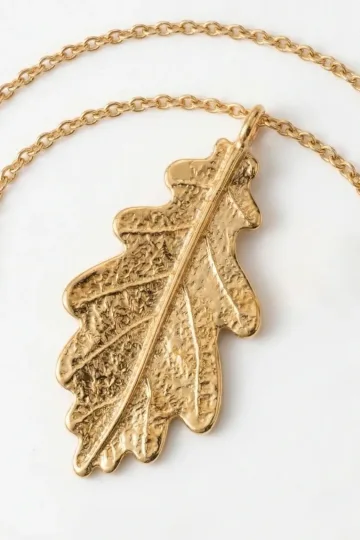
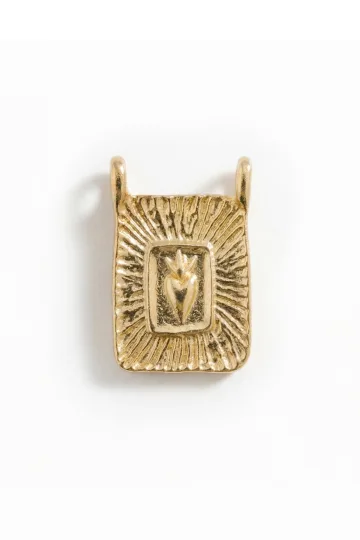
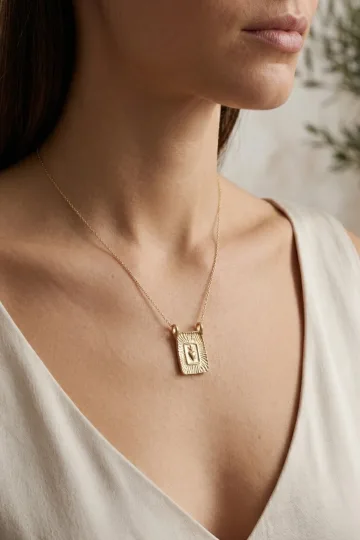
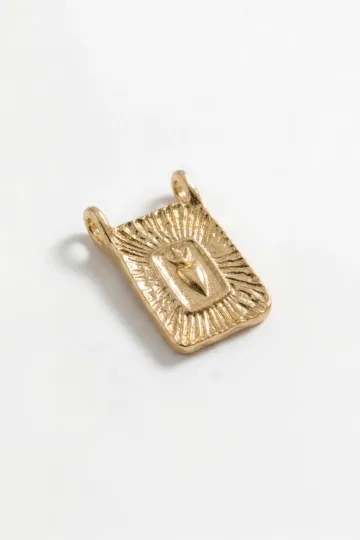
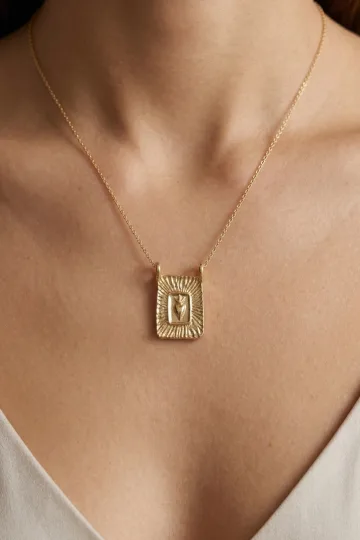
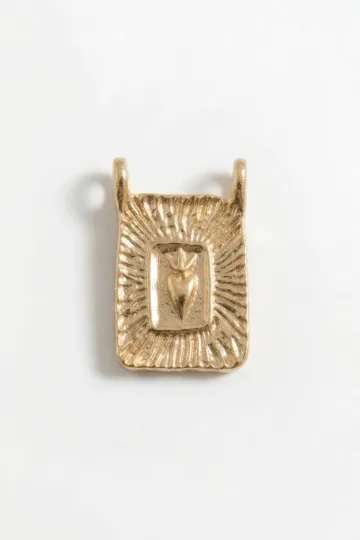
Wear the symbol, don't just read about it. These are in stock:
FAQ
Why does handmade silver cost so much if the metal is cheap?
The metal really is a small part of the price. The main cost is the maker's time, the workshop rent, the tools, the training, and the fact the ring exists as one of a kind or in very limited number.
How do I tell genuine filigree from an imitation?
Genuine silver filigree has visible depth and irregularity: the scrolls are not perfectly identical, the gaps between elements vary a little. An imitation is stamped from a flat die and gives a perfectly repeating pattern with no depth.
Can handwork be identified from a photo?
Partly. A good macro photo will show the surface texture and the character of the polish. But solder seams, file marks on the inside and the exact weight call for inspection in the hand.
Which matters more: the maker's mark or a "handmade" certificate?
The maker's mark, registered in a state registry, matters more than any paper certificate. Paper you can print yourself. A mark requires official registration with the tax authority.
Is it true that handwork is stronger than industrial?
It depends on the technique. A ring forged from sheet is generally stronger than a cast equivalent of the same thickness, because forging compacts the metal's crystal structure. But fine filigree needs careful handling, however finely it is executed.
Can a bespoke ring be repaired by another maker?
It can, but ideally by a maker familiar with the same technique. A solder seam can be opened and re-soldered; a deformation can be straightened. It is harder with fine decorative elements: granulation, filigree, enamel. For such pieces, leave the repair to someone who knows the technique.
How should I store a bespoke silver ring?
Silver darkens from contact with air and sulphur-bearing substances. Store it in a closed pouch or box with an anti-tarnish lining (flannel, special absorber bags). Take it off when cleaning, handling chemicals or swimming.
How do I pick the right size for a bespoke ring?
Best of all is to try the ring on with the maker present. If that is impossible, measure the inner diameter of an old ring with a caliper and send the maker the exact number in millimetres. Bear in mind that fingers swell a little in the heat and in the evening, so the ideal time to try on is the morning, at a moderate temperature.
What if a bespoke ring does not fit?
Most makers can enlarge a ring by one or two sizes, but no more. It is done by heating and careful stretching on special mandrels. A resize usually costs a small surcharge on the ring's price. Reducing is harder, as it means opening the solder.
What guarantee should a bespoke piece carry?
Not all makers give a written guarantee, but an honest producer is bound to remake the ring if a hidden flaw appears (a micro-crack, an unsoldered joint) within the first month. Ask the maker for the guarantee terms before buying.
Can I return a bespoke ring if I liked it less than expected?
It depends on the terms of purchase. Ready-made pieces usually carry standard consumer rights (a 14-day return in the EU), but bespoke orders often cannot be returned, since the piece is already made. Check before ordering.
Can a broken bespoke ring be repaired?
If a ring has snapped through the middle of the band, it can be re-soldered. The maker levels the edges and joins them with solder. A thin solder line stays at the break, but the ring is whole and wearable again. The repair costs noticeably less than a new ring.
Why does a bespoke ring darken faster than a machine one?
In fact the oxidation rate is the same. But handwork often has surface micro-textures where darkening shows more than on a mirror-smooth machine piece. Besides, buyers look more closely at a bespoke ring, so they notice the oxidation sooner.
How do I find out which techniques a bespoke ring is made of?
Ask the maker directly: is the ring forged from sheet or cast? Is the engraving hand or machine? With solder or diffusion fusing? An honest maker gives a detailed answer, and the questions themselves say a lot about their professionalism.
Handmade silver rings and jewellery with a maker's mark and the option of personal engraving.
About Zevira
Zevira makes jewellery in the artisan tradition of Albacete, Spain. Everything this article talks about is the vocabulary of that tradition: file marks, solder seams, living variations of pattern, the maker's mark. Learning to read those signs is worth the trouble before you pay for any ring, wherever it comes from.
What you can find with us on the theme of handmade silver:
- Rings in 925 silver with hand finishing and clean soldering
- Pieces with authorial engraving and personal inscriptions
- Jewellery with a textured, "living" surface instead of a cold machine mirror
- Paired and individual rings to a specific size
- 925 silver as the base and 14-18K gold for accents
- The option to order a ring made to you, discussing the band's shape and the finish
Every piece is made by a maker by hand, with the option of personal engraving. 925 silver and 14-18K gold.