Bronze in jewellery: the metal that named an entire age
A whole chapter of human history is named after a single alloy. Not after a ruler, not after a country, but after copper with a pinch of tin. The Bronze Age spans the millennia when soft gold stayed a decoration and the fate of nations rested on the metal forged into swords, sickles and the first real jewellery.
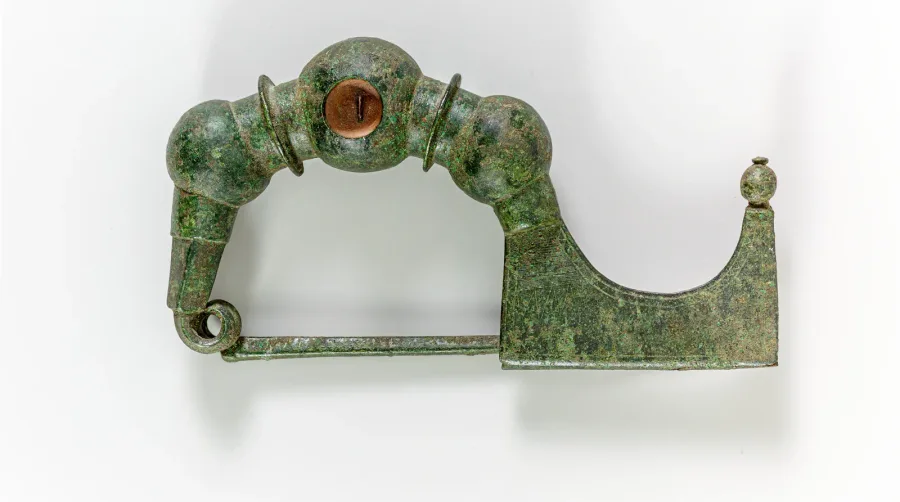
Bronze is older than writing. While people still had nothing to record, they were already melting copper with tin, casting figurines, brooches and bracelets that sit in museum cases today with a greenish crust. That green is not decay. It is patina, a thin film under which the metal can rest quietly for three thousand years and wait for an archaeologist.
In jewellery bronze holds a special place. It is warm in colour, heavy on the hand, strong, and still not as costly as the precious metals. A bronze ring or bracelet looks as though it came out of a burial mound, and that is the whole charm of it. This material draws people who lean toward antiquity, toward folk and tribal style, toward objects with history and character. Let us sort out how bronze differs from brass and copper, whether it turns skin green, how to grow a noble patina, and who suits large forged pieces in a warm tone.
What bronze is and where it came from
Bronze is copper plus tin
Bronze is a copper-based alloy with tin added to it. The classic ratio runs roughly from 88 to 95 percent copper and from 5 to 12 percent tin. Pure copper is soft, it bends under your fingers and dulls fast. Once people added a little tin, the metal grew harder, stronger and easier to cast. From this alloy you could make what pure copper never allowed: weapons that hold an edge, tools that do not bend, jewellery with fine detail.
The word itself reached us through the Italian bronzo, and its roots trace either to a Persian name for copper or to Latin. The meaning is the same everywhere: this is a man-made metal that does not exist ready-formed in nature. Bronze has to be made, by mixing two different metals in fire. And that very skill, not finding but creating a new material, became one of the great turning points in human progress.
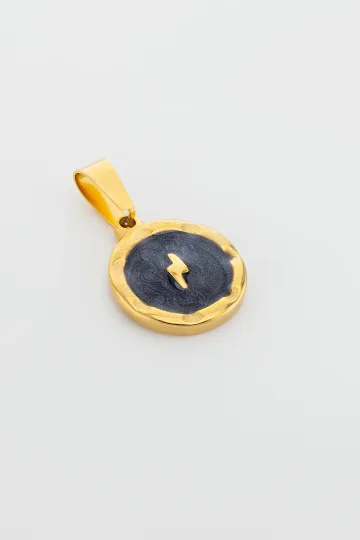
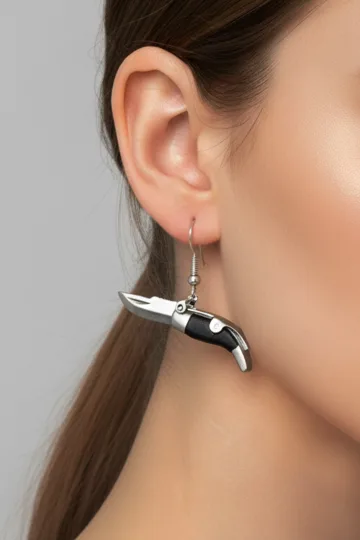
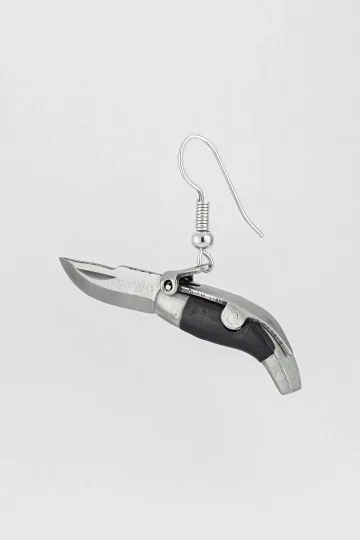
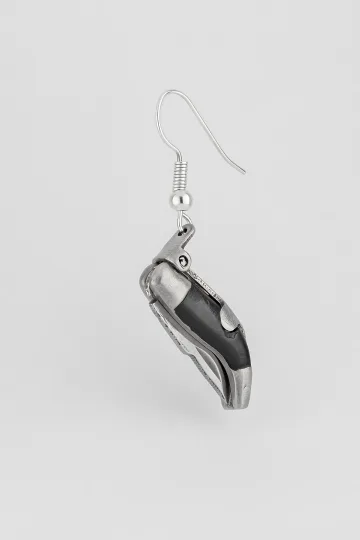
Wear the symbol, don't just read about it. These are in stock:






Why the alloy beat pure copper
Bronze has three advantages over copper, and each one meant a great deal in antiquity. First, hardness: a bronze blade keeps its edge, a copper one bends. Second, bronze melts at a lower temperature than pure copper, which made it easier to pour into moulds with the furnaces ancient smiths had. Third, molten bronze fills a mould better, so castings came out crisp, with fine patterns and detail.
For jewellery this meant freedom. A craftsman could cast a complex brooch with scrolls, a bracelet with relief, a pendant shaped like an animal. Copper would not allow it, gold was too costly and too soft, and iron in that age was not yet tamed. Bronze took the perfect niche: cheaper than gold, stronger than copper, finer than both in texture.
Colour, weight and character of the metal
Fresh bronze has a warm golden-brown tone, sometimes with a pinkish or reddish cast, a trace of its copper base. The more tin, the lighter and yellower the alloy; bell bronze with a high tin content gleams an almost silvery yellow. Over time the surface darkens, takes on a patina and acquires that antique look bronze is loved for.
On the hand bronze feels substantial. It is dense, and a piece made from it seems solid and serious. This is no airy chain, it is an object with presence. That is why bronze makes such fine large forged bracelets, heavy signet rings and pendants meant to look as though they were worn by warriors or priests.
The Bronze Age: how the alloy changed history
An era named after a metal
Historians divide ancient history into the Stone, Bronze and Iron ages, by the main material of tools. The Bronze Age began at different times in different regions, around the fourth to third millennium BCE in the Near East and a little later in Europe. This was the period when metallurgy went from a rare craft to the foundation of economy and power.
Whoever held bronze held strength. An army with bronze weapons beat an army with stone axes almost every time. So control of mines and trade routes became a question of survival for states. A whole age took its name from an alloy, the clearest proof of how thoroughly the metal upended people's lives.
The tin that decided the fate of nations
Bronze had one problem: tin is rare and not found everywhere. Copper is far more widespread, while deposits of tin can be counted on your fingers. In antiquity tin was famous in Cornwall in Britain, in parts of Central Asia and on the Iberian Peninsula. To make bronze, peoples had to set up trade across thousands of miles.
This is how the first large trade networks arose. Tin travelled by caravan and by ship across half the known world. Civilisations that sat at the crossing of these routes grew rich and strong. In effect, demand for one component of the alloy spun a web of trade across the whole Old World long before the silk routes.
Weapons, tools and the first workshops
Bronze gave people far more than swords and spear points. From it they made sickles to bring in the harvest, axes to fell the forest, chisels and gravers for fine work. Farming and the crafts took a leap forward. Workshops appeared where metal was cast and forged, and the first metalworkers appeared with them, people of a respected, almost magical trade.
With the tools came specialisation. Not everyone could work with fire and metal, so society began to split into those who ploughed, those who traded and those who forged. Power grew more complex, wealth piled up, cities were born. Bronze stood at the source of all this, while remaining a material for the jewellery with which the nobility marked their status.
Bronze belongs on a rolled-up sleeve and a weathered wrist, never under a cufflink. Pale office types, sit this one out.
How to wear bronze
Over years of working with metals bronze has passed through dozens of looks with me. Here is what actually works, sorted by occasion and by colouring.
What do I wear bronze with every day? For daily wear I recommend bronze on a warm base: a sand-toned linen shirt, a cotton tee, a coarse knit. A light top lifts the metal, and a rolled-up sleeve opens the wrist for a cuff. I suggest you do not go small: one weighty piece on show beats five thin chains that vanish against the fabric.
Does bronze suit my colouring? If gold suits you more than silver, bronze will almost certainly sit well. I choose it for warm colouring: golden skin, red and chestnut hair, a warm eye tone. On cool colouring with pinkish skin I suggest steering bronze toward matte, muted forms so the warm tone does not argue with the face.
Should I take large bronze or fine? Bronze loves scale, and I almost always choose the larger form: a broad forged cuff, a massive signet, a big pendant. A fine bronze chain sags, while a solid piece on the wrist announces itself at once. Want layers, keep them in one warm range and give each piece its own size.
Which stones and materials should I pair? I recommend earthy stones: turquoise, agate, tiger's eye, carnelian, onyx, amber. In a warm bronze setting they read as a single whole. Among materials I suggest leather, wood, linen, cords and stone beads, while cool diamonds and sapphires are best kept away from bronze, they pull in opposite directions.
Is bronze right for a man's look? It is one of the most masculine metals, and in a man's look I choose it gladly. A signet ring, a leather bracelet with bronze elements, a pendant with a rune or an animal motif all work without pomp. For a man who does not wear gold and finds silver too bright, bronze fits perfectly.

Turn on your camera, pick earrings, a pendant or a ring, and see the piece on yourself in real time.
Switch items in one tap.
Everything runs in your browser: no photo or video is ever uploaded.
Ancient bronze jewellery across cultures
Greece and Rome: brooches, mirrors and statues
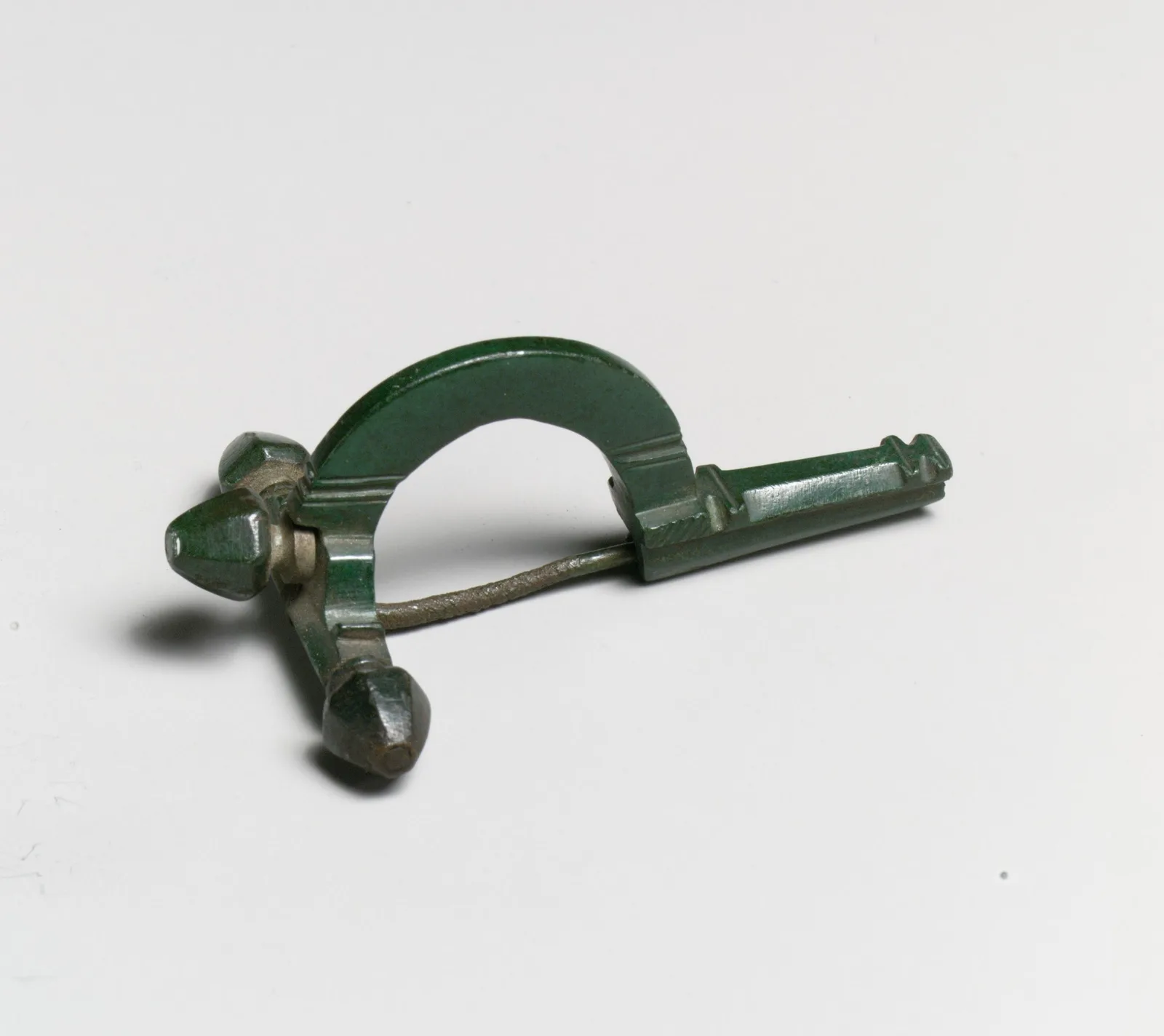
In the ancient world bronze was everywhere. Greeks and Romans cast mirrors from it: a polished bronze disc reflected a face as well as glass, until it tarnished. They made fibulae, clasps for clothing that played the part of our pins and brooches at once. Bronze rings, bracelets and pendants were worn by men and women alike.
A particular pride of antiquity was bronze sculpture. Many famous Greek statues were originally bronze, and the marble copies were made later by the Romans. Only a handful of originals survive, because bronze was often melted down. The ones that lasted, such as figures raised from the sea floor, show what perfection ancient casters reached.
The Celts and the cult of the brooch
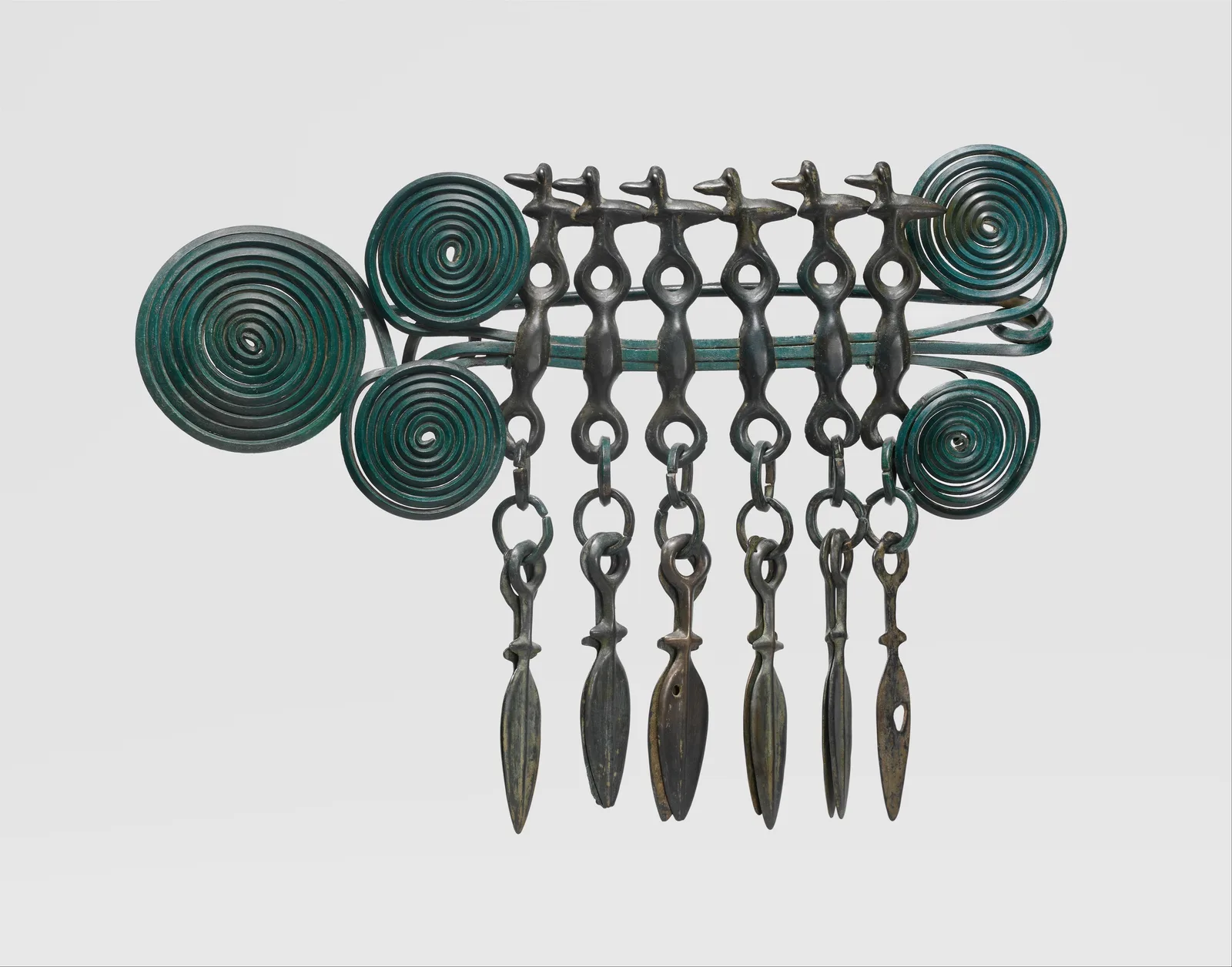
The Celtic tribes of Europe turned the bronze brooch into a work of art. Their clasps are covered with spirals, interlace, figures of beasts and birds, the very recognisable Celtic ornament still copied today in tribal jewellery. The brooch was no longer a clasp, it was a mark of the owner's rank and taste.
Besides brooches the Celts loved heavy neck rings, torcs, and broad bracelets. Much of it was made of bronze, some of gold for the nobility. Bronze pieces went to those who could not afford gold but still wanted to wear richly decorated metal. The Celtic tradition of ornament lives on, and many modern bronze pieces with interlace are its direct descendants.
China: the ritual bronze of the Shang and Zhou
Chinese bronze stands apart. In the age of the Shang and Zhou dynasties it was cast less into jewellery than into ritual vessels for offerings to ancestors. These vessels astonish with their complexity: their surfaces are covered with relief ornament, taotie masks, dragons and geometric patterns. The technique of casting in sections and assembling them was fantastically advanced for its time.
The Chinese treated bronze as a sacred and a state material. Holding ritual vessels meant the right to power and a link with the ancestors. Many pieces carry inscriptions, and the oldest examples of Chinese writing have reached us precisely on bronze. Bronze jewellery existed too, but it was the vessels that made Chinese bronze famous the world over.
Benin: the African bronzes
When people speak of African bronze, they most often recall the Benin bronzes, thousands of reliefs and sculptures from the Kingdom of Benin in what is now Nigeria. The craftsmen of this state mastered the most demanding lost-wax casting and created portrait heads, figures of warriors and courtly scenes on plaques that decorated the ruler's palace.
These works break the old stereotype that fine metallurgy was a privilege of Europe and Asia. Benin bronze in its mastery rivals the best examples anywhere. Today there are disputes around these objects about returning them home, because most of them ended up in museums outside Africa. For us the Benin bronzes are a reminder that great metalwork was born on every continent.
The Scythians and the animal style
The Scythians, nomads of the Eurasian steppe, left behind a vivid animal style: ornaments and plaques with figures of deer, panthers, griffins and predators curled into a ring. The nobility wore gold, but burial mounds also hold many bronze pieces: buckles, harness mounts, finials, plainer ornaments.
Scythian bronze breathes movement. The beasts on it seem caught mid-leap, taut, in a struggle. This style influenced the art of vast territories and still inspires designers of tribal jewellery. A bronze pendant with a deer or a predator in the Scythian manner is a direct greeting to those steppe masters.
Customer reviews
Zevira is a real jewellery shop. Genuine payments, deliveries and customer thank-yous.
🥰🥰🥰 gracias
Ok, ¡gracias! 🙂
The noble patina of bronze
What patina is and where it comes from
Patina is the thin layer that forms on the surface of bronze through contact with air, moisture and time. The copper in the alloy reacts slowly with its surroundings, and the metal takes on a film of compounds: first it darkens, then, after long exposure to moisture, it can turn green. This film holds firmly and protects what lies beneath it.
The key thing to grasp about patina: it is not rust and not decay. Iron rusts all the way through and crumbles. Bronze, though, takes a patina only on the surface, and that layer works like armour. This is exactly why bronze statues and jewellery survive for millennia where iron would long ago have turned to dust.
Green and brown patina
Patina comes in different colours, and both are prized. A dark brown, almost black patina appears on bronze kept dry and handled often. That noble chocolate tone is the signature of old bronze figurines and jewellery.
Green patina, the colour of old monuments and rooftops, forms through long contact with moisture and air. It is called noble green, and restorers often try to preserve rather than scrape it off. On jewellery a light green in the hollows of a pattern looks antique and brings out the relief. Many modern bronze pieces are patinated on purpose so that they look old from the start.
Why patina is valued rather than removed
For a lover of antiquities, patina is the passport of an object, proof of its age and authenticity. To scrub it back to a shine is like polishing an old coin: it gets brighter on paper, and in fact loses all its value. So collectors and restorers treat a noble patina with care.
In modern jewellery patina is used as an artistic device. Dark hollows and light raised parts create depth, volume, an aged effect. Fully polished bronze tends to read like cheap gold-toned costume jewellery, while a patinated piece reads like an object with history. That is why, when choosing bronze, many deliberately look for pieces with a ready noble finish.
Upload a photo of your pet, someone you love, or an object. We'll build a 3D model and hand-cast it in pewter.
Kinds of bronze: not all bronze is the same
Tin bronze, the classic
Tin bronze is the very historical alloy of copper and tin that started it all. It was used for the ancient tools, statues and jewellery. It casts well, holds its shape and takes a beautiful patina. In jewellery and souvenir work the word bronze most often means tin bronze or something close to it in composition.
The more tin in the alloy, the harder and lighter it becomes, but also the more brittle. So for jewellery a balance is chosen: enough tin for strength and a fine colour, but not so much that the metal crumbles. Tin bronze stays the gold standard when you want a warm tone and a noble patina.
Aluminium bronze, strong and resistant
In aluminium bronze, aluminium replaces tin or works alongside it. This alloy is markedly stronger and far better at resisting corrosion, so it is used where toughness is needed: in machinery, shipbuilding, marine fittings. Its colour is handsome, a golden yellow, and it is sometimes even used to imitate gold.
In jewellery aluminium bronze turns up less often than the classic, but it is valued for durability: it darkens less and holds its shine longer. If you want a piece that will not sulk at moisture and sweat, aluminium bronze is a good choice. It hardly gives the noble green patina, though, so it suits lovers of the antique look less well.
Phosphor bronze, springy
Phosphor bronze contains a small addition of phosphorus, which makes the alloy springy, wear-resistant and resistant to metal fatigue. It goes into springs, membranes and parts that must bend thousands of times without breaking. It sounds technical, but this quality comes in handy in jewellery too.
Where springiness is needed, in clasps, in flexible bracelets, in elements that hold shape under load, phosphor bronze works splendidly. It is stronger than ordinary tin bronze and does not tire as fast. In the fine mechanisms of jewellery this kind is valued for reliability.
Bell bronze, for the ring
Bell bronze is an alloy with a high tin content, up to a fifth and more. Such a mix makes the metal sonorous: a bell of this bronze sings long and clear. It was for the sound that smiths spent centuries fine-tuning the exact proportions, since the composition sets both the pitch and the length of the ring.
A high tin content makes bell bronze hard, light and brittle, drop a bell and it can crack. In jewellery its close relative is the small bronze jingle bells and chimes found in tribal pendants and bracelets. Their melodic ring is the legacy of that same bell tradition.
Bronze jewellery by type
A bronze ring
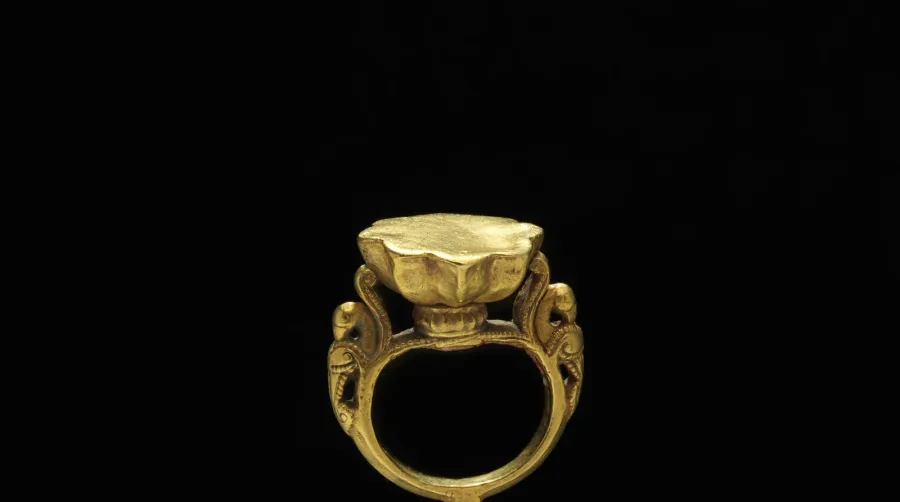
A bronze ring draws the eye with its warm tone and weight: on the finger it feels more serious than a thin silver band. Most often it is vintage and antique in style: signet rings, rings with relief, replicas of ancient motifs, Celtic interlace or a Scythian beast. Casting holds fine engraving well, and over time patina seeps into the hollows of the pattern and emphasises it, making the design three-dimensional. Bronze is stronger than copper, so a ring deforms less and keeps its shape longer than a soft copper band. It tarnishes like any bronze: it darkens with time, it can turn green in damp, and in contact with sweat it sometimes leaves a green mark under the ring. The cure is a coat of lacquer on the inside and dry storage. Many wear a bronze ring precisely as a talisman or as a replica of a burial-mound find, an object with character and history rather than a routine ornament.
A bronze bracelet
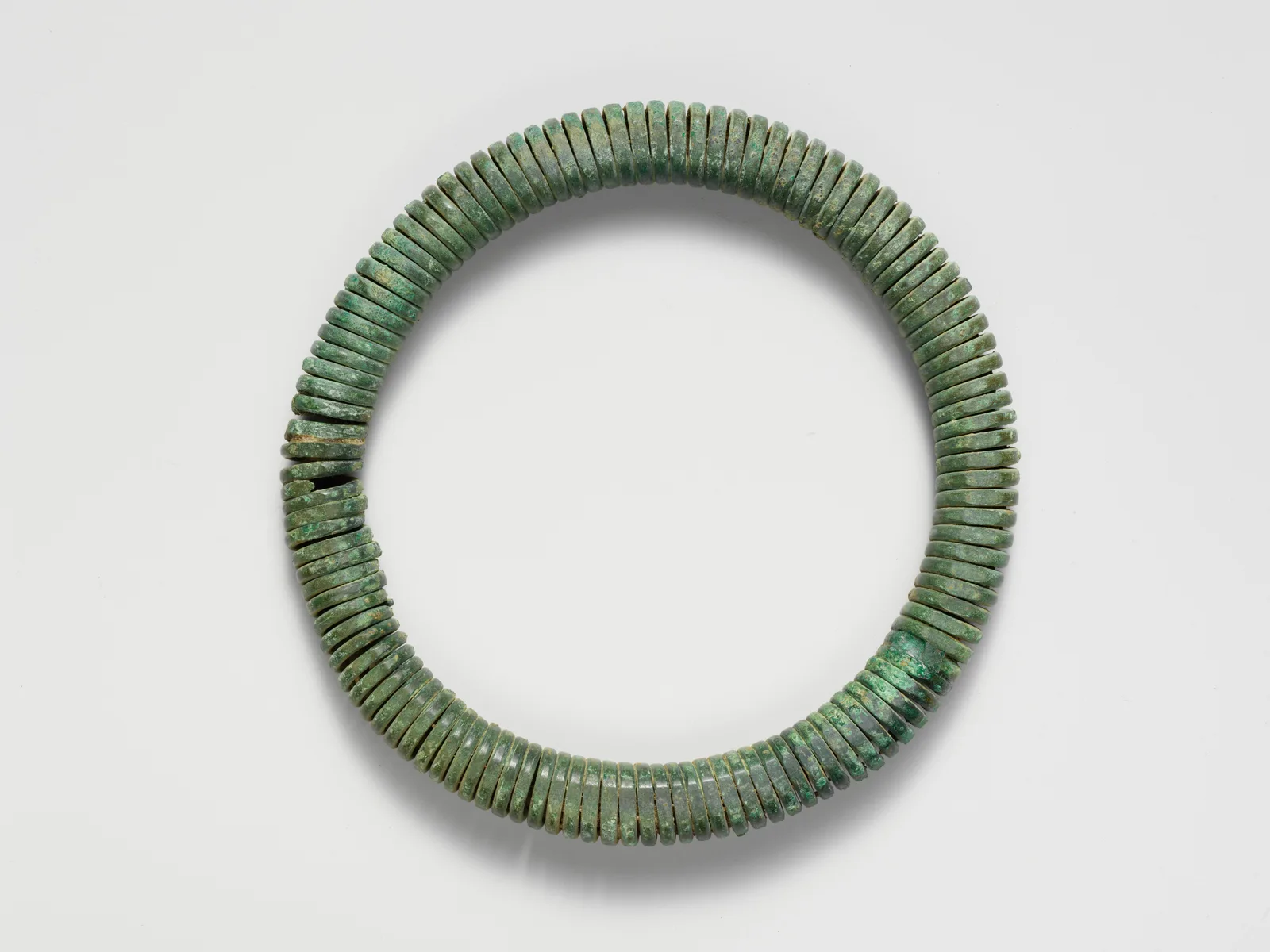
A bronze bracelet is above all a forged cuff: broad, with hammer marks, asymmetrical, as if off the arm of an ancient warrior. Bronze is heavier and stronger than copper, so a massive bracelet holds its shape, will not dent at a chance knock and sits solidly on the wrist. The noble patina does its work: the raised parts lighten from touch, the hollows darken, and the cuff quickly takes on an antique look without any artificial ageing. The character of such a bracelet is masculine and tribal, it echoes Celtic neck rings, Norse and Scythian motifs and sits well with boho and historical re-enactment. Bronze bracelets are worn with leather, coarse textile and natural stones like agate and tiger's eye. A fine bronze chain gets lost, while a solid forged cuff announces itself at once and reads as handmade.
Bronze earrings
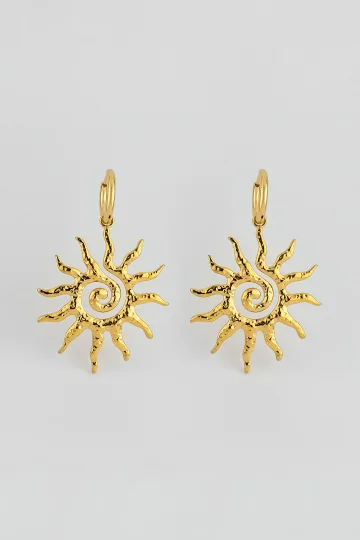
Bronze earrings win with their warm golden-brown tone and ancient motifs: scrolls, rosettes, figures that echo ancient finds and tribal ornament. Casting allows light yet textured forms, openwork, relief, the fine detail that looks rich and historical on a warm metal. Despite the density of bronze, earrings are usually made hollow or thin-walled so they do not drag at the lobe, so weight rarely gets in the way here. The warm tone of bronze especially suits golden skin, red and chestnut hair, amber and brown eyes, the metal seems to continue a natural palette. One caveat: the hooks and wires touch the delicate skin of the lobe, and the copper in the alloy can give sensitive people irritation or a green mark. A protective coating or wires of a neutral metal solve this. Otherwise bronze earrings are a warm, tribal and fairly affordable way to add an ancient character to a look.
A bronze pendant
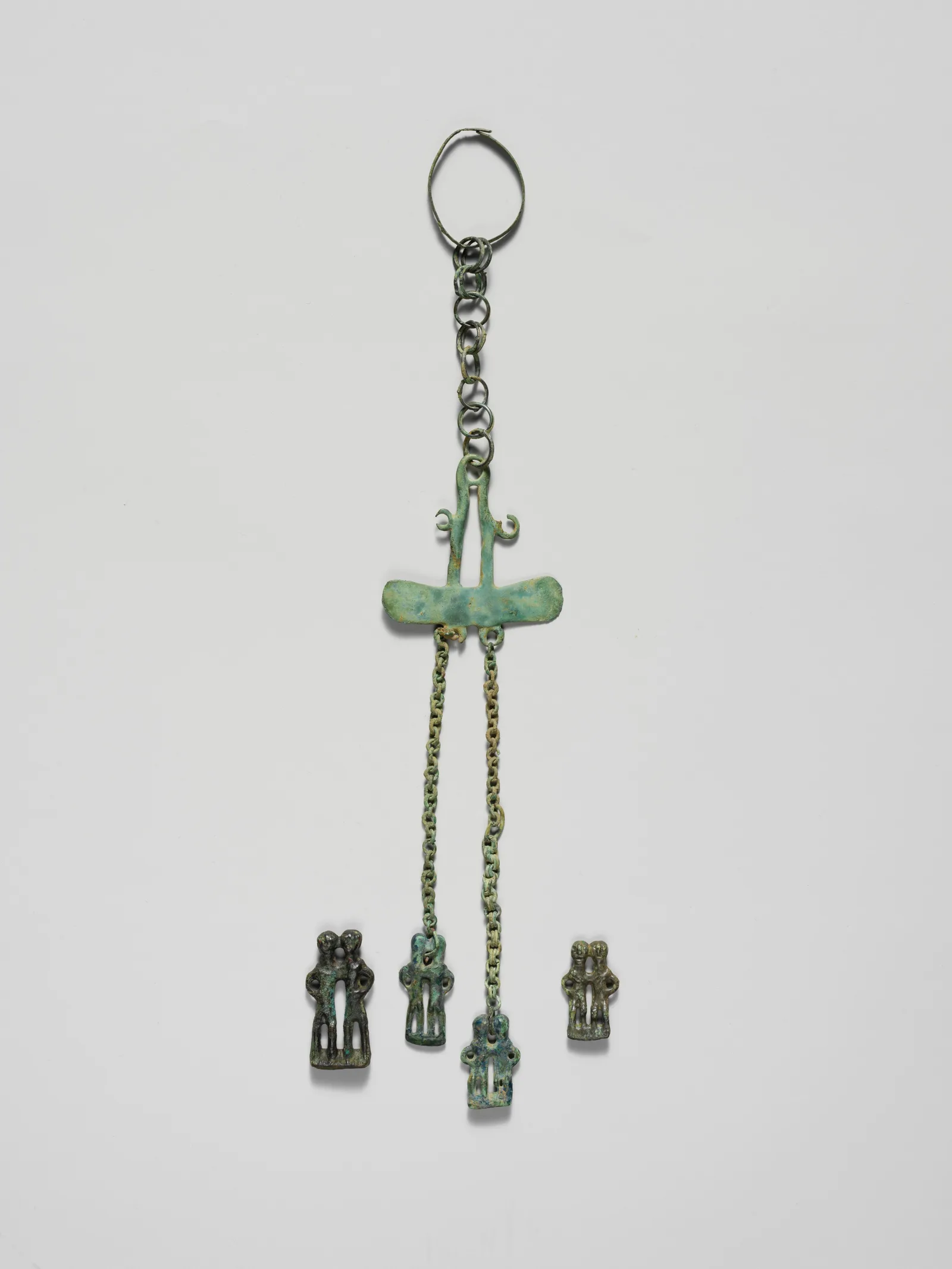
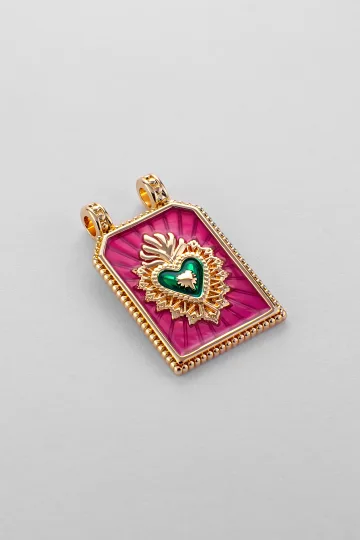
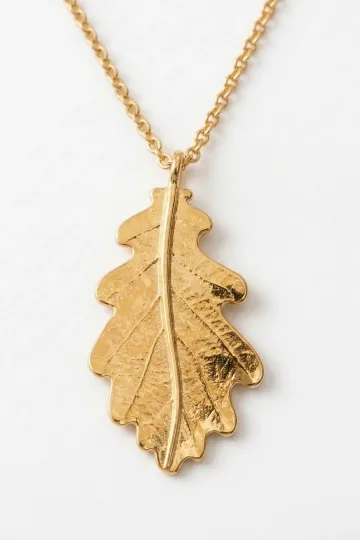
A pendant is perhaps the most rewarding role for bronze. This is where replicas of ancient amulets live: hammers, Celtic knots, Scythian beasts, runes, solar signs, medallions and figures that echo museum finds. Casting renders the finest relief, scales, feathers, faces, ornament, and bronze holds that small detail crisply without blurring. Patina works for the image: dark hollows and light ridges give depth, and the pendant looks at once as though it was worn generations ago. The heft of bronze is fitting here, a pendant has presence on the chest, unlike a weightless stamping. Bronze pendants are worn on a leather cord, a heavy chain or a textile braid, paired with natural stones. For many it is also a talisman: a symbol you choose by meaning and wear as a personal sign rather than a random detail.
A bronze brooch
A bronze brooch is the direct heir of the ancient and Celtic fibula, which was once a clasp and a mark of status at the same time. They are made by casting and by chasing: casting gives a complex shape and relief, chasing gives a hand-struck pattern and a living texture. Bronze holds fine detail well, so a rich ornament fits into the small area of a brooch, interlace, scrolls, figures of beasts and birds. The warm tone and noble patina make such a brooch resemble a museum find rather than modern costume jewellery. Vintage fibulae and stylised clasps look good on dense fabrics, wool, linen, leather, coarse knit, where there is something to grip and something to decorate. The clasp mechanism is worth protecting from over-bending so the spring does not tire, and the bronze itself from excess moisture. A bronze brooch adds a tribal, historical accent to a look and works even without other jewellery.



Bronze, brass and copper: where the difference lies
Different composition, different metals
These three metals are often confused, but they are different. Copper is a pure metal, the base for both alloys. Bronze is copper with tin (and other additions). Brass is copper with zinc. The main difference is in the addition: tin gives bronze, zinc gives brass. Because of this they have different properties and behave differently over time.
Understanding this difference matters when choosing jewellery. Sellers sometimes call any warm yellow metal bronze, though by composition it may be brass. If the bronze character matters to you, the warm reddish tone and noble patina, it is worth asking about the composition. There is a separate breakdown of the differences between brass, steel and silver: brass, steel or silver for jewellery.
The difference in colour
Colour gives the metal away best of all. Pure copper is reddish-pink, like a new coin. Bronze is warm, golden-brown, often with a reddish undertone from its high copper content. Brass is more yellow, brighter, closer to gold, because zinc lightens the alloy.
Over time all three darken, but in different ways. Copper turns green most readily, bronze takes a brown or green patina, brass tarnishes to dark yellow and brown. Put three fresh pieces side by side and a trained eye will tell them apart by shade: reddish is copper, warm brown is bronze, bright yellow is brass.
The difference in hardness and strength
For strength bronze leads. Tin makes it hard and wear-resistant, which is why the ancients chose it for weapons and tools. Brass is softer and more pliable, easier to work, stamp and bend, which is why it is so popular in mass costume jewellery and fittings. Pure copper is the softest of the three.
For jewellery this means the following. A bronze piece is stronger, holds its shape longer, deforms less. A brass piece is simpler to make and cheaper, but also more delicate. A copper piece is the softest, taken more often for its colour and pliability than for strength. Each metal is good in its place.
Leave your email, we'll send your discount code. No spam, unsubscribe anytime.
The code arrives by email, valid on your first order.
Does bronze turn skin green and why
Where the green mark comes from
Yes, bronze can leave a greenish mark on skin, and the copper is to blame. In contact with sweat, the acids of the skin and cosmetics, copper reacts and forms green compounds. They transfer to the skin, hence the famous green line under a ring or bracelet. Since bronze is mostly copper, it behaves the same way.
An important point: this is neither harmful nor dangerous. A green mark is simply a cosmetic nuisance that washes off easily with soap and water. It does not mean the piece is bad or that you have an allergy. It is the normal chemistry of copper, known to humankind for thousands of years. There is a separate article on the mechanism and the ways to deal with it: why jewellery turns skin green and how to fix it.
What decides whether skin will turn green
The reaction differs from person to person and depends on several things. The main one is the chemistry of your skin: the acidity of your sweat, how much you sweat, what you eat and which cosmetics you use. For one person a bronze ring leaves no trace, for another it greens the skin in a day. Heat and humidity intensify the reaction, because sweat is more active.
What the piece is coated with matters too. If the bronze carries a lacquer or protective coating, the copper does not touch the skin directly and no green mark appears, as long as the coating is intact. Over time it wears off and the reaction can come back. So uncoated bronze greens skin more readily than lacquered bronze.
What to do about it
Fighting the green is simple. The most reliable way is to coat the inner side of the piece with a thin layer of clear lacquer, whether a special jewellery one or an ordinary colourless one. You renew the coating as it wears. Then the copper does not touch the skin and there are no marks.
Dryness helps too: do not put bronze on in the heat, at the gym or in the shower. Take it off before sleep and washing your hands. Wipe the piece after wear. And remember, even if a mark does appear, it washes off in seconds. For many folk-style lovers the green line is a familiar trifle, not worth giving up a beautiful object for. On which metal gets along with your skin in the first place, there is a guide: what metal suits your skin tone.
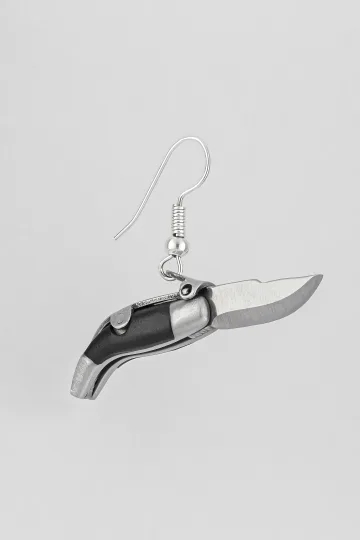
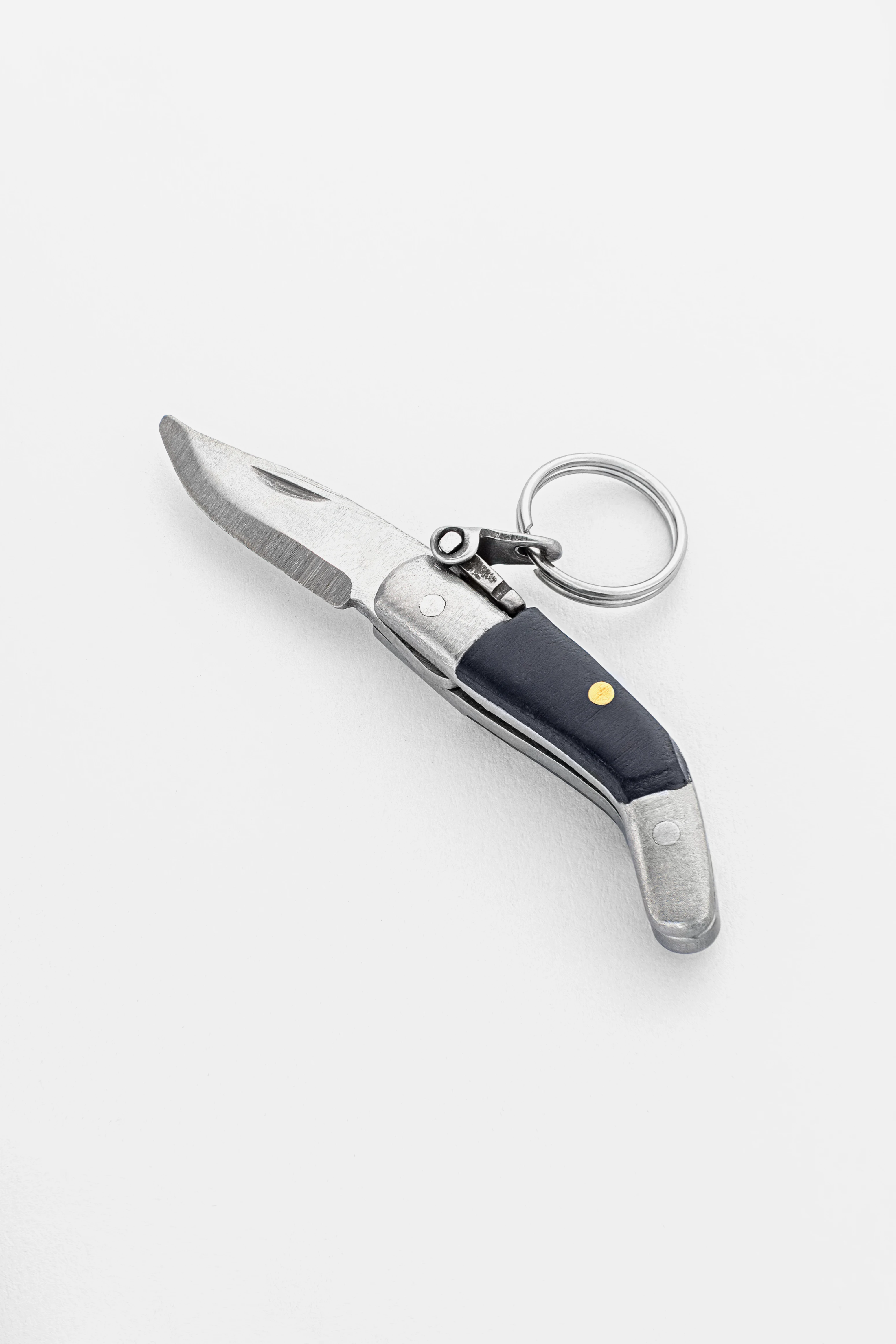
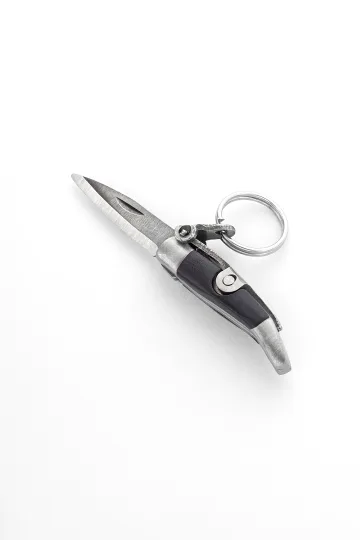
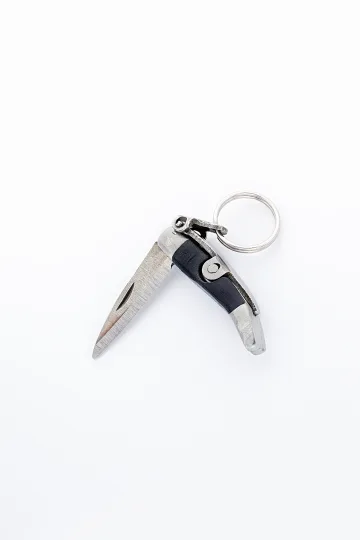
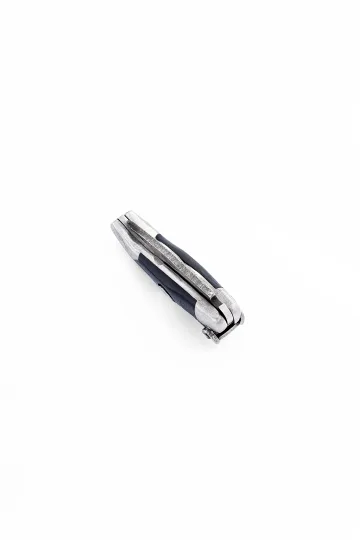
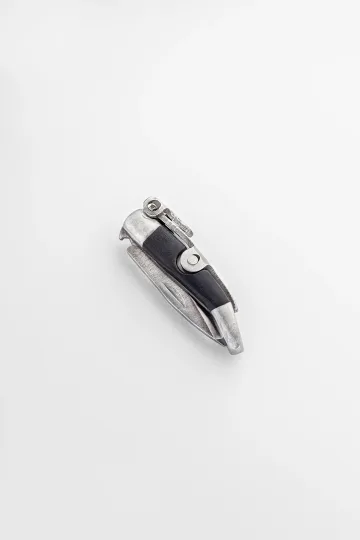
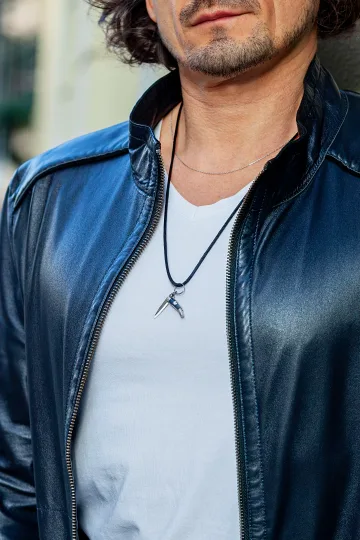
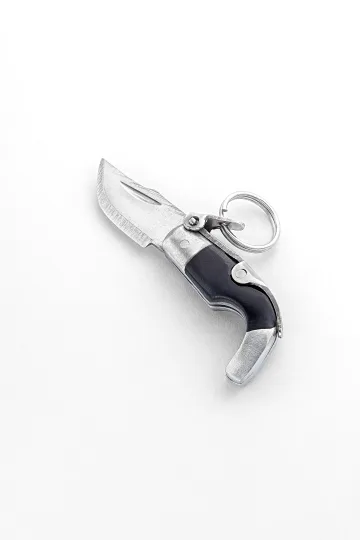
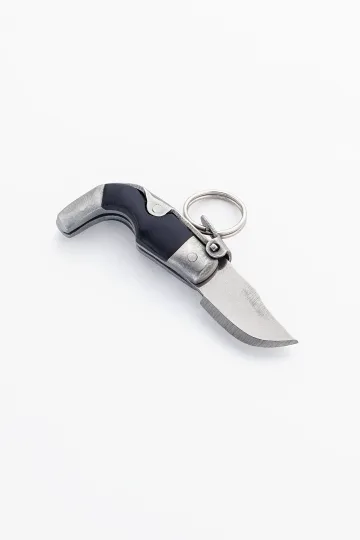
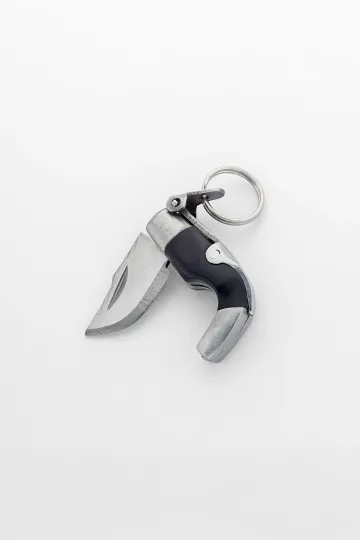
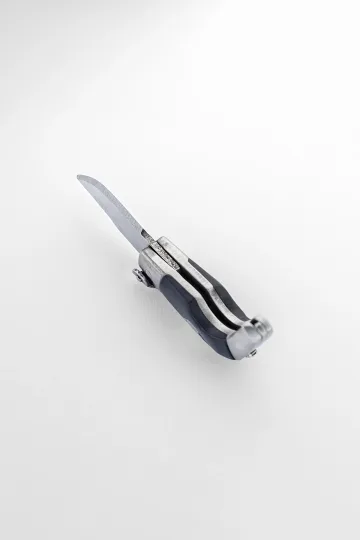
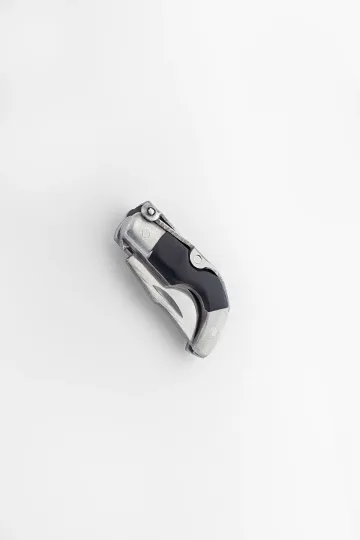
CAPAORA mini knife pendant
The 18th-century Spanish navaja in miniature: 40 mm of stainless steel, a real folding mechanism and a Palanquilla lock that clicks. An affordable gift to remember.
Authentic · Ships from Spain · 14-day returns
Caring for bronze and working with patina
Grow a noble patina or strip it
With bronze you have a choice gold does not give you: you decide how it ages. You can grow a noble patina, letting the metal darken and take on an antique look. For this you simply wear it without polishing it to a shine. Over time the raised parts lighten from touch and the hollows darken, and a beautiful depth emerges.
Or you can strip the patina and keep bronze bright. Then you clean the piece regularly, bringing back the golden-brown shine. Both paths are valid, it all depends on taste. Lovers of the antique grow the patina, lovers of shine scrub it off. The main thing is to grasp that patina is reversible in one direction: growing it is easy, while ageing it beautifully on demand is something not everyone can do.
How to clean bronze to a shine
If you want to bring back the gleam, there are home methods. The classic is a paste of baking soda and lemon juice, or a slice of lemon sprinkled with salt: the acid dissolves the darkening and the mild abrasive lifts the film. You rub, rinse and wipe dry. A weak vinegar solution helps too. After cleaning the metal dries and, if you like, gets a coat of lacquer so the shine holds longer.
What not to do is scour bronze with harsh abrasives and metal brushes. They scratch the surface and lift a thin layer of metal along with the dirt. Antique objects with a valuable patina must not be cleaned aggressively at all, that can kill their value. Gentleness matters more than zeal here.
Storage and daily habits
Bronze does not like moisture or lying long in damp. Keep pieces in a dry place, ideally in a pouch or box, apart from one another so they do not scratch. The silica gel sachets from shoeboxes soak up excess moisture beautifully, toss a couple into your jewellery box.
Simple habits extend a piece's life. Take bronze off before the shower, the pool, cleaning with chemicals and sleep. Wipe it with a soft cloth after wear to remove sweat and skin oil. Do not store it next to aggressive perfume. These small things take seconds, and the piece repays them with an even colour and a long life.
Modern bronze in jewellery
Vintage, folk and antique replicas
Today bronze lives in several genres. Vintage pieces are objects styled to look old, with wear and patina, as if from a grandmother's box. Folk and tribal style means pendants, earrings and bracelets with ornaments of the world's peoples, from Celtic knots to Scythian beasts and Indian motifs. Antique replicas are exact copies of ancient finds, brooches, rings, amulets, worn as a bridge to the past.
Bronze suits all three directions precisely because it looks historical by nature. It does not need to pretend to be old, it is that very metal of antiquity. Designers use this: the warm tone, noble patina and heft make a bronze piece convincing even without elaborate decoration.
Casting and forging: texture decides
Bronze is loved for its texture. Casting renders the finest detail, scales, feathers, patterns, relief faces, so it makes complex figural pendants and rings with relief. Forging gives a different character: a rough, handmade surface with hammer marks that looks primal and powerful.
Forged bronze bracelets and neck rings are a love apart for fans of folk style and historical re-enactment. The uneven surface, the tool marks, the asymmetry, all of it reads as authenticity, as handwork. In a world full of smooth stamped metal, rough forged bronze stands out with its living, imperfect character.
Who bronze suits
Bronze suits those who love warm tones and a natural, earthy aesthetic. If there is warmth in your colouring, golden skin, a warm hair colour, amber or brown eyes, bronze will light it up especially well. A warm metal next to a warm skin tone works like family.
By style bronze is for those who lean toward boho, folk, vintage, history. It is good with natural fabrics, leather, linen, wood, with natural stones like agate, turquoise, tiger's eye. Massive bronze fits a strict business look less easily, while it decorates a free, creative, natural style to perfection.
How to tell bronze from brass
Look at colour and undertone
The main sign is the shade. Bronze is warmer and redder thanks to its high copper content, brass is yellower and brighter because of the zinc. Put two pieces side by side in daylight: the one that reads reddish-brown is more likely bronze, the one that is clean yellow, almost gold, is brass. The eye can catch this, especially with practice.
The character of the patina helps too. Bronze ages toward a brown-green in a noble, handsome way. Brass tarnishes to a dark yellow and a dingy brown, and its darkening looks plainer. An old bronze object with a green tint is almost certainly bronze rather than brass.
Weight, sound and a magnet
Bronze is usually heavier than brass at the same size, the metal is denser. Take a piece in your hand: the bronze one feels weightier. The sound under a light tap differs too: bronze rings cleaner and longer, brass answers duller. There is a reason bells are cast from bronze and not from brass.
A simple test is a magnet. Neither bronze nor brass sticks to a magnet, so if a piece is drawn to it, you have neither, but steel under a coating. A magnet will not, however, tell bronze from brass, here only colour, weight and sound work. In doubtful cases a precise answer comes from a lab analysis of the composition, but for everyday needs sharp observation is enough.
Why tell them apart at all
It may seem, what is the difference, warm metal and warm metal. But there is a difference. Bronze is stronger, ages more nobly, costs more to make and is more honest as a material with history. Brass is cheaper and often goes into mass costume jewellery. If you are paying for bronze, it is logical to get exactly that.
What is more, bronze and brass behave differently over time and with skin. Knowing the composition helps you care for a piece correctly and understand what to expect from it. On the finer points of combining warm and cool metals in one look there is a separate breakdown: bimetallic two-tone jewellery and colour pairing.
Send a friend a discount code, they save on their first order.
Facts that surprise
Bronze statues survive for millennia. While iron rusts all the way through and crumbles, bronze takes a patina that protects the metal from within. Ancient bronze statues raised from the sea floor after two thousand years come up almost whole, the sea spared them precisely thanks to that film.
A whole era is named after an alloy. The Bronze Age is the only major period of history named after a man-made material rather than a natural stone or iron. This means bronze was not found but invented, and that invention upended people's lives.
Green patina is protection, not decay. What looks like destruction is in fact armour. The patina layer seals the surface and keeps decay from going deeper. Restorers often deliberately preserve the noble green rather than scrape it off.
The Benin bronzes astonished Europe. When thousands of bronze reliefs from the African Kingdom of Benin reached museums, Europeans did not believe such casting mastery was born in Africa. These works rival the best examples anywhere in their refinement and remain a subject of disputes over returning them home to this day.
Bells are made from a special bronze for the sound. Bell bronze contains up to a fifth of tin and more, a composition tuned over centuries so the metal sings long and clear. The exact proportion sets both the pitch and the length of the ring.
Tin spun the first trade networks. Tin is rare, so for the sake of bronze ancient peoples set up trade across thousands of miles, through half the known world. Demand for one metal created a web of trade long before the silk routes.
Many Greek masterpieces were bronze. The famous ancient statues were originally cast in bronze, while the marble ones familiar to us are often only later copies. Few bronze originals survive, because the metal was melted down again and again for new needs.
The oldest Chinese writing reached us on bronze. The ritual vessels of the Shang and Zhou dynasties carry inscriptions that became some of the oldest examples of Chinese script. Bronze served both as a material for art and as a carrier of history.
Frequently asked questions
Is bronze a precious metal? No, bronze does not count as a precious metal. It is an alloy of copper and tin, cheap and accessible. It is prized not for the cost of the material but for its warm colour, strength, noble patina and link to antiquity. By price, bronze jewellery sits in the affordable segment.
Does bronze turn skin green? It can, because of the copper in its composition. In contact with sweat and the acids of the skin a greenish mark appears. It is harmless and washes off easily. To avoid it, the inner side of the piece is coated with clear lacquer, and then the metal does not touch the skin directly.
How does bronze differ from brass? In composition and character. Bronze is copper with tin, brass is copper with zinc. Bronze is warmer and redder in colour, heavier, stronger and ages more nobly. Brass is yellower, softer and cheaper. You can tell them apart by shade, weight and the sound under a light tap.
How do I care for a bronze piece? Keep it dry, take it off before the shower and sleep, wipe it after wear. If you want shine, clean it with a paste of soda and lemon or a weak vinegar, then coat it with lacquer. If you want an antique look, simply wear it and let the patina grow. Do not use harsh abrasives or brushes.
Can bronze get wet? It is better to avoid constant contact with water. Moisture darkens and greens bronze faster. Stray drops are no threat, but swimming, washing your hands and doing sport in bronze are best avoided. After contact with water the piece is wiped dry.
Is bronze suitable for people with allergies? Bronze contains no nickel, a frequent culprit of allergies, and that is a plus. But the copper in it can cause irritation and a green mark on sensitive skin. If your skin is fussy, choose bronze with a protective coating or look toward hypoallergenic metals.
Is bronze jewellery only for men? No, bronze is universal. Both men and women wear it. Bronze simply has a weighty, earthy, slightly warlike character often linked to a masculine aesthetic. But women's folk, boho and vintage bronze is no less popular, the form and the style of the piece decide everything.
Will bronze spoil over time? No, with sensible care bronze lasts a very long time, it is one of the most durable metals there is. It does not rust through, it only takes a protective patina. Bronze objects outlive their owners and pass down through generations without trouble, only growing more handsome with time.
In short
Bronze is the metal with the loudest biography in the history of jewellery. The alloy of copper and tin gave a whole age its name, armed ancient armies, fed the first civilisations and adorned nobility from Greece to Benin, from Chinese temples to the Scythian steppe. It is not a precious metal, and in that lies its honesty: bronze is prized for its warm colour, its heft, its noble patina and its direct link to antiquity.
In jewellery bronze is the choice of those who love folk style, vintage, history and a natural aesthetic. It suits warm colouring, gets along with earthy stones and natural materials, looks superb in large forged forms and has long been a favourite of men's symbolism. Yes, it can leave a green mark, but lacquer and dry storage solve that. In return you get a metal that only grows more handsome with time and that has no need to pretend to be old, because it is the metal of antiquity itself.
Silver, steel, warm metals, coloured stones, symbolism, matching sets.
Buying it as a gift? Each one arrives ready to give.
 A branded Zevira box and a little card come with every order.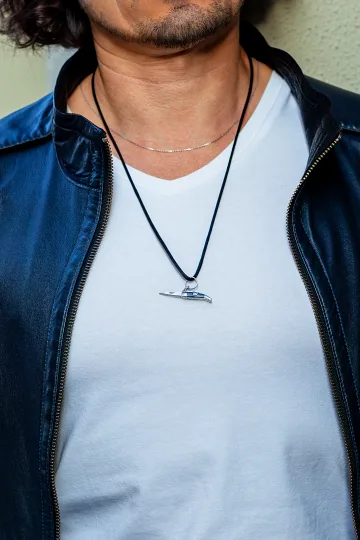




About Zevira
Zevira is a Spanish jewellery brand from Albacete, a city with centuries-old traditions of working in metal. We make jewellery with character and history: warm and cool metals, coloured stones, the symbolism of different cultures and matching sets. If you are choosing between metals, look into our breakdowns on silver 925 and brass, steel or silver.