Copper in Jewelry: Humanity's First Metal That Greens Your Skin and Heals Legends
Under its green patina, the Statue of Liberty hides skin the colour of a brand-new copper coin. A tonne of copper that once glowed rose-gold turned famously turquoise over thirty years. The same thing happens to the copper bracelet on your wrist, only in miniature and over a couple of weeks. Almost everyone who spots a green smudge on their skin decides the piece is ruined. It is not ruined. It is simply alive.
Copper does not pretend to be precious. It is warm, soft, obedient under the hammer, and treacherously honest in how it reacts with air, skin, and water. Over eight thousand years people learned to make almost everything from it: the first mirrors, the first coins, the first bronze swords, the black patina of Japanese masters, the green enamel of medieval reliquaries. Copper was the gold of the barbarians, the medicine of Ayurveda, and the material from which Art Nouveau forged its most flowing lines.
This is an article about the metal that started the entire civilisation of metals, and about how to wear it today: where the truth ends and the myth begins, why it greens your skin, how it differs from brass, and how to grow a patina on it that collectors pay extra for.
How It All Began: Copper as the First Metal
Why copper became humanity's first metal
Before copper, people worked only with stone, bone, and wood, with anything you could chip, sharpen, or bend. Copper rewrote the rules because it occurred in nature in a pure, native form: shiny reddish lumps lying right on the surface of the ground, especially around what is now the Middle East and the Balkans. You did not have to smelt them. Hitting them with a stone was enough, and the metal did not crumble, it changed shape. The earliest copper finds date to roughly the ninth and eighth millennia BCE. That is earlier than writing, earlier than the wheel, earlier than cities.
What the Copper Age was and where it went
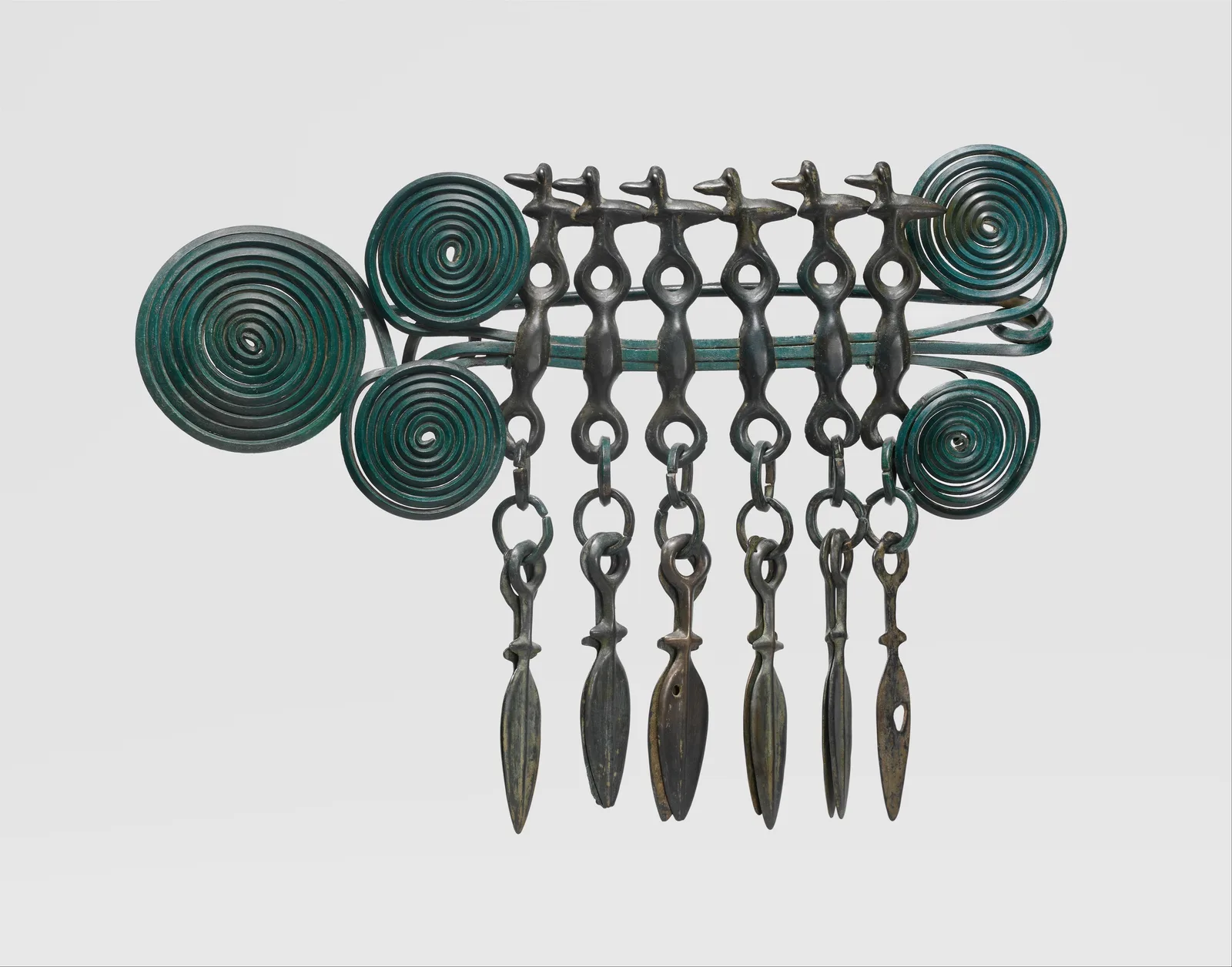
Between the Stone Age and the Bronze Age, historians mark out a transitional era: the Chalcolithic, or Copper Age, roughly the fifth to third millennia BCE. People already smelted copper and cast it into moulds, but they had not yet discovered that a pinch of tin makes the metal three times harder. Pure copper was too soft for serious weapons and tools, but ideal for jewellery, ritual objects, and the first mirrors. The Copper Age ended not with a catastrophe but with a discovery: someone mixed copper with tin and got bronze. From there, a completely different story begins.
Wear the symbol, don't just read about it. These are in stock:

The ice man with a copper axe
In 1991, a mummy that had lain in Alpine ice for about five thousand three hundred years was found. The man was nicknamed Ötzi. He carried an axe with a blade of almost pure copper, 99.7 percent. Analysis of his hair showed high levels of copper and arsenic: Ötzi most likely took part in smelting metal himself. A single axe overturned the idea of how early and how widely ordinary, non-royal people already mastered copper in everyday life.
Where copper was mined in antiquity
The first mines were not shafts in our sense but shallow workings where copper ore broke the surface. Deposits in Sinai, on Cyprus, around Timna in the south of modern Israel, and across the Balkans fed entire regions. At the Rudna Glava mine in Serbia, copper was dug as early as the seventh millennium BCE. The green and blue copper minerals, malachite and azurite, served at once as ore, as paint, and as a sign: where the ground turned green, people went looking for metal.
Copper in the Ancient Civilisations
Egypt: the green colour of rebirth
For the Egyptians, copper and its green minerals were not a material but the very colour of life after death. Malachite, the green copper carbonate, was ground into powder for paint around the eyes; with black galena and green copper pigment, both pharaohs and commoners lined their lids. Green was the colour of Osiris, god of rebirth, the colour of papyrus and of young shoots on the banks of the Nile. Hand mirrors were made from polished copper: before glass mirrors, a buffed copper disc reflected a face better than any water. The ankh, the symbol of life, was often cast in copper itself.
Cyprus, the island that gave copper its name
The Latin name for copper, cuprum, comes from the island of Cyprus, which in antiquity was the main supplier of the metal to the whole Mediterranean. The Romans called it aes cyprium, the metal of Cyprus, and over time shortened it to cuprum. From that come the chemical symbol Cu, the English copper, and the French cuivre. An entire island gave the metal its name, because its mines fed empires.
Rome: fibulae, coins, and plumbing
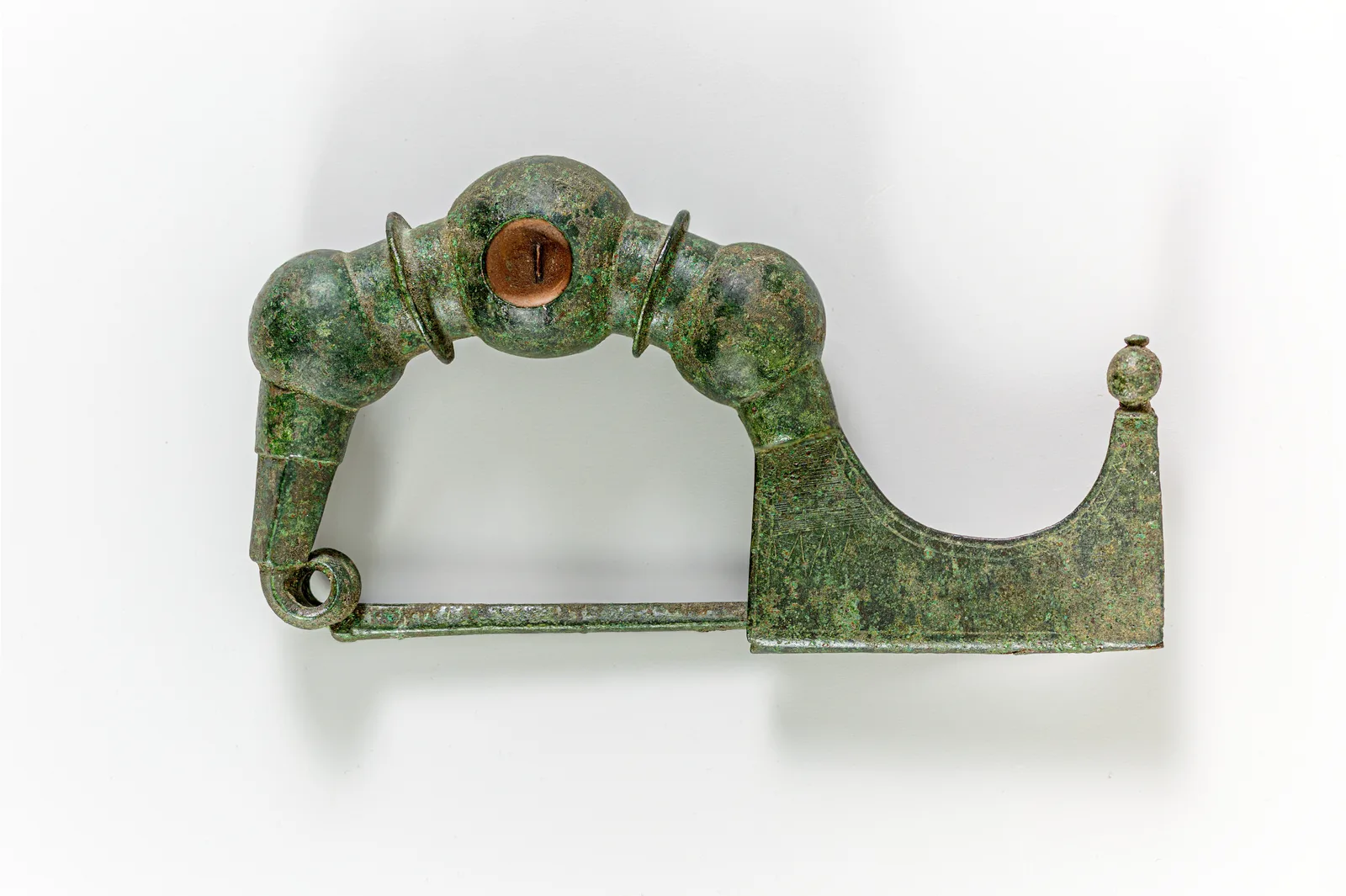
Rome worked copper and its alloys on an industrial scale. Bronze fibulae, the brooch-clasps that fastened togas and cloaks, were both a functional object and an ornament that told you the owner's status. The small as coin was struck from copper and bronze, and it was copper change that passed through an ordinary Roman's hands every day. Bronze went into statues, vessels, mirrors, and the fittings of water systems. Latin left us a word, and Roman engineering left us the idea that metal could be made for the masses.
Greece and the mirrors goddesses looked into
The Greeks polished bronze and copper discs to a state where the reflection was clear enough for makeup and hair. Such mirrors were placed in graves, given as wedding gifts, and dedicated to Aphrodite. Polished copper gave no perfect image, it was slightly warm and muted, but it was into these very discs that the women of whole eras looked, long before amalgam and glass.
Mesopotamia and the Sumerian masters
In Mesopotamia, copper and bronze formed the foundation of temple art. Sumerians and Akkadians cast figurines of gods, standard-tops, animal figures, and jewellery, often combining metal with lapis lazuli and carnelian. The famous copper heads and figures from the early cities show that lost-wax casting was mastered long before classical antiquity. Copper was the metal of the altar and of the marketplace at the same time.
A copper cuff belongs on a tanned wrist next to turquoise, not hidden under a shirt cuff. Winter-pale skin gets silver, and no arguing.
How to wear copper
I have tried copper in every form, from a forged cuff to a fine pendant, and here is what actually settles the two real questions: who it suits and what to put beside it.
Who does copper actually suit? Copper sits best on a warm, golden, or olive skin tone, where its reddish-pink glow looks alive. I still recommend it for cool, pinkish skin, but as a deliberate contrast rather than the main metal. If you are unsure of your undertone, the guide to metal for your skin tone settles it fast.
Which stone works best with copper? Turquoise, first of all. The warm reddish metal sets off the sky-blue stone in a way no cool silver can, and the pairing lived for centuries in Southwestern jewellery and Tibetan amulets. Warm stones like carnelian, amber, and tiger's eye belong here too. Clear cool stones such as topaz I usually keep away from copper.
Can I mix copper with other metals? Warm with warm is safe: I put copper, bronze, brass, and golden tones together without a second thought. Copper with cool silver is the bolder move, workable when you do it on purpose rather than by accident. If you like a two-tone contrast in one piece, look into the guide to two-tone jewelry.
What should I wear daily, and what should I save for going out? For every day I choose a pendant or earrings: the chest and lobes barely sweat, so they leave no green mark and darken slowly. A ring or a bracelet I keep for looks I am ready to fuss over, since the finger and wrist rub and sweat, and copper there darkens first. On tanned skin and an open neckline copper reads brightest, so the warm season is its season.
And when is copper not the best pick? If you dislike a piece changing colour, wash your hands in it twenty times a day, and would rather not deal with lacquer, I will honestly point you to steel or silver. Copper asks for light care: off before the shower, the sea, and the gym, kept dry. In return it gives a living, shifting character instead of a mirror shine that never moves.

Turn on your camera, pick earrings, a pendant or a ring, and see the piece on yourself in real time.
Switch items in one tap.
Everything runs in your browser: no photo or video is ever uploaded.
Barbarians, Vikings, and the East
Celts and Vikings: the gold of the poor and the rich at once
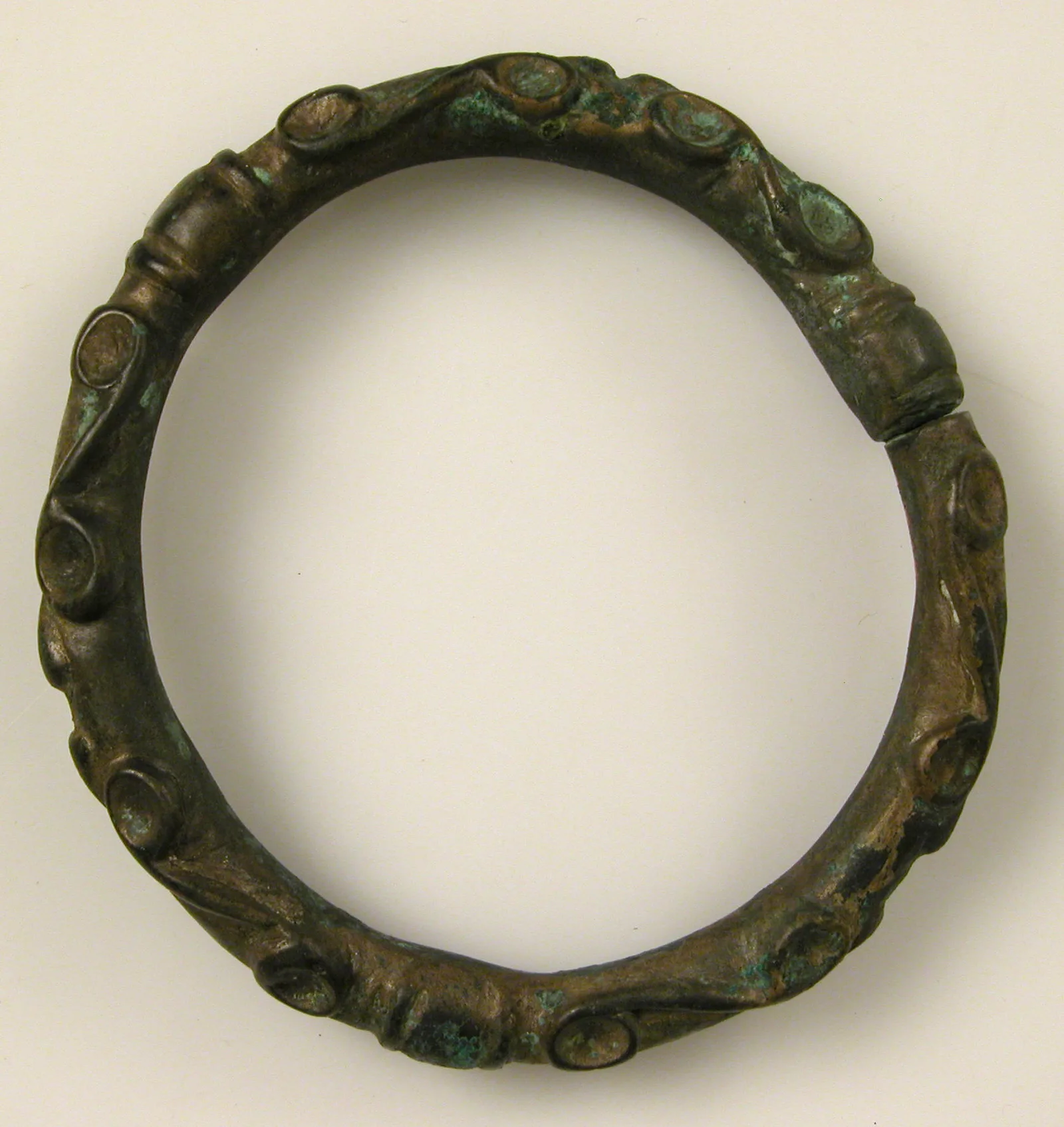
North of the Roman borders, copper and its alloys were sometimes called the gold of the barbarians, not out of contempt but because burnished bronze and brass shone almost like gold while costing far less. The Celts cast lavish torcs, brooches, and buckles, playing with the colour of their alloys. The Vikings wore copper and bronze tortoise brooches, rings, and pendants; burnished brass looked rich in the northern light. For people to whom gold was a rarity, the warm gleam of copper was a way to show wealth and taste without ruin.
India and Ayurveda: copper water
In the Indian tradition, copper is the metal of health. Ayurveda advises drinking water that has stood overnight in a copper vessel, the so-called tamra jal. The logic is ancient: copper disinfects water, and there is a grain of truth in it. Copper ions really do suppress a range of bacteria, and in a world without plumbing a copper jug was a sensible hygienic measure. Modern science confirms the antibacterial effect of the surface but urges caution: an excess of copper in drinking water is harmful, and a copper bottle should not become your only source of water. The tradition is beautiful, the moderation is mandatory.
Japan: shakudo, where black patina became art
Japanese masters turned what the West treated as a defect into their central artistic device. The shakudo alloy, copper with a small addition of gold (usually a few percent), takes on a deep blue-black patina after special treatment in a niiro bath, resembling lacquer or blued steel. This black colour was prized in sword fittings, in tsuba (guards), and in jewellery no less than gold. Alongside shakudo, masters used shibuichi, an alloy of copper and silver that gives grey-steel and olive tones. The Japanese tradition flipped the relationship with oxidation: here patina is not damage but the final goal of the work.
China and bronze ritual vessels
Ancient China raised bronze casting to the level of a state art. Ritual vessels for wine and food, bells, mirrors with the finest pattern on their backs, all were cast from bronze using complex multi-part moulds. The bronze mirror in China was both a household object and an amulet that warded off evil: it was placed in tombs and given at weddings. Here the warm metal carried both beauty and protection.
Customer reviews
Zevira is a real jewellery shop. Genuine payments, deliveries and customer thank-yous.
🥰🥰🥰 gracias
Ok, ¡gracias! 🙂
Copper in Art and Craft
Medieval enamel on copper
In the Middle Ages copper became the base for one of the most radiant techniques, champlevé enamel. Limoges in France grew famous for reliquaries, crosses, and caskets in which glass powder was packed into recesses cut in a copper plate and fired to the state of coloured glass. Copper was the ideal base: cheap enough to cover large surfaces, and strong enough to survive firing. Beneath the layer of enamel the metal did not turn green; it served as an eternal backing for blue, green, and crimson glass.
The Arts and Crafts movement: a revolt against the factory
At the end of the nineteenth century, the Arts and Crafts movement arose in Britain, a craftsman's answer to soulless factory production. Copper became its favourite metal: cheap, warm, perfect for showing the mark of a hand-held hammer. Makers forged trays, vases, mounts, frames, and jewellery from it, deliberately leaving the strikes of the tool visible. Copper said exactly what the movement wanted to say: this thing was made by hands, not by a press.
Art Nouveau: the flowing lines of a warm metal
The Art Nouveau style at the turn of the century fell in love with copper for its plasticity. From it makers bent stems, vines, women's profiles, and dragonfly wings, everything that was meant to flow and curve. The warm colour of the metal paired with enamel, mother-of-pearl, and semiprecious stones. Copper did not argue with the style's natural motifs, it played along: you could make it coil like a living shoot.
Scandinavian and studio modernism
In the twentieth century copper returned to the stage in the hands of studio jewellers. Northern masters valued its matte warm tone and gladly combined it with enamel in cool shades. Copper became the metal of those who made objects in small runs and put experiment above the shine of precious metal. It was in the studio workshop that a taste was born for deliberate patina, texture, and visible handwork, the very thing back in favour today.
Copper Alloys: Bronze, Brass, Cupronickel, and More
Bronze: copper plus tin
Bronze is an alloy of copper and tin, the very one that gave its name to an entire age. Tin makes soft copper hard and strong, which is why bronze became the metal of weapons, tools, bells, and statues. In jewellery, bronze gives a deep golden-brown tone and ages beautifully, gathering a noble patina. It is the first man-made alloy in history, and still one of the most enduring.
Brass: copper plus zinc
Brass is an alloy of copper and zinc, and it is the one most often mistaken for gold. The more zinc, the lighter and yellower the metal; high-zinc brass is almost indistinguishable from gold by colour. Brass is harder than pure copper, polishes more easily, and greens the skin less often, which is why it turns up everywhere in costume jewelry. If a golden piece feels too light and too cheap, it is most likely brass. For more on how it differs from silver and steel, it is worth reading a separate comparison of metals.
Cupronickel: copper plus nickel
Cupronickel is an alloy of copper and nickel with a silvery colour and good resistance to corrosion. It was used for cutlery, coins, and inexpensive jewelry that imitated silver. Cupronickel has a catch: the nickel in it. It is nickel, not copper, that most often triggers allergy, so for people with sensitive skin cupronickel is not always suitable. Those who have already met a reaction will find it useful to know the mechanism, covered in a piece on nickel allergy.
Tombac: noble brass
Tombac is a kind of brass with a high copper content (usually more than eighty percent) and a small amount of zinc. Its colour is warm, reddish-gold, softer than ordinary brass. Tombac was historically used for inexpensive medals, buttons, fittings, and gold-look costume jewellery. It is plastic, gilds well, and ages gently.
Shakudo and shibuichi: the Japanese art alloys
Unlike European alloys aimed at strength or cheapness, the Japanese shakudo and shibuichi were created for the colour of their patina. Shakudo (copper with gold) gives black, shibuichi (copper with silver) gives grey-olive. These alloys do not mask oxidation, they use it as a palette. Contemporary jewellery artists are reviving the techniques, and a shakudo piece is valued precisely for the handmade black patina that no press can produce.
Nickel silver and other copper-nickel alloys
Nickel silver, or German silver, is another light copper-based alloy with nickel and zinc, and it contains no silver at all. It is used for fittings, jewellery bases, and inexpensive silver-look pieces. Like cupronickel, it carries nickel, so it is not always right for sensitive skin. Knowing the composition makes it easy not to confuse it with real silver, and not to wonder why a light metal suddenly caused irritation.
Upload a photo of your pet, someone you love, or an object. We'll build a 3D model and hand-cast it in pewter.



Copper Stones: One Element, Many Colours
Malachite: oxidised copper turned to stone
Malachite is, in essence, copper that has become a stone. The green copper carbonate with its characteristic concentric banding forms where copper ores react with water and carbon dioxide over centuries. The very same chemical process that greens the bracelet on your wrist creates, deep underground over millennia, a patterned green gem. The Egyptians ground it into paint, Renaissance masters into pigment, jewellers of every age into cabochons and inlay.
Azurite: the blue brother of malachite
Azurite is a blue copper carbonate, the closest relative of malachite. The two are often found in a single piece of rock, passing into each other: blue azurite can in time turn into green malachite by absorbing water. Its deep blue went for centuries into paint pigment. In jewellery azurite is soft and capricious, but its saturated ultramarine is unmistakable.
Turquoise: the copper that colours the sky
Turquoise is a hydrated phosphate of copper and aluminium, and it is copper that gives it its sky-blue colour. The more iron, the greener the stone. Turquoise was sacred to the Egyptians, the Persians, the Native peoples of North America, and the Tibetans. It is one of humanity's oldest adornment stones, and the same copper is responsible for its colour.
Chrysocolla: copper the colour of a lagoon
Chrysocolla is another copper mineral, giving gentle blue-green tones close to turquoise but softer and more matte. It is often found together with malachite and azurite, in the same copper deposits. One metal, copper, colours four different stones green, blue, sky-blue, and turquoise. It is a rare case where the origin of a colour is something you can hold in your hand.
Dioptase and cuprite: the rare copper gems
Beyond the famous four there are the rarities. Dioptase is an emerald-green copper mineral of such brilliance that collectors sometimes take it for emerald. Cuprite is a red-crimson copper oxide that gave the world a deep wine colour. Both are too fragile for everyday wear, but in collector and artist pieces they are valued for exactly the colour the same copper gave them.



Why Copper Greens Your Skin, and Why It Is Not an Allergy
What the green mark really is
The green imprint on skin is patina, a thin layer of copper oxides and salts. Copper reacts with sweat, with skin acids, with creams, and with air, forming green compounds that stay on the skin. It is the same chemistry that greens cathedral roofs and the Statue of Liberty, only on a wrist and over hours. The green mark washes off easily with soap and water and leaves no trace. It looks alarming but is essentially harmless. A detailed breakdown and ways to fix it are in the article on green skin from jewelry.
Why some people green and others do not
The speed of greening depends on the chemistry of the skin: the acidity of sweat, the amount of cream and cosmetics, the humidity of the climate. On someone with acidic sweat and a habit of lotions, copper will oxidise faster. Heat and damp speed up the reaction, so the mark appears more readily in summer and at the gym. It is not a measure of the metal's quality but of individual chemistry. A thin protective lacquer or wax layer slows the process almost to nothing.
The real cause of allergy is nickel, not copper
The green mark is often confused with allergy, but they are different things. Copper itself very rarely causes a true contact allergy. The real culprit of metal dermatitis is almost always nickel, added to alloys for hardness and shine. If the skin under a piece reddens, itches, and inflames, the cause is most likely nickel, not copper. Anyone who has met a reaction should understand the mechanism through the piece on nickel allergy.
How to avoid the green mark
There are several ways, all simple. Coat the inside of the piece with a thin layer of clear nail varnish or jewellery lacquer, a barrier between metal and skin. Do not wear copper in the heat, in the pool, or in the shower. Take it off before creams and perfume. Keep the piece dry and wipe it after wearing. These small habits prolong the shine and reduce the green imprint to a minimum without stripping the metal of its warm character.
Copper and Health: Where the Truth Ends and the Myth Begins
The copper bracelet for joint pain
The most enduring myth about copper is that a bracelet cures arthritis and joint pain. The idea is old and charming: copper supposedly soaks through the skin and relieves inflammation. Blind scientific studies have not confirmed this. In controlled experiments, copper bracelets worked no better than placebo dummies. That does not mean wearing a bracelet is harmful or pointless: the placebo effect is real, and the ornament itself is beautiful. But promising a cure from copper is dishonest, and serious medicine makes no such promise.
Copper water: the grain of truth in an ancient tradition
With copper water the story is subtler. Copper ions really do have an antibacterial action, and water that has stood in a copper vessel contains fewer of certain microbes. Here the Ayurvedic practice guessed right. But there is a limit: the body needs very little copper, and an excess is toxic. Drinking only copper water all the time, especially acidic drinks from copper, is a bad idea. The sensible moderation of the ancients works; fanaticism does not.
Copper kills microbes: science, not magic
The antimicrobial properties of copper are not a myth but a confirmed fact. Surfaces of copper and its alloys kill many bacteria and viruses within hours, and in hospitals handles, rails, and taps are sometimes deliberately made of brass or copper for exactly this reason. The property is called contact killing. It has almost nothing to do with wearing a bracelet on the wrist, but it explains why copper door handles in old buildings were a sensible decision long before microbiology.
Copper as an element the body needs
A curious twist: copper really is necessary to the body, but through food, not through the skin. It is a trace element involved in the absorption of iron, the work of nerves, and the formation of connective tissue. We get it from liver, nuts, cocoa, and seafood, not from a bracelet. So copper is useful, but the myth confuses the source: the plate works, the wrist does not.
Leave your email, we'll send your discount code. No spam, unsubscribe anytime.
The code arrives by email, valid on your first order.
Patina: How Copper Ages and How to Control It
Natural patina: a gift of time
Natural patina grows on its own, from contact with air and moisture. First the copper darkens to a chocolate brown, then it greens in places. This layer protects the metal beneath it from further corrosion, which is why copper roofs last centuries. Many people prize exactly the living, uneven patina: it makes a thing feel warm and lived-in, nothing like a conveyor belt.
Heat patina: colours from fire
If you heat copper with a torch, iridescent swirls bloom on the surface, from gold through crimson to violet and blue. This is heat patina, a thin film of oxides of varying thickness that refracts light like oil on water. Jewellers use it for shimmering effects. The colour depends on temperature and is precisely controlled by an experienced hand.
Chemical patina and verdigris
Chemical patina is induced on purpose, with a brush or in a bath. Liver of sulphur gives brown-black tones, ammonia compounds give blue and green. The famous bright-green coating is called verdigris (from Old French, literally the green of Greece). It is the very colour of aged bronze and copper roofs. Masters bring up verdigris deliberately, to get an antique, museum look in days instead of decades.
How to grow patina on purpose
To age copper at home, you degrease it and then expose it to fumes: the classic method is to suspend the piece over a saucer of vinegar and salt in a closed box. Over a few days, green appears. Ammonia speeds the process and gives bluer tones. Liver of sulphur, dissolved in warm water, gives a brown-black depth in minutes. Once the desired colour is reached, the patina is sealed with wax or lacquer, or it will keep changing.
How to stop patina when you do not want it
The reverse task is solvable too. To keep copper from darkening, you seal it: jewellery lacquer, a clear coating, or microcrystalline wax create a barrier against air and moisture. Store the piece in a dry place, in a pouch with anti-tarnish paper or silica gel. The less contact with sweat, creams, and water, the longer the fresh shine holds. You cannot fully stop time, but you can slow it to imperceptible.
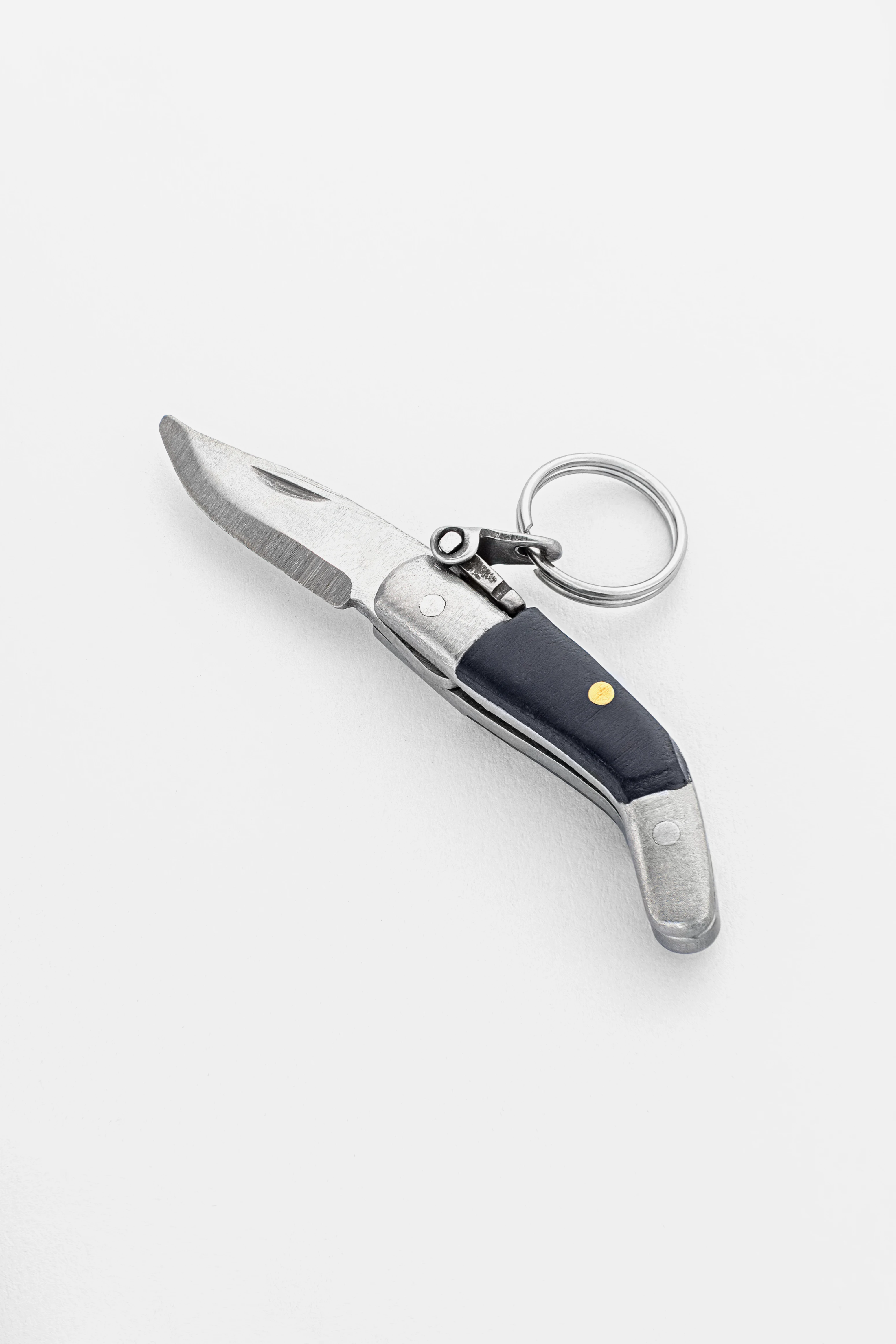
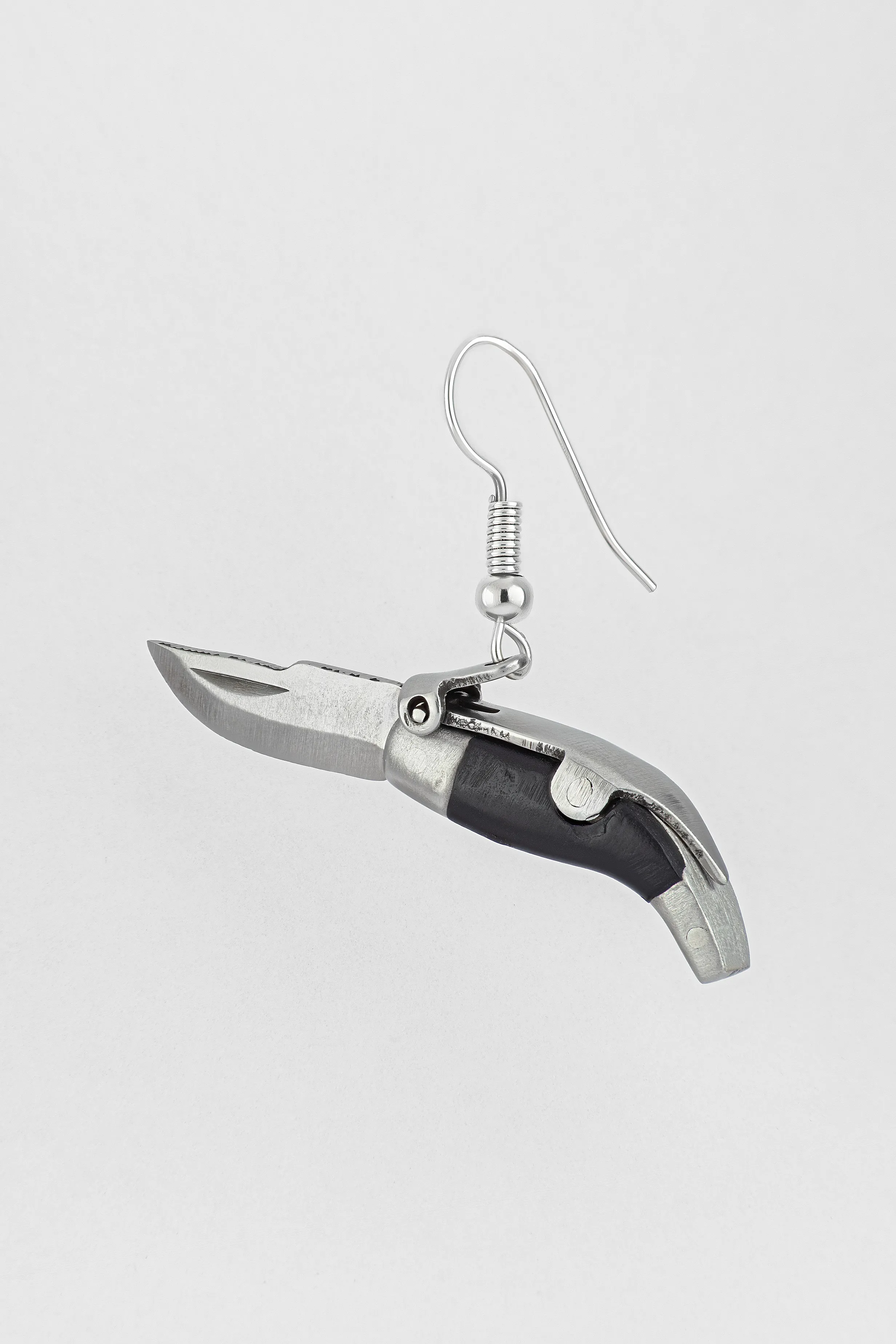
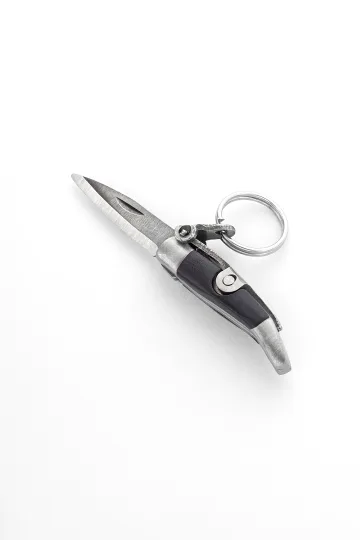
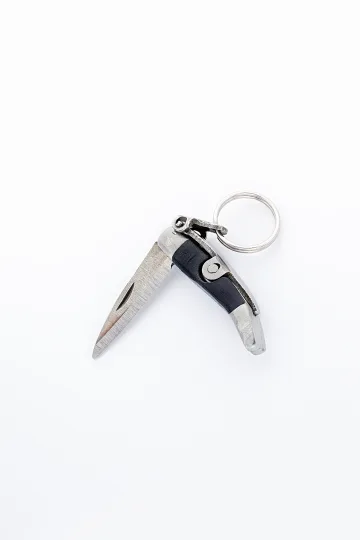
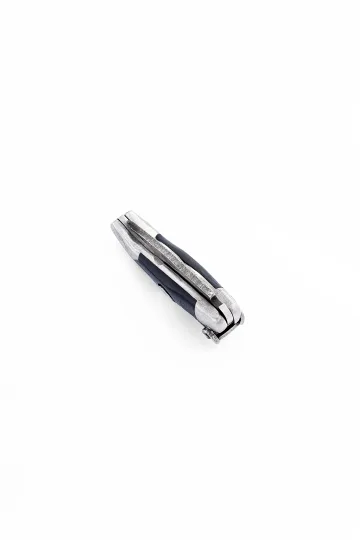
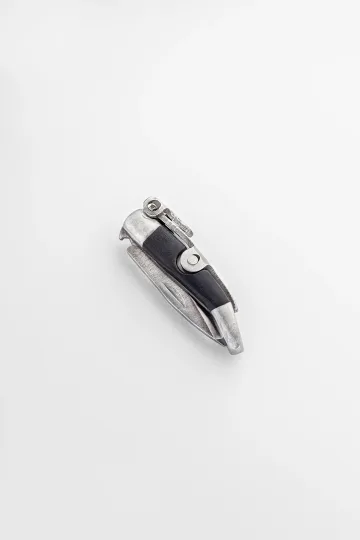
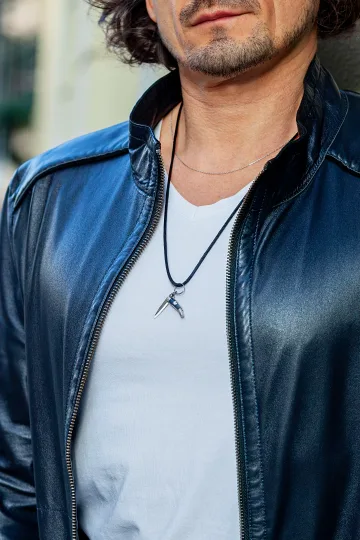
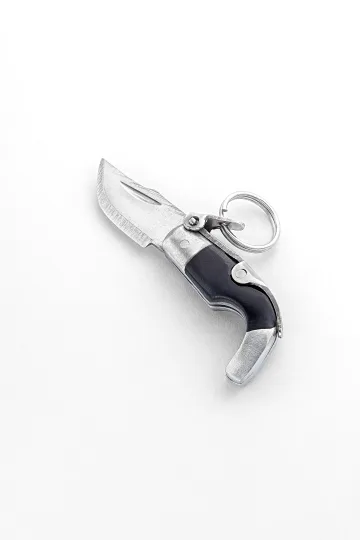
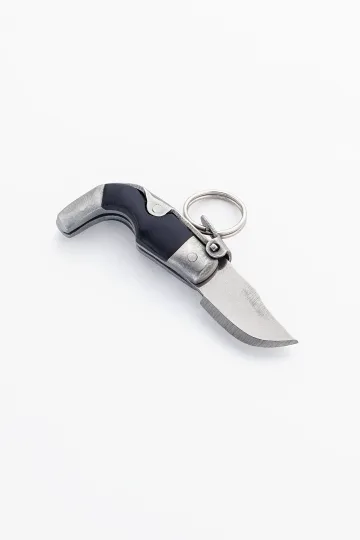
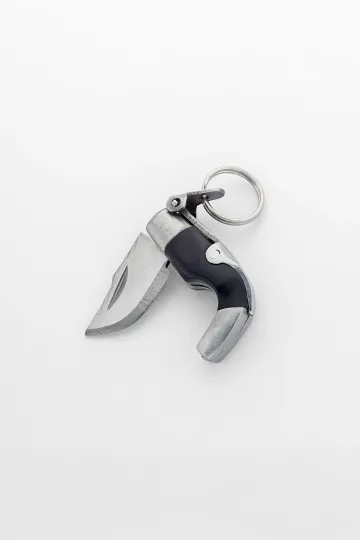
CAPAORA mini knife pendant
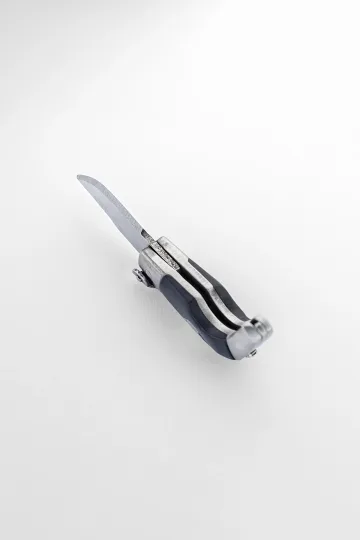
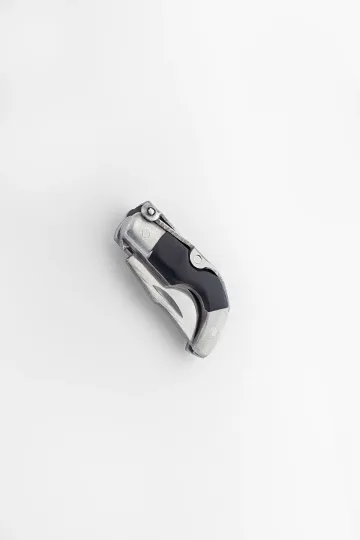
The 18th-century Spanish navaja in miniature: 40 mm of stainless steel, a real folding mechanism and a Palanquilla lock that clicks. An affordable gift to remember.
Authentic · Ships from Spain · 14-day returns
Techniques for Working Copper
Forging: metal under the hammer
Forging is the oldest way of working copper. Cold copper is struck with a hammer on an anvil, taking shape and at the same time compacting. Under the blows copper work-hardens, becoming harder and springier. To make it soft again, you anneal it: heat it and quench it. The hammer marks on the surface are a textured play of light that many people leave on purpose.
Chasing and repoussé: a pattern in relief
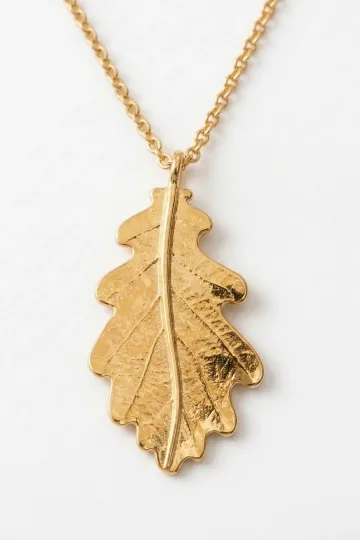
Chasing and repoussé are two sides of one technique. Repoussé is pushing the relief out from the back so that the design stands proud. Chasing is the refining from the front with special punches, adding detail and texture. Together they turn a flat copper sheet into a three-dimensional relief: leaves, faces, ornaments. Copper is ideal for this because of its softness and plasticity.
Electroforming: copper grown by current
Electroforming is a modern magic in which copper is literally grown by electric current. An object (a real leaf, an acorn, or a crystal, say) is coated with a conductive lacquer and lowered into a copper-salt solution. Under the current, copper deposits on the surface layer by layer, repeating every detail. This is how jewellery with real natural objects in a copper shell is made. It is electrolysis put to the service of beauty.
Wire wrapping: a weave of wire
Wire wrapping needs neither fire nor solder, only copper wire, a tool, and hands. A stone or bead is wrapped, fixed, and finished with a pattern of coils. Copper wire is ideal for it: soft, obedient, and holding its shape. From it people weave settings, pendants, and rings in which the metal becomes lace around the stone.
Etching and casting
There are more industrial paths too. Etching cuts a design into copper: the surface is protected with lacquer where the pattern should stay, and acid eats away the exposed metal, creating relief. Lost-wax casting pours copper and bronze into a mould, producing complex three-dimensional pieces in a single cycle. These techniques are older than most metals in a jewellery box and still work in artist workshops today.
Caring for Copper and Telling It from a Fake
How to clean copper at home
Tarnished copper is brought back to shine with simple kitchen remedies. The classic is half a lemon dipped in salt: acid plus abrasive lifts the oxide in minutes. A paste of baking soda and lemon juice works too, as does warm vinegar with salt, and even ketchup (it has the right acids). After cleaning, the metal is rinsed, dried, and if you like rubbed with wax. Decide in advance: do you want shine or patina, because cleaning removes both.
Lacquer and wax: keeping the look you want
To fix the state of copper, whether mirror shine or an induced patina, you coat it with a protective layer. Microcrystalline wax gives a soft matte protection and refreshes easily. Clear jewellery lacquer seals the surface more tightly and for longer. Under protection, copper stops greening the skin and stops changing colour. There is one downside: over time the coating wears and has to be renewed.
How to tell real copper from brass
Telling copper from look-alike brass is easier than it seems. The main sign is colour: pure copper is reddish-pink, brass is yellower and cooler, closer to gold. A fresh cut or scratch is clearly pink on copper, yellowish on brass. Copper is heavier and softer, and bends more easily. A magnet sticks to neither, so a magnet is used rather to catch a steel fake gilded to look like gold. If a piece is golden, light, and hard, you are almost certainly looking at brass, not copper.
Copper, brass, silver: how not to get confused
When several warm metals are in play, it is easy to mix up copper, brass, bronze, and silver-plated alloys. Copper is the reddest, bronze is brown-gold, brass is yellow, cupronickel and silver are coolly silvery. Colour, weight, and the behaviour of the patina give each one away. To sort out the family, a comparison of brass, steel, and silver helps, and for anyone thinking about real silver, a breakdown of the 925 hallmark is useful.
What copper does not like
Copper has weaknesses worth knowing. It does not get along with pool chlorine, sea salt, and sudden damp, all of which speed up darkening and spotting. Long contact with sweaty wrists leaves a dark film. Acidic foods and harsh household chemicals can corrode the surface. Knowing this, copper is easy to protect: take it off before the shower, the sea, and cleaning, keep it dry, and it will serve a long time.
Copper Jewellery: By Type
A copper ring
A copper ring is the most temperamental of all copper jewellery, and geometry is to blame. A finger constantly sweats, gets washed, and rubs against other fingers, so a copper ring is the first to darken and leaves that green band on the skin more strongly than a bracelet or earrings. It is not a defect but chemistry in the closest possible contact. On the other hand, copper is soft and plastic, so a copper ring is almost always handmade: a forged band with hammer marks, wire wrapped around a stone, a cast band with patina in the recesses. A mass-stamped copper ring is rare precisely because the metal is too soft for assembly-line tolerances. Copper rings are worn more often as a talisman or an artist piece than as everyday jewellery: they are taken off before hand-washing and creams, and the inside is coated with a thin lacquer if the green mark gets in the way. Patina on a textured ring looks especially alive, dark in the grooves and light on the high points.
A copper bracelet
The copper bracelet is the most common request about copper, and almost always there is a legend of joint healing behind it. Let us be honest: blind studies have not confirmed that copper relieves pain or inflammation through the skin; in trials such bracelets worked no better than a dummy. People wear them not for that but for the warm reddish colour that comes alive on tanned skin, and for the pleasant weight of metal on the wrist. The classic form is a wide forged cuff with a hammer texture or engraving, easy to fit to the hand: copper bends with the fingers. The wrist sweats and rubs against sleeves, so the bracelet darkens and greens the skin faster than jewellery in other places. This is fixed by a thin layer of lacquer inside and the habit of taking the bracelet off in the shower, the pool, and the gym. Over time, the patina on a wide cuff turns it into a lived-in, almost antique thing, and many people love it for exactly that.
Copper earrings
Earrings are the most convenient way to wear copper without the hassle. Even a large forged or chased pair stays light: copper is not a heavy metal, and a big geometric earring does not drag the lobe the way silver or steel of the same size would. That frees the maker's hands; you can make expressive discs, leaves, relief pendants. The second plus is in the skin itself: an earlobe sweats and rubs far less than a wrist, so earrings leave almost no green mark and darken slowly. For those who are still sensitive, the ear wire or the part that enters the piercing is made of silver or surgical steel, leaving only the decorative outer part in copper. The inside is often coated with a thin lacquer, both for the skin and to hold the colour longer. Forged and chased copper in earrings plays with light on its facets especially beautifully.
A copper chain and pendant
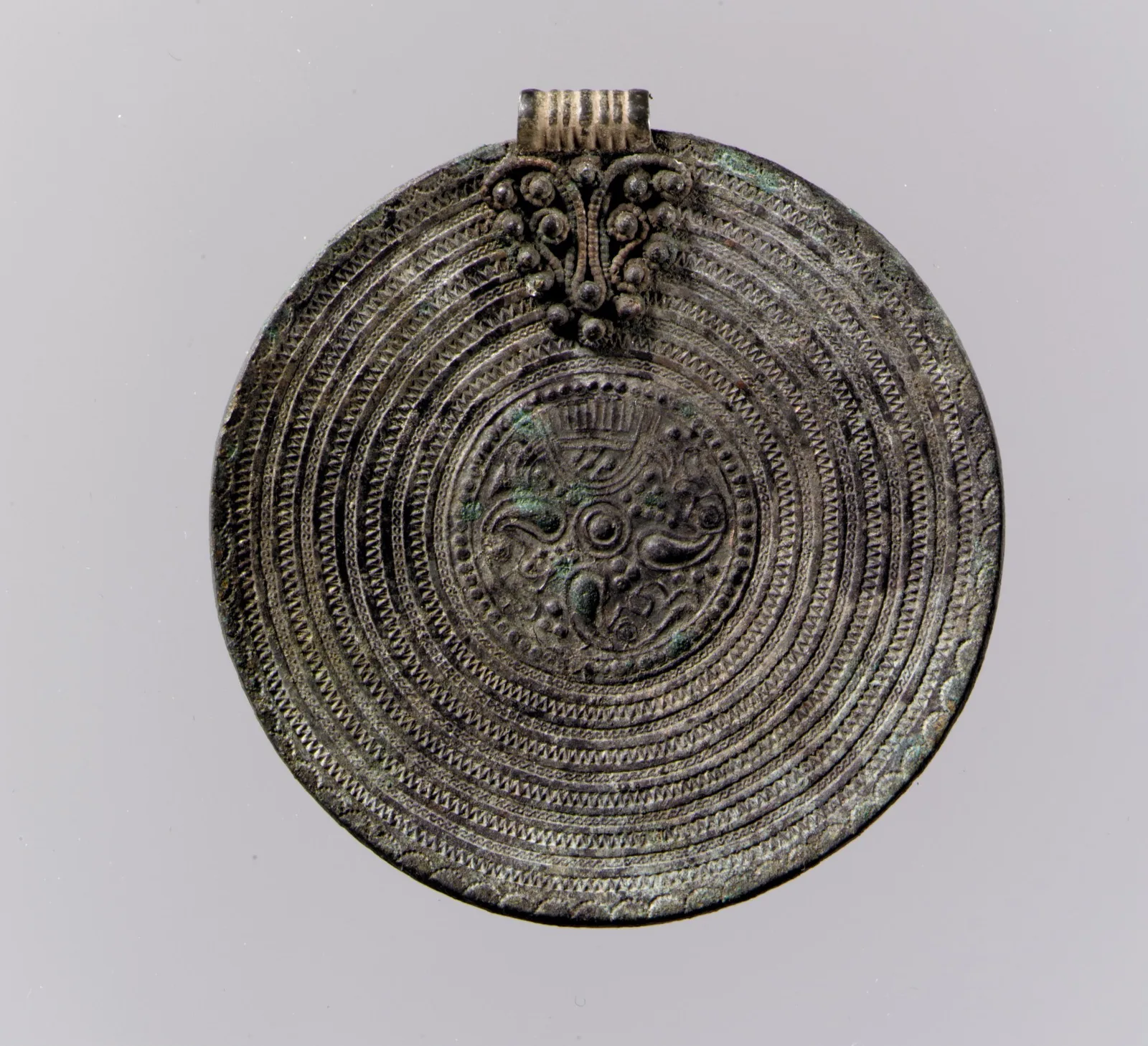
A copper pendant hangs at the chest, on a spot that barely sweats, so it stains the skin rarely, unlike a ring or a bracelet. That makes a copper pendant one of the friendliest options to wear. Its main beauty is relief: a chased or cast medallion gathers patina over time, dark in the recesses and light on the raised parts, and the design stands out more boldly than on fresh metal. A protective lacquer on the front face keeps the chosen stage of ageing, so the pendant does not darken all over. The chain is often taken in copper too, or in a warm alloy, so the colour matches, and sometimes deliberately patinated: then the dark chain and the bright burnished pendant play off each other. With chain links, remember that they rub against each other and against the neck, so they darken in their own way, unevenly, and that unevenness looks alive rather than sloppy.
A copper brooch and pin
A brooch is the case where copper opens up fully, with no caveats about skin. It barely touches the body, fastening to fabric, so it neither greens nor darkens from sweat; the metal ages slowly and beautifully. The Art Nouveau era loved copper for exactly this: from it makers bent dragonflies, vines, women's profiles, flowing lines that chasing and repoussé turned into raised relief. The softness of the metal allows the finest detail, out of reach in hard steel. And above all, here the patina works for the image: dark in the depths of the relief, light on the ridges, it underlines the form as flat shine never could. A small copper pin with a chased pattern ages to the look of a museum exhibit in a few seasons. It is jewellery for those who value texture and handwork over mirror gloss.
Send a friend a discount code, they save on their first order.
Facts That Surprise
Under its green patina, the Statue of Liberty is the same colour as a new copper coin: reddish-pink. The famous turquoise coating grew over the first thirty years and has protected the metal from decay ever since.
Copper got its name from an island. The Latin cuprum is a shortening of aes cyprium, the metal of Cyprus, which supplied the whole Mediterranean.
Malachite is oxidised copper turned to stone. The same green process that colours your wrist in an evening creates, deep underground over millennia, a patterned gem.
Copper kills microbes at a simple touch. Its surfaces disinfect themselves within hours, which is why hospital handles and rails are sometimes made of brass and copper.
One element colours four stones. Copper gives the green of malachite, the blue of azurite, the sky-blue of turquoise, and the blue-green of chrysocolla, a whole palette from a single metal.
Aventurine glass glitters thanks to copper. Venetian glassblowers got, by accident (legend says by spilling copper filings), the sparkling aventurine glass in which the finest particles of copper shimmer.
Japanese shakudo is deliberately brought to black. The alloy of copper and gold is treated so it takes on a blue-black patina, and it is valued for that patina, not in spite of it.
The axe of the ice man Ötzi from the Alps is almost one hundred percent copper. Five thousand years ago an ordinary, non-royal person already carried pure smelted copper.
Frequently Asked Questions
Why does a copper piece green the skin, and is it dangerous? The green mark is patina, a thin layer of copper salts formed in reaction with sweat and creams. It is harmless, washes off easily with soap and water, and does not mean the piece is ruined. If the green bothers you, a thin layer of lacquer or wax on the inside of the piece helps.
Is it a copper allergy? Almost certainly not. A true allergy to copper is extremely rare. If the skin reddens, itches, and inflames, the culprit is usually nickel, which is added to alloys. The green mark on its own is not an allergy but oxidation chemistry.
Does a copper bracelet heal joints? Blind scientific studies have not confirmed it: in controlled trials copper bracelets worked no better than placebo. Wearing such a bracelet is pleasant and attractive, but promising a cure from it is dishonest.
Is it safe to drink copper water? In moderation, yes, and there is a grain of truth in it: copper ions disinfect water. But an excess of copper is toxic, so drinking only copper water, especially acidic drinks from copper, is a bad idea. The ancient tradition works only as a measured practice.
How do I tell copper from brass? By colour: pure copper is reddish-pink, brass is yellower and cooler, closer to gold. A fresh scratch is pink on copper, yellowish on brass. Copper is softer and heavier. A magnet catches only a steel fake; it sticks to neither copper nor brass.
How do I clean tarnished copper? With simple remedies: half a lemon with salt, a paste of baking soda and lemon juice, warm vinegar with salt. Acid lifts the oxide in minutes. After cleaning, the metal is rinsed, dried, and if you like rubbed with wax to keep the shine.
Can copper be worn every day? It can, but it will darken and change colour from contact with skin and water. If you want an unchanging look, the piece is coated with lacquer or wax and the coating is renewed as it wears. For those who dislike upkeep, steel or silver is closer.
How do I age copper on purpose and get a patina? Degrease the metal and hold it over the fumes of vinegar and salt in a closed box for a few days, and green appears. Ammonia gives blue, liver of sulphur gives brown-black tones in minutes. A finished patina is sealed with wax or lacquer.
In Short
Copper is an honest metal. It was the first in human hands, gave its name to a whole age, painted ancient eyelids green, armed the bronze world, taught Japan to love black patina, and taught Ayurveda copper water. It greens the skin not from damage but from life, and is almost never to blame for allergy, since nickel answers for that. You can buff it to a mirror or deliberately age it to antique green, forge it with a hammer or grow it with current. Copper asks for a little care and pays in character: warm colour, living patina, and a history eight thousand years long.
Silver, steel, warm metals, coloured stones, symbolism, matching sets.
Buying it as a gift? Each one arrives ready to give.
 A branded Zevira box and a little card come with every order.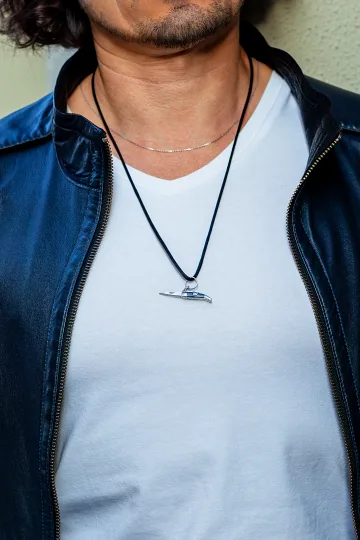




About Zevira
Zevira is a Spanish brand from Albacete, a city of metalworkers. We love things with character: warm metals, living patina, coloured stones, and symbolism with a history. If you want to match a metal to your skin tone, start with the guide to metal for your skin, and for silver the breakdown of the 925 hallmark will tell you more.