Turquoise in jewellery: the sky stone that reads your skin and keeps a colour five thousand years old
Tutankhamun's tomb held more turquoise than any modern jeweller keeps on display. Blue inlays glowed on the pharaoh's golden mask for three thousand years, until they were lifted out of the dark. Yet a bracelet set with that same stone on your wrist can turn green in a single sweltering month, and the culprit is not spirits or a curse but your hand cream. The sky stone is honest to a fault: it soaks up whatever you feed it.
Turquoise does not pretend to be a cold diamond. It is warm, porous, alive and temperamental. People wear it not for sparkle but for colour and for meaning piled up over millennia. The Persians saw in it a piece of the sky fallen to earth. The Navajo set it in silver and wore it as protection in the desert. Tibetan monks counted turquoise beads on their malas. European riders believed the stone would crack instead of its owner, taking the blow on itself. No gem has gathered quite so many beliefs, and the reason is simple: this one genuinely changes colour.
Below we work through all of it: why the colour drifts from sky-blue to grassy green, what those dark veins running across the stone really are, how cultures from Egypt to Arizona turned turquoise into an amulet, and how you can tell a real stone from dyed howlite in about a minute.
What turquoise is: a mineral where copper makes the colour
What turquoise is actually made of
Turquoise is a hydrated phosphate of copper and aluminium. Behind the dull formula sits a simple fact: the blue comes from copper, the very same metal that greens your finger under a cheap ring. Without copper there is no turquoise, because copper is the colour. Aluminium holds the structure together, while phosphorus and water finish the recipe. The stone forms where copper-bearing waters seep through rock in a dry climate, filling cracks and cavities. That is why turquoise turns up almost exclusively in deserts: Iran, Sinai, the American southwest, the northwest of China.
Why turquoise is soft and porous
On the hardness scale turquoise sits at roughly five to six out of ten, softer than quartz and glass. A steel knife will scratch it, and an unworked lump crumbles easily. Its defining trait, though, is not hardness but porosity: the stone is riddled with microscopic pores, like a sponge. That is why it drinks water, oil and dye, why it darkens over years of wear, and why almost all turquoise on the market is treated with something to firm it up. Naturally dense, top-grade turquoise is rare and priced like a genuine gem.
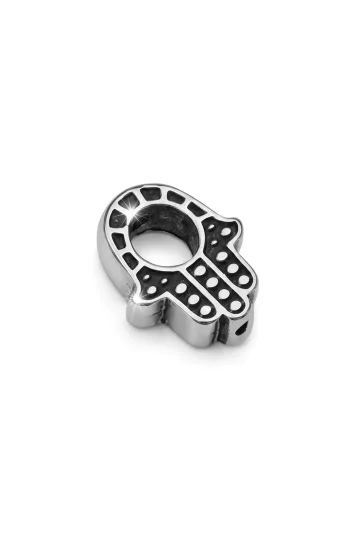
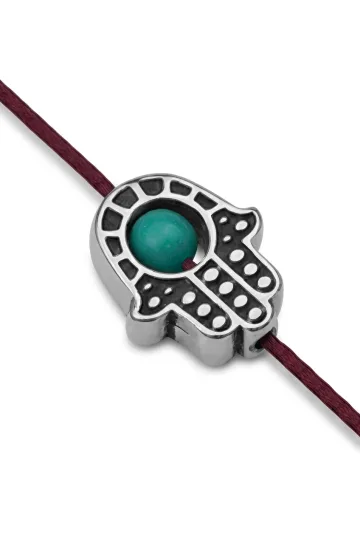
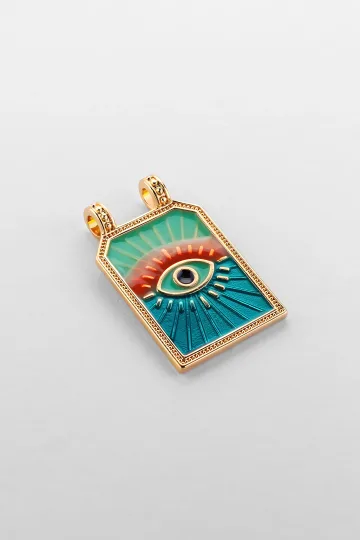
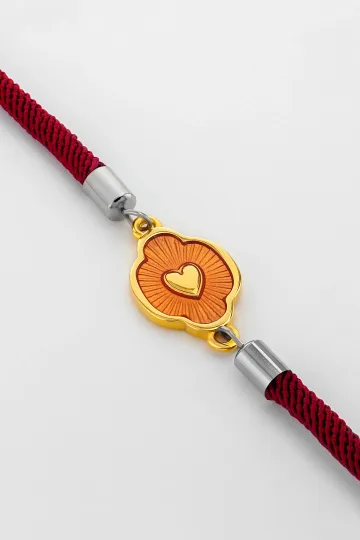
Wear the symbol, don't just read about it. These are in stock:

What turquoise looks like in nature
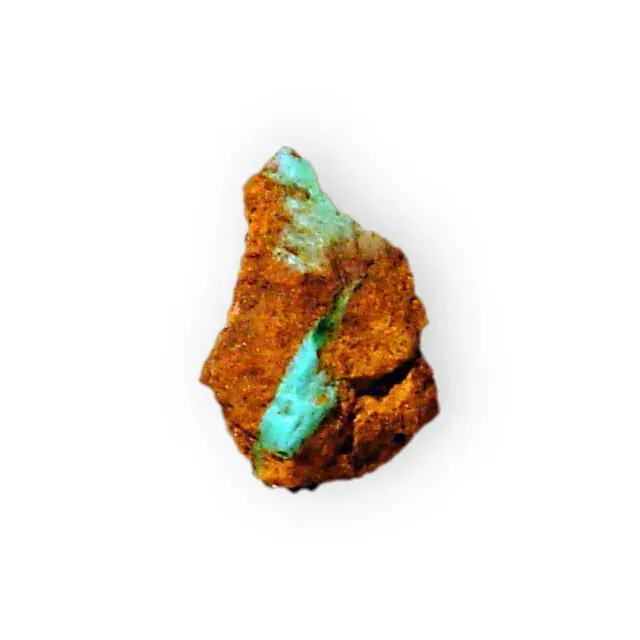
In the host rock turquoise appears not as crystals but as solid crusts, coatings and nodules in shades of blue and green. You cannot facet it the way you cut a diamond, so the stone is always shaped as a cabochon: a smooth domed cut with no facets. That form draws out its soft, faintly waxy glow and shows off the veining of the rock. Turquoise does not glitter, it glows from within with a muted sky light, and that is how you recognise it on sight.
Where the word turquoise comes from
The English name arrived through Old French, pierre turquoise, the Turkish stone, even though no turquoise was ever mined in Turkey. Persian stone reached Venice and the rest of Europe through Turkish traders, and the name stuck to the middleman rather than the source. Dig deeper and the older root is the Persian firuzeh, meaning victory or good fortune. So a single stone holds two paths at once: a western one through merchants and an eastern one through meaning.
How turquoise differs from other blue stones
There are plenty of blue minerals, and turquoise is often mistaken for its neighbours on the palette. Lapis lazuli is a deep navy flecked with golden pyrite, harder and more translucent along a chipped edge. Amazonite is a greenish-blue feldspar, glassier, with a distinctive gridded texture. Chrysocolla is softer than turquoise and often grows fused into the same lump, so even a specialist can struggle to separate them. The giveaway for turquoise is that matte, waxy glow, a soft unflashy lustre and full opacity even at a thin edge. It does not sparkle and it does not pass light, it glows quietly, like an overcast sky.
The colour of turquoise: from sky to grass and what controls it
Why turquoise can be blue
A pure sky-blue comes from copper ions sitting in the crystal lattice. The more copper and the fewer impurities, the closer the stone gets to that ideal blue, the one connoisseurs call cloudless sky or robin's egg. That even blue tone has long been treated as the benchmark, and it commands the highest prices. Persian turquoise made its name on exactly this clean blue with no green creeping in.
Why turquoise can be green
Let iron take the place of some of the copper and the stone slides into green. Iron shifts the hue from blue toward blue-green, then on to grassy and apple-green. The more iron, the greener the result. Many deposits yield green-toned turquoise, and this is not a flaw, just a different nature of the stone. Today green and blue-green turquoise is prized in its own right, especially in southwestern American and boho styles, where its matte green looks more alive than a sterile blue.
What else shapes the tone
Beyond the balance of copper and iron, the colour depends on the water content and on the surrounding rock itself. Freshly mined turquoise is often brighter, and in the air, as it loses moisture, it can fade slightly. Aluminium, zinc and other impurities add their own shades. So two stones from the same mine can differ in tone, and there is no single correct colour for turquoise: there is a blue pole with copper, a green pole with iron, and the whole spectrum in between.
Does turquoise change colour over time
Yes, and this is chemistry, not legend. The stone is porous, it absorbs skin oil, sweat, soap and cream, and the blue gradually greens or clouds over. Ultraviolet light and dryness shift the tone too. Old family turquoise is nearly always darker and greener than it was the day it was bought. Some read this as ruin, others value it as a patina of time, a mark of life left on the stone.
Turquoise wants silver and a tanned wrist. On pale skin in white gold it reads as a button, not a stone, and no arguments.
What to wear with turquoise
Over years on shoots I have worked out a few simple rules for turquoise, and they all come down to three things: the metal, the shade of the stone and where it sits on the body. Here is what actually works, by occasion.
What do I wear with turquoise every day? For every day I recommend a clean blue turquoise in silver: earrings or a small pendant on a fine chain over a white shirt, a linen dress or a plain tee. The cold shine of silver lifts the sky colour, while the matte surface of the stone softens the metal. A light top keeps turquoise a soft accent; navy and khaki push it forward. If you want to know what the hallmark on silver really means, look into the explainer on what 925 silver means.
Silver or gold with turquoise? I go by the shade of the stone. A clean blue turquoise with no green I keep in silver or white gold, in a cool register, closer to the Persian classic. A greenish, earthy stone I hand to warm metal instead: copper and brass deepen its natural character, while yellow gold with a clear blue turquoise already sounds Egyptian, the contrast of sun and sky.
How do I build a Southwestern or boho look? Here turquoise is not a neat accent but the centre of the whole texture. For Santa Fe I choose large stones, heavy silver, leather and fringe. For boho I layer: natural fabrics, turquoise next to coral, wood and feathers, a free nomadic line. One signet ring or a wide cuff holds the look better than a handful of small pieces.
Which turquoise pieces are safer to wear? A ring is the most vulnerable option: hands meet water, soap and knocks most often, so rings are the first to green and crack. Earrings and a pendant last longer, touch chemicals less and take fewer blows. For daily wear without worry I recommend earrings and a pendant, and I suggest saving a striking ring for special days and taking it off at home.
Who does turquoise suit, and how do I match it by colour? By skin, blue turquoise freshens almost any tone and plays especially well on a tanned or dark wrist; greenish shades suit warm colour types. By character, the stone goes to those drawn to a natural, free look rather than strict classics. Turquoise is traditionally counted the stone of December, given to those born in early winter. If you fancy comparing temperamental turquoise with another coloured stone, there is a full piece on the emerald, its meaning and properties.

Turn on your camera, pick earrings, a pendant or a ring, and see the piece on yourself in real time.
Switch items in one tap.
Everything runs in your browser: no photo or video is ever uploaded.
Matrix: the veins of rock as the stone's signature
What turquoise matrix is
Matrix is the leftover host rock that has grown into the stone as dark veins and patches. Turquoise forms in cracks, and fragments of the surrounding rock, limonite, sandstone, quartz, stay locked inside forever. The result is brown, rust, black or grey lines running across the blue field. These are not cracks and not dirt, but part of the very make-up of the stone.
Flaw or feature
For a long time clean blue without a single vein counted as the top grade, and matrix dragged the price down. That logic still lives on among lovers of the Persian ideal. But the American southwest flipped the taste: there matrix was embraced and turned into a virtue. A handsome pattern of veining gives every stone its own face, and today certain grades with a striking web are valued above plain blue.
Spiderweb and other patterns
The most prized type of matrix is the spiderweb: a fine, regular net of dark lines spread evenly across the whole stone, like lace or a cobweb. Turquoise with a neat, even spiderweb is especially costly and recognisable. There is also broad, patchy matrix, and single bold veins. Collectors read the patterns by deposit: each mine has its own handwriting, and a trained eye can tell where a stone was born just from its matrix.
What colour the matrix can be
The colour of the veins is set by the surrounding rock. Black matrix is usually iron and manganese oxides, giving the most graphic contrast with the blue. Brown and rust matrix is limonite and ferrous sandstone, a warm earthy pattern. A golden, metallic sheen in the veins comes from inclusions of pyrite, as on some Arizona stones. Sometimes the rock almost blends into the background in tone, and the pattern reads only as a faint haze. For an expert the colour of the matrix is just as much a clue to origin as the shade of the stone itself.
Customer reviews
Zevira is a real jewellery shop. Genuine payments, deliveries and customer thank-yous.
🥰🥰🥰 gracias
Ok, ¡gracias! 🙂
Turquoise in ancient Egypt: the colour of the sky and the goddess Hathor
The goddess Hathor's stone
Hathor, goddess of love, beauty and joy, was known to the Egyptians as the Lady of Turquoise. Her temple stood on the Sinai peninsula beside the oldest turquoise mines in the world. The blue of the stone was tied to sky, water and rebirth, to everything living and fertile. Mining turquoise in Sinai began about five thousand years ago and was held to be work pleasing to the goddess, with expeditions into the desert mounted under her protection.
Turquoise in Tutankhamun's tomb
The famous golden mask of the young pharaoh is inlaid with turquoise alternating with lapis lazuli and carnelian. The blue insets ran through the broad collars, the pectorals, the rings and amulets from his tomb. For the Egyptians, gold paired with a blue stone meant sun and sky, eternity and life. Turquoise accompanied the dead into the afterlife as protection and a sign of rebirth.
Blue faience as a stand-in for the stone
Demand for the blue colour ran so high that the Egyptians learned to make an artificial substitute, blue and turquoise faience. From it they shaped beads, ushabti figures, scarab amulets. This is, in effect, the first imitation of turquoise in history, born not to deceive but to give the sky colour to those who could not get the real stone. The idea of faking that blue glow turns out to be as old as jewellery itself.
The Sinai mines and the oldest mining
The turquoise workings on the Sinai peninsula rank among the oldest organised mining operations anywhere. The Egyptians sent expeditions into the harsh desert, leaving inscriptions on the cliffs in honour of Hathor, patron of these places. The work was hard and dangerous, the miners labouring in the heat without water, and the stone was treated as a gift of the goddess and royal raw material. The fact that an entire state drove caravans after a blue mineral for centuries shows how highly the colour of the sky was valued in the jewellery of the pharaohs.
Turquoise in Persia: the sky stone and the domes of mosques
Why the Persians called turquoise the sky stone
The Iranian plateau gave the world its benchmark turquoise. The mines near Nishapur produced stone for more than two thousand years, and Persian turquoise of a pure sky-blue became the model by which all the rest is still judged. The Persians believed the stone brought victory and good fortune, and the word firuzeh says as much. Turquoise was worn as protection, set into weapons, horse tack, the thrones and turbans of rulers.
Turquoise on domes and in architecture
The blue of turquoise became the colour of Islamic architecture in Iran and Central Asia. The domes of mosques and madrasas in Isfahan, Samarkand and Bukhara shine with that same sky-blue that rhymes with the stone. The tiles themselves were made of glazed ceramic, but the colour was no accident: a turquoise firmament over the worshippers echoed the sacred shade of the stone of victory and good fortune. So a mineral set the palette for a whole civilisation.
Persian turquoise as the world's benchmark
For centuries the finest turquoise in Europe and India was called Persian regardless of where it actually came from, so completely had the name become a byword for quality. Clean blue with no green and no coarse matrix is the Persian ideal. When American and Chinese deposits opened up later, their stone was often measured against the Persian, treated as the gold standard of colour.
Upload a photo of your pet, someone you love, or an object. We'll build a 3D model and hand-cast it in pewter.

Turquoise among the Native peoples of America: the sky stone and silver
Navajo and Zuni: the stone of sky and protection
For the peoples of the American southwest turquoise is the stone of the sky, a mediator between the earth and higher powers. The Navajo and Zuni wore it as protection, an amulet for the hunter and the warrior, a token of the link to ancestors and to nature. Turquoise was placed in homes, given at important moments, set into ceremonial objects. The blue stone was not a fashion but part of a worldview, a symbol of water and sky in a land where water is life.
The marriage of turquoise and silver
Silversmithing reached the Navajo in the nineteenth century, and with it came a style known the world over: large turquoise set in heavy silver. Bracelets, rings, squash-blossom necklaces, concho buckles. The contrast of matte blue against the white shine of silver became the signature of the southwest. The Zuni grew famous for fine mosaics of small stone pieces, the Navajo for large solid cabochons. That pairing of turquoise and silver still defines an entire style of jewellery.
The mines that gave the stone its names
The American southwest is studded with legendary mines, and among collectors a stone is valued by the mine it came from. Kingman turquoise from Arizona, Sleeping Beauty with its clean blue, Morenci, Bisbee, Royston with its green tint. Each deposit yields its own shade and its own matrix, and an expert tells them apart the way you place a wine by its region. That turned turquoise from a plain blue stone into a collectable material with geography and character.



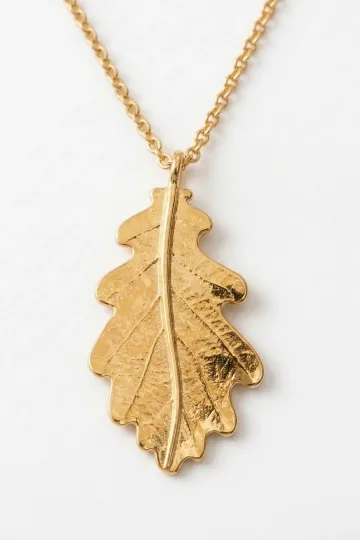
Turquoise in Tibet, Europe and other cultures
Tibet: protection and turquoise on the mala
In Tibet turquoise is one of the most revered stones, a symbol of sky, health and protection. It is woven into jewellery and amulets, worn as a charm against evil forces and illness. Turquoise beads turn up on Buddhist malas alongside coral and amber. Tibetans traditionally favour the greenish kind and hold that a stone darkened by wear has taken the misfortunes of its owner upon itself, so a dulled stone is not thrown away but cherished.
Europe: the rider's stone and a charm against the evil eye
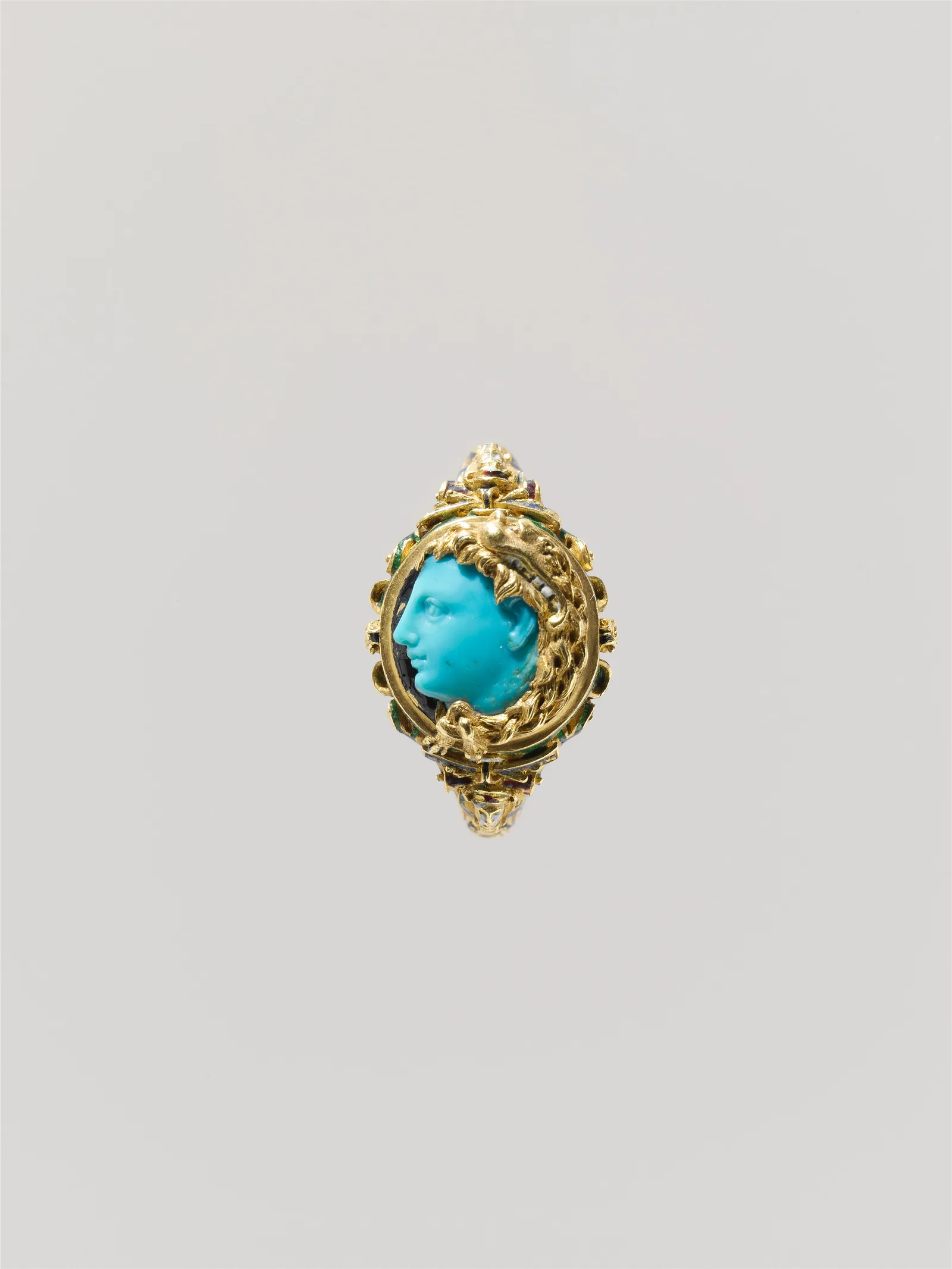
In medieval and Renaissance Europe turquoise counted as a man's protective stone, above all for riders. People believed it guarded against a fall from the horse and against broken bones, and that it absorbed a blow that would otherwise have struck its owner. The stone was given as a charm for the road. Turquoise was also thought to ward off the evil eye and a malicious gaze, a belief that ties it to the eye amulets of other cultures. For more on how different peoples turned stones and shapes into protective signs, see the piece on natural symbols in jewellery.
Turquoise in the Islamic and Indian world
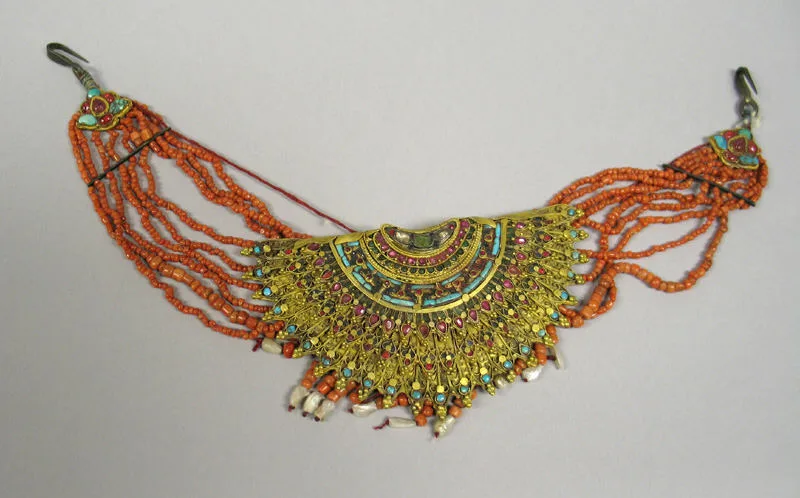
In the Islamic tradition turquoise was loved for its sky colour and its bond with protection, set into rings, used to inlay Qurans and weapons. In India turquoise was worn as a stone of luck and generosity, fitted into Mughal jewellery alongside rubies and emeralds. The blue stone wandered the trade routes from Persia to Delhi, gathering local meanings everywhere it went, yet staying everywhere a stone of sky and well-being.
Legends and beliefs: the stone that warns of danger
Where the myth that turquoise changes colour to warn of trouble comes from
The most stubborn belief: turquoise dulls or greens to warn its owner of illness, danger or betrayal. It was written of in Europe, in Persia, across the East. The logic of the belief is plain and almost scientific for its time: people saw the stone genuinely change, and tied that to the fate of its owner. The stone dulls, so something is wrong with the person. The myth grew out of a real observation, the cause was simply read wrong.
What is really happening to the stone
The truth is more prosaic and more interesting than the myth. Turquoise is porous, it soaks up skin oil, sweat, soap, cream, perfume. Oils green the blue, while dehydration and sun cloud it over. If a person fell ill, sweated, changed their diet or their cosmetics, the chemistry of their skin changed, and the stone reflected that honestly. No mysticism: the stone reacted to the chemistry of the body and its surroundings. The ancients mistook a consequence for a prophecy.
The stone that cracks instead of its owner
Another belief held that turquoise could split, taking on itself a blow of fate, an illness or a curse. And again physics stands behind the legend: the stone is soft and porous, it really does crack from a knock, a swing in temperature or a loss of moisture. Old turquoise in a ring worn every day will sooner or later give a crack. It was easier for the owner to explain this as a rescue than as fragility, and so the lovely myth of the protective stone was born.
The magical properties attributed to turquoise
Beyond protection, turquoise was credited for centuries with a whole list of powers. It supposedly grants eloquence and luck in negotiation, reconciles lovers and keeps faith, guards travellers and riders on the road. In the East it was held to be a stone of generosity and plenty, in Europe a gift that sealed friendship and love. Turquoise was prescribed against the evil eye, against nightmares, against melancholy. One thing ties all these properties together: the blue of the sky has long stood for calm, clarity and the highest protection, and the stone simply inherited the meaning of its colour.
Leave your email, we'll send your discount code. No spam, unsubscribe anytime.
The code arrives by email, valid on your first order.
Real turquoise or a fake: how to tell them apart
Dyed howlite, the chief impostor
The stone most often passed off as turquoise is howlite, a white porous mineral with dark veins. It dyes blue easily, and its veins naturally mimic matrix. You can tell by the price, far too cheap for turquoise, and by a test: rub a hidden spot with cotton wool dipped in acetone, or dab a drop on an out-of-sight patch, and the dye may come away. A cut often gives away a white core under the coloured crust. A dark navy that is unnaturally even almost always means dyed howlite or magnesite.
Stabilised turquoise
This is real turquoise, impregnated with a clear resin or polymer for strength and brighter colour. The treatment firms up the soft porous stone so that it does not crumble or green from wear. Stabilisation is not a deception but a common treatment: the bulk of affordable turquoise on the market is stabilised. The stone stays natural, it has simply been reinforced. Natural, untouched, top-grade turquoise costs many times more.
Pressed and reconstituted turquoise
Reconstituted turquoise is crumbs and dust of real stone pressed together with a binder into a single mass. Technically the material is turquoise, but this is no longer a whole natural stone, it is a product made from its remains. The colour is often too uniform, the matrix looks artificially repeated. The price is low. Such material does for inexpensive costume pieces but has nothing to do with collectable stone.
Imitation: plastic, glass, ceramic
The cheapest tier is outright imitation: dyed plastic, glass, ceramic, synthetic resins. There is not a gram of real stone here. They give themselves away by weight, as plastic is too light, by temperature, as plastic warms instantly in the hand, while glass and ceramic can look suspiciously perfect. Sometimes you can see air bubbles inside, which never happen in a natural stone.
Magnesite and other dyed minerals
Besides howlite, magnesite is dyed blue too, another white porous mineral with veins. Under the dye it is nearly indistinguishable from howlite and betrays itself the same way, with an even unnatural colour and a low price. Dyed quartz, and even pressed dust of other stones, is sometimes sold as turquoise as well. The common mark of all these impostors is one and the same: the colour is laid on the outside, not born within. A chip or a cut reveals a white base, and the shade is suspiciously even across the whole surface.
Simple checks you can do at home
A few signs help without a lab. Natural turquoise is cool to the touch and warms slowly, while plastic heats up at once. The stone is heavier than plastic of the same size. A heated needle to a hidden spot: plastic melts and smells of chemicals, the stone does not, but this test damages the piece, so go carefully. An even colour with no variation and a perfectly repeating matrix should put you on guard: nature never makes two identical stones. A reliable verdict on an expensive purchase comes only from a gemmologist.
Why cheap turquoise is almost always not the real thing
Plain market arithmetic weeds out fraud as well as any test. Naturally dense, top-grade turquoise is rare, its supply is falling while demand climbs, so a genuine good stone simply cannot cost what a glass bead does. If a large, even, blue turquoise is selling at the price of cheap costume jewellery, it is almost certainly dyed howlite, magnesite, pressed crumb or plastic. A healthy wariness toward a price that is too good guards you against fakes more reliably than any home experiment.
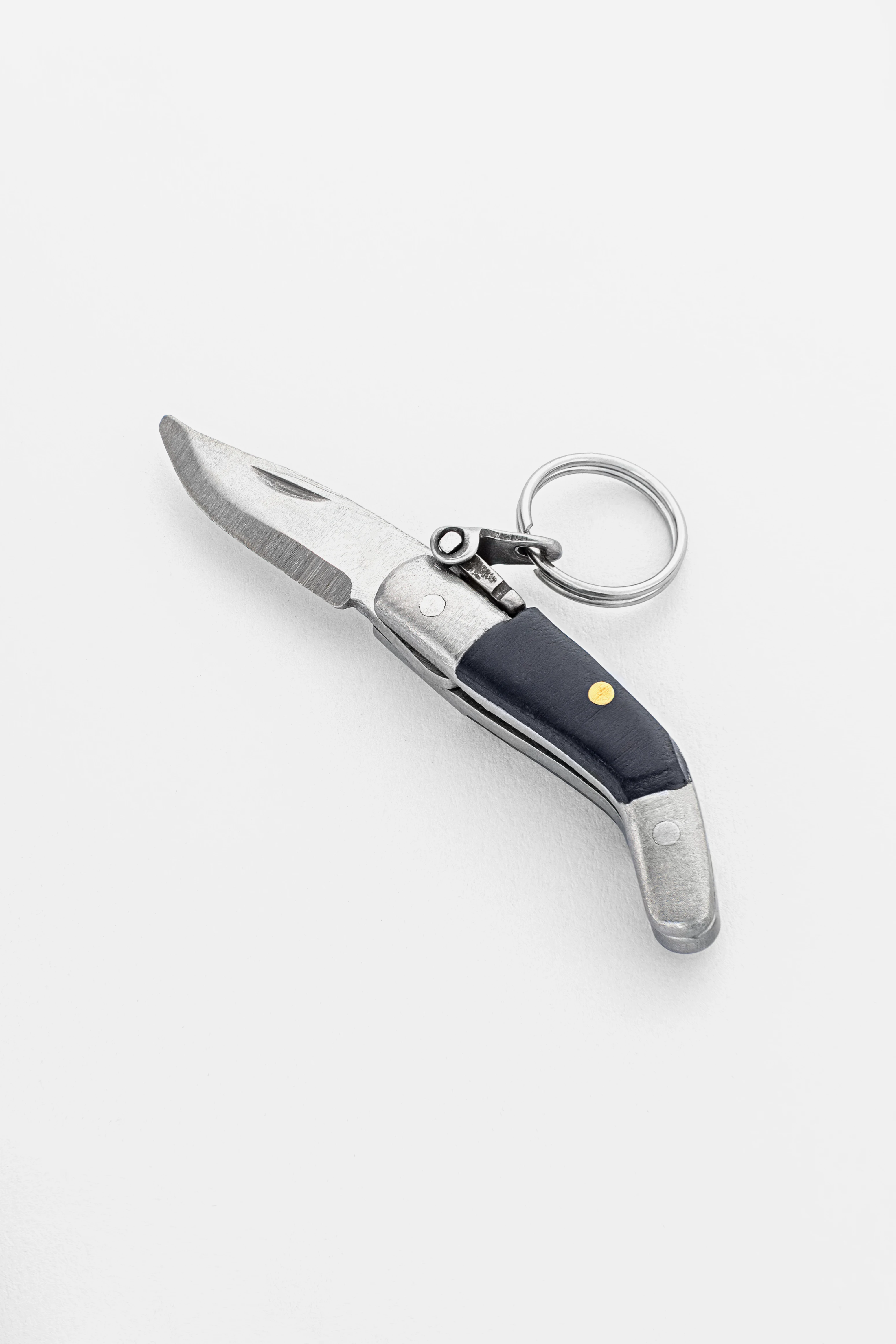
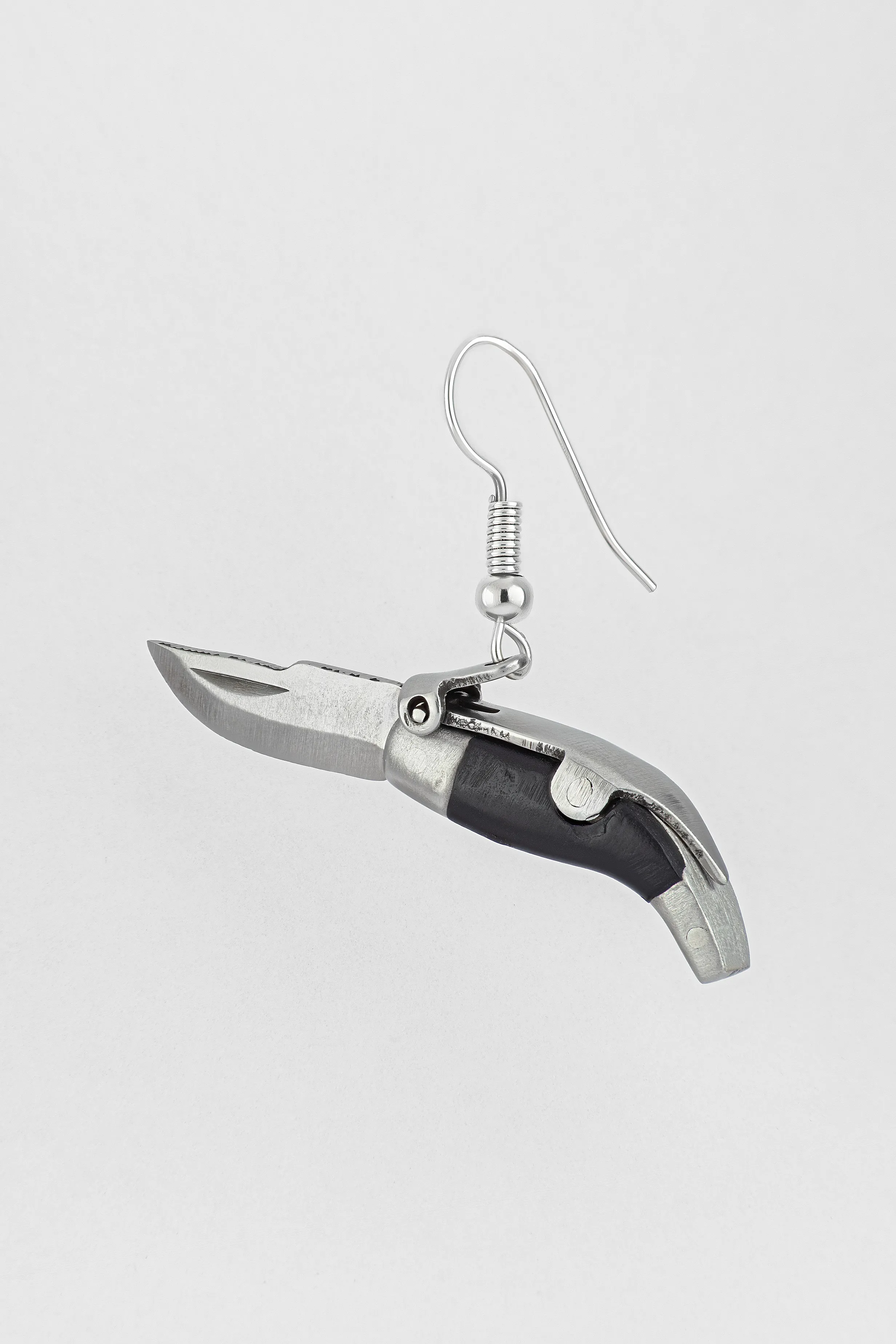
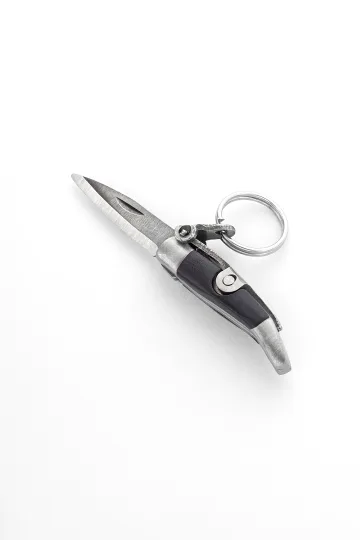
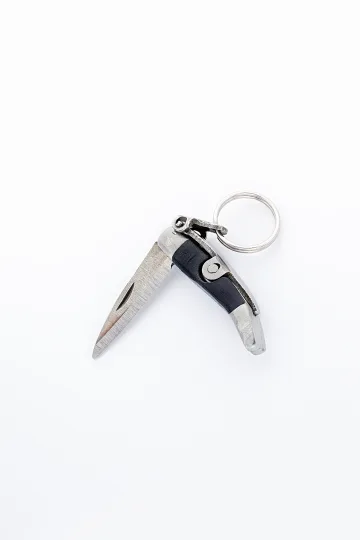
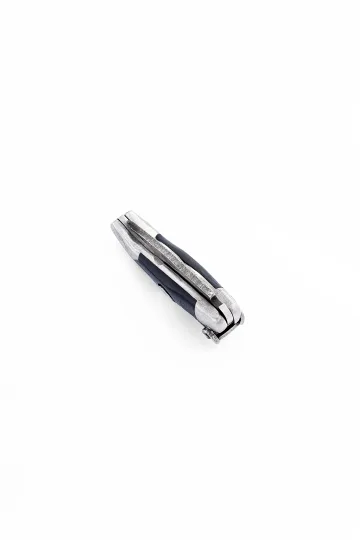
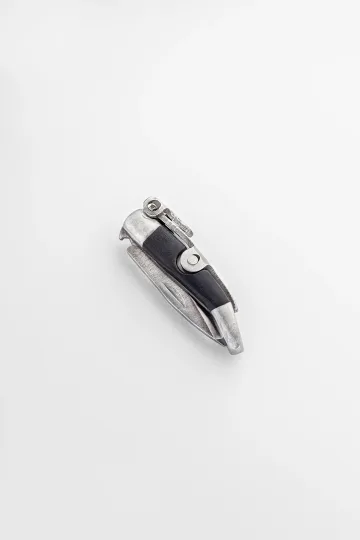
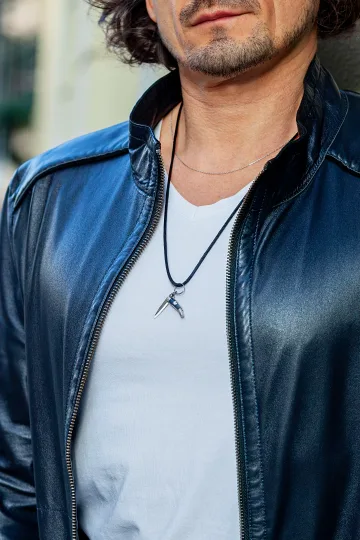
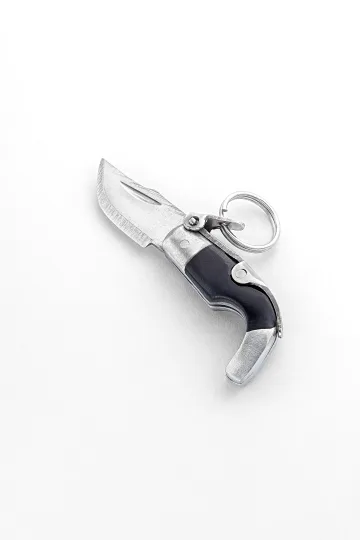
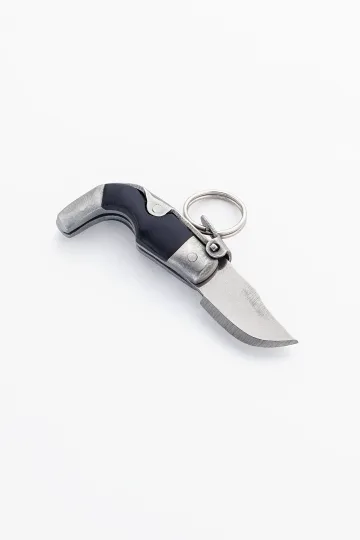
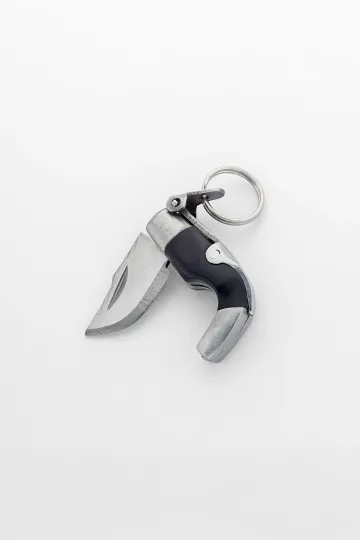
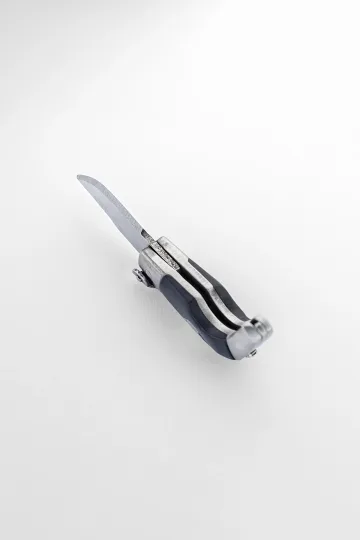
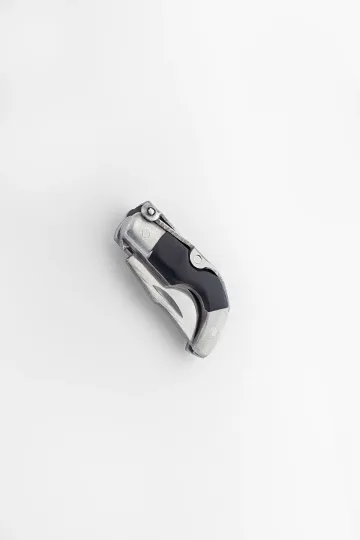
CAPAORA mini knife pendant
The 18th-century Spanish navaja in miniature: 40 mm of stainless steel, a real folding mechanism and a Palanquilla lock that clicks. An affordable gift to remember.
Authentic · Ships from Spain · 14-day returns
Famous turquoise of the world
Persian turquoise from Nishapur
The benchmark of clean sky-blue, mined in Iran for more than two thousand years. Minimal matrix, an even saturated colour that does not slide into green. For centuries Persian turquoise set the bar for quality across the world, and its name became a mark of the top grade even for stones of other origin.
Sleeping Beauty from Arizona
The Sleeping Beauty deposit made its name on the purest blue with almost no matrix, very close to the Persian ideal. The mine gave up a stone loved for its even sky colour with not a single vein. Production there has effectively stopped, so genuine Sleeping Beauty turquoise became a rarity and climbed sharply in value among collectors.
Kingman turquoise
Kingman in Arizona is one of the largest and oldest working deposits in the United States. It gave the world enormous variety: from a bright blue with a striking black spiderweb to green-toned shades. Kingman turquoise with handsome matrix became a classic of the southwestern silver style and a recognisable face of the American stone.
Other legendary mines
Morenci with its dark pyrite matrix that glints like metal. Bisbee with its rich blue and chocolate rock. Royston with its blue-green shimmer. Lander Blue, the costliest and rarest turquoise of all, with the finest spiderweb, mined in a tiny quantity. Each name carries its own colour, its own matrix and its own price, the things that turned turquoise into a collectable world with a geography.
Chinese and Tibetan turquoise
The northwest of China is one of the largest modern sources of turquoise. Chinese stone comes in every quality, from a fine dense blue to green-toned with abundant matrix, and today it fills a sizeable part of the world market. Tibetan turquoise is traditionally greenish, with a warm yellow-green cast and a dense spiderweb, prized for character rather than sterile purity. It is exactly this warm green that is loved in Himalayan jewellery and malas, where the stone stands for sky and health.
Caring for turquoise: a stone that fears nearly everything
Why turquoise is so temperamental
Porosity is the stone's chief curse and its chief honesty. Turquoise absorbs everything: water, oil, sweat, cream, perfume, household chemicals. From this it greens, clouds over, dulls and loses its polish. Softness adds to the vulnerability: the stone scratches and chips easily. Turquoise is not the sort of thing you put on and forget, it asks for attention, as a living porous stone should.
What turquoise fears most
Water softens it and bleaches the colour, hot and soapy water above all. Oils and fats, skin oil included, green the stone. Cosmetics, perfume, lacquers, creams all of this soaks into the pores. Sun and ultraviolet dry it out and drain the colour to a washed-out shade. Household chemicals and abrasives scratch and eat at it. Knocks and swings in temperature split it. In short, turquoise fears nearly everything that hardy stones shrug off.
How to wear turquoise properly
A simple rule works: turquoise goes on last and comes off first. Cream, perfume, make-up and hair first, then the jewellery. Take it off before the shower, the pool, the sea, cleaning, sport, sleep. A turquoise ring is not for washing up, and a pendant is not for the beach. The drier and quieter the stone's life, the longer it holds its sky colour. By the way, if your turquoise is set in silver and the metal has darkened or left a mark on your skin, that is a separate story about silver, covered in the piece on why jewellery turns your skin green and how to fix it.
How to clean and store it
Cleaning is dry only, or barely damp: a soft cloth, at most one slightly damp without soap, then straight to dry. No ultrasonic or steam cleaning, they kill turquoise. No metal solutions or polishes. Store it apart from harder stones in a soft pouch or box, away from direct sun and the dry heat of radiators. Stabilised turquoise tolerates more, natural stone demands the utmost care.
Can dulled turquoise be brought back
You cannot fully return a greened stone to its original blue: the soaking-in of oil and the loss of moisture are irreversible. The folk advice to rub the stone with oil really does freshen the colour for a short while, but it is a trap: the oil sinks deeper into the pores and in the end greens the stone even more. Serious restoration and re-stabilisation is a job only a stone specialist can do. It is more honest to accept that darkened turquoise is its lived life, the very thing the Tibetans and Navajo valued. If a stone has to stay pristine, though, choose dense stabilised turquoise, which barely changes.
Turquoise jewellery: by type
The turquoise ring
A ring is the most beautiful and the most risky showcase for turquoise. On the finger usually sits a large cabochon in a plain silver setting, often with an open back so the stone can breathe. This is exactly how the Navajo and the whole southwestern style do it: one solid blue dome, heavy silver, nothing extra. But the hand is forever meeting water, soap, cream, keys and door handles, and turquoise is soft and porous. So rings green and crack ahead of every other piece. If you want to wear a turquoise ring every day, choose a dense stabilised stone and a low setting that shields the edges from knocks. A striking ring with a large natural cabochon is better saved for outings and taken off before the washing-up, cleaning and sleep. A closed setting on all sides protects the stone more reliably than an open one.
Turquoise earrings
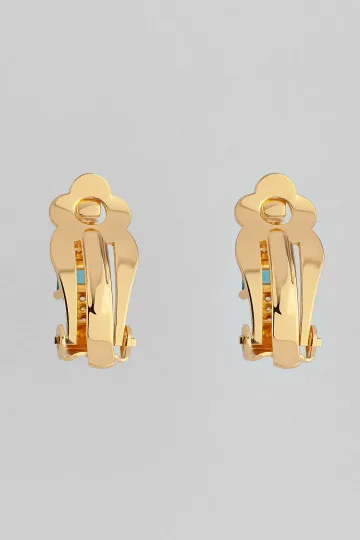
Earrings are one of the most flattering formats for turquoise. A blue stone near the face brightens the eyes at once and freshens the skin, especially tanned and dark complexions, so even a small inset works more visibly than a bracelet. Turquoise is light, its density is low, and large stones do not drag the lobe the way heavy gems do. Drop earrings with a swinging cabochon give movement and sway as you walk, while studs with a single blue dome read as restrained and suit a sharper look. Paired with silver you get the Navajo classic, with warm metal an earthy, natural mood. Earrings also protect the stone: they barely meet water, soap or knocks, unlike a ring. You need take them off only before the shower, the pool and sleep. This is the format in which turquoise can be worn often with almost no worry about the colour.
The turquoise bracelet
A turquoise bracelet is the character of the southwest on the wrist. The most recognisable form is the Navajo cuff: a wide silver arc with one large stone or a scatter of cabochons, sometimes with a fine spiderweb of matrix. The contrast of matte blue and white silver opens up here at full strength, and a bracelet like this reads as a statement, not a neat accent. But the wrist is a restless place: it knocks against the table, the door frame, the steering wheel and the keyboard, and turquoise chips on impact. Add to that the sweat that gathers under a wide cuff and greens the stone. A turquoise bracelet asks for attention: take it off before sport, cleaning and work with your hands, wipe it dry after a hot day. If the stone is sunk into the silver and shielded by the rim of the setting, it will survive far more than a cabochon jutting above the metal.
The turquoise pendant and charm
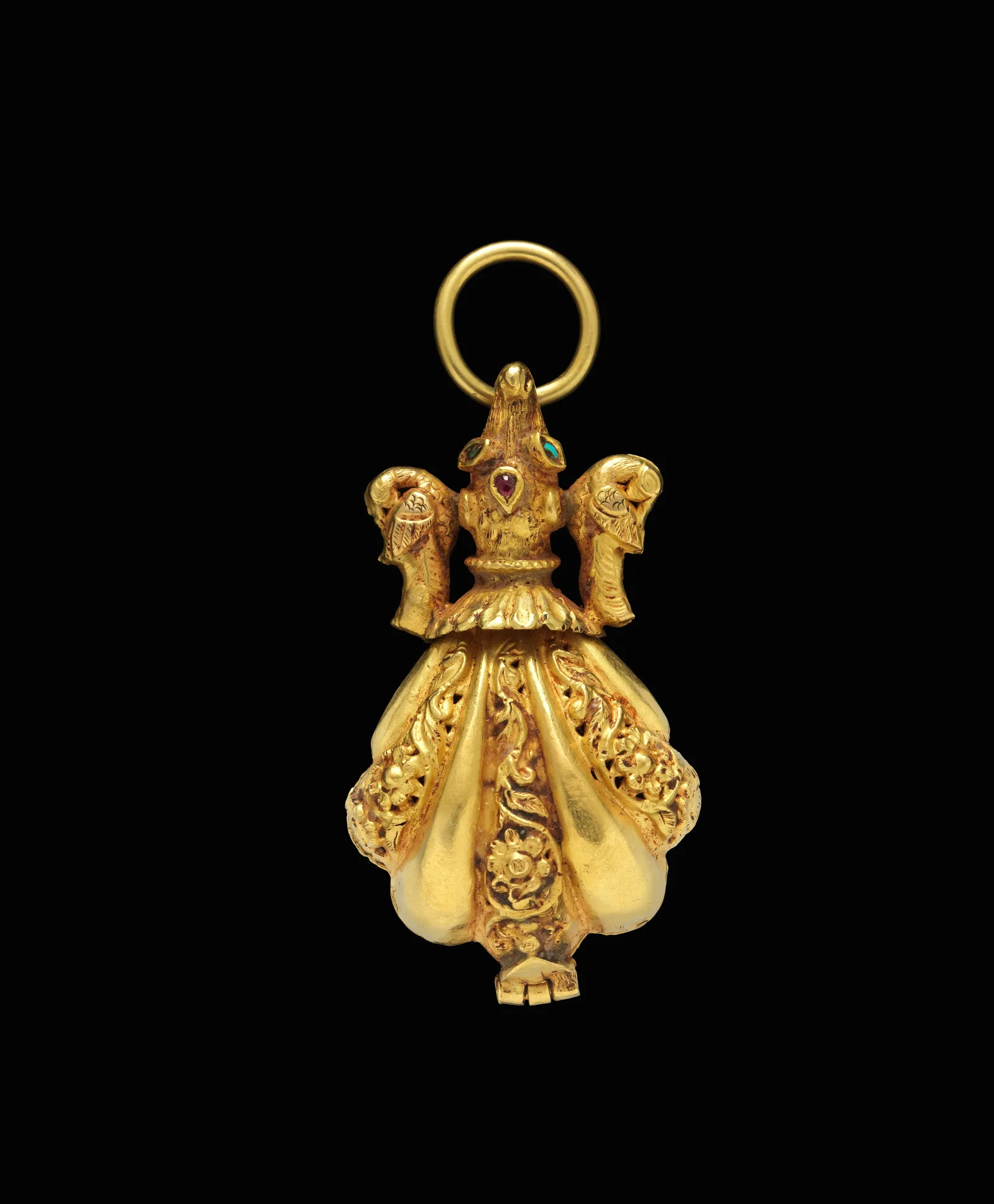
The pendant is the safest format for turquoise, and that is no accident. The stone hangs on the chest, barely meeting water, soap or knocks, and does not rub against surfaces the way a ring or bracelet does, so the blue colour holds longest of all. Here you can allow yourself a large striking cabochon that would be too vulnerable in a ring: on a pendant it is safe and works as the centre of the look. Turquoise is light, and even a big stone does not pull on the chain or the neck. The format carries a layer of meaning too: a charm at the heart has traditionally held protective symbolism, and turquoise is exactly an amulet stone from Persia to the Navajo, so a pendant set with it reads as a personal talisman. You need take it off only before the shower, the sea and sleep, the rest of the time the stone lives quietly on the chest. If you are choosing turquoise for every day and would rather not fuss over it, a pendant and earrings are your answer.
Turquoise beads and malas
Beads and malas are the oldest way of wearing turquoise: a string of blue stones turns up in Egyptian jewellery and in Tibetan Buddhist malas alongside coral and amber. Here the stone goes without a setting, as beads of every shape, from fine seed beads to large nodules, and the whole string becomes a patch of colour. The trouble is that without metal each bead is open on every side: it rubs against its neighbours, soaks up sweat from the neck and wrist, picks up cream and perfume. So turquoise beads green unevenly, and over time the string grows mottled. The Tibetans even value this: a bead darkened by handling is held to have taken on the troubles of its owner. To protect a porous stone in beads, put the string on last, after perfume and cream, wipe the beads with a dry cloth after wear, and store them apart from harder stones so the surface does not scratch. A silk cord between the beads also saves them from rubbing against one another.
Send a friend a discount code, they save on their first order.
Facts that surprise
The colour of turquoise comes from copper, the very same metal that greens your finger under a cheap ring. The blue sky stone and the green mark on your skin are, in chemical terms, relatives.
The word turquoise means Turkish stone, though it was never mined in Turkey. The name stuck to the trader-middlemen rather than the source.
The first imitation of turquoise in history was ancient Egyptian blue faience. People began faking the sky colour thousands of years ago, and not to deceive but for the beauty of it.
The belief that turquoise warns of trouble by changing colour rests on reality: the stone absorbs sweat and oil and honestly greens when the chemistry of its owner's body changes.
For the Navajo and Zuni turquoise is no ordinary ornament but the stone of the sky, and a stone darkened by wear is not thrown away but valued: it has taken the misfortunes of its owner.
The most expensive turquoise in the world, Lander Blue, was mined in a quantity that would fit in a small bucket. Its rarity puts its price on a level with precious gems.
Turquoise cannot be faceted like a diamond: it is too soft and too opaque, so it is always shaped as a smooth cabochon.
The domes of Persian and Central Asian mosques are painted sky-blue precisely to match the colour of turquoise, the stone of victory and good fortune. A mineral set the palette of a whole architecture.
Frequently asked questions
Why has my turquoise turned green? The stone is porous and absorbs skin oil, sweat, cream, soap and perfume. Oils gradually green the blue. This is neither a curse nor a fake, just the nature of turquoise. To slow it down, put the piece on last, take it off before water and sport, and keep it away from cosmetics.
Is it true that turquoise warns of illness? The belief grew out of a real observation. The stone changes colour when the chemistry of its owner's skin changes: with illness, sweating, a shift in diet or cosmetics. The ancients took the honest reaction of a porous stone for a prophecy. There is no mysticism here, but the observation of our forebears is impressive.
Can turquoise get wet? Better not. Water, hot and soapy above all, softens the stone and washes the colour out. Take turquoise off before the shower, the pool, the sea and washing up. If the stone does get wet, blot it dry at once with a soft cloth.
How do I tell real turquoise from howlite? Dyed howlite gives itself away with a too-even colour, often dark navy, a low price and a white core under the coloured crust. Cotton wool with acetone on a hidden spot can lift the dye. Natural turquoise is cool to the touch, heavier than plastic, and its matrix is always one of a kind. An expensive purchase is worth showing to a gemmologist.
What does stabilised turquoise mean, is it a deception? No. It is real turquoise impregnated with a clear resin for strength and brightness. The treatment firms up the soft porous stone so it does not crumble or green. Most affordable turquoise is stabilised, and this is an honest, common treatment rather than a fake.
Which turquoise is the most valuable? Traditionally clean sky-blue with no green and no coarse matrix, the Persian ideal. But stone with a handsome even spiderweb of matrix is separately prized, along with rare grades by deposit, Sleeping Beauty and Lander Blue among them. The price depends on colour, density, pattern and origin.
Which metal looks best with turquoise? The classic is silver: its cold shine lifts the sky colour. Copper and brass deepen the green tones and give a natural look. Gold with a blue turquoise is Eastern and Egyptian luxury, the contrast of sun and sky. The choice of metal depends on the mood you want.
Who does turquoise suit by sign and character? Turquoise is counted as the stone of December, traditionally given to those born in early winter. By character it is for those drawn to a free, ethnic, natural look, for travellers and creative people. The blue shade plays especially beautifully on dark and tanned skin.
The short version
Turquoise is a hydrated phosphate of copper and aluminium, and copper gives it its colour: blue with pure copper, green when iron joins in. The stone is soft and porous, so it soaks up everything and honestly changes colour, which is the root of the ancient beliefs that turquoise warns of trouble. The dark veins of matrix are host rock grown in, once a flaw and now a valued feature, the spiderweb above all. From Egypt with the goddess Hathor and the mask of Tutankhamun, through Persia with its sky-blue domes, to the Navajo with their marriage of turquoise and silver, the stone meant sky, water and protection everywhere. On the market dyed howlite, plastic and pressed crumb are often passed off as turquoise, while most of the real stone is stabilised with resin for strength. Turquoise has to be worn carefully: put it on last, take it off before water, keep it from cosmetics and sun. Then the sky colour will live with you a long time.
Jewellery with natural stones and silver, made to live alongside you rather than sit in a safe.
View earrings «GEMA DE INVIERNO» →
Buying it as a gift? Each one arrives ready to give.
 A branded Zevira box and a little card come with every order.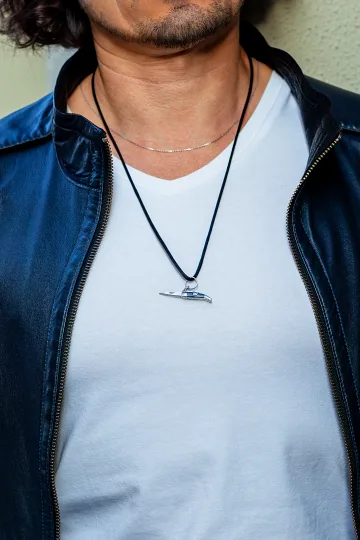




About Zevira
Zevira is a Spanish jewellery brand from Albacete, a city with a centuries-old tradition of working in metal. We make jewellery where meaning matters more than sparkle: natural stones, silver, symbols with a history. Have a look through our catalogue or read about 925 silver, the foundation of our work with coloured stones.