Turquoise: what the stone really is, how it forms, and how to tell real from fake
Turquoise is faked more often than almost any other popular stone. By various estimates, a large share of what gets sold as natural turquoise turns out to be dyed howlite, resin-bonded crumb, or plain plastic. The reason is simple: good-colour natural turquoise is rare, takes millions of years to grow, and comes almost entirely from depleting deposits. So a sensible conversation about turquoise should start not with legends but with chemistry: what this mineral actually is, why it has that colour, and which signs separate the stone from an imitation.
Here is the order we will follow: composition and physical properties, how turquoise forms in nature, where it is mined, how it was used across cultures, how blue differs from green, how to tell real from fake, and how to care for it. No esoterics, no promises, only things you can verify.
What turquoise is: composition and physical properties
Turquoise is a hydrated phosphate of copper and aluminium. Its chemical formula is CuAl₆(PO₄)₄(OH)₈·4H₂O. The copper in that formula is what produces the blue colour, while iron substituting for part of the aluminium shifts the hue towards green. The colour of any given stone is therefore a direct consequence of which metals were present in the rock where it grew.
Key properties worth knowing before you buy:
- Mohs hardness: 5 to 6, dropping to 3 to 4 in porous varieties. For comparison, quartz sits at 7, feldspar at 6, and a steel knife blade at roughly 5.5. So turquoise is softer than many gemstones; it scratches and chips easily.
- Crystal system: triclinic. In nature turquoise almost never forms large transparent crystals; it occurs as cryptocrystalline masses, veins, nodules and crusts. You will not see faceted transparent turquoise: it is always cut as a cabochon.
- Density: roughly 2.6 to 2.9 g/cm³. Porous samples are lighter, dense Iranian ones heavier.
- Refractive index: about 1.61 to 1.65. Because the stone is opaque, optical effects such as dispersion or pleochroism have no practical meaning for turquoise: light does not pass through the mass, it scatters near the surface.
- Lustre: waxy to matte, faintly vitreous on polished dense samples.
- Fracture: conchoidal, with a smooth surface where it breaks.
The main physical trait of turquoise is its porosity. The stone soaks up moisture, oils and cosmetics, and over time it darkens and greens. That is not a defect and not magic, it is the behaviour of a porous mineral. Because of that same porosity, most jewellery turquoise is stabilised, impregnated with polymer or wax, to strengthen the structure and lock in the colour.
Wear the symbol, don't just read about it. These are in stock:



How turquoise forms in nature
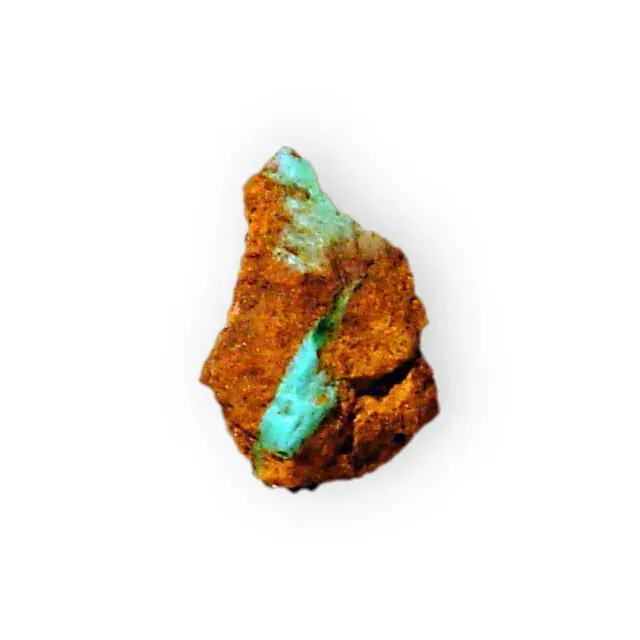
Turquoise is a secondary mineral. It appears where copper-rich solutions seep through rocks containing aluminium and phosphorus, under a dry, hot climate. The copper usually comes from oxidising copper ores, the aluminium from feldspars and clay minerals, the phosphorus from apatite and other phosphates. In cracks and cavities the solutions precipitate, and over a very long time the veins and nodules of turquoise build up.
An arid climate is essential here. Turquoise forms in the weathering zone close to the surface, and under heavy rainfall it would simply dissolve and redeposit as something else. That is why every major deposit sits in deserts and dry uplands: where there are copper ores, an acidic oxidising environment, and little water. For the same reason turquoise is often found beside copper deposits, as a companion to copper mineralisation.
Why turquoise is almost always found in lumps rather than crystals
Unlike quartz or garnet, which grow into handsome faceted forms, turquoise crystallises into needles measured in microns. The eye cannot resolve them: what we see as a solid blue stone is in fact a compacted mass of millions of microcrystals. That structure is called cryptocrystalline, and it explains both the waxy matt lustre and the opacity. Light does not pass through as it does in a transparent gem, it scatters at the boundaries between minute grains. Transparent, facetable turquoise crystals do exist, but they are a museum rarity found in a handful of places such as Campbell County in Virginia. They are usually smaller than a pinhead and no use for jewellery at all.
What sets quality straight out of the ground
Geologists and buyers sort turquoise by how tightly its grains are cemented together. Dense turquoise forms where the solutions circulated for a long time and filled the pores with almost no voids left. Loose, chalky turquoise results when the process stopped early: the stone is pale, brittle, crumbles readily and takes up water like a sugar cube. The great bulk of world production is exactly this loose material, and without reinforcement it cannot be set at all. That is where the entire stabilisation industry comes from: nature supplies very little stone that is ready to wear, and demand is large.
What grows alongside turquoise in the rock
Related copper and aluminium phosphates frequently sit in the same vein as turquoise. The commonest are faustite, the zinc analogue that shifts towards yellow-green, chalcosiderite, the iron-bearing member that runs dark green, and variscite. The boundaries between these minerals are blurred: nature draws no clean lines, and many green specimens are in fact a blend of turquoise and faustite. For a buyer this is no problem at all, but it explains why two stones taken from the same handful can differ in colour and density.
Turquoise keeps company with silver and sun-warmed skin. Sling it on gold and you have missed the whole point.
What to wear turquoise with
Turquoise has been through dozens of my shoots, and the takeaway is simple: the stone is loud but easygoing, as long as you hand it one role in the look. Here is what actually holds the frame, sorted by occasion.
What do I wear turquoise with every day? For everyday I recommend a small cabochon in silver: a pendant on a thin chain or a narrow ring. A calm background (a white shirt, linen, sand knitwear, denim) lets the stone read as one clean spot of colour rather than noise. A dark top (graphite, navy) pushes turquoise into an accent; a light one lifts it.
Does it work for the office? It does, if you keep it restrained. I suggest one piece, usually a ring or a thin bracelet, next to a plain top in muted tones. Silver is more honest here than gold: its cool gleam underlines the blue and never argues with a business code. Save the large ethnic pieces for the evening.
How do I build an evening look? For a night out I choose a deep neckline and smooth fabric in a rich colour: ink, wine, emerald. A pendant on a 45 to 50 cm chain settles into the décolleté and pulls the eye to the face. Monochrome is the best backdrop here; it lets the stone take the solo.
And for a bold, ethnic look? Then I let myself go heavy: a massive bracelet, drop earrings, warm copper or yellow gold. An earthy palette (terracotta, ochre, chocolate) and natural textures (linen, suede, wool) echo the nature of the stone. One rule: a single turquoise dominant, everything else quiet.
Who does it actually suit? Turquoise loves a warm tanned tone, refreshes olive and darker skin, and holds on cool fair skin as a bright accent. Two parting tips. First: one turquoise accent at a time if you are unsure of the balance. Second: match the length to the area you are lighting up, be it neck, wrist or hand.

Turn on your camera, pick earrings, a pendant or a ring, and see the piece on yourself in real time.
Switch items in one tap.
Everything runs in your browser: no photo or video is ever uploaded.
Turquoise deposits: where it is mined
Iran. The deposits around Nishapur (Khorasan province) have been worked for over a thousand years, and Iranian turquoise is historically regarded as the benchmark of quality: dense, an even sky-blue, often with no visible matrix. This is the stone that travelled the trade routes to the West for centuries.
The Sinai Peninsula (Egypt). One of the oldest mining areas. Turquoise was extracted here as far back as the age of the pharaohs, at the mines of Serabit el-Khadim. The stone here tends to be greener than the Iranian.
The American Southwest. Arizona, Nevada, New Mexico, Colorado and Utah make up a region with dozens of deposits, many tied to copper mines. American turquoise is extremely varied in colour and almost always shows a pronounced matrix, the net of dark host-rock veining. Many historic mines are now exhausted, so part of the American turquoise on the market is old stock.
China. The leading modern supplier by volume, mined mostly in Hubei province. Quality varies enormously: from a loose greenish mass that has to be stabilised, to dense blue material.
Other sources. Turquoise also occurs in Kazakhstan, Afghanistan, Chile and Australia, but in noticeably smaller volumes. The bulk of world trade falls to Iran, China and the United States.
Famous mines and their signatures
In the turquoise trade a mine name works almost like a grade: people use it to predict colour, density and matrix pattern. Knowing these names is useful, because they get faked too: "Sleeping Beauty turquoise" on a tag guarantees nothing without paperwork.
- Sleeping Beauty (Arizona). Produced the most recognisable clean sky-blue with almost no matrix. The mine closed as a source of gem turquoise in 2012, with extraction switched to copper, so its stone now comes only from old stock, and the price has risen.
- Bisbee (Arizona). Also a by-product of a copper mine. Prized for its deep blue and its characteristic chocolate-brown "smoky" matrix. The mine stopped yielding turquoise long ago; everything on the market is old material.
- Kingman (Arizona). One of the few historic mines still worked today. It gives a wide range, from bright blue to green, often with black or white matrix.
- Lone Mountain and Number Eight (Nevada). The Nevada mines are famous for their "spiderweb" matrix, a fine net-like pattern. Number Eight is known for a large golden-brown web, and almost all of that material is old.
- Nishapur (Iran). The historic benchmark of dense, even blue with no matrix. The finest grades were traditionally named in Persian and sorted by purity of colour.
The core point is simple: real mine turquoise has a recognisable character, but a tie to a famous name with no lab report or stone history is first and foremost marketing.
Customer reviews
Zevira is a real jewellery shop. Genuine payments, deliveries and customer thank-yous.
🥰🥰🥰 gracias
Ok, ¡gracias! 🙂
The history of turquoise: from Sinai to the New World
Turquoise is one of the earliest stones humans put into jewellery. That is down to how easily it is found on the surface in weathering zones, how easily it is worked thanks to its modest hardness, and how it gives a bright colour straight away, without cutting.
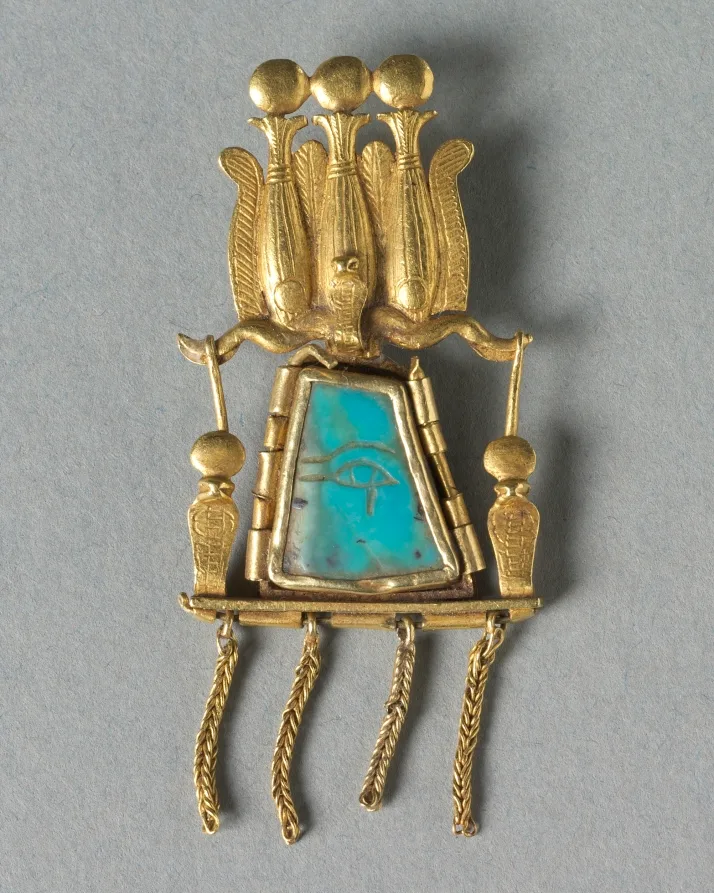
Ancient Egypt. Turquoise from the Sinai Peninsula was used in jewellery and amulets as early as the Old Kingdom. It turns up in burial goods, in inlays, beads and pectoral chest ornaments alongside lapis lazuli and carnelian. The bluish-green colour was linked in Egyptian culture with water, fertility and rebirth.
Persia. In Iran turquoise was a status stone for centuries: it adorned weapons, horse tack, vessels and thrones, and it was inlaid into domes and portals. The blue was prized so highly that it came to be used on ceramic glaze and tiles too, hence the enduring phrase about the sky-turquoise of Persian architecture.
Mesoamerica. The Aztecs and earlier cultures of Central America made mosaics, masks, shields and hilts from turquoise, inlaying it into wood. Turquoise was one of the most valued materials, carried in from afar along trade networks, and it was used in ritual and royal objects.
The North American Southwest. The Pueblo peoples, and later the Navajo and Zuni, mined and worked local turquoise long before Europeans arrived. Silver appeared in the region only after contact with the Spanish: the characteristic heavy silver bracelets and rings with large turquoise cabochons are a style that formed in the nineteenth century, at the meeting point of a local tradition of stonework and an imported silversmithing technique.
The word itself entered European languages through an Old French phrase meaning "Turkish stone": turquoise reached Europe through Turkish lands from the East, and the name stuck to the trade route rather than to the place of mining.
Upload a photo of your pet, someone you love, or an object. We'll build a 3D model and hand-cast it in pewter.
Turquoise in the cultures of the world: a closer look
The short list above sketches the map, but each of these traditions deserves a look of its own. Turquoise was rarely just decoration. More often it worked as a badge of rank, a charm for the road or a ritual material, and every culture had its own grammar for using it.
Ancient Egypt and Sinai
The Sinai workings at Serabit el-Khadim are among the oldest organised mining operations in human history. Expeditions were fitted out by the pharaohs, extraction ran seasonally, and a temple to the goddess Hathor, called the lady of turquoise, stood at the mouth of the mines. The stone went into scarabs, beads, sarcophagus inlays and pectorals, where it alternated with lapis lazuli and carnelian in a strict colour language: blue lapis for the sky, red carnelian for blood and life, green-blue turquoise for youth and renewal. Tellingly, the Egyptians were the first people anywhere to imitate turquoise, firing glazed faience to exactly the right tone whenever the real stone ran short. Fakes of this mineral are older than most civilisations.
Persia and the Islamic world
In Iran turquoise entered the national identity long ago, and the Persian word for it carries the sense of victory or good fortune. The finest grades from Nishapur were sorted for centuries into the subtlest gradations of blue, each with its own poetic name. Turquoise was inlaid into dagger hilts, horse harness, thrones and manuscript bindings. In Islamic architecture the sky blue of glazed tiles refers directly to the stone: mosque domes were coloured in that tone as an image of heaven. A belief held that catching the reflection of a new moon in turquoise brought luck, so the stone was often set to catch the light.
Tibet and the Himalaya
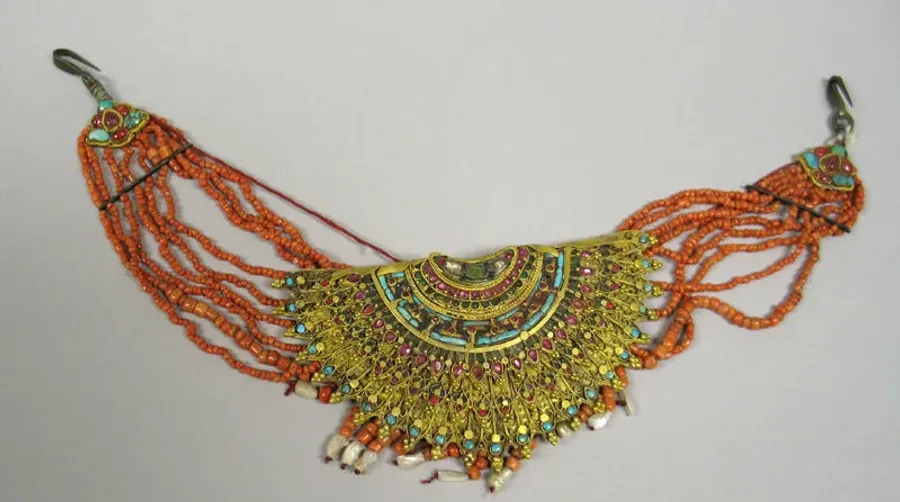
For Tibetan culture turquoise is one of the principal sacred stones, alongside coral and amber. It is worn in the hair, on belts, in massive necklaces, and set into ritual objects and gau amulet boxes. Tibetans traditionally valued greenish turquoise above the purely blue, which is the opposite of both Western and Persian taste. Stones passed down through families, and turquoise that had darkened and gone green with age was never rejected, it was considered lived-in, having taken up something of its owner. In the folk medicine of the region the stone was credited with protection from the evil eye and with help on the road over high passes.
Ancient China
Unlike jade, which sat at the summit of Chinese material culture, turquoise held a more modest but steady place. It was used in carving, in bronze inlay and in ornament well before the common era. Modern China, meanwhile, has become the largest supplier of turquoise to the world market, and a substantial share of the stone sold as Iranian or American is in fact mined in Hubei province and treated afterwards.
The peoples of the North American southwest
Among the Navajo, Zuni and Hopi, turquoise is the sky stone, tied to water, rain and health, which carries particular weight in a desert climate. Zuni craftspeople perfected fine mosaic inlay and the cutting of small pieces, while Navajo silverwork became known for heavy metal around large cabochons. The chronology matters: working the stone itself is ancient here and pre-Columbian, but silver arrived only in the nineteenth century by way of the Spanish and Mexicans. The famous silver-and-turquoise style is a comparatively young fusion of two traditions rather than the deep archaic practice it is sometimes taken for.
Mesoamerica
The Aztecs valued turquoise above gold. It was assembled into mosaic masks, shields and the handles of sacrificial knives, with thousands of small plaques fixed to a wooden or stone core with resin. Turquoise was not mined in the Valley of Mexico, it travelled in along long-distance trade networks, which made it a material for gods and rulers. Several of these mosaics survive in museum collections, including pieces in the British Museum, and the precision with which the plaques are fitted still astonishes.
Blue and green turquoise: what makes the difference
The colour of turquoise is a matter of chemistry, not of variety. Pure sky-blue comes from a high proportion of copper and a low iron content. The more iron substitutes for aluminium in the structure, the harder the stone leans green: from blue-green through grassy green to yellowish green. Aluminium in this scheme is responsible for the lighter and more saturated blue tones.
In practice that means:
- Blue turquoise is usually associated with Iranian deposits and has historically been valued highest. An even, uniform blue with no matrix is rare and expensive.
- Green and blue-green turquoise is typical of many American and Chinese deposits, as well as of ancient Egyptian Sinai. For a long time the green shades were considered less valuable, but today an expressive green turquoise with a beautiful matrix is prized in its own right.
The matrix deserves a separate word: it is the net of host-rock veining that remains in the stone. A dark, web-like matrix (so-called "spiderweb" turquoise) is treated as a merit rather than a flaw by many American deposits, because the pattern is unique to each stone. A purely blue stone with no matrix is either very expensive material or a reason to look more closely: imitations are precisely the ones made perfectly even.
If a calmer blue register is more your taste, the same palette holds larimar, the blue stone of quiet speech, while a grounding green-and-pink range comes from unakite, the stone of balance and growth. The soft blue-green spectrum continues with amazonite too.


Why turquoise changes colour
Turquoise often darkens and greens over time. The cause is, again, porosity: the stone soaks up skin oils, moisture and cosmetic particles, it reacts to light and heat, and the copper in it gradually oxidises. The colour change is a chemical and physical process, not "the stone reacting to its owner".
The practical conclusion is simple. First, dulled natural turquoise can often be freshened up by re-polishing, taking off the altered top layer. Second, a stabilised stone changes colour far more slowly, because the polymer seals the pores. Third, if "natural" turquoise reacts to nothing at all and holds a perfect colour for years, it is worth checking whether it is an imitation.
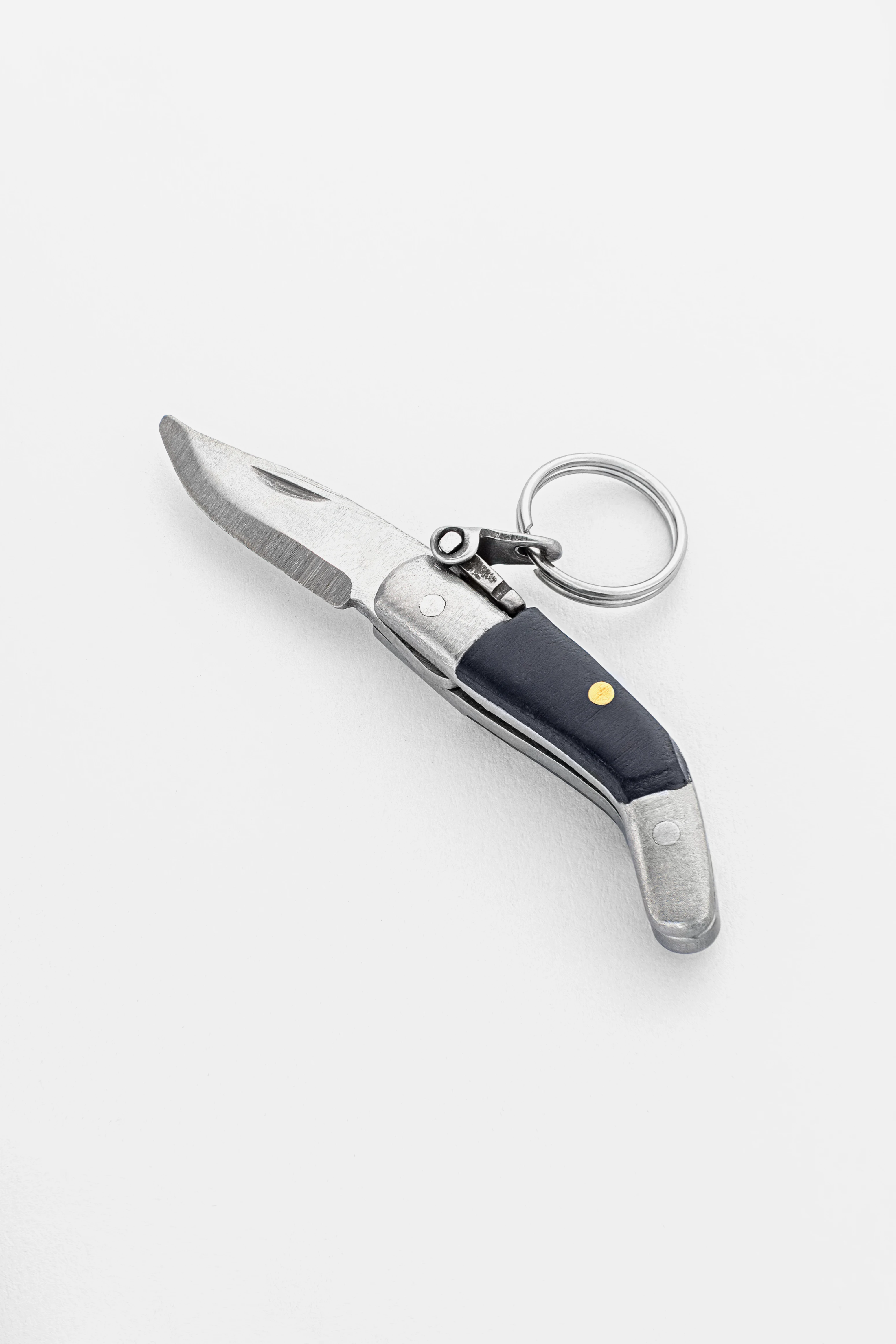
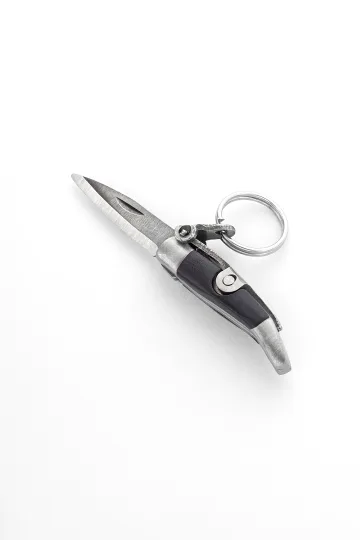
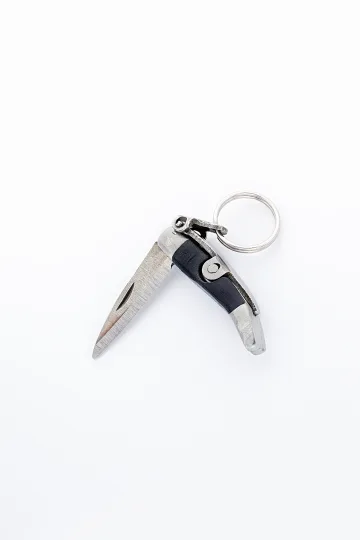
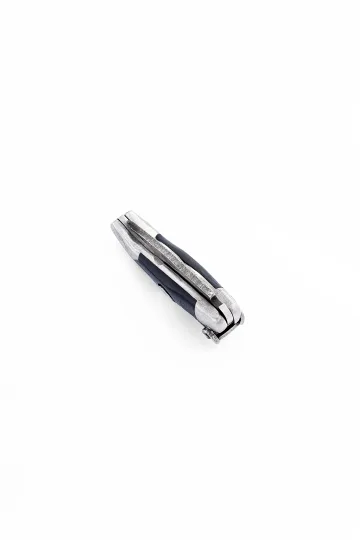
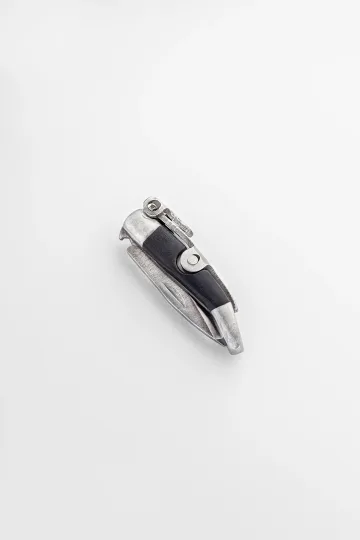
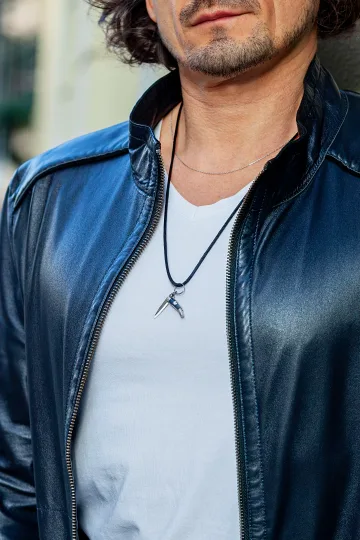
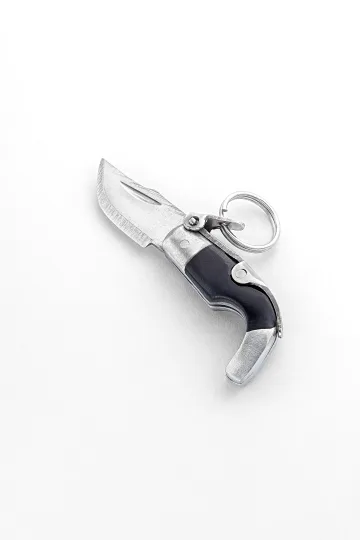
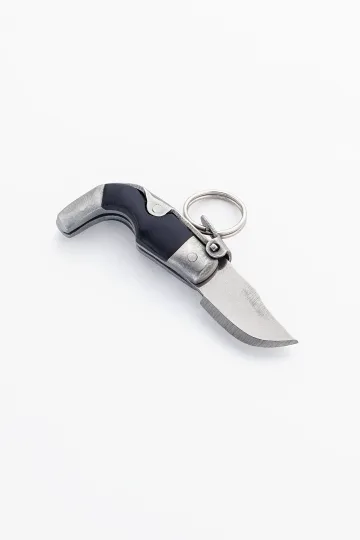
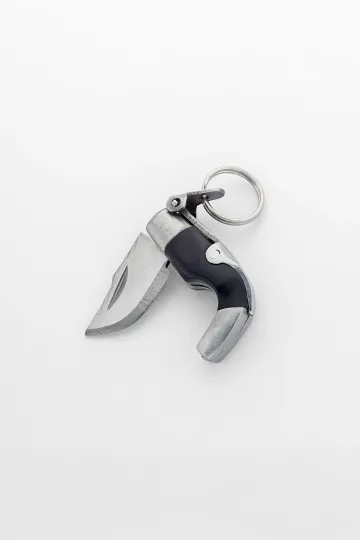
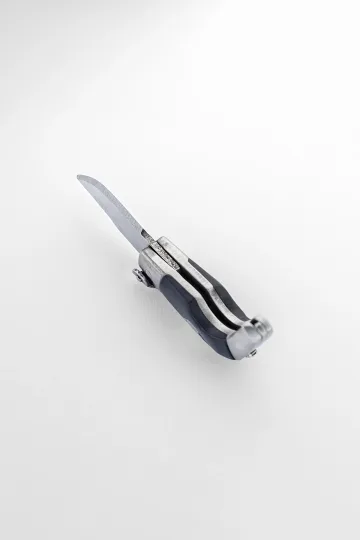
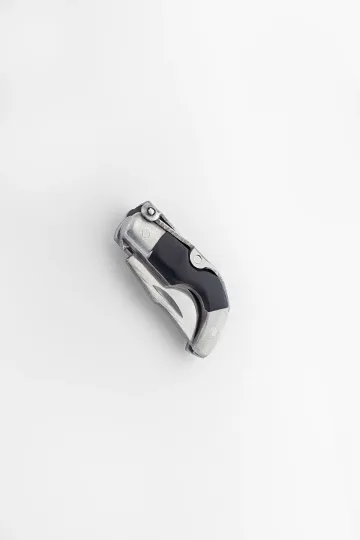
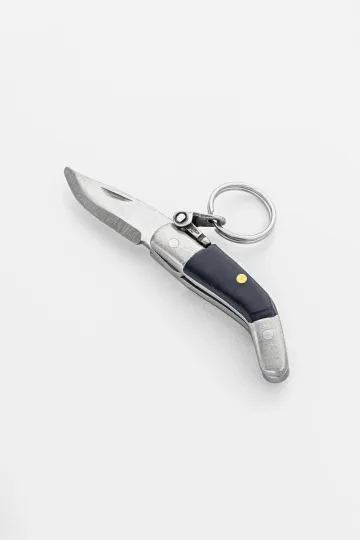
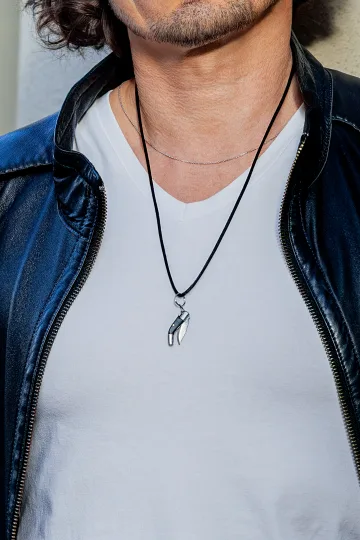
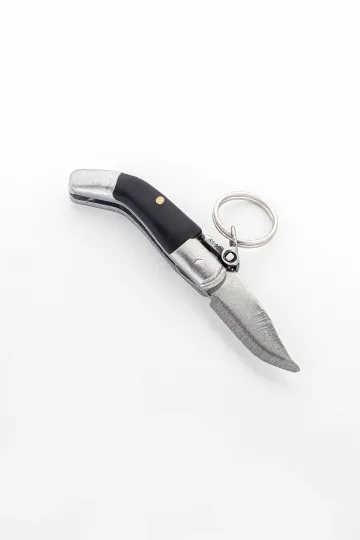
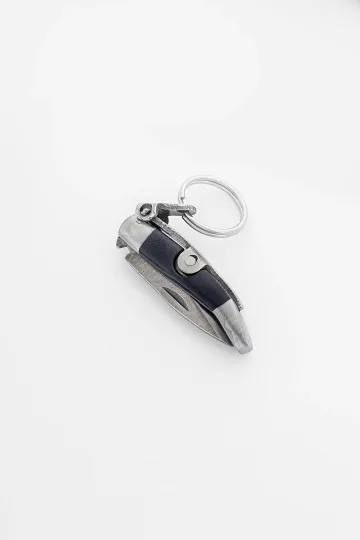
CAPAORA mini knife pendant
The 18th-century Spanish navaja in miniature: 40 mm of stainless steel, a real folding mechanism and a Palanquilla lock that clicks. An affordable gift to remember.
Authentic · Ships from Spain · 14-day returns
How to tell real turquoise from fake
The turquoise market is oversaturated with imitations, so a few practical pointers are more useful than any legend. One caveat up front: only a gemmological laboratory can reliably confirm origin. Home tests give only a preliminary picture.
What gets passed off as turquoise most often:
- Howlite and magnesite, white porous minerals that dye blue easily. The most widespread imitation. Scrape in an inconspicuous spot and the white material shows under the dye.
- Pressed turquoise crumb ("reconstituted"), turquoise waste ground up and bonded with resin. The colour is too uniform, the pattern unnaturally repetitive.
- Plastic and dyed glass, light and warm to the touch (plastic) or, conversely, cold with a glassy lustre.
- Dyed stabilised turquoise, real but low-grade turquoise, tinted and impregnated, sold as expensive natural stone.
What to look at:
- Colour unevenness and matrix. A natural stone is almost always slightly irregular, with shifts of hue and a natural net of veining. A perfectly even colour is a warning sign.
- Response to porosity. Natural unstabilised turquoise absorbs a drop of water or oil. Plastic and glass do not. But bear in mind: stabilised natural turquoise also fails to absorb, because the pores are sealed with polymer.
- Temperature and weight. Glass and stone feel cool to the hand and weigh more; plastic warms quickly and feels markedly lighter.
- A chip or scratch in a hidden spot. Under the surface of a dyed imitation you see white or differently coloured material. In natural turquoise the colour runs deep.
- A price that is too low. Quality natural turquoise is simply never cheap. A suspiciously cheap "natural" stone is almost always an imitation or heavily treated material.
A word on the honest categories. Stabilised turquoise is not a fake if the seller calls it that: it is a natural stone reinforced with polymer for strength and colour stability. The overwhelming majority of jewellery turquoise is stabilised, and that is normal. The faking starts where treated or artificial material is passed off as expensive, untreated natural stone.
Treating turquoise: how it is actually done
This is arguably the most important topic for a buyer, because the line between honest processing and deception runs right through it. Naturally dense turquoise, ready to wear with no intervention at all, is a vanishingly small share of what comes out of the ground. Everything else is treated in one way or another, and there are several methods.
Waxing and oiling
The oldest and gentlest approach. The stone is impregnated with molten wax or oil, which fills the surface pores, deepens the colour and gives a lustre. It has been done for centuries, in the East above all. The drawback is that the effect is temporary: wax works its way out of the pores over time, and the stone grows paler and duller. Oiled turquoise counts as natural but treated, and it sits between untouched and stabilised material in value.
Polymer stabilisation
The modern working standard. Porous turquoise is placed in epoxy or acrylic resin and the polymer is driven deep into the stone under pressure or in a vacuum. Once cured, the resin turns loose chalky material into something dense that holds a polish and barely takes up moisture at all. This rescues enormous volumes of low-grade turquoise that would otherwise go to the spoil heap. Colourless stabilisation with no dye counts as honest treatment, provided it is declared.
The Zachery method and dyeing
There is an industrial process in which chalky turquoise is impregnated with resin together with a colourant, producing an even, saturated blue where nature gave a washed-out or blotchy tone. Black pigment is sometimes added to the resin to draw a false matrix where none existed. Such a stone is genuine by chemistry, but its colour and pattern are induced, and selling it as expensive natural turquoise is dishonest.
Reconstituted and block turquoise
Here less and less of the natural stone survives. Reconstituted turquoise is offcuts and dust from real material, ground to a powder, mixed with resin and pressed into blocks from which cabochons are then cut. Formally there is turquoise inside, but this is a composite. Block imitation goes further still: dyed resin or ceramic paste with no turquoise in it whatsoever, sometimes given veining for appearance's sake. That is a complete imitation, however convincing it may look in a display case.
Zeolite and bonded treatment
A separate modern technology reinforces loose turquoise not with resin but by introducing inorganic compounds that soak into the pores and harden, leaving the stone more natural to the touch and free of any plasticky sheen. Such material sits closer to the natural stone and carries a higher value than ordinary polymer stabilisation, though telling it apart by eye is far from easy.
The conclusion on treatment is simple. Treatment in itself is no sin: without it the turquoise market would be tiny and priced out of reach. The sin begins with silence. An honest seller names the treatment tier outright, and a steep asking price for an "untouched natural stone" with no report behind it is the first thing that should give you pause.
Six fast checks, no tools. Leave your email, we'll send the PDF and a discount code.
No spam, unsubscribe anytime.
How turquoise is tested in a laboratory
Home checks give you a hint at best; certainty comes from gemmology. It helps to know what specialists actually do, so that random tests from the internet carry no weight with you.
What you should definitely not do at home
A piece of advice circulating online suggests testing turquoise with a red-hot needle, on the theory that plastic melts and stone does not. It is a barbaric test that damages the stone, fails to distinguish stabilised turquoise from dyed material, and is dangerous besides. The acetone-on-cotton-wool test is equally useless: it may lift dye from a crude fake but will not touch a properly treated stone, and it can ruin the polish while it fails. Any destructive test on a piece you have paid for is pointless.
What a gemmologist does
A specialist examines the stone under a microscope, looking for resin in the pores, unnaturally even colourant, pigment pooled in cracks, and air bubbles in a composite. Density and refractive index are measured, and imitations often fall outside the range for turquoise on both. Under ultraviolet light many plastics and resins fluoresce, while the natural stone is generally inert. In serious cases spectroscopy is used, which shows the presence of a polymer and the nature of a dye directly. This is exactly why a report from an independent laboratory is the only genuinely reliable document about a stone.
Similar minerals that get confused with turquoise
Apart from outright fakes, some stones genuinely resemble turquoise in colour but are minerals in their own right, with their own names. They are not passed off as turquoise on purpose, yet they are easy to mistake for it in a piece of jewellery.
- Variscite. Also a phosphate, but of aluminium rather than copper, and greenish-apple rather than blue. It often has its own brown-yellow matrix, which means untreated variscite is sometimes taken for green turquoise. It differs in tone: variscite leans into lime and yellowish registers, turquoise into blue-green.
- Chrysocolla. Also a copper mineral and also bluish-green, but softer than turquoise and more often found as semi-transparent botryoidal crusts. In jewellery the prized form is "chrysocolla in quartz" (gem silica), impregnated with quartz and therefore hard enough. Pure chrysocolla is too soft for rings.
- Amazonite. A bluish-green feldspar, but unlike the waxy turquoise it is clearly crystalline, with a glassy lustre and a characteristic pale gridded striation. Its hardness is higher (6 to 6.5), and it is translucent where it breaks, where turquoise is dead opaque.
A practical guide: turquoise is almost always matte-waxy and opaque, with a copper-blue rather than a lime tone. A glassy lustre, translucence at a break, or obvious crystallinity means it is no longer turquoise but one of its neighbours on the shelf.
Caring for turquoise and wearability
Of all the popular jewellery stones, turquoise demands perhaps the most careful handling, precisely because of its modest hardness and porosity. That does not mean it is hard to wear; it means there are a few simple rules.
What turquoise dislikes:
- Water and damp. Prolonged contact with water harms even a stabilised stone, and an unstabilised one especially. Take jewellery off before a shower, the pool, or washing up.
- Cosmetics, perfume, household chemicals. Perfume, creams, lacquers, soap and chlorine soak into the pores and change the colour. The rule is simple: jewellery goes on last, after make-up and perfume.
- Direct sun and heat. Prolonged ultraviolet and heat bleach the stone and dry it out. Do not leave turquoise on a sunny windowsill or in a hot car.
- Knocks and rubbing against anything hard. With a hardness of 5 to 6, turquoise scratches easily against harder stones and chips on impact.
How to clean and store:
- Wipe with a soft dry or slightly damp cloth. No ultrasonic or steam cleaning, no abrasives or aggressive products.
- Store separately from other jewellery, in a soft pouch, so that harder stones do not scratch the turquoise.
- Keep it away from heat sources and direct sun.
What to wear and how often. Because of its softness, turquoise behaves best in pieces protected from knocks: in pendants and earrings. Rings and bracelets with turquoise are wearable, but they wear out faster, especially if the stone sits in an open setting. For an everyday ring it is wiser to choose a dense stone in a closed bezel that protects the girdle from chips.
How to choose turquoise: treatment tiers and what drives value
Turquoise has no single official quality scale, unlike diamonds. But the trade does have a settled ladder of treatment, and understanding which rung your stone stands on matters more than any label. From the most valuable to the simplest:
- Natural, untreated. The stone is only cut and polished, with nothing impregnated into it. Rare, because it calls for dense, high-grade turquoise that holds its colour on its own. The most expensive and the rarest tier.
- Stabilised. Natural turquoise impregnated with colourless polymer for strength and colour stability, with no tinting. This is the honest working standard for most jewellery.
- Treated with tinting. Low-grade porous turquoise impregnated with dyed resin, sometimes with imitation matrix added. The stone is real, but the colour is induced, and it should not cost what a natural stone does.
- Reconstituted and "block". Turquoise crumb ground up and pressed with resin (reconstituted), or simply a dyed resin mass with no turquoise at all (block). In essence this is no longer a natural stone.
What raises value within natural turquoise:
- Density. The harder and denser the material, the more it costs: such a stone needs less stabilising and holds its polish better.
- Colour. An even, saturated tone is valued above a faded or blotchy one, but the "best" shade is a matter of taste: clean sky-blue and expressive blue-green are both in demand today.
- Matrix. A neat, symmetrical web pattern is prized; a dirty or loose brown net lowers the price.
- Origin. A stone from a closed historic mine costs more as a rarity, but only with a confirmed history.
A practical order of questions for the seller: natural or stabilised, has it been tinted, which deposit it came from, and whether there is a report. Clear answers to those four points tell you more about a stone than a pretty name on the tag.
Send a friend a discount code, they save on their first order.
The symbolism of turquoise
Turquoise was traditionally cast in the role of a protective stone and amulet, across the East, in Persia, and among the peoples of Mesoamerica and the North American Southwest. The blue was linked with sky and water, hence the enduring association with protection on a journey, with luck and health. In a number of cultures a dulling of the stone was believed to warn of misfortune, but, as we worked out above, the colour change is explained by the ordinary chemistry of a porous mineral, not by premonition.
It is worth saying plainly: there is no scientific evidence behind any healing or "energetic" properties of turquoise. The stone does not affect health, sleep, blood pressure or speech. All of that is cultural tradition and symbolism, interesting as history but not as medicine. If wearing turquoise feels good and reminds you of something that matters, that is a perfectly sound reason to love it, with no mysticism required.
Turquoise facts that take people by surprise
Even a familiar stone has corners that rarely get talked about. Here are a few.
Turquoise was being faked before the wheel reached northern Europe. The ancient Egyptians fired glazed faience in a turquoise tone thousands of years before the common era, precisely because there was never enough of the real stone to go round all the amulets. Imitations of this mineral are older than most written languages.
December has more than one birthstone, and turquoise is one of them. Modern birthstone lists hand December several blue stones at once, so there is no single canonical December stone. That arrangement is a twentieth-century trade convention rather than any ancient rule.
The finest pure-blue mine was closed in favour of copper. The Arizona mine that produced the most recognisable sky blue without matrix was turned over to copper extraction in 2012. The turquoise proved less profitable than the metal beneath it, and everything on the market now comes from old stock.
Tibetans and Persians would have argued about taste. In the Persian tradition the ideal is a clean blue without a single vein, while Tibetan taste rates greenish stone more highly. The same mineral was held to be beautiful in exactly opposite ways by two cultures.
The colour of a stone can give away its medical history. Turquoise turning green is not spoilage, it is literally a record of contact with skin oils, cosmetics and light. From how and where a stone has darkened, an experienced eye can sometimes read how much it was worn and where.
Turquoise has a zinc twin and an iron twin. The minerals faustite and chalcosiderite resemble it so closely that analysis is the only way to tell them apart, and many green stones on the market are in fact a blend of several phosphates from the same vein.
The Aztecs valued it above gold. They had uses for gold, but mosaic turquoise went into the masks and objects of gods and rulers, and the long journey it made along trade networks turned the stone into a symbol of power.
Buying it as a gift? Each one arrives ready to give.
 A branded Zevira box and a little card come with every order.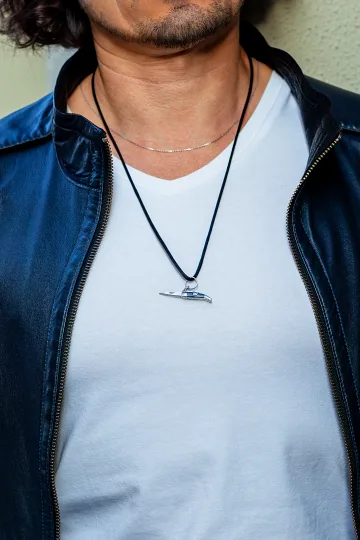




Common questions about turquoise
Is turquoise real if it is a perfectly even blue with no veining? Possibly, but it is a reason to look closer. A uniform blue with no matrix occurs in expensive Iranian turquoise, yet more often such a perfect colour means pressed crumb, dyed howlite or an imitation. A natural stone usually has a slight unevenness of colour and a natural pattern.
What is stabilised turquoise and is it worth buying? It is natural turquoise impregnated with polymer for strength and colour stability. The overwhelming majority of jewellery turquoise is stabilised, and there is no deception in that if the seller calls it so. A stabilised stone is more practical in wear and less afraid of damp.
Why has my turquoise gone green or dark? The stone is porous and soaks up skin oil, cosmetics and moisture, and the copper in it gradually oxidises. This is ordinary chemistry, not spoilage. Natural turquoise can sometimes be freshened up by re-polishing at a jeweller.
Can I wash my hands or swim in turquoise jewellery? Better to take it off. Water, soap and chlorine harm a porous stone, an unstabilised one especially. Constant contact with water speeds up the colour change and weakens the stone.
What is the hardness of turquoise and can I wear a ring every day? Hardness is 5 to 6 on the Mohs scale, lower in porous varieties. You can wear a ring, but it wears out faster than earrings or pendants. For an everyday ring choose a dense stone in a protective closed setting.
How is turquoise different from howlite? Howlite is a white mineral that dyes blue easily and gets sold as turquoise. It has a different, more "marbled" veining structure, and under the dyed surface you usually see white material. It is the most common imitation.
Is there such a thing as red or purple turquoise? Natural turquoise comes in blue, blue-green, green, sometimes shading into yellowish-green and greyish-blue. Red, orange or purple turquoise does not exist in nature; such stones are either dyed or simply not turquoise.
Does turquoise heal the throat, the thyroid, or help with sleep? No. Turquoise has no proven medical or "energetic" properties. It is a beautiful stone with a long history, but not a treatment.
Where is the best turquoise mined? The historic benchmark is Iranian (Nishapur): a dense, even blue. American turquoise is very varied, with a pronounced matrix, while the main volume of mining today comes from China. "The best" depends on what you value: clean blue, matrix pattern or density.
Is turquoise a stone for women only? No. Historically both men and women wore turquoise, from Persian jewellery to the heavy silver bracelets of the North American Southwest. It is a universal stone.
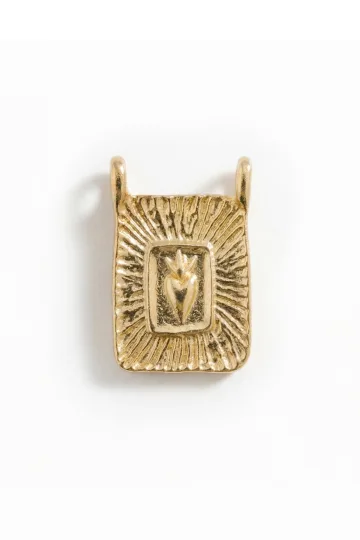
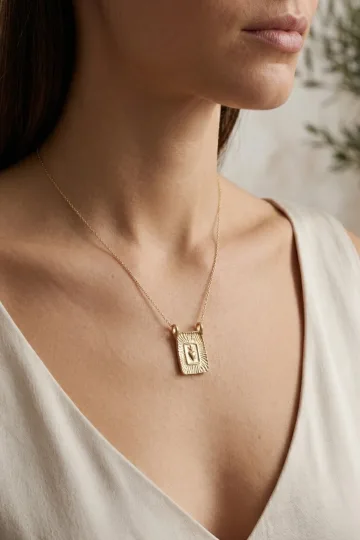
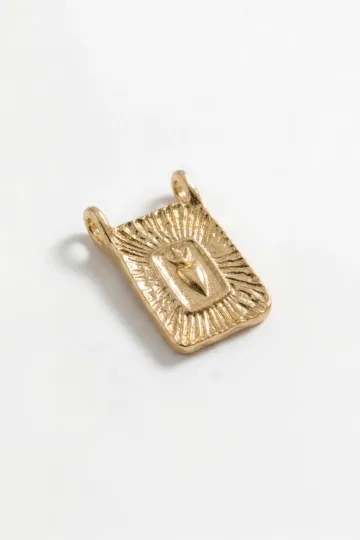
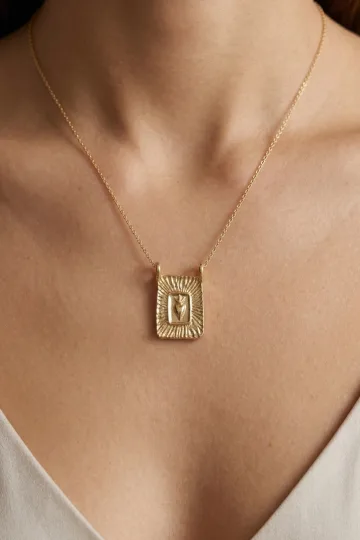
Wear the symbol, don't just read about it. These are in stock:

The short version
Turquoise is a hydrated phosphate of copper and aluminium, hardness 5 to 6 on the Mohs scale, porous and therefore a stone that asks for care. Copper gives it the blue, iron gives it the green, and the host rock gives it the characteristic net of veining. It grows in a dry climate beside copper ores, and it was prized for centuries in Egypt, Persia, Mesoamerica and the North American Southwest. The main practical difficulty with turquoise is the abundance of imitations and treated material, so when buying, the most important thing is to understand exactly what is in front of you: a natural stone, an honestly stabilised one, or a fake.
Bracelets, pendants, rings and earrings with turquoise in 925 silver.
About Zevira
At Zevira we treat a piece of jewellery as something you wear for years, not as a talisman that makes promises. So about turquoise we speak honestly: it is a beautiful, ancient stone with its own geology and history, but soft and finicky in care, and the market is full of fakes.
When you choose a piece with turquoise, it helps to know what is in front of you: a natural stone or a stabilised one, blue or green, dense or porous. That decides both the price and how the piece will behave in wear. We talk about the material plainly so the choice is an informed one and the piece gives pleasure for a long time.