Recycled gold in jewellery: almost all the gold on Earth has already gone round once
You cannot ruin gold by melting it. Your great-grandmother's ring and a bar just lifted out of a mine are chemically identical down to the last atom. That is why almost all the gold humankind has dug up over six thousand years still exists and still passes from hand to hand: dental crowns, medals, lost earrings, church plate, ancient coins. The metal does not age, does not rust, does not vanish. It only changes shape.
This is the quiet truth of recycled gold. Not a trendy label on a shop window, but a physical property of a metal that cannot die. When a jeweller melts an old chain to cast a new ring, they do nothing that people have not done for thousands of years. The only thing that is new is that today this old process carries a meaning beyond thrift: the question of where your gram of gold came from, and what it cost the planet and the people on it.
This piece talks about secondary gold honestly: what it is, why it is no worse than freshly mined metal, what a bloody and dirty road primary gold travels, and how to stop a seller from turning a good idea into empty marketing.
What recycled gold actually is
A plain definition with no marketing
Recycled gold is metal that has already been used in some form and has come back to be melted down into raw material again. The word "secondary" here does not mean "second-rate". It points only to the source: not a mine, but circulation. Gold refined from scrap is indistinguishable in purity and properties from gold refined from ore. The difference is purely biographical, not a matter of quality.
The trade uses several names for this raw material: secondary gold, recycled gold, scrap. Behind all these words sits the same physical fact: atoms of metal that someone once mined are now being used again instead of pulling fresh ones out of the ground.
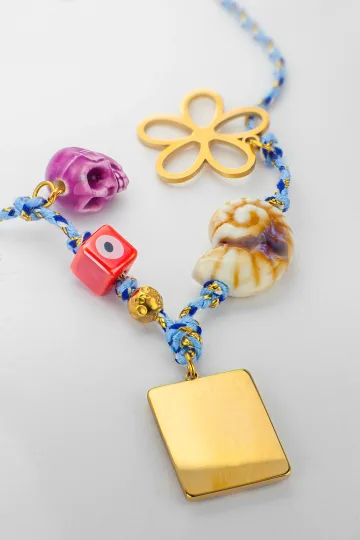
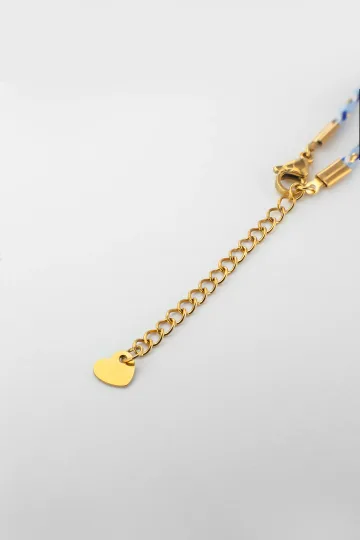
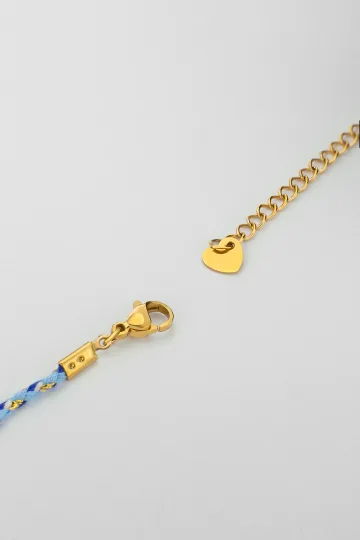
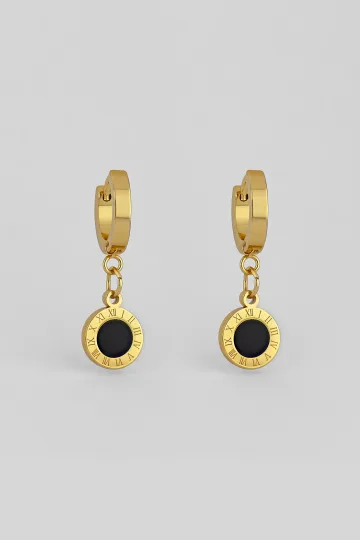
Wear the symbol, don't just read about it. These are in stock:






Old jewellery as the main source
The most obvious and the largest source of secondary gold is jewellery that has served its time. A broken chain, a ring left after a divorce, earrings without a pair, an inheritance nobody wants to wear, retired jewellery collections. All of it flows into pawnshops, scrap buyers and refineries, gets melted down and returns to the trade as clean metal. In effect, your grandmother's brooch that you sold off may become part of someone's wedding ring on the other side of the world a month later.
Industrial and dental scrap
For decades gold has been working in places where nobody sees it as jewellery. Dental crowns and bridges made of gold alloys, laboratory ware, contacts and plating in old equipment, the waste of jewellery workshops themselves (filings, shavings, sprue offcuts). Every workshop collects the powder swept off the bench, because it holds a meaningful sum in precious metal. Refineries recover gold even from polishing dust and from the filters of extraction hoods.
Electronics and urban mining
A separate and fast-growing source is electronic scrap. In boards, connectors and chips gold is used for its perfect conductivity and its resistance to oxidation. Spent phones, computers and servers contain gold in microscopic amounts per unit, yet in gigantic volumes in total. Recovering metal from this rubbish is called urban mining: the ore in this case is not rock, but a landfill of dead equipment. There is a whole section on this further down, because the figures there are surprising.
Bullion and coins as a quiet reserve
There is one more source that rarely gets a mention: investment gold. Bars and coins sitting in banks and safes also flow constantly into the trade. When someone sells a gold coin, it often heads not into a new collection but into the melting pot, and the metal goes to jewellery or industry. This reserve is huge and mobile: a significant share of all the gold ever mined is held in the form of bars, and when price or demand shifts, this layer of metal starts to move and spreads back across the market.
How scrap differs from secondary feedstock under strict standards
There is an important subtlety here that the everyday word "secondary" smears over. Serious industry standards draw a line between truly recycled gold (old jewellery, coins, industrial returns, spent equipment) and so-called pre-scrap, where fresh metal is deliberately run through a melt so it can be formally called recycled. The first genuinely lowers demand for mining; the second is pure greenwashing. So behind the word "secondary" it pays to see a specific standard, not the mere fact that the metal once passed through a crucible.
Why secondary gold matches new gold in quality
Gold is inert and keeps no memory of its history
The buyer's main fear runs like this: if the metal has already been somewhere, surely it is "tired", "contaminated", worse. This is a misreading of chemistry. Gold is a noble metal; it barely reacts, does not oxidise in air, does not dissolve in ordinary acids. Pure gold melted out of a crown, a coin or a nugget is one and the same element with one and the same properties. The metal carries no memory of its former shape. After refining you get a standard bar of the stated fineness, and there is no way to read its origin from it.
What happens during melting
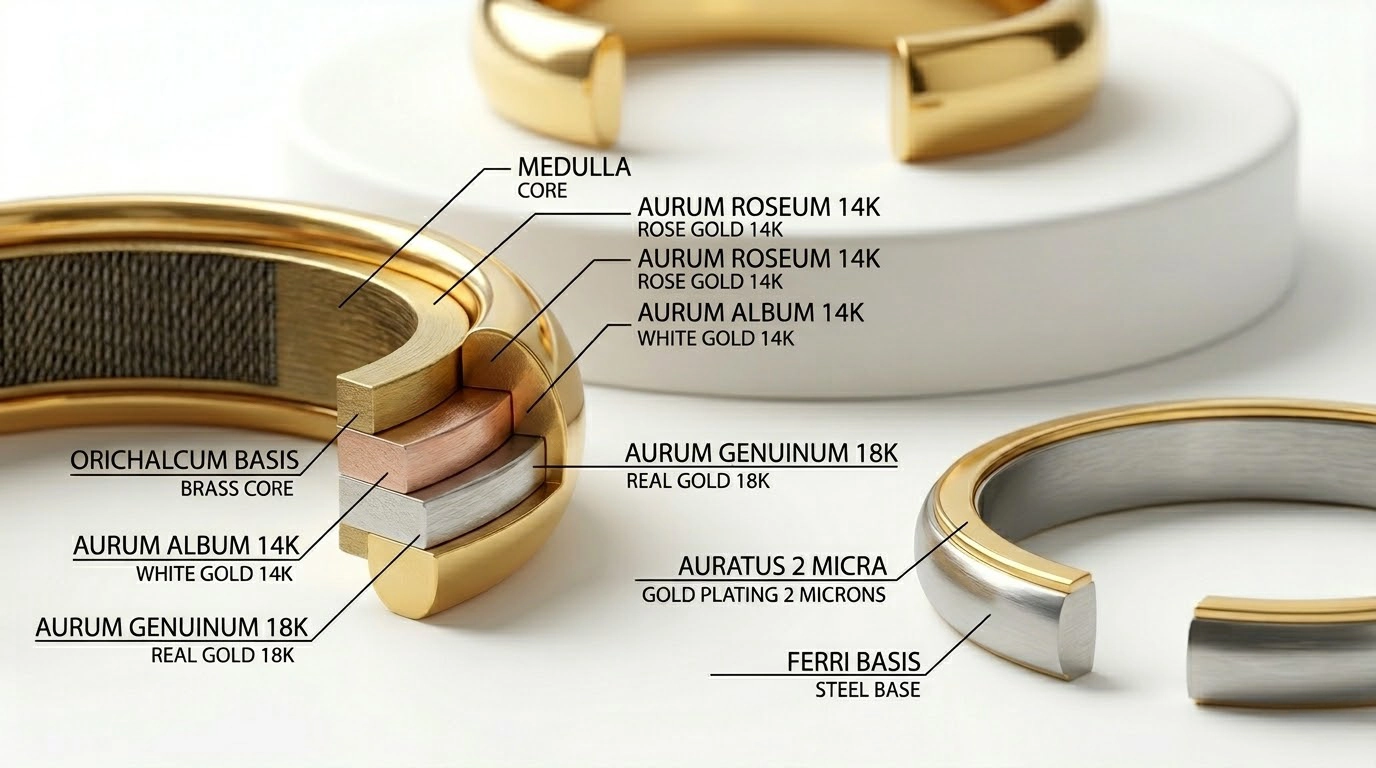
When scrap is melted, impurities and old alloying metals do not stay in the metal forever. Refining (industrial purification) brings gold up to 999.9 fineness when needed, and then the jeweller introduces alloying additives again to reach the required fineness and colour. So recycled gold at 585 fineness gets its silver and copper exactly the way primary gold does. Talk of secondary metal being "dirtier" describes not a property of gold but poor refining, which is equally rare for new and for old feedstock.
Burn-off and why a little metal is always lost
During melting some of the metal is inevitably lost. This is called burn-off: tiny losses to oxidation of the alloying metals, to settling in the crucible, to smoke and slag. The gold itself does not burn away, but the copper and silver bound to it partly oxidise, and the total mass of the bar comes out a little lighter than the scrap that went in. A good craftsman allows for this percentage in advance. For the buyer this matters when reworking your own gold: a hundred grams of scrap will yield a finished piece that weighs slightly less, and that is the normal physics of the process, not a swindle.
Recycled and new gold share the same fineness
585 is 585 no matter where the metal came from. Fineness shows the share of pure gold in the alloy in thousandths: 585 is 58.5 percent gold, 750 is 75 percent. This figure describes the make-up of the finished alloy, not its pedigree. A piece in 750 secondary gold holds exactly as much pure metal as a piece in 750 primary gold. If you want to dig into the fineness system in more detail, there is a separate breakdown on white, yellow and red gold and their finenesses.
Gold is never second-hand, only second-life. That ring outlived an empire or two, so wear it like you did too.
How to wear and choose jewellery in recycled gold
After years on shoots I have handled dozens of gold pieces, and I will be honest: from the object alone you will never tell melted metal from freshly mined. So I choose it by exactly the same signs as any gold, and I recommend you start from your skin tone and the occasion, not from the biography of the raw material.
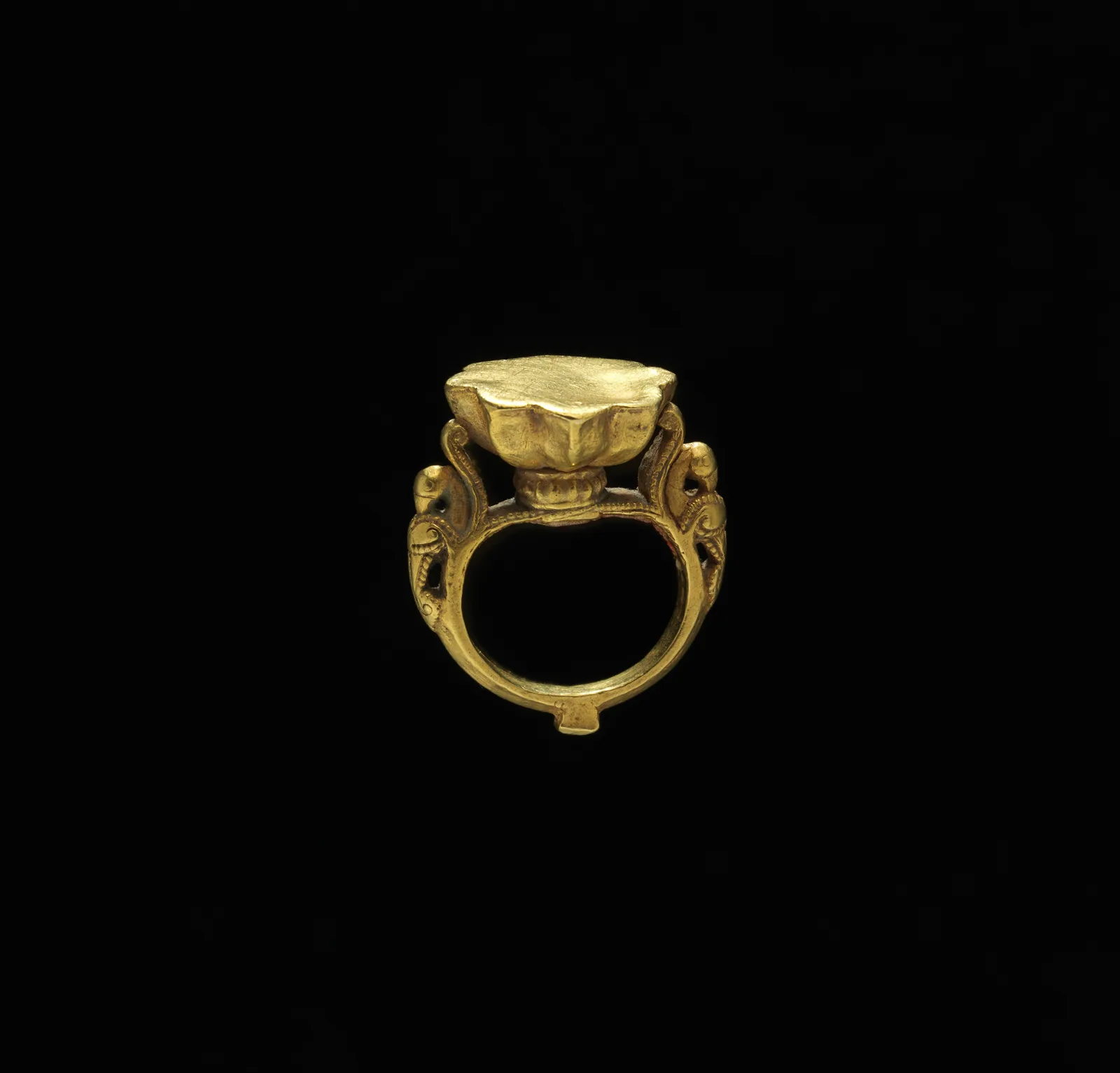
Which pieces should I look for in recycled gold? The same ones as in ordinary gold. I recommend you not to limit yourself: rings, chains, stud earrings, pendants and bracelets are cast and stamped from secondary metal in exactly the same way. The origin does not read from the finished object, so wear it with the same freedom as any gold.
Yellow, white or rose gold, which suits me? I look at the skin undertone. For a warm one (greenish veins at the wrist) I suggest yellow and rose gold. For a cool one (bluish veins) I recommend white with its cool sheen. Rose, thanks to the copper, gently lifts fair and neutral skin, and it is my go-to when you are unsure.
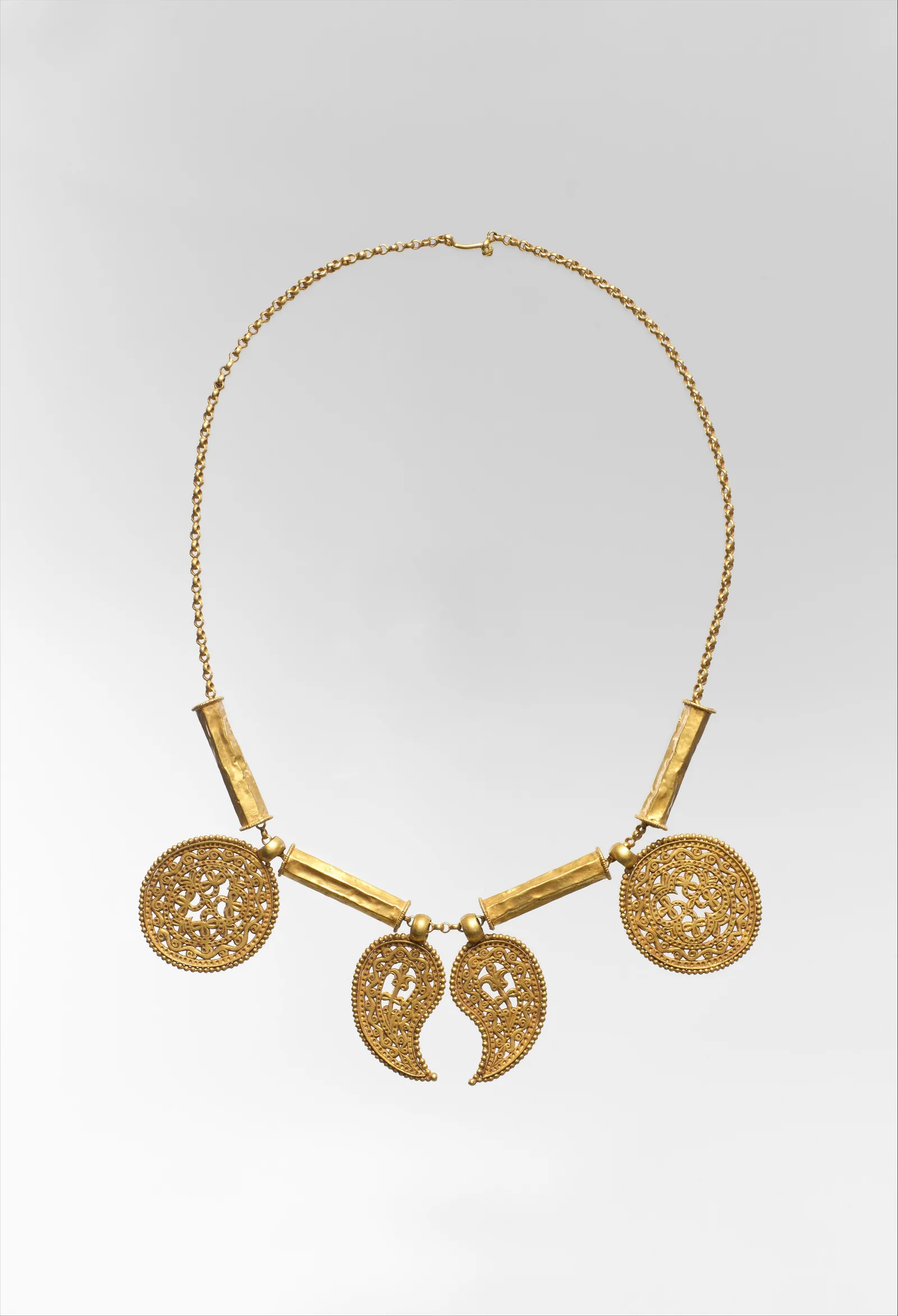
How do I pair it with what I already own? Freely. Since secondary gold is visually indistinguishable from primary, I set it with gold of the same tone and, if you like, mix it with other metals. I lay fine chains of different lengths in layers and gather rings into a stack on one hand. Go by the tone of the metal and the overall style of the look, not by the biography of the raw material.
What should I wear daily and what should I save for going out? For every day I choose clean, fine pieces that do not get in the way or catch on clothes. For a special occasion I recommend something brighter and larger: a big pendant, a wide ring, stone-set earrings. The same secondary metal carries both roles with ease.
What should I ask the seller when buying? Two things. The fineness shows on the hallmark and can be checked in a laboratory, while the origin cannot be read from the object; it rests on the papers and the workshop's reputation. A calm, specific answer about the source of the metal says more about honesty than a big "eco" line on a tag. While you are at it, look over the polish, the stone setting and the crispness of the hallmark.

Turn on your camera, pick earrings, a pendant or a ring, and see the piece on yourself in real time.
Switch items in one tap.
Everything runs in your browser: no photo or video is ever uploaded.
How primary gold is mined and why it costs the planet so much
Tonnes of rock for a single ring
Gold is scattered through the earth incredibly thinly. On modern mines, ore is considered economically worth working when a tonne of rock holds only a few grams of metal, and sometimes less than a gram. To win the gold for a single wedding ring, on average around a tonne of rock is moved and processed, and by some estimates several tonnes. This figure travels from report to report not for decoration: it literally means hills of torn-open ground, pits the size of a city and dumps of waste rock for a handful of metal.
Mercury in artisanal mining
A large share of the world's gold is mined not by corporations but by artisanal prospectors by hand, especially in the Amazon basin, in Africa and in Southeast Asia. The cheapest way for them to separate gold from sand is mercury: it binds the tiniest particles of metal into an amalgam, which is then boiled off over an open flame. Mercury vapour poisons the prospectors themselves, while liquid mercury runs into rivers, turns into methylmercury and climbs the food chain up to fish and people. By various estimates artisanal gold mining is the largest single source of mercury pollution in the world, outpacing even industry.
Cyanide on the big mines
Industrial mining uses a different reagent: cyanide. Cyanide solutions dissolve gold out of crushed ore, after which the metal is precipitated. The technology is controllable when run properly, but tailings ponds (vast pools of toxic waste) turn into a catastrophe when a dam fails. History records several major breaches where cyanide effluent killed rivers for hundreds of kilometres. The cost of a mistake here is measured not in money but in dead water for years to come.
The human cost
Behind the mines stand not only landscapes but people. Artisanal mining often means child labour, no safety equipment, conflicts over claims and so-called conflict gold, whose proceeds fund armed groups. Whole regions live off gold in conditions far removed from any idea of decent work. When we talk about the cost of a gram, mercury and cyanide are only part of the bill. The second part is human.
Scars on the landscape that never heal over
Mining has consequences that outlive the mine itself. Open pits leave behind holes visible from space, dumps of waste rock reshape the terrain, and acid mine drainage keeps poisoning groundwater for decades after closure. Tropical forests cleared for a mine barely recover: where a unique ecosystem once stood, a barren wasteland soaked in reagents remains. Reclamation is expensive and is far from being done everywhere. Land given over to gold often drops out of life for generations ahead.
Water as the invisible part of the bill
Beyond mercury and cyanide, mining devours gigantic volumes of clean water to wash and concentrate the ore. In dry regions a mine competes for water with local villages and farms, and in that contest the industrial giant always holds the advantage. Polluted effluent makes the remaining water unfit for use. The result is a double blow: a lot of water is taken, and what comes back is poisoned. Secondary gold zeroes out this water bill almost entirely, because melting scrap needs neither mining pits nor washing ponds.
Customer reviews
Zevira is a real jewellery shop. Genuine payments, deliveries and customer thank-yous.
🥰🥰🥰 gracias
Ok, ¡gracias! 🙂

Carbon footprint: secondary versus primary
Where the carbon in gold comes from
Gold, oddly enough, has a carbon footprint, and a very noticeable one. Crushing rock, running giant excavators and haul trucks, pumps, boiling-off, refining, all of this devours energy, most often from fossil fuels. When grams of metal are won from a tonne of ore, all the energy spent on that tonne lands on those grams. So the footprint of primary gold per gram is enormous.
Why the recycled footprint is far smaller
Secondary gold skips the heaviest stage: mining and ore concentration. Scrap needs no excavators, no blasting, no tailings ponds. What remains is collection, sorting and refining, and that is an incomparably smaller energy cost. By industry estimates the carbon footprint of recycled gold is orders of magnitude below primary: the difference is not in percent but in tens and hundreds of times. This arithmetic is what makes secondary metal a sensible choice for anyone to whom the environment means something real.
What this difference means for a single piece
Per ring the difference in footprint looks abstract, yet it is real. By choosing a piece in certified secondary gold, the buyer is effectively voting for an extra tonne of rock to stay in the ground and for an extra dose of mercury to stay out of a river. One person changes nothing on their own, but the trade is made of millions of such decisions, and demand for secondary metal directly shapes how much fresh land the mines tear open.
Why the refining footprint still deserves a mention
Honesty calls for a caveat: the footprint of secondary gold is not zero. Collecting, sorting and transporting scrap and the refining itself spend energy, and if the refinery runs on a coal power station, part of the benefit is lost. So the strictest producers also look at what energy their refiner runs on. Even with that correction the gap with primary gold stays huge: skipping the mining and concentration stage means subtracting the dirtiest and most energy-hungry part of the whole chain. Secondary metal wins by a giant margin; its advantage simply deserves to be described precisely, not turned into a myth of a zero footprint.
Upload a photo of your pet, someone you love, or an object. We'll build a 3D model and hand-cast it in pewter.



Certification and honesty: where ecology ends and greenwashing begins
What a responsible choice means without grand words
Responsible gold is not a slogan on a tag but a traceable chain from source to counter. Serious standards require documentary proof that the metal really is secondary or was mined without breaches of human rights and the environment. For the buyer this means that behind the word "recycled" sits a checkable document, not a seller's good intention. A good workshop is not offended by a question about the origin of the metal; it answers calmly.
How to tell real recycling from a pretty label
Greenwashing is when eco-credentials are claimed but not backed up. The signs of honesty are simple: the seller names a specific standard or refiner, is ready to show paperwork for the batch of metal, does not retreat into vague phrases about "caring for the planet". The signs of an empty label are the opposite: the word "eco" in large letters, zero specifics, a promise that secondary gold must be cheaper or, the other way around, that it is somehow especially magical. The metal is the same everywhere. The only difference is traceability.
Why a certificate does not turn gold into a different metal
It pays not to swing to the opposite extreme. A certificate for secondary gold does not endow a piece with mystical properties and does not change its chemistry. It answers exactly one question: where the metal came from and by what route it got here. This is a matter of ethics and ecology, not of how the piece wears. A piece will not become stronger or brighter because of a document. It becomes more honest, and for many buyers today that is enough to choose it.





Melting grandmother's gold into a new piece
How it works in practice
The most personal scenario for secondary gold is reworking your own things. You bring the jeweller old rings, a broken chain, earrings without a pair. The craftsman weighs them, reads the fineness, agrees a sketch with you. Then the metal is melted, the fineness is corrected if needed by adding pure gold or alloying metals, and a new piece is born from it. The old shape disappears, the atoms remain. In effect the piece your grandmother wore goes on living on your hand, just in a different form.
What happens to fineness when different golds are mixed
If scrap of mixed fineness goes into the melt (some 375, some 585, some 750), the result is an averaged alloy that will have to be corrected to the required fineness. You can raise the fineness by adding pure gold; lower it by adding alloying metals. So an honest craftsman first sorts your scrap by fineness and weight, and only then works out what to add and how much. Blindly mixing everything in one crucible and handing over "whatever comes out" is the mark of sloppy work.
Burn-off, losses and an honest reckoning
In any rework you have to allow for burn-off and processing losses. Part of the mass of your scrap will go to slag during melting, part to shavings and filings during finishing. A conscientious workshop spells this out in advance and often returns the collected scrap to the client or accounts for it in the reckoning. If you are promised that a hundred grams of scrap will yield exactly a hundred grams of finished piece, that is either a misunderstanding of the process or a fib. If the theme of memory and reworking an inheritance is close to you, there is a separate breakdown on redesigning a grandmother's ring and a general guide to restoring old jewellery.
Why memory matters more than grams
The chief value of a rework lies not in saving metal but in the fact that the piece keeps its bond with a person. A ring melted from a parent's wedding ring carries a history you cannot buy in a shop window. Secondary gold reveals an unexpected side here: it is not an impersonal eco-material but, quite literally, the metal of a specific fate, going on living further.
When reworking beats selling and buying new
Many people waver: hand the old gold to a scrap buyer and buy something ready-made, or rework it. From a purely financial point of view, selling for scrap is almost always a poor deal, because scrap is taken below the exchange price, with a discount for melting and risk. Reworking, by contrast, keeps the whole of your metal by weight; you only pay extra for the labour. But the deciding argument is not money, it is meaning: in a sale your grandmother's chain dissolves into an impersonal stream, while in a rework its metal stays yours and takes on a new shape with memory inside.
What you cannot melt down and why
Not every old piece is worth sending to the crucible. Items with historical, antique or designer value are sacrilegious to melt: their worth as an object runs many times above the value of the metal, and melting destroys it beyond recovery. The same goes for pieces with the hallmarks of famous craftsmen of the past or with rare enamel and setting. A good jeweller will stop you and suggest first having the piece valued as a monument, not as raw material. Restoration in such cases is wiser than melting, and this is worth thinking about before the metal goes into the melt.
Leave your email, we'll send your discount code. No spam, unsubscribe anytime.
The code arrives by email, valid on your first order.
Urban mining: how much gold hides in electronics
Why a phone is richer than ore
Here is a figure that changes your view of rubbish. A tonne of typical gold ore often holds less than five grams of metal. A tonne of spent smartphones, by various estimates, holds many times more: the count runs into hundreds of grams. So discarded equipment, by gold concentration, is richer than a real gold seam in the ground. An electronics landfill is a man-made deposit that we ourselves pile up every year.
Exactly where the gold sits in electronics
Gold in electronics is engineering, not decoration. It coats connector contacts, chip legs and board tracks wherever perfect conductivity without oxidation is needed. A single phone holds fractions of a gram of gold, but multiply by billions of devices and you get a stream of metal comparable to the output of whole countries. Most of this wealth still goes to landfill or is burned, poisoning the air, instead of returning to circulation.
Why urban mining has not yet beaten the mines
If electronics are so rich in gold, why are we still digging the ground? Because extracting gold from a board is technically harder than from ore: you have to separate it from dozens of other metals and from plastic, and that takes chemistry, infrastructure and collection logistics. In many countries the system for separate collection of electronic scrap is only being built. Urban mining is growing, but so far it covers only part of demand. This is a direction with huge room to run: the gold in discarded equipment is not going anywhere and waits for its hour.
The dark side of urban mining
This fine idea has a flip side that has to be stated honestly. A huge part of the world's electronic scrap is shipped off to poor countries, where it is dismantled by hand and crudely: wires are burned over open flames to get at the copper and gold, boards are boiled in acid baths with no protection at all. People breathe toxic smoke, the rivers next to the dumps are poisoned with heavy metals. In other words, badly organised urban mining is able to repeat all the sins of the mine. So the value of secondary gold from electronics also depends on exactly how it was recovered, not on the bare fact of recycling.
Where the recycling industry is heading
Technologies for recovering metals from scrap are maturing fast. Methods are appearing that replace the most toxic reagents with gentler ones, and bio-mining is developing, where gold is released from boards with the help of bacteria. Under pressure from laws, equipment makers are starting to design devices so they are easier to take apart. All of this is slowly but surely turning the landfill from a problem into a resource. A generation from now the phrase "gold from an old phone" may sound as ordinary as returning glass bottles sounds today.
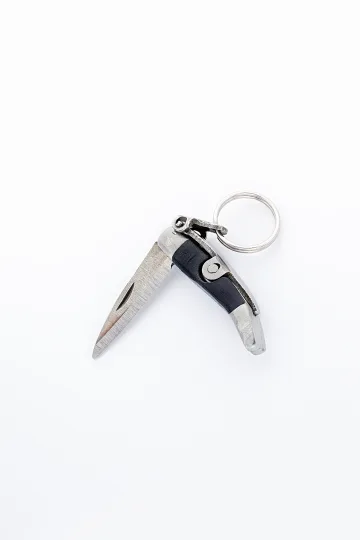
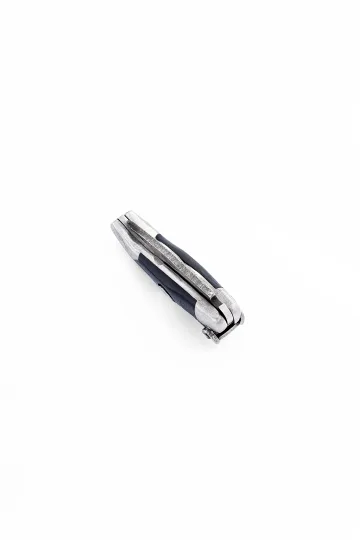
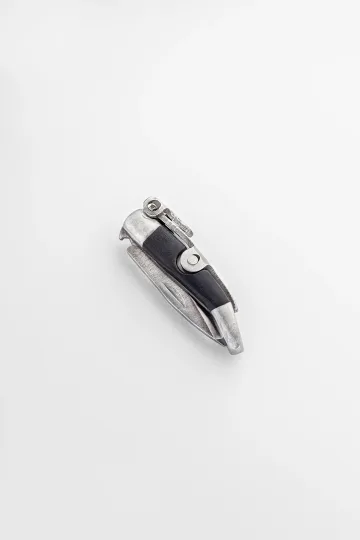
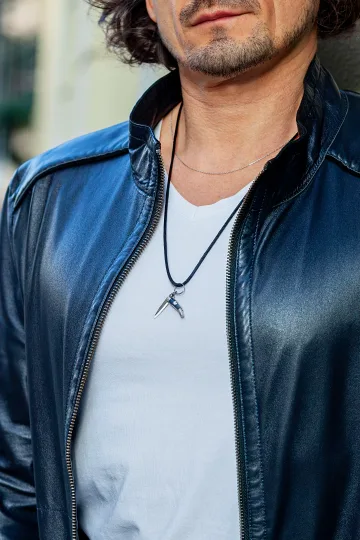
CAPAORA mini knife pendant
The 18th-century Spanish navaja in miniature: 40 mm of stainless steel, a real folding mechanism and a Palanquilla lock that clicks. An affordable gift to remember.
Authentic · Ships from Spain · 14-day returns
Myths about secondary gold that need busting
Myth: secondary gold is worse than new
This is the chief misconception, and it shatters against chemistry. After refining, the metal remembers nothing of its past. A bar from melted scrap is indistinguishable from a bar from ore in composition, fineness and properties. "Worse" does not exist here as a physical category. There is only good or bad refining, and that is equally possible for any feedstock.
Myth: recycled gold is darker or duller
The colour of gold is set by fineness and alloy, not by origin. Yellow gold at 585 fineness will be the same in tone whether it was melted from ore or from scrap, because in both cases the jeweller introduces the same proportion of copper and silver. If secondary gold somewhere looks duller, the matter is in the finishing of that particular piece, not in the nature of the metal. Polish it, and the difference disappears.
Myth: this gold is not real
The word "secondary" is sometimes confused with "artificial". These are different things. Secondary gold is absolutely real: it is the same element of the periodic table, the same fineness, the same value on the exchange. It is not an imitation and not plating. Imitations and thin coatings have a separate conversation of their own; here the talk is of real metal, simply with a different biography.
Myth: secondary gold is always cheaper
It is tempting to think that since the metal is "second-hand", it should cost less. But gold trades by weight and fineness on the world market, and a gram of pure gold costs the same whether it came from a shaft or from scrap. More on this below, because it is the most frequent disappointment for buyers.
How to read the origin of gold when buying
What questions to ask the seller
The origin of the metal cannot be seen with the eye, but it can be drawn out in conversation. Ask plainly: is this primary or secondary gold, are there confirming papers for the batch, which refiner or standard does the workshop work with. The seller's reaction will say more than the answer itself. A calm explanation is a good sign. Irritation, vague words and an attempt to change the subject are a reason to be wary.
Why fineness is visible but the source is not
Fineness is set by a hallmark and can be verified: it can be confirmed in an assay laboratory. The source of the metal, though, is physically undefinable from a finished piece, because refining wipes out every trace. This means traceability rests not on analysis of the metal but on paperwork and the seller's reputation. It is like food here: "organic" is confirmed by a document and a chain-of-custody certificate, not by the taste of the apple.
A workshop's reputation matters more than any tag
Since the source of the metal cannot be checked by an instrument, the main guarantor remains the one who sells it. A long-established workshop values its name and will not risk it for a pretty label. Read up on how long it has been on the market, ask people you know, note whether the seller is willing to answer awkward questions in writing. Trust here is built over years and lost with a single lie, so serious names behave carefully and transparently. A tag with a line on it says only what was printed there; reputation says whether that line can be believed.
What not to fall for
Do not believe in devices or signs that supposedly "read the eco-credentials" of gold at a glance. They do not exist. Do not confuse the assay hallmark with an eco-certificate: the hallmark speaks of the share of gold in the alloy, not of its origin. And do not treat an absence of papers as normal for a large workshop: if it really is certified secondary gold, the paperwork for it exists, and it is shown.
Why secondary gold does not automatically make a piece cheaper
The price of gold comes from weight, not biography
This is the key point that breaks expectations. Gold is an exchange commodity: its price per gram is set by the world market and tied to fineness, not to source. A gram of 750 gold costs the same whether it was melted from an old chain or cast from a freshly mined bar. So the metal itself in a secondary piece is no cheaper. Savings, if any, can come only from logistics or from dropping a markup for "newness", not from the nature of the metal.
What you pay for besides the metal
In the price of a piece the metal is only one part. The rest is the craftsman's work, the complexity of the design, the stone setting, the brand, the guarantees. Secondary gold does not cancel these costs. A quality piece in recycled metal can cost as much as, or more than, a simple stamped one in primary gold, because it holds more handwork and meaning. What you pay for here is not the dirt or cleanliness of the metal's biography, but the whole object.
The chief value is not in a discount
If you choose secondary gold hoping to save money, you will most likely be disappointed. If you choose it for a smaller footprint on the planet, to keep mercury out of someone's river, for an honest history of the metal, then you get exactly that. The value of secondary gold is ethical and ecological, not financial. And that is fine: a clean conscience rarely comes with a discount. Anyone drawn to the theme of a conscious choice of material will also be interested in the neighbouring conversation about the ethics of stones in the guide to moissanite versus lab-grown diamonds.
Send a friend a discount code, they save on their first order.
Facts that surprise
All the gold in the world would fit into a few swimming pools
Across all of history humankind has mined relatively little gold. If you gathered all the metal raised from the ground over thousands of years and cast it into one cube, its side would come out around twenty-something metres. That is the volume of just a few Olympic swimming pools. It seems incredible: all the glitter of empires, all the crowns, coins and rings of history fit into a cube the size of an apartment block. This is exactly why gold is so valuable, and exactly why almost all of this volume travels carefully round in a circle rather than lying as dead weight.
Almost all the gold is still with us
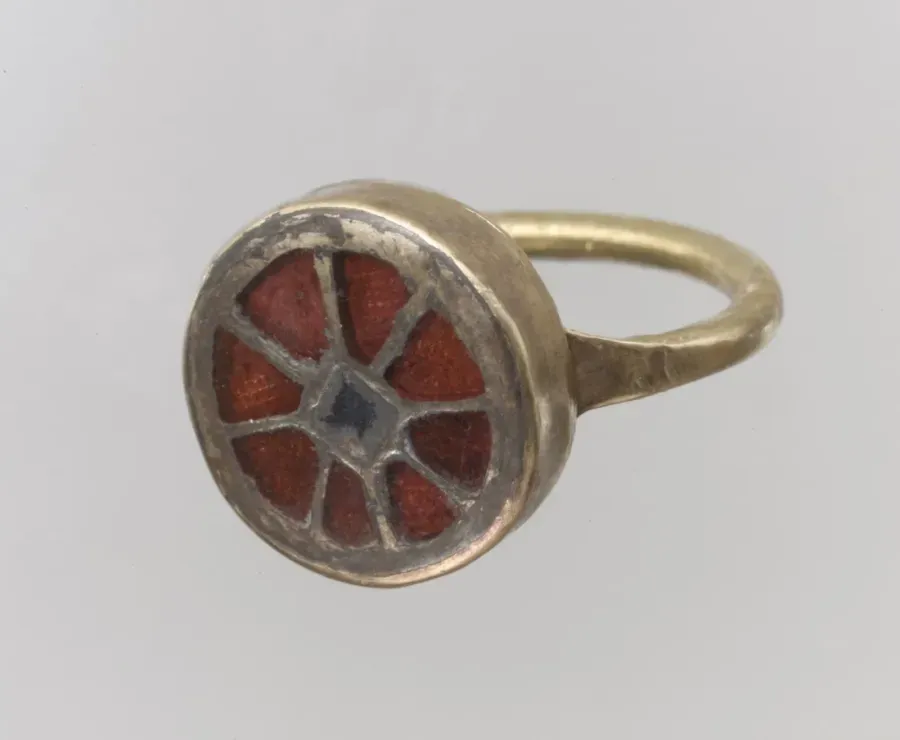
From this follows a striking conclusion. Since gold is practically indestructible and is not used up beyond recovery, most of the metal mined across all of history still exists in one form or another. The ring you wear may well contain atoms that were once part of a Roman coin, a medieval reliquary or an ornament long since melted down and forgotten. Gold is the longest-living secondary material in the world; we just rarely stop to think about it.
Gold arrived from space
The heaviest and most beautiful thing in a piece of jewellery has, by current understanding, a stellar origin. Gold and other heavy elements are born not in ordinary stars but in catastrophes on a cosmic scale: in supernova explosions and the mergers of neutron stars. All the gold on Earth once arrived here together with the matter the planet was assembled from. In this sense any gram of gold, whether from a mine or from a melted crown, is literally stardust that has passed through billions of years.
Gold will outlive any civilisation
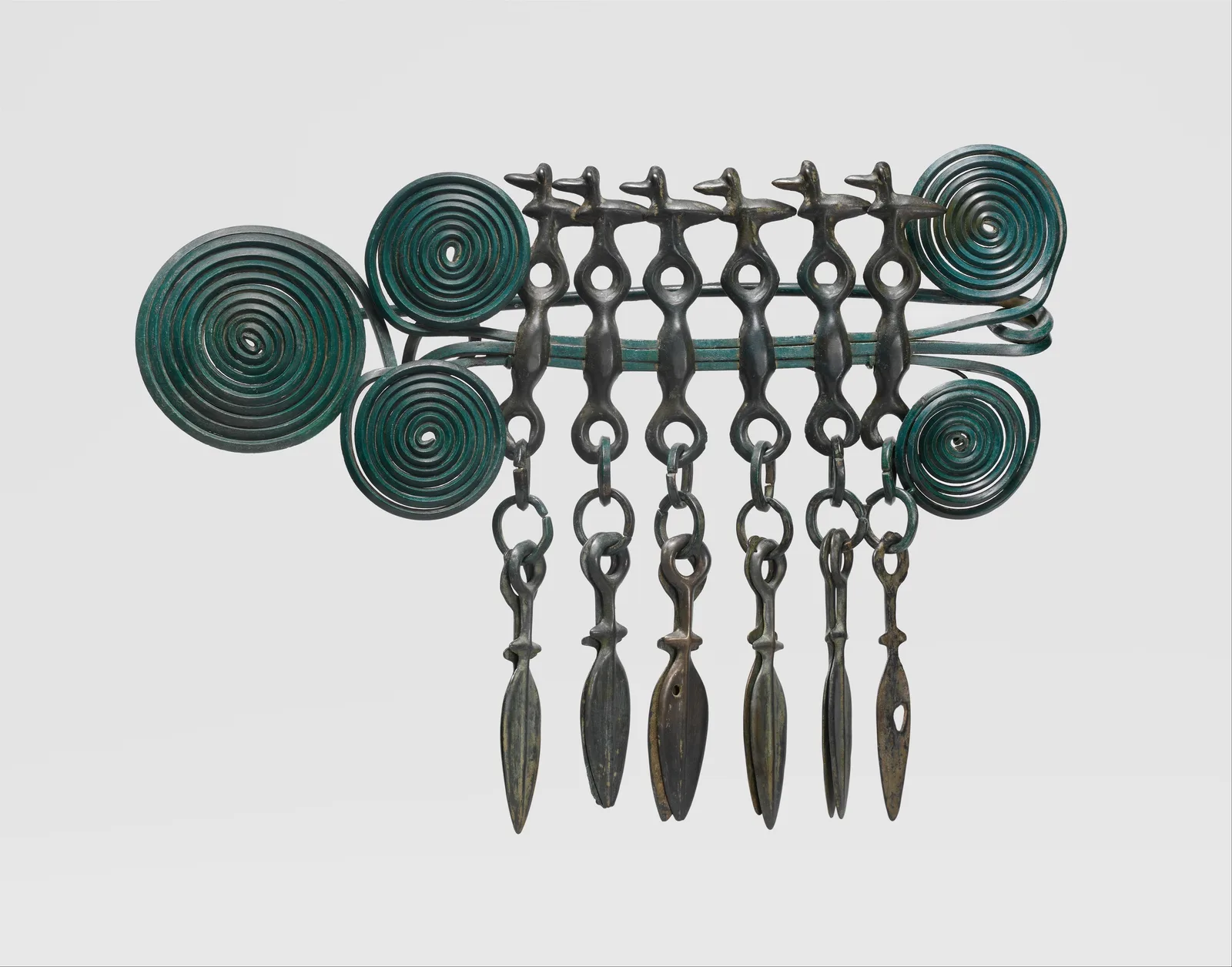
There is something almost philosophical in this. Paper rots away, iron is eaten by rust within decades, plastic breaks down into toxic dust, while gold will lie exactly the same thousands of years later. Archaeologists find gold ornaments in tombs five thousand years old, and the metal shines as if it were cast yesterday. This means the piece you wear today will very likely outlive you, your grandchildren and the very memory of who made it, only to set off one day into the melt again and begin the circle anew.
Electronics as the deposit of the future
And once more about phones, because it is worth it. The volume of gold settling each year in discarded electronics across the world is comparable to a noticeable share of the annual output of mines. We throw whole gold seams onto landfill and at the same time keep digging the ground. When urban mining becomes cheaper and more usual, the attitude to electronic waste will change: yesterday's junk will turn out to be raw material, and the dumps that very deposit you do not have to blast open.
Frequently asked questions
Is recycled gold the same as secondary gold?
Yes, these are synonyms. "Secondary", "recycled", recycled gold, gold from scrap, all these words describe metal that has already been used and has come back to the melt. In quality and fineness it is identical to primary gold; the only difference is the source of the raw material.
Can you tell secondary gold from new by sight?
No. After refining the metal loses any trace of its past. From a finished piece it is physically impossible to determine the origin of the gold: fineness, colour and properties depend on the composition of the alloy, not on its biography. The source is confirmed only by paperwork and the seller's reputation.
Does secondary gold wear worse or tarnish faster?
No. Wear and tarnishing depend on fineness, alloy and care, not on the origin of the metal. A piece in 585 recycled gold wears exactly like one in primary gold of the same fineness. If something tarnishes, the matter is in the make-up of the alloy or in care, not in the metal being "second-hand".
How much gold is really in one smartphone?
Very little per unit: fractions of a gram. But per tonne of devices there is many times more gold in electronics than in a tonne of ore. So the value lies not in one phone but in the mass: billions of devices add up to a huge volume of metal that for now mostly goes to waste on landfill.
Why is secondary gold not cheaper if it is "second-hand"?
Because gold trades by weight and fineness on the world market. A gram of pure gold costs the same regardless of source. The metal in a secondary piece is no cheaper; the difference in the price of a piece is set by the work, the design and the markup, not by the origin of the raw material.
Is gold lost during melting?
The gold itself does not burn away; it is a noble metal. But during melting part of the alloy oxidises and goes to slag, plus there are processing losses, this is called burn-off. So a hundred grams of scrap yields a finished piece a little lighter. A conscientious craftsman allows for this percentage in advance and talks it through with the client.
How do I make sure I am buying truly recycled gold?
Ask the seller plainly about the origin of the metal, request papers for the batch, check which standard or refiner the workshop works with. Real traceability rests on paperwork and reputation, not on the word "eco" on a tag. A calm, specific answer is a good sign.
Does secondary gold change the properties of a piece?
No. A certificate for secondary gold answers only the question of the metal's origin and does not affect the strength, colour or wear of the piece. This is an ethical and ecological choice, not a functional one. The piece wears the same; it simply has a cleaner history behind it.
Rings, chains, earrings and pendants in various metals and finenesses. Ask us about the origin of the metal before you buy: we answer calmly and to the point.
Buying it as a gift? Each one arrives ready to give.
 A branded Zevira box and a little card come with every order.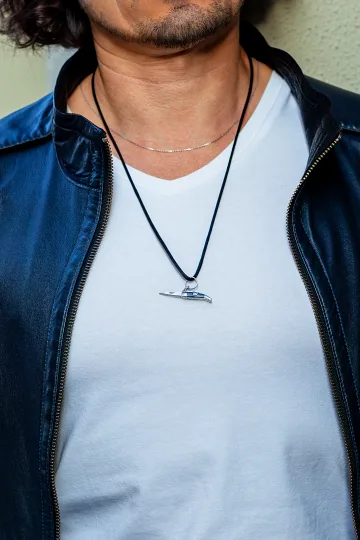









About Zevira
Zevira treats metal as a value that should not die. We believe gold costs the planet and people too much to mine afresh where you can give a second life to what already exists. So we speak openly about the origin of materials, do not disguise thrift as ecology and do not turn a good idea into an empty label. If you want to rework an inheritance into a new piece or choose jewellery with an honest history of the metal, ask: behind every answer of ours stands a fact, not a slogan.