The Gift for Someone Who Has Everything: The Jewelry No One Else in Their Box Owns
Three gold chronographs in a safe, a brilliant-cut diamond ring, two strands of pearls. Another diamond will not move the needle. Spending more stops working. This guide is about five other levers: rarity, individuality, heritage, craft, context. And about making the one thing nobody in the recipient's circle already owns.
Why Money Stops Being the Argument
The steeper the price tag, the higher the odds the piece gets thanked for, slipped into a box, and forgotten. That is not ingratitude, it is saturation. Someone who has been buying and receiving jewellery for twenty years owns the whole canon by forty-five: the eternity band, the pearl rope, the tennis bracelet, the solitaire studs, the signet. The twenty-first piece in that lineage carries no shock of discovery, because the discovery happened on the second.
The law of diminishing returns runs the show. The first diamond of a life is remembered forever: the engagement ring, the first serious object. The second of a comparable size lands as confirmation. The third no longer separates from the fourth. To bring back the charge of the first, you have to switch categories entirely: give a story rather than a stone, a context rather than a carat.
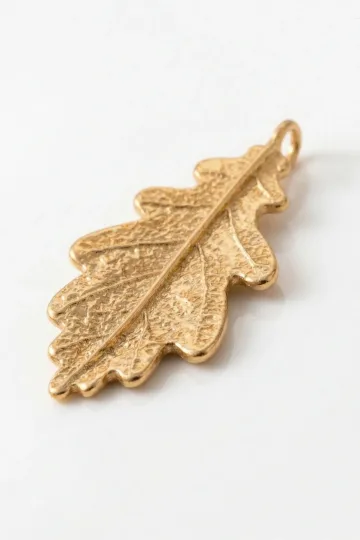
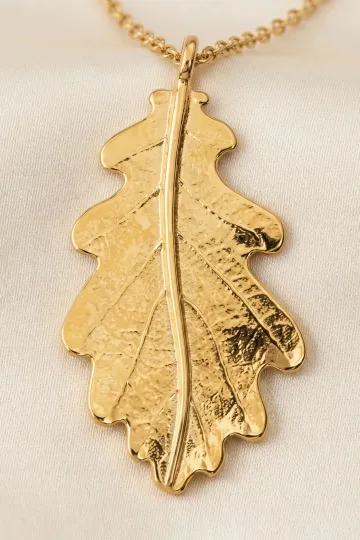
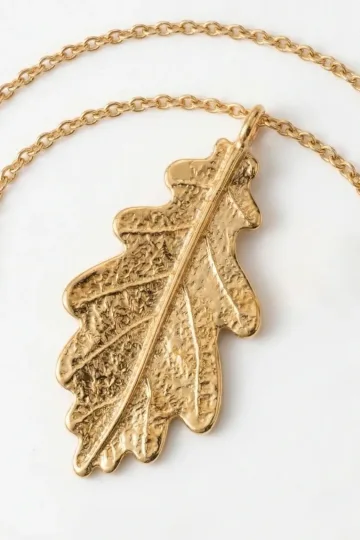
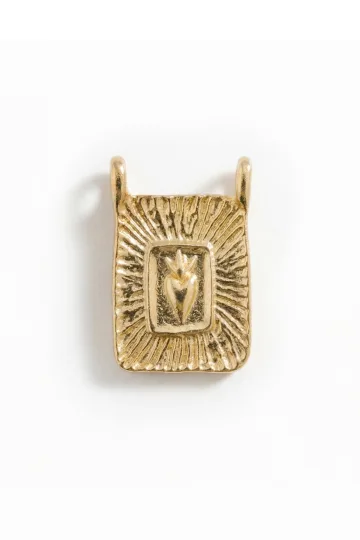
Wear the symbol, don't just read about it. These are in stock:

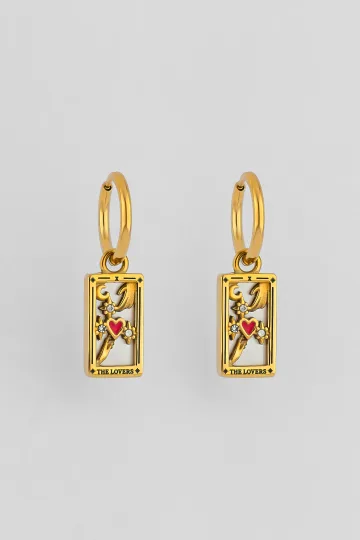


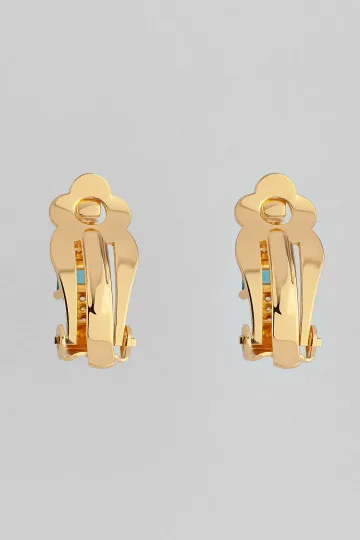
Collection fatigue is the other half of it. When the house already holds four boxes and a safe, a new piece becomes an inventory unit: it needs a slot in the rotation, a line on the insurance schedule, a photograph for the records. The joy of owning gives way to the chore of owning. A person who already has all the standard things wants either a piece that talks to what they own, or a piece that cannot be filed away because it is the only one of its kind.
The Heritage Paradox
The history of gifts among people of power confirms one principle in every era. Lorenzo de' Medici spent fortunes not on gold for friends but on manuscripts for scholars: his circle already had gold, while the single surviving copy of a Plato text existed nowhere else. Charles V, after abdicating, gave away most of his jewels and left his heirs only relics tied to events. Among the English crown's records, a short list of pieces passed down across generations sits beside a long list of things eventually melted or sold. A century later the meaning survived in the stories, not in the carats.
The pattern is plain. The higher a person stands on the social ladder, the less anonymous luxury moves them and the more identifiable meaning does. A gift that any other person of their rank could have received does not register as personal. A gift that could only have been made for them lands in the category of memory, not property. In royal inventories you see it directly: a short roster of heirlooms (a coronation gift, a ring for the birth of an heir) and a long roster of what was reworked or pawned at some point along the way.
The Five Levers That Work After Price
- Scarcity tied to the recipient. Not rarity as a marketing badge, but the thing missing specifically from their life. Found through observation.
- Authorship and the trace of a hand. A bespoke piece in which the work of one named maker is visible and cannot be reproduced in a run.
- A personal story sewn into the object. A date, a coordinate, a phrase, a symbol from a shared biography, a cipher only two people read.
- A functional surprise. A piece that does something beyond its main job: it opens, transforms, wears two ways, conceals.
- Aesthetic rarity. Not a bigger stone, but a pairing of materials, textures, or techniques the recipient has never met.
Each lever works exactly where money no longer does, and each fits any budget: the difference lies in effort and attention to the person, not in cost. Before you pick a lever, answer the question most people skip: which gap in the recipient's life is still open? Not "which object is missing from the box," but which emotional, functional, or aesthetic niche sits empty. If you need a broader map of choosing by occasion and budget, we gathered one in the jewelry gift guide by occasion.
Customer reviews
Zevira is a real jewellery shop. Genuine payments, deliveries and customer thank-yous.
🥰🥰🥰 gracias

Ok, ¡gracias! 🙂

How to Learn What They Don't Have
The giver's biggest mistake is asking directly. "What should I get you?" kills the surprise. The recipient names the first thing that comes to mind, brushes it off with "I don't need anything," or feels awkward naming something expensive. None of those answers carries real information. You will have to gather it sideways.
Ask the People Close to Them, Sideways
Every adult has three or four sources: a mother or father, a sibling, a friend from teenage years. Approach through an everyday pretext: "I want to surprise him for his birthday, help me not to blow it, don't say a word to him." Then short, concrete questions:
- "Does he own any cufflinks or tie bars at all?" This exposes empty categories. If the mother cannot recall her son ever wearing them, the niche is open.
- "Does he wear anything passed down: a watch, a ring, a cross?" If yes, he values personal stories in jewellery. If no, he is an aesthete, not a keeper.
- "Does he complain that something pinches, rubs, or leaves a mark?" The most underrated question. "That ring turned his finger green," "he took the chain off, said it chafed" are priceless data.
- "Has he ever taken a piece off, and why?" This is where his history with specific objects surfaces.
- "Did he ever mention wanting something but never buying it?" The most valuable question of all. Give that thing and you hit the bullseye.
What They Buy for Themselves and What They Reject
The opportunity zone is the things they look at but do not buy. If he has stopped three times in half a year at a window of leather bracelets saying "I should get one of those" and never has, that is the gift: the barrier is not desire, it is the habit of putting himself last. What he buys for himself is rarely worth giving: he handles that category without you. Pay special attention to what he rejects on purpose. "I would never wear yellow gold" is a hard border. "I don't like anything chunky" rules out heavy signets. A gift against the grain of taste always loses.
Walk his box and his bedside drawer in your mind. Sort what you see into three layers. The first is daily wear: the watch, the wedding band, the chain at the throat. That is "armour," and it can only be swapped for a better version of the same. The second is occasion wear: what goes on for a restaurant or a meeting. Here the gaps are most common, and this is the ideal zone for a gift. The third is the abandoned layer: pieces that have sat for years, usually because they did not work (too heavy, an awkward clasp, a skin reaction). Memorize their traits and steer clear.
Social Feeds and the Physics of the Body
Scroll the last hundred posts to cover at least half a year. Note every appearance of a piece: which hand, which setting. Constancy (the same chain in eighty of a hundred photos) is a fixed point. Especially telling are photos where a piece disappears: present in thirty frames in a row, then gone. He dropped that one deliberately, so do not give anything like it.
The most common reason a gift ends up in a drawer: the body rejects it. Nickel in cheap alloys triggers contact dermatitis. Low-grade silver tarnishes within a week and stains shirt collars. If anyone in the family is allergic to costume jewellery, gold below 14 karat is out. If he works with water and cleaning agents, rings with a complex stone are wrong. Ask a mother or a sister: "Has he complained that something itches or reddens his skin?"
Blind Spots
Everyone has categories they ignore, not because they are bad but because they never thought about them. This is the golden zone: the piece arrives as a discovery rather than a duplicate.
- Cufflinks. If the recipient does not wear suits regularly, cufflinks do not exist for him as a class. One pair turns a double-cuff shirt into an event.
- Brooches. A woman aged twenty-five to forty often files brooches under "grandmother's things." A modern brooch on a coat or lapel works as the focal point of an outfit. The shape has to sit far from dated aesthetics: an insect, abstract geometry, a minimal silhouette.
- Long chains. If the recipient has a short neck, she spends years choosing chokers. A chain to the navel works not through the neck but through the elongation of the torso.
- Torcs and neck rings. Rigid neck bands of the kind worn by Celts, Iberians, and Norse. Almost no one wears them now, and that is exactly what makes them a strong call.
The list of blind spots is built around one specific person. A thirty-five-year-old office worker with no suit has neither cufflinks nor brooches. An actor has both, and her blind spots lie elsewhere.
What They Admire in Others
Start a note and for two or three months log every line of admiration: "he has a great bracelet," "look at that chain." Do not press in the moment. After three months a pattern appears: one admires the metal, another the form, a third old things with a patina. This beats any survey, because admiration of someone else's things is honest, stripped of the social mask. When he tells you "what should I get," he runs a filter of modesty. When he tells a friend "your watch is incredible," he is telling the plain truth about his taste.
Checklist Before the Order
Before you place the order, make sure you can answer these. If three or more answers are missing, gather more data.
- Which metals he wears and why exactly those.
- Which metals he rejected and under what circumstances.
- Finger size (which finger, which hand).
- Neck length or wrist circumference.
- How many pieces he wears at once: a single object or a set.
- What is impractical in his work setting: sterility for doctors, grime for builders, chemicals for lab staff.
- Allergies and skin reactions.
- Religious constraints (some faiths discourage gold on men).
- His attitude to engraving: does he love personal inscriptions or feel shy about them.
- Meaningful dates, cities, and places you could encode.
A direct question is justified in one scenario: when the gift involves co-authorship (reworking a family heirloom, a stone from a grandfather). Then surprise is beside the point, and you can ask: "I have a stone from your grandfather. I want to make a ring for you from it. Which cut feels right: classic, retro, or minimal?" You discuss the form; the details stay your territory.
Upload a photo of your pet, someone you love, or an object. We'll build a 3D model and hand-cast it in pewter.




For the one who has everything, a bigger diamond is a shrug. Give a story or give nothing.
What to Wear It With
Over years on set, heirloom lockets and one-off bespoke pieces have passed through my hands. Here is what actually works when a gift has to read as a gift, not as one more detail in the box.
How do I wear a heirloom locket every day? I recommend tucking it under a shirt collar on a thin chain, so it stays the owner's private secret and never fights the clothes. A light top lifts the metal, a dark one turns the locket into a quiet accent. For weekdays I suggest one noble-metal piece and no scatter of small things around it.
How do I bring that same pendant out for the evening? For a deep neckline I bring the pendant out onto bare skin at the collarbone. A thin platinum chain reads as restrained and never pulls attention off the stone. I suggest a shorter length, 40-45 cm, so the piece lands right in the open zone.
What works for the office without looking heavy? For the office I choose a spare line: one piece, a noble metal, no clutter. Platinum and white gold sit well with cool tones (graphite, navy, wine, clean white), while warm and rose gold come alive on beige, emerald and terracotta.
Can a meaningful piece be layered? It can, with care. I recommend stacking chains of different lengths in one metal and keeping a single contrasting stone as the only accent. A ring with a rare stone is better left with no neighbours on the fingers, let it work solo.
How do I choose the length for a specific person? I choose the chain for the owner's habitual wardrobe, not for the shop window. 40-45 cm sits at the collarbones under an open collar, 50-60 cm drops to the chest and works over a sweater. One precious accent always beats three middling ones.

Turn on your camera, pick earrings, a pendant or a ring, and see the piece on yourself in real time.
Switch items in one tap.
Everything runs in your browser: no photo or video is ever uploaded.
Anchoring the Piece to the Person
A wedding date around the band of a ring is the work of a corner jeweller. Strong personalisation carries several layers: one obvious to everyone, a second only to the recipient, a third sometimes only to the maker. The working methods follow.
Coordinates of a Place
The most honest of the subtle methods. Choose a format: decimal degrees (43.7384, 7.4246) or degrees-minutes-seconds (43°44'18"N 7°25'28"E). Decimals sit more cleanly along an engraved arc. Engrave on the inner face of a ring, the back of a pendant, the edge of a bracelet: on the outside, coordinates read as an unreadable cipher and work worse than a hidden signature. Which places work: a first meeting, the window of a maternity ward, a childhood home, the spot where the question was asked.
A Fragment of Material from a Life
The strongest method. The stone from a grandmother's ring moves into a new setting, a father's cufflinks melt into a band, a coin from a first paycheck sets into a pendant. Technically this is work for a maker who handles client-supplied material. A self-respecting workshop draws up a handover record with weight, hallmark, and photographs, so there is never a later argument about a swapped stone.
An Exact Colour
Not "blue" and not "like her eyes," but a precise code. The eye colour is read from a photo in good light and translated into a Pantone reference. From there the code goes to enamel (hot enamel over silver or gold lands precisely with a good maker) or matches a stone: a tourmaline for eye colour, a sapphire for the colour of the sea in one particular bay. A stone is more honest than enamel, because enamel clouds slightly over time and a stone does not.
Numbers from a Life
For those who trust numbers more than words. A meeting date as a Julian Day (astronomers count days in an unbroken sequence): 7 July 2018 is JD 2458307, which looks like a code and reads only to the initiated. Then: the founding year of a family firm, the opening moves of a chess game in standard notation, a formula from a defended thesis.
Texture and Sound as Form
A child's fingerprint is cast in wax and carried into metal: the result is a raised pad on the band. A finger touches its own print, and that sensation works harder than any inscription. Any texture (the parquet pattern of a childhood home, the bark of a tree in the yard) is captured in a silicone mould and carried into metal by lost-wax casting. A spoken "I love you" from a child becomes a waveform and goes in by laser: every wave is unique.
A Regional Ornament
Folk embroidery from a home village, carried into metal. Across regions, embroidery differs down to the stitch: a pattern from one valley does not match the next. An Armenian "trchnagir" (bird letters), an Uzbek suzani, a Sami band, a Breton motif. The specific region matters more than the general style: an ornament from a grandfather's village is recognised at a glance.
A Sign from a Native Script
A concrete sign with a history. The recipient's name in an archaic form: Chinese in the style of Shang bronze vessels, Japanese in Heian-era hentaigana, Armenian in the letters of Mesrop Mashtots from the fifth century, Georgian in the rounded mrgvlovani. The recipient sees their own name written as an ancestor would have written it a thousand years ago.
A Meteorite and a Geological Sample
For those who love scale. Campo del Cielo (Argentina, fall roughly 4000 years ago, iron-nickel, Widmanstätten figures when etched) is sliced into plates and set into a ring. Buy only from dealers with an IMCA certificate: each sample carries a registration number and a passport, so nothing can be confused. A 2-4 mm plate goes into the piece and is handled with care (iron rusts and needs sealing with lacquer or rhodium). Simpler and closer to home: a chip of rock from a specific place, lava from Etna, basalt from Iceland, limestone from the beach where the question was asked. Photograph the collection spot, or in twenty years it is just a pretty pebble.
A Capsule and a Micro-Photograph
A capsule pendant with a miniature scroll: a letter written by hand, rolled to a tube two or three millimetres across, sealed in a capsule with a screw cap. It can be opened in ten or twenty years, at a chosen moment. This is a heavy gift emotionally, fitting from a parent to a child or between partners with a long history. A microfiche sits under mineral glass on the back of a locket, read through a loupe. The modern variation: a micro QR code scanned by a phone.
How to Combine Without Overload
Three methods in one piece, maximum. One reads to everyone (a fragment of a grandmother's stone is physically visible), the second only to the recipient (coordinates on the back), the third in secret (a micro-sign under the setting). The base rule: one material layer (a stone, a fragment, a meteorite), one visual layer (colour, ornament, silhouette), one textual or numeric layer (coordinates, a quote, a date). These three planes do not collide. A fourth layer breaks the composition. With someone you have known two years, better one strong layer and emptiness around it: the emptiness reads as restraint.





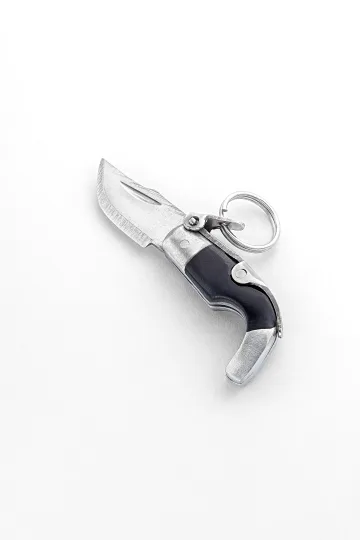
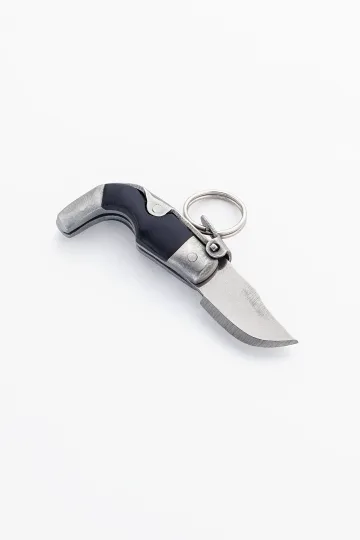
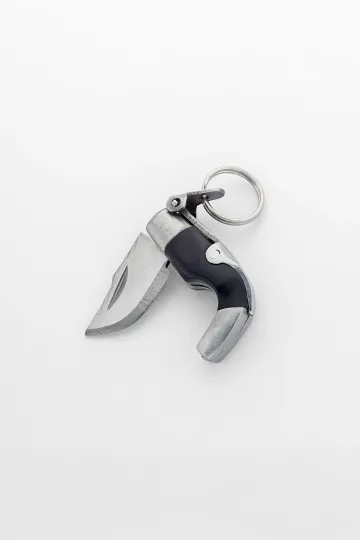
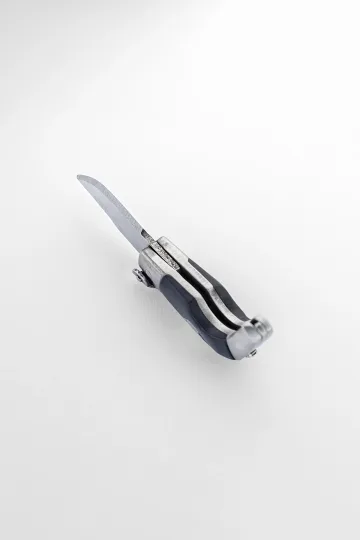
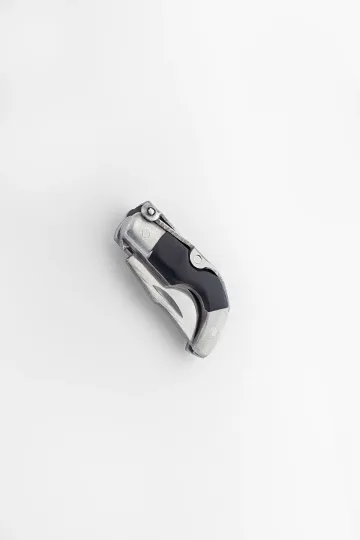
CAPAORA mini knife pendant
The 18th-century Spanish navaja in miniature: 40 mm of stainless steel, a real folding mechanism and a Palanquilla lock that clicks. An affordable gift to remember.
Authentic · Ships from Spain · 14-day returns
A Bespoke Order as the Gift
When shops hold more product than meaning, the move left is to make a piece from nothing. A custom piece you walked through together with a maker stops being merchandise: it gains an author and a biography instead of a barcode. For the gift "to the one who has everything," this is a powerful play, because such a piece cannot be repeated.
Choosing a maker, look at the portfolio rather than the reviews: reviews are written to order, while frames of process (a wax model, finished work in different styles, technical captions under them) are harder to fake. A good workshop shows a real address, does not ask for the full sum before a sketch, shows the wax model before casting, and never rushes you with "the offer ends today." Describe your idea in your own words: who the gift is for, what you want it to say, the recipient's habits, what they would never wear. The "no" block cuts the field down harder than a long wish list.
On timing, plan for five to nine weeks, longer with a reworked heirloom or a rare stone. A custom piece rarely comes out cheaper than a shop piece of equal weight: you are paying for the maker's hours. One thing matters at the finish: after the wax model, changes are nearly impossible, so the prototype in your hand is worth a long look, and the final piece deserves a calm, unhurried inspection.
Leave your email, we'll send your discount code. No spam, unsubscribe anytime.
The code arrives by email, valid on your first order.
Engraving as a Craft
Engraving turns a piece into a document: without it a ring is only metal and stone, with it there is an author, an addressee, and a year. A recipient who has everything has accumulated dozens of nameless pieces, and a single engraved one changes the math: it cannot be replaced by anything.
Three Techniques
Laser engraving. Depth of 5-50 microns. Computer-controlled, repeatable, fast. On 14-karat gold it holds five to ten years of active wear, on platinum fifteen to twenty. The mark is flat, barely felt under a finger. Good for small type, long text, fine lines, QR codes, scanned handwriting. The downside: cheap laser engraving looks like print on a receipt. To avoid that office feel, choose a maker who varies the beam power and gives letters different weights.
Hand engraving with a graver. Depth of 50-200 microns. The maker cuts the metal with a steel burin, turning the piece by hand. The line is tactile, the finger reads the relief blind. Wear life is half a century and beyond, longer than the wearer in practice. Suited to short inscriptions, monograms, crests. On a 6 mm band an experienced engraver fits four to six serif letters. A slow and costly genre, but the one that turns a piece into an heirloom.
Guilloché. Patterned mechanical engraving on a rose engine: waves, rays, rosettes. An eighteenth-century technique, at its height under Louis XV. Done for the ground, either as pure decorative pattern or as a bed for translucent enamel that catches light in every groove. A genre for collector pieces: the machines are one-off and few workshops remain.
The Spot Matters as Much as the Words
Engraving on the outside is a manifesto: everyone sees it, the wearer declares belonging or belief. It suits a signet, a locket, a crested pendant. Inside is privacy: only the wearer sees it when the ring comes off, the most common format for meaningful rings. Under the stone is a secret: the setting comes apart only in a workshop, unreadable without intervention. On the back is memory: visible as you take the piece off at night.
What to Write
A name works if folded into a monogram of two or three interlaced letters. A full "Anna Smith 12.05.2025" on the back looks like a lost-property tag. A date works in a nonstandard format: Julian Day, Roman numerals (XII·V·MMXXV), the Maya count. Coordinates of a place always work. A quote works at five to seven words, beyond that the eye stops finishing it. One symbol or ornament works harder than ten words. The giver's signature, scanned and laid in by laser in miniature, is a rare but powerful move.
Languages should fit the person. Latin for a classical education: "Vita brevis, ars longa" for a doctor, "Per aspera ad astra" for a scholar. Ancient Greek for a philologist: "Γνῶθι σεαυτόν" (know thyself). Hebrew, Sanskrit, Armenian, Georgian, each for its own addressee. Under any unreadable text, always provide a transliteration and translation on an accompanying card, or the recipient walks around with an unknown thing on a finger.
A typeface is a voice. A serif (Garamond, Bodoni) sounds classical and neutral. A grotesque (Helvetica, Futura) sounds modernist, for a minimal piece. A serif italic sounds intimate, for a warm note. A calligraphic minuscule suits a librarian or a medievalist, a monospace (Courier) a programmer or an engineer. The giver's scanned handwriting beats any typographic font there is.
What to Avoid
The names of past partners are not engraved, even after a friendly parting: a future partner will read it and draw conclusions. Unconfirmed dates are not engraved: a correction is irreversible without new work. Quotes from fashionable internet authors age out in two or three years and date the gift like growth rings on a stump, so take authors proven over centuries. Jokes and memes age faster still. "Forever" is an empty cliché: if you want the idea of permanence, invent your own phrasing. Hashtags and emoji on a precious metal look like a tattoo on a tuxedo.
Technical limits: the inside of a ring holds 30-40 characters at a band width of 4-6 mm, the back of a pendant 50-80. Minimum letter height is 1.5 mm for a serif, 2 mm for handwriting, below which the eye cannot read without a loupe. Engraving depth should not exceed 30 percent of the metal's thickness, or the piece risks cracking.
Reworking Heritage: Old Into New
Every family has a box somewhere. Inside is a father's signet nobody wears, a grandmother's ring too small for any finger, a great-grandmother's tarnished silver earrings. They cannot be thrown out (memory) and cannot be worn (form, size, era). Reworking heritage breaks the deadlock: the material stays in the family, the form becomes wearable.
There is a physical side to this, not only a sentimental one. The gold atoms from a grandmother's ring stay the same atoms after melting. The crystal lattice rebuilds, but the trace impurities specific to that era and that production survive. Spectral analysis can tell gold of the 1970s from gold of the 2020s by the ratio of impurities. So a fragment of the old ring physically lives in the new one. That is not a metaphor, it is chemistry.
What Can Be Melted and What Cannot
Pure gold of 14 and 18 karat melts down without loss of value; only the alloy proportion (copper, silver, nickel) shifts, added at the end. Silver of 925, 875, 800 will do. Platinum 950 melts only in a specialised workshop: its melting point is 1768 degrees and it needs an induction furnace.
Stones are not melted: they are removed, cleaned, assessed, and reseated. Diamonds withstand almost anything. Sapphires, rubies, emeralds demand care: natural stones carry inclusions, and heat from the warming setting can split them, so an experienced maker lifts the stone cold first. Opal, turquoise, mother-of-pearl are touchier still.
Off the table or nearly useless: pieces with a PVD coating (the thin coloured layer vanishes and exposes the base metal), rhodium plating that is lost, nickel silver and stainless steel that melt poorly and turn to slag. Organics die: pearl perishes on contact with the melt, amber melts at 250 degrees, coral chars. Ivory does not enter the conversation: it is banned from trade across the EU.
How Long It Takes
A realistic timeline for a rework: two weeks to analyse the composition and prepare the metal, a week to clean and alloy it, four to six weeks to make the new piece. Two to two and a half months in all. If someone promises a result in a week, they are most likely using their own stock metal rather than yours, and keeping yours.
Three Formats of Reworking
Full melt: same material, new form. The old piece is physically gone, the spirit carried by the mass of metal and the knowledge that it is "grandmother's." Preserve and refresh: the piece is cleaned, restored, the clasp replaced, but the form stays, a route for antiques with artistic value. Hybrid: a fragment of the old piece survives in the new one (a grandmother's brooch becomes the central medallion of a new necklace). The hybrid is often optimal: the emotion is kept and the thing can be worn.
When This Gift Fits and When It Does Not
It fits when the recipient is close to the person whose piece is reworked (a granddaughter from a grandmother yes, a distant cousin no, the bond too diluted), when that person would have approved the melt, when the old piece has sat unworn for years.
It does not fit if a living relative objects (grandchildren deciding "she doesn't wear it, we know best" guarantees a row). It does not fit when several heirs exist and one dictates: a mother's ring belongs to all the daughters equally. It does not fit if the piece has collector or historical value: a nineteenth-century antique must not be melted, its worth being many times the metal's, so get an independent appraisal first. And it does not fit when the recipient carries a fresh loss: if someone passed half a year ago, the material triggers grief rather than soothing it.
How to Protect Family Metal
Family gold is never handed over on a verbal promise. The minimum put in writing: the exact metal weight to the hundredth of a gram, signed and photographed; a clause on how many grams of your material go into the new piece; the maker's liability for loss or substitution.
In an honest melt, the natural loss runs one to three percent of the starting mass. Five to ten percent already means a poor workshop, fifteen and above is outright fraud. Checking is simple: the piece is weighed in front of you at intake, the finished piece in front of you at delivery, the alloy weight is added, and the balance is reconciled. If the discrepancy is over three percent, an honest maker shows the filings from polishing and the scale, while a dishonest one starts hedging.
Send a friend a discount code, they save on their first order.
What to Avoid: Premium-Gift Mistakes
A premium recipient reads a gift in two seconds: "thought it through," "bought at random," "tried to impress with status," "passed off the responsibility." The frequent misfires follow, with what to do instead.
Template personalisation, "name plus date." An engraving of "A.S. 12.05.2025" any jewellery counter does in five minutes by laser. The recipient reads it as "bought a blank, added initials, called it done." Instead: deep engraving, a Julian Day, coordinates of a place, a Latin quote without translation, the notation of a chess game.
A pricier, bigger diamond. The logic "she had one carat, I'll give two" loses: size is a linear trait, and in two years the stone joins the "same as everyone's" category. Instead: a rare stone (taaffeite, alexandrite with a strong reverse, opal with play, demantoid) or an antique cut nobody in her circle owns.
"More gold means more premium." In the premium segment, platinum yields to gold only in name recognition: it is rarer, heavier, inert (no allergies), and does not scratch as visibly. Giving 24-karat gold as "the summit of metals" is a mistake that reveals a giver out of their depth. Instead: platinum 950, palladium 950, electrum (the gold-silver alloy the Etruscans worked), hand-made bicolor.
Matched "his and hers" gifts. Paired rings, "half a heart" pendants read as "bought in bulk so as not to choose twice." Instead: linked but not identical pieces. A pendant with the coordinates of where you met for her, cufflinks with the same coordinates in a different material for him. One idea, two pieces that each stand alone.
A "choose anything" gift card. It feels like the height of attentiveness, and is in fact a handoff of responsibility: "he didn't want to think, he paid his way out." With people who have everything it lands especially hard: they are used to those close to them thinking about them. Instead: choose a specific piece yourself, even at the risk of missing. A miss from a sincere attempt reads better than a flawless gift card.
A fashionable author's quote. The engraving sounds noble right up to the moment the author falls out of fashion. In five to seven years it reads as "followed a trend." Instead: an author proven over centuries (Cervantes, Seneca, Marcus Aurelius, Lao Tzu), or a phrase with no attribution that means something to two people.
The "investment" gift, "it appreciates." The words "in ten years it will be worth double" turn a gift into a financial instrument. The recipient hears not "I gave you a beautiful thing" but "I parked capital in your hands." Instead: do not mention the investment angle, even if it is real. Right now the gift is about emotion, not a portfolio.
"Just design it yourself, you're the expert." A jeweller hands back a template from the portfolio, lightly adjusted to budget. The piece is made well, but it is not about the recipient. The bond between the gift and the person comes from you; the jeweller translates it into metal. Instead: your clumsy brief in your own words. "She loves ferns before they unfurl, that very spiral. Make a pendant with that spiral in platinum, small enough to sit under a collar." A good maker agrees to execute your idea and improves it technically.
An expensive piece in cheap wrapping. Any costly thing loses about a third of its perceived value in a grocery bag or a sheet of plastic. It works at the level of reflex. Instead: packaging to scale, a simple handmade wooden box for a one-off piece, a tooled leather case, a piece passport. The box should look as though it was made for that exact thing.
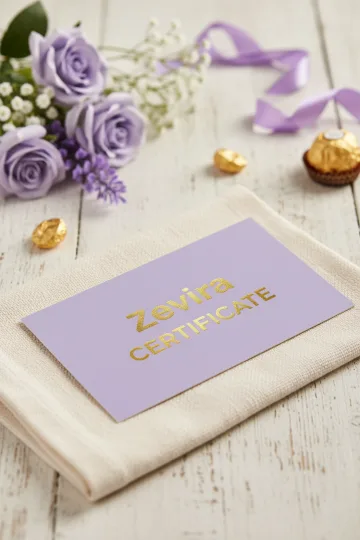
Buying it as a gift? Each one arrives ready to give.
 A branded Zevira box and a little card come with every order.








Frequently Asked Questions
What to give a husband who already has all the jewellery
Five approaches. Shift the category: not another ring, but cufflinks or a tie bar if he never wore them. Give a material he does not yet own: platinum instead of his usual gold, a meteorite instead of his usual stone. Rework an heirloom: gather his old pieces into one meaningful object. An old technique he has not seen: damascene, granulation, enamel miniature. A piece not for wearing but for collecting: a miniature for a breast pocket, a desk signet, a watch stand in the same alloy.
Which is better, a new piece or a family heirloom
It depends on the recipient. For a person of memory who recently lost someone close, a reworked heirloom lands harder: a grandmother's gold in a new form. For a collector and researcher, the new piece with a rare material lands harder, because the heritage is already theirs and they want a fresh find. For a family ritualist, a hybrid works: old gold plus a new stone. A simple test: ask the recipient which object in the house matters most to them, and listen not for the object but for the context of the telling.
Can a bespoke order be returned if disliked
A piece made to an agreed bespoke brief usually cannot be returned, since it was made for one person. So everything is settled at the approval stage: a wax model for fitting, photos of each step, a video call with the maker to check proportions. If the maker strayed from the approved sketch, the rework is on them. If you approved the sketch and the result does not please you, that is a question of how you set the brief. A good maker will offer a revision at cost, but is not obliged to.
How to explain the origin of a meteorite stone
A meteorite's origin is backed by documents. The main one is a certificate of authenticity with the fall site, the year of discovery, and the classification (chondrite, achondrite, iron, pallasite), plus the dealer's number in an international association. Every known meteorite carries a name from its fall site: Sikhote-Alin, Seymchan, Campo del Cielo, Murchison. The fall is often documented by geological services or universities. For a premium gift, add a printout of an article about the meteorite and a photo of the find site. Without documents, "meteorite" is just a word.
Which engraving will not go out of fashion in 20 years
Latin, coordinates, numbers. Latin phrases of two to four words are not tied to the recipient's language and work across centuries: "Memento" or "Festina lente." Coordinates are recorded as a pair of numbers and stay legible in any era. Dates in ISO 8601 format (1975-08-14) never confuse the British and American orderings. What ages quickly: sentimental phrases in everyday speech, partners' names, lines from the decade's songs and films.
Can stones from old family jewellery be reused
Technically yes, ethically only with the agreement of everyone close. Stones are removed from the old setting, checked for cracks, recut if needed, and set into the new piece. The catch: stones from old pieces often carry chips and microcracks from long wear and may not survive a recut. Emeralds and opals are especially fragile, while diamonds and sapphires take the process better. Photograph the stones before the work without fail, to record their state and head off any dispute about a swap.
How to confirm the metal in a piece is what was promised
Three things confirm the metal. The first is a composition analysis at a workshop or assay office, which damages nothing. The second is the hallmark: in the EU it carries a fineness mark and a maker's code. The third is the piece passport with its fineness, weight, and alloy. If you are offered a piece with no hallmark "as a favour," it is either contraband or a faked fineness.
Is taaffeite or alexandrite suitable for daily wear
Taaffeite has a hardness of 8 to 8.5 on the Mohs scale, alexandrite 8.5. That is below sapphire (9) and diamond (10) but above most stones. For daily wear in a ring there is a risk of chipping against hard surfaces under a strong blow; in a pendant or earrings the risk is minimal. A bezel setting protects better than prongs but hides the stone's light. For a premium gift, better a pendant or earrings for daily wear and a ring for special occasions. Alexandrite is additionally prized for its colour change, well visible on the hand.
How long does a bespoke order take from start to finish
Five to twelve weeks in a normal run. The stages: brief and idea agreement (one to two weeks), sketch and approval (one to two weeks), wax model and fitting (one week), casting (three to five days), polishing and assembly (one to two weeks), stone setting (one week), finishing and hallmarking (one week). Rare made-to-order stones, complex technique (enamel, granulation), revisions at the wax-model stage, and the wait for a hallmark stretch the timeline. Keep at least two weeks of reserve if the gift is tied to a date.
Can a premium piece be given to a man who wears nothing
Yes, through adjacent categories. Cufflinks: even a man who wears no jewellery owns shirts for a jacket. A tie bar or clip is a narrow functional thing. A coin-sized miniature for a breast pocket. A desk signet as an object rather than for wearing. A pocket watch or a key fob in the same alloy. The logic is simple: do not try to change a habit, find a category already inside his ritual, be it a shirt, a suit, keys, or a desk.
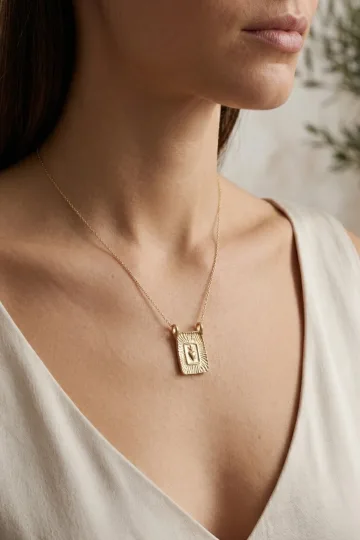
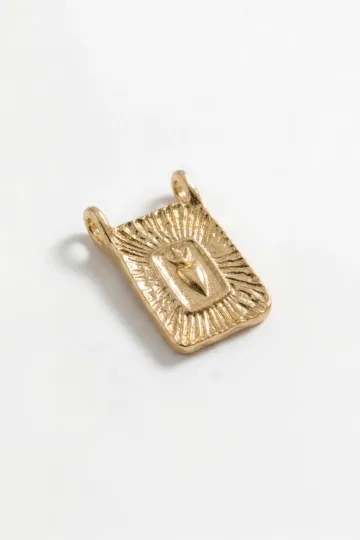
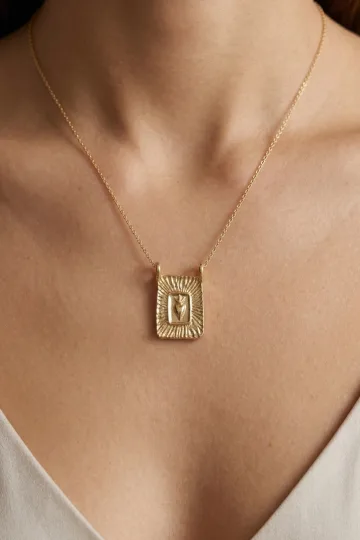
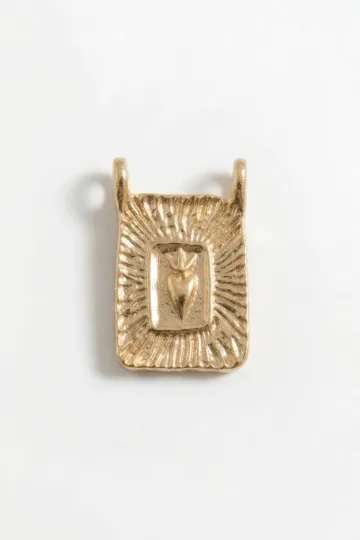
Wear the symbol, don't just read about it. These are in stock:

About Zevira
Zevira is a Spanish brand from Albacete with a hand workshop and our own production of 925 silver. We make collections with rare stones, meteorites, and old techniques, and we also take on bespoke orders and the reworking of family gold into new forms. We work with customers across Europe and beyond, with insured worldwide shipping. Every piece goes through alloy control, comes with a passport, and carries a certificate for its significant stones.