Golden Pearls: The Rare Gem of the Southern Seas
Gold an Oyster Grows
Golden pearls are almost never dyed and rarely faked at the top of the market, because their warm colour is born from inside, within the body of a living mollusc, and it runs through the entire thickness of the nacre. They grow in just one oyster, in one region of the world, and take anywhere from three to seven years. That is why this is one of the costliest organic gems on earth: nature grows it, or someone slips you a dyed imitation.
This guide takes an honest look at what golden pearls are made of, why they turn golden, where they come from, how to tell the genuine article from a fake, and how to care for one so it lasts for decades.
Wear the symbol, don't just read about it. These are in stock:





What a Golden Pearl Actually Is
A golden pearl is a cultured saltwater pearl from the gold-lipped oyster, Pinctada maxima. Unlike the white and silvery pearls that come from the very same oyster, golden ones get their colour not from treatment and not from dye, but from a natural pigment inside the body of the mollusc itself.
The Shell That Grows Gold
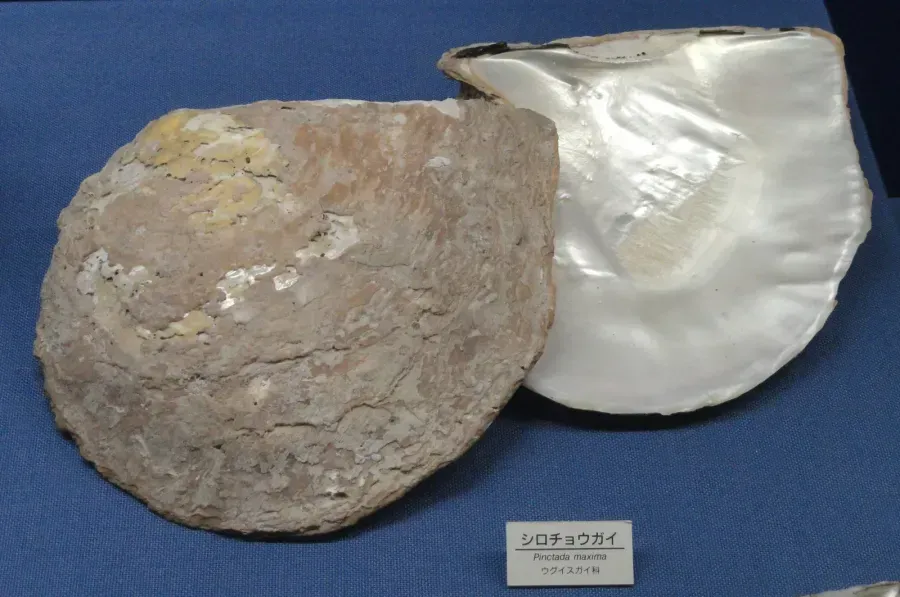
Pinctada maxima is the giant of the pearl world. Its shell can reach 30 centimetres across. Inside sits a thick layer of nacre, but the colour of the mollusc's body decides everything. In the gold morphotype the inner side of the shell is golden, sometimes with greenish or coppery glints. As the oyster wraps nacre around an implanted bead, that natural pigment passes into every layer, colouring the pearl from within.
This is nothing like the dyeing applied to cheap freshwater pearls. The golden colour is a genetic trait of one particular oyster population, and it forms alongside the nacre layers, woven into their structure.
Three Colours From One Oyster
The Pinctada maxima population yields three pearl colours depending on the mollusc's morphotype. White oysters grow white pearls with a creamy or pinkish overtone. Silvery ones produce the classic silver-white pearl with a cool sheen, the most common South Sea type. We covered the white and silvery varieties in detail in our piece on South Sea pearls. Gold oysters give the prize everyone is after: a pearl with the warmth of gold but no metallic glare. That is roughly 10 to 15 percent of the harvest.
The Biology of the Gold-Lipped Oyster
Pinctada maxima belongs to the winged oyster family and lives on the sandy, silty floor of tropical lagoons, anchoring itself to the substrate with a tuft of tough threads known as the byssus. A young oyster still shifts about freely; an adult settles down and filters up to a hundred litres of water a day, straining out microalgae. It breathes through gills that double as a plankton trap: water passes across fine cilia, food particles are caught in mucus and travel on to the mouth.
The shell of this species is the largest of any pearl-bearing mollusc. Each valve is built in three layers: an outer horny layer that resists abrasion, a middle prismatic layer that carries the strength, and an inner nacreous layer, the reflective surface with which the oyster lines its home. It is the colour of the rim of that inner layer that lets a farmer read the morphotype in under a minute: a gold rim promises a golden pearl, a silver rim a silvery one. The boundary between morphotypes is not always sharp, and transitional individuals with a creamy or bronzed rim do turn up.
Why Gold Oysters Are So Scarce
Rim colour is inherited, but it does not pass down cleanly. In the gold morphotype the warm pigment is governed not by a single gene but by a combination of traits, and that combination breaks apart easily in breeding. The offspring of a gold oyster will not necessarily come out gold: a share of the spat will carry a white or silvery rim. Farmers spend years selecting broodstock with the most saturated golden rim, yet even in the best lines the proportion of genuinely golden offspring stays modest. Hence the rarity: gold oysters are not bred in herds like pedigree cattle, they are teased out a few at a time from every generation.
A golden pearl belongs on bare skin under warm light, not over a turtleneck under a ceiling bulb. One pearl, not a pile of chains, and don't argue.
How to Wear Golden Pearls
I have styled warm pearls through dozens of shoots, and they are far easier to live with than their reputation suggests. Here is what actually works, occasion by occasion.
How do I wear a golden pearl every day? For daytime I recommend one piece and nothing more: studs of 8 to 9 millimetres or a fine pendant on a white-gold chain. The pearl reads best on a plain, unpatterned fabric, whether that is knitwear, a white shirt or a pale crew-neck jumper. The eye finds the warm point at the collarbone at once, and the look needs no help.
Does it work at the office? It does. I suggest that same fine pendant under a blazer or with a buttoned shirt, so the top of the pearl peeks above the cloth. It reads as a quiet detail rather than a loud accent. A strict dress code is no obstacle: the warm tone works softer than silver and still shows up more.
How do I build an evening look? For evening I bare the neck: a deep V or a straight neckline, a black or navy dress, hair pinned up. Against that I choose a single large pearl of 12 to 14 millimetres on a chain, or drop earrings. For a special occasion I allow two coordinated zones, earrings and a pendant in the same shade and a close size, but I keep one piece as the star.
Which clothing colours does it like? I recommend a warm palette: beige, cream, ochre, warm green, wine. Against cool colours (sea blue, emerald) the pearl strikes a stylish contrast for anyone sure of the look. With metal it is simple: yellow gold merges with the pearl into one whole, while white gold and platinum give a modern contrast of warm and cool.
Who does it actually suit? Almost everyone, and a warm skin undertone most of all. Two rules that never fail. First: I match the size to the person, fine features and slim wrists ask for a smaller pearl on a delicate chain, while a more striking presence carries 12 to 14 millimetres with ease. Second: on fair hair and fair skin I choose a deeper shade so the pearl does not dissolve, while on darker skin a warm medium tone looks lovely.

Turn on your camera, pick earrings, a pendant or a ring, and see the piece on yourself in real time.
Switch items in one tap.
Everything runs in your browser: no photo or video is ever uploaded.
The Chemistry and Physics of Colour
What a Pearl Is Made Of
A pearl is almost 90 percent calcium carbonate (CaCO3) in the form of aragonite crystals. Aragonite itself is transparent or whitish and semi-translucent. The remaining 10 percent or so is an organic protein called conchiolin, which glues the aragonite crystals together and is structurally similar to collagen.
Nacre is built in layers: the thinnest plates of aragonite (each about 0.5 microns) are stacked one on another and bedded in conchiolin. Light reflects off the upper and lower faces of these plates, the waves overlap, some wavelengths reinforce one another while others cancel out. Hence the iridescence, the rainbow shimmer, and the soft characteristic glow of nacre.
Where the Golden Colour Comes From
The golden tone comes not from a metal, as it does in many gems (iron in garnet, chromium in emerald), but rather from organic pigments built into the conchiolin. According to the leading view, the warm colour is down to organic pigments in the conchiolin (porphyrins and polyenes) that absorb the blue and violet part of the spectrum and reflect the yellow, orange and red; the exact mechanism behind the golden colour is not yet considered settled.
In the gold morphotype of Pinctada maxima, genes in the mantle tissue that trigger the synthesis of these pigments are active when conchiolin is secreted. In white and silvery oysters those same genes are suppressed or absent. The key point is this: the golden colour runs through the entire thickness of the nacre, it is not a surface film. Genuine golden pearls cannot be "made" by dyeing; they can only be grown.
Hardness and Fragility
On the Mohs scale a pearl rates just 2.5 to 4.5 (for comparison: quartz is 7, sapphire 9, diamond 10). It is the softest of all the gem materials. Hence every rule of care: pearls scratch easily against metal and grit, and they dread acids (sweat, lemon juice, vinegar), alkalis, sudden swings in humidity and high heat. In a golden pearl the colour is tied to the thickness of the nacre, so even small damage shows more readily.
Customer reviews
Zevira is a real jewellery shop. Genuine payments, deliveries and customer thank-yous.
🥰🥰🥰 gracias
Ok, ¡gracias! 🙂
How a Golden Pearl Grows
The cultivation cycle takes from three to seven years, one of the longest of any pearl.
Preparing the oyster. A year before the operation the young gold oyster is kept in a sheltered nursery, fed on phytoplankton and protected from disease and predators. A weak oyster will reject the bead or die quickly, so the mollusc has to come to the operation at the peak of its health.
Implanting the bead. Once the oyster reaches 10 to 12 centimetres, a trained technician makes an incision in the gonad (the reproductive organ), places a round bead inside (most often a sphere cut from freshwater mussel shell to a high precision) along with a small piece of donor tissue from another oyster. The operation lasts a couple of minutes and the instruments are sterile: any infection is fatal. A notable share of the molluscs do not survive the procedure.
Forming the pearl sac. If the oyster accepts the bead, its mantle begins to secrete cells that build a protective sac around it. From there nacre builds up layer by layer, each about one micron thick, and there are thousands of such layers.
Growth. The oyster hangs in a basket in the lagoon, filters water, feeds and methodically lays down nacre. In a year it usually adds 0.3 to 0.5 millimetres. Saltwater pearls grow more slowly than freshwater ones: the nacre is denser and more crystalline, the oyster's metabolism calmer, and in winter (June to August in the Southern Hemisphere), when the water cools, growth all but stops. So a thick, quality nacre needs a minimum of four to five years.
Harvest. Once the nacre reaches the right thickness (around 1.5 to 2.5 millimetres for a quality pearl), the oyster is taken out and opened. One oyster, one pearl. Leave the mollusc longer in an attempt to thicken the nacre and it may simply die, and years of work are lost.
Around half the pearls come out at quality grade, another third at middling quality, the rest are rejects. It is precisely this high rate of loss and the long cycle that make golden pearls so expensive.
Upload a photo of your pet, someone you love, or an object. We'll build a 3D model and hand-cast it in pewter.



Where They Come From: Why It Is Almost Only Australia
The overwhelming majority of golden pearls come from northern Australia, roughly between 15 and 20 degrees south. The historical centre is the town of Broome, where it all began. The main active areas are the Dampier Peninsula with its oldest nurseries from the 1950s, and the Kimberley coast further east, where the water is colder, the pearls grow more slowly, but the nacre is often thicker.
Golden pearls grow only from gold oysters, and gold Pinctada maxima oysters need very specific conditions:
- Temperature. The oyster dies in water colder than 15 degrees, and for active growth it needs 24 to 28. In northern Australia that holds year round.
- Salinity. Pinctada maxima prefers 33 to 35 parts per thousand. Sharp swings (from seasonal rains in Southeast Asia, for instance) drive the mollusc into stress.
- Food. The oyster filters water and feeds on microalgae. Off the coast of northern Australia a cold deep current rises, rich in nutrients, and triggers a phytoplankton bloom in the right season.
- Shelter from waves. Numerous natural lagoons and bays protect the nurseries from the open ocean. A strong storm can wipe out oysters in a matter of hours.
Attempts to set up golden pearl cultivation in Indonesia, the Philippines and Myanmar kept running into disease, storms, a shortage of experienced technicians and instability. There is virtually no regular industrial production of golden pearls outside Australia: the Australians have held this sector since the mid-1950s thanks to geography, accumulated know-how and export quotas on the wild fishery.
The Philippines: The Second Pole of the Golden Pearl
If Australia's strength is consistency and sheer size, the Philippines has a reputation of its own. In the Sulu Sea and off the island of Palawan the gold-lipped oyster yields pearls of a particularly warm, saturated tone that some connoisseurs rate above the Australian precisely for the depth of colour. Warm tropical water speeds growth, so Filipino golden pearls sometimes reach a large size in a shorter span, although their nacre averages thinner than the Australian. The Philippines has formally declared the golden South Sea pearl its national gem, which says a good deal about how seriously the country takes the industry. The weak point of the region is the familiar one: typhoons and swings in salinity after heavy rain can wipe out whole batches of oysters in a single season.
Indonesia: Volume With Unpredictable Colour
The Indonesian archipelago, with its thousands of islands and warm lagoons, exceeds both Australia and the Philippines in sheer area of suitable water. South Sea pearl production here is substantial, but the golden share of it is less predictable: the colour ranges from pale cream to deep gold, and matched strands are harder to assemble. Warm water gives fast growth and good size, yet thin nacre and uneven colour pull the average price down. For a buyer that means Indonesian pearls include both rare strikes of a rich tone and perfectly ordinary specimens, so honest sorting and a straight account of origin matter more here than anywhere.
What the Regions Mean for a Buyer
On a shop counter the region is almost never on the ticket, and guessing it by eye is hard. Australian pearls run slightly cooler in tone, thicker in nacre and larger; Filipino ones are warmer and more saturated; Indonesian ones more varied and more affordable. Those are averages rather than laws: an individual Filipino pearl can easily be paler than an Australian one, and the reverse happens just as often. So it makes more sense to steer by measurable traits, nacre thickness, evenness of colour and lustre, than by the country named in a description. The region adds a story, but what you pay for should be the quality of the particular pearl, not the fame of the place.


A Little History
From Mother-of-Pearl to Pearls
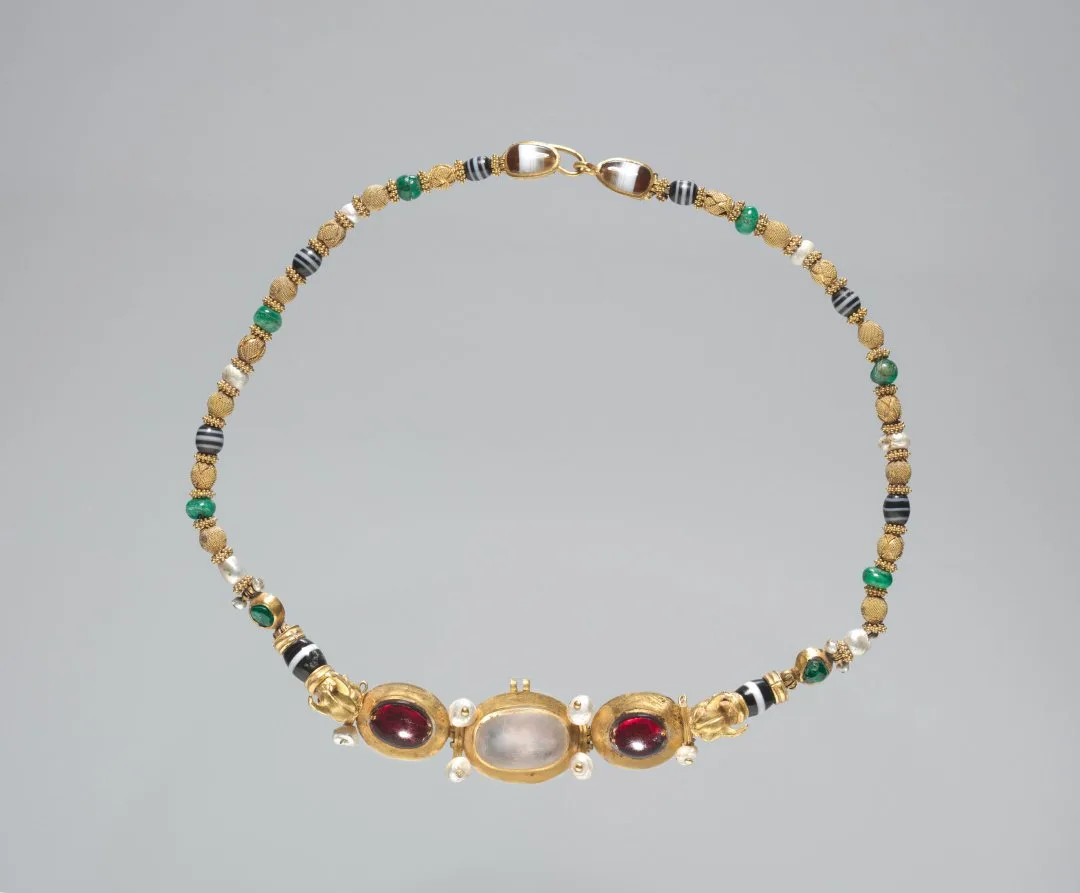
When Europeans began diving off the Australian coast in the late nineteenth century, what they were after first of all was mother-of-pearl: the thick shell of Pinctada maxima went into buttons, inlay and ornament. Pearls were a by-catch. Large Australian pearls fitted awkwardly into the established grading scales, worked out on small Japanese Akoya and Persian pearls, so at first they were valued poorly and sold for next to nothing. Now and then a warm golden pearl turned up in the haul, a rarity in those waters, because the gold morphotype was not found in every lagoon. That same golden tone set the Australian finds apart from the familiar white Persian pearl and from Tahitian black pearls.
Mikimoto and the First Attempts at Cultivation
Kokichi Mikimoto, the Japanese pioneer who at the turn of the twentieth century perfected the culturing of Akoya, saw the potential in the large South Sea oysters: he later spoke of the Australian shell as ideal for cultivation. But the gold oysters proved far more temperamental than the small Japanese ones: they recovered slowly after the operation, rejected the bead more often, and reacted sharply to shifts in temperature and salinity. The Great Depression and the Second World War cut off supply and the market alike. Industrial cultivation around Broome was only established in the mid-1950s: the first farm came on stream at Kuri Bay in 1956, using a method developed by the Japanese technician Tokuichi Kuribayashi.
The Australian Industry
After the war several Australian companies revived South Sea pearl culture. In the mid-1950s the first serious nurseries appeared in sheltered lagoons, mastering work with gold oysters on an industrial scale. Jewellers in Europe and the United States discovered that golden pearls existed, that they were genuine, large (10 to 15 millimetres) and could be bought. Pearl grading systems were already developing by then (a classification of quality factors was proposed in the 1960s), yet to this day pearls still have no single international standard. Australia introduced export quotas to protect the wild oyster population, and that made golden pearls rarer still on the market.
By the end of the twentieth century cultivation had become fully industrial, but the scale stayed small: Akoya are grown in their millions, freshwater pearls in their millions too, golden ones only in the tens of thousands a year. Most of the finest specimens go to auction.
Symbolism: What Golden Pearls Are Said to Carry
Gold as a colour has been tied in most cultures to the sun, wealth and plenty, and the pearl to purity and maturity, so the golden pearl naturally inherited a reputation as a stone of abundance and quiet prosperity. Different traditions credited it with bringing good fortune, guarding a marriage, or standing for accumulated wisdom rather than the youthful innocence that white pearls signal. It is worth saying plainly: this is the territory of belief and cultural association, not of demonstrated properties. Pearls do not heal and do not attract money, and any serious conversation about them rests on biology and rarity rather than esoterics. As a carrier of meaning that a person invests in a piece themselves, though, the golden pearl works without fail: warm, calm, hard won, it slips easily into the role of a family treasure with a story attached.
Pearls in the History of Dress
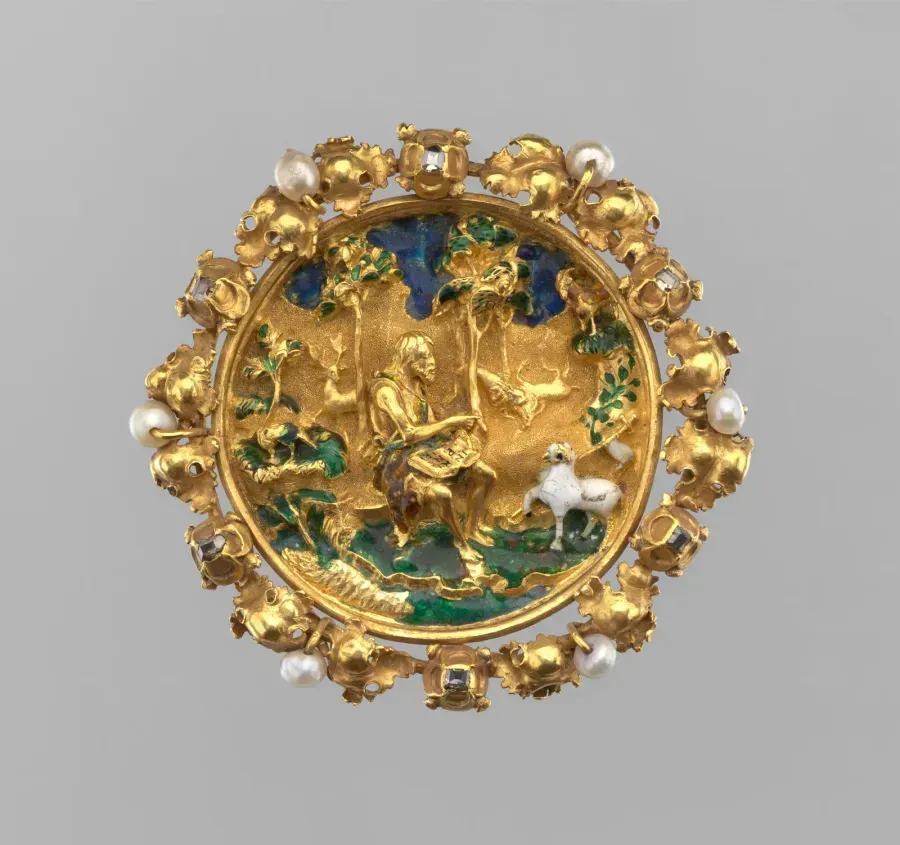
Before cultivation, natural pearls were among the most expensive things on earth, dearer than many faceted stones, because finding a large round pearl in a wild haul happened so seldom. Strands of pearls were painted into state portraits, sewn onto collars and headdresses, given at weddings and passed down through families. When cultivation made white pearls affordable in the first half of the twentieth century, some of that old scarcity fell away, but large South Sea pearls, and golden ones above all, held their standing precisely because they never became a mass product. Today they occupy the niche that any natural pearl once held: something bought rarely and kept for a long time.
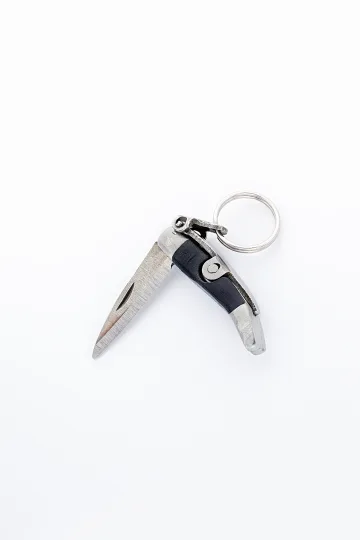
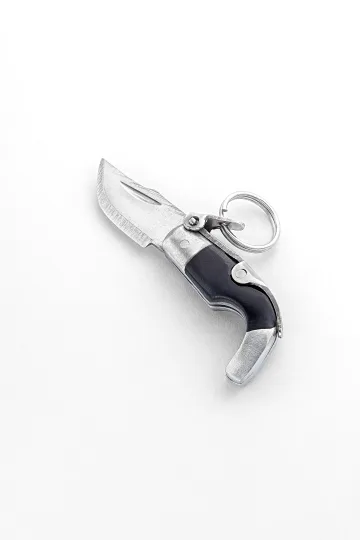
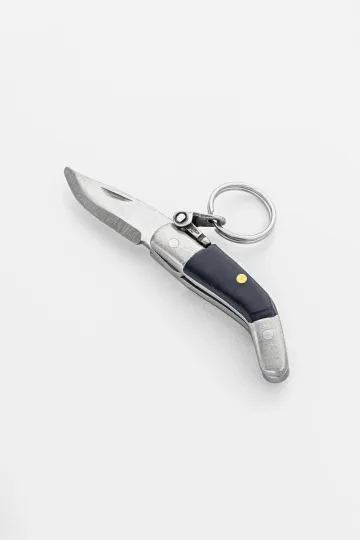
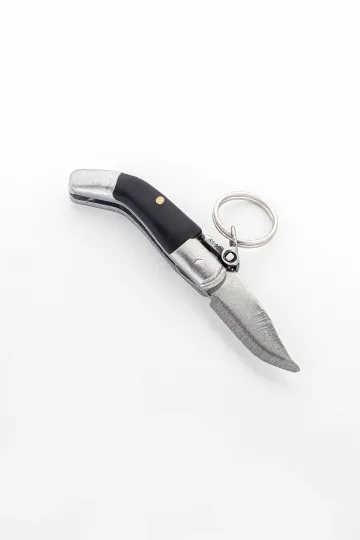
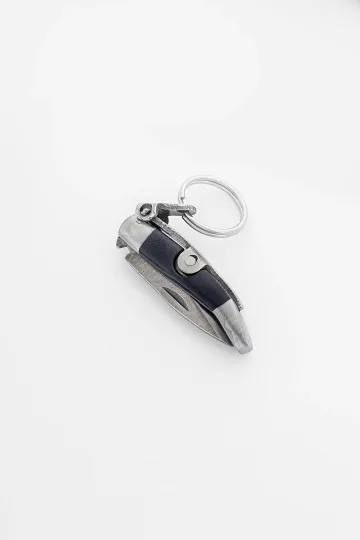
CAPAORA mini knife pendant
The 18th-century Spanish navaja in miniature: 40 mm of stainless steel, a real folding mechanism and a Palanquilla lock that clicks. An affordable gift to remember.
Authentic · Ships from Spain · 14-day returns
How to Choose: Size, Colour, Shape, Lustre
Size
Golden pearls usually grow from 9 to 16 millimetres, the average being 11 to 13. Pearls larger than 15 millimetres are a rarity, and the price for every millimetre beyond twelve climbs not by percentages but by multiples: large pearls grow more slowly and are rejected more often.
Colour
Golden pearls are not a single tone:
- Light gold (Champagne), almost white with a faint warm overtone, the softest and most affordable option.
- Medium gold (Golden), the classic colour of honey or light tea, the most popular and versatile.
- Deep gold (Deep Gold), a rich tone close to 18-carat gold, the rarest and dearest.
- Gold with a greenish or coppery undertone, the exotic end. Some see such glints as a find, others as a flaw, so the price depends heavily on the individual buyer.
Shape
Perfectly round pearls are rare (5 to 10 percent of the harvest) and therefore costly. The bulk are "near-round" with a barely noticeable deviation. Ovals look good in drop earrings and pendants and cost less than rounds. Baroque (irregular) pearls are usually the result of a shifted bead; in golden pearls they are seldom prized.
Lustre
A golden pearl typically has a soft, satiny lustre rather than the mirror-like shine of Akoya: the thick nacre layer is to blame. High lustre, where clear reflections appear in the surface, is less common and valued more. A soft, almost matte lustre occurs in very thick nacre or in a long-worn pearl.
Nacre Thickness
The single most important trait for longevity. Nacre thinner than 0.8 millimetres can wear down to the bead within 10 to 15 years of active wear. The standard thickness of 0.8 to 1.5 millimetres is a sensible balance. Thick nacre of 1.5 to 2.5 millimetres lets a pearl serve for decades with no noticeable wear.
Grading Systems
Pearls have no single international standard, no equivalent of the diamond 4Cs. For South Sea pearls the most common scheme is a letter scale: AAA, an almost flawless surface, high lustre, a rich uniform colour, round shape, thick nacre; AA, minimal flaws, good lustre (the sweet spot for a serious lifelong piece); A, visible flaws on part of the surface, moderate lustre (fine for wear but not for a collection); B and C, noticeable cracks and blemishes, not recommended. The Japanese Hanadama grade singles out the top percentile of cultured pearls with a mirror lustre and documentation.
How to Tell a Genuine Golden Pearl
Weight. A genuine 13-millimetre pearl feels solid, about two grams. Plastic is noticeably lighter, glass on the contrary heavier than a pearl of the same size.
Surface under a loupe. At 10 to 20 times magnification a natural pearl shows a microscopic waviness from the nacre layers. Plastic and glass look perfectly smooth and even.
The tooth test. Run the pearl gently along the edge of your teeth (do not bite): a natural one feels slightly gritty thanks to its microstructure, an imitation glides smoothly.
The drill hole. Look into the drilled hole. In a cultured pearl you can see the bead there, which is normal. Dyed freshwater pearls give themselves away with a white or creamy core under a coloured film, while plastic shows layers of artificial material.
Dyed freshwater pearls are the most convincing fake: a real pearl, but with the colour applied from outside. The signs are these: a baroque shape, a small size, a white core in the hole and worn-away colour where the pearl touches the skin. An honest certificate will say "freshwater, dyed".
The certificate. For an expensive golden pearl the norm is a certificate from a recognised laboratory (GIA, AGS, CIBJO) stating the size, nacre thickness, origin and any treatment. The certificate number can be checked on the laboratory's website. And the cardinal rule: a suspiciously low price almost always means an imitation or a dyed freshwater pearl.
Leave your email, we'll send your discount code. No spam, unsubscribe anytime.
The code arrives by email, valid on your first order.
Natural Golden Colour Against Treated
The subtlest question with these pearls is not plastic imitation but the degree of intervention in the colour of a real pearl. Between a natural golden tone and a crudely dyed copy there is a whole range of intermediate techniques, and it pays to understand them before you buy.
The Natural Overtone
A natural golden pearl takes its colour from pigment that the gold oyster builds into every layer of nacre as it grows. The colour is part of the body of the pearl here, spread through its thickness and shifting slightly with angle and light, which is what gives it a living overtone. It cannot be chipped, rubbed or washed off: under the top layer sits another layer of the same gold, and so on down to the bead. This is the top grade, the thing the whole industry exists for.
Irradiated Pearls
Irradiation is a treatment in which pearls are exposed to gamma rays or another form of radiation. The method is used mostly on freshwater and Akoya pearls, to produce greys and darker tones by altering the organic matter and sometimes the bead itself. A golden tone is hard to achieve by irradiation, and for South Sea pearls the treatment is rare, but it is worth knowing about: an irradiated pearl counts as treated and must be declared on a certificate. Colour from irradiation often works outwards from the bead, so inside the drill hole the tone can look darker than it does on the surface.
Dyed and Tinted
The most common deception is dyeing cheap freshwater pearls with colourants or metal salts to pass them off as golden South Sea. The dye either sits on the outside or soaks into the top layers, so the colour comes out flat, identical from every angle, with none of the living play of an overtone. The signs are those of any dyed imitation: a white core in the drill hole, colour worn away at the points of friction, sometimes pigment pooled in the dips of the surface, and an unnaturally even shade along the whole strand.
How to Tell in Practice
Without a laboratory there is no absolute guarantee, but a few checks weed out the crude cases. Natural colour shimmers and shifts a little as you turn the pearl under a light; dye stays flat. On a natural strand the pearls differ slightly in tone from one another, while a dyed batch is suspiciously uniform. Look into the drill hole: a natural golden pearl is golden in there, a dyed one shows a white or cream core under a coloured crust. Darker pigment collected in the natural grooves of the surface gives away a treatment almost every time. And last: a serious seller of expensive golden pearls will produce a laboratory certificate on request with a note on the origin of the colour, and the wording you are looking for is "natural colour".
Care and Storage
Everyday Rules
- Put the pearl on last, after perfume, lotion and make-up: alcohols and cosmetics dry out the nacre. If you scent your neck, let the alcohol evaporate for a couple of minutes.
- Take it off before water, the shower, the pool, the sea. Chlorine, salt and even the minerals in fresh water harm the nacre over time. If it gets wet by accident, rinse it in distilled water and pat it dry at once with a soft cloth.
- Wipe it with a soft cloth after wear, especially near the mount, where dirt builds up.
- Take it off for workouts, sweat and rubbing against clothing damage a pearl.
- No household chemicals, cleaning pastes, alcohol solutions or ultrasound: they react with the conchiolin and cause dulling and micro-cracks.
Deep Cleaning
Once a year, if the pearl has become soiled: warm (35 to 40 degrees, no hotter) distilled water with a drop of mild soap, soak for ten minutes, gently go over it with a very soft brush in one direction, rinse in clean distilled water and dry on a linen cloth at room temperature, away from direct sun. Never use: hot water, boiling, ultrasound, bleach, vinegar or lemon juice.
Storage
Store a pearl apart from hard stones and metal clasps, which scratch it, in a soft cloth or silk pouch, not in airtight plastic. Optimal humidity is 45 to 55 percent: air that is too dry parches the nacre, air that is too damp ruins the mount and the cloth. Keep it cool (15 to 20 degrees), out of direct sun and away from sharp temperature swings. Do not store it in the kitchen, the bathroom, on a sunny windowsill or in the car.
How Long It Lasts
With thick nacre and proper care a golden pearl serves for 30 to 50 years even with frequent wear, and with gentle handling and rare outings, a century and more. Nacre (aragonite with conchiolin) is a stable structure: museums hold pearls 300 to 400 years old that are still beautiful. Its life is cut short by poor storage (parched or overly humid air), knocks, chemicals and constant contact with sweat without taking it off and wiping it down.
Compared With Other Pearls
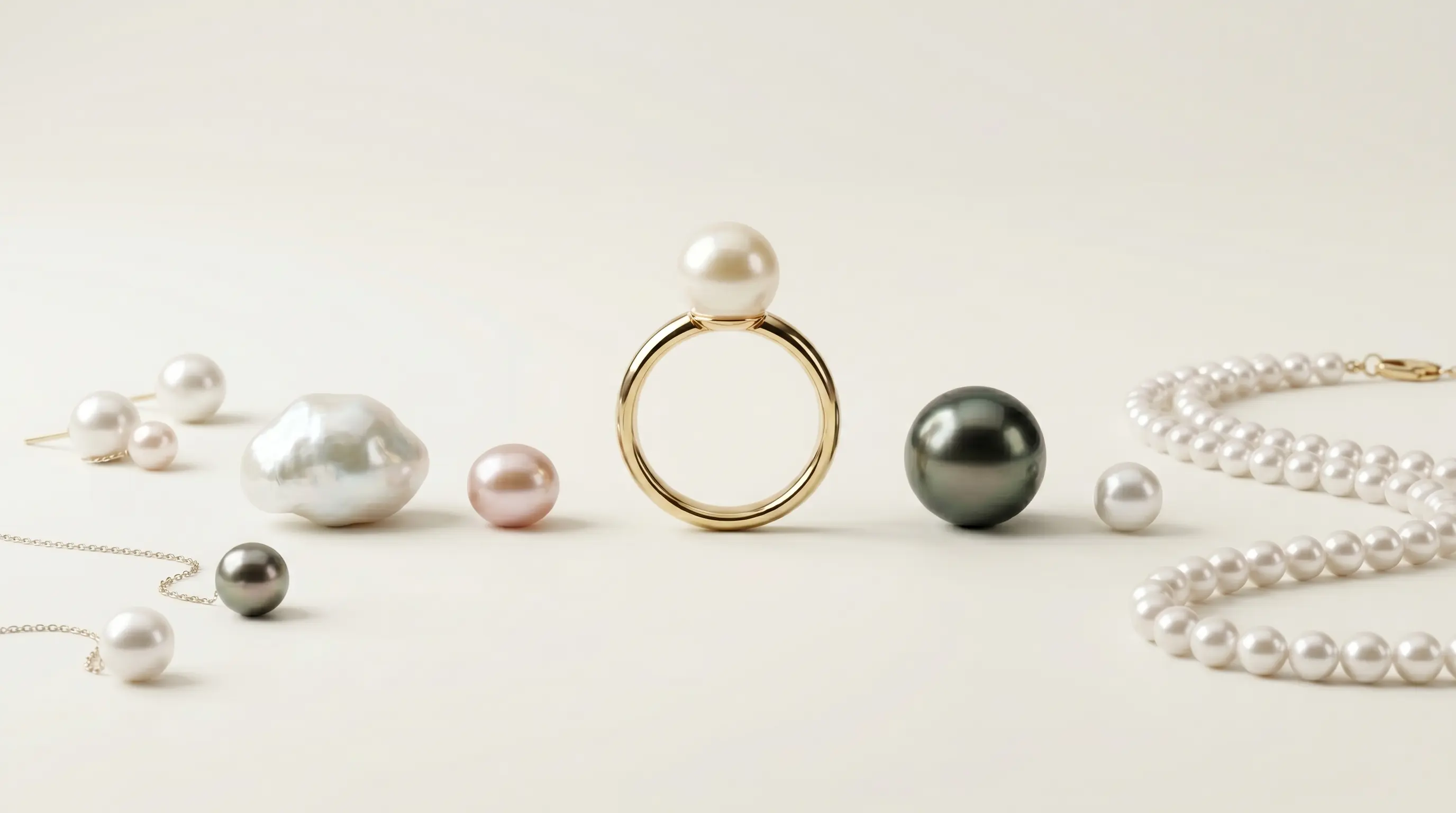
The chief distinction of the golden South Sea pearl: a unique natural colour that cannot be had from any other oyster, large size, thick nacre and longevity. Tahitian (black) pearls are grown by a different, smaller oyster, Pinctada margaritifera. Akoya are small Japanese pearls with a mirror lustre and thin nacre that grow in under a year. Freshwater pearls are the most affordable and varied in colour, but their golden versions are usually dyed. If you want to get to grips with every type at once, we have gathered them in our complete guide to types, choice and care.
Send a friend a discount code, they save on their first order.
Jewellery With Golden Pearls
The pendant, the most practical format for frequent wear: an 11 to 14 millimetre pearl on a fine chain of white or yellow gold. It hangs free, rubs little and pairs easily with any outfit.
Earrings. Studs of 8 to 10 millimetres, the universal everyday choice. Drop earrings (10 to 13 millimetres) look more festive.
The necklace. A strand of pearls matched for colour and size, or a single large pearl on a chain. The princess length (40 to 45 cm) is the most versatile, matinee (45 to 55 cm) for more formal looks.
The bracelet. A strand of pearls on the wrist, classic (pearls of one size) or with gold beads dropped in.
The ring. Because a pearl is soft, a ring is best saved for special occasions: the hand is forever touching surfaces and the pearl scratches quickly. For everyday wear a pendant and earrings are more practical.
Facts That Take People by Surprise
A Pearl Is a Healed Wound
An oyster grows nacre for protection rather than beauty: a foreign body inside irritates the mantle, and the mollusc walls it up in layers of aragonite the way a body encases a splinter. In that sense a pearl is a wound that closed over, slowly sheathed in a mirrored shell. The warm golden glow we wear at the collarbone began as a survival response.
One Oyster, Almost Always One Pearl
Unlike freshwater mussels, which receive a dozen pieces of implanted tissue each, the gold-lipped oyster is usually trusted with a single bead. The mollusc is too large, the years of growth too valuable, the risk of losing everything at once too high. So every South Sea pearl is the outcome of one oyster that lived several years for a single result.
The Oyster Often Goes Back to the Sea
After harvest a healthy oyster is frequently spared: a new, larger bead is carefully implanted and the animal returns to the lagoon. An experienced mollusc that has already laid down nacre once can give a second and sometimes a third pearl, larger than the first. The best producers are valued for years and work rather like pedigree breeding stock.
In Winter the Pearl Barely Grows
In the southern hemisphere winter falls in the middle of the year, and as the water cools the oyster's metabolism slows to the point where nacre deposition nearly stops. Inside the pearl that leaves marks not unlike the growth rings of a tree. From the alternation of dense and looser layers a specialist can in principle estimate how many years the oyster worked on that pearl.
The Rim Colour Predicts the Pearl Colour
Divers and farmers judge the future tone of a pearl by the colour of the inner rim of the shell, before opening it and before the operation. A gold rim promises a golden pearl with high probability, a silver rim a silvery one. This is not divination but a practical rule of selection, and the whole business of picking oysters for a golden programme rests on it.
Easier to Dissolve Than to Scratch With a Diamond
Nacre is calcium carbonate, the same chemistry as chalk and eggshell. A drop of vinegar or lemon juice reacts with it and etches the surface, leaving a dull patch. The famous story of Cleopatra dissolving a pearl in wine for the sake of an extravagant banquet is chemically not baseless: acid really does eat into a pearl, though fully dissolving a whole large one takes far more vinegar and far more time than the elegant version allows.
Pearls Are Older Than Metalwork
A pearl needs no cutting, melting or forging; it comes out of the shell ready to wear. So people adorned themselves with pearls long before they learned to work gold and cut gemstones. In that sense the pearl is among humanity's oldest gems, handed to us with no lapidary work at all.
Buying it as a gift? Each one arrives ready to give.
 A branded Zevira box and a little card come with every order.








Frequently Asked Questions
How does a golden pearl differ from a dyed one?
The natural golden colour is born from inside: pigment in the body of the gold Pinctada maxima oyster passes into every layer of nacre as it grows. It is part of the pearl's structure, not a film. A dyed pearl (usually a cheap freshwater one) takes its colour from outside, which is why the drill hole shows a white or creamy core beneath the golden film, and the colour wears away on the worn spots. A genuine golden pearl is evenly warm both on the surface and deep within.
Why are golden pearls so expensive?
Because of rarity and risk. Gold oysters make up only 10 to 15 percent of the Pinctada maxima population, and not every one yields a quality golden pearl. The growing cycle runs 3 to 7 years, one oyster gives one pearl, and the bead-implant operation kills a notable share of the molluscs. Add export quotas, slow growth in tropical water and a high rate of rejects, and every quality pearl turns out to be the result of years of work that could easily have come to nothing.
Can you wear golden pearls every day?
You can, with caveats. A pearl is soft (2.5 to 4.5 on the Mohs scale), so for daily wear choose specimens with thick nacre (from 1.5 millimetres) in formats less prone to knocks: stud earrings and a pendant will survive everyday life better than a ring. After each wear wipe the pearl with a soft cloth, take it off before the shower and sport, and do not apply perfume directly onto it.
How do I check authenticity before buying?
First the weight: a genuine 13-millimetre pearl feels solid, about two grams, plastic is lighter, glass heavier. Under a loupe a natural surface has a microscopic waviness, while an imitation looks perfectly smooth. Look into the drill hole: in a cultured pearl you will see the bead, while a dyed one shows a white core beneath the film. For an expensive pearl demand a certificate from a recognised laboratory and check its number on the official website.
What size should I choose?
For stud earrings and everyday pieces, 8 to 10 millimetres is comfortable. The universal standard for necklaces and pendants is 11 to 13 millimetres: warm and noticeable, but not bulky. Large 14 to 16 millimetre pearls are already a formal affair, where the price for every millimetre beyond twelve climbs by multiples. For a first serious piece, 12 to 13 millimetres gives the best balance of presence and versatility.
Which shade of gold is best?
There is no objective best, only the most versatile and the rarest. The classic medium Golden, the colour of honey, is the most popular and goes with almost everything. Light Champagne is softer and cheaper, and suits fair skin. Deep Gold is the rarest and dearest, looks luxurious but calls for more considered looks. For everyday wear over decades, the medium Golden is the safest choice.
Does a golden pearl fade over time?
With proper storage, no. Nacre is a stable structure (aragonite with conchiolin) that endures for centuries. A pearl dulls from mishandling: parched air, contact with perfume and cosmetics, sweat, household chemicals. Golden tones are a touch more resistant to ultraviolet than white ones, but direct sun is best avoided, especially for the lighter tones. Keep it at 45 to 55 percent humidity, apart from hard stones, and clean it gently once a year.
Will a golden pearl work as an heirloom?
Yes, that is one of the best reasons to choose one. A quality pearl with thick nacre will outlast several generations: with occasional wear it lasts 50 to 100 years, and with careful storage two or three centuries. A pearl does not break down the way many organic materials do, and its warm golden tone is not tied to a single fashion. For an heirloom take thick nacre (from 1.5 millimetres) and a certified origin.
Which metal should I pair golden pearls with?
Yellow and rose gold underline the pearl's warmth and give a unified warm look, especially with a rich Deep Gold. White gold, platinum and silver create contrast: the cool metal sets off the golden glow and makes it more noticeable, an approach that looks more modern. Light Champagne suits a white metal, while a rich gold sits well in any mount. For everyday wear white gold or silver is more practical.
Which is better, Australian or Filipino golden pearls?
There is no best region in the abstract, only different strengths. Australian pearls average thicker nacre, a larger size and a slightly cooler tone, which makes them a dependable choice for decades of wear. Filipino pearls are prized for a deep, warm colour, and for anyone who cares above all about the saturation of the gold they can be the more expressive of the two. Indonesian pearls are more varied and more affordable, but less predictable in colour and nacre. The sensible thing is to buy the pearl rather than the country on the ticket: look at nacre thickness, evenness of tone and a living lustre.
Do irradiated golden pearls exist?
Irradiation is used mainly on freshwater and Akoya pearls to produce greys and darker tones, and for golden South Sea pearls the technique is rare, since a warm gold is very hard to achieve that way. Any treatment, irradiation included, counts as intervention and has to be declared on a certificate. If the colour inside the drill hole is noticeably darker than on the surface, that is reason to ask the seller a direct question about treatment and request a document that states the origin of the colour.
Wear the symbol, don't just read about it. These are in stock:



About Zevira
The Zevira collection includes jewellery with golden South Sea pearls, chosen with an eye for every detail. Each piece comes with a description of the pearl's origin, its size, quality and nacre thickness.
What we guarantee:
- cultured pearls from the gold-lipped oyster Pinctada maxima;
- where possible, a documented origin, as a rule Australian;
- certificates from recognised laboratories where they are available;
- for our golden pearls we do not use crude dyeing to mimic the natural colour;
- help in choosing the size, colour and quality to suit your purpose.
Only what the oyster grows, and only what has passed our inspection.
Find Your Golden Pearl
Every pearl is unique. Open the collection and choose your own.
Open the Zevira catalogue