Tahitian black pearl: what this gem really is, how it forms, and how to choose one
A black pearl is almost never truly black. Hold one up to a window and watch green, violet, or golden flashes ignite deep inside the dark surface. That is no dye and no parlour trick: it is the work of one specific oyster with dark nacre. The Tahitian pearl is one of the few naturally dark organic gems on Earth, and behind its colour sits straightforward chemistry rather than mysticism.
Let us get to the point: what it is made of, how it grows in a lagoon, where it comes from, how to tell a real one from a dyed fake, and how to care for it so it lasts for decades.
What a Tahitian black pearl actually is
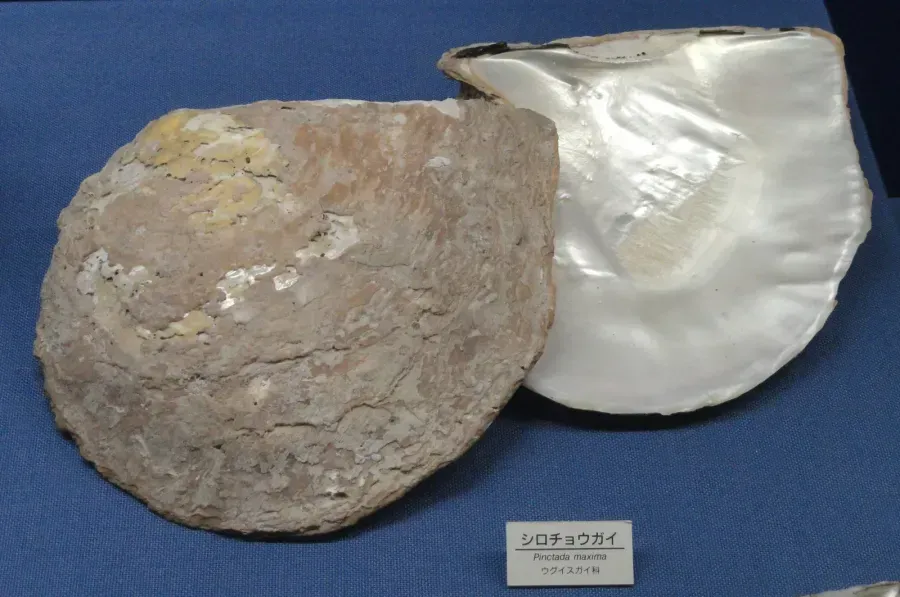
A Tahitian pearl is a pearl grown by the black-lipped pearl oyster Pinctada margaritifera in the lagoons of French Polynesia. The word "Tahitian" points not to the island of Tahiti, where almost no pearls are farmed, but to the wider region: Tahiti is the trading hub from which the pearls travel out into the world.
Unlike white sea pearls, this oyster has a dark interior shell, the nacre itself, ranging from steel grey to charcoal with coloured shimmer. So the pearl that the oyster builds up layer by layer is naturally dark all the way through, not only on the surface. That is the key thing setting it apart from a dyed white pearl.
The overwhelming majority of Tahitian pearls on the market are cultured. A natural black pearl, found inside a wild oyster without any human help, is extremely rare and almost never reaches the shops.
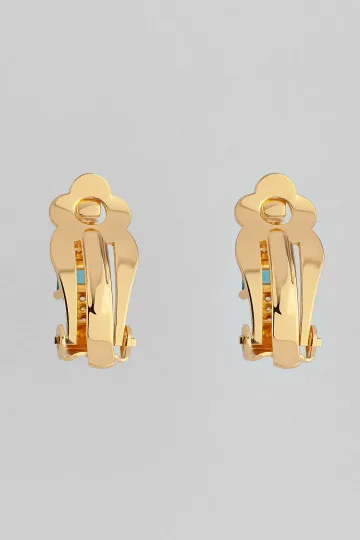
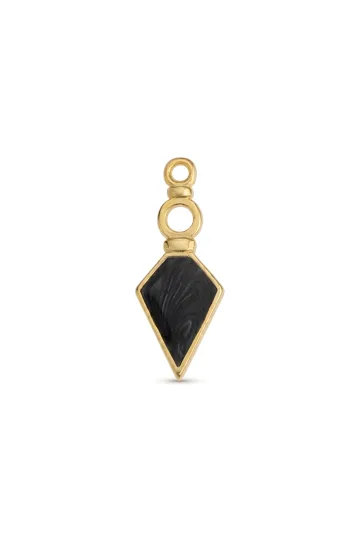
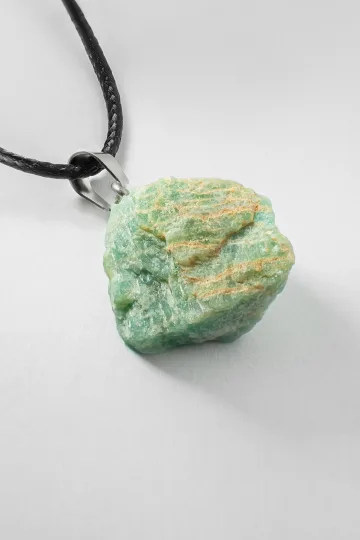
Wear the symbol, don't just read about it. These are in stock:






Chemistry and physics: what a pearl is made of
Composition and structure
A pearl is not a mineral in the strict sense but a biomineral composite. It is built from three components:
- Aragonite, a crystalline form of calcium carbonate (CaCO3). This makes up the bulk of the pearl, roughly 82 to 86 per cent.
- Conchiolin, an organic binding protein that glues the aragonite crystals together (about 10 to 14 per cent).
- Water, around 2 to 4 per cent, locked into the structure.
Nacre is arranged like brickwork: wafer-thin aragonite platelets a fraction of a micron thick are stacked in layers and interleaved with sheets of conchiolin. It is exactly this layered structure that gives a pearl its inner glow.
The dark colour of a Tahitian pearl comes from organic pigments, chiefly porphyrins and polyene compounds within the conchiolin and the nacre itself. Their concentration and combination in a given oyster decide whether the pearl turns out charcoal black, grey, greenish, or carries a golden undertone.
Hardness and density
On the Mohs scale a pearl is soft, around 2.5 to 4.5. For comparison, a fingernail scratches a surface at about 2.5, ordinary glass sits at 5.5, and quartz (the stuff of sand and dust) is about 7. The conclusion is blunt: sand and dust scratch pearls easily, which makes them one of the most vulnerable materials in jewellery. A Tahitian pearl lands at the upper end of that range thanks to its thicker nacre layer, but it still demands gentle handling.
A pearl's density is roughly 2.6 to 2.8 grams per cubic centimetre, close to that of aragonite itself. A good Tahitian pearl with thick nacre feels noticeably heavy for its size; lightness often gives away a thin nacre layer or an outright imitation.
Optics: where the shine and shimmer come from
A pearl has two optical features that work together.
Lustre is the deep glow that seems to rise from within. Light passes through the translucent aragonite layers, reflects partly off each one, and returns to the eye. The thinner and more even the platelets, the cleaner and brighter the lustre. A Tahitian pearl has thicker nacre layers than a small white pearl, so its shine is softer and deeper, without harsh mirror-like glare.
Orient is the rainbow play of colour across the surface. It is the interference and diffraction of light on the aragonite layers, the same physics that colours a soap film or a butterfly's wing. On a dark pearl this orient is especially striking: against a charcoal ground, green and violet flashes read with real contrast.
Pearls are not faceted, so refractive index and dispersion do not behave the way they do for transparent gems. The aragonite in a pearl has a refractive index of about 1.53 to 1.69, but visually we see reflection off the layers, not refraction through facets.
A black pearl belongs on a bare collarbone by evening light, not choked under a tie. One strand or one pair of earrings - never the whole drawer at once.
What to wear black pearls with
On set I handle pearls more than any other gem: fussy to look after, but it never once lets me down on camera. Here is what actually works, sorted by occasion.
How do I wear black pearls day to day? For daily wear I recommend the minimum: a pair of studs or a slim pendant at the collarbone. This pearl gets on with a white shirt, grey knitwear, jeans, or a linen dress. Deep black is calm on its own, so I even set it against a busy print: it does not quarrel, it pulls the look together.
Will it hold up at the office? It will. I suggest a neat strand at collarbone length under a shirt or an open-collared jacket, and for metal I choose the cool ones: white gold or platinum. They add businesslike composure, and the pearl reads as a quiet detail rather than a loud accent.
How do I build an evening look? For the evening I go for scale: a large pendant in an openwork setting or drop earrings on a plain dress with a bare neckline. Velvet, silk, and satin play along with the soft glow of nacre. For a special occasion I recommend letting one thing lead, either a long strand or expressive earrings, so the look does not fragment.
Which length should I match to the neckline? Simple rule: the deeper the neckline, the longer the strand. A choker around 40 cm I sit on the neck under an open collar, the princess at 45 to 50 cm I recommend as the all-rounder at the collarbone, the matinee at 50 to 60 cm I take for business dress, and the opera from 70 cm I bring out for evening and double over.
Who does black pearl suit most? The gem favours a cool, deep skin undertone, and on olive or darker skin it reads with real contrast, so there I suggest a clean black. If a warm black looks heavy near the face, I choose a soft grey or black set in a cool metal. And I keep one row of metals: either cool (silver, platinum, white gold) or warm, never mixed.

Turn on your camera, pick earrings, a pendant or a ring, and see the piece on yourself in real time.
Switch items in one tap.
Everything runs in your browser: no photo or video is ever uploaded.
How a pearl forms in the wild and on the farm
A pearl is a mollusc's defensive response. When an irritant lodges inside the shell, in the oyster's mantle, the mantle tissue starts to wrap it in nacre, the same material that lines the shell. A pearl sac builds up layer by layer, and over time a pearl forms.
A common myth holds that the cause is always a grain of sand. In reality the irritant in the wild is more often a parasite or a fragment of tissue. In a wild oyster this happens by chance and rarely, which is why natural pearls are such a rarity.
In cultivation the process is steered. A technician carefully opens the oyster and inserts two things into its mantle: a round nucleus (usually a bead made from the pressed shell of a freshwater mollusc) and a small piece of mantle tissue from a donor oyster. The donor tissue forms the pearl sac, which then begins to lay nacre around the nucleus.
The oyster is returned to the lagoon, into baskets suspended at depth, for 18 to 36 months. Each day the mollusc adds a microscopic layer of nacre. The longer the wait, the thicker the layer, the deeper the colour, and the stronger the lustre, but the higher the risk that the oyster sickens or dies. For Tahitian pearls a minimum acceptable nacre thickness is regulated (around 0.8 mm), which separates them from cheap pearls with a thin coating.
Harvest is usually fatal for the oyster, but the most productive ones are reused: a new, larger nucleus goes into the empty sac, and the oyster grows a second, bigger pearl.
Customer reviews
Zevira is a real jewellery shop. Genuine payments, deliveries and customer thank-yous.
🥰🥰🥰 gracias

Ok, ¡gracias! 🙂

Geology and geography: where it comes from
The oyster and its range
Pinctada margaritifera lives in the warm waters of the Pacific and Indian Oceans. It needs clean, well-flushed seawater with a stable temperature of around 25 to 28 degrees and healthy plankton to feed on. The isolated lagoons of atolls suit it almost perfectly: currents bring food, while the enclosed setting keeps large predators away.
The main areas
The Tuamotu Archipelago is the principal centre of production. It is several dozen atolls in the eastern part of French Polynesia, and this is where most Tahitian pearls are grown.
- Manihi, the atoll where black pearl cultivation began in the 1960s and 1970s. Its farms are old and well tuned; the pearls are prized for deep colour and strong shine.
- Fakarava, with clean deep water that favours larger pearls.
The Society Islands (including Tahiti itself) supply a smaller share, but the water here is slightly warmer and richer, which sometimes yields rarer warm overtones.
A similar dark pearl from the same oyster is grown in the Cook Islands, the Philippines, and Indonesia. Technically it is not "Tahitian", because it does not come from French Polynesia, and its character is usually different: pearls from warmer waters tend to be smaller and less consistent in colour.
Tying value to a narrow range links the Tahitian pearl to other gems of rare origin. In the same way, larimar is mined in a single place on Earth, and the scarcity of the source largely sets its price, just as it does for the Polynesian lagoons.
History: from cargo in the hold to a recognised treasure
Polynesians knew the black-lipped oyster long before Europeans arrived. The shell served as a tool, a material for ornament, and an item of exchange between clans, while the rare dark pearls were valued as marks of status. In Polynesian culture the colour black meant depth and water, not mourning.
When European traders reached the archipelagos in the nineteenth century, the dark pearl found no demand at first. European taste of the day favoured white and cream pearls, and the public associated black with mourning. The traders' main interest was the shell's nacre, raw material for buttons and inlay; the pearls often went as a by-product.
Dark pearls had occasionally reached European courts before this as curiosities, with individual large natural pearls valued highly precisely for the rarity of their colour. But there was no systematic market.
The turning point came in the second half of the twentieth century with two developments at once. On one side, fashion swung towards spare elegance, where a dark pearl looked modern. On the other, the Polynesian lagoons mastered cultivation, and the first farms appeared in the 1960s and 1970s. That gave a steady supply, and within a couple of decades the black pearl travelled from exotica to a recognised treasure with its own quality standards and certificates of origin.
Upload a photo of your pet, someone you love, or an object. We'll build a 3D model and hand-cast it in pewter.




Types and shades
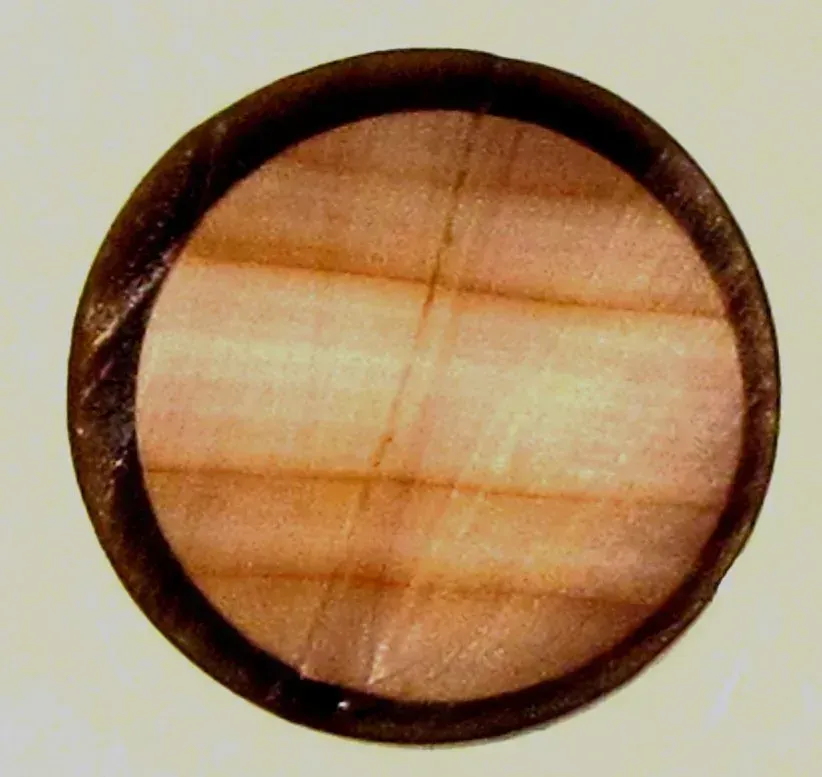
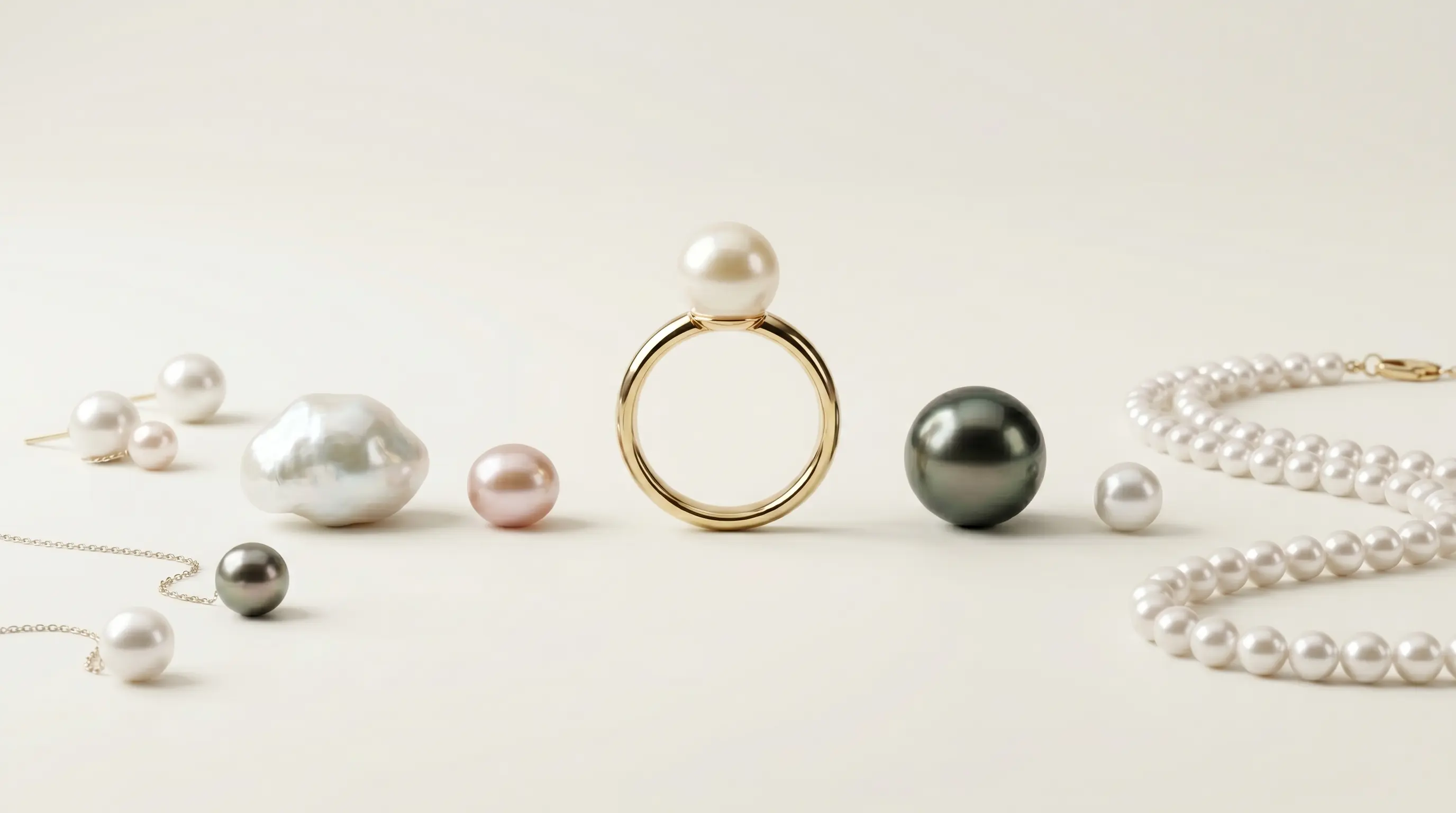
Despite the name, the Tahitian palette runs wider than plain black. Professionals describe colour through a base tone (body colour) and an overlaid sheen (overtone).
- Black, the most recognisable, a deep dark tone with a charcoal or steel overtone. A perfectly even black is almost unheard of; there are usually faint lighter lines.
- Black with a green overtone, where green surfaces on the dark ground as the pearl moves. One of the most characteristic types for this oyster.
- Black with a violet overtone (peacock), a blend of green and violet, considered especially striking and highly valued.
- Black with a golden overtone, a rare warm glow over the dark tone.
- Grey, a lighter base tone with a silvery shine, calmer and more versatile to wear.
- Chocolate, a warm brown tone, found rarely.
Sometimes the same oyster yields a light, almost white pearl, a matter of the mollusc's individual genetics. Such pearls are prized for their rarity; they are larger than usual and noticeably different from white South Sea pearls from Australia and the Philippines.
To compare the main colour groups by rarity and character, it helps to keep them side by side in a single table.
What else defines quality
Beyond colour, pearls are judged on four parameters.
Lustre. The deeper and sharper the glow, the higher the grade. A dull, matte surface points to thin or poor nacre.
Shape. From perfectly round to baroque (irregular). Round pearls are rare and dear; slight asymmetry is the norm for a natural material.
Surface cleanliness. Pits, spots, and wrinkles show up well on a dark ground. A clean surface is valued more highly, but small marks are almost always present and serve as a sign of authenticity.
Size. Tahitian pearls usually run from 8 to 16 mm and larger. Large even pearls are rare, and the price rises non-linearly with size.
How to read the grade on a tag
French Polynesia runs a state export standard: every pearl is sorted before export, and goods without clean dark nacre of the required thickness simply are not released beyond the region. Because of this there is almost no dyed "Tahitian" pearl of Polynesian origin on the legal market; fakes come from elsewhere.
Grade is most often marked with letters from A to D, and the logic runs opposite to the school grading you know: A is the top class, D the lowest.
- A (sometimes written Top Gem or AAA in international trade): an almost flawless surface, up to roughly 10 per cent of the area with barely visible marks, strong lustre.
- B: light flaws over part of the surface, good to medium shine. The most popular class for everyday jewellery, a sensible balance of price and look.
- C: noticeable marks over a significant part of the surface, medium shine.
- D: flaws over most of the surface; such pearls go into inexpensive pieces or serve as raw material.
An important detail that buyers confuse: the letter rates surface and lustre but not size, shape, or rarity of overtone. A baroque pearl with a peacock sheen can cost more than a perfectly round grade-A pearl with no colour play. So on the tag you read not only the letter but the combination of shape, colour, and origin.
Nacre thickness is regulated separately. The Polynesian standard rejects pearls whose nacre layer is thinner than 0.8 mm over even part of the surface. You cannot judge this by eye, but there is an indirect sign: thin nacre over the nucleus can sometimes produce a "blinking" effect when tilted under a lamp, where lighter and darker zones appear from the nucleus showing through. A quality pearl with thick nacre shows even colour from every side.








Shapes and rare varieties
Shape is set not by whim but by the mechanics of growth: how the nucleus sat, whether the mantle wrapped it evenly in nacre, whether the sac shifted in the basket. The Polynesian classification splits shapes into several groups, and understanding them helps when choosing.
- Round and near-round (round, semi-round). The benchmark and the dearest, because an oyster rarely lays a perfectly even layer. The test is simple: roll the pearl down an incline; a truly round one runs straight rather than wobbling.
- Oval and drop. A drop works well for pendants and earrings, where the elongated form serves the look and costs less than round at the same weight.
- Button. Flattened on one side, handy for studs and rings, where the flat back seats neatly in a setting.
- Circled. The surface carries concentric grooves like rings around a miniature planet. This was once counted a flaw, but circled pearls with even rings and strong lustre are now set apart as a category of their own: on a dark ground the grooves underline the colour play.
- Baroque. A free, irregular form, every pearl its own. Collectors often choose a baroque Tahitian with a peacock sheen for its uniqueness, not in spite of it.
A category of its own is keshi. This is a pearl without a nucleus: it forms when the oyster rejects the inserted bead but the pearl sac has already taken shape and goes on laying nacre by itself. A keshi is nacre through and through, with no foreign centre, so it gives an especially strong, saturated shine and a deep colour. Its form is always whimsical and its size usually small. Keshi is neither imitation nor reject, but a prized by-product of the same farm; do not confuse it with cheap pearl.
Natural, cultured, dyed, irradiated: sorting out the terms
The word "natural" causes more confusion in pearls than any other, because it carries two completely different meanings. One refers to how the pearl came into the world, the other to where its colour came from. Keeping them apart is worth the effort, because otherwise it is easy to pay a premium for a word on a tag that does not mean what it appears to mean.
Wild against cultured: how the pearl came to exist
A wild pearl grows in an oyster by itself, with no human involvement, when an irritant happens to get inside. Such pearls are rare, usually small and irregular, and almost all the wild dark pearls in existence settled into museums and old collections long ago. Their share of the modern market is vanishingly small and their price matches that uniqueness.
A cultured pearl is a real pearl in every sense: a living oyster grows it from the same nacre by the same chemistry as a wild one. The only difference is that a person gave the initial push, carefully inserting a bead and a scrap of donor tissue. The overwhelming majority of Tahitian pearls on any counter are cultured, and that is the industry norm rather than a flaw. Without cultivation the black pearl would have remained an unreachable rarity, whereas a farm gives it consistent quality and a predictable nacre thickness.
The point to hold on to: cultured does not equal fake. A fake is glass, plastic, or a dyed imitation. A cultured pearl is biologically genuine, and setting it against "natural" is only meaningful when the subject is origin, never when the subject is authenticity.
Natural colour against treated colour: where the tone came from
The second sense of "natural" concerns colour. In a good Tahitian pearl the dark tone is its own: it comes from pigments in the nacre that the oyster laid down itself. That colour is even across the whole pearl, it shimmers green and violet, and it does not fade.
Treated colour is another story entirely. Pale or grey pearls are darkened artificially to pass as the expensive dark kind. There are several methods, and telling them apart matters, because some are harmless to the pearl and others are not.
Dyed pearls: what gives them away
Dyeing is the cheapest and crudest approach. A pale pearl is soaked in a colourant, often based on silver salts followed by exposure to light, or simply coated with a dark compound on the outside. The evidence is always at the drill hole: dye pools at the rim of the boring and inside the channel, and a pale base often shows through under the dark layer. On a dyed pearl the colour is flat, with no living play, and identical under any light. Over time the dye rubs away at the edges of the setting and wherever the pearl meets skin or fabric.
Irradiated pearls: the quiet treatment
Irradiation is the more sophisticated trick. The pearl goes under gamma rays and the bead darkens from within, as does the nacre itself in a freshwater pearl. The colour comes out saturated and even, with no dye pooling at the hole, so an irradiated pearl is harder to spot by eye than a dyed one. The clues are indirect: irradiated dark pearls often show a metallic steel-grey or bluish sheen without the complex green and violet depth of a Tahitian, and in an irradiated freshwater pearl it is precisely the core that darkens when light is shone through. Only a laboratory can separate irradiation from natural colour reliably, by the character of the fluorescence and the absorption of light.
Why this matters for your wallet and your conscience
The price gap between a naturally dark Tahitian pearl and a darkened pale one is enormous. Dyed or irradiated pearls are no crime in themselves, provided the seller names the treatment honestly: irradiated black freshwater pearl is a perfectly legitimate inexpensive material with a following of its own. The problem starts when treated pearls are sold as naturally coloured Tahitians at the corresponding price. Hence a simple rule: the dearer the purchase, the more necessary a report from an independent gemmological laboratory that states both the origin and the naturalness of the colour in plain words. In Britain the same principle runs alongside hallmarking, which certifies the metal of the mount and says nothing at all about the pearl, so the two documents cover different halves of the piece and neither substitutes for the other.
Leave your email, we'll send your discount code. No spam, unsubscribe anytime.
The code arrives by email, valid on your first order.
How to tell the real thing from a fake
Because dark pearls are dear, they are often imitated. The main substitutions and their tells.
Dyed white pearl. The most common fake: an ordinary light pearl is coated with a dark dye. The main giveaway shows in the drill hole of a pierced pearl: under the dark layer a dyed pearl reveals a light base, and the dye often pools at the rim of the hole. A real Tahitian pearl is dark all the way through, and its colour shimmers faintly green or violet. A dyed one looks flat, as if enamelled, under any light.
Imitation (glass or plastic with a pearly coating). Looks suspiciously perfect and uniform, without the natural micro-irregularities. The old tooth test: a real pearl gives a faint gritty feel, like sand, if you run it gently along the edge of your teeth; an imitation slides smoothly. On an imitation the coating chips over time, exposing the base.
Pearls from another region passed off as Tahitian. Dark pearls from the same oyster from the Philippines or the Cook Islands are sold as Polynesian. Only a certificate of origin from an independent laboratory helps here.
The play of light as a test. A natural Tahitian pearl changes its look under different light: in daylight the coloured overtones show deeper, in warm evening light a golden softness appears, in cold artificial light it looks sterner and more graphic. Dyed and imitation pearls look equally flat under any source.
The final answer comes from laboratory analysis: specialist gemmological labs determine origin and the natural quality of the colour.
CAPAORA mini knife pendant
The 18th-century Spanish navaja in miniature: 40 mm of stainless steel, a real folding mechanism and a Palanquilla lock that clicks. An affordable gift to remember.
Authentic · Ships from Spain · 14-day returns
Care and storage
Low hardness and an organic nature make a pearl the most demanding material in the jewellery box. A few simple rules add decades to its life.
Put it on last, take it off first. Perfume, hairspray, creams, and cosmetics contain alcohol and acids that eat into nacre and kill the shine. Jewellery goes on after every other product and comes off before you wash.
Keep it from water and chemicals. Chlorine in a pool and salt in the sea oxidise the surface. Take pearls off before a shower, swim, sauna, or cleaning. If they do meet sweat or salt water, wipe them with a soft damp cloth and dry them.
Clean gently. Wiping with a soft cloth is enough, lightly dampened in water with a drop of mild soap if needed, then dried fully. Absolutely never: brushes, abrasives, harsh chemicals, or ultrasonic cleaners, which destroy nacre.
Store separately and not in plastic. Pearls must not rub against hard stones, metal, or one another. A soft cloth pouch or a padded compartment in a box is best. Sealed plastic bags will not do: nacre dries out and cracks in them. Ideal humidity is around 50 to 70 per cent.
Restring the strand. The silk or nylon thread of a necklace stretches and rots over time. Every few years (and more often with heavy wear) the thread is replaced, or you risk scattering the pearls.
How hardness shapes the choice of jewellery: earrings and pendants barely touch objects and suit everyday wear; rings and bracelets rub against surfaces and lose shine faster, so it makes sense to wear them on occasion and in a protected setting.
Symbolism: brief and without mysticism
Different traditions assigned different meanings to pearls. European culture linked them with the moon, purity, and femininity; in Polynesia the colour black meant depth and a bond with the sea, not sorrow. In the nineteenth century pearls briefly carried an association with mourning, because widows wore them, but that is a historical superstition, not a property of the gem.
A pearl has no proven physical or healing effect: it does not influence blood pressure, sleep, anxiety, or wellbeing. If a smooth cool pearl under the fingers helps you gather yourself before an important conversation, that is the effect of habit and attention, as with any cherished object, not the energy of a stone. Wear a pearl for its beauty and its history, and treat the symbolism as cultural context.
The black pearl in art and culture
Before it was a counter item, the dark pearl was a subject for painters, a raw material for goldsmiths and a working material in the lagoons where it grew. Its cultural biography explains a good deal about how it is read today.
Pearls in painting and portraiture
Through the Renaissance and the Baroque, pearls were a favourite attribute of the formal portrait. Painters set down each pearl as a separate stroke of light against a dark ground, because the sheen of nacre was a convenient way to convey the wealth and standing of the sitter. Dark pearls appear less often than white ones in those canvases and read as a special sign: they were woven into hair, sewn onto cloth, hung as a single drop earring. The device itself, a small point of light on a rounded surface, became the universal way to show a jewel in paint, and our idea of a pearl as a frozen drop of radiance comes directly from it.
British collections carry a good deal of this. The great house portraits of the seventeenth century are full of pearls painted exactly that way, and standing in front of one is still the quickest lesson in what lustre means: the eye reads the highlight, then the soft glow underneath it, and those two things together are what a jeweller means by orient.
The baroque pearl as the body of a figure
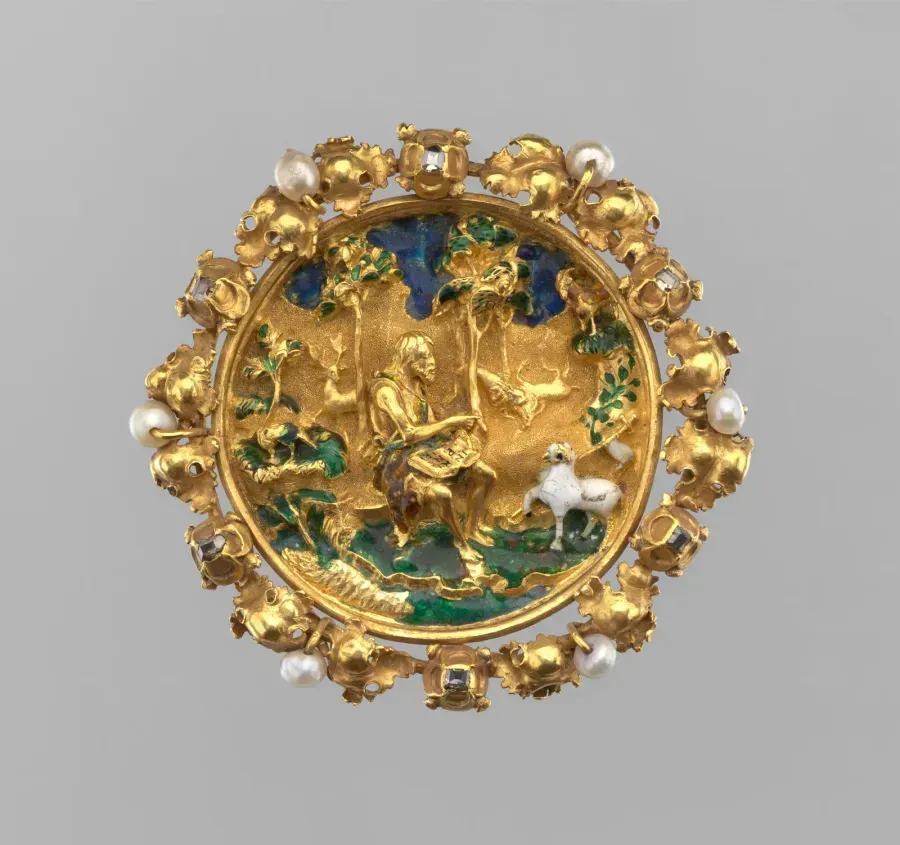
A separate genre of the goldsmith's art grew up around irregular pearls. The word "baroque" itself descends from a term for a pearl of odd shape. Sixteenth and seventeenth century masters did not discard crooked pearls; they hunted for them. A large baroque pearl became the body of a sea monster, a dolphin, a swan or a human figure, with the head and tail drawn in gold and enamel. Dark baroque pearls suited dramatic subjects particularly well. That tradition turned a defect of shape into an artistic device, and it largely explains why baroque Tahitian pearls are prized for individuality today rather than hidden away.
Black pearl in Polynesian decorative art
In Polynesia itself the nacre of the black-lipped oyster went into ornament, into everyday objects and into ritual. Shimmering plates of shell were worked into fishing lures, into inlay, into the chest pendants of chiefs. The dark iridescent surface was valued for the play of colour in sunlight and under water. When Europeans later set up the cutting of this shell for buttons and inlay, it was that deep tone with its coloured sheen that made the material recognisable. The cultural life of the dark pearl therefore begins not in a jeweller's window but in a lagoon fishery, where the shell was raw material, tool and mark of status at the same time.
Send a friend a discount code, they save on their first order.
Famous black pearls and the stories around them
Large dark pearls, like famous coloured stones, carry names and legends. These stories are useful not as gossip but because they show how rarity and colour turned a single pearl into something close to a museum object.
Pearls of the European courts
Old royal and aristocratic collections held large dark pearls that reached Europe as curiosities long before cultivation existed. They were valued precisely because a natural dark colour was an almost impossible accident: for every few thousand white pearls there was one genuinely dark. Such specimens were set into pendants and passed down by inheritance, and their provenance accumulated exaggerations along the way. Documenting the authenticity of these things today is difficult, but the simple fact that they circulated explains why dark pearls counted as a rarity of a special rank well before the twentieth century made them fashionable.
The Polynesian legend of origin
Polynesian tradition tells of a deity of light who came down along a rainbow and gave people the black-lipped shell and the first pearl. The coloured sheen of a dark pearl is explained in that account as the trace of the rainbow left inside the shell. The legend conveys the local attitude well: the dark colour was linked not to sorrow but to a gift from the sky and the beauty of the sea. It is a useful counterweight to the European superstition about mourning and a reminder that pearl symbolism depends heavily on which culture is doing the reading.
Modern collector strands
Once cultivation made supply steady, the special value moved from single pearls to assembled strands of perfectly matched dark ones. Bringing dozens of pearls into one row with matching tone, sheen, size and lustre is the work of years, because every oyster produces a colour of its own. Such strands go to auction and are valued above the sum of their individual pearls precisely for the labour of matching. This is a rarity produced no longer by nature but by patient selection, and it is the reason a matched strand and a handful of loose pearls of the same weight belong in different conversations.
Facts that surprise
The black pearl is surrounded by claims that sound improbable and turn out to be true. Here are a few that change how you look at the gem.
A black pearl is almost never black
Lay a Tahitian pearl on a sheet of genuinely black paper and it stops looking black at once. Its tone is in fact a very dark grey, green, aubergine or steel rather than a coal blackness. Absolutely black pearls essentially do not occur in nature, and that is exactly why dyed imitations give themselves away with a flat dead blackness that has no coloured depth inside it.
More than half of a pearl is an animal's daily labour
What you hold is in essence a compressed defensive reaction. The oyster lays down a microscopic layer of nacre every day for years, and a large pearl is thousands of such layers. Under an electron microscope its surface turns out to be built from millions of stacked aragonite platelets, and it is their thickness, a fraction of a wavelength of light, that produces the coloured sheen.
You really can dissolve a pearl in vinegar
The old story about a pearl dissolved in wine is not an invention. Calcium carbonate, which is almost the whole of a pearl, reacts with acid. In strong vinegar a small pearl loses its lustre within hours and gradually breaks down. This is not a parlour trick but the same chemistry that explains why pearls fear acidic cosmetics and why they come off before you wash your face.
The most productive oyster works several times over
Harvesting a pearl usually kills the mollusc, but the best individuals are spared. A new and larger bead goes into the emptied pearl sac, and the oyster grows the next pearl, bigger than the last. One successful oyster can therefore yield several pearls in succession, each larger than the one before, which is why the largest Tahitians tend to come from a small number of exceptional animals.
A perfectly round shape is the rarest accident
The oyster has no interest in symmetry: it wraps the bead however the mantle tissue happens to lie and however the shell happens to turn in its net. A strictly round pearl is therefore rare, and it is tested literally by rolling it down a sloped surface. Most pearls are slightly flattened, oval or baroque, and a true sphere is the outcome of lucky mechanics during growth.
Keshi manages without a bead at all
When an oyster rejects the inserted bead but the pearl sac is already working, it goes on laying nacre around the empty space. The result is a pearl made entirely of nacre with no foreign centre. The lustre of such keshi is often stronger than that of an ordinary beaded pearl, because light travels through solid nacre instead of reflecting off the boundary with an alien sphere.
The colour of a strand is matched over years
Finding a single dark pearl is far easier than assembling a long strand in which dozens of pearls agree on tone, sheen, size and lustre. Since every oyster gives a colour of its own, a perfectly matched strand may be built up one pearl at a time from different harvests across several years, and that patience is where its value actually sits.
Frequently asked questions
How do I care for a Tahitian pearl so it does not lose its shine?
Put the piece on last, after perfume and cosmetics, and take it off first. Wiping the pearls with a soft cloth once a month is enough, lightly damp if needed, and right after any contact with sweat or salt water. No brushes, abrasives, harsh chemicals, or ultrasonic cleaners: they destroy nacre.
Can I wear black pearls in the shower, the pool, or at the gym?
Better to take them off. Chlorine in a pool, salt in the sea, and sweat oxidise the surface and kill the shine, and water mixed with shower products is especially harmful. Earrings and pendants handle daily life more easily than rings and bracelets, but in sport and water they too belong at home.
How can I tell a real black pearl from a dyed one without a lab?
Look into the drill hole of a pierced pearl: a dyed one shows a light base under the dark layer, and the dye pools at the rim. A real Tahitian pearl is dark all the way through, shimmers green or violet, and looks different under daylight, warm light, and cold light. A dyed pearl stays flat under any source, and the precise answer comes only from a certificate of origin.
What size and shape should I choose?
Tahitian pearls usually run from 8 to 16 mm. For everyday studs and slim pendants, 9 to 11 mm is comfortable; for evening drop earrings and large pendants you go larger. Perfectly round pearls are the dearest, but a drop is good for pendants and a baroque shape is prized for uniqueness, so let the format of the piece guide you rather than roundness alone.
Can I wear black pearls every day?
On the Mohs scale a pearl is only 2.5 to 4.5, a soft material that sand and dust scratch. For daily wear, earrings and pendants are practical: they barely rub against objects. Rings and bracelets are wiser to wear on occasion and in a protected setting, or the shine goes faster.
Bust the myth: is a black pearl a mourning gem?
That is a historical superstition, not a property of the gem. The mourning association took hold in the nineteenth century because widows wore dark pearls. In Polynesian culture the colour black meant depth and a bond with the sea, and today this pearl is equally at home in everyday, formal, and even bridal looks.
Is a cultured pearl real, or is it no longer a pearl?
Real. A living oyster grows a cultured pearl from the same nacre by the same chemistry as a wild one, and the only difference is that a person gave the initial push. A fake means glass, plastic or a dyed imitation, not a cultured pearl. Almost every Tahitian pearl on the market is cultured, and that is the norm rather than a shortcoming.
How do I tell an irradiated black pearl from a naturally dark one?
Harder by eye than a dyed one, because irradiation leaves no dye pooling at the drill hole. The indirect signs: an irradiated pearl often gives an even steel-grey or bluish sheen without the complex green and violet depth of a Tahitian, and in an irradiated freshwater pearl it is the core that darkens when you hold it to the light. Only a laboratory gives a reliable answer, from the character of the fluorescence and the absorption of light, so on an expensive purchase ask for the report.
Where does the green and violet sheen on a black pearl come from?
Not from dye and not from any coating, but from the optics of the nacre itself. The finest aragonite platelets are stacked in layers a fraction of a wavelength thick, and light interferes on them as it does on a soap film or a butterfly wing. Different areas give different colours, so green, violet and sometimes gold surface against the dark ground. A natural sheen shifts as the pearl moves and changes with the light source; a dyed imitation has no such living play.
Buying it as a gift? Each one arrives ready to give.
 A branded Zevira box and a little card come with every order.














About Zevira: a collection of jewellery with pearls and moon stones
The Zevira collection includes jewellery with pearls and other moon stones. We select high-quality Tahitian black pearls, pair them with noble metals, white and yellow gold, platinum, and silver, and often set adularia, selenite, or labradorite alongside them to build a coherent look.
Every piece comes with information on the origin of the pearl. We believe a beautiful piece should be authentic.
Discover the collection of jewellery with Tahitian pearls
Deep black with green and violet flashes, the Tahitian pearl awaits you in our catalogue.
Open the catalogue Back to home