Jewelry for Nurses and Healthcare Workers: What to Wear on Shift and How to Choose a Gift
Introduction: jewellery that survived the shift
Sarah is in her final semester of nursing college. Her first shift in the medical ward starts in three months. Her mum gave her a thin silver chain with a small cross pendant and said: "Wear it. It will protect you." Sarah holds the chain and thinks: will they actually let her wear this on the ward? She is right to think that.
In the surgical ICU, Mark has seven years of experience. He takes his wedding ring off before every procedure and puts it back on afterwards. It is a reflex now, like washing his hands. His wife was upset at first. Then she understood: the profession sets its own rules, and no piece of jewellery is worth carrying infection to a patient.
Wear the symbol, don't just read about it. These are in stock:
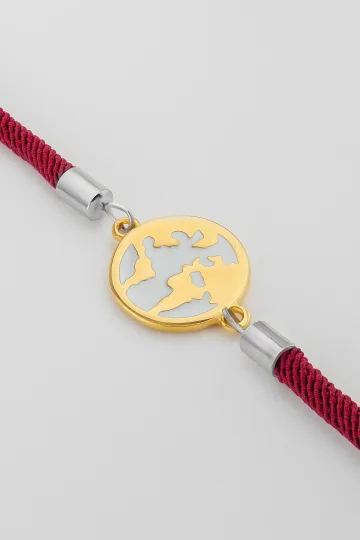
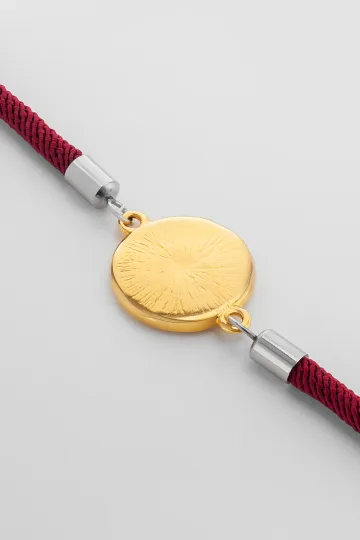
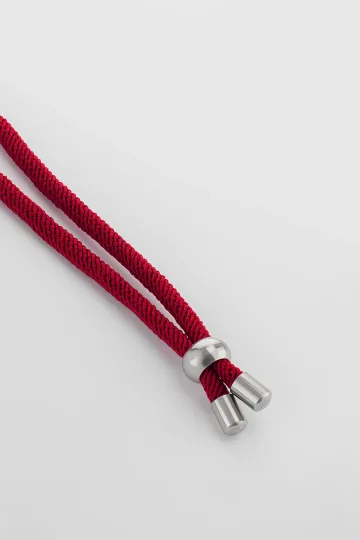

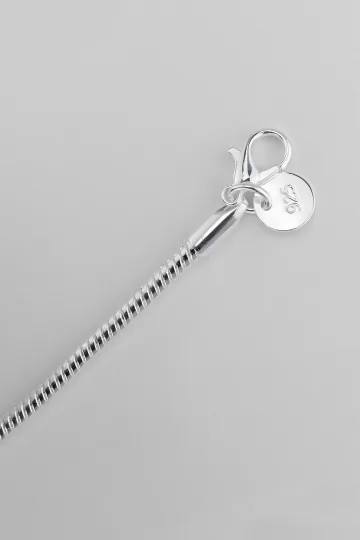

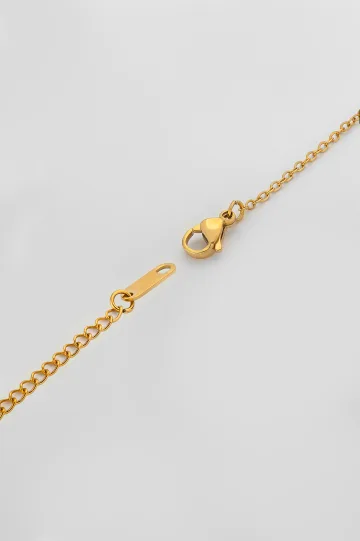

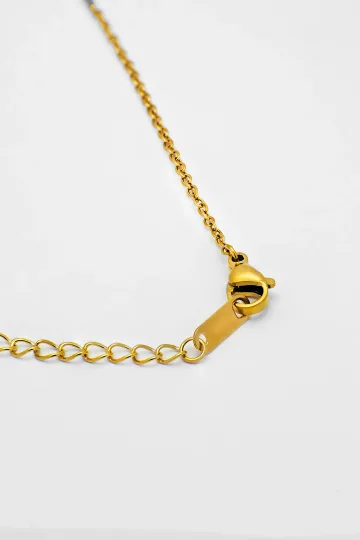
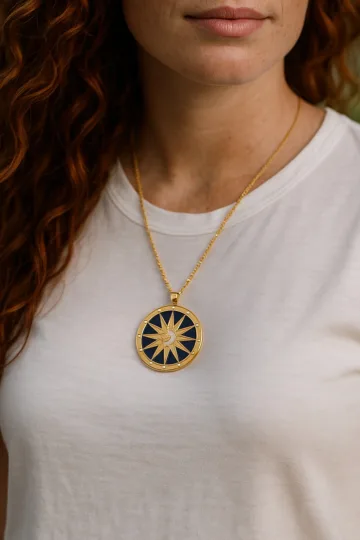
On the paediatric ward, Emma knows that small children look not at the uniform but at earrings. Bright stud earrings with a small flower, and the child smiles instead of crying at the sight of a white coat. A small thing? No. It is part of the therapy. One simple stud earring made her work a little easier.
Tomorrow is the nursing college graduation ceremony. Colleagues are pooling together for a gift for their fellow student James, who spent seven years studying and working as a healthcare assistant and is finally graduating as an anaesthetic nurse. What do they give? Something he can actually wear. Not just beautiful, but functional in his profession.
This article is about what nurses and healthcare workers can wear on shift, what is forbidden and why, how different specialisations choose jewelry, and how to find the right gift for someone in a white coat.
Dress codes and jewellery: how it works in different countries
Attitudes to jewelry in healthcare are governed by national standards, individual hospital policies and the common sense of infection control. Laws differ but the logic is the same: anything that prevents proper handwashing or transfers bacteria must go. Doctors work under the same constraints, set out in our jewellery for doctors guide.
United States: Joint Commission and facility-level rules
There is no single federal ban on jewellery in US hospitals. Joint Commission standards (the main accreditation body) require compliance with hand-hygiene protocols, which in practice means removing rings, bracelets and anything that obstructs proper washing. Each hospital develops its own policy. Typical wording: "One plain smooth wedding band without stones is permitted. Bracelets, rings with stones and long chains are prohibited in direct patient-care areas."
OR nurses work in sterile conditions: no jewellery at all. Floor nurses may wear small stud earrings. Dress codes vary: Johns Hopkins has one policy, a rural community hospital has another.
United Kingdom: NHS Bare Below the Elbows
The National Health Service introduced the Bare Below the Elbows (BBE) policy, which means no watches, bracelets or rings (with the exception of a plain wedding band in some trusts). NHS rules on earrings are explicit: small stud earrings are acceptable, but drop earrings are not. Neck jewellery must be tucked under clothing or absent entirely.
Officially, the NHS considers rings a heightened infection-control risk: the gap between the ring and the skin creates a bacterial environment that persists even after handwashing with soap.
Where the policy came from. Bare Below the Elbows arrived with the Department of Health's uniform and workwear guidance in 2007 and 2008, at the height of concern over MRSA and Clostridioides difficile in English hospitals. The change that caught the public eye was the end of the traditional white coat with long sleeves, but the substance of it was the hands and forearms. The reasoning is straightforward and comes from the World Health Organization's Five Moments for Hand Hygiene: you cannot decontaminate the wrist and lower forearm if a sleeve, a watch strap or a bangle is sitting on it, and alcohol gel needs bare skin to work on.
What the rule actually says. In practice, across most NHS trusts in England, Scotland, Wales and Northern Ireland, the requirements in clinical areas run like this. Sleeves are short or rolled and secured above the elbow. No wristwatch. No wrist or arm jewellery of any kind, including fitness bands and friendship bracelets. No stone set rings. One plain band ring is permitted in most trusts, and a few restrict even that. False nails, nail extensions, gel polish and nail art are out, and nails are kept short. Neck chains are worn under the uniform or not at all, and long or dangling earrings are not worn.
Where the local variation lies. Trust policies are not identical, and this catches people out when they move jobs. Some allow the plain band on any ward; some permit it outside theatre only; theatre, ITU and neonatal units are usually stricter than a general ward, and community nursing has its own reading of the rules because the workplace is somebody's living room. Occupational health will consider individual requests, including on religious grounds, and the usual accommodation for a bangle worn for religious reasons is that it may be pushed up the arm and secured during hand hygiene and clinical procedures rather than removed altogether. If you are unsure, the trust's infection prevention and control policy on the intranet is the document that governs, not the ward custom.
What this means for buying jewellery. The practical consequence for anyone shopping for a nurse is simple. Wrists are unavailable during working hours, full stop, so a bracelet or a watch is a gift for off duty time and should be sold to the recipient that way. Ears and the area under the uniform are where the working day actually happens. A fob watch pinned to the tunic is the standard answer to the wristwatch problem, and it is one of the few pieces of kit a nurse both needs and can be given.
Germany: Robert Koch Institute guidelines
Germany follows the hygiene recommendations of the Robert Koch Institute for healthcare settings. A plain wedding band is permissible (though not recommended for invasive procedures). Bracelets, rings with raised surfaces and long earrings are not. Most German clinics apply the minimalist principle: if in doubt, take it off.
German medical culture draws a strict boundary between professional and personal: jewellery in the OR and ICU is not even a discussion. It simply is not there.
Spain and Italy: a pragmatic southern approach
Southern European protocols (SEMF/ANAAO) also prohibit bracelets, stone-set rings and long earrings. Permitted: a plain ring, small stud earrings, a chain worn under the uniform. Individual hospitals set their own rules and they can differ even in neighbouring clinics in the same city.
The common denominator across all five countries: jewellery must not obstruct handwashing, must not injure the patient, must not accumulate contamination and must not enter the sterile field.
Silver for the ward, gold for after. A gold lamp over scrubs is trying far too hard, and don't argue.
How to wear healthcare jewellery
A healthcare piece lives in two wardrobes. On shift it's a quiet stud or a chain under the uniform that argues with nothing. Off shift I build a whole look around it, and here's what I recommend by occasion.
What do you wear day to day after the shift? For every day I recommend a lamp or stethoscope pendant on a thin chain over a simple base: white tee, grey knit, a linen shirt with an open collar. Cotton and linen give a soft background where silver reads calm. I suggest a 45 cm length, so the pendant sits at the breastbone under a V or round neckline.
And if the consultation is in plain clothes? For clinic and office I choose a spare set: studs plus one chain, a single metal. A dark jacket, a shirt in pastel tones. The piece signals the profession, it does not compete with the clothes.
How do you build an evening look? For the evening I recommend two or three thin chains at different lengths (40, 45, 55 cm) and a small ear cuff. It sits well on a plain dress or a silk blouse in a deep colour: burgundy, emerald, navy. Under evening light gold reads warmer than silver.
And for a graduation or a lamp ceremony? For a special day I choose one strong pendant and nothing else beside it. Let the piece be the centre of the look, so the symbol of the profession reads at once.
Gold or silver, and how do you get the length right? I recommend not mixing gold and silver in one row unless you do it on purpose: mismatched metals look accidental. And keep the length to the neckline, too short under a high collar is lost, longer under a deep neckline looks considered.

Turn on your camera, pick earrings, a pendant or a ring, and see the piece on yourself in real time.
Switch items in one tap.
Everything runs in your browser: no photo or video is ever uploaded.
What you cannot wear on shift and why
Healthcare explains its prohibitions, and those explanations hold up. This is not bureaucracy for its own sake.
Rings with stones or prongs
Prong settings (the claws that hold a stone) are glove traps. A latex glove snags on a prong and tears. A torn glove breaks the barrier. A broken barrier puts the patient and the healthcare worker at risk. Beyond that, the gap between the stone and the setting traps biological material that does not wash out with standard handwashing.
Rings with pronounced surface texture (engraving, relief details) create the same problems: their surfaces cannot be fully decontaminated.
Bracelets
Any bracelet, rigid or flexible, sits on the wrist and obstructs the handwashing technique protocol. A dangling bracelet can graze a patient or brush a sterile surface. Leather bracelets absorb fluids and cannot be disinfected.
A charm bracelet with pendants in an operating theatre is a serious hazard: a pendant can enter the sterile field, detach, or go missing. This is exactly why nurses wear charm bracelets outside shifts, not during them.
Long and drop earrings
An earring that swings will touch a patient when leaning over. In paediatrics a child will pull it. In the ICU it can snag on equipment. A long earring, caught suddenly, can tear an earlobe. This is real occupational injury, not theory.
Long chains over the uniform
A long chain with a pendant worn over the uniform risks entering the needle or syringe zone when leaning over a patient. The pendant touches surfaces that must remain clean or sterile. In psychiatric wards a long chain is a direct risk: a patient can grab it.
Any ring in invasive areas
Operating theatres, ICU, treatment rooms: in these areas every ring, including a wedding band, is removed before work. This is a standard, not a recommendation.
Customer reviews
Zevira is a real jewellery shop. Genuine payments, deliveries and customer thank-yous.
🥰🥰🥰 gracias
Ok, ¡gracias! 🙂
What is permitted and practical on shift
Good news: nurses do wear jewellery. They simply choose the right kind.
Stud earrings
Studs are the standard for working healthcare professionals. They do not hang, do not swing and do not graze patients. Size matters: the optimal diameter is up to 8 mm. A small ball, small flower or small heart all fit within most hospital policies.
Material is critical: stud earrings in 316L steel or titanium do not react to antiseptics and disinfectants. Sterling silver 925 is acceptable but requires care, because chlorine-based disinfectants and alcohol will tarnish it. More on this in the materials section.
A thin chain worn under the uniform
A thin chain with a small pendant tucked under the uniform is a solution used by nurses worldwide. The piece is worn but not in the risk zone. The pendant should be flat and compact, because a bulky pendant is uncomfortable under close-fitting fabric.
Optimal chain length: 40-45 cm, so the pendant sits at the centre of the chest where it is reliably hidden beneath the collar.
A plain wedding band
Flat surface, no stones, no raised texture: in most standards this ring is permitted. Surgeons and anaesthetists remove it for procedures; floor nurses often wear it throughout the shift. Classic wedding bands without stones are precisely what healthcare workers choose for practical reasons.
Small ear cuffs
A cuff on the upper cartilage is another way to wear jewellery without breaking standards. It does not hang, swing or enter the working zone. Popular among younger nurses who want to keep a personal aesthetic.
The fob watch, the one wrist item that survives
Since Bare Below the Elbows removed the wristwatch, the fob watch has become close to universal in British nursing. It pins to the tunic, hangs face down and reads the right way up when lifted, and it stays clear of the patient and the sink. Nurses still need to time a pulse, a respiratory rate and an infusion, so this is a genuine working instrument rather than an ornament.
That makes it the most reliably welcome gift on this list, and it is worth choosing properly. Look for a stainless steel or silicone body that tolerates alcohol wipes, a strong pin or a magnetic fitting that will not tear a tunic, a second hand, and a face that can be read at arm's length in poor light. Engraving on the back is common and does not affect the seal. Avoid anything with fabric, leather or a fiddly clasp: it has to be wiped down between patients.
Jewellery and gloves
Gloves are not a way round the rules, and this is worth stating plainly because the assumption is common. A stone set ring or a raised setting is the classic cause of a torn glove, and a tear in a glove is an exposure for both the wearer and the patient. Prongs catch on the cuff during donning, and the tear is often not noticed until the glove comes off.
There is a second problem. The warm, moist environment inside a glove over an unwashed ring is close to ideal for bacterial growth, so a ring worn under gloves for a twelve hour shift can end up carrying more organisms than one worn openly. Gloves are also changed between patients, and every change is another chance for a setting to snag. The rule that follows is short: whatever goes under a glove must be smooth, flat and washable, or it does not go on at all.
The silicone ring, for people who cannot wear metal
The silicone band has become the standard answer for married healthcare staff, and it is now as common on British wards as in the trades. It is soft, flat, seamless, cheap enough to replace without regret, tolerates alcohol gel and hot water, and carries no setting to catch a glove. It also tears rather than degloves the finger if it is caught badly, which is why it began in industrial settings.
The usual arrangement is a genuine wedding band kept at home or on a chain under the uniform, and a silicone band worn on the hand through the shift. Many couples now buy the silicone band alongside the real one as a deliberate pair. If you are giving one, get the size right: silicone does not resize, and a band that is slightly loose is safer and more comfortable across a long shift than one that is slightly tight.
Hygiene of the piece: the metal matters more than the shape
A smooth shape is only half the question. The other half is what the piece is made of, because a shift means repeated alcohol gel, chlorine based surface wipes, hot water and hand soap, several times an hour.
316L stainless steel and titanium simply ignore all of it. Sterling silver does not: chlorine releasing agents and repeated alcohol contact will dull and blacken it, and the tarnish itself sits in the crevices that infection control cares about. Gold plating over silver or brass is the worst choice for clinical work, because the plating wears through at exactly the contact points and exposes a base metal underneath, often one containing nickel.
That last point matters more in Europe than people realise. The EU Nickel Regulation, carried into the REACH framework and retained in British law, caps nickel release from items in prolonged skin contact, but worn plating can expose material that was never meant to touch skin. Constant handwashing strips the skin barrier, so nurses develop contact dermatitis at higher rates than most professions, and an irritated hand is a hand that cannot be decontaminated properly. Choosing solid steel or titanium is an infection control decision as much as a comfort one.
Upload a photo of your pet, someone you love, or an object. We'll build a 3D model and hand-cast it in pewter.



The charm bracelet: a cultural phenomenon in nursing
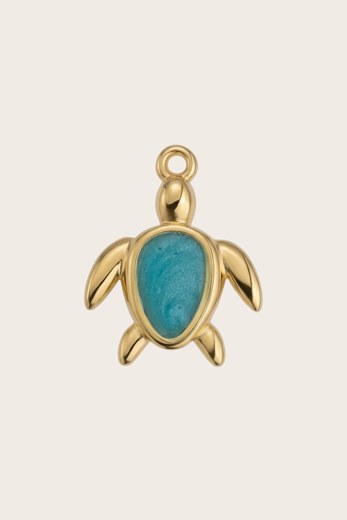
The US and UK nursing community has created its own charm bracelet culture that has no equivalent in any other profession. These are not simply ornaments. They are a system of signs within a guild.
Florence Nightingale Lamp Charm
The Nightingale lamp is the most recognisable symbol of nursing worldwide. Florence Nightingale (1820-1910) made nightly rounds through the Crimean War hospital with an oil lamp, checking on wounded soldiers. Journalists called her "The Lady with the Lamp." The lamp became the symbol of the profession.
A pendant or charm in the shape of an antique oil lamp is the first choice when buying a nursing piece in the US and UK. It is given at graduation, on work anniversaries and when transitioning to a new specialisation. Nurses add it to bracelets or wear it separately on a chain.
Nursing cap charm
The classic nursing cap is a historic symbol that has disappeared from practice but survives in professional culture. American hospitals largely phased out caps from the 1980s onwards, but in professional symbolism they remain. A charm in the shape of a folded nursing cap is worn as a sign of belonging to the tradition.
Ampoule and syringe
A stylised syringe or ampoule is both a professional in-joke and a marker. "I am the person with the syringe, not the person who is afraid of it." Popular among nurses in oncology, intensive care and among anaesthetic nurses.
Stethoscope pendant
A stethoscope-shaped pendant is the universal medical piece. Not tied to a specific specialisation, recognised by everyone in the profession and outside it. Suitable as a gift for any healthcare worker.
Caduceus or red cross
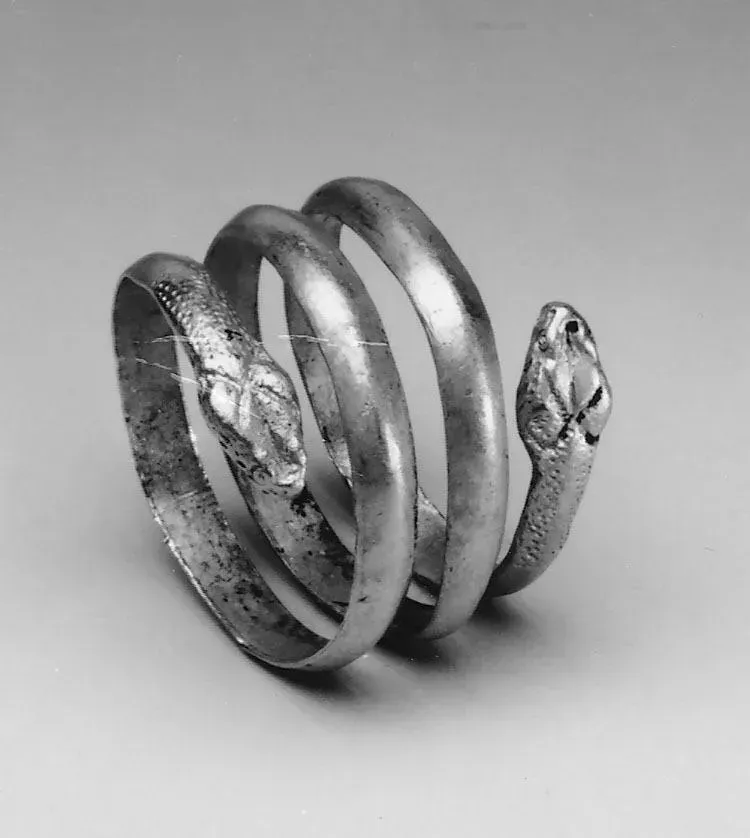
The caduceus (Hermes' staff with two snakes) and the Rod of Asclepius (staff with one snake) are medical symbols used in different traditions. American pieces more commonly feature the caduceus; European pieces more often show the Rod of Asclepius. Both read as symbols of the medical profession.
Jewellery by specialisation
Not every healthcare worker operates under the same conditions. Specialisation determines what is safe and appropriate to wear.
General nurse (floor nurse)
The most flexible conditions. Stud earrings, a thin chain under the uniform and a plain ring are standard practice. A charm bracelet is put on after the shift. Emphasis is on durability and comfort: a 12-hour shift tests any piece of jewellery.
Operating room nurse (OR / scrub nurse)
The strictest standard. All jewellery is removed before entering the operating theatre. Charm bracelets and earrings go in the locker. The only exception in some hospitals is small stud earrings (not hoops, not drop). The wedding band is removed before the procedure.
Intensive care (ICU)
Standards are close to OR: minimal jewellery or none in patient zones. Studs are acceptable. A chain is tucked under the uniform. Rings are removed.
Paediatric nurse
Aesthetics matter here: a small bright stud helps establish contact with a young patient. Paediatric nurses sometimes deliberately choose characterful pieces: a flower, star or heart. This is part of professional communication, not a dress code violation.
Military nurse
Standards in military healthcare are stricter than civilian. In field conditions jewellery is essentially excluded. Medical units follow strict uniform regulations. Charm bracelets and symbolic pieces are worn off duty.
School nurse
The greatest freedom in choosing jewellery. No immediate sterility concern, no invasive patient contact. Studs, a ring, a thin chain with a pendant are all acceptable. A piece with medical symbolism (stethoscope, cross) immediately tells children who they are looking at.
Male nurse anaesthetist (CRNA / anaesthetic nurse)
One of the most highly qualified profiles. In the OR: standard OR rules. Outside work: symbolic pieces with anaesthesia-related themes (syringe, ampoule, molecular structure) are popular in this group as professional identity markers.


Hygiene and materials: what survives a 12-hour shift
Material is not an aesthetic question for a working healthcare professional. It is a functional one. Chlorine-based disinfectants, alcohol solutions and skin antiseptics are an aggressive environment for most metals.
316L medical-grade stainless steel
The best choice for shift wear. Grade 316L contains molybdenum, which provides high corrosion resistance. This is the grade used in implants, surgical instruments and medical devices. Antiseptics and disinfectants will not damage 316L earrings. It is hypoallergenic, since the nickel compounds in it are stabilised.
Drawback: looks less precious than gold or silver. But in a medical uniform this is irrelevant.
Titanium
Even more corrosion-resistant than 316L. Used in surgical implants. Lightweight and hypoallergenic. A strong choice for stud earrings. More expensive than steel.
Sterling silver 925
A beautiful metal but requires care in an aggressive environment. Chlorine-based disinfectants (such as chlorhexidine) tarnish silver. Alcohol is less aggressive but also affects the surface with frequent contact. Silver 925 is suited to off-duty jewellery, gifts and everyday wear, but not to a 12-hour clinical shift.
If you wear silver on shift, keep it under the uniform and avoid direct contact with disinfectants.
14K and 18K gold
Gold is more resistant to chemical attack than silver, but still reacts to chlorine. Chlorinated water and chlorine-based disinfectants gradually degrade alloys. 18K gold is softer and more sensitive. 14K gold is harder. Possible for shift wear; not for the OR.
Leave your email, we'll send your discount code. No spam, unsubscribe anytime.
The code arrives by email, valid on your first order.
How to choose jewellery as a gift for a nurse
A nurse receives a handful of significant gifts connected to the profession over a career. Each moment calls for its own piece.
Nursing college or university graduation
The first graduation is not simply the end of study. It is entry into a profession with a history stretching back centuries and its own code. The gift should reflect that.
What works: a thin chain with a Nightingale lamp or stethoscope pendant; a bracelet with one first charm (lamp, cap, cross); a small pendant engraved with the specialisation and graduation year.
What does not work: a bulky piece you cannot wear on shift; something with no connection to the profession; an expensive piece with no practical value.
Graduation engraving: "RN 2026", "BSN 2026", a date and specialisation. This turns the piece into a document in a professional biography.
Work anniversary (5, 10, 15, 20 years)
Surviving five years in nursing is an achievement. Ten years is veteran status. A work anniversary deserves a piece that acknowledges it.
A charm bracelet is the ideal format for an anniversary: add a new charm for each year or each significant milestone. Already have a lamp and stethoscope in the bracelet? Add another charm for the new specialisation or a symbol of a particular event.
Moving to a new specialisation
From a medical ward to intensive care. From paediatrics to obstetrics. A specialisation change is professional growth that deserves recognition. A piece with the symbol of the new specialisation (or a neutral medical symbol) confirms: this is a chosen path, more than a job change.
International Nurses Day: 12 May
12 May is International Nurses Day. The date is not coincidental: it is Florence Nightingale's birthday (1820). On this day it is customary to recognise the profession and give gifts. Jewelry is a fitting and personal choice.
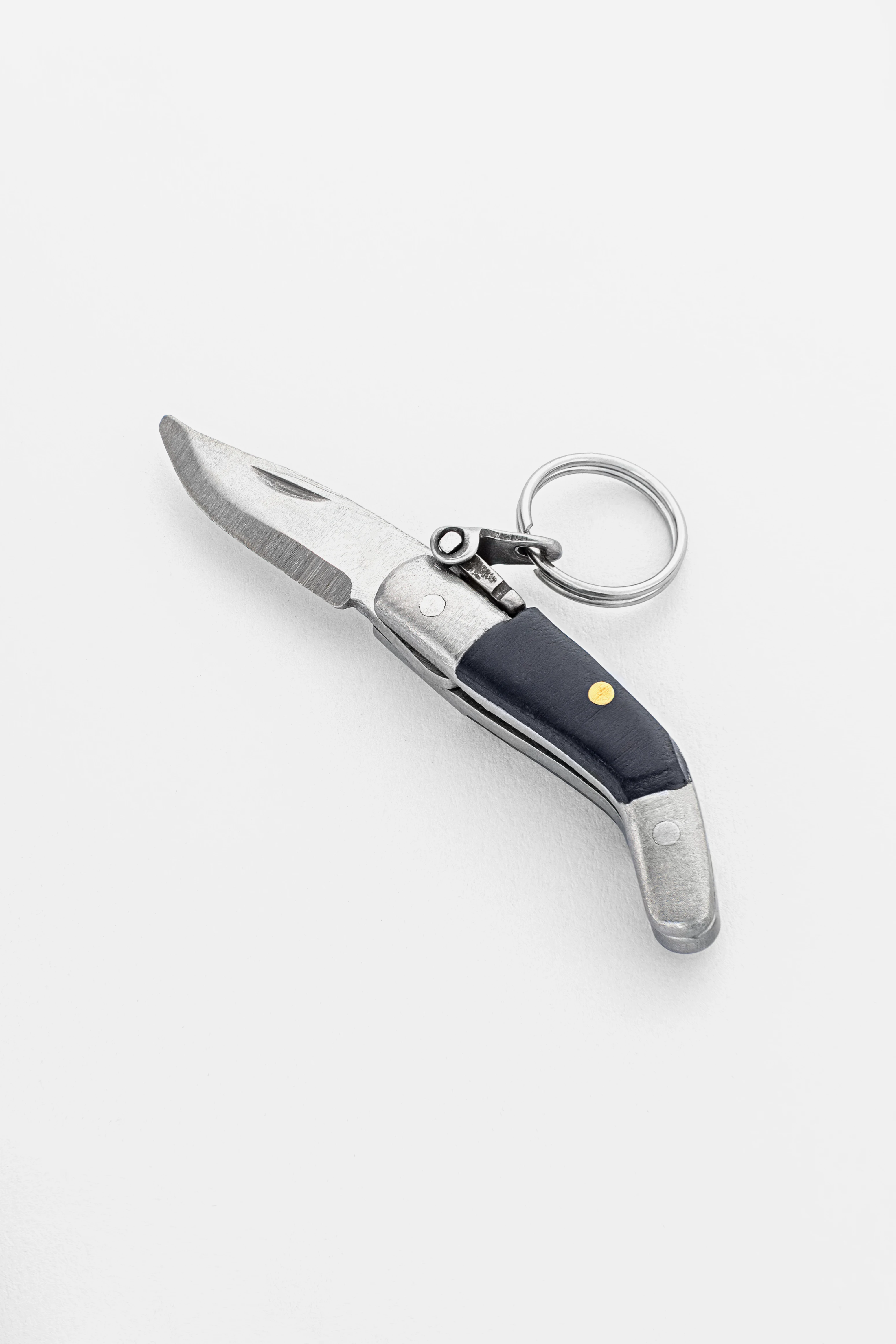
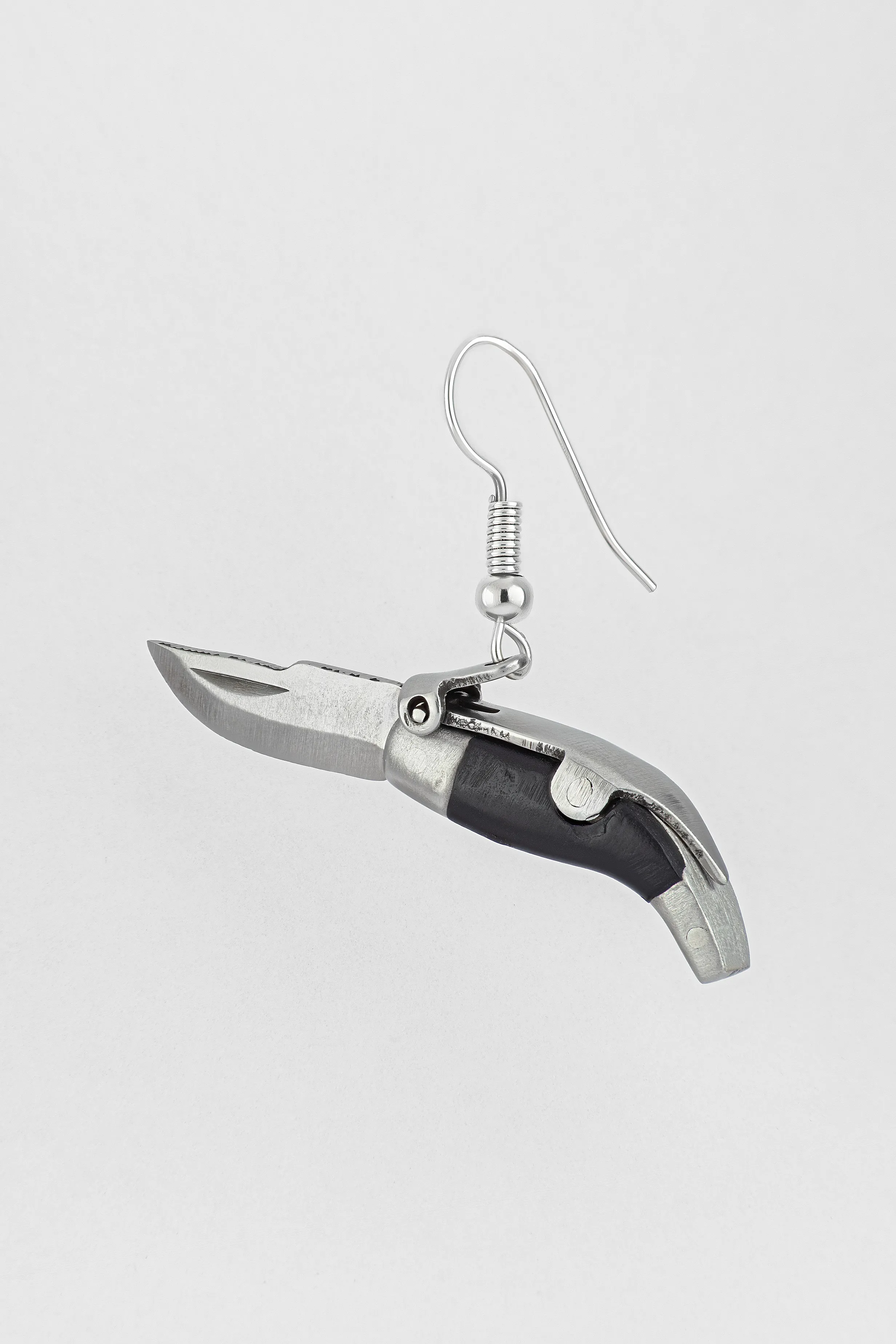
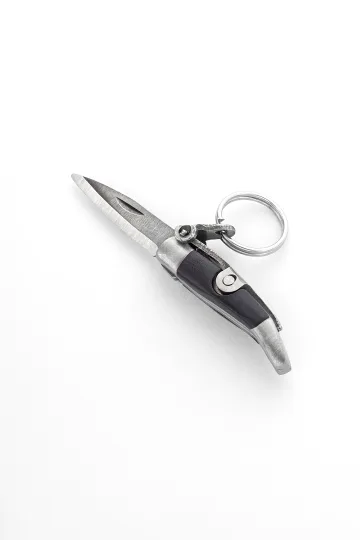
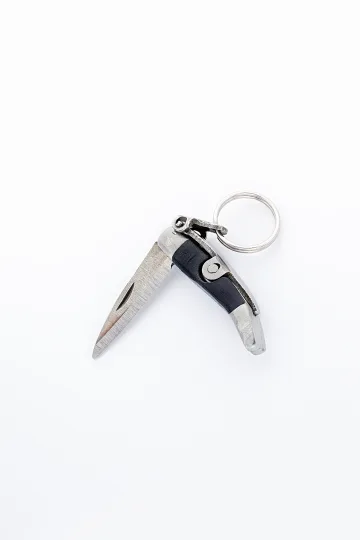
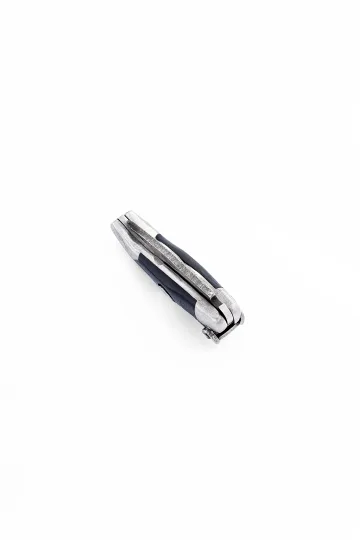
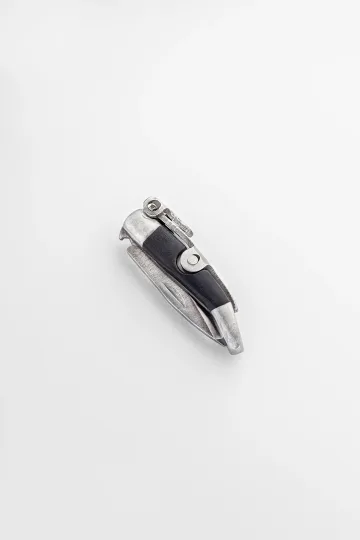
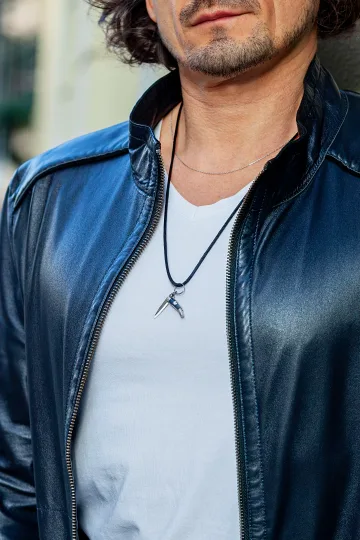
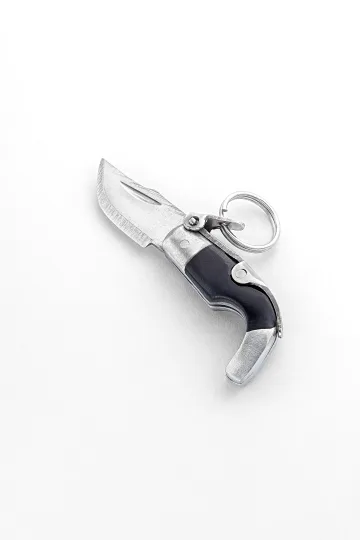
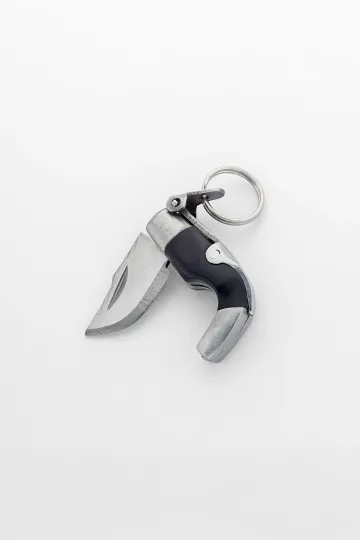
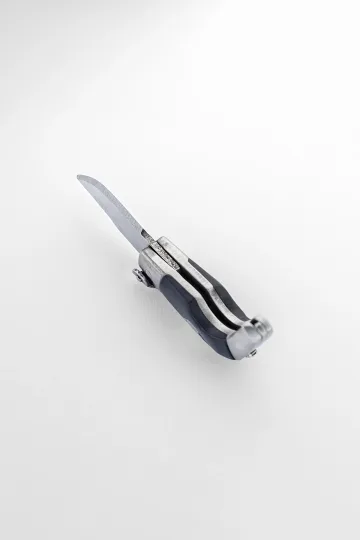
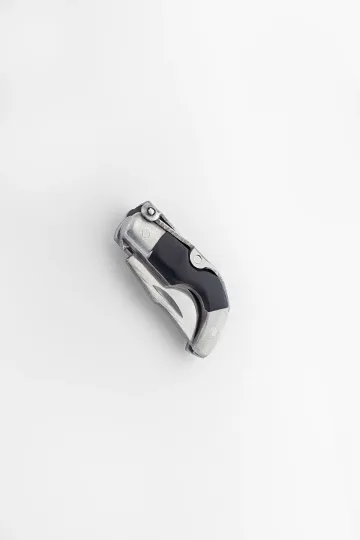
CAPAORA mini knife pendant
The 18th-century Spanish navaja in miniature: 40 mm of stainless steel, a real folding mechanism and a Palanquilla lock that clicks. An affordable gift to remember.
Authentic · Ships from Spain · 14-day returns
Engraving: what nurses have written
Personal engraving on a nursing piece makes it a private document of a career.
Name and specialisation: "Anna, ICU", "James, Anaesthesia", "Staff Nurse Marina". Colleagues understand at a glance.
Graduation year or start date: "RN 2026", "Since 2019". The start date is the reference point.
A meaningful phrase: "Caring is my calling", "She made a difference", either a phrase from the professional community or a personal formulation.
Ward or hospital name: "EMED [city]", "Ward 6 Surgical", a marker of belonging to a specific team.
Dedication from the team: "From the team of Ward 6" for a group gift.
Comparison: standard vs nursing vs forbidden
Myths about nursing jewellery
Send a friend a discount code, they save on their first order.
Facts that surprise people
The caduceus on medical badges is a long running mistake
The winged staff with two snakes is the caduceus, the wand of Hermes, patron of merchants, travellers and thieves. The genuine emblem of medicine is the rod of Asclepius: a plain staff with one snake and no wings. The confusion took hold in the United States in the early twentieth century, spread onto badges, signage and jewellery worldwide, and has never fully been corrected. British professional bodies have generally stuck with the single snake. If you want the historically correct piece, count the snakes.
A ring keeps bacteria on the skin even after handwashing
This is the whole basis of the ring rule, and it is measurable rather than theoretical. Studies of healthcare hand hygiene have repeatedly found higher bacterial counts on ringed fingers than on bare ones, with organisms persisting under the band after a proper wash. The band traps moisture against the skin and shelters the surface from friction and from the antiseptic. A plain band is the compromise the guidance settled on, not a clean result.
Nightingale's lamp was not the shape it is drawn as
The lamp on every nursing badge and charm is a Greek oil lamp, low and open. The lamp actually carried through the wards at Scutari was a Turkish folding lantern of pleated paper or fabric on a collapsible frame, closer to a concertina than to a saucer. The elegant classical version came from the illustrators, and it is what the profession has adopted. There is nothing wrong with wearing it, but it is a nineteenth century press image rather than a portrait.
Nightingale was also a serious statistician
Her lasting achievement was arguably not the lamp but the data. She showed that far more soldiers in the Crimea were dying of preventable disease than of wounds, and she made the case with charts designed so that a politician could grasp it in one look. She became the first woman elected to the Royal Statistical Society. The lamp charm on a bracelet commemorates a woman whose real weapon was evidence.
The nurse's badge is older than many university degrees
Hospital training schools began issuing badges in the later nineteenth century, and for decades the badge, not a certificate, was the recognised proof that a nurse had completed training. Each school had its own design, and the badge was worn for a whole career. British nurses still receive school and university badges at qualification, and second hand hospital badges from closed training schools are now collected seriously.
The nurse's cap disappeared for hygiene, not fashion
The cap went out in Britain through the 1970s and 1980s because infection control could not defend it. It was rarely laundered to any standard, it collected organisms, it caught on curtains and equipment, and it did nothing useful. The cap survives now almost entirely as a symbol, on badges, charms and graduation photographs, which is a neat illustration of how a profession keeps its imagery after retiring the object.
The Latin on a medical ring is an old rule, not a brand slogan
Primum non nocere, first do no harm, is the phrase most often engraved on jewellery for medical staff. It does not appear in the Hippocratic Oath in that form; it entered medical usage in the nineteenth century as a distillation of a much older principle in the Hippocratic corpus. It is engraved because it is short, true and legible on a narrow band, and it has been doing that job for well over a century.
The psychology of nursing jewellery
A nursing piece is not simply a decorative object. It works on several psychological levels simultaneously.
A sign of guild membership
The nursing profession has its own system of belonging markers: the uniform, the badge, the stethoscope, the gloves. Jewellery is the personal element in that system. Seeing an unfamiliar woman in a cafe wearing a Nightingale lamp pendant or a bracelet with a syringe charm, another nurse will understand: one of us. This is silent acknowledgement of shared membership.
In cultural anthropology this is called a professional identity marker. Nursing is one of very few professions where personal jewellery encodes belonging with such precision.
Symbol of surviving the shift
A 12-hour night shift in intensive care is a physical and emotional challenge that most people have never experienced. The piece of jewellery a nurse puts on after the shift becomes a reward: "I went through this, I came out, I am still here." The ring you return to your finger after a procedure. The chain you take from your locker at the end of the shift.
This small ritual, the border between professional and personal, is psychologically significant. Many nurses describe it without needing many words: "I take the ring off and put the gloves on, and work has started. I put the ring back on, and I am just a person again."
Public recognition of the profession
A stethoscope or lamp pendant at a cafe or on a walk tells those around: this person is a healthcare worker. It is recognition of the profession in public space. Not boasting, just labelling.
In the post-pandemic period public regard for healthcare workers changed. Medical symbolism in jewellery took on an extra layer of meaning: "I was there when it mattered." Nurses who worked through the pandemic often say that after 2020 they started wearing professional symbols more deliberately.
Frequently asked questions
Can nurses wear jewellery at work?
Yes, with restrictions. Small stud earrings, a thin chain under the uniform and a plain wedding band are permitted in most hospitals worldwide. Bracelets, stone-set rings and long earrings are not. Specific rules depend on the institution, country and specialisation. In OR and ICU the standard is considerably stricter.
What ring can you wear on shift?
A plain wedding band without stones or surface texture is the safest option. It is permitted in most Western standards, though removed in the OR. Stone-set rings (including small stones) risk tearing gloves and accumulating contamination.
What do you give a nurse for graduation?
A piece with nursing symbolism: Nightingale lamp pendant, stethoscope pendant, charm bracelet with one charm. Engraved with the graduate's name and year. A thin chain with a small pendant is a practical choice that can be worn both on and off duty.
What metal is best for nursing jewellery?
For pieces worn on shift (stud earrings): 316L steel or titanium. They withstand antiseptics and disinfectants. For off-duty pieces: sterling silver 925 or 14K gold. Silver requires care when exposed to chlorine-based disinfectants.
Can male nurses wear jewellery?
Yes. The same standards apply to male nurses: small stud earrings, a plain ring and a chain under the uniform. Specialised nursing jewellery for men is less common, but the Nightingale lamp, stethoscope and caduceus are all gender-neutral symbols.
What is a nurse charm bracelet and how do you choose one?
A charm bracelet carries pendants (charms), each with a meaning. For a nurse: the first charm is the Nightingale lamp or stethoscope (the profession's symbol). New charms are added for career events: specialisation, anniversary, a transition. The bracelet is worn off shift, not during work.
Can you wear a charm bracelet in the operating theatre?
No. A charm bracelet with pendants meets no standard for an operating theatre. Pendants can enter the sterile field or detach. A charm bracelet is jewellery for life outside the shift.
Can jewellery cause infection?
Yes, if the wrong type is chosen. Stone-set rings, bracelets and complex pieces accumulate bacteria in zones not reached during standard handwashing. NHS research showed that rings significantly increase bacterial load on the hands of healthcare workers. Plain pieces in smooth materials do not create this risk.
Buying it as a gift? Each one arrives ready to give.
 A branded Zevira box and a little card come with every order.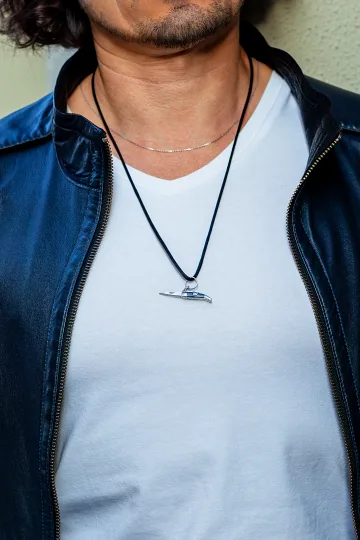





Conclusion
Healthcare worker jewellery exists in two modes: what you can wear on shift, and what you wear after. These two parts do not contradict each other. They complement. A small stud in the working shift. A charm bracelet with history after. An engraved pendant with a name and graduation year.
The nursing profession has its own symbolism, its own history and its own heroines. Florence Nightingale with the lamp, nightly rounds, the Crimean War, the First World War, the COVID pandemic: at each of these moments in history there were women and men in white coats. A piece with nursing symbolism is a way to connect with that history personally.
If you are choosing a gift for a nurse, choose something they can actually wear. Practical and personal at the same time. A thin chain with a Nightingale lamp or a charm bracelet with the first charm: these are gifts that last.
Sterling silver 925 and 316L surgical steel. Name and specialisation engraving. Charm bracelets, chains and stud earrings.
About Zevira
Zevira makes jewellery in the artisan tradition of Albacete, Spain. We work with silver 925, 14-18K gold and 316L surgical steel.
For healthcare workers, pieces with engraving: name, specialisation, graduation year, start date. 316L stud earrings that will survive the shift. Charm bracelets that collect the story of a career.