Jewellery for Chefs: What to Wear in the Kitchen, How to Choose, and What to Gift
What the Law Allows in a Professional Kitchen
Walk into the back of any serious restaurant and look at the cooks' hands. You will see almost nothing: maybe a plain band, maybe a tiny stud in one ear. That bareness is not a fashion choice. Under HACCP, the food-safety framework that binds every catering business in the European Union, a professional kitchen permits only two kinds of jewellery on the line: a smooth wedding band and small stud earrings. Everything else comes off before the shift.
That single rule reshapes the whole question. For most jobs, jewellery is about taste. For a chef it rests on three things stacked on top of each other: the regulation, the material, and the context. What you can wear on the line, what is fine once the apron comes off, and what actually makes sense as a gift for someone who spends twelve hours a day on their feet.
Wear the symbol, don't just read about it. These are in stock:
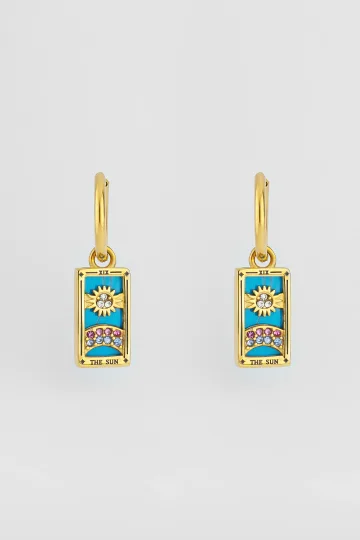

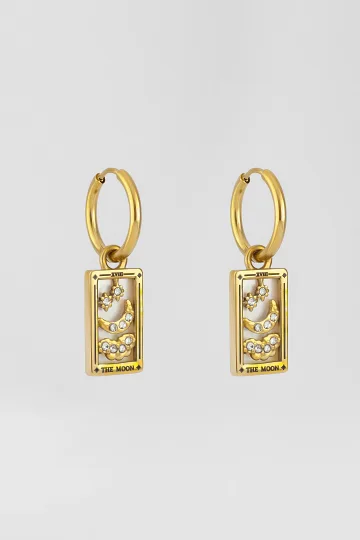


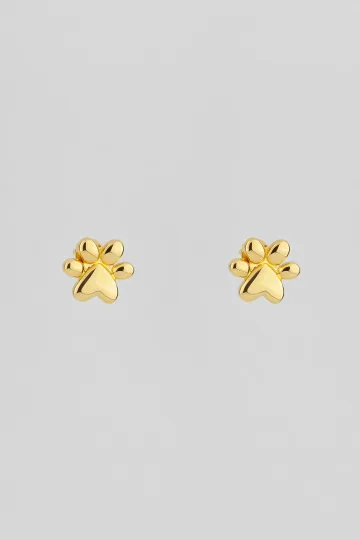

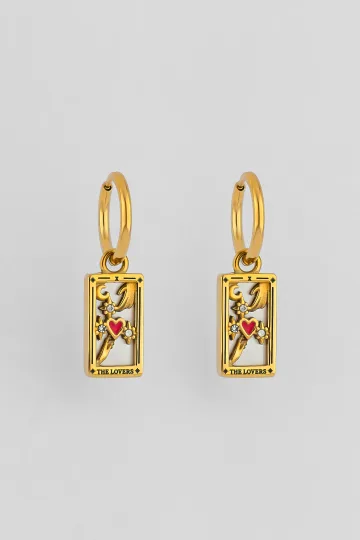

The Rules: What Food Law Says About Jewellery
Rules first, aesthetics second. They differ from country to country, but they all pull in the same direction.
The European Union: HACCP as the Baseline
In the EU, food production and preparation run on HACCP, Hazard Analysis and Critical Control Points. This is not a set of friendly suggestions. It is a mandatory food-safety management system introduced by EU Regulation No. 852/2004 on the hygiene of foodstuffs.
What does HACCP actually say about jewellery? Bluntly: personal items, jewellery included, are a potential source of physical contamination. The regulation requires food handlers not to wear jewellery where it creates a contamination risk. The precise wording is left to national law and each business's own house rules.
In practice, most EU restaurants run on something like this:
- Stoned and textured rings: banned, food lodges in them
- Bracelets: banned, they touch work surfaces
- Long chains: banned, they can be caught in equipment
- Drop earrings: banned, risk of falling into a dish
- Plain wedding bands: many kitchens allow them on condition that hands are washed properly
- Small stud earrings: usually permitted
Germany, France, Spain, and Italy add their own requirements through national sanitary law, but the underlying logic is identical everywhere: the fewer physical objects near the food, the fewer the risks.
The United States: FDA Food Code
In the US the core document is the FDA Food Code, section 2-303.11. It states plainly that food employees may not wear jewellery on their arms or hands while preparing food. The single exception is a plain wedding band with no stones and no relief.
Formally these are federal recommendations, but they are written into the law of most states, and health inspectors check for them during restaurant visits.
Jewellery on the neck and ears is not named directly, but the requirement to minimise the risk of physical contamination covers it all the same.
The United Kingdom: Food Safety Act and the FSA
The UK's Food Standards Agency follows the same logic: jewellery on the hands creates a contamination risk and is not advised. The accepted approach is the less the better, and if you wear anything, wear only what creates no risk.
Canada, Australia, and Beyond
Canada runs on provincial sanitary codes, most of which echo the FDA's reasoning. In Australia, Food Standards Australia New Zealand (FSANZ) sticks to the same principle of minimising physical contamination.
You can put it simply: any country with a developed food-safety system will restrict or ban jewellery on hands and wrists. The plain wedding band is recognised almost everywhere as the exception.
What Actually Happens
In practice the rule is enforced most strictly where control is tightest: industrial food production, the prep units of large restaurant groups, and kitchens serving vulnerable populations such as hospitals and children's facilities.
In a small chef-led restaurant, a cook with a smooth chain tucked under the jacket or a pair of studs is an everyday sight. That does not mean safety gets ignored. It means that where the risk is minimal, the rules are applied with common sense.
The distinction matters. The kitchen of a corporate canteen facing a formal audit and the kitchen of a twelve-cover restaurant run on different levels of control. In both, the cook knows the drill: stones, bracelets, and long chains stay at home; everything else depends on context.
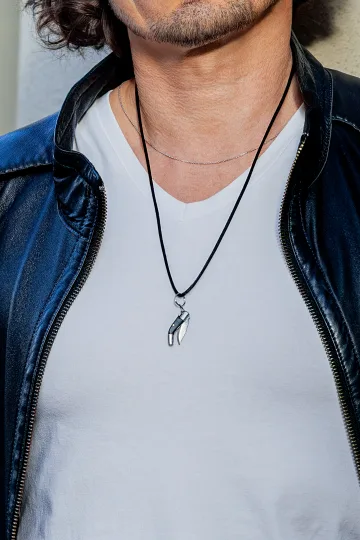
A knife pendant comes out of the collar in the dining room, not over your whites on the line. On the pass steel works, it doesn't sparkle, and that's final.
How to Wear a Chef's Jewellery Off Duty
I have put looks together for chefs heading into the dining room, in front of a camera and out for the evening. A knife pendant is a generous piece: it carries the meaning of the trade and still behaves like ordinary jewellery. Here is what actually works, by occasion.
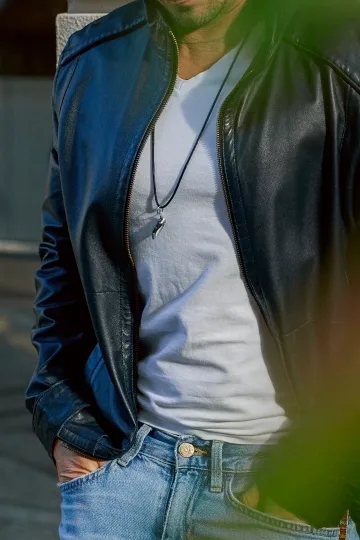
What do I wear a knife pendant with every day? For an everyday look I recommend a steel knife pendant on a short chain over a plain T-shirt or a thin crew-neck jumper. A dark top (black, graphite, navy) lets the steel come forward and the pendant read clearly. With a roll-neck I suggest wearing the chain over the fabric rather than hiding it, or the shape is lost.
And for going out to the guests? When the chef steps into the dining room I recommend a restrained layer: a wedding band and one thin chain with the pendant visible in an open shirt. An unbuttoned top collar shows the knife pendant just enough to make it a talking point. I keep the metals in one register: steel with steel, gold with gold.
How do I build an evening look? For the evening I choose a medium-length chain with a noticeable pendant over a dark shirt, earrings slightly larger than the daytime studs and a gold ring. Warm restaurant light plays on gold and polished steel, so the evening is the time for precious metals and a more open neckline.
Steel or gold for a knife pendant? For a working rhythm and frequent handwashing I suggest 316L steel, the same grade as a chef's knife. For a celebration and the evening I choose 14-18K gold, warm and full of status. Silver is handsome but darkens in the kitchen from onion and eggs, so I keep it for looks away from the line.
Who does a knife pendant suit? Anyone who values a restrained, object-focused piece over shine for its own sake. Two rules that never fail. First, match the chain length to the neckline: collarbone for the day, lower for the evening. Second, one accent per outfit and one metal register; a stack of rings on one hand ruins it.

Turn on your camera, pick earrings, a pendant or a ring, and see the piece on yourself in real time.
Switch items in one tap.
Everything runs in your browser: no photo or video is ever uploaded.
What You Absolutely Cannot Wear in the Kitchen
This is not a matter of taste or style. It is a matter of safety, your own and the guests'.
Rings with Stones and Relief
The edges of a setting, the notches, the steps in the metal: these are perfect traps for food. Minced meat, dough, chopped herbs, spices, all of it lodges in the gaps. A standard handwash does not clear those spots completely. The possible result is bacteria in the food and physical contamination of the dish.
Hygiene aside, there is a second risk. Working with dough or raw meat, a stoned ring can simply be lost in the mass of the product. Finding it again is a story of its own.
This rule has nothing to do with the value of the piece. An expensive diamond ring creates the same risks as a cheap one with a glass crystal. The size and cost of the stone are irrelevant; only the gaps and protrusions matter.
Long Chains and Pendants Worn Outside
A chain hanging over the jacket is a risk: it can reach into an open flame, a running planetary mixer, a meat grinder. This is not a hypothetical fear. Professional kitchen safety manuals list this point explicitly.
The French tradition of culinary training includes a dedicated briefing on the subject. Incidents involving hair and jewellery caught in equipment are part of the safety curriculum in cookery schools.
How long is too long? As a rule, a chain visible outside the jacket when you lean forward is already a potential hazard. Any chain that can hang below the collar when you bend over should be tucked under clothing or left at home.
Bracelets of Any Kind
A bracelet touches the work surface with every movement. It gathers grime from different products across an entire shift. When you wash to the elbow, the bracelet has to come off, otherwise a dirty zone remains underneath. In reality, kitchen bracelets are either left on during washing or taken off and laid on the edge of the sink, where they touch potentially dirty surfaces.
This applies to every type: metal, leather, woven, silicone. The material does not reduce the contamination risk beneath it.
Drop Earrings and Large Hoops
An earring hanging more than a centimetre or two can drop into a dish when you lean over the plate. It happens unnoticed. The probability is small, but in a professional kitchen even a small contamination risk is unacceptable.
A practical test: lean over an imaginary plate. If the earring swings downward and, with a deeper tilt, could reach the surface, it is too long for the kitchen.
Decorative Piercings
Lip, tongue, and brow piercings with parts that could come loose are strictly banned in most professional kitchens. A small metal piece in a dish is both a risk to the guest and a legal liability for the establishment.
Piercings with simple, snug fittings are another matter. Many restaurants require lip piercings to be covered with retainers or clear inserts for the duration of the shift.
Bulky Rings
Heavy signet rings and rings with bulky decorative elements create a double problem: gaps for food, and mechanical risk. Handling heavy cookware, hot pans, or a meat grinder, a bulky ring can snag and injure the hand. This is now a question of personal safety as much as food safety.
What Is Allowed and Practical
A professional kitchen is not a place where jewellery is impossible. There are categories that work.
The Plain Wedding Band
This is the main exception across every regulation. A plain wedding band with no stones, no relief, no notches is the classic carve-out in both the HACCP framework and the FDA Food Code. Why?
First, a smooth surface creates no gaps for bacteria. Second, thorough handwashing with a plain band is possible and effective; you just move the ring while you lather. Third, for many people removing a wedding band is a psychologically and culturally significant act, one that should not be demanded without real need.
In practice, most professional kitchens accept a plain wedding band provided the handwashing rules are followed.
When working with dough, raw meat, or fish, even a plain ring is better off, not for hygiene but because the mass of product around the band creates zones that wash poorly during a quick rinse.
The best material for a wedding band in the kitchen is 316L stainless steel (the most practical, reactive to nothing) or 14-18K gold (chemically neutral, with status). Silver works, but it tarnishes from sulphur-rich foods.
A Simple Chain Under the Jacket
A thin or medium chain with a small pendant, hidden under the high collar of a chef's jacket, is a working option. The key conditions: short enough not to swing when you lean over; the pendant not so bulky that it shows through the fabric; a secure clasp.
Many chefs wear exactly this kind of chain with a meaningful pendant, a personal talisman invisible to everyone through the whole shift. A knife pendant under the jacket is one of the most common choices in the kitchen brigade.
Chain length: up to around 45 cm is ideal. At that length the pendant sits below the collarbones and stays safely tucked inside the collar when you bend forward.
Stud Earrings
Small studs sit flush against the ear and do not dangle. At the stove or over the chopping board they do not shift and create no risk of dropping into food. This is the most common type of earring in a professional kitchen.
One key condition: the back must be secure. A stud that works its way loose is itself a safety breach. Material: hypoallergenic 316L steel or titanium, the best choices for a kitchen environment with constant handwashing and humid air over the stove.
Size: no more than 6-8 mm across. A 4-5 mm stud is practically invisible and entirely safe.
A Ring with Medical Identification
A special case that rarely comes up: a medical-ID ring carrying information such as a penicillin allergy or diabetes is often worn in the kitchen as an exception even where other rings are banned. The same requirement applies: smooth surface, neutral metal.
Tattoos as Adornment
A separate thread, only loosely on topic, but the picture is incomplete without it. Over the last twenty years tattoos have become part of the visual culture of the kitchen brigade. They break no food regulation, create no contamination risk, and let you carry the symbolism of your trade around the clock. Many cooks tattoo dates, restaurant names, and culinary symbols.
Food-Safe Materials: What Survives a Kitchen
Choosing a metal when you work with food is a more practical question than it is for almost any other profession.
316L Stainless Steel: the Workhorse
316L is the same steel used for professional kitchen knives and surgical instruments. That is no coincidence: this grade has the properties needed for contact with food and aggressive environments.
Why 316L is the sensible choice for the kitchen:
- Corrosion resistance: chlorine, salt, and acids from food do not break down the surface
- Hygiene: a smooth surface has no porosity where bacteria can develop
- Heat tolerance: the steel keeps its properties at the temperatures jewellery actually meets (not boiling water, but the heat of a busy kitchen)
- Strength: knocks, scratches, intensive washing, the steel handles working conditions
- Allergy safety: the low nickel content in 316L makes it safer for people with allergies than many other metals
The "316L" marking means a specific chemistry: iron, chromium (16-18%), nickel (10-14%), molybdenum (2-3%), and low carbon (hence the L). The molybdenum is the key element, the one that delivers resistance to chlorine-bearing environments. That is precisely why 316L is used in the food industry, not just any stainless steel.
You can read in detail about the properties of steel and how it compares to brass and silver in our guide to jewellery metals, and about steel jewellery in summer and any humid conditions in a separate piece on steel and moisture.
For a cook who washes their hands constantly while wearing a pendant or earrings, 316L stainless steel is the most practical of all jewellery metals.
14-18K Gold: Status, with Caveats
Pure gold is chemically inert; it does not react with most foods and creates no contamination risk. A gold wedding band is ideal in that sense: it does not tarnish, does not rust, survives washing.
The single practical risk is losing it in the mass of a product. Working dough, mince, or fish pâté are situations where dense contact between food and ring makes loss real. With such products, a ring is wiser off, whatever the metal.
14K gold (58% pure gold, the rest alloy) is harder than 18K and better suited to daily wear in working conditions. 18K gold is softer and more beautiful but scratches faster.
An important detail: white gold contains nickel in its alloy under most European standards. For people with a nickel allergy this matters. 14K yellow gold is a more neutral choice by composition.
925 Silver: Beautiful, but Demands Attention in the Kitchen
Silver is one of the most popular jewellery metals, but it has a quirk that is critical for a cook: it reacts with sulphur compounds.
What that means in practice: onion, garlic, eggs, mustard, and some fish contain sulphur-bearing substances (mainly H2S and organic thiol compounds). With regular contact, silver tarnishes faster than usual. This is not the metal spoiling, just accelerated formation of silver sulphide on the surface. The film comes off and the silver recovers, but it is extra upkeep.
If you wear a silver pendant under your jacket and never touch food directly, the tarnishing will be minimal. If a silver ring touches onion and eggs while you cook, you will be cleaning it often.
Methods for restoring tarnished silver are covered in detail in our guide to cleaning tarnished jewellery. The same piece explains why silver tarnishes faster in a kitchen.
Titanium: for the Hypersensitive
For people with a strong allergy to nickel and other metals, titanium is the best option. It is bioinert, fully hypoallergenic, and corrosion-resistant. The only downside is slightly less jewellery glamour compared to steel and gold, although anodised titanium gives lovely colours with no coating.
What Simply Does Not Belong in a Kitchen
Copper and untreated brass react with acids and oxidise on contact with moisture and acidic foods. The film can transfer to the skin (a greenish stain) and, in theory, to food. Not recommended.
PVD-coated jewellery: the coating itself is safe and durable, but once it is damaged the base is exposed. If the base is 316L, there is no problem. If the base is another alloy, risks are possible.
Customer reviews
Zevira is a real jewellery shop. Genuine payments, deliveries and customer thank-yous.
🥰🥰🥰 gracias

Ok, ¡gracias! 🙂

The Knife Pendant: Culinary Symbolism in Jewellery
Among all the symbols tied to the culinary craft, the knife holds a place of its own. Not the toque, not the apron, the knife. It is the tool without which nothing else exists. The first knife a young cook buys themselves is a rite of passage. A chef's knife is an extension of the hand.
A pendant in the shape of a knife is a piece with history. It is not a literal blade; it is a miniature, an object with symbolic weight.
The History of the Jewelled Blade
Blade-shaped jewellery has existed since the Middle Ages. In Europe, small dagger pendants were worn as amulets against ill intent, "the knife protects". In Spain and Portugal the navaja as a jewellery motif carries several centuries of history. In Japan, miniature replicas of knives were worn as symbols of a craftsman's mastery.
In medieval France and Italy kitchen knives were passed down as inheritance from master to apprentice. Wearing a scaled-down copy of a mentor's knife was a tradition documented in guild records.
Today the knife pendant has spread well beyond a narrow subculture. It is worn by chefs, sommeliers, fans of cookery shows and clips, knife collectors, and people who simply like the shape of a blade as an object.
The CAPAORA Series: Culinary Symbolism in Metal
Among jewelled knives, the CAPAORA series holds a special place, created in the tradition of Albacete craftsmanship. The capaora, a broad blade with a distinctive handle, is a tool with a concrete working history. As jewellery it carries that context: not a decorative little knife-charm, but a replica with weight and character.
Albacete, a city in southeastern Spain, has specialised in knife-making since the fifteenth century. A knife from Albacete is at once a tool and an object with cultural identity. The navaja, the membrillo, the cabra, each form has its own story. The CAPAORA series reproduces that tradition at jewellery scale.
You can read more about the series in the article on the Capaora pendant and in the general guide to knife pendants. For the Albacete tradition, see the piece on the Albacete navaja.
A 316L steel knife pendant for a professional cook is a piece with subtext. It is a material link between what you do with your hands and what you wear. The same steel, the same form, a different scale.
Other Symbols of the Culinary Tradition
The knife pendant is the most direct symbol, but not the only one.
The toque. The tall white toque is one of the most recognisable symbols of the chef's trade. Its history reaches back to the nineteenth century, when French master chefs set out a kitchen hierarchy through uniform. The number of pleats on a toque once signalled a level of skill. A pendant or brooch in the shape of a chef's hat is a rare but recognisable piece in the culinary world.
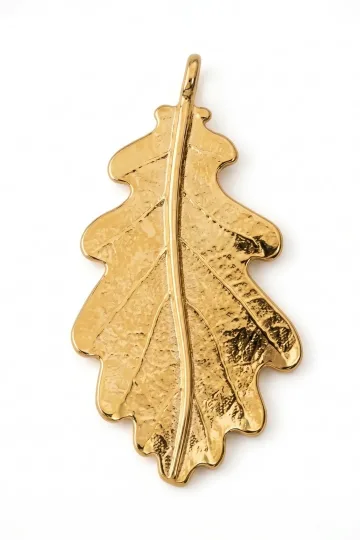
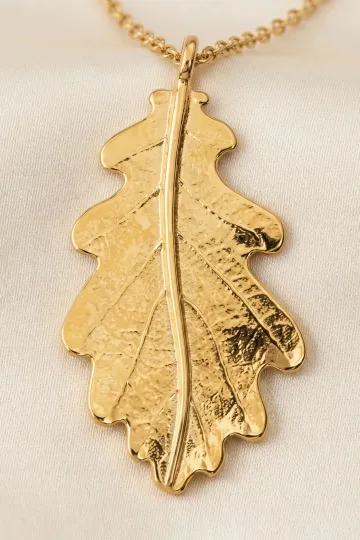
The laurel wreath. In European tradition, laurel is bound to recognition and mastery. In a culinary context, the bay leaf is also a literal ingredient. A laurel-motif piece works on two levels at once: a symbol of victory and a symbol of flavour.
The grapevine. The link between cooking and winemaking is unbroken in the Mediterranean tradition. A vine motif is a symbol of both wine and the table, of the feast, of food culture. Apt for chefs working in Mediterranean cuisine or in restaurants with a serious wine list.
The anchor and trident. Symbols of seafood cookery, the theme of fish restaurants. Especially popular among cooks who work with fish and shellfish.
The ear of wheat. Baking and pastry. A direct link to grain as the basis of cooking. A popular motif among bakers and pastry chefs.
The olive branch. A symbol of Mediterranean cuisine and of olive oil as its foundation. It also carries the broader cultural sense of peace and continuity.
The Chef's Trade and Jewellery: Cultural Context
The French Tradition: Jewellery as Status
French haute cuisine shaped the modern professional kitchen into the form we know. In that tradition, the cleanliness of the jacket, the state of the knives, and the cook's overall appearance are marks of professionalism. Jewellery in that system is a delicate matter.
Historically, French chefs wore the bare minimum on shift, but what appeared off duty or at official events carried the weight of status. Gold cufflinks, a simple chain, a wedding band: such a set on an experienced chef spoke of a person who knew how to look right at the right moment.
In the nineteenth century Marie-Antoine Carême, regarded as the founder of haute cuisine, wrote a great deal about the professional image of the cook. For him the cleanliness of the uniform was an ethic. That attitude carried down through generations: a French chef minds their appearance as carefully as their mise en place.
The Italian Tradition: Family and Craft
In Italian culinary culture the table and the family are almost synonyms. A gold wedding band on a cook is welcome here and carries an extra meaning. A cook who feeds both family and restaurant wears the ring as a reminder of why they do it.
Italian cooks, especially those in family restaurants, often keep visible jewellery even on shift: a wedding band, sometimes a small crucifix on a short chain. It is part of the identity of the "family cook".
The Spanish Tradition: the Knife as Adornment
In Spanish culinary culture the knife holds a special place. Albacete, the world capital of knife-making, sits in Spain. Cooks from the south often wear small pendants shaped like a navaja or a folding knife. This is no nod to fashion; it is the continuation of a centuries-old tradition in which the knife was at once the symbol of the craftsman and of the family's protector.
The Scandinavian Tradition: Minimalism and Function
The Nordic approach to the kitchen is functionality, the absence of clutter, the quality of materials. In that tradition the cook's piece is a thin stainless chain with a minimal pendant. No excess bulk, no risk. Function and form in balance.
The Nordic culinary school of the last twenty years, which drew the attention of the whole world, works in exactly this aesthetic: cleanliness, minimalism, material honesty. Jewellery in that context should be the same: honest and without excess.
The Asian Culinary Tradition
In Japanese, Chinese, and Korean professional kitchens jewellery is traditionally kept to a minimum; the principle of minimal intervention extends to the cook's appearance. Yet the knife pendant as a professional symbol finds its place here too: Japanese knives as objects of beauty have a culture of their own.
The Japanese aesthetic of wabi-sabi, the beauty of simplicity and of things that have been used, is reflected in jewellery as well. Stainless steel without excess decoration, a simple blade form, fits that aesthetic visually.
Modern Culinary Content: Jewellery on Camera
With the rise of cooking blogs, video channels, and food accounts, a new visual aesthetic appeared: hands at work in the kitchen. In that context jewellery becomes part of the image.
What works in culinary content:
- Thin rings with no bulky elements: pretty on camera, no obstacle to work
- A small knife pendant on a short chain: a direct link to the trade
- Studs with minimal sparkle: an accent that does not distract from the food
- A plain wedding band: a classic, read as a symbol without explanation
A food blogger wears jewellery differently from a working chef: not on the hot line but at the chopping board for the camera. Food-safety rules still matter here, but there is no open flame, no deep fryer, no production-line volume.
For the "hands from above" video (the most popular cooking format) the rings are key. The rule: one piece per hand at most. Two rings on one hand on camera look busy. One ring and clean nails are another thing entirely.
A Gift for a Chef: Occasions and Ideas
A culinary professional is a difficult person to buy for. They already have knives. Recipe books too. Jewellery with professional meaning is another story.
Graduating from Cookery School
A cookery-school diploma is a document. And a first threshold. A gift with professional meaning at that moment is a piece the person can wear through an entire career.
What works: a 316L steel knife pendant (the material of the trade), engraved with a graduation date or a name. Or a simple steel ring with an engraving. Or hypoallergenic steel studs, the first serious earrings that will survive a professional kitchen.
Why not a stoned piece: it cannot be worn in the kitchen, which means it will sit at home. The best gift at the start of a career is one that can be worn every day at work.
Earning a Michelin Star
A Michelin star is an event that happens once in the lives of most chefs who earn one. This is no moment for a utilitarian gift.
A piece with an engraved date, a material that will survive another twenty years of work, a symbol tied to the trade: that is the right scale.
A CAPAORA knife pendant engraved with the year and date of the star. Or a plain 18K gold ring with the date on the inner surface. Or a silver chain with a laurel-wreath pendant.
One thing matters: a gift for such an event should be engravable. An unnamed gift is just a pretty thing. An engraved one is a witness.
Opening Their Own Restaurant
Your own restaurant is the move from employee to owner. A different level of responsibility and a different level of personal investment. A piece for this occasion is something engraved with the restaurant's name or opening date.
A knife pendant with the venue's name on the back is a rare and memorable gift. Something worn every day, carrying its meaning unseen by the guests.
An alternative: a matched set for the chef and the head pastry chef or sous-chef. Two identical pendants, one symbol, two careers. This is a gift from the team.
A Career Anniversary
Twenty years at the stove. Thirty years. These are numbers that stand for a concrete human experience: early starts, hot lines, thousands of plates. A piece engraved with the figure, modest and precise.
"20" inside a ring. Or "XX" in Roman numerals. Or simply the year someone started. Such a gift says: "I remember where it began".
Retirement
A retired cook is a rarity, because the trade does not let go. But when it happens, the gift should carry a summing-up: something with a symbol of mastery, a material that will serve a long time yet, an engraving. A knife with no work to do is no use. A knife pendant is a knife a person will always wear.
A Gift from the Restaurant for an Important Date
Restaurants with a good internal culture mark their staff's milestones. A piece engraved with the venue's name and the number of years worked is a rare and memorable gift, nothing like the standard corporate souvenir.
Upload a photo of your pet, someone you love, or an object. We'll build a 3D model and hand-cast it in pewter.




Engraving: What to Write on a Cook's Piece
Engraving turns a piece into a personal object. For a kitchen professional, here are some concrete ideas.
Surname and role: "Chef Smith", or simply a surname on the back of a pendant. Elegant and personal. The tradition of named tools in a professional kitchen, where masters sign their knives, why not a piece of jewellery too?
A date: the day a diploma was earned; the opening date of a restaurant; the date of a first star. Numbers with no explanation, meaningful only to the wearer. The more spare, the stronger.
A culinary motto: short phrases that work as a personal manifesto.
- "Fire and knife", spare and vivid
- "Mise en place", the cook's philosophy of readiness
- "Le métier" (the craft, in French), respect for the trade
- "Per servire" (to serve, in Italian), about the purpose of the work
- "Cocina es vida" (the kitchen is life, in Spanish), about attitude
A number of years: "20 años" or simply "XX", the years at the stove. There is no more precise document of a career.
A restaurant's name: for a gift from the team or for an opening. The venue's name rooted in metal is an engraving and a history.
A double engraving: a symbol or initials on the front, a date on the back. This is what the guest never sees. Only the wearer knows what is written on the reverse. Such a piece is a conversation with oneself, not with an audience.
Star Chefs and Jewellery
Internationally known professional cooks are public figures, photographed both in the kitchen and beyond it. Their approach to jewellery reflects professional culture.
The French haute-cuisine tradition raised several generations of chefs for whom the public image matters as much as the cooking. At official events and photoshoots you will often see a thin chain, a wedding band, or restrained cufflinks. On the working line, almost nothing visible.
Italian chefs, especially those in family restaurants, more often keep visible jewellery even on shift: a wedding band, sometimes a small crucifix on a short chain. It is part of the "family cook" identity.
Modern media chefs are a separate story. Those who work at the meeting point of cooking and filming use jewellery as part of a recognisable image. A pendant with professional meaning, a tattoo with a date or symbol, an unusual ring, all of it works for memorability.
A special category: women chefs. In a trade historically dominated by men, jewellery as an element of professional identity carries an extra layer of meaning. Studs with a small symbol, a plain steel ring, a knife pendant, none of this is a concession to "the feminine" but a direct statement of professional identity, whatever the gender.
Tattoos on chefs' arms are a separate visual culture, built up over the last twenty years. Knives, fire, culinary symbols, dates, a cook's arms have become a canvas for professional stories. This is not jewellery in the literal sense, but it is adornment in meaning.





Jewellery and Handwashing: the Practical Side
For a cook, handwashing is not a hygienic formality but a working ritual. From 20 to 100 times a shift, depending on the kitchen. That creates particular demands on jewellery worn on the hands.
The rule of the professional kitchen: every handwash requires removing all rings and bracelets, or washing thoroughly underneath them. In practice, taking a ring off at every wash is unrealistic; it would be lost or ruined. So the practical approach is either a smooth ring in a durable metal you can wash hands properly around, or no ring at all on shift.
The technique for washing hands with a ring on: first remove it or slide it during lathering so the soap gets underneath; lather for at least 20 seconds; rinse, making sure the water passes under the ring; return it to place. That procedure adds 10-15 seconds, which across a shift adds up to several minutes.
For a ring, resistance to hot water and soapy solutions matters. 316L steel and 14-18K gold survive unlimited washing without any change to the surface. Silver gradually loses its shine from alkaline soaps (not dangerous, just needing a polish). Gold-plated jewellery loses its coating faster than usual with frequent intensive washing.
For more on wearing jewellery in frequent contact with water and detergents, see our guide to jewellery in water and during washing. For the kitchen this question is doubly relevant.
Jewellery for Home Cooks and Amateurs
A home cook is a different context. No HACCP, no inspector, no hot line with an open flame. Food-safety rules still apply, but to your own family and at your own discretion.
For an amateur cook the jewellery set can be wider:
- Rings with moderate relief (not stoned ones that trap food) are fine with a conscious approach to hygiene
- Silver jewellery is fine, knowing that cooking with onion and garlic means taking it off or cleaning it more often
- A knife pendant worn outside is no safety breach, as long as the person controls the risks themselves
The main rule for the home cook: if a piece gets in the way, or if you notice food lodging in the setting, take it off. Not because it is the law, but because it is sensible.
A food blogger filming at home works in a similar context. Choosing jewellery for the camera is a balance between beauty in shot and practicality when handling food.
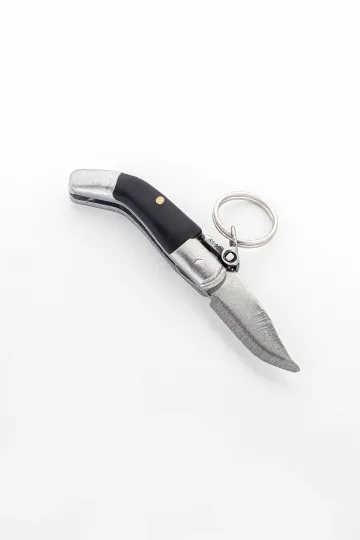
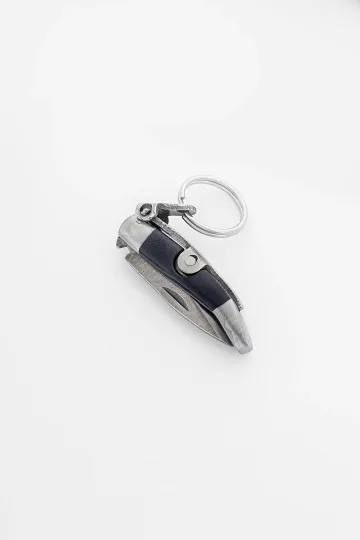
CAPAORA mini knife pendant
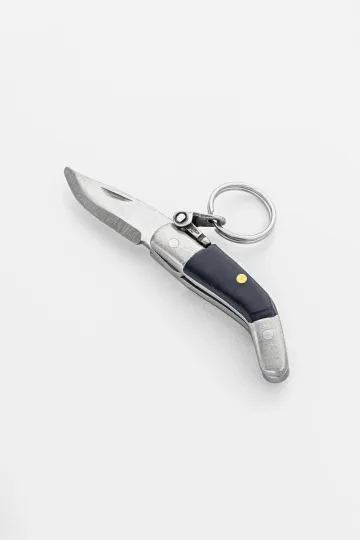
The 18th-century Spanish navaja in miniature: 40 mm of stainless steel, a real folding mechanism and a Palanquilla lock that clicks. An affordable gift to remember.
Authentic · Ships from Spain · 14-day returns
Jewellery as Professional Identity
There is a difference between a piece worn "because it is pretty" and one that carries professional meaning. For a cook that difference is obvious.
Professional identity is how a person defines themselves through their work. For many cooks the kitchen is closer to a calling than to ordinary employment. There is a particular kind of person who thinks about food constantly: what to make, how to improve a recipe, which ingredient to use. For them a piece with a culinary symbol is a way of making that identity visible.
Symbol versus Decoration
A symbol-piece says something concrete about its wearer. A knife pendant says: "I work with a knife, the knife matters to me, it is part of who I am". An anchor pendant says: "I am tied to the sea or to seafood cookery". A laurel wreath: "I value mastery and its recognition".
This is no theatrical display. Most such pieces are worn under clothing or chosen to be so minimal that a stranger's eye barely notices them. The meaning is for oneself. A reminder every day, when you dress for the shift.
Jewellery and Career Progress
There is a pattern: the jewellery changes with the career. A young cook, the first steel, the first pendant. A sous-chef, something a little weightier, a wedding band if that has happened. A chef, something that sums up several years. A restaurant owner, a piece with the venue's name.
Each stage can have its own piece, not as a replacement but as an addition. To the first pendant, a second, engraved with the restaurant's date. To the smooth steel ring, a wedding band engraved inside. A history in metal and symbols.
Piercings in the Professional Kitchen: in Detail
A subject often sidestepped, yet relevant for many young cooks. In modern cookery schools, students increasingly arrive with piercings of various kinds.
Ear piercings: standard earrings in the lobes, practically no restrictions if studs are used. Tragus or helix piercings, the same. The key requirement: the piece must sit snugly and have no parts that can come loose.
Nose piercings: a small ring or pin. Many restaurants require it removed for the shift or a clear retainer used. The rule is not absolute and depends on the venue's policy.
Lip and frenulum piercings: most often required to be hidden or removed for the shift. The risk of a part coming loose is higher. Clear retainers are the standard solution.
Tongue piercings: on the working line most chefs remove these or use clear inserts. A metal ball on a tongue piercing is a potential risk, especially when tasting dishes.
An important practical point: retainers are a standard tool for anyone working a professional kitchen with piercings. They keep the channel open, remove visible metal, and satisfy most regulations.
Leave your email, we'll send your discount code. No spam, unsubscribe anytime.
The code arrives by email, valid on your first order.
Jewellery from the Team: Gift Culture in the Professional Kitchen
A professional kitchen is a team environment. The brigade works in close quarters, under constant pressure, against hard service deadlines. From that grows a particular team culture.
A piece given by the team is a powerful gesture. This is not the office party with mugs and cards. It is something personal, something the wearer will have on them every day.
A gift to the chef from the brigade: for a birthday, a career anniversary, the opening of a new place. A knife pendant engraved with a name or date, something only those shown it will see. A few signatures on the back of the pendant, if the size allows.
A gift to an apprentice from a mentor: the tradition of passing on knowledge through an object. A knife is too loaded (by some superstitions a gifted knife "cuts" the relationship). A knife pendant or a simple engraved ring continues the tradition without reproducing it literally.
A gift on leaving the team: when a cook moves on or opens their own place. A piece with the symbol of shared work, a memory of the team that stays with the person.
Paired pieces for sous-chef and chef: two identical pendants or rings, a symbol of partnership. One style, one idea, two people. A rare and memorable gesture.
Jewellery and Occupational Safety: What Is Not Obvious
Food safety is the most obvious argument against jewellery in the kitchen. But there are occupational-safety arguments that come up less often.
Mechanical risk: rings on the fingers when handling heavy equipment. If a ring catches between a finger and the handle of a heavy pot, or between a finger and a surface during a fall, that is a risk of injury. A smooth thin ring is safer than a wide or bulky one.
Heat risk: metal jewellery heats up. Working with searing pans, hot steam, an oven, brief heating of metal against hot surfaces. It usually passes quickly, but the risk is worth knowing.
Electrical risk: in rare cases (servicing electrical equipment, industrial kitchens) metal jewellery creates hazards. For professional cooks this is an unlikely scenario, but in industrial-scale food production the aspect is considered.
Degloving risk: a ring caught in moving equipment is one of the most serious scenarios. Once snagged, a ring can strip the skin clean off a finger. That is precisely why on the hot line with professional equipment rings come off entirely. Here occupational safety outweighs hygiene.
Caring for Jewellery with Regular Cooking
If a piece is regularly present in the kitchen, its care regime differs from the standard.
316L steel: the most low-maintenance. After a shift, wipe with a dry cloth. Once a week, rinse in warm water with neutral soap and dry. Matt steel needs almost no care.
14-18K gold: a grease film from food builds up faster while cooking. A weekly gentle clean with soapy water and a soft toothbrush keeps it looking right. Once a month, a polishing cloth.
925 silver in a working kitchen: with regular contact with sulphur-rich foods, clean once a week. Method: foil plus hot water plus baking soda. Five minutes and the tarnish lifts. This method is safe for silver without stones or enamel.
After working with fish or seafood: rinse the piece immediately, before the smell sets into the micropores. For steel and gold, just water. For silver, add a drop of washing-up liquid.
The Uniform and Jewellery: How They Work Together
The chef's jacket is workwear. It is a professional costume with its own history and rules. The high collar, the double row of buttons, the dense fabric, each element has a function. Understanding this helps you think about jewellery correctly.
The jacket collar: the most closed-off zone. It is what hides the chain. The high standing collar of the traditional jacket is the ideal "safe" for a pendant. The pendant lies on the chest, unseen, does not swing when you lean over, risks nothing.
The cuffs: a risk zone for jewellery. Any bracelet or ring under the cuff creates a problem when washing hands, the water does not reach the necessary places. This is one argument against bracelets beyond their contact with work surfaces.
The apron over the jacket: an extra layer of protection. Some kitchens wear a long apron over the jacket. It covers the front, making a little extra volume under the jacket possible (a slightly larger pendant) without the risk of it falling out past the collar.
Headwear and earrings: the toque or cap covers the ears partly. A stud under the toque is practically invisible. When pulling the toque over the ears, make sure the stud does not catch on the fabric.
Off-Duty Uniform: Changing and Jewellery
Most professional cooks change before and after the shift. That ritual is a practice of its own. Jewellery not allowed in the kitchen goes into the locker. What is allowed goes straight on or stays.
Some chefs deliberately separate two jewellery wardrobes: a "work set" (steel, plain ring, studs) and a "dress set" (silver, gold with stones, drop earrings). This is a professional approach that lets you wear everything you love, just at the right moment.
Special Formats: Pastry and Baking
The pastry kitchen has its own peculiarities with jewellery. Sugar, chocolate, caramel: materials that cling to jewellery and wash very poorly out of any gaps.
For pastry chefs the rule is stricter than for hot-line cooks in one respect: a ring with any relief will almost inevitably "take" caramel or hot chocolate into the setting. A smooth ring is the only sensible option.
Earrings: studs, yes. Everything else, no. A caramel thread pulled over a mirror glaze should not drift toward an earring.
For fans of chocolate workshops and home baking: take jewellery off when working with caramel and tempered chocolate. Not because it is dangerous, but because chocolate in a ring setting is a specific cleaning job.
The Knife as Chief Tool and Chief Symbol
A conversation about jewellery for cooks is impossible without a conversation about the knife. The knife is the tool. It is the first thing a new cook buys themselves. It is the last thing an experienced chef will leave behind in the kitchen. It is the object given more attention in a professional kitchen than any other.
The First Knife as a Rite
In most cookery schools the first knife is an event. There is a tradition (in some schools in France and Japan) of a first lesson in knife work. The student receives a knife, learns how to hold it, how to care for it. From that moment the knife is part of a professional identity.
A first chef's knife is usually a 20-25 cm blade. It will do 80% of the work. Its material: most often stainless steel (of various compositions, including grades close to 316L), sometimes high-carbon steel.
A Parallel: the Same Steel
316L stainless steel in jewellery is literally the same class of material as a high-quality kitchen knife. Different objects from one technological family. A 316L knife pendant is not a metaphor but a literal material link: what lies in the jacket pocket and what lies in the sheath on the belt are made of the same kind of steel.
For a cook who understands the materials of their tools, this is not a marketing argument, just a fact. The knife they work with and the pendant they wear belong to one metal family.
Japanese Knives and the Jewellery Context
The Japanese knife tradition is a cultural layer of its own. A Japanese knife is a work. Smiths from centuries-old dynasties. Limited runs. VG-10 stainless steel, hagane, Damascus of many layers. Knives passed down as inheritance.
In that context the knife pendant is jewellery, more a statement that the knife is an object of respect as well as a tool. Japanese jewellers make miniature replicas of traditional knives in silver and steel precisely with that idea.
The Knife in European Jewellery Traditions
Spain, France, Germany, Italy, each country has its own knife tradition. The Spanish navaja from Albacete. The French Laguiole knife. The German Solingen blade. The Italian knife from Maniago.
Each tradition gave rise to its own jewellery: miniature replicas, pendants in the shape of characteristic blades. To wear a pendant reproducing the form of a particular tradition's knife is to belong to that tradition. A Spanish cook with an Albacete navaja pendant wears the history of their country.
How to Choose a Piece: a Practical Checklist for a Cook
Choosing jewellery for someone who works in a kitchen rests on more than aesthetics. Here is a practical checklist.
1. Define the wearing context
- On a professional working line, only permitted formats
- Off the line, at home or in culinary content, more freedom
- Both contexts at once, choose what suits the stricter one
2. Pick the metal for the task
- Frequent handwashing plus a working line: 316L steel
- Formal events and off duty: 14-18K gold
- Home cooking with willingness to maintain: 925 silver
- Allergy to all metals: titanium
3. Check the form for safety
- No protruding elements that can catch
- No gaps where food can lodge (stoned rings, no)
- Earrings do not hang below the lobe
- The chain does not pass the collar when you lean over
4. Check the fastening
- The chain clasp is secure and does not undo itself
- The earring back is firm and does not come loose
- The pendant is fixed to the chain with no risk of slipping off
5. Assess ease of care
- How often will it need cleaning?
- Are there protrusions where grime will collect?
- Can it be cleaned without special products?
6. Is there a personal meaning?
- A piece worn only because it is pretty comes off sooner
- A piece with a story (a date, an engraving, a symbol of the trade) is worn for years
- For a cook: a knife, laurel, the date of a career event, speak precisely about the person
7. Does the scale match the occasion?
- A diploma gift: modest, functional, engravable
- A Michelin-star gift: weighty, in a noble metal, engraved
- A restaurant-opening gift: named or carrying the venue's name
This checklist works both for yourself when buying and for choosing a gift for someone else.
Send a friend a discount code, they save on their first order.
Jewellery at Service: the Final Appearance
A separate topic: jewellery during the final plating of a dish and when meeting guests in the dining room. Here the kitchen's rules soften, but an aesthetic of its own appears.
A chef who steps into the dining room to talk to guests is the visual representative of the restaurant. Here jewellery is already part of the venue's image. A few seconds after leaving the kitchen, drawing a pendant chain out from under the collar, more than one professional chef has done it.
Jewellery "for the room": a little more visible than for the kitchen. A knife pendant interesting enough to become a talking point. A wedding band, the context of "a person with a history, a family, roots". Together they build an image.
Cookery Schools and Jewellery Traditions
The world's cookery schools, Le Cordon Bleu, the CIA (Culinary Institute of America), Alain Ducasse Education, the Basque Culinary Centre, have their own traditions, including around jewellery.
At Le Cordon Bleu, the first session explains the rules of uniform and jewellery: all according to HACCP. This regulation enters professional upbringing from day one. A student who arrives with rings and bracelets reveals ignorance of the rules. A student with no jewellery (or the right jewellery) understands the context.
In Japanese cookery schools the tradition is stricter still: the uniform must be flawless, including the absence of unnecessary detail. Yet a gift to a student from a master is often precisely a small object with professional meaning, worn not in the kitchen but in life.
In American culinary programmes the emphasis is on practicality: the FDA Food Code is studied in the first semester, and the jewellery rules are part of that course. Students sit a food-safety test in which jewellery appears as a topic.
The First Piece of a Culinary Career
Many chefs remember their first "culinary" piece, the one they received or bought themselves at the start of a career. Usually something modest but with a story. A simple steel ring. A knife pendant. Studs with a small symbol.
Such a piece is often worn for years. It becomes a witness to the career: the first star, the first own restaurant, the first apprentice. The metal wears, the engraving deepens. The piece takes on a look that cannot be bought, only earned.
Buying it as a gift? Each one arrives ready to give.
 A branded Zevira box and a little card come with every order.













Seasonality in the Kitchen and Jewellery
A professional kitchen lives by the rhythm of the seasons: the menu changes, and so do the working conditions themselves.
The summer kitchen: heat, sweat, open windows, a higher ambient temperature. 316L steel does not change its behaviour in these conditions; it stays stable. Silver tarnishes faster in summer sweat. Gold is neutral. A pendant under the jacket on a hot line becomes warm, normal for any metal.
The winter kitchen: hot steam, the temperature contrast on stepping outside, intensive work with hot stocks and baking. A metal piece heats up on contact with steam, but briefly, without damage.
A pastry kitchen in summer is a special hell. Working chocolate demands precise temperature control, and the room has to be cool. Here the conditions for jewellery are better, but the strictness of the contamination requirements does not change.
Jewellery on the Banquet Line
The banquet line is a special format. They cook a great deal, fast, for a large number of guests. Conditions are stricter, control is higher. On the banquet line of a large venue the jewellery requirements are usually the strictest: a plain ring, studs, everything else off.
But after the banquet, when the chef steps out to take a bow, jewellery is appropriate. That is the moment a professional appears as a person rather than as part of a production process.
FAQ
Can you wear jewellery in a professional kitchen?
Some, yes; most, no. A plain wedding band with no stones is allowed under most regulations. Small stud earrings are usually fine. A chain under the jacket, hidden from contact with food, is a working option. Anything with stones, relief, or hanging elements, and bracelets on the wrist, no.
Why is jewellery in the kitchen dangerous?
Two kinds of risk. Physical contamination: an element of the piece or the piece itself can fall into the food. Microbiological: in the gaps of jewellery (under stones, in notches) bacteria collect that are not removed by ordinary handwashing.
What is a "food-safe" metal?
A metal that does not react chemically with food, does not corrode on contact with products, and releases no toxic compounds. 316L stainless steel is the benchmark. Gold, yes. Silver, with caveats (tarnishes, but is not toxic). Copper and untreated brass, no.
Can you wear a knife pendant in a professional kitchen?
If the knife pendant is hidden under the jacket on a short chain, yes. If it is visible and can swing when you lean over, no. As a piece for off-shift wear or culinary content, a knife pendant is an excellent choice, a direct symbol of the trade.
Which is better for a cook: silver or steel?
For wear on a working line, 316L steel. It does not tarnish from sulphur-rich foods (onion, eggs, garlic), survives frequent washing with soaps, and is hypoallergenic. Silver is beautiful but demands extra care in the kitchen because of its reaction with sulphur.
How do you choose jewellery for a cooking blog?
Function plus aesthetics. Thin rings with no bulk, a small knife pendant on a short chain, studs. Metal, stainless steel or gold. Minimal volume, maximum meaning. The piece should be visible on camera but not pull attention from the food.
What to give a cook on graduating from cookery school?
A 316L steel knife pendant engraved with a date or name. A simple smooth ring in steel or gold with an engraving. Hypoallergenic steel studs, a practical choice for someone entering a professional kitchen. The gift should be practical and wearable in a working environment, or carry a direct symbolic meaning of the trade.
How do you care for jewellery if you cook a lot at home?
Take pieces off when working with onion, garlic, eggs, fish: these are the main sources of the sulphur that tarnishes silver. If you wear steel or gold, wash with soap after cooking. If silver, wipe after contact with sulphur-rich foods. A regular clean every 2-4 weeks keeps the look.
Can you wear a wedding ring with a stone in the kitchen?
Under most regulations, no. The FDA Food Code expressly permits only a plain wedding band with no stones. A stoned ring creates a contamination risk in the gaps of the setting. A practical solution: keep a smooth duplicate in steel or gold for work, and wear the stoned ring off the line.
Is there a special piercing for cooks?
There are no special standards, but the best option for a kitchen professional is flat retainers or clear inserts that hide the piercing. For the ears, ordinary studs rather than drops. The main principle: no elements that can come loose.
What do chefs themselves think about jewellery?
Most professionals take the matter pragmatically: jewellery is your own business, and the kitchen is a workspace. What creates no risk is fine. What does, stays at home. Symbolically meaningful pieces (a wedding band, a personal pendant) are worn discreetly; that is not a concession but a professional style.
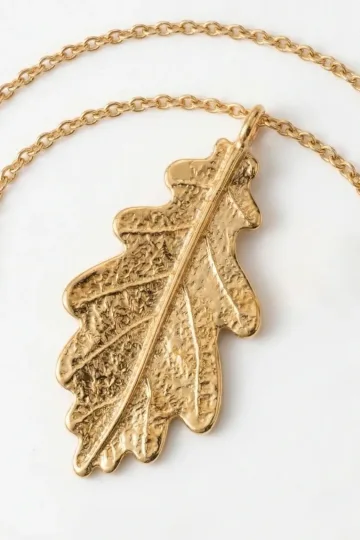
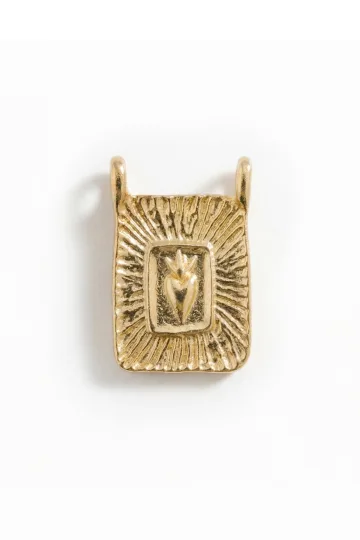
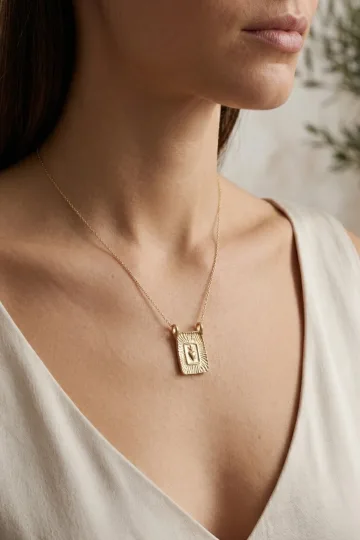
Wear the symbol, don't just read about it. These are in stock:

Material as Philosophy: Why 316L Steel for a Cook Is No Accident
There is something fitting in a person who works with knives of a certain steel wearing a piece of the same steel. This is not a marketing invention but a material consistency.
A cook chooses a knife not by the beauty of the handle. They choose by the quality of the steel, the balance, the ability to hold an edge, the behaviour in different conditions. It is a pragmatic choice grounded in knowledge of the material.
The same criteria apply to jewellery. 316L steel is chosen not because it is the done thing but because it withstands what the trade demands. Frequent washing. Contact with food. Aggressive cleaning agents. Sweat. Steam. All the conditions of a professional kitchen.
To choose a piece of the same steel as the tools is to apply knowledge of the material in practice. A person who understands what makes stainless steel good for knives also understands why it is good for jewellery in kitchen conditions.
The Same Principle for Gold
Some chefs choose gold. Gold is chemically inert, the same reason gold tableware and utensils were used in cooking historically. Gold does not react with food, does not tarnish, does not corrode.
To choose a gold wedding band for the kitchen is also a professional choice grounded in the material's properties. 14K gold is hard and practical. 18K gold is more beautiful but softer. A chef who understands the difference in knife-steel alloys will understand the difference in gold karats too.
Material Consistency as a Personal Stance
A piece chosen by the same criteria as the working tools is a stance. Not "I liked it in the shop" but "I chose a material that matches the conditions". It is the stance of a professional who thinks about things systematically.
For a gift to a chef this is an argument too: by choosing a piece in 316L steel or 14K gold, you give not a pretty trinket but an object chosen with an understanding of the recipient's working conditions.
Conclusion
A professional kitchen is a place where many rules are obvious and practical. Jewellery here obeys the same logic: food safety first, then practicality, then personal meaning.
But that does not mean "no jewellery at all". A smooth ring in gold or steel, a chain with a knife pendant under the jacket, stud earrings, all of it is a real cook's set. Small, considered, with meaning.
The knife as a symbol of the trade has existed in jewellery for several centuries. A chef with a knife pendant of the same steel as their working tools is no kitsch and no random choice. It is a thing that says everything needed about a person without a word.
A young cook with a first piece of their own. A chef with twenty years' experience and a pendant under the jacket. A food blogger with a thin ring on camera. Three different stories, three different contexts, and one shared idea: what you wear speaks of who you are.
CAPAORA, a knife pendant in 316L steel. The same grade as a professional cook's knife. Engraving to order. For chefs, cooks, and anyone who loves the shape of a blade.
About Zevira
Zevira makes jewellery in the artisan tradition of Albacete, Spain, a city with a centuries-old tradition of knife-making. Our CAPAORA series was created right here: a 316L stainless-steel knife pendant, a plain wedding band, jewellery with culinary symbolism.
What you will find with us for a kitchen professional:
- The CAPAORA knife pendant in 316L steel, more here
- Plain wedding bands in steel, silver, and gold
- Stud earrings in hypoallergenic steel
- Engraving to order: a date, a name, a motto