Jewellery for a breastfeeding mum: what to wear while nursing
The first thing a baby in your arms does is pull mum's chain or earring toward its mouth. It grabs at a ring, hooks a pendant, twists a stud. So jewellery for the nursing months gets chosen by safety, not by looks: what cannot be yanked off, swallowed, or scratched against soft skin.
Breastfeeding means months, sometimes years, of close skin-to-skin contact. The baby lies against your chest, its face inches from your neckline, hands roaming over your collarbones, mouth searching for anything within reach. In that closeness any piece stops being an accessory and turns into an object the baby studies with mouth and fingers. Which means you choose it by a different set of rules.
This article covers what a nursing mum can wear without worry: which pieces are risky around an infant, which materials are baby-safe, what teething necklaces and nursing necklaces actually are, how to keep them clean, and when you can return to your usual studs and chains. No medical advice about lactation, only common sense and practice.
Why the nursing period calls for a different approach
Pregnancy and breastfeeding are two separate stories, and the jewellery question differs in each. During pregnancy the main issue is the mother's own physiology: fingers swell, a ring stops sliding off, earlobes feel heavier. That is the period when the focus sits on the mother's body, on jewellery during pregnancy.
Once the baby arrives, the focus shifts. Now there is a small person beside you who pulls everything toward its mouth, grips with a fierce little fist, and has no idea that a shiny thing is not a toy. Your jewellery becomes part of its sensory world whether you planned for that or not.
An infant explores the world with mouth and hands
The grasp reflex in a newborn is one of the strongest it has. A finger placed in a baby's palm gets squeezed so hard you cannot pull it straight out. That same grip lands on a chain, an earring, the edge of a ring. By three or four months deliberate grabbing kicks in, the baby reaches for bright objects and carries them to its mouth, because the mouth is its primary tool for understanding things. Anything that shines and sways on mum's neck moves straight into the crosshairs.
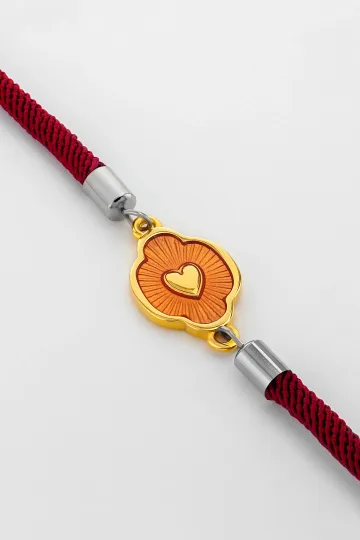
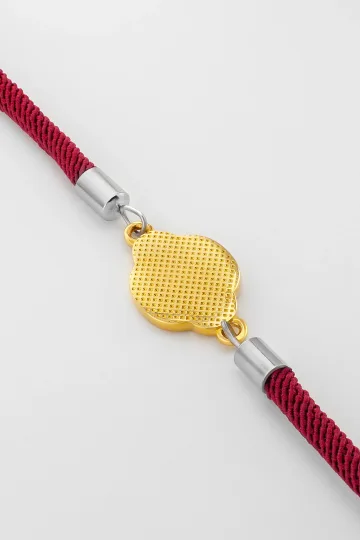
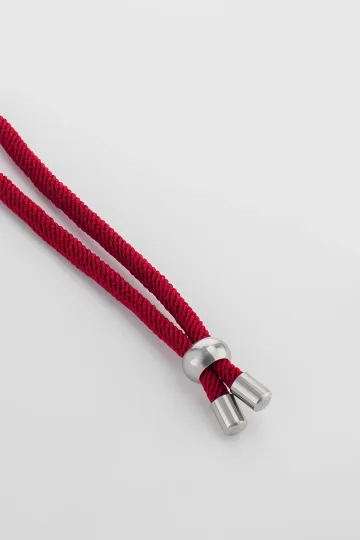
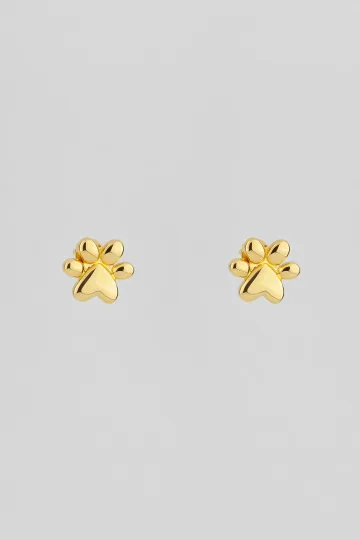
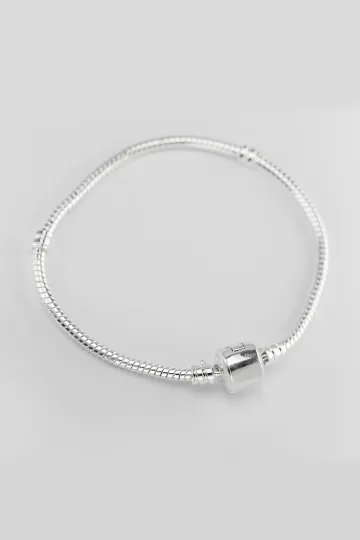
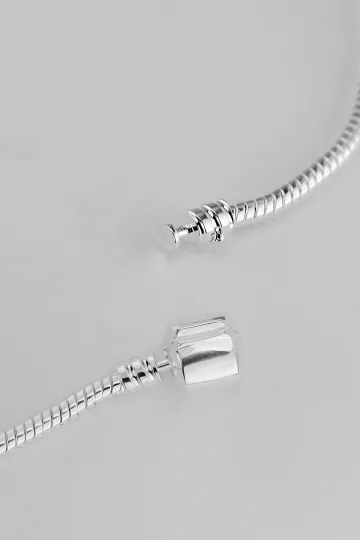
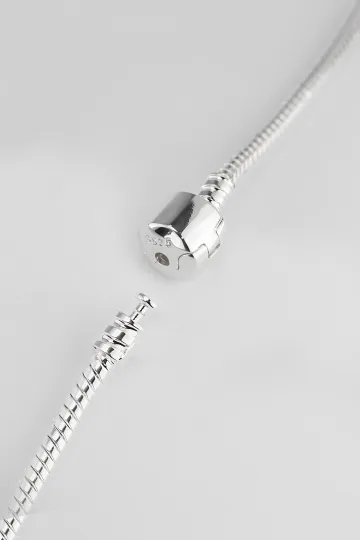
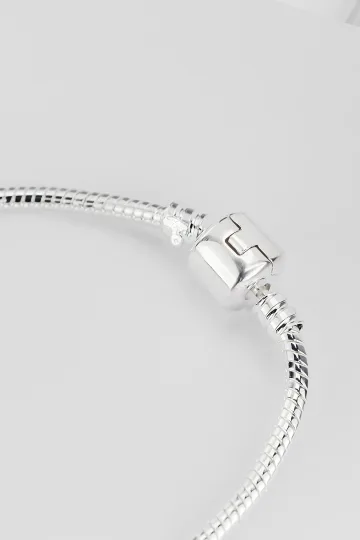
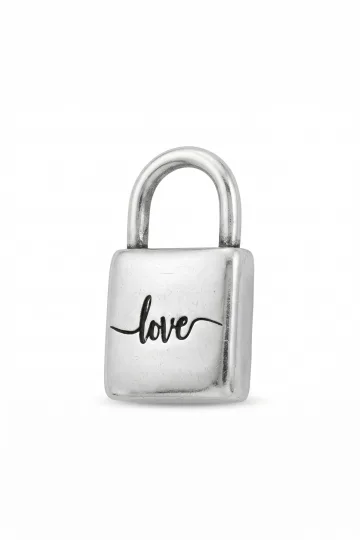
Wear the symbol, don't just read about it. These are in stock:


This is not naughtiness or stubbornness, it is normal development. A mum's job is not to train the baby out of reaching, it is to remove from arm's reach whatever could do harm.
A curious detail: a newborn first reaches for whatever moves and stands out against the background. A glinting earring against your hair, a swinging pendant on pale skin, a flickering ring catch a baby's eye sooner than a toy in the cot. Your jewellery quite literally draws an infant's attention more strongly than a purpose-bought rattle, because it is right there, in motion, and high in contrast.
A baby's skin is more delicate and reacts to metal
A newborn's skin is thinner than an adult's, its protective barrier still forming. What feels smooth to an adult can leave a scratch or a patch of irritation on baby skin. The edge of a ring, the rim of an earring, an uneven join on a pendant all press against the baby's face and body during feeds. Add sensitivity to metals: nickel, a frequent culprit behind adult allergies, can trigger irritation in an infant even faster. We cover this metal in detail in the guide to nickel allergy and nickel-free jewellery.
A small part is a risk, not a decoration
A tiny pendant, a loose bead, a detachable charm, a poorly set stone: decor for an adult, a potential hazard for an infant. Babies under one carry everything to the mouth, and a small part that has snapped or come loose ends up where it should not. This is the single thought that outweighs any aesthetic. If a part can break off and fit inside a baby's fist, it has no place near the baby during feeds.
What teething necklaces and nursing necklaces are
New mums quickly discover a whole category of jewellery invented specifically for life with an infant. It goes by several names: nursing necklace, breastfeeding necklace, teething necklace. In essence it is a string of beads worn by the mum and explored, and chewed, by the baby.
What they are for: keeping the baby's hands busy
When a baby is at the breast or in your arms, its free hand is forever searching for something. With nothing suitable to hold, it finds mum's hair, an earring, a chain, a mole, and pulls, twists, and tugs. A nursing necklace gives that hand safe work: large smooth or textured beads that are pleasant to roll, squeeze, and gnaw. The baby stays occupied, and mum stops flinching at every tug on her ear.
The "nursing" in nursing necklace points straight at the feeding posture. Held against the chest, the baby reaches for whatever sits in front of its eyes. The beads land right on that line and absorb all the interest.
Teething and a safe bite
Around the half-year mark many babies start teething, gums itch, and the baby chews on absolutely everything. A teething necklace made from the right material gives the gums a surface to bite on. It does not cure or speed up teething, and questions like that are worth raising with a paediatrician. But handing the baby a clean, safe object instead of a random corner or the TV remote is a sensible move.
An important caveat: the teething necklace stays on the mum. It is jewellery worn by an adult while the baby explores it under supervision. Putting the necklace on the baby's neck or leaving the baby alone with it is never safe, since any cord around an infant's neck is dangerous.
What they are made from: silicone, wood, textile
Three materials gathered this whole category around them, because each is safe for a bite in its own way.
Food-grade silicone is soft, flexible, washable, unbothered by saliva, and kind to gums. It is the most common material for teething pieces. We go deeper into how this material behaves in the breakdown of rubber and silicone in jewellery.
Wood brings a pleasant texture and a natural weight. For teething pieces you want raw wood, or wood finished with a food-safe oil, never lacquer or paint, so nothing chemical reaches the mouth. Beech, maple, and juniper are common picks.
Textile and knitted beads (cotton, sometimes a knitted sleeve over a wooden core) add softness and a surface that feels warm to the touch. They are harder to wash but lovely to squeeze. They are often combined: a wooden core, silicone beads, fabric elements on a strong cord.
How safe nursing necklaces are built inside
Good nursing necklaces hang on a strong reinforced cord, not a thin fishing line or a chain. A well-made design includes a safety clasp: either a breakaway closure that opens under a hard pull (so the cord cannot press against an adult's neck), or a fabric tie with no metal parts near the baby's mouth. The beads sit tight, neither sliding along the cord nor bunching up. If the necklace has any moving elements, they should be fixed firmly enough that baby chewing cannot pop them loose. Before each use, give the necklace a quick once-over: any fraying on the cord, any bead that has worked loose, is the knot still sound? A worn-out teething necklace gets retired without a second thought.
How nursing necklaces differ from ordinary beads
The difference lies in how carefully they are designed for baby contact. Ordinary beads are made to be looked at, nursing necklaces are made to be chewed and squeezed. Hence the large bead size (a small bead a baby could bite off and swallow), soft or smooth surfaces with no sharp edges, an inert material, a strong cord, and a safety clasp. Decorative beads of glass, coated metal, or tiny pendants are wrong for this role, however similar they may look.
A dangly earring by a baby's ear lasts until the first yank. Take it off yourself, before the little one does it for you.
How I style a nursing mum: putting the look together
Dozens of new mums have passed through my shoots and fittings, and the brief is almost always the same: stay yourself without fighting a baby's hand. Here is what actually works in the first year.
What should you wear out with the baby in your arms? I recommend the formula "one accent plus a smooth base". A large but snugly seated stud or a neat ear cuff on the cartilage gives the face expression, and nothing swings by the baby's ear. On top I add a short collar to the collarbones: it stays above the zone a baby at the breast reaches into. On the wrist I choose a smooth bracelet with no charms. You look put together, and there is nothing to tug.
Which earrings stay, and which go back in the box? I keep whatever hugs the lobe: a stud, a climber along the edge, an ear cuff on the cartilage. None of it makes a loop you can yank. Long danglers and big hoops I suggest shelving: a baby threads a finger through them and pulls along an arc, and that is the most painful tug for the lobe. If you want something bright, take a large but snug stud, the accent stays and the risk does not.
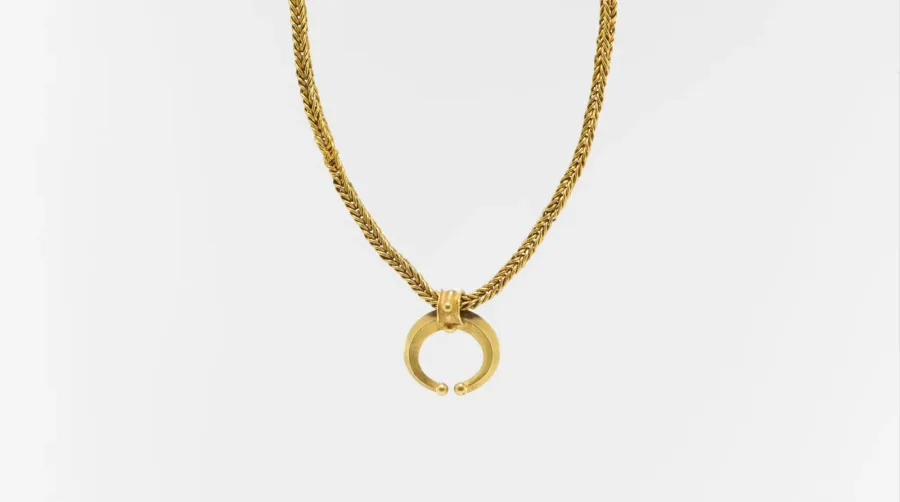
What chain length do you choose? I choose short, sitting close to the neck: a choker or a collar to the collarbones. That length leaves the baby's reach, and the pendant does not dangle by the face. Long sautoirs and opera chains I save for outings without the baby. And I check the strength: around an infant I recommend a solid anchor or curb link with a reliable lobster clasp, not a cobweb that tears in one move.
How do you fit in nursing beads without the look going childish? I split the pieces by role. The nursing beads do the work: the baby holds and chews them. A stud and a short chain serve the mum's look and stay off the baby's radar. A colour echo looks good: warm-toned wooden beads by a golden stud, graphite silicone by steel. I never hang two long strands at once, one set of beads plus a short collar reads cleaner.
When do you bring the favourites back? I go by the baby's behaviour, not the calendar. While it pulls everything to its mouth and grips with a fierce fist, I stay careful. The moment it starts to grasp "no" and is gentler with mum's neck, I bring favourites back in waves: first slightly longer earrings, then a mid-length chain, later moving pendants. And for a date or a party without the baby, wear whatever you like already now.

Turn on your camera, pick earrings, a pendant or a ring, and see the piece on yourself in real time.
Switch items in one tap.
Everything runs in your browser: no photo or video is ever uploaded.
Which pieces are risky around an infant
Now the specifics. Not every piece in your box is equally baby-friendly. Let us go type by type through what is best set aside during the nursing months and why.
Dangly earrings and large hoops
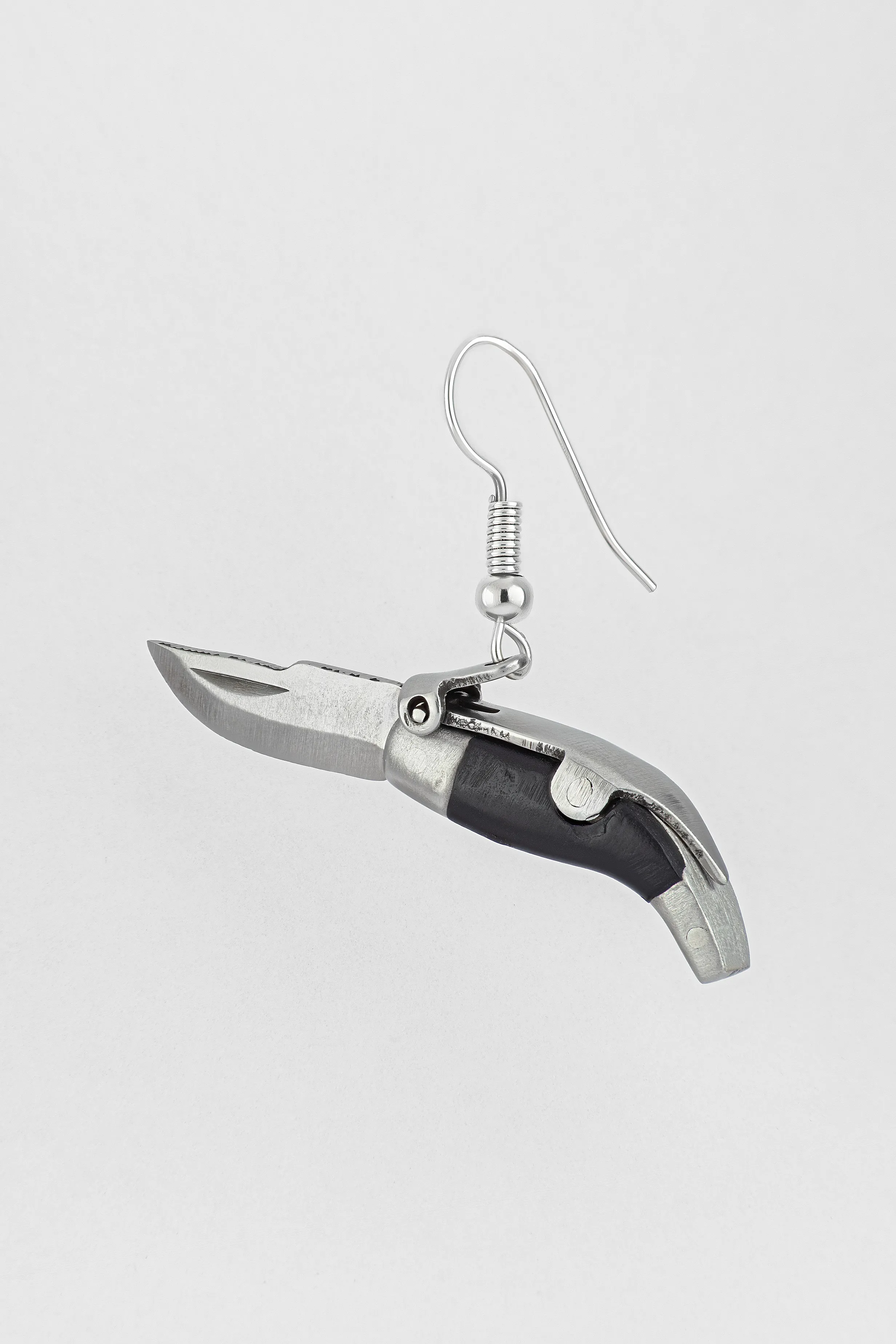
Dangly earrings, hoops, and long ear drops are the prime target for a baby's hand. A baby at the breast sits exactly at the level of mum's ear and grabs whatever swings and shines. A yank on a dangly earring means pain, and at worst a torn earlobe. Most mums take their long earrings off during the active grabbing phase, not over style but because they are tired of flinching.
Studs are safer, but they have a weak spot too: a baby can latch onto the stud itself and try to pull it out. A short, snugly seated stud with a reliable back beats a large or protruding one.
Chains and long pendants
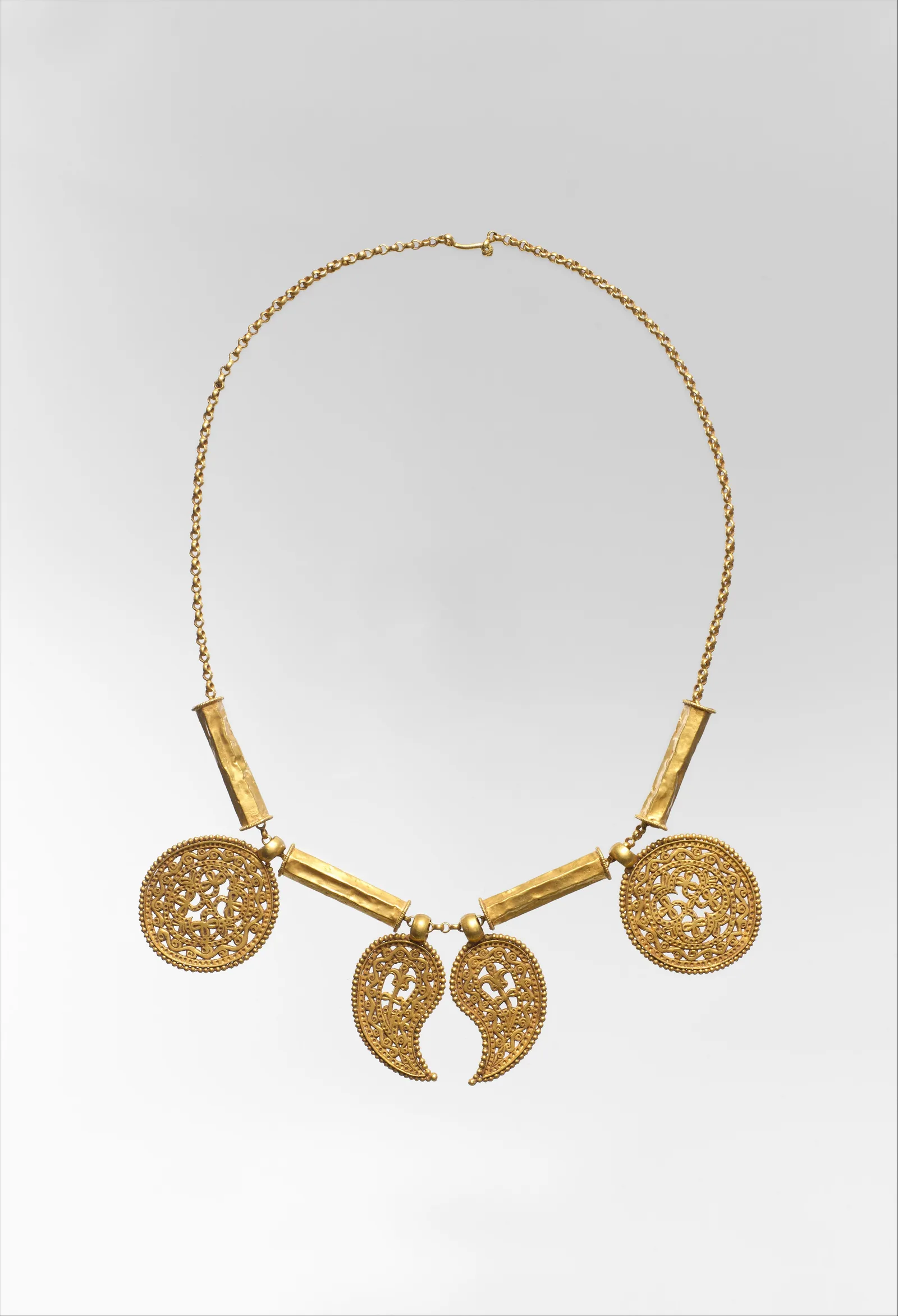
A chain on the neck sits right in the working zone of a baby's hands during feeds. A thin chain a baby breaks easily, and a snapped link or a small pendant can end up in its mouth. A long pendant dangles in front of the baby's face and invites the grab. For the breastfeeding period, chains are either taken off or swapped for short, sturdy ones, which gets its own section below.
Rings with edges and large stones
A ring is in constant contact with the baby: you hold the baby, adjust it, carry it around. A sharp setting edge, a high-set stone, the rim of the band all scratch delicate skin. Be especially watchful with rings whose stone sits in a tall claw setting: the prongs catch on clothing and skin.
Small pendants, charms, and fragile clasps
Any part that can come off moves into the risky category during infancy. Thin charms on a bracelet, tiny pendants, weak clasps, loosely set stones. If an element can detach and fit inside a baby's mouth, that is a choking risk. Bracelets hung with small dangling elements are best set aside for a while.
Bracelets and watches on the wrist
A nursing mum's wrist is constantly within the baby's reach: you support its head, hold it close, and its fingers land right on your bracelet. Rigid bracelets with sharp edges, a bangle whose clasp could pinch a tiny finger, bracelets with small charms are best removed. A plain smooth bracelet with no protrusions, or a soft fabric one, creates almost no risk. A watch with a metal band and a protruding crown is also worth checking for sharp edges.
Piercings and body jewellery
If you have a piercing in an area the baby can reach during feeds (a navel or eyebrow, say), bear in mind the baby may grab it. Large moving elements on such a piercing are sensibly swapped for small, snug ones during the active phase. It is the same logic as with earrings: anything that swings and sticks out near a baby's hand becomes a target.
Customer reviews
Zevira is a real jewellery shop. Genuine payments, deliveries and customer thank-yous.
🥰🥰🥰 gracias
Ok, ¡gracias! 🙂
Baby-safe materials for a nursing mum's jewellery
Safety is a question of more than shape, it is also composition. The baby pulls jewellery to its mouth and rubs its face against it, so the material has to be inert and hypoallergenic.
Food-grade silicone and rubber
Silicone leads on safety for teething pieces: soft, washable, it does not crumble and has no sharp edges. Quality food-grade silicone is chemically inert and releases nothing harmful on contact with saliva. Rubber is similar in softness and also handles moisture well.
Raw and oiled wood
Wood is safe if it is either left bare or finished with a food-safe oil, not lacquer or paint. Lacquer and enamel on a teething piece are out of the question, since the baby will gnaw the coating off. Choose dense woods with no splinters, sanded smooth.
Hypoallergenic steel and nickel-free titanium
For stud earrings and thin chains that stay on the mum, hypoallergenic surgical steel and titanium are a good choice. The key condition is no nickel in any meaningful amount. Titanium is fully bio-inert, the kind of metal used in implants. We compare metals by how they react with skin in the piece on brass, steel, and silver, and practical summer-friendly steel in the guide to steel jewellery for summer.
Silver and gold: noble, with one caveat
Sterling silver and high-purity gold are inert and safe in contact with skin, so studs and thin chains made from them can stay on the mum without worry. The caveat concerns not the composition but the shape and strength: silver is softer than steel, a thin silver chain snaps under a baby's tug more easily, and a ring with a high stone scratches just like any other. For metal near a baby, what matters is not the nobility of the alloy but the smoothness and reliability of the build.
What to avoid: lead, cadmium, and paint
Cheap costume jewellery of unknown composition is the chief risk. The paint and alloys of bargain pieces can contain lead and cadmium, toxic metals with no place where a baby is putting things in its mouth. The rule is simple: the closer an item gets to the baby's mouth, the stricter the demands on its composition. A teething necklace and nursing beads must be made from a trusted material, not some random market-stall cord.
How to check an unfamiliar piece
Before wearing an unfamiliar item near an infant, run through a short list. Run a finger along the edges and the clasp: does anything scratch or catch? Tug on the pendants and stones: is everything sitting tight? Look at the coating: is the paint or plating flaking, since a peeling layer ends up in the baby's hands? Confirm the composition, especially for costume jewellery: is there nickel, what is the metal coated with? If the answer to any of these gives you pause, set that item aside until the baby stops carrying everything to its mouth.
Earrings while breastfeeding
Earrings are a topic of their own, because they are hard to remove entirely (the piercing closes up) and the danger they pose is real.
Why dangly styles are best set aside
Dangly earrings swing exactly where a baby's hand reaches at the breast. The yank is painful, and a thin earlobe tears easily. Most mums move to studs intuitively within the first weeks, and that is the wise call. A word on large hoops in particular: a baby threads a finger through them and pulls, and that yank is the most dangerous for the lobe, because the load runs along an arc. The wider the hoop, the easier it is for the baby to get a finger in, so those are the first to be set aside for the active phase.
Short studs as the working option
A small, snug stud with a reliable back is the optimal choice for the nursing period. It does not swing, it is harder to grab, and it does not catch on the baby's clothing. Choose smooth styles with no protruding sharp elements and a good fastening, so the earring does not fall out if the baby does snag it.
Piercing hygiene and material
Since the earring stays in the ear around the clock, the material has to be inert: titanium, surgical steel, high-purity gold. A cheap alloy in the piercing of a tired, sleep-deprived mum is one more chance for irritation. And remember: a baby that grabs a stud may try to draw it to its mouth, so a reliable back matters more than looks.
If you want to wear something bold
The wish to look like yourself does not vanish when a baby arrives, and there is no need to give it up entirely. The answer lies in size and shape, not in giving up on beauty. A large but snugly seated stud, an ear climber running along the edge of the lobe, a neat ear cuff on the cartilage all add an accent while nothing swings or sticks out in a loop you could pull on. That keeps the look expressive and the ear safe.
Upload a photo of your pet, someone you love, or an object. We'll build a 3D model and hand-cast it in pewter.



Rings during the nursing period: take them off or not
Almost everyone wears a ring, and no one wants to part with their wedding band. There is no need to give them up entirely, you just need to understand the risks.
Scratches against the baby's delicate skin
The main problem with a ring is mechanical. A sharp edge, a high stone, the rim of the band scratch the baby's skin when you hold it, bathe it, carry it. If a ring has aggressive geometry, for the active phase it is sometimes swapped for a smooth band with no protrusions.
Hygiene: everything collects under a ring
A nursing mum washes her hands dozens of times a day. Moisture, soap, and cream residue linger under a ring, and bacteria thrive in that environment. A smooth ring is easier to keep clean than an openwork one with lots of nooks. Taking the ring off while bathing the baby and washing your hands is a sensible habit, and it cuts down on scratches too.
When a ring is best removed for a while
If your finger is still swollen after the birth and the ring sits tight, do not force the joint. We have a separate breakdown on what to do when a ring is stuck on a finger. For the active infant phase many mums move stone-set rings into the box and wear a plain band that does not scratch and washes easily.
A silicone ring as a temporary stand-in
If you want to keep the symbol of marriage but the sharp stones and metal get in the way, a soft silicone ring comes to the rescue. It does not scratch the baby's skin, does not catch, is no loss if dropped down the sink or forgotten after a bath, and on a hard snag it simply slips off rather than crushing the finger. Many mums wear one through the first year and bring the dress ring back when the baby is older. It also suits anyone who washes their hands often: silicone does not trap moisture and soap the way an openwork setting does.



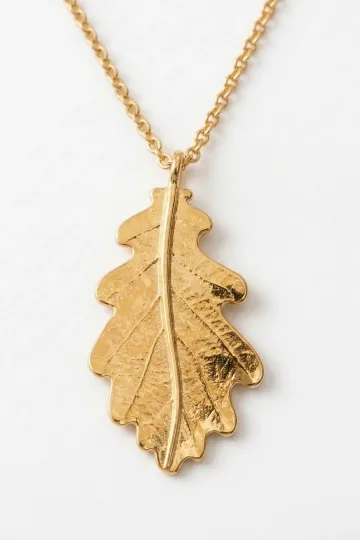
Chains and pendants: length, clasp, strength
A chain on a nursing mum's neck is constantly in the work of a baby's hands. There is no need to give it up entirely, but the choosing calls for a different approach.
Which length is safer
A long pendant dangles in front of the baby's face and provokes the grab. A short chain sitting close to the neck moves out of the baby's comfortable zone and provokes less. If you want to wear a pendant, choose a length where it does not hang straight into the baby's hands. A choker and a short collar to the collarbones are handier here than a long strand: they give a baby lying at the breast almost nothing to grab, since they stay above the reach of its hands. Long opera chains and sautoirs, by contrast, land right in a baby's fist, and those get kept for outings without the baby.
Strength against breaking
A thin chain snaps under a baby's tug, and a broken link and a small pendant are dangerous. If you wear a chain around an infant, take a dense weave that can withstand a tug, not a cobweb. An anchor or curb weave is stronger than an openwork one.
A reliable clasp
A weak clasp is the weak point of the whole construction. A lobster and a spring-ring clasp are more reliable than a simple hook. Check that the chain does not come undone on an accidental snag, otherwise it ends up in the baby's hands, and then its mouth.
Hygiene of jewellery the baby pulls to its mouth
Since the baby studies your beads with its mouth, they become a hygiene item, like a dummy or a teether.
How often to clean teething necklaces and nursing beads
Teething and nursing beads get washed regularly, on the principle of baby toys that touch the mouth. Silicone elements wash easily in warm water with a mild soap, after which they are dried fully. Wooden beads dislike water, so wipe them with a damp cloth and dry at once, never soaking. Textile parts are washed as they get dirty. The benchmark is simple: if the beads spent the day in a baby's mouth, wipe them in the evening, and give them a proper wash every few days. During cold season and teething, when there is plenty of saliva, clean more often. Wooden teething pieces must not be boiled or left in water: wood swells, cracks, and starts to splinter, which is itself a hazard. Silicone, by contrast, takes such treatment in stride, though soap and water are plenty for it too, with no harsh products.
What to wash with, and what not to
Harsh chemicals, alcohol in large amounts, and scented products have no place on a teething piece: all of it reaches the baby's mouth. Warm water and a mild soap are enough. After washing, rinse thoroughly so no soapy film is left behind.
Metal jewellery needs care too
Chains and earrings a baby grabs are also worth wiping more often than usual. Skin oils collect under clasps and in links, and the baby then touches them with its hands. A soft cloth and, when needed, a dedicated metal-polishing wipe keep a piece in order.
Where to keep it: handy yet out of the baby's sight
It helps to keep a nursing mum's daytime set apart from the dress box: a couple of smooth studs, a sturdy short chain, clean nursing beads. That way you are not sorting through everything each time to decide what is safe. Keep these items somewhere easy to reach but out of the way of a growing baby: a top shelf, a closed box. A baby that already crawls and pulls to standing will find earrings left on the nightstand faster than you can turn around.
Leave your email, we'll send your discount code. No spam, unsubscribe anytime.
The code arrives by email, valid on your first order.
Jewellery as a sensory toy for the baby
Nursing necklaces have a pleasant side effect: they work as a developmental toy, right at hand in the very minutes when the baby is calm and focused.
Textures and shapes
A smooth silicone bead, a ribbed ring, rough wood, soft textile side by side give the hand and mouth a different response. The baby rolls them, compares, remembers. It is natural sensory practice that needs no separate toy.
Colours and contrast
A newborn first makes out contrast, and only later colours. Beads alternating dark and light, in rich shades, catch the eye and hold attention longer than a single tone. For the very young a contrasting pair of colours works better than a motley rainbow.
Sound and movement
Some nursing necklaces are made with a quiet rustling or rattle element. A light sound when rolling the beads adds another channel of perception. The key is that the rattling part is sealed firmly inside the bead and cannot come loose.
Why it works precisely during feeds
At the breast the baby is relaxed and focused, its attention narrow and calm. That is the best moment for quiet study of an object: the hand rolls a bead, the eyes follow the contrast, the gums try the texture. The nursing necklace is right at hand exactly when the baby is ready to explore it, and it asks nothing of mum beyond what she is doing anyway. A toy that is always with you and never falls on the floor is worth a great deal in the first year.
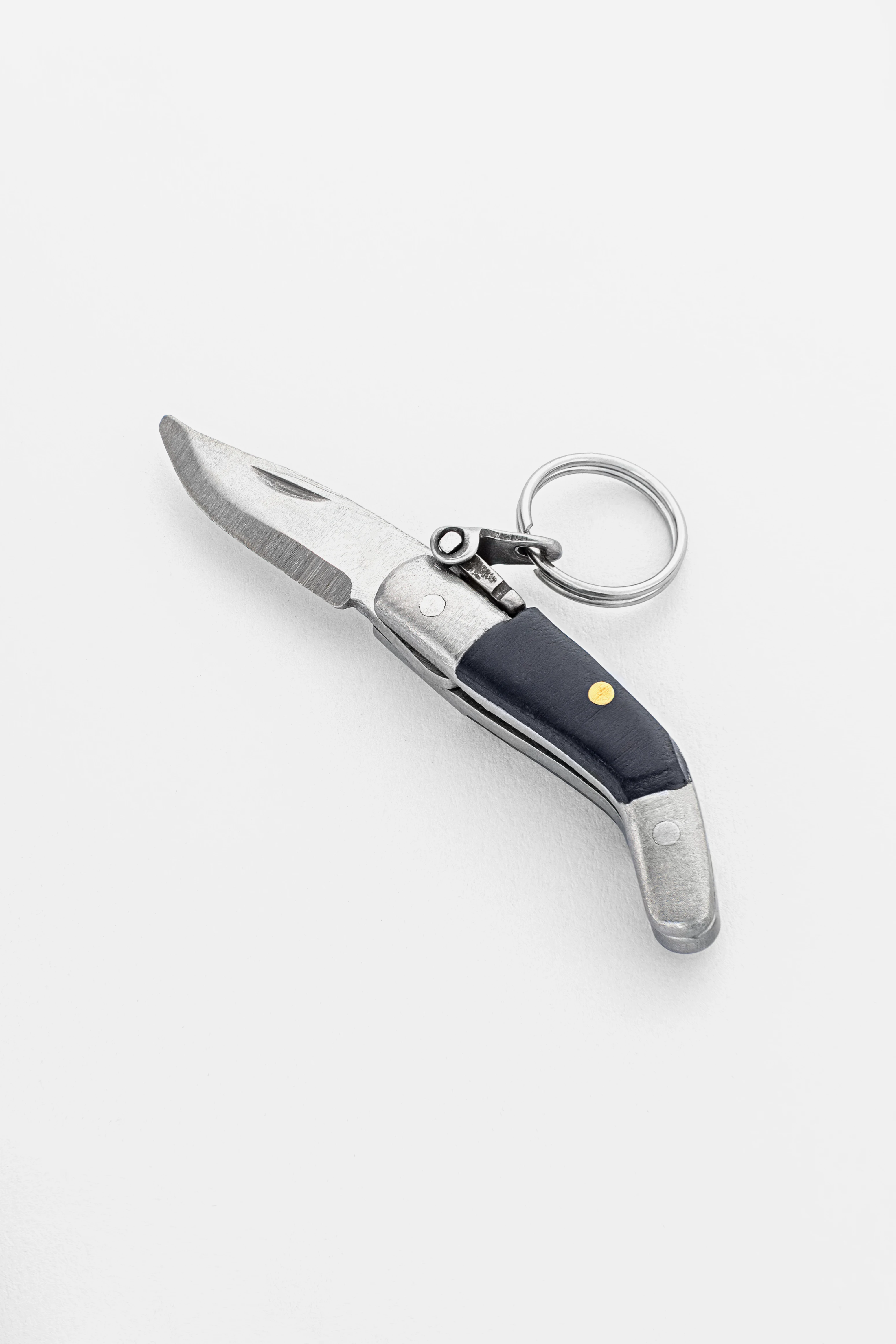
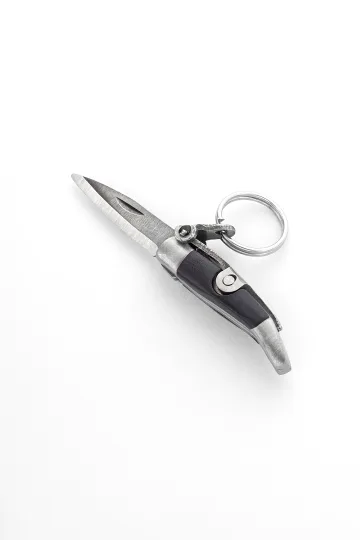
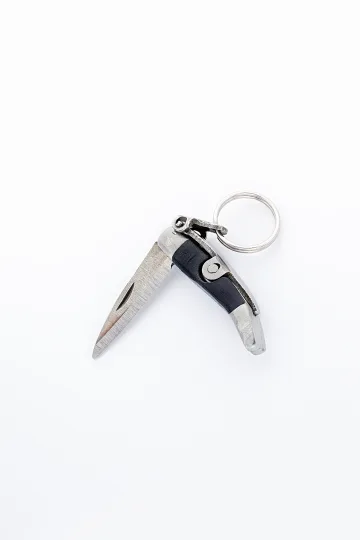
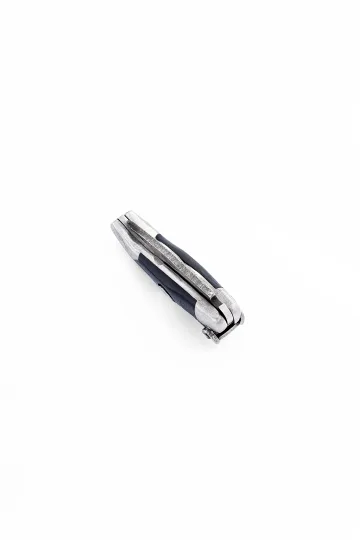
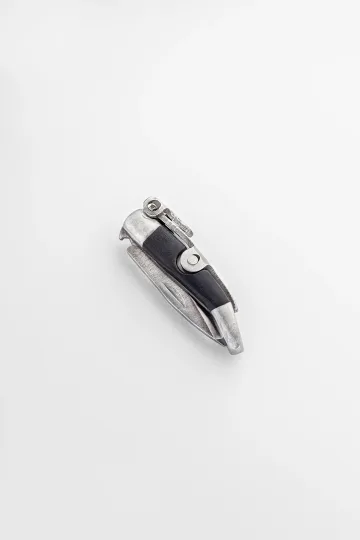
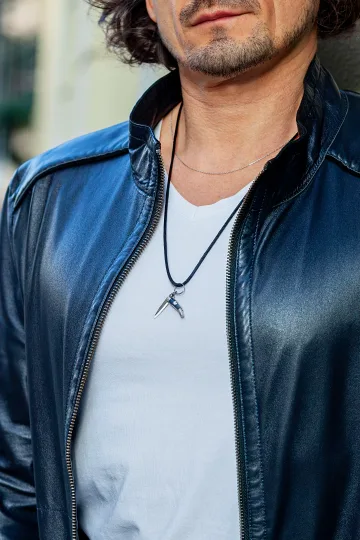
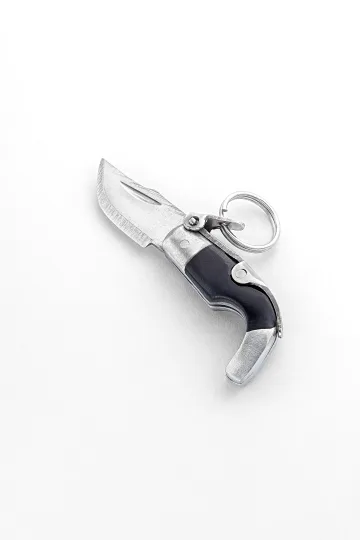
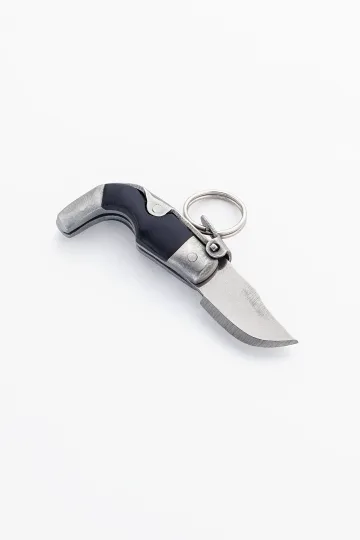
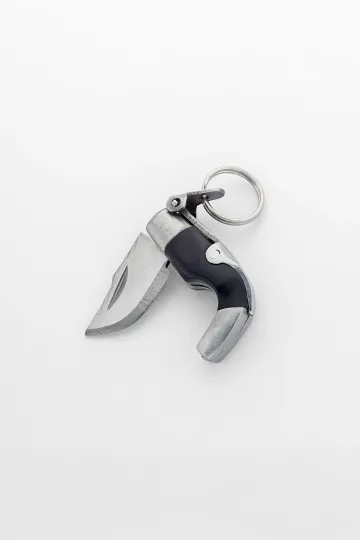
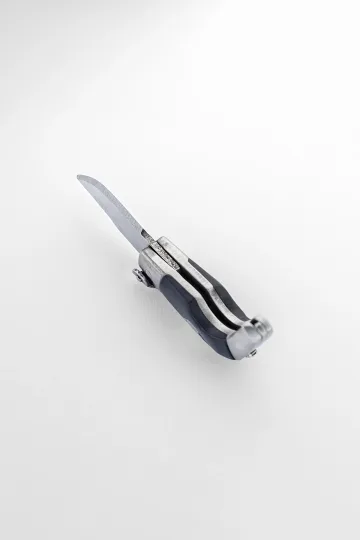
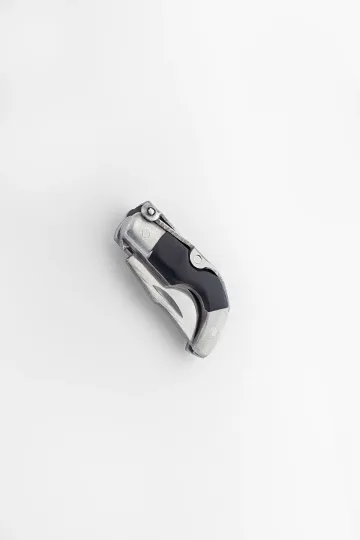
CAPAORA mini knife pendant
The 18th-century Spanish navaja in miniature: 40 mm of stainless steel, a real folding mechanism and a Palanquilla lock that clicks. An affordable gift to remember.
Authentic · Ships from Spain · 14-day returns
A gift for a nursing mum: what is fitting and safe
Loved ones often want to delight a new mum, but they either gift something for the baby or something she cannot wear around it. Let us sort out what hits the mark.
Nursing beads and teething necklaces as a practical gift
Quality nursing beads in a trusted material are that rare gift a mum will genuinely use every day. It is a thing for her, not for the baby, and yet it works in their shared hands. A safe bet if you want to give something with meaning.
A piece that can wait
A lovely chain, drop earrings, a stone-set ring make a wonderful gift, but honestly: mum will be able to wear it later, when the baby is older. It is a gift-as-promise, a symbol of returning to herself. We explore the theme of a keepsake piece for a child's birth in the article on a push present for a new mum.
Safe bets for any taste
If in doubt, choose what a mum can wear both now and later. Short studs in an inert metal, a smooth ring with no sharp stones, a sturdy mid-length chain with a reliable clasp. Such things will not have to be shelved for a year, they fit into life with an infant and stay in use afterward. An engraving with the birth date or the baby's name turns a plain piece into a keepsake while adding neither sharp edges nor small parts.
What is best not to give
Long dangly earrings, thin cobweb chains, rings with sharp stones will not suit a nursing mum right now, however beautiful they are. Cheap costume jewellery of unknown composition all the more so: all of it will end up within the baby's reach. And do not give baby jewellery in place of the mum's: this is her occasion, and the gift should be for her, not one more thing for the baby.
Myths about jewellery and breastfeeding
Plenty of superstition surrounds nursing, and jewellery did not escape it. Let us sort it out without mysticism and without medical advice.
Does silver or metal affect the milk
No. A piece on the neck, in the ear, or on the finger has no link to the production or makeup of milk. Milk is physiology, not the magic of a metal. A silver chain does not make more milk or less, a copper ring does not change its taste. Any claim of that sort is folklore, not fact.
Do you need to take off all your gold while nursing
No. High-purity gold is inert and safe in contact with skin. You take pieces off not because of the metal, but because of the mechanics: so the baby does not yank an earring or scratch itself on a ring edge. A smooth gold piece with no sharp elements stays on the mum without trouble.
Does jewellery spoil lactation through energy
This belongs to the realm of belief, not facts. No energy mechanism by which beads or a ring would affect feeding has ever been confirmed. If a piece brings joy to a tired mum, that is good in itself, and no further justification is needed.
When you can return to ordinary jewellery
The good news: the limits are temporary. They tie not to the fact of nursing itself, but to the baby's age and behaviour.
Go by the baby's behaviour, not the calendar
There is no fixed date. Go by how the baby behaves. While it actively pulls everything to its mouth and grips with a fierce fist (roughly up to a year or a year and a half), caution is justified. When the baby begins to understand the word "no", reaches for the mouth less, and is gentler with mum's neck, you can gradually bring back the favourite earrings and chains.
Return gradually
You need not wait for some milestone to put everything on at once. First the short studs come back, then a mid-length chain, later dangly earrings for an outing without the baby. For dates, celebrations, and meetings without the baby you can wear anything already now, since the limit applies only to times of close contact.
The nursing period is a pause, not a renunciation
The favourite box has not gone anywhere. The months beside an infant are a short pause on the scale of a piece's life. A stone-set ring, long earrings, a thin chain will wait their turn, and for now the role passes to plain smooth styles and nursing beads.
A return to yourself through a piece
For many mums the first long earring, or a favourite ring put on again without a thought for the baby's hand, becomes a small marker. It is a sign that the sharp infant phase is behind, that there is time for yourself again, that a woman feels herself to be more than only a mum. So a piece set aside for the nursing months often comes back with a special meaning, as a mark of a stage passed. In that sense the pause works in the piece's favour: it waits for its return and is met not as an ordinary thing but as a sign of a new beginning.
Send a friend a discount code, they save on their first order.
Facts that surprise
A few things about jewellery and motherhood that rarely get a second thought.
Nursing necklaces were invented not for beauty but out of self-defence. The idea came from mums themselves, worn down by children yanking earrings and winding chains around a fist. A handy object for a baby's hand turned out to be the solution, and the decorative side came later.
A newborn's grip is a gift from ancestors who clung to a mother's fur. The strength with which a baby squeezes mum's finger or a chain is an evolutionary inheritance: primate young clung to the mother so as not to fall. Your earring simply fell under an ancient reflex.
Across many cultures mothers were given jewellery in particular after a birth. Gold pendants in India, silver bracelets in the Middle East, special necklaces in a range of African traditions. The idea of marking motherhood with something wearable and lasting is far older than modern gift-giving.
A newborn sees the world almost black and white. Colour vision unfolds gradually, which is why high-contrast beads draw an infant more than soft pastel. What looks to an adult like a dull pairing of black and white is, to a baby, the most noticeable thing of all.
Silicone reached baby products from medicine and high-demand engineering. Before it became the material of teething pieces, it proved itself where inertness and resistance to sterilisation matter. That is why it stands up so well to a baby's mouth and constant washing.
Juniper for teething pieces was no random pick. The wood is dense, gives no splinters, and has a natural resistance to moisture and microbes, which is why wooden teething pieces are often made from it. Wood is a living material, and each bead differs a little in grain, which adds character to the piece.
The habit of taking off a ring before sleep and feeding is older than any hygiene guidance. For centuries women set rings aside during housework and infant care simply out of practicality, to avoid snagging and scratching. Modern hygiene only confirmed what grandmothers did by experience.
Frequently asked questions
Can a nursing mum wear earrings? Yes, ideally short studs with a reliable back in an inert material (titanium, surgical steel, high-purity gold). Dangly earrings and large hoops are sensibly set aside during the active grabbing phase: a baby at the breast snags them easily.
What are nursing necklaces and why are they needed? They are beads worn by the mum and explored with hands and mouth by the baby. They keep the baby's free hand busy during feeds, give the gums a safe surface during teething, and work as a sensory toy. They are made from food-grade silicone, baby-safe wood, and textile.
Is it safe to put a nursing necklace on the baby? No. Nursing necklaces stay on the mum. Any cord around an infant's neck is dangerous, and the baby must not be left with a nursing necklace unsupervised. The baby explores it while held by an adult.
Do silver or metal affect breast milk? No. Jewellery has no link to the production or makeup of milk. It is physiology, not a property of the metal. Pieces come off not because of any effect on lactation but out of safety for the baby.
Do you need to take off a ring while feeding? Not constantly, but rings with sharp edges and high stones scratch a baby's delicate skin, so they are often swapped for a smooth band. Taking a ring off while washing your hands and bathing the baby helps with hygiene and fewer scratches.
Which material to choose for teething beads? Food-grade silicone (washable, soft, inert), baby-safe wood with no lacquer or paint, or textile. The key is no lead, cadmium, or toxic paint in the composition, since the baby takes the beads to its mouth.
How often should nursing necklaces be washed? Regularly, like baby mouth toys. Silicone is washed in warm water with a mild soap and dried fully, wood is wiped with a damp cloth without soaking, textile is washed as it gets dirty. Harsh chemicals and fragrances are not used.
When can you return to ordinary jewellery? When the baby stops actively pulling everything to its mouth and gripping with a fierce fist, usually after a year or a year and a half, with the exact date down to the baby's behaviour. It is convenient to return gradually: first short studs, then chains, later dangly earrings. For outings without the baby there are no limits already now.
In short
A nursing mum's jewellery gets chosen by one rule: whatever is near the infant must be safe. Dangly earrings and thin chains give way to short studs and sturdy links, stone-set rings to a smooth band, and the role of a toy for the baby's hand passes to nursing necklaces of silicone, wood, and textile. The material must be inert and free of toxic chemistry, because the baby studies everything with its mouth. Jewellery has no effect on milk, that is a myth. And most of all: the limits are temporary, and the favourite box will wait until the baby is older.
Smooth studs, sturdy chains, hypoallergenic steel and titanium, soft materials, and symbolism with history.
Buying it as a gift? Each one arrives ready to give.
 A branded Zevira box and a little card come with every order.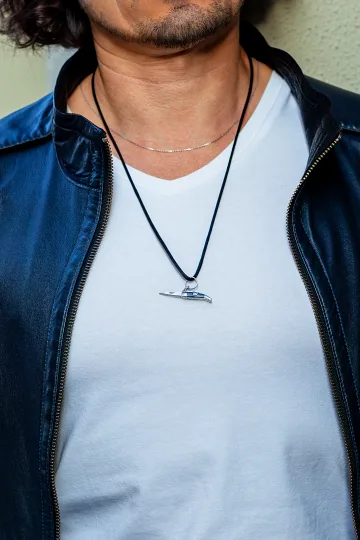




About Zevira
Zevira is a Spanish brand from Albacete, a city of metalworking masters. We love pieces with character that stay easy to live with: inert nickel-free metals, clean shapes, symbolism with history. If you are choosing jewellery for a special period, look into our piece on jewellery during pregnancy, and for skin-friendly metal see the comparison of steel, brass, and silver.