Can you sleep in jewelry: an honest breakdown by type, material, and common sense
Every night you spend eight hours rubbing a chain against your pillow, pressing a ring into a swollen finger, and packing earring backs with skin oil. Multiply that by 365. Most breakage and tarnishing happens in bed, not out on the street, because nobody is watching.
The short answer: sometimes sleeping in jewellery is fine, and sometimes it is absolutely off the table, and the difference is not about your laziness but about the type of piece, the metal, the stone, and the specific situation. A thin wedding band with no stones will survive the night without a scratch. A long chain on an infant is a question of life, not comfort.
In this breakdown we go through every type of jewellery and every material separately, because there is no single universal rule. We cover hygiene, the real danger to children, myths like "you can never take off a wedding ring," and we give you a simple system: what to remove no matter what, what you can leave on, and how to finally stop losing earrings under your pillow.
The general answer: yes, but context decides everything
What the answer actually depends on
Sleeping in jewellery is not a flat "yes" or "no" but four variables: the type of piece, the material, your specific night (swelling, restless sleep, a child nearby), and the condition of the piece itself. A thin smooth band behaves nothing like a ring with a stone on tall prongs. A stud in a healed ear is not the same as a fresh piercing. So an honest answer always starts with the question "which piece exactly, and in what situation."
What really happens to a piece overnight
Eight hours is a long shift. The piece rubs against the pillowcase and the headboard, warms from your body, collects sweat and skin oil, and snags on fabric with every turn. None of this will destroy a piece in a single night. But sleep is not one night, it is thousands in a row. It is the repetition, not the force, that wears off plating, loosens stones, and stretches a pearl strand.
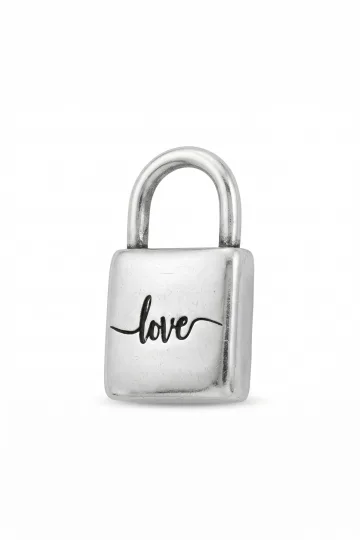
Wear the symbol, don't just read about it. These are in stock:






Why "I've slept in mine for years and it's fine" is only half true
Often a person sleeps in the same simple piece and concludes that you can sleep in anything. But they sleep in a smooth silver band with no stones, the most durable option there is. Put on hoop earrings, a pendant on a thin chain, or an engagement ring with a diamond for the night, and the statistics change. "Mine's fine" usually means "I happen to wear the safest thing."
The main principle: the simpler the piece, the calmer the night
Remember the scale. Smooth metal with no stones and no moving parts sleeps peacefully. Stones, prongs, thin chains, earring posts, soft organic stones like pearl and opal are candidates to take off. When in doubt, take it off: putting a piece in a box is cheaper than a repair or a new earlobe.
How your sleep style changes the answer
The same set of jewellery behaves differently depending on how you sleep. Someone who sleeps still on their back risks less: earrings are not pressed into the pillow, hands lie free. Someone who tosses all night, sleeps on their stomach, tucks a hand under their head, snags on everything repeatedly. If you are a restless sleeper, treat nighttime jewellery more strictly than advice written for the average person.
The cost of a mistake in money and nerves
Do the honest math. A ring cut off your finger means a trip to the jeweller and a re-shaping. A loosened setting means a re-set and the risk of losing the stone entirely. A torn earlobe means a doctor. Worn-off plating means the piece needs replacing. Taking a piece off and putting it in a box costs nothing and takes three seconds. The savings clearly do not favour sleeping in jewellery.
Earrings: the most common source of trouble overnight
Why earrings suffer most of all
You wear earrings right at the surface you sleep on. Your head presses on the ear all night, the ear presses on the earring, the earring presses on the pillow. That is direct mechanical compression of thin metal under the weight of your head for hours. No other piece ends up in such a bad spot.
Studs: posts bend and backs clog up
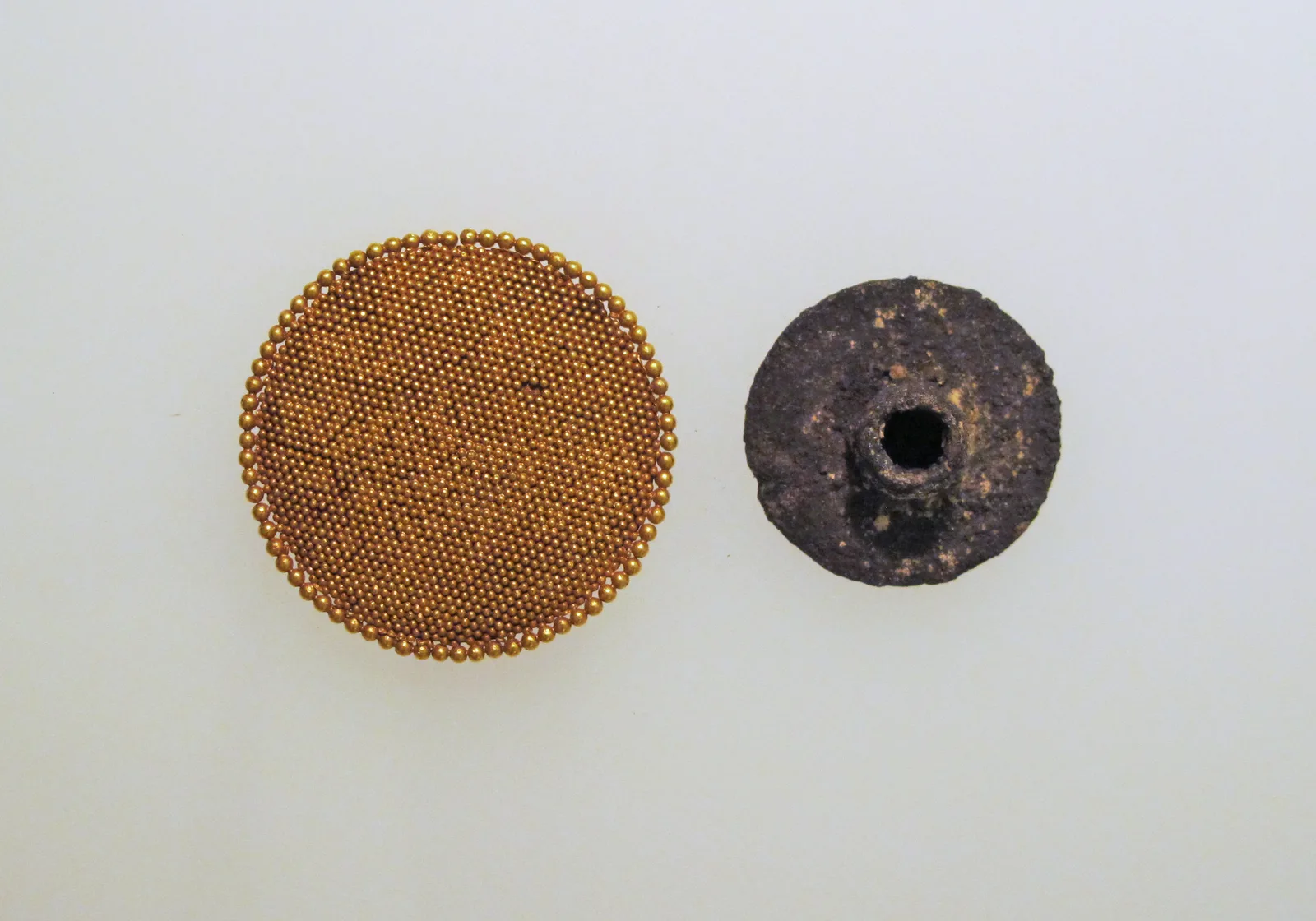
Studs seem safe, since they are small and sit tight. But the thin post bends easily overnight under the weight of your head, and the butterfly back digs into the skin behind your ear and collects skin oil. In the morning you push a slightly bent post back through the hole, widening and injuring the channel. You can sleep in studs less often than you think, and only if they are genuinely small.
Hoop earrings: they deform and snag
Hoops are the worst option for sleep. They stick out, catch on the pillowcase and on hair, and their round shape easily turns into an oval under the weight of your head. The clasp on a small hoop breaks because you yank the earring loose from your hair in your sleep. Take them off, always.
Heavy drops and long earrings: the lever works against you
The longer and heavier the earring, the longer the lever pulling the lobe down and sideways with every turn of your head. The drop snags on fabric, gets stuck, and the entire load lands on a single point at the piercing. That is a direct route to a torn or stretched lobe. Heavy earrings are for the day, not the night.
The risk of a torn or stretched lobe
The nastiest scenario is not a broken earring but an injured ear. The earring catches on the pillowcase, you turn sharply in your sleep, and the metal slices through the lobe or stretches the hole. A torn lobe heals slowly and often needs stitching. This is not a rare horror story but a typical reason people end up at cosmetologists and surgeons.
Ingrowth and irritation of the piercing channel
When the back is constantly pressed against the skin behind your ear, the channel cannot breathe, it gets damp and inflamed. In bad cases the skin grows over the back, and the earring literally ingrows. If the ear around the earring is red, painful, or moist by morning, that is a signal to take it off at night and let the channel air out.
Lever-backs, studs, or huggies: what survives the night
The type of fastening decides a lot. Lever-back earrings stick out in a loop at the back and snag on the pillowcase especially eagerly. A stud with a back is flat, but the back digs into the skin. Huggies and hoops are round and deform. If you are going to leave anything on overnight, make it the flattest and smallest stud, not a protruding fastening.
When an earring leaves a mark or aches by morning
Your main diagnostic tool is the morning. If there is a dull ache in the ear, the back has imprinted on the skin, the lobe is puffy, or there is a moist trace, a night in those earrings does not suit you. The body gives feedback immediately, and ignoring it means stockpiling a problem until the channel stretches or inflames.
Sleep in your diamond and you'll be fishing it out of the sheets by dawn. Take it off, no arguments.
What to keep on at night: a stylist's take
Hundreds of pieces have passed through my hands on shoots, and I settle the nightly "keep it or take it off" question by one rule: at night, whatever doesn't snag and doesn't press wins. Here is what actually works, case by case.
What can stay on overnight without any fuss? I recommend smooth metal with no stones and no moving parts: a thin plain wedding band, a flat stud in a healed ear, a short close-fitting chain at the throat. These don't catch on the pillowcase and don't lose shape under the weight of your head. Anything with prongs, a high-set stone or a long drop, I suggest taking off.
How do you swap out a favourite pendant you hate to remove? I choose a short chain in a sturdy weave over a thin cable one. It sits at the throat, has no time to twist into a knot and doesn't drag the clasp sideways. Keep the heavy pendant on a long chain for the day, and for night reach for a light medallion on a short cord, or take it off altogether.
What about an engagement ring you don't want to remove? I suggest being honest about the morning. A stone on high prongs catches the sheet and scratches, and the prongs bend with every snag. A plain matching band next to the engagement ring solves it: the engagement piece goes in the box, and a simple band stays on the finger if you need the ritual of never taking it off.
What do you pack so you don't lose earrings on someone else's windowsill? I recommend building a compact night set in advance: a pair of flat studs, one smooth ring, a short chain. All sturdy, all smooth, nothing with soft stones. Add a small case to your wash bag. That way the evening ritual holds up and nothing stays behind in the hotel room.
What should you choose if you're a restless sleeper? For anyone who tosses and sleeps face-down, I suggest the strictest approach: take everything off for the night, except maybe one smooth ring. If you want to keep something on, choose steel or titanium over soft gold and silver: they don't bend under the weight of your head and don't darken from sweat. A shape with no protrusions, a clasp with no loops.

Turn on your camera, pick earrings, a pendant or a ring, and see the piece on yourself in real time.
Switch items in one tap.
Everything runs in your browser: no photo or video is ever uploaded.
Rings: the night, swelling, and a pinched finger
Your finger swells in your sleep, and the ring digs in
At night the body is horizontal, fluid distributes differently, and by morning fingers swell slightly. A ring that sits loose during the day can dig in by morning. This is especially noticeable in the heat, after salty food, after alcohol, or during pregnancy. Getting a dug-in ring off in the morning can become a whole operation with cold water and soap.
When a ring gets stuck for good
If the finger swells badly and the ring is narrow, the situation moves past mere discomfort. The pinched finger turns blue, blood flow is cut, and in extreme cases the ring has to be cut off at an emergency room or a jeweller. For people with swelling, kidney problems, or heart problems, sleeping in a tight ring is a real risk, not a whim.
Pressure on vessels and numbness
Even without serious swelling, a tight ring squeezes soft tissue and small vessels all night. In the morning the finger is numb, an indented mark remains, the skin under the ring is paler. Constant compression is not what your fingers need for eight hours straight.
The stone scratches your partner and snags the bedding
A ring with a stone on prongs is a small tool with sharp edges sitting on your hand. In your sleep you can scratch yourself, scratch your partner, catch a prong on the sheet or on hair. Prongs bend, the stone loosens. An engagement ring with a high stone setting is the first candidate to take off before bed.
A smooth band with no stones: the exception
If there is one ring you can sleep in without caveats, it is a plain smooth band with no stones and no relief: the classic wedding band. No prongs means nothing to bend, no stone means nothing to scratch with. The only remaining question is swelling. If your finger is not pinched by morning, this ring survives sleep more peacefully than any other.
Who absolutely must take rings off at night
There are groups for whom sleeping in a ring is not a matter of taste. Pregnant people, people with swelling, kidney or heart problems, those taking medication that retains fluid, all swell more than usual by morning. They should always take off a narrow ring. The same goes for those who work with their hands or exercise in the morning: a ring should slide off easily after sleep, not get stuck.
Several rings on one finger: double the risk
Sets of several thin rings on one finger rub against each other in your sleep, scratch, and rotate. Soft gold wears down at the contact points, thin bands deform. Such stacks look great in the daytime, but it is wiser to take them off entirely for the night so they do not saw at each other for eight hours straight.
Customer reviews
Zevira is a real jewellery shop. Genuine payments, deliveries and customer thank-yous.
🥰🥰🥰 gracias
Ok, ¡gracias! 🙂
Chains and pendants: tangling, breakage, and danger to children
A chain twists and snaps
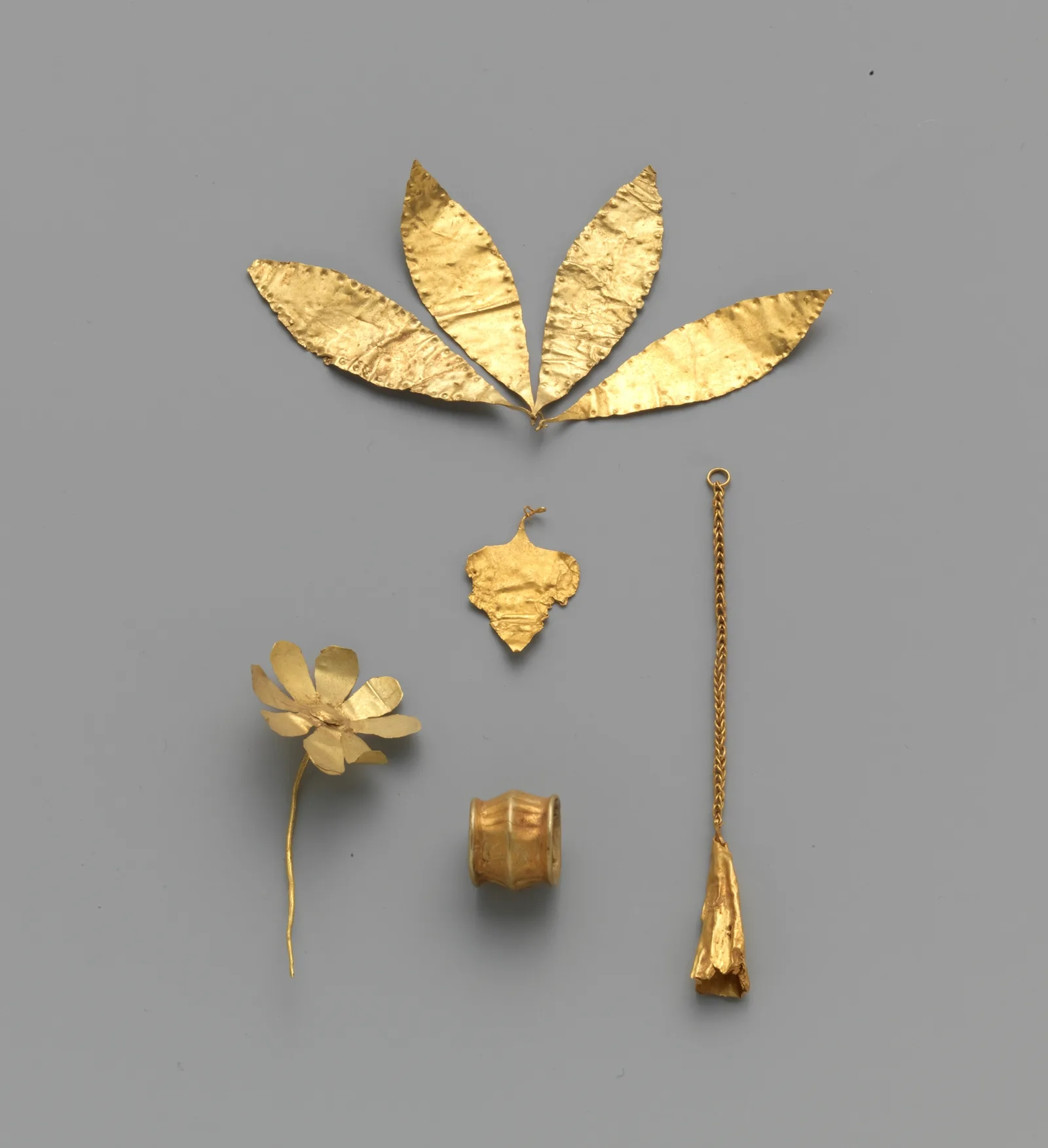
A thin chain lives its own life in your sleep: it twists, folds into knots, slips under your shoulder and stretches when you turn. Weaves like snake or rope chain kink permanently when twisted and lose their shape. A thin cable chain simply snaps at its weakest link. Then in the morning you pick the knot apart with a needle, stretching the links.
The pendant snags and hammers the clasp
A pendant adds weight and a snag point. It falls behind your back, ends up under your body, pulls the chain sideways, and the whole load goes onto the clasp. The lobster clasp and the spring ring are the most fragile parts of a chain, and they are exactly what breaks first when the pendant gets caught in the pillowcase.
A long chain can strangle, and that is not a metaphor
A long chain can wrap around your neck in your sleep or catch on a protrusion of the bed. For an adult, the worst case is a fright and a mark on the neck. For a child, and especially an infant, it is a deadly danger, and here there is no room for "usually nothing happens."
Why infants and small children must not sleep in chains, no exceptions
This is the one point in the article with no caveats. Infants and small children must not sleep in any chains, cords, beads, or pendants. A chain can tighten around the neck, a pendant or bead can get into the airway. A child cannot free themselves. No "protective" bead or cross is worth that risk. For the night, take everything off, no exceptions. For more on what children wear and how, see the piece on jewelry for children.
What to do with a "sleeping" chain if you really want to keep it on
If keeping a particular pendant on matters to you, choose a short chain with a tight, sturdy weave that sits at the throat and does not have room to twist. But the honest move is to take it off and set it beside you. An intact chain in the morning beats an unpicked knot and a cracked clasp.
Bracelets: clasps, snags, and dented metal
A bracelet catches on everything
Your wrist moves the most in your sleep: you tuck your hand under the pillow, under your head, under your cheek. The bracelet catches on the pillowcase, on hair, on the edge of the blanket. Each snag is a yank on the clasp and the links.
The clasp is the weakest point
A bracelet clasp is built for calm wear, not nighttime yanks. Lobster clasps bend open, box clasps loosen, the chain opens up, and in the morning you find the bracelet in the sheets. Rigid bracelets and bangles press on the wrist if the arm is bent under the body.
Charms on a bracelet: extra risk
A bracelet with charms turns into a cluster of snag points in your sleep. Each charm is a separate point to catch on and to lose. Charms unscrew, get lost in the bedding, scratch the skin. Such bracelets come off at night, no question.
Watches and fitness bands: a separate conversation
Sleeping in a watch to track sleep has become a habit, but the rigid case presses on the wrist if the arm is bent under the body, and the strap chafes and traps moisture. The skin under the strap cannot breathe overnight, builds up sweat, and gets irritated. If you wear a sleep tracker, give your wrist a night off it at least now and then, and clean the strap.
A bracelet on thread or elastic overnight
Bracelets on elastic cord or fishing line stretch and weaken overnight from the constant tension as your hand moves. Elastic loses its spring, thread frays against the beads. One day such a bracelet snaps in the middle of the night, scattering beads across the bed. Thin strung bracelets are candidates to remove.
Upload a photo of your pet, someone you love, or an object. We'll build a 3D model and hand-cast it in pewter.



Piercings: don't touch a new one, a healed one is usually fine
A fresh piercing: you must sleep in the jewellery
With a new piercing the logic flips. You do not remove the earring or barbell for weeks and months while the channel heals, otherwise the hole quickly closes or narrows. You sleep in it carefully: with a new ear piercing, on the other side or on your back, with a travel pillow that has a hole, so you do not press on the piercing. Here removing it is exactly what you must not do.
A healed piercing: most often you can leave it
Once a piercing is fully healed, you can usually sleep in it, especially if the jewellery is small and does not stick out: a flat labret, a small ring sized to fit. The main thing is that it does not snag or press. Protruding barbells, large-diameter rings, and heavy drops are better swapped for a minimalist option at night.
When even a healed piercing needs a rest
If by morning there is redness, discharge, or tenderness around the piercing, the channel is asking for air. Give it a rest at night or switch to lighter, smoother jewellery. This applies especially to cartilage piercings, which heal with difficulty and dislike constant pressure.




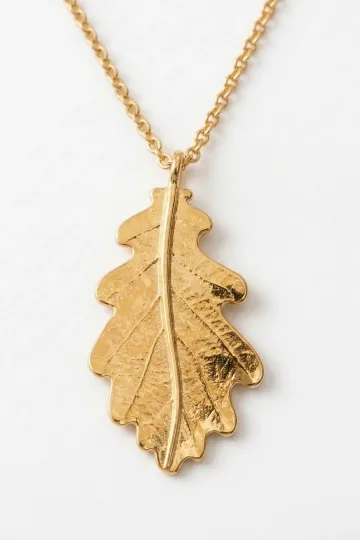
Risks by material: metal decides more than you think
Soft metals bend and scratch
High-karat gold, copper, and silver are soft metals. Against a hard headboard, a zipper on the pillow, or a neighbouring piece, they scratch and compress. A thin ring of soft gold can lose a bit of its round shape overnight under the weight of your hand. The higher the karat and the purer the metal, the softer it is, and the more careful you must be with it overnight.
Silver tarnishes faster from sweat
Silver reacts to sulfur, and sweat and skin oil contain it. Sleeping in silver means keeping it in contact with sweat all night, and it will darken noticeably faster than with daytime wear. If your silver clouds over suspiciously fast, the night is one of the reasons. What to do about it is covered in the pieces on why jewelry tarnishes and how to clean it and how to clean gold and silver at home.
Plating wears off from rubbing against the pillow
Gold-plated silver or coated brass fear one thing above all: friction. The thin layer of gold wears off exactly at the contact points: the back of a ring, the edge of an earring, a chain link at the bend. Eight hours of friction against the pillowcase every night wears plating off many times faster than daytime wear. Coated pieces are the first candidates to remove at night.
Stones on prongs work loose
Prongs hold a stone through their precise shape. Any repeated snag and pressure bend them open. In your sleep the stone catches on fabric, the prong bends a fraction of a millimetre, and over hundreds of nights the stone begins to wobble, then falls out. If you have a prong setting in a ring or earrings, take it off so you are not hunting for the stone in the bedding.
Pearl, opal, turquoise, and emerald fear sweat and oil
These are soft and porous stones of organic or special origin. Sweat, skin oil, and leftover cream eat at their surface, clog their pores, and dull them. Pearl loses its lustre and yellows from acidic sweat. Opal likes moisture but dislikes oil and swings in conditions. Turquoise soaks up everything and turns green. Emerald is often impregnated with oil to mask cracks, and sweat washes that oil out. All these stones come off at night, no question.
A pearl strand stretches and gets dirty
Strung beads and bracelets are their own story. The thread between pearls soaks up sweat and skin oil, darkens over time, stretches and weakens. The knots come apart, and at some point the thread breaks, scattering pearls across the floor. Sleeping in a pearl strand is a reliable way to speed up its break. For more on water and moisture for stones, see the guide on whether you can wear jewelry in the shower, pool, and sea.
Coatings and enamel dislike constant contact
Enamel, rhodium plating, any decorative coating wears at the edges and on the high points. Nighttime friction hits exactly those vulnerable spots. If a piece is beautiful because of its coating rather than the metal itself, it needs a night's rest in a box.
Amber, coral, and bone: organics that need quiet
Amber, coral, mother-of-pearl, and bone are organic materials, like pearl. They are soft, scratch against any hard neighbour, and dull from sweat and cosmetics. Amber loses its polish from friction, coral fades. All organic stones come off at night and are stored separately from metal and hard stones.
Steel, titanium, and tungsten take sleep more easily
If there is a metal that sleeps most peacefully, it is the hard alloys: surgical steel, titanium, tungsten. They do not bend under the weight of your head, do not darken from sweat, and do not scratch against the pillow. A smooth ring or a flat piercing of such material takes the night far better than soft gold or silver. But even here the question of snags and swelling remains.
Hygiene: what builds up under jewellery overnight
Sweat and skin oil under a ring and earring
The skin under a ring and behind an earring back cannot breathe. All night sweat, skin oil, and dead cells accumulate there. The warm, moist environment under metal is an ideal place for bacteria. In the morning there is often a whitish film and an unpleasant smell under the ring, and that is the result.
Bacteria, buildup, and irritation
A buildup of grime under jewellery irritates the skin: redness, itching, sometimes a fine rash appear. Under an earring the channel inflames, under a ring the skin fold gets damp. If you notice irritation specifically under a piece, not around it, the cause is often not the metal but hygiene and constant wear with no break.
When it gets confused with a metal allergy
Irritation from grime and sweat is easy to confuse with a true nickel allergy. The difference is that an allergy reacts everywhere the metal touches, while hygienic irritation appears only in the closed, unventilated zone under the piece. If in doubt, read about nickel allergy in jewelry and about why skin turns green from jewelry and how to fix it.
A nighttime break as hygiene for the skin
Taking a piece off at night is about preserving the metal and about the skin. The piercing channel airs out, the fold under the ring dries, the earring and its back get cleaned. A regular nighttime break noticeably reduces irritation, especially for those who sweat in their sleep.
Cream and serum at night: the enemies of stones
Your evening skincare is a separate reason to take jewellery off. Night creams, serums, and oils get under a ring and onto stones, clog the pores of pearl and opal, leave a film on metal. If you apply skincare to your hands and neck before bed, do it without jewellery on, otherwise you are literally marinating the stones in cosmetics all night.
Leave your email, we'll send your discount code. No spam, unsubscribe anytime.
The code arrives by email, valid on your first order.
Safety: why "not for children" is not overcautious
Strangulation by a chain: the main reason for the ban
For infants and small children, this is not about preserving the jewellery but about life. Any chain, cord, or thread can tighten around the neck in sleep or catch on a part of the crib. A child cannot free themselves and cannot call for help in time. This is not a theoretical risk but a real cause of tragedies.
Small parts as a choking risk
Beads, pendants, and detachable elements are small objects a child can break off and inhale or swallow. There is no constant supervision during sleep. So the rule is simple and strict: for sleep, everything comes off the child.
A simple rule for parents
Jewellery on a child only under supervision and during active time. Sleep, day and night, and any moment a child is left alone, always without jewellery. There is no "usually nothing happens" here: the cost of a mistake is too high to risk.
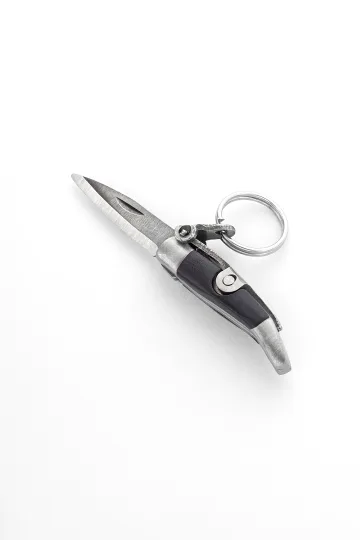
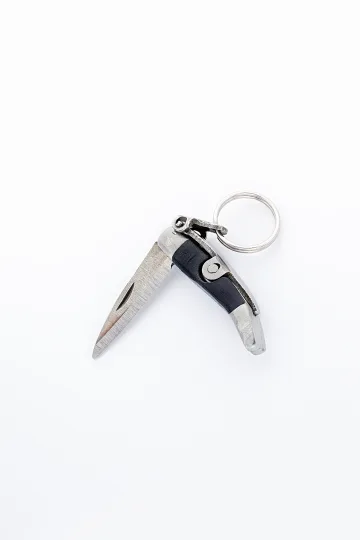
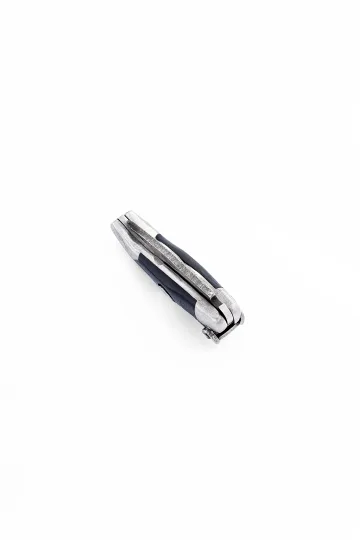
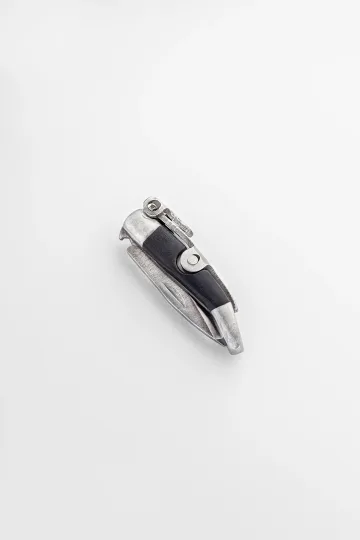
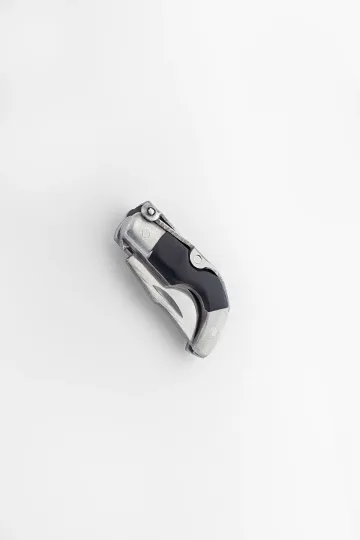
CAPAORA mini knife pendant
The 18th-century Spanish navaja in miniature: 40 mm of stainless steel, a real folding mechanism and a Palanquilla lock that clicks. An affordable gift to remember.
Authentic · Ships from Spain · 14-day returns
When to take it off no matter what, and when you can leave it
Take off no matter what
An engagement ring with a stone on prongs, hoop earrings and heavy drops, long chains, pearls and a pearl strand, soft organic stones (opal, turquoise, emerald), plating and coated pieces, and absolutely everything off children for sleep. This is not a matter of mood but of the piece's integrity and of safety.
You can leave it on, with caveats
A smooth wedding band with no stones, if your finger does not swell by morning. Small, snug studs in a healed ear. A short, sturdy chain with no heavy pendant. Minimalist flat piercing jewellery in a fully healed channel. In every case, watch the morning condition of your skin and the piece.
Do not remove a fresh piercing
A separate category. You do not touch a new piercing at all while it heals. Here removing it means doing harm. Sleep carefully, on the healthy side or on your back, and do not touch the jewellery in the piercing until it is fully healed.
A wedding ring is a personal choice, not a law
Many people never take their wedding ring off, and that is fine if the ring is smooth and the finger is not pinched. But "you can never take it off" is tradition and superstition, not a care rule. From the standpoint of the ring's longevity and the finger's health, taking it off at night does not harm the marriage; it helps the ring.
How to store jewellery overnight and not lose it
A box with compartments instead of a nightstand
Tossing jewellery on the nightstand means setting it up to scratch against itself and get lost. A box with soft compartments keeps each piece separate: metal does not rub on metal, stones do not scratch each other, earrings do not lose their pair. It is the cheapest investment in the longevity of your collection.
A ring stand and an earring holder
A small cone-shaped ring stand by the bed solves the main problem: a ring will not roll away and get lost. A holder with holes for earrings keeps you from scattering studs and keeps pairs together. When every piece has its own place, the habit of taking it off forms by itself.
Separately: soft stones and silver apart
Store pearl, opal, and turquoise apart from hard stones and metal, because they scratch against any neighbour. Silver is best kept in the dark, ideally with an anti-tarnish cloth or in a closed compartment, so it darkens less between wears.
One fixed place
The main secret to not losing jewellery is to take it off always in one spot: one box, one stand, one ritual. When the place does not change, your hand reaches there on its own, and earrings stop vanishing under the pillow and into the washing machine.
Wipe it before you put it away
A small habit saves on cleanings. As you take a piece off for the night, run a soft dry cloth over it, removing sweat and skin oil. Silver benefits from this especially: you take the sulphur off the surface right away, and it darkens more slowly. Thirty seconds in the evening replace a long cleaning later.
Not on the radiator and not in the sun
Where you store it matters too. Pearl, opal, and turquoise dislike the dry heat of a radiator and direct sun: they dry out, cloud over, and crack. Keep the box away from heating and the windowsill. A steady room temperature and darkness are the best conditions for overnight storage.
How to build the habit of taking jewellery off at night
Tie removal to an existing ritual
Do not try to "just not forget." Tie taking off your jewellery to something you already do every evening: washing your face, brushing your teeth, applying cream. Took off your makeup, took off your earrings. After a couple of weeks it becomes automatic.
Put the box where you undress
A habit lives where it is convenient to do. If the box sits by the mirror or by the bed, right where you take off your watch and clothes, taking off your jewellery too is easy. If you have to walk to another room for it, you won't.
The most valuable first
If changing everything at once is too much, start with one rule: at night, off come the engagement ring and the pearls. These are the two pieces that sleep harms most. Once you have that down, add the rest.
The travel version: a tiny box in your bag
The habit breaks on trips, where there is no familiar box. The fix is a small travel case or jewellery organiser that always lives in your toiletry bag. Then at a hotel or at a friend's place the evening ritual does not slip, and you do not leave earrings on a stranger's windowsill.
If you still forget, set a cue by the bed
For the most forgetful, a simple anchor works: put the box or stand right on the nightstand so it physically catches your eye before sleep. A visible object reminds you of the action better than any intention. After two or three weeks your hand will start reaching for it on its own, with no effort of will.
Send a friend a discount code, they save on their first order.
Surprising facts
Your finger really is thicker by morning
Overnight swelling is no myth. Because of the horizontal position, fluid distributes around the body differently, and the hands swell slightly by morning. That is why jewellers advise measuring ring size in the afternoon, not the morning: a morning measurement gives you a ring that turns tight by evening.
The washing machine is a graveyard for nighttime earrings
An earring lost in bed at night most often ends up in the wash with the linens and gets lost in the machine or the drain. A huge share of "missing" studs is found exactly this way. An earring taken off into a box will never reach the machine.
Pearl is alive and ages from sweat
Pearl is an organic material, and it genuinely ages. From acidic sweat its surface clouds over and yellows irreversibly. Antique pearls that were worn constantly are often "faded" for exactly this reason. A night in pearls speeds up that aging.
Opal fears not water but dryness and oil
Counter to intuition, many opals love humidity but cannot tolerate skin oil and sharp swings. Constant contact with sweaty skin robs an opal of its play of colour. This is a stone that is grateful for a night's rest in a box.
Emeralds are often impregnated with oil
Most emeralds on the market have been oiled to hide microcracks. Sweat and products gradually wash that oil out, and the cracks show. Sleeping in an emerald ring is one way to quietly age the stone.
Hoop earrings change shape within weeks
A thin silver hoop turns from a circle into an oval surprisingly fast under the weight of the head. People spend years thinking their earrings "were always like that," when the pillow simply pressed them out of shape.
A torn lobe is regular work for surgeons
Stretched and torn lobes from earrings caught overnight are a routine procedure for plastic surgeons and cosmetologists. The culprit is usually not heavy jewellery itself but sleeping in it with a snag on fabric.
A cut-off ring is not rare at emergency rooms
Getting a ring off a badly swollen finger is sometimes impossible, and it gets cut off with a special tool. At emergency rooms this is a routine procedure. Sleeping in a tight ring when you are prone to swelling is a direct road there.
Frequently asked questions
Can you sleep in stud earrings? Sometimes, if they are small, sit snugly, and the ear is fully healed. But even a small stud bends overnight under the weight of the head, and the back collects skin oil. If the ear turns red or aches by morning, take them off.
Is it true you can never take off a wedding ring? That is superstition, not a rule. From the standpoint of the ring's longevity and the finger's health, taking it off at night does not harm the marriage. A smooth band with no stones does not get in the way of sleep, but if your finger swells, better take it off.
Can you sleep in an engagement ring with a diamond? Better take it off. The stone on prongs catches on the bedding, scratches your partner, the prongs bend and loosen the setting. Engagement rings with a high stone setting are exactly the ones that lose stones in sleep most often.
Is it bad to sleep in gold? Gold itself does not suffer much from sleep, but high-karat gold is soft and scratches, and a piece with stones and thin elements gets damaged. A smooth gold ring will survive sleep, a pendant on a thin chain probably will not.
Why does silver tarnish if you sleep in it? Silver reacts to sulphur from sweat and skin oil. Eight hours of contact with sweaty skin darkens it faster than daytime wear. If your silver clouds over before your eyes, the night is one of the reasons.
Can you sleep with a new piercing? You can and you should: a new piercing is not removed while it heals, otherwise the channel closes. Sleep carefully, on the healthy side or on your back, and do not touch the jewellery until it is fully healed.
Is it dangerous to sleep in a chain? For an adult it is a question of longevity: the chain tangles, twists, snaps. For infants and small children it is a question of life: a long chain can tighten around the neck. For children, everything comes off for sleep, no exceptions.
Can you leave jewellery on a child overnight? No. No chains, beads, earrings with drops, or crosses stay on a sleeping child. The risk of strangulation and of small parts reaching the airway is too high. For sleep, everything comes off the child.
The short version
There is no universal "yes" or "no." The type of piece, the material, and the situation decide everything. A smooth wedding band with no stones and a small stud in a healed ear usually survive sleep. An engagement ring with a stone, hoop earrings, heavy drops, long chains, pearls, and soft stones come off at night.
Two rules are not up for debate. A fresh piercing is left alone while it heals. Off children, absolutely everything comes off for sleep, and that is safety, not care. For the rest, watch the morning: if the finger is pinched, the ear is red, and the metal has dulled, your body has already answered for you.
Set up a box with compartments where you undress, tie removal to your evening face wash, and the problem solves itself. An intact piece in the morning always beats a bent post, a knotted chain, and a hunt for a stone in the sheets.
Earrings, rings, chains, pendants, bracelets, symbols, matching sets.
Buying it as a gift? Each one arrives ready to give.
 A branded Zevira box and a little card come with every order.









About Zevira
Zevira is a Spanish jewelry brand from Albacete, a city with a centuries-old tradition of working in metal. We make jewelry that people wear every day, and we tell you honestly how to care for it, from cleaning gold and silver at home to whether you can wear jewelry in the shower and the sea.