Rubber and silicone jewelry: sport and hypoallergenic rings
Nobody invented the silicone ring for the sake of fashion. They invented it for the finger. A metal ring under load holds firm to the end and tears the skin off the finger along with the soft tissue, leaving bare bone behind. The injury has its own name, and hand surgeons see it regularly. A silicone ring in the same situation simply rips and falls away. The finger stays whole.
That is the entire philosophy of the material in one paragraph. Rubber and silicone came into jewellery not from goldsmith workshops but from workplace safety, medicine and sport. They look plain by display-case standards and cost almost nothing next to gold. In exchange, you can wear them where metal is dangerous: in the gym, on a building site, in the operating room, on a climbing wall, in a workshop next to live current. And they suit people whose skin flares up at any metal at all.
This article is about how rubber differs from silicone, where rubber and silicone rings came from, why their main job is called safety, who genuinely needs them and how to handle them so no rash grows underneath.
How rubber differs from silicone
These two words are often set side by side as synonyms, yet they are different materials with different histories and different properties. The difference is worth knowing: it decides how the ring behaves on skin, in the cold and after three years of wear.
What rubber is
Rubber is an elastic polymer. Natural rubber is drawn from the milky sap of the rubber tree, a species native to the Amazon: the sap is tapped from the bark and thickened into a springy mass. After vulcanization that natural rubber becomes the material we usually mean by "rubber." There is also synthetic rubber, cooked up from petroleum products. Rubber feels warm to the touch, resists tearing, stretches beautifully, but it has weak spots: it is sensitive to ultraviolet light, oils and solvents, it stiffens over time, and it can irritate people with a latex allergy.
Wear the symbol, don't just read about it. These are in stock:





What silicone is
Silicone is also an elastomer, but of a different chemical nature: its backbone is not carbon but silicon and oxygen. Medical and food-grade silicone is chemically inert, meaning it barely reacts with skin, sweat or cosmetics. It handles both heat and cold, does not stiffen in frost, and shrugs off sun, water and most household chemicals. That is exactly why silicone goes into baby bottle teats, baking moulds, implants and tubing for drips. In jewellery, silicone has pushed rubber out almost everywhere that year-round wear against skin matters.
What to choose in a ring
If we are talking about a ring for everyday wear and sport, in the overwhelming majority of cases what you are holding is silicone, even if the label says rubber. Silicone is more stable, kinder to skin and copes with temperature swings. Pure natural rubber turns up in rings far less often today, mostly in designer and vintage pieces where its warm matte look is prized. For sensitive skin and allergy sufferers, medical silicone is almost always the better bet: it reacts less often than latex rubber.
Where rubber still wins
Natural rubber has a deep matte black colour and a pleasant warm texture that people value in bracelets and cords for pendants. A rubber cord has held pendants and crosses for decades: it is soft, does not tangle, does not jingle and does not chill the neck the way a metal chain does. In that role rubber is alive and well. In a ring under daily load, though, silicone is the more practical material.
Where rubber and silicone rings came from
A ring made of rubber sounds like a novelty, yet the material has a long industrial biography. First came rubber and machinery, then medical silicone, and only in the last decade and a half did the silicone ring become an ordinary household object.
Industrial rubber: from curiosity to a stable material
Europe met rubber in the age of the great voyages: people of the Amazon played with springy balls made from hardened tree sap and used it for waterproof footwear. For a long time rubber stayed a curiosity: it melted in heat and cracked in cold. The turning point came in the mid nineteenth century, when vulcanization was discovered, adding sulphur to rubber and heating it. That gave a stable, springy, durable material. From that moment rubber became the backbone of industry: tires, seals, insulation, medical tubing.
Medical silicone: the material the body trusts
Silicone appeared in the twentieth century as a heat-resistant inert polymer and quickly moved into medicine. It went into catheters, drains, prosthetics and implants. Its key quality for the body is chemical neutrality: the body barely registers medical silicone as a foreign irritant. The same inertness that makes silicone fit for implants makes it comfortable for constant contact with skin in a piece of jewellery.
Rings for sport and hands-on trades
The idea of wearing a soft ring instead of a metal one grew from the bottom up, from the practice of people for whom metal on the hand got in the way or posed a threat. Electricians took off their wedding bands before work and lost them. Athletes hurt their fingers on bars and barbells. Service members, firefighters, mechanics and cooks carried a wedding ring in a pocket for years rather than on the hand. The silicone ring resolved the conflict between the symbol of marriage and safety: it is cheap, soft, tears under load, and losing it is no tragedy. Within a decade it went from a niche item for electricians and gym regulars to an ordinary ring worn on the beach, in the gym and at home around small children.
Rubber for the gym, gold for the gala. A silicone band under a tuxedo is trainers with a dinner jacket, and no arguing.
How and with what to wear a silicone ring
A silicone ring is not pampered, it is worn. Over years of styling active people I have gathered a few plain rules that keep a soft ring from falling out of the picture and put it to work instead.
What do I wear a silicone ring with every day? For an everyday look I recommend a neutral base: black, graphite, navy. A ring like that argues with neither your clothes nor the other pieces on your hand. I suggest keeping it on the usual finger and in the usual spot, so it reads as a wedding band rather than a stray sports accessory.
How do I wear it at the gym and in training? For the gym, functional fitness and the climbing wall I choose a moderate thickness and a snug fit. A bright colour belongs here: burgundy, khaki, electric blue read as part of an athletic look. The main thing is that the ring sits tight but comes off without a fight.
Can I pair silicone with metal jewellery? You can, and I keep one rule: do not let metal and silicone fight for the lead. If the hand carries noticeable metal rings or a watch, I keep the silicone one neutral, as a background. I never stack it with metal on the same finger, since the metal rubs the soft surface and wears it down faster.
What do I wear out if I usually have silicone on? For a celebration, a business meeting or a formal appearance I recommend bringing the metal back. Silicone is honest in sport and at work, but it gives no status, and there is no point pretending it does. The sensible mode is simple: keep two rings and switch them by context.
Which silicone suits a woman's hand and a manicure? With a manicure I suggest narrow solid models in a neutral colour: they do not pull focus and do not clash with the polish. If you want the ring to look familiar, I pick steel or silver shades, which read as metal from a distance.

Turn on your camera, pick earrings, a pendant or a ring, and see the piece on yourself in real time.
Switch items in one tap.
Everything runs in your browser: no photo or video is ever uploaded.
The main job: protecting the finger
This is not a marketing add-on but the reason the material entered rings at all. A rigid ring on the hand turns, under certain loads, from an ornament into a trap.
Ring avulsion and degloving
Hand surgeons have a term, ring avulsion. Here is what happens: the ring catches on something, the body keeps moving, and the ring strips the skin and soft tissue off the finger like a glove. In severe cases this is degloving, the finger laid bare to the bone, with torn vessels and nerves. Sometimes the finger can be saved, sometimes not. The classic scenario: someone jumps down from the side of a truck bed or off a fence, the ring snags on a ledge, and body weight does the rest. A silicone ring in that situation simply bursts along its tear line, because that is what it was built to do: give way before the finger does.
Electricians and current
Metal conducts electricity, and a ring on a finger is a closed conductive loop sitting right on the hand. On accidental contact with a live part, a metal ring can cause a burn and a serious injury, and it also heats up. That is why electricians' safety rules flatly require removing metal jewellery. Silicone does not conduct current, so a silicone ring is allowed where a metal one is forbidden. For people in electrical trades this is not about fashion but about being cleared to work.
The gym and the barbell
In the gym a metal ring is an enemy of both the finger and the equipment. Under a barbell or dumbbell bar the ring presses into the finger, leaves scrapes and ruins the grip. On a pull-up bar or gymnastic rings it snags. The bar scratches against the metal, and the ring itself deforms. A silicone ring is soft, does not slip, does not damage equipment and does not crush the finger under weight.
Functional fitness and rock climbing
Functional fitness and rock climbing are two disciplines where the silicone ring has become close to standard. Functional fitness is full of explosive moves with the bar, kettlebells and rope, and each one is a potential snag. Climbers keep their hands in holds and cracks, with the fingers carrying body weight: a metal ring here is a direct route to that very degloving injury. A soft ring removes the risk without forcing anyone to remove the symbol of marriage.
The break zone: how a ring tears at the right moment
A good sport ring does not tear just anywhere but along a designed line. Makers build in thin break zones or grooves inside, so that under a critical load the ring bursts predictably and comes off the finger. This is an engineering choice, not a defect: thickness and cross-section are tuned so the ring's breaking point arrives before the finger's. A ring that is too thick and too tight for dangerous work is worse than a moderate one: it may fail to tear at the exact moment it matters most.
Who needs rings like these
The audience for a silicone ring is not lovers of cheap costume jewellery but people for whom metal on the hand either gets in the way of work, or is dangerous, or sets off the skin.
Medical staff
Surgeons, nurses and dentists wash and sanitize their hands dozens of times a day. Moisture and microbes collect under a metal ring, and the ring itself gets in the way of a glove and breaks sterility. A silicone ring is smooth, washes easily, traps no water in joints and tolerates alcohol calmly. For many this is the only way to wear a wedding band on shift.
Cooks and working with the hands
In a kitchen a metal ring is both a hygiene problem and a hazard. Food residue lodges in it, it catches on equipment and heats up near the stove. Many professional kitchens ban rings outright. A soft ring with no gaps is easier to keep clean, and there is no fear of staining or scratching it.
Hands-on trades
Mechanics, builders, welders, electricians and fitters work with their hands among moving parts, tools and current. For them a metal ring combines three risks at once: snagging, current and crushing. A silicone ring removes all three and costs so little that losing or ruining it is no loss.
Athletes
Weightlifting, functional fitness, gymnastics, combat sports, climbing, rowing: anywhere the hands carry weight or grip equipment, a metal ring gets in the way and threatens the finger. An athlete finds it convenient to keep a soft ring for training and put the dress metal one on in ordinary life. There is more on what an active person should choose in the guide to jewelry for an athlete.
New parents
With a baby in your arms a metal ring scratches the child's delicate skin, catches on clothes and blankets, and collects moisture during endless hand washing. A soft ring is safe to press against the little one, leaves no scratches and does not mind frequent hand washing. For many parents this is a temporary fix for the first years, until metal returns to the finger.
Travelers
On the road an expensive ring is one more thing to worry about: a shame to lose, nerve-wracking to flash in rough places, awkward on active trips. A silicone ring on a journey solves both problems: the symbol stays on the finger while the expensive band sits safely at home. On how to take jewelry traveling at all, it is worth reading separately about jewelry in water and active recreation.
Service members and uniformed jobs
In the armed forces, and among firefighters and rescuers, metal rings have long been quietly off-limits on safety grounds: snagging on gear, heating up, the risk of current and injury when working with machinery. Many carried a wedding ring on a chain under the uniform for years, or simply left it at home. The silicone ring returned the symbol to the finger without breaking the rules: it can be worn on duty, and losing it in the field is no loss.
Allergy sufferers
This is a large separate reason that brings in people far removed from sport and heavy work. More on it next.
Customer reviews
Zevira is a real jewellery shop. Genuine payments, deliveries and customer thank-yous.
🥰🥰🥰 gracias

Ok, ¡gracias! 🙂

Hypoallergenic wear and sensitive skin
For a sizable share of people, metal is not a question of taste but a question of endurance. The skin under the ring reddens, itches, weeps. Silicone often turns out to be the one material the skin tolerates calmly.
Why metal triggers a reaction
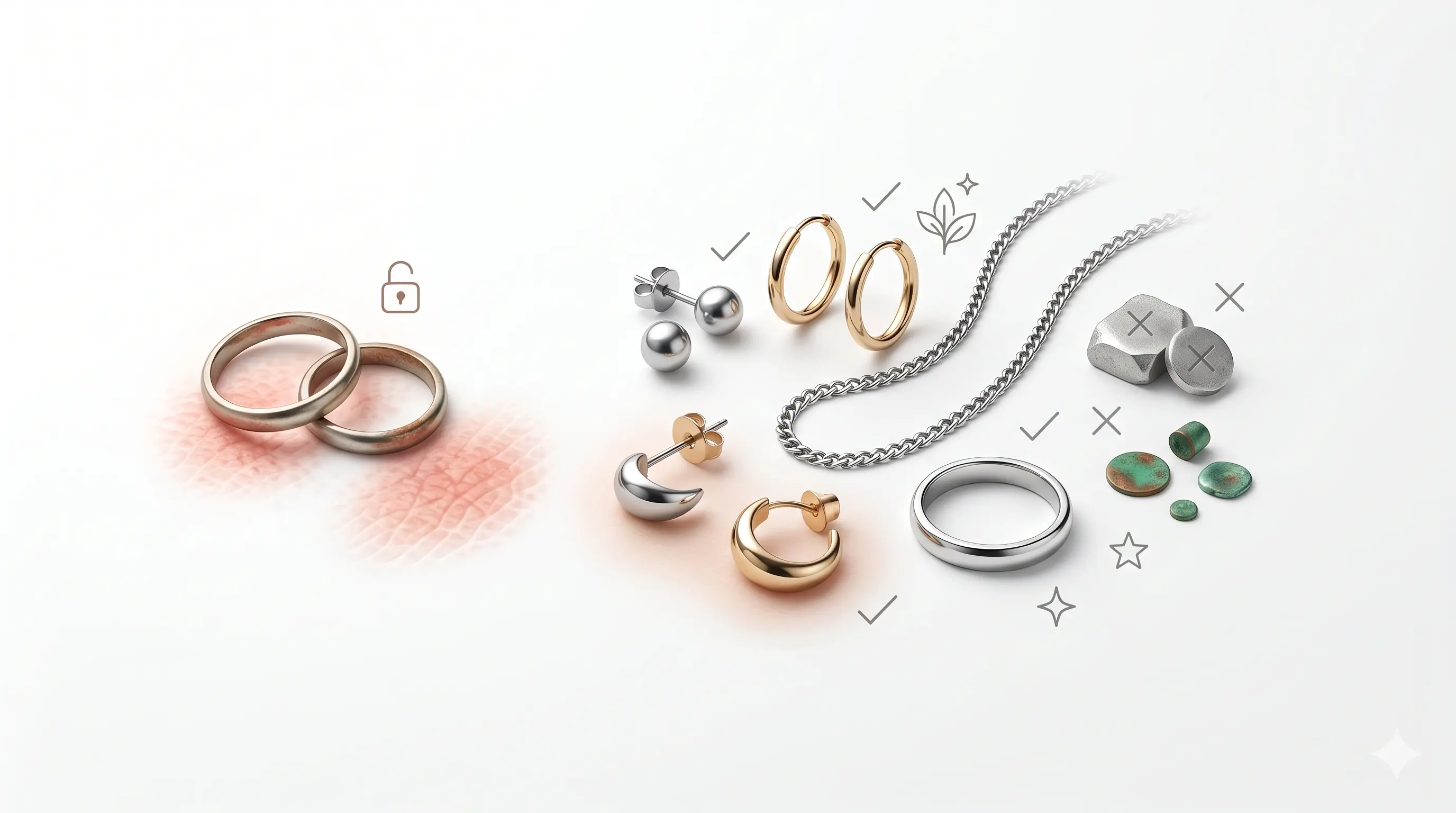
Most often the culprit is not the precious metal itself but the nickel in the alloy. Nickel is the most common contact allergen, and it is added to many cheap and not-so-cheap alloys. The reaction looks like redness, itching, sometimes a weeping eczema exactly along the outline of the jewelry. The mechanism and the list of safe metals are covered in detail in the piece on nickel allergy. If the skin reacts to different rings, the metal is almost certainly to blame.
Why silicone is usually safer
Medical silicone is chemically inert: it releases no metal ions, does not oxidise, and does not react with sweat. An allergy to medical silicone itself is extremely rare, which is why it is used in implants and baby products. For a person with a nickel allergy, a silicone ring is a way to wear a ring at all, without choosing between an ornament and healthy skin.
When silicone does irritate the skin
An important caveat, so there are no false expectations. Irritation under a silicone ring does happen, but the cause is usually not an allergy to the material but moisture and friction. If you wear the ring wet after a shower or hand washing, a warm damp pocket stays underneath, where the skin macerates and microbes and fungi multiply. This is contact dermatitis from moisture, not a reaction to silicone. The fix is simple: take it off and dry it. There is a separate section on this below, because it is the single most common owner mistake.
The latex caveat about rubber
If you have a latex allergy, bear in mind: natural rubber is a latex product and can in theory set off a reaction. In that case take silicone, not rubber. In practice most rings are silicone anyway, but it is worth checking what a piece is made of.
Upload a photo of your pet, someone you love, or an object. We'll build a 3D model and hand-cast it in pewter.




The upsides of silicone and rubber rings
The material has a clear set of strengths, and almost all of them flow from its softness and low cost.
Light and unnoticeable
A silicone ring weighs almost nothing and stops being felt on the finger within an hour of wear. You do not need to take it off at night; it does not interfere with sleep, does not press and does not catch on bedding. For people who are not used to rings, this is the most comfortable way in.
They do not conduct current
Silicone is an insulator. That matters for electricians, but it concerns everyone: any contact of the hand with electricity around the house becomes less dangerous without metal on the finger. For some this is a job requirement, for others simply peace of mind.
They do not scratch
A soft ring scratches neither a child's skin, nor a car body, nor a phone screen, nor a partner at night. There is no fear of working with the hands around fragile things and people.
Cheap to replace
A silicone ring costs about as much as small change next to a gold one. Lost it at the beach, tore it on the bar, tired of the colour: replacing it does not put a dent in the budget. That low cost is not a flaw but part of the point: a ring you would not mourn can be worn everywhere the expensive one would stay home out of fear.
Unbothered by water, sweat and sport
Silicone takes a shower, a pool, the sea, sweat and the gym in stride. It does not need to be kept away from moisture, unlike many metals and especially plated pieces. It is a workhorse for an active life.
They handle heat and cold
Silicone does not stiffen in frost and does not soften in heat across the everyday temperature range. The same material works in oven moulds and in the freezer, so the ring is untroubled by winter chill or summer sun in a parked car. A metal ring turns icy in the cold and stings the skin with that chill; a silicone one stays warm.
The downsides, stated honestly
The material's weak points are clear too, and there is no sense hiding them. They set the right expectations for the thing.
Not a status piece
A silicone ring does not look expensive, and it should not. It is a working tool, not an ornament for going out. As a stand-in for a dress ring at a celebration it does not work: there you need metal and a stone. Silicone honestly occupies its niche of everyday and sport wear.
They collect grime
Silicone is slightly tacky by nature and attracts dust, lint and small debris, especially in a pocket. Light-coloured rings grey over the surface in time. This is not damage but a property of the material, solved by a simple wash, though it can be annoying.
Irritation if you do not take them off wet
The main practical downside and the cause of almost every rash complaint. The ring sits snug against the skin, and if moisture stays underneath, the skin macerates. Constant wear without drying sooner or later produces irritation under the ring. The cure is not abandoning the material but the habit of taking it off and drying, covered further on.
They stretch and tear over time
Silicone is not eternal. From constant stretching and aging the ring loses springiness and may stretch out or tear. That, however, is the built-in safety function at work, and the low price makes replacement painless.





How to care for it and why taking it off and drying matters
Caring for a silicone ring is basic, but one point is critical, and it is exactly the one most often ignored, after which people blame the material for an allergy.
A simple wash
Every few days take the ring off, rinse it in warm soapy water, rub it between your fingers to clear film and grime from the inner side, and dry it thoroughly. Once a week it helps to wash the finger under the ring as well. No special chemicals are needed: silicone tolerates ordinary soap.
Why taking it off and drying is critical
Under a snug ring the skin does not breathe and does not dry. If you have washed your hands or stepped out of the shower and slipped the ring onto a wet finger, a warm damp film stays underneath, ideal for maceration and fungus. That is how the very rash under the ring appears, the one mistaken for a silicone allergy. The rule is simple: after water, take the ring off, dry both the finger and the ring, and only then put it back on. For the night, or for a long stretch of work in water, the ring is better taken off entirely.
What silicone dislikes
Silicone is tough, but it dislikes constant contact with oils, solvents and strong cleaning agents: over time they make it swell and lose springiness. Sharp objects and hard tension while filing snags shorten its life. The ring is best stored away from dust, so it does not pick up a film.
Breathable models with channels
To solve the moisture problem by design, some rings are made with inner grooves or channels along the inside. They give water and sweat a path out, and the skin under the ring macerates less. Such breathable models suit people forced to wear a ring for long stretches without taking it off: drivers on a long shift, people on a production line where you cannot remove a ring midday. It does not fully cancel the take-it-off-and-dry rule, but it lowers the risk of maceration.
How to tell good silicone apart
Good medical silicone is dense, springy, free of a harsh chemical smell and free of a tacky film straight out of the package. A cheap fake often smells of rubber, tears through solid material rather than along the break zone, and loses colour quickly. The surface of a quality ring is even, with no flash along the edges and no burrs from the mould. If the ring is meant for sport and safety, saving on the material means saving on the finger.
How to choose size and thickness
Silicone stretches, but that does not make size unimportant. A ring too loose will slip off, a ring too tight will crush the finger and hold moisture underneath.
Size
Take the same size as your metal ring on the same finger. The silicone one should sit snug but come off without a fight. If you have no metal ring, measure the finger by the usual method: it is described in detail in the guide to finding your ring size. Bear in mind that fingers swell in heat and after exertion, so measuring is best done in the middle of the day.
Thickness and width
Silicone rings come thin and wide. A thin ring tears more easily under load, which is good for safety but less durable in everyday use. A wide one looks more substantial and lasts longer, but it has more area underneath where moisture can collect. For sport and dangerous work, choose a moderate thickness: strong enough for wear and weak enough to tear before the finger does. Many models are made on purpose with grooves or break zones so the ring tears predictably.
Leave your email, we'll send your discount code. No spam, unsubscribe anytime.
The code arrives by email, valid on your first order.
Colours and designs
Despite the simplicity of the material, the choice of finish is wide, and that is part of the appeal for everyday wear.
Solid and textured
The base is solid, dense rings: black, grey, navy, burgundy, khaki. They look understated and go with any outfit. There are also textured options with facets, grooves, relief and woven imitations.
Metal-look and coated finishes
Some rings are made in shades that mimic metal: matte silver, dark steel, bronze, rose gold. Such a ring reads as metal from a distance while staying soft and safe. That suits anyone who wants the ring to look familiar.
Slim women's models
For a woman's hand there are narrow, refined rings, including ones with fine relief or two-tone finishes. They do not clash with a manicure, do not catch a child's hair and suit new mothers who need a soft everyday stand-in for a wedding band.
Sets and swappable colours
Since the ring costs little, it is often bought in sets of several colours. That is handy in different ways: to match the ring to an outfit, to keep a spare in case one tears at training, to change the colour with mood and season. A spare ring in a gym bag or a glove box spares you the situation where a ring tears midday and there is no other at hand.
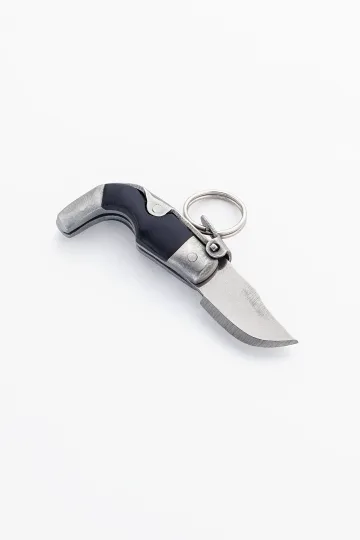
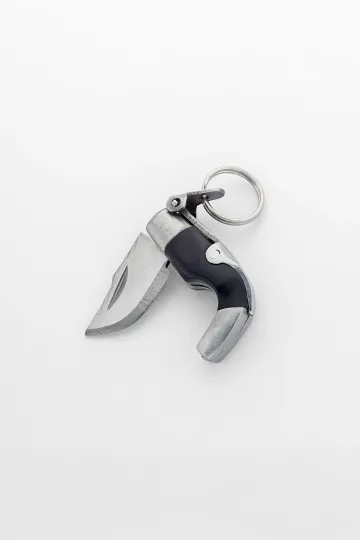
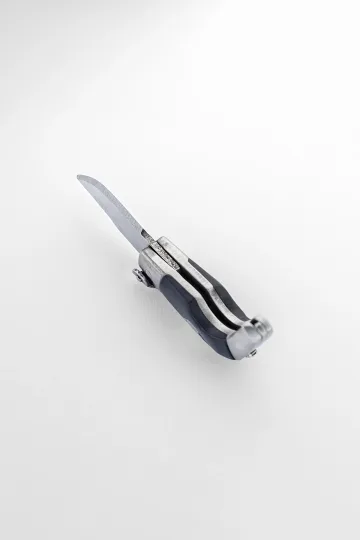
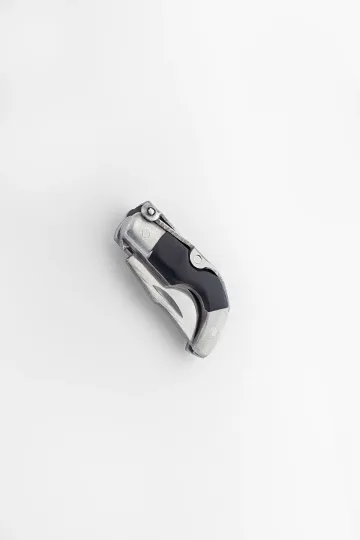
CAPAORA mini knife pendant
The 18th-century Spanish navaja in miniature: 40 mm of stainless steel, a real folding mechanism and a Palanquilla lock that clicks. An affordable gift to remember.
Authentic · Ships from Spain · 14-day returns
Can this replace a wedding band, and matching rings
The most common question about the material: does a silicone ring count as a real wedding band. The answer depends on what you mean by "real."
As an everyday stand-in
A silicone ring works excellently as a practical stand-in for a wedding band during the time when metal cannot or should not be worn: a hospital shift, training, a building site, travel, caring for a baby. Many couples do exactly this: a gold ring for life and going out, a silicone one for the gym and work. The symbol stays on the finger throughout while the expensive one is never at risk. This is a sensible compromise, not a downgrade of the marriage.
As the only wedding band
There are also those for whom a silicone ring is the only wedding band, by deliberate choice. The reasons vary: a job where metal is simply not allowed, an allergy to all metals, a principled reluctance to wear something expensive. A ring works as a symbol regardless of the price of the material: meaning is given by people, not by grams of gold. If a couple finds it more comfortable this way, it is a full-fledged choice.
Matching silicone rings
Matching silicone rings exist and are popular with active couples: the same colour or relief, a men's and a women's width. They are often taken as a complement to metal: at home and in the gym the matching silicone pair, for going out the metal. The low price lets you keep several colours for mood and season.
Silicone for children and teenagers
A separate audience, where the softness of the material turns from an upside into a safety requirement.
Why soft is safer for children
A rigid ring on a child's hand is a risk: a child snags it, pinches a finger in a door, on a swing, on sports equipment. A child's finger is thin, the skin delicate, and a ring-avulsion injury is more dangerous for them. A soft ring tears and does not maim. It also does not scratch other children in active play and does not damage furniture.
Teenagers and sport
Teenagers take up sport actively, and for them a silicone ring is the same story as for an adult athlete: a soft ring for training that does not get in the way or threaten the finger. The low price comes in handy here: lost or torn, replaced without drama.
Sensitive children's skin
Children react to metal more often than adults, and medical silicone is a soft, safe option for them. The main rule is the same as for adults, even stricter: wash and dry, do not leave it wet, take it off at night. A child's skin macerates under moisture faster.
Service life
Realistic expectations about durability spare you disappointment and help you replace the ring in good time.
How long a silicone ring lasts
With careful wear a silicone ring serves several years. A sport ring under constant load wears out faster: it stretches, loses springiness, and develops burrs and microcracks along the edges. This is normal wear, not a defect. Since the ring costs little, replacing it is easier than mending it.
When to replace it
Replace the ring if it has stretched and gone loose, if tears have started along the edge, if the surface has stiffened or feels tacky in a different way than before. A stretched ring does its safety job worse and slips off at the worst moment. A spare ring in the gym bag is a sensible habit.
Compared with metal for longevity
A metal ring outlives its owner, a silicone one does not, and that is an honest trade. You pay with a short service life for safety, lightness and a near-trivial replacement. For the role this ring plays, that trade is justified. Anyone who needs a thing to last decades should look at steel or silver: there is a breakdown of steel, brass and silver for an active life.
Send a friend a discount code, they save on their first order.
Silicone versus light metals: what else active people wear
Silicone is not the only answer to the question of the awkward metal ring. It has rivals among light, strong metals, and an honest comparison with them is useful.
Titanium and tungsten as an alternative
Active people who dislike a soft ring often look at titanium and tungsten. Titanium is light, strong and triggers no nickel reaction; tungsten is very hard and does not scratch. But both metals, for all their strength, remain a rigid ring on the finger: they do not tear under load and do not save you from a ring-avulsion injury, and tungsten conducts current on top of that. Their advantage is that they are metal and look like a ring meant to last forever. Silicone wins where the main thing is the safety of the finger and clearance to work with current.
When two rings beat one
The sensible compromise for many is to keep both: a dress metal ring for ordinary life and a silicone one for the gym, work and water. That way the symbol is always on the hand, the expensive one is never at risk, and the finger is protected where it needs to be. The low cost of silicone makes the second ring a painless purchase rather than a luxury.
Facts that surprise
A few things about rubber and silicone that even people who wear such a ring every day rarely know.
Natural rubber grows on a tree. The rubber tree is still tapped by hand, the bark scored and the milky sap collected in little cups: a billion rings and tires begins with a cut in the bark.
Silicone is made, in essence, from sand. Its base is silicon, the same element as in quartz sand and glass. The soft ring on your finger is a distant relative of the beach where you are not afraid to lose it.
The ring injury has a precise medical name. Ring avulsion is described in hand-surgery textbooks as a distinct mechanism of injury, and it is precisely to guard against it that the material came into rings.
A well-known public figure popularized the silicone ring through a personal story. A public account by an athlete and engineer of how he nearly lost a finger because of his wedding ring sharply raised demand for soft rings at the time. Names are not the point here; what matters is that the spark was a real injury, not an advertisement.
Silicone does not melt in the oven and does not stiffen in the freezer. The same material used for baking moulds withstands the heat of the oven and the cold of the freezer, which is why a ring made of it is untroubled by summer heat or winter cold.
Medical silicone is implanted in the body. It is used for implants and tubes that stay inside a person for months and years, which is exactly why contact with skin in the form of a ring is completely harmless for it.
Frequently asked questions
Is a silicone ring the same thing as a rubber one? Almost always no. Most modern soft rings are made of silicone, even if the label says rubber. Silicone is more stable, kinder to skin and copes better with heat and cold. Pure natural rubber turns up in rings less often, though it is alive and well in cords for pendants and in bracelets.
Is it true that a silicone ring is safer than a metal one? Yes, that is the whole point of the material. A metal ring under load can strip the skin and soft tissue off the finger, an injury called ring avulsion. A silicone one in the same situation tears and falls away, leaving the finger whole. On top of that silicone does not conduct current, which matters for electricians.
Can a silicone ring cause an allergy? An allergy to medical silicone itself is extremely rare. If a rash has appeared under the ring, the cause is almost always not an allergy but moisture: the ring was worn wet and the skin macerated underneath. Take it off and dry both the finger and the ring after water, and the problem usually disappears.
Why does a rash appear under the ring, and what should I do? This is irritation from moisture and friction, not a reaction to the material. Water stays under a snug ring after a shower and hand washing, the skin macerates, and microbes multiply. The solution: take the ring off after contact with water, dry the finger and the ring thoroughly, wash the ring every few days, take it off at night.
Will a silicone ring do instead of a wedding band? Yes, as an everyday and sport stand-in it is an excellent option: the symbol is always on the finger while the expensive ring is never at risk in the gym, at work and on the road. Some couples make a silicone ring the only wedding band for reasons of work or allergy, and that is a full-fledged choice: meaning is given by people, not by the price of the metal.
What size of silicone ring should I take? The same as your metal ring on the same finger. It should sit snug but come off without effort. If you have no metal one, measure the finger by the usual method and measure in the middle of the day, because fingers swell in heat and after exertion.
Can you wear a silicone ring in water, in the shower and in the sea? Yes, silicone takes water, sweat, the pool and the sea in stride; this is one of its strengths. The one rule: do not leave the ring wet on the finger for long, or the skin underneath will macerate. After water, take it off, dry it and put it back on.
How long does a silicone ring last? With careful wear, several years; a sport one under constant load less. It is worth replacing when the ring has stretched, started to tear along the edge or changed its texture. The cost is low, so replacement is no problem, and a spare ring in the gym bag is a sensible habit.
Buying it as a gift? Each one arrives ready to give.
 A branded Zevira box and a little card come with every order.








The short version
Rubber and silicone came into jewellery not from the jewellery display case but from workplace safety, medicine and sport. Their main value is not beauty but the fact that a soft ring tears before the finger does, does not conduct current and does not irritate skin that cannot stand metal. Silicone is more practical than rubber for everyday wear: it is inert and unafraid of water, heat and cold. This is a ring for medical staff, tradespeople, athletes, new parents, travellers and allergy sufferers, a handy stand-in for metal where metal gets in the way or is dangerous. One point of care solves almost every complaint: take it off and dry it after water, do not wear it wet. Then there will be no rash under the ring, and the finger will be safe.
Silver, steel, warm metals, coloured stones, symbolism, matching sets and rings for every day.
About Zevira
Zevira is a Spanish brand from Albacete, a city of metalworking masters. We make jewelry for life, not for the display case: the kind you wear every day, in the gym, on the road and at home with the children. If your skin reacts, start with the piece on nickel allergy, and an active person will find the guide to jewelry for an athlete useful.