Luxury Watches as Jewelry: From Timekeeping History to High Horology
Seems mundane at first glance, a chronometer on your wrist. Just a tool for counting minutes. Yet a paradox: a single grand-complication timepiece can change hands at auction for a sum greater than an average house in the capital. A watch. Time. Money, not in the direct sense of price, but in what society pays for the ability to see the current moment adorned in diamonds and platinum.
The intersection of watchmaking and jewellery occurs when craftsmen realised: the instrument can be art. A luxury watch is not a millionaire invention. It's an ancient genre where time literally becomes gold, enamel, and precious stones. This article will show you how watches became one of the most important symbols, not just of wealth, but of refined taste.
The History of Watches in Jewellery
Medieval Mechanical Clocks and First Ornaments of Time
Before mechanical watches, time was abstract. Sun, stars, church bells, that's all people had. When Europe created its first clock mechanisms in the 12th century, they were enormous, hung on cathedral walls, and served not as ornament but as engineering marvel. By the 14th century, as clocks shrank and became portable, craftsmen realised: why count minutes plainly when you could do it beautifully?
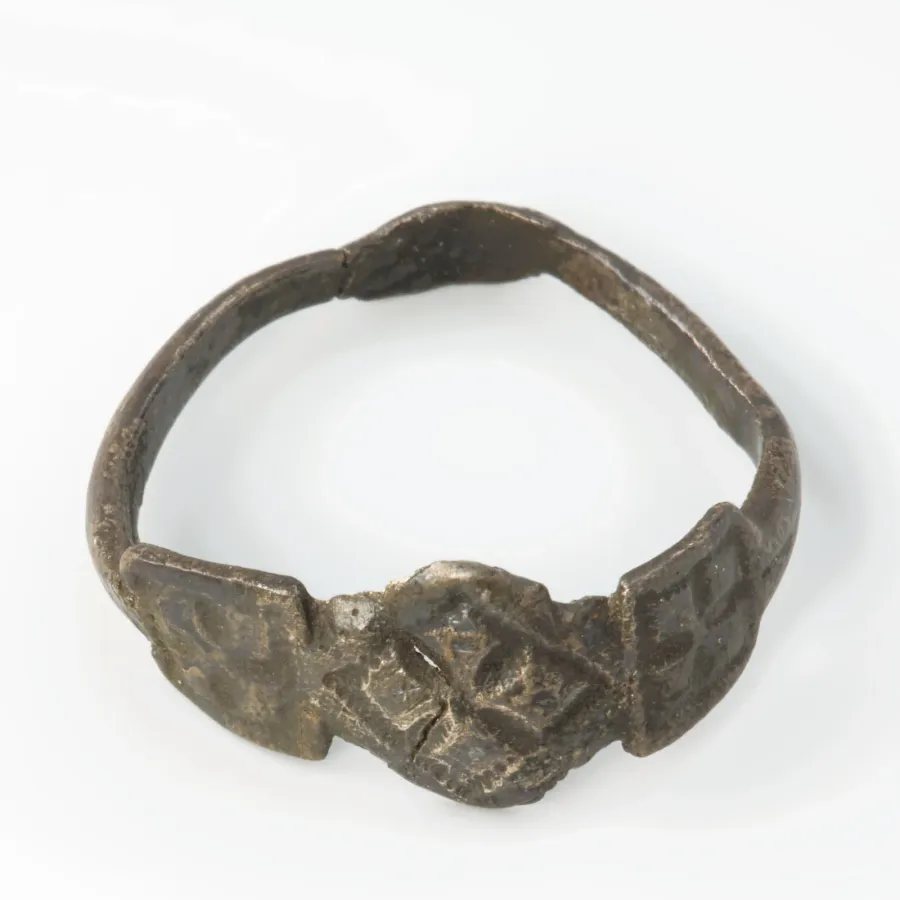
The first portable watches appeared as jewellery. Pendants, rings, bracelets with tiny mechanisms inside. Only royalty and the church could afford them. Creating one watch-pendant required as much labour as crafting an altar ornament. Each dial was hand-painted, each hand individually forged, each case decorated with enamel, the most labour-intensive of all processes.
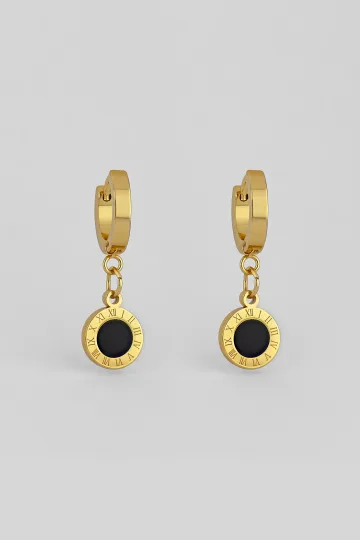
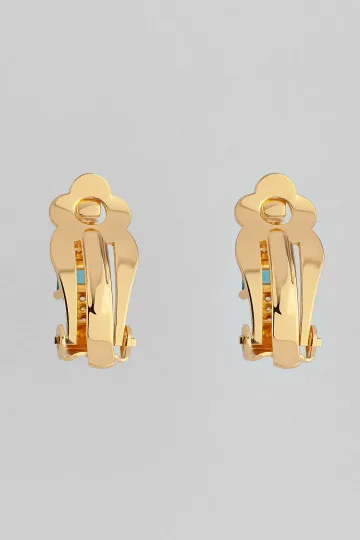
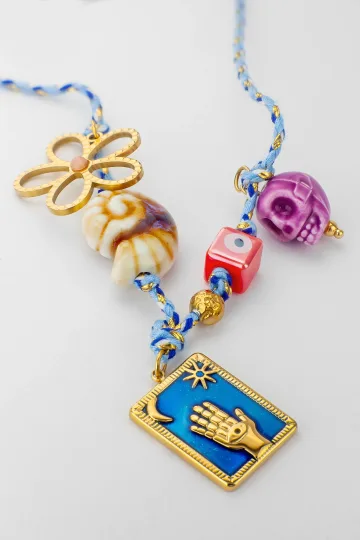
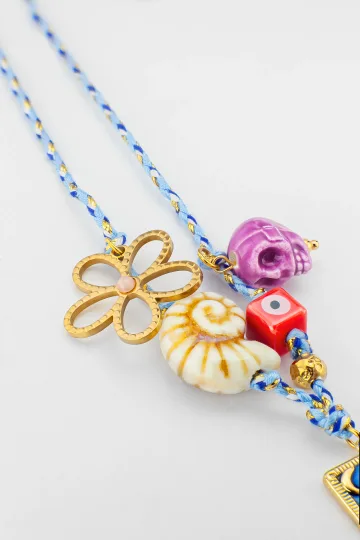
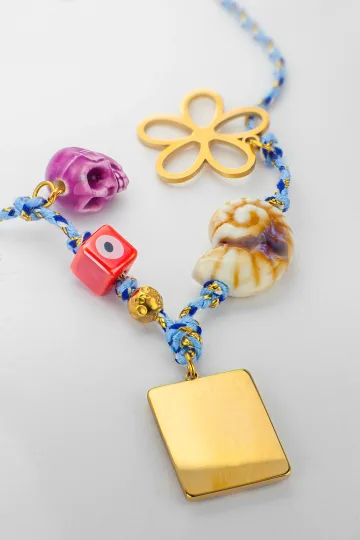
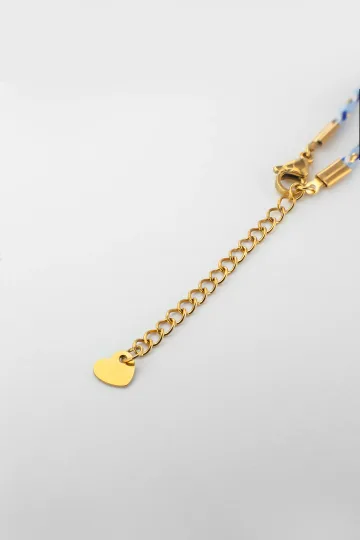
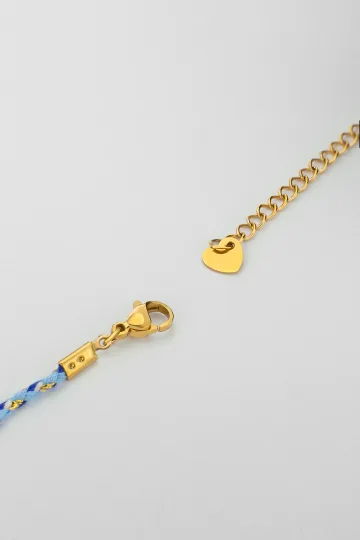
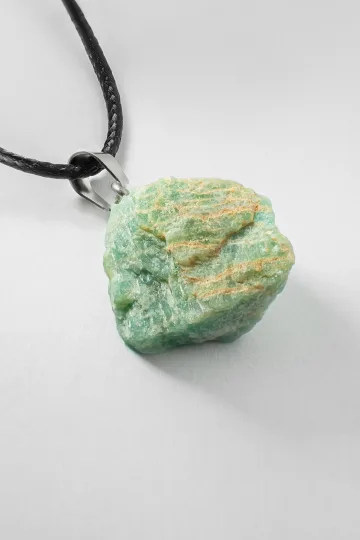
Wear the symbol, don't just read about it. These are in stock:




16th-17th Centuries: Watches as Status Symbols
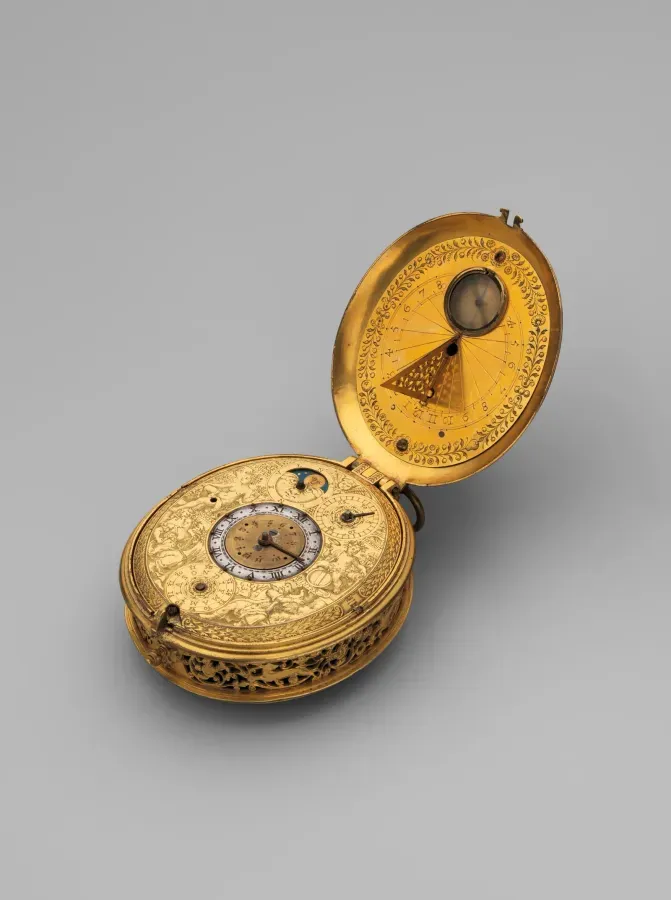
During the Renaissance, watches become prestige objects. Spanish kings collect watches as they do paintings and gemstones. Nuremberg watchmaker Peter Henlein creates famous spring-driven watches, they fit in your hand and keep time well enough to wear. This opened the path to revolution: watches could be not just heard, but seen, and carried.
Between the 16th and 17th centuries, European nobility commissioned watches as pure jewellery. Gold cases studded with emeralds and rubies, watches shaped like animals (tortoise watches, scarab watches), watches in medallions with portraits on the cover. Florence, Venice, Geneva, each jewellery centre developed its own watchmaking style.
18th Century: Watches as Artwork
The 18th century is the golden age of watches as jewellery. Abraham-Louis Breguet in Geneva creates watches so perfect and beautiful they become absolute luxury symbols. His watches were purchased by royal courts and wealthy aristocrats. Interesting fact: many 18th-century watches made for European nobility were decorated not just outside, but inside. The mechanism was visible only when opening the case, and what a sight: golden ornaments on the movement, enamel, miniature engravings.
Swiss craftsmen begin specialising in watches. Geneva becomes the centre of world horology. Not just production, but art. Every master signed their watches like a painter signs a painting.
19th Century: Democratization and Mass Production
The 19th century brought the first revolution to watchmaking. Industry learned to create precise mechanisms in large quantities. Watches began appearing not just on kings, but on the bourgeoisie, and gradually the middle class. Yet parallel to cheap watches, fine jewellery watchmaking continued, watches for the wealthy.
This period saw the rise of famous Swiss houses founded in the early-to-mid 1800s that still exist today. They created both simple watches and luxury objects. Swiss watches became synonymous with quality worldwide.
20th Century to Present: Watches as Collectibles
The 20th century transformed watch status. Watches remain jewellery, and a fine timepiece can hold meaning across generations. During World War II, military watches became trusted tools: pilots and divers relied on robust Swiss movements. The post-war period created a cult of the collectible watch.
Legendary models emerged: early dive watches of the 1950s, built to reach great ocean depths, and refined sports designs of the 1970s that became icons. Watches came to be seen by many as objects to keep and pass on, much like fine art or family heirlooms.
From Pocket to Wrist: The Watch as Jewellery
Before it became an instrument, the watch spent several centuries as an ornament. People did not so much read it as wear it in plain view: on a chain over a dress, at the waist, around the neck. The time was read approximately, while the shine of the case and the fineness of the engraving were noticed at once. That road from precious pendant to the ordinary wristwatch is worth following on its own, because it holds the answer to why a good watch is still chosen the way jewellery is chosen rather than the way a gadget is.
Pendant Watches
The earliest portable watches hung from a cord or chain like a pendant. The case was made domed, oval, egg-shaped (hence the nickname "Nuremberg eggs"), and decorated on every side: chasing, enamel, a pierced cover through which the striking could be heard. The dial was not the centre of the object but only one of its faces. A woman wore such a watch over her bodice, on the chest, and it worked as a brooch that happened to show the time. In that sense the first watches sit closer to a brooch than to an instrument.
Brooch and Locket Watches
A branch of its own is the watch hidden inside a piece of jewellery. The case was concealed in a locket with a portrait, in a brooch shaped as a bow or a flower, in a cross. From the outside the object read as ordinary jewellery, and only the owner knew a movement sat under the lid. Brooch watches with a hinged cover came back into fashion more than once: they were pinned to a lapel or a dress with the dial facing down, and reading the time meant lifting the case with two fingers.
Chatelaines: Jewellery for Hanging a Watch
A chatelaine is a broad decorative clasp fixed at the waist, from which small necessities hung on chains: keys, a seal, scissors, a scent bottle and, of course, a watch. The chatelaine itself was a full piece of jewellery in gold or silver, with enamel and stones. For a woman in an age when dresses had no pockets it served as both handbag and display of standing: the richer the hanger and the more conspicuous the watch on it, the higher her position. The masculine equivalent was the waistcoat-pocket watch on an Albert chain looped through a buttonhole.
The Pocket Watch as Men's Jewellery
When fashion parted the sexes, women were left the decorative pendants and men the pocket watch. It travelled in a waistcoat pocket, the chain threaded through a buttonhole with a seal fob or a pendant attached. A hunter cover protected the glass and doubled as a field for a monogram and engraving. In effect it was the one ornament a man could wear openly without breaching strict etiquette. Drawing out the watch, clicking the cover open and glancing at the dial was a whole gesture in itself.
How the Pocket Watch Moved to the Wrist
For a long time a watch on the wrist counted as a woman's ornament: ladies wore tiny watches on a bracelet as jewellery in its own right. Men stayed loyal to the pocket, since a wristwatch struck them as an unserious trinket. Practice broke the deadlock. Soldiers and pilots found it awkward to fish a watch out of a pocket under fire or in a cockpit, and they began strapping pocket watches to the wrist. After that the wrist format won quickly, and by the middle of the twentieth century it had all but displaced the pocket. So the ornament also became a convenient instrument without ceasing to be an ornament.
Kinds of Jewellery Watch Today
When the case and bracelet put the emphasis on beauty rather than function, we speak of jewellery watches. There are several types, and each solves its own problem.
- A watch on a jewellery bracelet is a case built into a solid gold or silver bracelet. The bracelet leads here, the dial is small, sometimes under a hinged cover set with stones. It reads as a bracelet that happens to tell the time.
- A pendant watch revives the idea of the first portable watches: a small case on a chain worn at the chest. Convenient for anyone who dislikes anything on the wrist.
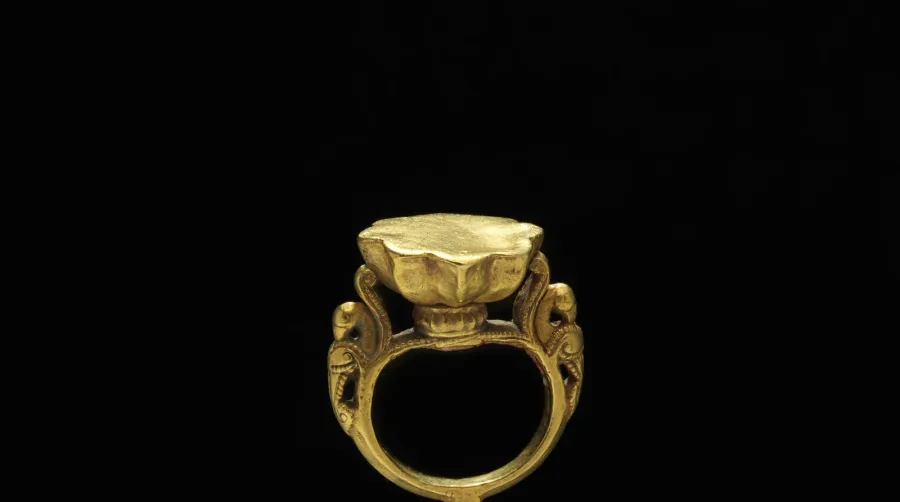
- A ring watch is a miniature movement set into a ring. A purely decorative object: the dial is tiny and reading the time is a struggle, but the effect is strong.
- Brooch watches and locket watches are still around: pinned to a jacket or worn on a long chain.
- Closed-dial watches are models where the cover is paved with stones and hides the glass entirely. Shut, the object looks like a bracelet or a brooch; open, it shows the time. A direct descendant of the Renaissance pendant watch.
How a Jewellery Watch Differs from an Ordinary One
In an ordinary watch the movement and legibility come first, and the case serves as its mount. In a jewellery watch it is the other way round: appearance comes first, and the movement may be quite simple, sometimes even quartz, hidden under a rich cover. So a jewellery watch is approached the way jewellery is: you look at the metal, at the cutting of the stones, at how the object sits and catches the light, while accuracy of timekeeping moves to second place. That does not make it worse, it simply has a different job, to be a precious object that can tell the time.
Gold watch, silver ring, on the same hand? That clashes. One metal on the wrist, and I won't hear otherwise.
How to Wear a Watch
After years on shoots and runways, a watch has passed through hundreds of my looks, from sharp suits to beach linen. Here is what actually works, occasion by occasion.
What watch works for every day? For daily wear I recommend a steel case around 38-40 mm on a calm strap or bracelet. It sits well with jeans, knitwear and a linen shirt, and it takes real wear without worry. One rule: if you already wear a ring or a bracelet, keep to one metal. A steel watch beside silver reads as one piece, while warm gold next to cool silver argues.
What should I wear to the office? Under a long sleeve I choose a slim case and a flat dial so the watch slides under the cuff. I suggest a leather strap in brown or black, which suits tailoring better than a heavy bracelet. Dark dial with a dark suit, light with light, and do not load the wrist with paired bangles.
And for the evening or a celebration? For the evening I build the look around metal and stones: yellow or rose gold, an enamel dial, a slim bezel scattered with stones. This watch works as jewellery and catches the light under the cuff. A small watch on a thin strap belongs here too, reading more as a bracelet that happens to tell the time.
How do I match a watch with rings and a chain? I let the watch metal lead and choose everything else to follow it, which is easier than the reverse. I recommend never mixing yellow gold with cool silver on the same hand. One strong watch and one fine ring beat a wrist stacked with everything at once.
Which watch makes a good gift? For a gift I suggest safe classics: a round dial on two or three hands, 38-40 mm, solid metal rather than plating. It suits almost any look, and an engraving on the caseback with a name or a date turns it into a personal piece that gets kept.

Turn on your camera, pick earrings, a pendant or a ring, and see the piece on yourself in real time.
Switch items in one tap.
Everything runs in your browser: no photo or video is ever uploaded.
Materials and Their Significance in Fine Watches
Gold: Classicism and Eternity
Gold in watchmaking is not just metal, it's a language of status. Yellow, white, and rose gold each reflect light differently and influence watch perception differently.
Yellow gold (585 or 750 fineness) is most classical. It's warm, sunny, reminiscent of wealth from past eras. Yellow gold watches look best on mature wrists. This metal is chosen by someone who knows their taste and doesn't follow trend.
White gold (585-750) became popular in the 20th century when platinum seemed too expensive and silver too cheap. White gold is cool, modern, it highlights the brilliance of diamonds and coloured stones. White gold watches appeal to those valuing minimalism and brightness.
Rose gold (pink gold, 585-750) is a gold-and-copper alloy. It's fashionable, youthful, currently at peak popularity. Rose gold is warmer than yellow, more modern. Rose gold watches suggest time can be worn with pleasure, not just dignity.
Platinum: Rarity and Durability
Platinum is for the chosen few. It's 30 times rarer than gold. It's twice as heavy as gold. It doesn't rust, doesn't tarnish, doesn't require repolishing. A platinum watch outlives its owner. It's jewellery you can leave with confidence it will look exactly as it did the day you bought it.
Platinum watch cost exceeds gold not simply because platinum is more precious. A platinum case requires special manufacturing. Platinum is harder to polish, harder to engrave, harder to stone-set. Every platinum case is high-level craftsmanship.
Diamonds and Coloured Stones: Light in the Case
Watches may be adorned with diamonds several ways. Most common and simple is stone setting in the case around the dial. The bezel of the watch becomes a scatter of bright and dark reflections.
Coloured stones (rubies, sapphires, emeralds, aquamarines) are used rarely because they demand more setting skill. But when done correctly, coloured watches look like artwork. On your wrist it's not simply a watch, it's a portal to the 18th century.
Interesting fact: serious watch collectors often choose models WITHOUT diamonds. They believe stones distract from case beauty, from lines, from proportions. This really shows watches as jewellery exist in several parallel taste universes simultaneously.
Customer reviews
Zevira is a real jewellery shop. Genuine payments, deliveries and customer thank-yous.
🥰🥰🥰 gracias

Ok, ¡gracias! 🙂

Movements: Manual, Automatic and Quartz
This is the main division in the world of watches, and both the price and the character of the object follow from it.
Hand-Wound Mechanical Watches
Inside sits a mainspring wound by the crown. As it unwinds it feeds energy through a train of wheels, and the hands move. No electricity, no battery. Such a watch has to be wound by hand, usually once a day. The error of a mechanical watch is honestly measured in seconds a day, not seconds a year.
Power reserve, meaning how long the watch runs from a full wind, is usually 40 to 70 hours, longer in some. The drawback is having to remember the winding. The advantage is pure mechanics with no consumables, which, if serviced, lives for decades.
Automatic (Self-Winding) Watches
The same mechanics, but the spring winds itself. Inside sits a rotor, a crescent-shaped weight that turns with the movement of the arm and tops up the spring. No hand winding is needed while the watch is worn. The drawback: leave it a couple of days without movement and it stops, so the time has to be set again. Winder boxes exist for exactly this, rocking the watch gently while it rests.
Quartz Watches
Instead of a spring and wheels there is a quartz crystal that oscillates at a strictly constant frequency under current; electronics divide that frequency and drive the hands. Accuracy is a few seconds a year against a few seconds a day for mechanics. Quartz is cheaper to produce and needs no winding, but the battery wants changing every few years.
Why Mechanics Cost More Than Accurate Quartz
A fair question: quartz runs more accurately and costs less, so why pay over the odds. The answer is that mechanics and quartz do different jobs.
- Mechanical movements are assembled and finished by hand, hundreds of parts, hand polishing, engraving. That is where most of the cost sits.
- With servicing, a mechanical watch still runs a century later. Quartz electronics date over time and are less repairable.
- The movement is visible and alive: the ticking, the sweep of the seconds hand, the tangible weight, the ritual of winding. Quartz is silent and works unnoticed.
Roughly speaking, quartz is about a precise instrument and mechanics about handwork and an object that gets passed on. Both have their place; they simply answer different questions.
Complications: What a Watch Does Beyond the Time
A complication is any function beyond showing hours, minutes and seconds. Each one adds parts and therefore adds cost.
- The chronograph is a built-in stopwatch with its own pushers. Extra subdials count minutes and hours from the start. Historically made for racing and sport.
- Date and calendar: from a simple aperture with the number to a perpetual calendar that accounts for the differing lengths of months and for leap years and needs almost no adjustment.
- Moon phase is an aperture showing the current phase. Of little use, but pretty and poetic.
- A second time zone (GMT): an extra hand shows the time in another zone. Handy for frequent flyers.
- The tourbillon is a rotating assembly that averages out the effect of gravity on the rate. Technically the most demanding thing there is, and mesmerising seen through a clear case back.
- The minute repeater is a mechanism that chimes the time: you can hear the hour in the dark. One of the rarest and most complex assemblies of all.
Upload a photo of your pet, someone you love, or an object. We'll build a 3D model and hand-cast it in pewter.




Legendary Jewellery Watchmakers
Abraham-Louis Breguet: Peak Craftsmanship
Abraham-Louis Breguet (1747-1823), a name to know if you want to understand watches as jewellery. He was a Swiss watchmaker creating timepieces for kings and emperors. His watches were so mechanically perfect and so beautiful they became synonymous with absolute luxury.
Breguet watch distinctiveness, golden decorations on the dial. They're called guilloché. Not simply patterns, but mechanical engraving created by special machines producing perfectly identical designs. Breguet dials glitter from different angles, creating visual movement effect.
Breguet watches were expensive even by royal court standards. A single pocket watch cost as much as a small house. Yet anyone seeing them understood: this is money spent on perfection.
Geneva Dynasties: Family Craftsmanship
The most revered Geneva houses, founded in the 19th century, build their reputation on watches created by hand, in small workshops, by individual commission.
Their distinctive philosophy: they never chased sales volume. Instead, they create exactly as many watches as their master craftsmen can make at the highest quality level. This created a rarity effect. Some pieces require years of waiting after ordering. Waiting lists have always existed.
The most famous refined sports models of the 1970s and 1990s, shaped by legendary watch designers, cost as much as new cars, sometimes more. Collectors hunt them like artworks.
Robust Sports Houses: Democratizing Luxury
Some celebrated houses founded in the early 1900s sit at the opposite end from the rarest Geneva makers. Where one stands for extreme exclusivity, the other offers luxury accessible to people with a serious, though not extraordinary, income. Such watches sit in a price tier below the rarest grand complications.
These houses helped popularize the idea of the watch as a long-term keepsake. Certain robust sports and dive models have held their appeal strongly on the secondary market over the decades, though resale values always vary with condition, model, and demand.
Interesting fact: watches from these houses have been worn on deep-sea dives, on high mountains, and famously on cinema screens. They built the image of a watch that does not fail in extreme conditions.
Understated Houses: Minimalism and Perfection
Some less famous yet equally worthy houses, founded in the early 1800s, create unpretentious designs with impeccable finishing. Their watches appeal to those valuing understatement over display.
One celebrated design of the 1930s is a masterpiece of ingenuity: the case flips, hiding the dial. It was originally created for polo players who needed a watch but feared damage. It became a classic precisely because it perfectly embodies minimalism. A hidden watch sometimes beats a displayed one.
Jeweller-Watchmakers: Fine Watches in the Fullest Sense
Several great houses started as jewellers then added watches. Their watches aren't a compromise between jewellery and watchmaking. They're a synthesis. Such watches are decorated like rings or necklaces, but mechanical hearts beat inside.
Jewellery-driven models from these houses often appeal to women wanting jewellery that also shows time. It's not a practical choice. It's a choice of beauty.
Eras and Styles: How the Look of Watches Changed
Art Deco (1920 to 1940)
The age of geometry and clean lines. Square and rectangular cases, spare dials, minimal ornament. Platinum was in fashion and diamonds were used with restraint. Many classic rectangular shapes date from exactly here. The same period produced the idea of function inside beauty, the flipping case that protects the glass being the obvious example.
The Post-War Decades (1950 to 1970)
The watch became a tool as well: waterproof models for diving appeared, chronographs for racing, dual-time watches for pilots. This was the last great era of pure mechanics before quartz arrived, which is why pieces from those years are especially prized by collectors.
Quartz and the Return to Mechanics (1970 to 2000)
In the 1970s quartz collapsed the market for cheap accurate watches. Mechanics were buried too early: by the 1990s interest had returned to them precisely as handwork and as ornament, and it has only grown since.
Today
The market is split between sports watches with tough cases and functions, and classics with finished movements. After the taste for large cases in the 2000s (44 mm and up), the pendulum has swung back to moderate sizes of 36 to 40 mm, which sit better on the arm and are reckoned more timeless.





Size and Type: Matching a Watch to Yourself
Case Diameter
Watch size is measured by the diameter of the case, excluding the crown.
- 30 to 36 mm is a small watch, traditionally women's, though increasingly worn regardless of gender.
- 38 to 40 mm is the universal size and suits most wrists.
- 42 mm and above is a large watch, conspicuous on the arm, and sits well on a broad wrist.
A simple rule: check that the case does not overhang the edges of the wrist and that the lugs, the horns the strap fixes to, do not droop. If you are torn between two sizes, the smaller almost always looks neater and dates less quickly.
By Purpose
- Sports: steel or titanium, water resistance, sapphire or shock-resistant glass, a legible dial. No anxiety about wearing them daily.
- Classic (with a suit): a slim case that passes under a cuff, a plain dial with two or three hands, a leather strap. The more formal the occasion, the thinner and quieter the watch should be.
- Jewellery: gold or platinum, enamel, stones in the bezel. Ornament first and instrument second; right for an evening out and for particular occasions.
Leave your email, we'll send your discount code. No spam, unsubscribe anytime.
The code arrives by email, valid on your first order.
Choosing Watches Worth Keeping
Movement: Visible Perfection
When choosing a watch you intend to keep for years, first check the movement. Movement visible through caseback (usually sapphire glass with magnification) reveals everything. Good movement looks like a miniature ancient city. Every screw engraved, every wheel polished, every surface decorated.
Swiss watchmaker movements often embellish like sculpture. It's called finishing. Good finishing requires hours of work. Poor finishing signals the company tries economizing. Watches with poor movement finishing tend to be valued less by collectors over time.
Check visible engravings with company name. Check screw engraving. Check wheel polishing. These indicate craftsmanship.
Rarity: Numbers Matter
Watches rarely have limited editions. But some release 50 or 100 per year. If 1,000 release yearly, after 20 years many exist on secondary markets, and prices drop.
If 50 release yearly, many are lost, damaged, or remain with private collectors after 20 years. Rarity creates demand, demand creates price.
Check annual company output. If this is hidden, bad sign. Good watchmakers pride themselves on rarity and honestly state yearly production.
History and Heritage: Name Significance
Watches from 150-year-old companies are received differently by collectors than those from 10-year companies. History creates trust, trust creates demand.
Check when founded. Check past watch creation. Check which models became classics. If a brand has classical models unchanged 20-30 years, good sign. Company knows what works and doesn't chase trends.
Condition: Original or Restored
Secondary watch markets have many restored or altered watches. This may mean price drops. New, never-altered watches cost more.
Check original documentation exists. Check original box exists. Check if worn or vault-stored. Vault-stored 30 years watches look better than daily-worn ones.
Yet interesting paradox: worn watches sometimes cost more than new ones. Collectors believe worn watches worked better than boxed ones. It's faith matter.
CAPAORA mini knife pendant
The 18th-century Spanish navaja in miniature: 40 mm of stainless steel, a real folding mechanism and a Palanquilla lock that clicks. An affordable gift to remember.
Authentic · Ships from Spain · 14-day returns
Personal Identity and Watches
Watches as Taste Statement
When buying watches, you're not buying timekeeping tool. You're making statement. You tell the world: I know good, I afford it, I value craftsmanship.
Choosing between a robust sports house and an ultra-rare Geneva maker isn't really a watch choice. It's an identity choice. One says: I'm successful, I achieve, I believe in classics. The other says: I know people who know people, I can wait years for what I want, I value rarity over display.
Interesting observation: truly wealthy often choose not most expensive watches. They choose what they like. Because they need no wealth display. Poor newly earning money often choose loudest, most gold, most visible watches.
Watches Across Cultures and Eras
In Japan, watches as jewellery aren't as popular as in the West. Japanese buyers often value watches for the mechanism, not beauty. This appears in Japanese watchmaking traditions that create mechanically excellent but often unpretentious watches.
In Switzerland, watches are national treasure equal to cheese and chocolate. A Swiss owning non-Swiss watches is unthinkable. Switzerland created global luxury watch culture.
In Italy, watches are less popular as investment but valued more as ornament. Italians choose watches for beauty, not mechanics.
How to Tell a Real Watch from a Fake
Fakes have existed almost as long as expensive watches have, and the good copies can be convincing. A few things are worth looking at.
Weight and material. Gold and platinum are heavy and feel noticeably more substantial on the arm than steel or a base alloy. If a watch is described as gold and sits in the palm as light as plastic, that is a reason to pause.
The sweep of the seconds hand. On most mechanical watches the seconds hand glides, appearing to sweep, because it takes several steps a second and the eye reads the motion as continuous. Cheap quartz ticks once a second in large jumps. If a supposedly mechanical watch jerks its hand once a second, there may well be an ordinary quartz movement inside.
Finishing of the movement. Through a clear case back the movement is visible. On a real watch the screws, wheels and bridges are neatly finished and polished, and engraving is legible. Coarse, uneven parts, traces of glue, rust, all bad signs.
Dial and typeface. Under a loupe the lettering on a good dial is even, crisp and correctly proportioned. Crooked letters, uneven spacing and smudged printing give away a copy. Old enamel often shows a fine natural web of crazing, which is normal; a perfectly "new" dial on an old watch usually means it has been redone.
Matching numbers. A serial number may appear on the case, on the movement and in the paperwork, and they should agree with each other.
Papers and the full set. Original packaging, a warranty card and receipts all raise confidence. Forged papers are usually slightly off, a different typeface, uneven printing.
If it is an expensive private sale, it is sensible to show the watch to an independent watchmaker before the deal. That costs far less than the risk of taking home a fake.
Care and Preservation
Technical Maintenance
Watches need servicing. Fine watches need servicing every 5-10 years. This means disassembly, cleaning each part, lubrication, reassembly, calibration. The cost ranges from modest to substantial, depending on watch complexity.
Watch servicing invests in future. Well-serviced watches work better and live longer. Unserviced watches degrade and eventually die.
Storage and Protection
Watches need proper storage. Not in moisture, not in sun, not in dust grams. Ideally store in safe, in protective case, wrapped in fibre-free cloth.
Watches shouldn't hit water (except water-designed watches). Watches shouldn't fall. Watches shouldn't experience temperature extremes. This sounds fussy, but it is. Watch care shows them and yourself they're valued.
Repair and Restoration
Broken watches need authorised dealer or master. DIY repair can eliminate all watch value. Authorized repair costs highly, but guarantees watches remain original.
Secondary market pays more for authorised than unauthorized or DIY repair. This because buyers believe authorised repair is honest repair.
Send a friend a discount code, they save on their first order.
Collectibility and the Secondary Market
Silver, gold, engagement rings, symbolic jewellery, paired sets.
How Some Watches Hold Their Appeal
A handful of vintage models have famously become highly sought after on the secondary market over many decades. Early dive watches from the 1950s and 1960s, or refined sports models from the 1970s, are often cited as examples of pieces that collectors prize today far more than when they were new.
These are the rare standouts, not the rule. Ordinary high-volume watches frequently lose value on resale. Secondary-market prices depend on condition, rarity, provenance, and shifting demand, and no outcome is guaranteed.
Collecting With Knowledge and Patience
Some people collect watches seriously. They study the market, seek out rare models, and hold pieces for the long term. A well-chosen collection built patiently over decades can become meaningful both personally and culturally.
But this only works if you know what you're buying, can access rare watches, and have patience. A watch should be bought because you love it, not as a promise of profit, and resale values can rise or fall.
Facts That Surprise
In five centuries watches have gathered enough stories to fill a book of their own. A few facts change how you look at the familiar object on your wrist.
The First Wristwatches Were Women's Jewellery
For a long time a man with a watch on his wrist drew a smirk: it was reckoned a lady's trinket, much like a bracelet. A serious person kept his watch in a pocket. What turned the situation round was not designers but soldiers, who in combat had no time for pockets. What now reads as a masculine attribute began life as a purely feminine piece of jewellery.
The Watch Was Worn Instead of a Handbag
Women's dresses had no pockets for centuries, and a chatelaine with a watch hanging from it served as accessory, organiser and purse all at once. A single waist clasp might carry a watch, keys, a seal, scissors, a scent bottle and a notebook. You could read both a woman's means and her occupations from the set of hangers.
The Most Accurate Watches Are the Cheapest
A market paradox: a modest quartz watch from the nearest shop runs more accurately than mechanics costing as much as a car. Quartz errs by seconds a year, expensive mechanics by seconds a day. What the money buys is not accuracy but handwork, materials and longevity. Accuracy became the most affordable function long ago.
A Dial You Hear Rather Than See
The minute repeater is a mechanism that chimes the time in a melodic sequence at the push of a lever: so many strikes for the hours, a distinct chime for the quarters, fine notes for the minutes. It was devised before electric light, so the time could be known in darkness without lighting a candle. Today it is one of the rarest and most complex assemblies there is, pure luxury for the beauty of a sound.
Engraving Turns a Watch into a Family Object
A good mechanical watch, properly serviced, runs for more than a hundred years, which is why watches are the objects most often inherited. A couple of words and a date engraved on the case back make the thing irreplaceable: the market value of two identical watches is equal, but the one carrying a line from a grandfather is beyond price to the family.
The Moon on Your Wrist Errs Once a Century
The moon-phase complication in a simple execution accumulates error and needs resetting every two or three years. But there are precise versions in which a single day of drift takes 122 years or more to build up. The result is an ornament that will outlive its owner without once misreporting the moon.
Stones in a Watch Are Sometimes Hidden Rather Than Shown
There are jewellery watches where the entire dial is covered by a stone-set lid: the object looks like a solid bracelet or a brooch, and only the owner knows a movement sits inside. This descends directly from the Renaissance pendant watch, where the beauty of the case always mattered more than the reading. Sometimes the most valuable thing about a watch is the part not put on display.
Frequently Asked Questions
Which watches tend to hold their appeal best? Rare Swiss watches, especially vintage pieces and limited editions, are most often sought after by collectors. Japanese watches usually offer a more affordable entry point. Keep in mind that secondary-market values always vary and are never guaranteed.
Should I immediately buy premium? No. If you're unsure of your preferences, start mid-range. Wear them, learn, then move to premium. Watches are personal, and tastes develop over time.
How identify authentic watches? Complex question. Counterfeits are excellent. Best approach: buy authorised dealer or secondary expert verification. Secondary markets carry counterfeiting risk.
Can I daily-wear expensive watches? Yes, if designed for it. Robust steel sports and dive watches are built for daily wear. Platinum diamond watches are not. Save those for special occasions only.
Do I need the original box and documentation? It helps. On the secondary market, watches with their original box and papers usually command a noticeably higher price than those without, because these indicate authenticity.
How know if watches go out of style? Classical designs don't. 20-year-old watches looking identical to today's don't go out of style. Good sign. Yearly-updated watches risk becoming dated.
Buying it as a gift? Each one arrives ready to give.
 A branded Zevira box and a little card come with every order.













About Zevira
At Zevira you'll find watches reflecting this guide's essence. We select watches like other jewellery, with material attention, craft respect, belief that objects can be beautiful, functional, and long-lived simultaneously.
Every watch in our collection is choice: gold or platinum, mechanical or quartz, minimalism or jewellery maximalism. However you choose, remember you're not choosing minutes-counting tool. You're choosing how to wear time and history on your wrist.