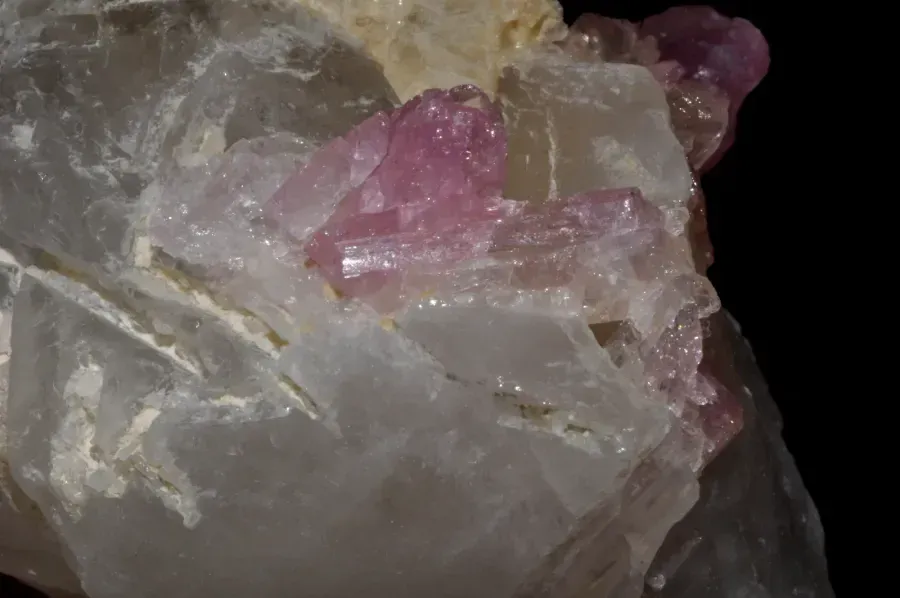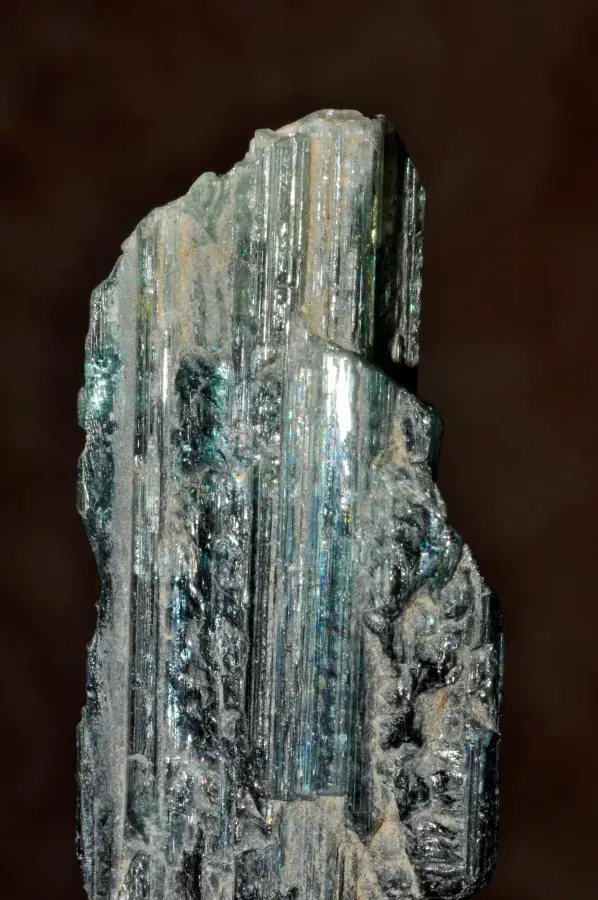
Paraiba Tourmaline: the Neon Blue That Rewrote the Gem Market
Copper That Glows Like Neon
In 1989, on a hillside farm in north-eastern Brazil, a crystal came out of the ground that seemed lit from within. The blue was unlike anything the jewellery trade had seen. Within a single decade this stone overturned the old rules of rarity and pushed aside minerals whose mines had been running dry for centuries.
Paraiba is a blue tourmaline coloured by copper. Locked into the crystal lattice of a borosilicate, copper absorbs the red part of the spectrum and re-emits blue and green so forcefully that the stone looks luminous even in dim light. This is not magic and not "energy", it is optics: what gemmologists call the chromophore effect of a trace element.
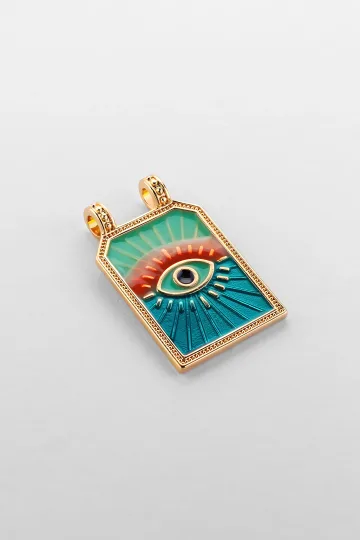
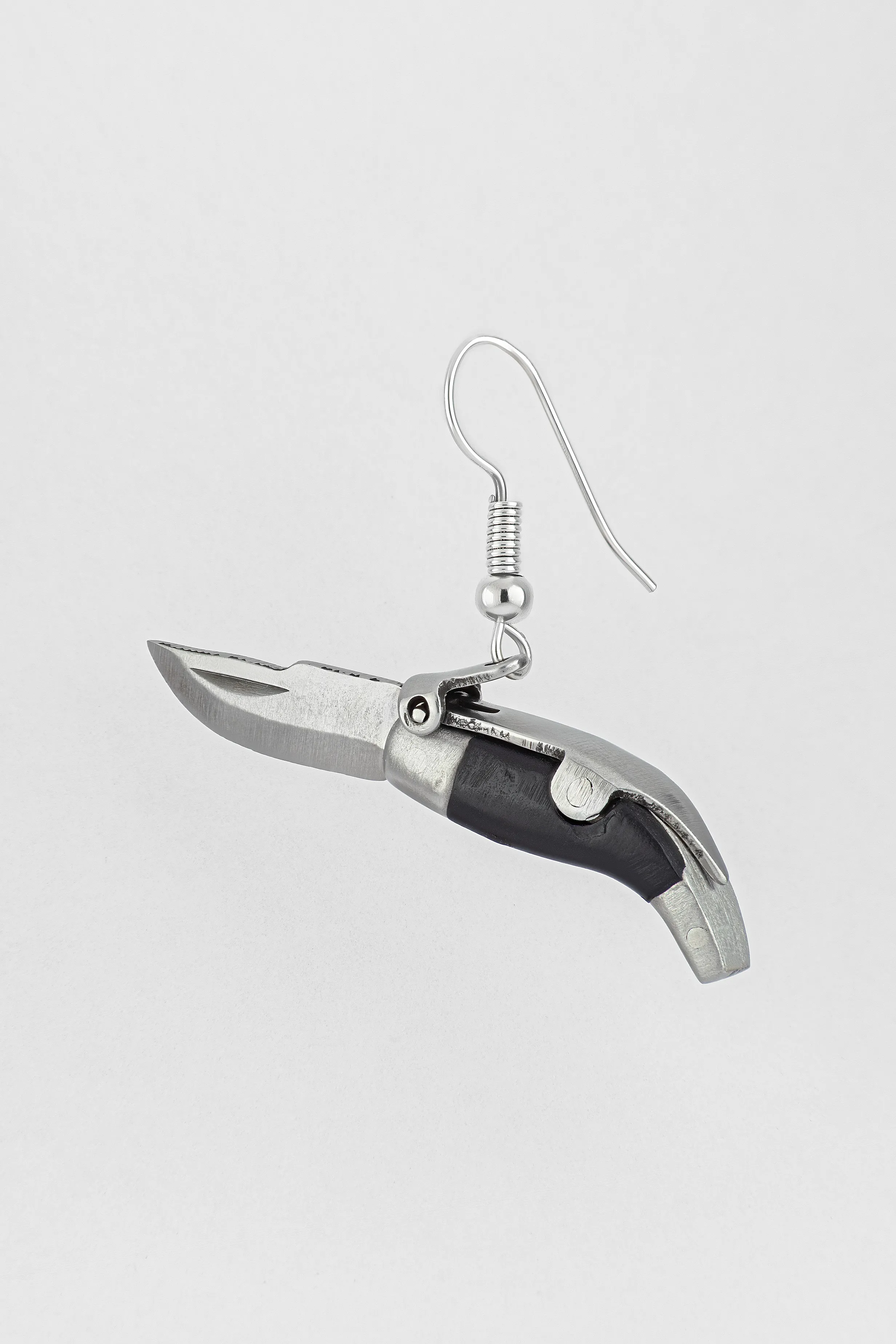
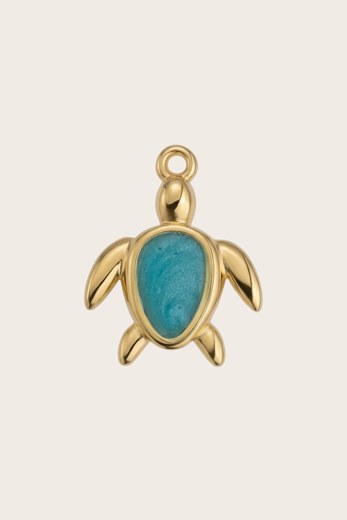
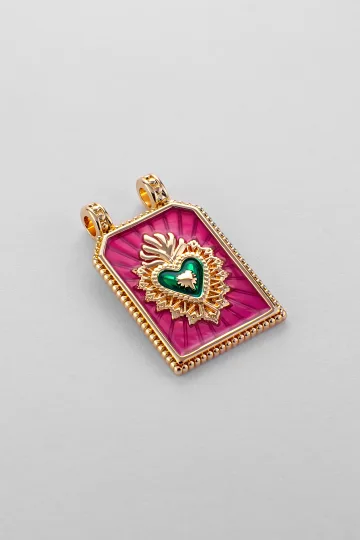
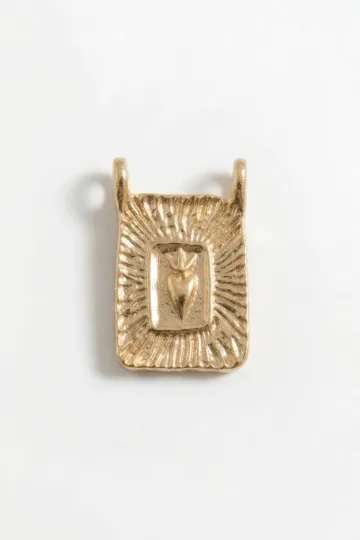
Wear the symbol, don't just read about it. These are in stock:





Chemistry and Physics: Why Copper Burns So Bright
Paraiba belongs to the tourmaline group, to the species elbaite. The chemical formula of elbaite is Na(Li1.5Al1.5)Al6(BO3)3Si6O18(OH)4. One element sets paraiba apart from ordinary tourmaline: copper (Cu), which substitutes for lithium and aluminium at certain points in the lattice. The amount of copper is small, usually 0.5 to 2 percent by weight, yet it dictates the entire colour.
Copper surrounded by six oxygen atoms (octahedral coordination) absorbs the red wavelengths of light (roughly 600 to 700 nm) and gives back blue and green (400 to 550 nm). For comparison, in other blue tourmalines such as indicolite the colour comes from iron and titanium, and the blue turns out dark, almost violet. Paraiba glows like a neon tube. The difference is one chemical element.
Sometimes manganese joins the copper, and then violet and pinkish hints appear. These fade under heat, leaving clean blue or green behind.
Physical properties of paraiba:
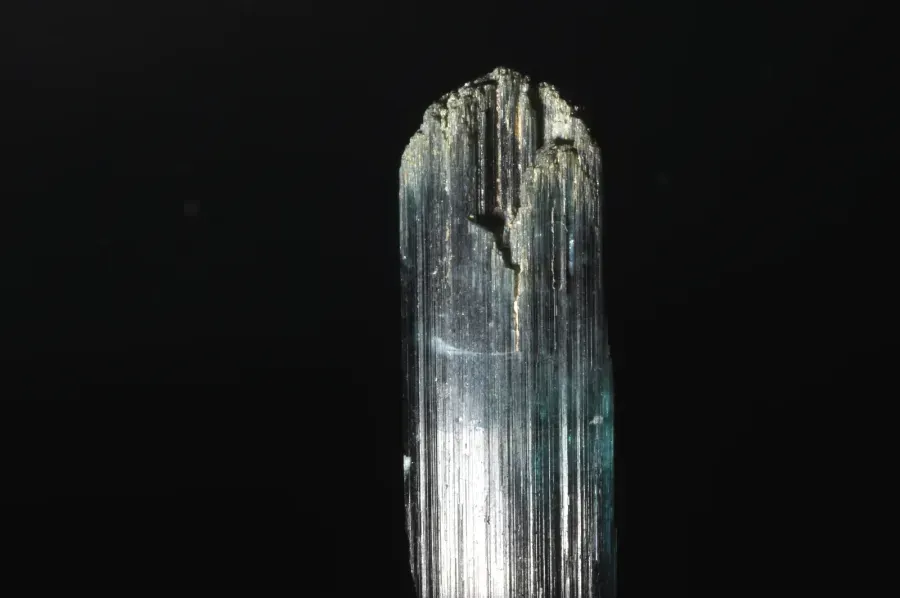
- Crystal system: trigonal. The crystals are elongated prismatic columns with the characteristic lengthwise striations on their faces. The striations remain visible even after polishing and serve as one sign of a natural stone.
- Hardness: 7 to 7.5 on the Mohs scale. Enough for jewellery, but care against knocks and abrasive cleaning is essential.
- Density: 3.02 to 3.10 g/cm³.
- Refractive index: 1.612 to 1.652, birefringence around 0.018.
- No cleavage (more precisely, it is very imperfect), but the stone is sensitive to sudden temperature swings.
Under ultraviolet light (a 365 nm lamp) most paraibas fluoresce blue or yellow-orange. Gemmologists use this as a first clue during examination, although synthetic stones can glow too, so a UV check alone is never enough.
Neon blue takes the stage alone, full stop. Crowd it with a second bright stone and you've built a pawnshop window, not a look. Don't you dare.
What to Wear Paraiba With
After years working with coloured stones, paraiba is a special love and a special headache: its light is so strong it pulls the whole look toward itself. Here is what I have found, occasion by occasion, that actually keeps the stone in the lead.
What do I wear paraiba with day to day? For an everyday look I recommend a single slim pendant with a small stone over a plain top: a white shirt, grey knitwear, sandy linen. Cool and neutral tones act as a clean backdrop, and the blue catches the light with every movement. I suggest putting busy prints aside; the stone argues with them and loses.
Does paraiba work at the office? It does, as long as you keep it restrained. I choose stud earrings or a ring on a thin band, and an open neckline with no high collar so the pendant falls right. One piece, not a stack. A quiet flash of blue reads as a mark of taste, not a loud statement.
How do I build an evening look? For the evening I suggest bare shoulders, a V-neck and a smooth fabric, silk or satin, in a deep cool tone: navy, emerald, black. Here a larger stone or a cushion ring as the only accent belongs. On smooth fabric and open skin the glow comes fully to life.
Which metal should I pick for paraiba? A cool blue gets on with a cool metal. I recommend white gold or platinum: they amplify the glow and never pull attention away. Rose gold gives a fashionable warm-cool contrast. I suggest yellow gold only in carefully considered vintage outfits, or it quarrels with the stone.
Who does paraiba actually suit? Anyone unafraid to be noticed, who prefers one strong accent to a handful of pieces. Against a monochrome, restrained wardrobe the stone works especially hard. Two rules that never fail me. First: paraiba needs quiet around it, one bright colour at a time; a second coloured accent nearby dims it. Second: if you want volume, add neutral white stones, not a second neon.

Turn on your camera, pick earrings, a pendant or a ring, and see the piece on yourself in real time.
Switch items in one tap.
Everything runs in your browser: no photo or video is ever uploaded.
History: How a Copper Tourmaline Conquered the Market in 35 Years
The Discovery in Paraiba (1989)
The story does not begin in a laboratory. In the state of Paraiba in north-eastern Brazil, near São José da Batalha (the municipality of Salgadinho), a prospector named Heitor Dimas Barbosa dug stubbornly into a hill for almost ten years, convinced it hid something special, and finally lifted out a handful of unusual crystals. The samples reached mineralogists, and chemical analysis revealed a high concentration of copper in the lattice, an element that had only ever appeared in tourmaline as a trace and had never driven colour so radically.
The first stones were tiny, one to three carats, but their glow was so intense that the commercial potential was obvious at once. The real explosion of interest came at the Tucson Gem Show in 1990, when a small parcel of Brazilian paraiba was shown to an international audience. The reaction from gemmologists and dealers was unanimous: a new coloured stone had arrived.
The Frenzy of the 1990s
If one deposit existed, there had to be others. The search spread across Brazil: Rio Grande do Norte, Bahia, Minas Gerais. By the mid-1990s a few more mining points had been added. Prices climbed to the level of a fine sapphire or ruby, sometimes higher. Major dealers bought paraiba as an investment, and museums competed for specimens.
By the end of the 1990s the first Brazilian veins were practically exhausted.
Africa and a Re-evaluation (2000-2010)
Around 2001 large deposits turned up in Mozambique, near Mavuco on the Alto Ligonha pegmatite field (Zambézia Province, in the east of the country). The copper content was recognised in 2003, and from 2005 the stones were widely sold with their origin stated. African paraiba is geologically and chemically almost identical to the Brazilian material, but mining was on a larger scale and bigger stones became available. Prices began to slide, not crashing, but steadily.
That was also when the argument over origin began. Brazilian paraiba was seen as "the real thing", while African material was treated with more scepticism. In the end a descriptive system emerged: stones from Brazil carried a premium, while "tourmaline with paraiba properties from Mozambique" sold for less, even though the composition barely differs.
New Finds (2010-2026)
Around 2001 small deposits of copper-bearing tourmaline were also opened in Nigeria (the Oyo and Ilorin area), but the volumes proved tiny and caused no revolution. In parallel, jewellers adopted irradiation to deepen paraiba's colour, an ethical practice when disclosed to the buyer, but one that added to the market's confusion.
By the 2020s paraiba had moved from a novelty to a recognised classic among rare stones. The Brazilian veins are nearly spent, Mozambique remains the main source, but even there volumes do not grow in an avalanche. The stone has settled firmly into the niche between the widely known corundums and the narrowly specialist collector minerals.
Copper and Manganese: the Duo That Draws the Colour
The colour of a paraiba is rarely the work of one element on its own. More often a pair is at work, copper and manganese, and the proportion between them decides where the tone lands, anywhere from an icy blue to a warm violet. Understanding that pair also explains why one crystal goes to an expensive cutter while the one beside it stays as rough for treatment.
What the Copper Does
Copper is responsible for the blue and blue-green component. A copper ion surrounded by oxygen absorbs the long wavelengths, the reds and oranges, and returns the short ones, which the eye reads as blue. The higher the copper content and the cleaner the lattice around it, the denser and brighter the blue. This is precisely why stones with a high copper content produce the glow-in-the-shade effect by which paraiba is recognised without instruments. Copper is a rare guest in tourmaline: the element is large, awkward to fit into the elbaite structure, and only a very particular pegmatite chemistry will put it there at all, which is the root cause of the stone's scarcity.
What the Manganese Does
Manganese contributes a reddish and violet note. In raw, untreated crystal it frequently pulls the tone toward a muddy violet-grey that the market values poorly. But manganese is responsive to heat: at a moderate temperature its influence weakens, and clean copper blue comes forward. So a single piece of rough is capable of changing character entirely, from a cloudy plum to a bright turquoise. The balance also explains the greens: where copper dominates and manganese is scarce the stone runs blue, and where a little iron joins in the result tips toward the mint and grass greens sold as verdelite paraiba.
Why the Glow Is Visible Even in Shade
Many coloured stones come alive only under a direct beam and go dead in dim light. Paraiba holds its tone in shade for two reasons. First, the copper absorption is highly selective: the stone does not merely reflect blue, it gives back almost nothing of the competing colours, so blue stays dominant under any lighting. Second, the elbaite lattice is transparent and passes light well, so the path of a ray inside the stone is long and the losses are small. The eye reads the result as an internal glow, though physically it is ordinary transmission and absorption. It is worth testing this in a shop: carry the stone away from the display lighting into a corner, and a genuine copper-bearing tourmaline will still be burning while an imitation goes grey.
Customer reviews
Zevira is a real jewellery shop. Genuine payments, deliveries and customer thank-yous.
🥰🥰🥰 gracias
Ok, ¡gracias! 🙂
Treatments: Heating and Irradiation
Most gem paraiba is brought up to a saleable colour by treatment. That is an industry norm rather than a fault, on one condition: the buyer is told what was done to the stone and how.
Heating
Heating is the commonest method. The crystal is warmed slowly to a few hundred degrees to clear the violet-grey manganese haze and open up the copper blue. The change is stable, and the stone will not drift back to its old tone with time. The fact of heating is almost impossible to detect by eye or even under a loupe, so it is established from indirect evidence in a laboratory rather than across a counter. A large majority of the paraiba on the market has been heated, and a dealer who claims otherwise for an ordinary commercial stone is either mistaken or hopeful.
Irradiation
Irradiation is used less often and more cautiously. It can shift the tone or deepen saturation, but the effect is sometimes less durable than heating and needs monitoring. A competent laboratory distinguishes traces of heating from traces of irradiation and states each on a separate line of the report. Irradiated stones are entirely legitimate to sell and to wear, provided the treatment is disclosed and priced accordingly.
Why an Untreated Stone Costs More
At equal colour, a natural stone that has not been brought on costs more than a treated one. The logic is straightforward: only a small fraction of the rough mined delivers a bright blue without human intervention, and that scarcity carries a premium. But telling a treated stone from an untreated one by eye is effectively impossible, so a seller's word carries no weight here at all. Only a laboratory report stating the type of treatment does. For anything at a serious price, that report is not an optional extra.
Upload a photo of your pet, someone you love, or an object. We'll build a 3D model and hand-cast it in pewter.



Geology and Deposits
Paraiba forms in granitic pegmatites, in settings where three rare conditions coincide: a high concentration of boron, enough lithium and aluminium for tourmaline to grow, and an unexpectedly high copper content in the surrounding rock. Such a combination occurs extremely rarely, which is exactly why the stone is so scarce.
Brazil (state of Paraiba, discovered 1989). The host rocks are Precambrian, ancient. The deposit is small, but its crystals give the brightest glow. By 2000 it was practically worked out.
Mozambique (Zambézia Province, the Alto Ligonha field, discovered around 2001). The deposit is larger than the Brazilian one, and the stones glow on average a touch less intensely. It remains the main source on the world market.
Nigeria (discovered around 2001). Small veins in the south-west of the country. Rare finds, of interest to collectors, but commercially insignificant.
There are no general documented estimates of world reserves of gem paraiba, but it is known that mining proceeds on a very small scale. At the present pace the supply is finite, and that sustains paraiba's status as a stone that becomes scarcer year by year.
Why Paraiba Is Almost Always Small
Blue topaz and amethyst are easy to find in tens of carats, while a faceted paraiba above 3 carats is already a rarity, and the price per carat does not rise in a straight line with size, it leaps. There are several reasons, and they explain why a stone of such modest size can cost as much as a fine sapphire.
The crystals of copper-bearing tourmaline are small to begin with and heavily fractured. The losses during cutting are enormous: often only a fifth to a tenth of the original crystal's weight survives into the finished stone. The rest is cracks, cloudy zones and patches of pale colour that the cutter has to remove.
Colour zoning adds to the trouble. Within a single crystal blue, green and almost colourless zones lie in bands along the long axis. To produce an even blue stone, the cutter orients the rough by colour rather than for maximum yield, and loses mass again. Because of this a large paraiba of even, saturated tone is an order of magnitude rarer than a small one, and each extra carat that keeps its colour sharply raises the rarity.



How to Choose a Paraiba: What Drives the Price
Paraiba has its own hierarchy of value, and it differs from the one familiar with diamonds. Here clarity does not come first; colour and its glow do.
Saturation and tone. The main factor. A clean bright blue (called electric or neon in the trade) is prized above all, then come the blue-green tones, then the greens. A greyish or muddy undertone knocks down the price more than any inclusion. A simple test: the stone should stay bright in the shade, not only under a direct beam.
Size. As described above, the price per carat rises in jumps. A 2-carat stone of even blue costs disproportionately more than two one-carat stones.
Clarity, with a caveat. A perfectly clean paraiba is almost never found, so small inclusions here are the norm, not a flaw. What matters is different: the inclusions must not kill the glow or sit in the very centre of the table. A faint haze near the edge is forgivable; a cloudy spot in the middle is not.
Treatment. At equal colour, an un-irradiated stone is worth more than an irradiated one. But the difference is almost impossible to spot by eye, so the fact and type of treatment are taken from a laboratory report, not from the seller's word.
Origin. At equal quality a Brazilian stone carries a premium over a Mozambican one, although this is largely the reputation of the first deposit rather than an objective superiority of every individual stone.
The practical takeaway for a buyer: chase colour and its liveliness, not flawless clarity or maximum size. A small clean blue paraiba almost always wins over a large but washed-out one.
What Counts as Paraiba Under Trade Rules
The word "paraiba" has bred confusion: it is the name of a Brazilian state, yet stones with the same properties are mined in Africa too. To separate geography from the type of stone, the leading gemmological laboratories (united in the LMHC committee) agreed on a single wording.
Under that agreement, paraiba is defined not by where it is mined but by its composition: it is a blue, green or violet tourmaline (elbaite) whose colour is produced by copper. So in an honest laboratory report you will see wording such as "tourmaline (paraiba type)" with a separate line for origin, whether Brazil, Mozambique or Nigeria. The term "paraiba" by itself does not mean the stone is from Brazil.
What follows in practice. A seller who calls a stone simply "paraiba" without naming a country is hiding nothing: under trade rules this is correct for any copper-bearing tourmaline. But the words "Brazilian paraiba" are a claim about origin, and that must be backed by a report, because it is precisely what commands the premium. If a country is named out loud but does not appear in the document, the premium has no basis.
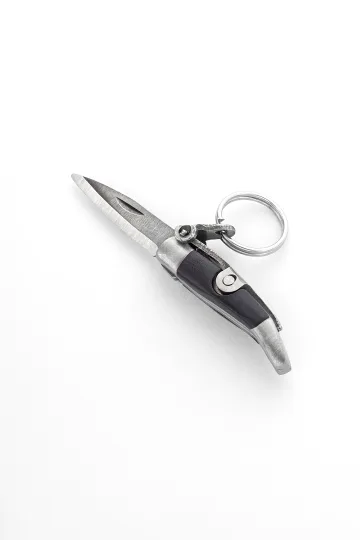
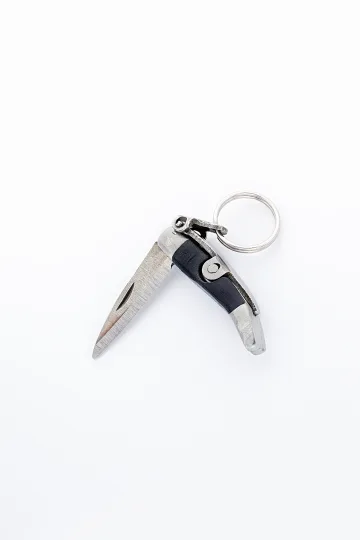
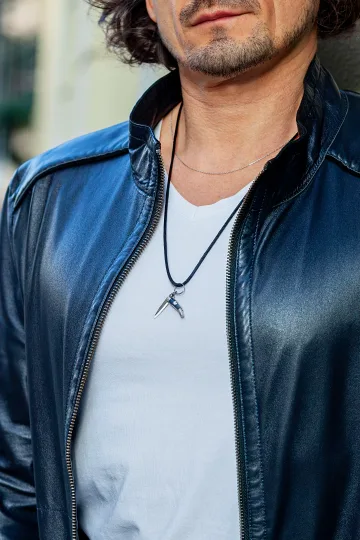
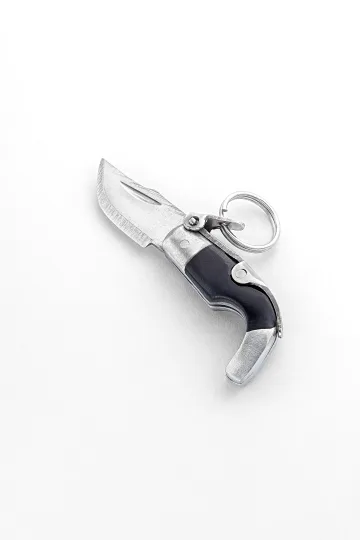
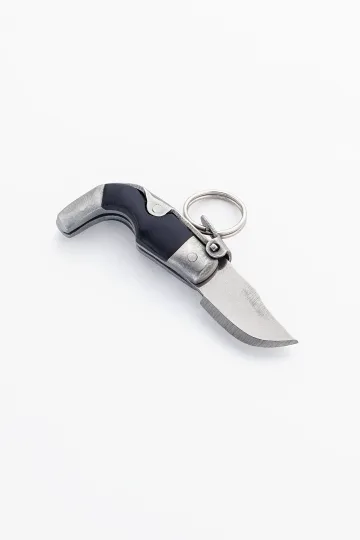
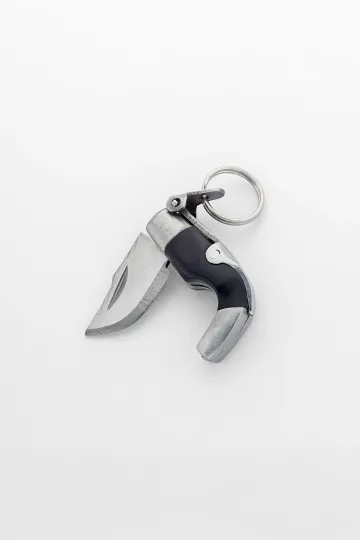
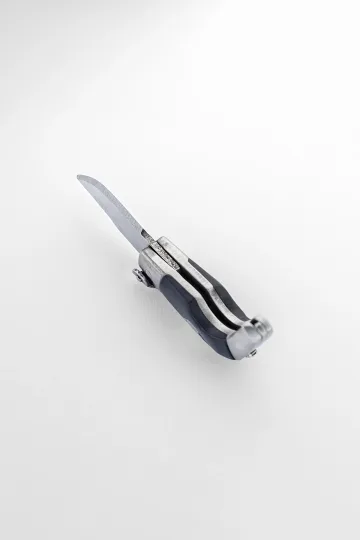
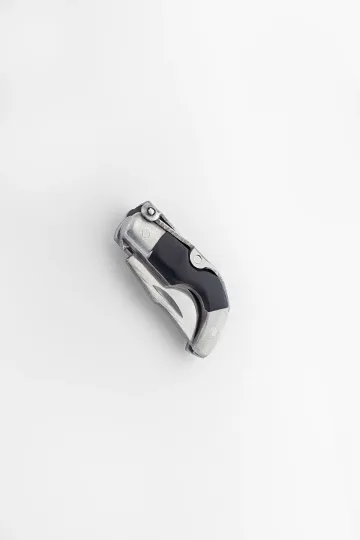
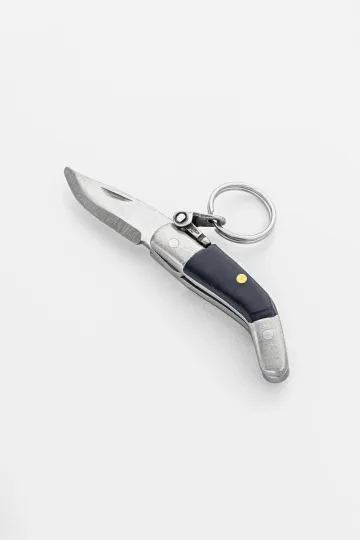
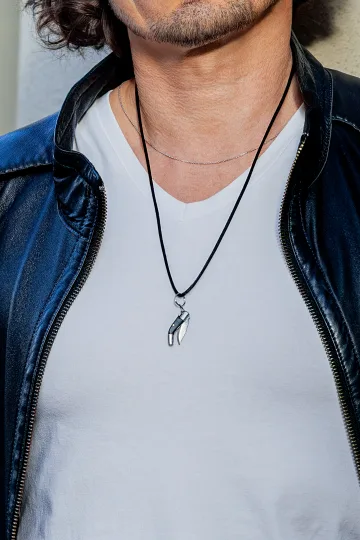
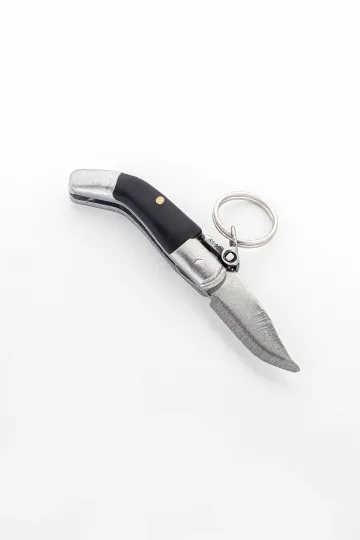
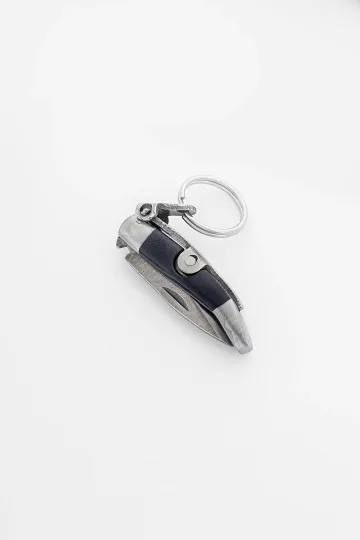
CAPAORA mini knife pendant
The 18th-century Spanish navaja in miniature: 40 mm of stainless steel, a real folding mechanism and a Palanquilla lock that clicks. An affordable gift to remember.
Authentic · Ships from Spain · 14-day returns
Varieties of Paraiba
Blue (electric blue)
The classic, the very stone that hit the headlines in 1989. The colour runs from a clean bright blue (like neon in a dark room) to blue-green. The rarest and most expensive variety. The higher the copper content and the cleaner the stone, the more intense the glow. Brazilian blue differs from the Mozambican by a slightly more saturated, "electric" tone, though the difference is subtle and usually shows under the right lighting.
Green (verdelite paraiba)
Less rare and more affordable than the blue, yet to many eyes more beautiful for the liveliness and naturalness of its tone, from light green to deep emerald. The glow is present, but it looks softer, less "neon". Green paraiba turns up more often in Mozambique.
Transitional and bicolour
Stones between blue and green, or between green and yellow, are rare and often very striking. A category of its own is the bicolour (polychrome) crystals, where one part is blue and another green or yellow. They are cut so that both colours read in a single stone; this calls for skill on the cutter's part and is prized by collectors.
Light
Less saturated stones come at a more accessible price. For jewellery they are often a winner: they look more transparent and "alive", darken less from certain angles and sit well under any lighting.
Leave your email, we'll send your discount code. No spam, unsubscribe anytime.
The code arrives by email, valid on your first order.
How to Tell a Paraiba From a Fake
Irradiated blue topaz, dyed stones and synthetics are sold under the name of paraiba. A few markers to use when examining a stone:
Glow in shade. A genuine paraiba stays "luminous" even in subdued light. A stone that goes dull in the shade is a bad sign.
Colour under different lighting. Paraiba holds its blue in both daylight and artificial light. Blue topaz often shifts its tone noticeably.
Inclusions. A natural stone almost always carries microscopic traces of its growth, little clouds, fine lines. A perfectly "sterile" specimen is more likely synthetic: under a loupe it sometimes shows characteristic growth lines.
Striations. Lengthwise grooves on the crystal faces are a sign of natural tourmaline.
Density. Paraiba is noticeably heavier than many imitations (around 3.06 g/cm³). If a stone feels too light for its size, that is reason to be wary.
A price clearly "below market". If an offer looks suspiciously good for the size and quality claimed, you are almost certainly not looking at natural paraiba.
A full guarantee comes only from a report by a respected gemmological laboratory (GIA, SSEF, Gübelin). The report states origin, the fact and type of irradiation, colour, clarity, weight and cut parameters. For large and expensive stones such a document is essential.
Irradiated and synthetic paraiba
Most paraiba on the market is irradiated to deepen the colour. This is a common and acceptable practice, as it is for blue topaz. An un-irradiated natural stone is worth more precisely because of its rarity, but an irradiated one is not a fake, provided the seller says so honestly.
Synthetic paraiba is a real tourmaline with the same composition and structure, but grown in a laboratory. It is no deception if sold as a synthetic and at the corresponding price. You can wear it without worry; the problem arises only when a synthetic is passed off as a natural stone.
Caring for Paraiba
A hardness of 7 to 7.5 lets you wear paraiba constantly, but the stone is more delicate than sapphire or diamond and fears sudden temperature changes.
Cleaning. Warm water only (not hot) with mild soap and a soft brush. Work gently around the setting and under the stone, where skin oil and dust collect, then rinse and dry with a lint-free cloth.
What not to do. Ultrasonic and steam cleaning are off limits: vibration and uneven heat can trigger micro-cracks. Abrasive products and stiff brushes leave scratches. Avoid contact with perfume, household chemicals and bleach.
Wearing. Take a ring off for impact work and sport, as paraiba can chip. Pendants and earrings are mechanically safer. Once every six months it is worth checking that the setting is secure.
Storage. Keep it apart from other jewellery in a soft box or a fabric pouch: harder stones will scratch paraiba, and it will scratch softer ones (opal, pearl). Years of long, direct sunlight can slightly weaken the colour, so the stone is kept in a dark place.
Cutting. Paraiba is usually given a brilliant or modified brilliant cut, as well as cushion and oval: large tables show the colour and glow best. Correct orientation of the crystal relative to its optical axes has a marked effect on appearance, so the work is left to an experienced cutter.
Jewellery With Paraiba
Paraiba is an accent stone, so in jewellery it is usually set at the centre without an overload of detail.
Rings. From a minimalist solitaire on a thin band to a cushion as the single accent. The stone is better protected by a slightly recessed setting, especially in a ring for everyday wear. Colourless stones are set alongside for contrast.
Pendants and necklaces. The safest format for the stone: less risk of a knock, and the colour shows well. A pear, marquise or cushion cut brings out the glow, and a thin white-metal chain does not distract.
Earrings. A simple matched design, studs or short drops. Earrings with paraiba should not compete with the face, so minimalism wins here.
Bracelets and collars. Striking pieces, but ones that demand many stones. More often a single central stone is made, framed by neutral whites.
The rule for metal is simple: a cool blue gets on with a cool metal. White gold and platinum amplify the glow. Rose gold gives a fashionable warm-cool contrast. Sterling silver is an affordable light backdrop for modern designs.
What to Pair Paraiba With
Blue paraiba is striking beside violet and green stones, green beside pink and red ones. The safe choice for both shades is neutral white stones, which work as a backdrop. A beautiful and rare combination comes with pink tourmaline (rubellite): a warm-cool contrast in designer pieces.
The key is not to put a second bright coloured accent beside it. Paraiba does not like company and should take the solo.
Paraiba and Other Blue Stones
Indicolite is also a blue tourmaline, but coloured by iron and titanium. The colour is dark and saturated, without the neon glow. A close relative of paraiba in mineralogy, but a different character.
Sapphire is harder (9 on Mohs) and more versatile for everyday wear, but it does not glow the way paraiba does.
Aquamarine is markedly cheaper, blue but soft and quiet in tone, with no luminescence.
Blue topaz is most often irradiated to a bright blue, but it never reaches paraiba's glow; it is often the very stone passed off as paraiba.
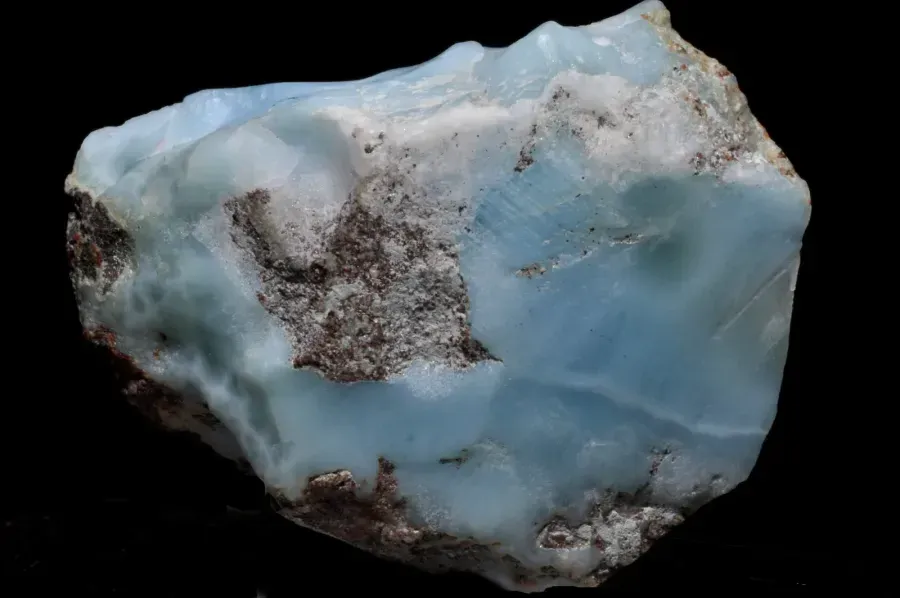
In a class of its own stands larimar, a blue stone with a single deposit in the world. It is rare by the same logic of geographic exclusivity as paraiba, even though the mineral is entirely different.
Paraiba and Neon Apatite: the Trickiest Twin
Of all the blue stones, the one that comes closest to paraiba in visual impression is neon apatite, which is also capable of a bright turquoise blue. It is sometimes substituted for paraiba deliberately and sometimes confused with it out of simple ignorance, so the differences are worth knowing.
Hardness
The main difference is durability. Apatite is soft, only 5 on the Mohs scale, while paraiba holds 7 to 7.5. Apatite scratches readily on household dust alone, which contains quartz at 7, and it is not suitable for a ring worn every day. If a seller offers you a bright blue stone for daily wear with no caveats at all, and the price is modest, that is reason enough to suspect apatite.
Brittleness and Lustre
Apatite is more brittle and chips more willingly on a knock. Its lustre is slightly more glassy and softer, whereas light inside a paraiba plays more actively. Under a loupe apatite generally carries different inclusions from tourmaline, without the lengthwise growth structure characteristic of paraiba, and it lacks the parallel striations that run down a tourmaline crystal.
Price and the Behaviour of the Colour
Apatite is cheaper by orders of magnitude, and that is the first honest signal in the room. Beyond that, saturated neon apatite is frequently the product of irradiation and can lose a little brightness over the years, while treated paraiba holds its tone stably. Where there is doubt, the laboratory settles it: the compositions are entirely different minerals, and a gemmologist separates them without difficulty using refractive index alone.
Send a friend a discount code, they save on their first order.
Paraiba as a Collector's and Investment Stone
In a little over thirty years paraiba has travelled from curiosity to a stone that collectors hold alongside the best corundums. A few patterns are worth understanding before treating it as anything resembling an investment.
What Raises the Value Over Time
Scarcity of source. The original Brazilian veins are close to exhausted, and no comparable new deposit has been found in decades. A stone mined in ever smaller quantity usually appreciates, and paraiba has followed that rule. Worth saying plainly, though: gemstones are illiquid, the spread between what you pay at retail and what you can realise at auction is wide, and anyone treating a coloured stone as a financial instrument should expect to hold it for many years rather than a few.
What Collectors Value
A collectable paraiba is not necessarily the largest stone. What is prized is a clean neon blue of even tone, an absence of treatment, a laboratory-confirmed origin, and a cut that opens up the glow rather than fighting it. A Brazilian stone with a report from one of the recognised Swiss laboratories sells for appreciably more than an unattributed one, even where the two look alike in the hand. Cut matters more here than in most stones, because a badly proportioned paraiba leaks its light through the pavilion and simply stops glowing.
Why the Certificate Decides Everything
Without documentation an expensive paraiba turns into an argument with no evidence behind it. A report records that the stone is natural, where it came from, and whether and how it was treated. It is the paper rather than the beauty that protects the money when the piece is resold, and any reputable British auction house will want to see one before taking a significant stone on consignment. For inexpensive stones a certificate is not essential; for collectable and investment-grade material it is part of the value itself.
The Symbolism of Paraiba
Paraiba carries no thousand-year tail of legend: the stone is younger than a good many people now living. It is more honest, therefore, to talk not about ancient beliefs but about the meanings that have gathered around it over recent decades, all of which rest on how it looks.
The Colour of Water and Sky
The blue and blue-green of paraiba recall a tropical lagoon, and from there run the associations with clarity, freshness and calm. People who wear stones as talismans link paraiba with expressing yourself clearly and keeping a cool head, drawing on the long tradition of connecting blue stones with the throat and with speech. That is cultural symbolism rather than a demonstrated property of the mineral, and it is worth being clear about the difference.
A Stone of Rarity and Individuality
Because it is so exceptionally rare, paraiba is often chosen by people who value being unlike everyone else and would rather not wear what the whole street is wearing. In that sense its symbolism is simple and honest: a stone there is very little of speaks about taste and about an interest in authenticity, rather than about following a fashion.
A Level-headed View
No healing or mystical effects have been demonstrated for paraiba, as none have for any other mineral. The beauty, the rarity and the optics are real; everything beyond that is a matter of personal feeling. Wearing the stone as a source of pleasure and as a handsome object is a far surer proposition than expecting wonders from it.
Buying it as a gift? Each one arrives ready to give.
 A branded Zevira box and a little card come with every order.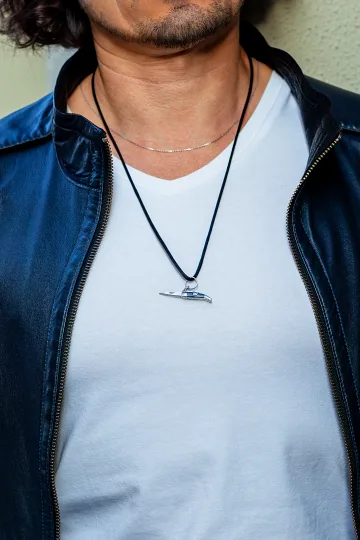




Facts That Catch People Out
The Stone Is Younger Than Colour Television
Paraiba was discovered only at the end of the 1980s. Most famous gemstones were known in antiquity; this neon tourmaline is a newcomer that reached the market later than a good many of the household objects around you.
One Per Cent of Copper Changes Everything
The copper content in paraiba is usually under a couple of per cent by weight. That negligible trace is the entire difference between a modest, inexpensive tourmaline and one of the most expensive coloured stones in the world.
A Large Crystal Yields a Handful
Cutting copper-bearing tourmaline loses an enormous share of the weight: fractures, cloudy zones and colourless areas all have to be cut away. Only a small fraction of the original crystal often survives into the finished stone, which is one of the reasons a large paraiba is so rare. This is why stones above a couple of carats leap in price rather than rising smoothly.
Africa and Brazil Are Nearly Indistinguishable by Composition
Mozambican and Brazilian paraiba are chemically close to twins. The difference in price rests largely on the reputation of the first deposit and on a line about origin in a certificate, rather than on any fundamentally different stone. Laboratories separate them using trace element ratios, and even then not always with certainty.
The Glow Can Be Seen With the Naked Eye
Most optical effects in gemstones are visible only to a specialist. The neon glow of paraiba can be spotted by anyone: the stone stays bright precisely where its neighbours in the tray go flat.
One Hill and Ten Years of Persistence
The Brazilian discovery came out of one prospector's long belief in one unremarkable hill in the Serra dos Quintos. Without that persistence an entire class of gemstone might have waited decades more for its turn. He worked the shafts through most of the 1980s against the advice of everyone around him.
The Name Became a Term, Not an Address
The word paraiba today denotes a type of stone rather than a place, meaning copper-bearing tourmaline from anywhere at all. A geographic name has turned into a gemmological category, which is why a Mozambican or Nigerian stone can be sold quite legitimately as paraiba tourmaline provided the origin is stated alongside it.
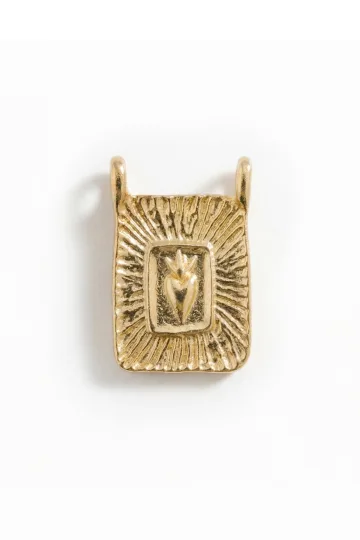
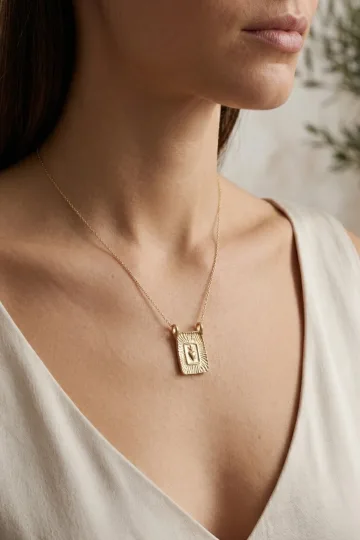
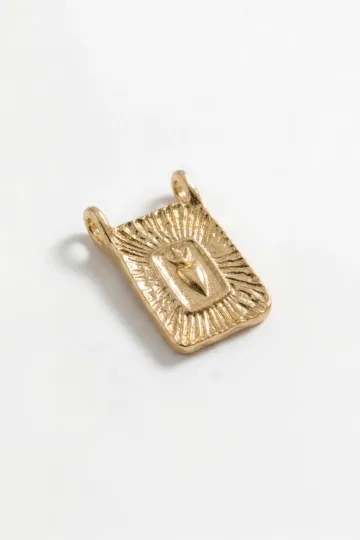
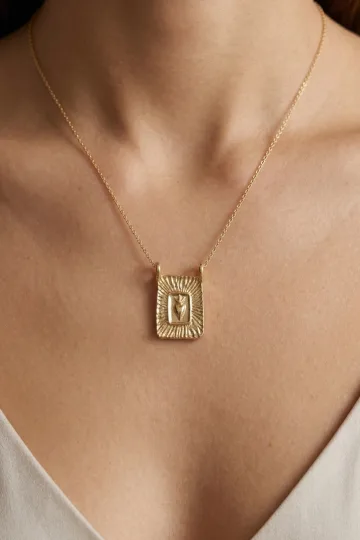
Wear the symbol, don't just read about it. These are in stock:


Frequently Asked Questions About Paraiba
How does paraiba differ from other tourmalines? By the colouring element. In paraiba the colour comes from copper (0.5 to 2 percent), hence the bright blue glow. In ordinary blue tourmalines the colour is created by iron and titanium, and it turns out dark, without the neon effect.
Why does paraiba glow so brightly? Copper in the crystal lattice absorbs the red part of the spectrum and re-emits the blue and green. The copper concentration is unusually high for a natural mineral, and the lattice is clean and ordered, so light passes through almost without loss. It is an optical effect, not backlighting.
Can you wear paraiba in a ring every day? Yes, but with care. A hardness of 7 to 7.5 is enough, but the stone is softer than diamond and ruby. A protected setting is better, and take the ring off under impact loads. Pendants and earrings are safer for daily wear.
Which to choose: blue or green paraiba? Blue is rarer and glows brighter, green is more affordable and often looks more natural. The choice is one of taste: if you want maximum neon effect, take blue; if quiet beauty, take green.
Is Brazilian paraiba really better than Mozambican? On average the Brazilian glows a touch brighter and gives a cleaner blue thanks to its formation conditions. But there are Mozambican specimens that match the Brazilian. Origin is stated in the gemmological report.
Is irradiated paraiba a deception? No, if the seller discloses it. Irradiation deepens the colour and is widely used in the industry. An un-irradiated natural stone is valued higher because of its rarity.
Is synthetic paraiba a fake? It is a lab-grown tourmaline with the same composition and structure. No deception if sold as a synthetic at the corresponding price. You can wear it. The deception is when a synthetic is passed off as a natural stone.
Can paraiba fade? Minimally. Years of direct sun can slightly weaken the colour, but in practice this is rare, because the stone is usually kept in the shade.
Is paraiba ever perfectly clean? Almost never. Most stones carry microscopic inclusions or a faint green or yellow undertone. Stones that are clean to the eye are already considered exceptional.
How can I test a paraiba at home? Under a 365 nm UV lamp it usually glows blue or yellow-orange. This is only a first clue: synthetics fluoresce too. An exact test comes only from a laboratory.
What do I do if a paraiba cracks? Show it to a jeweller at once. Small cracks can grow over time. Sometimes the stone is recut to remove the damaged part, but with serious damage it may be unrecoverable, so careful wear and storage matter more.
Which paraiba deposits exist? Three main ones: Brazil (state of Paraiba, 1989), Mozambique (Zambézia, around 2001) and Nigeria (around 2001). There are isolated reports of finds in other countries, but they are commercially insignificant.
About Zevira
Paraiba reflects what matters to us in stones: authenticity and a clear, traceable story of origin. In the Zevira collection we work with natural paraiba accompanied by a gemmological report stating origin and any treatment. We say openly where a stone comes from and whether it has been irradiated, so the choice is an informed one.
Every paraiba is individual: its glow, its shade and its micro-inclusions are the imprint of the conditions in which it grew hundreds of millions of years ago. That is the rarity that cannot be repeated.
Discover the World of Rare Tourmalines With Zevira
Paraiba literally radiates light thanks to the copper in its crystal lattice. In the Zevira collection you will find jewellery with natural paraiba, each piece accompanied by a certificate of authenticity and full information on origin and treatment.
If you are unsure where to begin, our team will help with the choice of size, shade, origin and type of piece. We answer questions about the stone, its geology and its care, honestly and to the point.