The Tower in Tarot: Meaning, History, and Jewelry Symbolism of Arcanum 16
Lena received the layoff notice on a Friday at 5 PM. Not in a meeting room with HR. Not in a conversation with her manager. A corporate email with the subject line "Organizational Restructuring" and the first word: "Unfortunately..." Eight years at the same company. She read the message three times because her brain refused to process what was written. Then she went outside, drove home, and sat for two hours holding her phone, unable to call anyone.
This is the Tower. Suddenness is the essential condition. Because it's sudden, it operates differently than all other misfortunes. When you're expecting something, your psyche prepares itself. When you're not expecting it, it never has time. And that's exactly why the card is called what it is: not "Crisis," not "Loss," but The Tower, a tall, closed structure that seemed impregnable, burning.
But this is only the first day of the story. Three months later, Lena opened a project she'd been thinking about for years but "not now, not now." It's possible she would have waited another eight years if not for that email.
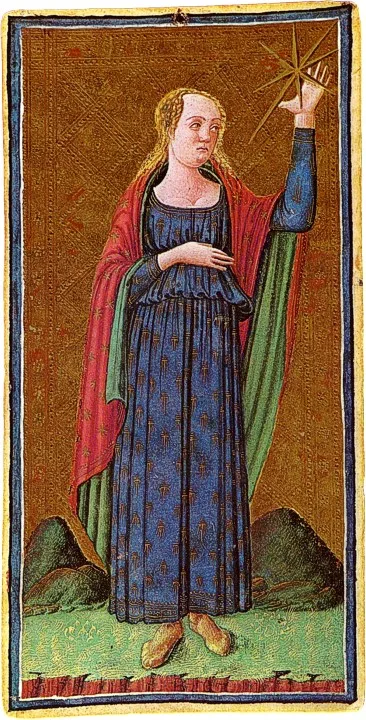
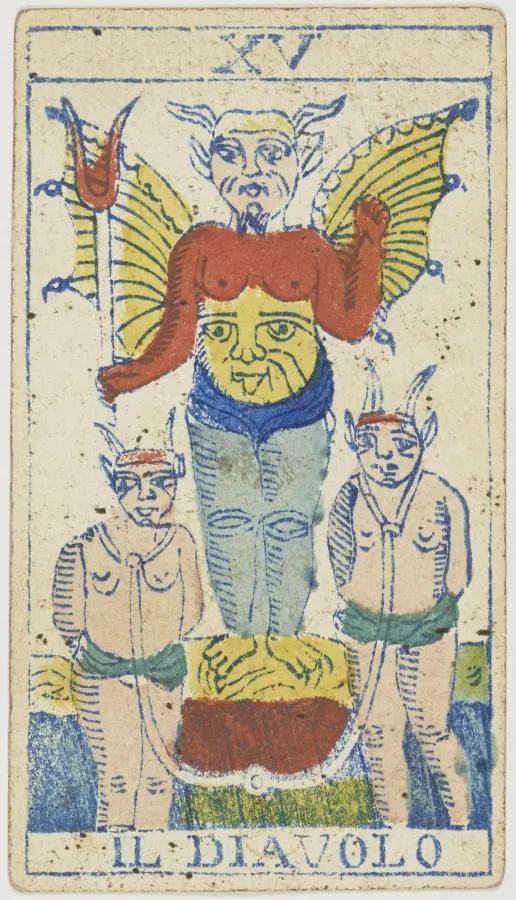
In the Tarot system, the Tower stands between the Devil (XV) and the Star (XVII). This is no accident. The Devil represents chains that people voluntarily wear: habits, illusions, dependencies, beliefs that have become obsolete but feel like part of oneself. The Tower is the lightning that breaks all this at once. And the Star is what opens when the smoke clears.
After the Tower always comes the Star. This is a structural law of the deck.
The Tower's Place in the Arcana: XVI Between XV and XVII
The 22 Major Arcana cards in Tarot, numbered 0 to 21, form a sequence known as the "Fool's Journey." Each card represents a stage of internal or external transformation. They are not arranged arbitrarily.
The XV Arcanum, the Devil, shows a person trapped in their own illusions. In the Rider-Waite-Smith card, Adam and Eve are chained to the Devil's pedestal, but the chains are loose enough to remove. People remain captive not because they can't escape, but because they lack the will. Or they don't realise they're in a cage.
The XVI Arcanum, the Tower, is what happens when the cage collapses anyway. Sometimes it's the person's own choice, finally mustering courage. But more often it's an external force that doesn't ask permission. Lightning strikes the tower, and everything that was held up by illusions stops holding.
The XVII Arcanum, the Star, is the first breath after destruction. The sky has cleared. Illusions have burned away. What remains is real.
These three cards form a trilogy that Tarot researchers call one of the most intense segments of the journey: entrapment, breakthrough, liberation.
An important detail: the Tower comes after the Devil for a reason. Destruction arrives where accumulation has occurred. The longer illusions are maintained, the stronger the impact when they crumble. Crisis rarely emerges from nowhere. It ripens in silence while people pretend everything is fine.
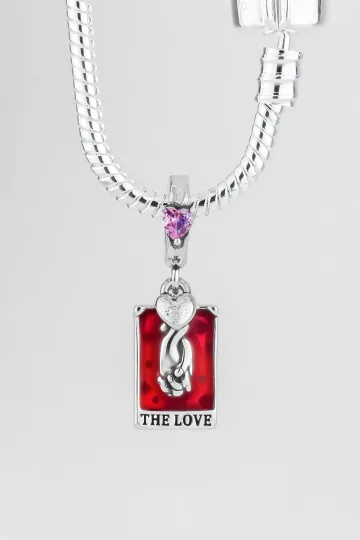
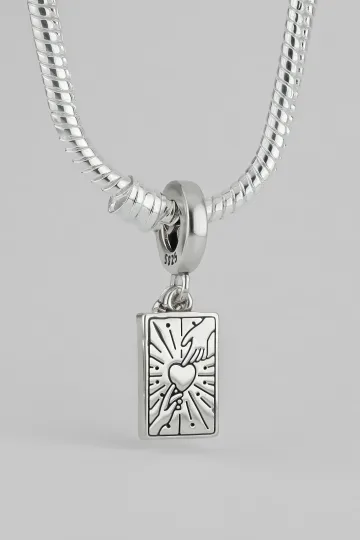
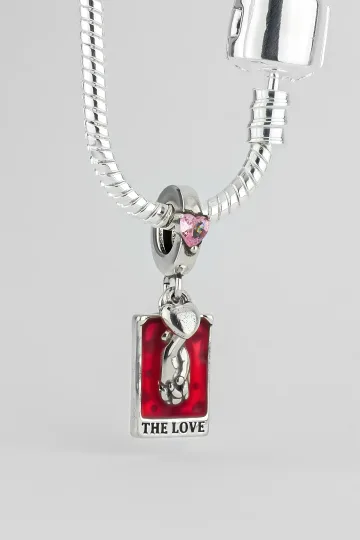
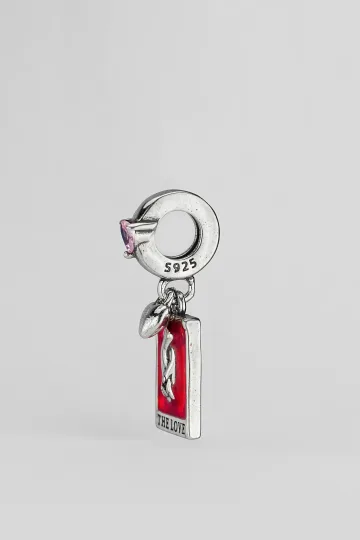
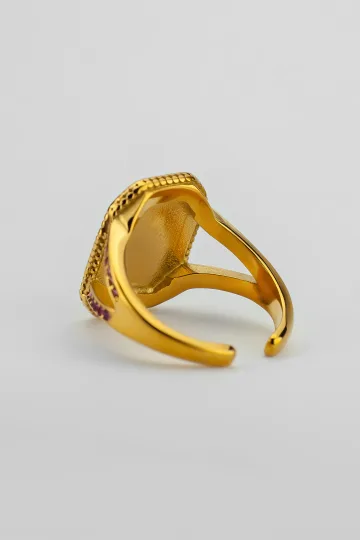
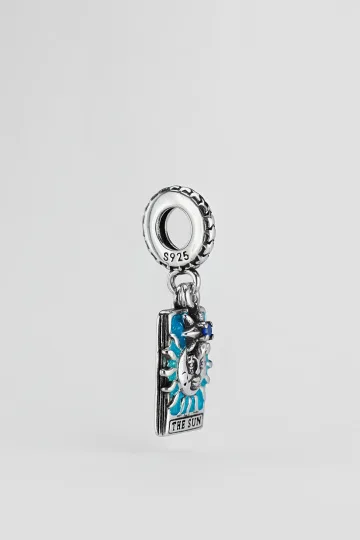
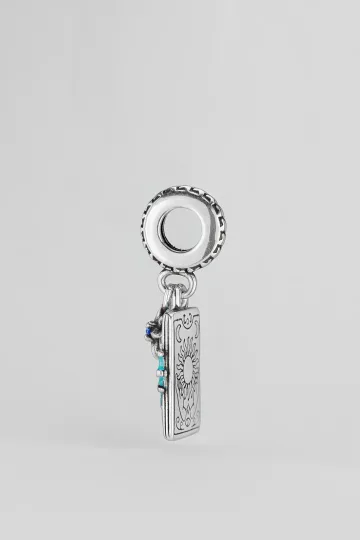
Wear the symbol, don't just read about it. These are in stock:









The Card's History: From Visconti to Crowley
Visconti-Sforza: La Casa di Dio
The earliest known images of the Tower in Tarot date to the 15th century. In the Visconti-Sforza deck, created around 1450 for the Milanese ducal court, the card was called "La Casa di Dio," the House of God. In surviving examples, a tower struck by lightning or divine fire appears, with human figures falling below.
The name is significant. The "House of God" in medieval understanding was not a cozy dwelling but a place from which there is no escape from Fate. When God decides to destroy, destruction comes regardless of human will. This is an important starting point: the card was originally interpreted as intervention by a higher power, not personal catastrophe.
Marseille Tarot: La Maison Dieu
In the Marseille tradition, which solidified by the 17th century, the card retained its name "La Maison Dieu," a literal translation. The iconography became more schematic: tower, lightning, two falling figures. No embellishments, minimal detail. In Marseille cards, structure matters more than narrative.
French craftsmen who produced cards for trade throughout Europe fixed this image in the form that became standard for the next century and a half. La Maison Dieu became one of the most recognisable cards in any deck precisely because of the Marseille tradition: a simple vertical tower, a diagonal lightning bolt, two points representing falling figures.
Rider-Waite-Smith 1909: "The Tower"
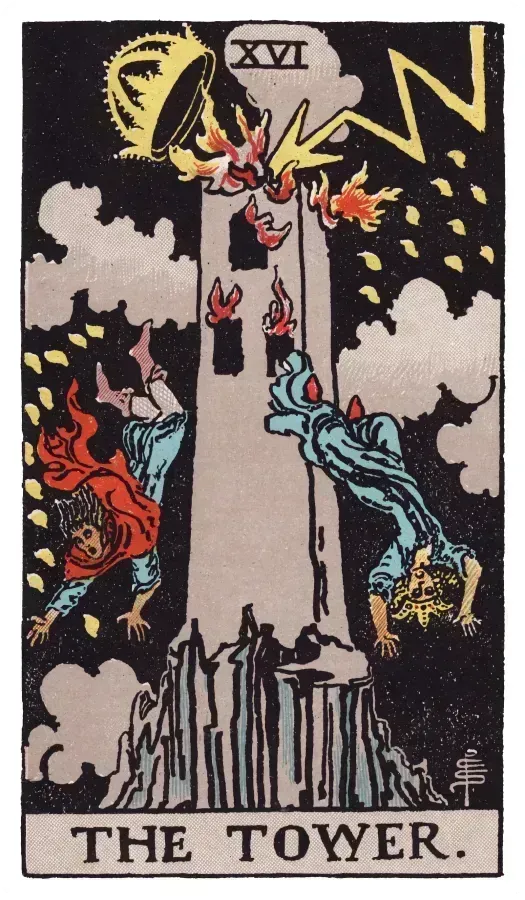
In 1909, Arthur Edward Waite and Pamela Colman Smith created a deck that radically changed the visual language of Tarot and became the canon for most modern decks. Smith, a professional illustrator and Symbolist artist, saturated each card with specific details carrying specific meanings.
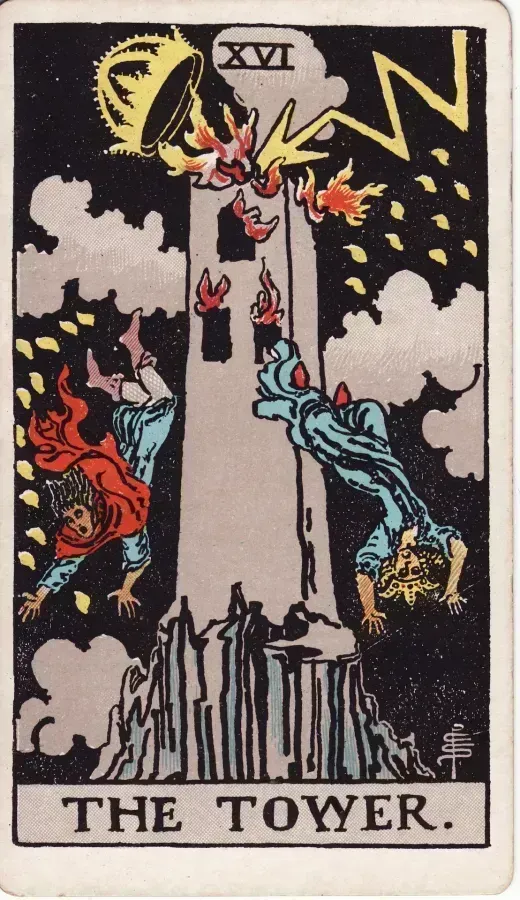
The Tower in her rendition became the image known today. A tall grey tower on a rocky peak. Above it, a dark grey sky. A jagged lightning bolt with characteristic contours. A golden crown slips from the summit. Two figures fall headfirst on opposite sides of the tower. Along the sides, 22 flames.
Waite wrote that the card means "catastrophe, end, destruction, which may be external or internal." But in his system, destruction is not an end in itself. It's a path to liberation. The Tower must fall so that what is built on illusions yields to what is genuine.
Crowley in the Thoth: "The Tower" or "War"
Aleister Crowley in his Thoth deck (1944), drawn by artist Frieda Harris, gave the card an alternative name, "War." In his interpretation, the Tower connects to Mars's battle energy and to active destruction as a creative act. Harris depicted not a static fall but an explosion process: geometric forms scatter, structure disintegrates into components.
Crowley emphasised the card's active, combative aspect. Where Waite's Tower suffers from external impact, Crowley's explodes from within. The conceptual difference is: the first is what circumstances do to us; the second is what inevitably happens when internal pressure reaches its limit.
Lightning wants bare skin and one metal. Bury it under five chains and the thunder turns to jingle. Don't.
How to Wear Tower Symbols
Lightning, a phoenix or a protective rune I style as a private mark, not as a showpiece brooch. Years on shoots and runways taught me a few rules that never fail.
What do I wear a Tower symbol with every day? For daily wear I recommend a thin lightning pendant or a small phoenix on a mid-length chain. It sits well under a tee, a turtleneck or a shirt with an open collar and reads only up close. A light fabric lifts silver, a dark one turns the symbol into the accent. It is that personal reminder you never have to explain to anyone.
Is it right for the office? Yes, as long as you keep it restrained. I suggest tucking the pendant under a plain fabric in a neutral tone and leaving only the line of the chain visible at the neckline. Lightning earrings I choose from the smallest, with no shine. Under a blazer the symbol works as a quiet detail, not a loud statement.
How do I build an evening look? In the evening the logic flips: the symbol becomes the accent. I choose an open neckline, a deep fabric colour and a smooth texture, and I keep a single piece. A phoenix pendant on a long chain suits a plain collarless dress; the Algiz or Othala rune on a short cord I suggest with hair pinned up, to open the neck.
Gold or silver for these symbols? Silver is calmer and more graphic, it goes with cool fabric tones and restrained looks. Gold is warmer and pulls the light, so I choose it for evenings and a warm palette. I do not mix metals in one look: I choose one tone and keep it in the chain, the earrings and the ring.
Who do Tower symbols actually suit? Anyone who has gone through a break and wants to carry its meaning close, without advertising it. The manner is calm and collected: the piece works on the clarity after the storm, not on the volume. One simple length tip: a pendant at the sternum balances almost any neckline, and a long chain lengthens the silhouette under outerwear.

Turn on your camera, pick earrings, a pendant or a ring, and see the piece on yourself in real time.
Switch items in one tap.
Everything runs in your browser: no photo or video is ever uploaded.
Rider-Waite-Smith Iconography: Every Symbol Explained
The Tower on a Mountain
The Tower stands on the peak of a cliff or mountain. It is built high and, by its appearance, was constructed with the aim of impregnability. This is not a seaside cottage but a structure claiming eternity.
The tower as a symbol has a long history. Medieval fortresses and castles were built for protection and to demonstrate power. To build a high tower meant to declare: I am here, I am strong, you cannot move me. The Tower in Tarot is any construction created from pride or fear that claims to be indestructible.
Its location on a mountain strengthens this meaning: it was already high before it was built. The illusion of superiority and stability is doubled.
The Crown Falls from the Right: Loss of Power
From the tower's peak, at the moment the lightning strikes, a golden crown slips away. The direction matters: the crown falls to the right, toward the conscious, active, public side. Power loses its material manifestation and its direction at once. It loses what it controlled.
The crown is a symbol of power. In medieval and occult tradition, it meant supreme authority, the peak of hierarchy, connection with the divine. The crown on the tower said: this structure is sanctioned by the highest authority.
When lightning knocks the crown away, several things happen at once. Power loses its symbolic justification. The hierarchy claiming eternity reveals its temporality. Pride, which stood above all, falls first.
Some Tarot researchers read the flying crown as a change of power in the broad sense: political systems, authorities, beliefs that seemed immovable reveal their vulnerability. This isn't necessarily bad. A crown slipped from a false tower makes room for something real.
Lightning in Zigzag: Three Discharges, Three Separations
The lightning on the card is depicted not as a simple line but as a characteristic zigzag with three bends. This is a three-part discharge. In Waite's occult system, the number three symbolises the separation of the one: thought, word, deed; beginning, middle, end; heaven, earth, humanity.
The three lightning bends mean the strike separates on three levels: external (circumstances and facts), internal (beliefs and self-image), and deep (the foundation on which everything else stood). The Tower doesn't fall from one touch. It breaks into components, each revealing its own emptiness.
In occult tradition, lightning is not simply a destructive force. It is heavenly revelation. Instantaneous, complete, without warning.
Two Falling Figures: King and Subject
Two figures fall from the tower on opposite sides. In older versions of the card, one figure is recognisable as a person wearing a crown or rich garments, a ruler or nobleman. The other is unmarked, a commoner or servant.
Both fall equally. The Tower makes no distinction of status.
This is one of the most democratic symbols in the entire deck: before catastrophe born of illusions, all are equal. The ruler who built the tower and the one who lived in it fall together. Illusion protects no one, neither those who created it nor those who believed in it.
The figures don't fall into a bottomless pit. They fall to the ground. To reality. To what actually is. This is an important observation: falling from the Tower is not an end. It is landing.
Twenty-Two Flames: The Deck Within the Card
Along the sides of the tower in the Waite card, 22 flames are depicted, the number of Major Arcana cards in the deck. This is not random. 22 letters of the Hebrew alphabet, 22 paths on the Tree of Life, 22 Tarot Arcana: it's all one system. The Tower contains them all.
This means: a Tower event unfolds everything in a person at once. All paths, all themes, all lessons of the deck activate simultaneously. The Tower is not a separate story. It's the point where all others intersect.
Fire here is the element of Mars, to which the Tower corresponds. This is not random decoration but an indication of planetary principle: destruction through fire, purification through flame.
Grey Sky: Between Worlds, Without Luminaries
The sky in the card is gray, almost black. There is neither sun nor moon. This is a deliberate detail: the Tower happens outside ordinary time. The sun governs conscious day; the moon governs night cycles and intuition. Here there is neither.
The person at the moment of the Tower event stands literally between worlds: the old is destroyed, the new has not yet begun. A grey sky without luminaries is a state of transitional space where familiar landmarks don't work.
This is an important contrast with the Star that follows the Tower: the Star card's sky is also night, but there are stars. Here the sky is simply dark, without luminaries. The Tower is the darkest moment before the sky clears.
The Tower of Babel: Biblical Parallels
The Tower of Babel story in Genesis 11:1-9 appears to many as merely a tale of divine punishment for human pride. But deeper examination reveals layers of meaning that illuminate why the Tower card became a major arcanum about transformation rather than simple catastrophe.
Genesis 11:1-9: What the Text Actually Says
The whole episode runs to nine verses, and every one of them carries weight. Read slowly, it is a much stranger passage than its reputation suggests.
"And the whole earth was of one language, and of one speech." Humanity is unified, and this is the starting point. Unity of language means not just communication but shared understanding of reality: common concepts, common meanings.
"And they said, Go to, let us build us a city and a tower, whose top may reach unto heaven; and let us make us a name, lest we be scattered abroad upon the face of the whole earth." The motive for building is precisely defined: not a practical goal but a reputational one. "Make us a name" is a project of self-assertion, building from fear of disappearing and desire to be noticed.
"And the Lord came down to see the city and the tower, which the children of men builded." The tone here is quietly ironic, and generations of commentators have noticed it. God has to descend in order to look at the thing that its builders described as reaching heaven. The structure that claimed the height of the sky turns out to be so small that seeing it requires coming closer.
"So the Lord scattered them abroad from thence upon the face of all the earth: and they left off to build the city." The punishment matches the crime with unusual precision. They built for the sake of a single name and received a multiplicity of tongues. The scattering they feared above everything else happened at exactly the moment they tried to insure themselves against it. This is the mechanism of the Tower card in a single sentence: the defence against the feared outcome becomes the cause of it.
Rashi's Reading: Pride Against Unity
The Hebrew commentator Rashi (Rabbi Solomon ben Isaac, 1040-1105) points out something crucial that the text itself doesn't explicitly state: God doesn't say the building is bad in itself. He says: "Behold, the people is one, and they have all one language; and this they begin to do: and now nothing will be restrained from them, which they have imagined to do." The problem is not the tower. The problem is that unity directed toward a project of self-assertion is unstoppable in its destructiveness.
Rashi also draws a contrast that is easy to miss. The generation of the flood sinned against each other, with violence and theft, and was destroyed entirely. The builders of the tower worked in peace, without harming one another, and their punishment is far milder: not annihilation but dispersal. The implication is uncomfortable and deliberate. Peace between people is valued above correct theological orientation, and a community that gets its direction wrong while treating each other decently is corrected rather than erased.
This gives a paradoxical reading of the builders. They are not cruel people. Their fault is not violence but direction: they use their unity to reinforce their own standing rather than to reach anything beyond themselves. In Tarot terms this is the Devil and the Tower described together. The chains in the Devil card are loose enough to lift off, and the figures stay in them voluntarily, held by a name rather than by a meaning. The Tower is what happens when that arrangement finally meets something it cannot absorb.
The Second Lesson: Humanity as Potential
Some modern theologians see in the Tower of Babel story both a warning about pride and evidence of human potential. "Nothing will be impossible for them" are God's words about people. Not condemnation but statement of fact: humanity in unity is capable of everything. The scattering of languages in this reading is not cruel punishment but a protective mechanism: humanity wasn't yet ready for such concentration of power. The diversity of cultures and languages became a condition for survival and development.
In the context of the Tarot Tower, this reads as: destruction of a single structure creates multiplicity. An illusion shatters, and reality reveals itself to be richer than it seemed.
Baldassare Peruzzi and the Renaissance
The tower of Babel entered European painting as a subject in its own right, and one of the most revealing treatments of it is architectural rather than moral. Baldassare Peruzzi (1481-1536), a Sienese architect and painter working in Rome, produced drawings and studies of the tower with the precision of a working builder rather than the caution of a moralist.
Peruzzi's context explains the tone. He worked at the moment when architects were literally raising buildings meant to rival antiquity: the new basilica of St Peter's, the Palazzo Farnese, the Villa Farnesina where he painted the perspective illusions on the walls. Rome was rebuilding itself as a new Babylon, and doing so with the blessing of the church rather than against it. Peruzzi drew the tower not as a warning but as a technical question: if it had actually been built, what would it have looked like, and how would the ramps and vaults have worked.
The Renaissance attitude to Babel is genuinely split. On one side it remains the standing image of the sin of pride. On the other it embodies exactly the ambition that the humanists prized, the idea of the human being as the centre of the world and capable of anything given time and knowledge. Both readings are present in the same period and sometimes in the same workshop, which is why the imagery is so unstable across the century.
That instability is what makes Babel the right ancestor for a Tarot card rather than merely a moral illustration. A card that meant only "pride is punished" would have died out with the moral tradition that produced it. A card that means "the structure you built to make a name will come down, and something wider will follow" survives because it keeps both halves of the Renaissance argument alive at once.
Towers in Medieval and Renaissance Painting
Bruegel the Elder: "The Tower of Babel" 1563
Pieter Bruegel the Elder painted two versions of "The Tower of Babel": a large one (Vienna, Kunsthistorisches Museum) and a smaller one (Rotterdam, Boijmans Van Beuningen Museum). The large version, dated 1563, is one of the most famous tower depictions in Western painting.
Bruegel depicts the tower under construction but already clearly doomed. The lower stories are complete and imitate ancient Rome's Colosseum. Bruegel deliberately uses Roman architecture as prototype: Rome was also a Babylon in his time. Upper levels are unfinished, some constructions deformed or collapsing under their own weight.
Most interesting are the details surrounding the tower: life continues. Small boats sail across the sea, people go about their daily tasks on the quays, a king inspects the construction. The tower is gigantic, dominating, yet human life around it is small, mundane. Bruegel doesn't dramatize the catastrophe; he places it in the context of ordinariness: towers fall, life goes on.
This is a Flemish perspective on the Tower: not a cosmic tragedy but part of life's cycle. You build, it falls, you build again. Bruegel lived during religious wars and political catastrophes, and he saw many towers around him.
Dürer and Gothic Towers
Albrecht Dürer (1471-1528) worked with the tower image differently than Bruegel. In his engravings and drawings, the tower appears as an architectural element of cityscape: Gothic spires, fortification walls, watchtowers. This is the tower as symbol of human organisation and defence.
Dürer was fascinated by perspective and architectural precision, and his towers are geometrically calculated, expressing order rather than chaos. But precisely because they are so perfect, the destruction of this order reads especially acutely in Dürer's work: everything built with such care can collapse from a single blow.
In his series of apocalyptic engravings from 1498, Dürer depicts the destruction of architecture as part of the end of times, with tower destruction as a sign of transition to another world order. This is the Tarot Tower in late-Gothic register.
Tuscan mille torri: Towers as Power
In the Middle Ages, Italian cities, especially San Gimignano in Tuscany, were known as "cities of a thousand towers." Each noble family built a tower, and the higher it rose, the more power and prestige it signaled. In the 13th-14th centuries, San Gimignano had more than seventy towers, of which fourteen remain today.
Towers were built not from military necessity, since a castle could be fortified differently. They were built as visible expression of status: I am higher than my neighbour. Literally. These buildings were stone "names" written into the city skyline.
This tradition, the tower as announcement of self, stands behind the card's symbolism. When the Crown falls in the Tarot Tower, it's a direct reference to medieval Italian towers: the crown of power, raised high so everyone would see it, is the first to be lost in the strike.
Customer reviews
Zevira is a real jewellery shop. Genuine payments, deliveries and customer thank-yous.
🥰🥰🥰 gracias

Ok, ¡gracias! 🙂

Lightning in World Mythology
Zeus and the Thunderbolt: Lightning as Order
Zeus, the supreme god of the Greek Olympus, wielded the thunderbolt, the keraunos. This was not simply a weapon but an attribute of supreme authority: the ability to strike with lightning distinguished the king of gods from all others.
Zeus's lightning was not arbitrary. It came where cosmic order was violated. Hubris (arrogant pride, a human or god overstepping their assigned boundaries) triggered the lightning as a system response. Bellerophon tried to reach Olympus on Pegasus, and Zeus struck him with lightning. Not from cruelty but as guardian of boundaries between human and divine.
Prometheus stole fire for humanity, and he received eternal punishment, his liver devoured daily by an eagle, for three thousand years. The fire was divine property. Humanity wasn't meant to have it. Yet Prometheus's defiance was also recognised: by some accounts, Heracles eventually freed him, and his gift enabled human civilisation.
This duality in mythological understanding of lightning is important: it is both punishment and revelation. The Tower card contains this tension: destruction and liberation, loss and gift.
Indra and Vritra: Releasing the Waters
In Hindu mythology, Indra wields the vajra, the thunderbolt. His greatest battle was against Vritra, the serpent of drought and stagnation. When Indra struck Vritra with the vajra, the serpent broke, and waters that had been held in captivity flowed freely again, bringing fertility to the land.
This is a different tone than Zeus: the strike is not about punishment but about breaking through blockage. It's about release. The waters were never meant to be captive. The strike is not cruel; it's liberating what should flow.
In the Tarot Tower context, this suggests another layer: what appears to be destruction may be the breaking of an unnatural constraint. The person falls from the tower, but they also fall toward earth, toward reality, toward what can actually nourish.
Thor and Mjolnir: Thunder as Protection
The Norse god Thor's hammer, Mjolnir, was not primarily a weapon of conquest but of protection and restoration of order. When wielded, it always returned to Thor's hand. It could rebuild what it destroyed.
This is yet another mythological tonality: the hammer-lightning that repairs. It breaks false structures, yes, but in order to rebuild true ones. The Thunder god is not arbitrary; he is the keeper of cosmic stability.
Perun: Lightning Against Concealed Falsehood
Perun, the thunder god at the head of the Slavic pantheon, stands opposed to Veles, the god of the underworld and of cattle. As mythologists have reconstructed it, the central story of the eastern Slavs runs roughly like this: Veles steals cattle, or water, or people, taking a different form each time. Perun searches for him and strikes him with lightning.
The detail that matters is the hiding. Veles does not confront Perun; he disguises himself, taking the appearance of a tree, a herd animal, an ordinary person going about ordinary business. Perun's lightning finds and strikes the thing that has concealed something harmful inside a respectable shape.
This is the closest mythological parallel to the Tower card in any tradition. Destruction arrives exactly where a falsehood has been passing itself off as the norm. Where the illusion looks like reality. Where an empty structure is wearing a crown. The lightning sees through the surface and strikes what is unviable underneath, which is why Tower events so often feel less like bad luck than like exposure.
Tlaloc and the Aztec Storm
In Aztec mythology Tlaloc, god of rain and thunder, held the nourishing and the destructive together in one figure without any attempt to reconcile them. Thunder and lightning brought the rain that the maize required and, in the same storm, death by strike. Tlaloc was feared and honoured simultaneously: offerings were made so that he would send rain, and prayers were said so that he would not send the bolt.
That doubleness runs through every mythological system built around lightning. There is no tradition anywhere in which lightning only destroys or only creates. It is always both actions at once, in the same instant, from the same source. Any reading of the Tower that keeps only the destructive half has quietly dropped the older and more accurate version of the symbol.
All these mythological traditions, Greek, Hindu, Norse, Slavic and Mesoamerican, agree on one thing: lightning is not random. It targets what violates order, what oppresses wrongly, what must be freed. In human psychology, this maps directly onto the Tower: the event that feels like random catastrophe is often a response to something that needed to break.
The Lightning Strike: Physics and Psychology
The Tower is the only major arcanum whose central image is a well-documented physical event. It is worth knowing what actually happens in a strike, because the mechanism turns out to be a surprisingly exact model for how the card behaves in a reading.
How Lightning Forms
Lightning is the discharge of static electricity between a cloud and the ground, or between clouds. Inside a storm cloud, updraughts separate charge: the upper part of the cloud takes a positive charge, the lower part negative. When the potential difference reaches a critical value, somewhere between several million and a billion volts, the discharge occurs.
The current in a strike runs from around ten thousand to two hundred thousand amperes, and the plasma channel reaches temperatures up to thirty thousand kelvin, roughly five times hotter than the surface of the sun. The whole discharge lasts a fraction of a second. In that time the air in the channel heats so fast that it expands explosively, and that explosion is thunder.
The characteristic zigzag comes from the way the discharge finds its route. It travels along the path of least resistance, feeling its way through the air in short steps, each step choosing a new direction based on where the air happens to be most ionised. Lightning does not fly straight; it searches. Every bend in the zigzag is a moment of choice about the next stretch of path.
The odds of being struck run at roughly one in seven hundred thousand in a given year. Rare, but not vanishingly so. Exposed ground, isolated tall objects and open water are the high-risk settings. A tower on a mountain is close to an ideal target, which is precisely why the card puts one there.
Insight as Psychological Lightning
Psychology has borrowed the lightning metaphor for insight for well over a century: the sudden understanding that arrives without warning. Researchers describe the aha moment as an abrupt reorganisation of the brain's connections, in which something that had been opaque becomes obvious in a single step, with no intermediate stages that the person can report.
The defining property of insight is that it cannot be produced by effort. It arrives when someone stops pressing directly on the problem. Archimedes was getting into a bath, Newton was looking at an orchard, Kekulé was dozing by a fire. The insight comes at a moment of relaxation, like lightning in a night sky, and this is a reliable enough pattern that it forms the basis of standard advice about creative work: do the preparation, then step away.
The parallel with the Tower is exact. The destruction that the lightning carries very often arrives together with clarity. The person suddenly sees what they had avoided seeing for years. The pain of the event and the sharpness of the understanding land at the same moment, which is why so many people who have come through a serious crisis describe it as the point where everything finally fell into place. The clarity is not compensation for the damage. It is the same event viewed from the other side.
Upload a photo of your pet, someone you love, or an object. We'll build a 3D model and hand-cast it in pewter.




Archetypal Destruction: The Myth of Saturn and Kronos
Kronos, called Saturn in the Roman tradition, is one of the heaviest images in Greek mythology and one of the most useful for reading the Tower. He devours his own children. Not out of cruelty but out of fear: a prophecy says that one of them will overthrow him, and he decides to act first. He holds his position by destroying the generation that is meant to inherit it.
This is the archetype of an age refusing to end. The old order does not hand over power, it consumes those for whom the power was intended. And the consumption does not work. Zeus is born anyway, is hidden, grows, and overthrows his father exactly as the prophecy said he would. The attempt at prevention is what makes the outcome certain, which is the same logic that runs through the Babel story.
Psychologically this describes the Tower moment with precision. Old structures, whether convictions, institutions or relationships, try to hold their place by absorbing whatever threatens to succeed them. A company forces out the employee who has outgrown the role. A family cannot let a grown child leave. A system rejects the people who can see it clearly from the inside. In each case the structure reads succession as attack and responds by eating it.
Then the lightning arrives and Kronos falls. In the Tower, this is the exact moment when the consuming structure can no longer hold its position. It is painful for everyone involved, for those who were being consumed and for the structure itself, which usually experiences the change as an injustice rather than as an ending. The turn of an age happens regardless of whether anyone wants it.
Researchers of generational psychology describe a comparable dynamic: each generation carries an unresolved conflict with the one before it, which at some critical point resolves through rupture rather than negotiation. The Tower is that rupture. Not a catastrophe but the condition for the next step, and one that arrives on its own schedule rather than on anyone's plan.
Jungian Analysis: Ego-Death as the Tower
San Juan de la Cruz and the Dark Night of the Soul
Long before psychology had a vocabulary for it, the mystical traditions had described the Tower experience in detail and given it a name. The Spanish Carmelite friar and poet San Juan de la Cruz (1542-1591) wrote the poem and commentary known as the dark night of the soul while imprisoned by his own order in Toledo, in a cell barely large enough to stand in.
His account is unusually precise and unusually unsentimental. The dark night is not depression and it is not punishment. It is the stage in which every familiar consolation is withdrawn: prayer goes dry, the sense of divine presence disappears, and the practices that used to produce feeling produce nothing at all. What is being taken away, in his reading, is not faith but the person's attachment to the experience of faith, which had quietly become a substitute for the thing itself.
The structural point he makes is the one the Tower card makes. The consolations had to go precisely because they were working: they were comfortable enough that nobody would have given them up voluntarily. The withdrawal is not a failure of the process, it is the process. And it is not endurable by strategy. The only instruction he offers is to stay, which is roughly what every good reader tells a person who has just turned the Tower.
The mystical traditions of several religions describe something structurally similar, and they agree on the two features that make it hardest: it cannot be shortened by effort, and while it is happening there is no reliable way to tell it apart from simply having lost everything. Only afterwards does the shape become visible.
Jung: Ego-Death as the Gate to the Self
Carl Jung understood the psyche as a system naturally moving toward wholeness, which he called individuation. Part of this process involves the death of the ego, not the small self's actual death, but the dissolution of its defensive structures, its illusions about who it is.
The Tower, in Jungian terms, is ego-death. The self you thought you were, built on defences, persona (the mask you show the world), and complexes, suddenly collapses. This is agonizing because the ego has invested enormous energy in maintaining this structure. Losing it feels like losing everything.
But beneath the ego structure is the Self, Jung's term for the deeper, truer organising centre of the psyche. The Self doesn't judge, doesn't defend, doesn't perform. It simply is. And it contains far more capacity for relationship, creativity, and authenticity than the ego alone.
The Tower's lightning, in this reading, is the unconscious breaking through. What has been repressed, denied, or ignored suddenly becomes impossible to ignore. A person might spend years in a job they hate because the ego structure of "I am successful" depends on it. When the job is lost, the structure collapses, and for the first time, the possibility of genuine choice appears.
This is why the Star follows the Tower: after the defensive structures dissolve, there is clarity. What you actually want, what actually matters to you, becomes visible. The illusions that seemed like reality are recognised as illusions.







Psychology of Post-Traumatic Growth
Modern trauma psychology reveals something remarkable: many people who experience severe adversity report not just recovery but genuine growth. This phenomenon is called post-traumatic growth (PTG).
The Five Domains of Post-Traumatic Growth
Richard Tedeschi and Lawrence Calhoun, pioneers in PTG research, identified five dimensions of post-traumatic growth:
Personal Strength. A person discovers capacities they didn't know they had. Surviving something they thought would destroy them reveals previously hidden resilience.
Relating to Others. Relationships often deepen. Having faced mortality or serious loss, a person's priorities clarify. They become more authentic, less concerned with social performance.
Life Appreciation. Small things gain meaning. A meal, a conversation, sunlight. What was taken for granted becomes precious.
New Possibilities. Life opens directions previously unseen. The person who lost their career discovers they were never meant to have that career. The relationship that ended makes room for a healthier one.
Spiritual Change. Not necessarily religious, but an expanded sense of meaning, of connection to something larger than personal ego concerns.
The Tower card appears frequently in readings of people at this threshold: the breaking point where they might descend into despair or ascend into genuine transformation.
What determines the outcome? Partially circumstance, but significantly the person's interpretation of the event. Those who interpret the Tower as "random cruelty" tend toward bitterness. Those who interpret it as "necessary breaking of what didn't work" tend toward growth.
This is not "positive thinking," a dangerous and shallow idea that ignores genuine suffering. It's a recognition that meaning is partly constructed by consciousness. The Tower happened. Whether it becomes a tragedy or a transformation depends partly on how it is understood.
Trauma and the Body: What the Nervous System Remembers
There is a limit to how far interpretation can take the Tower, and it is worth naming, because a reading that stops at meaning-making misses the part of the experience that most people actually struggle with.
Why the Event Does Not End When It Ends
The Dutch-American psychiatrist Bessel van der Kolk, born in 1943 and one of the most widely read researchers on trauma, argues that traumatic experience is stored in three places at once: in memory, in emotion and in the body. A Tower event is not held as a story that can be reconsidered and filed away. It is held as a physical response that can keep firing for years after the crisis itself has ended. The body goes on knowing that there was danger, long after the danger has gone.
This matters for reading the card because it corrects a common misreading. The Tower is often treated as a moment: the lightning strikes, the structure falls, and then the Star arrives. In lived experience it does not work that way. A person who has been through a serious crisis may spend years reacting to entirely harmless situations as though the bolt were about to land again. A raised voice, a particular smell, a letter in a familiar envelope. This is not weakness of character and it is not a failure to move on. It is the physiology of a nervous system that learned something and has not yet had reason to unlearn it.
Working With What the Body Holds
Van der Kolk's research on approaches such as EMDR, which uses rhythmic eye movement to help the body process memories that have become stuck, points in a consistent direction: the work is not primarily verbal. Talking about a Tower event helps with the meaning of it. It does not necessarily reach the physical response, which was laid down without words in the first place and often does not answer to them.
The practical implication is patience. Recovery from a Tower event moves at the speed of the body, not the speed of insight, and the two are frequently out of step. Someone can understand perfectly well why the marriage ended, be entirely reconciled to it intellectually, and still find that their chest tightens at the sound of a particular car in the street. Both things are true at once, and neither cancels the other.
This is also the honest context for wearing a symbolic object. A piece of jewellery cannot process anything. What it can do is act as a physical marker in a process that is itself physical: something to touch that says the strike has already happened, the body came through it, and the Star is the next card. That is a small function, but it is a real one, and it is the only claim worth making.
The Tower in Literature and Film
King Lear and Lear on the Heath
Shakespeare's "King Lear" is perhaps the most explicit Tower narrative in Western literature. King Lear's power structure, his identity as king, his relationship with his daughters, his sense of order and control, all collapse simultaneously. He is stripped of his kingdom, betrayed by his daughters, abandoned.
The heath where he wanders is the Tower's landscape: grey, elementally hostile, without human shelter or comfort. He goes mad. But in his madness, he achieves a kind of clarity: he recognises Gloucester's suffering as equal to his own, sees that human beings are fundamentally vulnerable and dependent on connection. He becomes, in the end, more fully human.
Dickens's Great Expectations
Pip's story follows the Tower arc: he builds an identity structure ("I will become a gentleman") based on illusion (Miss Havisham's manipulated expectations, his misinterpretation of who his benefactor is). When the truth emerges (his great expectations came from a convict, not Miss Havisham, and the woman he idolizes is emotionally dead), his entire self-image collapses.
He must rebuild from the ground, and who he becomes is more genuine, more capable of actual love, than the ambitious Pip of illusion.
Modern Film: Inside Out, Eternal Sunshine, Anomalisa
Pixar's "Inside Out" depicts the psychological Tower in the character of Riley: her move to a new city shatters her sense of identity and safety. Core memories, the things that held her sense of self together, no longer fit. She experiences profound disconnection.
The resolution comes not by restoring the old identity but by allowing emotional complexity. Sadness, which was previously excluded, is integrated. The new identity that emerges contains multitudes.
"Eternal Sunshine of the Spotless Mind" shows a Tower in reverse: the protagonist tries to have the Tower un-happen by erasing memories of his lost relationship. But the film suggests this is a mistake. The pain contains truth. The only way forward is through it, not around it.
Leave your email, we'll send your discount code. No spam, unsubscribe anytime.
The code arrives by email, valid on your first order.
The Tower on Screen: Three Recurring Shapes
Cinema returns to the Tower structure so persistently that it is easier to describe the recurring shapes than to list the titles. Three of them come up again and again, and each isolates a different part of what the card does.
The Collision Film: Certainty Without Rescue
One recurring shape opens by showing the ending. A catastrophe is established as inevitable in the first minutes, and the film then goes back to watch people live in the time remaining. A European art film of the early 2010s built around an approaching planet is the best known example of the type, but the structure predates it by decades.
What these films discover is counterintuitive and consistently the same. The character who has already lost everything internally, who is depressed, non-functional and useless at ordinary life, turns out to be the only one able to meet the ending calmly. The competent family members panic, conceal, and try to manage what cannot be managed. The one whose inner towers already fell can look at the outer reality without illusions, because she has no illusions left to protect.
This is not a sentimental claim that suffering makes people stronger. It is something narrower and more accurate: a person who has already been through the Tower has lost the particular blindness that comes with an intact structure. That is a real advantage in exactly one situation, and these films are about that situation.
The Addiction Film: A Tower With No Star
The second shape follows several characters whose separate illusions collapse in parallel. An American independent film of 2000 set among four people in New York is the type specimen: each of the four has built a tower out of a dream, one about business and love, one about creative work, one about dignity, one about being seen on television. All four come down within the same final sequence.
The important formal choice in this kind of film is where it stops. It ends on the Tower and refuses to show the Star. That refusal is the point. Dependency is the Devil, the fifteenth arcanum, holding people in chains they could take off. The wreckage of the life is the Tower. But the sixteenth card does not automatically deliver the seventeenth, and a film that showed recovery would be making a promise that the material does not support.
For anyone reading the card, this is the necessary corrective to optimistic interpretation. The Tower creates the conditions for the Star. It does not guarantee her. Getting from one to the other is work, it is not a transition that happens on its own, and some Tower events simply destroy.
The Axis of Worlds: The Tower as the Centre
The third shape treats the tower literally as the axis holding reality together. A long fantasy sequence by a prolific American novelist of the late twentieth century is the widest-read version: the tower stands at the centre of all worlds, it is failing, realities are collapsing outward from it, and the hero's task is to reach it. When he arrives, the answer is not the one he was expecting.
This is a surprisingly exact picture of what the sixteenth arcanum is inside the deck. The Tower is not a peripheral misfortune that happens at the edge of a life. It is the central point of transformation, and when it goes, everything connected to it moves. That is why Tower events feel disproportionate to their apparent cause: losing a job should not shake a whole identity, and yet it does, because the job was load-bearing in ways nobody had audited.
The other lesson from that shape is about arrival. Reaching the tower does not resolve anything by itself. Passing through its destruction is what counts, and the person who comes out is not the person who set off, which is the condition the journey was actually for.
The Tower in Readings: How to Work with It
When the Tower appears in a Tarot reading, the common immediate reaction is fear. The card has a formidable reputation. But experienced readers understand that context and positioning determine meaning.
The Tower as Timing
In many readings, the Tower indicates timing: a change is coming, or is already underway. The structure you've been maintaining will not hold. This can be a warning (prepare yourself) or a description (this is what's already happening).
If the Tower appears in a position representing outcome or future, it often means: whatever you're building or relying on needs to collapse before anything better can emerge. This is not punishment. It's mercy.
The Tower as Necessary
Beginners sometimes ask: "Can I change my reading? I got the Tower; I don't want that outcome." The answer is always: the Tower's structure wasn't stable anyway. The question is not whether it will fall, but when, and whether you'll be aware enough to use the falling as an opportunity for genuine change.
The Tower Reversed
In reversed position, the Tower can indicate:
- A tower that should fall but hasn't (lingering in a situation that's become unhealthy)
- Fear of necessary change, clinging to the familiar
- A past catastrophe you're still processing
- Recovery from the Tower experience
A reversed Tower is not "good news." It's a sign that denial or avoidance is operating. The necessary breaking is being delayed, which usually means it will be more violent when it finally comes.
Tower Combinations
The Tower between the Devil and the Star is powerful, but how it combines with surrounding cards refines its meaning.
Tower + Eight of Swords: You're trapped and about to be freed. The swords (mental confusion, overthinking) will fall away with the structure they support.
Tower + The Hermit: The breaking is propelling you inward, toward solitude and deep self-examination. This is not isolation; it's retreat to source.
Tower + The World: Completion is coming through destruction. Something is ending so something whole can begin.
CAPAORA mini knife pendant
The 18th-century Spanish navaja in miniature: 40 mm of stainless steel, a real folding mechanism and a Palanquilla lock that clicks. An affordable gift to remember.
Authentic · Ships from Spain · 14-day returns
Upright and Reversed: The Two Positions
Reversals divide readers more than almost any other question of technique, and the Tower is the card where the disagreement matters most, because the two positions describe genuinely different states rather than a meaning and its negation.
The Upright Position
Upright, the Tower says that something is coming down, or has already come down. It may be external, a job, a relationship, a loss, a move, a diagnosis, or it may be internal, the collapse of a conviction the person had been defending for years without examining.
An upright Tower in a spread is not a reason to panic. It is honest information: the illusion cannot hold any longer. Something in this life is standing on an unreliable foundation, and the lightning is already on its way whether or not anyone likes the timing.
It is worth repeating that the Tower does not punish. It clears. The destruction it brings is frequently more painful than dismantling the unnecessary structure voluntarily would have been. But most people do not dismantle voluntarily, and that is exactly why the lightning has a job.
After the Tower comes the Star. That is written into the structure of the deck and has been for centuries.
The Reversed Position
Reversed, the Tower is the postponement of the inevitable.
The signs are all present. The illusion is visibly cracking. The person can see the cracks and will not name them. They repaint the facade while the foundation rots. They stay in a relationship that has had nothing living in it for years. They hold on to work they should have left three jobs ago, and everyone around them can see it.
A reversed Tower does not mean the strike will not come. It means the strike is being deferred, and deferral does nothing to reduce its certainty. Frequently the opposite: the longer the postponement runs, the more accumulated weight comes down when it finally goes.
There is a second reading of the reversal worth knowing. It can indicate internal destruction with no external expression at all. The person is living through the full equivalent of a Tower event on the inside while everything outside looks entirely normal. A quiet crisis. The collapse of something believed in, with no visible change that anyone else could point to, and therefore no external permission to be in difficulty.
The Tower in Specific Situations
General interpretation only goes so far. In practice the Tower turns up attached to a handful of recognisable life events, and each one calls for a different emphasis. What follows is how the card usually reads when the context is already known.
Redundancy and Career Collapse
The most common context in which the Tower appears in contemporary readings is work. A role disappears, a company restructures, a career that had been assumed to continue simply stops. The specific pain of this Tower is rarely financial in the first weeks. It is the loss of an identity that had been rented from an employer without anyone noticing the terms.
What the card indicates here is usually that the structure had been unsound for longer than the person admitted. The role had stopped fitting, the work had stopped meaning anything, or the organisation had been visibly deteriorating and everyone had agreed not to mention it. The lightning does not create that condition, it reveals it.
The useful reading is forward-facing but not hurried. This is not the moment to rebuild the same tower somewhere else, which is the reflex and usually the mistake. The question worth sitting with is which parts of the lost role were actually wanted and which were simply endured because they came attached.
Divorce and the End of a Relationship
When the Tower attaches to a relationship, the distinguishing feature is suddenness of recognition rather than suddenness of cause. Almost nobody is genuinely surprised by the ending; they are surprised by having stopped being able to not see it. The structure had been maintained by an agreement, often unspoken and often mutual, to look at something else.
This Tower is complicated by its social layer. A relationship is a public structure as well as a private one, and its collapse takes down a set of assumptions held by other people: shared friendships, family arrangements, a version of the future that other people had also been planning around. The card's falling figures, a crowned one and an uncrowned one, read particularly clearly here, because both parties come down regardless of who held the authority inside the arrangement.
The reading that helps is the one that separates the ending from the verdict. The Tower says the structure could not stand. It does not say the years inside it were worthless, and it is worth stating that explicitly, because that is the conclusion people reach on their own and it is not what the card says.
Financial Crisis and Insolvency
Money Towers have a particular texture: they are usually slower than they appear and then far faster than expected. A business fails, an investment collapses, a debt becomes unmanageable, and the visible event is preceded by a long period in which the numbers were known and not looked at.
The specific cruelty of this Tower is that it exposes the difference between what someone owned and what they were carrying. A life that looked solid from outside turns out to have been a structure of obligations held up by continuous income, and when the income stops, the whole thing comes down in weeks. That is not moral failure. It is a very common structure, and most people are only one interruption away from finding out how theirs is built.
Read forward here rather than backward. Recrimination about the decisions that led in is almost entirely unproductive, because the decisions were made by a person who did not have the information the crisis has now supplied. The practical questions are what remains, what can be negotiated, and what genuinely has to go.
A Serious Diagnosis
This is the Tower at its least metaphorical, and it is the context in which careless reading does the most damage. A diagnosis reorganises everything at once: the calendar, the body, relationships, the assumed length of the future. Nothing about that is an illusion collapsing, and any interpretation that implies the person had it coming is both wrong and cruel.
What the card can legitimately offer here is the structural observation. The certainty about the shape of a life that everyone carries around is not a fact but an assumption, and a diagnosis removes it. Many people describe an odd clarity in the weeks that follow, in which priorities that had been theoretical become immediate and a great deal of accumulated obligation simply falls away as obviously unimportant.
The card says nothing whatsoever about medical outcome, and it is worth saying so out loud. Anyone reading in this situation should be clear that they are talking about how a person is meeting the event, not about what the event will do.
Exposure and the Collapse of a Reputation
The last common context is public: something concealed becomes known. This is the Perun version of the Tower in its purest form, since the strike lands precisely on the thing that had been passing as respectable.
Two quite different situations share this shape. In one, the person did the thing and the concealment was the second offence. In the other, the exposure is unjust or distorted and the damage arrives anyway. The card does not distinguish between them, which is a limitation worth acknowledging rather than papering over: the Tower describes the mechanism of collapse, not the justice of it.
What it does say in both cases is that the energy previously spent on maintenance is now free. Concealment is expensive, and people who have carried one for years frequently report the exposure as an unwelcome relief. That is not consolation and should not be offered as any, but it is often accurate.
Reading the Tower for Someone in Crisis
The Tower is one of the few cards in the deck that changes what the reader owes the person in front of them. Not because it is frightening, but because it frequently turns up at the exact moment when someone is genuinely living through something difficult, and at that moment the usual interpretive habits do real harm.
What Not to Do
Do not confirm the catastrophe. The first reflex on seeing the Tower is to say that yes, this is bad. That is not help. The card describes the destruction of an illusion, not a verdict that the person is finished. It is honest, which is a different thing from being cruel, and reading it as doom adds weight that is not in the card.
Do not rush to meaning. "This is happening for your growth" may well be true and is almost never what a person in acute crisis can hear. Meaning arrives later and arrives on its own. At the moment of impact the only useful move is to acknowledge that it hurts.
Do not promise the Star immediately. Yes, the seventeenth arcanum follows the sixteenth. But "follows" can mean months, and in some situations years. Promising a quick resolution is offering false hope, and false hope is the thing people remember with the most bitterness afterwards.
What to Do Instead
Ask rather than pronounce. "Which part of this feels most significant to you?" opens something. "This means you are going to lose your job" closes it, and is also a claim the cards are in no position to make. The spread is an invitation to a conversation, not a diagnosis being read out.
Acknowledge the scale. Sometimes the right thing is to say plainly that this is serious, that it is not going to sort itself out, and that it will take attention and time. The Tower is not a minor card, and attempts to soften it with attractive interpretations register as evasion to anyone who is actually in it.
Point at the structure. XVI always stands before XVII. That is a structural fact about the deck, unchanged for several centuries and not dependent on anyone's optimism. The Tower is not the final word, and saying so as a fact about the sequence rather than as reassurance is both honest and, for most people, the single most steadying thing available.
Voices on the Tower: What the Major Readers Say
The interpretive tradition around this card is unusually rich, partly because it is the card that most needs explaining to a nervous querent. Three readings from the modern literature have shaped how nearly everyone approaches it.
Rachel Pollack
Rachel Pollack, whose Seventy-Eight Degrees of Wisdom appeared in 1980 and remains the standard modern commentary, treated the Tower as the moment when the great guardian of the threshold refuses to let us go further carrying our falsehoods. For Pollack, the collapse is neither accident nor punishment. It is a systemic response to systematic dishonesty with oneself, which is why it so often arrives at a point that looks, from outside, like success.
Pollack draws attention to a detail most readers skip. The crown and the robes in the image are not destroyed. They simply come off the figures, exposing what was underneath. That tonal distinction matters enormously. The Tower does not annihilate the person. It removes what the person put on for the sake of an image, which is a far more precise and far less frightening claim.
Mary K. Greer
Mary K. Greer, in her work on the cards as a mirror, describes the Tower as cathartic destruction, borrowing the term from Aristotle: purification through the experience of strong emotion. Greek theatre staged tragedies not as entertainment but for catharsis, and the audience left having lived through the suffering of the protagonist and been cleaned out by it.
In that reading the Tower is not misfortune but theatre in the older and more serious sense. Living through a crisis, with everything real about it intact, carries an element of purgation that cannot be reached by any gentler route. Greer's contribution is to insist that this is a function, not a consolation prize, and that the deck placed the card where it did on purpose.
Eden Grey
Eden Grey, whose mid-century handbooks introduced Tarot to a large English-speaking readership and coined the phrase "the fool's journey" in its popular form, read the Tower through the image of the flash of illumination: not destruction arriving from outside, but a detonation of understanding from within. A person suddenly sees what they had declined to see, and the seeing itself destroys the structure, because the structure had been resting on not seeing.
Grey's framing makes the Tower a card about a particular kind of courage. Not the courage that builds something, which is well understood and widely praised, but the courage to let something fall. That is a different quality, passive in form and entirely active in substance, and it is by some distance the harder of the two.
Send a friend a discount code, they save on their first order.
Mars and the Element of Fire
In the astrological system that the Golden Dawn attached to the Tarot and that Waite inherited, the Tower corresponds to the planet Mars and to the element of fire. These are not decorative associations. Each major arcanum was given a specific attribution, and the symbolism of the card was designed around it.
The Martial Signature
Mars in Western astrology governs action, desire, aggression and war. In myth it is Ares to the Greeks, the god of conflict, and the root sits in the vocabulary still, in martial law and in the Champ de Mars. What belongs to Mars is energy that does not stop, destruction understood as the prelude to building, and conflict as a mechanism of change rather than a failure of one.
The Tower is martial energy in operation: fast, direct, without gradations. Lightning does not negotiate. It strikes. Everything gentle in the deck, the Empress and the Star and the Temperance figure with her cups, works by slow degrees; the Tower is the one card that works in an instant, and that speed is the whole of its character.
Mars also rules Aries and, in the traditional scheme, Scorpio. Aries is the first sign, the opening of a cycle, beginning as such. Scorpio is transformation, death understood as a part of life rather than the end of it. The Tower holds both halves of the martial nature at once: the destruction of an old cycle for the sake of starting a new one, which is why it never reads purely as ending.
Why Fire Rather Than Air
Lightning is electrical and moves through air, so the elemental attribution to fire looks arbitrary until you consider what fire does rather than what it is.
Fire destroys and, in the same operation, cleans. A forest fire takes the trees, and with them the accumulated deadfall, the diseased growth and the parasite load that had been building for decades. A few seasons afterwards the woodland is denser and healthier than it was before it burned, and foresters now set controlled burns deliberately for exactly this reason. Suppressing fire entirely turns out to produce, eventually, a much worse fire.
The Tower operates on the same logic, and the forestry parallel extends further than it first appears. What burns had to burn, and the attempt to prevent all small collapses is precisely what accumulates the fuel for a large one. A person who has never allowed anything in their life to fail is not safe. They are carrying a great deal of dead wood.
Wearing symbols from the Tower card doesn't mean inviting catastrophe. Rather, it represents alignment with the principle the card teaches: readiness to release what no longer serves, trust in the process of necessary transformation.
Lightning Bolt Pendants
Lightning has been worn as a protective symbol across cultures. In some traditions, it represents divine protection (you are under the watch of higher powers). In others, it represents the ability to penetrate illusion, to strike at falsehood directly.
A silver lightning bolt pendant can serve as a reminder that what appears random or chaotic may have its own kind of order. That sudden change, while frightening, can be clarifying.
Mjolnir: Thor's Hammer
The Norse hammer, associated with Thunder, is often worn by those undergoing major life changes. It represents not destructive power but the power to restore order through breaking what doesn't serve.
In modern wear, Mjolnir has become a symbol of resilience, of trusting that even if you break, you can be repaired and become stronger.
Rune Jewellery
The Algiz rune (resembling an upside-down peace sign) represents protection and strength after challenge. The Othala rune represents the heritage that remains when everything material is stripped away, the essential nature that survives any catastrophe.
Wearing these runes suggests: I have survived what seemed unsurvivable. I have discovered the core of myself that can't be destroyed.
Phoenix Symbolism
The phoenix rising from ashes is the Tower completed: destruction absolutely total, but resurrection absolute as well. A phoenix pendant says: I don't just survive endings. I transform through them. I emerge renewed.
Card Combinations: Detailed Analysis
The Tower doesn't exist in isolation. How it combines with surrounding cards determines precise meaning.
Tower + Devil
This sequence shows the causal relationship explicitly. The Devil's chains finally break. What was self-imposed (the Devil's captivity) becomes external collapse (the Tower). The person usually discovers that the break they feared was the only way out of the trap they'd become comfortable with.
Tower + Star
This is the most hopeful sequence in the deck. Yes, collapse occurs. But it's precisely the collapse necessary for genuine hope to emerge. The person is forced to release false hopes (I'll be happy if... I'll finally feel secure when...) and encounter real sources of meaning.
Tower + Three of Swords
Both cards involve separation and pain. But the Three of Swords is mental anguish often self-inflicted or prolonged by overthinking. The Tower is clean breaking. Together they suggest that actual separation (Tower) will end the mental torture (Three of Swords).
Tower + Four of Pentacles
This is a warning. The Four of Pentacles holds tightly to what is. The Tower will force release. The reading suggests: you're gripping too tightly. Something has to give. Better to release consciously than to be forced.
Tower + Six of Cups
Loss of innocence meeting childhood memory. The Tower destroys something precious, often something you thought protected you. The Six of Cups asks: what from your past are you defending? What childhood wound is keeping you building structures that can't last?
Card Divinity: The Tower's Purpose
Some Tarot traditions personify the Major Arcana as steps on a spiritual path. In this view, the Tower has a specific spiritual function: it is the guard at the threshold between the personal self and the greater Self.
Many spiritual traditions speak of a necessary "dark night of the soul," a period where all the props of personal identity and security are removed. Sufi poets describe it. Christian mystics describe it. Buddhist traditions describe similar phases of practice where all conceptual understanding falls away.
The Tower is this threshold guardian. It says: you cannot advance into genuine spiritual growth while maintaining these illusions about who you are. The structure must fall.
From the Tower's perspective, even the greatest human achievements (success, status, relationships) are illusions if they're built on a false foundation. The Tower clears the ground so genuine growth becomes possible.
FAQ
Is the Tower always bad?
No. The Tower is always painful, but that is not the same thing, and the distinction is the most important one in reading the card.
Losing a tooth hurts. If the tooth was rotten, losing it is not a disaster. When the Tower brings down something that was held up by illusion or by fear, the destruction opens a route to something more real, however much it costs on the day.
The Tower is bad in one sense only: it does not give notice and it does not ask permission. But that is the nature of revelation in general. Things that arrive at a convenient moment tend not to be revelations.
Does the Tower necessarily mean redundancy or divorce?
No. The Tower can be entirely internal: the collapse of a conviction, the loss of an illusion, the end of a self-image that had been carefully maintained. It does not have to show up as an external event at all.
Someone can go through a full Tower without losing a job or a marriage. A person realises that they have spent fifteen years living a life belonging to somebody else's expectations. Nothing in the external circumstances has changed. The internal structure has come down completely. That is the Tower, and it can be considerably harder to explain to other people than the visible kind.
What should I do when the Tower comes up?
The first thing is not to hurry to rebuild what has just fallen. That is the immediate reflex and it is usually the wrong move, because it puts the same structure back on the same foundation.
The Tower appeared because something required destruction. The useful sequence is to work out what and why, and only then to look forward rather than back. Restoring a collapsed tower is wasted effort. Building something different in the space that has been cleared is the actual next step, and the space is the one genuine asset the event has produced.
Is the Tower the most frightening card in the deck?
By how often it gets named in conversations about frightening cards, the Tower competes with Death. But most people now know that Death in Tarot means transformation rather than literal dying, and that knowledge takes most of the sting out.
The Tower is harder because it means what it says. Destruction is destruction, and there is no reassuring reinterpretation available. But frightening is not the same as bad. What frightens us is what changes us, and the Tower changes things.
Objectively the worse card is the Tower reversed, which is the state of postponing the inevitable indefinitely. There is no destruction there, and there is also no release.
Can the Tower be avoided?
Sometimes, yes. A person who voluntarily dismantles a structure built on illusions, without waiting for the lightning, travels the same road more gently. That is what therapy does, and honest self-assessment, and a willingness to admit having been wrong about something important.
But a whole category of Tower events cannot be prevented by any amount of self-awareness. Illness, bereavement, an economic collapse, an accident: these arrive independently of how thoroughly anyone has examined themselves. In those cases the question is not how to avoid it but how to go through it, and confusing the two categories produces a particularly useless kind of guilt.
The Tower keeps appearing in reading after reading. What does that mean?
Repetition across several spreads usually points to one of three things. The person may be in an extended crisis that has not finished, and the card is simply describing the present accurately. Something in the situation may still require dismantling, with the process incomplete. Or the lesson of the first strike was not taken, and a new tower is going up on the same foundation as the old one.
A recurring Tower is not a punishment and not an escalation. It is an invitation to look at whatever is still resting on a false footing, and it will keep appearing for as long as that remains true.
The Tower and Death: what is the difference?
Both arcana concern endings and transformation, but they work at completely different speeds and that is the whole distinction.
Death, the thirteenth, is a slow and inevitable close of a cycle. Leaves come off the trees in autumn. It is predictable, it has a rhythm to it, and it takes away what has finished its term.
The Tower, the sixteenth, is a sudden strike. Not a gradual fading but a detonation. The difference between an illness that develops over years and an accident on a Tuesday afternoon.
Both cards carry transformation. Only one of them gives any warning.
What do the twenty-two flames on the card mean?
The twenty-two tongues of fire falling on either side of the tower match the number of major arcana in the deck. The card physically contains the whole system inside its own image.
The reading that follows is that a Tower event activates every theme at once: authority, love, death, transformation, judgement, justice, all of them unfolding in the same period rather than one after another. This is one way of understanding why the experience is so disproportionately intense compared with its apparent trigger. Everything in the deck is happening simultaneously, and there is no order in which to take it.
Buying it as a gift? Each one arrives ready to give.
 A branded Zevira box and a little card come with every order.













Conclusion
The Tower Arcanum doesn't promise comfort. It promises truth, clarity, and the liberation that comes from finally releasing what was already broken. It promises that after the most frightening fall comes stable ground.
Lena's story, the sudden firing that became the opening to genuine work, is typical of the Tower's movement. The catastrophe looked like pure loss. It was also pure necessity. Only that loss made room for the thing she was genuinely meant to do.
In the deck, the Star that follows the Tower is not optimistic in a naive sense. It is realistic hope: based in what's actually true, what's actually possible, what actually nourishes. The Tower clears away what was false so the Star can shine on what's real.
About Zevira
Zevira is where Tarot symbolism meets fine jewellery. Every piece in our Tarot collection honours the meaning and history of the cards, not as superstition but as genuine representations of psychological and spiritual truth.
The Tower teaches us about necessary transformation. Our jewellery with lightning, phoenix, and protective rune symbols reminds you daily: what breaks can be rebuilt. What falls can be transformed. You contain more than you know.