The Devil in Tarot: Meaning of Card 15, History and Jewellery
She booked a therapist three years after she finally noticed the pattern: every time something good happened, she found a way to wreck it. A new job, then a conflict two months in that pushed her out the door. A relationship that was finally working, until she said the one thing that ended it. Money set aside for something that mattered, spent instead on things that brought no joy. In the third session the therapist asked, "Do you think these are coincidences?" She went quiet for a long time. Then she said, "No."
That is Card 15. The Devil in Tarot, not a figure from religious history and not a symbol of evil. It is the card about how a person keeps themselves on a chain, knowingly or not. About dependencies, about patterns you cannot step out of, about things and relationships that stopped giving anything real long ago but feel impossible to let go. About that exact moment when you see the chain and keep standing anyway.
This article covers the history of the card from medieval decks to the Waite-Smith of 1909, a reading of every symbol, what Baphomet means and why his image is so often misread, the astrological link to Capricorn and Saturn, a psychological analysis through Jung, and literary parallels from Faust to modern screen. And separately, why jewellery with darker symbols (the snake, the ouroboros, the all-seeing eye, the spider) is not a way of saying "I am evil" but a way of saying "I know my shadow."
Place in the System: Card 15 After Temperance
The Major Arcana of Tarot are 22 cards numbered 0 to 21, each describing a particular state or transition. The Devil sits at number 15.
What matters is that the card before it is Temperance (XIV). Temperance is the card of balance, harmony, the blending of opposites in the right proportions. The figure on that card holds two vessels and pours water between them. Equilibrium reached. Everything in its place.
And straight after comes the Devil.
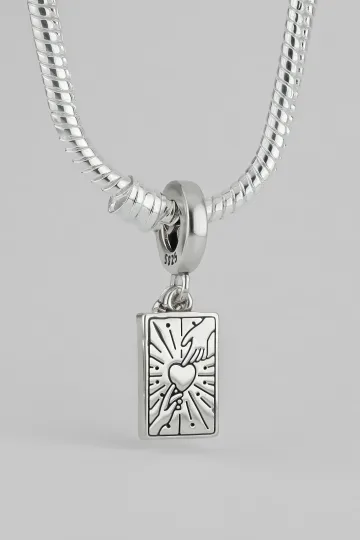
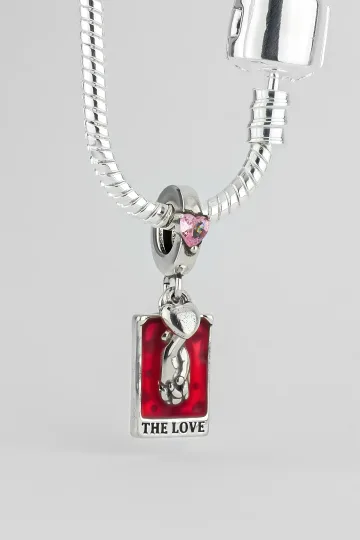
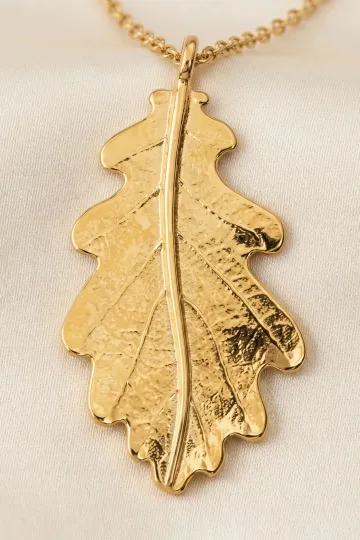
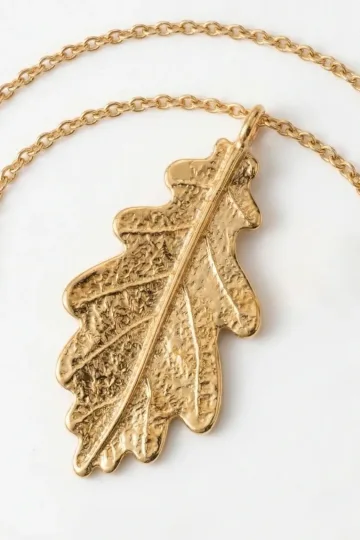
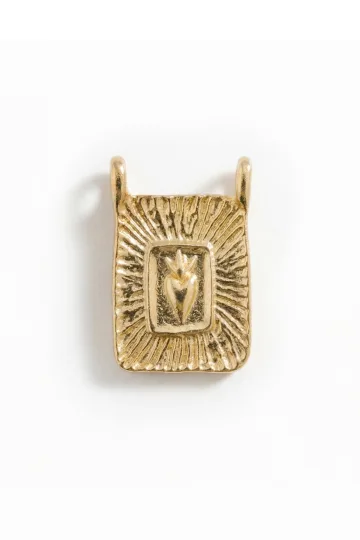
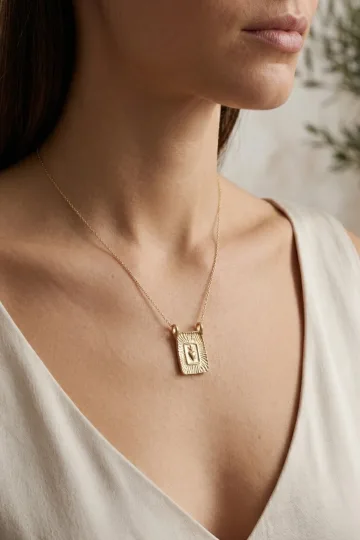
Wear the symbol, don't just read about it. These are in stock:


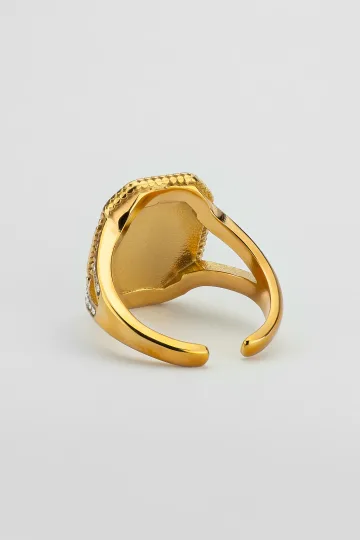
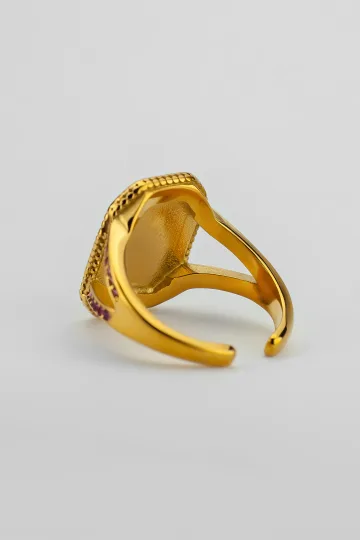
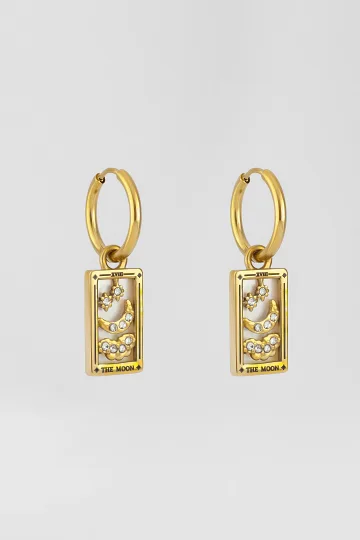


This is no accidental sequence. The structure of the Arcana is built so that every achievement is followed by its shadow. The Lovers offer a choice, the Wheel of Fortune offers fate, Temperance offers harmony. But harmony is fragile. A person who has found balance is not yet free of their attachments. They have only learned to manage them, and the card shows what happens when that control loosens, or when an attachment was mistaken for harmony in the first place.
After the Devil comes the Tower (XVI), the collapse of everything built on false foundations. The sequence reads like a story: the loss of balance leads to the fall of what was raised. Sometimes that is a catastrophe. Sometimes it is release.
In the "Fool's journey" through all the Arcana, the Devil is the moment when the traveller finds himself trapped, not because someone locked him in from outside, but because he himself is holding on to something and cannot, or will not, let it go. The Fool, Card 0, set out with an open heart. By the fifteenth card he has gathered attachments, fears, dependencies, and now he sits at the foot of a throne with a chain around his neck.
History of the Card: From Visconti to Waite
Early Italian Decks
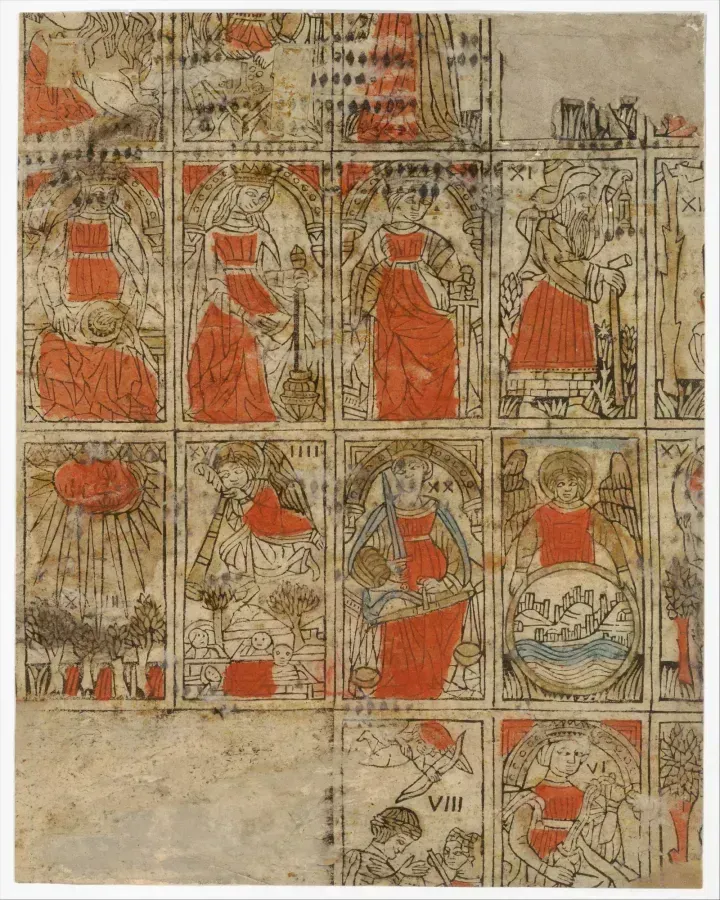
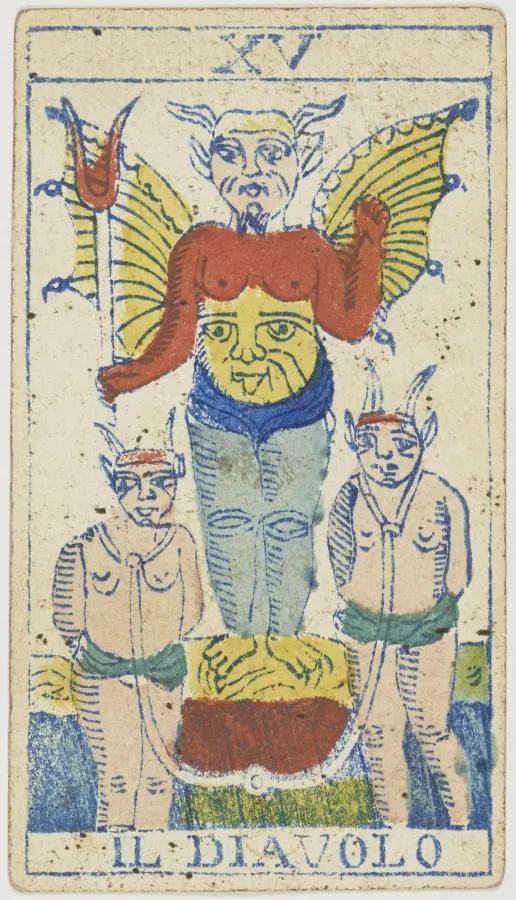
The first tarot cards appeared in northern Italy in the fifteenth century, made as instruments for card games at the courts of dukes. One of the oldest surviving decks, the Visconti-Sforza, was created around 1450 for the ducal house of Milan. The Il Diavolo card shows a horned figure with bat wings, often with extra faces on its body or limbs, a detail inherited from medieval religious iconography.
The medieval image of the devil in the Christian tradition was built from several sources blended together: the Greek Pan, that goat-legged creature, the pagan nature gods the church recast as demonic figures, and a general image of menace. The Il Diavolo of the early Italian decks is precisely a demon in the religious sense: a source of temptation and evil.
The Marseille Tradition
By the eighteenth century the Marseille deck had taken shape, produced on a large scale in France. Le Diable in the Marseille tradition is a horned anthropomorphic figure on a pedestal, with two smaller figures at its feet, often chained. The image became standardised, but the religious emphasis remained: the card was read as a warning, a sign of the presence of demonic forces.
Waite-Smith 1909: Reimagining Through Baphomet
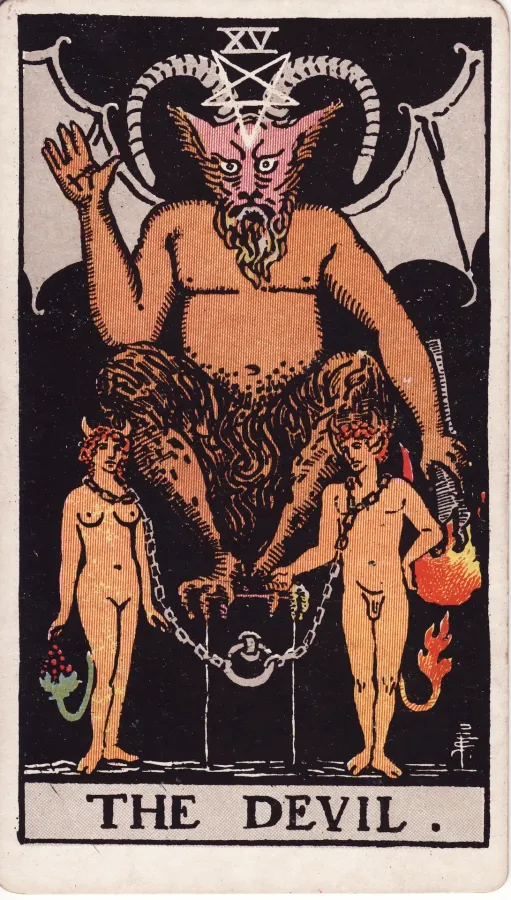
Everything shifted in 1909, when the British occultist Arthur Edward Waite and the artist Pamela Colman Smith created the deck that would become the most influential in the history of Tarot.
Waite, well acquainted with the occult tradition of the nineteenth century, used as the basis for his Devil card the image of Baphomet created by the French occultist Eliphas Levi in 1856. This was a deliberate choice: Levi's Baphomet is not a religious devil and not a demon in the theological sense. It is a philosophical symbol of the balance of opposites. But on Waite's card the meaning shifted: a symbol of balance became a symbol of unfreedom.
The Waite-Smith card shows a winged, horned figure on a stone pedestal. At its feet stand two naked people, a man and a woman, bound in chains. This is a recognisable echo of the Lovers (VI): the same two figures, the same pair, but where there was once free choice there is now dependence.
The Thoth Deck: Aleister Crowley
In the 1940s Aleister Crowley created the Thoth deck in collaboration with the artist Lady Frieda Harris. Crowley is an ambiguous figure: a leader within the Golden Dawn, the founder of Thelema, a man the British press once called "the wickedest man in the world." He took that label with irony, reading it as a projection of the collective fear of anything that stepped outside ordinary respectability.
The Devil card in the Thoth deck differs sharply from Waite's. Crowley's image is more philosophical and less narrative: the figure of Pan, the Greek god of nature, with the emphasis on sexual energy and primal force. This is the Devil as natural power rather than as a moral trap. Crowley stripped the card of any moralism, making it more a description of archaic vitality than a warning about sin. In the Thoth deck the card is still titled "The Devil," but it reads almost as a hymn to the life force that civilisation works steadily to suppress.
A serpent belongs in dark silver on bare skin, never in gold under an office blouse. The bite suits the bold.
How to Wear Dark Symbolism
A dark symbol at the throat is character, not a costume for one night. Here is what actually holds up on shoots and for the clients I dress, sorted by occasion.
How do I wear a dark symbol every day? For weekdays I recommend a small sign on a fine chain over a jumper, a roll-neck or a loosely cut shirt. Matte silver, length at the collarbone. In an everyday look the dark motif speaks loudest as a quiet detail: noticed up close, not across the room. I suggest a plain top in calm shades, graphite, olive, navy, so the symbol does not argue with the fabric.
Does it work at the office? It does, as long as you keep it restrained. I choose one small sign on a short chain under a closed collar or a jacket, no layering. An ouroboros the size of a fingernail under a white blouse reads as the mark of someone who thinks, not as a challenge. I suggest a neutral metal: silver or light gold-plating softens the motif and drops the gothic note that has no place in a meeting.
How do I build an evening look? Evening allows volume. For a deep neckline I recommend a pendant on a long chain, and oxidised silver catches the light beautifully along the lines of the design. A black dress, burgundy velvet, dark silk, that is the home ground of a snake or an all-seeing eye. For an outing like that I build the look around one motif and add earrings on the same theme.
Which metal do I choose for a dark motif? Here I almost always choose silver: oxidised for the evening, matte for the day. It supports the graphic line of the symbol and the depth of the engraving. I recommend gold-plating when the look needs softening and a step away from the gothic, for instance under a light business top. One rule: if there are several signs, I keep one metal, so the stack reads as intent rather than chance.
How many symbols should you wear at once? One sign on a clean chain almost always beats five thrown together. I suggest layers only for those building a story: an ouroboros at the throat, a snake a little lower, a long chain with an eye, three symbols and one meaning. A short chain gathers attention near the face and reads strictly, a long one carries the symbol lower and makes the look freer. I match the length to the neckline, not the other way round.

Turn on your camera, pick earrings, a pendant or a ring, and see the piece on yourself in real time.
Switch items in one tap.
Everything runs in your browser: no photo or video is ever uploaded.
Iconography of the Waite-Smith Card: A Reading of the Symbols
Baphomet on the Throne
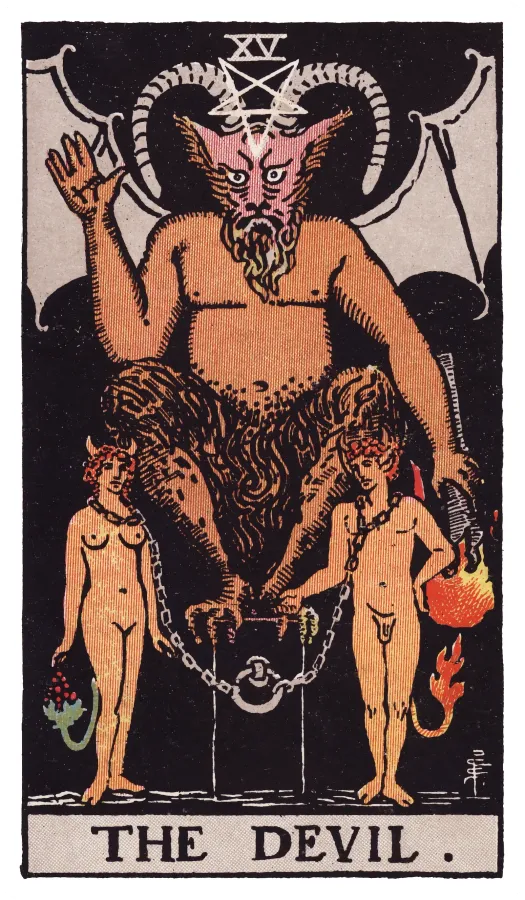
The central figure of the card is the Baphomet of Waite's version, seated on a stone pedestal. The origin of this image defines the meaning of the card, so it is worth beginning there.
Eliphas Levi (born Alphonse-Louis Constant, 1810-1875) was a French occultist, one of the most influential theorists of Western esotericism in the nineteenth century. In his major work, "Dogme et rituel de la haute magie" (1854-1856), he created the illustration of the "Goat of Mendes," Baphomet. It is an androgynous winged figure with a goat's head, sitting in the posture of the Buddha. On its head an inverted five-pointed star. One hand raised with the word "Solve" (dissolve), the other lowered with "Coagula" (coagulate). On its lap a caduceus. It is a symbol of the hermetic principle, "as above, so below," the balance of forces, the alchemical formula of transformation.
Levi wrote plainly that his Baphomet was not a god of evil. It is a personification of the "astral light," a universal magical force that can be used for good or for harm. It is a principle, not a character.
Waite took Levi's visual image and reimagined it for his card. On Waite's card the figure keeps the main features (horns, wings, the inverted star on the brow), but the meaning shifts toward dependence and unfreedom. The figure is no longer a philosophical principle of balance; it is the master of two prisoners.
The Goat's Horns: Dionysus, Saturn and Natural Force
The goat's horns on the Baphomet figure are no accidental detail. They carry several mythological layers at once.
In the Greek tradition, goat's horns were linked to Dionysus, the god of ecstasy, intoxication, the expansion of consciousness. His retinue, the satyrs and goat-legged pans, embodied a raw, untamed force of desire. Goat's horns on the head meant belonging to that sphere: unpredictability, a stepping beyond rational control.
In the astrological system, the goat's horns connect to Capricorn and its ruler Saturn. Saturn in Roman myth is the god of time and limitation, but also of release: the Saturnalia, the festival in his honour, was a time when the hierarchy turned upside down and masters and servants swapped places. The horns here mean not evil but a principle that disrupts the established order.
In Gnostic traditions, the Goat of Mendes is a reference to the Egyptian god Banebdjedet, worshipped in the city of Mendes. Greek authors described the cult with incomprehension, projecting their own fears onto it. Eliphas Levi used the name deliberately: the "Goat of Mendes" became his term for a principle that is neither good nor evil, but simply is.
The Lowered Torch: Prometheus Inverted
Between Baphomet's horns burns a torch. This is a direct reference to Prometheus, who stole fire from the gods and gave it to humankind. But the torch is inverted: the flame burns downward, toward the earth.
Prometheus brought people fire for warmth; he brought knowledge, the ability to transform the world. It is the gift of consciousness, the point at which the human as such begins. His punishment is endless pain: an eagle tears at his liver, which grows back every night.
The inverted torch reverses this image: knowledge as fire is present, but it is aimed not upward toward liberation but downward toward instinct and earthly desire. This is not an absence of knowledge but knowledge put to self-emptying rather than growth. The light is there, but it lights a cellar, not the sky. Prometheus gave people fire so they might become gods. The lowered torch is that same fire turned to ruin.
The Inverted Pentagram: Matter Over Spirit
The five-pointed star in its upright position is an ancient symbol used across many cultures as a sign of protection and harmony. The Pythagoreans used it as a symbol of health. In the medieval hermetic tradition, the upright pentagram stood for the human being with one point raised: reason governing the four elements.
The inverted pentagram on the Devil card turns that hierarchy over: the elements dominate reason, instinct takes precedence over awareness. Geometrically it is an exact illustration: one point up, reason leads; one point down, body, desire, instinct take command. This is not a symbol of worshipping evil but a very concrete diagram of the state where a person has stopped governing their own desires.
In the occult tradition of the nineteenth and twentieth centuries, the inverted pentagram was taken up by several movements as a deliberately provocative symbol. But its meaning on the card precedes all of them: Waite read it literally, as a diagram of unfreedom.
Two on Chains: The Key Detail
At the foot of the throne stand two figures: a naked man and a naked woman. Around their necks are chains. They are bound to the pedestal on which the Devil sits.
But the chains sit loose around their necks. The loops are wide enough to be lifted off without help. They could leave at any moment. They do not leave.
This is the central image of the whole card. Dependence in its real form: not a prison with guards at the gate, but a situation a person keeps going themselves, because it is familiar, because it is frightening, because the chain became part of their identity long ago.
Both figures have grown small horns and tails; they are slowly taking on the nature of what they serve. It is a subtle observation: long captivity changes a person, who begins to resemble whatever holds them.
The parallel with the Lovers (VI) is deliberate. There too are two figures, a man and a woman, with an angel above them. Here there is no angel, and instead of the heavens a stone throne. The choice was made, and these are its consequences.
Bat Wings: Fear and False Sight
The Baphomet on Waite's card has bat wings rather than the wings of an eagle or an angel. The bat is a night creature, blind in daylight. But the echolocation it uses is not sight. It is a system of building a picture of the world through the reflection of sound.
Echolocation is precise within its own system, yet by its nature it cannot see whatever does not reflect sound. The bat builds a map of space that matches reality only in part. This is a metaphor for dependent perception: dependence creates its own frame of reference, inside which everything is logical and coherent, while the frame itself rests on incomplete data.
Dependence lives in the dark: alcohol is hidden, codependent relationships are denied, compulsive spending is kept from those closest. The bat wings point both to the nocturnal nature of dependence and to the fact that its "sight" is the echolocation of self-deception.
Baphomet: The History of the Image
1307: The Arrest of the Templars and the Birth of a Name
The name Baphomet appears in historical documents in 1307. On 13 October of that year, the French king Philip IV, called the Fair, ordered the simultaneous arrest of every knight of the Order of the Temple on French soil. In a single night some two thousand men were detained.
The Order of the Templars was founded in 1119 to protect pilgrims in the Holy Land. By the early fourteenth century it had grown into the largest military and financial organisation in Europe: its own fortresses, a fleet, a system of safe money transfers across the continent, loans to European monarchs. Among the order's debtors was Philip IV himself. Destroying the order solved several problems at once: the debt was cancelled, vast wealth passed to the crown, and a political rival vanished.
To destroy the order, accusations were needed. The Inquisition produced the standard set of heresies of the age: worship of an idol named Baphomet, denial of Christ, obscene kisses on entering the order. Under torture the knights gave testimony that did not match: one described a head with three faces, another a cat, another a human figure, another a skull. No two descriptions agreed. That alone shows these were confessions wrung out under duress, not an account of any real cult.
Modern historians are nearly unanimous: the accusations were fabricated. The order's Grand Master, Jacques de Molay, was burned in 1314. By legend, before his death he cursed Philip and Pope Clement V; both died that same year.
The word "Baphomet" itself is read differently by linguists. The most common version: it is a distorted French pronunciation of the name Muhammad. An accusation of "Saracen practices" was, at the time, serious enough grounds for a trial. No cult under this name is recorded in any document before 1307.
Eliphas Levi 1856: A Philosophical Symbol
The next appearance of Baphomet comes five and a half centuries later. In 1856 Eliphas Levi published "Dogme et rituel de la haute magie," a book that became one of the founding texts of nineteenth-century Western occultism. The illustration of Baphomet, drawn by Levi himself, became the central image of the book.
Levi took a historically compromised name from the Inquisition's documents and built under it a systematic philosophical symbol. His Baphomet embodied the principle of "coincidentia oppositorum," the coincidence of opposites. Androgyny (male and female traits in one figure), the union of animal and human, the gesture of the hands "Solve/Coagula," up and down at once. It was a symbol of synthesis, not destruction.
Levi wrote plainly: "Let us not suppose we are speaking here of a living being. Baphomet is a word, a sign. It is the ever-moving mystery of the synthesis of the twofold nature of reality." He was creating not an idol but a diagram.
Aleister Crowley: Baphomet as a Name
Aleister Crowley (1875-1947) took the name Baphomet as one of his magical names on entering the order O.T.O. (Ordo Templi Orientis). For Crowley, Baphomet personified the principle he called "Pan," a primal natural force uniting all living things. This matched his system of Thelema, with its central thesis: "Do what thou wilt shall be the whole of the Law."
In the Thoth deck, Crowley reworked the Devil card into the image of exactly that Pan. He removed every trace of moralism, turning it from a "warning about sin" into a "description of natural vitality." Crowley's Baphomet is the life force that civilisation calls a demon because it does not know how to handle it.
Twentieth-Century Pop Culture: From LaVey to Metal
Anton LaVey founded the Church of Satan in San Francisco in 1966. He adopted the inverted pentagram with a goat's head inside it, the so-called Sigil of Baphomet, as the official symbol of the organisation. It was a deliberately provocative gesture: LaVey was building a theatrical religion that rejected all external authority on principle. His "Satanic Bible" of 1969 became a cultural phenomenon.
The image of Baphomet entered the aesthetics of heavy metal and death metal through album covers, stage sets, tattoos. For most people inside that culture the symbol meant above all a refusal of official morality and bourgeois comfort, a philosophy of nonconformity rather than a theological statement.
By the end of the twentieth century the image had become part of mass culture. It appears in series and films, and has been the subject of court disputes in the United States (The Satanic Temple versus public monuments to the Ten Commandments). That finally moved Baphomet from a religious code to a cultural one.
Customer reviews
Zevira is a real jewellery shop. Genuine payments, deliveries and customer thank-yous.
🥰🥰🥰 gracias
Ok, ¡gracias! 🙂
Archetype: Material Attachment, Dependence, the Shadow Part
The Devil in Tarot describes several overlapping psychological states.
Dependence in the broad sense. This is not about alcohol or chemical substances alone. A dependence in the behavioural sense is any repeated action a person keeps performing despite knowing its destructive consequences. The toxic relationship a person stays in for years. The job that takes their health but which they will not leave for fear or status. Social media they open not because they want to but because they cannot stop. Shopping as a way of managing anxiety. All these patterns share one structure: a chain that sits loose.
Material attachment. The fear of losing status, money, possessions, the fear that makes a person tolerate almost anything. "I will not leave this job, the mortgage." "I will not leave this relationship, we share the flat." Material fear builds stronger chains than any addiction, because it rationalises itself as prudence.
The shadow part. In Jungian psychology the shadow is the sum of personality traits a person will not accept in themselves and pushes into the unconscious. Aggression they call "feeling hurt." Envy they call "righteous indignation." Sexual desires deemed unacceptable. Ambitions they are ashamed to admit. The unlived shadow does not vanish; it governs the person from within, from exactly the place they cannot see.
Fear and secret pull. Sometimes the Devil describes a relationship with something that both attracts and frightens. A person swears they will not do it again, and does it again. This is not weakness of will in the everyday sense but a psychological structure described as compulsion: an action that lowers anxiety for a short time while creating a deeper problem.
Upload a photo of your pet, someone you love, or an object. We'll build a 3D model and hand-cast it in pewter.

Upright: Seeing the Chain
In the upright position the Devil describes a state of dependence, attachment or unfreedom. It is not necessarily a catastrophe, more a diagnosis.
Dependencies. Behavioural or chemical. Something that takes away the ability to choose freely. What matters is not the scale but the structure: "I do this although I do not want to," "I do not do this although I want to."
Toxic relationships. A partner who humiliates but cannot be left. A friend who always takes and never gives, yet the contact does not break. A family system in which a person is stuck in a role they cannot leave. The card does not judge; it describes.
Material obsession. The fear of losing. Accumulation that brings no joy but goes on. Work for the sake of work with no sense of why. An image that must be maintained at any cost.
Denial. Perhaps the hardest form. A person does not see their chain. They call the dependence "I simply love it," the attachment "I am simply responsible," the pattern "that is just my character." When the Devil appears in a spread, it is often an invitation to look at what a person would rather not see.
Keywords of the upright position: dependence, unfreedom, attachment, materialism, self-deception, the dark side, fear, compulsion.
Reversed: Liberation
The reversed Devil is one of the strongest cards in the deck in terms of positive potential. It is the moment the chain is finally lifted off.
Not because the danger has gone. Because the person saw the chain and understood they could remove it.
Liberation from dependence. A decision made after long denial. The first honest conversation with oneself. The step put off for years. The reversed Devil does not promise the path will be easy, but it describes the turning point.
Acceptance of the shadow. In the Jungian sense: a person begins to see their denied qualities. It is a painful process. Recognising cruelty, envy, fear in oneself is hard. But an accepted shadow loses its power. An unaccepted one governs.
A new relationship with responsibility. The reversed Devil sometimes describes acknowledging one's own contribution to the problem. "I am not a victim of circumstance; I built this situation myself." This is not self-blame but the return of responsibility and, with it, freedom.
There is another possible reading of the reversed Devil: an excess of restriction, when a person fights some part of themselves so hard that the fight itself becomes the problem. Asceticism as a new form of dependence. Control as a way of never meeting what frightens them.



Astrology: Capricorn and Saturn
In the Western astrological system of Tarot correspondences, the Devil is linked to the sign of Capricorn and its ruler Saturn.
Capricorn
Capricorn is an earth sign, ruling December and January. Its symbol is the goat, sometimes drawn with a fish tail (Capricorn from the Latin Capricornus, "goat horn"). Capricorn is associated with ambition, discipline, the drive toward achievement and structure. It is a sign ready to work long for a result, to sacrifice the present for the future.
But the shadow side of those qualities is exactly what the Devil describes. Ambition tipping into obsession with status. Discipline becoming self-punishment. Work for the sake of work rather than meaning. The material goal as the only measure of worth. Capricorn in shadow is the person who gave up everything personal for a career and found the career did not fill the emptiness.
Mythologically Capricorn is linked to Pan, the Greek god of wild nature, the goat-legged creature, the embodiment of primal instinct and sexual force. It is precisely Pan's goat-legged nature that became one of the sources of the Christian image of the devil. A telling inversion: a natural principle, free of moral judgement, was recast as a principle of evil.
Saturn
Saturn is the planet ruling Capricorn. In astrology Saturn governs structure, limitation, trials and lessons that cannot be avoided. "The stern teacher of the zodiac" is a common image of the planet.
Saturn in a birth chart shows where a person meets the greatest resistance and where the most serious work awaits them. Saturn's transits accompany turning points: the "Saturn return" at 27 to 30 is considered, in astrology, the period of the first real adult trial, when youth ends and responsibility begins.
The link between the Devil and Saturn is exact: this is the card about a trial that cannot be skipped. About the price that sooner or later has to be paid. About what was put off and finally demanded an answer.
Jungian Shadow: Integration, Not Battle
Carl Gustav Jung developed the concept of the shadow as one of the structural parts of the psyche. The shadow is the sum of everything the conscious "I" will not accept in itself and pushes away: "bad" feelings, "unsuitable" desires, traits of character that do not fit the self-image a person presents to the world.
Jung argued: "Everyone carries a shadow, and the less it is embodied in the individual's conscious life, the blacker and denser it is." A repressed shadow does not disappear; it governs the person from the unconscious. This is why people who rigidly deny some quality in themselves ("I never get angry") display it most vividly under stress.
The Shadow as a Resource
The key insight Jung set against the religious tradition of fighting the dark side: the shadow holds both the repressed negative and a positive potential. Aggression, denied as a "bad quality," becomes, once recognised, the ability to defend one's boundaries. Envy, renamed "righteous indignation," becomes, once integrated, an understanding of one's own desires. Ambitions one is ashamed to admit become the energy for real movement.
Jung called this "gold in the shadow." Repressed qualities do not vanish; they simply cease to be available to consciousness as a resource. Integrating the shadow is not "letting yourself be cruel" but reclaiming access to the energy that was locked away with the repressed material.
The Danger of Repression and Projection
An unaccepted shadow governs a person; it seeks a way out through projection. The mechanism of projection means that what I do not acknowledge in myself I see in others. A person who has repressed their own greed sees greed everywhere. A person who will not admit their aggression finds it in everyone they meet.
Jung described this as "projective identification" in its extreme form: a person sees their shadow in another, and also provokes the other to behave in line with that projection. This mechanism lies beneath many toxic relationships: one partner projects their repressed qualities onto the other, and the other, through their behaviour, confirms the projection. The circle closes.
The Devil card describes the state of an active, unaccepted shadow. When it appears in a spread, the central question is not "what is wrong with the situation" but "what am I projecting onto the situation from my own unaccepted material."
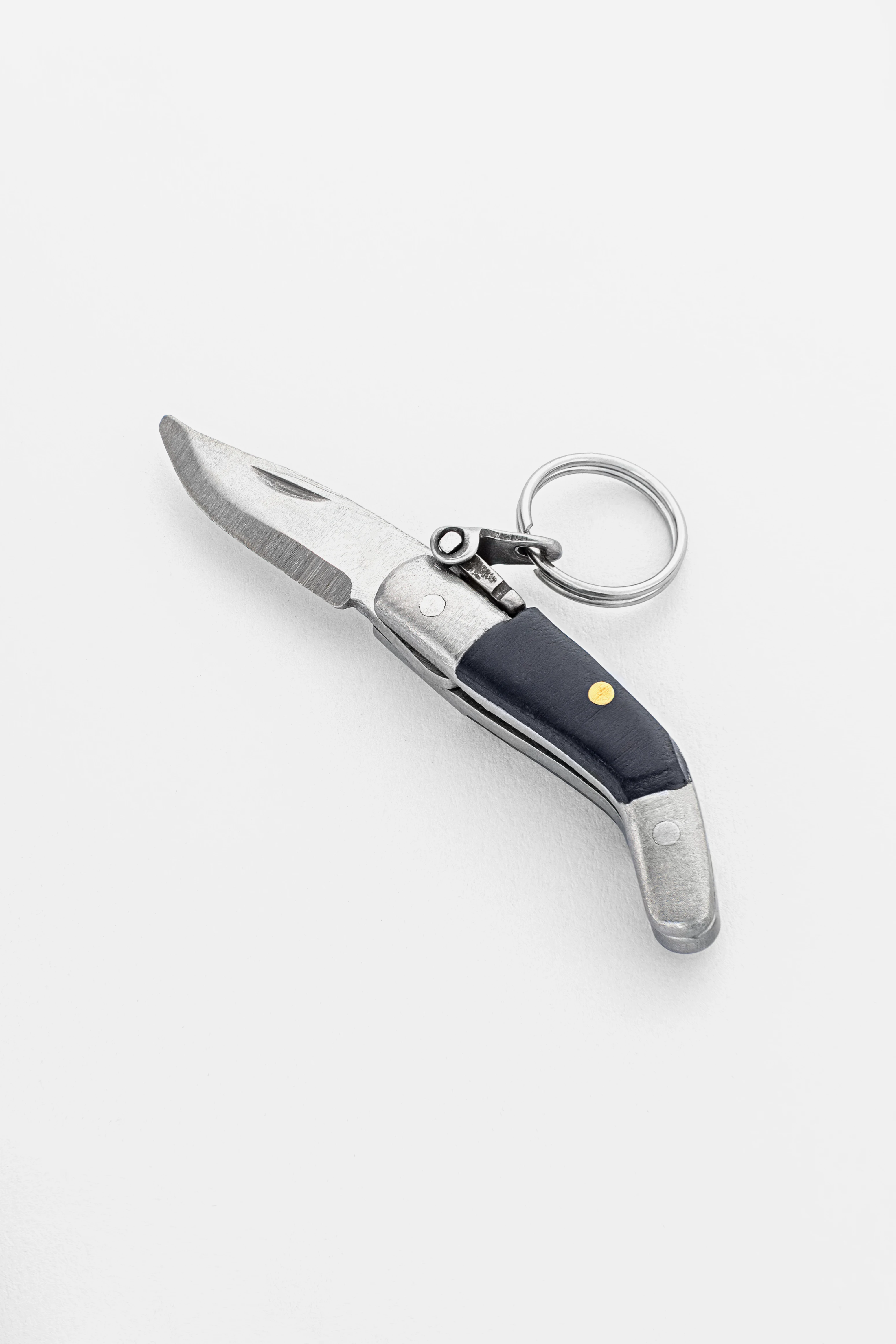
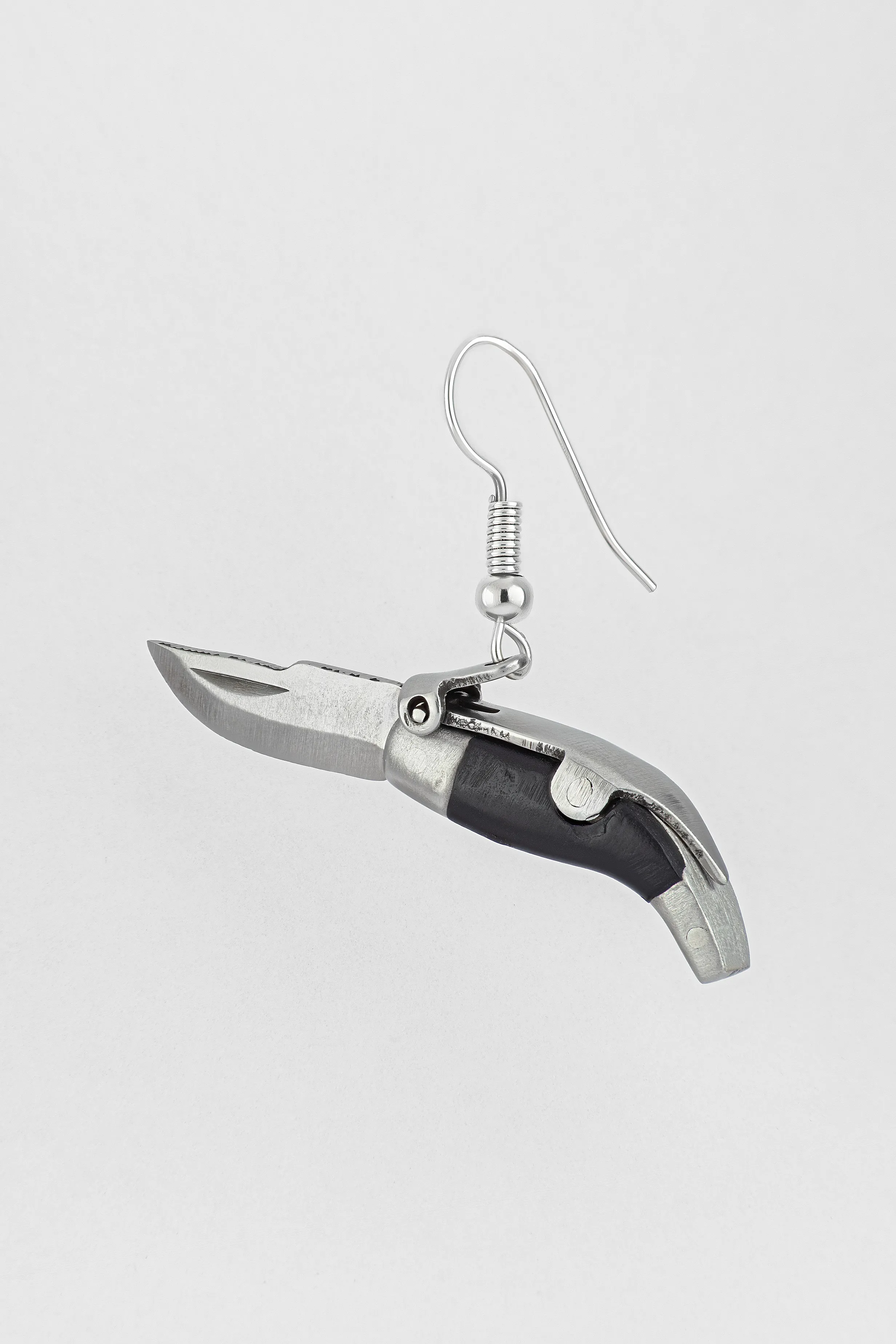
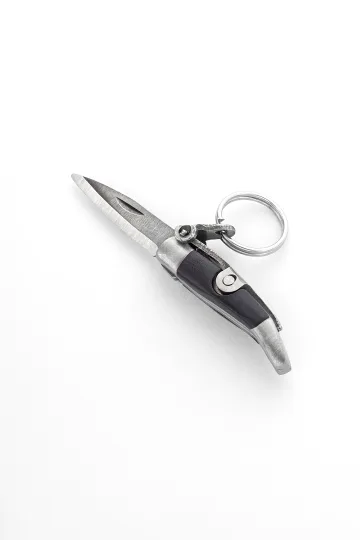
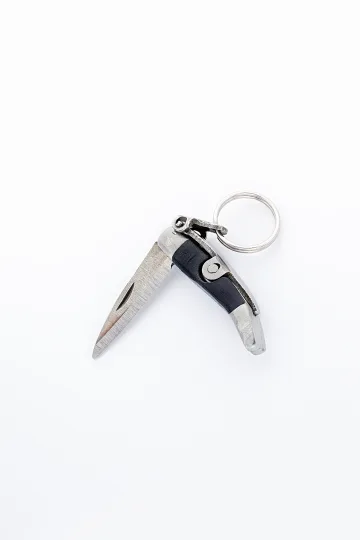
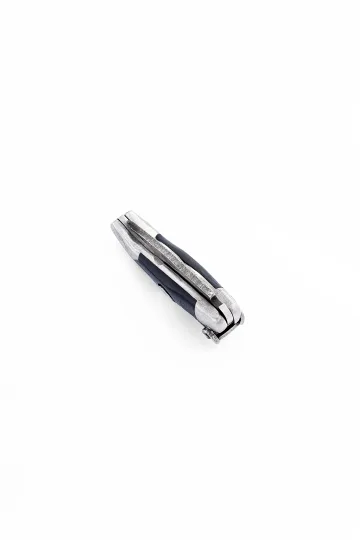
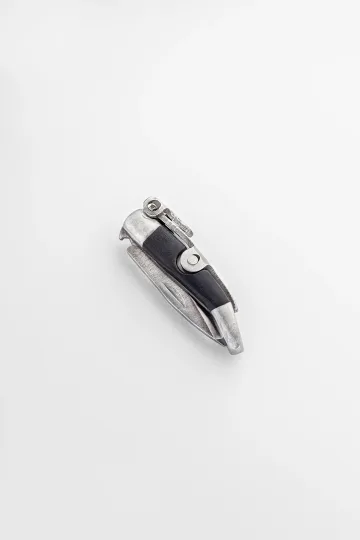
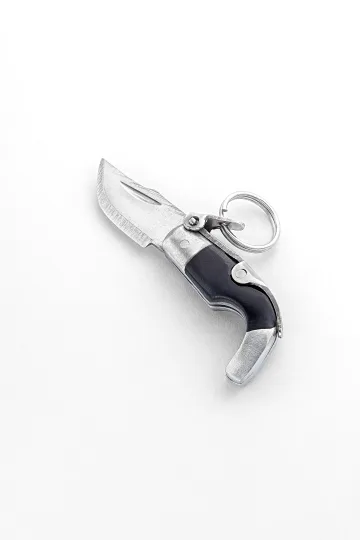
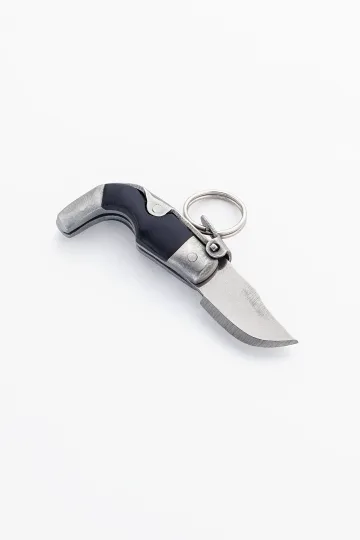
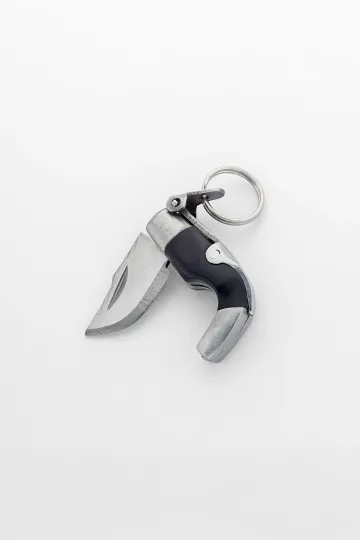
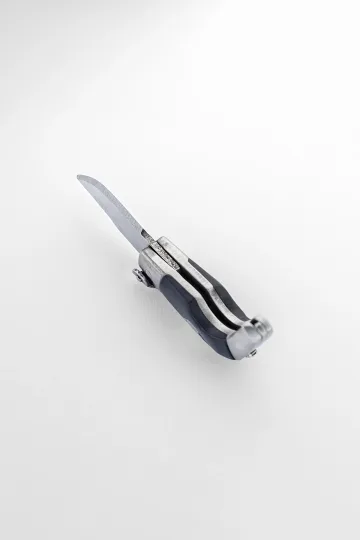
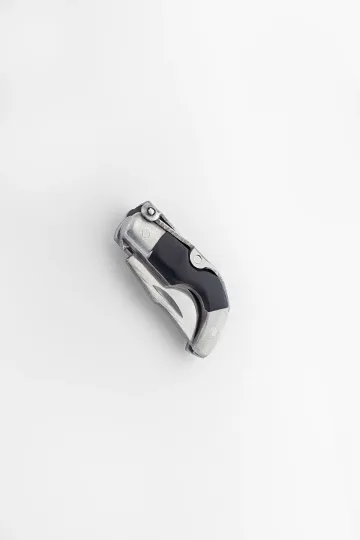
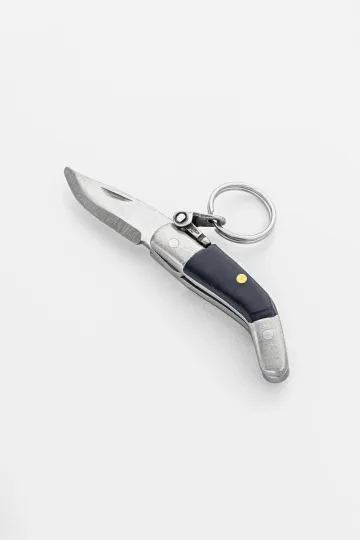
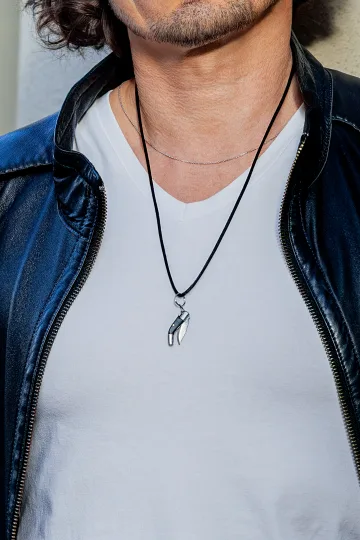
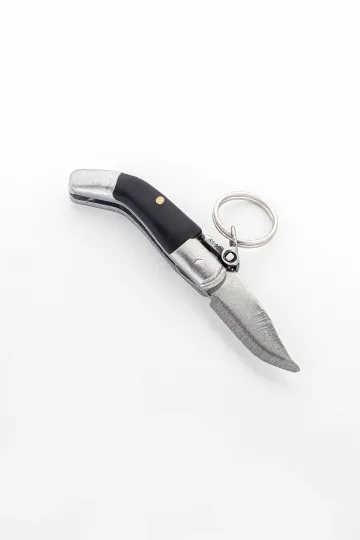
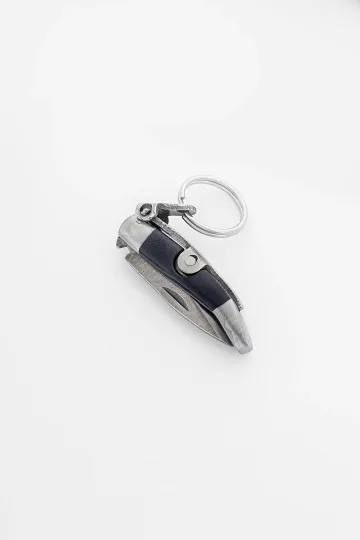
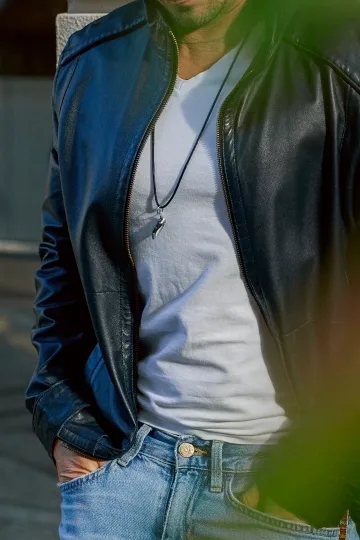
CAPAORA mini knife pendant
The 18th-century Spanish navaja in miniature: 40 mm of stainless steel, a real folding mechanism and a Palanquilla lock that clicks. An affordable gift to remember.
Authentic · Ships from Spain · 14-day returns
Psychology of Dependence: Neurobiology
Modern neurobiology has added a physiological basis to the psychological understanding of dependence, one that makes the image of loose chains on the card even more precise.
The Dopamine System and the Nucleus Accumbens
Dopamine is a neurotransmitter long called the "pleasure hormone." A more accurate description: dopamine is the hormone of anticipation. It is released not at the moment of pleasure but at the moment of expecting it, when the brain recognises a signal preceding the desired situation.
The nucleus accumbens is a structure in the basal ganglia, central to the reward system. It is what reacts to the dopamine signal and forms motivation. Any dependence, chemical or behavioural, engages this system.
With regular repetition of a pattern, the neural connections supporting it grow stronger. The brain literally rebuilds itself around the dependence: other sources of dopamine become less interesting, the threshold of sensitivity drops, more stimulus is needed for the same effect.
Tolerance and Withdrawal
Tolerance is the reduced effect from the same dose. The brain adapts to a constant level of stimulation by lowering the number of receptors or their sensitivity. This means that reaching the former state requires more of the same substance or behaviour. It is a physiological process, not a moral one.
Withdrawal is the state when the substance or behaviour is removed. A brain rebuilt around a dependence has no resources of its own for normal functioning without it. Hence the physical and psychological suffering of any attempt to stop. "Just pull yourself together" as advice ignores this physiological fact.
Behavioural Dependencies
Modern psychiatry recognises a broad spectrum of behavioural dependencies with the same neurobiological structure as chemical ones. Gambling: the expectation of a win triggers a stronger dopamine release than the win itself. Social media: a notification, a like, a new comment is a dopamine trigger, designed on purpose. Compulsive shopping: the arousal of the search and the purchase, not of owning the thing. Compulsive sexual patterns.
All of them share one structure: rising tolerance, loss of control over the pattern, continuation despite awareness of harm. This is exactly what the card depicts: the chains sit loose, but they cannot be lifted off, because the brain's network has already rebuilt itself around them.
Leave your email, we'll send your discount code. No spam, unsubscribe anytime.
The code arrives by email, valid on your first order.
The Devil in Literature
Goethe: Faust in Detail
"Faust" is one of the few works in the history of European culture created over more than six decades: Goethe began it in the 1770s, the first part appeared in 1808, the second in 1832, the year of his death.
Doctor Faust at the start of the tragedy is a man who has reached the formal limit of knowledge. He has mastered philosophy, medicine, law, theology. His words in the first monologue admit it: he has studied them all with diligence, and still the knowledge proved empty. Faust is disenchanted; he is in an existential crisis: meaning has not been found despite all he has achieved.
It is in this state that Mephistopheles appears. Not at the moment of triumph, not out of envy of another's happiness, but at the point of greatest emptiness. Dependence always comes exactly so: not to the one for whom all is well, but to the one who has found no other answer.
Faust's pact with Mephistopheles is a wager: Mephistopheles agrees to serve Faust in life, and Faust gives up his soul if he ever says to the moment, "Stay, you are so beautiful." The structure of this bargain perfectly describes the mechanics of dependence: the pleasure must continue, the stop is impossible. Any pause is a defeat.
Goethe's Mephistopheles is clever, witty, charming. The famous self-definition: "I am part of that force which forever wills evil and forever works good." This is not a demon in the religious sense but a principle that provokes movement through negation. Without Mephistopheles, Faust would have stayed in his study.
The ending of "Faust" is untypical of a moral tale about a pact with the devil: Faust is saved. Not because he earned it, but through the "eternal feminine," through the love of Margarete, who pleads for him before heaven. Goethe does not confirm the simple moral that the one who sells his soul is damned; he describes a more complex truth: a person who lived life fully, including its dark parts, can be saved not by denying their experience but through whatever remained alive in them.
Bulgakov: The Master and Margarita
The novel was written in the 1930s and published after its author's death, in a shortened version in the 1960s; the full text appeared only at the end of the 1980s. Woland is Satan, but a Satan of a particular kind.
He does not tempt the city's citizens; he exposes what is already there. At the variety show he does not create greed, cowardice and pettiness; he creates the conditions in which they show themselves. The famous monologue: "People are people. They love money, but that has always been so... They are frivolous, well... and mercy sometimes knocks at their hearts..." This is not condemnation but a neutral diagnosis.
In that sense Woland is closer to the Jungian shadow than to the religious devil: he is a mirror that shows people what they are, without ornament. His visit is, in a way, a forced encounter of a society with its own shadow.
"The Devil Wears Prada" and "The Big Lebowski"
Miranda Priestly, from Lauren Weisberger's novel and the 2006 film, is the Devil in a tailored suit. Not a villain, not a tempter: simply a person who built her power through a system in which others willingly give everything to it. No one forces Andy to work at Runway; she keeps herself there. The chain sits loose. The image is a direct modern illustration of the card.
"The Big Lebowski" (the Coen brothers, 1998) works the theme differently. The protagonist, the Dude, has no dependencies in the medical sense, but his whole existence revolves around a ritual (bowling, marijuana, "White Russians") that keeps him from any real choice. It is a mild form of what the card describes: not a catastrophe, but a life ticking over in neutral. The Coens do not condemn the Dude; they simply show the structure.
The series "Lucifer" (2016-2021) is built on the opposite operation: the devil is moved to modern Los Angeles and turns out to be a thoroughly reflective subject with a heavy wound in his relationship with his father. It is a psychologised version of the archetype: not a "bearer of evil" but a "bearer of the repressed," a man with a shadow learning to work with it. In each episode Lucifer asks people one question: "What is it you truly desire?" That is, quite literally, shadow work in the therapeutic sense.
The Devil in Spreads: Practical Situations
Dependence
When the card falls in a spread about dependence, chemical or behavioural, it describes not the presence of the dependence as a fact (that is usually already known) but the degree of awareness about it. Upright: a person sees the pattern but cannot or will not stop it. Reversed: the moment something has shifted, not a victory but a turning point.
An important detail for working with the card here: the Devil describes the structure, not the cause. It does not say "this is why you are dependent"; it says "this is what your unfreedom looks like right now." The cause is sought separately.
Toxic Relationships
The Devil in the context of relationships is one of the most common situations in a reader's practice. A relationship that has long stopped bringing joy but offers no way out. A partner who humiliates yet cannot be left. Codependence, in which one holds the other through their needs, and the other holds the first through their care, and both are chained.
The card in this position asks one question: what exactly holds you here? Not "why is it bad," but "what precisely are you getting from this situation that you cannot get any other way?" It is a hard question, but it is the one the card asks.
Business Partnership
The Devil in a business spread is a signal about a partnership held together not by mutual choice but by mutual dependence. One partner knows something that lets them control the situation. Or one has a resource without which the other believes they cannot act. The card invites an honest assessment: is this a partnership, or a mutual capture?
The Parental Role
The Devil in the context of family often describes a parental dynamic in which a child (of any age) stays close through guilt, duty, fear, rather than through choice. Or an adult who cannot psychologically separate from the parental system, though physically grown long ago. The chains are worn willingly, because they are invisible, because they are called "love" or "responsibility."
Combinations with Other Cards
The Devil and the Tower (XVI). One of the most dramatic combinations. The Tower is the collapse of what was built on false foundations. Together: the dependence has reached a crisis point, and soon something will change not by desire but by necessity. Sometimes it is the fastest way out of the trap.
The Devil and the Star (XVII). The Star is hope after ruin. The dependence or attachment is there, but so is the potential to leave it. The Star does not promise an easy path, but it promises one exists.
The Devil and the Lovers (VI). Almost literally: toxic relationships. A union based not on free choice but on dependence. The parallel between these two cards is deliberate in their imagery: the same two figures, a different context.
The Devil and Temperance (XIV). Neighbours in the deck. Together in a spread: what looks like harmony may be a well-managed dependence.
The Devil and Death (XIII). Transformation. Together it describes the moment when a dependence or pattern must die for something new to become possible.
The Devil and the Hermit (IX). The Hermit seeks solitude for growth. The Devil beside it is a sign that the solitude has become isolation rather than a retreat for recovery.
The Devil and Strength (VIII). Strength describes taming through gentleness rather than suppression. Beside the Devil it may indicate that a dependence is not beaten through a battle of force but only through acceptance and a gradual redirection of energy.
Famous Tarot Readers on the Devil
Rachel Pollack, author of the classic "78 Degrees of Wisdom," describes the Devil as a card of "alienation," the state in which a person has become a stranger to themselves, when the distance between their real desires and what they actually live by has grown too large to ignore.
Mary Greer, in "Tarot for Your Self," works with the Devil as a card that invites the question, "What do I call my own when in fact it governs me?" It is a shift of perspective: not "what should I get rid of" but "what pretends to be my choice without being it."
Practising readers describe a pattern: the Devil falls most often not when a dependence is at its height, but at the moment a person first begins to name it a dependence. The card marks the moment of the first honesty with oneself. It is not the moment of decision but the moment of recognition, from which a decision becomes possible.
Jewellery with the Devil's Symbolism: What It Means
Symbols associated with the theme of the Devil and the shadow side entered the jewellery tradition long ago. This is not esotericism and not a declaration of belonging to any religious current, but a concrete visual language.
The Snake (Ouroboros and Plain Snake)
The snake is one of the most layered symbols in the history of jewellery. In our guide to snake jewellery we work through every layer of the image. For the theme of the Devil, two matter.
In the biblical story, the serpent in Eden is the tempter who offers knowledge. The fruit of the Tree of the knowledge of good and evil: before it the human did not tell them apart. After it they do, and that carries consequences. The serpent in this story is not evil but a catalyst of awareness.
In the alchemical tradition the snake is transformation, the shedding of skin as renewal. Poison as medicine (hence the snake on the staff of Asclepius). Duality: death and healing in one image.
The ouroboros, the snake biting its own tail, is especially exact for the theme of the Devil. A closed circle. A cycle you cannot step out of. The ouroboros as a symbol describes eternal return, the endless loop, and that is precisely what dependence describes: the same pattern, again and again. To wear an ouroboros while understanding this meaning is to see your own loop.
The All-Seeing Eye
The all-seeing eye, in the context of the Devil, reads as a symbol of an honest look at oneself. The shadow exists because it is unseen. An eye that does not look away is the opposite of denial.
In the alchemical and hermetic tradition the eye is a symbol of knowledge that sees the hidden. Not foresight as a magical gift, but the ability to look where it is uncomfortable to look.
The Spider
The spider in jewellery is a symbol of the trap and the web, but also of mastery and patient making. In the context of the Devil the spider is the builder of a trap you make yourself. The web as a metaphor for a cage of one's own design. But the spider is also a weaver, one who knows how to work with fine structure: reimagined, it can mean mastery of one's own dark side.
The Skull Pendant
The skull as a symbol of memento mori, "remember you must die," in the context of the Devil means not a fear of death but honesty with oneself. A person who remembers life is finite wastes less time on patterns that empty them out. Skull jewellery explores this tradition in detail.
The Pentagram
The pentagram, in the context of dark symbolism, is one of the most often misread symbols. Historically the five-pointed star was used as a protective charm and a symbol of the harmony of elements long before any occult association. To wear it is not a display of ties to dark forces but a reference to a tradition far richer than its modern reputation.
The main point about the Devil's jewellery symbolism. A piece with dark symbolism does not say "I am evil" or "I worship dark forces." It says "I know my shadow." It is a visual statement of awareness, not of belonging. A person who wears an ouroboros or a snake understanding its meaning does the opposite of what the upright Devil describes: they see their loops.
How to Wear Jewellery with Dark Symbolism
Jewellery with dark symbolism (the snake, the ouroboros, the spider, the pentagram, the skull) works differently from most pieces. It carries a meaning that those familiar with the tradition will read. That calls for awareness in the choosing.
What It Pairs With
Dark symbolism works well in several aesthetic registers.
A monochrome wardrobe. Black, grey, dark green, burgundy. Dark jewellery in this palette reads as an accent rather than excess. Oxidised silver on black creates an effect of refined contrast.
Academic style. Tweed, wool coats, high collars. A snake or an ouroboros on a fine silver chain in such an outfit reads as the mark of an educated person familiar with the history of symbols, rather than a gothic accessory.
Gothic aesthetics. Its rightful home. Skull rings, layered chains, several symbols combined at once. Here expressiveness belongs.
Minimalism with character. A single piece with a dark meaning as the only accent in a neutral look. An ouroboros on a fine chain under a white blouse. A small snake ring on the ring finger. The symbol is visible to whoever knows it.
Metal
For dark symbolism, the following work especially well:
- Oxidised sterling silver: the dark patina brings out the detail of the design and creates a sense of depth and age. A classic for gothic and academic aesthetics.
- Plain sterling silver: a more versatile option, working in any context.
- Gold-plated silver: softens the dark symbol, making it less brutal. An ouroboros in gold reads less anxious and more decorative.
- Blackened silver: maximum effect for those who choose expressiveness.
Stones in dark jewellery: onyx (an impenetrable black gaze), garnet (deep red, the gothic register), labradorite (an iridescent shimmer, mystery), moonstone (nocturnal intuition).
Layering
Dark symbolism works well in systems. Several fine chains of differing lengths with different symbols build a narrative. An ouroboros at the throat (the closed circle, awareness), a snake a little lower (transformation), an all-seeing eye on the longest chain (the honest look). Three symbols, one theme.
What matters: layering works only when there is an inner logic between the symbols. A random collection of things you like individually does not add up to a story. A symbolic piece asks to be chosen with understanding.
Who the Devil's Symbolism Suits
Symbolism connected to the theme of Card 15 draws certain people, not because they are "dark" or "evil," but because they know what it means to look at themselves honestly.
People in therapy or self-analysis. Working with the shadow, recognising patterns, honesty with oneself about dependencies, these are the central themes of the card and the central themes of therapy. An ouroboros or a snake for such a person is a symbol of the process, not the result.
Those who have come through a dependence. Coming out of drinking, of a codependent relationship, of a toxic job, is an experience with no simple symbol. A snake shedding its skin, or an ouroboros as the symbol of a broken circle, carries exactly that meaning: I know what I came out of.
Lovers of gothic aesthetics. For them it is simply part of the artistic language they speak. The link to theological meaning is weaker than the visual tradition.
Psychologists, therapists, psychiatrists. A profession that works with the shadow in the literal sense. A piece with the symbol of shadow awareness is a precise professional emblem.
Students of the occult tradition. Those who seriously study the symbolism of Tarot, hermeticism, alchemy. For them jewellery with dark symbols is part of the visual language of the tradition.
People with a strong Saturn in their birth chart. The astrologically minded: Capricorns, those with Saturn prominent in their chart. A dark, Saturnine aesthetic, silver with patina, strict lines, the symbolism of time and limitation.
Those who simply love complex symbols. Without a deep psychological subtext, simply people who like their jewellery to carry layered meaning. That too is a legitimate reason to choose.
Send a friend a discount code, they save on their first order.
A Dark Jewellery Tradition: A Short History
Jewellery with dark symbolism has a long history that does not begin with modern goth.
Antiquity. Amulets bearing snakes, skulls and otherworldly creatures were part of the jewellery culture of Rome, Greece, Egypt. Pendants with the head of the Gorgon Medusa were worn as protection from evil. Skull rings were used as signets. This was no challenge to society but a widely accepted protective symbolism.
Medieval Europe. Memento mori as an artistic and jewellery tradition flourished from the fourteenth to the seventeenth century, when waves of plague made death a constant background to life. Rings with skulls and skeletons, coffin-shaped pendants, bracelets woven from the hair of the dead, all this was part of a mourning culture, not a sign of the marginal.
The Victorian era. In the nineteenth century mourning jewellery returned with new force. After the death of Prince Albert in 1861, Queen Victoria wore mourning for decades, and the whole court followed her. A genuine market for mourning jewellery appeared: brooches with urns and weeping willows, lockets holding locks of hair, rings set with black stones (black onyx, glass, or jet, that is fossilised wood).
Romanticism and Symbolism. The artists of the nineteenth century, fascinated by death, night and the irrational, created a demand for jewellery with matching symbolism. René Lalique, in art nouveau, made pieces with snakes, dragonflies and nocturnal motifs that fit this tradition.
The twentieth century: rock and subcultures. Skulls, pentagrams and dark symbolism entered jewellery fashion through rock music and subcultural movements. In the 1960s to 1980s this was a sign of belonging to a particular community. Gradually the symbolism became part of general fashion.
Today. Dark symbolism in jewellery is now part of a broad aesthetic spectrum open to everyone. It can mean anything: belonging to a subculture, psychological awareness, simply personal taste. A person with a skull ring is just as likely to be a rock musician, an analytical psychologist, or simply someone who likes how it looks.
A Gift with Dark Symbolism: When It Fits
A piece with a dark meaning as a gift calls for an understanding of context. It is not a universal choice, but at the right moment one of the most precise.
After coming through a hard time. A person has survived a dependence, a toxic relationship, a crisis. A snake (renewal) or an ouroboros (a broken circle) says: I see that you came through this. It is recognition, not condolence.
At the edge of a hard decision. A person has finally resolved on what they kept putting off. To leave a job, to end a relationship, to admit a problem. A piece with the symbol of an honest look says: I see the courage of this step.
For a psychologist, therapist, psychiatrist. Dark symbols are a professional aesthetic. An all-seeing eye or a snake as a gift to a colleague or a mentor in a therapeutic field is professional recognition in a visual language.
For a lover of Tarot. Someone who takes Tarot seriously will value a piece tied to the theme of a particular card as a thoughtful gift. An ouroboros, for someone who knows the theme of the Devil, is not a decorative thing but an exact hit on the meaning.
For the one who asks for it. Sometimes a person says it themselves: I want something dark, something with character. That is the simplest case: listen to what they say.
An important note on the tone of giving: a piece with a dark symbol asks for a word as it is handed over. The explanation need not be long; enough to say, "I chose the ouroboros because it is the symbol of a closed circle you broke." The piece then stops being merely a thing and becomes the marker of a moment.
Buying it as a gift? Each one arrives ready to give.
 A branded Zevira box and a little card come with every order.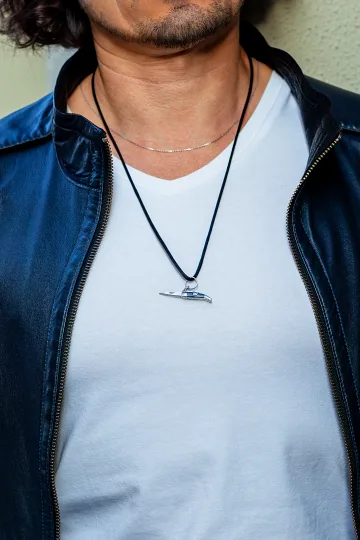





FAQ
Is the Devil a bad card?
This is one of the most common questions about the card, and the answer is not a simple yes. The card describes a state that is uncomfortable to see. That does not mean the card carries evil or predicts misfortune. It means that in the present situation there is something holding the person: a dependence, an attachment, a fear, a pattern. Seeing it is already a step toward change. In that sense the card people fear often proves more useful than the card they welcome.
Does the card mean an evil fate is hunting me?
No. Card 15 describes inner states and patterns of behaviour, not external agents. No "evil fate" governs the situation on the card: two people stand at the foot of a throne with chains they could lift off themselves. An evil fate is an explanation that frees one from responsibility. The card offers the opposite.
What does it mean if the card comes up often?
In the traditional reading it means the theme of dependence, unfreedom or the shadow side is central to the present period of life. This is not a threat but information. A repeated appearance is an invitation to look at the theme more closely, not to avoid it harder.
Is the reversed card always a good card?
Not automatically. The reversed Card 15 in most cases describes liberation, but one possible reading is excessive asceticism or a battle with oneself that has become a new form of unfreedom. A reversed card complicates the upright meaning rather than inverting it.
Is the Devil linked to real Satanism?
No. The image on the card goes back to a nineteenth-century philosophical symbol (the Baphomet of Eliphas Levi), not to any religious cult. Tarot as a whole is a system of psychological archetypes, not a religious practice. People who use Tarot belong to all kinds of religions and worldviews, or hold no religious belief at all.
Are the chains on the prisoners tight?
No, and that is the key detail of the card. The chains in the Waite-Smith image are drawn lying loose on the necks of both figures. The loops are wide enough to lift off without help. The theme of unfreedom on the card is not physical imprisonment but a psychological attachment, from which, in theory, one can always step out. Why people do not step out is the psychological question of the card.
The Devil as a card of the year: what does that mean?
A year under the Devil's rule is described as a period when the theme of attachments and dependencies becomes especially visible. Not as a punishment, but as an invitation to honesty with oneself. Such years are often described as giving important inner insight, but only in hindsight.
How should the Devil be read in a love spread?
In a love context the Devil often describes codependence, attachment through fear rather than choice, or a relationship in which one or both partners do not feel free. It does not mean the relationship is doomed. It means there is a dynamic in it worth naming honestly. The reversed Devil in a love spread describes the moment this dynamic begins to change.
Wear the symbol, don't just read about it. These are in stock:
Conclusion
She kept going to the therapist. Not because it grew easy. Because she had seen the chain.
That is the point from which the Devil card begins to work. Not with a decision and not with a change, but with an honest look. Until the chain is seen, it cannot be lifted. Until the pattern is called "that is just my character," there is no stepping out of it. Until the shadow stays repressed, it governs from within.
Card 15 is not a card of evil and not a card of misfortune. It is the card of the truth about where a person keeps themselves on a leash. Sometimes that truth is unwanted. Sometimes it is so uncomfortable that it is easier to explain what is happening through outer circumstance. The card does not encourage that explanation.
In the system of the Arcana the Devil stands between Temperance and the Tower. Between the balance reached and the inevitable fall. It describes the interval: the person knows of their chains, or does not yet, but they are there, and they grow heavier. What happens next depends on whether the person looks down, at the chain, or keeps looking away.
To see it is already a choice. Small and very large at once.
For other cards of the Major Arcana and the jewellery that carries their symbolism, read our guide to Tarot jewellery. For Card 0, where the Fool's journey begins, see the separate reading.
Silver, gold, wedding bands, symbolism, matching sets.
About Zevira
Zevira makes jewellery in the artisan tradition of Albacete, Spain. Dark symbolism (the snake, the ouroboros, the all-seeing eye, the spider, the skull) is part of our collection for those who wear jewellery with intent.
What you will find with us on the theme of the Devil and the shadow:
- Snake and ouroboros pendants on silver chains
- Earrings with eyes (the all-seeing eye, the eye as an amulet)
- Skull rings in the memento mori style
- Spider pendants in a gothic key
- Pentagrams in silver with their historical context
Each piece is made by a craftsperson by hand, with the option of personal engraving. We work with sterling silver and with 14 to 18K gold.