The Fool in Tarot: Meaning, History, and Jewelry from Arcana 0 Symbols
He is twenty-three years old. He packs a backpack in his one-bedroom apartment on the edge of a mid-sized city, already thinking about the three-hour drive to the airport. In his jeans pocket are two things: a small compass his grandfather gave him when he was twelve, and a folded printout of an email from someone who "knows people" in Portland. He has a one-way ticket. No job lined up, no place to stay. Everyone he knows says he is making a mistake.
Maybe they are right. The tarot card named The Fool is exactly about this.
Arcana 0 stands outside the numbered sequence. It is not first and it is not last. It is the figure who walks forward without looking back, a bundle on a stick and a white rose in hand, moving straight toward the edge of a cliff. On some decks, one foot is already over the abyss. The question the card poses is simple: will he step, or won't he?
For some people, that image is a disaster waiting to happen. For others, it is the only honest way to begin.
This guide covers The Fool from every angle: where the card came from, what each symbol in the Rider-Waite-Smith design means, how it fits into the full tarot system, and which archetypes echo it across American and world literature. Most practically: why the symbols of this card, the compass, the lighthouse, the labyrinth, the anchor, keep turning up as jewellery for people standing at the threshold of something new.
The Fool in the Deck: What Arcana 0 Is and Why It Stands Outside the Numbers
Tarot consists of 78 cards. Fifty-six form the Minor Arcana: four suits of fourteen cards each, similar in structure to an ordinary playing deck. The remaining 22 stand apart. These are the Major Arcana, from the Latin arcanum meaning "secret" or "mystery." Each one carries a symbol of significant weight: The Sun, The Moon, Death, Justice, The Lovers, The Tower.
The Fool is designated zero. There is a logic in this: zero belongs to no number series, it precedes all of them. In numerology zero reads as pure potential, an unwritten page, the state before anything begins. Some decks place The Fool first in the sequence; others put it last. The most accurate description is that The Fool accompanies the entire journey. It travels through all 21 remaining Major Arcana, encounters The Magician and The High Priestess, survives Death and Judgment, arrives at The World. This is its path. Arcana I through XXI are its stages.
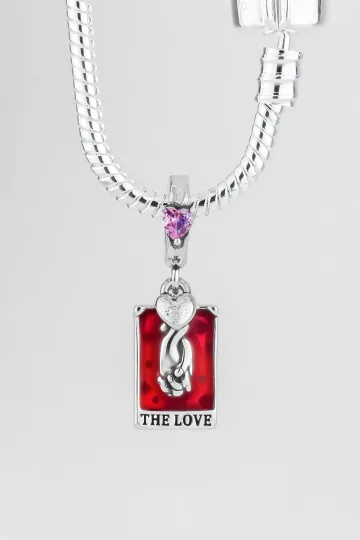
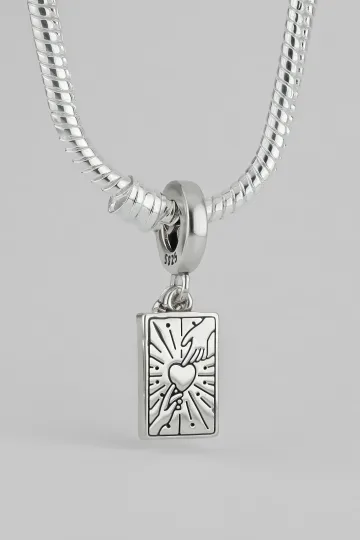
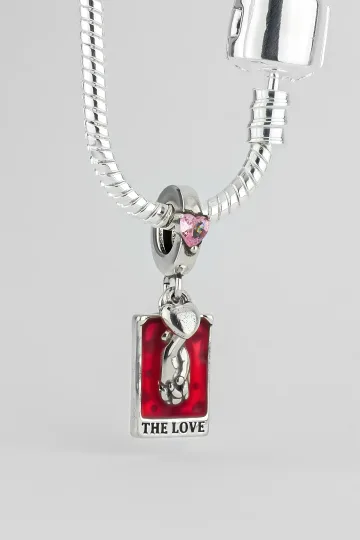
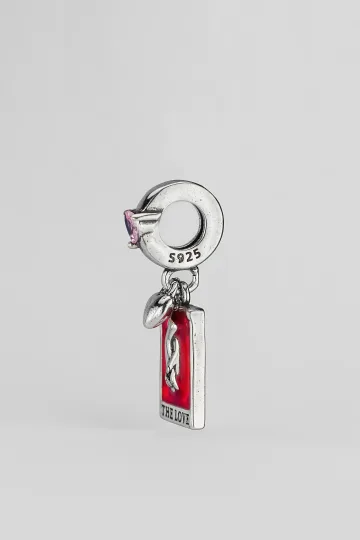
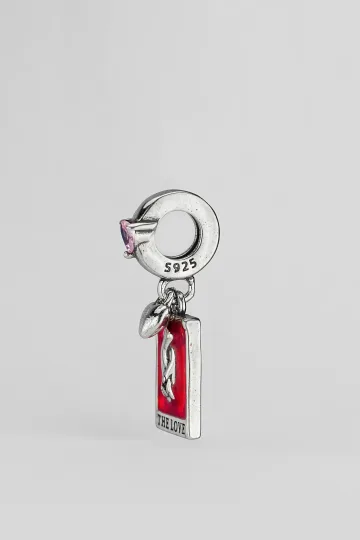
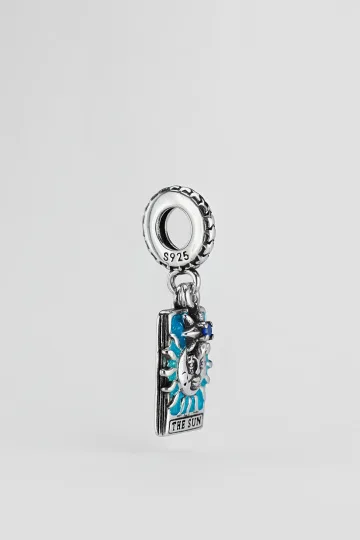
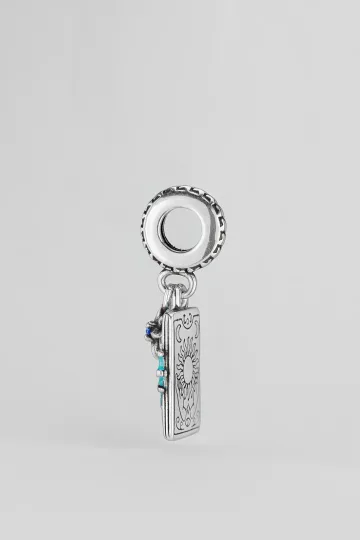
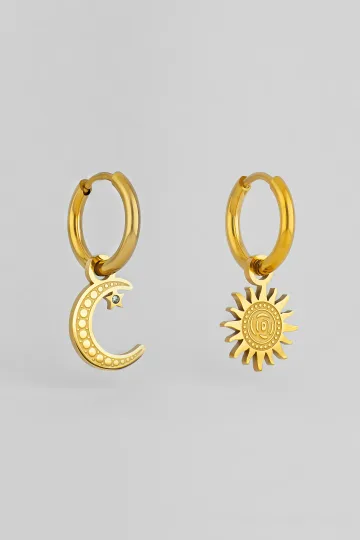
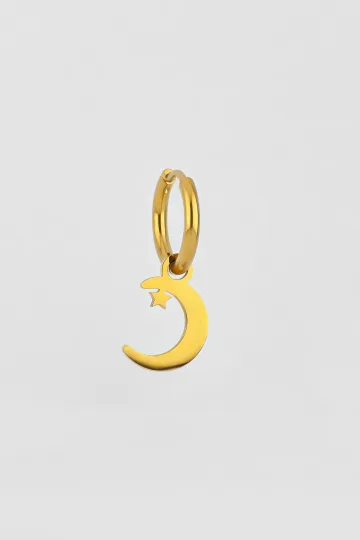
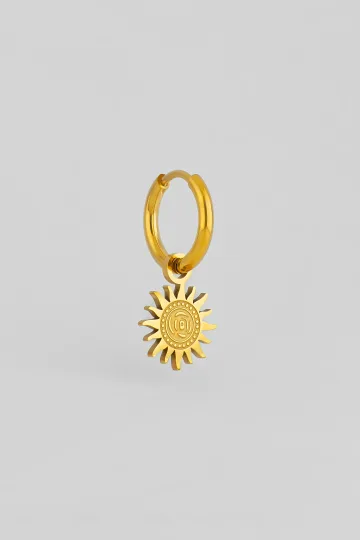
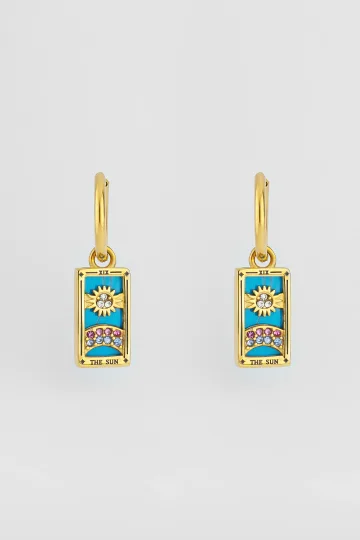
Wear the symbol, don't just read about it. These are in stock:





Calling this card "the card of the idiot" in a dismissive sense misses the tradition. In tarot, the word "fool" carries not contempt but a specific status: the medieval court jester was the one person permitted to tell the king the truth. The court fool had nothing left to lose, and precisely that gave him the freedom of honesty that nobody else possessed. A person who has nothing to lose sometimes sees more clearly than anyone else.
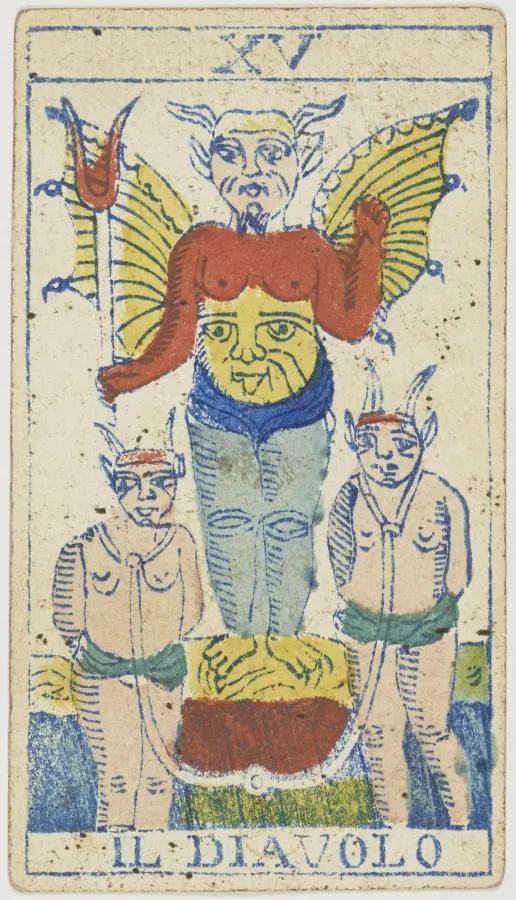
The card also carries different names in different traditions. In Italian decks: Il Matto. In old French: Le Mat. Both words carry the meaning of "madman" or "lunatic" in the common sense. But this is a specific kind of madness: not illness, but a step outside the established order. In medieval society, the madman was a person outside the system, which made him, in a certain sense, free of it.
The Fool Across Centuries: From Visconti-Sforza to Thoth
The image of The Fool travelled from a penniless vagrant to a universal principle across six centuries. Each era read the card in its own way, and the distance between the Milanese Il Matto of 1450 and the Crowley-Harris Thoth deck of the mid-twentieth century is wider than it first appears.
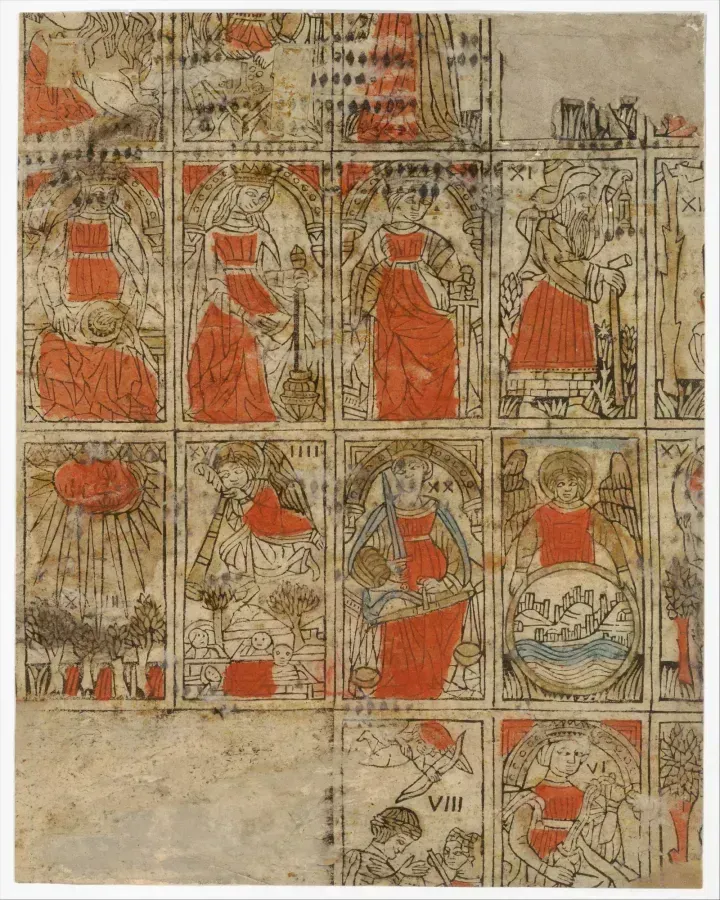
Visconti-Sforza, approximately 1450. One of the earliest surviving Italian decks, created as a luxury object for the ducal court of Milan. The Fool card depicted a social outcast literally: torn clothing, tangled hair, visible signs of disease on the body. Children run alongside and taunt him. The figure carries no hint of dignity in the feudal sense. That is precisely why the figure is free: nothing left to lose. The deck carried no numerical designation; the card's position was determined by convention, not numbering.
Minchiate Tarot, Florence, approximately 1530. This Florentine extended deck included 97 cards rather than the standard 78, adding zodiac signs, elements, and virtues. The Fool here retained the wanderer's character but became slightly less grotesque: emphasis shifted from poverty toward a certain apartness. Florentine humanists absorbed in Neoplatonism began reading the "madman" as something close to Socratic ignorance.
Marseille Tarot, 17th-18th centuries. By the seventeenth century, Marseille had become the primary centre for playing card production in France. Craftsmen standardised images for mass woodblock production. The Marseille Fool, Le Mat, acquired greater dynamism: the figure clearly moves, clothing is more colourful, a cat or dog leaps at the legs. The card became more playful in spirit, though it still carried no number. In the Marseille tradition, The Fool as a card outside the system was reinforced: in tarot de Marseille gameplay, it was not counted in tricks, the same way a joker is not counted in modern card games.
Etteilla and the Occult Tradition, late 18th century. Jean-Baptiste Alliette, writing under the pseudonym Etteilla, was the first to systematize tarot as a divination tool, in 1783-1791. He shuffled the numbering of the Major Arcana and placed The Fool as number 78, last. In his system The Fool meant madness and distraction reversed, or injustice and indecision upright. There was no mystical depth here: Etteilla worked with a fortune-telling system, not with symbolology.
Eliphas Levi, mid-19th century. The French occultist Alphonse-Louis Constant, writing as Eliphas Levi, made a decisive move: he connected the 22 Major Arcana to the 22 letters of the Hebrew alphabet. The Fool in his system corresponded to the letter Aleph, first letter of the alphabet, symbol of original breath and potential. This was a radical turn: the impoverished wanderer became an embodiment of a first principle. Levi also saw a connection to Kabbalah in The Fool, opening the door to occult interpretations in the following century.
Arthur Edward Waite and Pamela Colman Smith, 1909. The British occultist, Freemason, and member of the Hermetic Order of the Golden Dawn commissioned a new deck from illustrator Pamela Colman Smith. Smith was a professional illustrator of theatre programs, a set designer, and a symbolist artist. She reconceived every tarot image, filling them with specific symbols using a clear visual vocabulary. Waite provided the program of meanings; Smith transformed it into images. The deck was published under the imprint of William Rider and has been called the Rider-Waite deck ever since, though the name Rider-Waite-Smith acknowledges what it always should have: Pamela Colman Smith's contribution to the visual language of twentieth-century tarot cannot be overstated. The Fool became a handsome young figure in an embroidered costume, carrying a white rose, the sun at his back, a faithful dog at his feet.
Aleister Crowley and Lady Frieda Harris, Thoth Tarot, 1940s. Crowley began working on his deck with artist Frieda Harris in 1938. The deck was published posthumously in 1969. Crowley renamed The Fool as part of a full symbolic overhaul and saturated the card with crocodiles, tigers, a cat, and a vulture. In his system The Fool corresponded to Harpocrates, the supreme spirit, the eternal child. The card became considerably denser in symbolism, containing Babylonian, Egyptian, and Greek imagery simultaneously. The Thoth Fool is no longer a human figure at the cliff edge but a personification of the creative first principle itself.
Contemporary decks, 2000s onward. In the last two decades, hundreds of independent decks have appeared: feminist, queer, science fiction, culinary. In each, The Fool receives a new reading while retaining the core of the image. In the Witches Tarot, The Fool is a young witch. In the Everyday Witch Tarot, a child at the edge of a mountain. In space-themed decks, an astronaut stepping into open space. The form changes; the essence holds: a step forward without guarantees.
The Fool travels light: silver on a bare collarbone, never a heap of gold. Follow his step and don't dawdle.
How and What to Wear Fool Symbolism With
Dozens of looks with path symbols have passed through my hands, compass, lighthouse, labyrinth, anchor. Here is what actually works, by occasion.
What do I wear a path symbol with every day? For daytime I recommend a compass pendant on a fine silver chain over a plain tee, a grey turtleneck, or a light linen shirt. The quieter the fabric, the louder the symbol reads. A boat neck or a shallow V shows the pendant in full; under a closed collar I suggest wearing it over the fabric rather than hiding it.
Does it work at the office? It does, if you keep it restrained. I choose a single labyrinth pendant at medium length, no stacked chains, and matte silver that does not flare under the lights. The symbol then reads as a personal sign rather than jewellery on display, and sits easily beside a shirt, a blazer, knitwear in neutral tones.
How do I build an evening look? For the evening I suggest two chains of different lengths: a compass on one, a star or lighthouse on the other. On an open neck they build a visual story. A deep-coloured top, wine, emerald, graphite, makes silver brighter, and a labradorite setting comes alive in artificial light. Here you can mix metals: silver with a gold accent carries the Fool's duality.
And for a graduation or a move? For a milestone I choose one symbol and let it stand as the only accent. A compass for the first day of a venture, a lighthouse after a hard year, an anchor for someone learning to pause again. When the sign is single, it reads at once and does not dissolve among other details.
Who does Fool symbolism suit? Those who value meaning over shine: students, people in transitional periods, minimalists. Two rules that never fail. First, for daily wear I recommend a length of 45 to 50 cm; the pendant sits at the collarbones and shows with any neckline. Second, never wear more than two path symbols at once, or the story turns to noise; one meaningful pendant beats four.

Turn on your camera, pick earrings, a pendant or a ring, and see the piece on yourself in real time.
Switch items in one tap.
Everything runs in your browser: no photo or video is ever uploaded.
Iconography of the Waite-Smith Fool: What Is Depicted and Why It Matters
In the Rider-Waite-Smith card, The Fool looks fundamentally different from predecessors. Instead of a pauper and ragged wanderer, we have a young person in a colourful embroidered outfit, something close to the dress of a prince or minstrel. The figure stands at the edge of a cliff, one foot already in the air. The gaze is upward, not downward. The expression is carefree. The Fool either cannot see the abyss or sees it and does not care.
Every element of this card carries specific meaning. Pamela Colman Smith worked these details deliberately, and tarot researchers of the following century decoded them one by one.
The Cliff Edge
The cliff is the central metaphor of the card. This is the moment where the path ends and there is only air beyond. This is the point at which a person must decide: step back, or move forward not knowing what is below. Waite connected this image to the concept of the leap of faith. Not blindness, not recklessness, but willingness to go where no map leads.
The height of the cliff matters. Under The Fool's feet is not a gentle slope but a genuine vertical drop. This is not a misjudgment, not a casual step to one side. This is a deliberate exit beyond the known. What is significant: The Fool is not looking down, not into the abyss. The gaze goes upward or outward. Not toward the danger but toward the horizon.
The abyss also carries Kabbalistic meaning. In the system where The Fool corresponds to the path of Aleph, the cliff edge is the space between Kether (the crown, the summit) and Chokmah (wisdom): the transition between pure being and the first thought. This is a particular kind of abyss: the gap between potential and manifestation. The Fool's jump is the transition from "everything is possible" to "something has begun." After the jump, potential narrows to a specific choice, and this is the birth of wisdom.
The Bundle on the Staff
The small bundle on a long staff is all The Fool owns. Traditionally it is read as "accumulated wisdom from previous lives or experiences" carried forward into a new beginning. There is also a more grounded reading: this is the little The Fool deemed worth taking. Everything else was left behind.
Choosing what to bring and what to leave is itself an act of maturity. A person who can travel light has made a serious decision about what matters and what does not. The small bundle is not poverty; it is the refusal of excess.
In several interpretations the bundle is white, like the rose and the dog, which in Waite's symbolism signals purity of intent, the uncomplicated. There is also a detail often missed: the bundle hangs on a staff of ash, the wood associated in northern European traditions with Yggdrasil, the world tree. The Fool carries something larger than possessions: the axis of the world, the vertical principle running through a horizontal journey.
The White Rose
In The Fool's left hand is a white rose. In tarot symbolism, especially in Waite's system, white is connected to purity of intent, a beginning without the weight of the past. The rose specifically is associated with beauty and perfection of form, but in white -- without passion, without the thorns of fear or anger.
This is not a sentimental detail: the white rose says that The Fool goes forward without ill will and without a hidden agenda. No plans for revenge, no need to prove anything to anyone. Just walking.
The rose is not tucked away in the bundle and not tucked into a lapel. It is in the hand, held openly, visibly. Beauty for The Fool is not an ornament but a tool of the journey.
In the alchemical tradition, the white rose, rosa alba, symbolised purified silver, the moon, and the feminine principle. The red rose was the sun and the masculine. The Fool carrying a white rose holds lunar, intuitive, still-unmanifest knowledge. When the journey ends and The World, the twenty-first Arcana, is reached, the rose in hand will be different.
The White Dog
At The Fool's feet is a small white dog. It barks or nips at the heels of its companion, though different versions of the card render this differently. Interpretations diverge.
Some read this as a warning: "Stop, do not do this." The instinct for self-preservation in the role of a small yapping dog that nobody much listens to. Others read it as a loyal companion who goes along regardless: you're jumping, and I'm jumping with you. Others still read it as the past that clutches at the ankle and does not want to let go.
Either way, the dog is part of reality: the world tries to stop, warn, hold. The Fool hears, and keeps going.
There is a fourth reading, less popular but historically grounded: the white dog at the feet of a medieval wanderer was a symbol of loyalty and companionship. In fifteenth-century Italian cards, dogs were often depicted alongside traveller figures. In that reading, The Fool's dog does not warn and does not cling; it simply walks alongside, as an honest companion should. The Fool accepts its company as natural and does not slow the pace.
The Sun at the Back
On the horizon behind The Fool, the sun shines. It is not ahead but behind. This is not the sun of the destination, the goal toward which one travels. It is the sun of support, remaining at the back. One reading: a blessing from where you came from. Or: the source of energy a traveller carries without looking at it directly.
The sun at the back also tells us that the past is not dark. The Fool does not leave darkness; this is not escape. The figure walks away from a place of light, toward a place not yet illuminated. That is a different kind of decision than running away.
In the numerological system of tarot, the sun at The Fool's back echoes Arcana XIX, the Sun card. This is not accidental: The Fool carries within it the potential of all the following Arcana, including The Sun. The path will lead there, but that moment has not arrived. The sun shines from behind, giving warmth without requiring The Fool to turn toward it.
The White Mountains
The white peaks on the horizon in the right portion of the card are typically read as distant heights of achievement, or as confirmation that after the valley there is always an ascent. They are not forbidding -- they are white and clean, like the rose and the dog.
There is another reading: the mountains are the difficulty ahead, which The Fool has not yet seen because the gaze is turned the other way. This is not alarming. It is honest.
The whiteness of the mountains in Waite's iconography functions as a continuation of the white palette across the whole card: white rose, white dog, white mountains. This monochromatic thread runs from the foreground to the horizon, connecting purity of intent with purity of destination. The Fool moves toward something as uncomplicated as what is held in hand.
Jung's Fool: The Trickster Archetype and the Path of Individuation
Carl Gustav Jung developed his theory of archetypes in the first half of the twentieth century, studying world mythology, the dreams of patients, and images from different cultures. The trickster archetype occupied a specific place in his system: not hero and not villain, but a disruptor of order who reveals the conditional nature of rules by the sheer fact of existing.
The trickster by Jung's account is the "child-hero": simultaneously a child who does not recognise limits, and a hero who transcends them. This duality is important: the trickster does not break rules out of malice. The trickster simply does not accept them as absolute. Actions that look insane from the perspective of established order look logical from the perspective of growth.
The trickster in world mythology. Loki in Norse tradition could transform into anything, crossed borders between gods, humans, and giants, brought destruction and gifts simultaneously. Coyote in many Native American traditions created the world and continuously violates its laws. Hermes in Greek mythology was the only god who could move freely between Olympus, the earth, and the underworld. All of them, like The Fool, are messengers between states.
The child-hero and naivety as strength. Jung emphasised that the "eternal child" (puer aeternus) is not immaturity but preserved openness to experience. Conventional adulthood often means closure: the person already knows how the world works and stops looking at it freshly. The Fool preserves the child's readiness for wonder. This is both the strength and the vulnerability.
The shadow of The Fool. The Jungian shadow, what we fail to recognise in ourselves, takes a specific form with The Fool. The shadow here is not rage and not cruelty. It is irresponsibility: the person who jumps in order to avoid rather than to move forward. The Fool in shadow runs from responsibility dressed as freedom. Reversed Arcana 0 in Jung's framework is precisely this shadow.
Individuation and The Fool's path through the Arcana. Individuation, the central concept of Jungian psychology, is the process of becoming a whole person, integrating all parts of the psyche. The Fool's journey through 21 Arcana maps this process with remarkable precision: encounter with the anima and animus (The High Priestess and The Magician), confrontation with the shadow (The Devil), the experience of destruction (The Tower), the arrival at wholeness (The World). The Fool makes this journey not because the destination is known but because the walking continues. Individuation does not require a plan; it requires movement.
Naivety as a functional defence. From a psychological perspective, The Fool's naivety is not a weakness. A person who genuinely does not know that "this can't be done" often achieves what a more informed person would avoid. Beliefs like "this is impossible" or "that's not how things work" function as limiters. The Fool simply does not hear them. The white rose, purity of intent without the weight of expectations, is a functional form of psychological openness.
The Archetypal Meaning: The Jump as the Only Honest Position
The Fool in traditional interpretation means a new beginning: a new project, a move, a relationship, a decision to change everything. But its meaning is more precise than simply "new beginning."
The Fool stands for the state in which a person goes into the world without a plan, without guarantees, and crucially, without shame about this. Many of us can only begin when everything is worked out and risk is minimised. The Fool says the opposite: sometimes the only honest way forward is to step right now, with incomplete knowledge, incomplete resources, incomplete certainty.
This is not a call to recklessness. It is an acknowledgment that complete readiness is often an illusion. Someone waits for the "right moment" for years. The Fool just walks.
At a simpler level: The Fool is a reminder that some things cannot be done any way other than by jumping. You cannot sort of quit your job. You cannot sort of move across the country. You cannot halfway launch your project. Either you step, or you do not.
Customer reviews
Zevira is a real jewellery shop. Genuine payments, deliveries and customer thank-yous.
🥰🥰🥰 gracias

Ok, ¡gracias! 🙂

Upright and Reversed Positions
Upright, The Fool is readiness, openness, adventurous naivety with a clean heart. This is the card of the person who allows themselves not to know the answer in advance.
Core keywords for the upright Fool: new beginning, spontaneity, freedom, openness, trusting the process, limitless potential, youth of spirit, adventure.
Upright Fool: five main scenarios.
First: a person faces a large decision and feels an inexplicable certainty about it. Not logical, but intuitive. The upright Fool says: trust that feeling. Your knowledge right now runs deeper than your fears.
Second: starting a new project without a complete picture of where it leads. An artist in front of a blank canvas, an entrepreneur with an idea and no investors yet, a writer on the first page of a new novel. The Fool here is about the potential of a beginning that does not need to be controlled, only released.
Third: a move, a change of city or country. The physical enactment of the jump. The upright Fool says: your bearings travel with you, even when everything around you is unfamiliar.
Fourth: leaving a long relationship or structure that has run its course. A divorce, leaving a company, ending a toxic friendship. The Fool here says that stepping forward is possible even when the jump causes pain.
Fifth: a creative experiment with no stakes on success. A new style in painting, a change of genre, improvisation. The Fool as permission to try without the obligation to achieve a result.
Reversed Fool: five main scenarios.
First: recklessness without wisdom. Jumping not from readiness but from not thinking at all. Impulsiveness for its own sake. Refusal of responsibility dressed as freedom. Adolescent defiance without awareness of consequences.
Second: paralysis at the edge. Standing at the cliff and unable to step. Fear of the new, fear of error, fear of looking foolish in others' eyes. Excessive caution is also a trap.
Third: running from accountability. Using "freedom" as an argument to avoid obligations. The reversed Fool warns here: movement for its own sake, without accounting for consequences to others, is no longer freedom.
Fourth: naivety as refusal to grow up. Rejecting seriousness in the guise of staying open. Perpetual optimism that avoids encounter with reality.
Fifth: wrong timing. Every signal says "wait," and the jump happens anyway. The reversed Fool here is about bad timing, not a bad decision.
Element and Planet: Air and Uranus
In the Western astrological tradition applied to tarot, each Major Arcana card corresponds to an element or planet. The Fool is assigned the element of Air and the planet Uranus.
Air in traditional symbolism is connected to thinking, communication, ideas, and movement. It is the element that cannot be held in the hands. Air is everywhere and nowhere simultaneously, invisible but without it there is no life. The Fool moves in exactly this way: impossible to catch, tie to a place, force to follow a schedule.
Uranus in astrology governs unexpected change, revolutions, breaks with the past, technological and intellectual progress. It rules everything that arrives suddenly and reshapes coordinates. Uranus was discovered in 1781, during the Industrial Revolution and just before the French Revolution, which shaped its astrological interpretation: rupture, novelty, suddenness.
Assigning Uranus to The Fool is precise: both figures represent a break with the familiar in favour of something that does not yet have a name.
Upload a photo of your pet, someone you love, or an object. We'll build a 3D model and hand-cast it in pewter.




The Fool and the Kabbalistic Tree of Life
In the Kabbalistic system that occultists of the 19th and 20th centuries applied to tarot, the 22 Major Arcana correspond to the 22 paths on the Tree of Life. The Fool, with the letter Aleph, occupies one of the most significant paths.
The Path of Aleph: from Kether to Chokmah. Kether, the highest sephirah, represents pure being, the point before form exists. Chokmah, the second sephirah, translates as "wisdom" and corresponds to the first manifestation of consciousness. The path between them, the Path of Aleph, is the transition from absolute potential to the first thought. The Fool is this transition. Not in Kether, not in Chokmah: between them.
Aleph as breath. The Hebrew letter Aleph does not represent a sound in the ordinary sense; it carries the quietest sound, an almost inaudible exhale. "Breath" as the primary act of life. The Fool, corresponding to Aleph, carries the same principle: not a word, not an action, but the intention to inhale before the first word. The bundle on the shoulder, the white rose, the open face -- these are all the state before speech begins.
The Abyss of Da'at. In some Kabbalistic systems, between the upper triad (Kether, Chokmah, Binah) and the remaining sephiroth lies the "Abyss" or Da'at, the eleventh invisible sephirah. The Path of Aleph runs precisely over the Abyss. The Fool jumps over the gap that separates the world of pure spirit from the world of manifestation. The jump is literal in this system: The Fool crosses the Abyss. The cliff on the card is therefore an ontological rupture between potential and reality, not an illustration of a risky decision.
Significance for jewellery. For those drawn to Kabbalistic symbolism, pieces referencing The Fool carry this vertical meaning: the passage between levels of being, not ordinary "new beginning." Silver, which corresponds to the Moon and to Chokmah in Kabbalistic correspondence tables, deepens this connection.
The Fool in Literature and Film: An American Perspective
The Fool as a literary and cinematic archetype appears long before the word "tarot" entered common use, and it recurs in independent traditions across different continents and centuries.
Parsifal (12th-13th centuries). In the earliest versions of the legend, particularly Chretien de Troyes, Parsifal enters the world as a complete naive innocent. His mother deliberately kept him ignorant of knightly customs, hoping to protect him from war. He knows nothing except sincere curiosity. He asks the obvious questions that experienced knights are too polite to raise. And precisely this, in the end, makes him worthy of finding what the clever and cautious never located.
Voltaire's Candide (1759). Candide passes through one catastrophe after another: war, the Inquisition, shipwreck, the loss of everyone he loves. Throughout, he preserves his naive faith. Voltaire mocks the belief system, but the reader can see that Candide lives more honestly and more cleanly than the cynics around him. His naivety is a form of moral immunity.
Huckleberry Finn (Mark Twain, 1884). This is the closest American equivalent to The Fool as an archetype of the road. Huck lights out from civilisation, specifically "the Territory ahead," because the alternative is to be "sivilized." He does not have a plan; he has a raft and a river. His moral compass operates entirely outside the rules of the society around him: he chooses to help Jim even when every social authority tells him it is wrong. This is The Fool's logic exactly, the internal knowing that runs counter to the established order.
Hamlet. The Danish prince feigns madness, puts on the mask of the fool, to say the truth at court. This is the literal reproduction of the medieval court jester: only the person not taken seriously can speak seriously. Hamlet uses the guise of madness as freedom. There is also a real fool in the play, the gravedigger in Act Five, who tells Hamlet more truth about death and life than all the courtiers combined.
Don Quixote (Cervantes, 1605-1615). A country gentleman who has read too many chivalric romances rides out to fight windmills. His madness, the insistence on seeing the world as he wants it to be, is a form of freedom. Critics have long recognised in Don Quixote someone who refused to accept the greyness of the world as the norm and was called insane for it. The Fool of Arcana 0 and Don Quixote diverge at the ending: the knight dies having returned to reason. The Fool never returns, because The Fool is always on the road again.
Forrest Gump (1994). A man whose intellectual limitations protect him from the cynicism that corrupts those around him moves through the defining events of twentieth-century American history, always acting from clean motives. He runs because he wants to run, not because he knows where he is going. His "limitation" is precisely The Fool's asset: he cannot be taught the reasons not to try. One of the most direct visualizations of Arcana 0 in American cinema.
Into the Wild (2007). Christopher McCandless donates his savings, abandons his car, and hitchhikes into Alaska with minimal gear. The biographical film based on Jon Krakauer's book is, structurally, the story of a literal Fool's jump: the leap without guarantee, without a map that covers the actual territory. The tragedy embedded in McCandless's story is also embedded in the reversed Fool: the jump made without enough knowledge of what waits below the cliff. The film is a serious engagement with both sides of the archetype.
Inception (2010). Cobb's team enters dream states without knowing exactly what they will encounter. The final image of the film is a literal Fool's question, the top spinning, the question of whether the jump out of the dream is real or not. The film is partly about what it costs to make a leap without verifiable ground.
Beasts of the Southern Wild (2012). Hushpuppy, a six-year-old living in a Louisiana bayou community outside the levees, faces the end of her world with the fearlessness that only someone who has not been taught to fear the world can produce. Her confrontation with the aurochs is one of the clearest Fool moments in recent American cinema: the child facing the impossible with no strategy except presence.





The Fool in Readings: Meaning Across Different Positions
The interpretation of The Fool in a reading depends on the position of the card and on the question that was asked. The same card in the "past" position and in the "advice" position speaks to fundamentally different things.
The Fool in the past position. You already made the jump. Something was started without a plan, and that beginning became the foundation of where you are now. The card invites looking back without regret: that reckless decision was accurate.
The Fool in the present position. You are in transition now. One foot is already in the air. This is not a moment for analysis; it is a moment for the step. Fear is normal. Movement is necessary.
The Fool in the future position. An unexpected turn is ahead, an unplanned beginning, or a situation that will require acting without complete information. The card signals: prepare for the path to look different than planned.
The Fool in love. In relationship readings, the upright Fool often indicates new relationships that began unexpectedly, or the need to give a relationship room for spontaneity. If routine has accumulated in a partnership, The Fool proposes breaking it. The reversed Fool in this context warns of immaturity in the relationship: one partner is running from commitment dressed as independence.
The Fool in work and career. The upright Fool in a professional reading says: the time has come to try something new, even with an incomplete plan. Begin. The reversed Fool here cautions against impulsive professional decisions made from exhaustion rather than clarity.
The Fool in finances. Financial readings with the upright Fool suggest a nonstandard approach to resources: unexpected income, an unusual opportunity. The reversed Fool in money is the risk of unconsidered spending or investment without analysis.
The Fool in health. The upright Fool in a health context is typically read as an invitation to approach the body in a new way, to try a different approach to recovery, to not fear a new specialist or method. The reversed Fool warns against ignoring significant symptoms: "it will work itself out" is The Fool's strategy applied incorrectly.
Combinations of The Fool with Other Cards
The Fool paired with other Arcana produces nuanced readings more precise than a single card.
The Fool and The Magician (Arcana I). This combination means readiness for action combined with the tools to execute it. The Fool brings openness and spontaneity; The Magician brings skill and will. Together they describe a person who has decided and also has capability. A beginning with real potential for realisation.
The Fool and The High Priestess (Arcana II). The High Priestess is hidden knowledge, intuition, what cannot be explained logically. Paired with The Fool, she says: your jump is grounded in something you know but cannot put into words. Trust that knowing. It is real, even if it is not verbally articulable.
The Fool and The Tower (Arcana XVI). The Tower is sudden destruction of a structure that has become limiting. With The Fool, this combination means: destruction and new beginning are happening simultaneously. A catastrophe has occurred or will occur, but The Fool says: this is liberation, not the end. From the ruins, people walk out travelling light.
The Fool and The Star (Arcana XVII). The Star is hope and healing after a difficult period. Paired with The Fool, it tells the full story: decided, passed through difficulty, found light. This combination carries particular significance for people who made a hard step and are beginning to see its results.
The Fool and The World (Arcana XXI). The World is the completion of a cycle, the integration of everything experienced. The Fool and The World together in a reading are the beginning and end of a single journey. Either a person is completing one cycle and beginning another, or the opportunity opens to see the full journey as a unity, from first jump to completion.
The Fool and Death (Arcana XIII). Death in tarot is not literal: it is transformation, the end of one form and the beginning of another. With The Fool it speaks of radical transformation through the jump. A qualitative change in who you are, not a "new beginning" in the ordinary sense. After this jump, the previous self does not return.
Leave your email, we'll send your discount code. No spam, unsubscribe anytime.
The code arrives by email, valid on your first order.
The Fool as Tattoo Versus The Fool as Jewellery: The Difference
Both approaches work with the same symbol, but the mechanism is entirely different. Understanding the difference helps make a choice that is honest for a specific person.
A Fool tattoo. Permanent fixation of a moment or principle. The person who tattoos The Fool is saying: this jump, this state, this principle is part of me forever. The tattoo does not come off. It stays on the days when you feel nothing like The Fool, when you want stability and predictability. It is a commitment.
Tattoos with tarot imagery are popular precisely because they allow a person to choose an archetype as a permanent identity. The Fool as a tattoo is a declaration: I am someone who begins without knowing the end. I have accepted this as mine.
Jewellery with Fool symbolism. Jewellery comes off. It can be put on in the moment when you genuinely stand at the edge, and taken off when the jump has happened and you are setting up the new place. This is a different kind of relationship with the symbol: not permanence but relevance.
This is why The Fool's symbolism works particularly well in charm jewellery that changes over time. A charm bracelet lets you add a compass before a move, then an anchor when you find your footing, then a lighthouse when you help someone else find the shore. This is a narrative built over time, not fixed at a single point.
When jewellery is more honest than a tattoo. For a person passing through one specific transition and not wanting to bind themselves permanently to The Fool's image, jewellery is more precise. A graduating student moving across the country to start over: the jump is made, in three years the new place will be home, and Arcana 0 will give way to something else. Jewellery will reflect that growth; a tattoo remains a snapshot of one moment.
When a tattoo is more honest than jewellery. For a person whose identity genuinely organizes around constant movement and beginning: the serial entrepreneur, the chronic expat, the person for whom "I am always on the road" is not a temporary state but a mode of existence. For that person, The Fool as a tattoo is an accurate biography.
Material and image. In jewellery, The Fool's symbolism is typically expressed through related images, compass, labyrinth, anchor, lighthouse, rather than through a literal depiction of the card. This works more powerfully: the symbol becomes part of actual life rather than a reference to a specific artistic system. Sterling silver 925 with a matte surface creates the right balance: not excessively ceremonial, but not accidental.
CAPAORA mini knife pendant
The 18th-century Spanish navaja in miniature: 40 mm of stainless steel, a real folding mechanism and a Palanquilla lock that clicks. An affordable gift to remember.
Authentic · Ships from Spain · 14-day returns
The Fool in Contemporary Pop Culture
The image of The Fool has entered contemporary pop culture, with different emphasis each time.
The comic-book trickster. Across modern comics, the trickster archetype recurs in characters built on Fool aesthetics: the chaotic anti-heroine in a multicoloured costume, boundless energy and unpredictability as defining traits. These figures translate the medieval jester into a contemporary visual language and keep the Fool's playful, rule-breaking spirit alive for new audiences.
The card-throwing wanderer. Another recurring comic figure is the charismatic rogue whose signature weapon is a deck of playing cards, drawing on tarot-style visual motifs. His link to The Fool runs through the image of the homeless wanderer and the charming rule-breaker, a reminder of how durable the archetype is in popular storytelling.
Role-playing games and the Fool's journey. Some role-playing games assign each character a specific Arcana and structure their entire narrative as a Fool's journey through the deck, with the protagonist standing in for Arcana 0. The combination of stylised illustration and tarot symbolism has introduced the imagery to younger players, who often encounter the Major Arcana for the first time through the genre.
Mobile games and tarot aesthetics. Games in the "dark academia" and "mystical romance" genres, along with the broader visual-novel space, use tarot images as a visual language. For users of these games, Arcana accessories serve as cultural identification, not occult practice.
Preparing a Fool-Themed Gift: The Ritual of Giving
A piece of jewellery with Arcana 0 symbolism is a gift that has a story and words that belong with it. Leaving it in a box without context allows the meaning of the symbol to remain unspoken. With context, the gift operates on a different level.
The moment of giving. Jewellery with the Fool's theme fits most precisely at specific transitional moments: graduation, a move, a career change, the first day of a new project, the exit from a difficult period. Giving it "just because" also works, but is better accompanied by an explanation of why now.
The words worth saying. A formal congratulation kills the meaning. Say something specific: "I chose the compass because I can see you are standing at the edge of something big. I want you to have a bearing point." Or: "You took a step that most people would avoid. Let this anchor remind you that you now know where your shore is." Specificity matters more than polished language.
A note. A brief handwritten note to the piece, kept with it in the box, multiplies the gift's meaning significantly. Two sentences are enough: why this symbol, why now. The paper stays in the jewellery box and returns the gift's story every time the box is opened.
Packaging. Jewellery with the symbolism of a path works well in packaging that also speaks to transition. Kraft paper, simple linen, a small card. Excessive luxury packaging competes with the meaning of the symbol. The Fool does not travel with a crystal goblet.
A gift to yourself. Most symbolic jewellery is bought by the wearer. For The Fool this is especially accurate: the decision to wear this symbol is already part of the jump. The ritual of purchasing a piece the night before a major step, even alone, works as an anchoring of intention.
Engraving. A pendant or bracelet with an engraving on the back: a date, coordinates, a word or phrase that was important at the moment of the jump. In several years, that engraving becomes a personal landmark: you remember where you started.
Jewellery by The Fool's Symbols: Compass, Anchor, Lighthouse, Labyrinth
To summarise the core of Arcana 0 for a jewellery designer: this is the symbolism of travel without a map, movement, beginning, readiness for the unknown. This is why the pieces that resonate with the Fool's theme do not depict the tarot card literally but work from its semantic field.
The Fool is about setting out on the road, about navigating without guarantees, about trusting the process. These are the meanings carried by the symbols that began the history of spatial orientation: compass, lighthouse, anchor, labyrinth.
Compass: You Already Know Which Way to Go
The compass rose is one of the most direct Fool symbols in jewellery. It does not say "go there." It says "you have bearings, use them." The distinction from a modern navigation app is essential: a compass gives direction but not a route. You still decide.
Historically, the compass rose appeared on Mediterranean sailing charts in the fourteenth century. It did not indicate a specific path; it showed in which direction different parts of the world lay. An instrument of orientation, not a finished instruction.
In jewellery, the compass works well in several formats. A wind rose pendant on a fine sterling silver chain, roughly an inch in diameter, suits daily wear. Larger pendants with pronounced relief become a statement piece. Compass charms for bracelets let the wearer build a narrative of the journey, adding symbol to symbol with each new phase.
Labradorite as a stone for a compass setting works with particular precision: its shifting iridescence changes with the angle of light, like a horizon changes. A labradorite set in the centre of a wind rose creates the sense of a living compass responding to motion.
The full story and symbolism of this piece is in our guide to compass rose jewelry.
Anchor: Knowing When to Stop
The anchor works as a counterpoint to The Fool, and that is exactly its value. If Arcana 0 is about the jump and movement, the anchor is about the moment when it is time to drop into place. This is not a contradiction: a good traveller knows both when to walk and when to hold.
The anchor appeared as a symbol in the early Christian tradition: in the catacombs, it was drawn as a hidden cross, a sign of hope for those living in danger. Later it became the symbol of the maritime profession, then a symbol of stability in the wider sense.
In jewellery, a sterling silver anchor with a matte or lightly oxidised surface creates the right balance: not ceremonial, not fragile, but solid and ready for wear. A brass anchor with a warm gold tone carries a different mood, warmer and more domestic. Wearing an anchor alongside a compass is about the balance between movement and rootedness.
The full meaning of the anchor is in our guide to anchor symbolism in jewelry.
Lighthouse: Someone Knows Where the Shore Is
The lighthouse appears where the water is dark and the shore invisible. It is not a voice that says "stop." It is a light that says "the shore exists, and here is where." For a person who has made The Fool's jump and is now swimming in the dark, the lighthouse is the signal that land is real.
The history of the lighthouse as a symbol goes back to the Pharos at Alexandria, one of the Seven Wonders of the Ancient World. It did not direct ships; it simply shone. The rest was the captain's call.
In jewellery, lighthouses work well as small pendants with a vertical silhouette: the lighthouse form is recognisable even in a minimalist rendering at two inches tall. Silver with a light patina reveals the striped pattern of the tower. 14K gold gives a lighthouse a warm, solar tone, emphasising its nature as a light source.
More on this symbol in our guide to lighthouse jewelry.
Labyrinth: The Path Without a Map
The labyrinth is perhaps the most precise symbol for The Fool in pure form. The distinction between labyrinth and maze matters here. A maze has multiple branching paths and dead ends, requiring choices at forks. A classical labyrinth, such as the one at Chartres Cathedral or the pattern associated with Knossos, is constructed differently: there is one single path from entrance to centre. No choice needs to be made at a branching point. Simply walk. You cannot see how far the centre is, cannot see the end, the path turns and doubles back. But the path exists.
This is exactly how The Fool's route through the Arcana is structured: one path, but unpredictable. No map needed. Trust that the path is there.
In jewellery, the labyrinth works in several formats. A flat chased pendant with the classical seven-circuit labyrinth at roughly one and a half inches in diameter: detailed, historically recognisable, accurate. A ring with a labyrinth engraving on a wide band: more intimate, visible only to whoever is holding the hand. A charm bracelet with a labyrinth pendant as part of a set of path symbols. Sterling silver 925 with a matte surface creates the feeling of an ancient artifact, which matches the historical weight of the symbol precisely.
The full history and symbolism of this design is in our guide to labyrinth jewelry.
Choosing Jewellery for the Fool Archetype
When selecting a piece around the theme of Arcana 0, think not about the tarot card but about the state it describes. The Fool is readiness for the unknown. A piece that resonates with this state usually carries several characteristics.
A symbol of movement or orientation, not stasis. The compass points. The labyrinth leads. The lighthouse shines. The anchor holds, but also lifts: an anchor is not cemented to the sea floor forever, it comes up when the time arrives. Static symbols, a crown, a throne, do not align with The Fool's energy.
A material that does not require careful handling. The Fool does not travel with a crystal goblet. Sterling silver 925 with patina, a textured matte surface, metal with history. The piece should be ready to travel alongside whoever wears it.
The charm format for a bracelet. The Fool as a path archetype works well in sets: a bracelet with several pendants, each a symbol of a separate stage. Compass where it began. Anchor where something important stopped and was understood. Lighthouse where light was found. Labyrinth as the broader context of the whole journey. Each charm is a mark on a personal map, not a random pendant.
Drop earrings with path symbols. Asymmetric earrings, where one symbol points direction and the other holds balance, communicate The Fool's duality well: simultaneous movement and stability.
Send a friend a discount code, they save on their first order.
Who the Fool's Symbolism Suits
The Fool's archetype resonates with those at the start of a path and with those who return to this energy in midlife. A piece with Arcana 0 symbolism is a recognition of a specific state, not a wish for good luck.
The college freshman. The first year at a university is the classic Fool scenario: you left the previous life; the new one is not yet formed; you are in the middle. No familiar schedule, no familiar faces, no legible rules. A compass pendant for the first semester is not about navigation; it is about intention: I know where I am looking, even when I cannot yet see the road.
Someone going through a divorce. After a long relationship, a person is often without a map in a literal sense: the familiar world has dissolved, the new one is not yet present. This is a very precise Fool state. A piece with the symbolism of new beginning in this context is not consolation. It is acknowledgment: yes, I am standing at the edge, and that is right, and I am moving forward.
An immigrant or expat. Someone leaving for another country is literally dropping the familiar and stepping into the unknown. Language, system, social context: all unfamiliar. A compass, labyrinth, or lighthouse in this context is not a souvenir. It is a bearing point. A reminder that the path exists even when it cannot be seen.
A founder in the first year. The first year of a business is a continuous Fool's jump. No guarantees, no corporate safety net, no certainty. Every decision is yours, and so is every consequence. Just you and the road. A path symbol here is a reminder that uncertainty is not an error but a condition of growth.
Someone coming out of a difficult period. Illness, loss, crisis, extended stress. When the period ends and the person sees a new page ahead, this is also the state of Arcana 0. Not the end, but beginning after the end. This is a particularly precise moment for a lighthouse or compass as a gift from someone who knows what the person has been through.
A creative person at the start of a new project. An artist beginning a series. A writer opening the first page of a new book. A musician changing direction. Each beginning of this kind is The Fool's jump: no knowledge of what will emerge, but the step forward.
When to Give Jewellery with Fool Symbolism
Pieces with symbols of path and beginning have specific occasions. This is not a universal "holiday gift"; it is a gift tied to a specific moment.
Graduation. One of the most accurate occasions for Fool symbolism. The person has completed a long phase and stands before a new one. A compass, lighthouse, or labyrinth here is more precise than a general "good luck" or "congratulations." You are saying: I see this transition. I see that you are at the edge.
A move. To a new city, a new country, a first apartment of one's own. Any move is the physical enactment of The Fool's jump. Giving a compass pendant on a move is saying: your bearings are with you.
A milestone birthday. Thirty, forty, fifty. Round numbers are often accompanied by reassessment, by wanting to do things differently, by anxiety about things undone. A gift that says "you have bearings" lands precisely in the moment.
A career change. Especially when the person deliberated for a long time. Giving a path symbol to someone who finally stepped is about recognising the courage of the act. Not "congratulations on the new job," but "I see what kind of step that was."
After a hard year. Not out of holiday obligation, but at the moment when a person has emerged from a dark period. A lighthouse here is literal: you found the shore. An anchor: you can stop and breathe again.
Before a major decision. Sometimes a piece is given not after the jump but before it. This is support in the moment when the person is at the edge and has not yet decided. A compass says: wherever you go, your orientation goes with you.
On combining Fool symbols with other tarot arcana, see our full guide to tarot jewelry meaning. For a detailed look at The Sun, The Moon, and The Lovers from a jewelry perspective, see our tarot card meanings guide.
Styling: What Symbols to Pair With
The Fool's symbolism works well in combination with other archetypal images, as long as there is an internal logic between them. Beauty here is a consequence of meaning, not the other way around.
Fool and Star. The Star (Arcana XVII) is hope after a difficult period. If The Fool is the jump at the start of a path, The Star is the light at the far end. Together they tell the complete story: decided, and found. In jewellery this might be a bracelet with a compass charm and a separate star, or earrings with movement on one side and bearing on the other.
Compass and labyrinth. The compass gives direction; the labyrinth defines the mode of movement. Not cutting across, but walking the whole path, while knowing the orientation. A pair for a charm bracelet or two fine chains of different lengths layered at the neck.
Lighthouse and anchor. The classic maritime pairing with added meaning: know where the shore is, and know when to stop. Earrings with both pendants, or a pendant and ring in the same theme.
Simple metal, complex form. Pieces on a Fool theme are generally not about luxury or visible expense. Sterling silver 925, matte surface, minimalist design. Form carries meaning; the metal should not compete with it.
Layers at different lengths. Several chains at different lengths, each with its own path symbol, create a visual narrative. This is about the layering of meanings: different symbols, different stages, one person.
Metal colour also speaks. Gold traditionally associates with the sun and achievement; silver with the moon and intuition. For the Fool's theme, silver or mixed metals often work more accurately than gold alone.
Stones in path-themed pieces. If the piece includes stone settings, transparent or pale stones work best for the Fool's theme: rock crystal, moonstone, white topaz. These associate with purity of intent and openness, exactly matching the white rose The Fool holds. Darker stones, such as labradorite, add the mystery of the route: walking toward what is not yet illuminated.
Engraving on the back. Some path pendants accept engraving: a date, coordinates of a place, a word or phrase important at the moment of giving. This transforms the piece from a general symbol into a personal mark on the map of a specific person's life.
FAQ
Can you wear Fool-themed jewellery if you are afraid of risk?
You can, and possibly it is more accurate for someone who is afraid than for someone who feels no fear at all. A piece with a path symbol is not a statement saying "I am brave." It is a reminder that the path exists even when it is frightening. The Fool card is not about the absence of fear; it is about movement in spite of it. The white dog is barking, remember? The Fool hears it. And keeps walking.
Is The Fool in tarot the same as the wandering hero in American folk tradition?
There are clear parallels: the underestimated figure, the unexpected traveller, the person who acts on internal logic rather than social rules. The Fool in tarot operates more on the level of internal state than narrative outcome. The closest American literary equivalent is probably Huck Finn lighting out for the Territory: the decision to move forward without the guarantee of a resolved ending, out of a kind of moral necessity that the social framework cannot contain.
How do you explain this card to a child?
Through the image of the first day at a new school. You do not know anyone, do not know the rules, you are standing with your backpack at the entrance. Frightening and interesting simultaneously. That is The Fool. Day zero of something new. A compass piece can be shown as "a compass that helps with not being afraid of new things."
Why does The Fool have the number 0 and not 1?
Because 1 is already the start of counting, and 0 is before the start. The Fool precedes the entire journey. It is not the first step; it is the decision to take a first step. The difference is fundamental: a person can spend a long time preparing for a first step, but 0 is not yet the step. Zero is the space of possibility. This is why it does not fit anywhere in the sequence: it is everywhere and nowhere.
What does it mean if The Fool comes up repeatedly in different readings?
In traditional interpretation, repetition of a card intensifies its significance. Frequent appearances of The Fool are read as a signal: the person is in a prolonged transitional phase, or is avoiding a necessary jump, or has already made the jump and has not yet found stability. The context of the surrounding cards and the context of the person's life both matter here.
Is tarot an occult practice or a cultural artifact?
It depends on how it is used. As a system for predicting the future, tarot is a traditional but subjective practice without scientific grounding. As a cultural artifact, it is six hundred years of visual symbolism reflecting durable archetypes of human experience. Jewellery with tarot imagery works precisely on this second level: you wear a symbol with deep history, not a magical object.
Do you need to "activate" or "charge" jewellery with tarot symbolism?
No. The piece carries a visual and meaningful layer defined by the wearer: through the choice of symbol, through the history attached to it, through the intention. That is sufficient. Ritual practices are a personal choice, not a required condition.
What is the difference between The Fool and The Magician (Arcana I)?
The Magician (I) is about intentional action, about mastery and control of instruments. On his table, all four suits are laid out: cup, wand, sword, pentacle. He knows what to do. The Fool is the state before The Magician: before the instruments, before the knowledge, before the plan. If The Magician is a person who has already picked up the paintbrush, The Fool is the person who has decided to become a painter. The decision is made; the first stroke has not yet happened.
What metal works best for Fool-themed jewellery?
Sterling silver 925 with a matte surface or a light patina is closest to the spirit of Arcana 0: not ceremonial, not fragile, ready for the road. 14K gold suits those who want to emphasise the solar, optimistic aspect of beginning. Brass with its warm tone works well for casual charm pendants. Mixed metals, silver with gold accents, communicate The Fool's duality: movement and warmth at the same time.
Rider-Waite-Smith Fool versus Thoth Fool: what is the difference in jewellery?
The visual languages of Waite-Smith and Crowley-Harris are fundamentally different. Jewellery inspired by the Waite-Smith Fool gravitates toward clean symbols: compass, white rose, horizon. Jewellery in the Thoth tradition is more complex in imagery: crocodile, tiger, vulture, Egyptian elements. The former is more universal and widely readable; the latter is specific and addressed to those with deep knowledge of the Western esoteric tradition.
Buying it as a gift? Each one arrives ready to give.
 A branded Zevira box and a little card come with every order.













Conclusion
A young man stands at the check-in counter. Behind him, a life he knew. Ahead, nothing specific yet. In his pocket: a coin his grandfather gave him and a compass. He steps through not because he is certain. He steps through because standing still is no longer possible.
Arcana 0 is not a promise of good fortune. It is a description of a state. Accurate, honest, and as old as human history. The Fool existed long before the first Italian deck of the fifteenth century: in everyone who has ever left the familiar for the unknown. In Parsifal, who did not know the rules of chivalry. In Candide, who believed in the face of the obvious. In Huck Finn, lighting out for the Territory. In Forrest Gump, who ran because he wanted to run. In Hushpuppy, facing the aurochs with nothing but presence.
The card travelled from an impoverished urban wanderer on fifteenth-century Milanese paper to a universal principle of original breath in Crowley's system. Over six centuries it was interpreted by occultists, psychologists, gamers, tattoo artists, and jewellers. Each found something different in it.
The pieces that work with this archetype, compass, lighthouse, labyrinth, anchor, carry no magical power. They carry a language. A language in which "I am starting again" sounds without words. A language in which a person can wear not the result but the decision: I will step, regardless.
That is reason enough to choose a piece with this meaning.
The Fool walks. And you walk too. The piece on your wrist or at your chest is not evidence of bravery and not a public statement. It is simply a quiet sign to yourself: I remember where I came from, and I remember why.
Arcana 0 has been here for six centuries. In that time, millions of people recognised in the ragged figure at the edge of the cliff their own state. Not because the card is special. Because the state is universal.
Sterling silver, gold, wedding rings, symbolic pieces, paired sets.
About Zevira
Zevira handcrafts jewellery in Albacete, Spain. The Fool as an archetype of a new path often becomes the first symbolic piece for those starting a business, moving to a new country, or stepping into a fresh chapter.
What you can find from us under the Fool symbolism:
- Compass and wind rose pendants on delicate chains
- Anchor charms (as a counterweight to the Fool, when you need to hold firm)
- Lighthouse pendants for those seeking direction
- Labyrinth pendants for the path without a map
- Paired pendants "path and anchor" for couples starting out together
Every piece is handcrafted by a master, with personal engraving available. We work with sterling silver 925 and 14-18K gold.